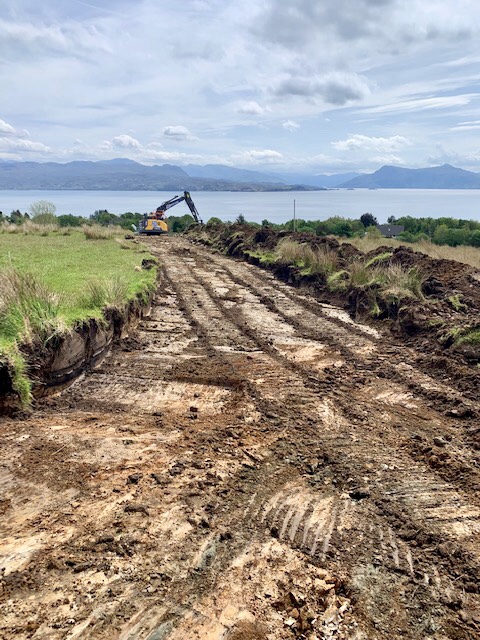
And so it begins. The builder has been sending us photos and videos of the emerging access track whilst it’s being excavated. Very exciting. It looks wide enough to be a motorway in this picture! Sadly building regs dictate that it has to be wide enough for a fire truck to get up to the house, so it does seem wide, but it’s the minimum width we can get away with…
As we suspected, the gradient is very steep in places. The builder has excavated a borrow pit on the croft for extra soil and rock for infill and will try and smooth out the most extreme parts of the slope, although it’s always going to be a steep climb up to the house.
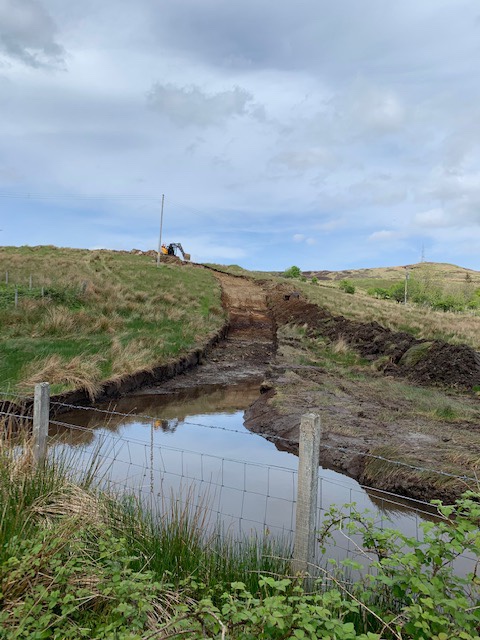
As we also suspected, the boggy bottom of the croft at the base of the hill is actually almost a lake once the soil has been removed. You can see the water level clearly in this photo, right where the entrance bellmouth will be connecting to the communal village road. The video from the digger shows this clearly too.
There will be drainage into both the culvert and back onto the land so that we can remove enough water to make the road viable, but also further along in the process we can perhaps dig a wildlife pond in this area. That plus willow and alder planting and we hope that it will dry out enough to be useable. If not, it’ll be a big natural wetland area, which I’m sure will do wonders for the croft’s natural diversity!
The builders seem to have managed to circumnavigate the two big granite outcrops at the top of the croft and run the road between them. Which is good. Rock blasting and removal is another expense that we are heartily glad not to incur on an already massively expensive road.
But it’s progress! We are so cheered to see this. At last, for the first time after all these months of planning, specification and permissions, it actually seems real.
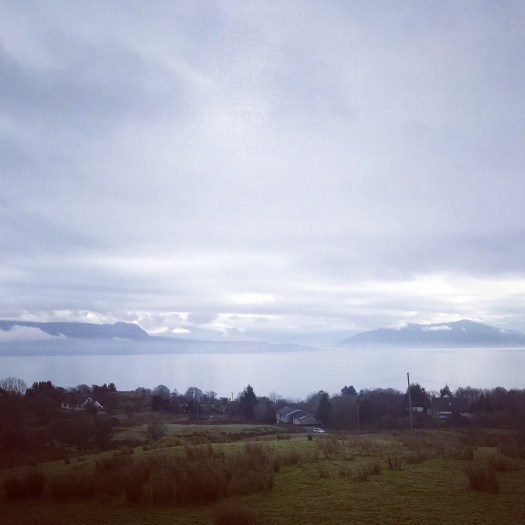
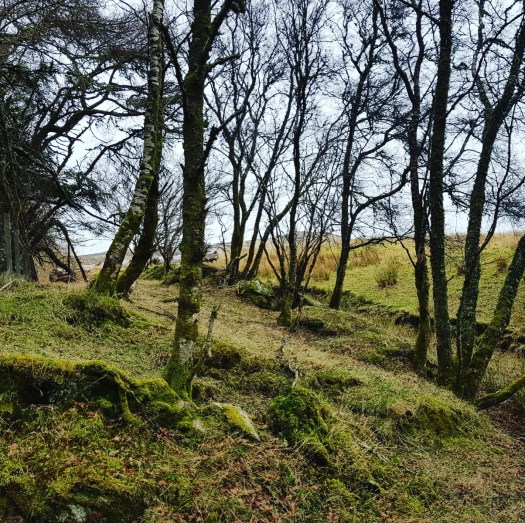 It’s been a bizarely warm, cloudy day today on Skye, but we’re here! We spent the afternoon taking soil samples and exploring the croft with planting plans in mind, and it was so mild that we left our waterproofs hanging on a fence. Not at all like February.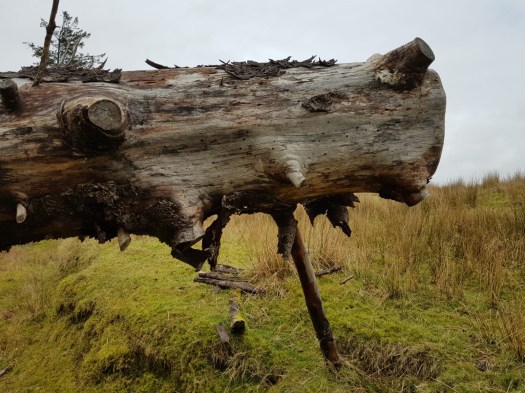
 Ravencroft Skye