Three days in…and we have walls!

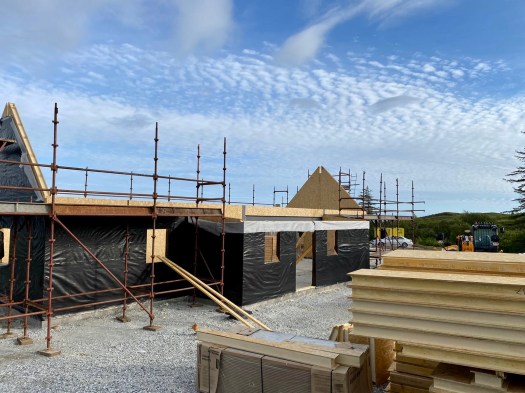
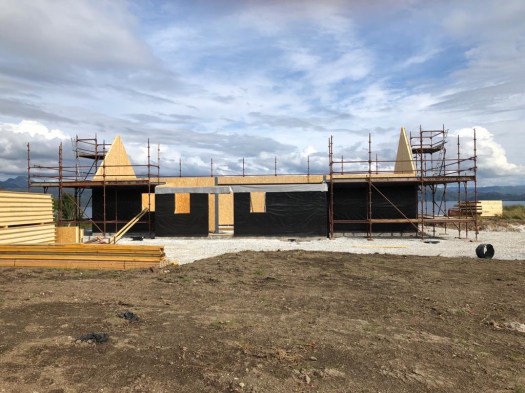
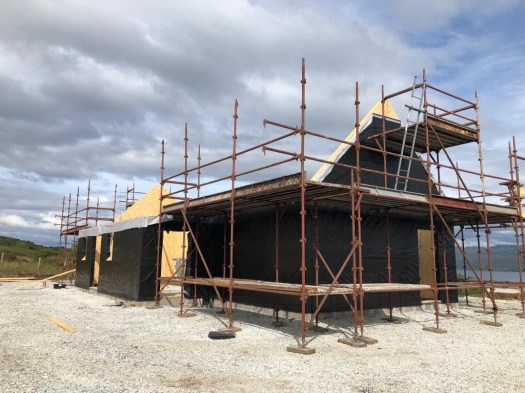
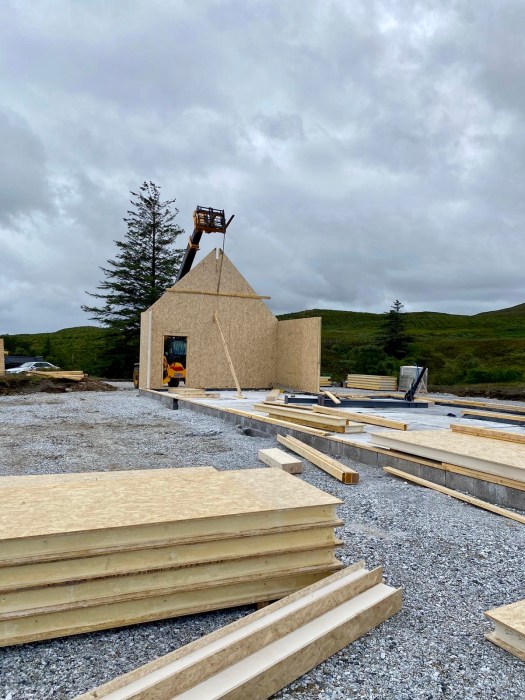
It’s remarkable how quickly the house now starts to take shape. This is progress three days in since the first panel was lifted into place, and although there’s much to do, they’re fairly cracking on with this.

All of the exterior panels are up, the beams are in and a waterproof membrane has been applied to protect the panels from the elements.

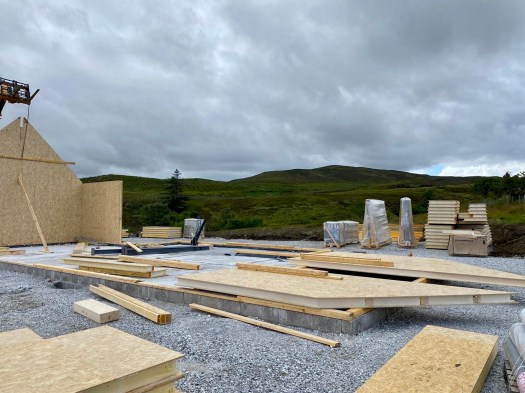
SIP panels going up

The SIP panels were delivered to site today and are starting to go up…

It looks a bit like a dolls house being built at this stage, although these panels are massively strong and well insulated.

Suddenly the house looks tiny…

When we looked into house build construction methods back at the design stage, we decided on SIP (structured insulated panels) for a number of reasons.

  • Speed of Construction
    Building with SIPs is a fast construction method. It is entirely possible for the SIP house ‘shell’ to be completed within seven days.
    Ours will take 2-3 weeks, we think. Useful on a rainy island.
     
  • Environmental credentials
    SIP-built houses are highly energy efficient, with the result that they are easier to heat. This means less harmful CO
    2 released into the atmosphere. Very little energy is used during the SIP manufacturing process, with SIPs using up to 50% less raw timber compared with conventional timber frame houses. We like that.
     
  • Sound Proofing
    SIP panels have excellent sound absorption properties with the result that the finished buildings are quieter to live in.
    After years of living in flimsy walled modern flats and houses with sound systems, guitar practice and video calls all going at once, this is a definite advantage!
     
  • Structural Strength
    SIP walls can be up to seven times stronger than conventional timber frame.
    The strength of SIP structures allows for thinner walls and no bulky roof trusses.
     
  • Thermal Performance
    Insulation is integral to the SIP system, and therefore doesn’t require installation at a later date. The superior thermal performance of a SIP structure will last the lifespan of the building, thanks to the solid core of insulation throughout the structure. This means that the building is heated evenly, is free from cold spots and benefits from reduced heating costs.


I guess the proof of the pudding, as they say, is in the eating… 😊

Only time will tell, but we have high hopes!

Dribbles from the island

Updates dribble in slowly from the builders like the intermittent drip from a tap.

Not known as the most patient of people, I await them anxiously, counting the days and weeks since the last email. It’s tough being remote from a build project when it’s your very future going up one block at a time.

Updates do come though – not every week, and not always with accompanying photos, but progress is definitely being made.

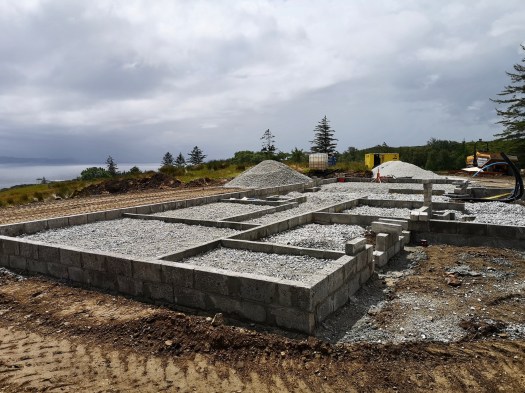
I believe that the concrete has been poured onto the foundation slab and that the builders are ready to start erecting the SIP panels next week. They’ve advised that the panels normally take about three weeks to complete.

After that the roof slates go on, then the larch cladding for the walls. By the time we visit in September we’ll definitely have the semblance of a house to see, even if it’s just the exterior shell.

It’s going to be an emotional moment.

Taking Shape

It’s taking shape, and the builders have been working hard to move this on whilst the weather holds.

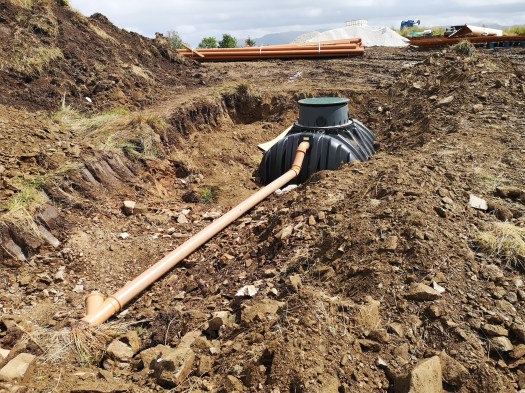
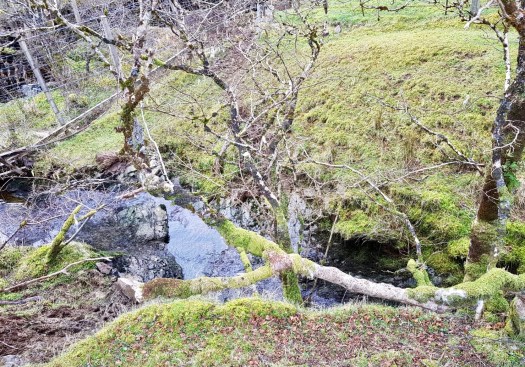
It looks as if the sewerage treatment plant is starting to go in, and the outlet pipe is being connected. This will discharge clean, treated water via an outfall into the burn at the back of the house.

Let’s hope that the water and electricity connections will be confirmed soon, as we won’t be able to progress beyond the summer without them.

It’s so good to see the house starting to emerge from the land. This is the first time that I’ve really been able to visualise it properly in it’s setting, and I think it’s going to sit well….

More progress, and the static

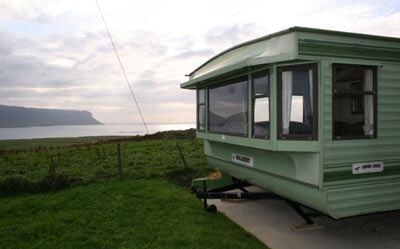
The kindness of strangers never ceases to amaze us. We’ve been offered a free static caravan by locals on the island to live in whilst we complete the build.

It’s old but fully functioning. It will need a lick of paint, a new boiler and replacement carpet in the main living area, but with all of that and transport costs it will still save us many thousands of pounds.
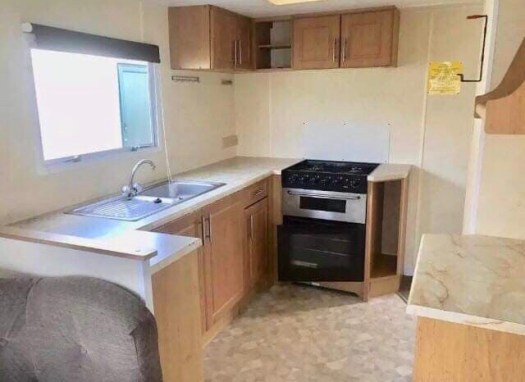
I’d been researching static caravans and not only are they pricey but the haulage costs can be massive. Due to their ten or twelve feet of width they need a police traffic escort, and so even bargains elsewhere in the U.K. would cost many thousands to transport to the island.

(This image was taken before two years of mud from their house build site was trodden in..😊 it looks much worse now…)

The couple that have offered it to us have been living in it themselves until recently as they completed their own self build, and can make it available from September, which is perfect timing for us. We’re so grateful.

We will be siting it close to the house itself so that connection to power and water will be easier.

The foundations are progressing at pace now, helped by the recent good weather.

This does mean that it will be perched in a somewhat exposed position on the top of the hill of the croft, and a local friend suggested that tethering the static to concrete footings with lorry straps might be prudent due to the winter gales on Skye. We’ve asked the builders to create tether points for us in the hard standing at the back of the house site so that we can do just that.

We don’t fancy tumbling down the hill like a corrugated tin dustball in a storm…
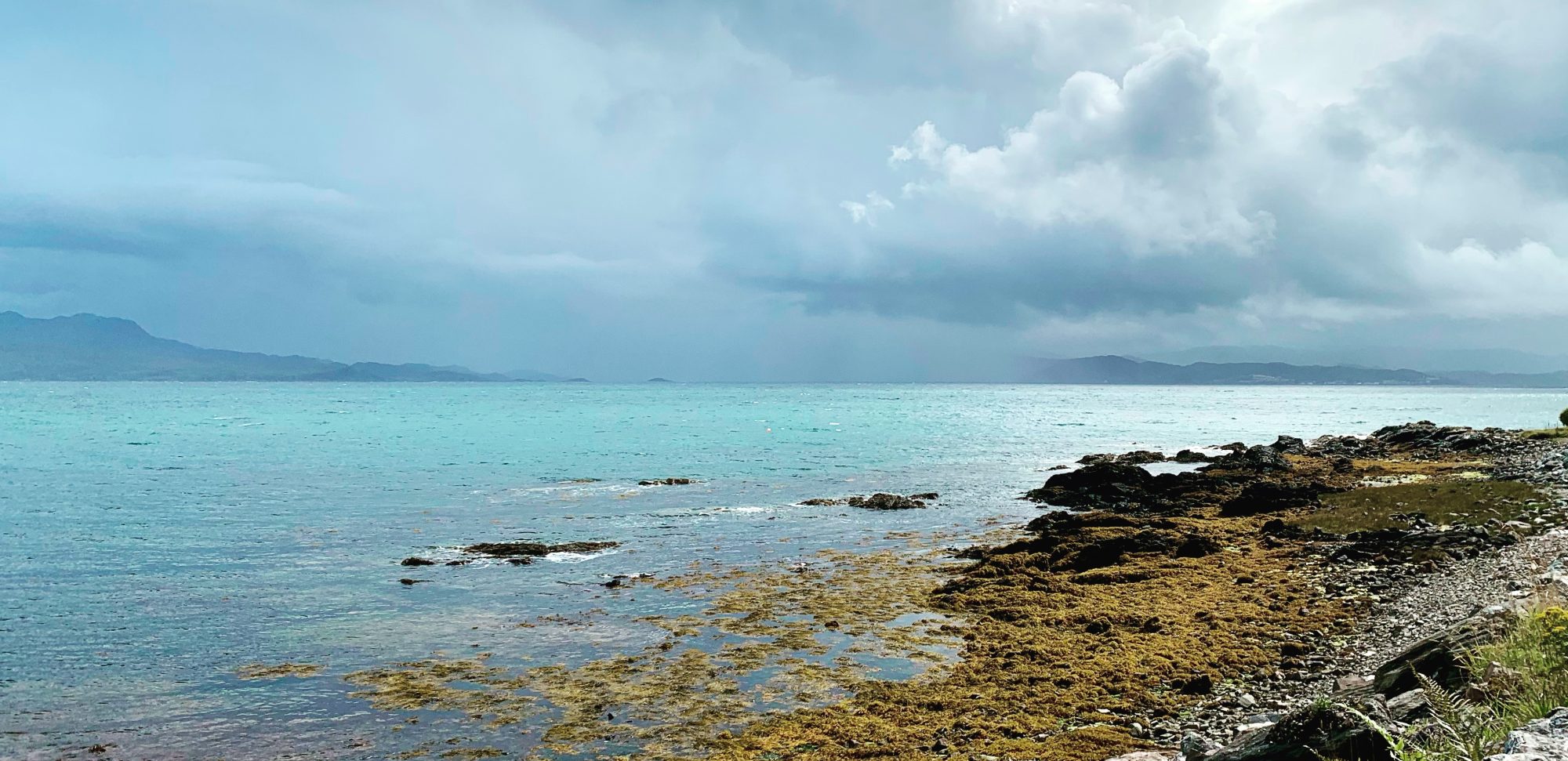
The track begins

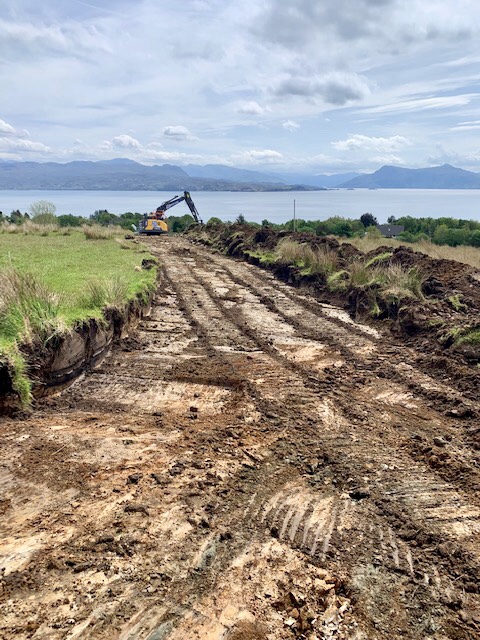
And so it begins. The builder has been sending us photos and videos of the emerging access track whilst it’s being excavated. Very exciting. It looks wide enough to be a motorway in this picture! Sadly building regs dictate that it has to be wide enough for a fire truck to get up to the house, so it does seem wide, but it’s the minimum width we can get away with…

As we suspected, the gradient is very steep in places. The builder has excavated a borrow pit on the croft for extra soil and rock for infill and will try and smooth out the most extreme parts of the slope, although it’s always going to be a steep climb up to the house.

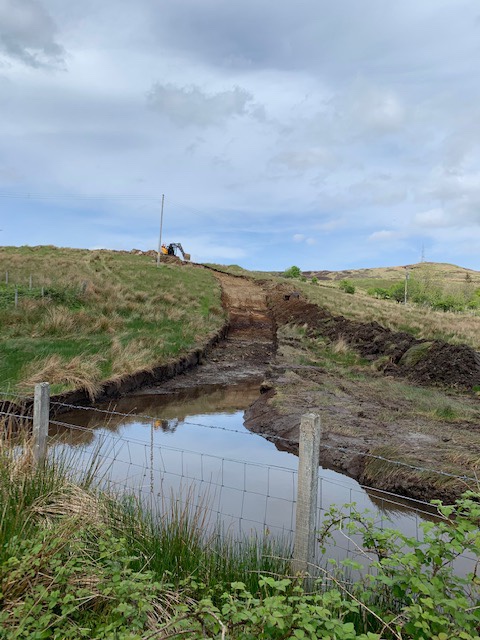
As we also suspected, the boggy bottom of the croft at the base of the hill is actually almost a lake once the soil has been removed. You can see the water level clearly in this photo, right where the entrance bellmouth will be connecting to the communal village road. The video from the digger shows this clearly too.

There will be drainage into both the culvert and back onto the land so that we can remove enough water to make the road viable, but also further along in the process we can perhaps dig a wildlife pond in this area. That plus willow and alder planting and we hope that it will dry out enough to be useable. If not, it’ll be a big natural wetland area, which I’m sure will do wonders for the croft’s natural diversity!

The builders seem to have managed to circumnavigate the two big granite outcrops at the top of the croft and run the road between them. Which is good. Rock blasting and removal is another expense that we are heartily glad not to incur on an already massively expensive road.

But it’s progress! We are so cheered to see this. At last, for the first time after all these months of planning, specification and permissions, it actually seems real.

The static looms….

We have been working our way through costs as meticulously as we can before the build actually starts. The architects estimates were way out. By a country mile.

It’s becoming clear that the only way that we can complete this project is to strip out £100k of costs, and that means a few things are sadly certain.

Firstly, that there is no way that we can afford the builders to do more than build the house. Groundworks, access road, house erection, cladding, guttering and windows. Everything else we will need to do ourselves.

Secondly, we will need to put a static caravan on the land and at some point move into it in order to finish the work. I suspect this means a Highland winter and Christmas in a caravan… 😬

Thirdly, there isn’t any chance that it will be complete as planned this year. The exterior build should be complete by the summer, but the interior will take us much longer to complete than it would with professional builders and will probably run into next year.

We will be offline whilst we finalise plans and put some things in motion.

Check in again soon!

Send warm socks!