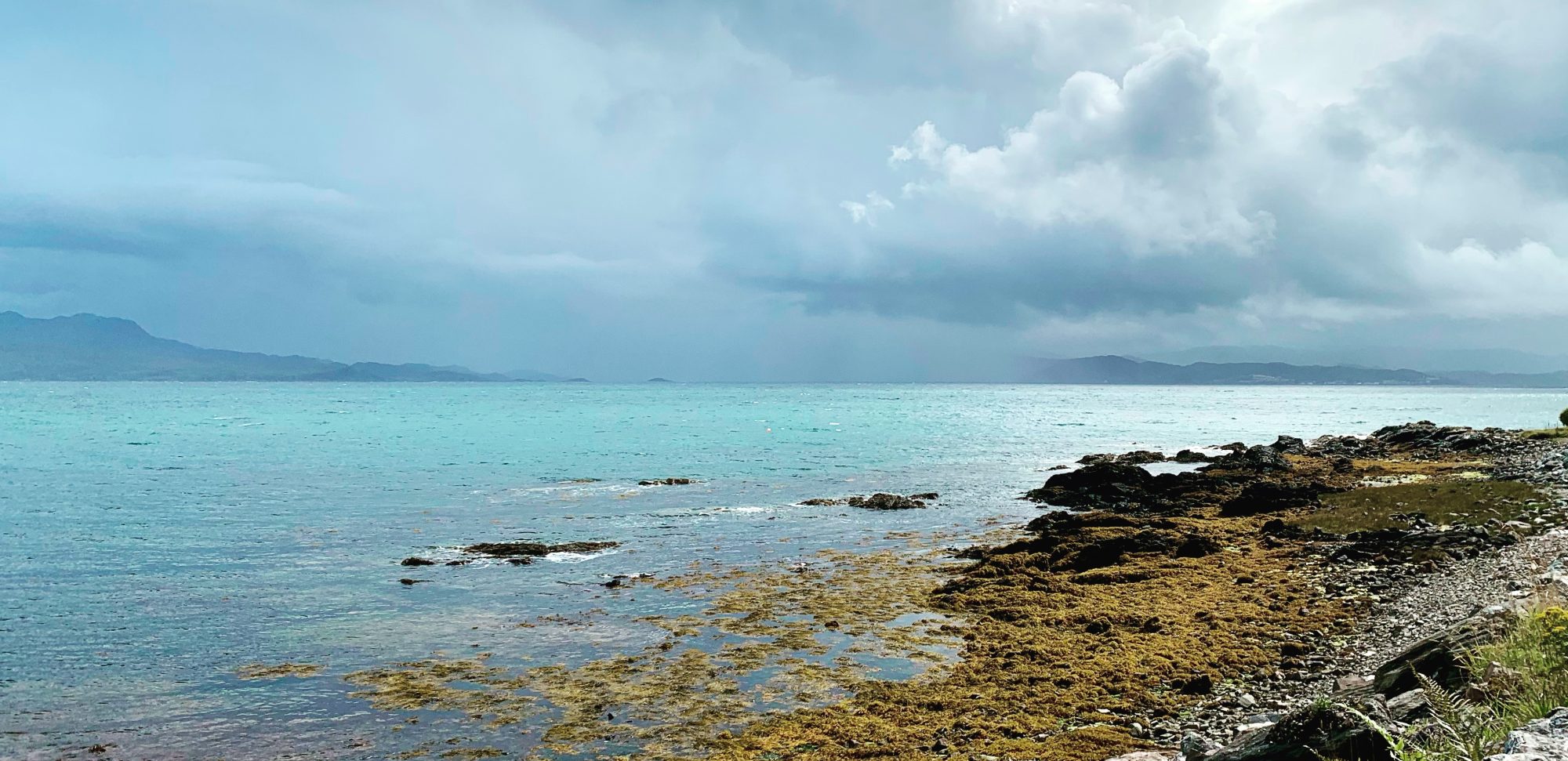
We’ve only been able to visit the croft a couple of times since we bought it, and those visits were usually during autumn or winter.
The main thing that we’d noticed on the land – apart from the absence of trees – was the dominance of reeds. They grew in thick clumps all over the croft. The crofter next door used to graze his sheep on the land, and this kept what grass there was between the reed clumps closely cropped.
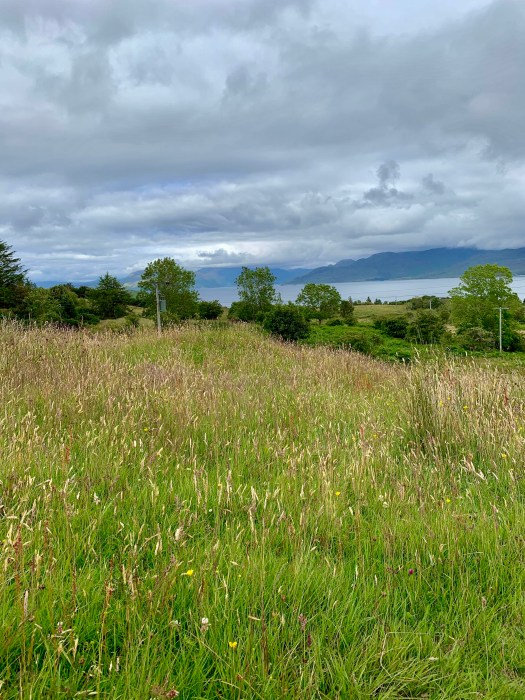
Our neighbours walked up onto the croft this afternoon whilst there were no builders on site, and took these pictures of the meadow below the house lying peacefully in the sunshine.
We were delighted to see that the grasses had regenerated and that there were wild flowers scattered through them. We haven’t seeded or done anything to this area – this is just one seasons regrowth now that the sheep are no longer on the land.
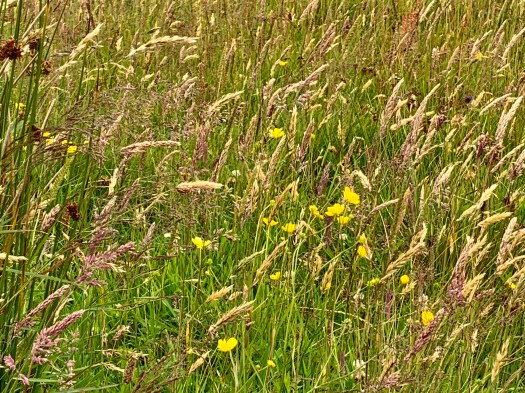
We can’t wait to see what else grows. The land has never been worked except for sheep grazing, and as such it’s completely organic and natural.
We’ll try as hard as possible not to disturb this habitat with our tree planting plans. The habitat that this provides to wildlife is invaluable, and to our eyes it’s beautiful.
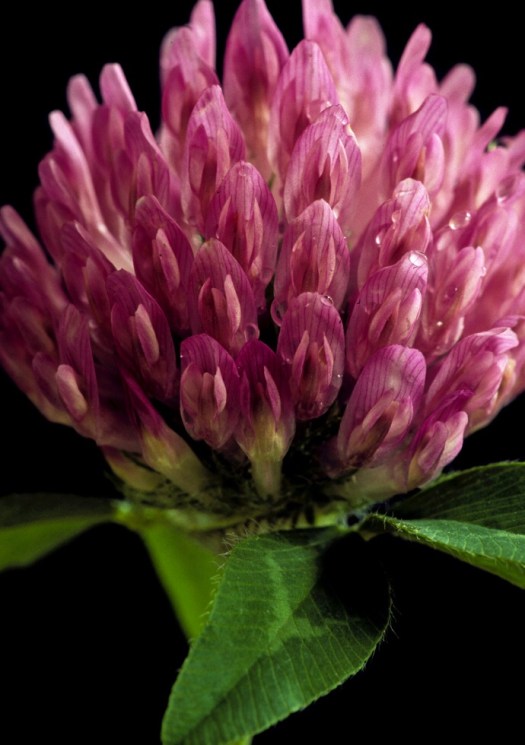 We’ve been thinking of how best to build up the croft’s ability to support plants and wildlife. It’s pretty barren at the moment with limited biodiversity, having been left unused for many years as far as we can tell. It’s compacted grass, moss and rushes with a bank of trees to the Southwest and a very boggy area to the South. The soil levels are very thin.
 Ravencroft Skye