We’ve been struggling with very wet days for the last month. The croft is saturated and the burn is constantly in full spate.
It’s also bizarrely mild for this time of the year. Two years ago when we moved in around now there was snow on the hills and it was about 8°C colder. This week the day temperature has been hovering around 16°C , like a Highland summer, and my plants are all very confused.
Everything still growing
I still pop into the polycrub a few days each week to weed, water and harvest what’s ready even though this is supposed to be the down season.
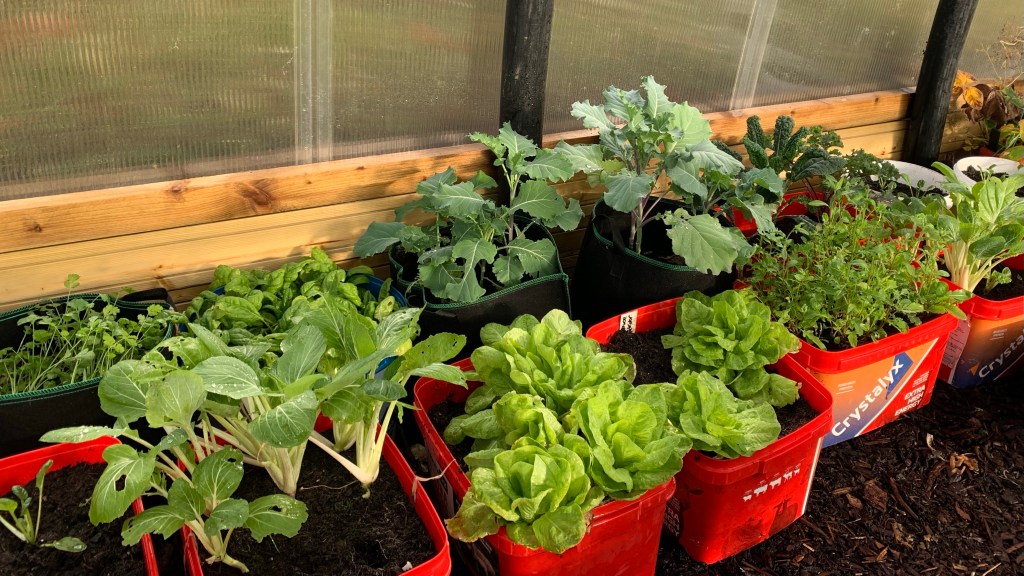
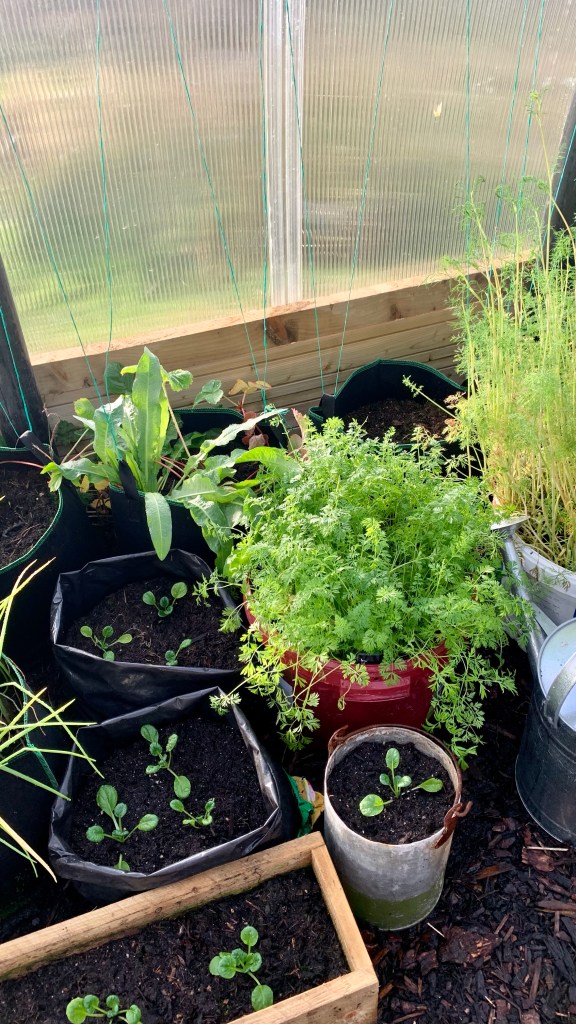
This week I transplanted thirty tatsoi seedlings (Asian winter greens) into larger pots and although I’m horribly late with them it will be an interesting experiment to see if they still grow. The pak choi has done well and it’ll be good to try fresh new green things over winter.
Tatsoi seedlings everywhere
Even when it’s grey, it’s still beautiful. This is a snap I took of the cloud inversions sweeping across the Knoydart mountains this morning from the croft. I don’t think I’ll ever get blasé about this view.
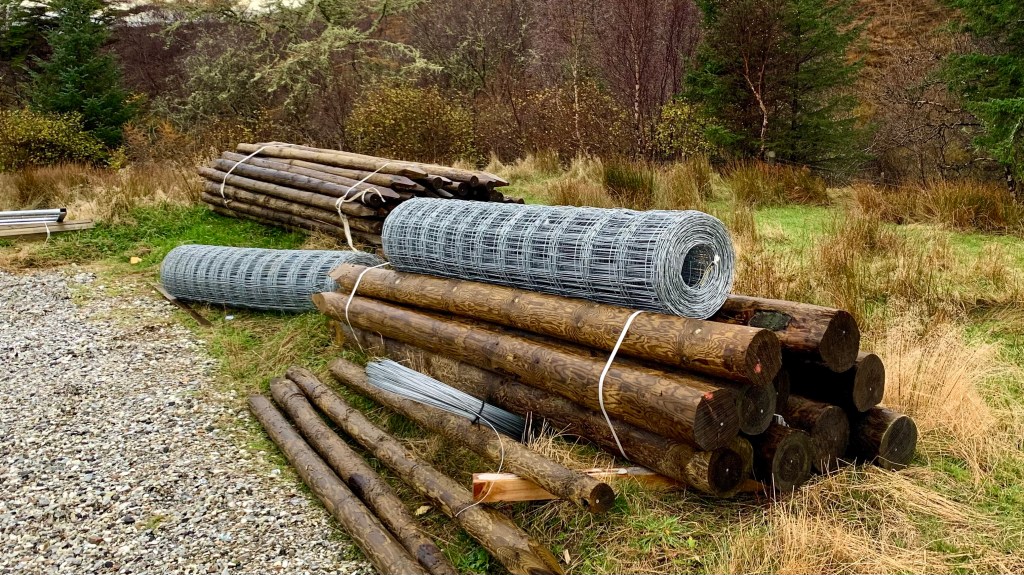
The deer are here in such numbers now that it’s almost impossible to grow anything unprotected in our outdoor croft raised beds. We’ve been left with no choice but to fence off an area if we want to get any harvests next year. A job for next spring, I think.
The posts and wire have arrived already. When it’s built, the fence will be eight feet tall, which is far from great to look at, but is sadly necessary.
I can’t wait to curl up by the Woodburner in the house this winter and plan out the protected growing area. The orchard will have several varieties of heritage apple, pears, damsons and maybe we’ll try cherries too.
We’ve not had much in the way of a summer yet despite us being at the end of July, but the croft and the polycrub continue to feed us.
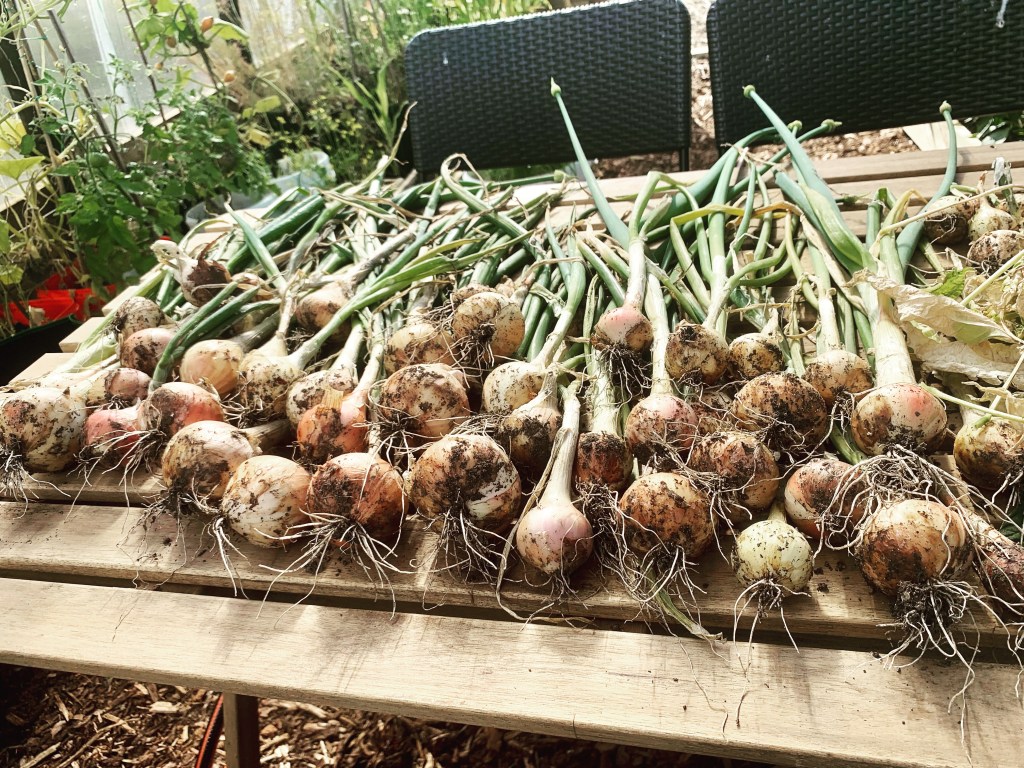
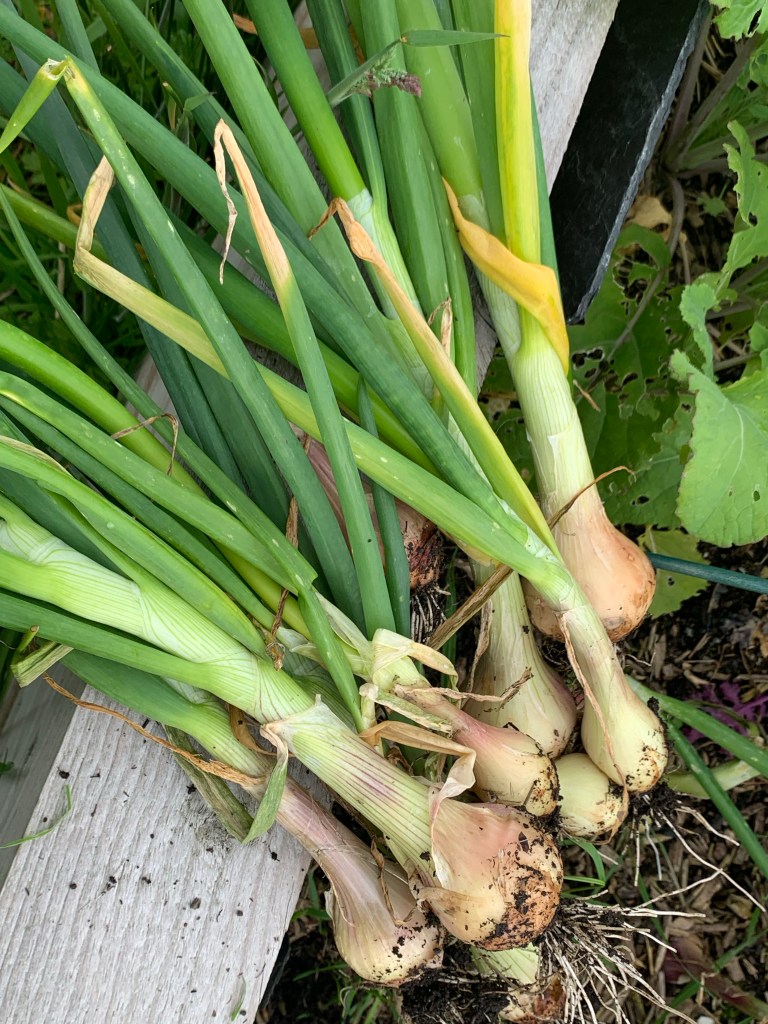
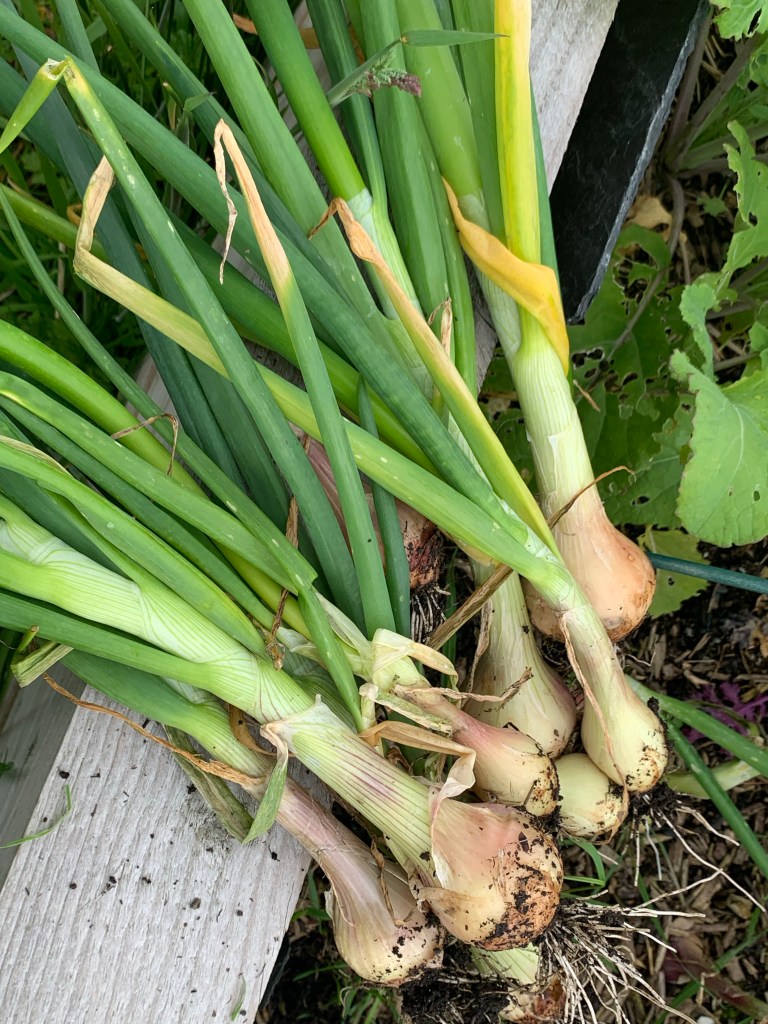
We dug out the rest of the onions yesterday. These are a variety called Keravel Pink, and they’ve produced what I think is quite a respectable harvest.
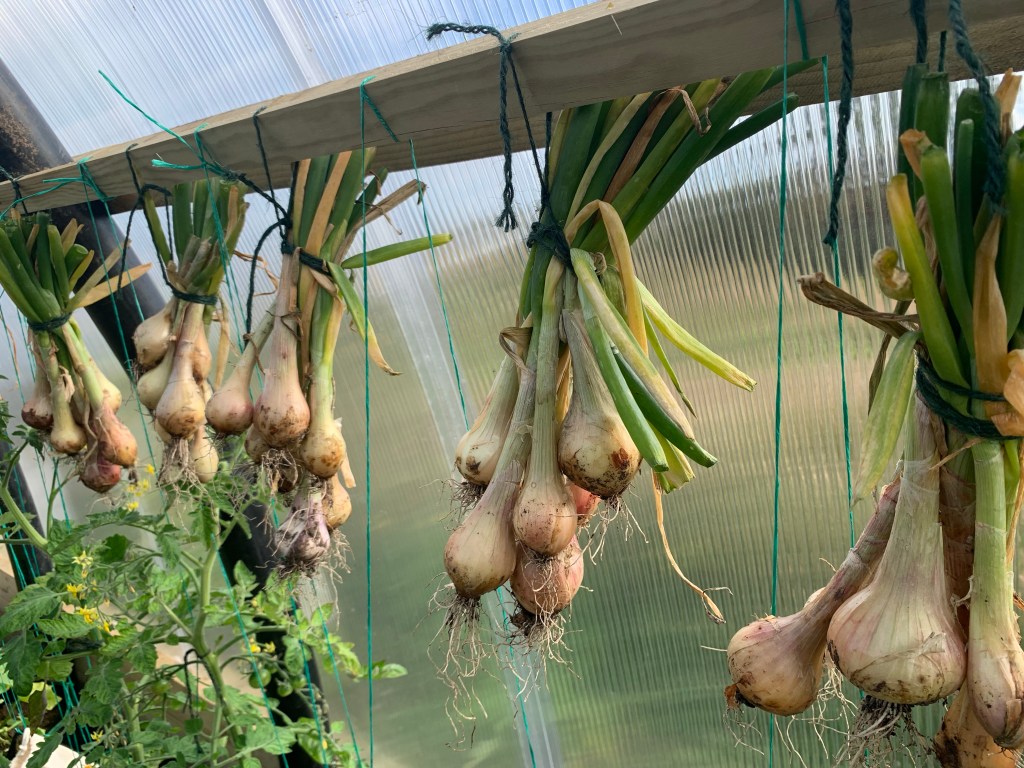
I chose these as they were the closest I could find to the Roscoff onions that I used to love when I lived in France. They’re an onion with a slightly blush colour, and sweet, firm flesh. They’re now hung up to dry, ready for use.
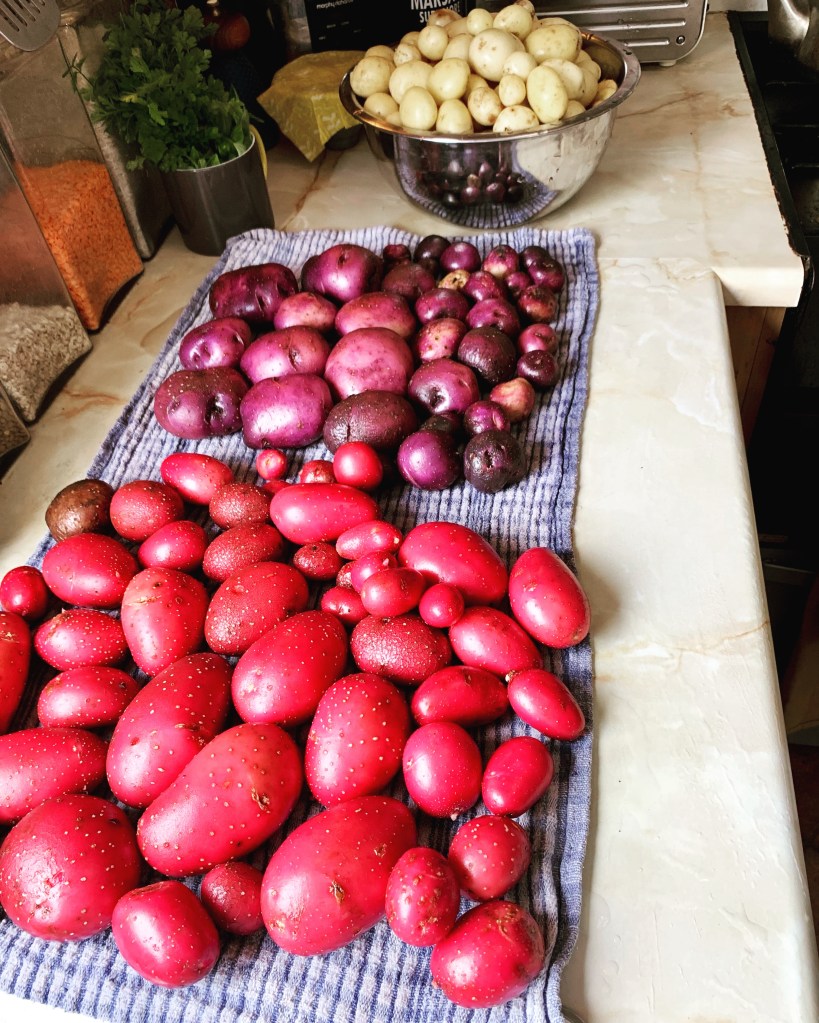
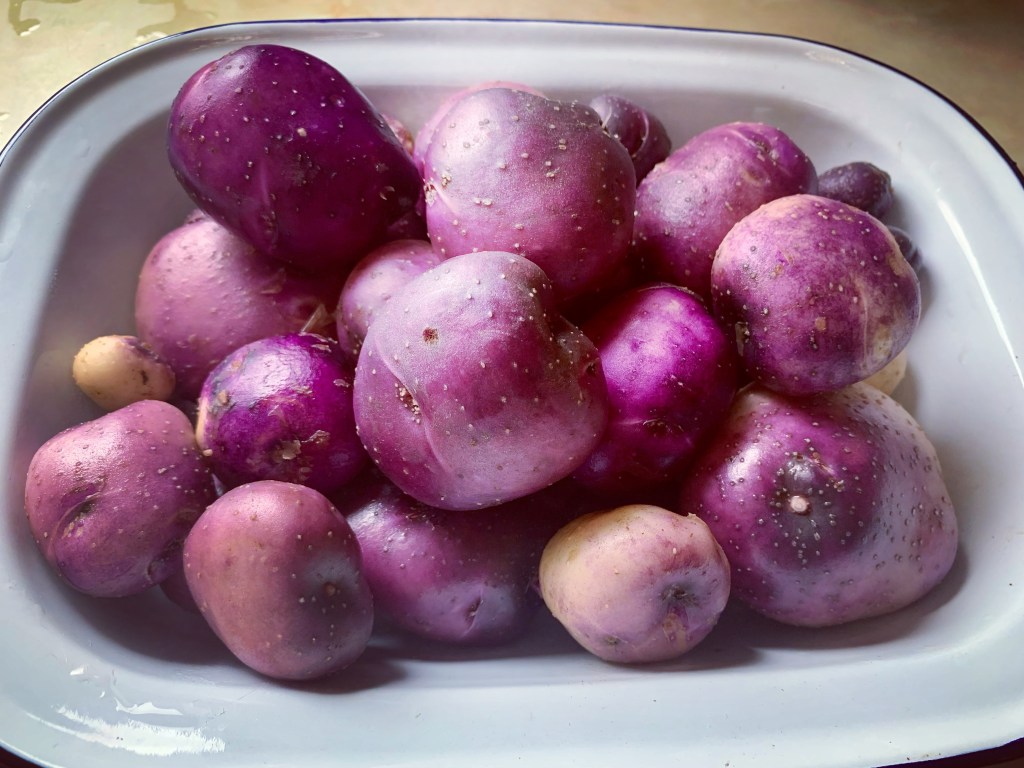
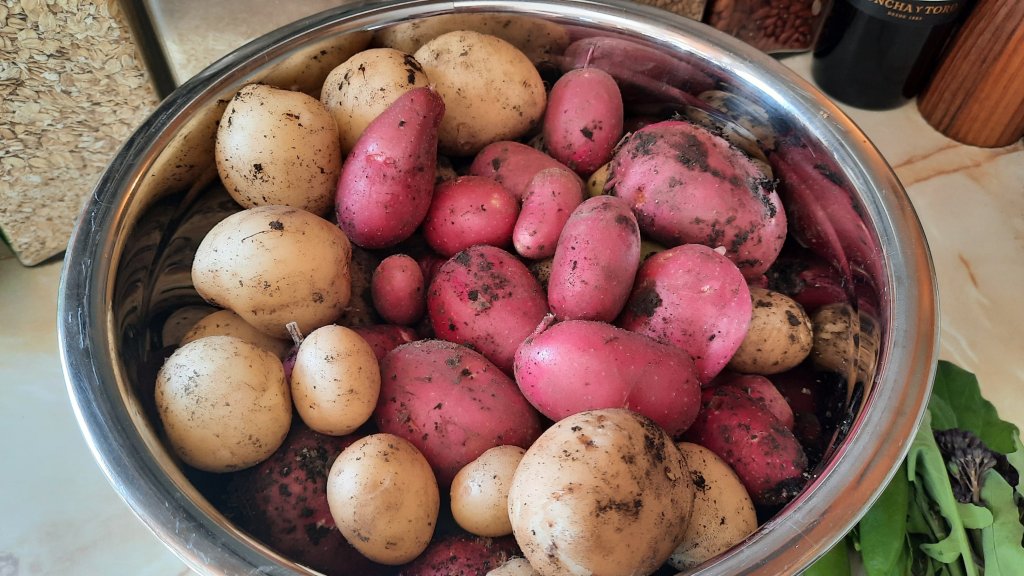
Husband also dug the rest of the potatoes as we were starting to detect slug – and believe it or not, deer damage. We’ve had a few meals already from them. It’s a smaller crop than last year, probably caused by the cold, wet weather and they could have done with a bit longer in the ground, but they’re a reasonable size. To be honest, we like ‘em small and sweet.
I planted Edzell Blue and Casablanca varieties from Scottish seed potatoes and Red Rooster from a bag of sprouted supermarket potatoes. The supermarket ones outperformed the specialist ones by a reasonable margin for a second year!
The first of the carrots are ready now, and I’m going to sow more. They’re sweet and very flavoursome.
The sweetcorn experiment is progressing! We have flowers and silks on a few of the plants, so I’ve been hand pollinating with the hope that we manage to get a few cobs at least.
All in all, not bad for a low-effort croft nurtured using organic principles and no-dig beds, in this weather and whilst not at my best due to illness. No pesticides, no inorganic fertilisers, no chemicals. I love that we can pick produce straight from the plant. The soil is fertile and giving, and we will continue to develop the beds next year with windbreaks and deer protection.
It seems strange but I can already detect the first wisps of autumn drifting in from the edges. The leaves on the ancient horse chestnut at the end of the lane are starting to turn russet. The seed heads on the long croft grasses are ripe and heavy. The season feels about to turn.
July is underway and with it comes the first of the proper harvests from the croft.
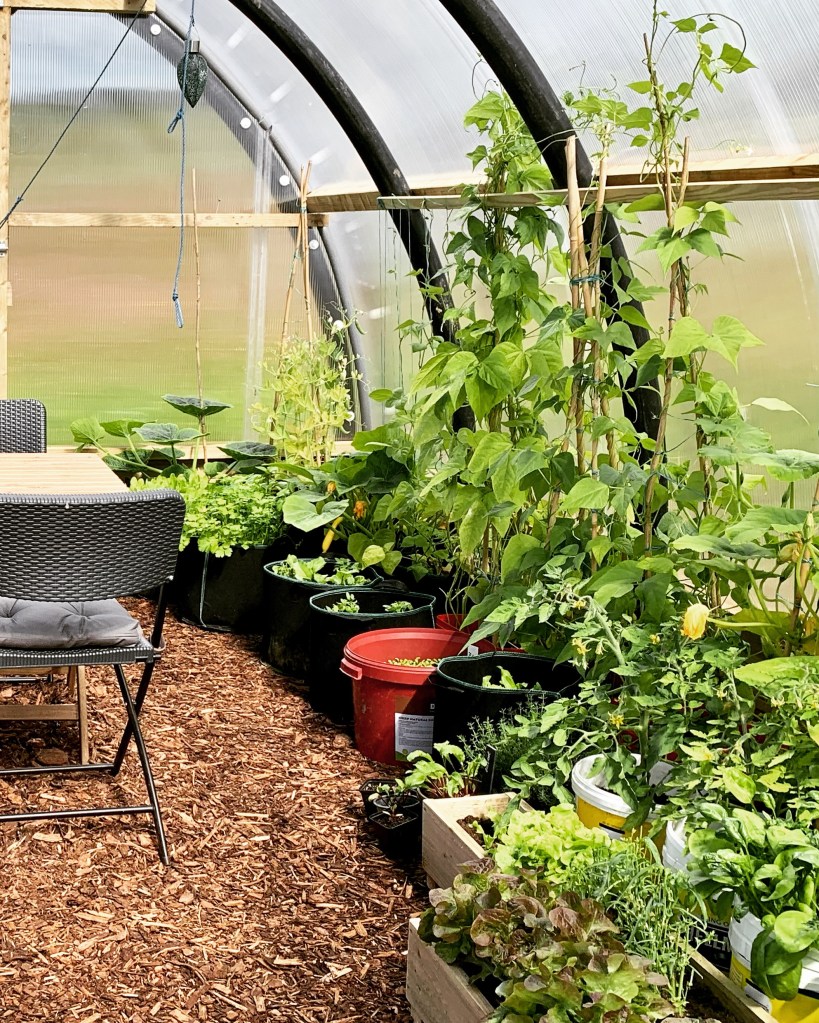
The polycrub really has been a game changer and we’ve managed to grow cucumbers and lettuce enough for all of our salads and more to spare for neighbours and friends. This in combination with the produce from the raised beds has meant a wide variety of foods can be grown throughout an extended season.
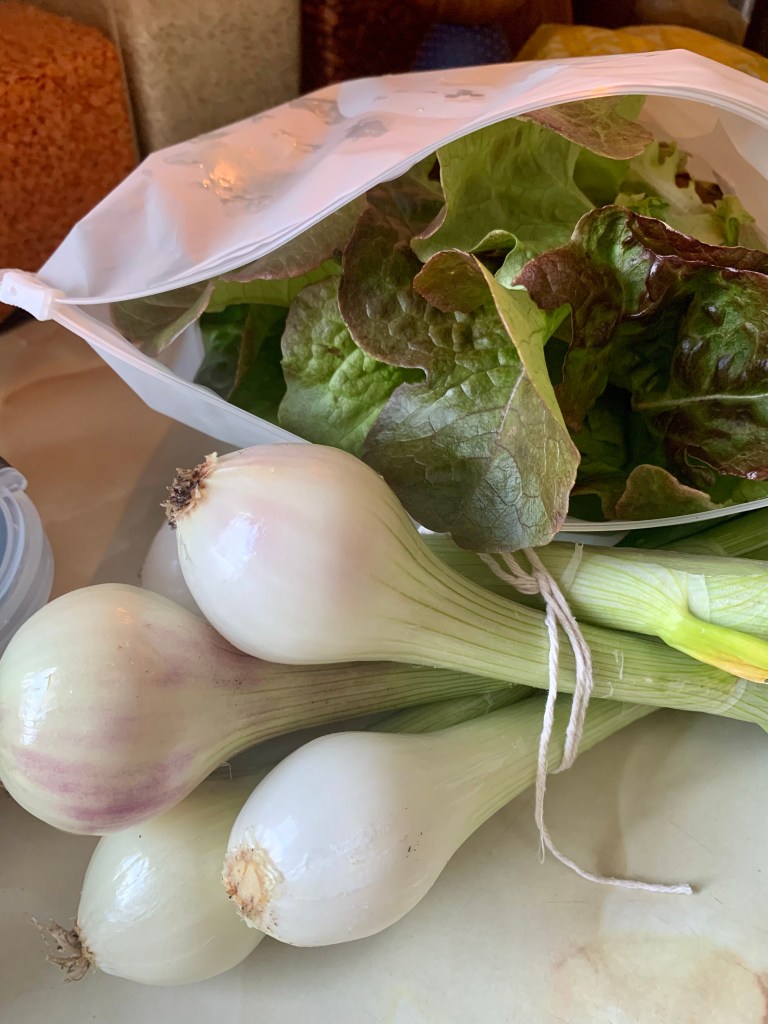
Lettuce and young onions
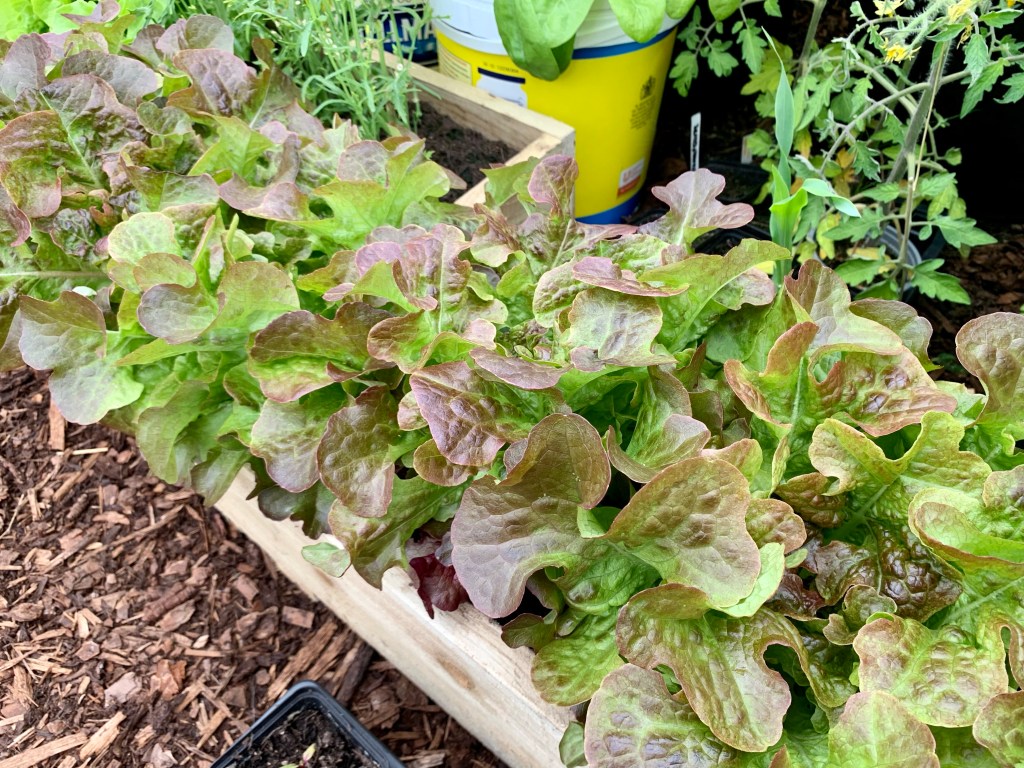
The most successful lettuce has been a butterhead, which we’ve been cropping as a cut and come again lettuce. We’re also growing romaine. All the mizunas and rocket grew well initially, but then bolted within weeks and became straggly. I don’t like eating the mustards and mizuna because of the spiky texture of their leaves so I won’t bother with these next year, and will just plant more lettuce.
Butterhead lettuce
The onions were supposed to be red onion varieties, but aren’t more than vaguely pink. They sent up flower shoots so most of them have been lifted before they soften.
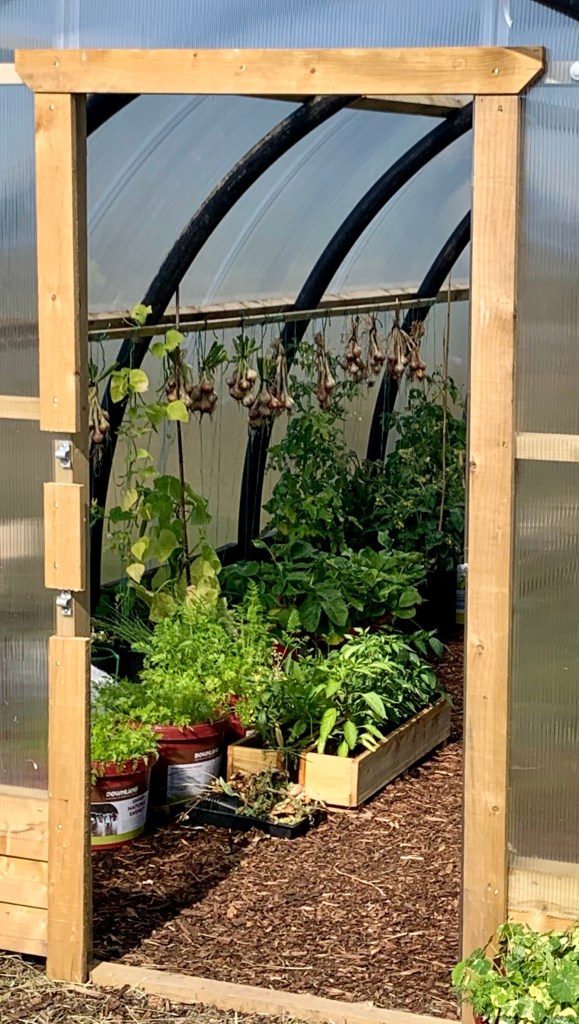
They’re small, but sweet. We’re using them in salads and cooking now and I have them drying in bunches ready for use later in the season.
Drying onions
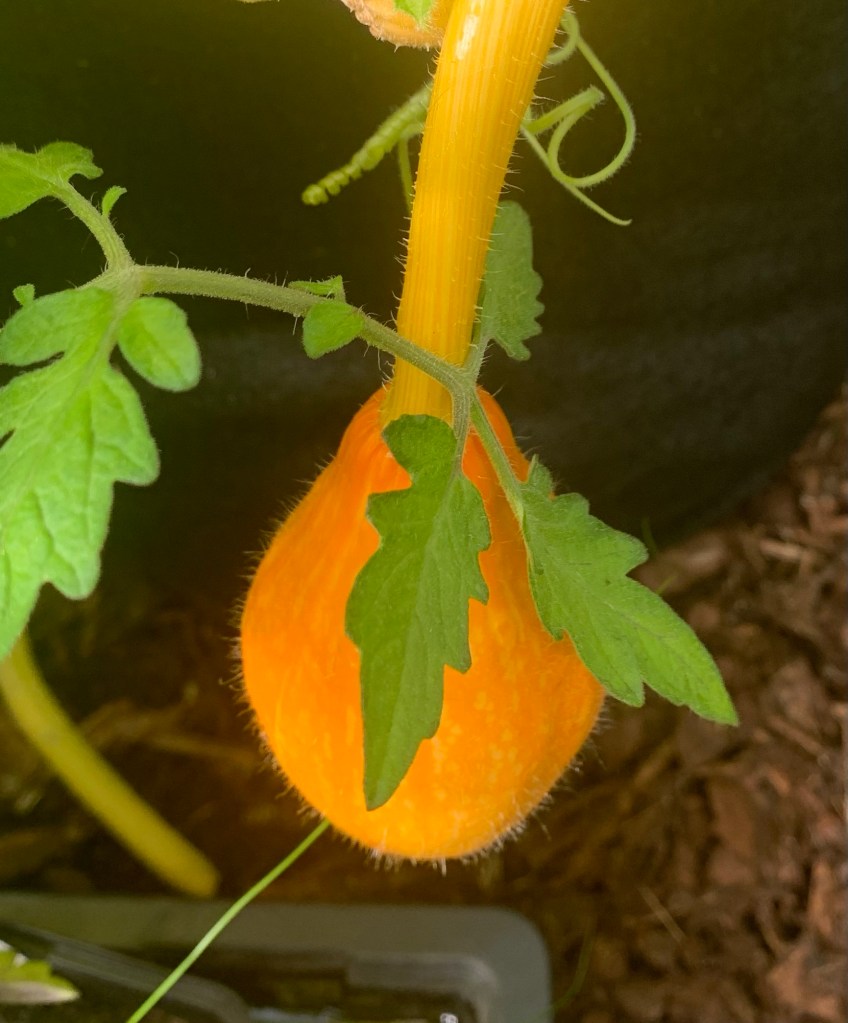
The red kuri squash has a few young fruits on it, which I’m very excited about. Early days, but I’m hopeful that we’ll have a few to harvest in late summer. The French squash hasn’t shown any sign of fruiting yet.
Baby squash hiding behind a tomato leaf
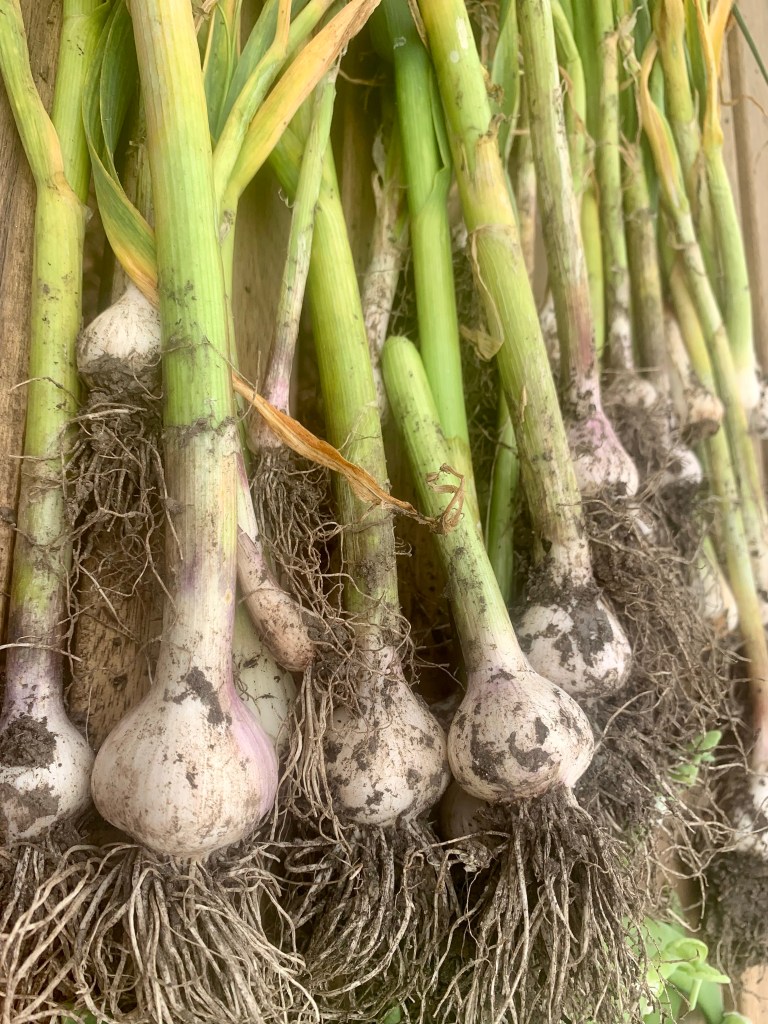
The garlic was a bit of a disappointment. Sown last October I had high hopes for bigger heads this year, but they’re still small. I’ll use them in stews and trays of roasted vegetables, so despite their lack of size they won’t be wasted.
Wimpy garlic
The potatoes are also much slower than last year. We’ve just harvested some Edzell Blue and Casablanca varieties. Great taste, but not hugely prolific. We’ll hold off for a while for the main crop variety.
Edzell Blue potatoes
The kale is growing well after the deer ate all of my perennial kales from the beds last winter. I grew more Uncle Bert’s kale and red Russian kale from seed and it’s coming up nicely. I’ve also sown purple sprouting broccoli into the beds recently, so between them that should give us a reasonable winter crop.
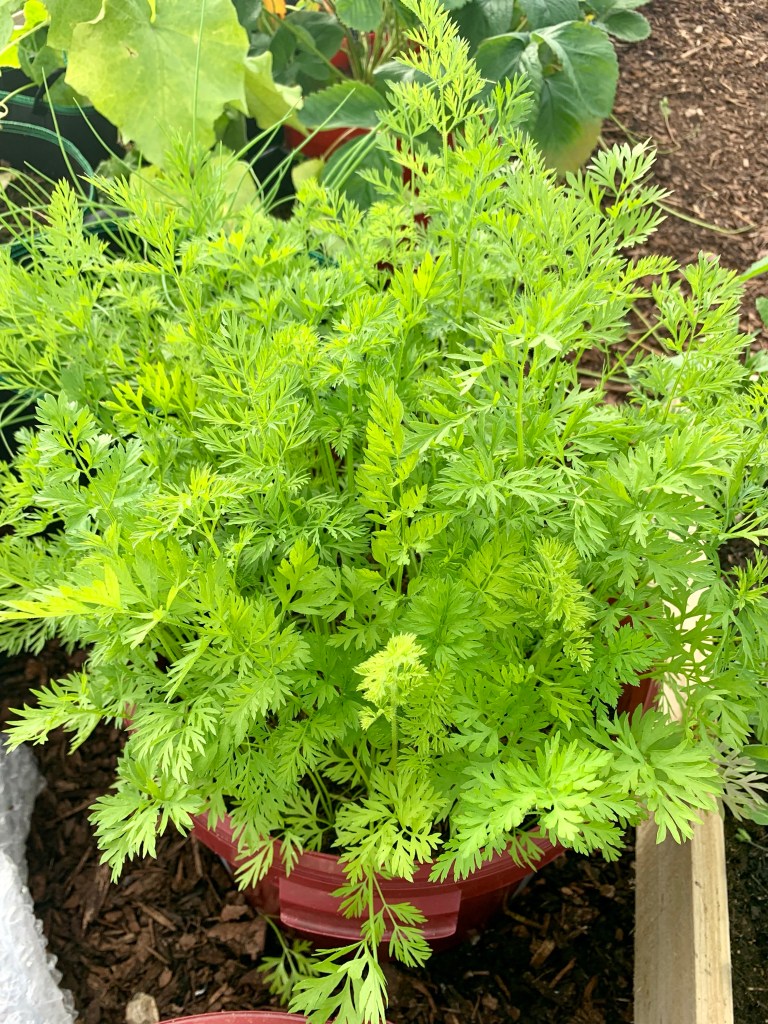
The carrots were grown in large seed lick tubs this year as an experiment. Three varieties, all French heritage types, growing well, albeit slowly. The first of these should be ready in a few weeks time.
Carrots
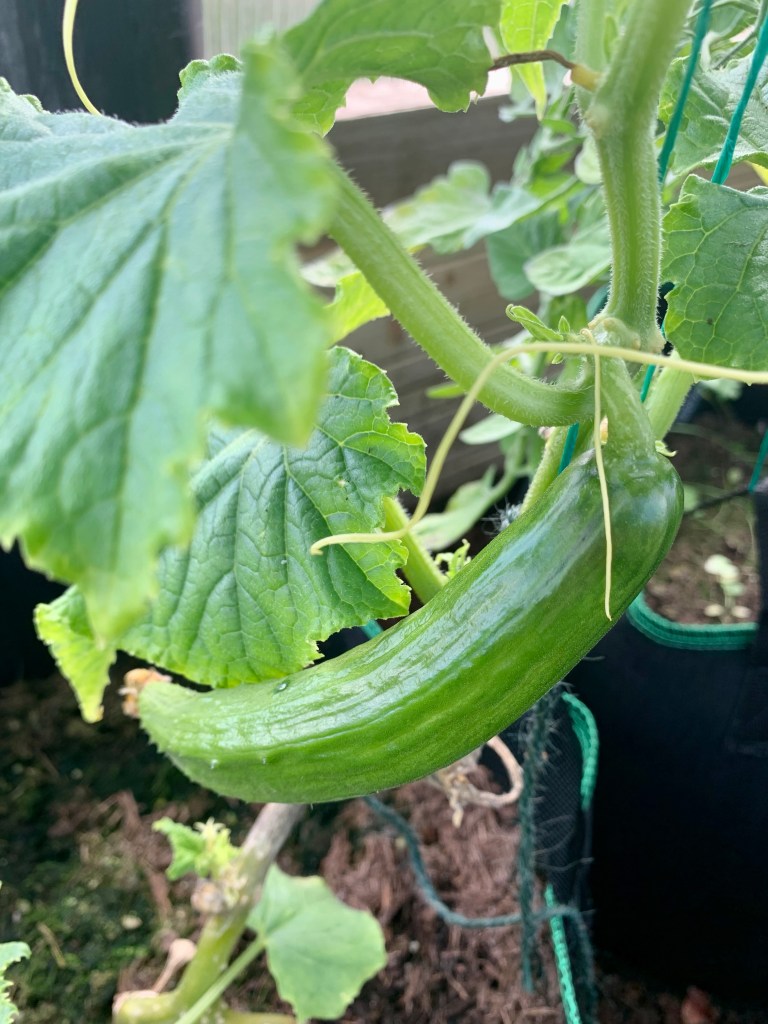
The cucumbers had a very faltering start due to the cold temperatures of late spring. A number rotted and wilted beyond salvation, but the three plants that did survive are fruiting well and have produced about six cucumbers ready for eating so far. There’s no trace of bitterness to their taste either, which is great.
Baby cucumber
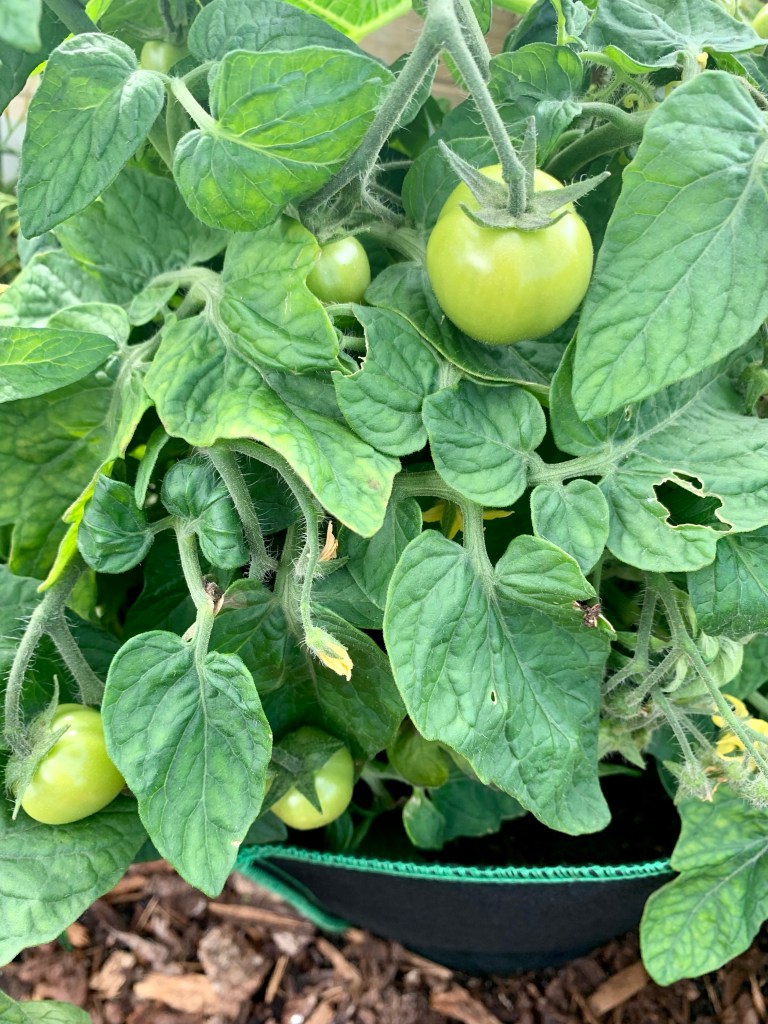
The tomatoes are starting to set fruit, again later than most due to our cold, late start. It will be interesting to see whether we can get them to ripen in time. The big Russian bush varieties are pruned and tall with not much evidence of fruit yet. The dwarf bushy varieties, which don’t get pruned, are happily fruiting away with no fuss.
Dwarf tomato plants doing their thing
The courgettes – I only planted two plants so that we weren’t overrun if they grew – have started fruiting, although the fruit is yellow rather than green, which is a total surprise. We’ve already had a handful of courgettes from them, and looking at the flowers there will be many more to come.
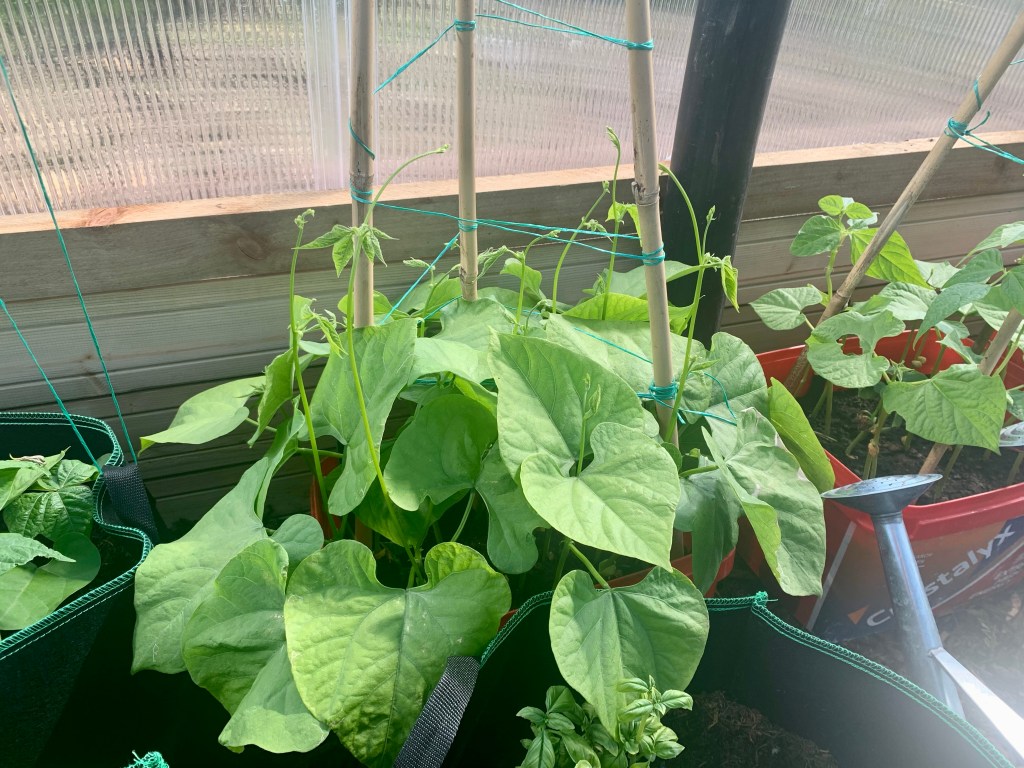
The beans have struggled. The borlotti beans are doing the best out of all the varieties and are starting to flower now, so I’m hopeful for a few fresh beans from them.
The corn is about four feet heigh although no sign of flowers or fruits yet.
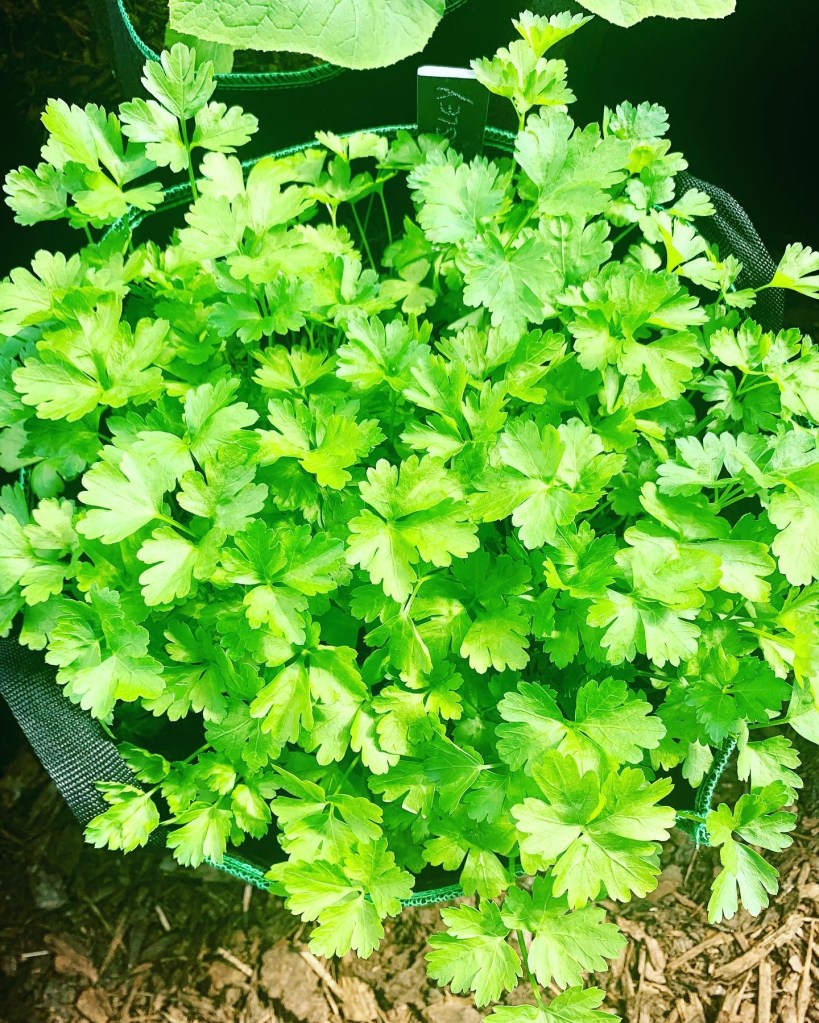
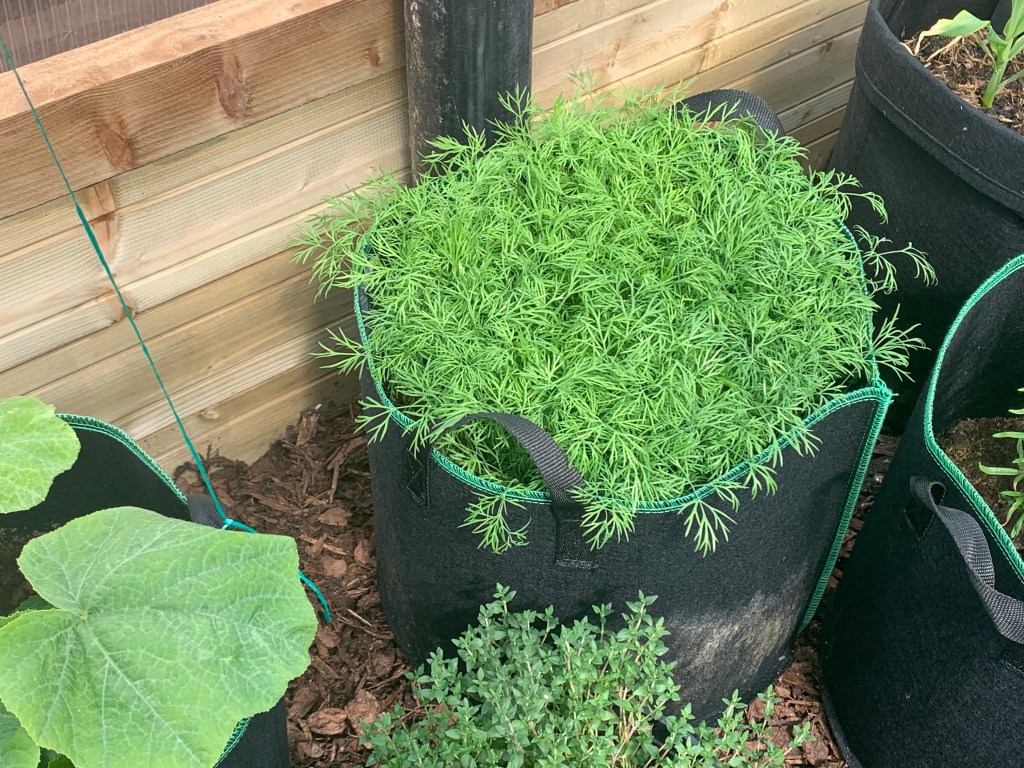
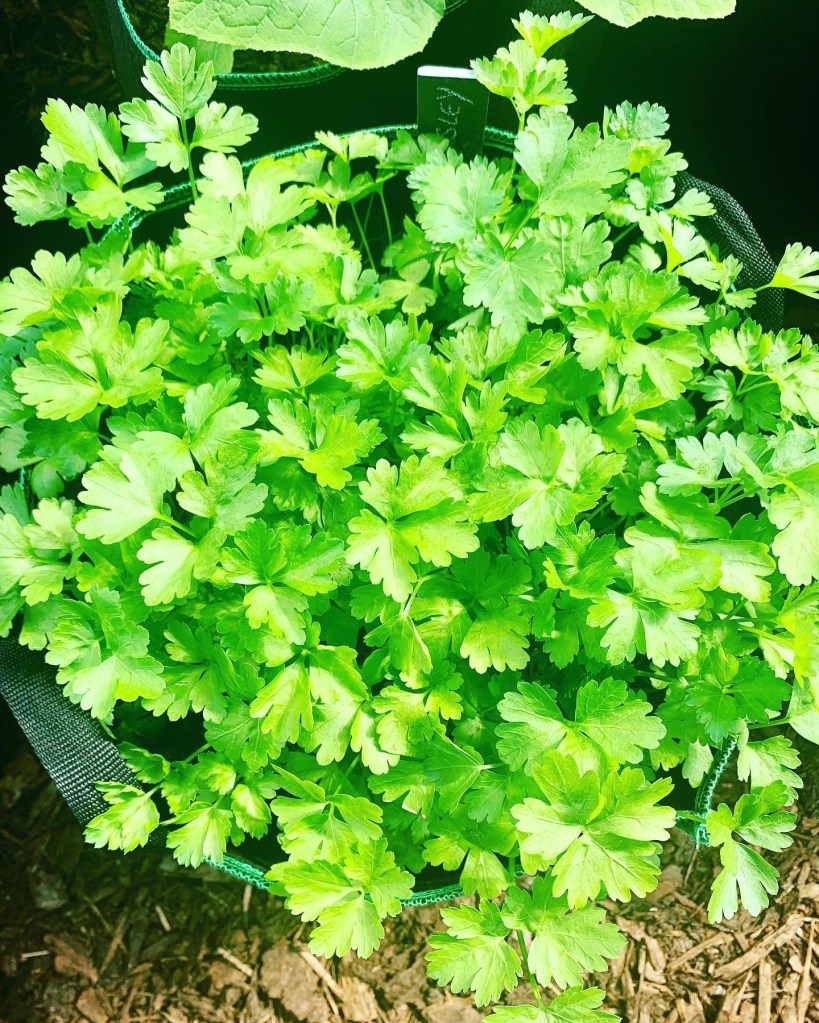
The herbs have gone mad – the tubs of parsley and coriander have gone crazy and we’ve been eating them for months, the dill the same and I’ve left some to go to seed for collection. The chives, lemon balm, rosemary, lemon verbena and mint are all growing well.
All in all, I’m happy with our first months of growing with the polycrub so far. It’s hard to believe that it’s only been here since mid April. I’ve learned a lot, and when we set up proper grow beds in there next year I’ll feel confident about what to plant out.
Now to start sowing the winter seeds! The year is turning already.
Taking it easy isn’t easy for someone like me. I get bored quickly, and convince myself that as long as I do things slowly or gently that they’re no effort. How wrong I’ve been.
Harvested onions
Junior Gardener has returned to Manchester now, so I’m on my own. Husband is busy with the house build and I don’t like to bother him with small things that distract him from his main priority, finishing the house!
I was told not to, but I pulled the flowering onions from the croft beds a few days ago. There were only a few dozen of them, and they came out of the soil easily. I didn’t feel that I had strained myself or exerted any real effort. I carried them through to the polycrub to dry and thought no more of it. I felt a bit tired afterwards, but that was it.
However, I was wrong. It did cause problems, and I’m now sitting with my legs up wishing that I wasn’t so stupid. I’m only two weeks into my recuperation, and the effort was too much too soon for my still traumatised body. Stupid, stupid.
I’ve learned my lesson, and won’t be doing any more gardening for a while yet.
I only hope that I haven’t caused complications with my recovery. What I should do is use the wonderful aromatherapy gift that a good friend sent to try and calm my thoughts and stop building “to-do lists” in my mind, and instead focus on relaxing and healing. She knows me better than I know myself.
I will also have to content myself with nothing more than gentle walks and wearing outrageous leggings for amusement. It’s about the level of what’s possible for me right now, and what passes for entertainment in these parts.
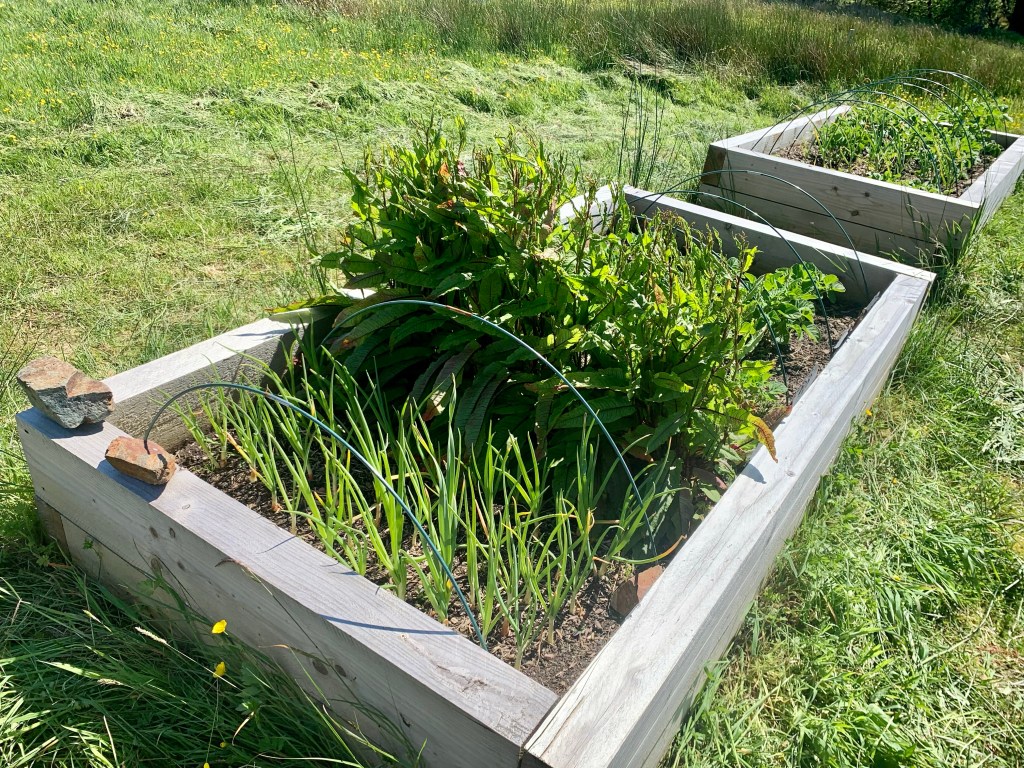
It’s amazing how quickly things grow at this time of the year. In the few weeks since I last posted about plant progress, the croft beds have filled up and are now bursting with foliage from the maturing potatoes, onions, garlic and kale.
Raised beds with sorrel in centre
The red veined sorrel planted last year was the only thing that the deer didn’t eat over winter, and in the last four weeks it’s shot up and is throwing out flower stems. We’ll keep the seed and cut it right back soon.
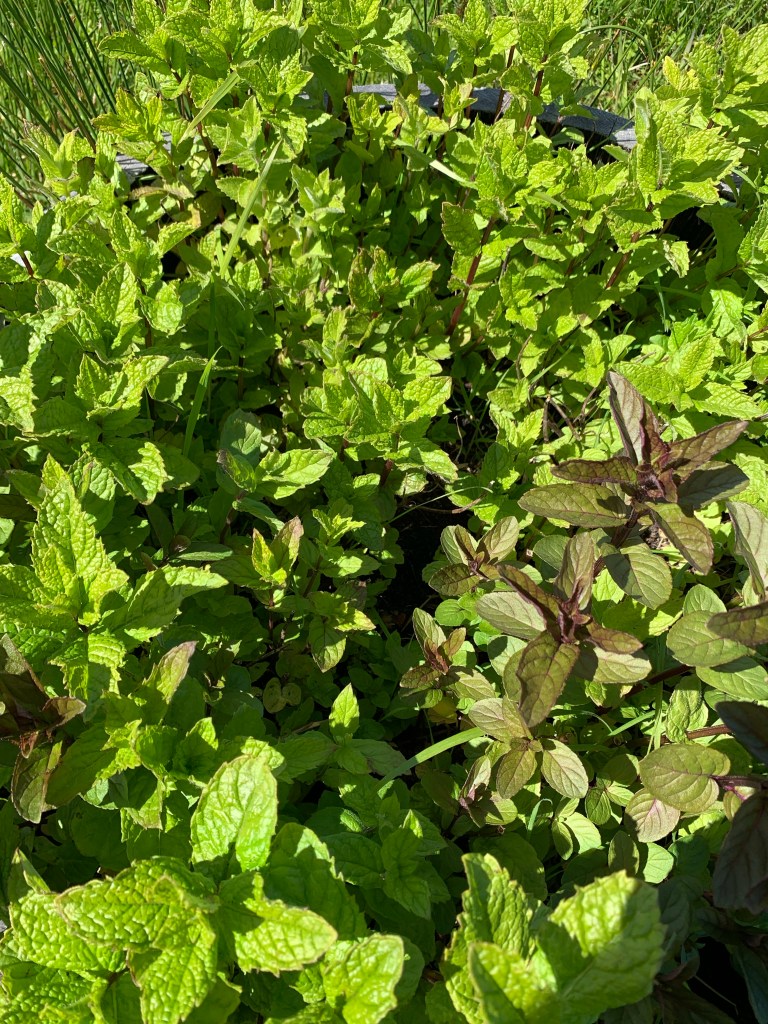
Mint going crazy Polycrub filling up
The polycrub plants are growing even faster. The tomatoes have flowers on them and the squashes, courgettes, beans and sweetcorn have all grown hugely.
Borlotti beans
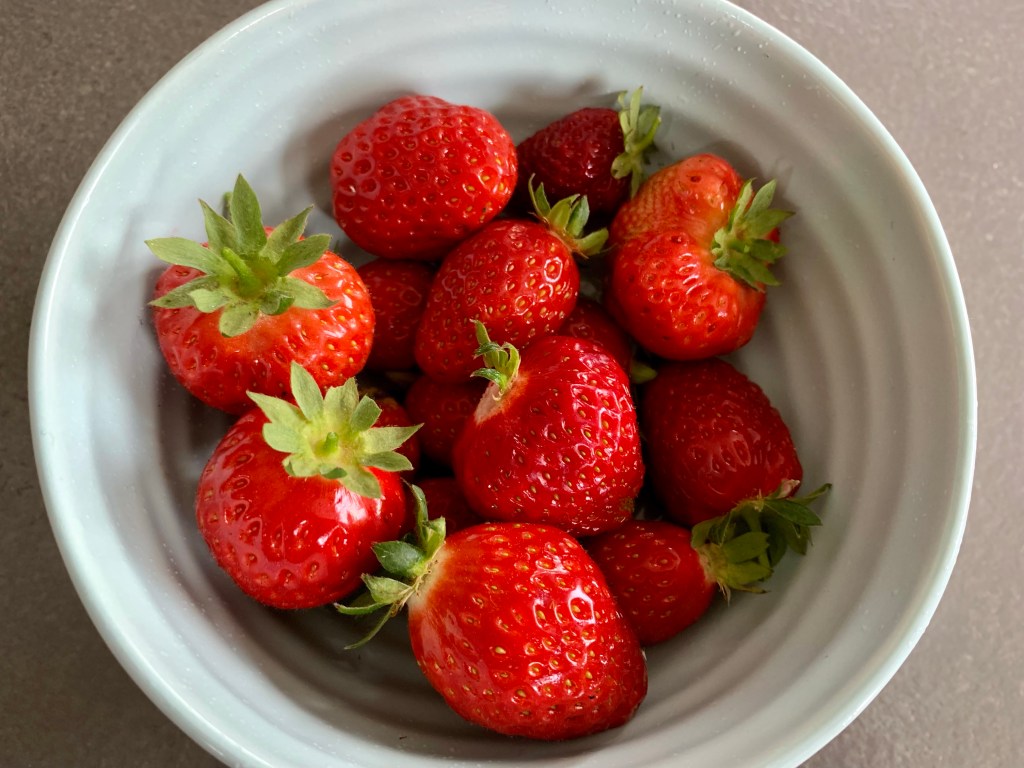
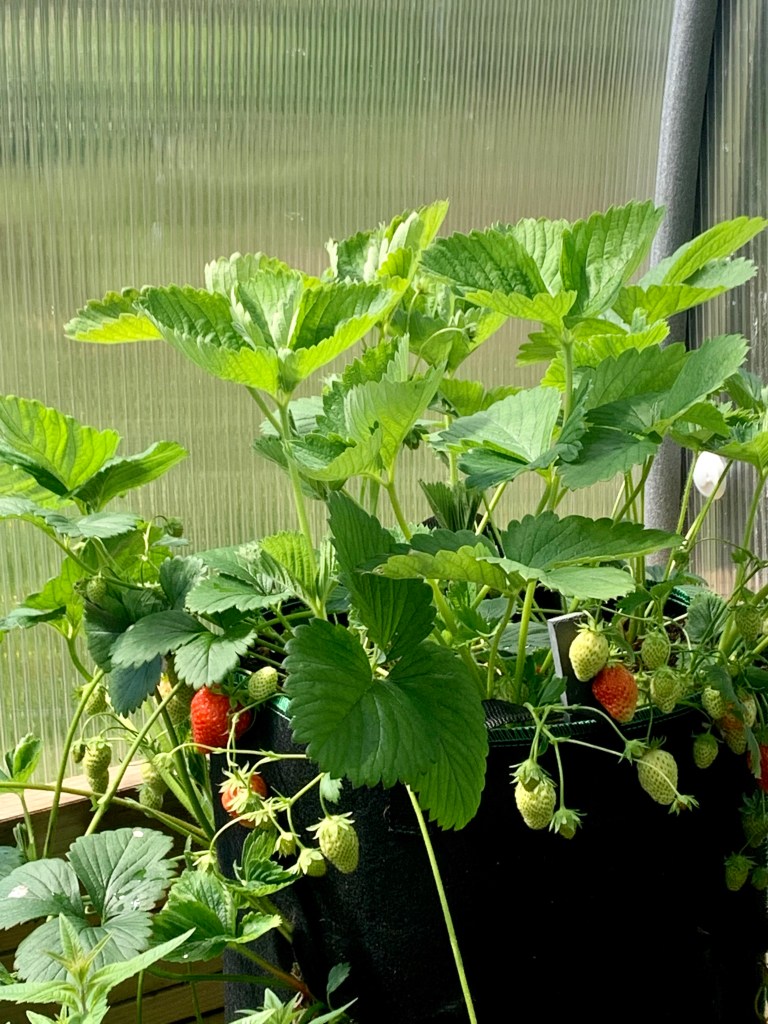
We’re already cropping strawberries from the three tubs of strawberry plants that we have. It’s just a small bowl each day, but they’re sweet and delicious.
Breakfast bowl of strawberry pickings
We have plans next year to increase strawberry production and as the plants are already sending out runners we should be able to propagate many more plants before next spring. We’ll install a couple of runs of drain piping to hold them above the raised beds.
StrawberriesHerbage (mammoth dill)
The days are long now. Sunrise is at about 4.30 am and sunset around 10.30pm, with the plants responding to the long days with rapid growth. The ravens set up a cacophony of noise at dawn to herald the start of day (thanks lads) and one of us potters over to open the polycrub some hours later once coffee has kicked in.
More herbage (parsley)
Soon we will start harvesting. We’re already cropping seed-grown parsley, coriander, basil and dill, as well as lettuce, but the potatoes and garlic won’t be long now. Then courgettes, spring onions, peas and beans. I’m already sowing purple sprouting broccoli, kale and pak choi to succession plant in the spaces that they will leave, and tomatoes, cucumbers, squash and corn won’t be far behind.
The polycrub is my happy place. It’s warm and sheltered and smells faintly of greenage and soil and the spiciness of growing leaves.
In a short burst of mild, sunny weather this morning I rammed on my wellies and headed out on to the croft. It’s well overdue time to prepare the raised beds for the seasons growing, and I’ve been waiting for a break in the storms for weeks.
The deer have been terrible this winter. They’ve eaten everything that was left in the beds, which I stupidly didn’t net for protection. Actually, the nets wouldn’t have survived the storms anyway.
Roll on next year when we will have time to deer fence the croft. I think it’s the only way.
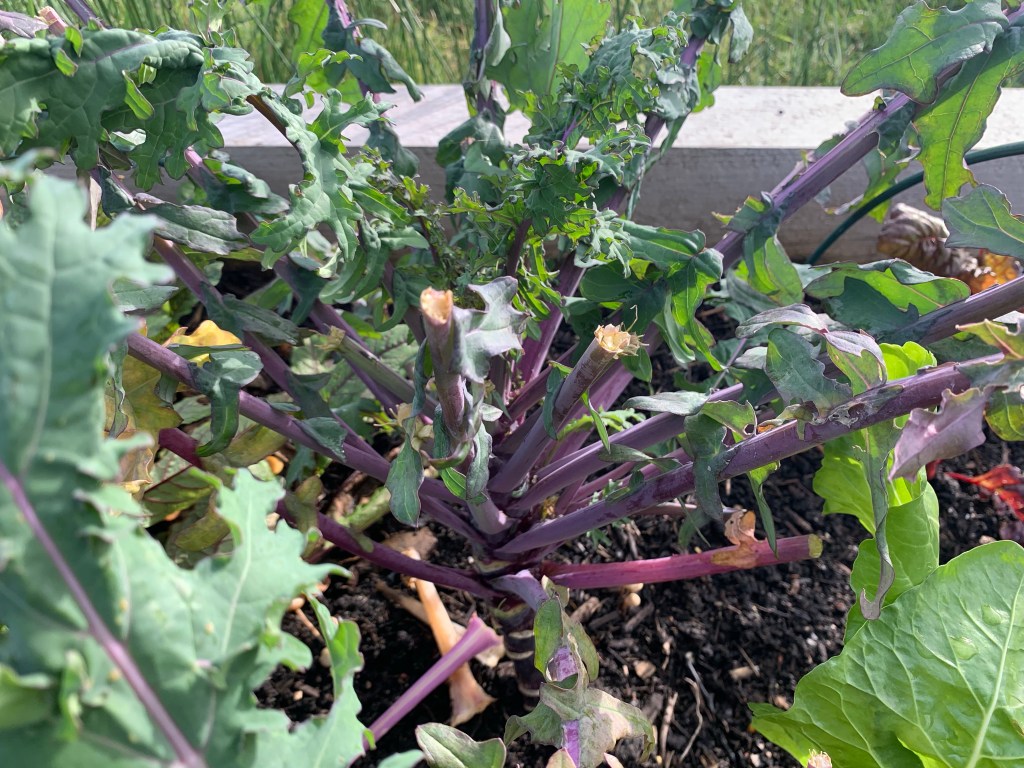
These are the remains of a couple of my perennial Taunton Deane kale plants. There’s basically nothing left of them, and I think that the damage is so severe that they won’t re-grow. The deer have even eaten rhubarb, spiky artichoke leaves and garlic, all things that they’re not supposed to like! It’s soul destroying after such a productive year of cropping from them.
However, despite the deer damage there are tentative, wonderful signs of spring.
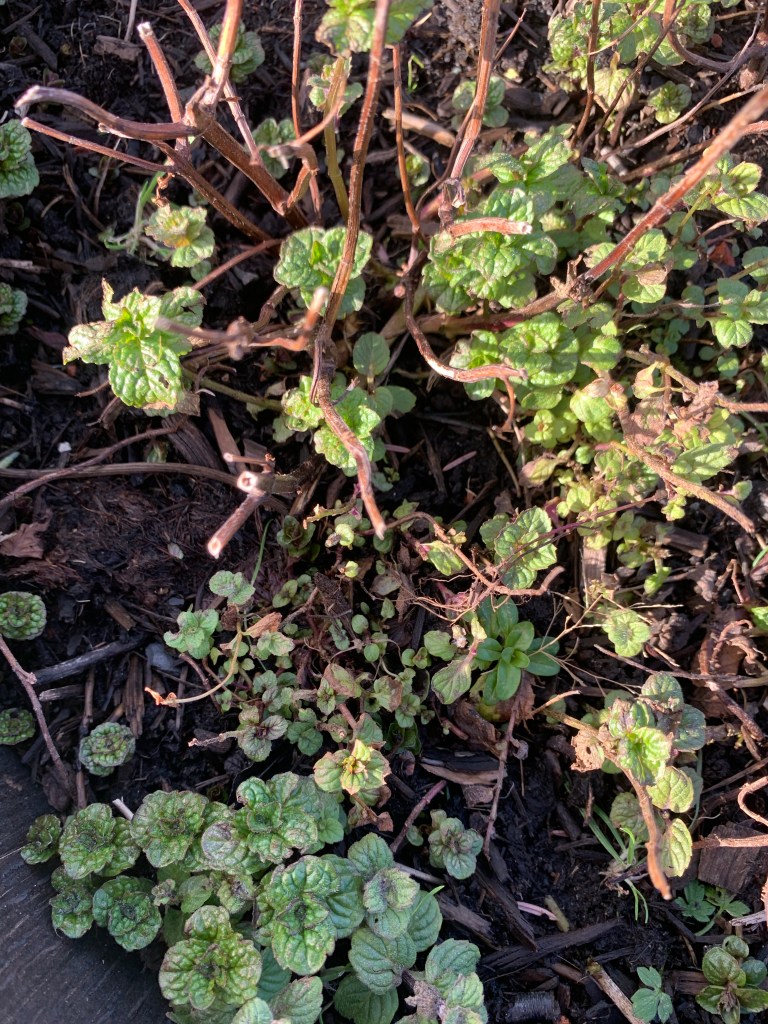
The mint has started to re-grow.
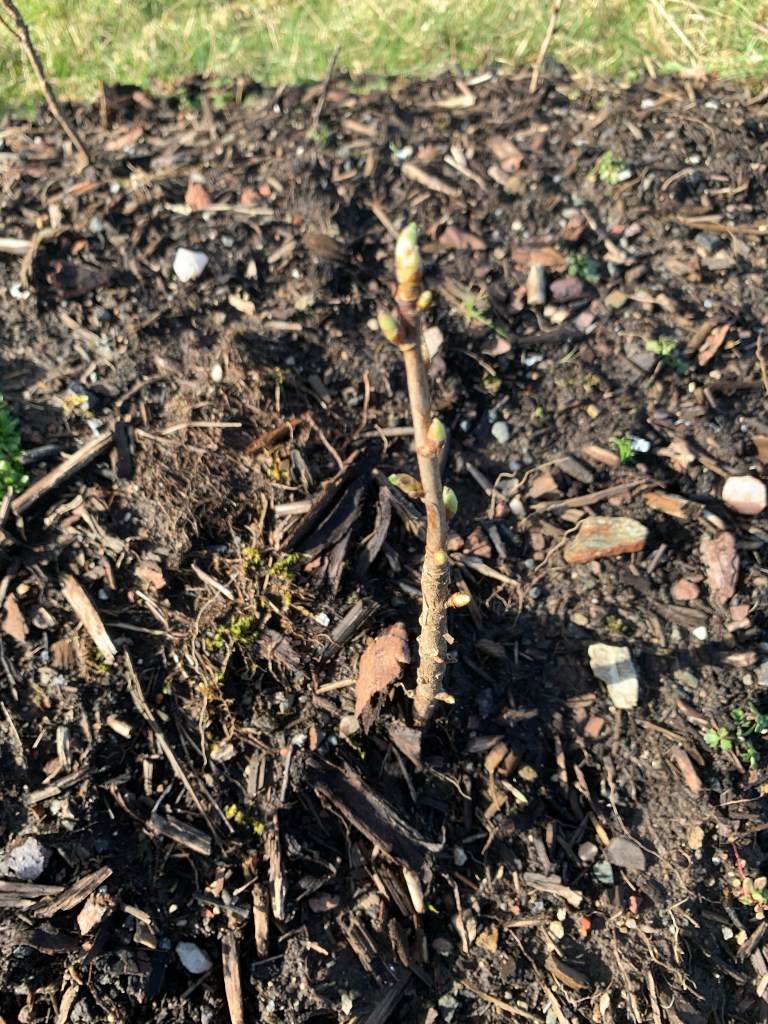
The berry cuttings are starting to break into bud.
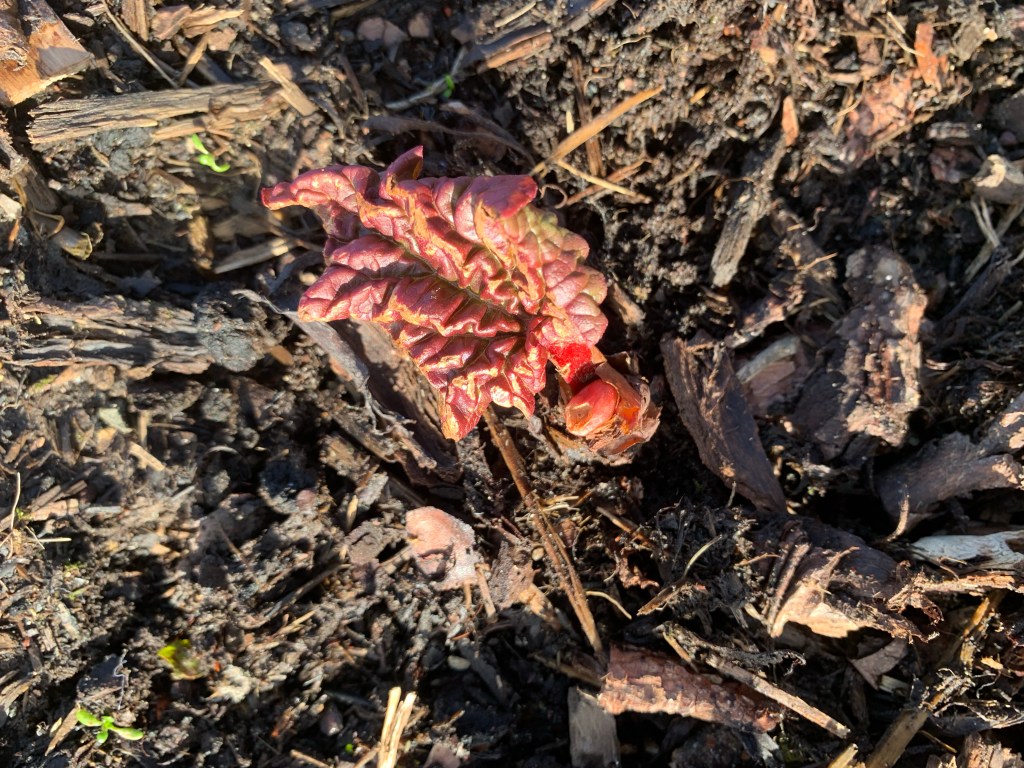
We have the first signs of rhubarb leaves pushing up through the soil like wrinkled red aliens.
I managed to weed a couple of the raised beds and get some red onion sets in before my back started to complain and I decided to beat a tactical retreat. I must remember to take it slowly at the beginning of the season, otherwise I’ll seize up after a whole winter of inactivity. And cake.
Gardening is a marathon, not a sprint. but it felt so good to be out there again.
It’s not all been perfect carrots and potatoes, y’know. Growing organically and without pesticides has been a challenge, and we’ve lost our fair share to the bugs and the deer. Mainly, it has to be said, to the damned deer.
Our hungry neighbours
Deer are not supposed to like garlic, onions, leeks or anything strongly scented. Ha. Ours obviously have exotic tastes. They’ve chomped through the green foliage of all three of these all summer.
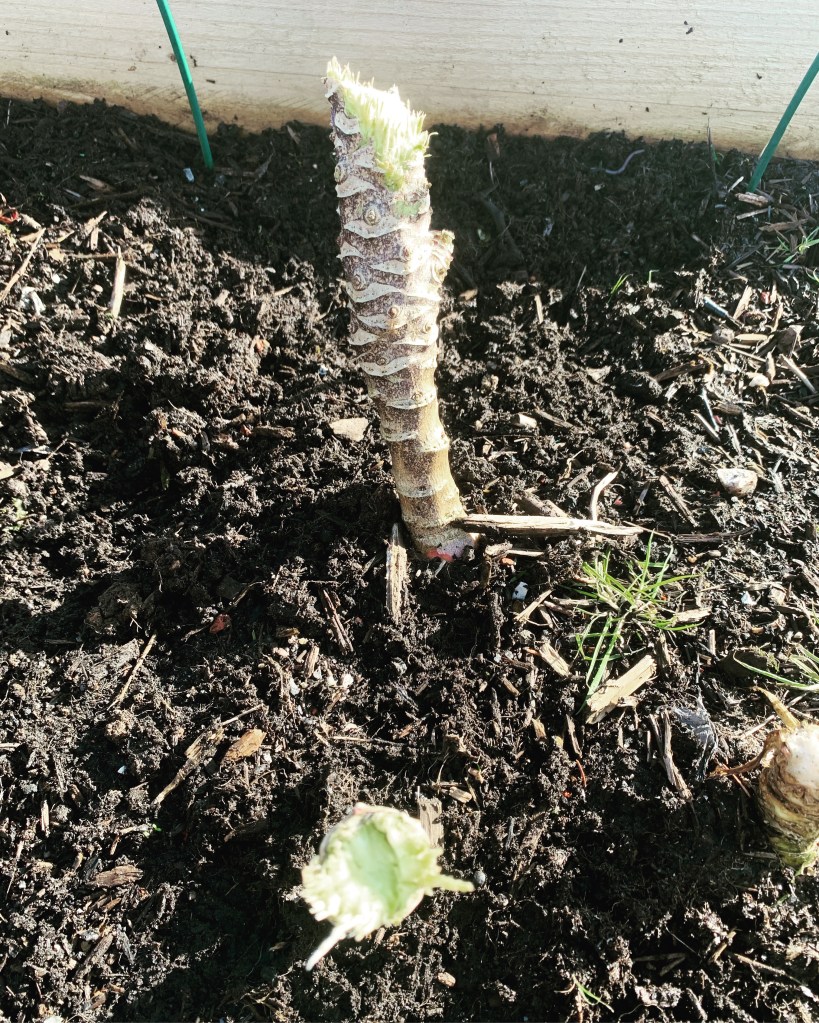
Plant globe artichokes, those in the know said. The leaves are big and bristly and the deer don’t like the texture of anything bristly or prickly. Ha. They’ve been eating the yacon and artichokes too, biting out the lead shoots completely on many of our plants.
It’s also the closest bed to the common grazings on the hill , and as such the most tempting, I suspect. The rest are annoyingly close to the caravan.
The distant remains of the artichokes
Kale was always going to be a crop that we knew would potentially suffer from their grazing, although they did wait until it was of sufficient size to be worth nibbling. Thoughtful of them. Then they feasted.
Chomped kale
What the deer didn’t eat, the caterpillars and other bugs did.
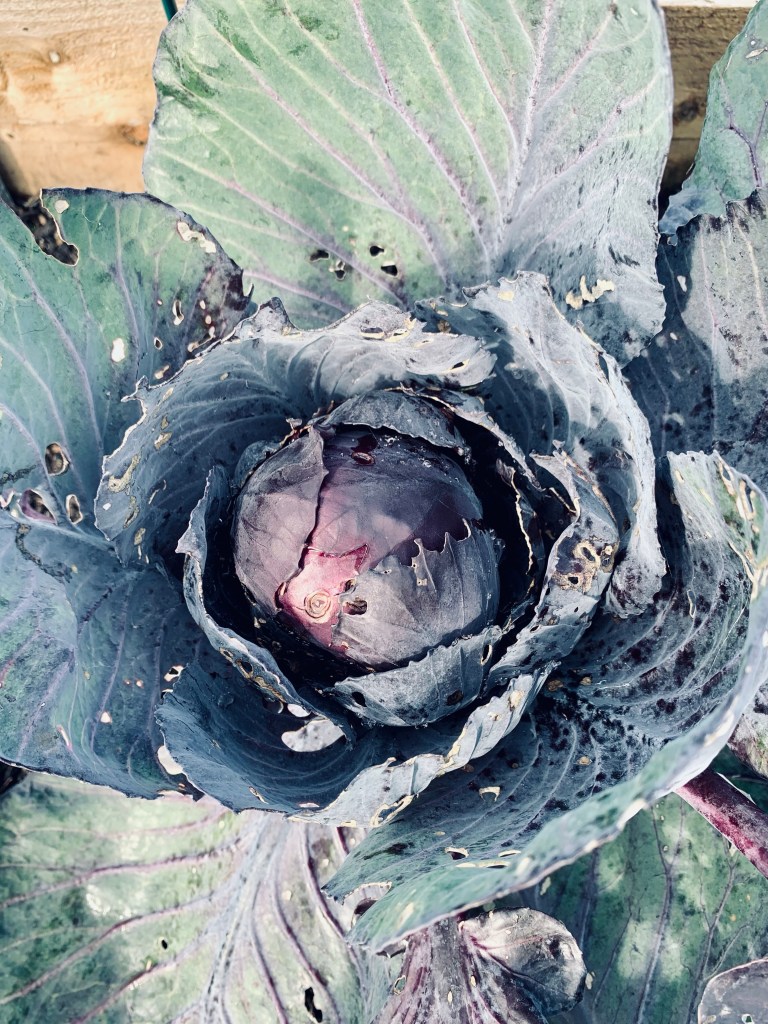
This is a picture of one of my red cabbages from the raised beds. As you can see, the leaves are like lacework, having been nibbled by whatever passing insects or caterpillars we are harbouring. Companion planting helped a bit, but most of the garlic and other strongly scented plants that were supposed to deter passing devourers had been harvested long before these cabbages were, and then the fun started.
Bug salad bar
I am not despondent. I’m happy to lose some to wildlife, but am determined to find ways to minimise the damage and maximise our crops. Our soil is productive and good. I think that netting against insects for longer next year will help, as will deer fencing around the vegetable plots, if not the whole croft.
It’s a journey, and we’re learning.
On the whole this growing thing has been surprisingly successful for us, and next year with the benefit of the knowledge gained from our experimental year, more beds and the polytunnel in place, we’ll be even more productive.
I’ve been watching the posts of successful gardeners up here with envious eyes as they cropped fistfuls of carrots from their vegetable plots.
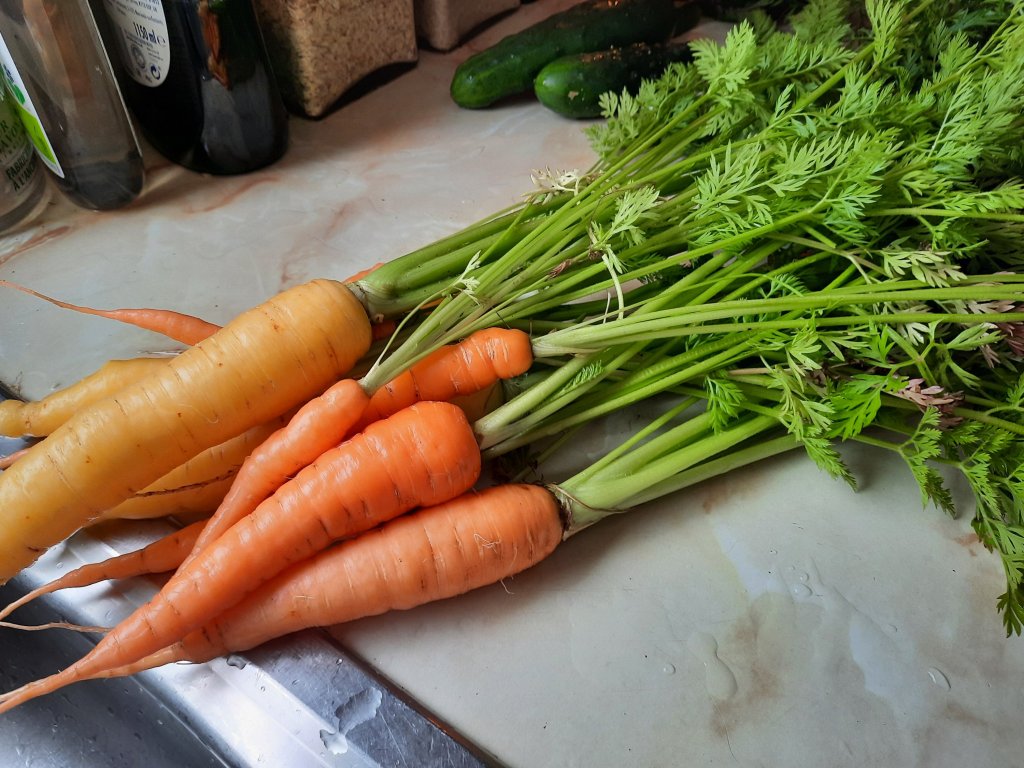
Carrots from the croft beds
I have been pulling the odd carrot here and there from my raised bed over the last month to see if there was anything much underneath the profusion of feathery green. I’ve prodded and pulled. To date, all to no avail. Up until this week all I’d found were a few pencil thin offerings.
Checking the beds a few days ago I noticed that some of the carrots were going to seed! Horrors. How could they go to seed on me without delivering as promised?
Armed with my fork I resolved to find edible carrots or else dig them all up and return the space to something more productive.
I’d sown two types from Real Seeds in the spring – the gloriously named Manchester Table carrot and the equally exotic yellow French heritage variety, Jaune D’obtuse. Surely one of them should have produced something by now.
I knew that I hadn’t thinned them very well. When the time came in early summer, something in me just baulked at pulling out young, healthy plants, and much as I understood that it was needed, I also suspected that my half-hearted attempts at thinning hadn’t been nearly rigorous enough. As such I was expecting skinny, weedy specimens at best.
My delight was complete when I delved into the forest of carrot rows and pulled up some good sized carrots.
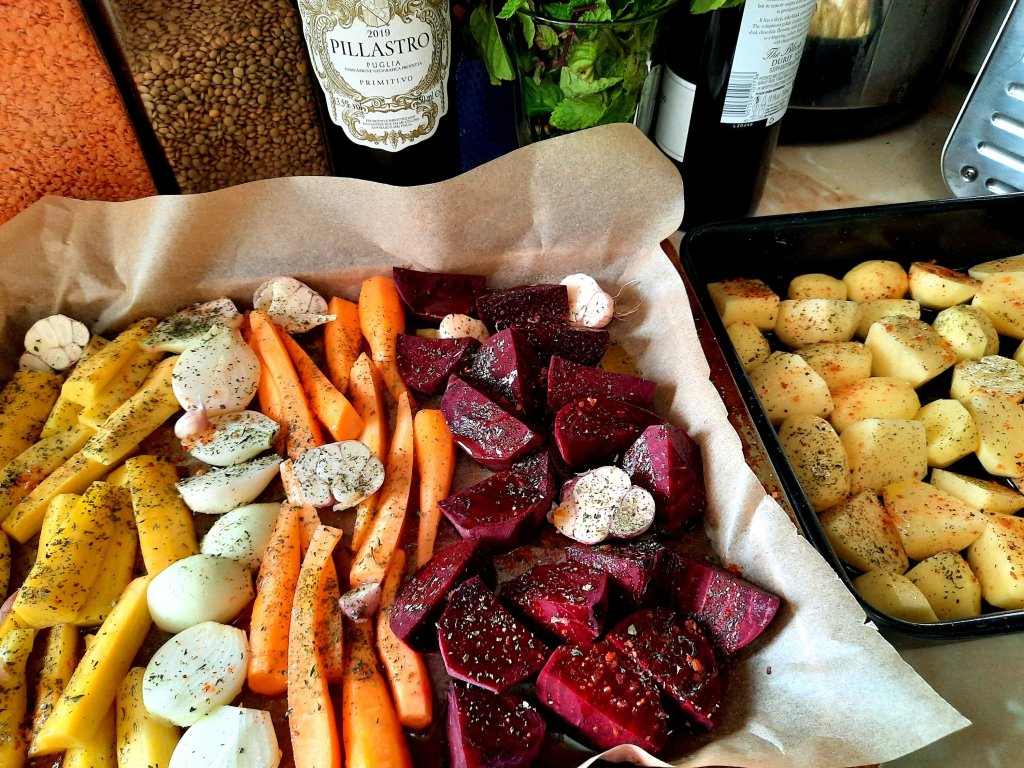
Croft vegetables ready for roasting
We roasted the first of these today with beets, potatoes, onions and garlic, all grown by us. They were delicious.
It’s just a carrot. But it’s my very first homegrown one, and it tasted all the better for that.
This is the season for eating from the croft, and the fresh produce is now coming in with abundance, even from the handful of small grow beds that we have. We are enjoying lettuce, kale, new potatoes, purple sprouting broccoli, chard, onions, peas and fresh herbs.
I’m being challenged to find new ways of serving this bounty, as we can’t store or freeze any produce this season.
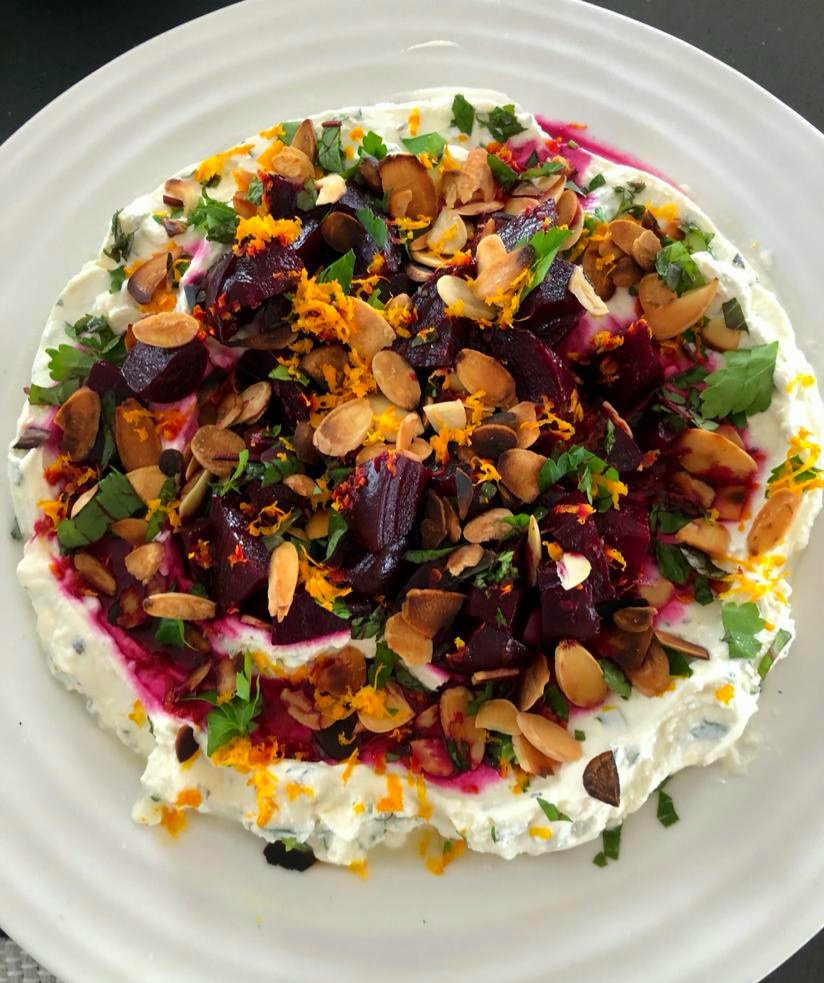
This is whipped feta with roasted beetroot, toasted almonds, orange zest, chopped mint and parsley.
I was so excited to try our first baby beets from the croft that I made this dish up specifically to try them. It’s adapted from one that I found that uses goats cheese.
Scooped up with oat biscuits, it was a light nibble to eat before a main meal with friends, but would easily make a lunch on its own. This will become a summer staple, I think, and I’ve resolved to definitely grow more beetroots next year!
Young onions from the croft
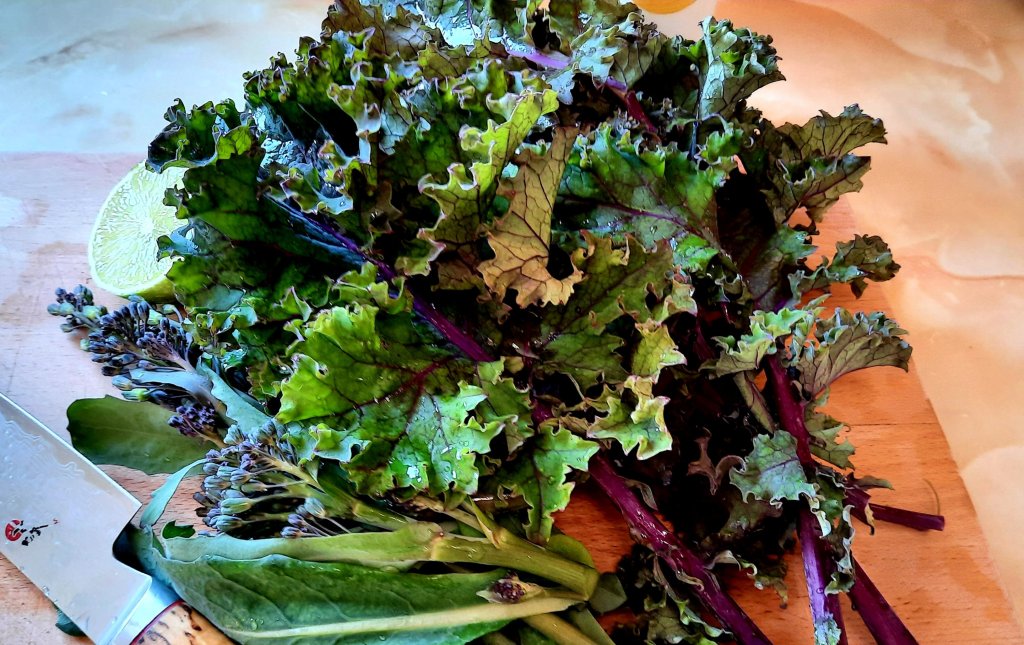
Tonight, kale and purple sprouting broccoli from the croft were the central vegetables in our meal. They were lightly sautéed with garlic, sesame, spring onions, lime, a bit of leftover chicken, and noodles.
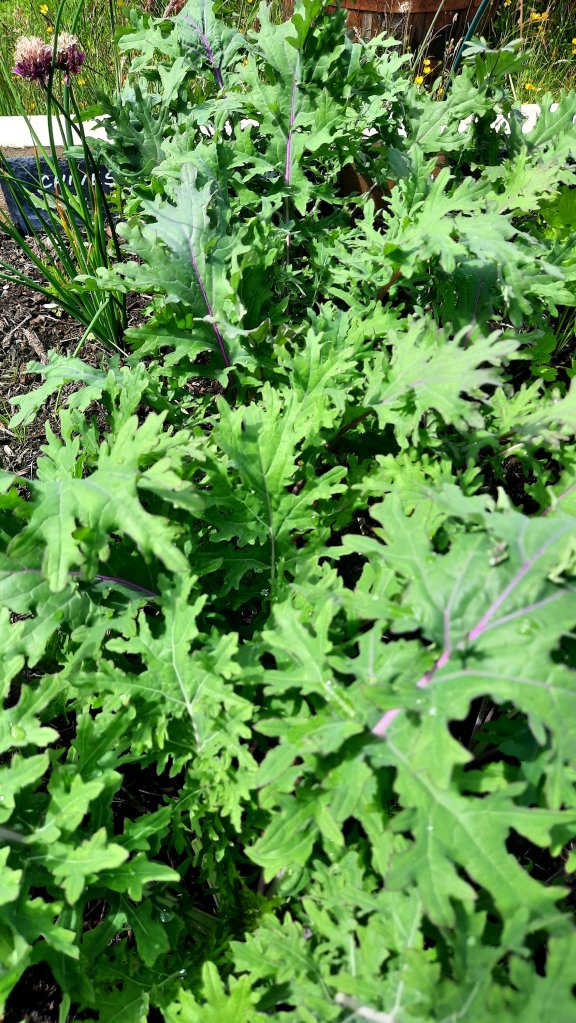
Uncle Bert’s kale
Lots of potatoes… cold potato salad, fried potatoes, garlic potatoes, mash here we come!
It’s all growing well in our raised bed experiment. Except the leeks, which are spindly little pencils so far.
I will be patient.
I’m mainly delighted and surprised by the profusion. It seems to have come all of a sudden. We’re cropping lettuces, potatoes, kale, sorrel, purple sprouting brocolli, chives, parsley, dill, mint, and rocket.
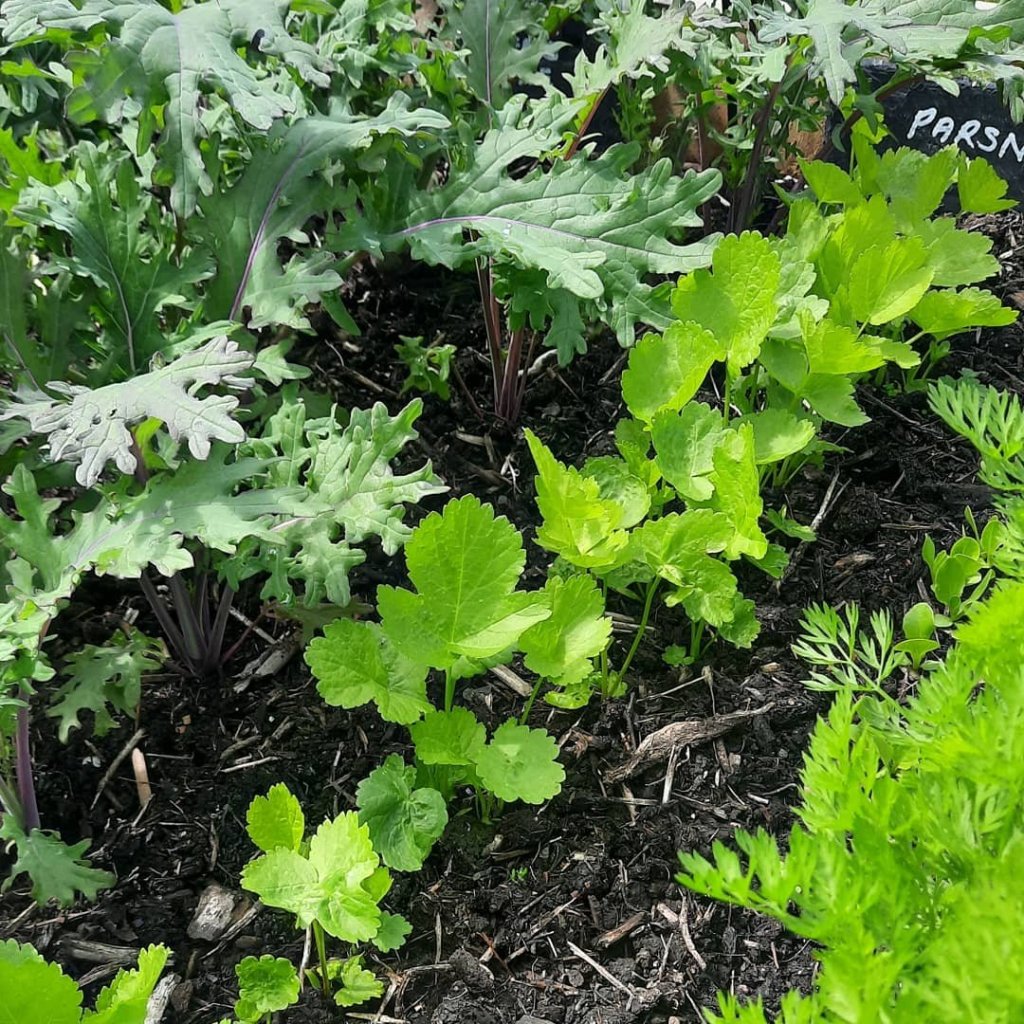
The beets, shallots and onions look nearly ready. The garlic is coming along, and the mammoth red cabbage leaves are starting to turn in. The parsnips are growing, as are the carrots.
It’s the rain, long hours of daylight and mild temperatures. Suddenly everything is leaping up as if wanting to make up for the slow, cold start of our late spring.
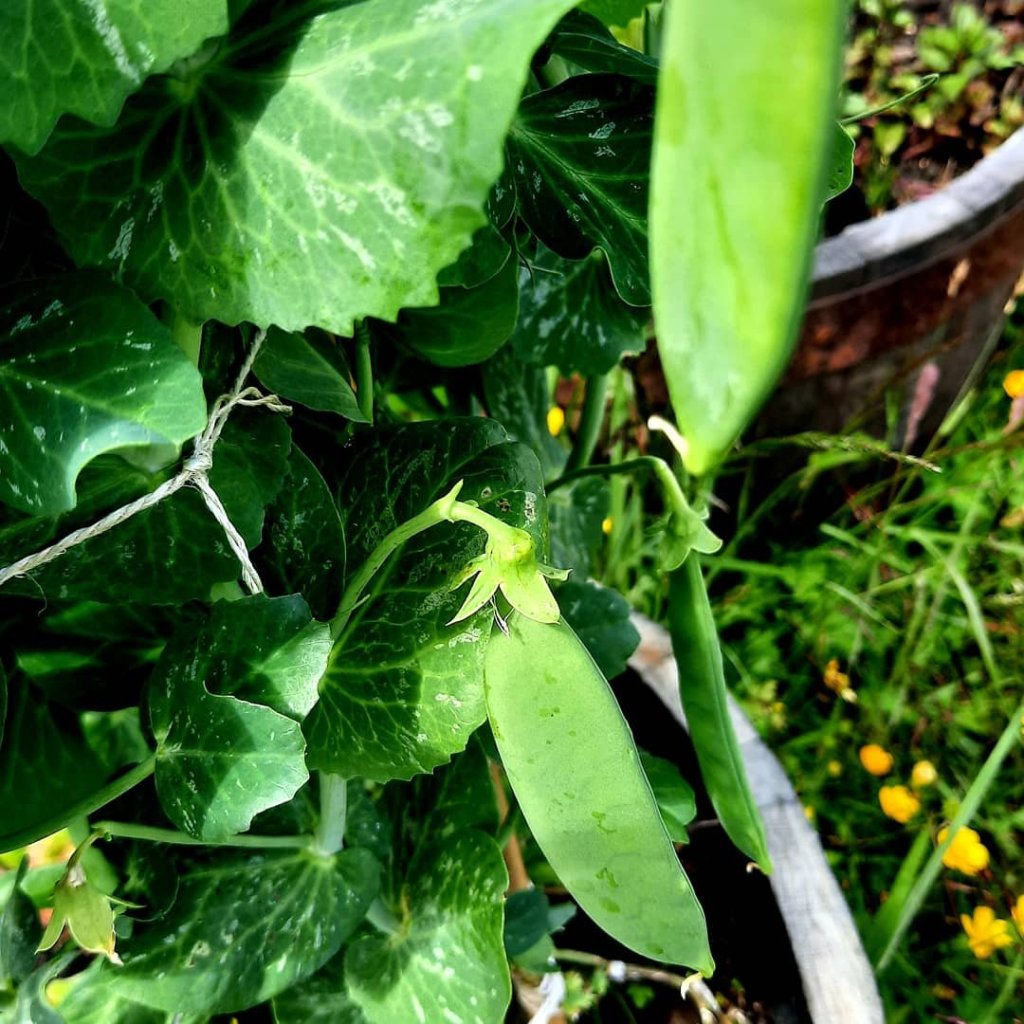
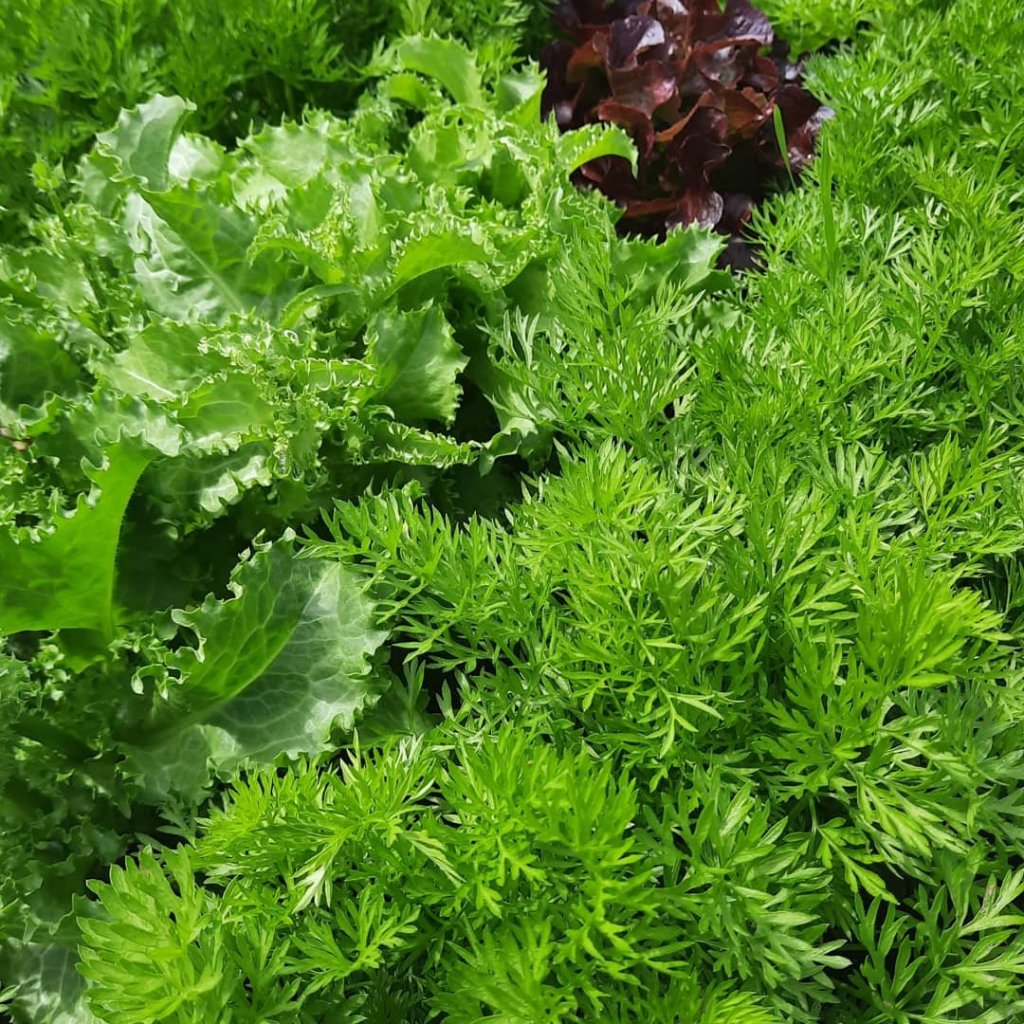
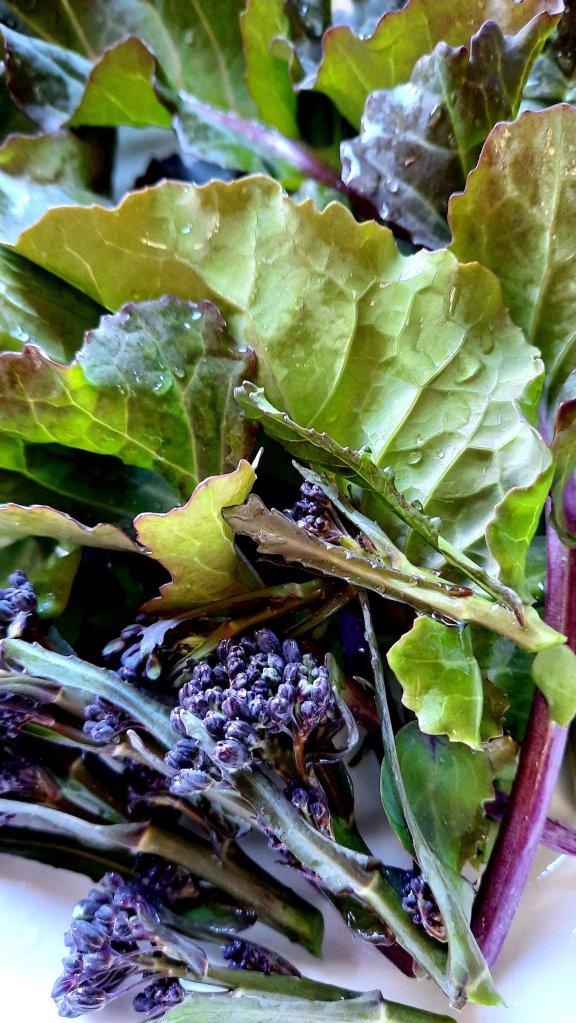
First crop of potatoesKale, beetroots, red-veined sorrel, onionsPeasParsnipsEndive and carrotsUncle Bert’s kalePurple sprouting broccoli










 Ravencroft Skye