Summer harvests and winter preparation

We’ve not had much in the way of a summer yet despite us being at the end of July, but the croft and the polycrub continue to feed us.
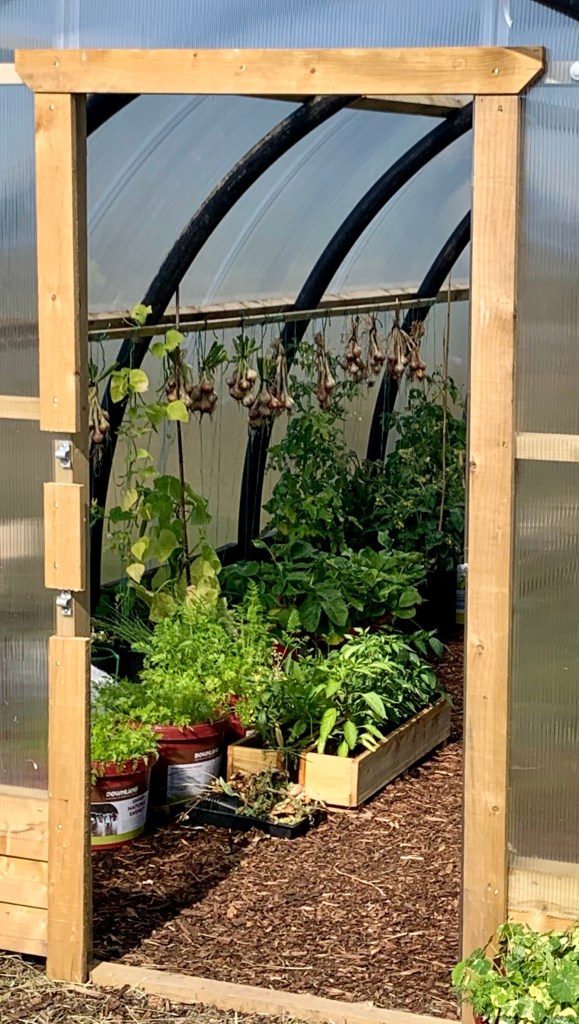
We dug out the rest of the onions yesterday. These are a variety called Keravel Pink, and they’ve produced what I think is quite a respectable harvest.

I chose these as they were the closest I could find to the Roscoff onions that I used to love when I lived in France. They’re an onion with a slightly blush colour, and sweet, firm flesh. They’re now hung up to dry, ready for use.
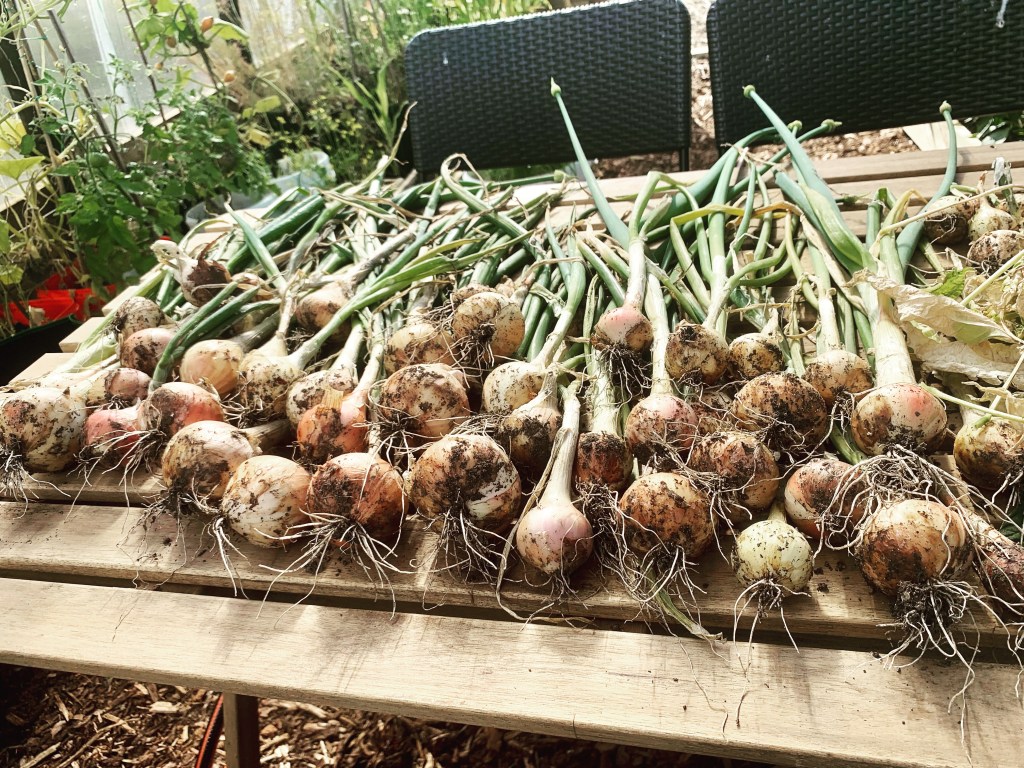
Husband also dug the rest of the potatoes as we were starting to detect slug – and believe it or not, deer damage. We’ve had a few meals already from them. It’s a smaller crop than last year, probably caused by the cold, wet weather and they could have done with a bit longer in the ground, but they’re a reasonable size. To be honest, we like ‘em small and sweet.
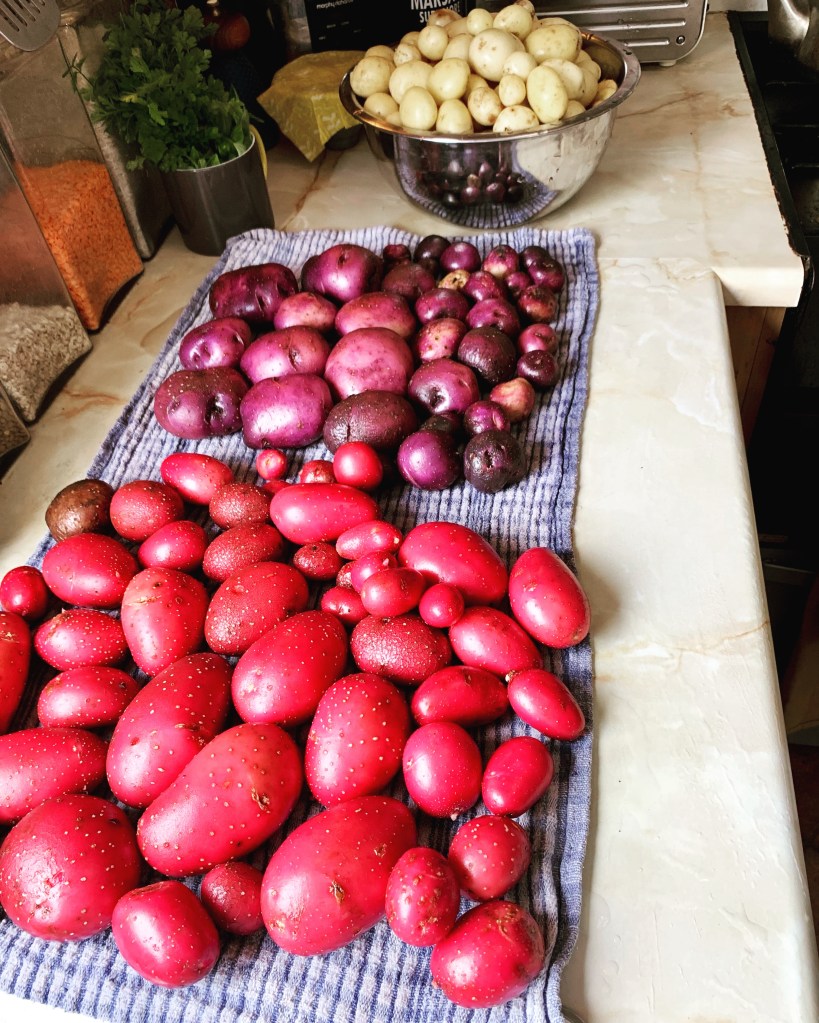
I planted Edzell Blue and Casablanca varieties from Scottish seed potatoes and Red Rooster from a bag of sprouted supermarket potatoes. The supermarket ones outperformed the specialist ones by a reasonable margin for a second year!

The first of the carrots are ready now, and I’m going to sow more. They’re sweet and very flavoursome.

The sweetcorn experiment is progressing! We have flowers and silks on a few of the plants, so I’ve been hand pollinating with the hope that we manage to get a few cobs at least.

All in all, not bad for a low-effort croft nurtured using organic principles and no-dig beds, in this weather and whilst not at my best due to illness. No pesticides, no inorganic fertilisers, no chemicals. I love that we can pick produce straight from the plant. The soil is fertile and giving, and we will continue to develop the beds next year with windbreaks and deer protection.

It seems strange but I can already detect the first wisps of autumn drifting in from the edges. The leaves on the ancient horse chestnut at the end of the lane are starting to turn russet. The seed heads on the long croft grasses are ripe and heavy. The season feels about to turn.

Time to start sowing the winter crops.
Deer damage and alien life

In a short burst of mild, sunny weather this morning I rammed on my wellies and headed out on to the croft. It’s well overdue time to prepare the raised beds for the seasons growing, and I’ve been waiting for a break in the storms for weeks.

The deer have been terrible this winter. They’ve eaten everything that was left in the beds, which I stupidly didn’t net for protection. Actually, the nets wouldn’t have survived the storms anyway.

Roll on next year when we will have time to deer fence the croft. I think it’s the only way.

These are the remains of a couple of my perennial Taunton Deane kale plants. There’s basically nothing left of them, and I think that the damage is so severe that they won’t re-grow. The deer have even eaten rhubarb, spiky artichoke leaves and garlic, all things that they’re not supposed to like! It’s soul destroying after such a productive year of cropping from them.

However, despite the deer damage there are tentative, wonderful signs of spring.

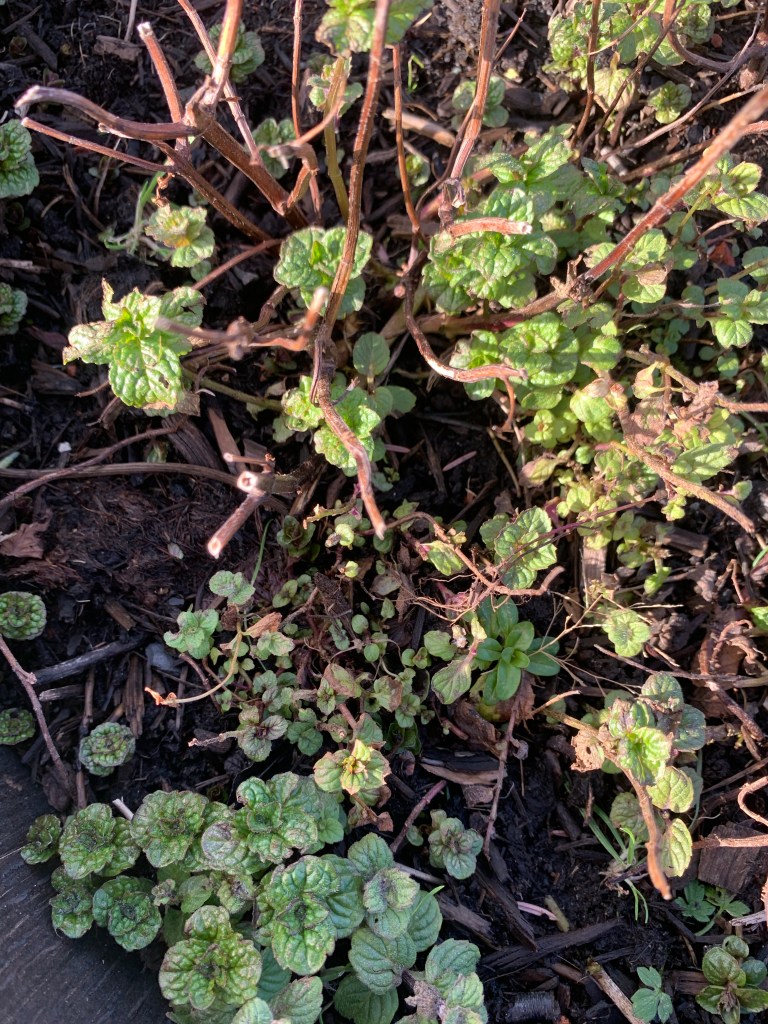
The mint has started to re-grow.

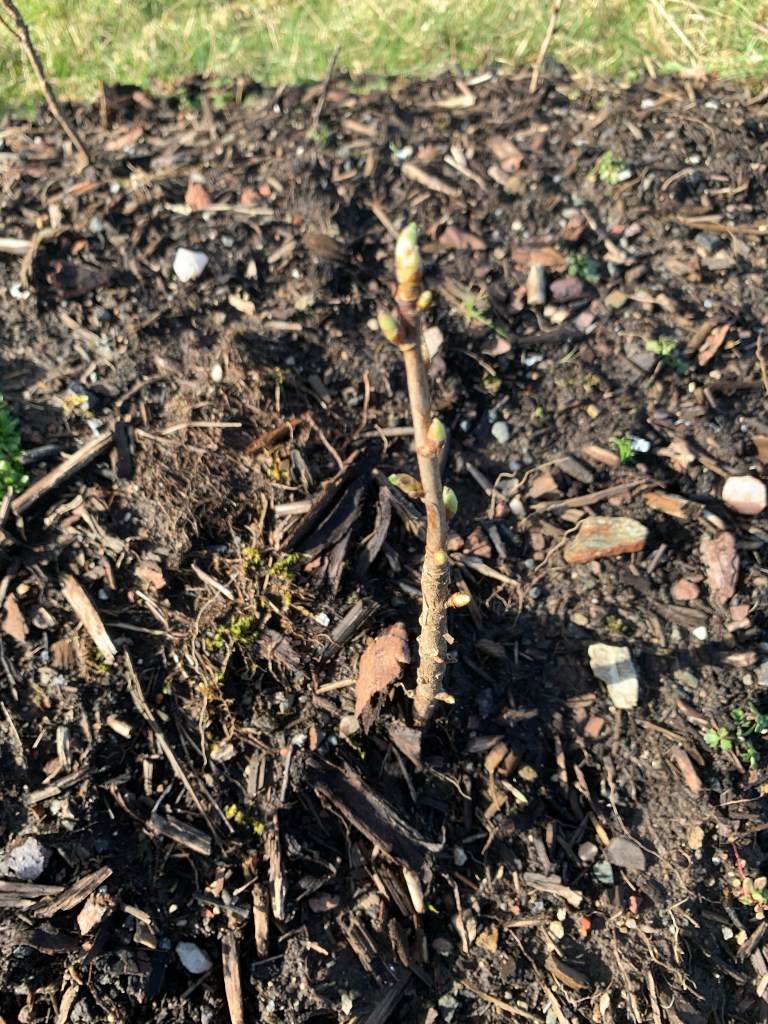
The berry cuttings are starting to break into bud.

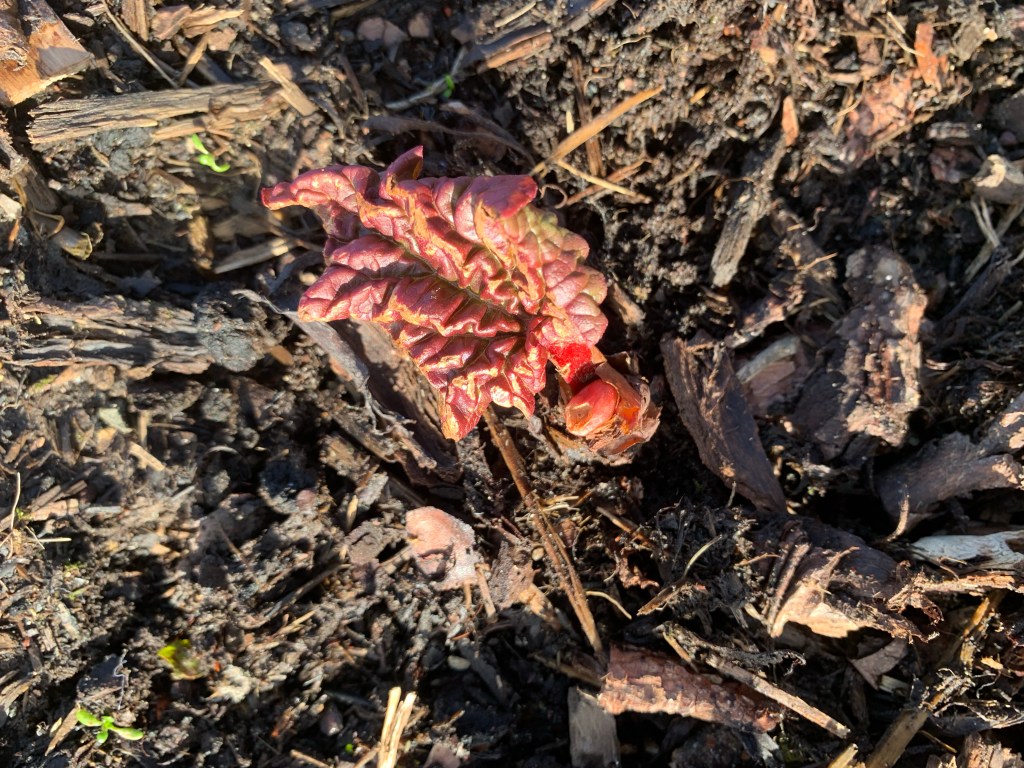
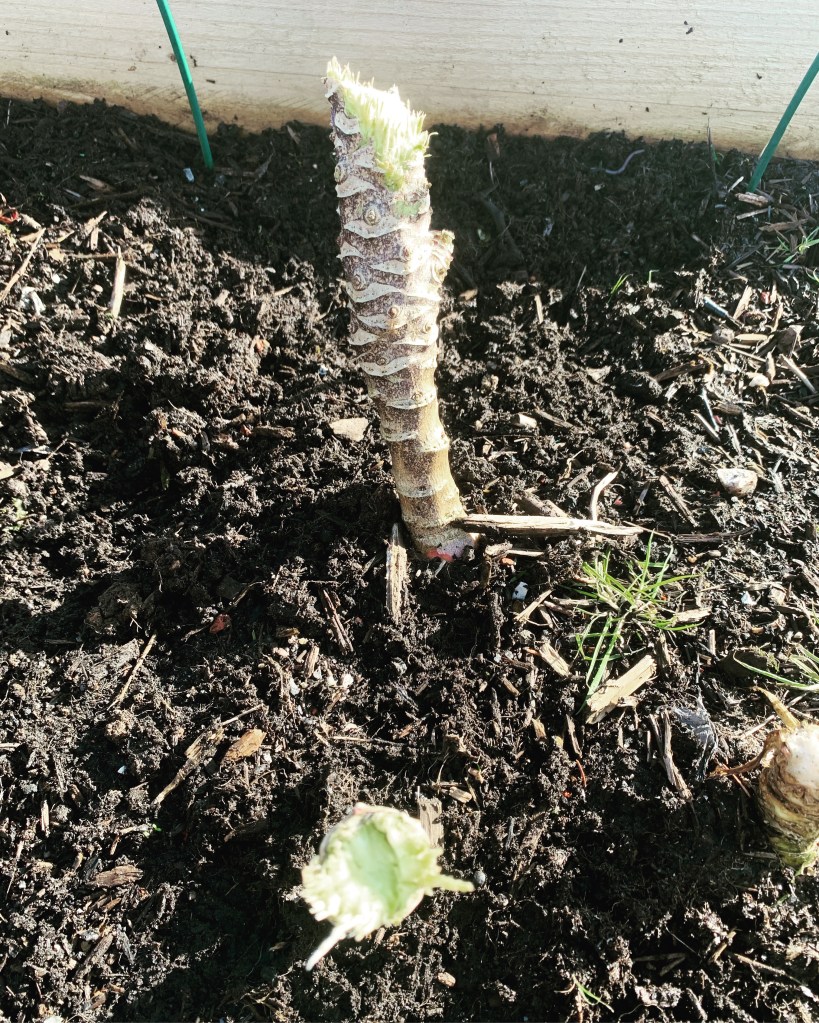
We have the first signs of rhubarb leaves pushing up through the soil like wrinkled red aliens.

I managed to weed a couple of the raised beds and get some red onion sets in before my back started to complain and I decided to beat a tactical retreat. I must remember to take it slowly at the beginning of the season, otherwise I’ll seize up after a whole winter of inactivity. And cake.

Gardening is a marathon, not a sprint. but it felt so good to be out there again.

The first raised beds

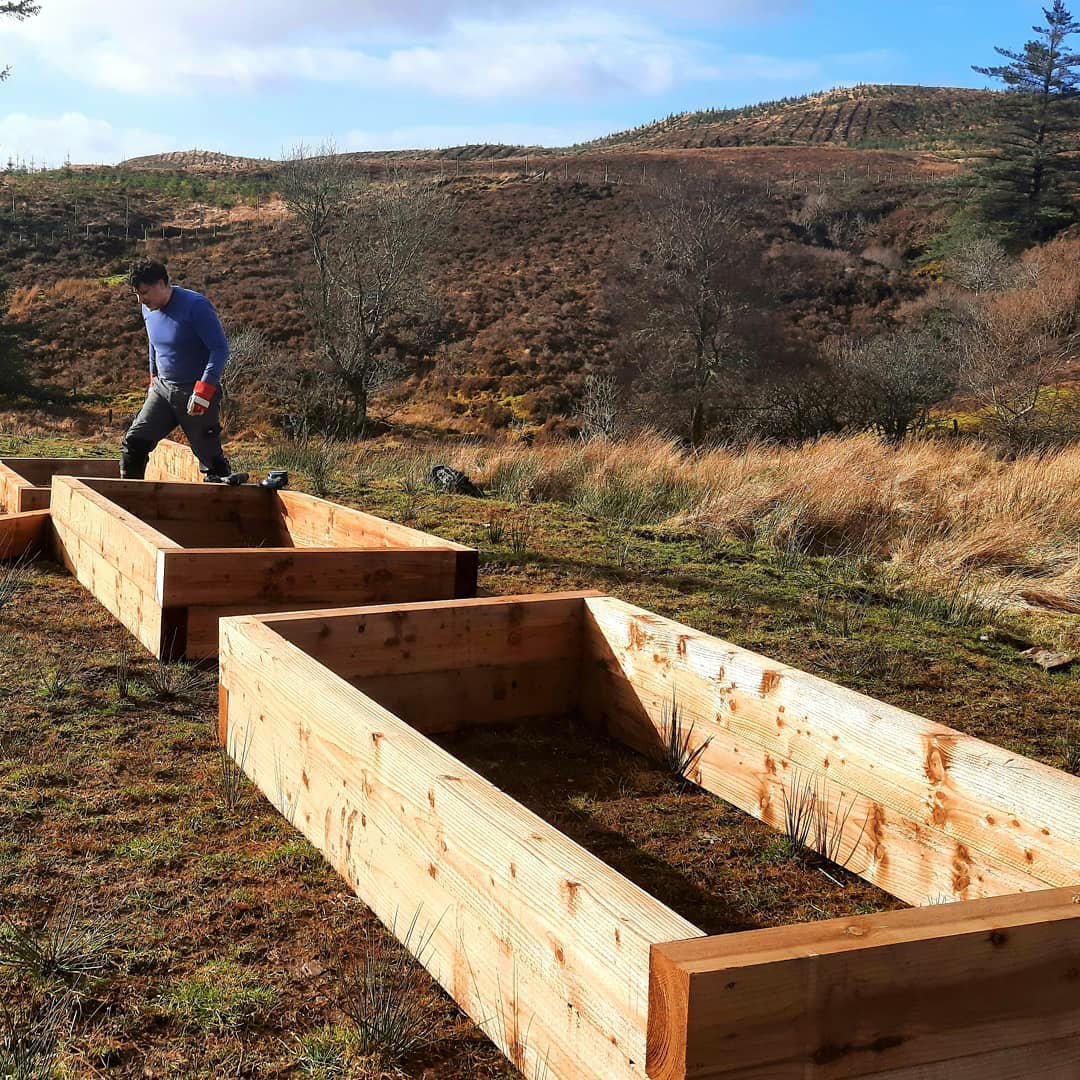
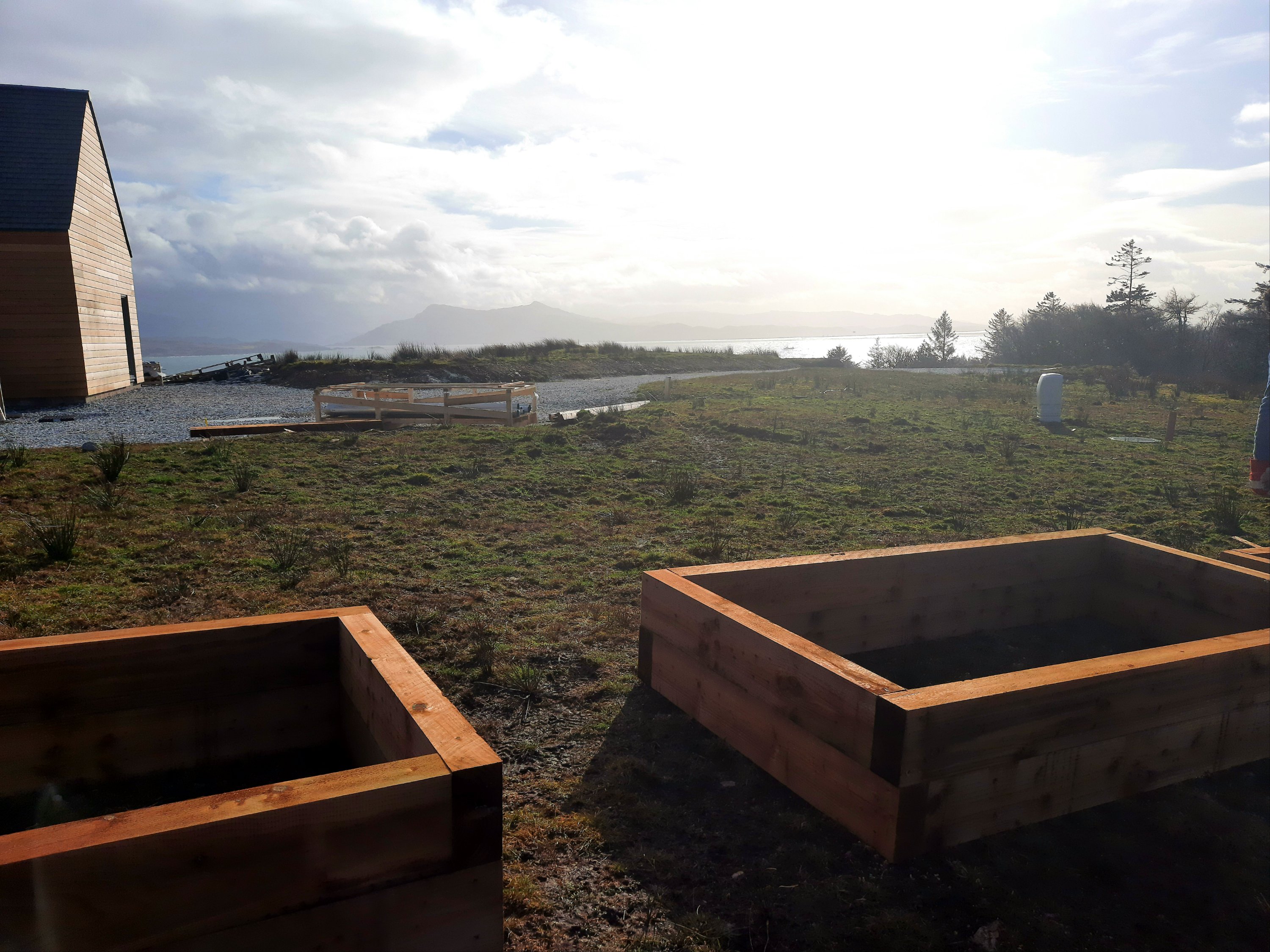
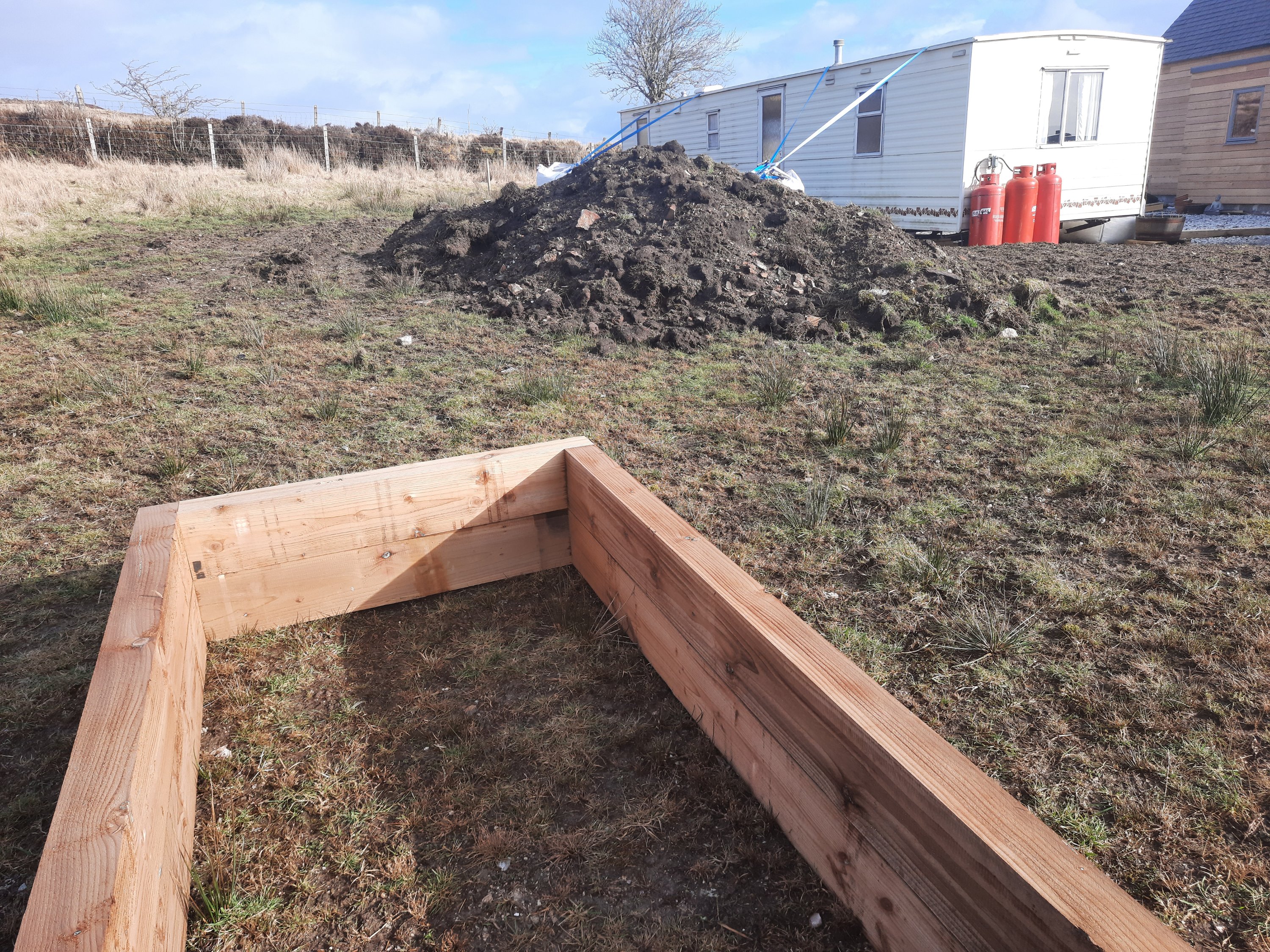
The first three raised beds are built and in place. Hurrah! Another small but significant milestone on our croft journey.

There was a short gap in the weather this morning which husband took advantage of. The timber was cut, positioned and screwed together to create three high sided, solid boxes.

The challenge here is the exposure of the site. We receive the full force of the South Westerlies which whip over the croft, with only limited tree cover to the west. The flat land that is cultivable is close to the house and right at the top of the hill.

In terms of positioning I wanted the beds close to the house for ease of access and proximity to water supply. They also needed ideally to be oriented east-west to maximise exposure to sunlight, and if possible be sited on flat land. The perfect (and only really viable) place here is going to need good wind protection.

We will put up a heavy duty mesh windbreak whilst we plan what type of hedging should be planted here, get the basis of the hedging in, and that will be it for this year. I can start with basic, small scale vegetable production in between house building.

We’re also keen to get compost piles started, so timber to construct a couple of adjacent compost bays is on its way.

Behind this row of beds I’m thinking of trying a hugelkutur bed, which I’ve read great things about. We will have wood debris that can form the core of it from fallen branches from the existing trees, and we should have home grown compost by next year.

First things first though.

Tomorrow I will line these beds with cardboard as a weed suppressant and start moving and de-stoning soil to fill them. This huge soil pile was excavated from the croft when the builders dug the parking area the caravan is sited on, and it will form the bulk of the growing material in the beds, topped off with compost mulch.

It feels good to be preparing for growth.

The Walnut Tree

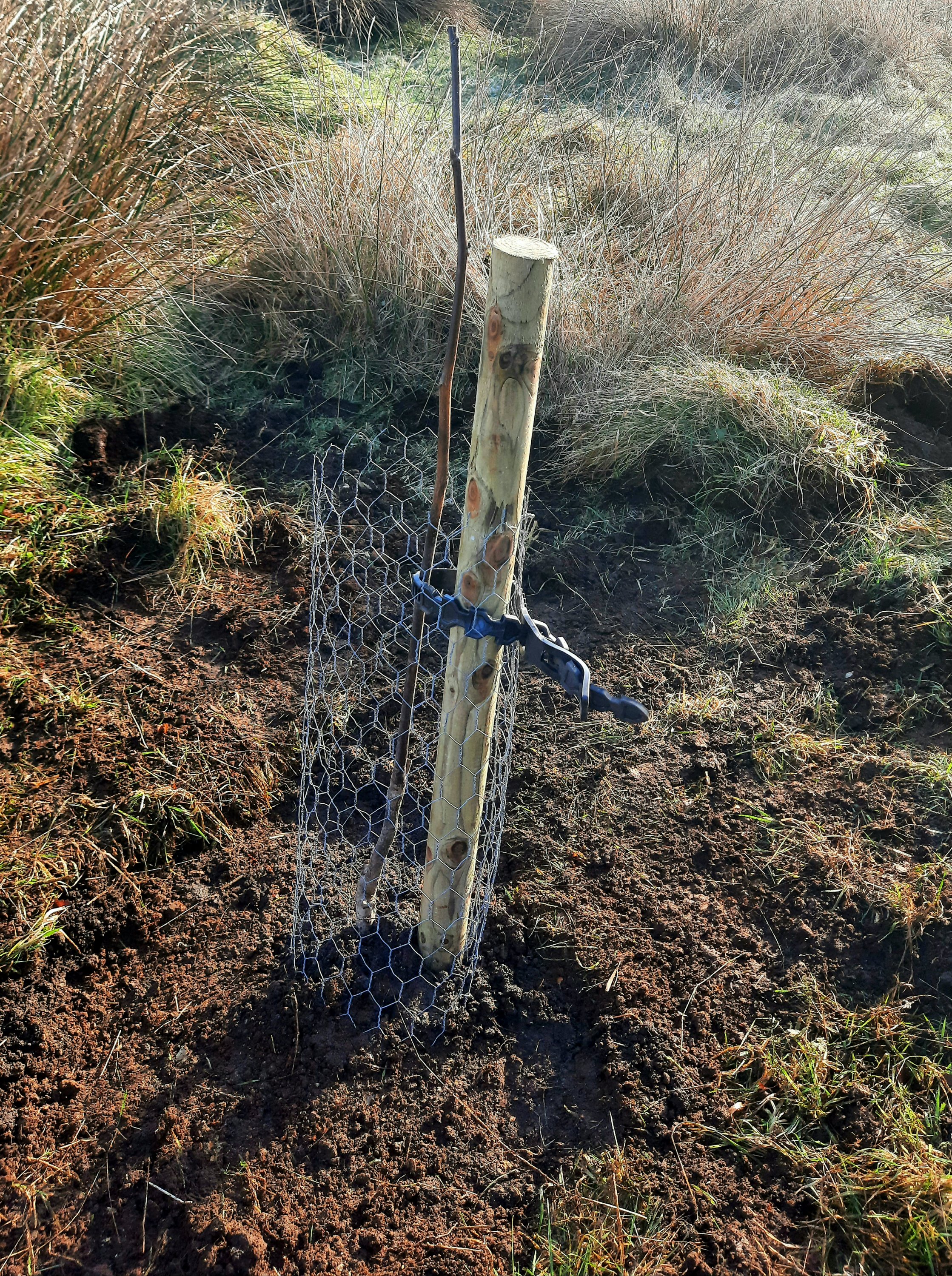
A wonderful parcel arrived in the post yesterday. Carefully wrapped and attached to a wooden stake was a young walnut tree.

This was a gift from a friend as a moving-in present, and had been dispatched from a specialist supplier in England when the planting time was deemed right.

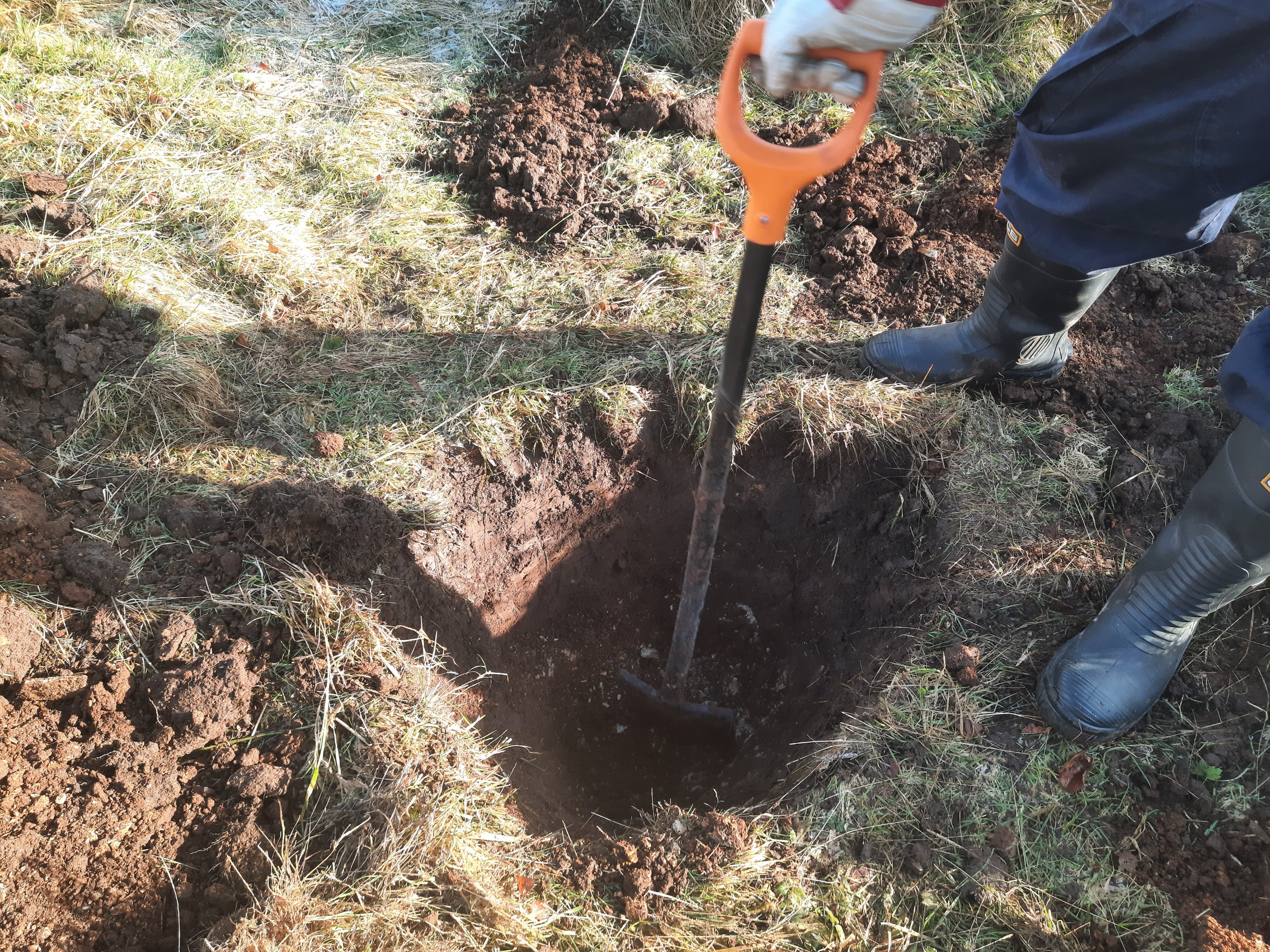
We were a bit concerned that the ground up here would still be frozen, but a few exploratory shovelfuls established that the soil was fine beneath the grass and rush cover.

We chose a spot that was in full sun, relatively flat (as walnuts don’t like steep slopes) and with some shelter from the prevailing south westerlies from the bank of trees nearby on the western boundary of the croft.

Husband dug the hole. The soil is surprisingly fertile and loamy, and we managed to get to 60-80cm before hitting shale. I hope that it will be enough for the little tree.

Our very first tree planting on the croft, and hopefully the first of many.

Thank you so much, Jo x

.

Seedily Yours

I may be getting ahead of myself a bit here, as we don’t have any vegetable beds dug yet, but I couldn’t resist buying a few seeds to start things off next spring.

I had to do it. I was starting to get worried about reports that the pandemic was causing seed companies to run out, and that there wouldn’t be any left if I ordered too late. So over a cup of tea and a few rainy afternoons I pulled together a seed order, and they arrived last week.

It’s such a lovely feeling when the post arrives and you open the parcel. The fat little paper seed packets fall out, sparklingly full of promise!

Many of these things need a few years to establish before they can be cropped, so it made sense to start next year even if we are busy with the house build.

I just need to find a few days in the Spring to get my husband to help build windbreaks, plant protective hedging, make a couple of raised beds and get the soil prepared. I’ve worked out the most sheltered spot for the raised beds and a planting plan.

Most of these seeds aren’t sown directly into the soil until April/May or even later, so there is time.

I’m also looking at cold frames for a bit of protection for some of the young plants, although wherever possible I will plant into the beds directly. I don’t have a greenhouse or polytunnel yet and there will be no room in the caravan for lots of trays of seedlings.

I’m going to try to grow beetroot, onions, carrots, kale, salad leaves, cabbage, potatoes, rainbow chard, and winter squash (I know this one might be a challenge, but it’s worth a try). I also want to have a berry bed, and grow rhubarb, so am looking for varieties and crowns that will work well in our extreme climate.

I’m going to start with just a few berry bushes and vegetables and increase the variety next year once the house is finished and we can start to spend more time on the croft itself. It’s going to be a busy year of experimentation, working out what grows well here.

Once we start growing things I think the process of rooting ourselves to this land will finally have begun properly.