Growing beds

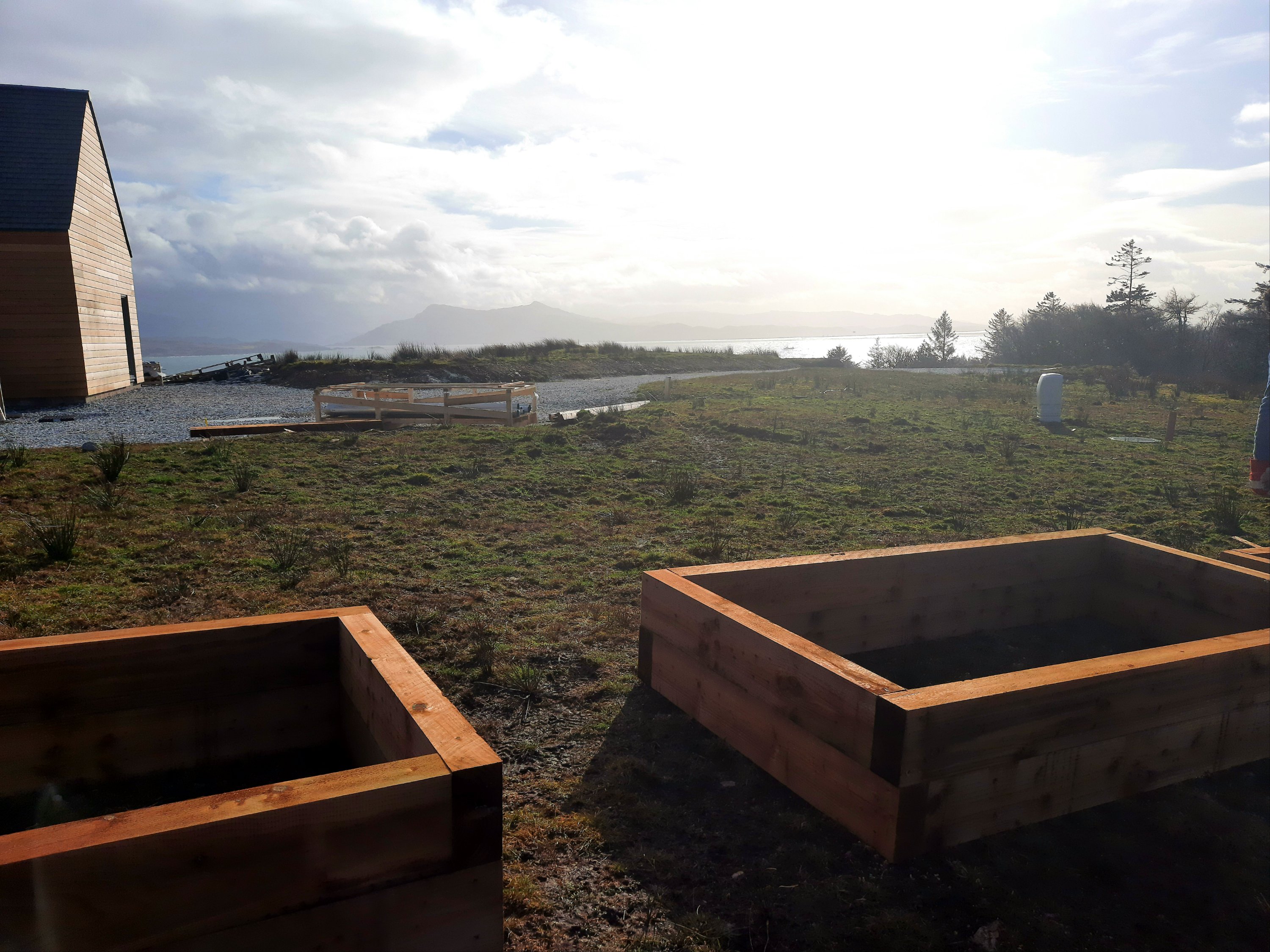
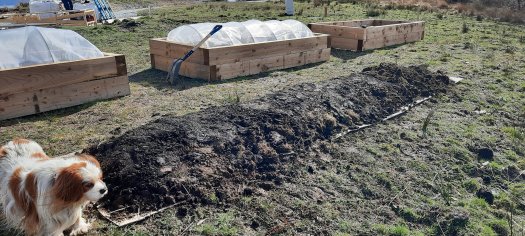
We had a dry, sunny, spring-like day this week and we decided to build a hugelkutur bed alongside the wooden raised beds that we’d built last month.

These are permaculture growing beds built over a core of wood or brash, with turf, soil and compost layers. They allow plants to grow where the soil would otherwise be too shallow.

The theory is that the central core of wood slowly decomposes, releasing nutrients into the bed. We will be adding to it annually with top-dressing to keep its depth consistent. This is a no-dig bed.

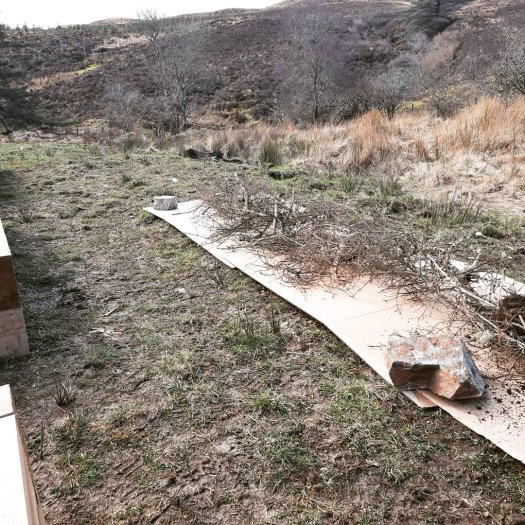
We built a small 4m bed, starting with a cardboard base to try and suppress the rush growth, and dragged up dead branches from the copse at the western edge of the croft to form the core.

We added layers of soil, compost and bark chip mulch until we had something about 60 cm deep. Some hugelkutur beds are much taller than this, like giant earth Toblerones, but as an experiment we figured that this was big enough.

We’ve planted up the rhubarb crowns in it and I’m eyeing the rest of the bed up for potatoes and perhaps kale over the coming weeks.

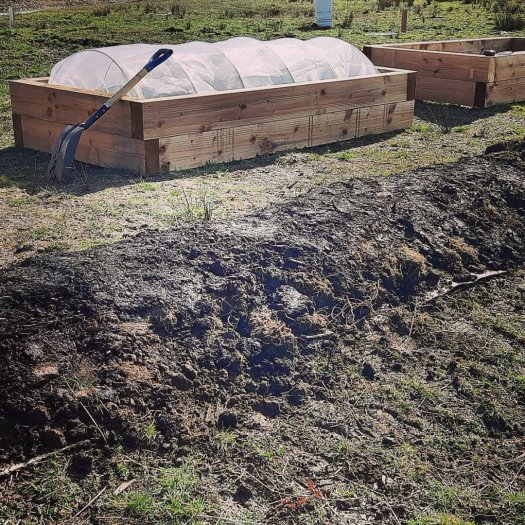
We’ll need to lay bark chip paths between the beds as it’s already starting to look like the Somme with all the wheelbarrow and wellie work recently churning up the mud.

If this works I can see more of these being constructed later in the year.

It’s a simple idea and reminds me very much of the lazybeds or runrigs on the hillside above the croft where previous generations of farmers scraped enough soil into mounds to grow food.

These ancient forms of land tenure are said to predate the crofting system, and it appeals to me that this more modern system of permaculture is really the same thing.

Herbage and Seeds

The urge to grow new things is very strong. We have no greenhouse or polytunnel yet, so I’ve set up a small space in one of the rooms in the caravan to start my seeds off. Luckily this room still has the old carpet down so it doesn’t matter if it gets grubby.

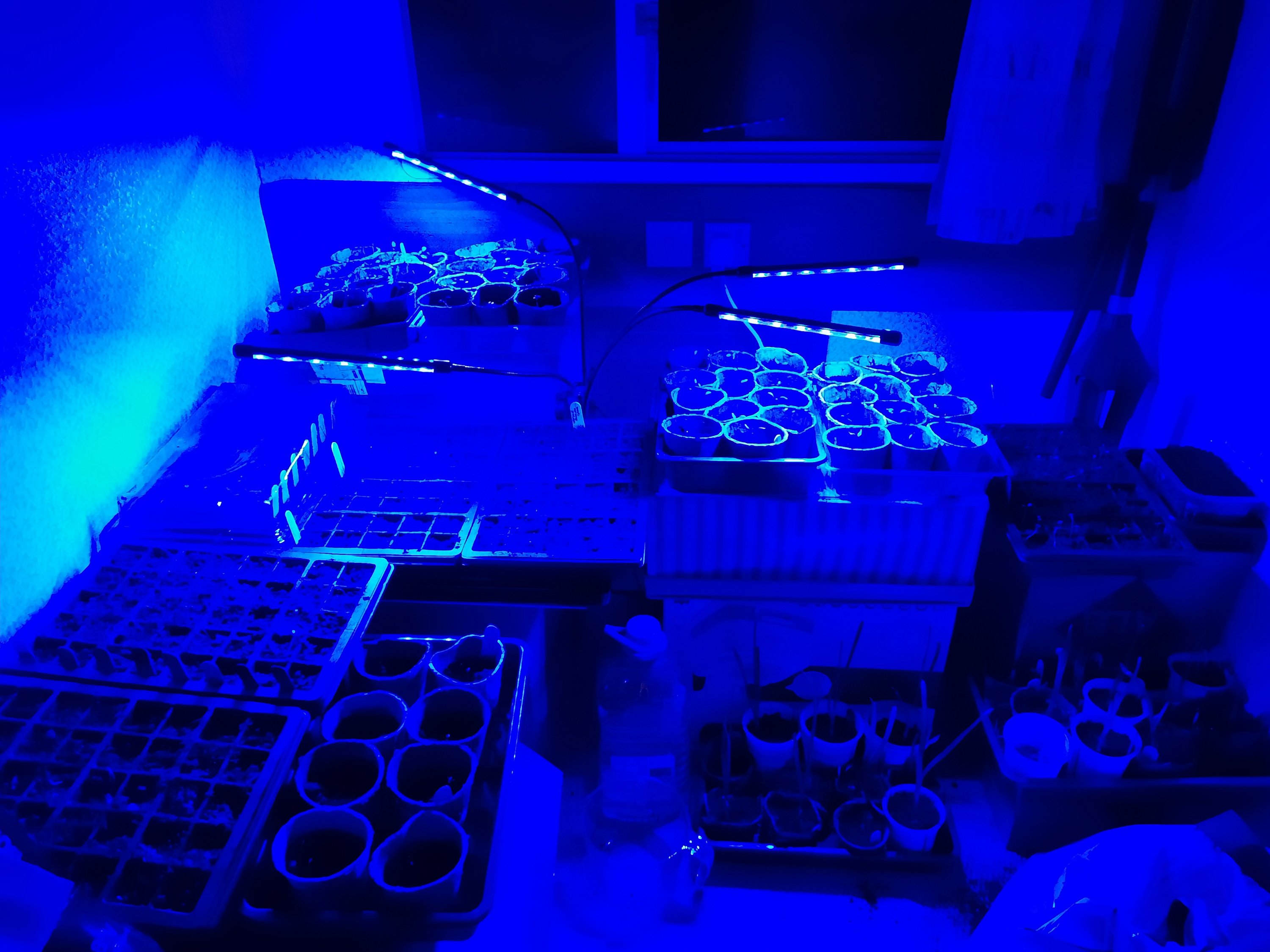
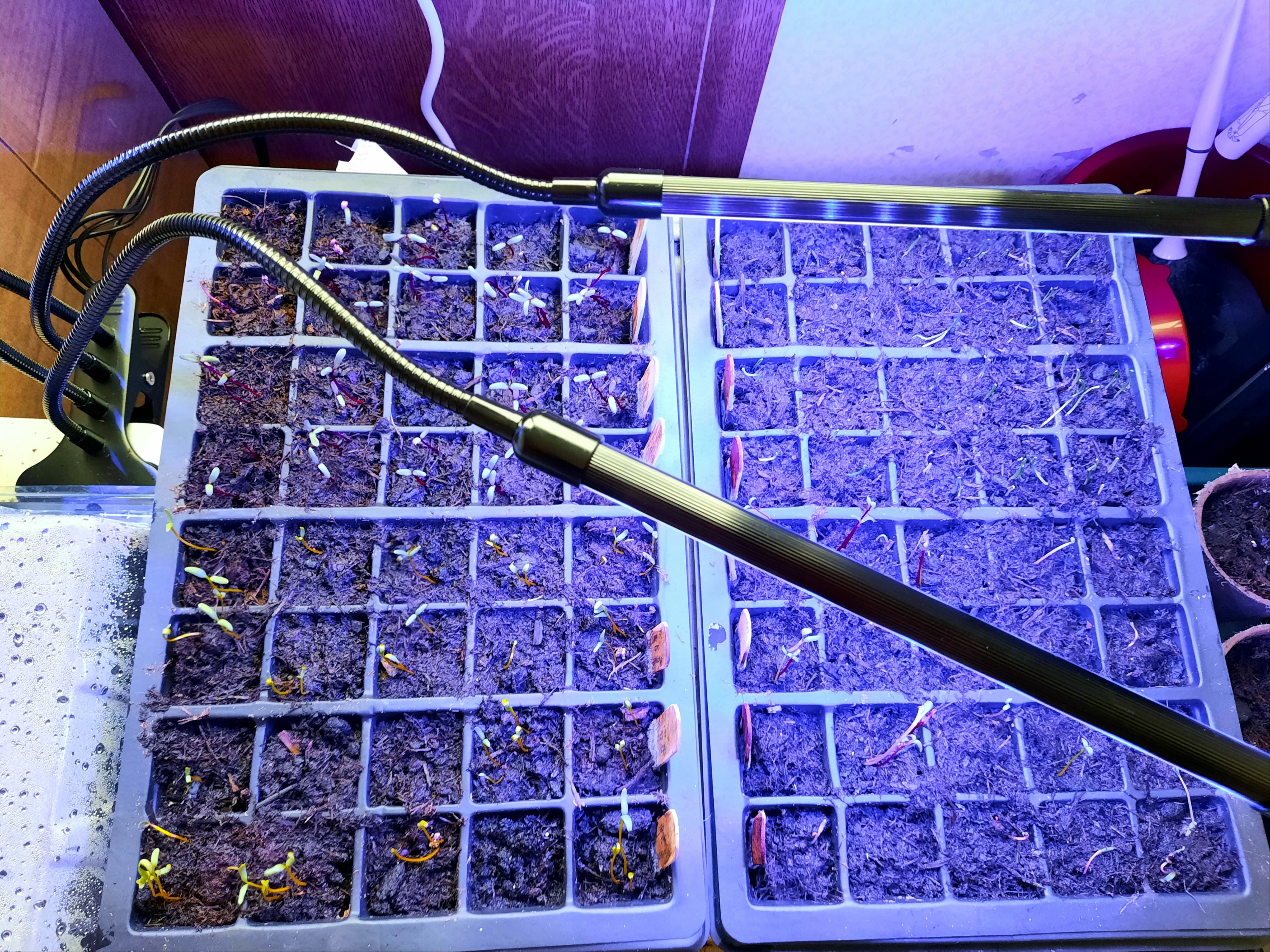
Balanced somewhat precariously on old cardboard boxes and a heat mat, and wedged between boxes of spare clothes and the hoover, are my first trays of seedlings. The blue wands of wonder are moved around to those plants that seem to need them most. It’s not exactly a professional set up, but it will do!

I’ve tried to choose plant varieties carefully to ensure that they’re hardy for our exposed site, but this first year is going to be very much an experiment.

I know that I’ve probably started too early for these northern altitudes, but I was itching to start. If they get too leggy I’ll just have to re-sow.

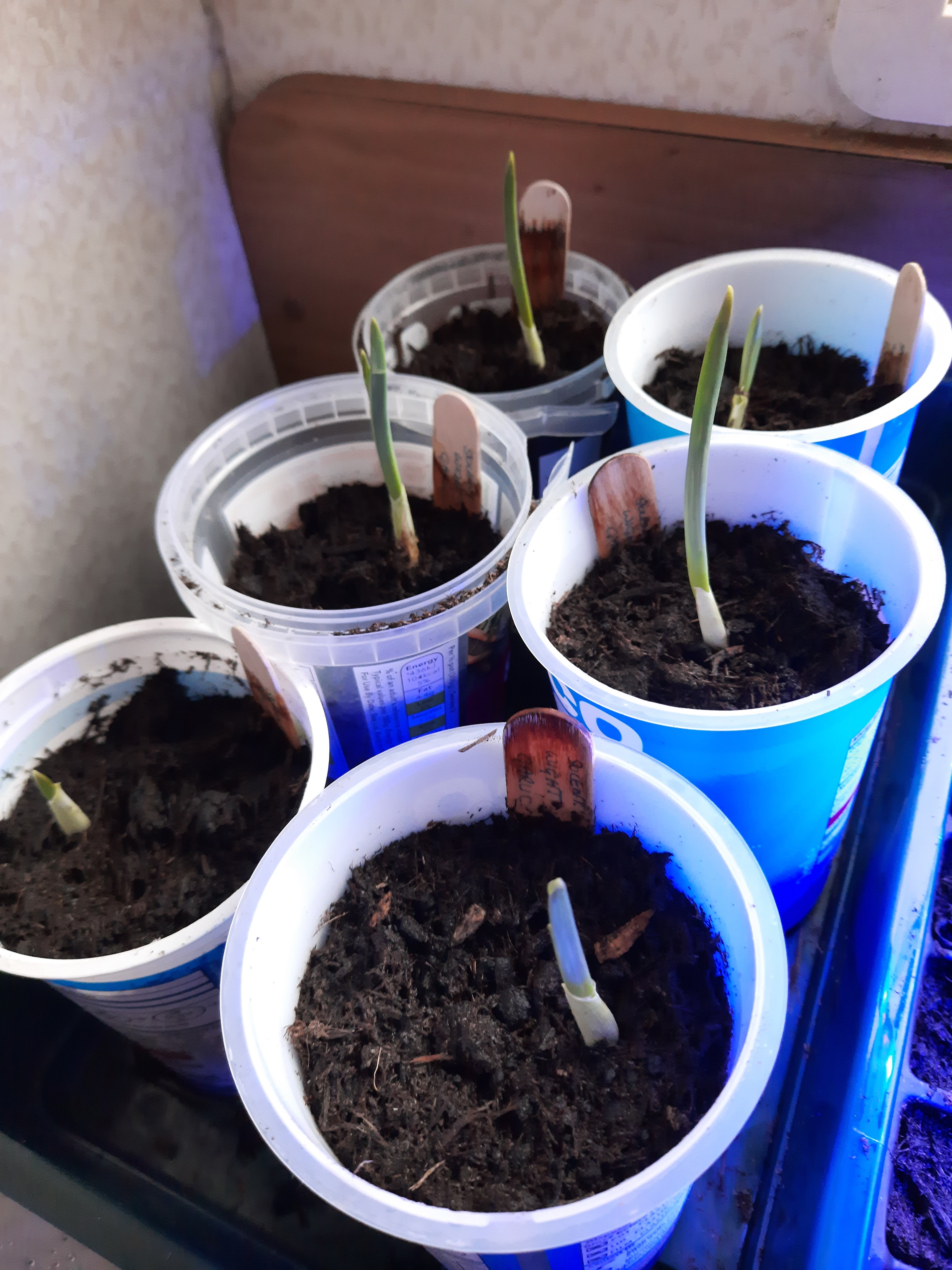
I have garlic ready to plant out. We eat lots of that, and I have more to plant directly into the soil once the beds are ready.

I have seed potatoes chitting ready for planting in the coming weeks. A local crofter recommended two varieties that I’m going to be trying, with good flavour but also good blight resistance.

I also have beetroot, chard, leeks, sorrel, parsley (it germinated! Hallelujah!) and Sutherland kale sown and just starting to grow.

Husband has been working on the construction for our compost bays too, which we need to start as soon as possible. The price of good compost in the quantities we will need is eye-watering, and I’d much rather we made our own.

I’ve also just finished reading this book. A total inspiration, a really interesting story and full of very practical advice about growing abundantly, organically and using no-dig principals. It’s just come out, so do source a copy if you get the chance.

The first raised beds

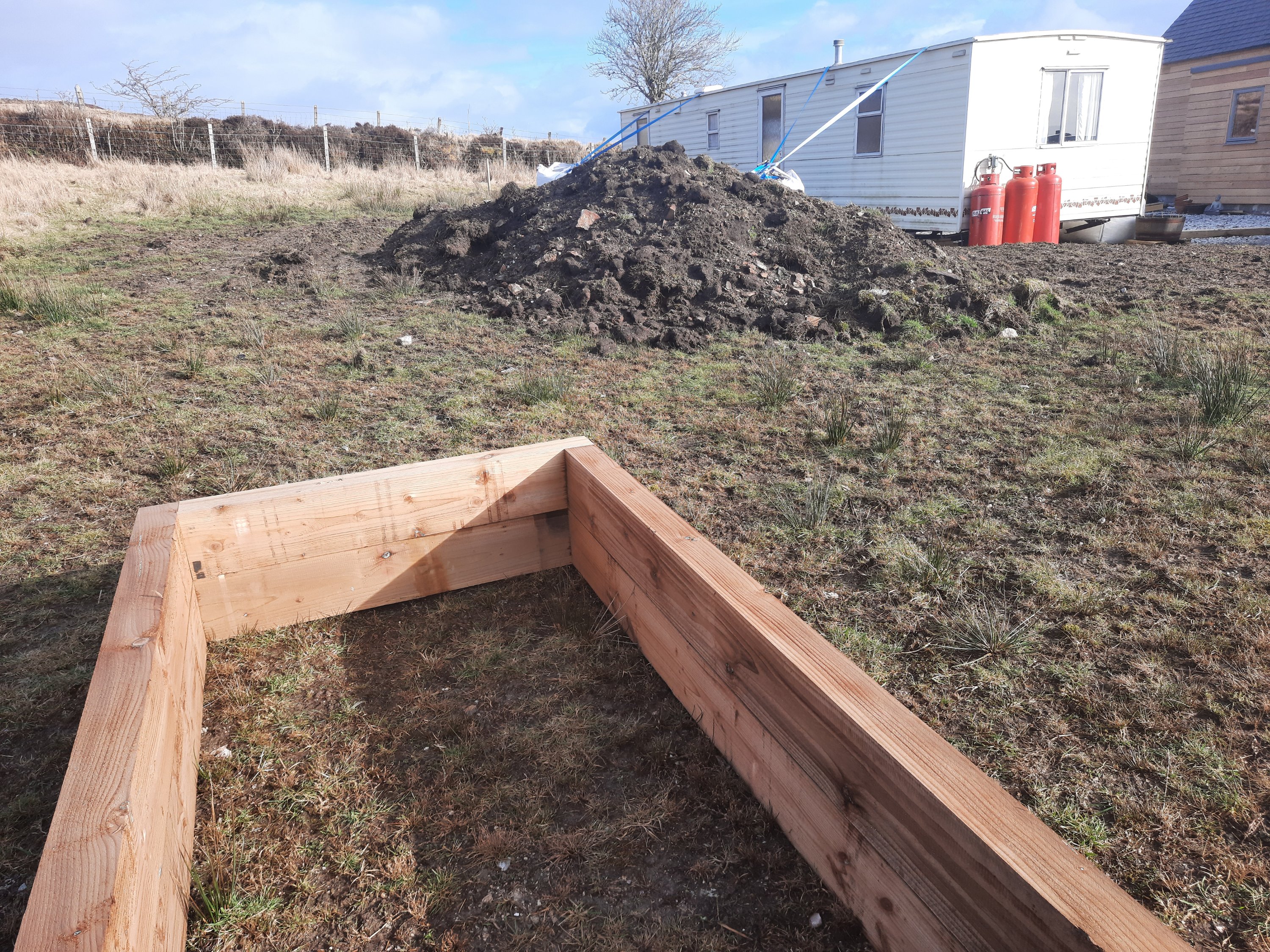
The first three raised beds are built and in place. Hurrah! Another small but significant milestone on our croft journey.

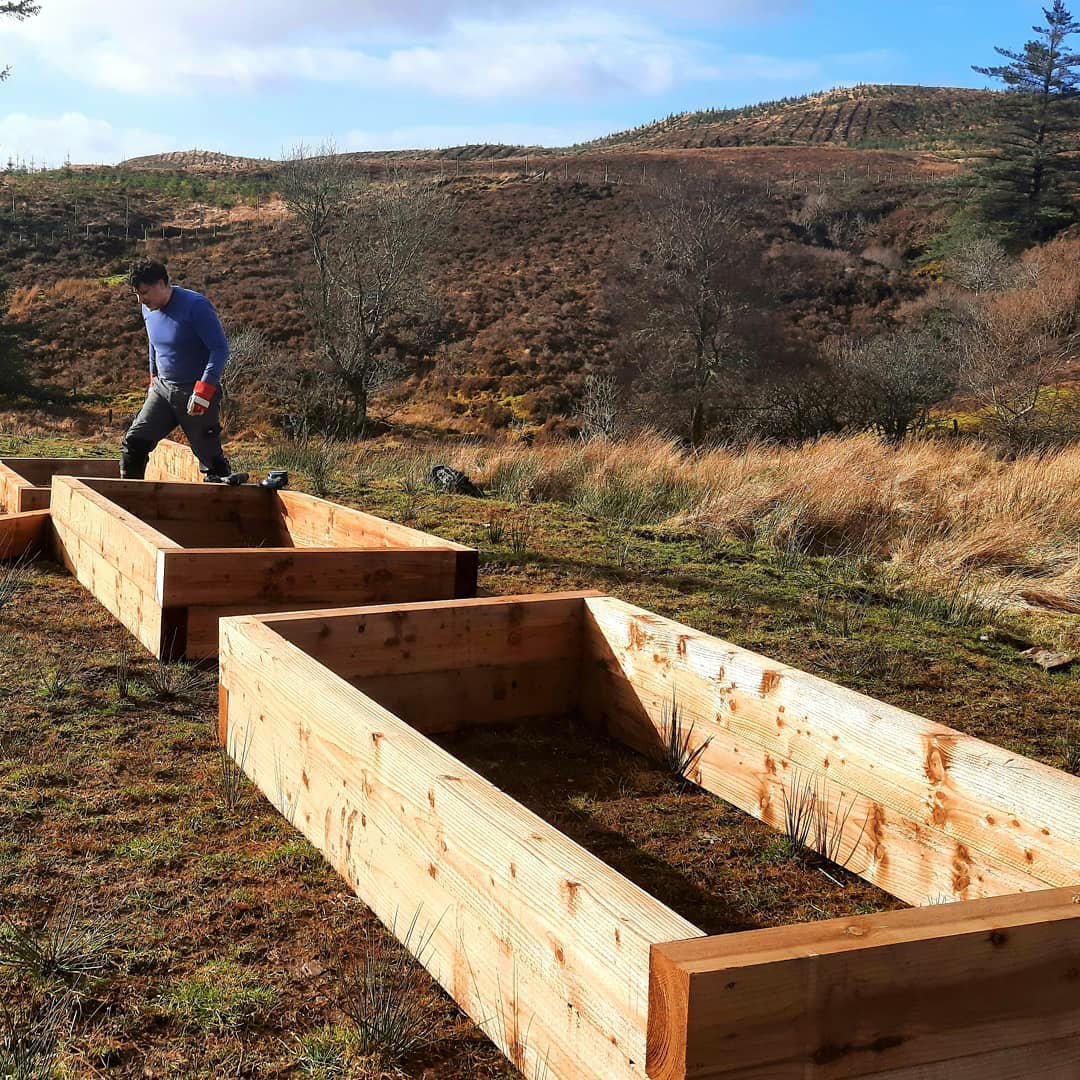
There was a short gap in the weather this morning which husband took advantage of. The timber was cut, positioned and screwed together to create three high sided, solid boxes.

The challenge here is the exposure of the site. We receive the full force of the South Westerlies which whip over the croft, with only limited tree cover to the west. The flat land that is cultivable is close to the house and right at the top of the hill.

In terms of positioning I wanted the beds close to the house for ease of access and proximity to water supply. They also needed ideally to be oriented east-west to maximise exposure to sunlight, and if possible be sited on flat land. The perfect (and only really viable) place here is going to need good wind protection.

We will put up a heavy duty mesh windbreak whilst we plan what type of hedging should be planted here, get the basis of the hedging in, and that will be it for this year. I can start with basic, small scale vegetable production in between house building.

We’re also keen to get compost piles started, so timber to construct a couple of adjacent compost bays is on its way.

Behind this row of beds I’m thinking of trying a hugelkutur bed, which I’ve read great things about. We will have wood debris that can form the core of it from fallen branches from the existing trees, and we should have home grown compost by next year.

First things first though.

Tomorrow I will line these beds with cardboard as a weed suppressant and start moving and de-stoning soil to fill them. This huge soil pile was excavated from the croft when the builders dug the parking area the caravan is sited on, and it will form the bulk of the growing material in the beds, topped off with compost mulch.

It feels good to be preparing for growth.

Eerie Blue Light

The days are getting longer. Although we are still in the clutch of a cold winter here on the croft, with snow still on the hills and an icy wind, my thoughts have increasingly moved to garden planning as our daylight hours have lengthened.

I’ve started some seeds off in the little bedroom in the caravan. We have no greenhouse, cold frames or polytunnel yet, so needs must.

It’s a bit of a make-do affair with a propagator heat pad, some cardboard boxes, seed trays, old yoghurt pots that I’ve been saving since we moved here, and one of those whizzy octopus UV grow lights to help start things off.

Everything is bathed in an eerie blue light from its flexible metal arms. It’s like something from the X Files… I go in a few times each day to check on things and can’t resist adjusting it.

Lord only knows what the neighbours must think when they see the strange, neon blue light glowing through the thin curtains at dusk…

I’m starting small. More will follow in March and April, which is a much more sensible time to start new plants here.

I’ve started garlic, onions (although the recommended local wisdom is to grow from sets rather than seed, which I only discovered after I’d bought them), leeks, parsley, beets and rocket. Seed potatoes are on their way in the next week ready for chitting.

I know it’s early, but it’s such a short season that it makes sense (to me at least) to have plants ready to be planted out in May, and they’ll need a full month of hardening off, I suspect.

The garlic has leaped into action almost immediately. I’m growing a rose and a white skinned garlic, both hardy varieties, and both a bit of an experiment, although local growers report that they generally grow well here.

I’ve been keeping my eyes peeled for old glass windows or sheets of polycarbonate on the local ads to make cold frames, but they’re scarcer than hens teeth at this time of the year, so we may need to buy materials new and create our own.

And so it begins.

Leaving for a new life

I’m in my last three weeks at work now before leaving corporate life forever. Even writing that down feels incredibly final after thirty plus years of working!

It’s a bitter-sweet feeling. I’ve worked as an IT Director/CIO for twenty years now, and have never done anything else other than technology and change.

I’ve been privileged to work for some amazing companies during this time.

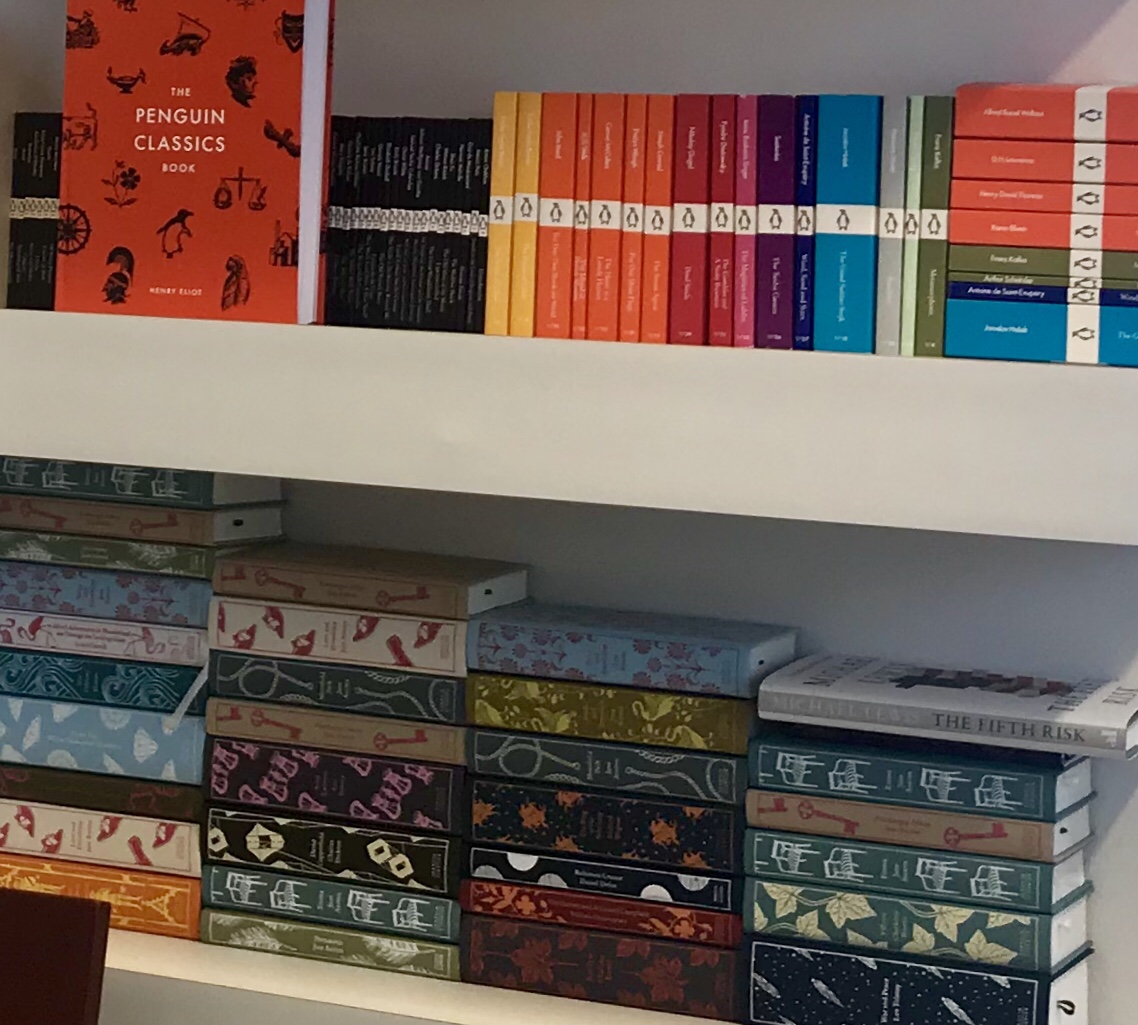
What’s kept me going all this time has been working within creative media companies, music and book publishing especially, over the last fifteen years. When you love the product that your company produces, and you’re working with like-minded people, it’s easy to stay motivated. Music, art and books have always been my passion.
Having said that, it’s time to hang up the business suit. Metaphorically speaking – it’s a very long time since I actually wore a business suit 😊.

Increasingly over the last ten years I’ve felt a growing sense of weariness with the battle for technology to be recognised as core to company strategy, with long commutes and with long working hours. Husband feels the same. It’s eroding our sanity and increasingly feels empty of worth beyond the paycheck, however necessary that paycheck has been.

We’ve both decided to stop. I’m not going to use the word retirement, but it’s time for us to move to the next phase of our lives. I suspect that the next five years are going to be harder work than either of us have ever experienced, but we both relish the challenge.
For us it’s about a simpler life. Getting off the treadmill and doing something for ourselves. We will be much poorer in monetary terms, that’s a racing certainty, but we’ll be richer in other, more important ways. And we both feel the need for that so strongly.

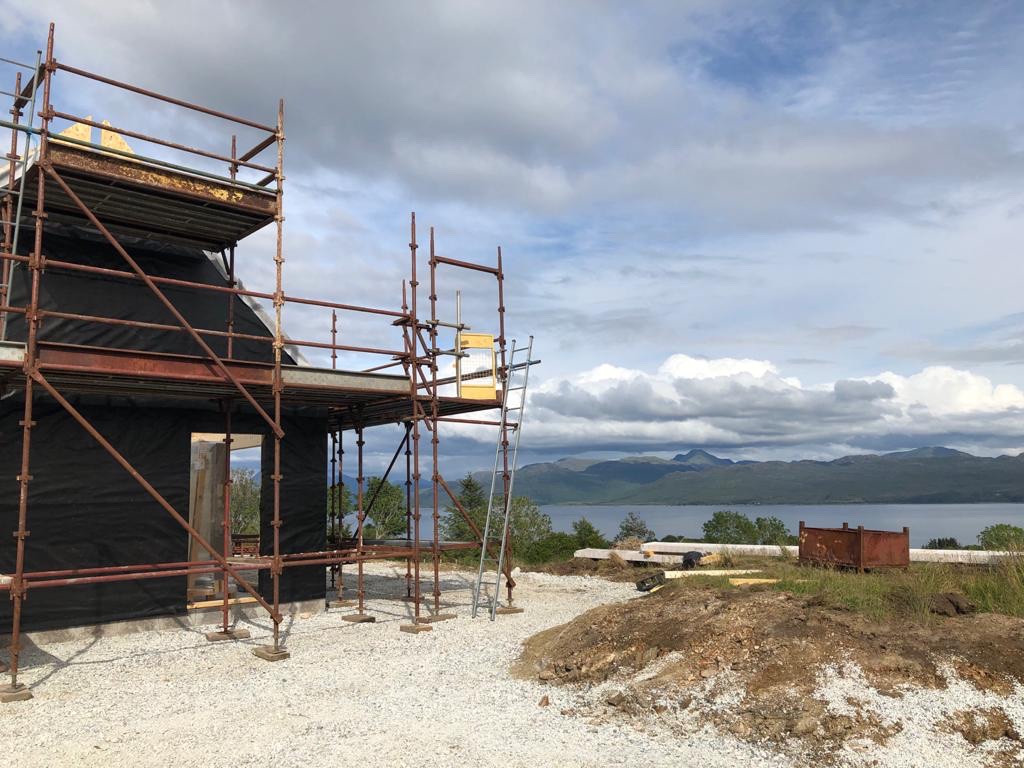
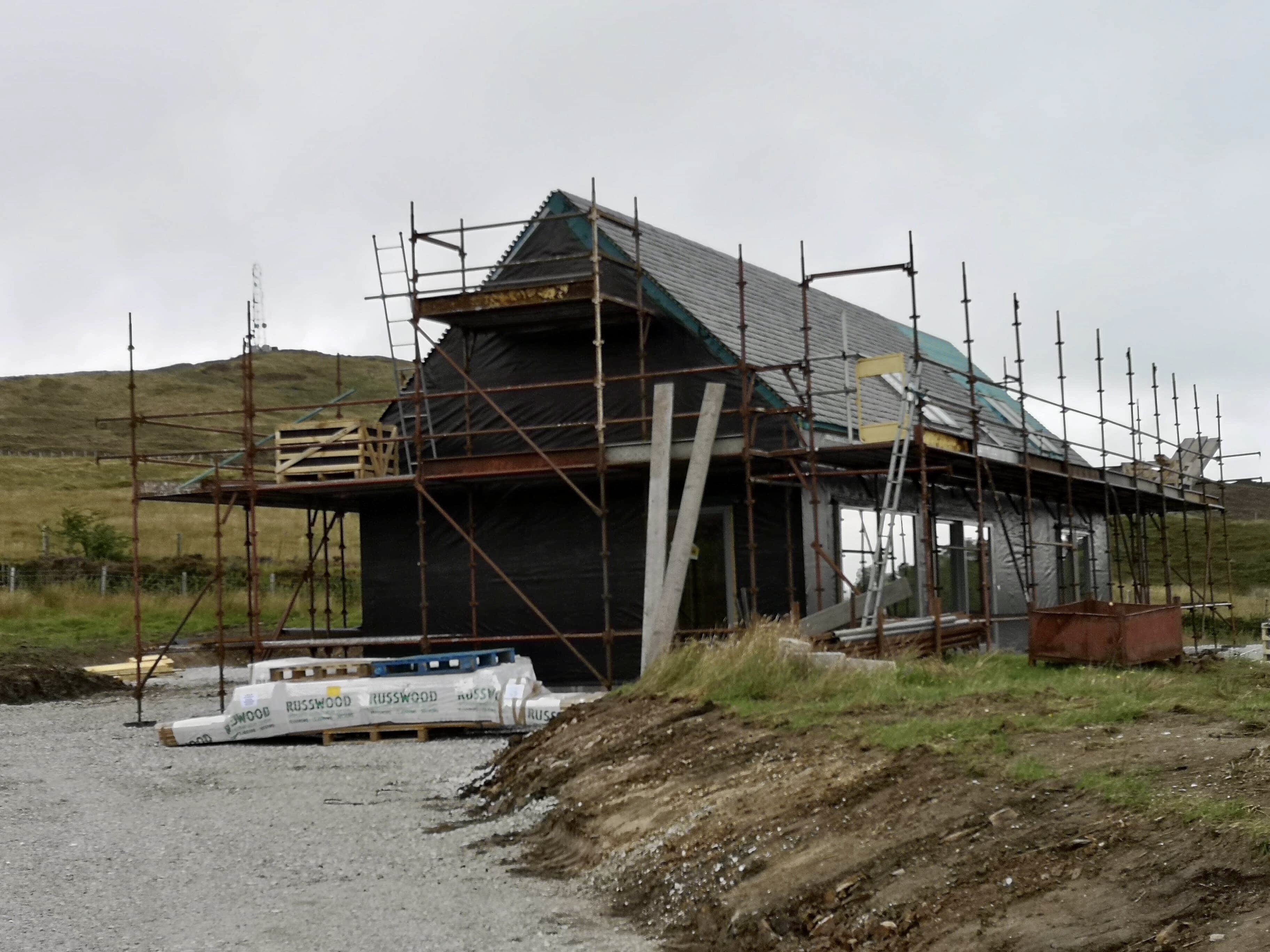
Building our forever home is going to be hard. We’ll make mistakes, and our bodies aren’t used to daily physical labour. There’s going to be a lot of pain and frustration. But we think that the satisfaction of one day being able to sit in front of the log burner looking out at the view through our big windows over the Sound of Sleat and be able to say “we did this” is something worth striving for.
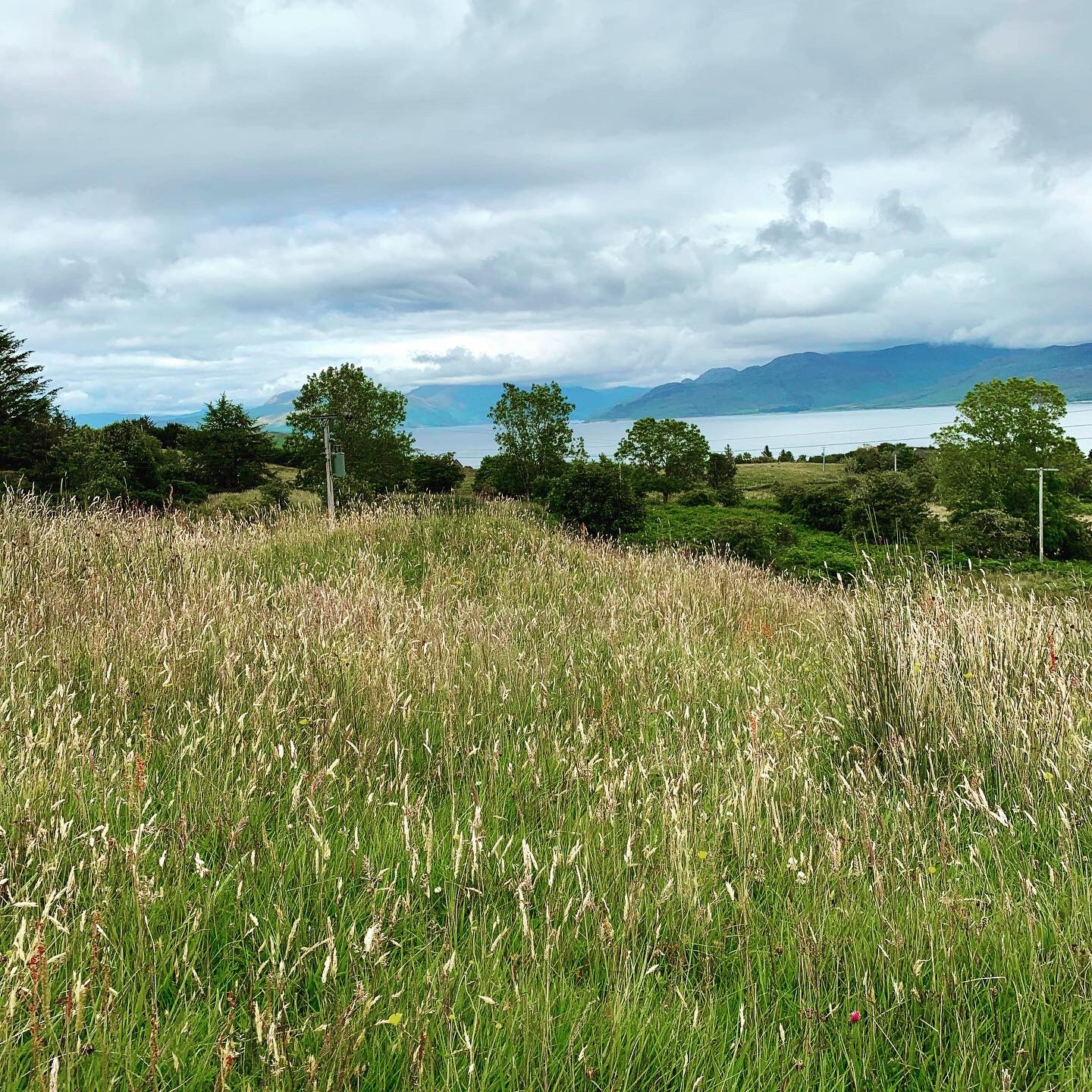
Nature and the land are also extremely important to us. The island is a beautiful place and we believe that planting trees can only enhance that for both local wildlife and our ourselves. This will be a legacy that we won’t perhaps see to its full maturity, but that which we hope the next generation will reap the benefits of.

We hope someone after us will love the little six acre patch of croft that we will create as much as we will. With its orchards, nut trees, willow beds, rowans, hawthorns and birch groves it will be a special place.
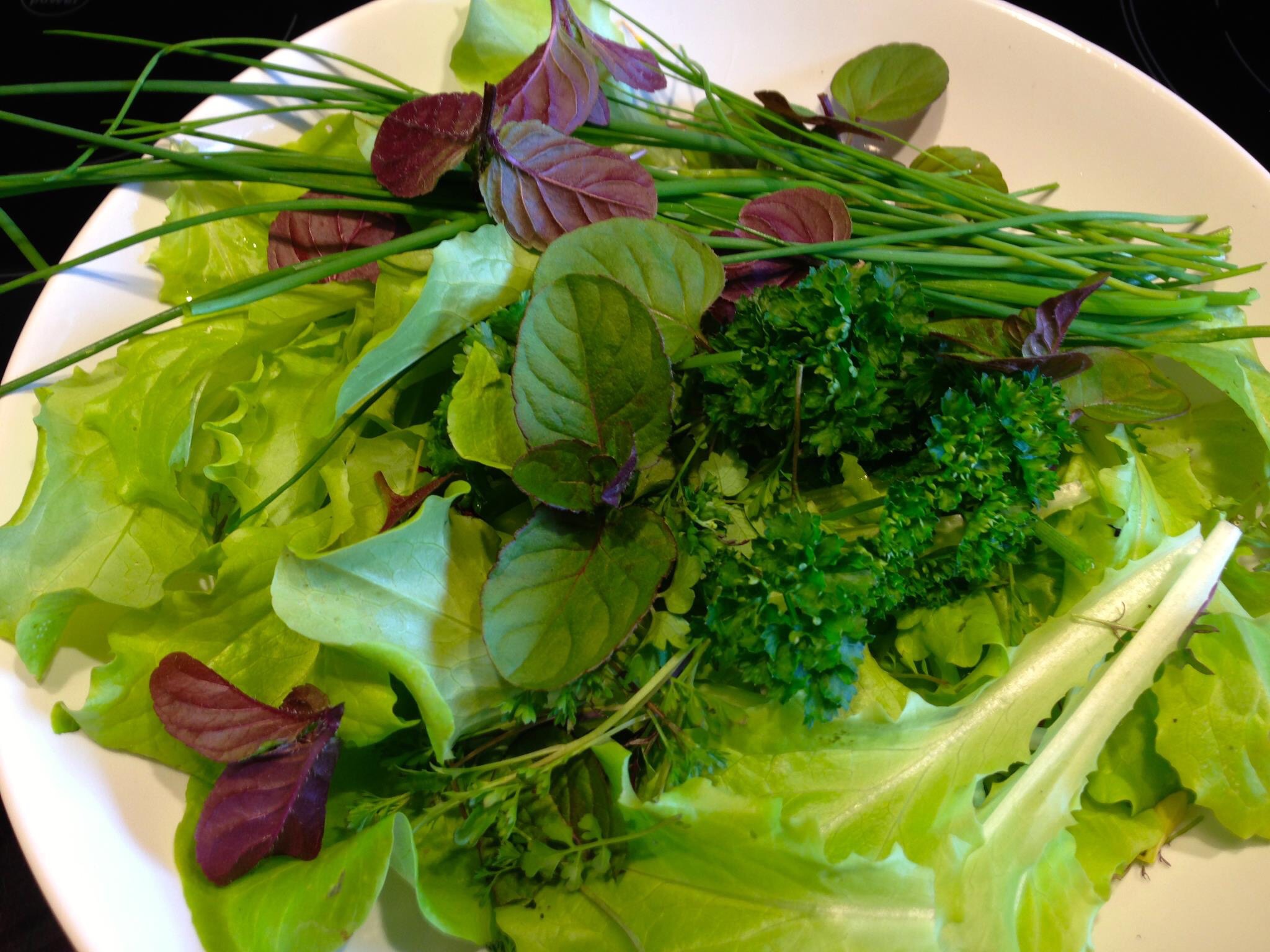
The other thing that I am so looking forward to is growing some of our own food. We’ll have vegetable beds, herb beds and berry beds. We will plant apple and hazelnut trees.
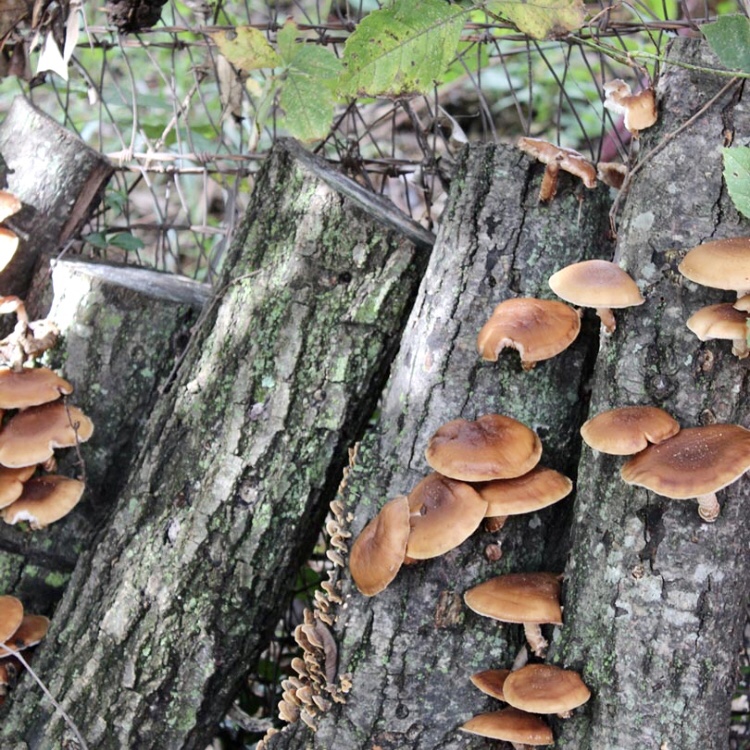
We’ll grow mushrooms on beech logs and keep chickens for their eggs. I will have the time to bake bread and to cook with what we grow and raise.
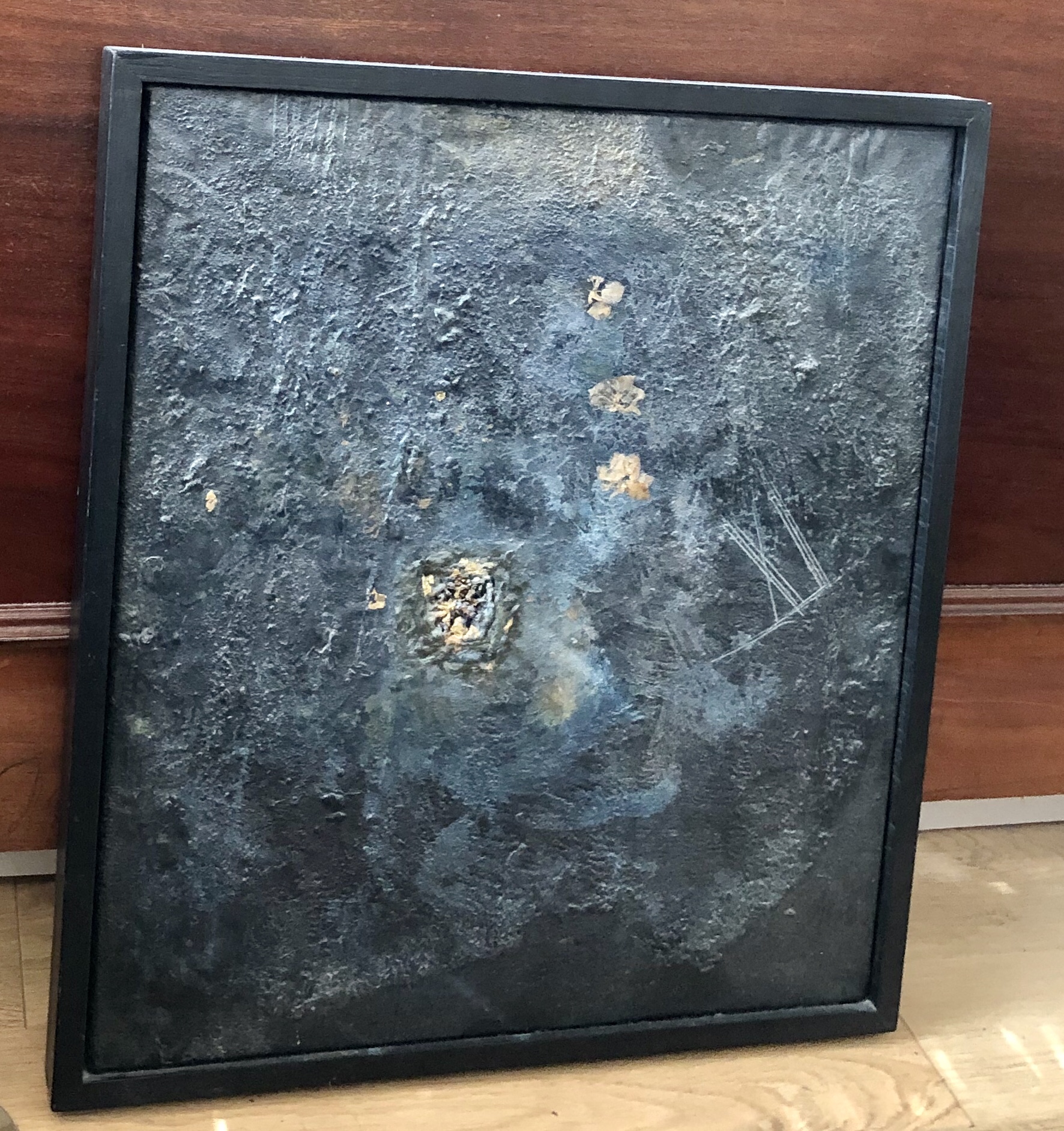
As well as this, I’m looking forward to spending time exploring my creative side, something that has been suppressed for most of my adult life. We’ve reserved one of the rooms in the house as a small studio for me to create in. I think that being surrounded by so much natural beauty will re-kindle my desire to create again. Whether that’s in clay, on canvas or in textiles I don’t yet know, but I can feel it there, quietly simmering under the surface of my respectability and exhaustion.
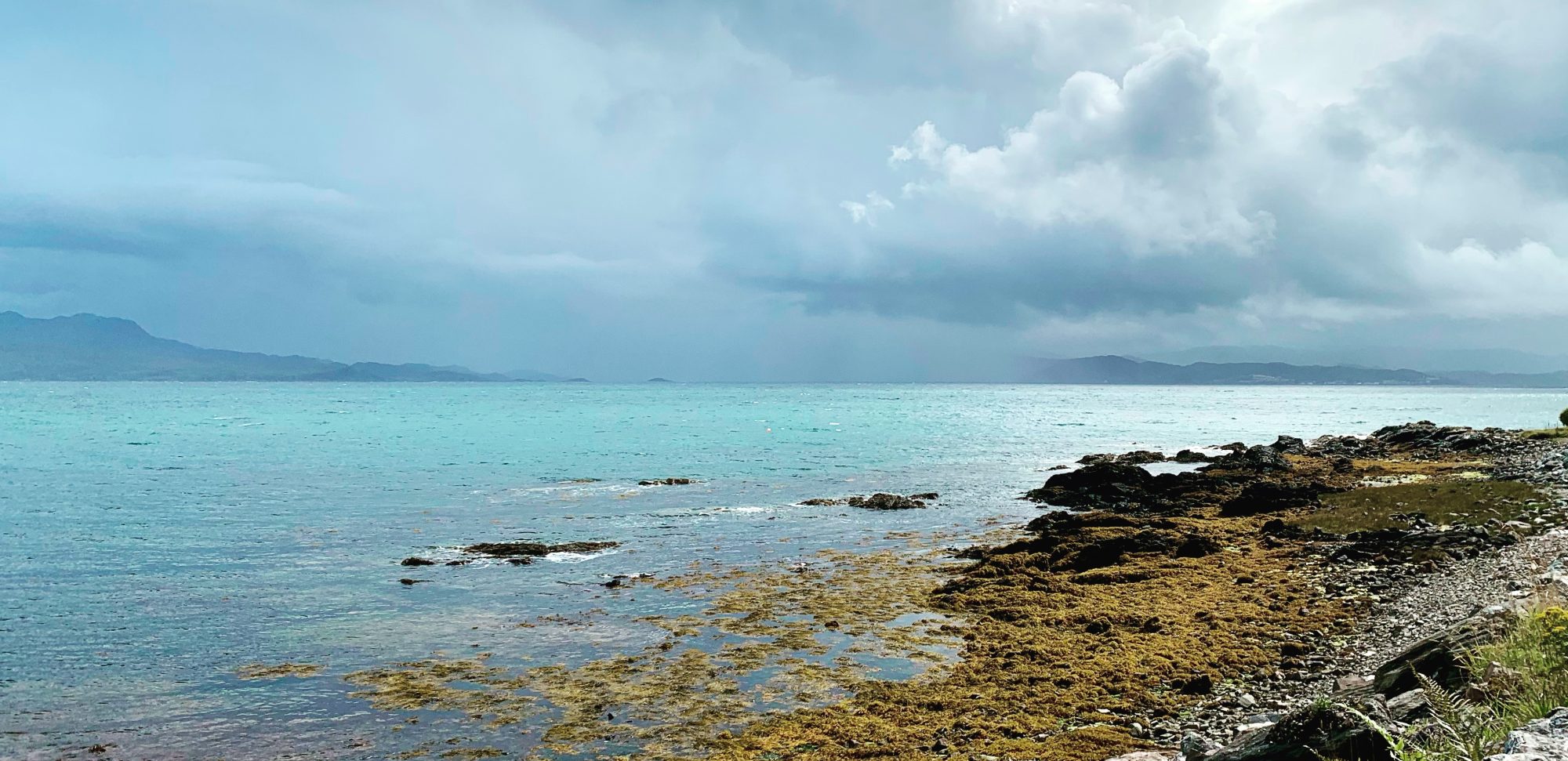
These last few months in London are a time of packing, planning and reflection, and of nervousness and anticipation at the magnitude of the change that we’re undertaking.

There’s much uncertainty in the coming years for all of us, but I do know that this is the right thing for us to do.
Wild flower meadow

We’ve only been able to visit the croft a couple of times since we bought it, and those visits were usually during autumn or winter.

The main thing that we’d noticed on the land – apart from the absence of trees – was the dominance of reeds. They grew in thick clumps all over the croft. The crofter next door used to graze his sheep on the land, and this kept what grass there was between the reed clumps closely cropped.

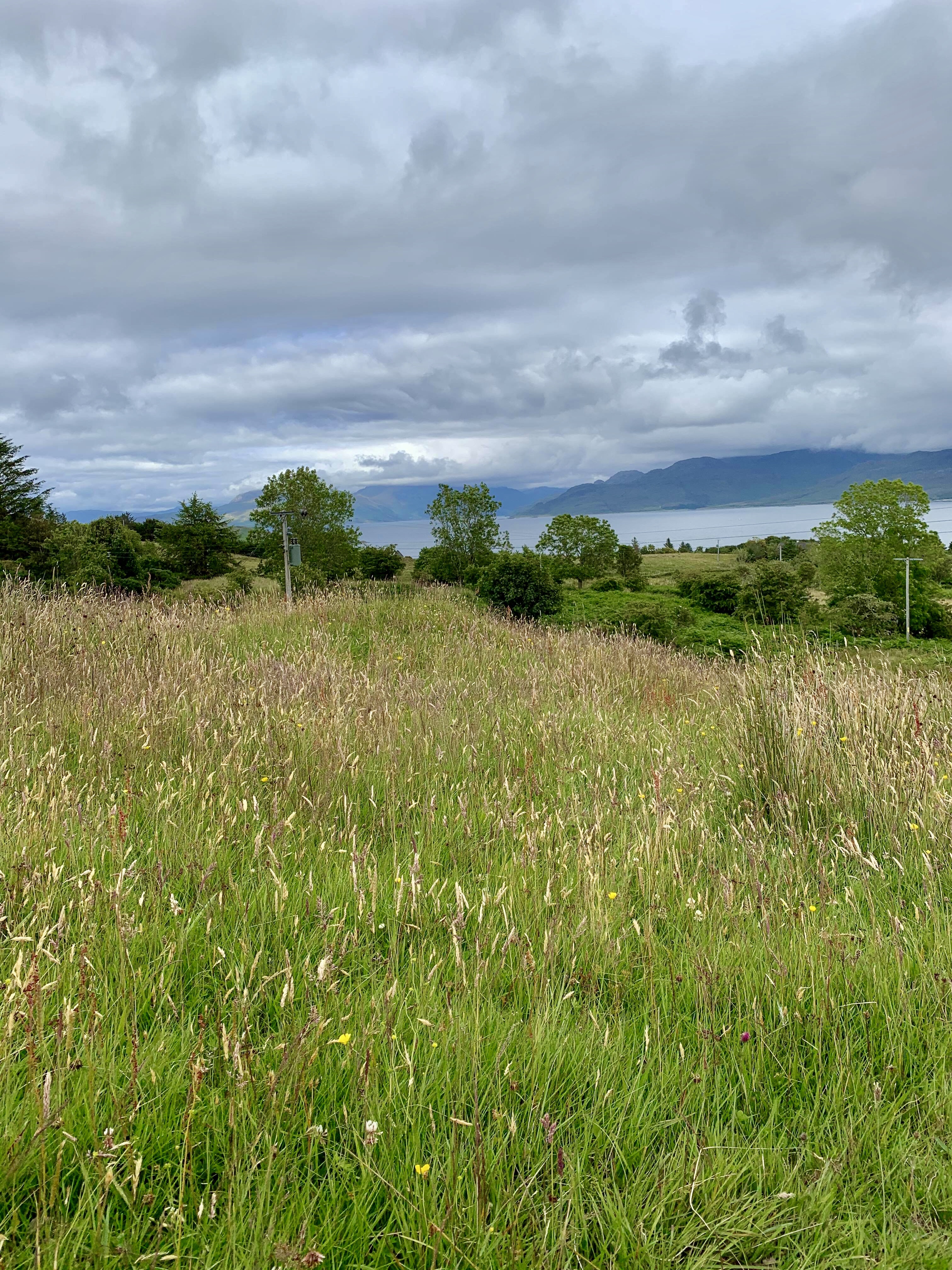
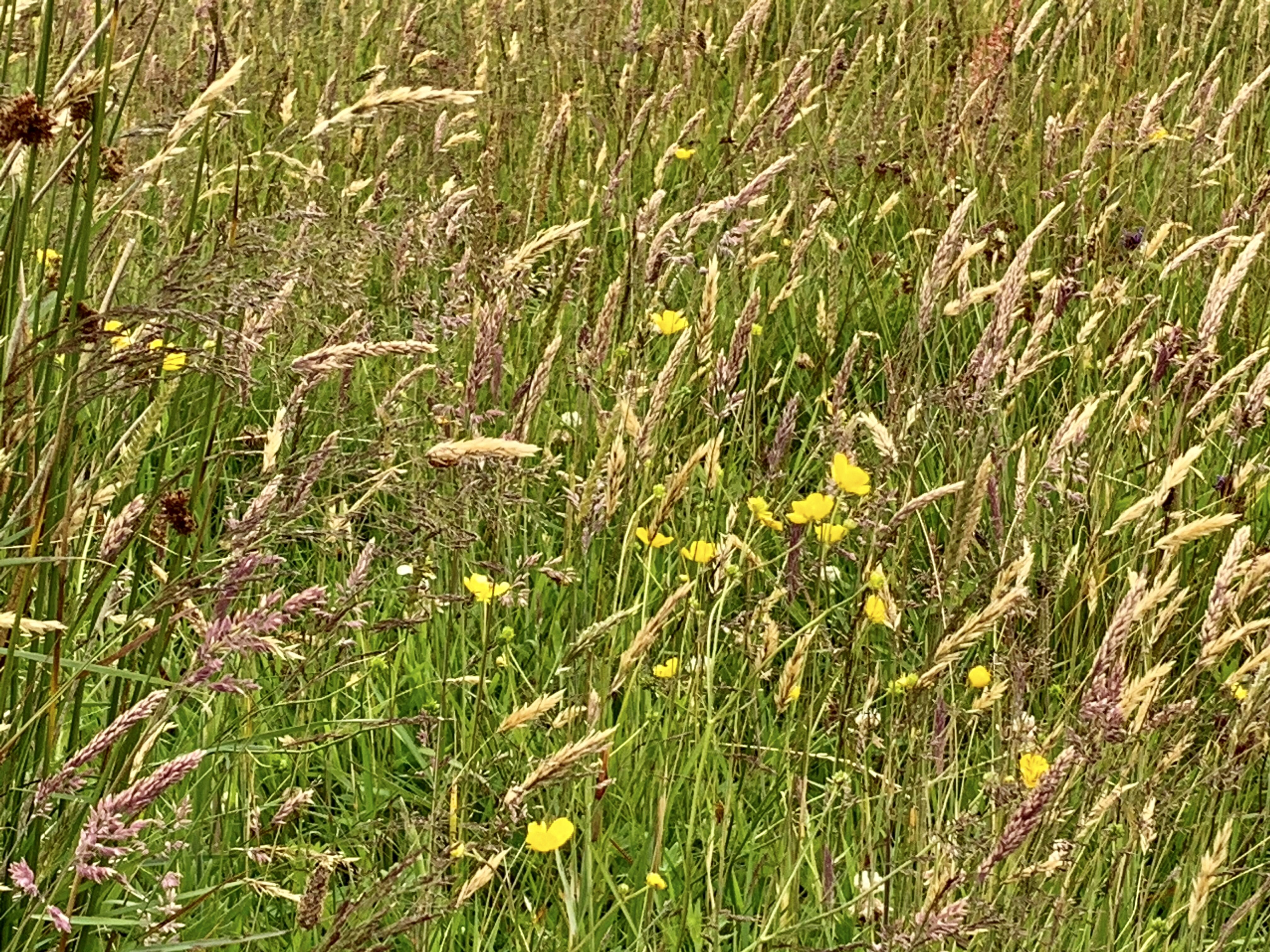
Our neighbours walked up onto the croft this afternoon whilst there were no builders on site, and took these pictures of the meadow below the house lying peacefully in the sunshine.

We were delighted to see that the grasses had regenerated and that there were wild flowers scattered through them. We haven’t seeded or done anything to this area – this is just one seasons regrowth now that the sheep are no longer on the land.

We can’t wait to see what else grows. The land has never been worked except for sheep grazing, and as such it’s completely organic and natural.

We’ll try as hard as possible not to disturb this habitat with our tree planting plans. The habitat that this provides to wildlife is invaluable, and to our eyes it’s beautiful.

Mushroom growing

One of the foods that I really love is mushrooms. Just about all mushrooms, but especially the meaty, flavourful ones such as ceps or shiitake mushrooms.

Living in France for many years gave me an even deeper appreciation of them, with the wild mushroom season kicking off an almost religious fervour in the locals, and restaurants using them in everything whilst they were fresh and plentiful. The flavour and textures were unlike anything I’d tasted from shop bought mushrooms, and I was hooked.

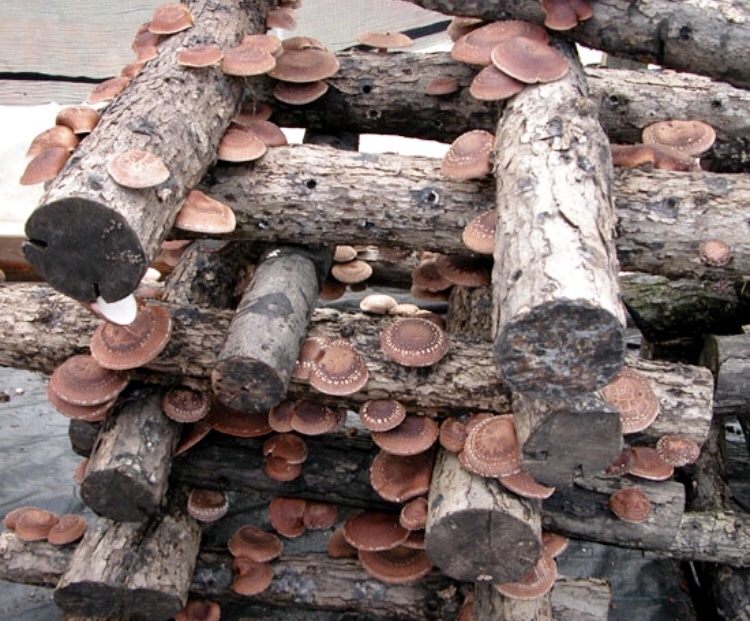
We’ve been looking at growing mushrooms using spore-loaded plugs drilled into beech logs on the croft. We have the wood, the rain and the space.

Skye has a good climate for mushrooms – relatively mild and wet – and there used to be someone who grew mushrooms commercially there until recently, so we think that they would be successful.

It takes a few years for the mycelium to take, spread into the fibre of the logs and the underlying ground and fruit into mushrooms, but then it’s possible to crop for many years.

Mycelium, the thread-like network of spores that propagate mushrooms are fascinating.

Research has shown that the presence of mycelium is beneficial to spreading and keeping nutrients locked into soil, and the no-dig method relies on not disturbing this network for maximum soil fertility and crop health.

Trees also use a network like this to communicate and exchange food and healing chemicals to each other beneath the ground. It’s remarkable.

However, back to the edibles!

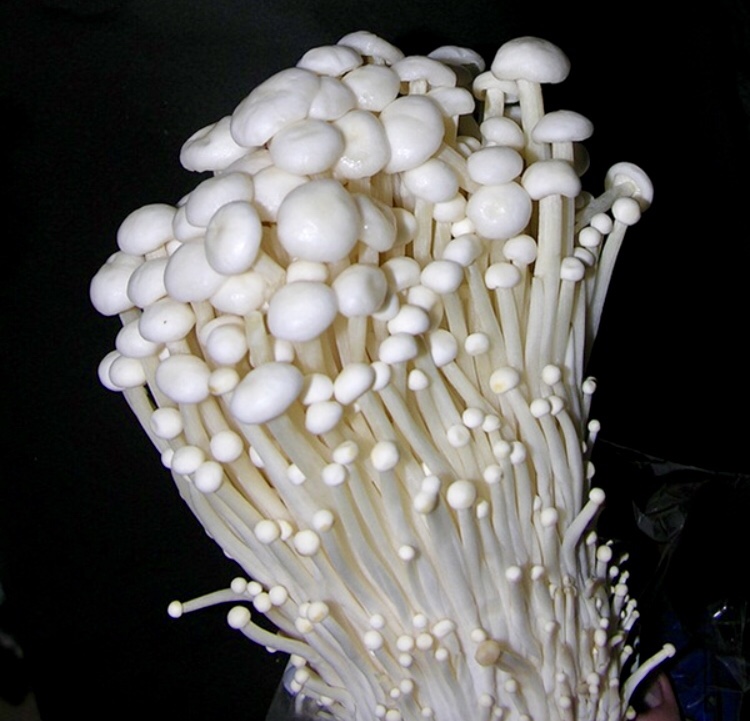
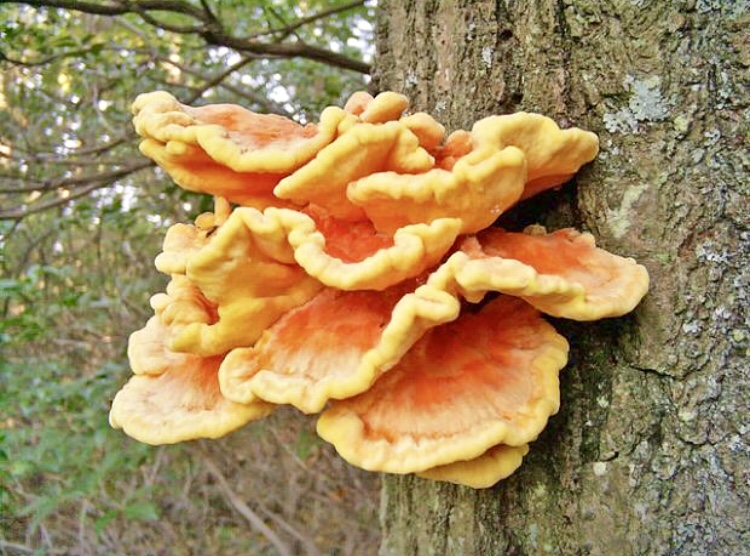
We can get spore-loaded plugs online for shiitake, oyster, chicken of the wood and enoki mushrooms, all of which are worth a try.

Will keep you posted (but with a trial period of two to three years before we would expect results and enough for a portion of mushrooms on toast, don’t hold your breath..!)

Tree Planting Plans

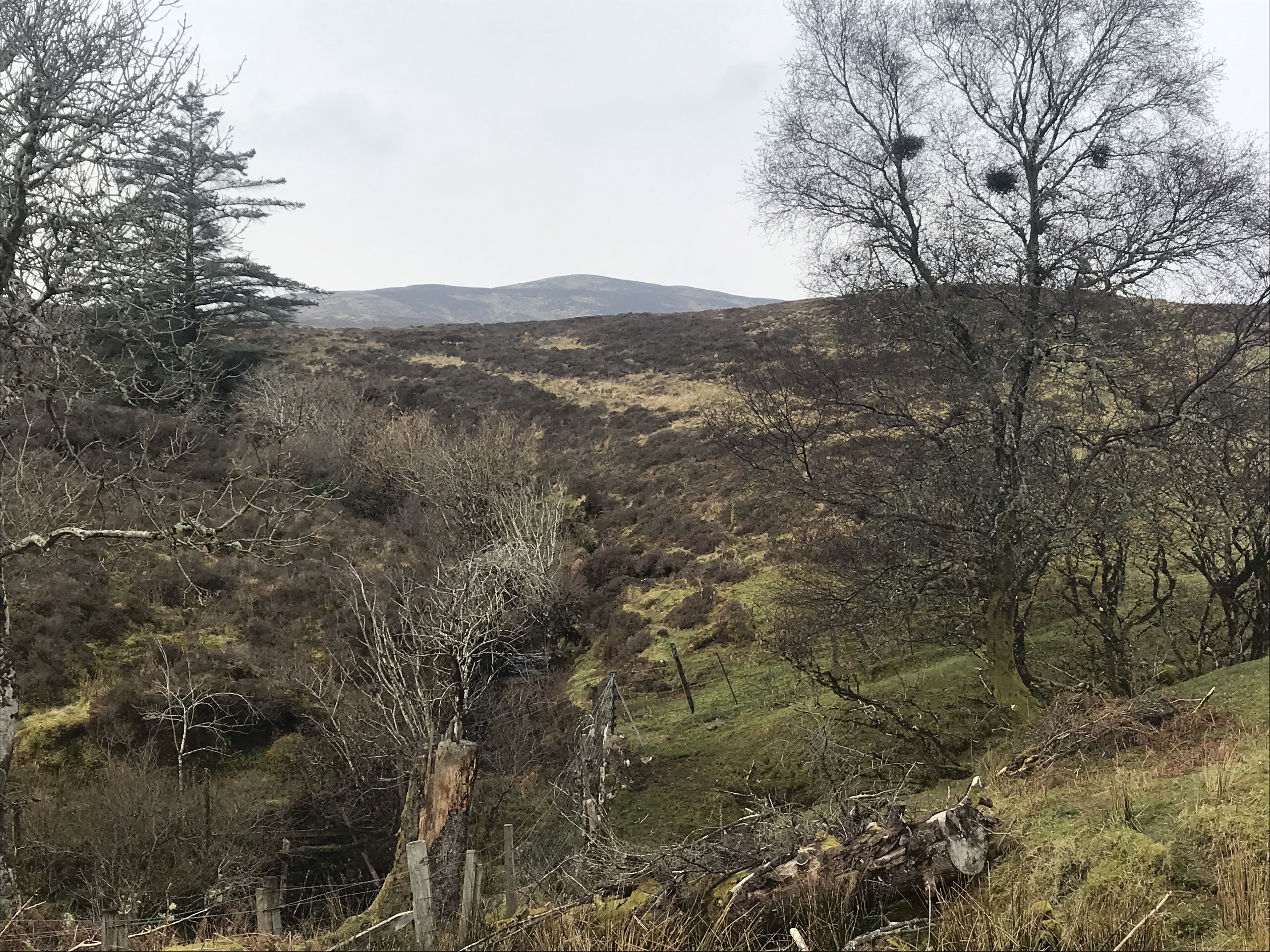
When we first saw the land, a number of pieces of life’s puzzle slipped neatly into place. The croft was steep and unsuitable for agriculture, but it would be perfect for trees.

Hugh and I both love trees and believe that there is a strong need to plant them, both to increase the biodiversity of the land but also to offset the effects of climate change with carbon capture in whatever way that we could.

We started to look into Woodland Croft creation. Despite the northern latitude, strong winds and exposed coastal location, many types of tree are naturalised and grow well on the island.

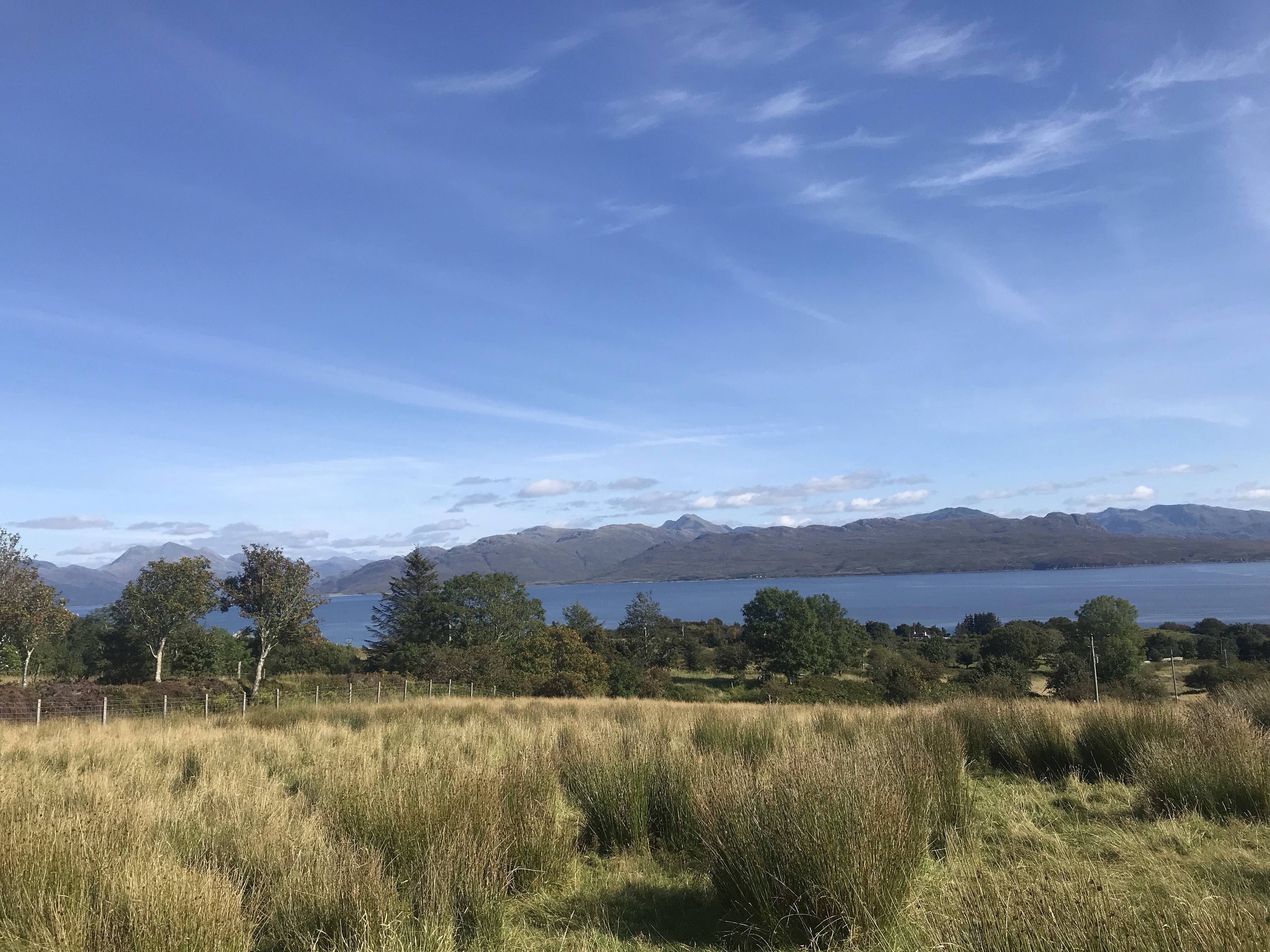
Sleat is the least exposed part of the island, a peninsula turning its face towards the mainland on the south side of Skye. As such, lying nestled between the Cuillins to the North West and the Knoydart hills to the South East, it’s at least partly sheltered from the full force of the Atlantic.

Although Skye is almost barren of trees, being famous for huge expanses of high moorland and mountain, Sleat has more trees than the rest of the island. We are lucky, and the more we looked into it, the more we felt that a diverse planting would be completely viable.

The Woodland Trust offer advice and help with tree planting, but due to the recent rise in interest in this area, they are completely overloaded. There are long lead times to even get to see them to discuss plans. They’ve handed over some of their work to the Scottish Forestry Commission, who have been in touch at last and who will be assessing the croft land for tree planting viability next week. We can’t wait for the report.

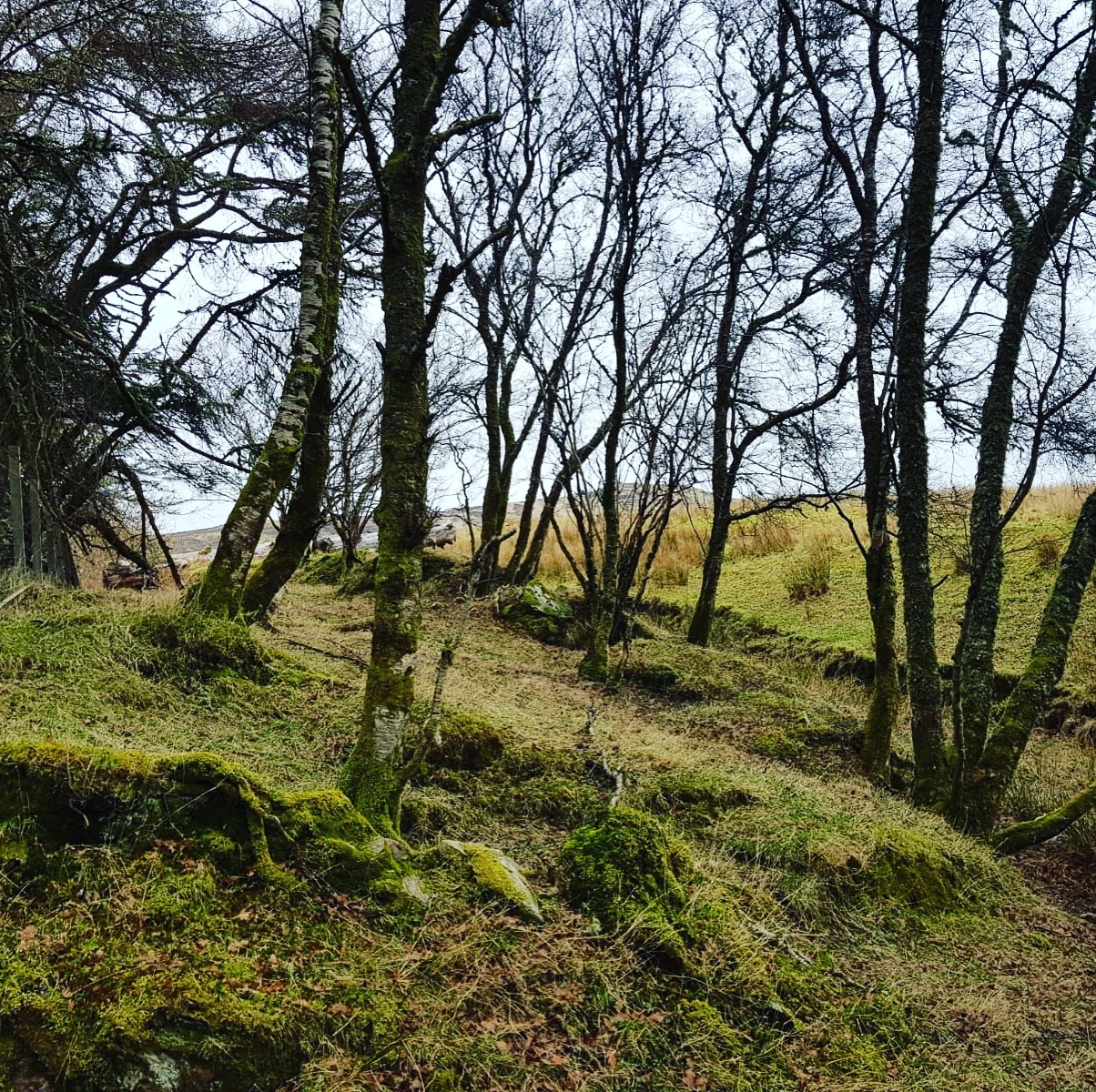
We expect the recommended species to be a mix of trees such as rowan, alder, blackthorn, grey willow, downy and silver birch, sessile oak, scots pine, hazel, wych elm, holly and aspen.

We want to supplement these plantings with wild, edible hedges filled with crab apple, blackberries and hawthorn, and an area of sheltered orchard with hazelnuts, apples, cherries and pears.

As soon as we have the Forestry Commission report we can discuss deer protection and build a planting plan for the land. Even though we know that the first trees probably won’t go in for at least another year, it still feels like a milestone in the journey!

The relative slowness of this process is frustrating, but in a way it’s also contemplative, allowing time for our initial thoughts to be challenged and supplemented with local wisdom. We’re watching other local crofts start this, and learning what works and what doesn’t.

Don’t get me going on the merits of spiral guards, staking, vole protection and windbreaks now…☺️

The taste of autumn

There are old crab apple trees lining the streets in this part of London. They’re well established, probably twenty metres tall, and planted closely enough that their crowns touch in the wind.

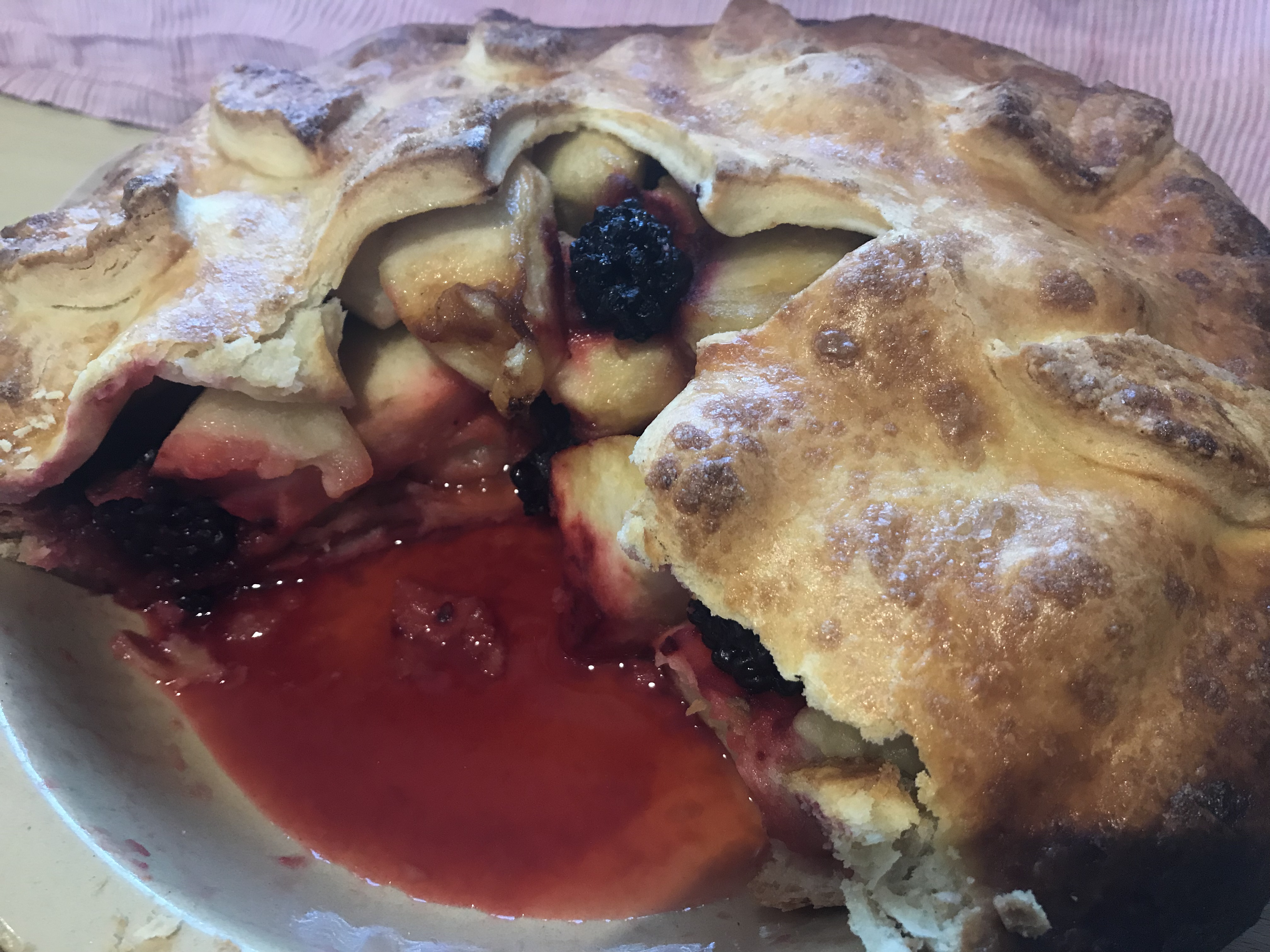
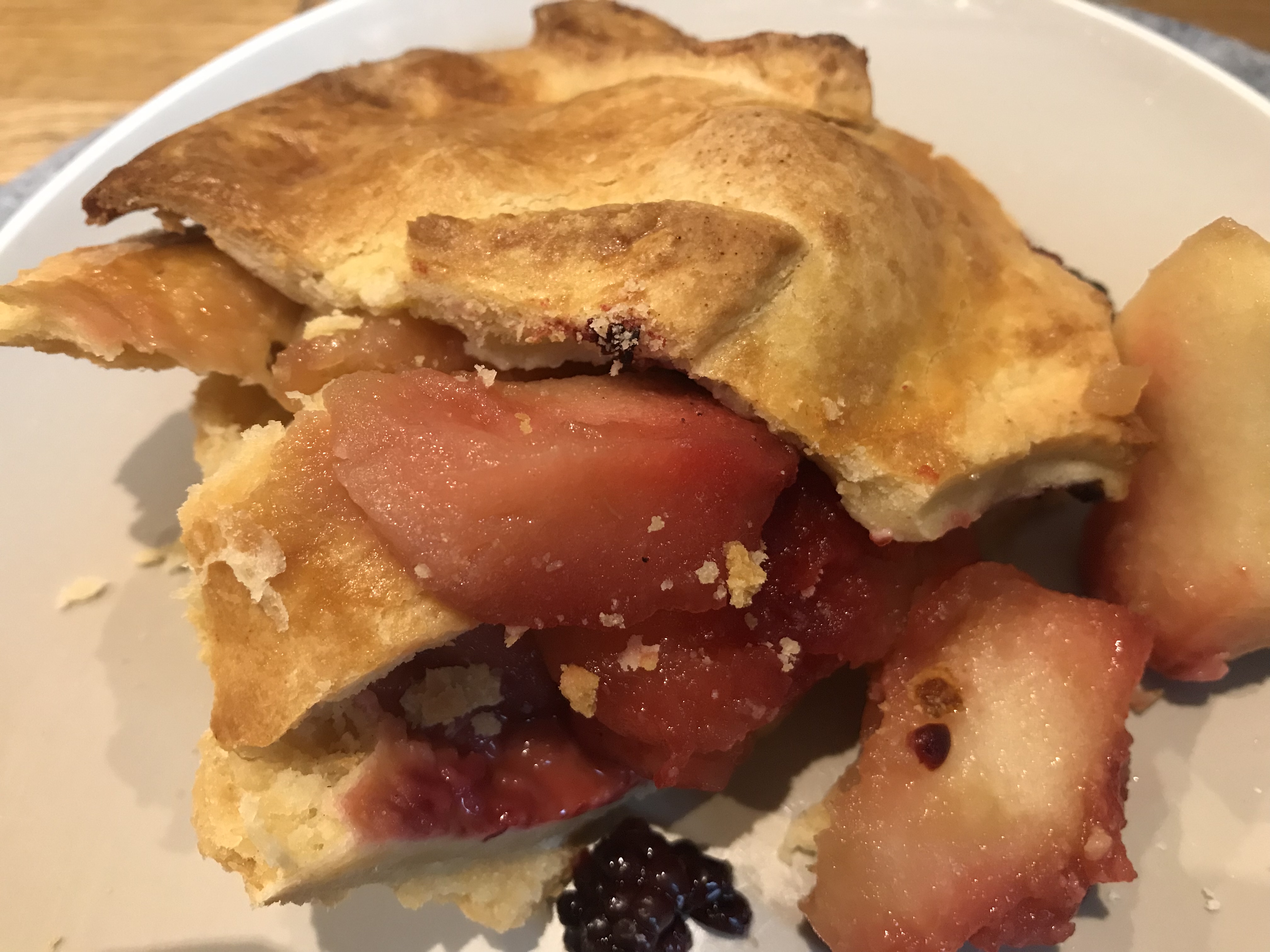
At this time of the year they drop their fruit – tiny, hard, sour crab apples that crunch underfoot in the leaves as you pass by. I walked through them at the weekend, smelling autumn in the air, and it made me crave the apple and blackberry pie that my mother used to make.

This was one of my mother’s specialities. She made it infrequently enough that it was a treat, which considering her busy life, it was. Her pastry was crumbly, sweet and slightly biscuity, with a hint of lemon zest.

The blackberries were never bought from a shop in those days. When the season was right, we kids were dispatched out with a bowl to collect them from the bushes, bribed with promises of pie, crumbles and turnovers. We’d return with purple juice-stained fingers and mouths, and enough pickings to fill the kitchen for a week.

Served with a spoonful of good cream for richness, this is the taste of autumn for me. I can’t wait until we’re picking our own in the hedgerows on the island next year. Bring on the pies, the jam and the blackberry wine!

Cobnuts or filberts

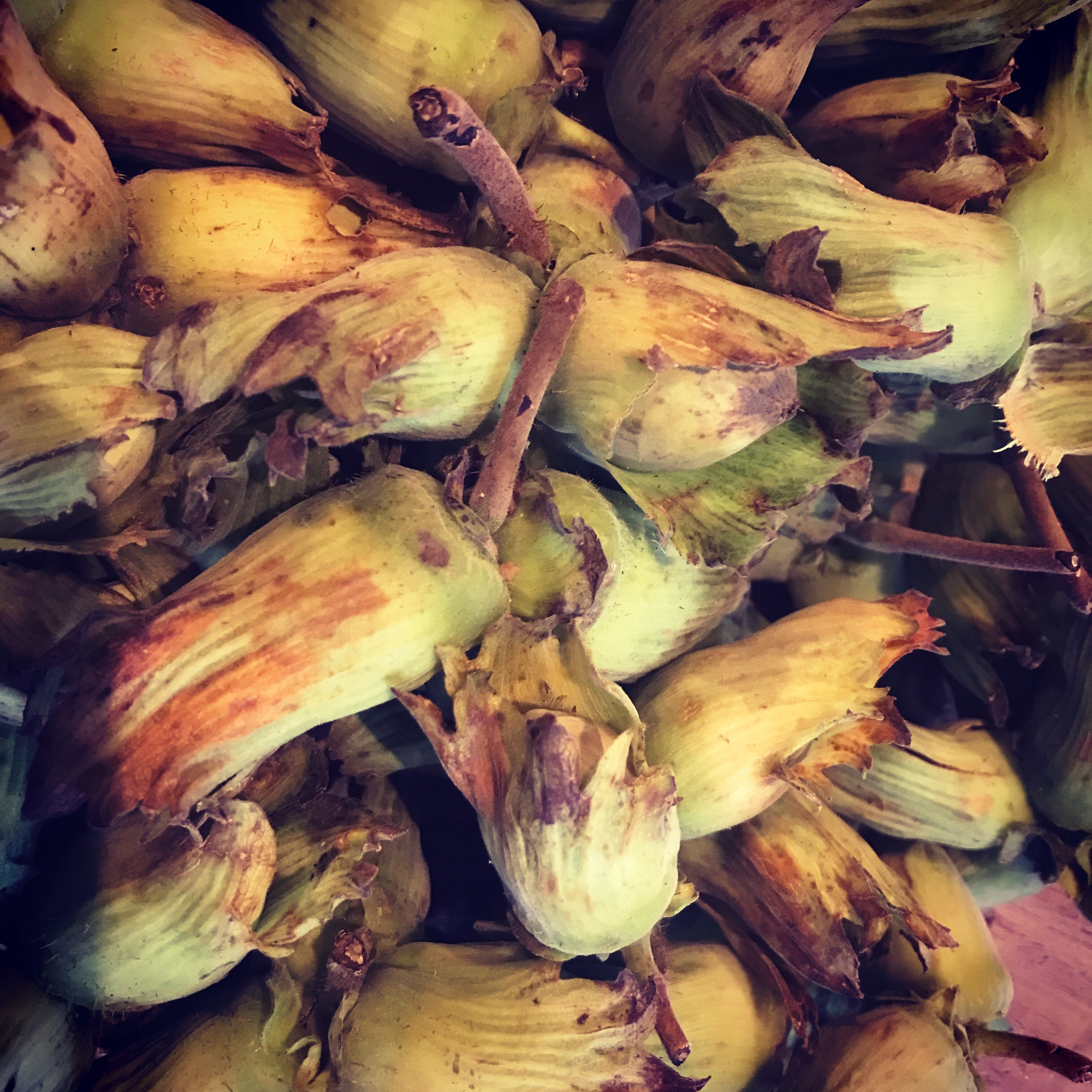
Whilst browsing for seeds to take with us to the island in a few weeks time, I noticed that one of the online smallholdings that I was shopping from had filberts, or cobnuts, for sale.

Husband loves nuts, and has reminisced often about eating fresh filberts as a boy in Istanbul. I recall picking them too as a child, where they grew in the woods adjacent to our house in Dorset.

As soon as I saw these I couldn’t resist.

The small box arrived at the house yesterday, hand-packed with a layer of hazel leaves on top of the nuts to keep the dampness in. Opening them released the scent of woodland.

They have a unique taste and texture quite unlike dried hazlenuts. Slightly sweet, nutty and milky. They are only semi-hard with a moist, almost chewy texture. If anything could taste of ‘green’, this is it.

It’s inspired us again to make sure that we plant plenty of hazel on the croft.

The hazelnuts that don’t get eaten in handfuls off the tree can be dried and stored, chopped or whole, for use in bread, cakes or puddings. Or preserved in jars of honey for spooning as luscious toppings over cooked apples, pears or ice-cream.