Deer damage and alien life

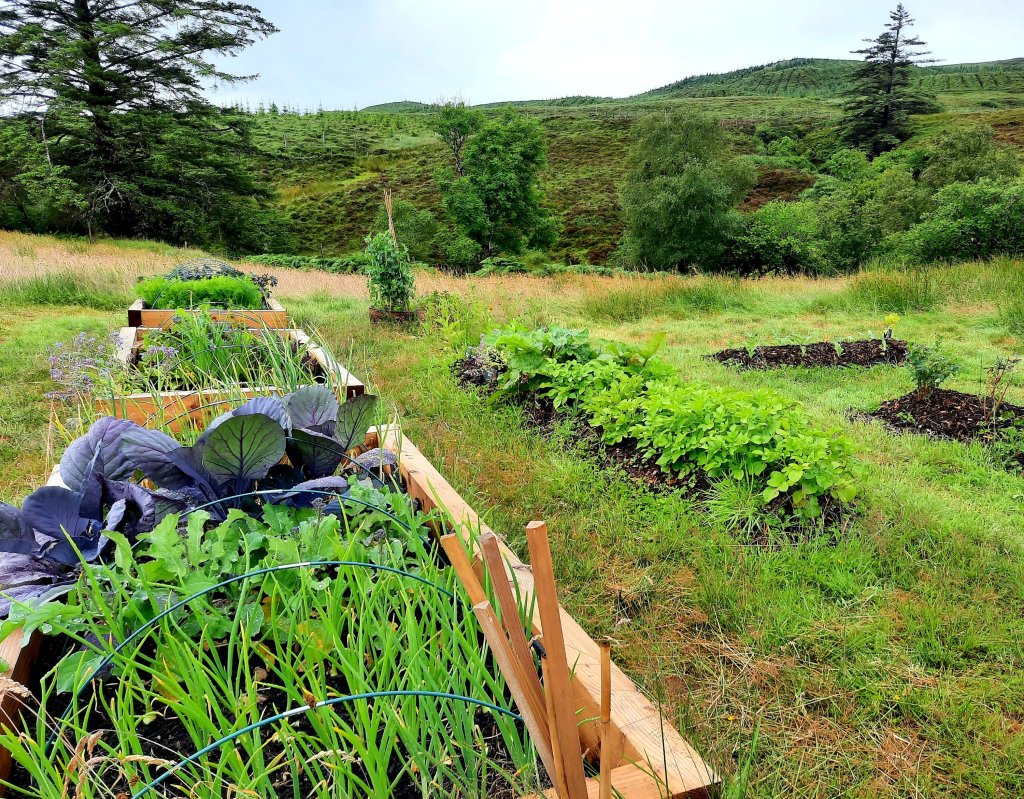
In a short burst of mild, sunny weather this morning I rammed on my wellies and headed out on to the croft. It’s well overdue time to prepare the raised beds for the seasons growing, and I’ve been waiting for a break in the storms for weeks.

The deer have been terrible this winter. They’ve eaten everything that was left in the beds, which I stupidly didn’t net for protection. Actually, the nets wouldn’t have survived the storms anyway.

Roll on next year when we will have time to deer fence the croft. I think it’s the only way.
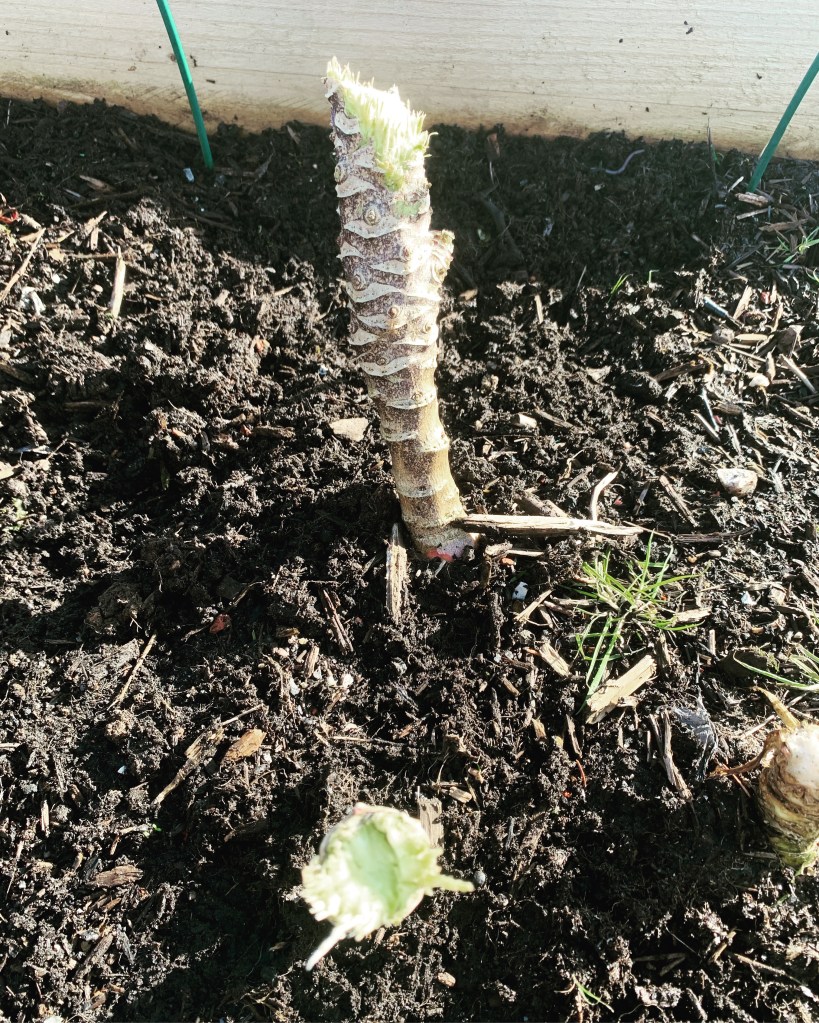
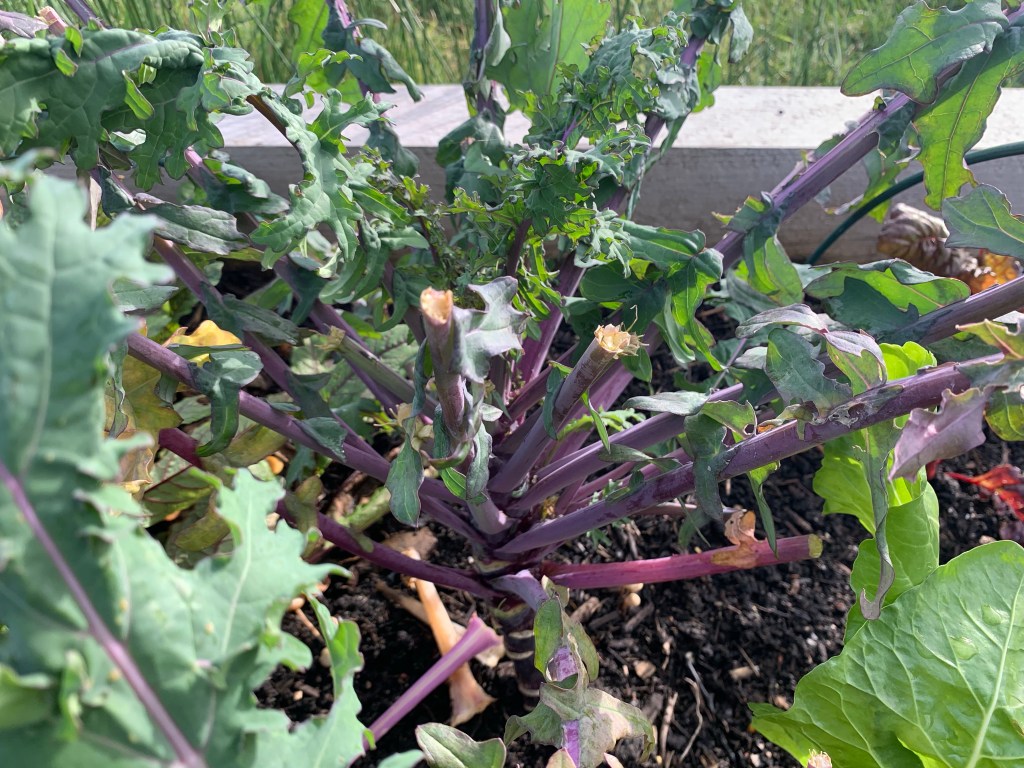
These are the remains of a couple of my perennial Taunton Deane kale plants. There’s basically nothing left of them, and I think that the damage is so severe that they won’t re-grow. The deer have even eaten rhubarb, spiky artichoke leaves and garlic, all things that they’re not supposed to like! It’s soul destroying after such a productive year of cropping from them.

However, despite the deer damage there are tentative, wonderful signs of spring.
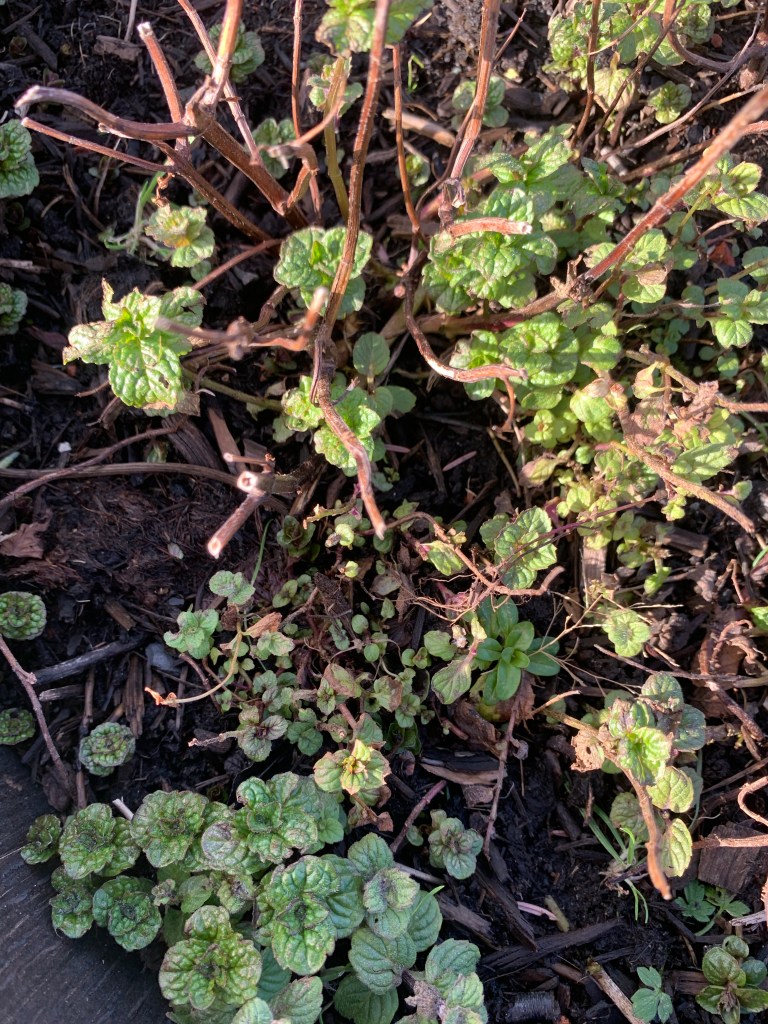
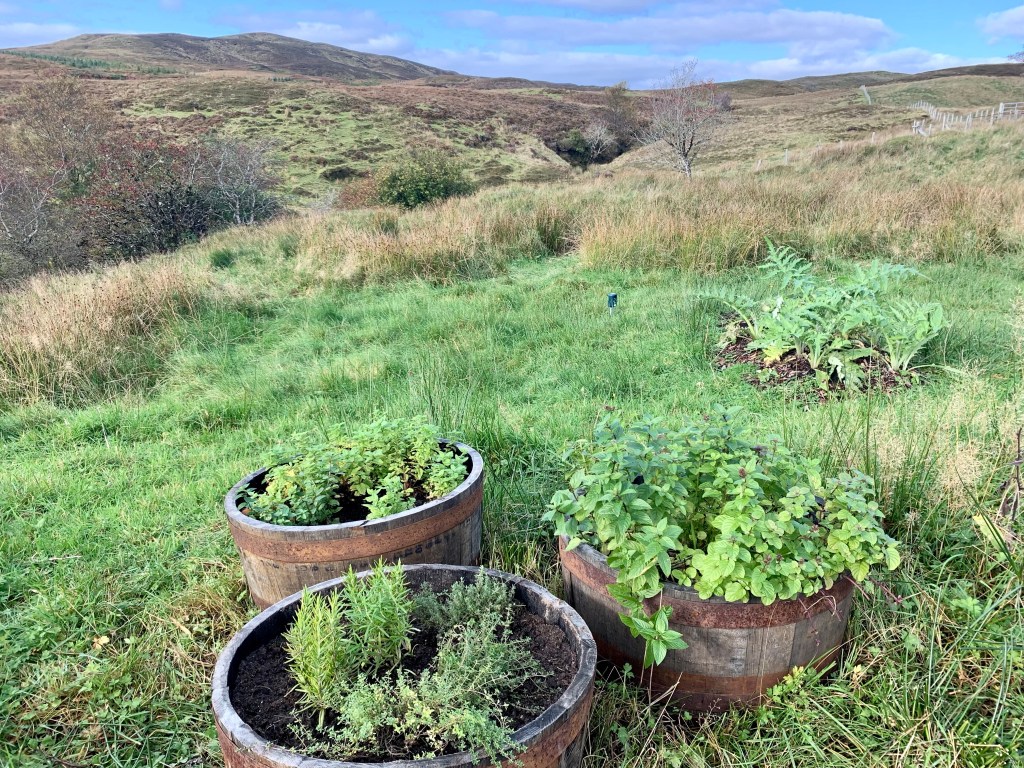
The mint has started to re-grow.
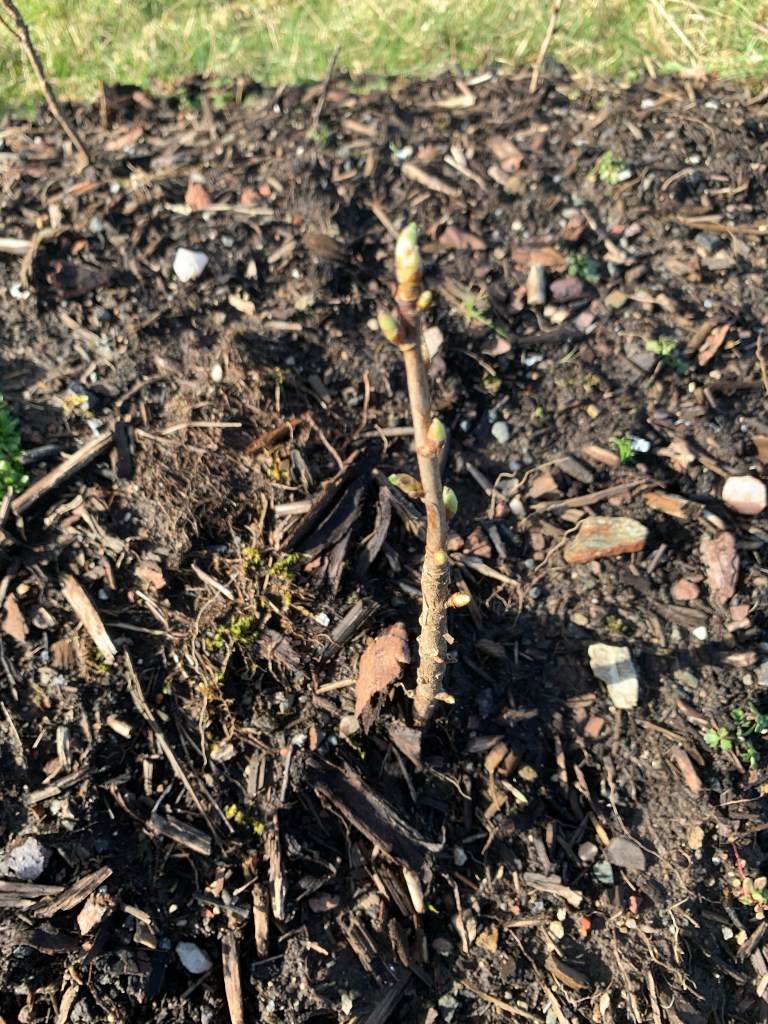
The berry cuttings are starting to break into bud.
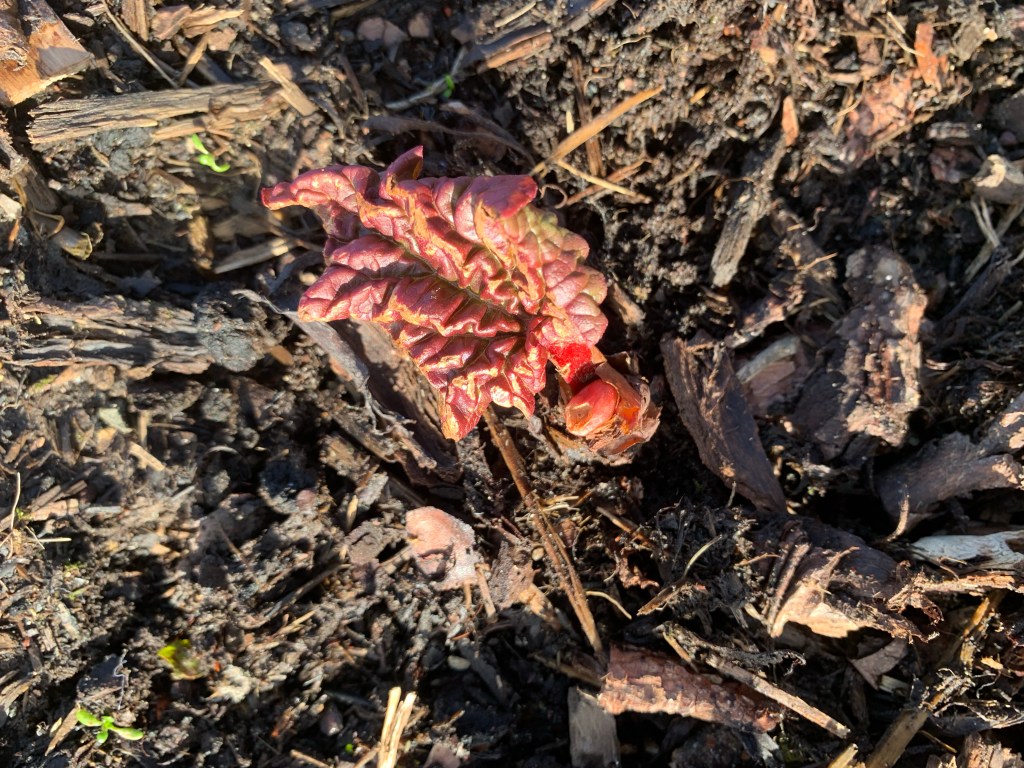
We have the first signs of rhubarb leaves pushing up through the soil like wrinkled red aliens.

I managed to weed a couple of the raised beds and get some red onion sets in before my back started to complain and I decided to beat a tactical retreat. I must remember to take it slowly at the beginning of the season, otherwise I’ll seize up after a whole winter of inactivity. And cake.

Gardening is a marathon, not a sprint. but it felt so good to be out there again.
The polycrub, seeds and spring

The days are definitely lengthening now , perceptibly so. Spring should be on its way, although no one seems to have told the weather gods that. It’s still hail, snow and gales most days.

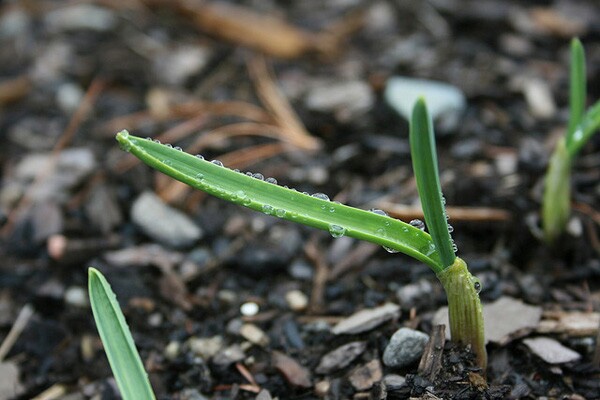
I did a quick rustle about in the raised beds this week and although I should be clearing and planting soon, it’s still far too cold and wet. The garlic has popped it’s head up a little, but that’s it.

I’ve ordered the polycrub. We did apply for a crofters grant to help with the cost, but we were unsuccessful. They wanted a five year business plan showing anticipated horticultural sales and letters of guarantee from local outlets that they would take our produce.

This isn’t the way that we’ve planned to do things. We will sell produce at the croft gate if we have any surplus, but we are mainly growing for ourselves and our neighbours, not as a fully commercial enterprise. As such we don’t qualify. We’re disappointed, of course, but we’ve bitten the bullet and gone ahead with buying the polycrub anyway.

It’s six metres by four of rigid polycarbonate sheeting, fish-farm tube loveliness. After the last few months of storms I’m doubly convinced that this is the only thing that would survive the winds on this exposed hillside.

It will revolutionise what we can grow, though. Tomatoes, chillies, squash, cherries, basil… lots of tender plants that wouldn’t thrive in our cold, windswept raised beds. We hope to have it installed in April, just in time to move crops in there for the summer.

Very exciting!

Now to clear out the caravan spare room out from a whole year of being a junk room, and set it back up to start seedling production again. It will be good to see the blue grow lights illuminating the hillside once more.. 😊

Feeding the local wildlife

It’s not all been perfect carrots and potatoes, y’know. Growing organically and without pesticides has been a challenge, and we’ve lost our fair share to the bugs and the deer. Mainly, it has to be said, to the damned deer.

Our hungry neighbours

Deer are not supposed to like garlic, onions, leeks or anything strongly scented. Ha. Ours obviously have exotic tastes. They’ve chomped through the green foliage of all three of these all summer.

Plant globe artichokes, those in the know said. The leaves are big and bristly and the deer don’t like the texture of anything bristly or prickly. Ha. They’ve been eating the yacon and artichokes too, biting out the lead shoots completely on many of our plants.

It’s also the closest bed to the common grazings on the hill , and as such the most tempting, I suspect. The rest are annoyingly close to the caravan.

The distant remains of the artichokes

Kale was always going to be a crop that we knew would potentially suffer from their grazing, although they did wait until it was of sufficient size to be worth nibbling. Thoughtful of them. Then they feasted.

Chomped kale

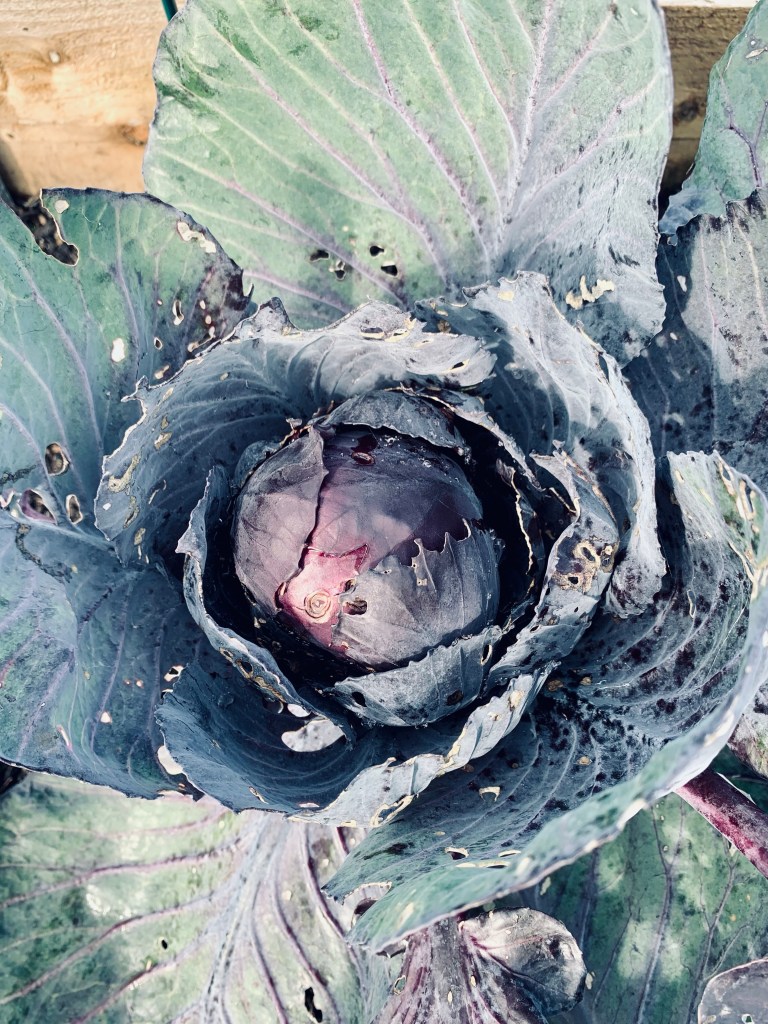
What the deer didn’t eat, the caterpillars and other bugs did.

This is a picture of one of my red cabbages from the raised beds. As you can see, the leaves are like lacework, having been nibbled by whatever passing insects or caterpillars we are harbouring. Companion planting helped a bit, but most of the garlic and other strongly scented plants that were supposed to deter passing devourers had been harvested long before these cabbages were, and then the fun started.

Bug salad bar

I am not despondent. I’m happy to lose some to wildlife, but am determined to find ways to minimise the damage and maximise our crops. Our soil is productive and good. I think that netting against insects for longer next year will help, as will deer fencing around the vegetable plots, if not the whole croft.

It’s a journey, and we’re learning.

On the whole this growing thing has been surprisingly successful for us, and next year with the benefit of the knowledge gained from our experimental year, more beds and the polytunnel in place, we’ll be even more productive.

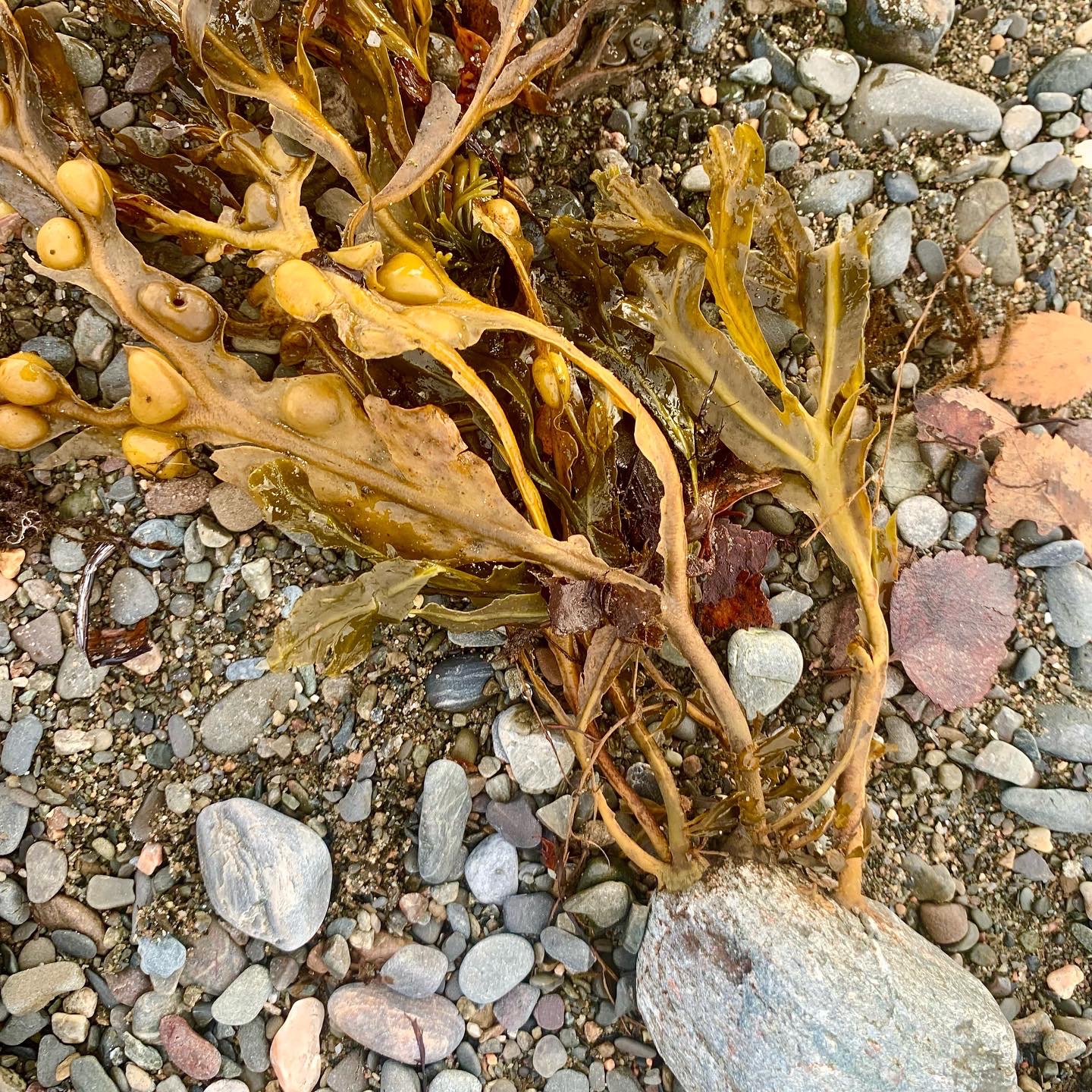
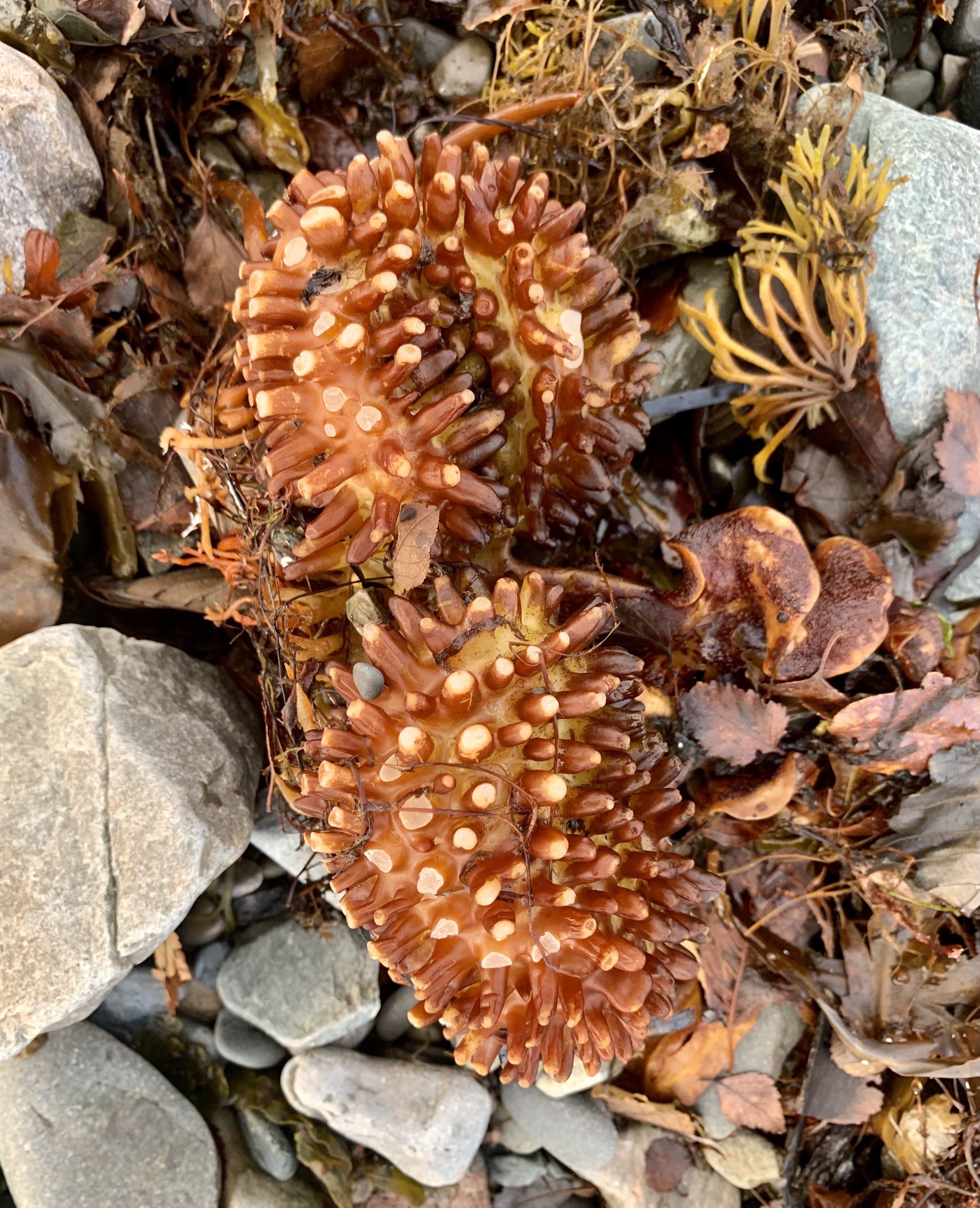
In praise of seaweed

Amazing stuff, seaweed.

It’s a good source of potassium, nitrogen and magnesium. It also contains trace elements (nutrients that plants require only in small quantities) including iron, manganese, zinc, copper and boron, not always found in other types of fertiliser.

It’s also completely biodegradable and breaks down quickly, perfect for the vegetable beds.

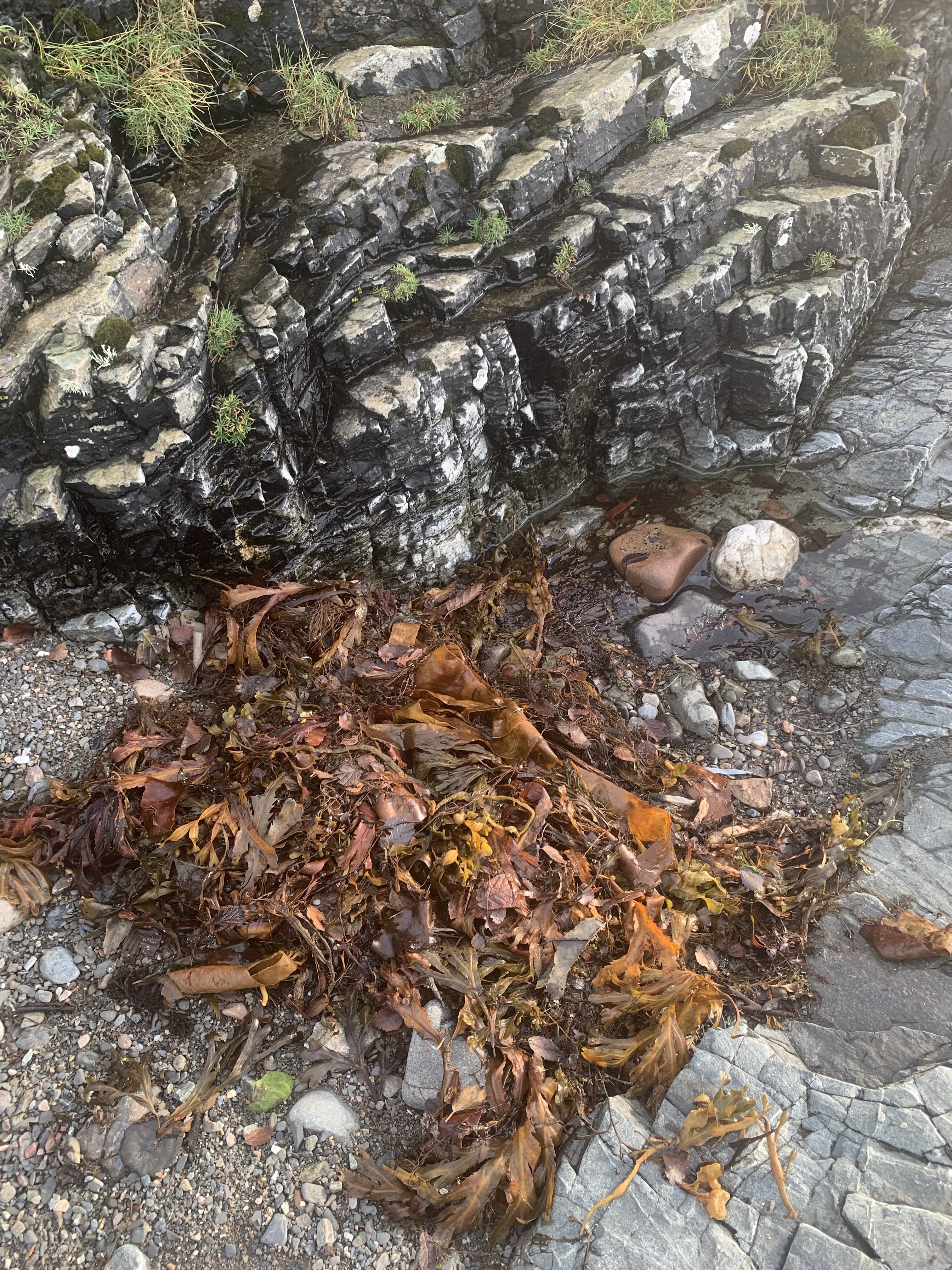
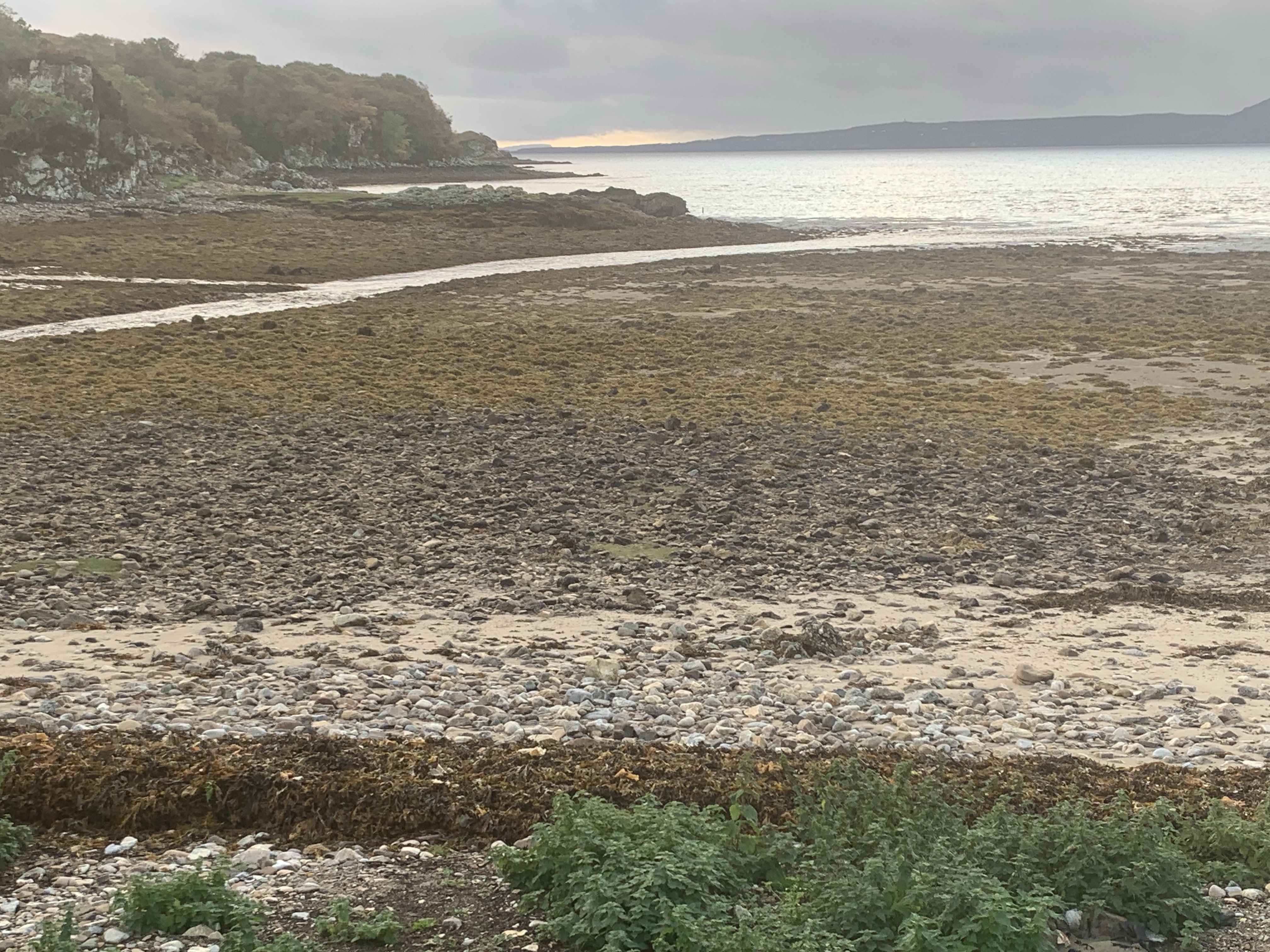
We could see how full of nitrogen the seaweed at the high tide line was – there was a line of nettles growing right out of it!

We plan to use this precious, free resource in two ways on the croft; as a mulch on our no-dig beds to suppress weeds and fertilise the soil directly, and added to our compost bins to add nutrients to the rotting down mix of green and brown matter.

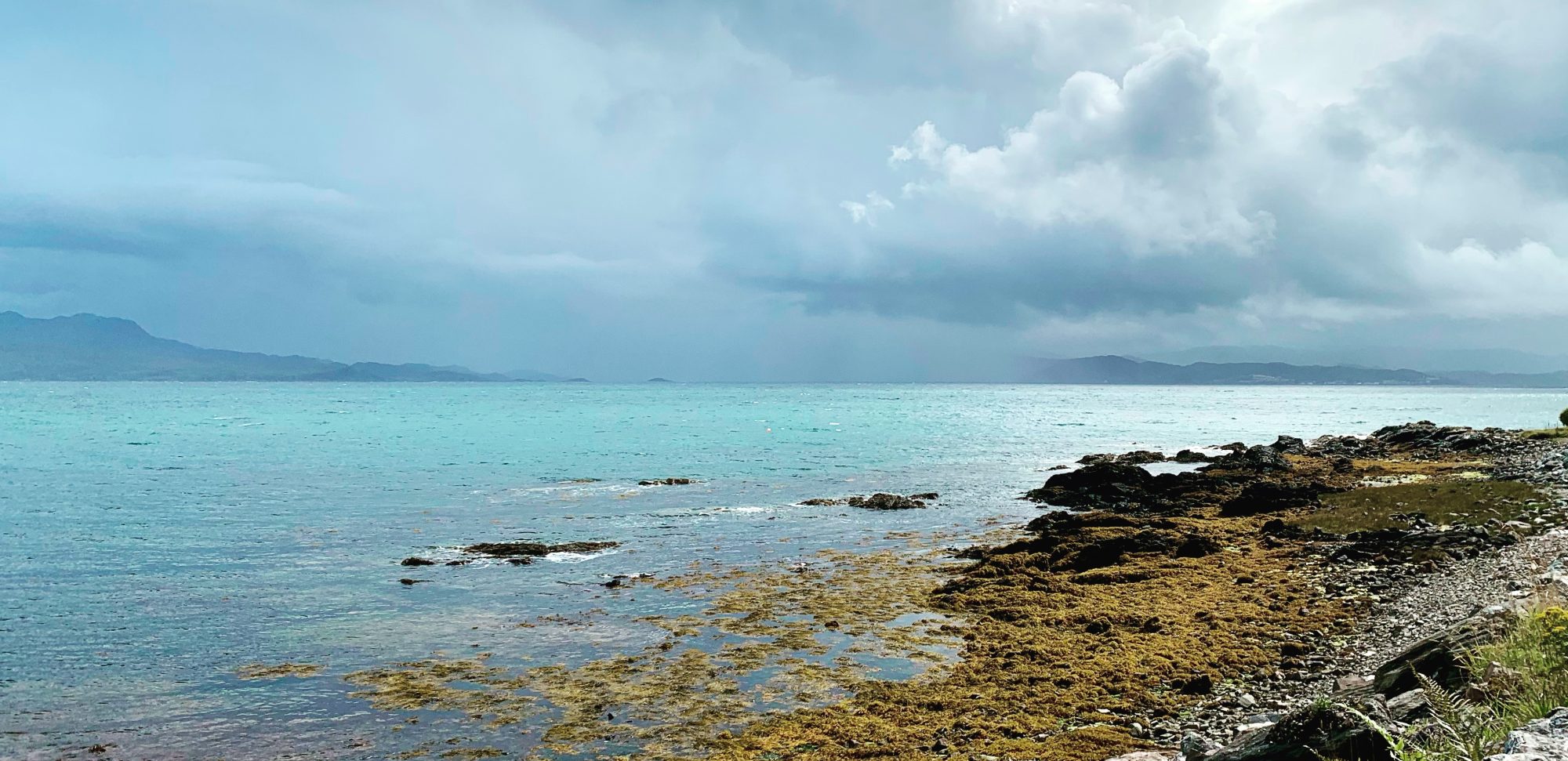
Yesterday we explored the western side of the peninsula looking for beaches where we could collect, wheelbarrow and load a car trailer with ease. We found two great beaches, both full of seaweed, and both highly accessible.

We won’t take too much, as the wildlife on beaches rely upon it, but there seems to be plenty for all. Next time we have a storm we’ll bag up a few feed sacks of it from each beach and bring it back to the croft.

Wintering

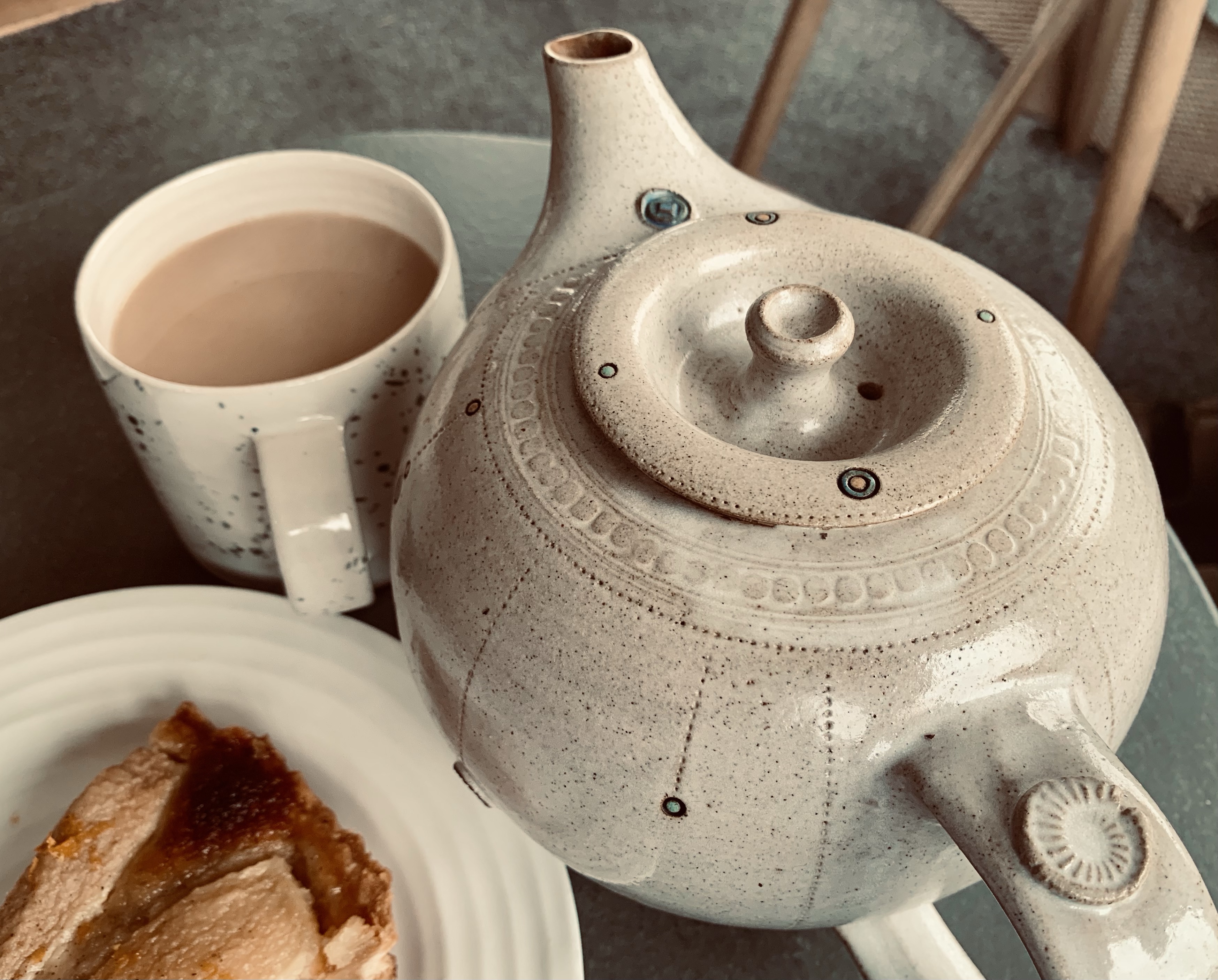
I’m sitting in the caravan on the croft sipping a cup of tea and watching the rain pelt the windows. The sea and the mountains have all disappeared and we are completely enveloped in dense, grey cloud.

We’ve had three weeks of very heavy rain and high winds to welcome the change of season and remind us that winter is but a blink away.

I honestly don’t mind the rain, and after surviving one highland winter in the high winds I’m much less nervous about the gales. I’ve learned to trust the bags of hardcore and lorry strapping that are holding the caravan down. We may rock a bit in the weather but we haven’t taken off yet..perhaps I shouldn’t speak too soon 😊.

As winter approaches though, the croft is saturated. I dashed out yesterday between rain flurries in my wellies to look at the raised beds, aware that I desperately need to weed and get the autumn garlic into the soil soon.

But it will all have to wait a little longer. It’s like a quagmire out there. There’s no fighting this weather; we just have to sit it out and grab the moments of respite when we can to start preparing for winter. At least husband can work in the relative shelter of the house on the plumbing, and is warm and dry as he solders pipes.

The composting situation is well sorted though. We visited a neighbouring croft yesterday after a social media appeal to reduce her horse dung mountain. We filled eight big feed bags with well rotted horse poo and trailered them back to shovel into our compost bins. Amazing stuff.

More trips are likely to be needed – we’ve hardly dented the dung mountain at all.. we’re so lucky to have this source of organic manure nearby. It will do wonders for our soil.

As soon as the rain slackens we’ll dress the beds and mulch the soil ready for overwintering. I’m probably going to put the environmesh back on too so that the kale, beets, parsnips, onions and garlic that will remain in the beds over winter can enjoy a bit of protection from the wind. It makes a big difference to the battering that they take.

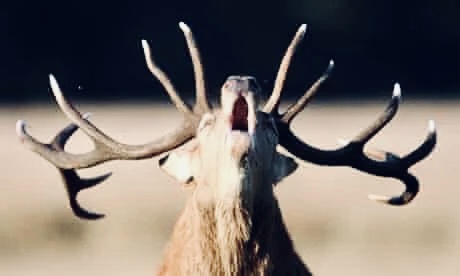
The stags have been roaring on the hillsides for a few nights now. They do that in October as they compete for dominance and gather their hinds for the winter. It’s quite an uncanny, primal noise, and they’re clearly pretty close by. Next year, deer fencing is a must, before the trees go in.

For now, I’m embracing autumn and the imminence of winter. Tea, books by the fire, clear starry skies and warming drams of homemade atholl brose in the evenings to keep the weather at bay. Yep , the oats and whisky for our first bottle of the season are steeping as we speak…

Carrots at last

I’ve been watching the posts of successful gardeners up here with envious eyes as they cropped fistfuls of carrots from their vegetable plots.

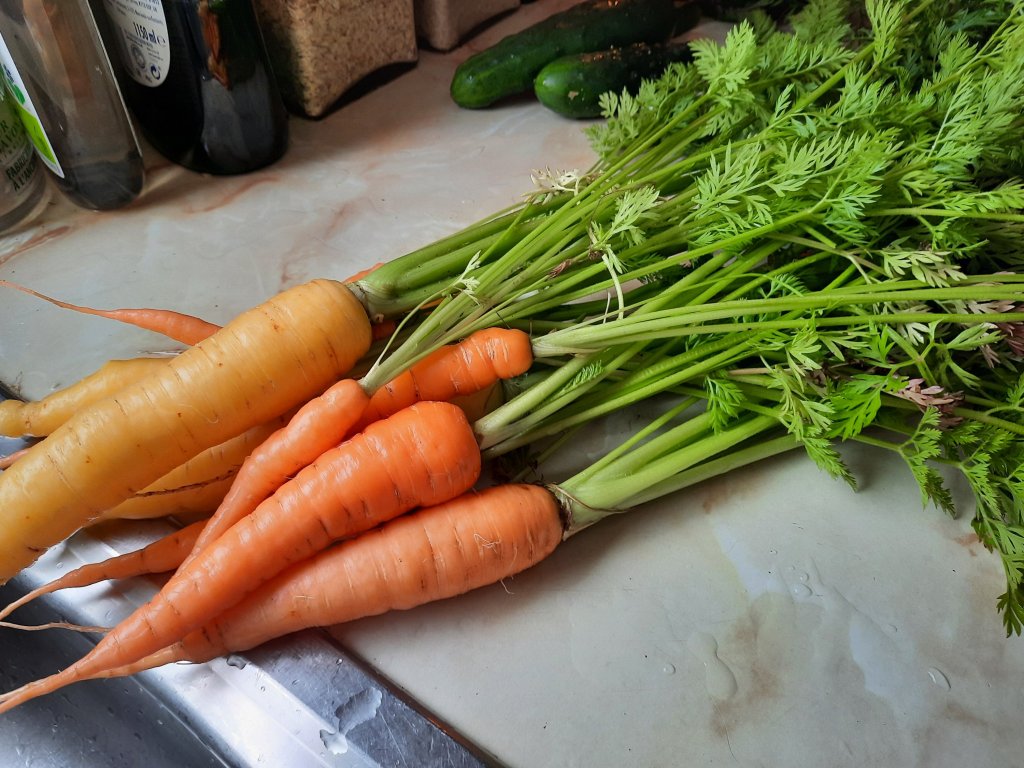
Carrots from the croft beds

I have been pulling the odd carrot here and there from my raised bed over the last month to see if there was anything much underneath the profusion of feathery green. I’ve prodded and pulled. To date, all to no avail. Up until this week all I’d found were a few pencil thin offerings.

Checking the beds a few days ago I noticed that some of the carrots were going to seed! Horrors. How could they go to seed on me without delivering as promised?

Armed with my fork I resolved to find edible carrots or else dig them all up and return the space to something more productive.

I’d sown two types from Real Seeds in the spring – the gloriously named Manchester Table carrot and the equally exotic yellow French heritage variety, Jaune D’obtuse. Surely one of them should have produced something by now.

I knew that I hadn’t thinned them very well. When the time came in early summer, something in me just baulked at pulling out young, healthy plants, and much as I understood that it was needed, I also suspected that my half-hearted attempts at thinning hadn’t been nearly rigorous enough. As such I was expecting skinny, weedy specimens at best.

My delight was complete when I delved into the forest of carrot rows and pulled up some good sized carrots.

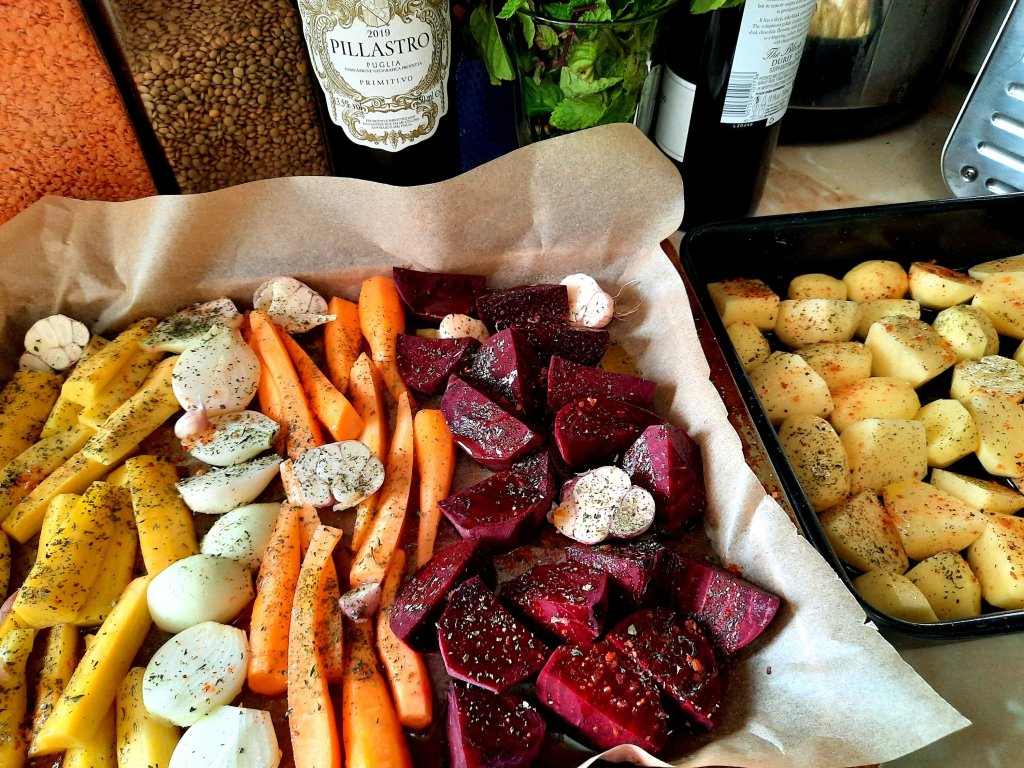
Croft vegetables ready for roasting

We roasted the first of these today with beets, potatoes, onions and garlic, all grown by us. They were delicious.

It’s just a carrot. But it’s my very first homegrown one, and it tasted all the better for that.

Potato Musings

We planted early seed potatoes in March in one of the hugelkultur beds on the croft as part of our “what will grow here” experiment. We’d managed to get the seed potatoes from a fellow crofter, two varieties that he’d recommended called Orla and Nicola, which I promptly mixed up… 🙄

Potatoes in the bed on the right

There were several times that I thought absolutely nothing would come of them.

I watched as the months rolled around and they grew, but very, very slowly. It was a very cold start to the season and I wondered if I’d stunted them completely, never to recover. They didn’t flower, and they didn’t seem to get any bigger.

As we moved into August and we started harvesting lettuces, onions, kale and garlic, the green tops of the potato plants looked no bigger than they had in April, and I started to feel that the experiment had failed.

Husband dug them up on a misty, midgy morning this weekend. I’d decided that we really needed the space for something else to have its chance, and my expectations were low, if zero, to be honest.

When he came in with a couple of bucketfuls of good potatoes I was pleasantly surprised.

It wasn’t a massive haul compared to the harvest that we’d got from the red-skinned potatoes, but it was more than I’d imagined that they’d provide.

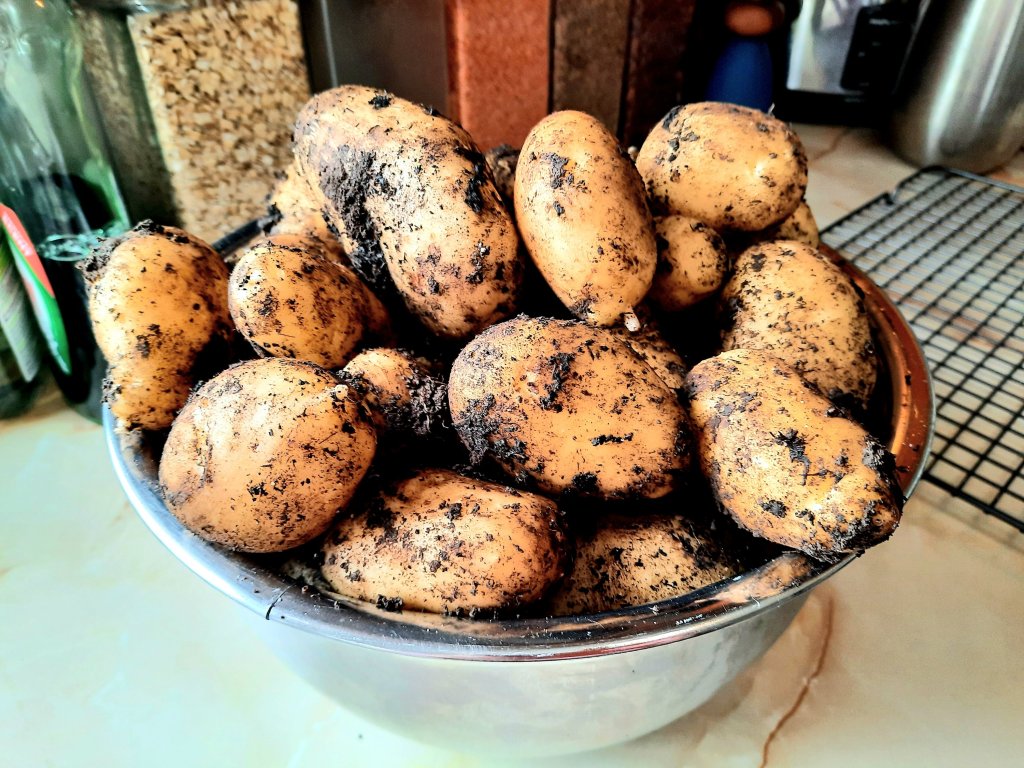
Either Orla or Nicola..

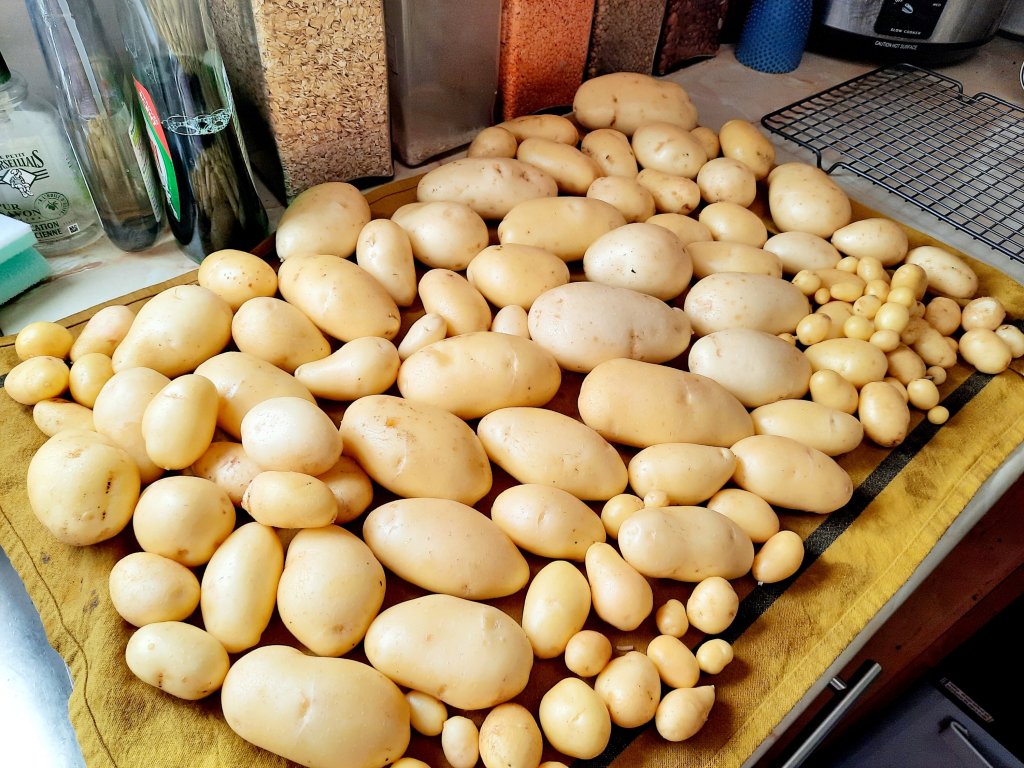
I washed them off and checked them over. Very little slug damage, and only a few green ones, and that because I hadn’t earthed them up. It was a decent crop of good, solid unblemished potatoes.

Washed and drying

We will store these in hessian bags in the caravan and eat them over the coming months.

Considering our experience with the reds that we harvested last month and these varieties, I think that potatoes do grow well here, despite the cold springs, so I’m planning to grow a full raised bed of them next year.

They’re such hassle-free plants to grow, and it’s true what they say, that the flavour of home grown potatoes is far superior to shop bought ones.

Lovely little nuggets of potato deliciousness. Nature keeps surprising me.

Summer eating

This is the season for eating from the croft, and the fresh produce is now coming in with abundance, even from the handful of small grow beds that we have. We are enjoying lettuce, kale, new potatoes, purple sprouting broccoli, chard, onions, peas and fresh herbs.

I’m being challenged to find new ways of serving this bounty, as we can’t store or freeze any produce this season.

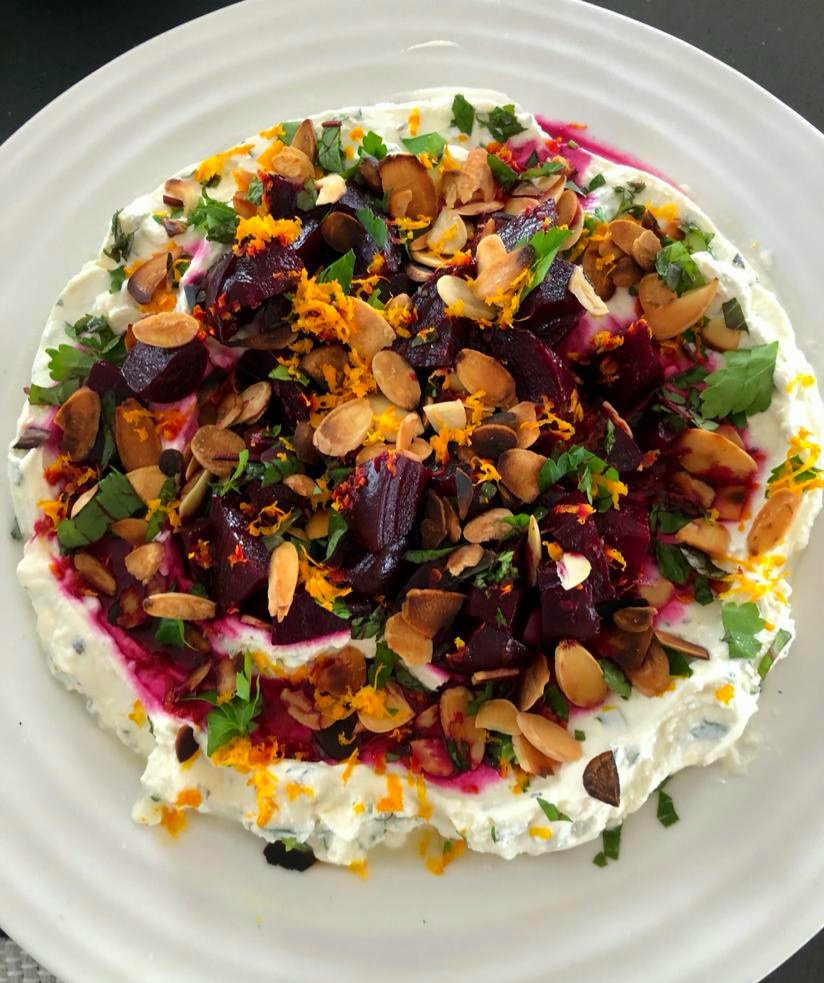
This is whipped feta with roasted beetroot, toasted almonds, orange zest, chopped mint and parsley.

I was so excited to try our first baby beets from the croft that I made this dish up specifically to try them. It’s adapted from one that I found that uses goats cheese.

Scooped up with oat biscuits, it was a light nibble to eat before a main meal with friends, but would easily make a lunch on its own. This will become a summer staple, I think, and I’ve resolved to definitely grow more beetroots next year!

Young onions from the croft

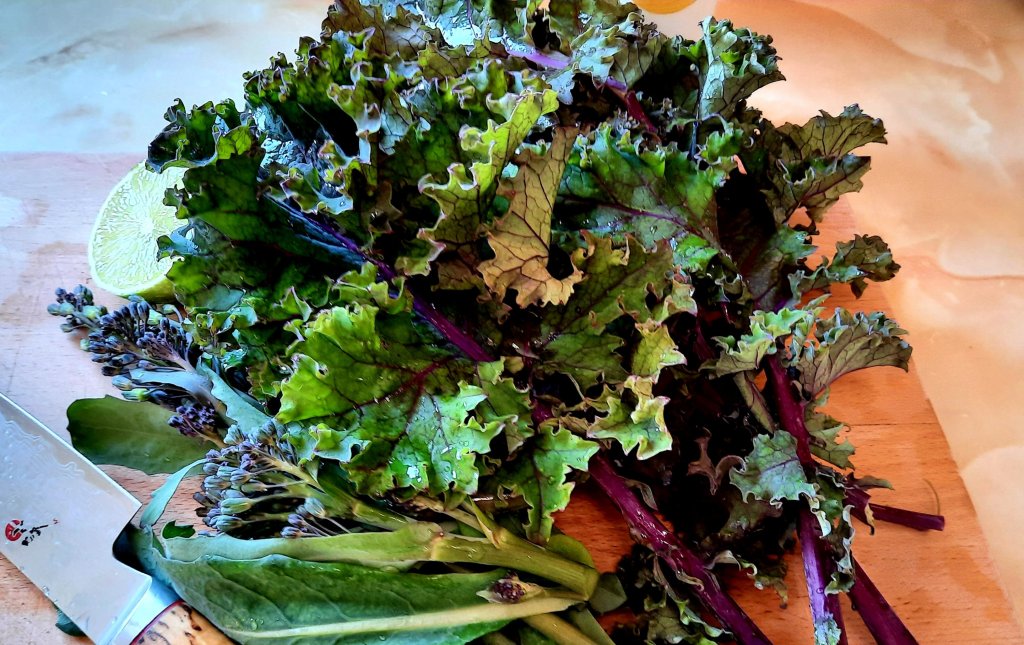
Tonight, kale and purple sprouting broccoli from the croft were the central vegetables in our meal. They were lightly sautéed with garlic, sesame, spring onions, lime, a bit of leftover chicken, and noodles.

Uncle Bert’s kale

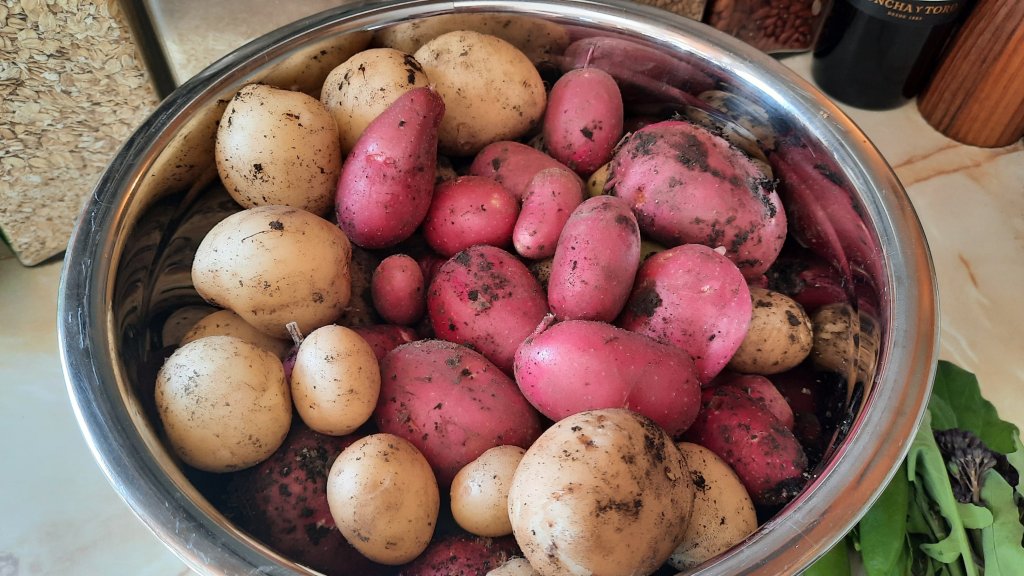
Lots of potatoes… cold potato salad, fried potatoes, garlic potatoes, mash here we come!

3kg potatoes dug up this morning

Lambing snows

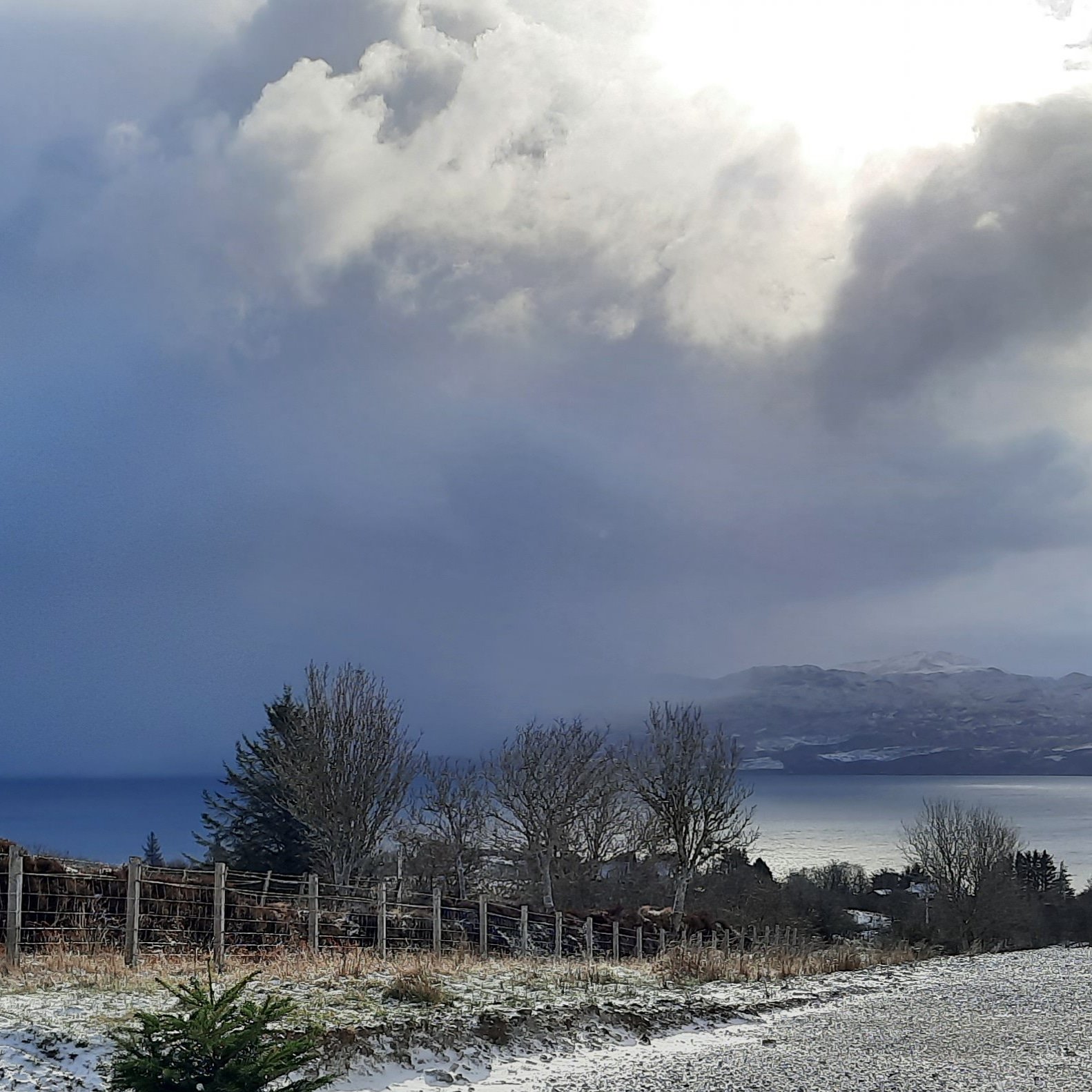
The islanders call late snows in April Lambing Snows. They’re usually the last gasp of winter and come suddenly, just when the lambs are being born in the fields.

We went from bright, warm days to plummeting temperatures within 24 hours. The wind veered suddenly to the North and before we knew it, there were snow blizzards upon us, sweeping rapidly down the Sound in ominous curtains of grey.

Luckily the only thing in the outdoor raised beds were garlic, onions and perpetual leeks. Listening to local advice I’d held off planting out anything tender, and don’t plan to until May. It seems that this advice was very sound!

Temperatures fell to minus 5 degrees centigrade overnight, and barely struggled to hit 2 degrees during the day. The wind was bitingly cold.

Nothing for it but to hunker down indoors..

The Mandrake Babies

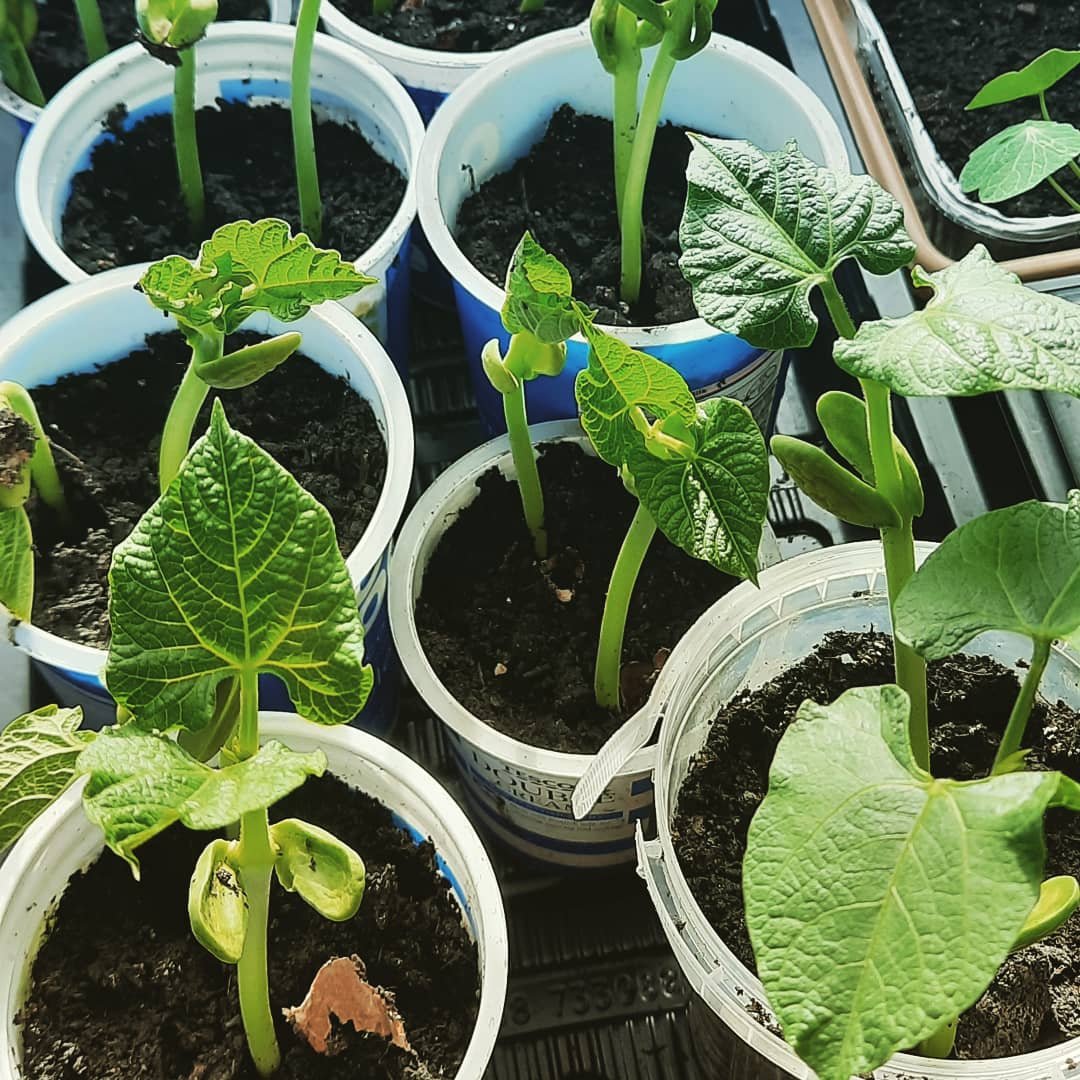
There’s something so intriguing and otherworldly about growing beans.

Best friend in France sent me a pack of organic borlotti beans, (not from France, from a UK seed company) and I popped some into seed compost five days ago in the growing room in the caravan, not hoping for much, to be honest.

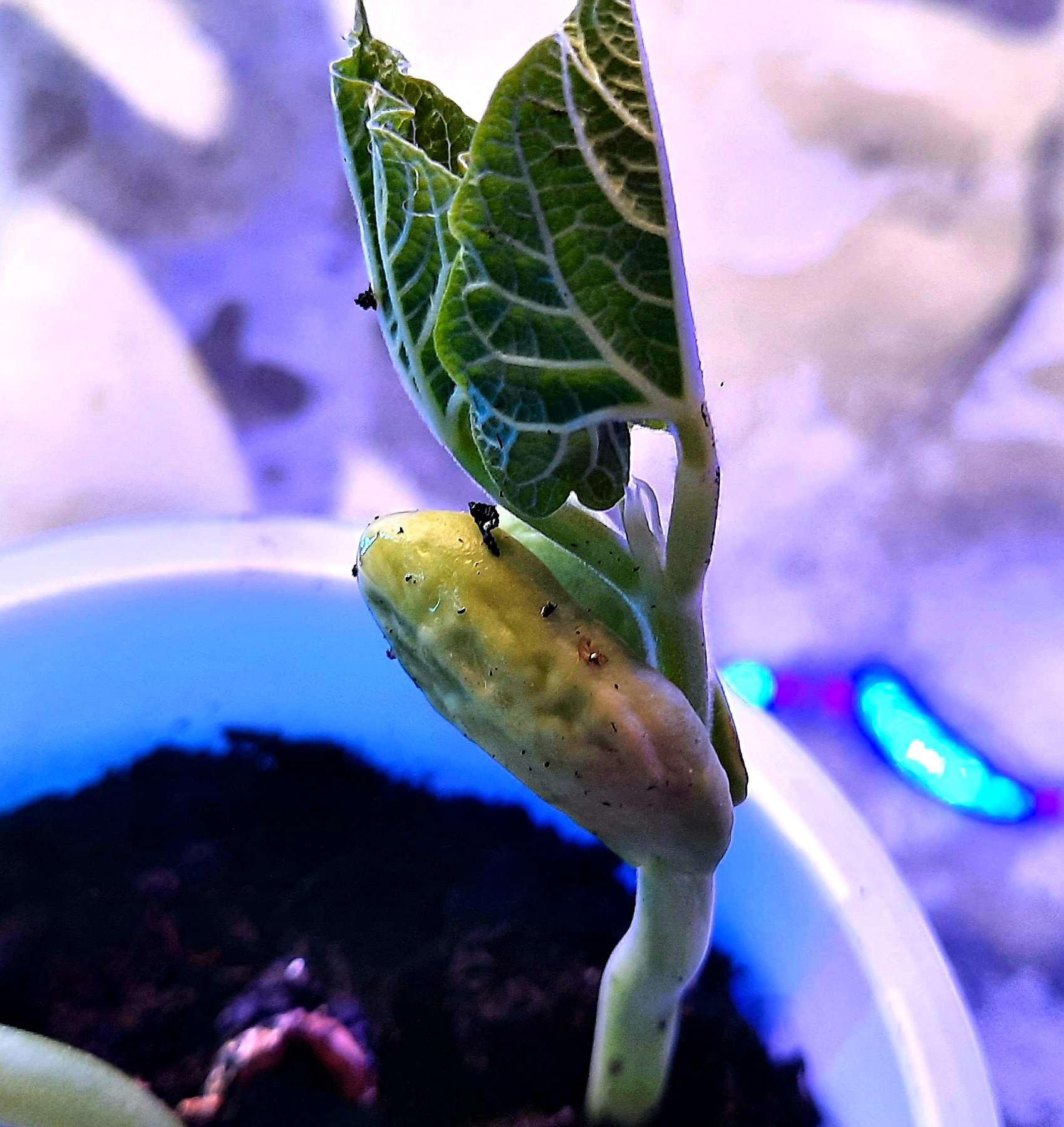
They germinated within two days, splitting the soil and unfurling huge, robust stems. It was seriously like watching a triffid grow. I could almost see them get bigger by the hour.

After four days all of them had leaves. They’re sitting there now, waving their stems about, looking a bit menacing… 😊

I think I’ve hatched mandrake babies by mistake. Someone get me some ear defenders..