Greening up

It’s amazing how quickly things grow at this time of the year. In the few weeks since I last posted about plant progress, the croft beds have filled up and are now bursting with foliage from the maturing potatoes, onions, garlic and kale.
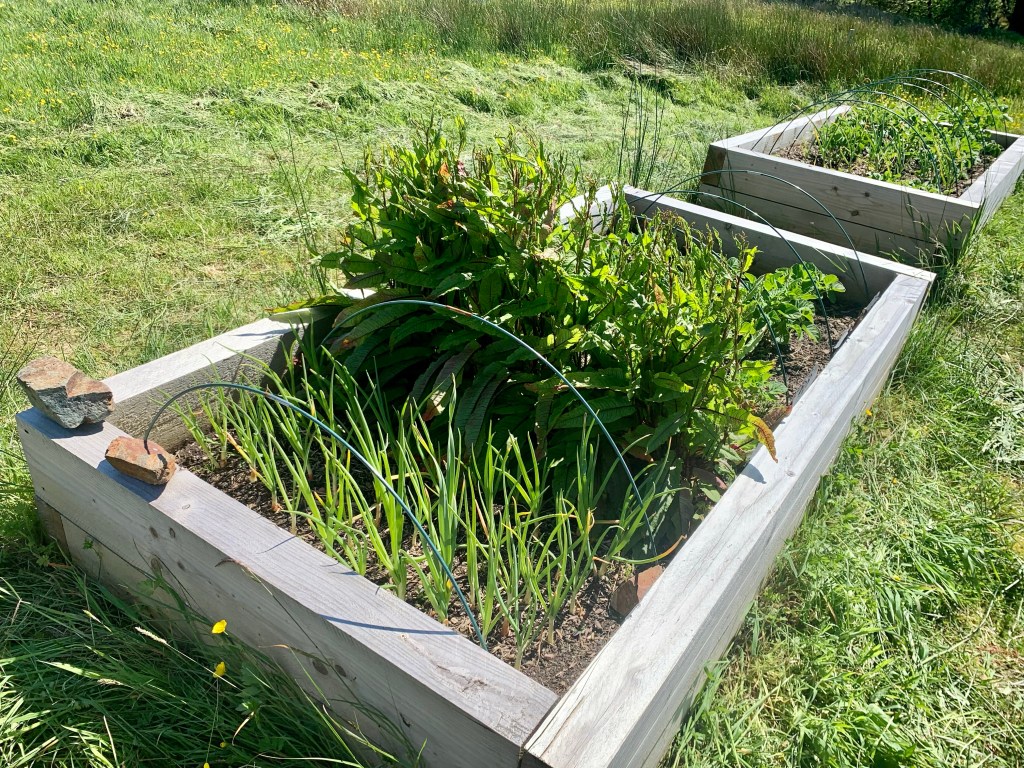
Raised beds with sorrel in centre

The red veined sorrel planted last year was the only thing that the deer didn’t eat over winter, and in the last four weeks it’s shot up and is throwing out flower stems. We’ll keep the seed and cut it right back soon.
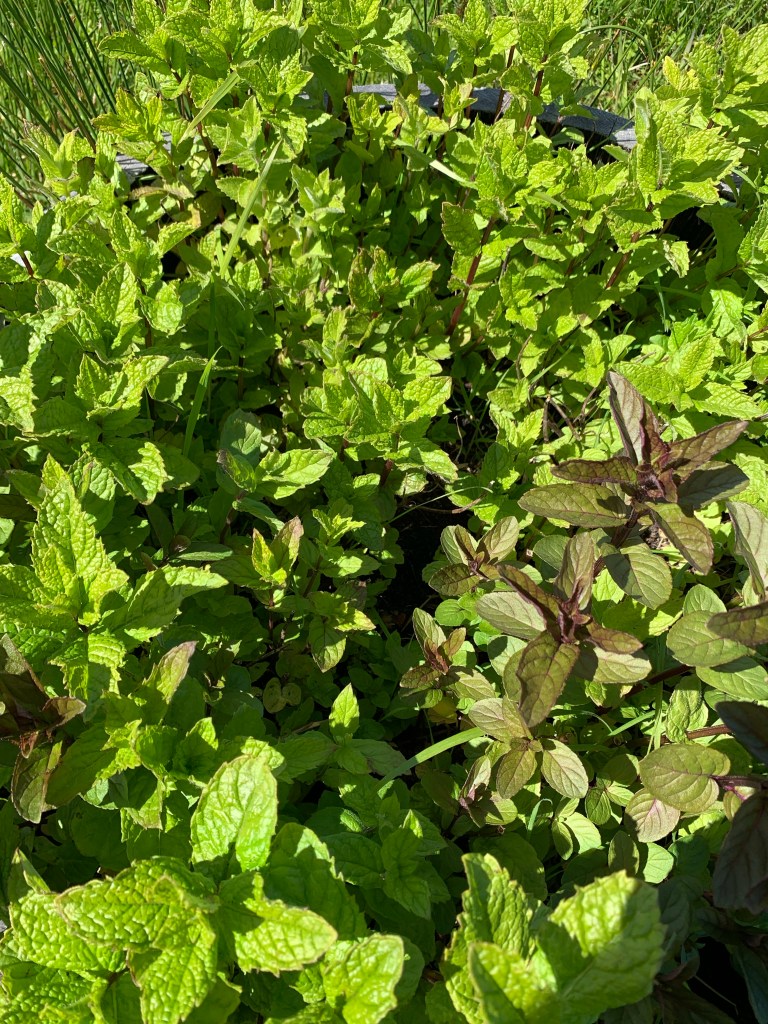
Mint going crazy
Polycrub filling up

The polycrub plants are growing even faster. The tomatoes have flowers on them and the squashes, courgettes, beans and sweetcorn have all grown hugely.
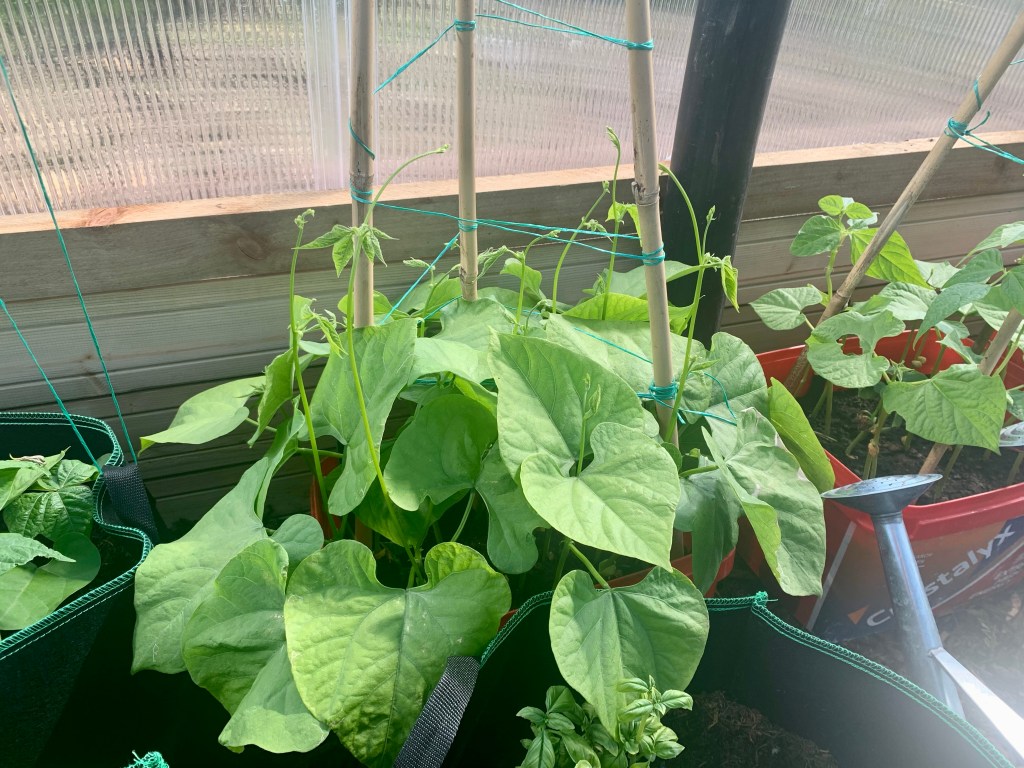
Borlotti beans

We’re already cropping strawberries from the three tubs of strawberry plants that we have. It’s just a small bowl each day, but they’re sweet and delicious.
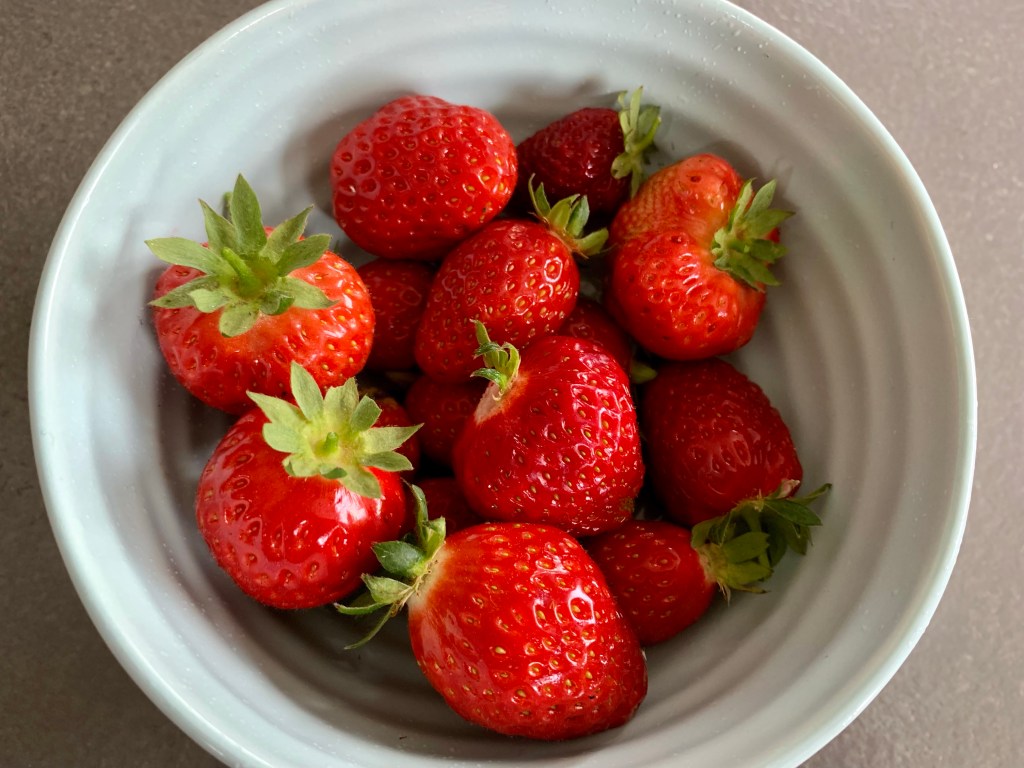
Breakfast bowl of strawberry pickings

We have plans next year to increase strawberry production and as the plants are already sending out runners we should be able to propagate many more plants before next spring. We’ll install a couple of runs of drain piping to hold them above the raised beds.
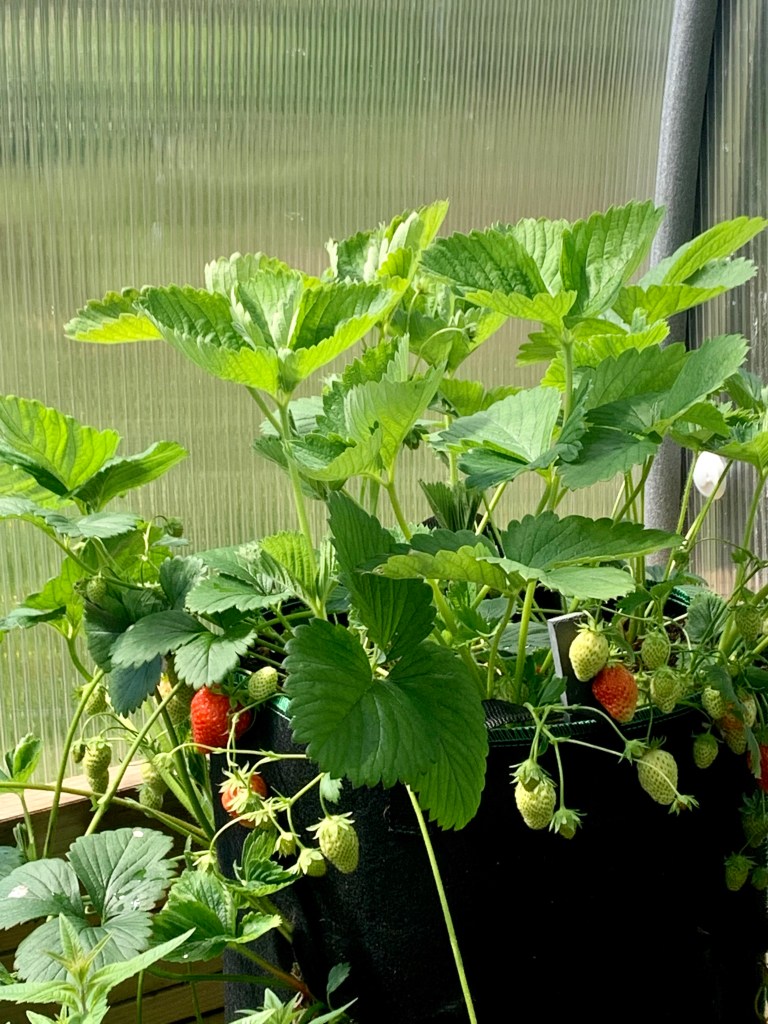
Strawberries
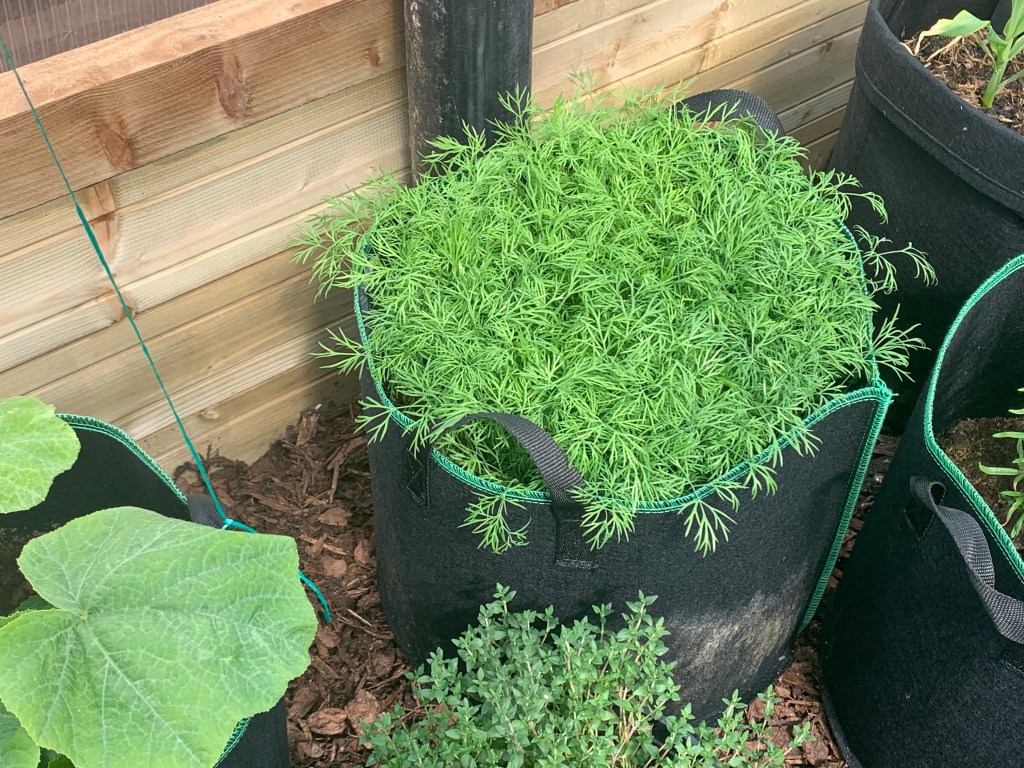
Herbage (mammoth dill)

The days are long now. Sunrise is at about 4.30 am and sunset around 10.30pm, with the plants responding to the long days with rapid growth. The ravens set up a cacophony of noise at dawn to herald the start of day (thanks lads) and one of us potters over to open the polycrub some hours later once coffee has kicked in.
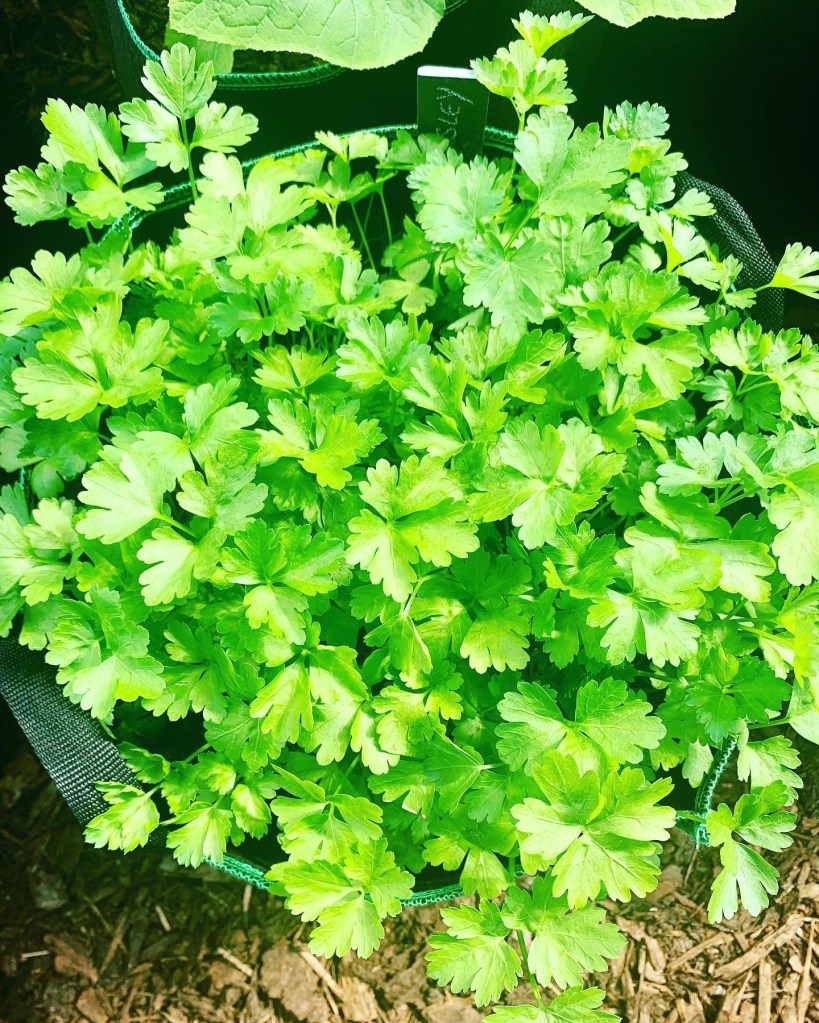
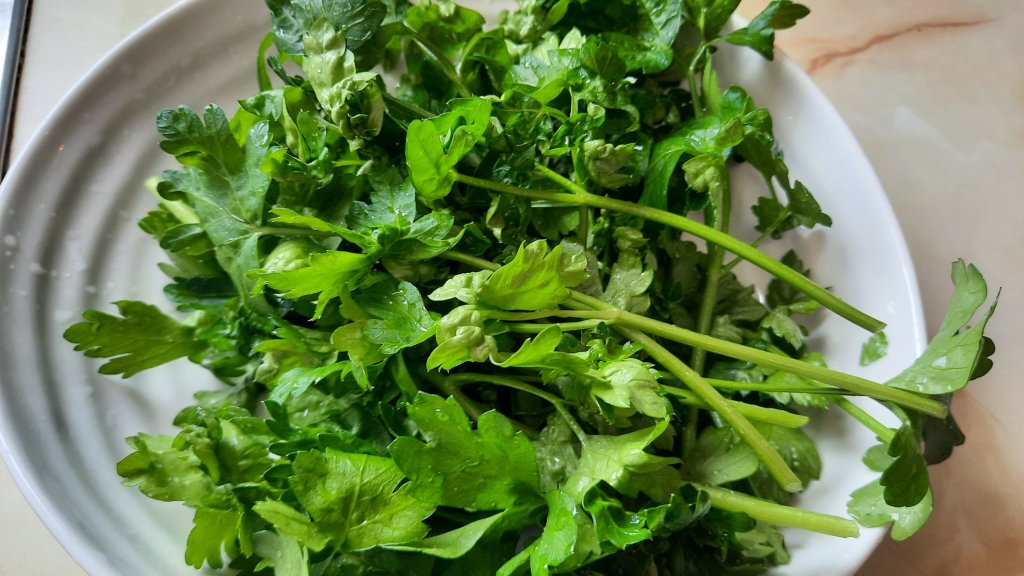
More herbage (parsley)

Soon we will start harvesting. We’re already cropping seed-grown parsley, coriander, basil and dill, as well as lettuce, but the potatoes and garlic won’t be long now. Then courgettes, spring onions, peas and beans. I’m already sowing purple sprouting broccoli, kale and pak choi to succession plant in the spaces that they will leave, and tomatoes, cucumbers, squash and corn won’t be far behind.

The polycrub is my happy place. It’s warm and sheltered and smells faintly of greenage and soil and the spiciness of growing leaves.

I’m loving it.
In praise of seaweed

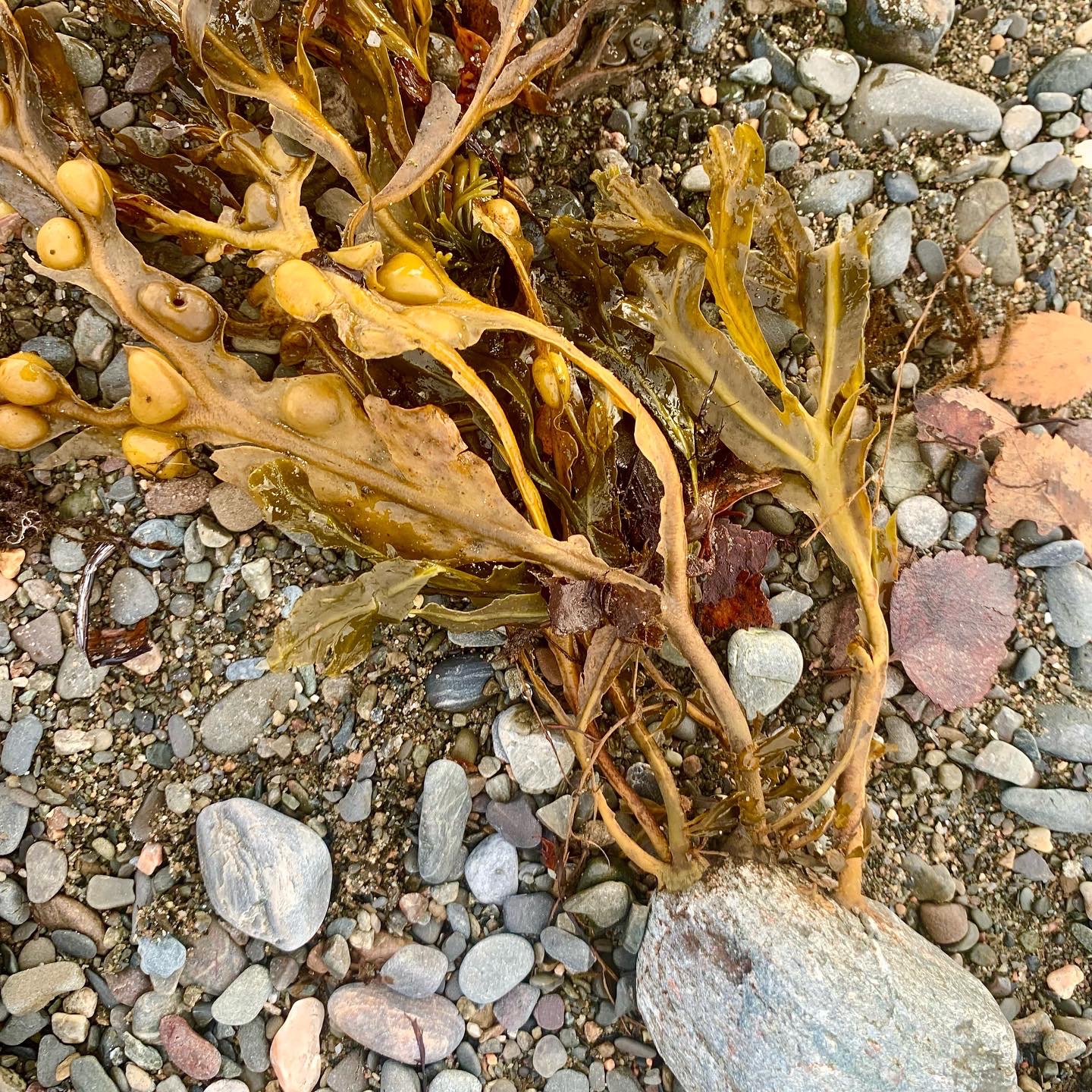
Amazing stuff, seaweed.

It’s a good source of potassium, nitrogen and magnesium. It also contains trace elements (nutrients that plants require only in small quantities) including iron, manganese, zinc, copper and boron, not always found in other types of fertiliser.

It’s also completely biodegradable and breaks down quickly, perfect for the vegetable beds.

We could see how full of nitrogen the seaweed at the high tide line was – there was a line of nettles growing right out of it!

We plan to use this precious, free resource in two ways on the croft; as a mulch on our no-dig beds to suppress weeds and fertilise the soil directly, and added to our compost bins to add nutrients to the rotting down mix of green and brown matter.

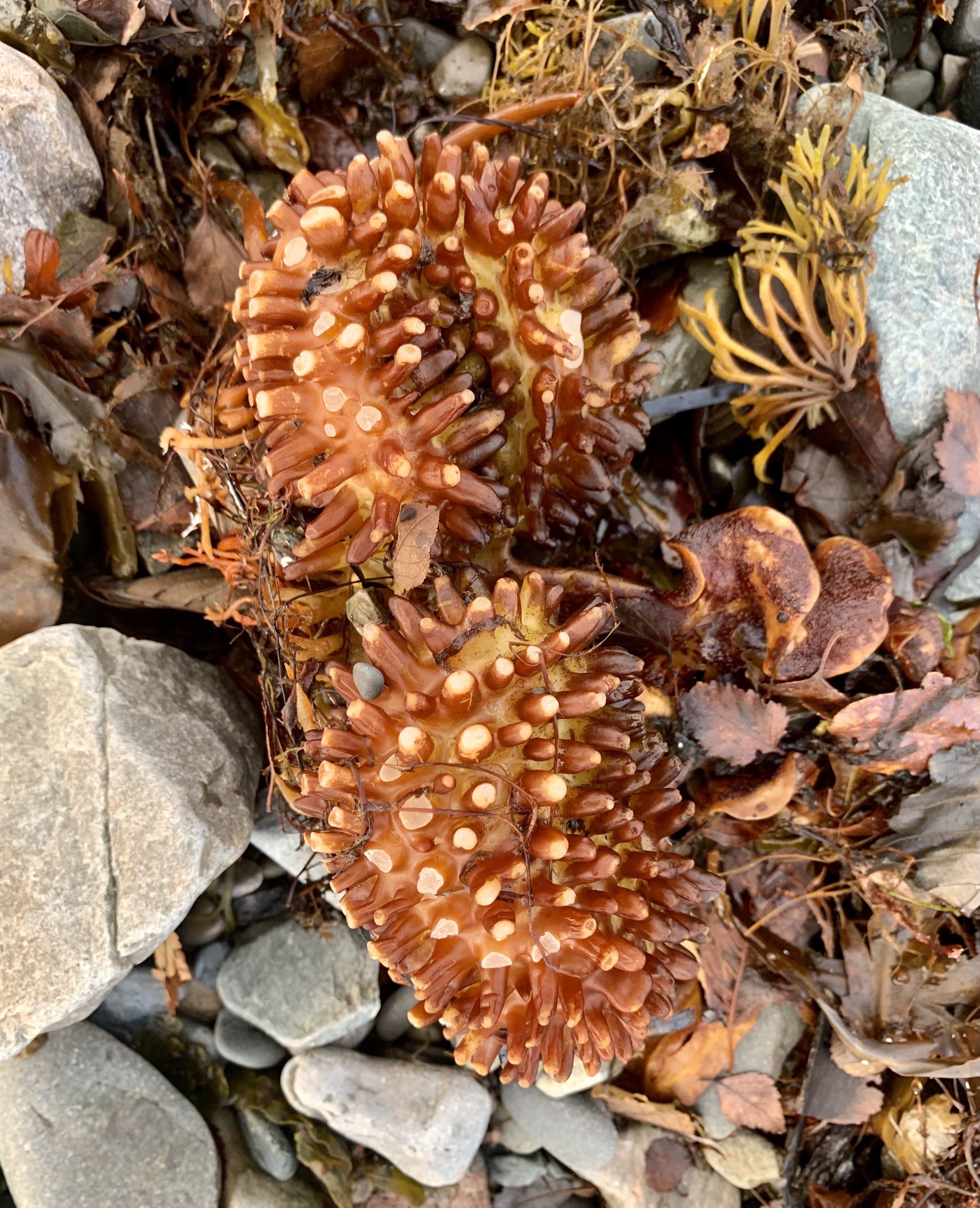
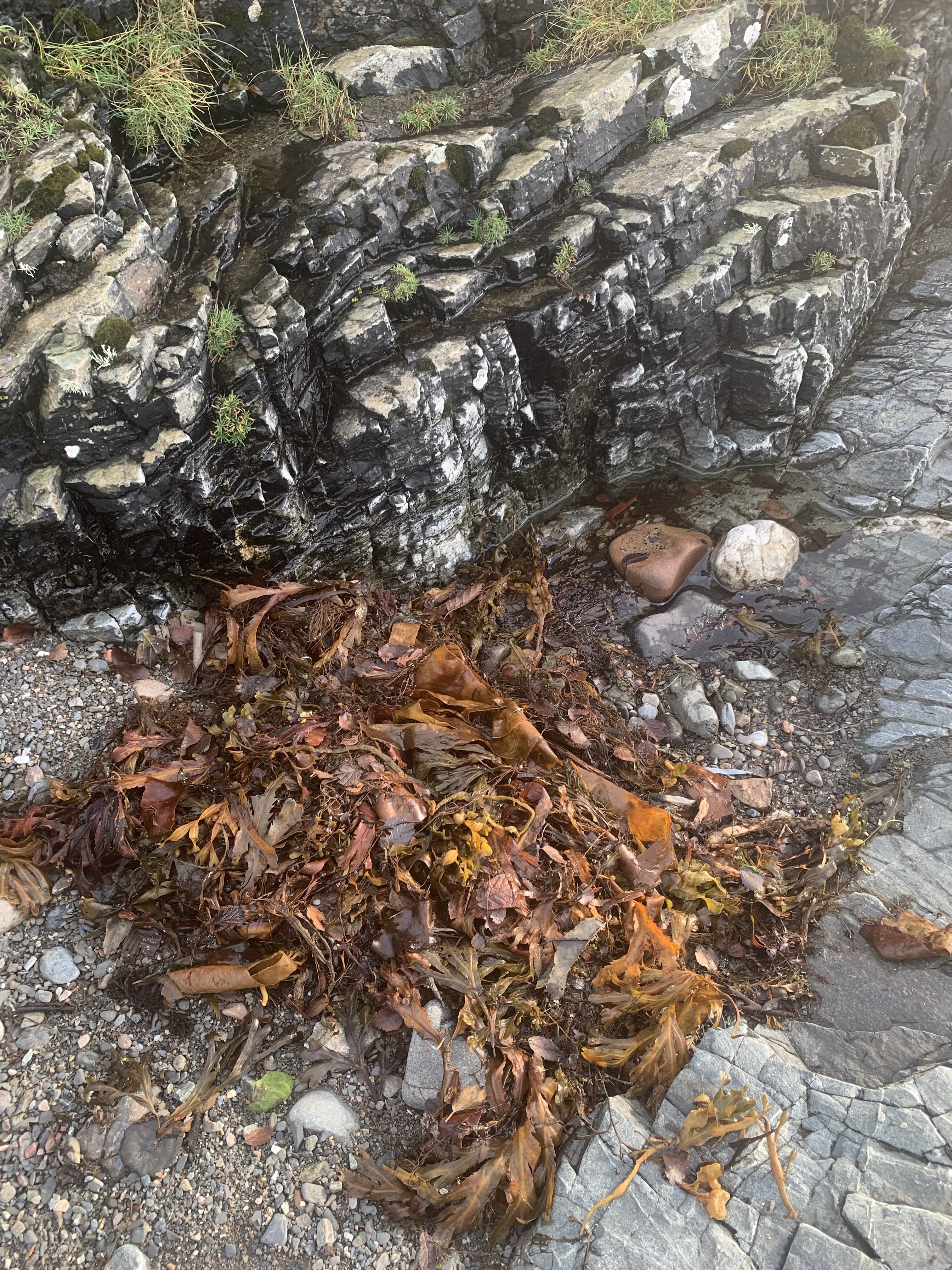
Yesterday we explored the western side of the peninsula looking for beaches where we could collect, wheelbarrow and load a car trailer with ease. We found two great beaches, both full of seaweed, and both highly accessible.

We won’t take too much, as the wildlife on beaches rely upon it, but there seems to be plenty for all. Next time we have a storm we’ll bag up a few feed sacks of it from each beach and bring it back to the croft.

Summer eating

This is the season for eating from the croft, and the fresh produce is now coming in with abundance, even from the handful of small grow beds that we have. We are enjoying lettuce, kale, new potatoes, purple sprouting broccoli, chard, onions, peas and fresh herbs.

I’m being challenged to find new ways of serving this bounty, as we can’t store or freeze any produce this season.

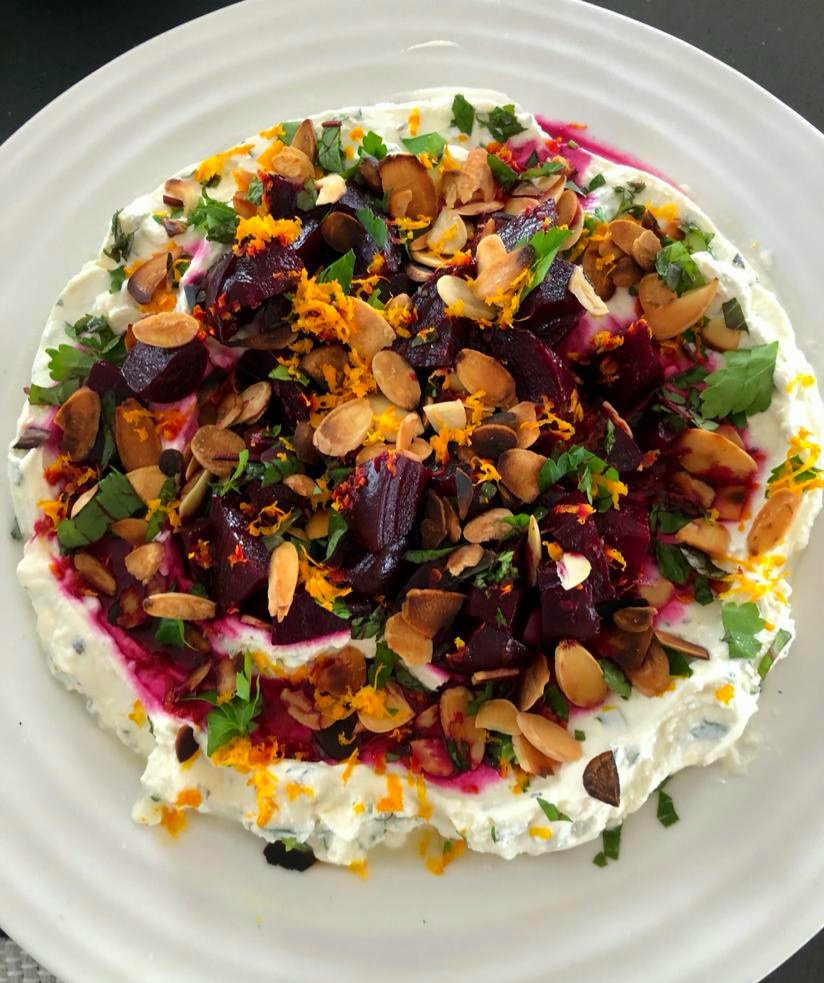
This is whipped feta with roasted beetroot, toasted almonds, orange zest, chopped mint and parsley.

I was so excited to try our first baby beets from the croft that I made this dish up specifically to try them. It’s adapted from one that I found that uses goats cheese.

Scooped up with oat biscuits, it was a light nibble to eat before a main meal with friends, but would easily make a lunch on its own. This will become a summer staple, I think, and I’ve resolved to definitely grow more beetroots next year!

Young onions from the croft

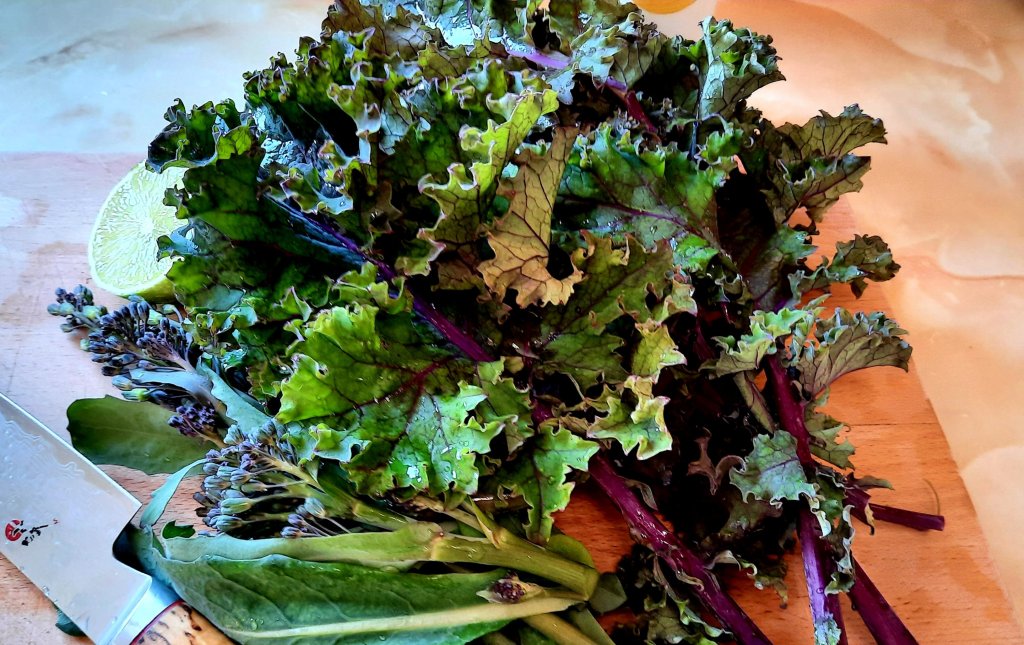
Tonight, kale and purple sprouting broccoli from the croft were the central vegetables in our meal. They were lightly sautéed with garlic, sesame, spring onions, lime, a bit of leftover chicken, and noodles.

Uncle Bert’s kale

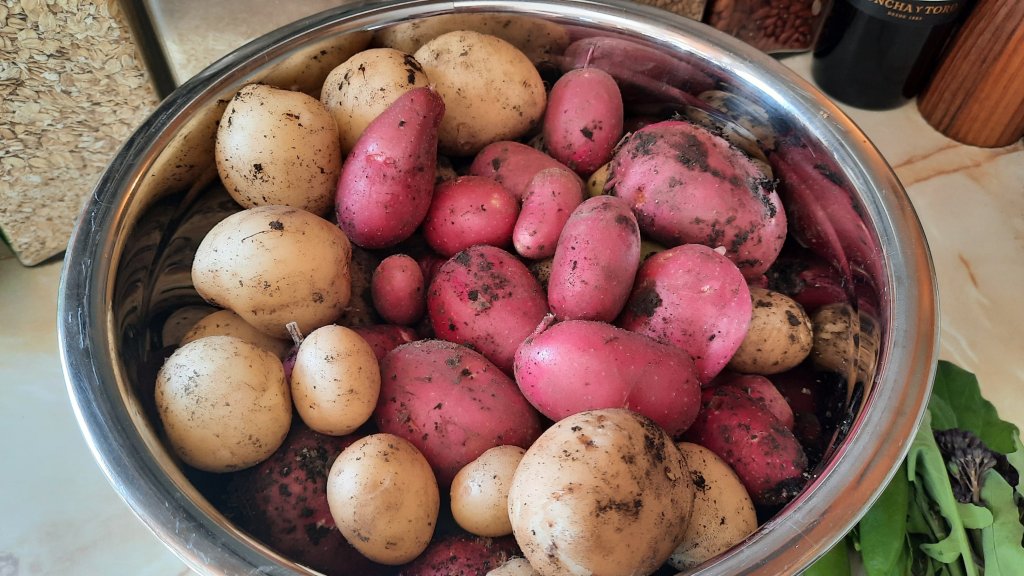
Lots of potatoes… cold potato salad, fried potatoes, garlic potatoes, mash here we come!

3kg potatoes dug up this morning

Sudden Profusion

It’s all growing well in our raised bed experiment. Except the leeks, which are spindly little pencils so far.

I will be patient.

I’m mainly delighted and surprised by the profusion. It seems to have come all of a sudden. We’re cropping lettuces, potatoes, kale, sorrel, purple sprouting brocolli, chives, parsley, dill, mint, and rocket.

The beets, shallots and onions look nearly ready. The garlic is coming along, and the mammoth red cabbage leaves are starting to turn in. The parsnips are growing, as are the carrots.

It’s the rain, long hours of daylight and mild temperatures. Suddenly everything is leaping up as if wanting to make up for the slow, cold start of our late spring.

First crop of potatoes
Kale, beetroots, red-veined sorrel, onions
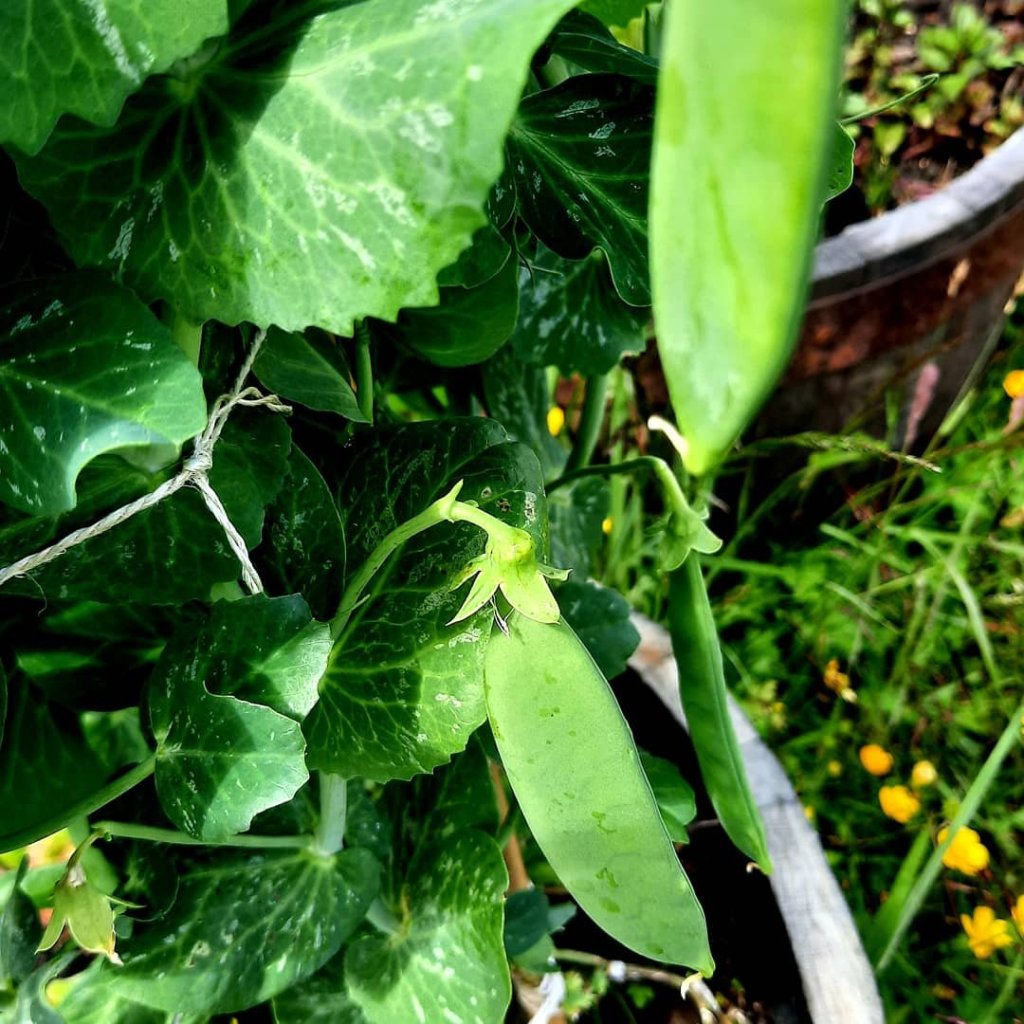
Peas
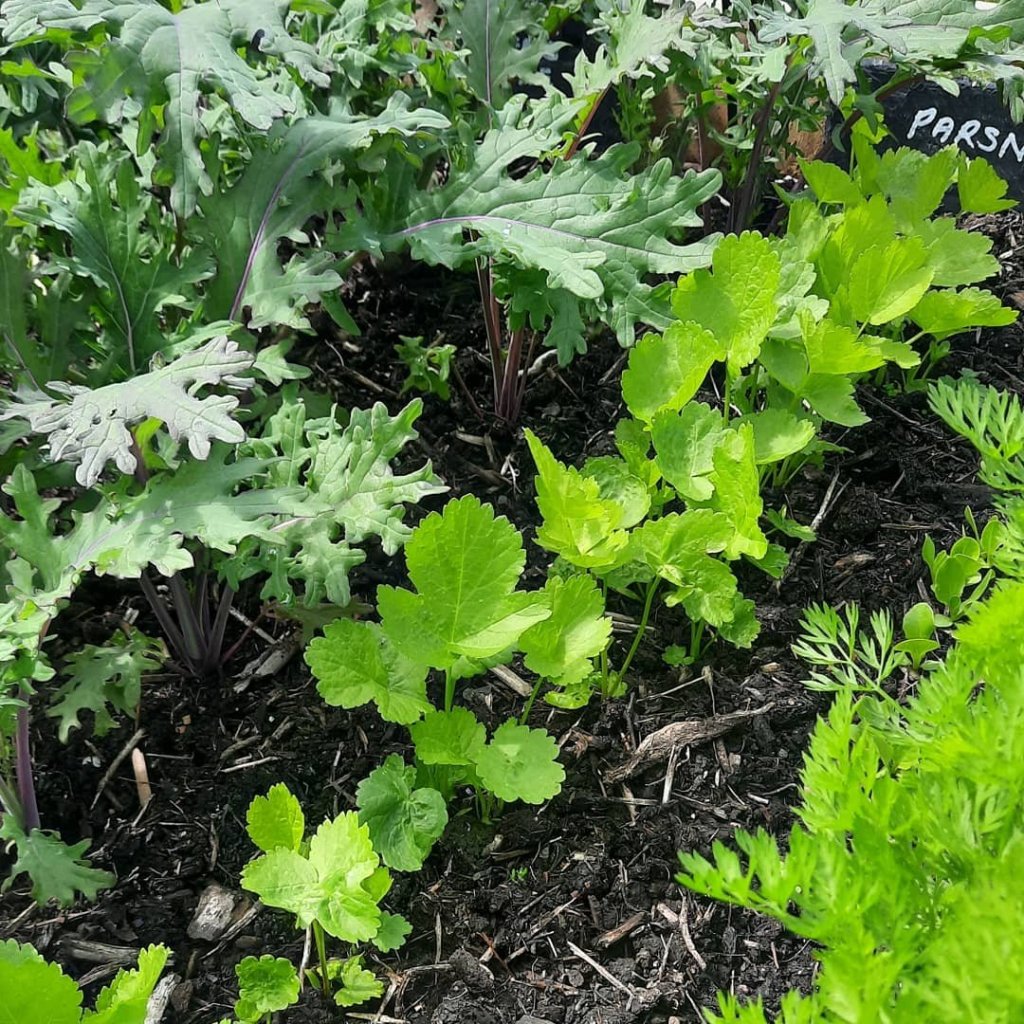
Parsnips
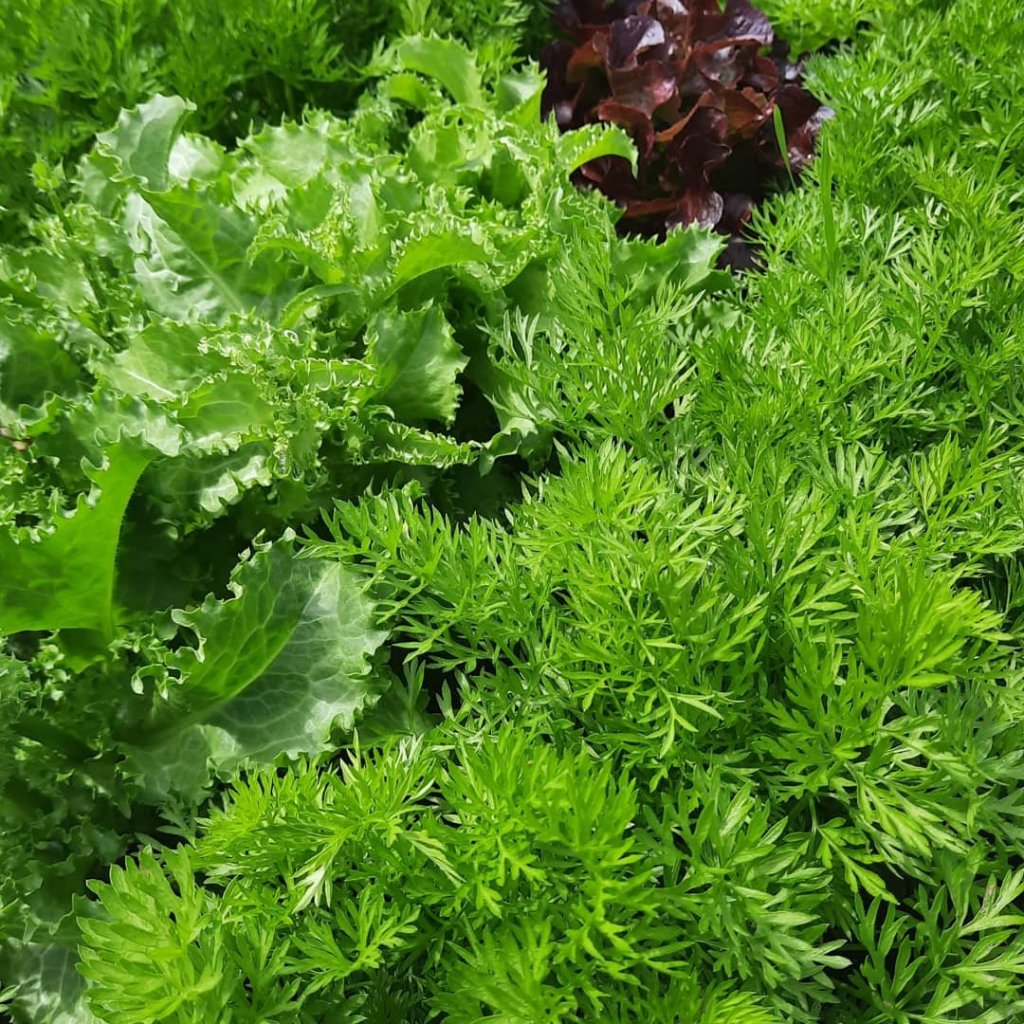
Endive and carrots
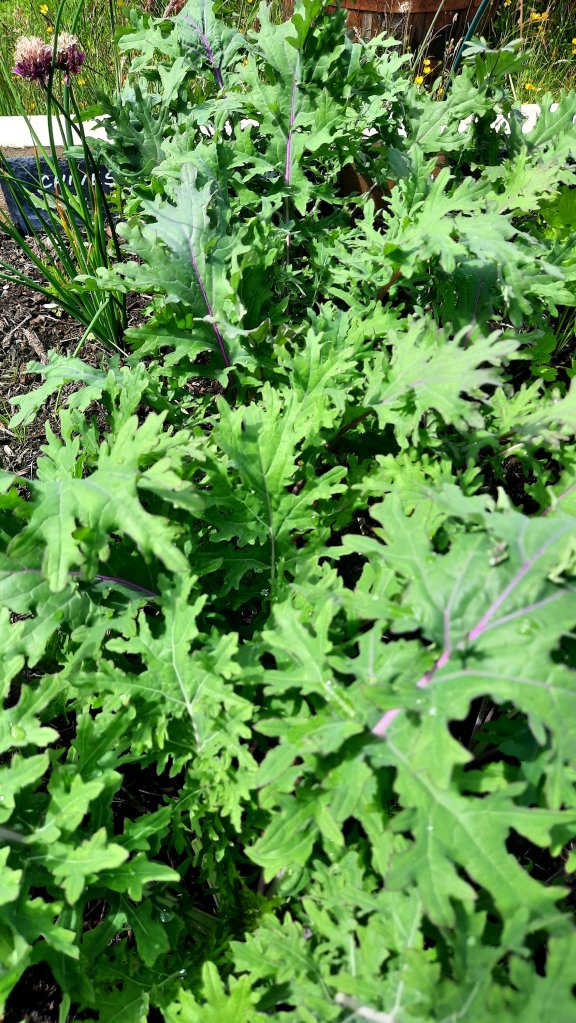
Uncle Bert’s kale
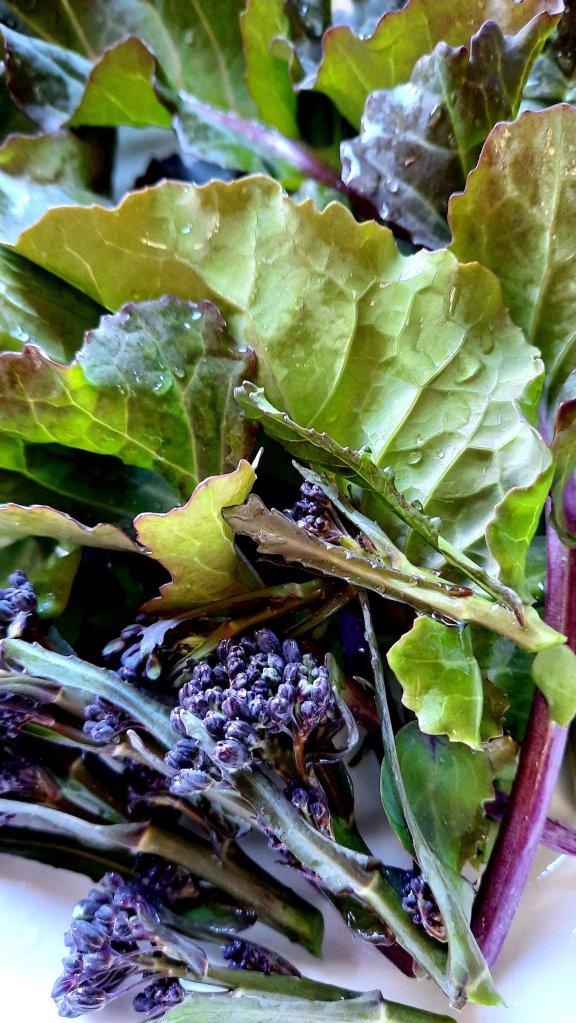
Purple sprouting broccoli

Salad days

Another significant milestone. Our first salad from the croft!

For you rampant food producers out there with your polytunnels, greenhouses and fertile growing beds this is going to seem a bit of a damp squib, but we’ve just cropped our first bowl of salad from the croft and I’m doing my happy dance!

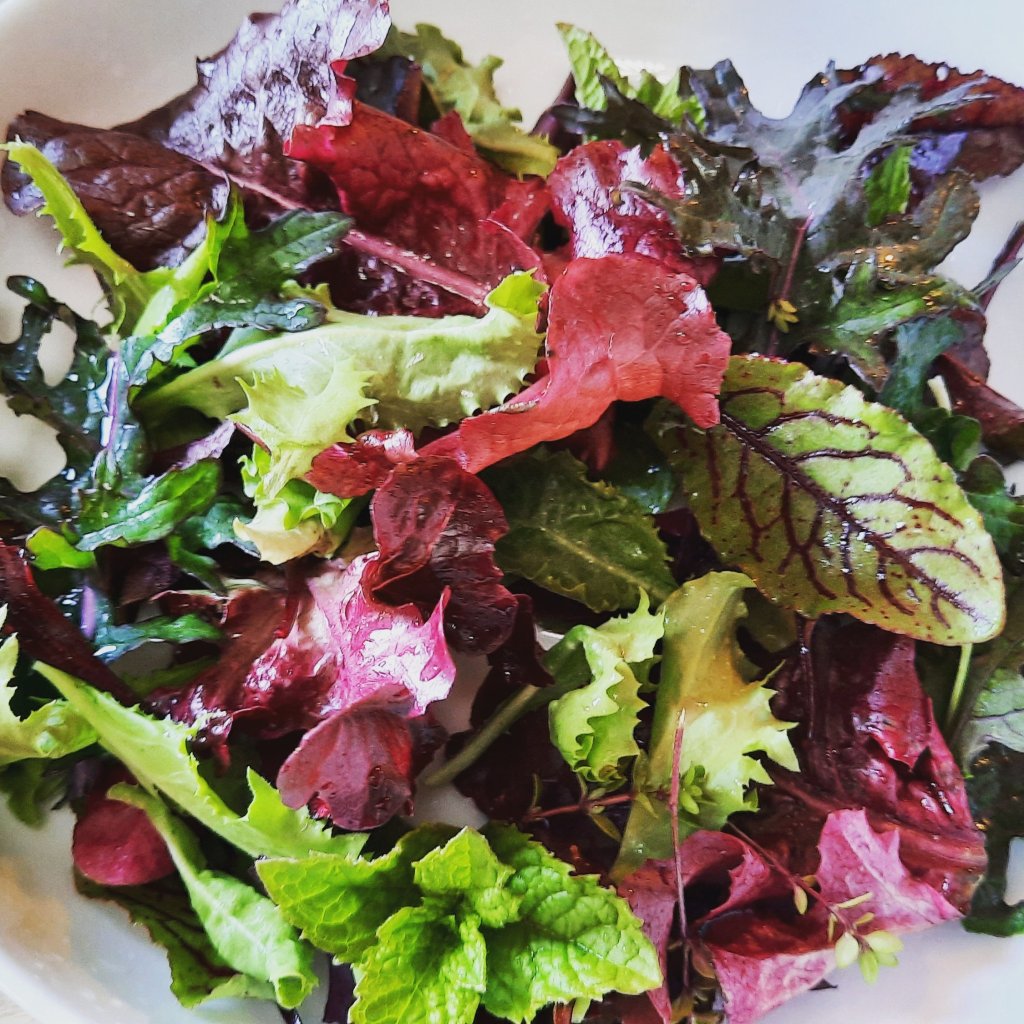
Salad leaves

It’s a mix of endive, red lettuce, red veined sorrel, Uncle Bert’s kale, mint and beetroot leaves. All grown organically outdoors from seed here on the croft.

Other things are growing too in these long, light filled days of summer. I can see a few purple heads of sprouting broccoli emerging, and the potatoes will be ready in the next few weeks.

Parsley grown from seed

The leeks have been a big fail – they’re still tiny and very slow growing. Kales, cabbage, garlic, beetroot, potatoes, herbs, and salad leaves have all grown well. The carrots and parsnips are small yet but time will tell. The globe artichokes are tiny plants, a few leaves apiece, but they seem to be surviving. I’m hoping that they’ll muscle-up and come into their own next year. The berry bushes are establishing. The borage and comfrey are flowering.

Wonderful comfrey

I’m just relieved that it hasn’t all been some monstrous failure. We’ve had one meal from the croft at least!

The key learning so far is exposure. We knew it, but just didn’t have the time to do it. We need to get windbreaks up and hedging in this autumn before the main growing season next year.

Small milestones on our journey. Forgive a woman’s unseemly crowing.

Sunshine & seedlings

After a very long, cold May we’ve awoken to warmer temperatures and sunshine at last.

Sunrise over Sleat

This photo was taken by one of our lovely neighbours from the hill above the croft whilst out on a 5am run this week. Not a sight I’d have been awake enough to capture. Thank you, Jonny.

The sun is rising before 5am now and not setting until around 11pm, giving us long, soft, light-filled days. We have another month to go before the summer solstice, so there’s more to come. It’s already not fully dark at nights and the long, light evenings on the croft are magical, if a bit chilly up till now.

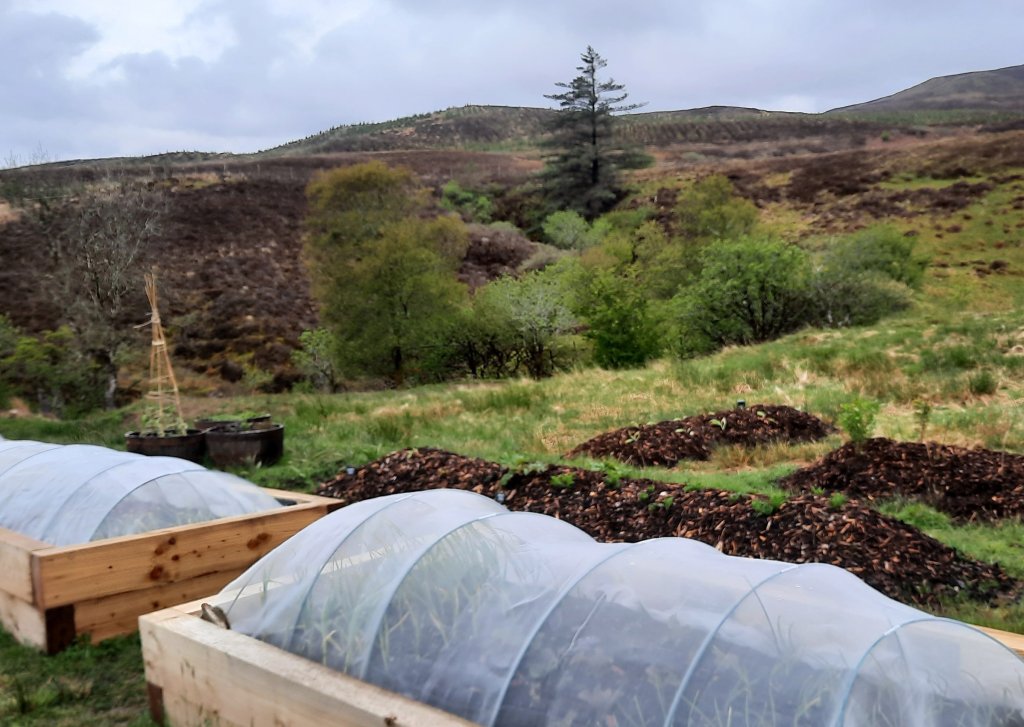
Raised beds on the croft

We have cuckoos and swallows, linnets and skylarks, bluebells and wild garlic in the hedgerows. Suddenly everything is bursting into green leaf, and it’s feeling at last as if we’re on the brink of early summer.

First day of exposure! Shallots, beetroot, red veined sorrel and garlic

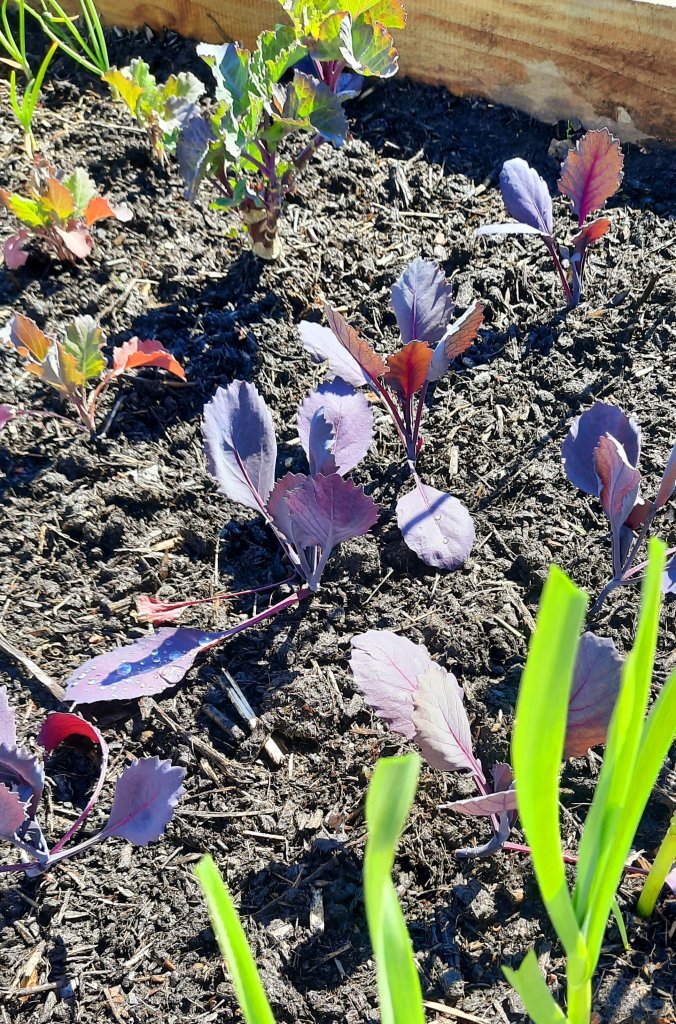
I’ve taken the mesh off the vegetable beds today to get a proper look at what’s survived through this very dry, cold spring. Some things are looking very sad for themselves (leeks, lettuces I’m looking at you) but others seem to have pulled through quite robustly (full marks red cabbage, kale, beetroot, potatoes, purple sprouting broccoli and shallots).

Taunton Deane kale, red cabbage and onions

Let’s hope that summer is on its way at long last!

Blue Growing update

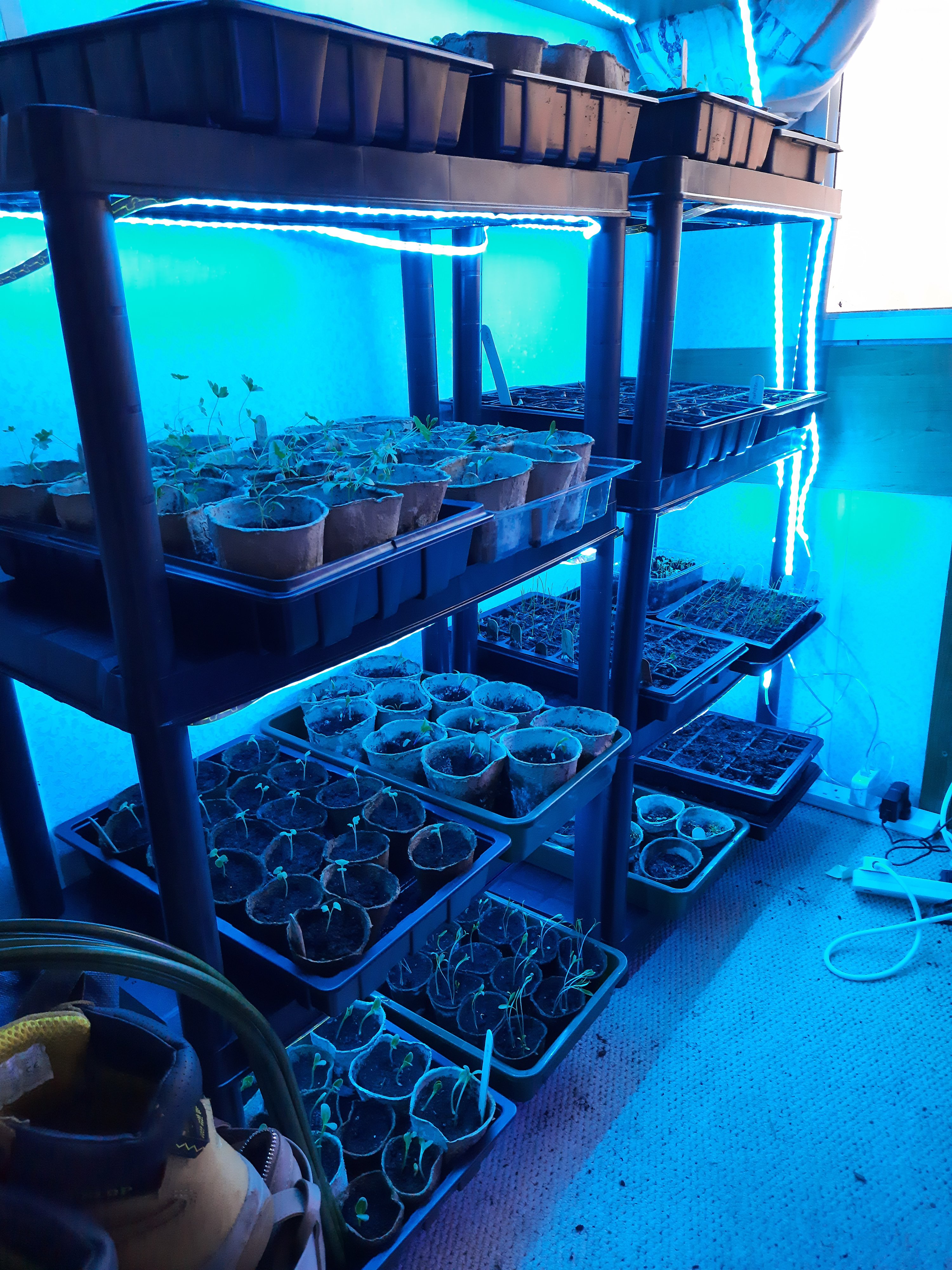
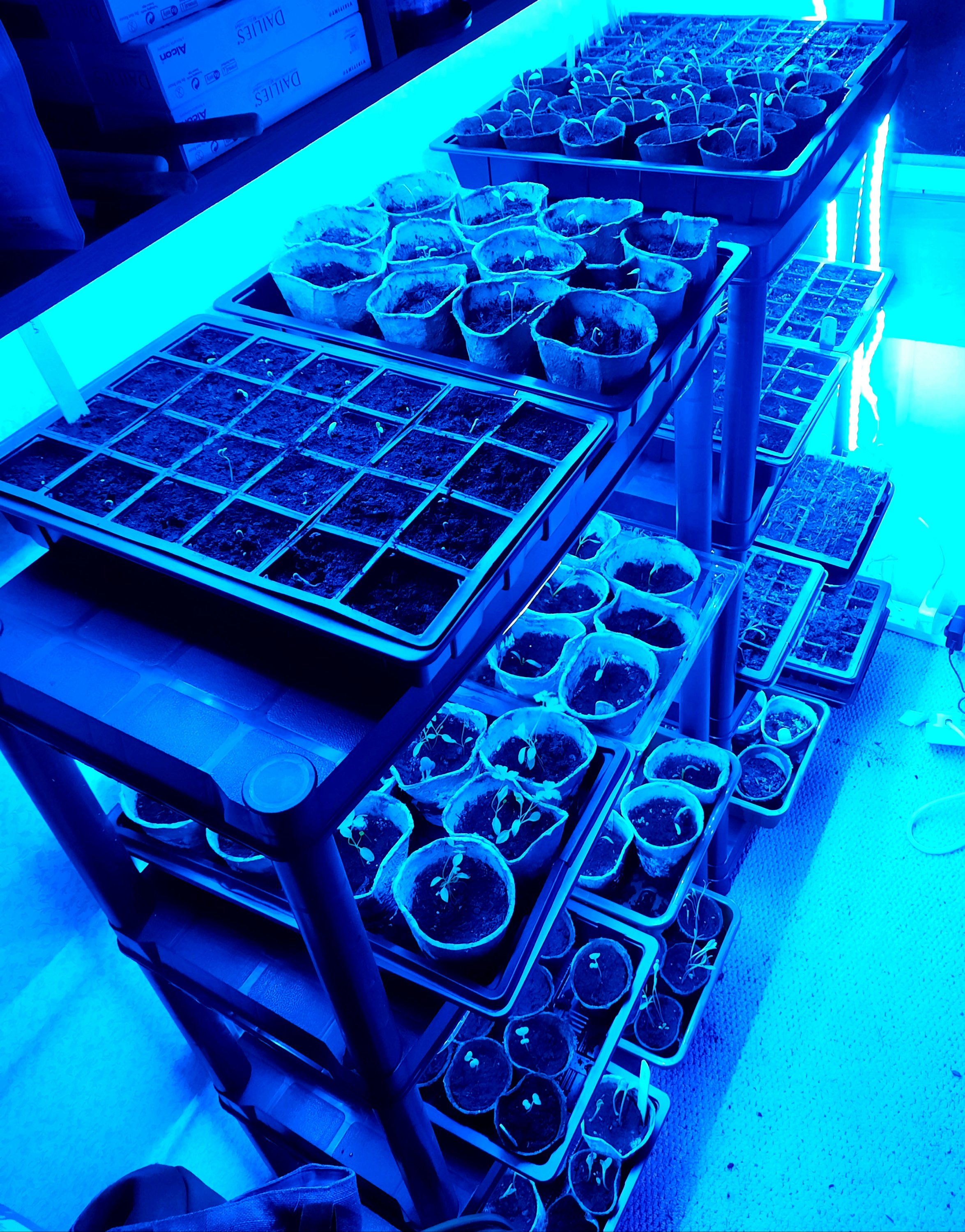
The seed sowing chaos of the caravan spare room has been taken in hand and professionalised!

We now have durable shelving with UVA grow-light strips attached to the underside of each shelf. I’m feeling very happy.

The days of my rickety cardboard box tray balancing act are over. I think that husband realised that he was in danger of having the next seed tray balanced on him if I ran out of space… 😊

We now have pak choi, Sutherland kale, leeks, onions, borage, calendula, rocket, mustard leaves, coriander, parsley, mint, lettuce, salad burnet, nasturtiums, garlic and shallots underway. All glowing eerily blue under their UVA lights.

Today I will be sowing borlotti beans in pots in the probably vain hope that I can get them to maturity on the croft despite the wind. This one is a bit of a stretch, but it’s worth a try..

The directly sown plants, such as carrots, parsnips and yacon roots will all be in May. Same for the potatoes.

The garlic, shallots, babbington leeks and onions have already been planted out into the beds, and we covered them in enviromesh yesterday for a bit of protection.

I can already see that my three initial raised beds won’t be enough, even with separate big pots for the herbs, so we will be building a long no-dig bed directly onto the croft for the rhubarb and berries. We will put in more raised beds next year after we’ve finished the house.

Next up it will be windbreak hedging…

This will be an interesting year – let’s see what grows.

Perennial Vegetables

I love the idea of vegetables that are sown or planted once and keep growing. For years.

There’s a lot of effort involved in sowing vegetable seed annually, so it makes sense to have perennial vegetables as the backbone of a permaculture garden.

They may not bring instant rewards, but you know what, this croft garden is for the long term and so a few years for these plants to establish before they give back isn’t a great deal to ask.

Perennial vegetables are for the most part ancient heritage varieties. They include such vegetables as asparagus, artichokes, walking onions, leeks, kale and broccoli. Some of these varieties, such as the Sutherland kale that I’m growing from seed, nearly died out and are really quite rare.

I’ve received my very first perennial vegetable in the post from Quercus Edibles, a small grower in Devon. It’s a Babbington Leek. As soon as the hail storms abate, this little clump of hardy loveliness is going into the ground.

The first of what I hope will be many perennial plants on the croft.

Eerie Blue Light

The days are getting longer. Although we are still in the clutch of a cold winter here on the croft, with snow still on the hills and an icy wind, my thoughts have increasingly moved to garden planning as our daylight hours have lengthened.

I’ve started some seeds off in the little bedroom in the caravan. We have no greenhouse, cold frames or polytunnel yet, so needs must.

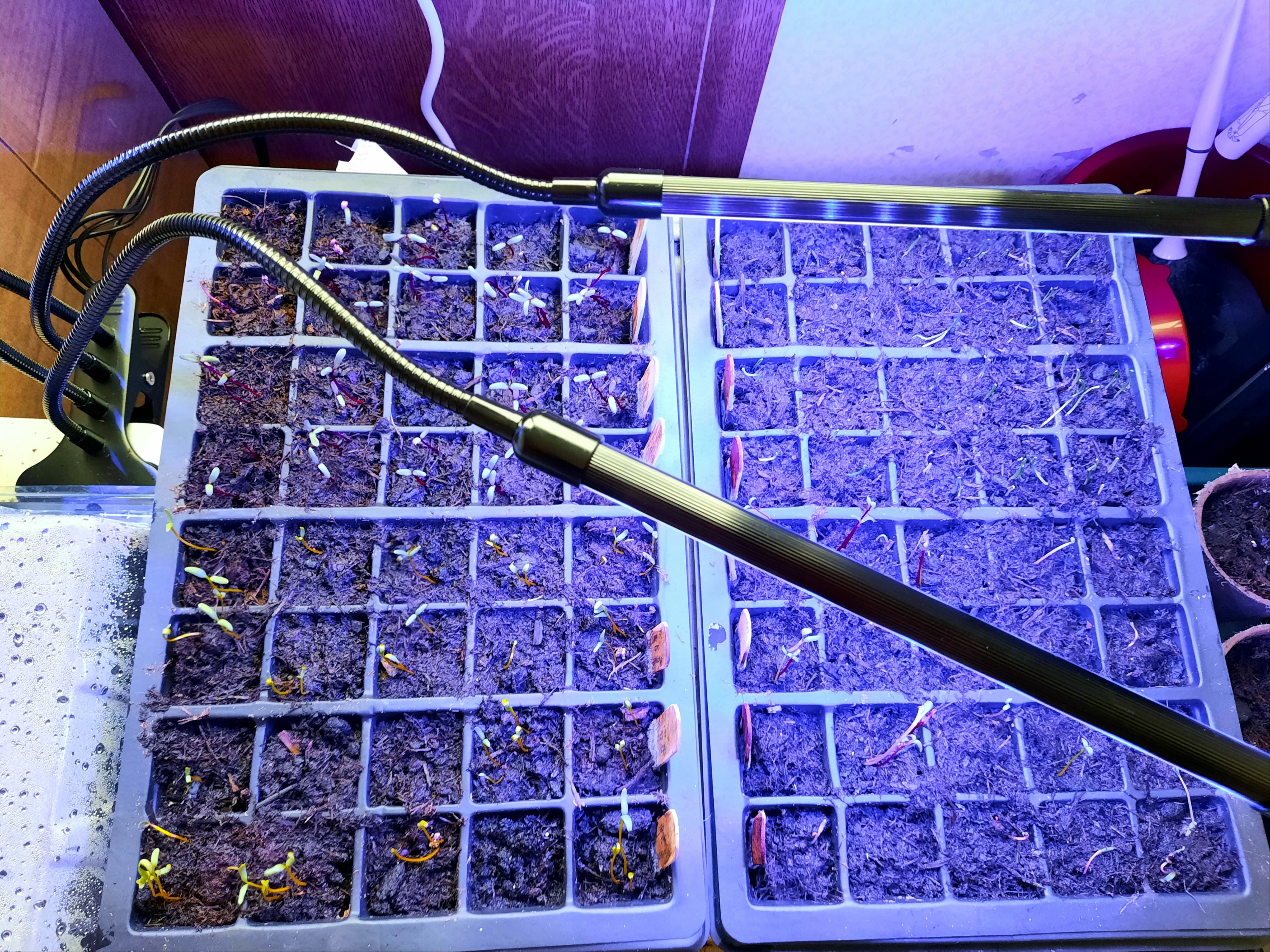
It’s a bit of a make-do affair with a propagator heat pad, some cardboard boxes, seed trays, old yoghurt pots that I’ve been saving since we moved here, and one of those whizzy octopus UV grow lights to help start things off.

Everything is bathed in an eerie blue light from its flexible metal arms. It’s like something from the X Files… I go in a few times each day to check on things and can’t resist adjusting it.

Lord only knows what the neighbours must think when they see the strange, neon blue light glowing through the thin curtains at dusk…

I’m starting small. More will follow in March and April, which is a much more sensible time to start new plants here.

I’ve started garlic, onions (although the recommended local wisdom is to grow from sets rather than seed, which I only discovered after I’d bought them), leeks, parsley, beets and rocket. Seed potatoes are on their way in the next week ready for chitting.

I know it’s early, but it’s such a short season that it makes sense (to me at least) to have plants ready to be planted out in May, and they’ll need a full month of hardening off, I suspect.

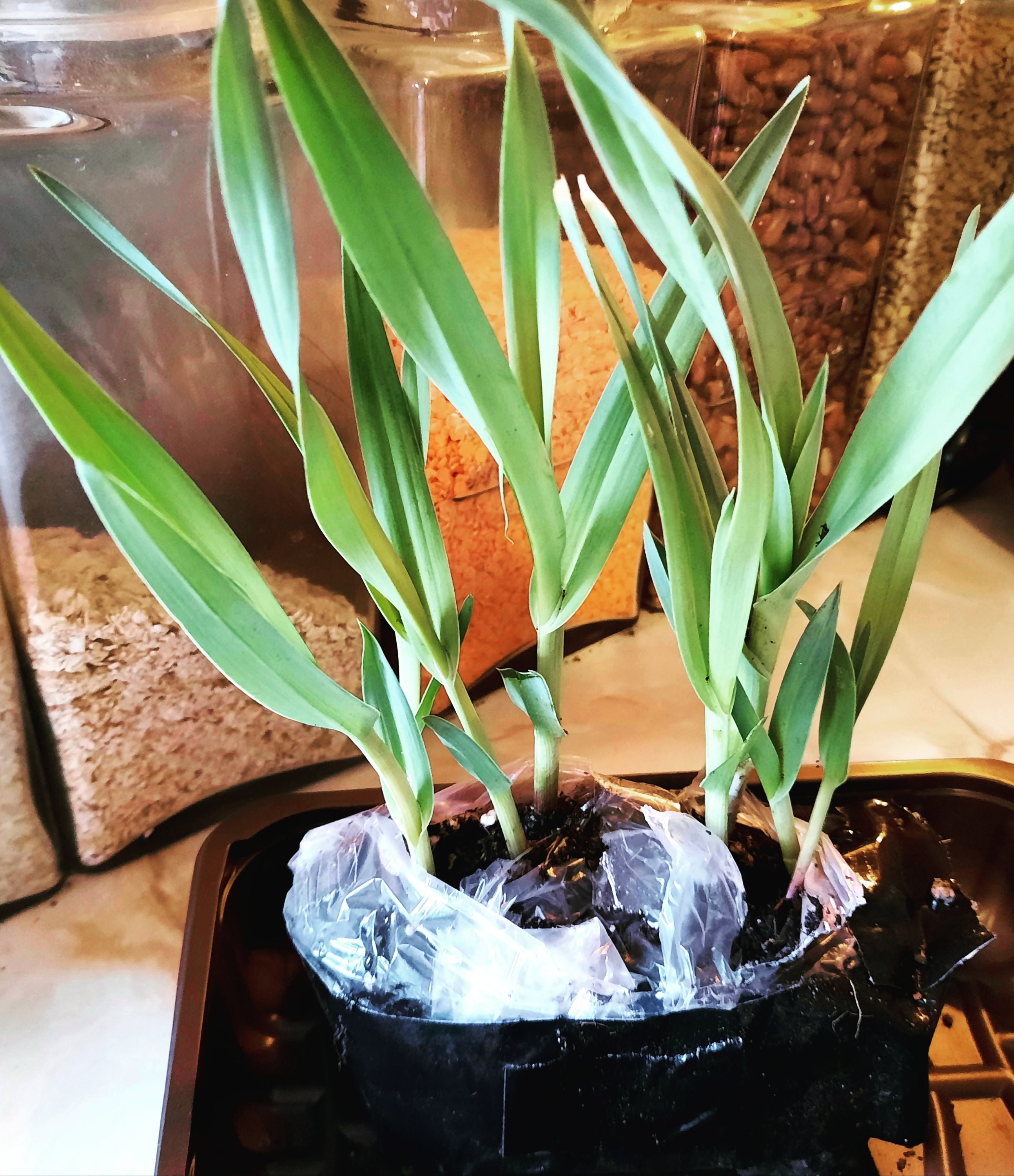
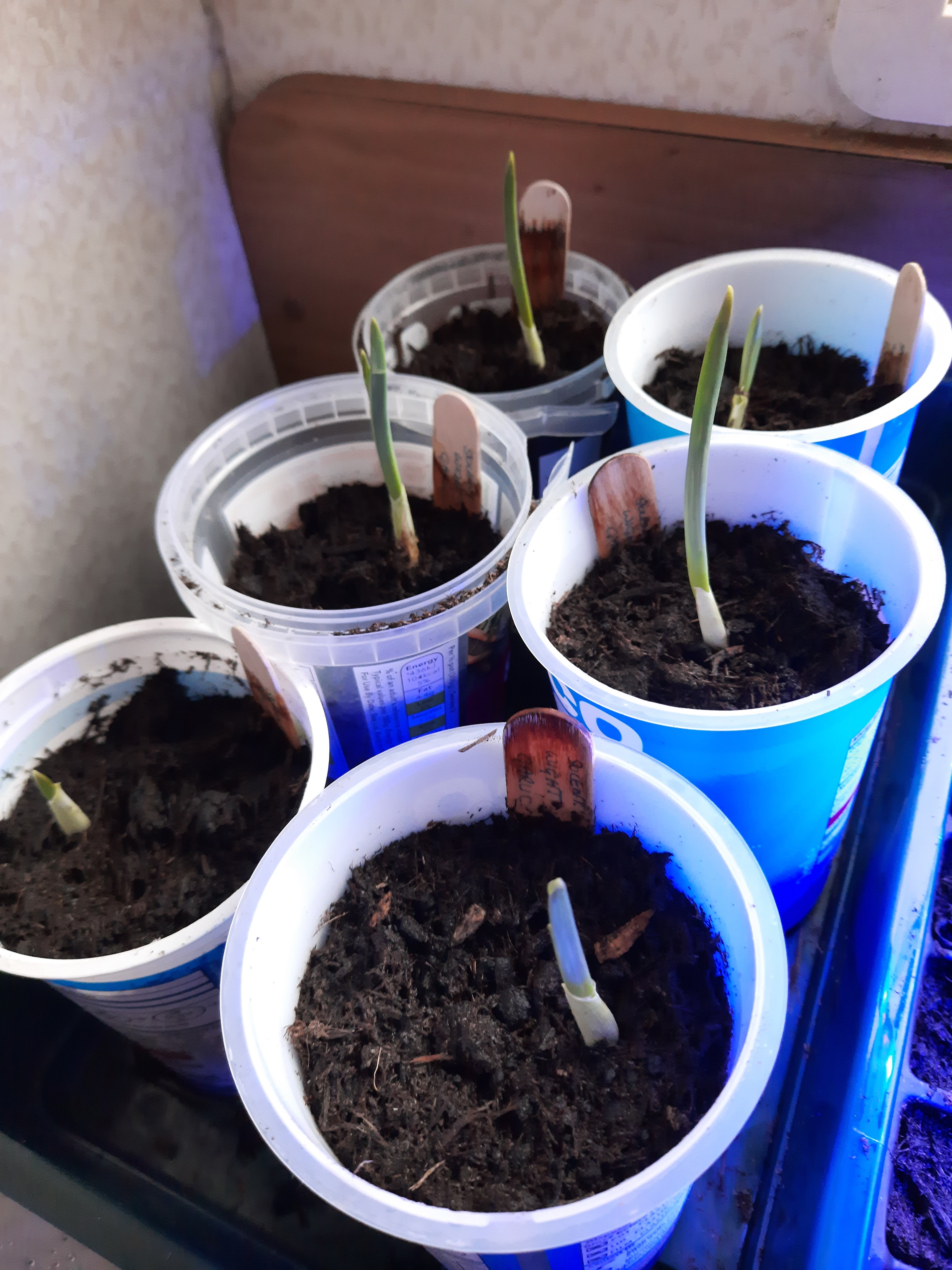
The garlic has leaped into action almost immediately. I’m growing a rose and a white skinned garlic, both hardy varieties, and both a bit of an experiment, although local growers report that they generally grow well here.

I’ve been keeping my eyes peeled for old glass windows or sheets of polycarbonate on the local ads to make cold frames, but they’re scarcer than hens teeth at this time of the year, so we may need to buy materials new and create our own.

And so it begins.

Horticulture for crofters

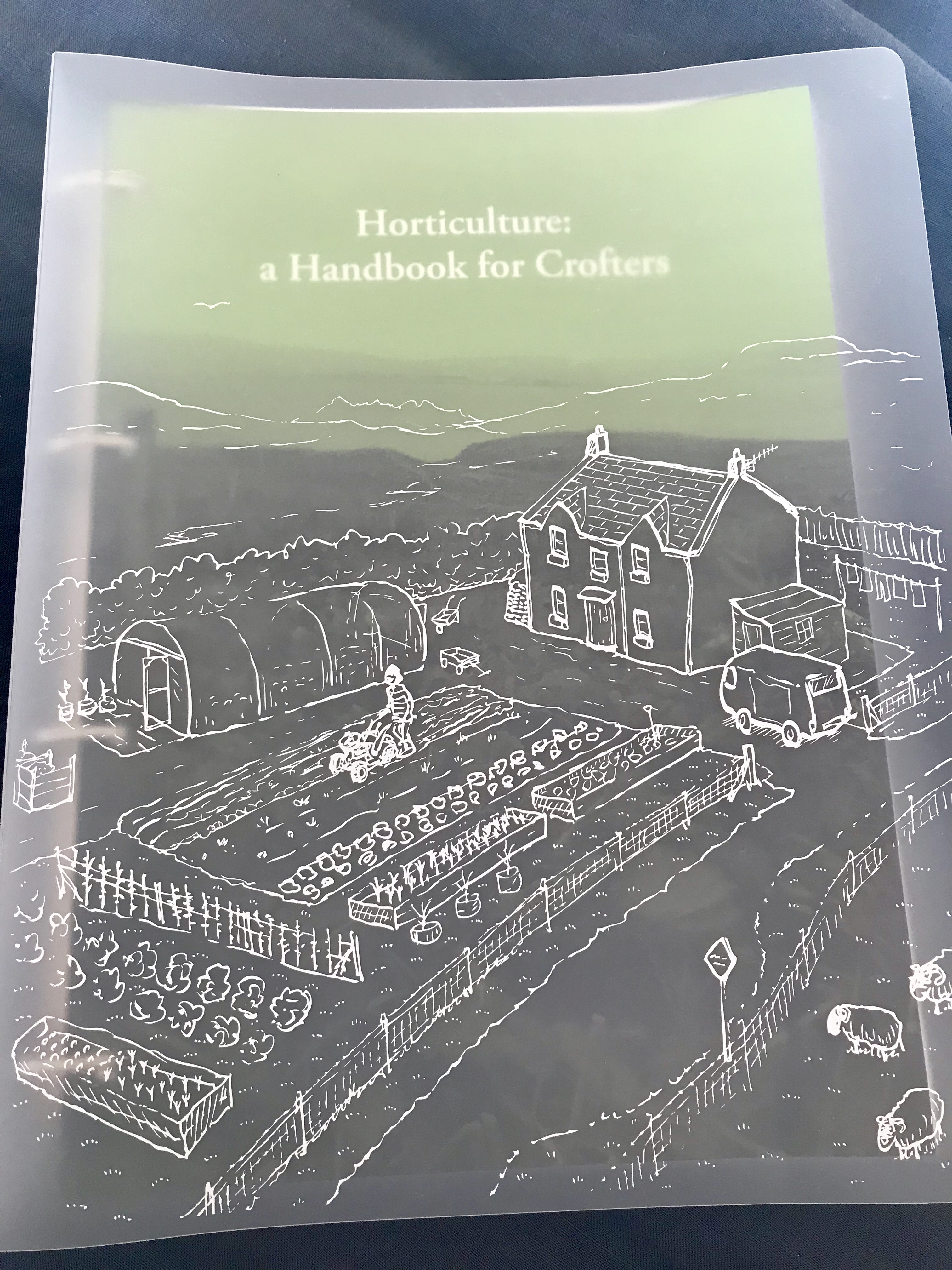
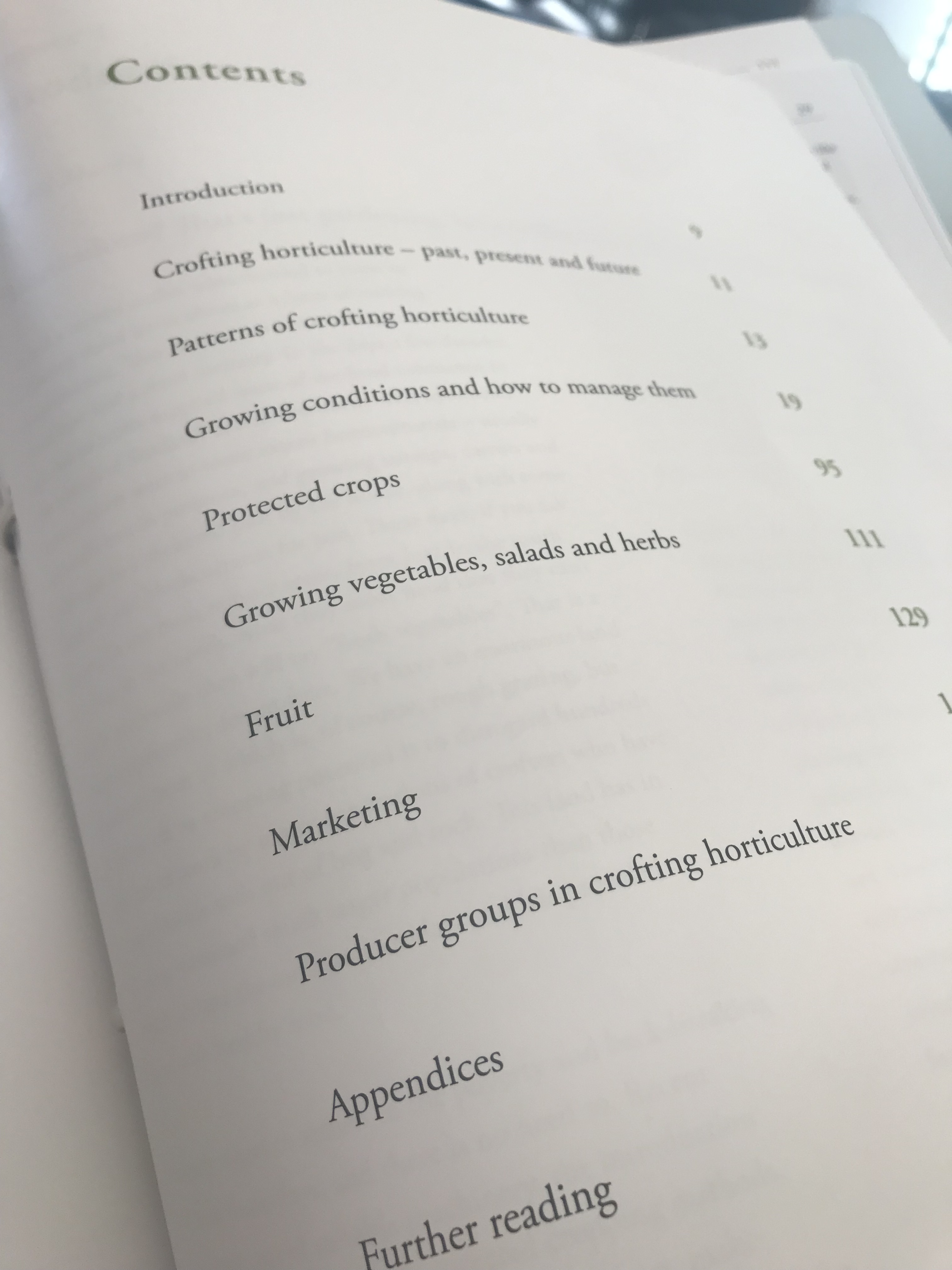
I’ve just received this copy of Horticulture for Crofters, a fabulously useful handbook published by the Scottish Crofting Federation.

I’ve been trying to get my hands on this for months, and so its arrival in the post this week was a cause for much excitement on my part.

It’s an incredibly detailed read on vegetable, fruit and tree production in Scotland, with lots of advice on crop shelter, soil care, crop selection and drainage. There are plenty of examples from growers in the inner and outer Hebrides, many on Skye. Just what we need to provide solid advice on local conditions and challenges.

Not to mention the wonderful illustrations by Chris Tyler, generously scattered through the chapters, which sadly I don’t have the rights to share here.

Bring it on! That’s the next weeks reading sorted.