Let there be light

One of the challenges with the design of our house is that the kitchen was quite small and potentially a little dark.
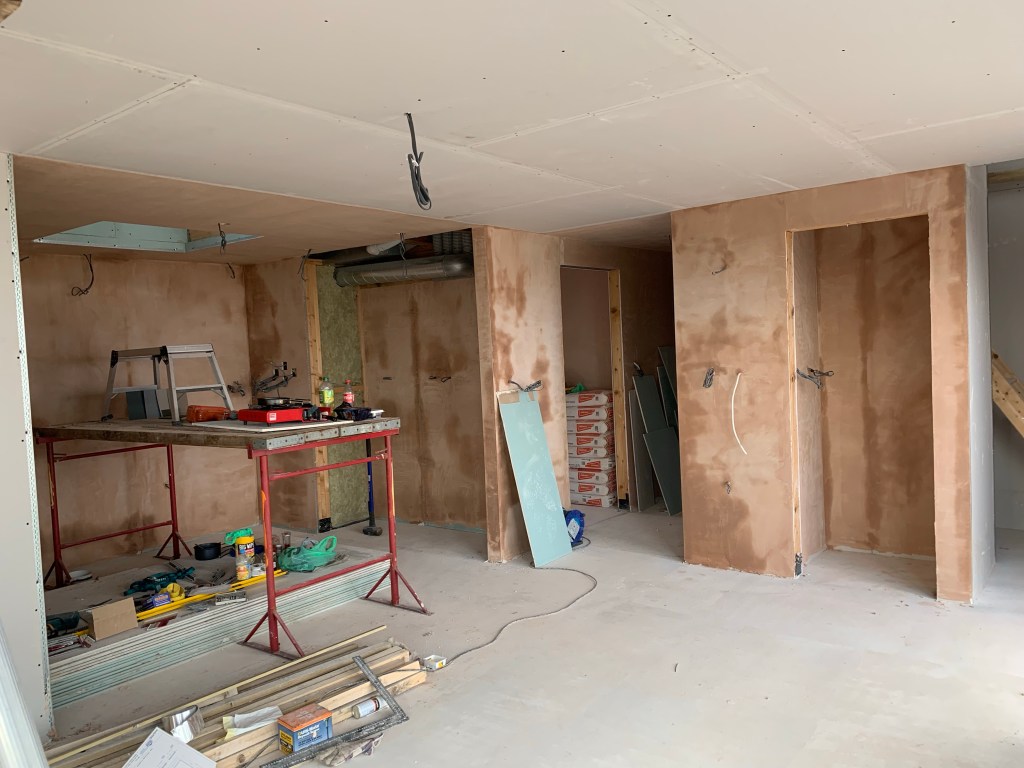
All of the Hebhome designs for longhouses have kitchens that are small and minimalist. This was one of the bigger ones!

We figured with the addition of the utility room and the pantry, however, that we would be absolutely fine. We’ve just carved up the functional areas differently.

Big, seldom used appliances like a dehydrator or bulky, noisy appliances like the washing machine and tumble dryer go into the utility room, and dried or canned goods storage that I’d normally have in the kitchen go into the pantry.

The kitchen space also faces an internal wall without light, except the light that the large, double floor length windows in the dining area provide.
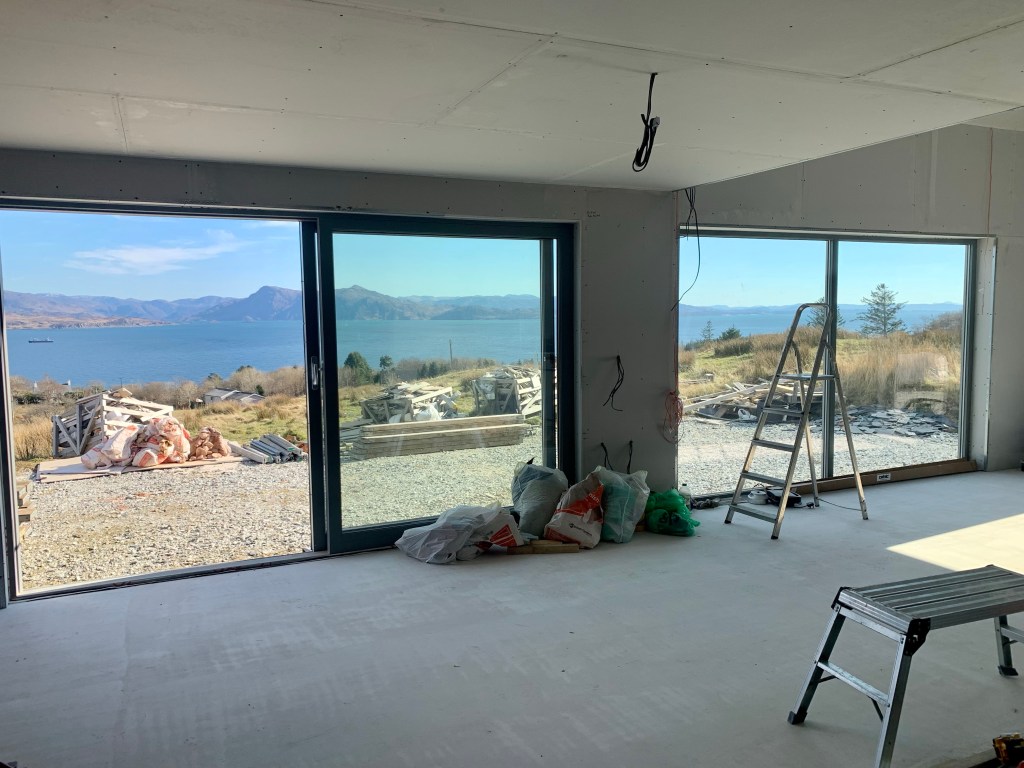
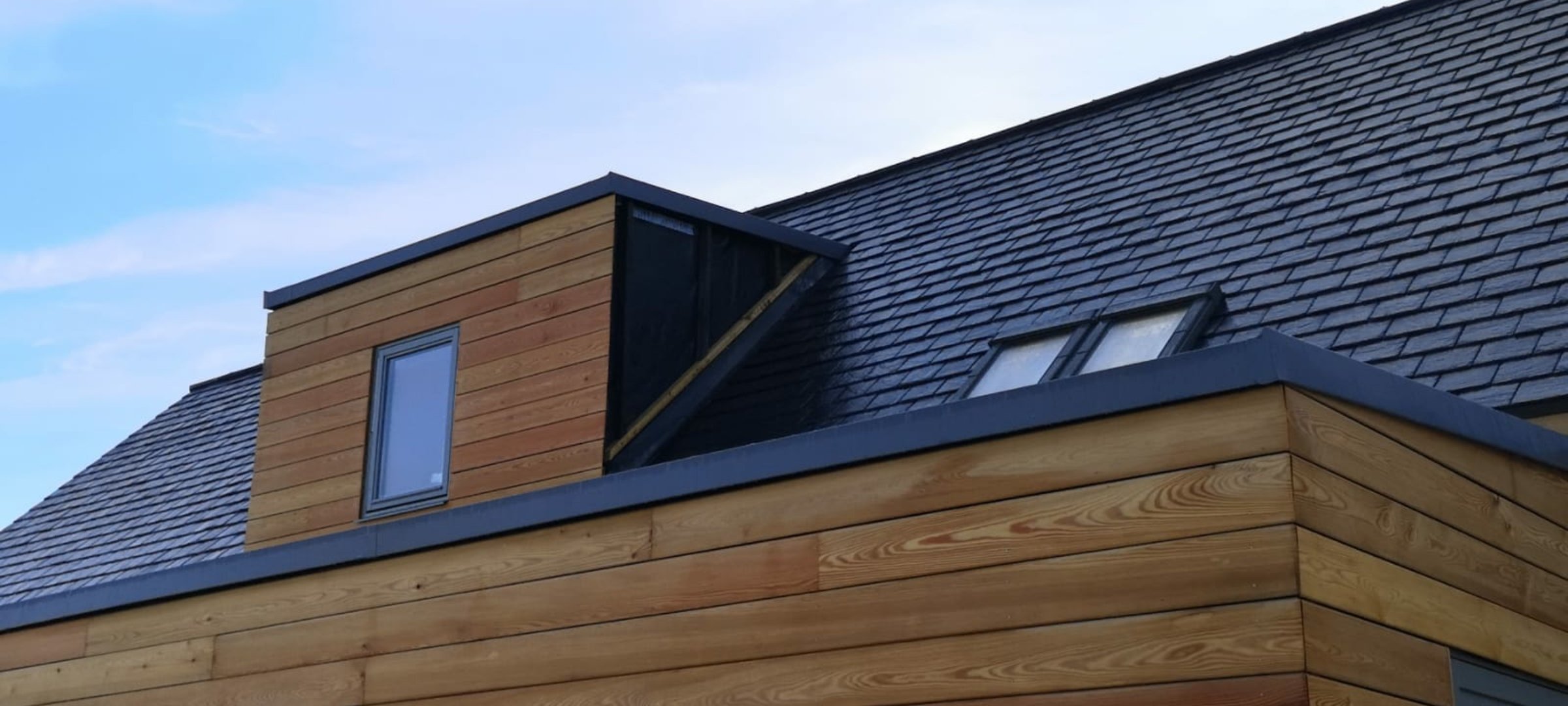
To counter this we asked the architect if we could install a roof window that would channel light through the sloping walls of the bedroom above down to the kitchen ceiling. It would be plastered to close the walls off from above and would be hidden in the roof slope of the upper bedroom.
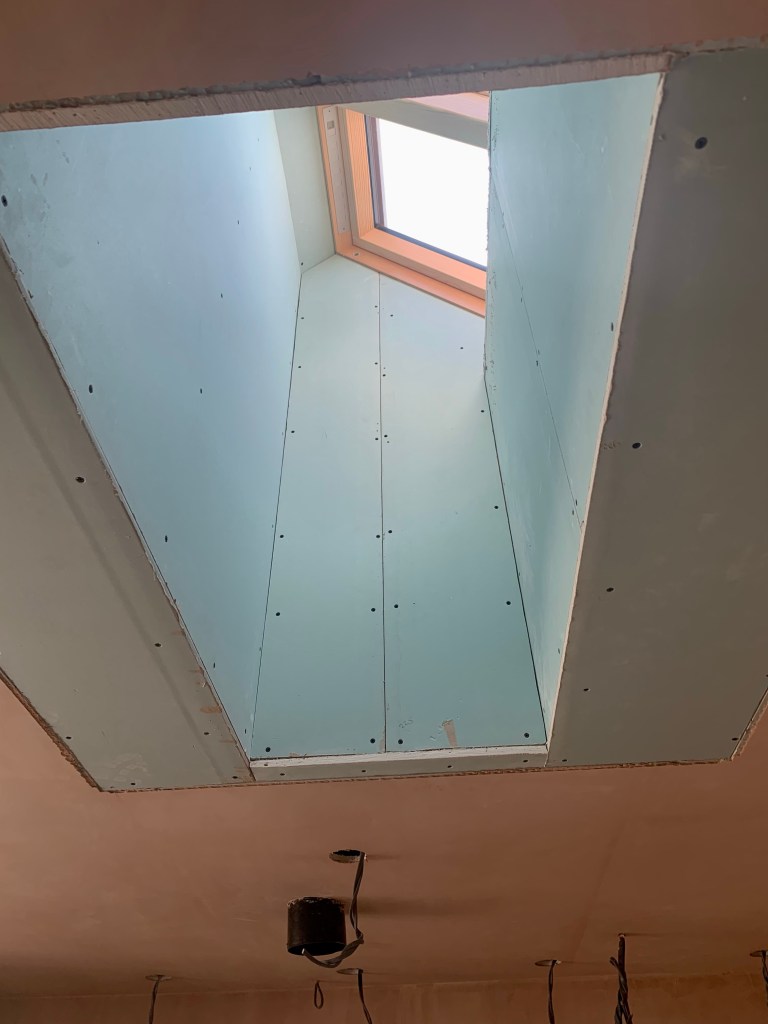
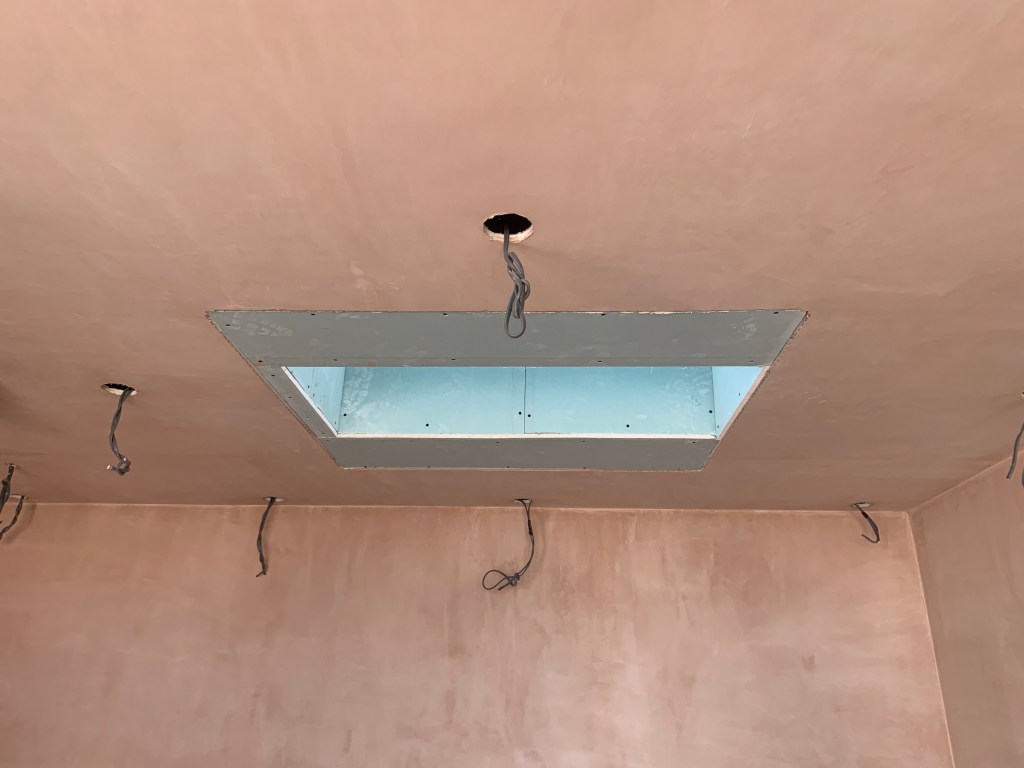
Up until now during the build this has just been a square mark on the bedroom floor and a slightly odd pattern in the ceiling joists. But yesterday the plasterers cut through the bedroom floor, opening up the light well into the kitchen.

I was holding out on final kitchen finishes and colours until this happened so that I could establish what worked best in situ. The amount of light in that space makes a massive difference to the colours I’d been looking at.
So, ever onwards and upwards! We’re ordering flooring wood, tiles and kitchen units next.

It’s coming.

House build progress

It’s been a while since I shared anything on the housebuild itself, so I thought with the onset of the new year that it was time.

There’s been only slow progress on the house over the last few months, due to a number of factors like the move, setting up the caravan, problems with the caravan, supply delays, and to be honest, things that we have discovered need remedying before we can go further with the build.

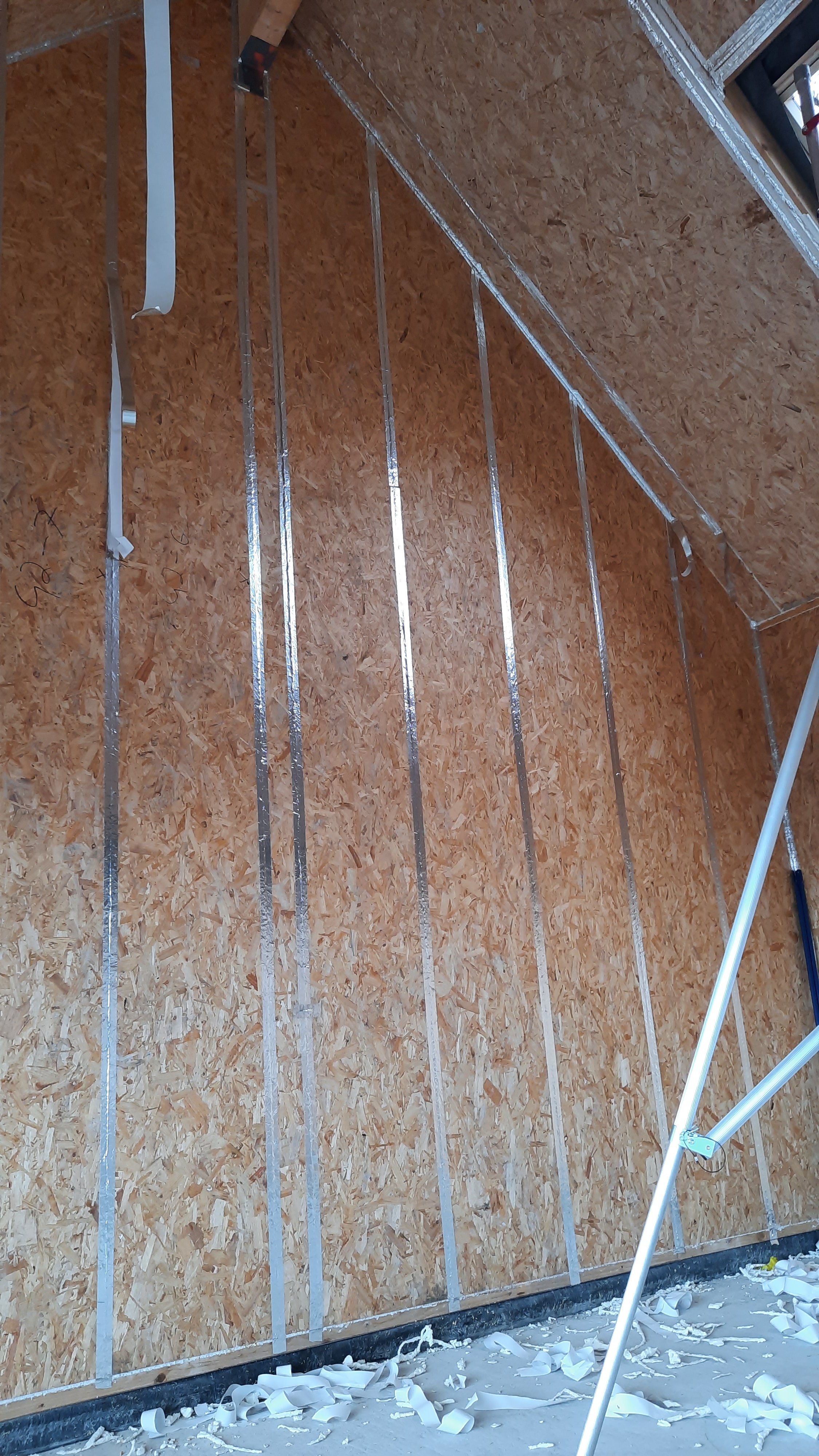
Whilst we’re in dialogue with the builders to check a number of things, husband has been able to work on improving the air tightness of the construction by sealing every gap and then foil taping all the wall seams to ensure that we can be as draught-free as possible.

That work is slow and painstaking, especially in the 6m high gable end of the house, necessitating internal scaffolding, and has taken a number of weeks. It’s only now that we’re nearly ready to start applying insulating foil to the walls.

We had originally hoped to be ready for underfloor heating and screed by now, so we’re running about a month behind our original estimates, but to be honest with the new Covid lockdown restrictions and Brexit, I’m just happy to be able to be able to make any progress at all.

I’m sure that there will be many more delays to hit us yet. Never was there such a bad time to work on a house build from a building supplies perspective! 🤔

We’re not despondent, though. It can’t be helped and we will do as much as we can within the constraints that we face.

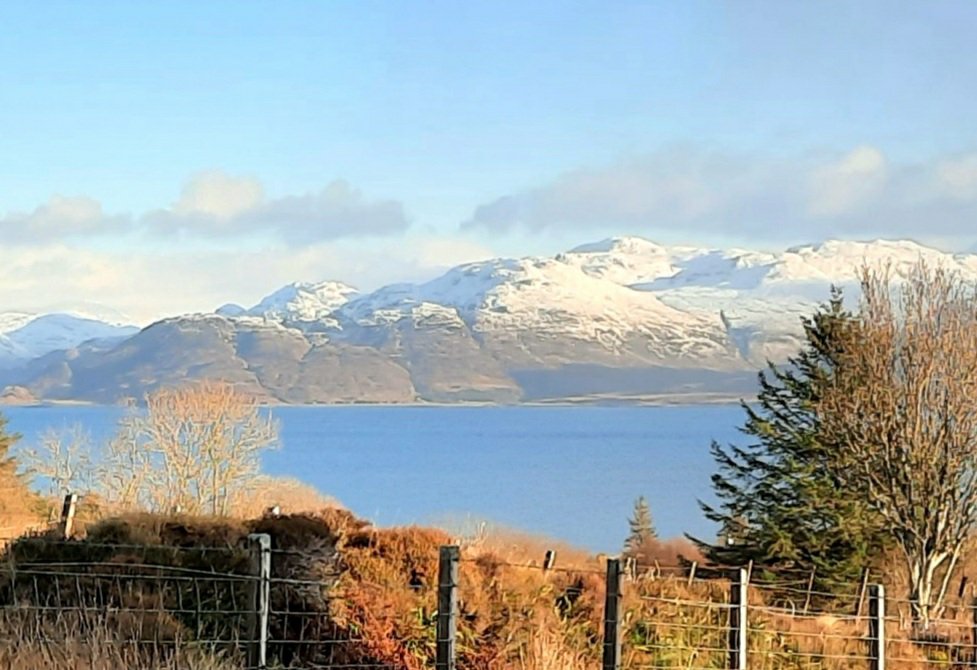
In the meantime, we continue to be awed by the sheer beauty of the landscape around us, and are serenaded by our raven from the old Scots pine as dawn breaks every morning, complaining that it’s time our sorry asses were out of bed.

It really couldn’t be much better.

Highland Coos next door

In our village there lives a crofter called Angus who keeps Highland cows. These are small, long-horned, shaggy-coated cows of neolithic origin, the archetypal Scottish cow.

Hardy and good natured, as well as very intelligent, these cows are escape artists. Often the call goes out around the village that there is a cow in the road, and it’s invariably one belonging to Angus.

This week Angus has been grazing them in the top field which is adjacent to our croft. One morning we tugged back the curtains in the static to find three large cows staring back at us from a few metres away on the other side of the hedge.

They are curious beasts. As the day progressed, whenever they spotted us out on the croft they’d migrate towards us, shaggy heads shaking and mooing, in anticipation of a feed, I suspect.

I’m very taken by them. Much more so than with the sheep.

Snowy hills & soul food

The weather turned very cold last night, down to an overnight temperature of a few degrees. We awoke to snow on the high peaks around us and an internal caravan temperature of four degrees C.

To say that getting out of the warmth of the quilt was a struggle this morning would be an understatement..

Slowly building supplies are arriving for the next stage of the house build.

We need to block gaps and start the insulating foil on the walls before we start the underfloor heating, but we await more foil, staples and other materials. With any luck everything will arrive in the next week and we can get started.

In the meantime, without a working oven, I’m relying on our local stores to bake delicious, savoury, carb-rich loveliness to keep us motivated in the form of bacon and cheese scones.

We need extra energy in this cold to stay warm and working. I don’t feel guilty at all for the large bowl of tomato soup and two of these beauties warmed and spread with butter for supper.

Soul food.

The bone-weariness of 5am

It is 5.02 in the morning and I am writing this from our hotel bedroom. The room is overheated and stuffy and our dog lies curled up and slightly confused on his blanket in the corner of an unfamiliar room. I should be asleep. But infuriatingly I can’t sleep, even though I am weary.

Moving house is exhausting. I have done it so many times that although it’s lent a certain proficiency to the process, it’s increasingly a bone-wearying, energy sapping experience. This time especially so with my recent second knee replacement restricting my ability to do much physical work, meaning leaning on husband more than ever.

The house empties so slowly, exposing cobwebs, dust and the ghosts of lost slippers behind furniture.

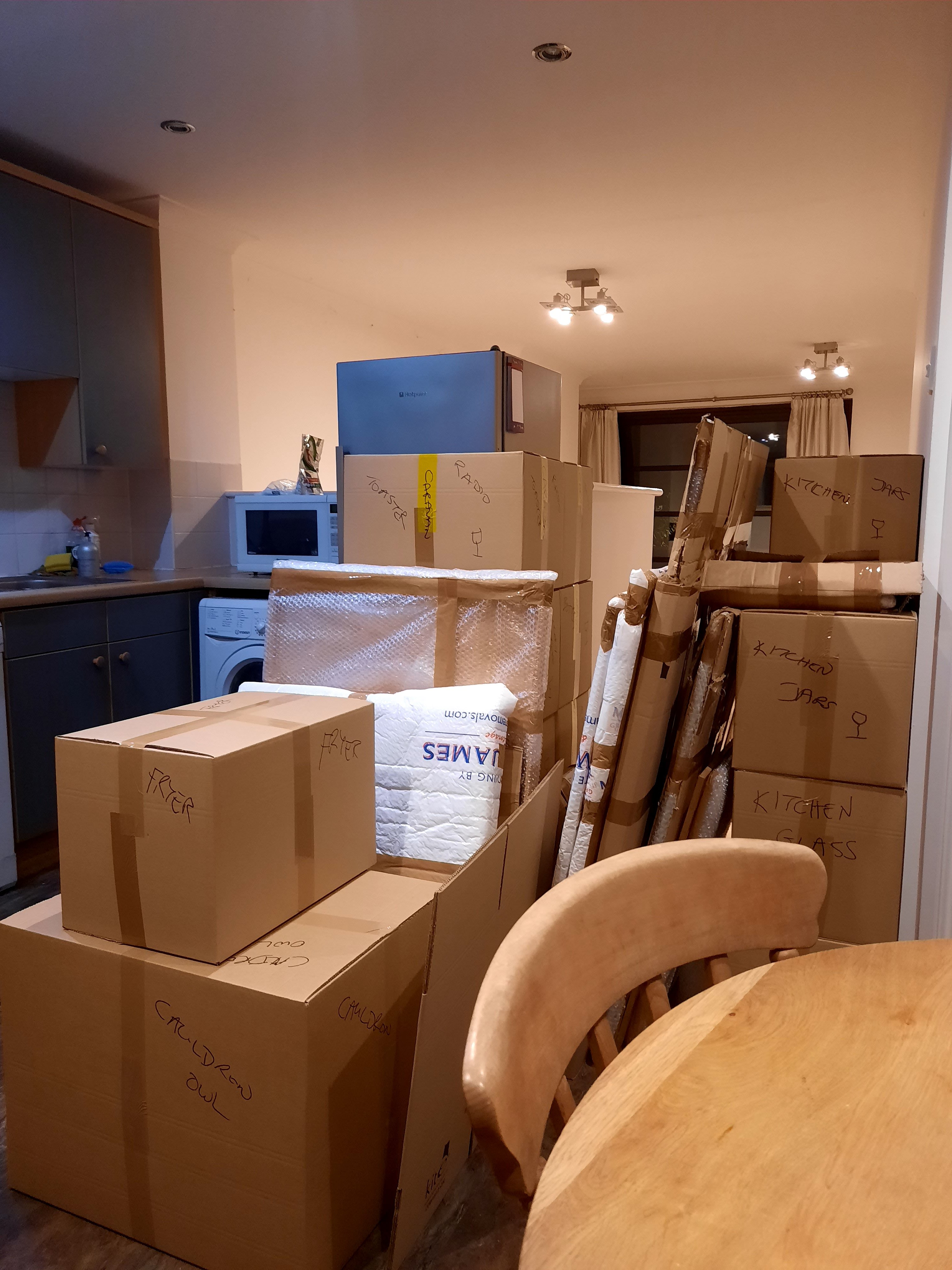
After a day and a half of loading the removals van we hit a wall at around 4pm. We looked at each other as we stood in our empty kitchen and agreed that we had to stop.

The removals guys were still working through the garage (how do they keep going?) but were happy to complete without us and lock up the house so that we could start the long drive northwards. London rush hour was about to start and we were keen to avoid the worst of it.

As it was, we still hit the rush hour traffic, but every mile towards our first nights destination felt good. We tumbled into an empty bar at our scarily Covid-empty hotel and ate a quick supper before bed.

Today is another day. We’re both relieved to have that behind us and to focus on the drive up-country to our new home.

We’re taking each day at a time.

Upcycling

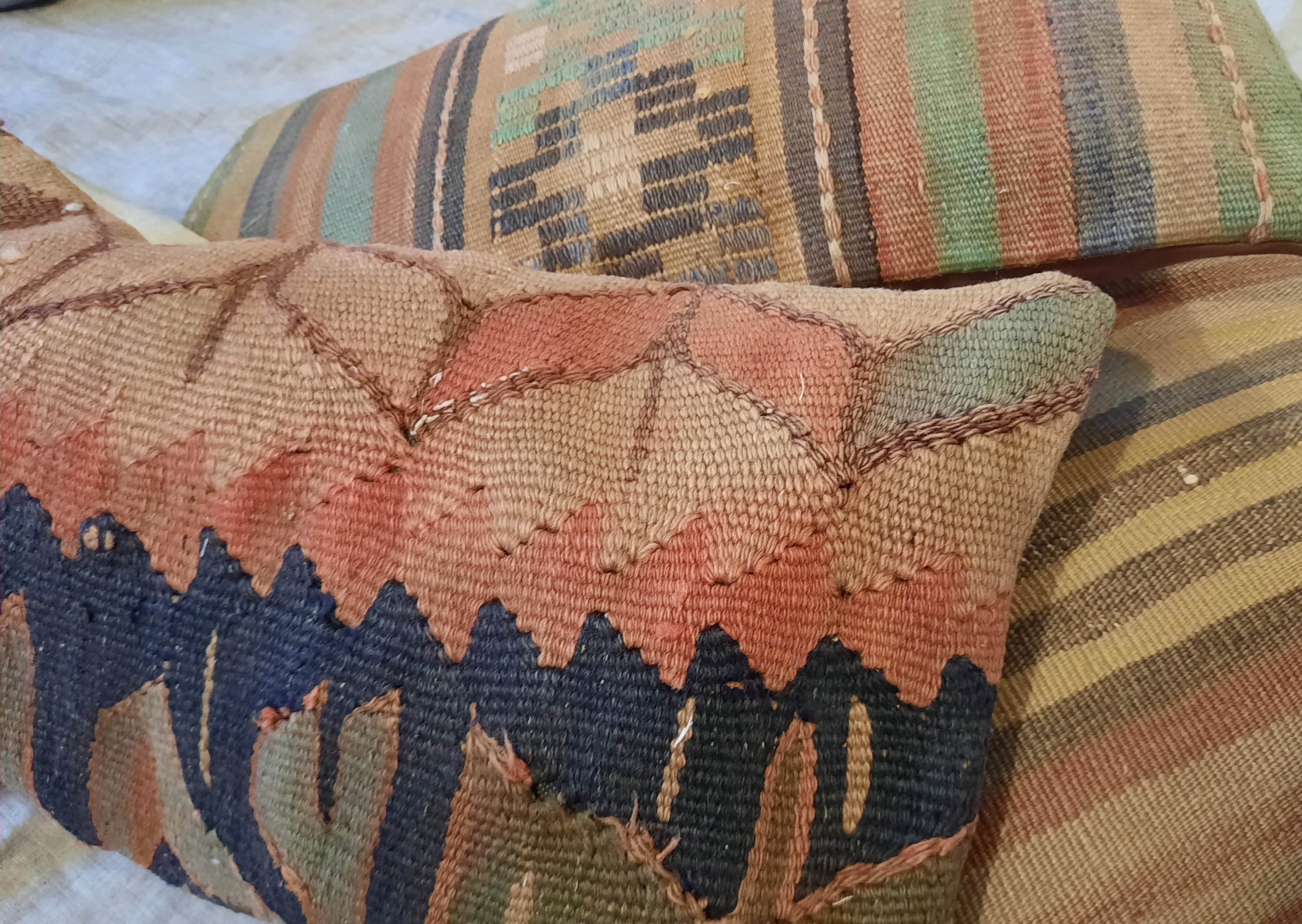
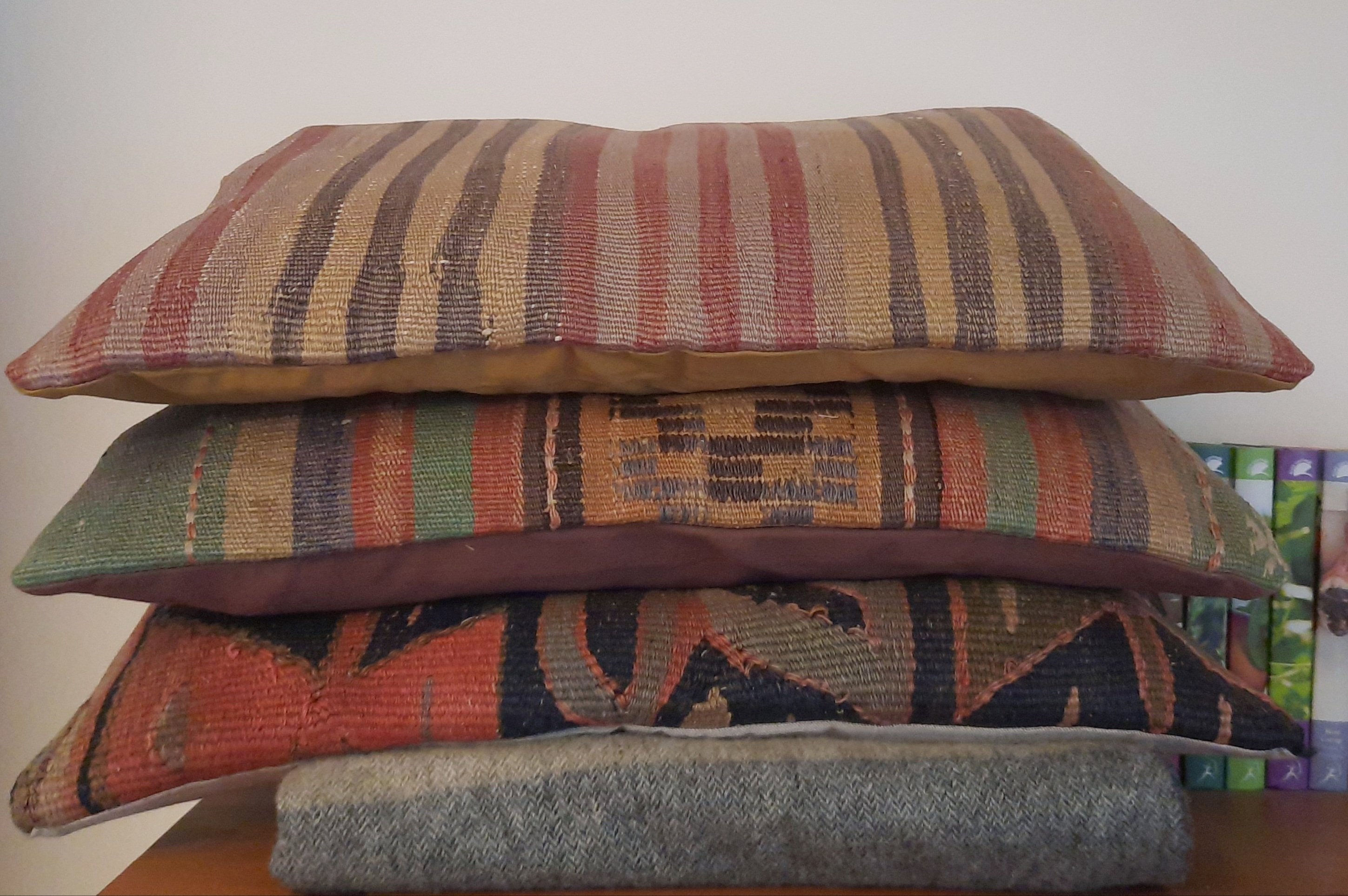
Whilst sorting through the cupboards to pack we came across some Turkish kilim fabric covers that I had bought some time ago for very little money and had stashed away with the linens.

After I’d bought them, I’d discovered that they were all odd sizes, each one cut from an upcycled piece of old kilim. Because I had no cushion pads to fit them I’d clearly put them away to sort another day. But looking at them again today I thought they’d do very well for the static.

A number of them showed signs of mending, and all of them were old, vegetable dyed weavings. I’m very drawn to textiles, and especially to those with some age and history to them.

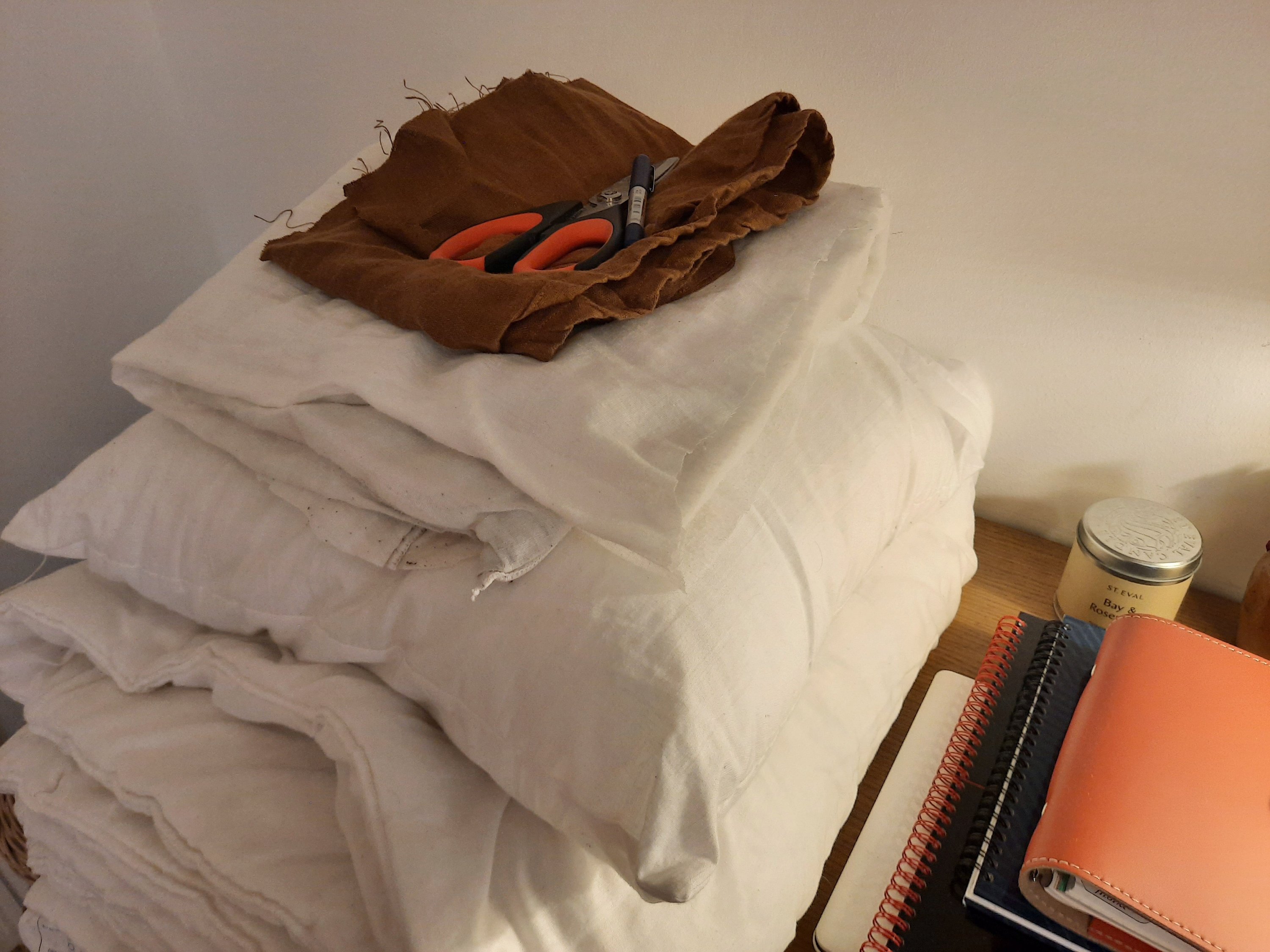
I didn’t want to buy more cushion pads. So I repurposed an old, single duvet that we were about to ditch and made three cushion pads from it to fit the covers.

I love their slightly faded, soft colours, imperfect patterns and visible mendings. You can feel the hands of the past on them and I can’t help wondering about their journey and who has repaired them in previous generations. It feels good to give both them and the old quilt a second life.

The rest of the linen cupboard has also been sorted and the old sheets and pillowcases that are way past their best will be used as decorating sheets or cut up as cleaning cloths and dusters this weekend, ready to be pressed into service in cleaning and painting the static in a few weeks time.

When did we give up repairing linens and buying new whenever we felt like it?

Planning for the internals

Now that the exterior of the house is mainly complete, the builders will be finishing on site and handing over to us to make a start on the interior.

We had originally planned for the builders to do everything, but cost estimates quickly became prohibitive once they’d been discussed and confirmed. The build costs rose over 30% above the architects calculation estimates, leaving us with no alternative but to complete the house ourselves. We’d allocated some contingency, but the magnitude of this was beyond what we could absorb.

We are moving up and into the static in a few weeks time so that we can work full time on the build. As two IT people rather than builders, this is going to be a challenge!

The first week will be busy connecting water and power to the caravan and hooking up the gas bottles for heat and cooking so that we’ve got the basics in place. We also need to build steps for easier access, replace some of the flooring, fit a new boiler and give it a quick lick of paint. This will be our home for the forseeable few months and we need it to be warm, dry and comfortable. Only then can we make a start on the house itself.

Then we start with the foil membrane on the inside of the walls for heat retention and moisture control. There is already protective waterproof membrane on the outer walls underneath the cladding, but to ensure that the house is as sealed as possible we need to wrap the inside of the walls too before plasterboarding.

After that, the underfloor heating, screed and MVHR ducting. There’s something that gives me infantile pleasure as part of the generation that grew up with Alien to have ducting in the house… 🙂.

It’s certainly going to be different to our current lives, and I’m just so damned grateful that husband is a practical man who doesn’t seem daunted by what seems to me to be a whole mountain of challenges…

Of slow cooked stews and power tools


We’re now in the final few weeks of the London house as the October winds blow. We sit listening to the rain and wind blustering through the branches of the crab apple trees that flank the house, commenting ruefully to each other that this is an early trial for the Skye weather.
We’re making lists of what will be packed for storage and what will be needed in the caravan for the duration of the build.

I’m anticipating a cold, wet Highland winter in the caravan and days of hard physical work, something unfamiliar to our soft urban bodies. Not to mention my still recovering replacement bionic knees.

We’re going to ache and I’m sure that exhaustion will hit pretty quickly. Husband will bear the brunt of this as there are things that he can do that I simply can’t, so one of my small contributions will be keeping us fed. Food will be important for both fuelling tired muscles and keeping morale going.


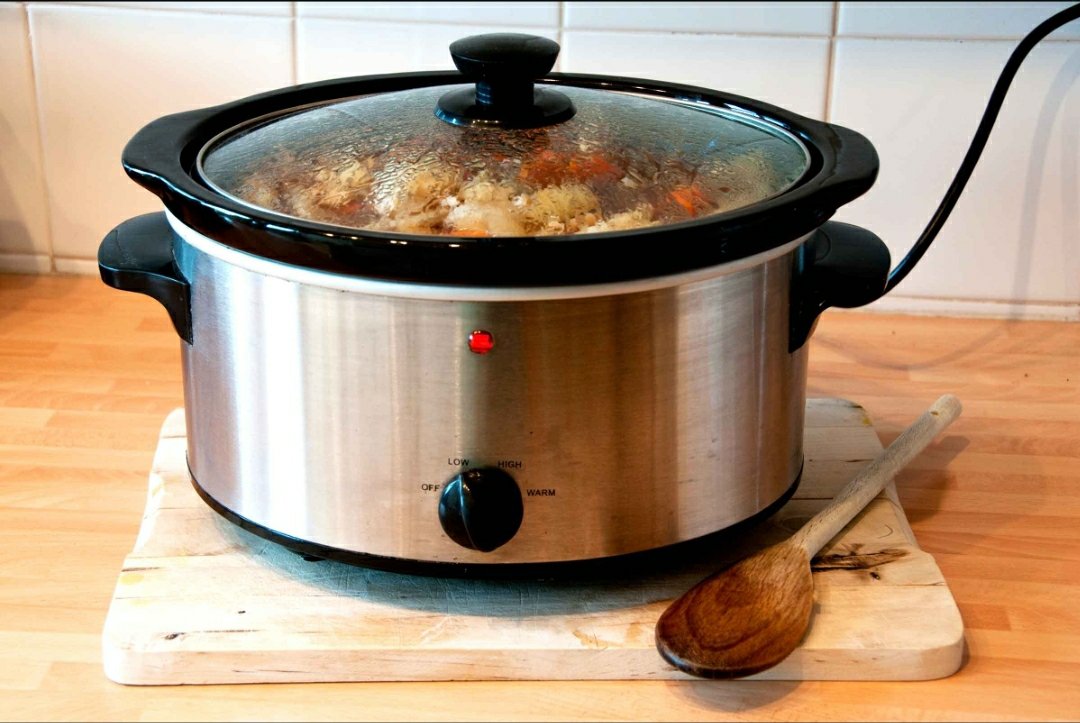
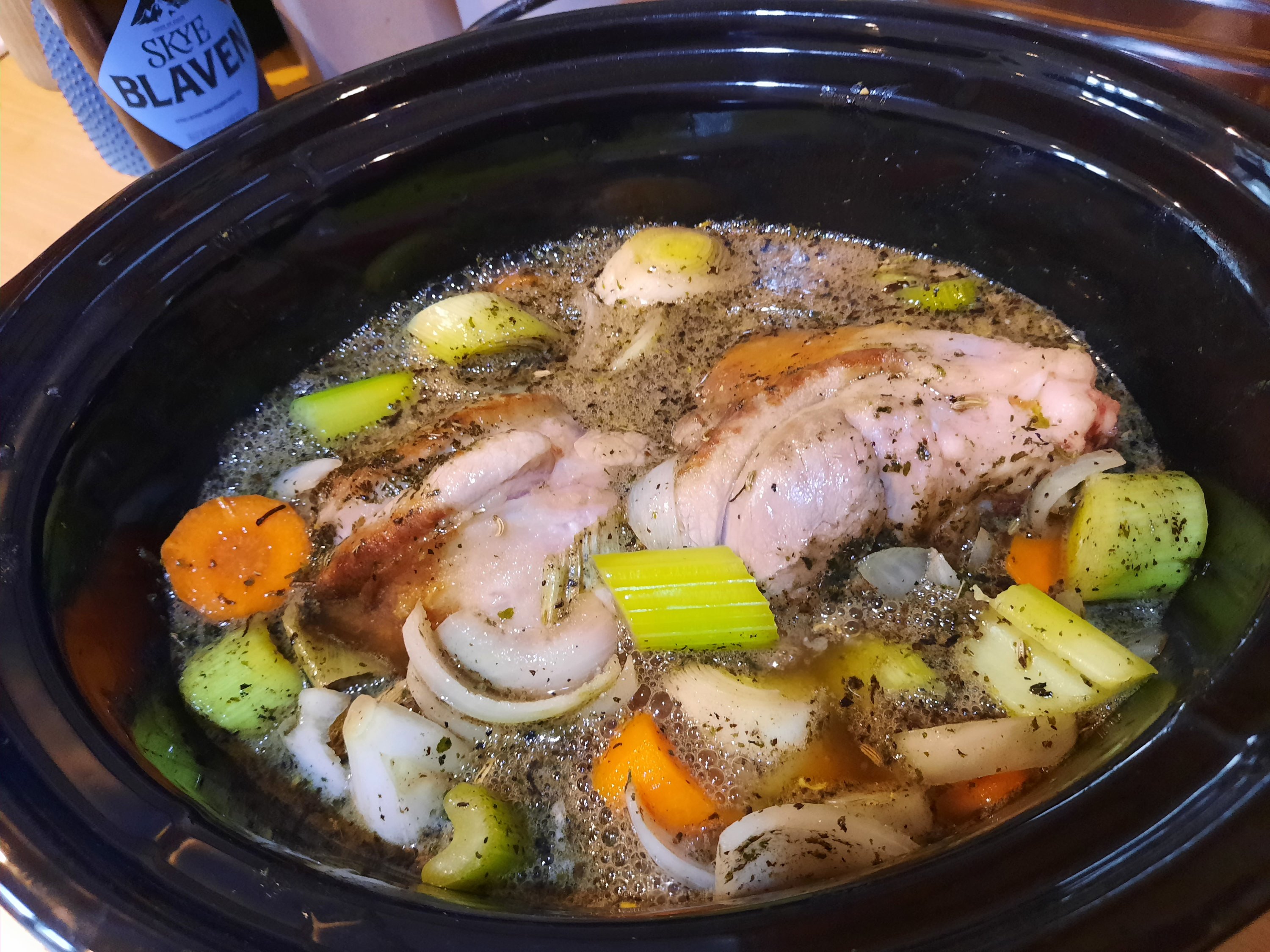
I’m packing my slow cooker so that I can make soups and stews first thing in the morning to come into at the end of the day without too much effort. It’s comforting to come home to the warmth and smell of a lamb hotpot permeating the caravan when you’re tired, cold and wet. We should be able to raise a spoon and some chunks of bread if we have energy for nothing else!


The kitchen in the caravan is also pretty small so I’m trying to condense down what to pack to the most essential items only. Kettle, oven dishes, plates, cutlery, a few good knives etc. I suspect that our food will be basic until we are in the house, and eaten off laps, but that’s fine by us.


Forget the wild fantasies of feasting off venison and salmon in the Highlands – this is going to be lots of simple cooking designed to fill us up and keep us warm. Soups, porridge, stews and dumplings. Hearty fare, albeit with fresh local produce.

Whilst I’m looking at supplies, husband is restocking essential tools for the build. He got rid of a lot of tools when he moved from the North of England, thinking that they’d no longer be needed in London (and having no storage space for them).

Our living room here is gradually filling up with reciprocating saws, drill bits, power screwdrivers, steel capped boots and work trousers.

I hug myself in anticipation. Not long now until we pack up the car with our ancient spaniel and start the long, slow drive up to the island.

It’s all becoming very real… 👍☺️

Autumn cladding progress


Pictures taken on a blustery, rainy autumn day last week on the island. The first frosts were a few nights ago, so autumn is definitely well underway.

The larch cladding is nearly complete now. There seem to be a few bits left around the rear dormer bathroom window that have yet to be finished, but the scaffolding is down and we’re hoping that these remaining areas won’t take long.


We’re also still waiting for the water to be connected.

What’s needed before we can get approval to connect is a small value, simple return valve, but it seems that obtaining one and getting a plumber to fit it is holding everything up. It’s frustrating at this stage with just weeks to go until we will be living on site. We can’t live for long without piped water to the caravan, and with no date in hand for this to be done it’s a worry on a very long list of things to think about. It will happen.


I can’t wait for the larch to weather. It looks strangely stark in the landscape at the moment in its raw colour, and I much prefer the muted grey tones of weathered wood.

We have neighbours in a nearby  village on the island who have also just built a larch clad home and who are a few months ahead of us in terms of build progress. Theirs is silvering already, so I’m hoping ours will soften too very soon.


Linen addiction

The January sales are always a temptation, although I try hard to use them just to buy things that I really need.

This year, thinking ahead to life on the island, I’ve looked at our bedding supplies carefully and decided that a bit of a root-through is needed.

We have lots of old bedding from previous lives that I will keep and cut up for cleaning cloths and studio use, but a few more duvet covers and sheets wouldn’t go amiss. Especially in brushed cotton (or flanelette, as some of you may know it).

This is a soft cotton with its’ nappe raised through brushing as part of the manufacturing process, rendering it warm and comfortable to the touch. Perfect for colder nights and mornings.

I confess to being a bit of a textile junkie, and I love a bargain. I have always bought my bedding in the sales whenever possible so that I can buy the best for less. 😉

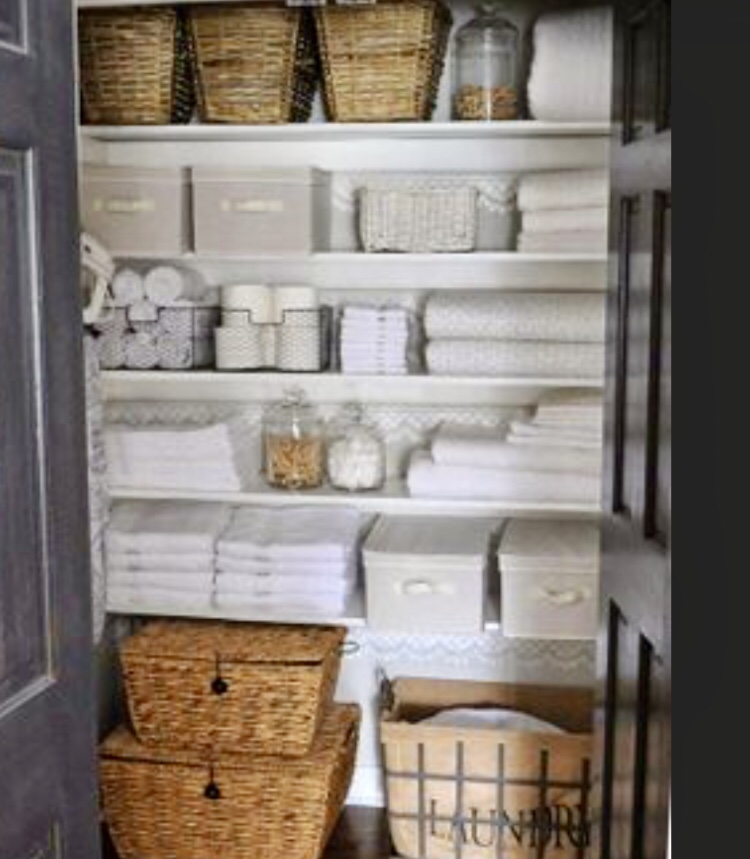
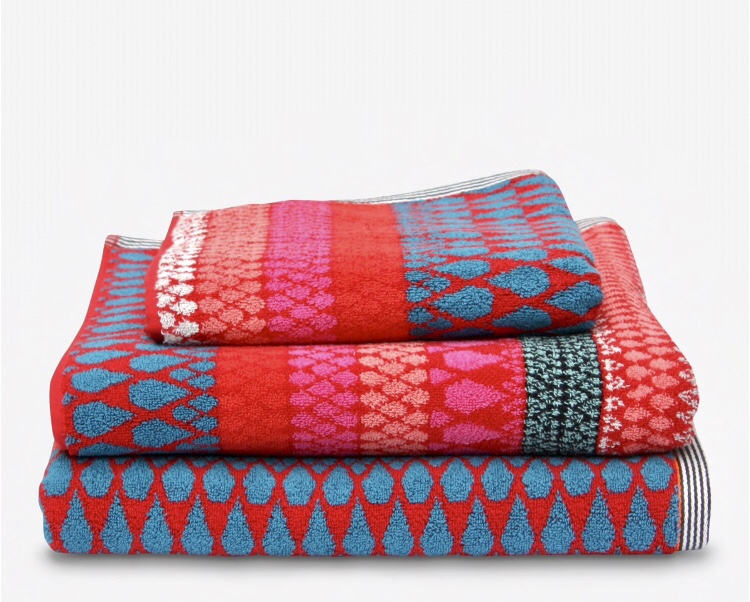
It’s a good thing that we have a large linen cupboard built into the new house so that I can store our bedding and towels…. but we could also do with a bit of a towel sort out. A few more big, comfy bath sheets for when we have both kids home might not be a bad idea, although my husband will raise eyes skywards at me suggesting that we might need more..!

I rarely throw out the slightly thin or ratty towels. They will simply get repurposed and will be kept in the utility room for muddy paws, the garden or emergency mopping-up. There’s always a use somewhere 😊.