Everything aches..

The first job we’ve had to do is to make the caravan habitable. For those of you that have been reading for a while, you’ll know that we were given a free static caravan in September, which was a hugely generous gesture.

However, it was very basic and hadn’t been lived in for a while. We had it transported to the croft and had to leave it empty for a further two months until we were able to move to the island, which didn’t help in the habitability stakes..(if that’s not a word, it should be).

When we opened the door for the first time on Saturday it was quite clear that it was damp and needed drying out before we could move in.

Storm Aiden made the process of working on the caravan too dangerous for the first few days that we were here. It needed levelling properly before we could do anything inside, but the 60 mph winds were rocking it like a boat. We had to wait until the storm passed.
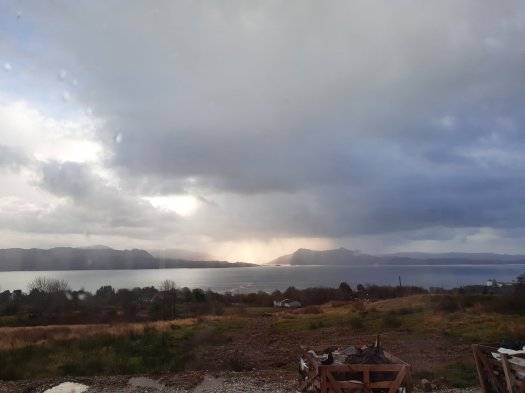
The morning dawned calm and bright and the wind had at last dropped considerably. Husband had managed to secure the caravan so that it was safe to work in, and hooked up the propane supply to the gas fire so that we could start to dry it out. Whilst he worked on preparing the electrical supply I started the seat repairs and the painting.

As we suspected, everything ached by the end of the day. We are more unfit than we thought!

We got back to our B&B room weary in body but happy in spirit. We’re here at last and making progress, however slow that may seem.

We will get fitter as time passes, and despite the aching limbs and backs it’s still all worth it to be here.
Planning for the internals

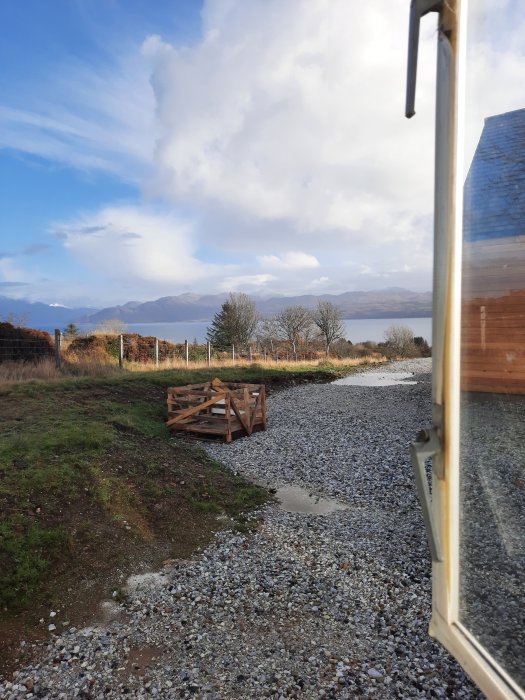
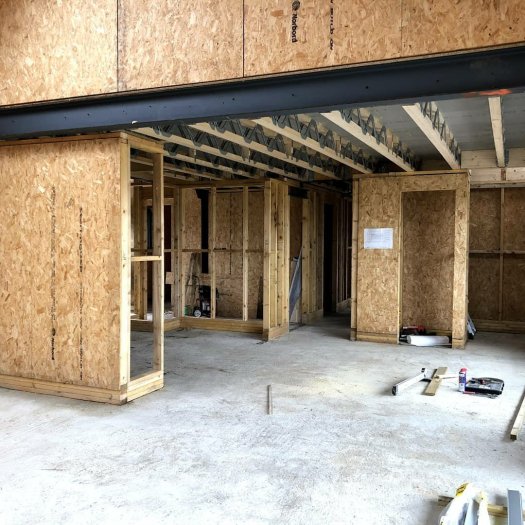
Now that the exterior of the house is mainly complete, the builders will be finishing on site and handing over to us to make a start on the interior.

We had originally planned for the builders to do everything, but cost estimates quickly became prohibitive once they’d been discussed and confirmed. The build costs rose over 30% above the architects calculation estimates, leaving us with no alternative but to complete the house ourselves. We’d allocated some contingency, but the magnitude of this was beyond what we could absorb.

We are moving up and into the static in a few weeks time so that we can work full time on the build. As two IT people rather than builders, this is going to be a challenge!

The first week will be busy connecting water and power to the caravan and hooking up the gas bottles for heat and cooking so that we’ve got the basics in place. We also need to build steps for easier access, replace some of the flooring, fit a new boiler and give it a quick lick of paint. This will be our home for the forseeable few months and we need it to be warm, dry and comfortable. Only then can we make a start on the house itself.

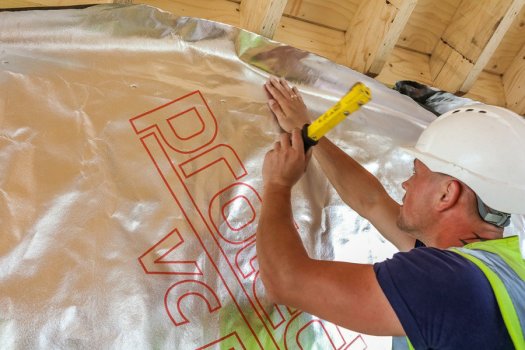
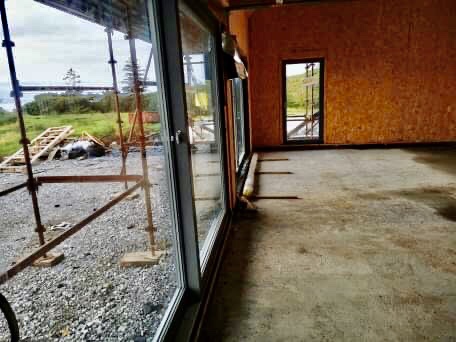
Then we start with the foil membrane on the inside of the walls for heat retention and moisture control. There is already protective waterproof membrane on the outer walls underneath the cladding, but to ensure that the house is as sealed as possible we need to wrap the inside of the walls too before plasterboarding.

After that, the underfloor heating, screed and MVHR ducting. There’s something that gives me infantile pleasure as part of the generation that grew up with Alien to have ducting in the house… 🙂.

It’s certainly going to be different to our current lives, and I’m just so damned grateful that husband is a practical man who doesn’t seem daunted by what seems to me to be a whole mountain of challenges…

Of slow cooked stews and power tools


We’re now in the final few weeks of the London house as the October winds blow. We sit listening to the rain and wind blustering through the branches of the crab apple trees that flank the house, commenting ruefully to each other that this is an early trial for the Skye weather.
We’re making lists of what will be packed for storage and what will be needed in the caravan for the duration of the build.

I’m anticipating a cold, wet Highland winter in the caravan and days of hard physical work, something unfamiliar to our soft urban bodies. Not to mention my still recovering replacement bionic knees.

We’re going to ache and I’m sure that exhaustion will hit pretty quickly. Husband will bear the brunt of this as there are things that he can do that I simply can’t, so one of my small contributions will be keeping us fed. Food will be important for both fuelling tired muscles and keeping morale going.


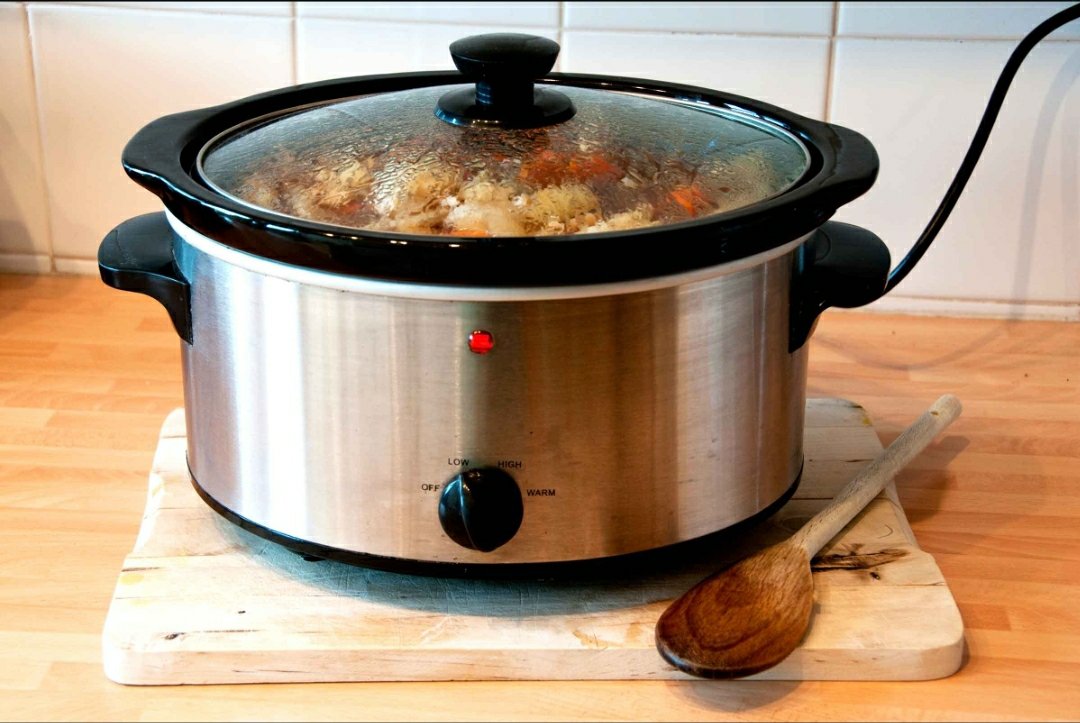
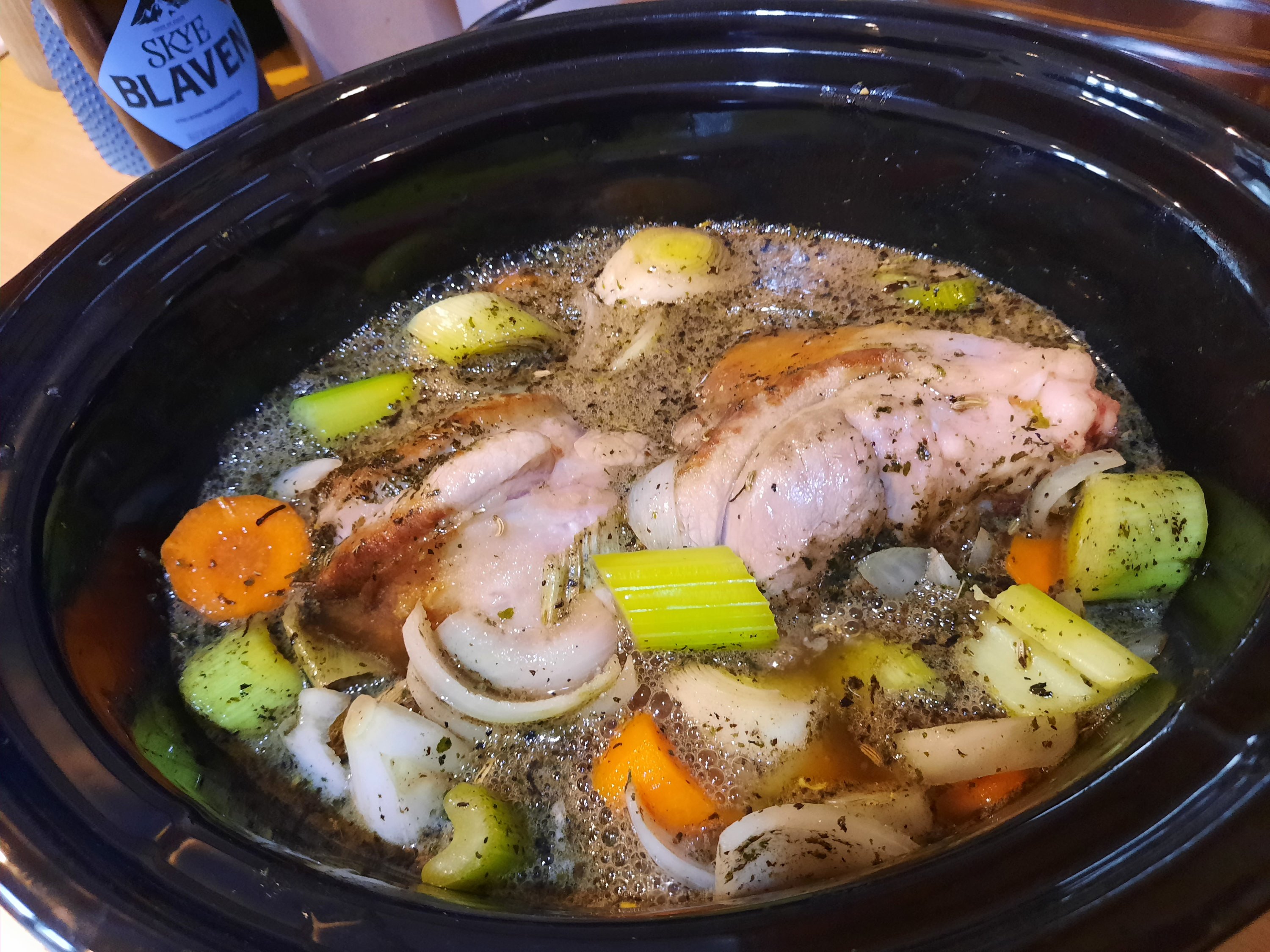
I’m packing my slow cooker so that I can make soups and stews first thing in the morning to come into at the end of the day without too much effort. It’s comforting to come home to the warmth and smell of a lamb hotpot permeating the caravan when you’re tired, cold and wet. We should be able to raise a spoon and some chunks of bread if we have energy for nothing else!


The kitchen in the caravan is also pretty small so I’m trying to condense down what to pack to the most essential items only. Kettle, oven dishes, plates, cutlery, a few good knives etc. I suspect that our food will be basic until we are in the house, and eaten off laps, but that’s fine by us.


Forget the wild fantasies of feasting off venison and salmon in the Highlands – this is going to be lots of simple cooking designed to fill us up and keep us warm. Soups, porridge, stews and dumplings. Hearty fare, albeit with fresh local produce.

Whilst I’m looking at supplies, husband is restocking essential tools for the build. He got rid of a lot of tools when he moved from the North of England, thinking that they’d no longer be needed in London (and having no storage space for them).

Our living room here is gradually filling up with reciprocating saws, drill bits, power screwdrivers, steel capped boots and work trousers.

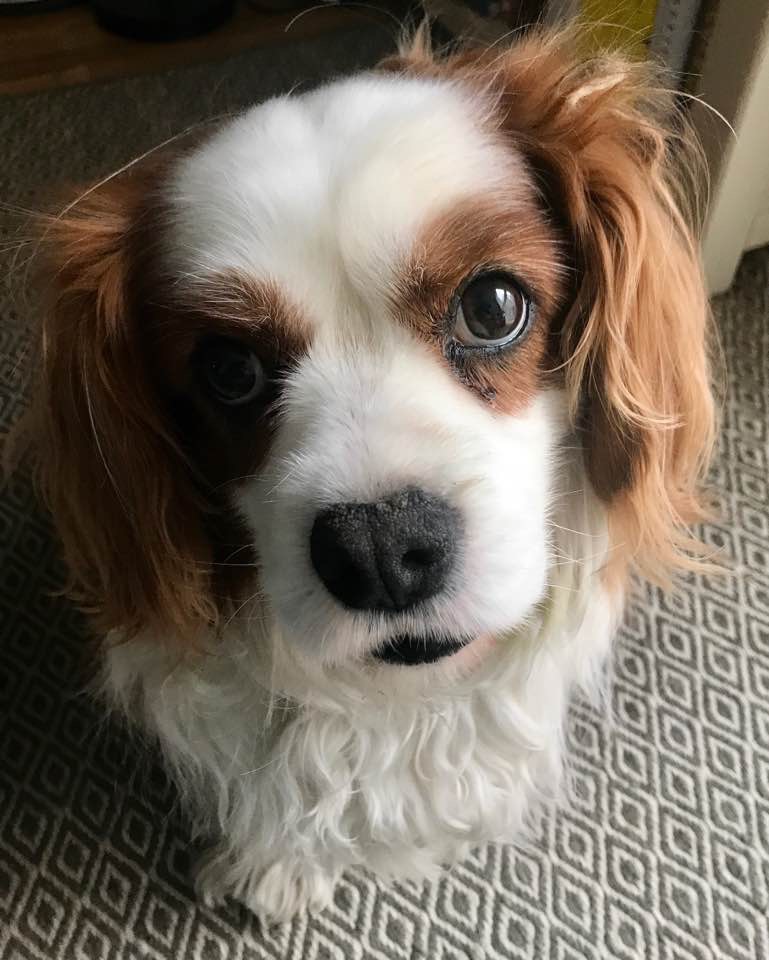
I hug myself in anticipation. Not long now until we pack up the car with our ancient spaniel and start the long, slow drive up to the island.

It’s all becoming very real… 👍☺️

Autumn cladding progress


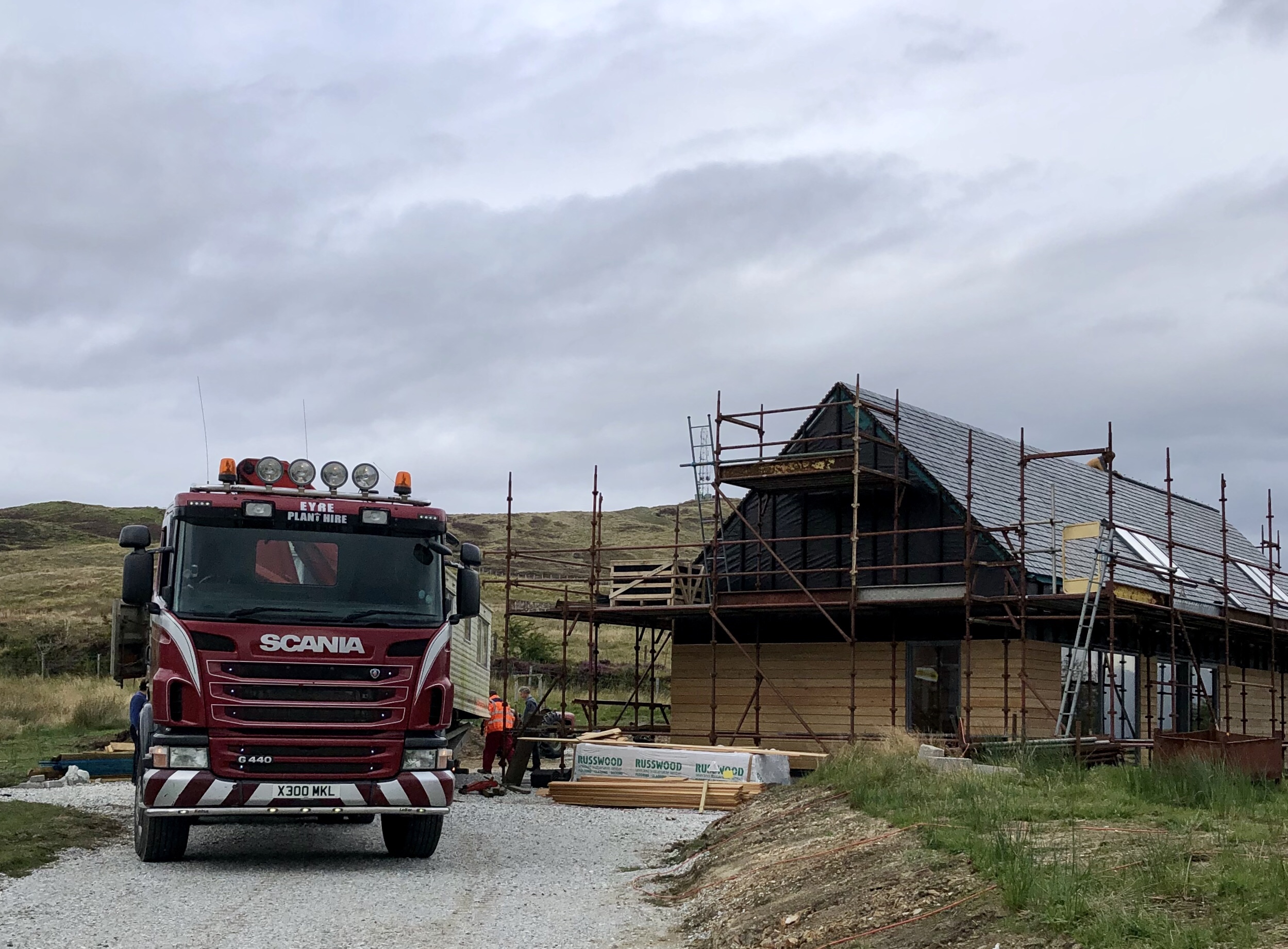
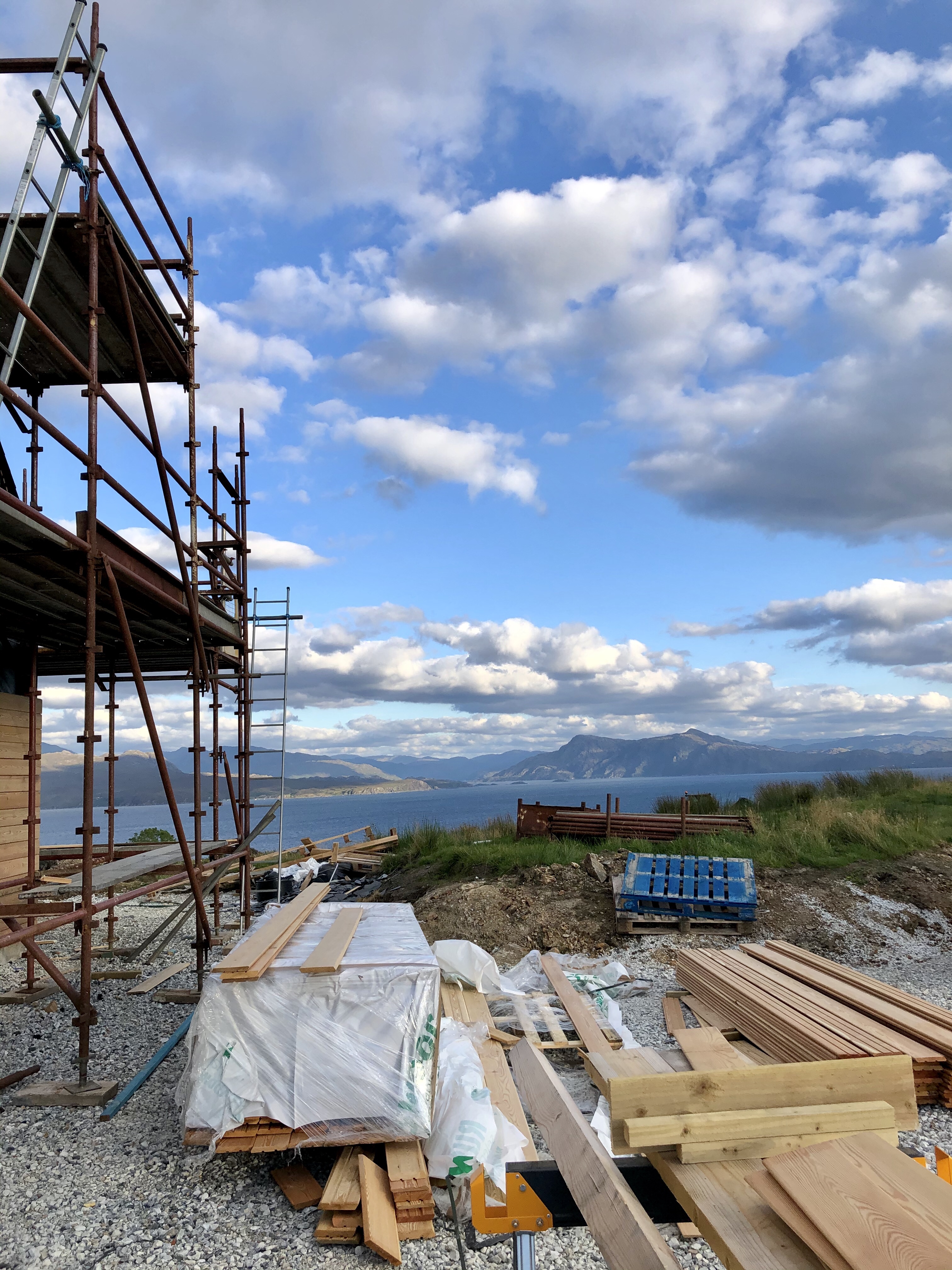
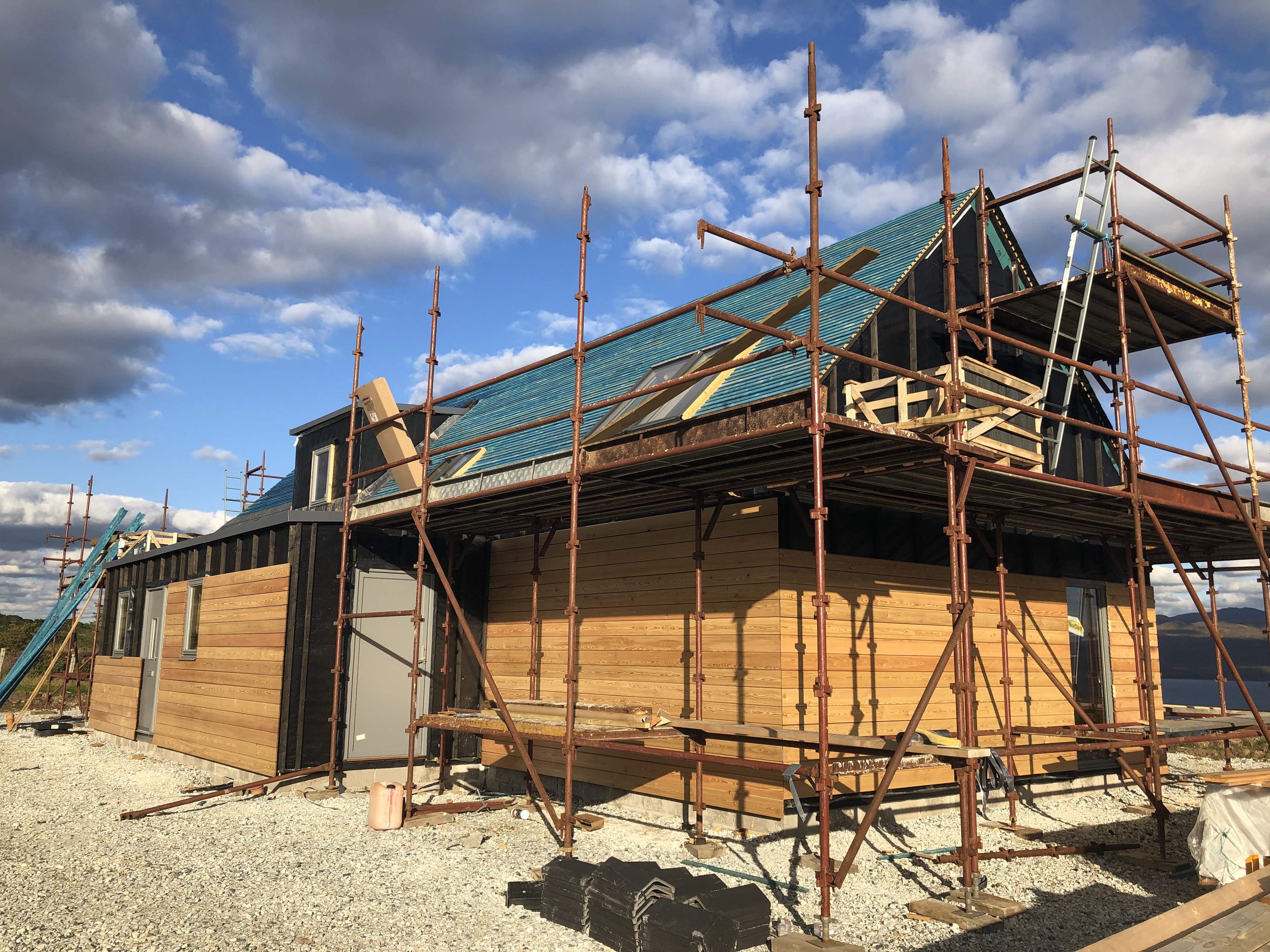
Pictures taken on a blustery, rainy autumn day last week on the island. The first frosts were a few nights ago, so autumn is definitely well underway.

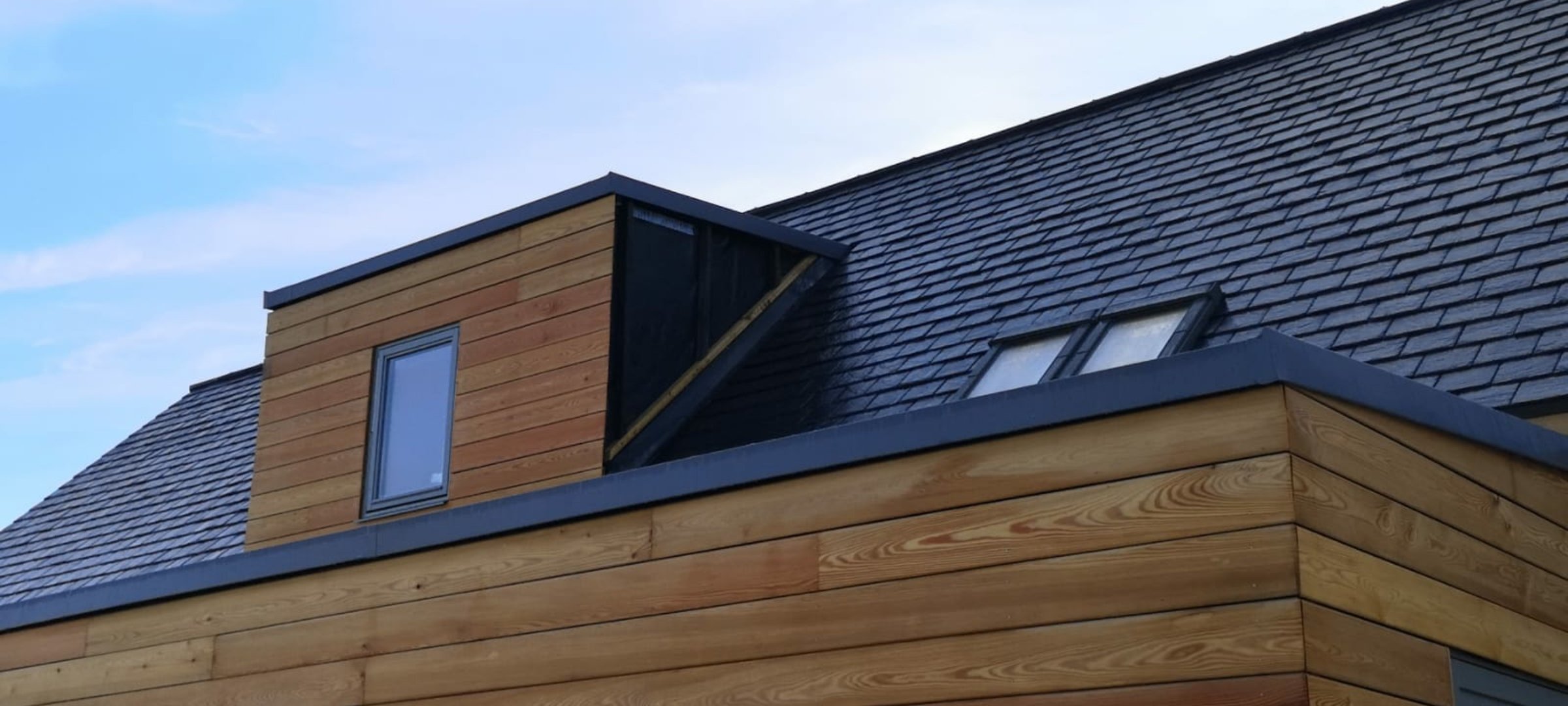
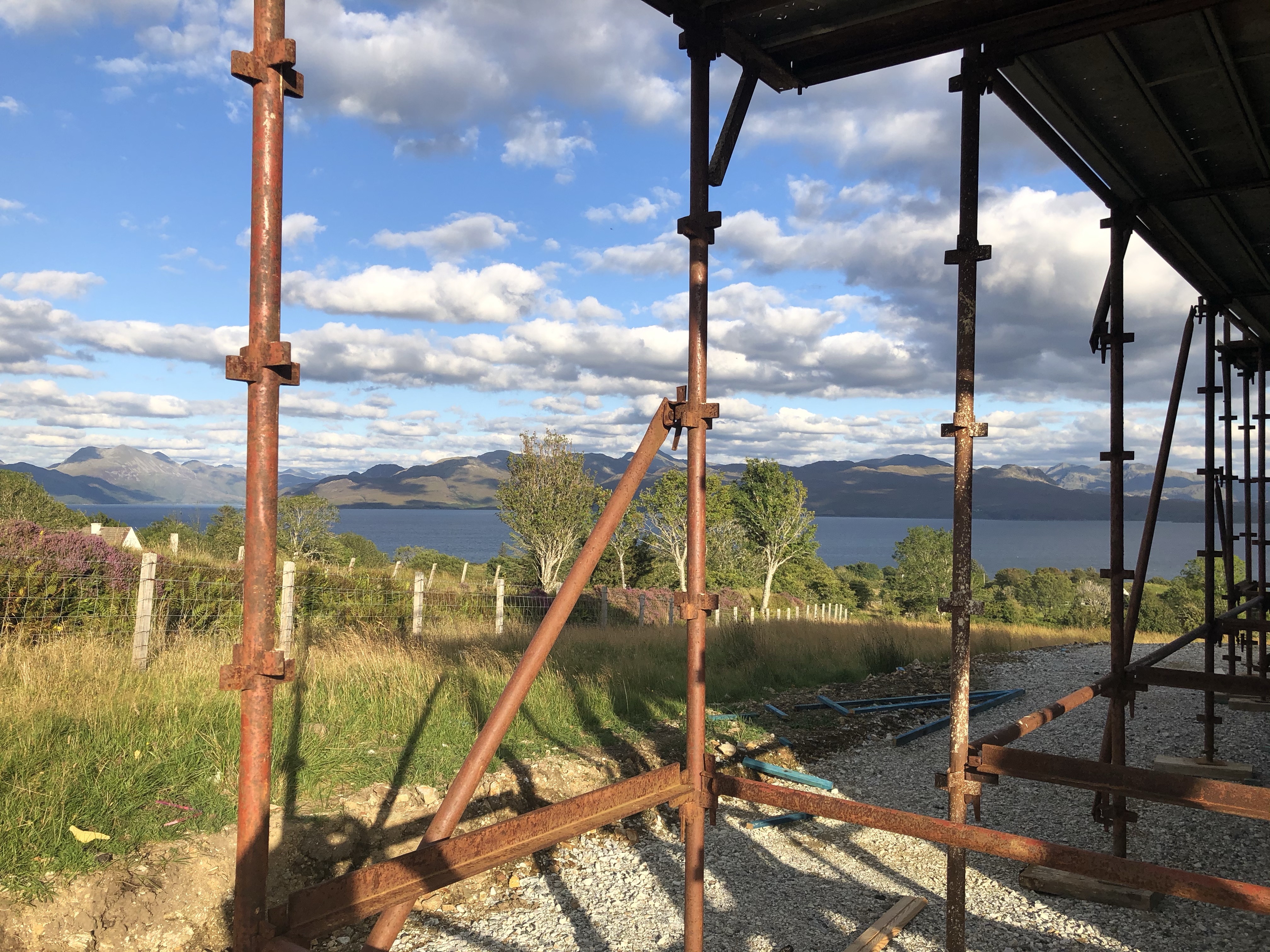
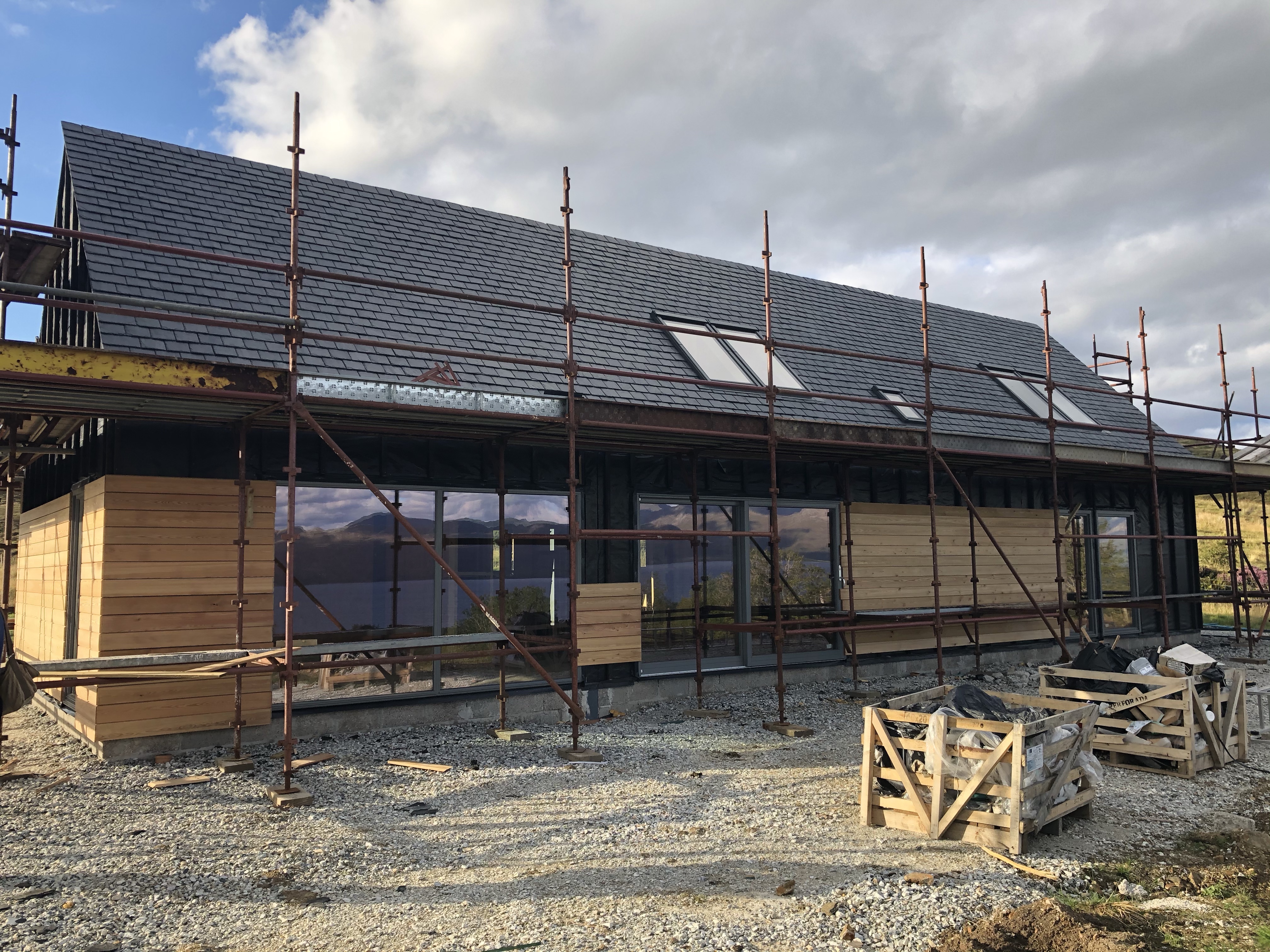
The larch cladding is nearly complete now. There seem to be a few bits left around the rear dormer bathroom window that have yet to be finished, but the scaffolding is down and we’re hoping that these remaining areas won’t take long.


We’re also still waiting for the water to be connected.

What’s needed before we can get approval to connect is a small value, simple return valve, but it seems that obtaining one and getting a plumber to fit it is holding everything up. It’s frustrating at this stage with just weeks to go until we will be living on site. We can’t live for long without piped water to the caravan, and with no date in hand for this to be done it’s a worry on a very long list of things to think about. It will happen.


I can’t wait for the larch to weather. It looks strangely stark in the landscape at the moment in its raw colour, and I much prefer the muted grey tones of weathered wood.

We have neighbours in a nearby  village on the island who have also just built a larch clad home and who are a few months ahead of us in terms of build progress. Theirs is silvering already, so I’m hoping ours will soften too very soon.


Preparations for winter

We’re preparing the static for the end of October as best we can whilst still being several hundred miles away.


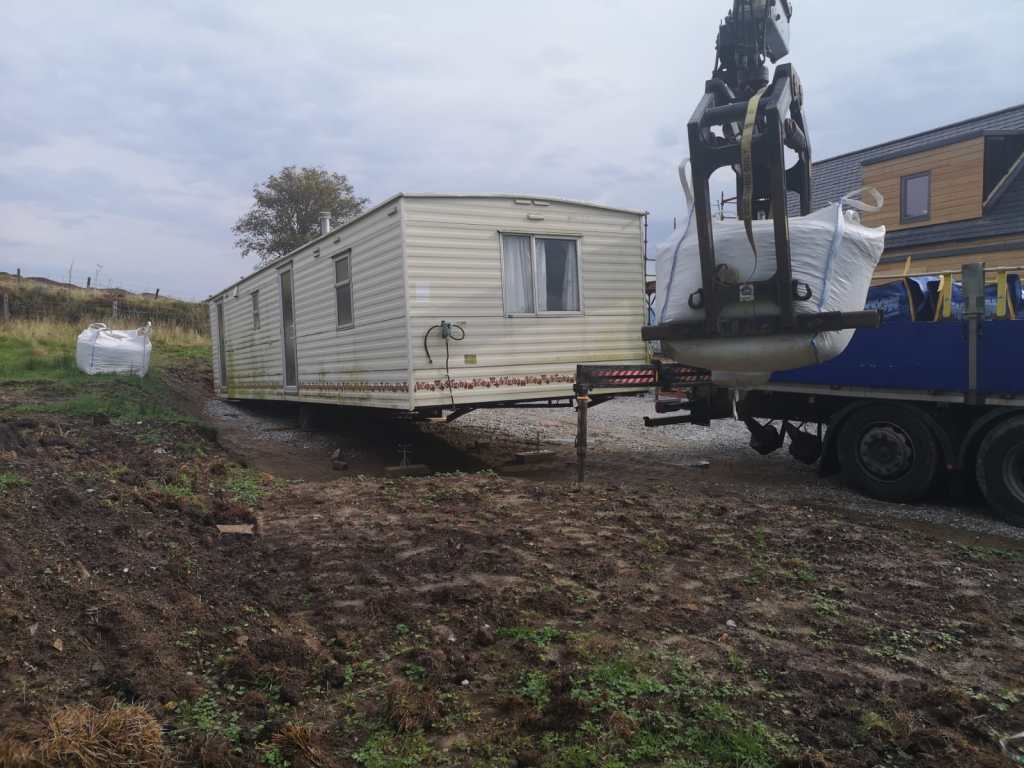
It’s on the croft and tonne bags of hardcore have been moved into place this week to provide it with a bit more anchor weight. Kind neighbours have strapped the hardcore bags to the static with high strength lorry straps for us.

We’ve been warned that there are often ninety mph winds that blow in the winter, and that the weight of the caravan alone won’t be enough for safety.

We hope that the combination of these tethered weights, an emplacement of strategically placed sandbags to funnel the prevailing south westerlies, and the protection afforded by the house will be enough to protect it from the worst of the winter gales.


We also need to level and secure the static more effectively, and for this we are going to use railway sleepers which we will have delivered to site over the next couple of weeks. We’ll use them to construct steps up to the caravan door as well so that our lovely but ancient spaniel (and equally ancient and rickety croft wifie) can make it in and out more easily 😊.


We’re also buying paint, brushes and supplies this week so that the first few days after arrival will see it cleaned and freshened up inside ready for occupation. Gas bottles and connections to water and electricity will also have to happen before we can move in.

It’s going to be a very busy October and November. 🙂

Decompressing

I’m slowly decompressing from work life.

I feel a bit like a balloon that was filled to capacity and at maximum tension. I bobbed along but was always conscious that everything was taut and there wasn’t much stretch left.

Not much capacity for squeezing in the good stuff, like realising dreams.

In the last week since finishing work I’ve been sleeping a lot. It feels as if someone has undone the knot at the neck of the balloon and is letting the air escape very slowly. I’m feeling as if there’s a bit of room now, with the balloon deflating a little more with each day that passes.

That’s a good thing. It’s freeing up some mental capacity for the lists that we’re building of things that have to be done before the move. Things that will help us realise the dream. Financial planning, changes of address, tools to buy for the build, sequencing the build plans, packing, clearing out things we no longer need. The list is a long one and continually being added to.

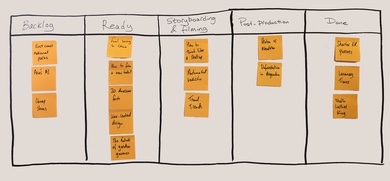
Those that know me will smile when they hear that the first thing I’ve bought for the static to keep us on track with the build tasks is a whiteboard…

I can see it now. Cold, frosty morning starts, piled-on old jumpers and big socks, mugs of coffee and bowls of porridge, and a morning stand-up to go through the priority tasks of each day.

Maybe retirement isn’t going to be that different to corporate life after all. Except so much more fun. Agile team leads, eat your heart out 😊

Static Adventures

We had a busy three days on the island checking the progress on site, talking to the builders, getting the static caravan in place and meeting a few neighbours in a socially distanced manner. It was good.

We came home tired but happy.

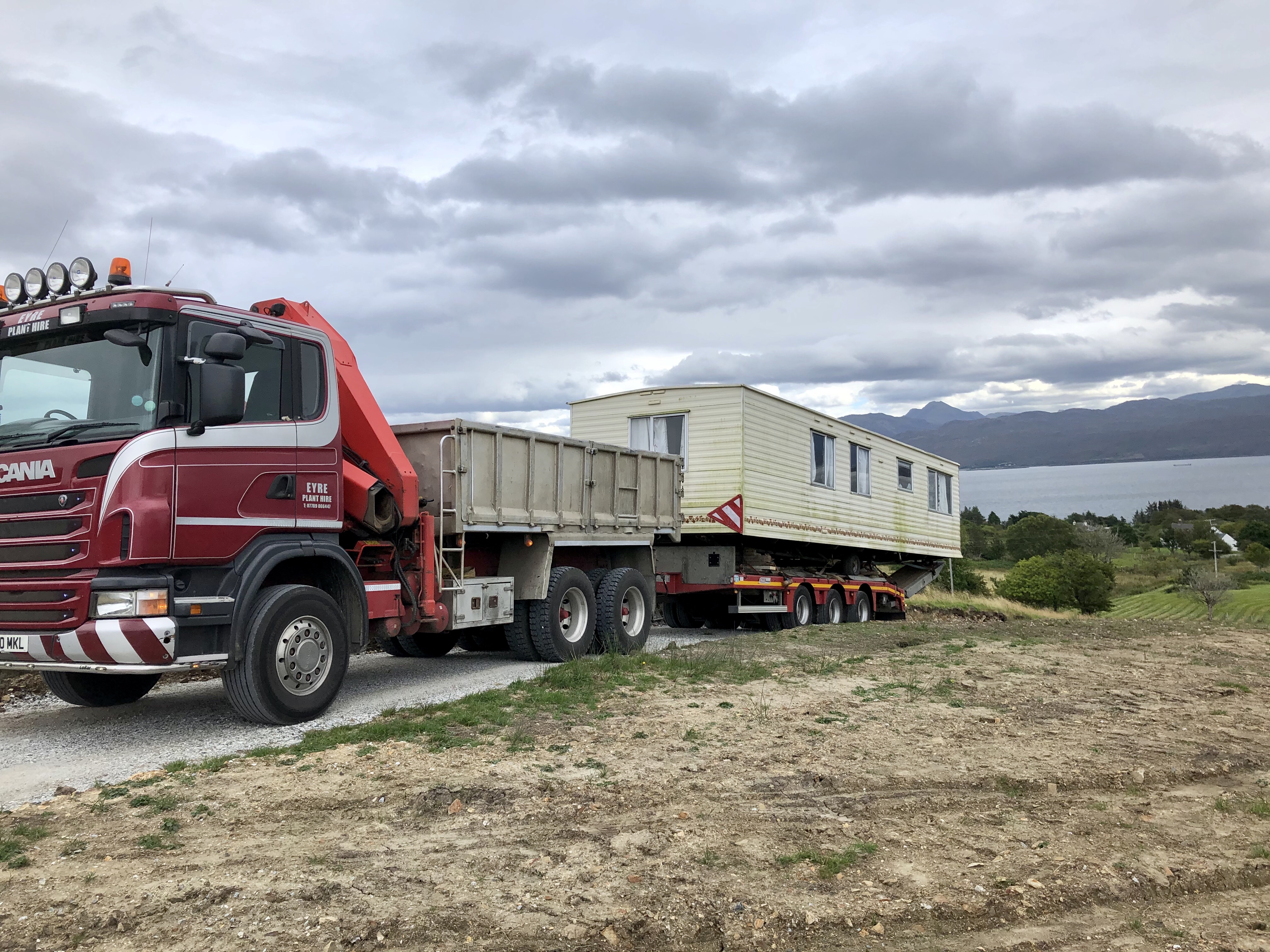
The caravan arrived on Tuesday. Watching from the top of the croft I could see that the lorry transporting it had got part the way up the steep access road, but was losing traction on the hardcore surface of the track. It tried a few times, but rolled back in each instance. My heart sank for a few moments thinking that all our plans would come to nothing.

Luckily for us there was still a digger on the croft, and one of our enterprising builders used a tow rope to connect it to the front of the lorry and reversing, dragged it up the hill over the steep part of the track. Relief was not the word!

With help from a kind neighbour Donnie and his tractor, the static was manoevered into place behind the house, where we hoped it would benefit from some shelter from the prevailing South Westerlies.

It’s really exposed to the elements at the top of the croft there. There was a stiff 40km per hour breeze blowing on the day that we moved it, so we could guess what it would feel like in the more typical winter gales of 70-90km per hour….

Four one tonne bags of hardcore are being delivered to site today and friends have kindly arranged to strap the caravan down to them with lorry straps to anchor it until we get to site again at the end of October.

It needs proper stabilising on a base, some steps, a lick of paint, some small internal repairs and a good airing, but those things will have to wait until we’re there permanently now. Soon.

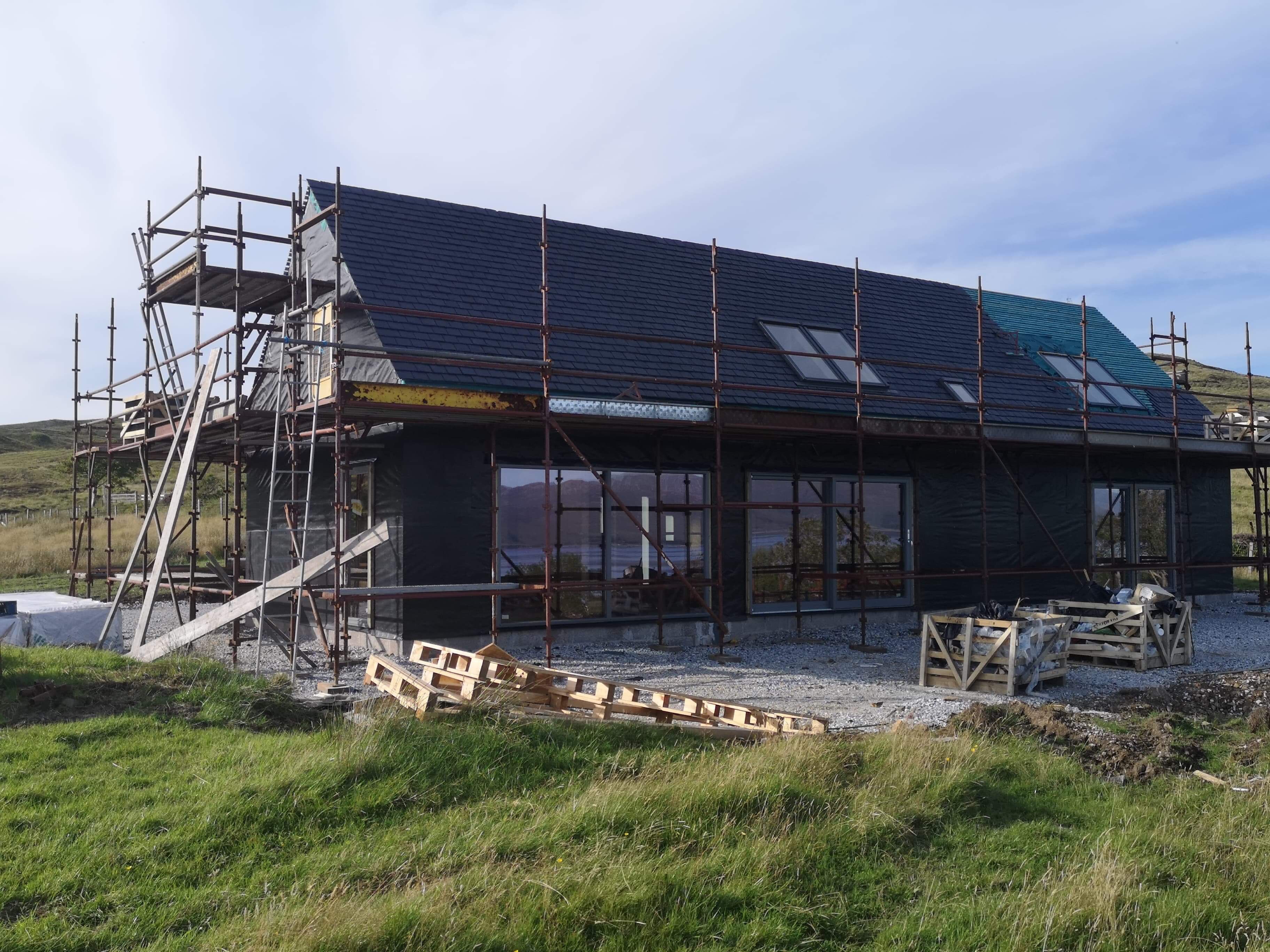
The builders have done a good job, and we were really pleased with the quality of the work. The cladding looks great and should be finished in the next week. The roof slating completed yesterday.

A few more weeks and the external elements of the build will be complete ready to hand over to us for the rest.

The cladding starts

We’re up at the build site and it’s amazing to see it for real rather than just via photos. It’s so exciting! Last time we were here this was all a muddy hillside on the croft.

The larch cladding has started. We were up on site as they were working on it, and even outside with a strong Skye breeze blowing away from me I could smell the lovely, resinous scent of the wood as they were cutting it.

It takes me straight back to years of my childhood when we used to picnic in the pine woods of what was then West Germany. That scent from cut pine trees was everywhere.

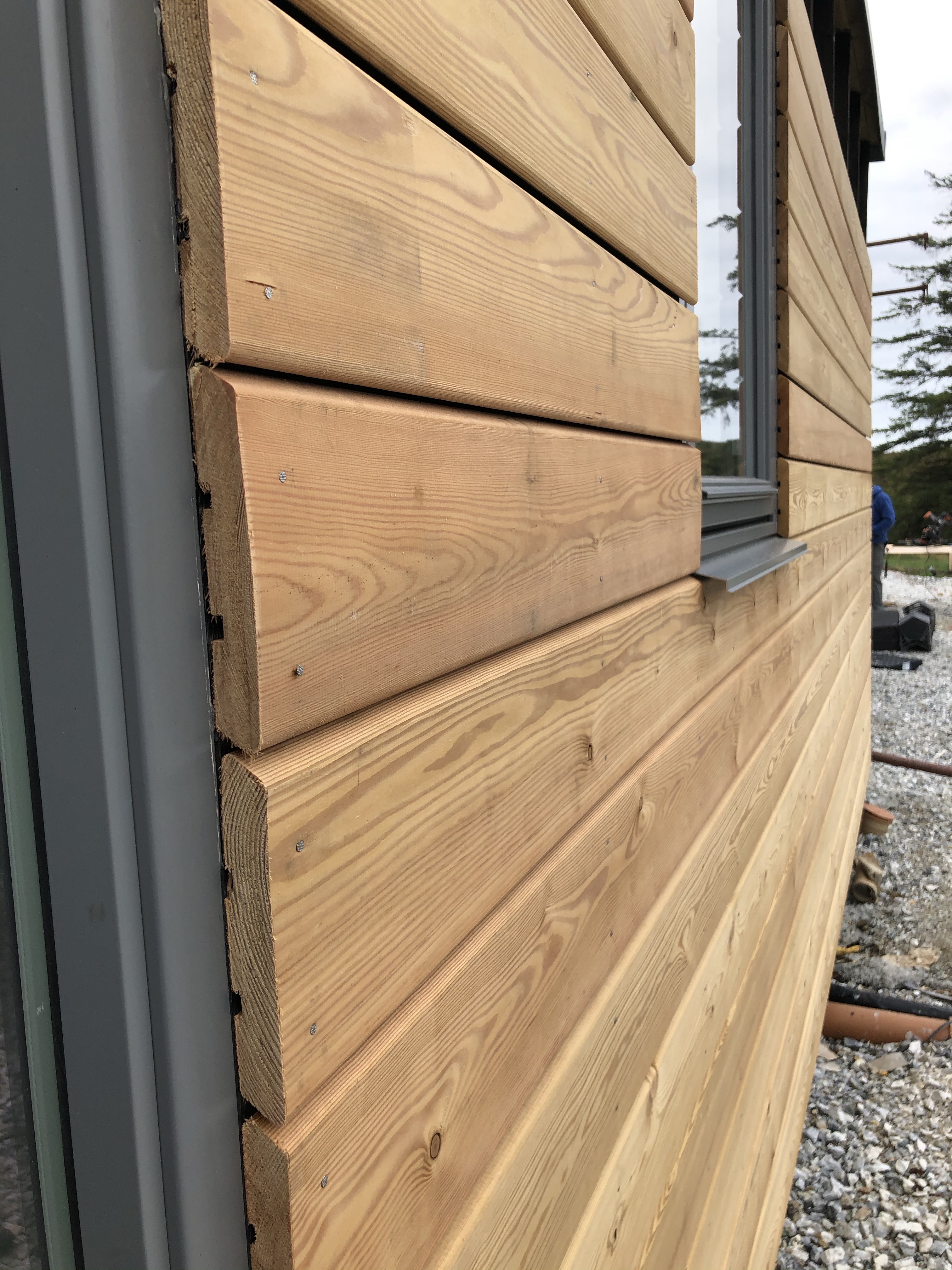
This is Russwood Siberian Larch cladding. We’re really pleased with the quality. It has a good weight, colour and relatively few knots. It’s being secured to the house with stainless steel nails and is going up pretty quickly.

It was a bit of a shock to see the black disappearing, as I was quite taken with the black wall effect. But speaking to the joiner onsite he was saying that the colour will silver and the wood will harden within a couple of years, and that if we aren’t keen on the effect by that stage, that’s the time to consider staining or painting it. I like it, though, even without the weathering.

We think a further two weeks with the builders onsite and they’ll be done with the exterior.

Then it will be over to us at the end of a October to start the interior..

It stops, and it starts again…

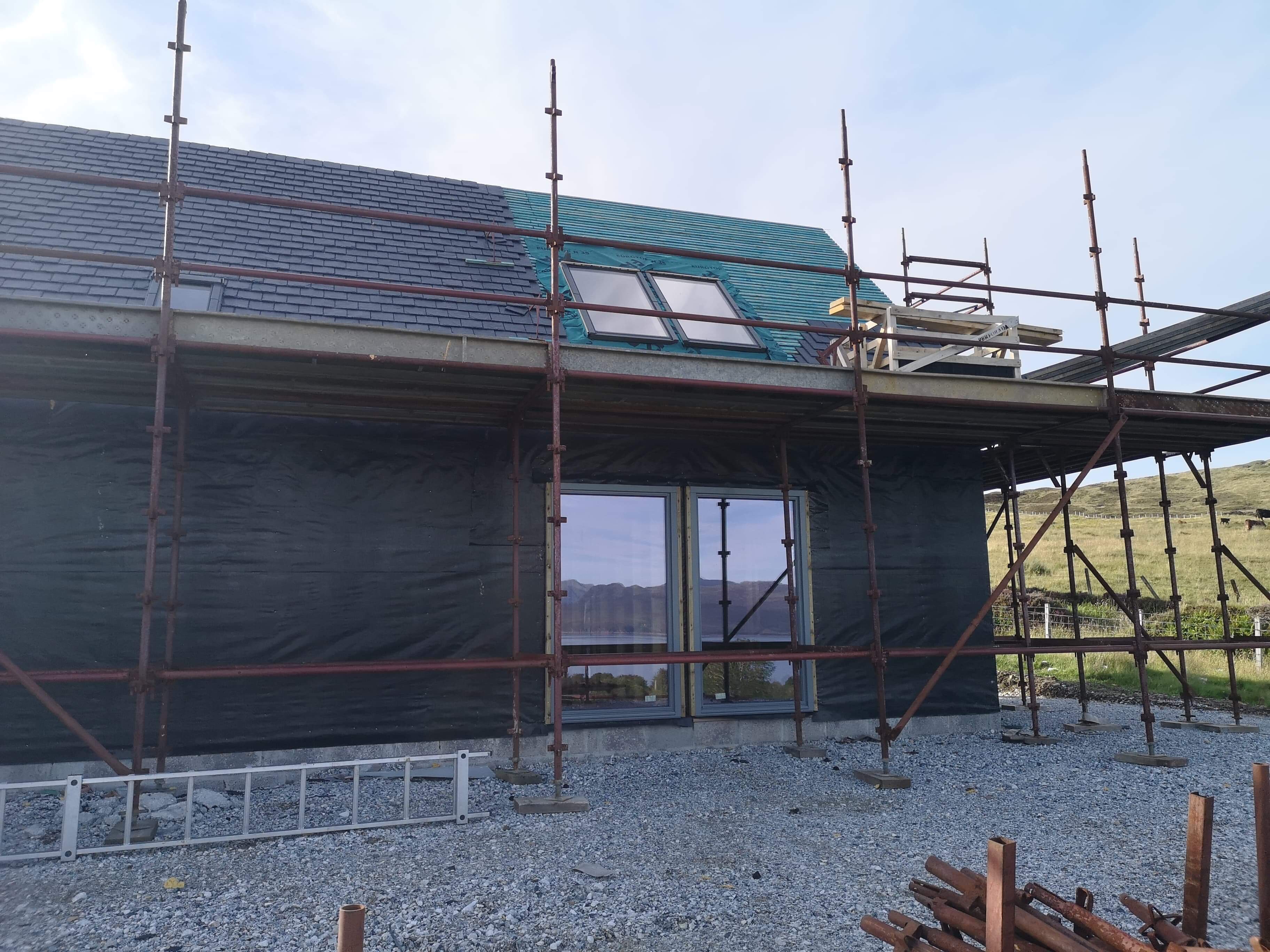
We’ve had a delay in progress on the build for the last few weeks because the roof light window flashings didn’t arrived as planned.

They’re coming from Poland, apparently, where our Fakro windows are manufactured, and they were delayed. As such, the slate laying had to stop, and from the looks of it nothing else could be done on site. The builder tried to start the exterior wall larch cladding to make up time but his man went sick and so progress stalled here too.

The good news is that we heard this week that the flashings have turned up at last, and work has restarted.

I shouldn’t be frustrated by this, but everything was moving so smoothly and so fast that even though I knew that there’d be bumps in the road, I’d sort of got used to the exceptional progress as normal. It wasn’t normal, of course. Problems and delays are the normal state of affairs in any project of this size.

We’re close enough to our actual site visit next month now for this to feel real and for excitement to build at the prospect of seeing our home in the flesh, so to speak. Pictures and videos are great, and have been so welcome, but this will be the first time that we will have been able to see and touch the house. I simply can’t wait.

Even the slightly daunting prospect of the flight to Inverness in these Covid-19 times isn’t enough to stop the anticipation building….

The joy of posi joists

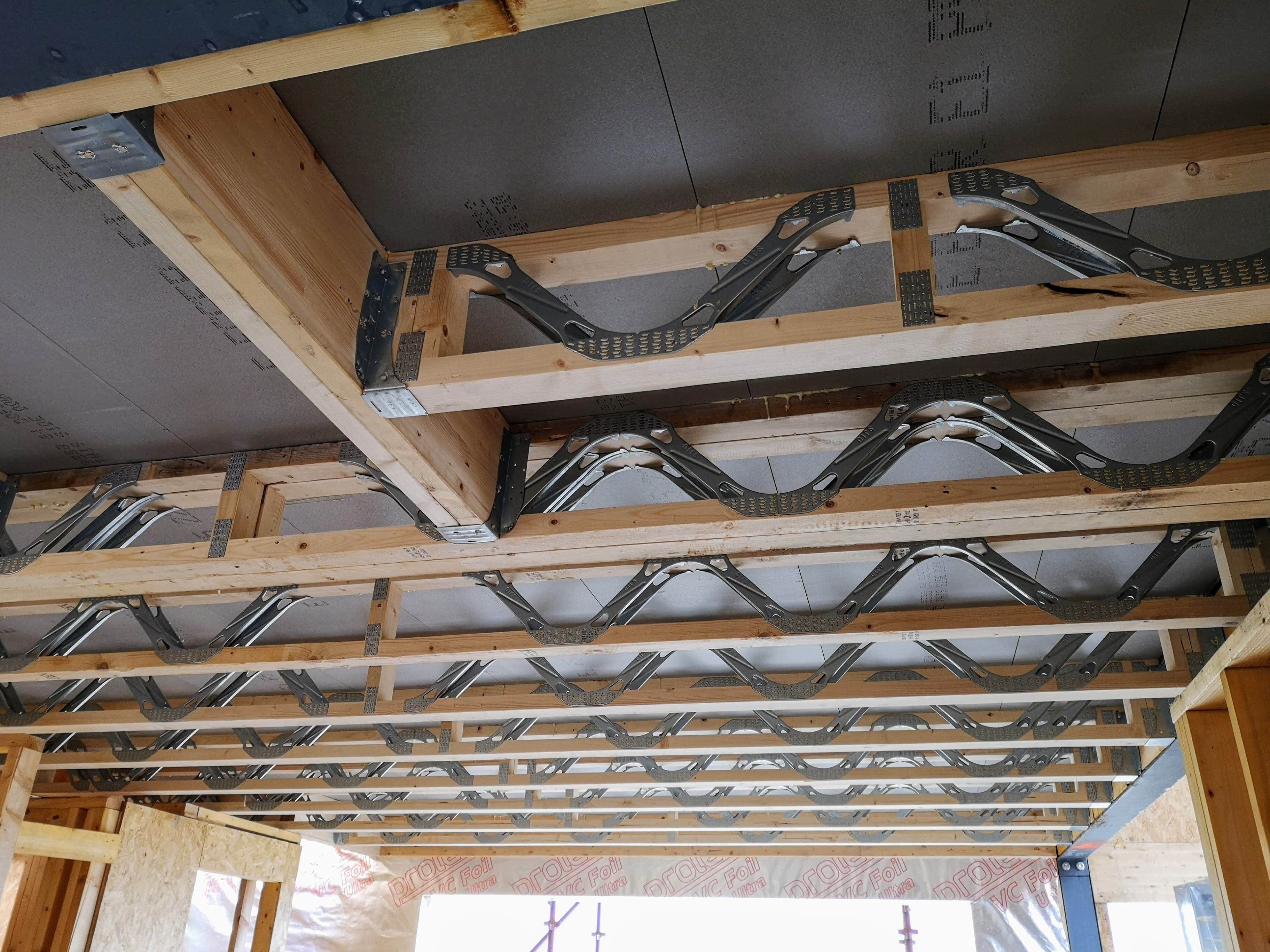
When the photos arrived last week from the site, one of the things that most struck me as a building novice was our joists.

I had never seen joists like this before. To be honest, I’d never given joists much thought. Thankfully our architects had!

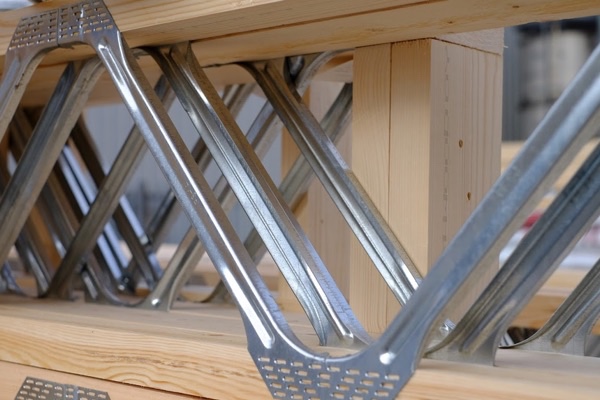
A few minutes research online confirmed that these were web or posi joists, and that they’ve been around for a while.

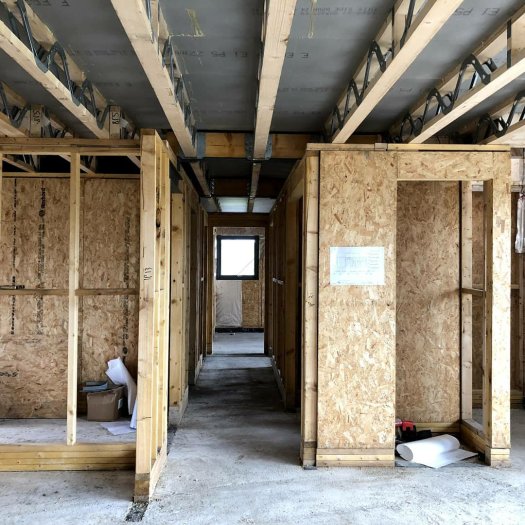
Hugely strong with a steel web reinforcing the timber struts, they enable long spans of floor to be constructed without structural reinforcement such as load bearing walls, and their open nature allows easy installation of services, like MVHR.

MVHR (Mechanical Ventilation and Heat Recovery) systems are a very effective way to reduce the heat energy used in thermally efficient homes. We will be installing MVHR and these joists enable the ducts to be run through the construction very easily.

There is also less movement in these joists than with traditional timber, meaning more solidity to floors, less creaking and better sound insulation.

The more I read about these joists the more I realise that these were a great inclusion, and yet another element of the build that I’ve been quietly impressed with.

This may look like a traditional island house from the outside once it’s clad in larch and its roof has been slated, but its bones will be made up from the latest technologies in building innovation, making this a warm, strong, energy efficient construction which I hope will benefit us for many years to come.