Frankenfold the Manifold

When I see internal walls start to go up, albeit without plaster, I dare to imagine that the end is in sight. It’s definitely starting to look more like a house.
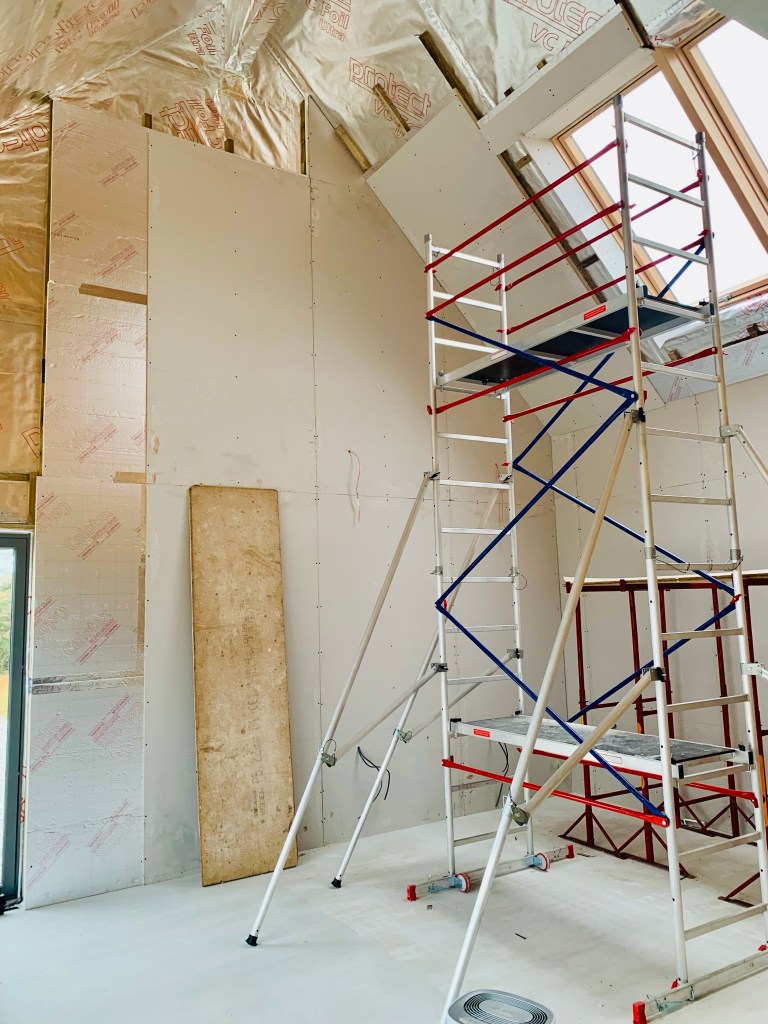
We continue to move slowly towards completion with plaster boarding, wiring and ducting all now happening simultaneously.
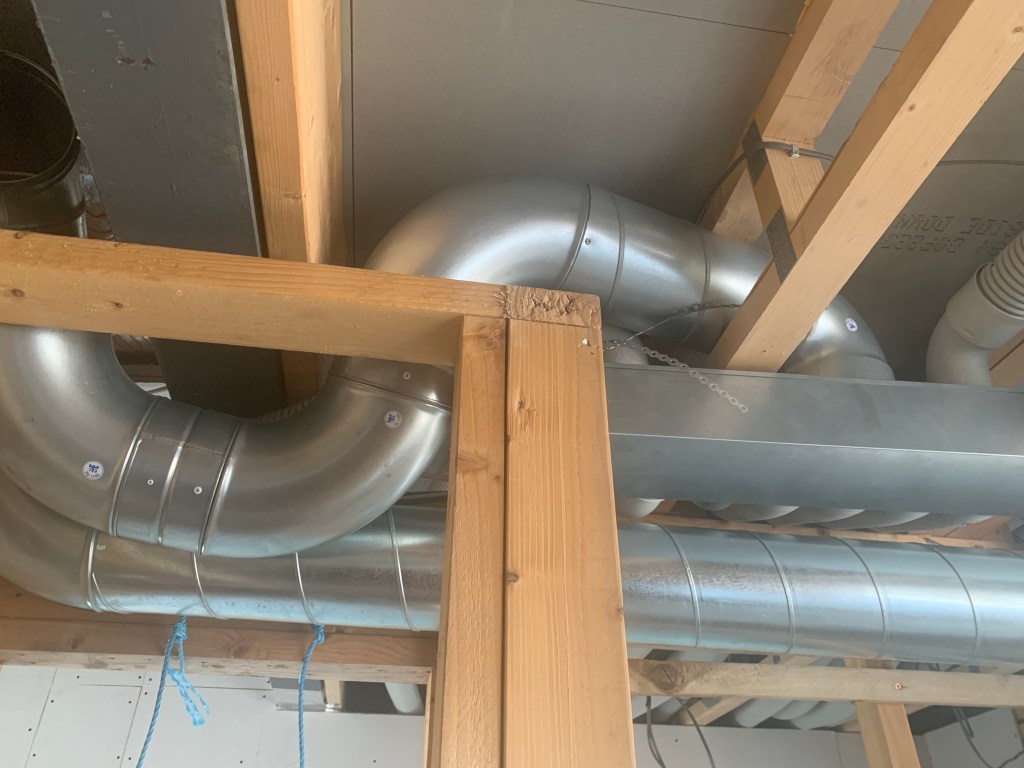
Husband has been fitting the ducting to take the mechanical ventilation pipes (the MVHR system) around the house. These pipes all come together in an interim pit stop over the appliance wall in the kitchen before snaking their way across to the plant room to be connected to their master.
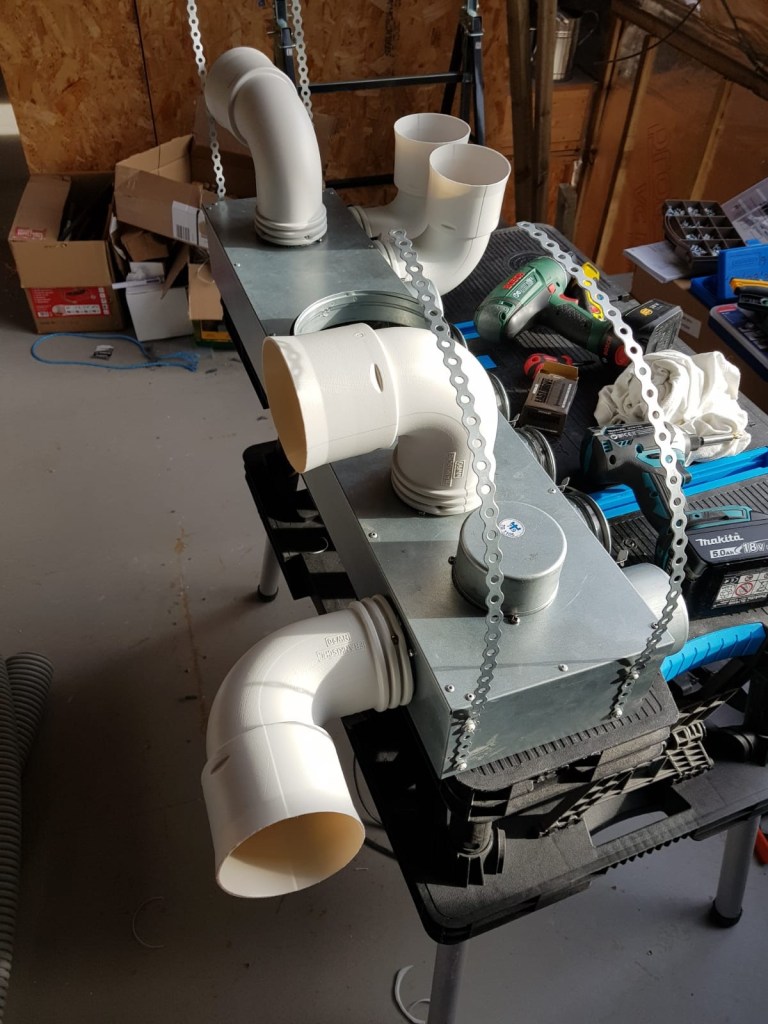
To say that our architects were optimists and highly impractical would be an understatement. Watching husband try to adapt the manifold to fit the pipes into the area allocated to it on the plans was painful.

Speaking to other Hebhome builders it seems that others give up or don’t even try, and instead site the manifold in a cupboard upstairs, but husband was not easily deterred, and some days later Frankenfold was born…
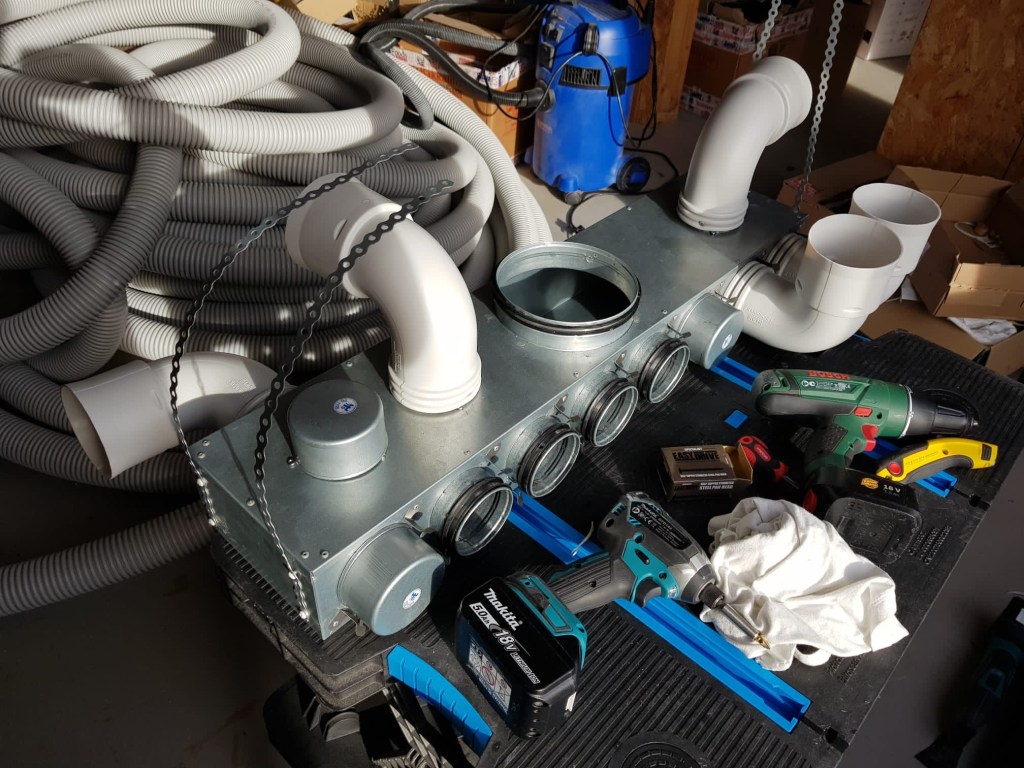
A child born of ingenuity and galvanised steel drainpipe to cap off the unused bits, the manifold was adapted to fit the space. Not pretty, but perfectly functional. Our very own Frankenstein creation.
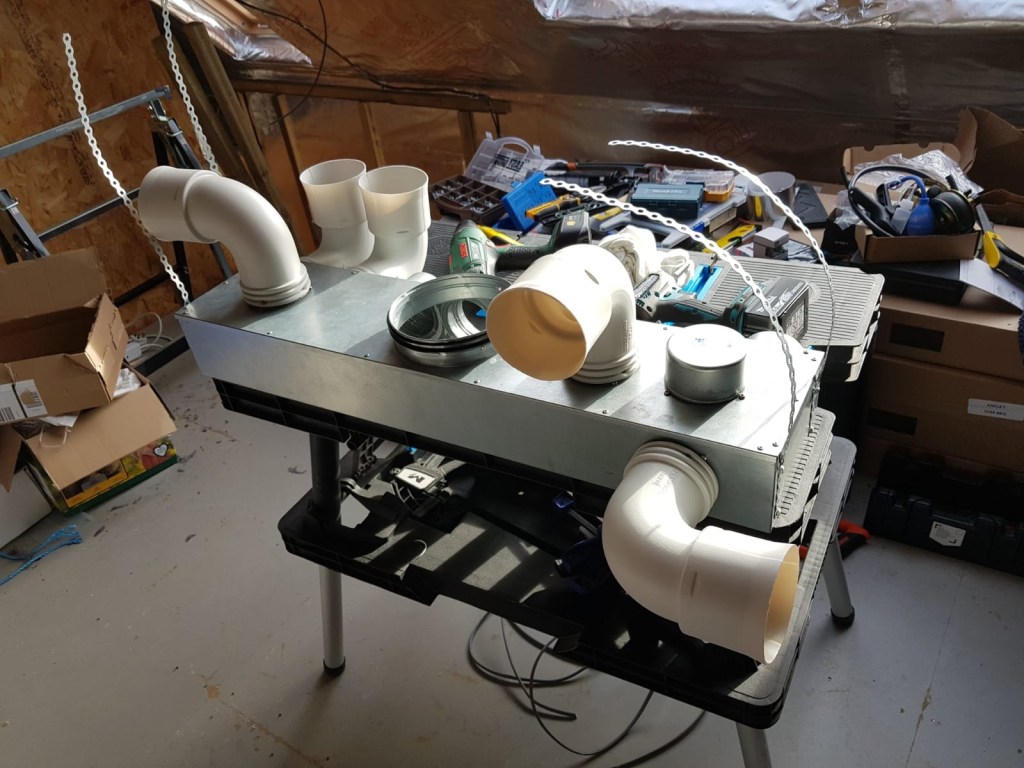
It’s now all in position and connected, looking purposeful.

I’m very proud.
The joy of posi joists

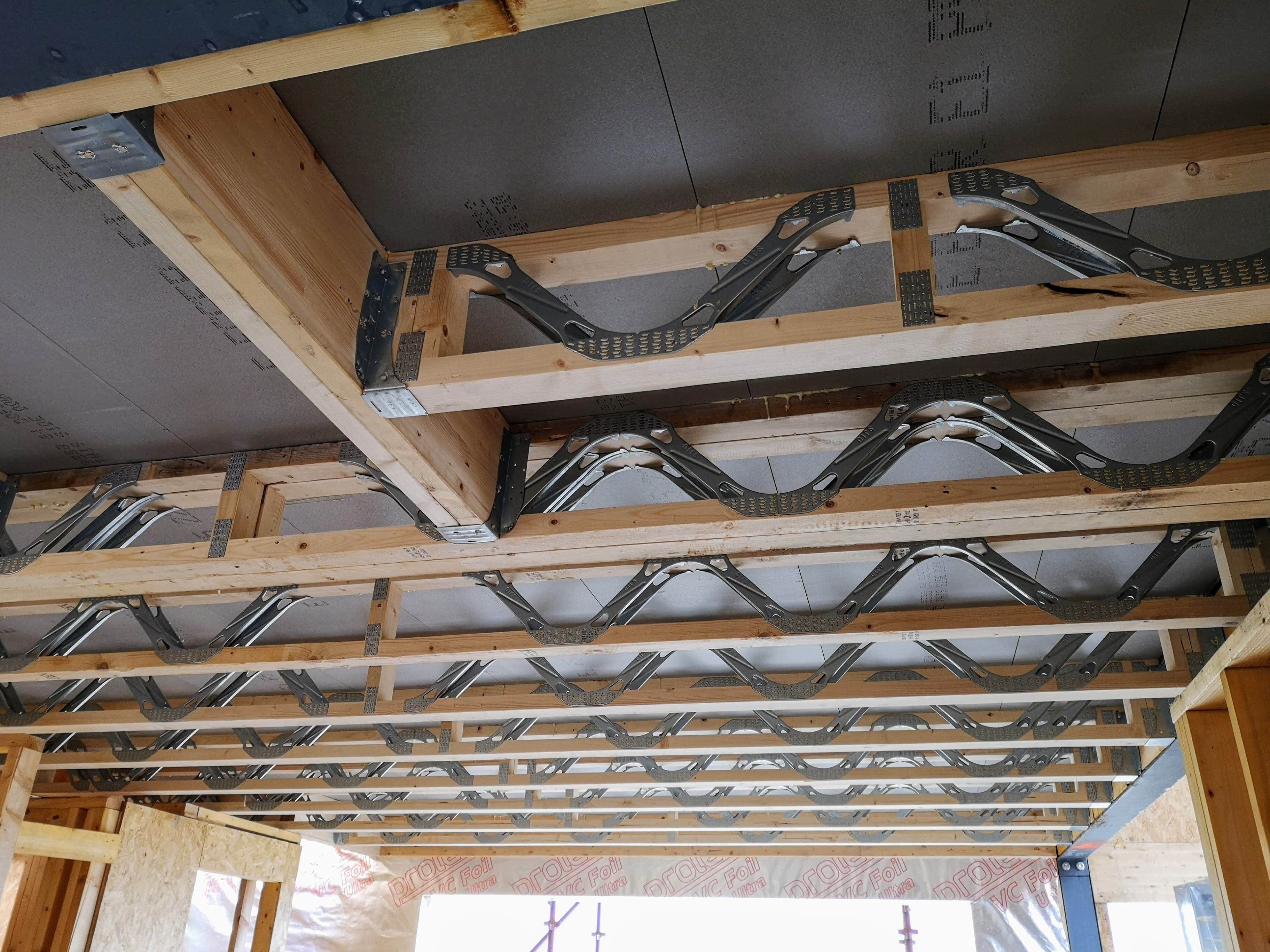
When the photos arrived last week from the site, one of the things that most struck me as a building novice was our joists.

I had never seen joists like this before. To be honest, I’d never given joists much thought. Thankfully our architects had!

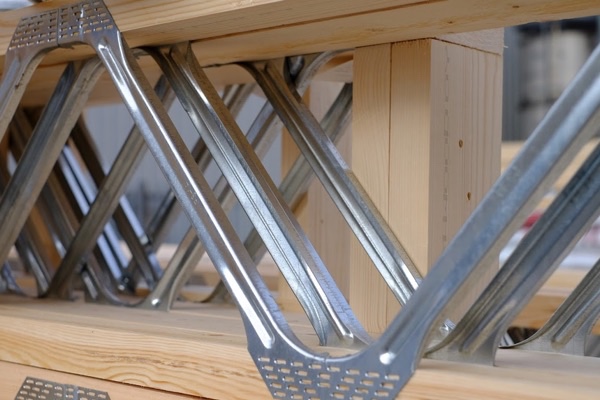
A few minutes research online confirmed that these were web or posi joists, and that they’ve been around for a while.

Hugely strong with a steel web reinforcing the timber struts, they enable long spans of floor to be constructed without structural reinforcement such as load bearing walls, and their open nature allows easy installation of services, like MVHR.

MVHR (Mechanical Ventilation and Heat Recovery) systems are a very effective way to reduce the heat energy used in thermally efficient homes. We will be installing MVHR and these joists enable the ducts to be run through the construction very easily.

There is also less movement in these joists than with traditional timber, meaning more solidity to floors, less creaking and better sound insulation.

The more I read about these joists the more I realise that these were a great inclusion, and yet another element of the build that I’ve been quietly impressed with.

This may look like a traditional island house from the outside once it’s clad in larch and its roof has been slated, but its bones will be made up from the latest technologies in building innovation, making this a warm, strong, energy efficient construction which I hope will benefit us for many years to come.