Autumn cladding progress


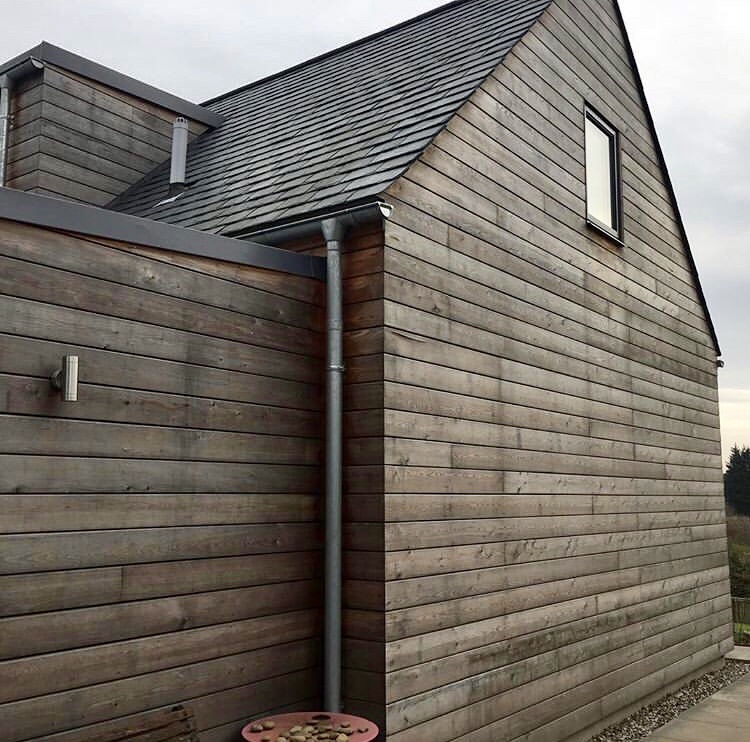
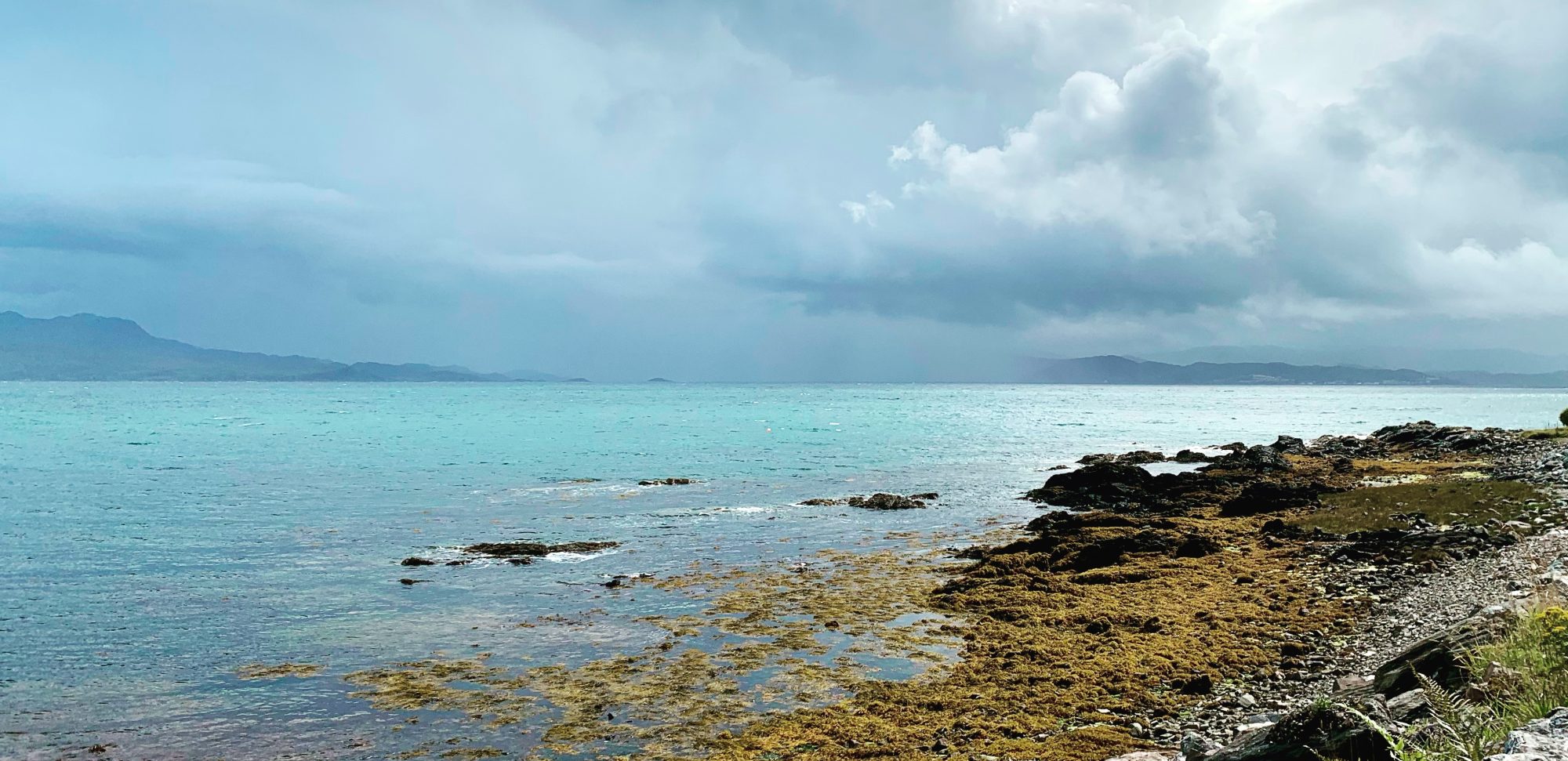
Pictures taken on a blustery, rainy autumn day last week on the island. The first frosts were a few nights ago, so autumn is definitely well underway.

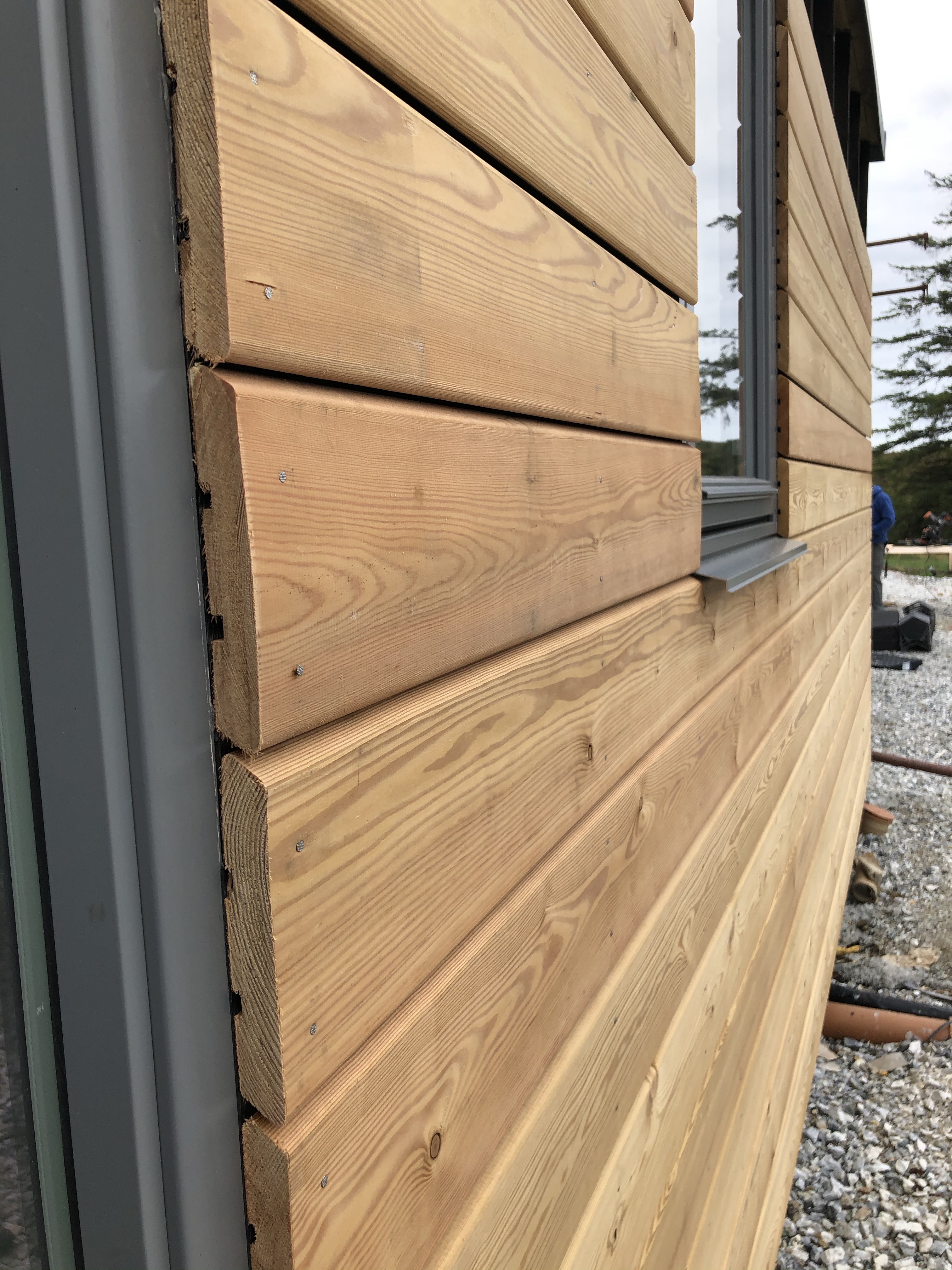
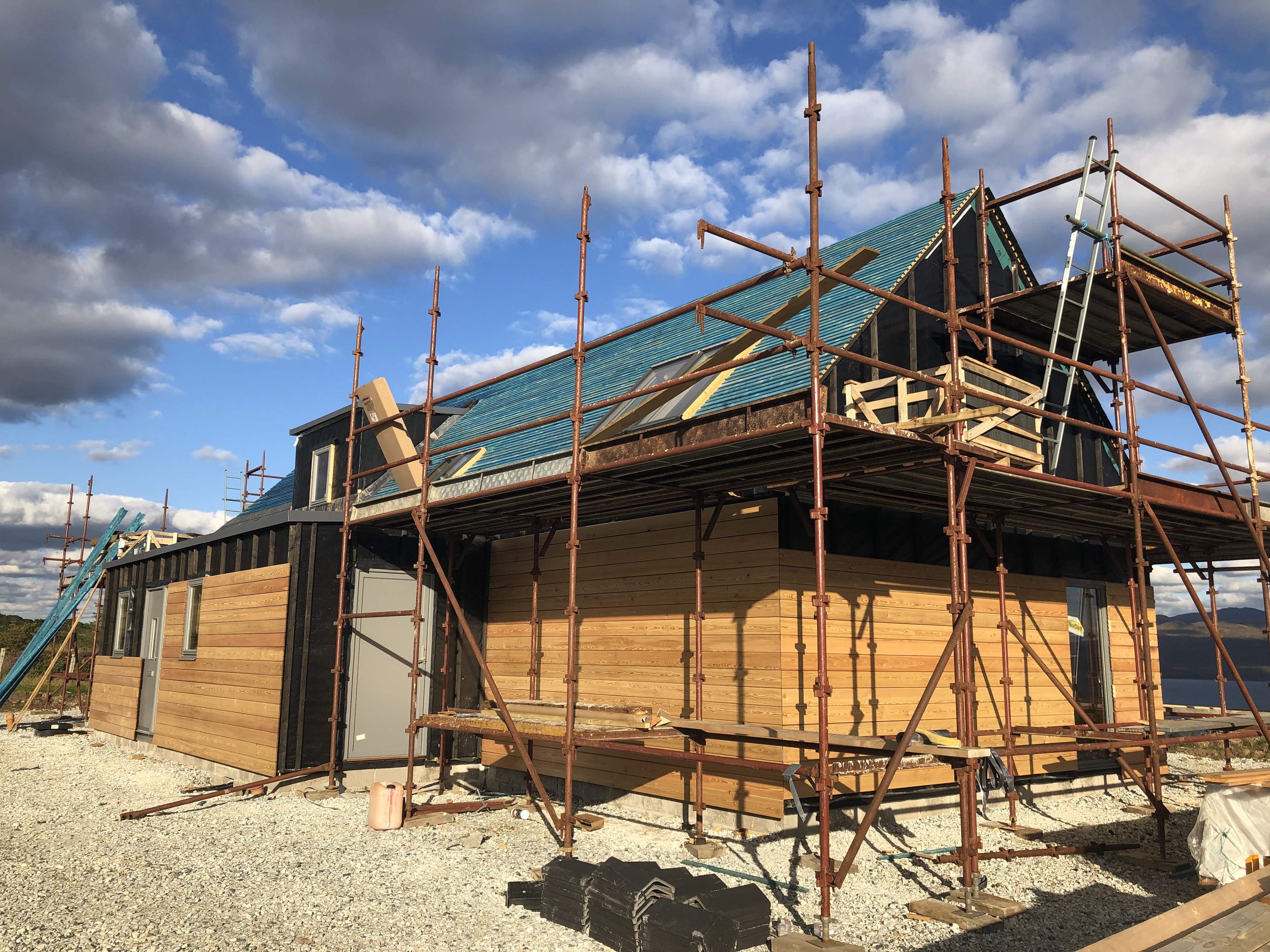
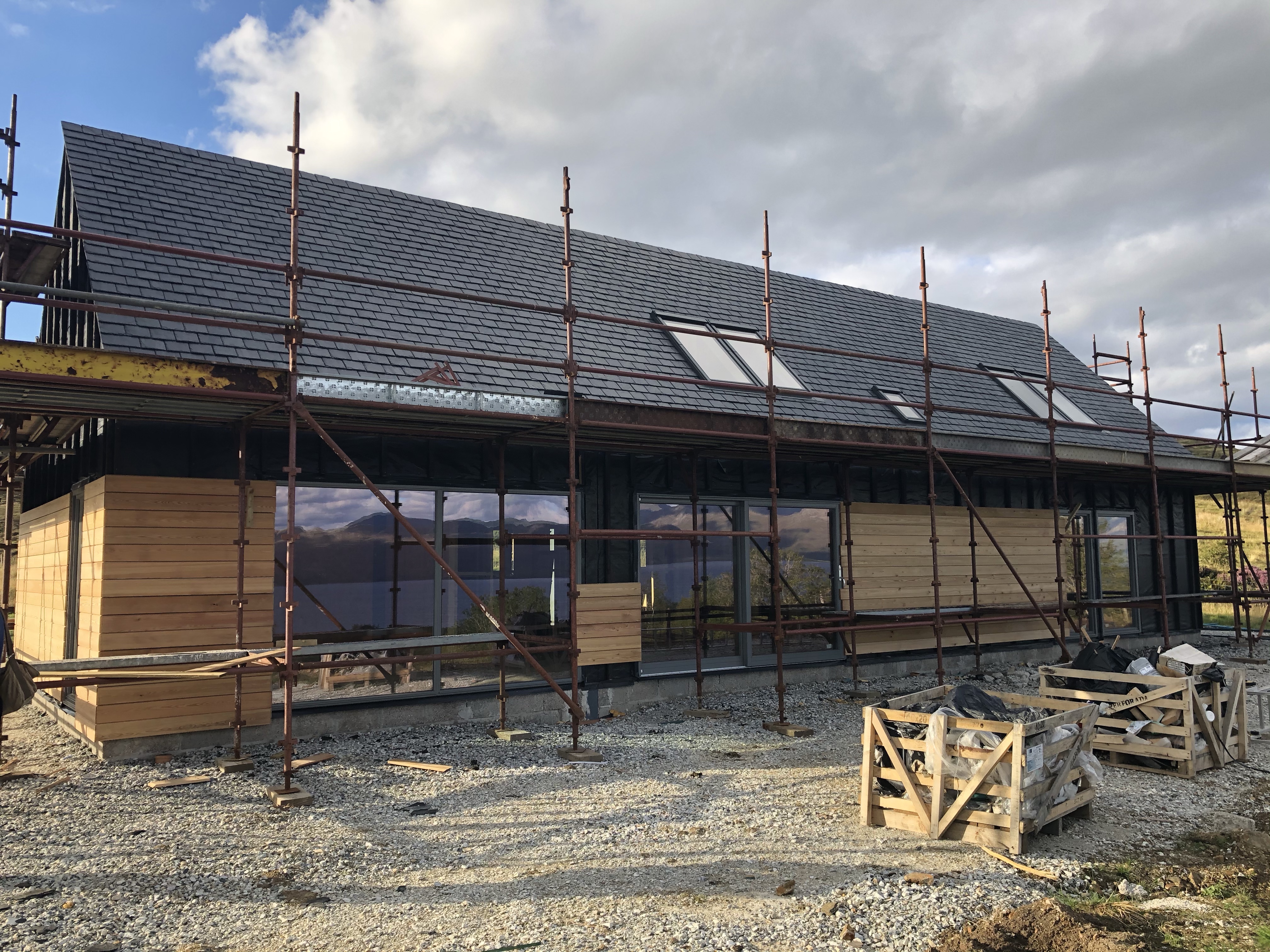
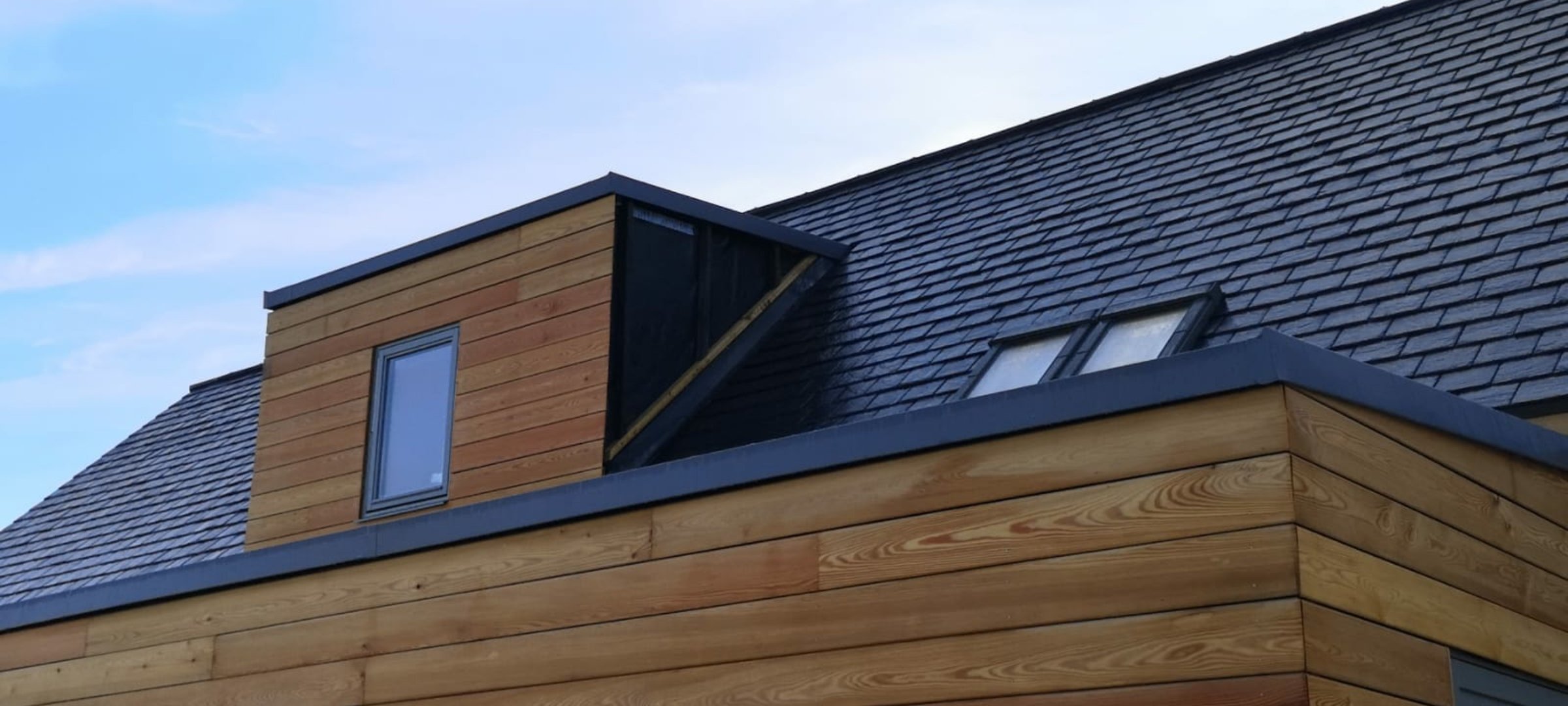
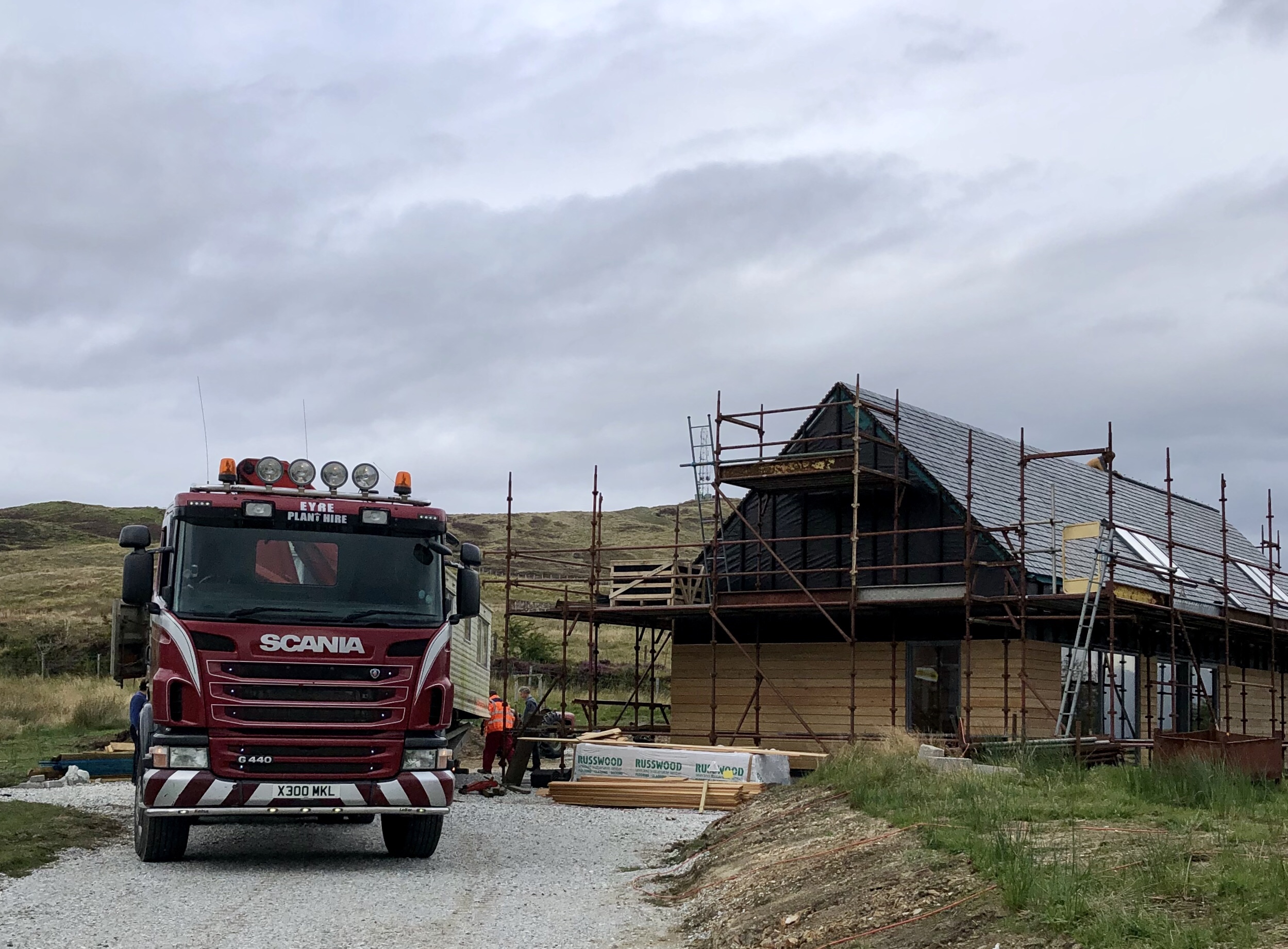
The larch cladding is nearly complete now. There seem to be a few bits left around the rear dormer bathroom window that have yet to be finished, but the scaffolding is down and we’re hoping that these remaining areas won’t take long.

We’re also still waiting for the water to be connected.

What’s needed before we can get approval to connect is a small value, simple return valve, but it seems that obtaining one and getting a plumber to fit it is holding everything up. It’s frustrating at this stage with just weeks to go until we will be living on site. We can’t live for long without piped water to the caravan, and with no date in hand for this to be done it’s a worry on a very long list of things to think about. It will happen.


I can’t wait for the larch to weather. It looks strangely stark in the landscape at the moment in its raw colour, and I much prefer the muted grey tones of weathered wood.

We have neighbours in a nearby  village on the island who have also just built a larch clad home and who are a few months ahead of us in terms of build progress. Theirs is silvering already, so I’m hoping ours will soften too very soon.
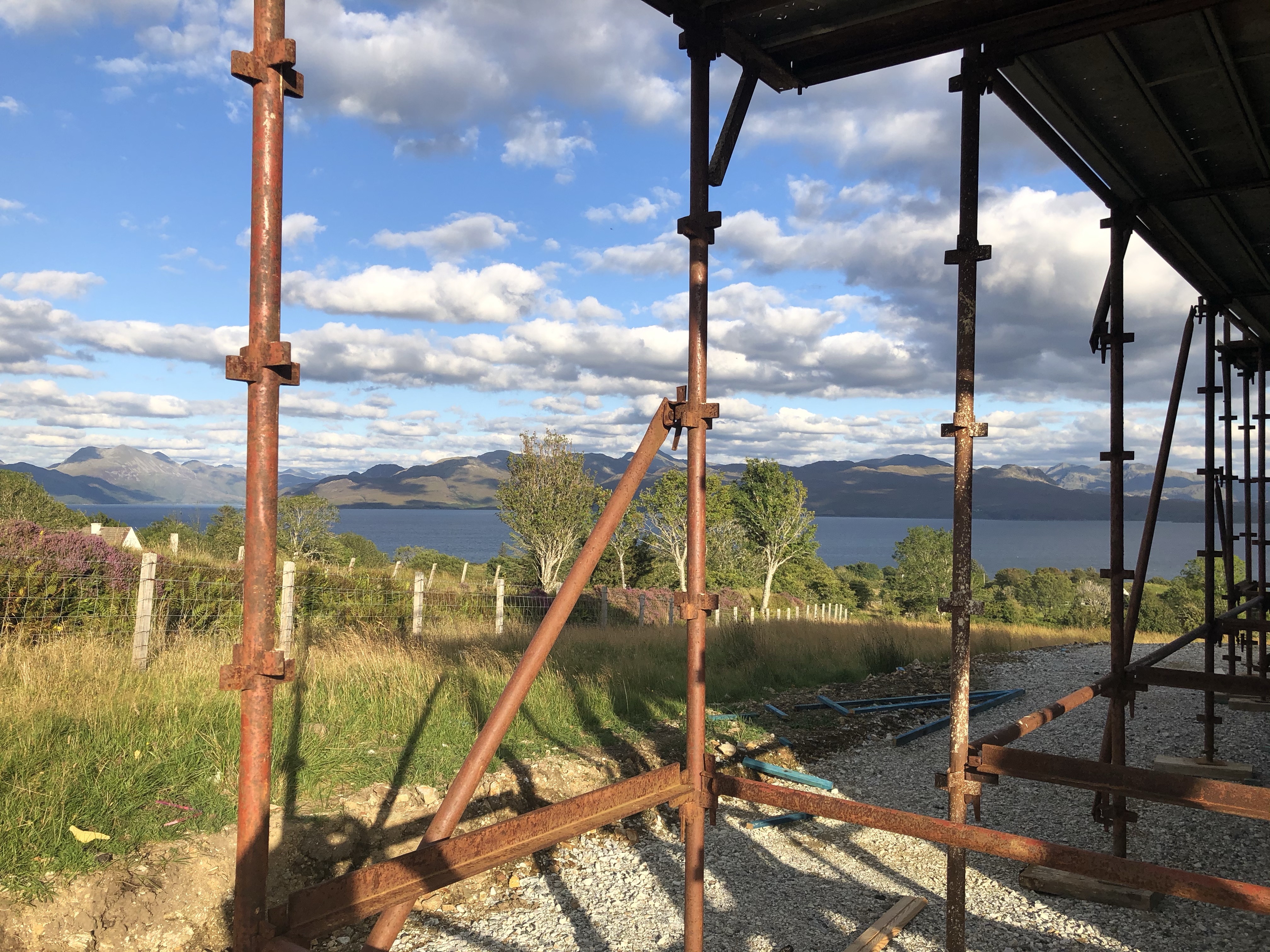
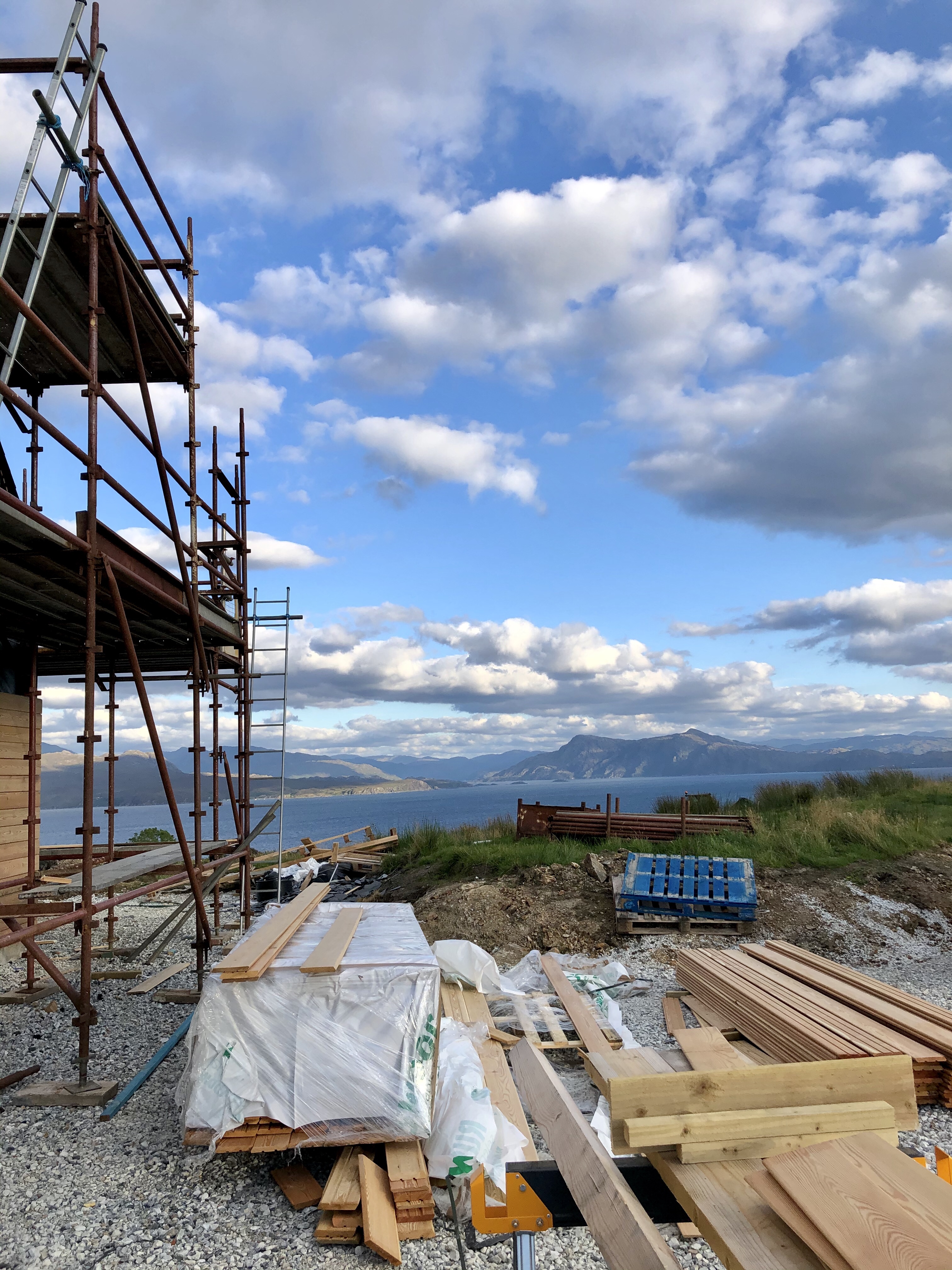
Static Adventures

We had a busy three days on the island checking the progress on site, talking to the builders, getting the static caravan in place and meeting a few neighbours in a socially distanced manner. It was good.

We came home tired but happy.

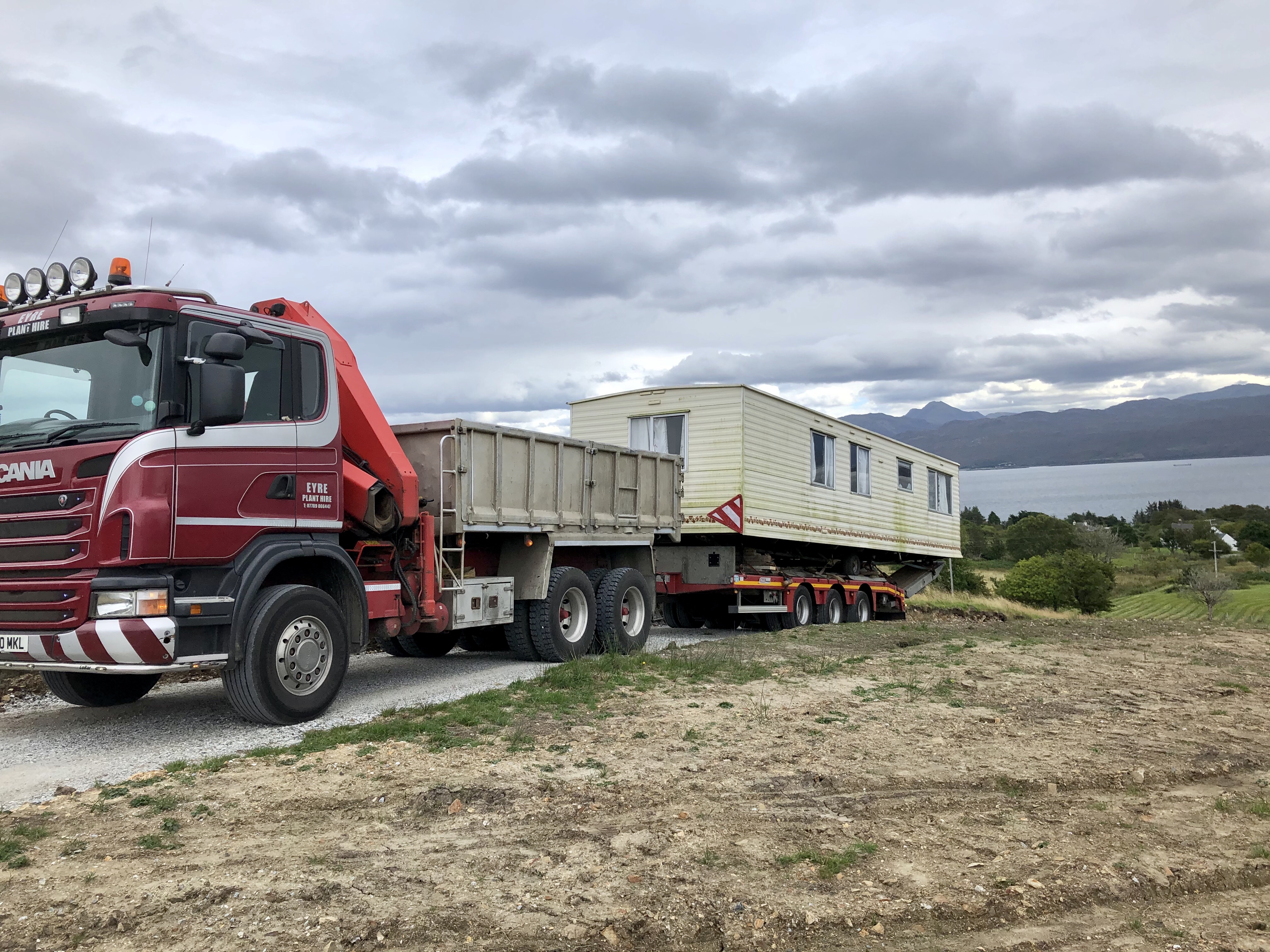
The caravan arrived on Tuesday. Watching from the top of the croft I could see that the lorry transporting it had got part the way up the steep access road, but was losing traction on the hardcore surface of the track. It tried a few times, but rolled back in each instance. My heart sank for a few moments thinking that all our plans would come to nothing.

Luckily for us there was still a digger on the croft, and one of our enterprising builders used a tow rope to connect it to the front of the lorry and reversing, dragged it up the hill over the steep part of the track. Relief was not the word!

With help from a kind neighbour Donnie and his tractor, the static was manoevered into place behind the house, where we hoped it would benefit from some shelter from the prevailing South Westerlies.

It’s really exposed to the elements at the top of the croft there. There was a stiff 40km per hour breeze blowing on the day that we moved it, so we could guess what it would feel like in the more typical winter gales of 70-90km per hour….

Four one tonne bags of hardcore are being delivered to site today and friends have kindly arranged to strap the caravan down to them with lorry straps to anchor it until we get to site again at the end of October.

It needs proper stabilising on a base, some steps, a lick of paint, some small internal repairs and a good airing, but those things will have to wait until we’re there permanently now. Soon.

The builders have done a good job, and we were really pleased with the quality of the work. The cladding looks great and should be finished in the next week. The roof slating completed yesterday.

A few more weeks and the external elements of the build will be complete ready to hand over to us for the rest.

The cladding starts

We’re up at the build site and it’s amazing to see it for real rather than just via photos. It’s so exciting! Last time we were here this was all a muddy hillside on the croft.

The larch cladding has started. We were up on site as they were working on it, and even outside with a strong Skye breeze blowing away from me I could smell the lovely, resinous scent of the wood as they were cutting it.

It takes me straight back to years of my childhood when we used to picnic in the pine woods of what was then West Germany. That scent from cut pine trees was everywhere.

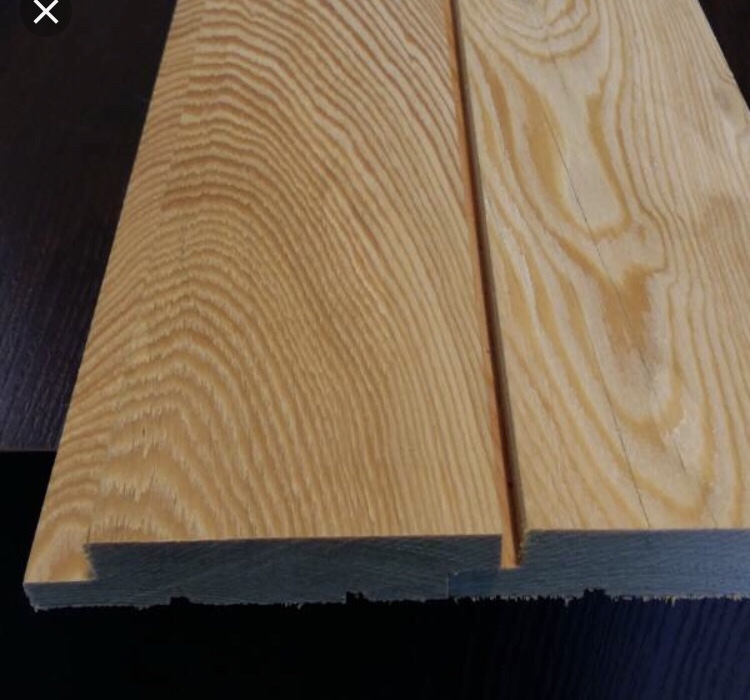
This is Russwood Siberian Larch cladding. We’re really pleased with the quality. It has a good weight, colour and relatively few knots. It’s being secured to the house with stainless steel nails and is going up pretty quickly.

It was a bit of a shock to see the black disappearing, as I was quite taken with the black wall effect. But speaking to the joiner onsite he was saying that the colour will silver and the wood will harden within a couple of years, and that if we aren’t keen on the effect by that stage, that’s the time to consider staining or painting it. I like it, though, even without the weathering.

We think a further two weeks with the builders onsite and they’ll be done with the exterior.

Then it will be over to us at the end of a October to start the interior..

Building Warrant Approved

Building Warrant came through a few days before Christmas. It was a great start to the festivities!

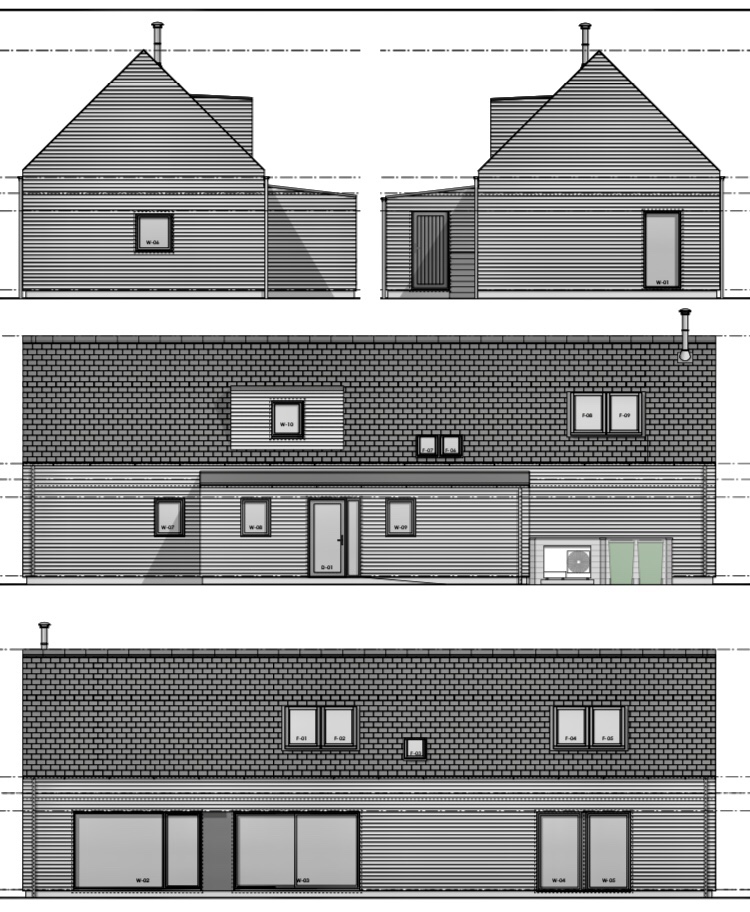
This is what we are building. It’s a 1.5 storey larch clad eco longhouse with traditional slate roof.

The front door is actually at the back of the building, nestled into the hill at the back of the croft. The picture windows are at the front, overlooking the Sound of Sleat, and hopefully providing much light.

Once the architects are back after the Christmas break we’ll start looking at build schedules. Can’t wait!

Building Warrant Submitted!


At long last, what feels like a major milestone has been achieved – the building warrant pack is complete and has been submitted to the Highland Council for review and approval!

This has been so much more of an effort than we ever imagined.

Every SIP panel, roof tile, larch board, power outlet, plug socket, door material, light switch and window frame has had to be specified, documented and checked.

We’ve had the SAP assessment completed by the Energy Consultant and we’re very pleased with the energy rating for the house. It should be snug and cheap to heat, with an Air Source Heat Pump, underfloor heating and tons of insulation.

We’ve had our challenges with the access road. The gradient of the croft leading up to the building plot is pretty steep, and the engineer has had to wind the road around the plot much more than we’d originally thought to keep the gradient of the road useable and within building regs. That means more road, more excavation and more expense, but it has to be done.

Now we sit back and wait, hoping for a smooth approvals process so that we can finally start looking at the build itself next Spring.

We are creeping forwards! Slowly and painfully, but progress is being made…


Neo-traditional Scottish longhouse….

According to the design statement from the architects, we’re building a “subtle neo-traditional Scottish dwelling that alludes strongly to the longhouse design whilst incorporating a modern, energy efficient interior”.
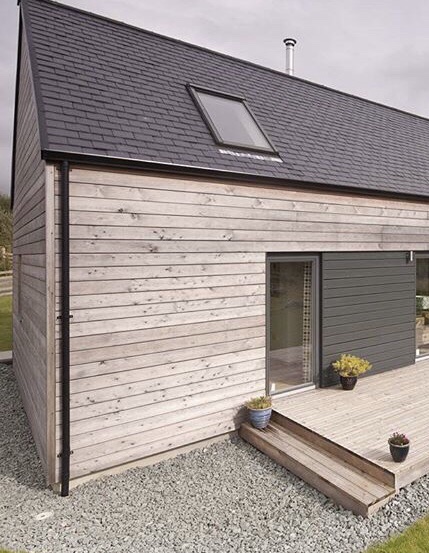
The phrase neo-traditional had us both hooting with laughter. Honestly, the marketing speak that gets rolled out in the interest of persuading planning departments!

It will be a very simple, slate roofed, larch clad house.

It should sit low and silver slowly and quietly into the landscape amongst the trees. It will be well insulated, snug and energy efficient.

We’re running final checks on the planning permission pack this weekend, then off it will go into the laps of the planning department of the Highland Council to seek it’s fortune.

We have everything crossed that it is accepted. Another milestone reached on our journey…

Longhouse design

The time approaches for us to design our house and apply for planning permission to build on the decrofted part of the land.

There is already outline planning permission granted for a one and a half storey house, but full planning permission and building warrants will be needed next.

We’ve been working with Dualchas, Skye based architects. They design homes based on the original black houses of the Hebrides, houses that are long and low, that tuck into the hillsides, and are built to cope with the high winds and rain.

It became apparent quite quickly that by the time we factored in the groundworks, a long access road, a sewerage plant and everything else, that this was going to be an expensive exercise! A custom designed house with everything that we wanted was starting to look like a stretch too far.

Dualchas also however have a series of SIP (structured insulated panel) kit homes that contain all the best elements of their design – big volumes in the living areas, lots of light, great energy efficiency, remarkable build strength – and which prove marginally less expensive for what we want.

Our wish list:

*For the house to be super efficient in terms of energy consumption and to be cost-effective to run.

*To have big windows on the south side for solar gain and to make the most of the views.

*To sit quietly and naturally in the landscape, respecting the local vernacular.

*To be built of natural materials (slate, wood, stone).

*To have enough space for a utility room, a boot room and a larder for food storage and preparation.

*To have generous living space, with room for our massive book collection.

We have lots of work to do now to try and balance our budget with our desires and find a compromise that works for us and the land.

Let the balancing act begin….☺️

Larch clad or render?

Missives are slowly exchanging between the solicitors, and whilst we wait our thoughts have turned towards who we will commission to help us build our croft house, and some of the designs that we might be interested in (and could afford).

Do we go timber frame and traditional block and render, joining the white, low homes dotted across the flanks of the island like small cotton wool balls? Or do we go for larch cladding, which silvers and blends into the landscape with age?

Do we go for a wood burner, underfloor heating, how green can we be with the build, how much space do we need?

Our evenings after work are filled with sewerage treatment options, the relative insulation properties of SIP and timber, and house plans.

Needless to say it’s all much more expensive than we imagined and will take everything we have. But we hold fast to the dream and have a call in with local architects to talk through the possibilities and practicalities. We will design and build a low impact home that will fit into the land and be easy and cosy to live in.

Somehow.