The wet non-summer continues with rain and chilly temperatures closer to autumn.
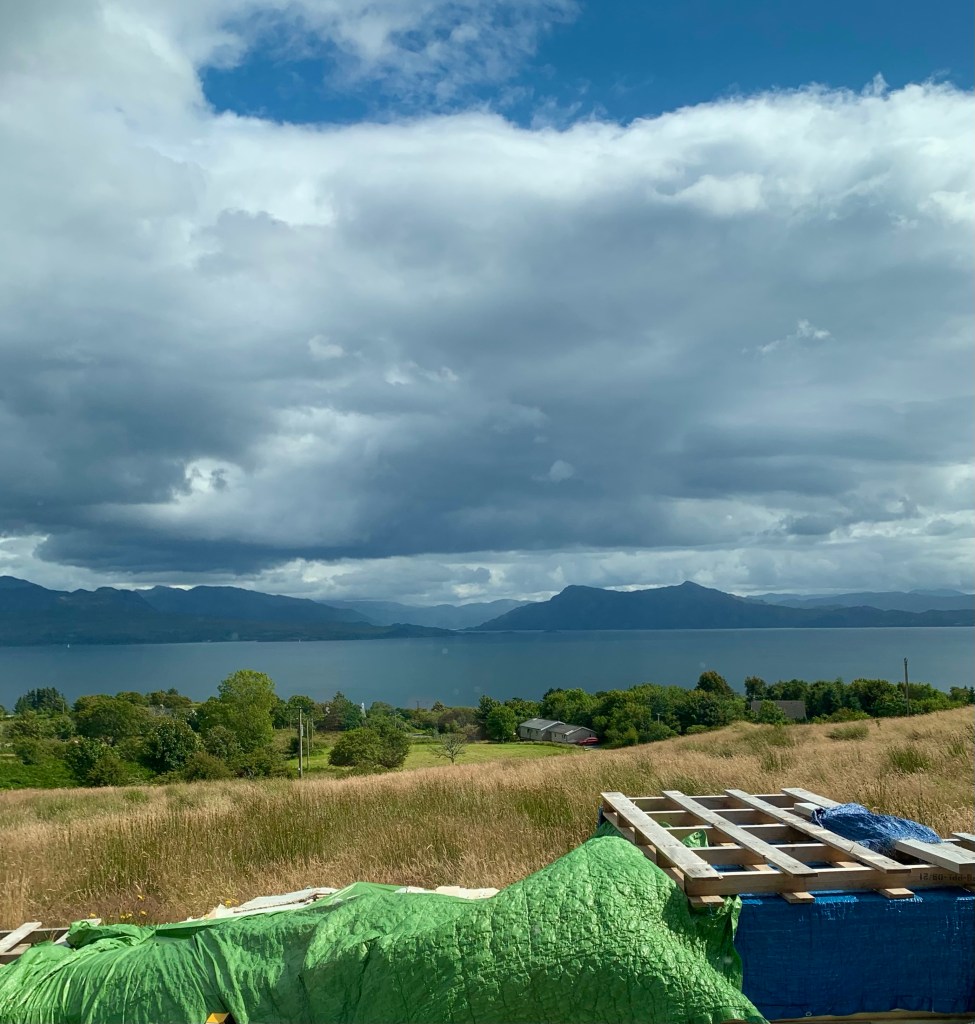
A gap between the rain showers
We’ve had rain just about every day for months now, and I can’t help watching the blazing summer and terrible droughts and water shortages across the rest of the UK and Europe in despair. Whilst we’re drowning. There has to be a better way to share this. Somehow.
Incoming
Whilst I recover from my operation I’ve been reading books, pottering in the polycrub (which at least provides shelter from the rain) and sewing.
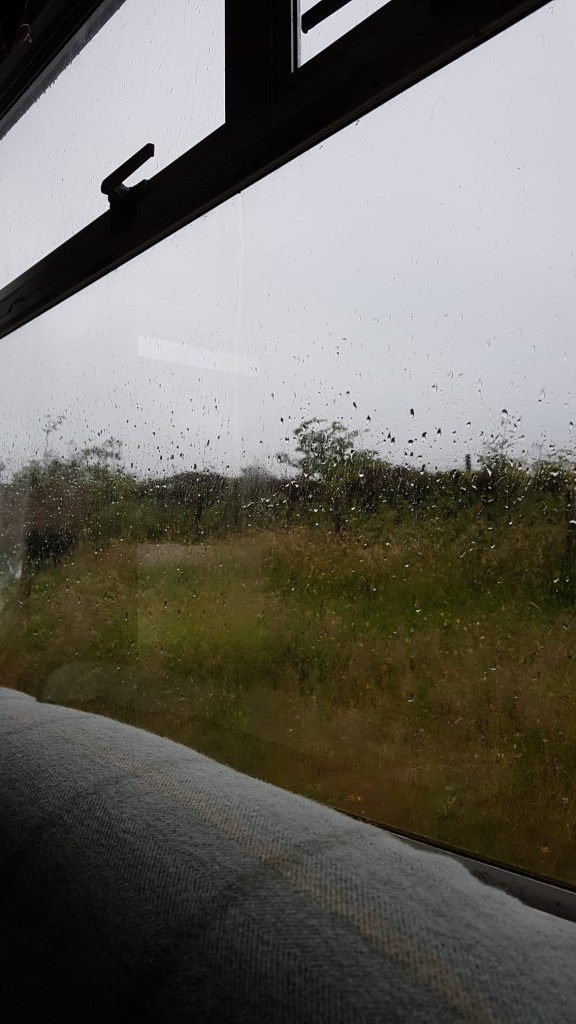
Rainy days
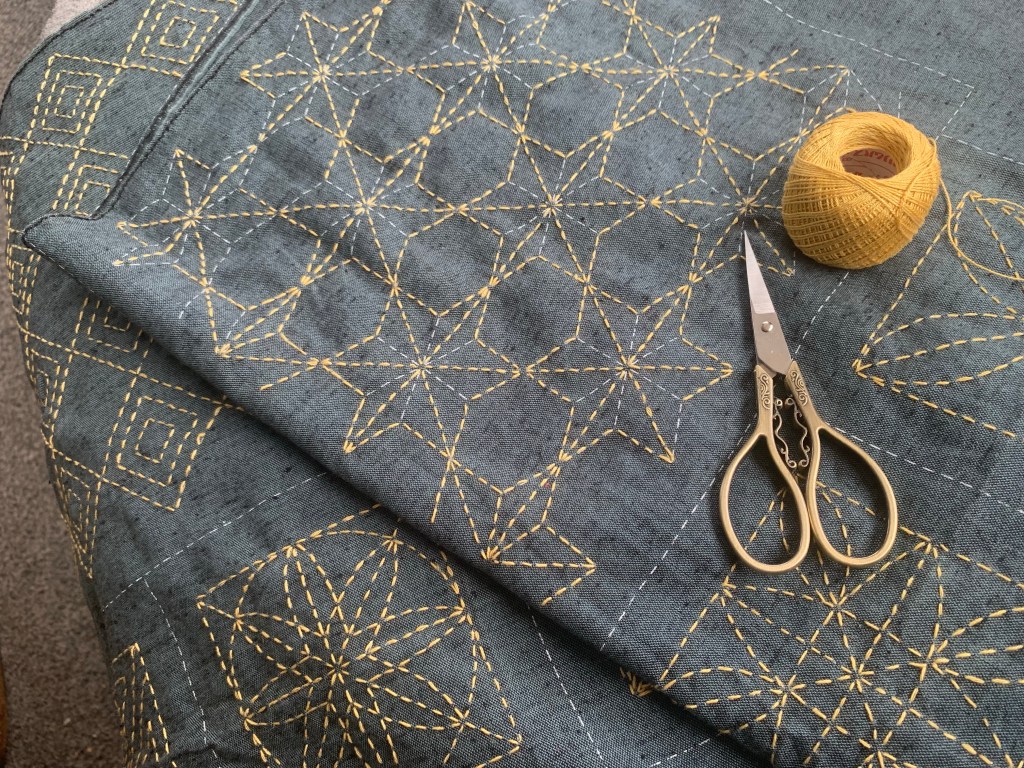
I had a sashiko panel and some threads tucked away in my sewing bag from when we first moved here, so I’ve spent many happy, peaceful hours sewing away.
Sashiko panel
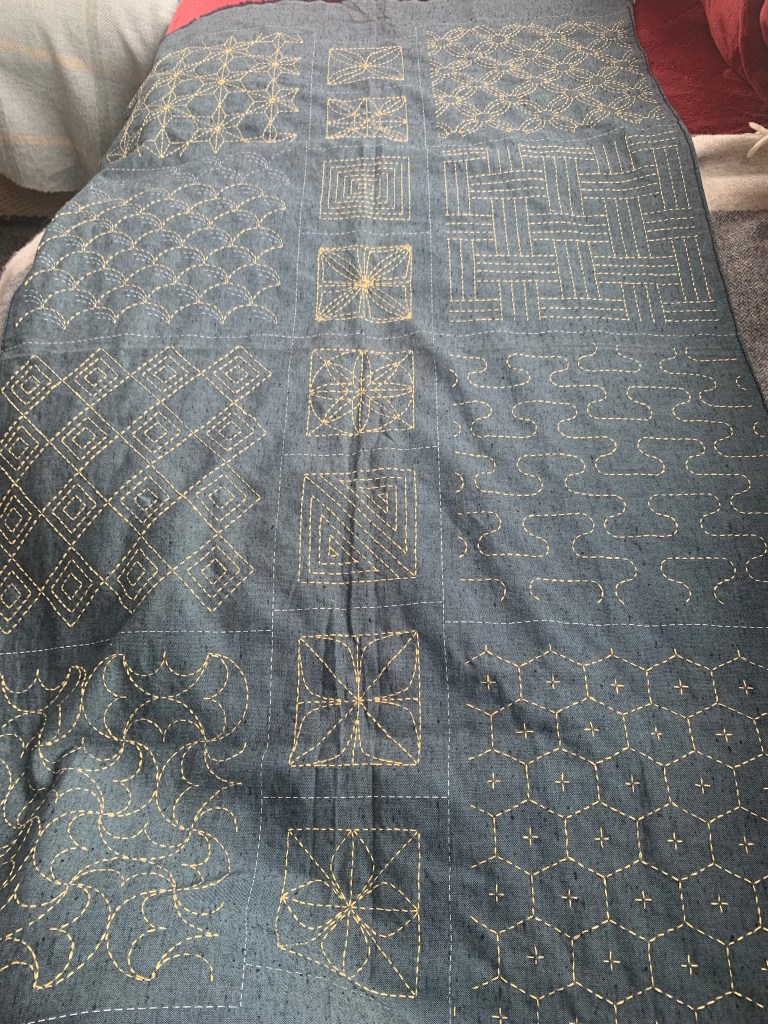
Sashiko is just a running stitch, so it’s repetitive and soothing to do. I’ve finished the main panel now, but need to sew a border and frame to complete it, and to do that I’ll need until we’re in the house and the boxes are unpacked. I’ve got material and a sewing machine in storage that will finish this nicely. This was a progress photo from last week. For now I’ll just pack it away.
Nearly done
The floorboard laying will finish upstairs in the house today, and husband is installing the back-boxes for the sockets in the kitchen this week, so although there’s not much to see, progress still continues. We’re getting there!
Normally the wind on this breezy hillside croft is enough to keep the worst of the Highland Midges at bay.
Midge (much magnified)
Not so this summer. These tiny insects, with the needle-sharp biting teeth of Satan, have been in full swarm on many days recently. It’s midge-geddon out there!
They’re at their worst, it seems, during early mornings or late evenings before the temperatures of the day and the winds rise. We’ve been seeing vast clouds of them in the last month.
Midge swarm in progress
They’re difficult to catch on camera as they’re so imperceptibly small, but once there are enough of them airborne you can start to get a sense of the horror that is a midge swarm.
The only thing to do is to retreat indoors until the swarm passes. And remember to keep your windows closed! They’re dispersed by any wind over 6mph or temperatures that are too high or low, so thankfully it’s not a long wait as we can usually rely on the winds to kick in.
If you must venture outside, keep as covered as possible and use a midge hat complete with netting. We also use natural repellants, such as Smidge, although I’m not sure how effective these really are.
Thank goodness we don’t live in a more sheltered area. There are advantages to being perched on the top of a wind-scoured hill!
We’ve not had much in the way of a summer yet despite us being at the end of July, but the croft and the polycrub continue to feed us.
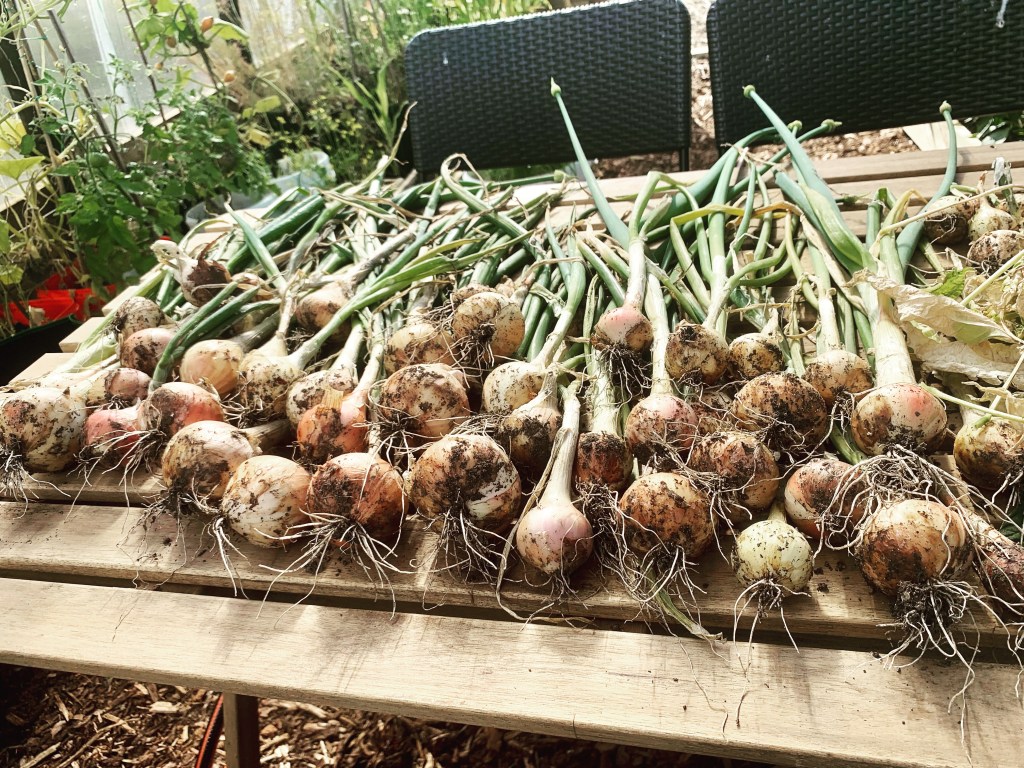
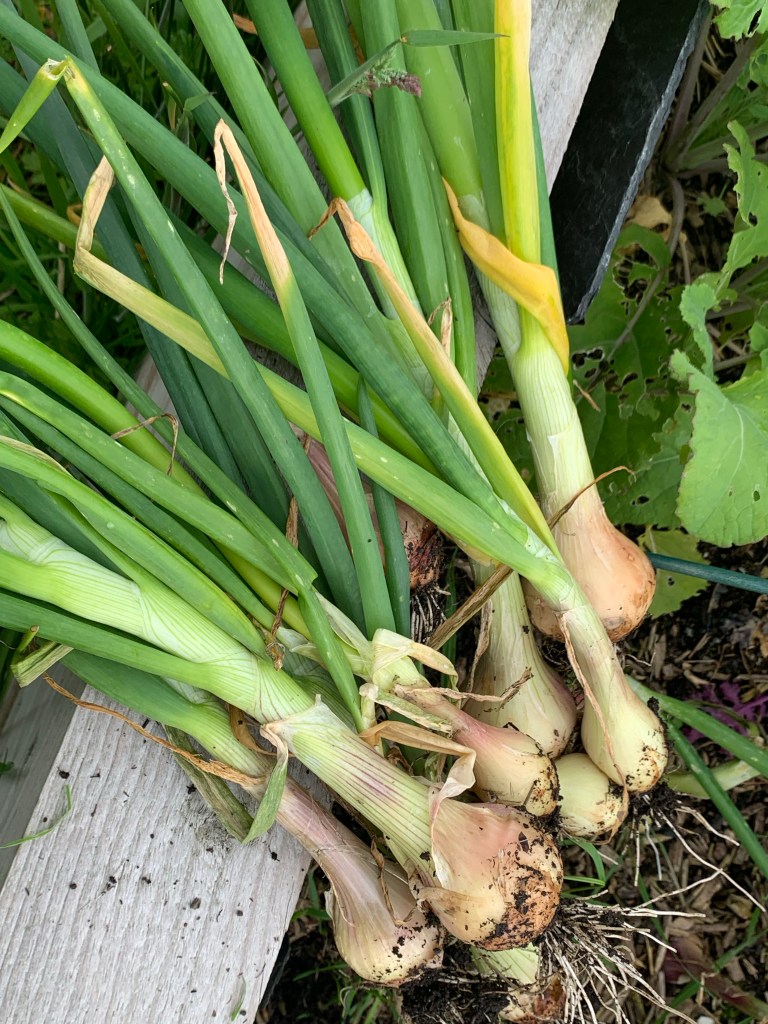
We dug out the rest of the onions yesterday. These are a variety called Keravel Pink, and they’ve produced what I think is quite a respectable harvest.
I chose these as they were the closest I could find to the Roscoff onions that I used to love when I lived in France. They’re an onion with a slightly blush colour, and sweet, firm flesh. They’re now hung up to dry, ready for use.
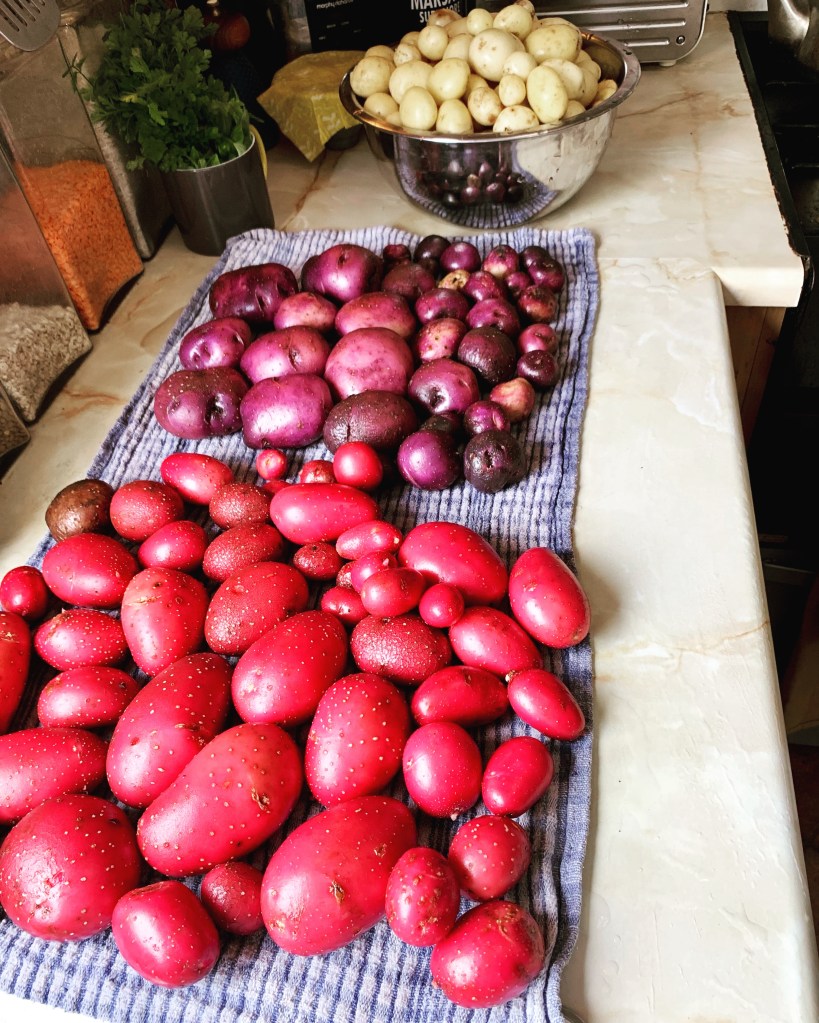
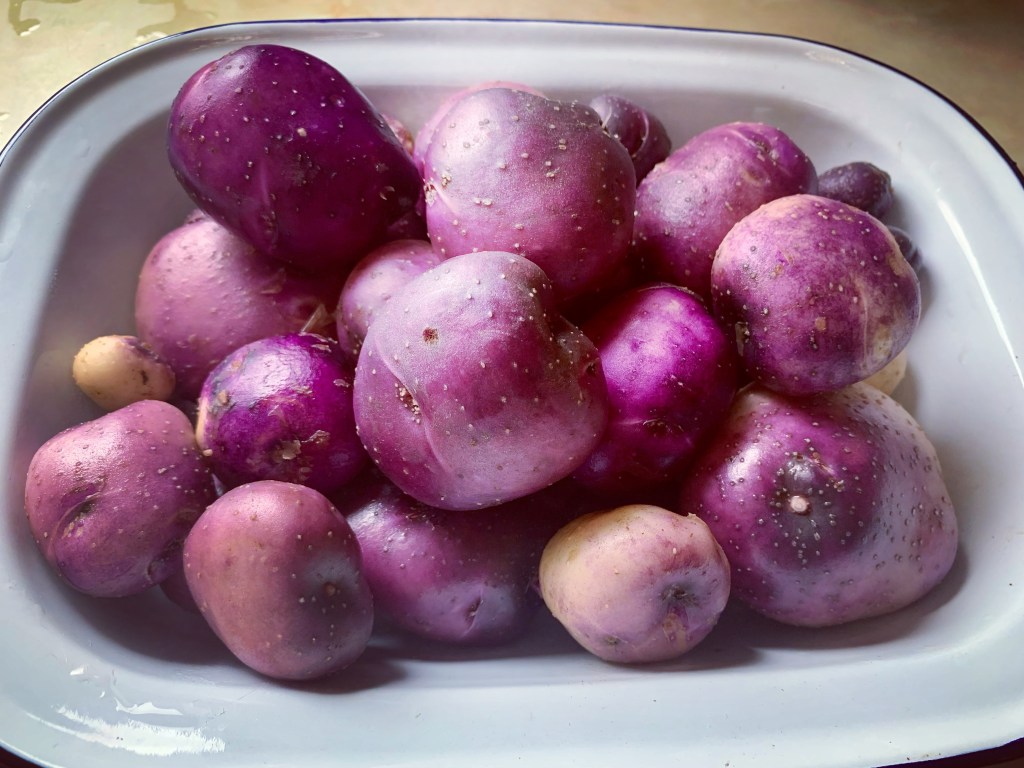
Husband also dug the rest of the potatoes as we were starting to detect slug – and believe it or not, deer damage. We’ve had a few meals already from them. It’s a smaller crop than last year, probably caused by the cold, wet weather and they could have done with a bit longer in the ground, but they’re a reasonable size. To be honest, we like ‘em small and sweet.
I planted Edzell Blue and Casablanca varieties from Scottish seed potatoes and Red Rooster from a bag of sprouted supermarket potatoes. The supermarket ones outperformed the specialist ones by a reasonable margin for a second year!
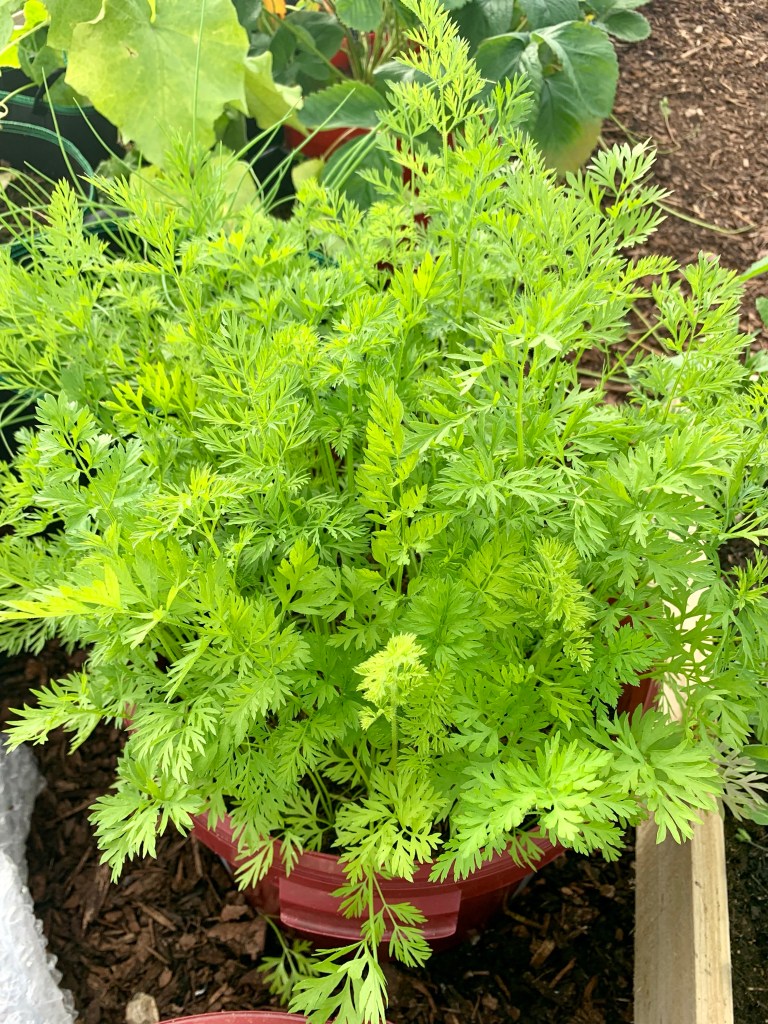
The first of the carrots are ready now, and I’m going to sow more. They’re sweet and very flavoursome.
The sweetcorn experiment is progressing! We have flowers and silks on a few of the plants, so I’ve been hand pollinating with the hope that we manage to get a few cobs at least.
All in all, not bad for a low-effort croft nurtured using organic principles and no-dig beds, in this weather and whilst not at my best due to illness. No pesticides, no inorganic fertilisers, no chemicals. I love that we can pick produce straight from the plant. The soil is fertile and giving, and we will continue to develop the beds next year with windbreaks and deer protection.
It seems strange but I can already detect the first wisps of autumn drifting in from the edges. The leaves on the ancient horse chestnut at the end of the lane are starting to turn russet. The seed heads on the long croft grasses are ripe and heavy. The season feels about to turn.
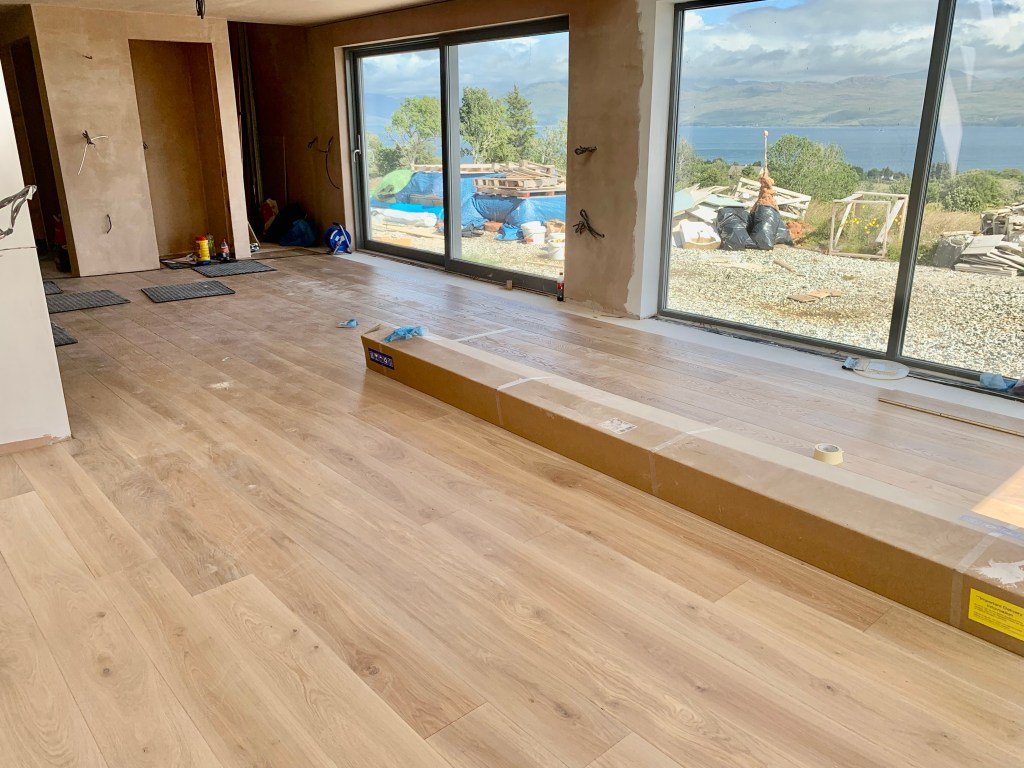
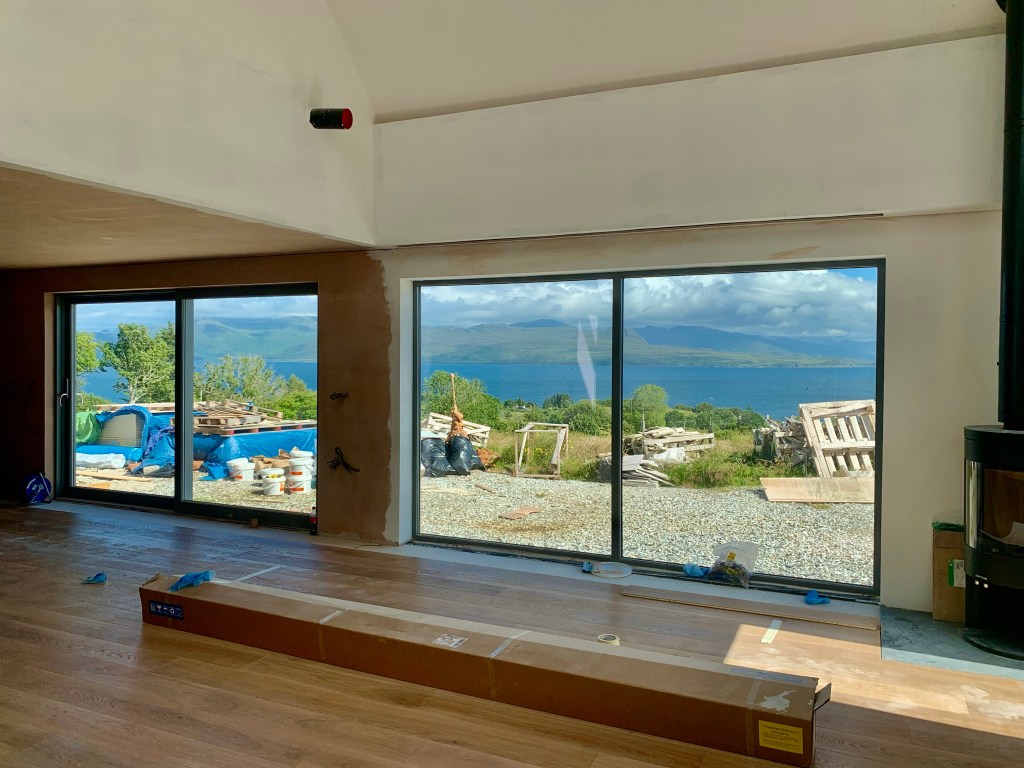
The floorboards are definitely progressing well now. In a short break in the rain today I sneaked into the house to take some photos of progress with some sunlight as a backdrop.
Looking towards where the staircase will be
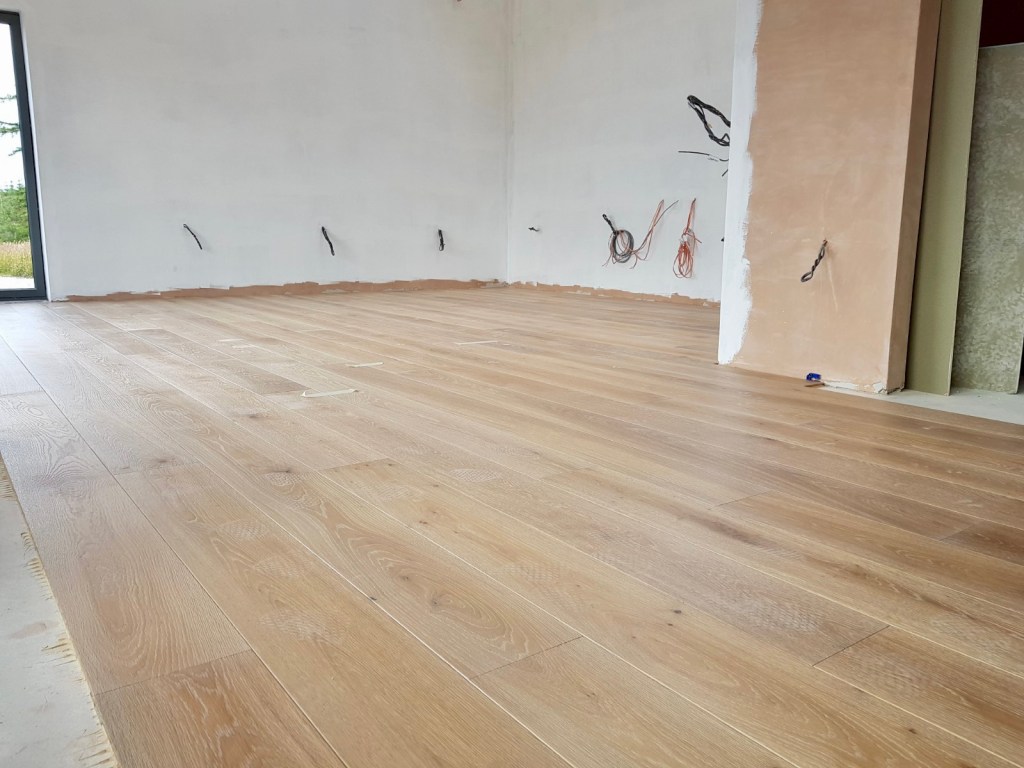
I was initially worried that the colour of the boards would be too dark, but now that I’ve seen more of them laid, I think it’s looking good.
Looking back into the lounge area
As you can see, our grand plan of painting everything first before the floorboards were laid didn’t quite work out. My operation got in the way, other stuff took longer than planned and dates didn’t align. But it’s ok, that’s the joy of self building. We’ll be able to protect the floors whilst we continue the painting.
The kitchen recess
Every now and then I get a small frisson of excitement that it’s really real, that we’ll be in soon. Today was one of those days.
As I stood in the living room, the air filled with the smell of freshly cut oak and sawdust and with the light bouncing off the building rubble, I honestly thought “not long now”.
The floorboards arrived several weeks ago after a protracted negotiation to have them delivered to the island.
I’m always perplexed when companies say they won’t deliver here – we have a land bridge to the mainland so it’s no more difficult to get a lorry here than it is to Glasgow. But you’d be amazed how many companies simply refuse to deliver to anything other than a mainland address. It’s infuriating.
They arrived in driving rain (of course) so husband and I worked like fury to get them indoors and stacked before the rain soaked through their protective wrappings. This was before my recent operation, thank goodness.
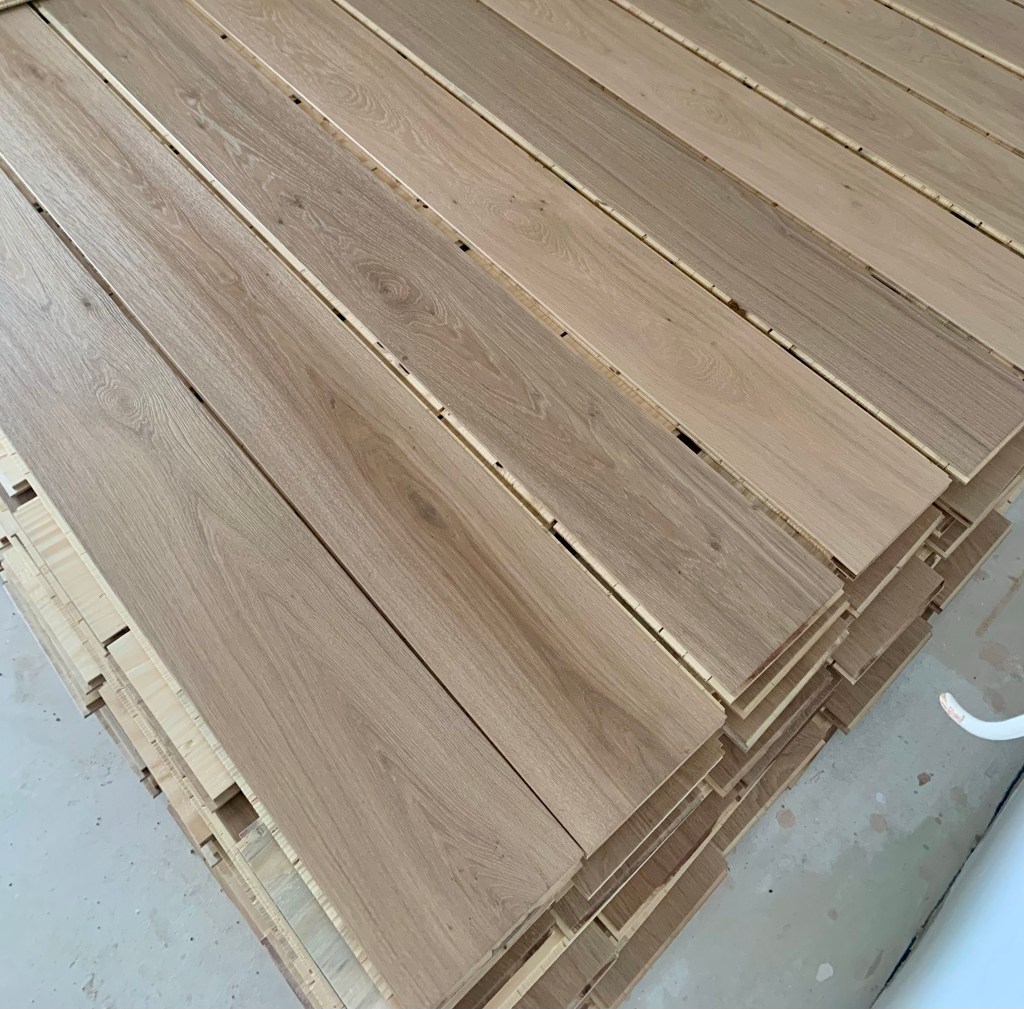
Stacked floorboards
They’ve been stacked in one of the bedrooms for some weeks now acclimatising to the humidity levels in the house, which will hopefully ensure that there’s no warping when we put them down.
We now have them laid in the living and dining room areas and hope to complete the installation in the remaining ground floor areas next week.
In progress
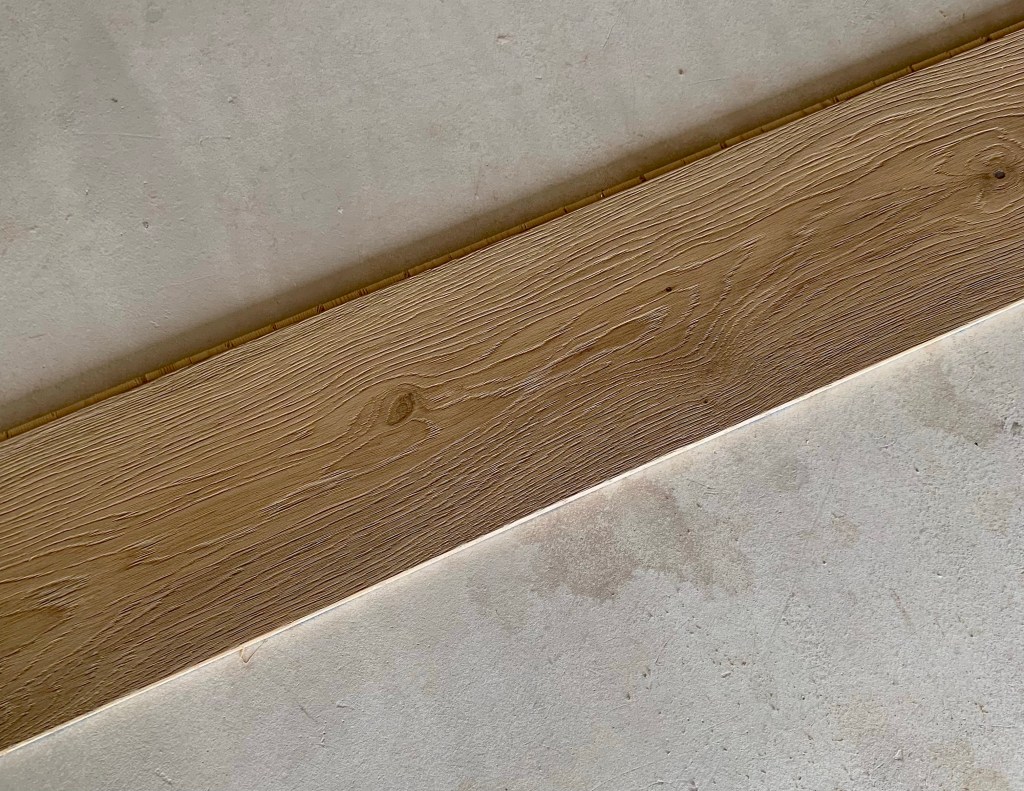
These are engineered oak boards from Russwood, a local Scottish company, finished in Osmo oil. They’re designed to be compatible with the underfloor heating that we’ve installed.
We really wanted natural flooring and there are so many options these days with bamboo, stone, porcelain, cork, lino, rubber etc. that it took us a while to sift through the alternatives. I’m hoping that these will prove classic and easy to live with.
The price of wood has gone through the roof over the last twelve months and if we’d waited another year I’m not sure we could have afforded these, but taking the long term view we figured we’d be living with them for a long time, so we should buy the best we could afford.
I’m so glad that we did.
We’ve just ordered the wooden staircase and we’ll be onto the interior doors and skirting boards next.
The rest of the country is living through a Met Office severe weather warning with temperatures hovering around 40C, but Skye today is a cool 22C with balmy sea breezes.
Blue skies and sea breezes
I don’t think that we would have survived that heat if we’d still been living in London.
The house we were renting there was badly insulated :- a town house with three floors, our bedroom being at the top of the house. There was no airflow or air conditioning, and the heat would rise to the top of the house and make sleep simply impossible.
Even with fans we found it too hot to do anything, and whole months could be lost to weariness and bad temper through lack of sleep. There was also a continual sense of grubby stickiness from the proximity of the crowds and the air pollution, which was palpable.
London does not do summer well, like most cities.
I know that people think it’s bizarre but we genuinely like the cooler temperatures up here. There’s nearly always a wind blowing, and it rarely exceeds the mid 20s. That’s comfortable, as far as I’m concerned!
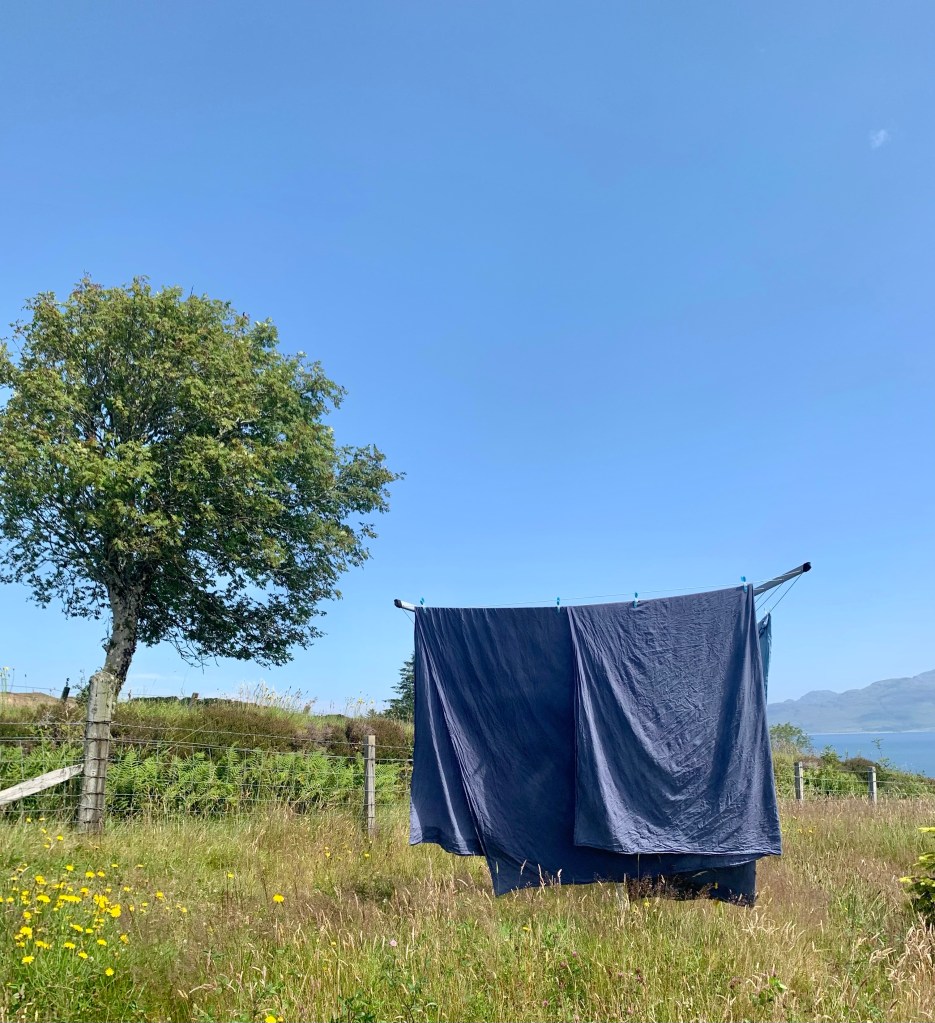
We’re so glad that we got out. The air is clean and cool here, and we enjoy the wide open spaces of the croft. Today was a good washing day and husband hung sheets and a duvet cover out to line dry in the warm breeze.
Washing day
I’ll take the cooler temperatures and the rain over the pressure cooker of the city any day.
July is underway and with it comes the first of the proper harvests from the croft.
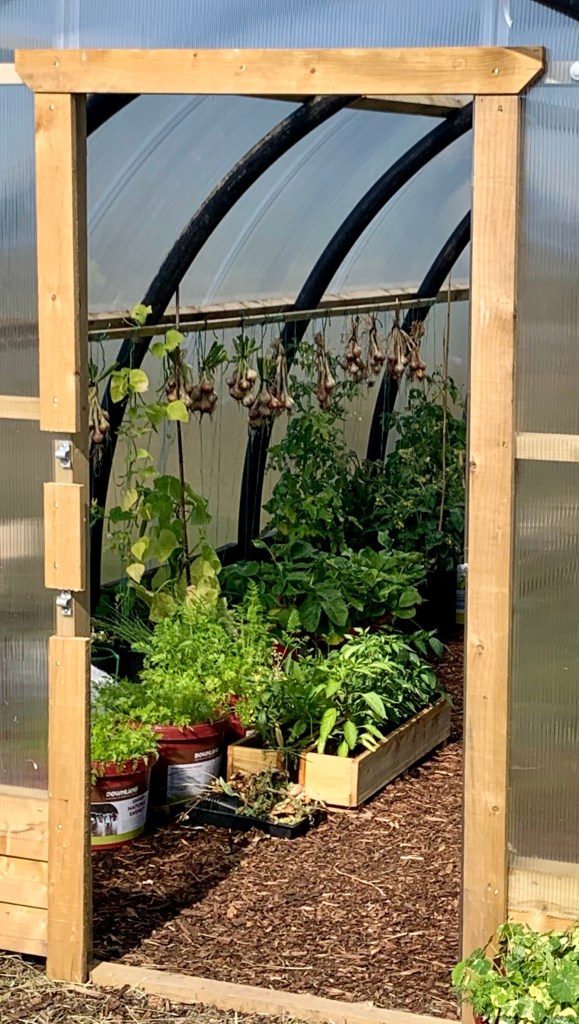
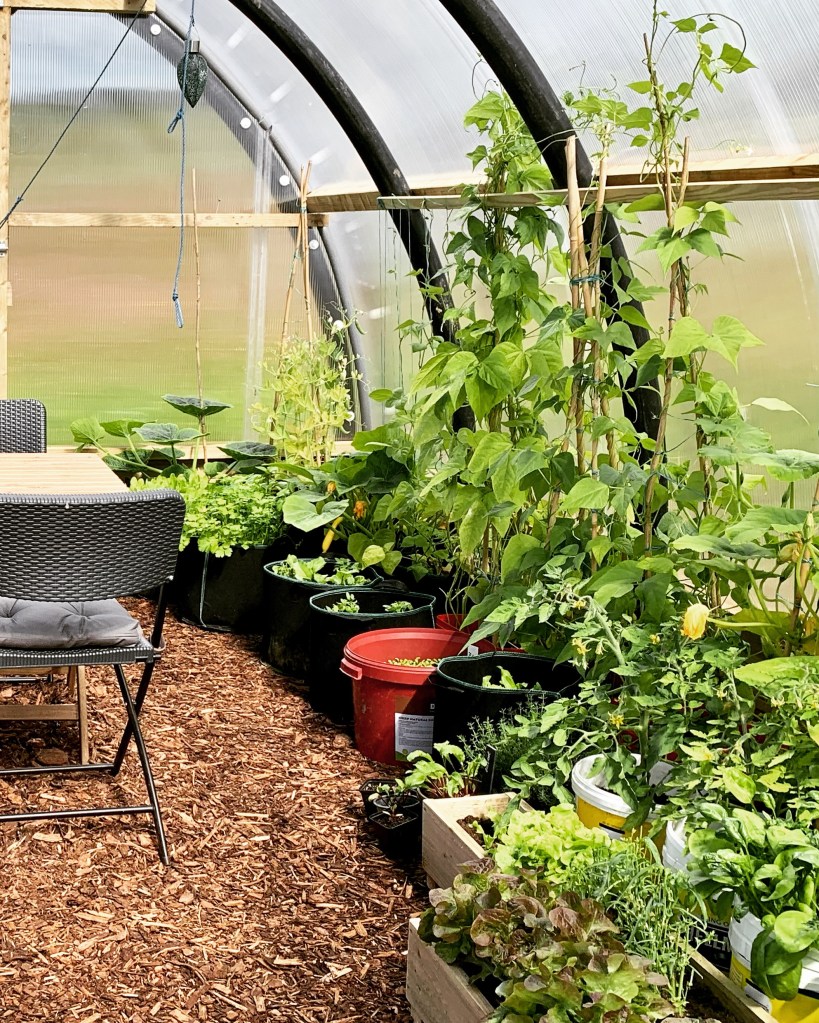
The polycrub really has been a game changer and we’ve managed to grow cucumbers and lettuce enough for all of our salads and more to spare for neighbours and friends. This in combination with the produce from the raised beds has meant a wide variety of foods can be grown throughout an extended season.
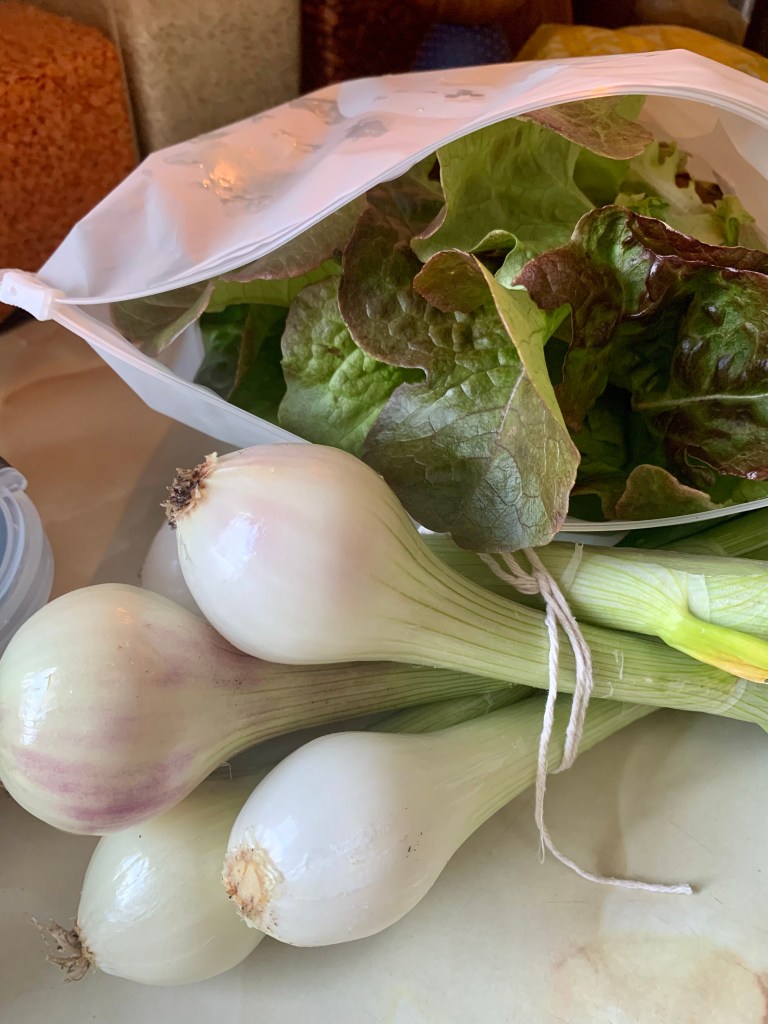
Lettuce and young onions
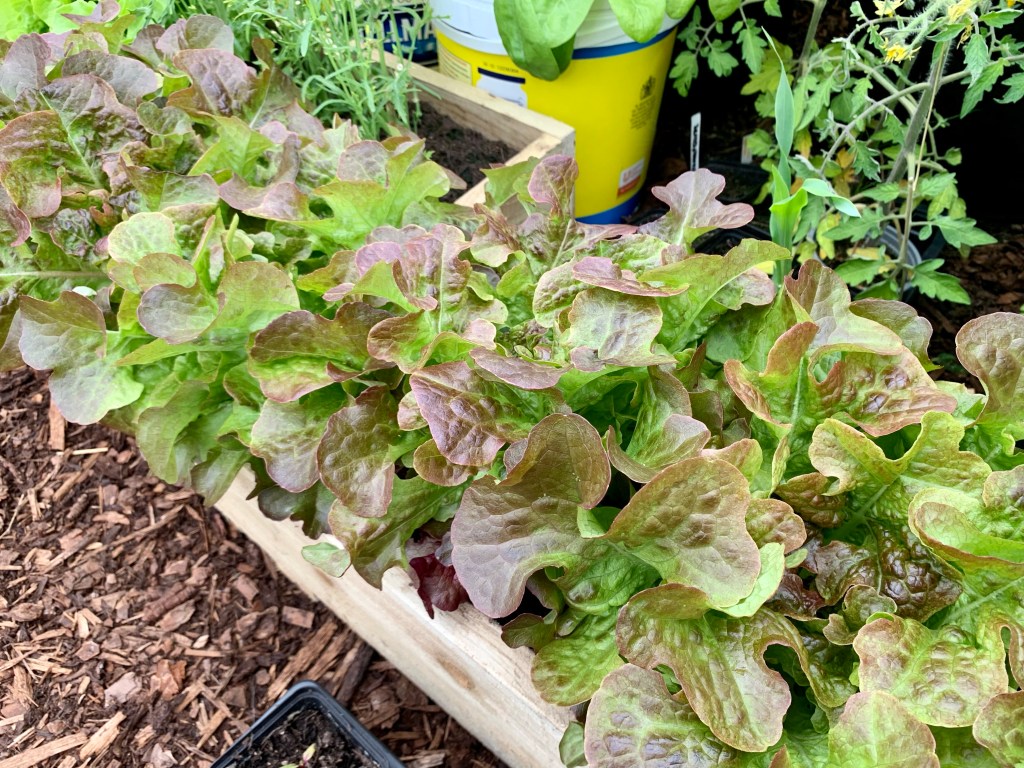
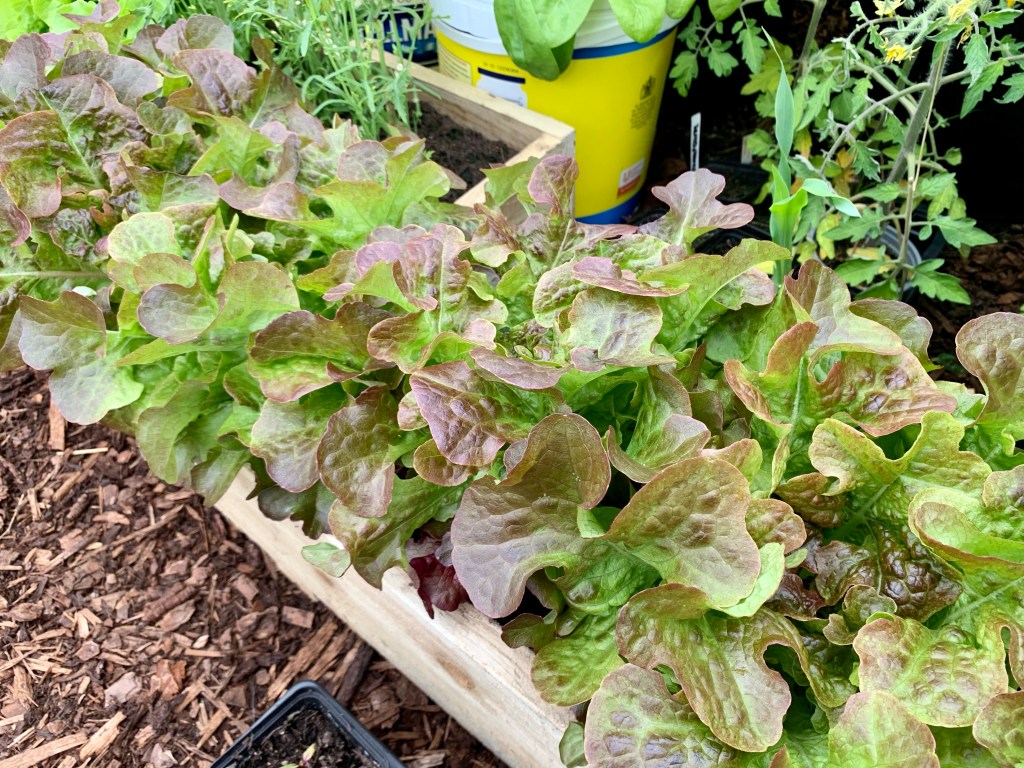
The most successful lettuce has been a butterhead, which we’ve been cropping as a cut and come again lettuce. We’re also growing romaine. All the mizunas and rocket grew well initially, but then bolted within weeks and became straggly. I don’t like eating the mustards and mizuna because of the spiky texture of their leaves so I won’t bother with these next year, and will just plant more lettuce.
Butterhead lettuce
The onions were supposed to be red onion varieties, but aren’t more than vaguely pink. They sent up flower shoots so most of them have been lifted before they soften.
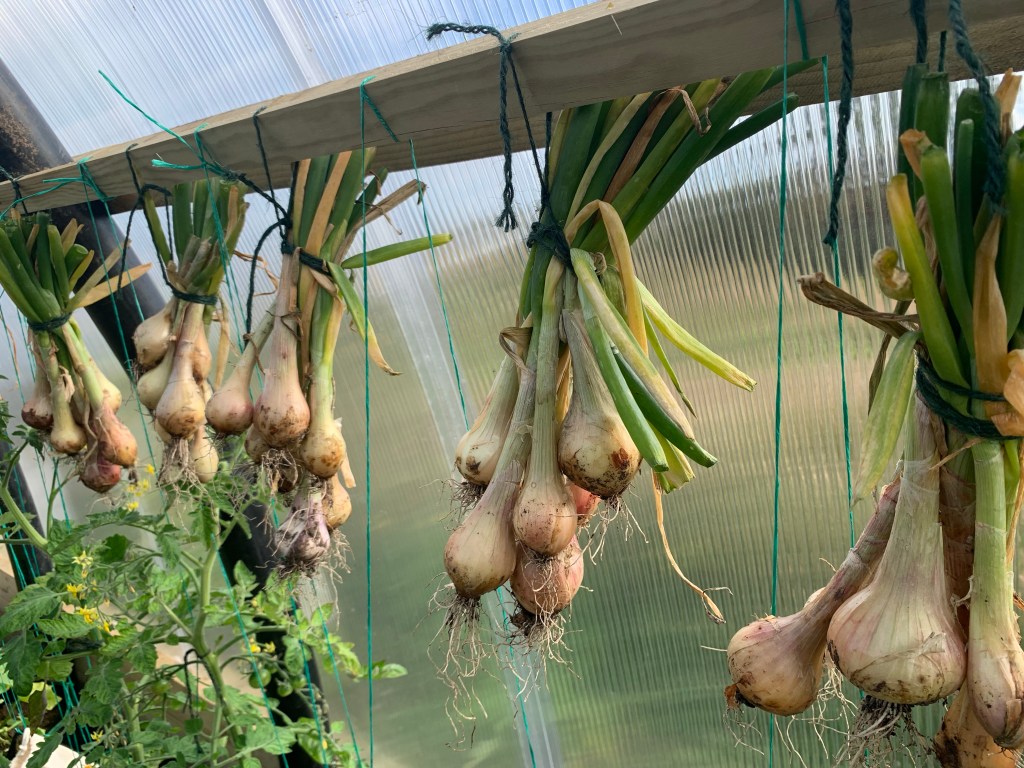
They’re small, but sweet. We’re using them in salads and cooking now and I have them drying in bunches ready for use later in the season.
Drying onions
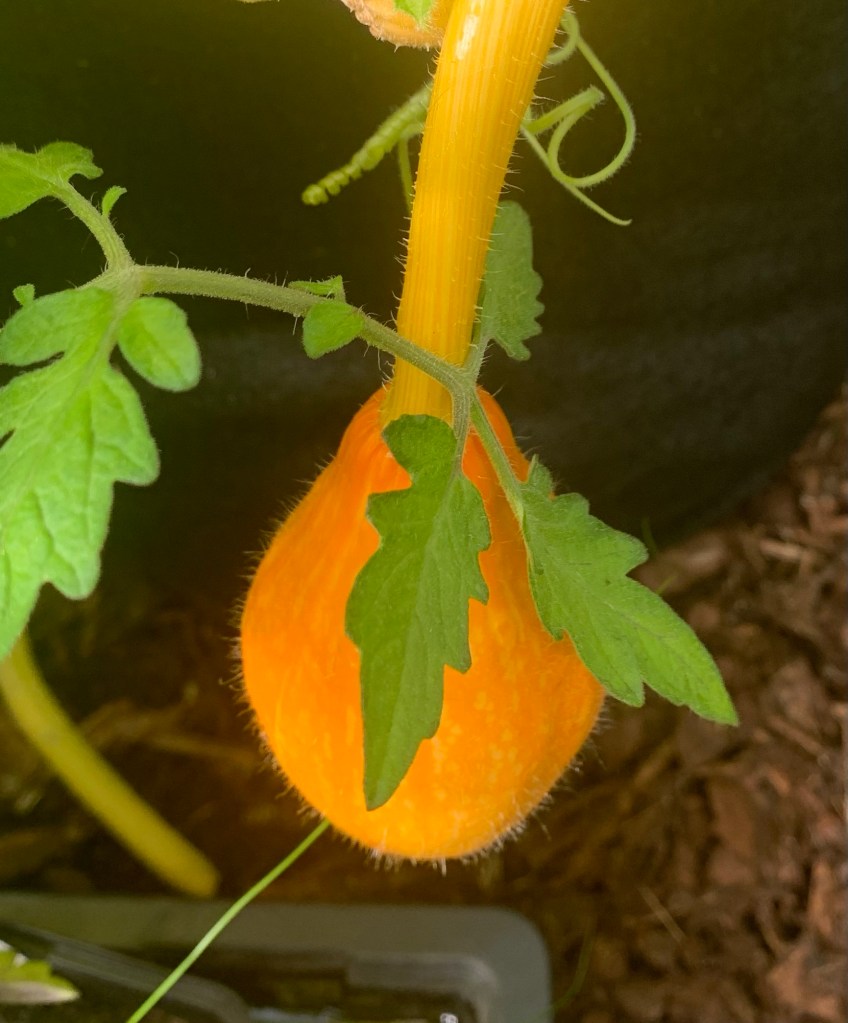
The red kuri squash has a few young fruits on it, which I’m very excited about. Early days, but I’m hopeful that we’ll have a few to harvest in late summer. The French squash hasn’t shown any sign of fruiting yet.
Baby squash hiding behind a tomato leaf
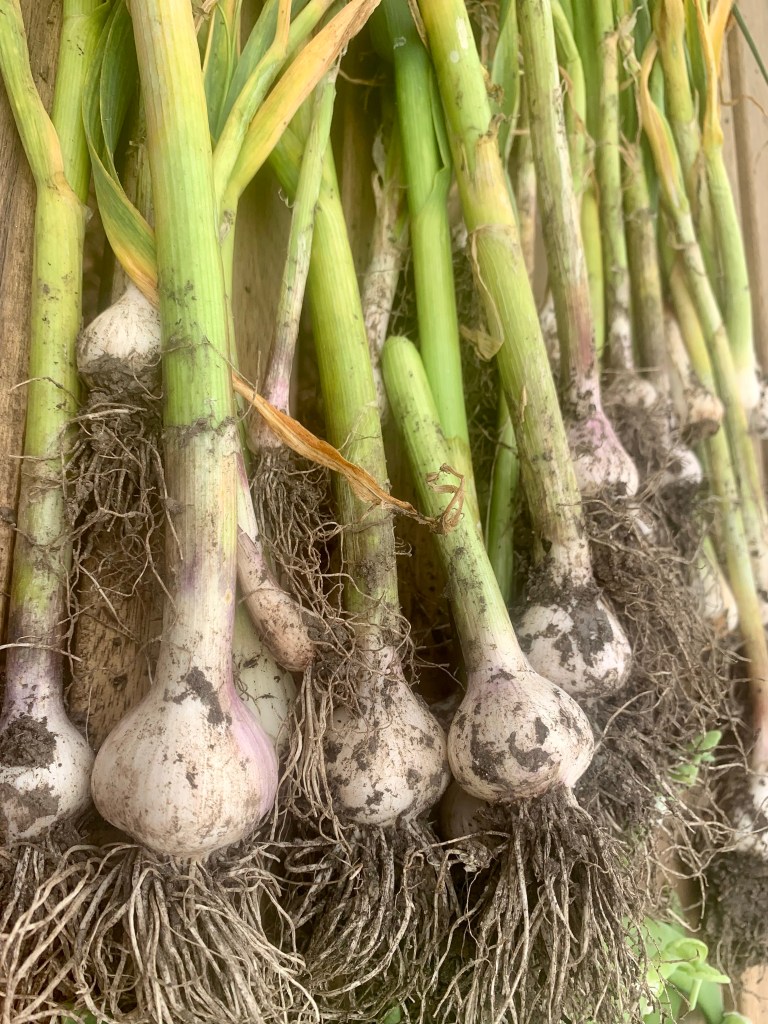
The garlic was a bit of a disappointment. Sown last October I had high hopes for bigger heads this year, but they’re still small. I’ll use them in stews and trays of roasted vegetables, so despite their lack of size they won’t be wasted.
Wimpy garlic
The potatoes are also much slower than last year. We’ve just harvested some Edzell Blue and Casablanca varieties. Great taste, but not hugely prolific. We’ll hold off for a while for the main crop variety.
Edzell Blue potatoes
The kale is growing well after the deer ate all of my perennial kales from the beds last winter. I grew more Uncle Bert’s kale and red Russian kale from seed and it’s coming up nicely. I’ve also sown purple sprouting broccoli into the beds recently, so between them that should give us a reasonable winter crop.
The carrots were grown in large seed lick tubs this year as an experiment. Three varieties, all French heritage types, growing well, albeit slowly. The first of these should be ready in a few weeks time.
Carrots
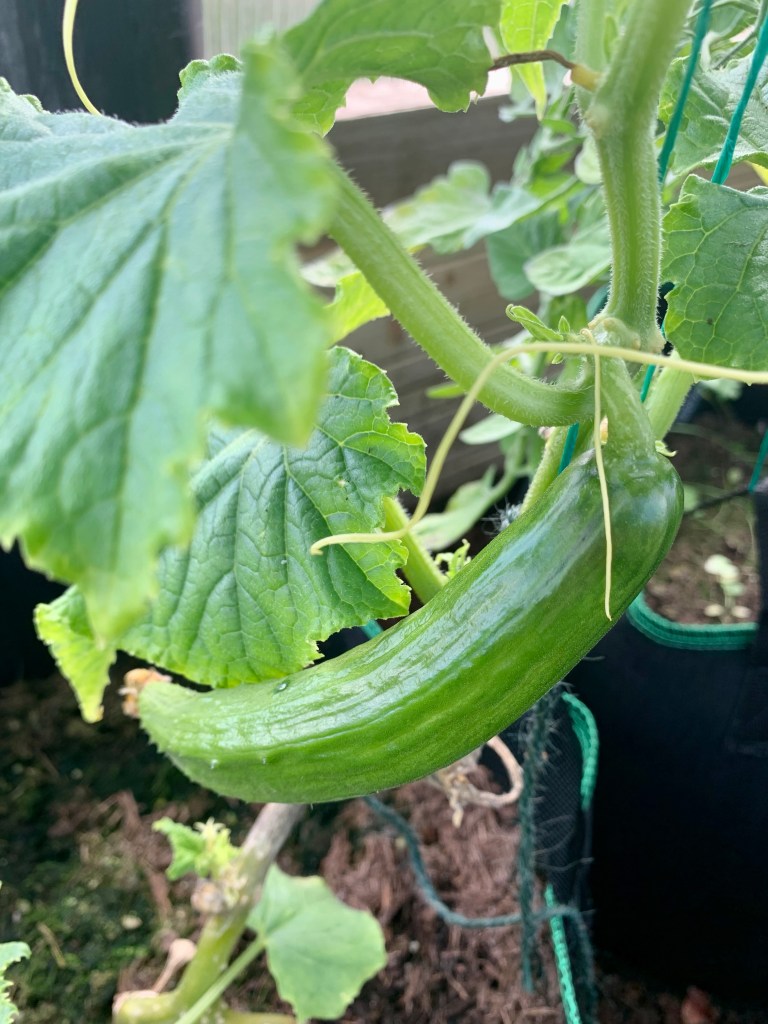
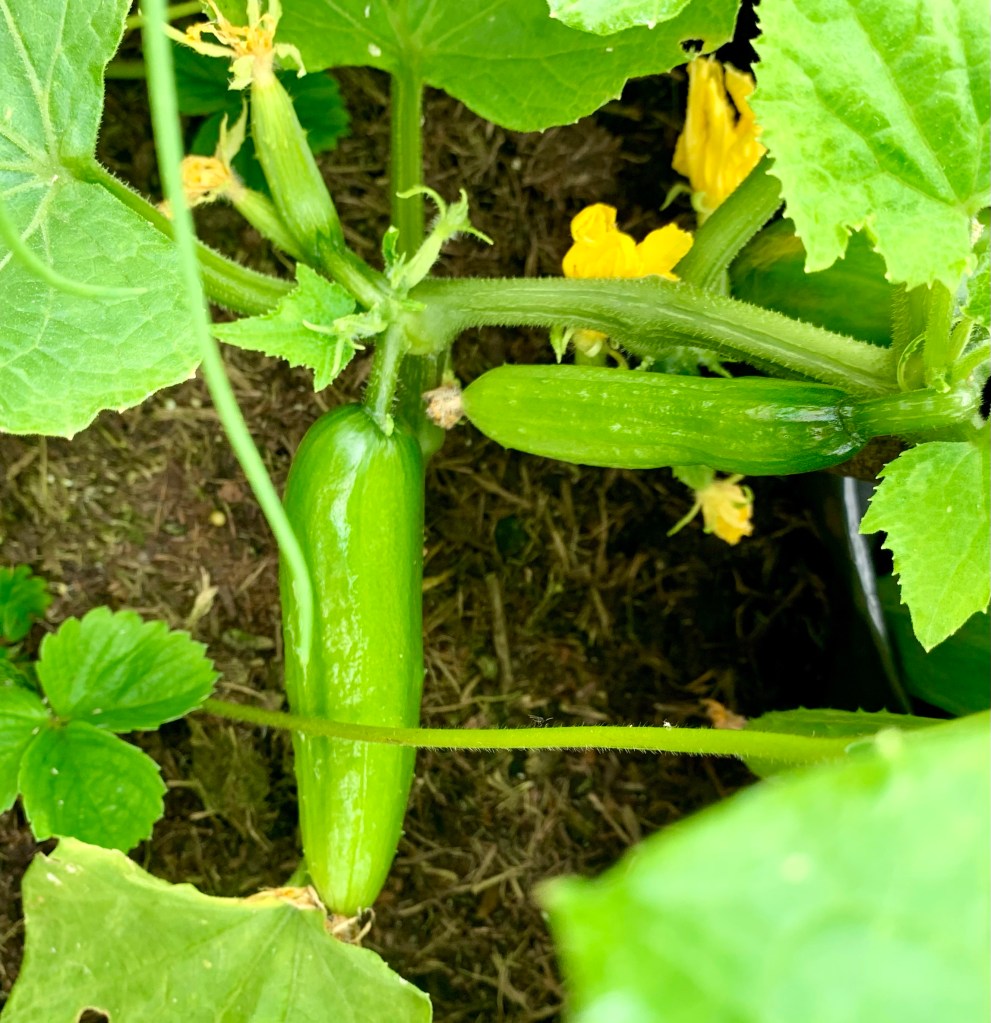
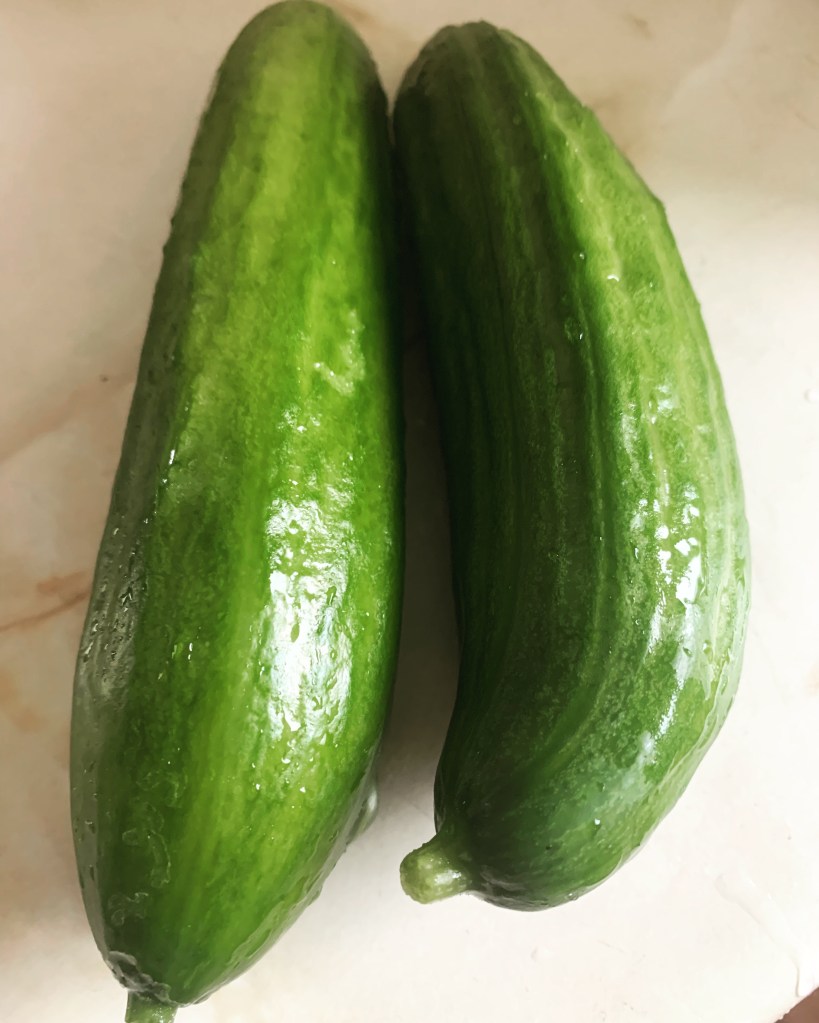
The cucumbers had a very faltering start due to the cold temperatures of late spring. A number rotted and wilted beyond salvation, but the three plants that did survive are fruiting well and have produced about six cucumbers ready for eating so far. There’s no trace of bitterness to their taste either, which is great.
Baby cucumber
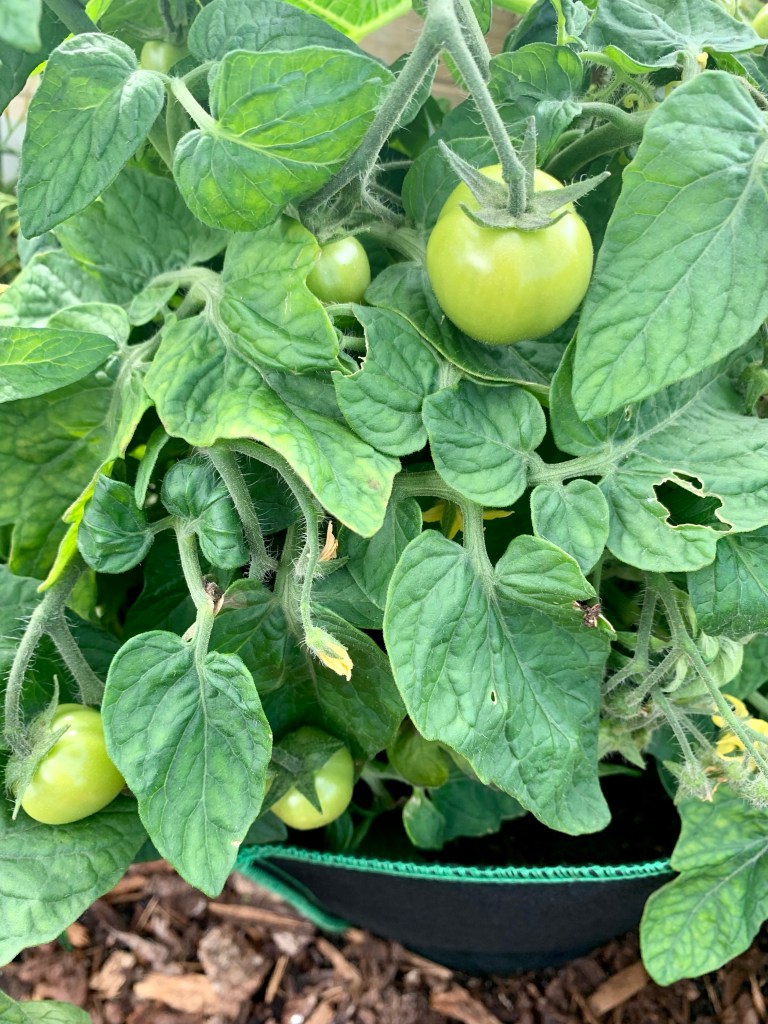
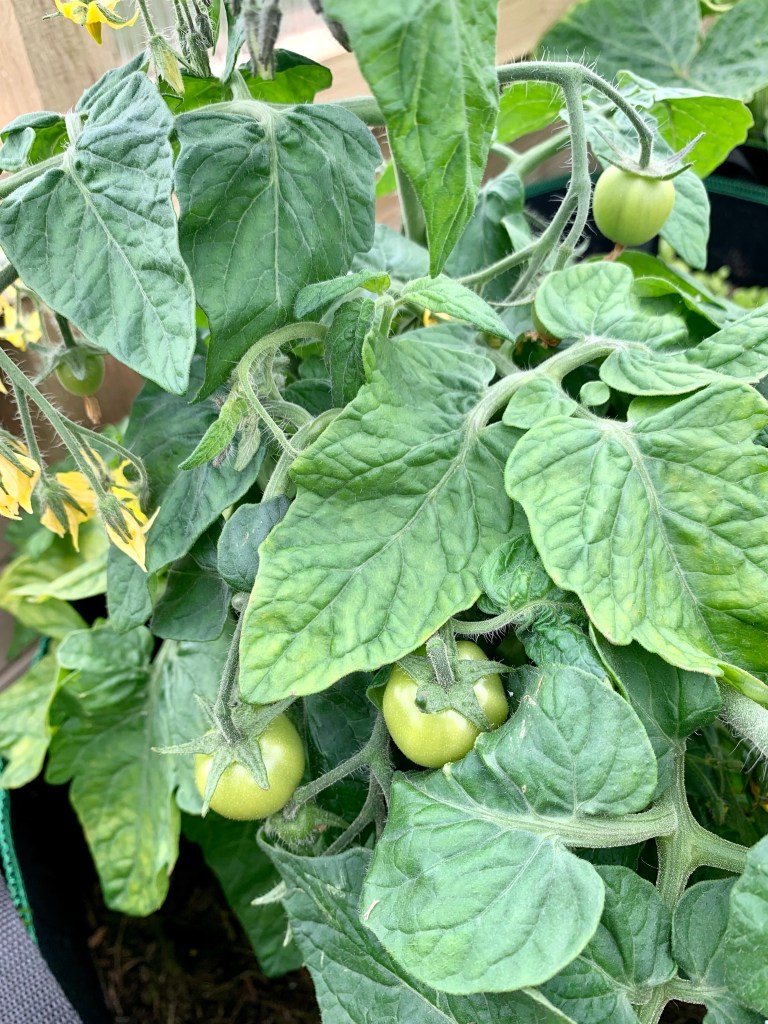
The tomatoes are starting to set fruit, again later than most due to our cold, late start. It will be interesting to see whether we can get them to ripen in time. The big Russian bush varieties are pruned and tall with not much evidence of fruit yet. The dwarf bushy varieties, which don’t get pruned, are happily fruiting away with no fuss.
Dwarf tomato plants doing their thing
The courgettes – I only planted two plants so that we weren’t overrun if they grew – have started fruiting, although the fruit is yellow rather than green, which is a total surprise. We’ve already had a handful of courgettes from them, and looking at the flowers there will be many more to come.
The beans have struggled. The borlotti beans are doing the best out of all the varieties and are starting to flower now, so I’m hopeful for a few fresh beans from them.
The corn is about four feet heigh although no sign of flowers or fruits yet.
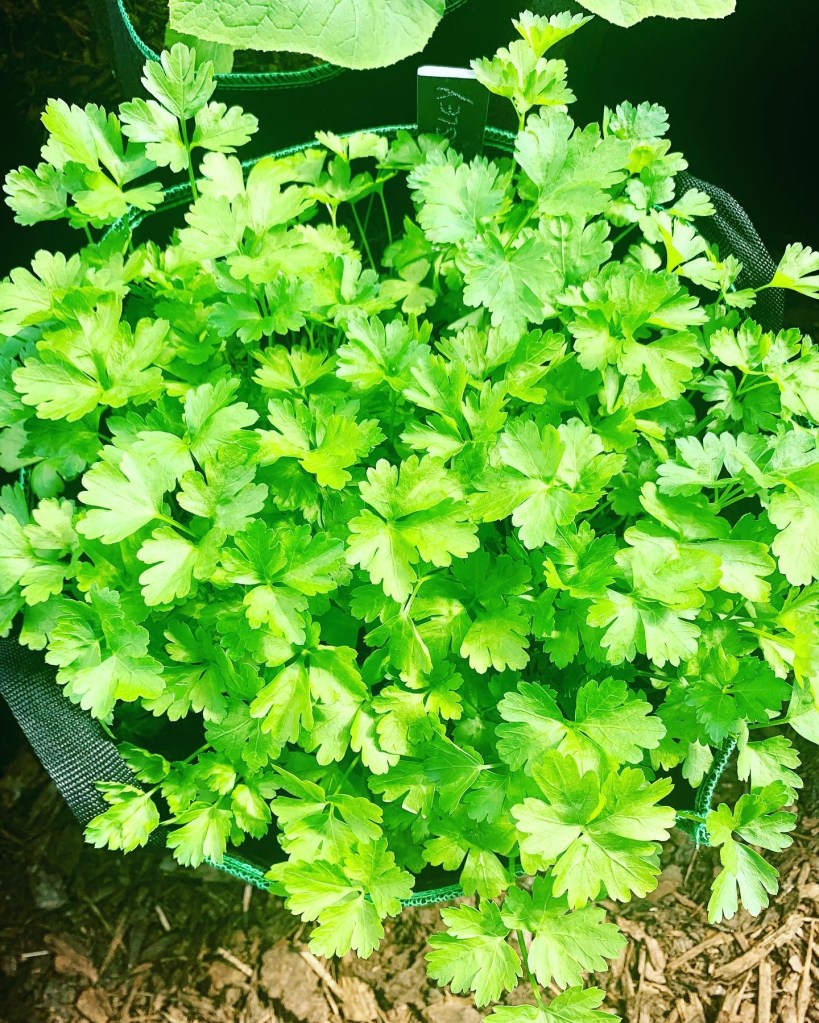
The herbs have gone mad – the tubs of parsley and coriander have gone crazy and we’ve been eating them for months, the dill the same and I’ve left some to go to seed for collection. The chives, lemon balm, rosemary, lemon verbena and mint are all growing well.
All in all, I’m happy with our first months of growing with the polycrub so far. It’s hard to believe that it’s only been here since mid April. I’ve learned a lot, and when we set up proper grow beds in there next year I’ll feel confident about what to plant out.
Now to start sowing the winter seeds! The year is turning already.
We have had an incredibly wet couple of months recently, and as I look ahead at the weather forecast for the next week, I see no respite. It really doesn’t feel like summer.
No sun, just back-to-back clouds and rain for the week to come. I’m clutching my mug of coffee and peering out through the rain-smeared caravan windows as I write.
Baby cucumbers at last
Luckily the polycrub remains largely unaffected by the rain. Everything seems to be growing nicely in there, although the lack of warmth and sunshine means that my tomatoes and courgettes are being very slow to set fruit. There are lots of flowers, but only a few tiny fruits so far, despite feeding and shaking to help pollination. More patience is needed as well as more sunshine!
Baby tomatoes
We have youngest stepson staying with us at the moment. I say youngest, he’s 21 😊. Despite being a child of the city, a very definite metro-being, he’s been quite taken by the rituals of watering, pruning, planting and harvesting in the polycrub and has been helping me with this.
Which is a really good thing as it’s a busy time of the year in there and I’m still pretty limited in what I can do since the operation, with no lifting or standing for too long.
Lettuce
He pricked out baby beetroot into pots yesterday and I showed him how to take excess foliage off the tomato plants to redirect energy into the setting fruits. He’s also been building plant stakes to support the trailing plants.
Sitting in there with his music on enjoying the now rather jungle-like environment of climbing greenery, it’s been nice to see him without his nose in his phone or laptop for a bit enjoying the outdoors. Well indoors really, I guess. A polycrub is a sort of halfway house, isn’t it…😊
Who knows, maybe we have another generation of growers in the making…
I’m home now in the caravan, and starting the process of healing.
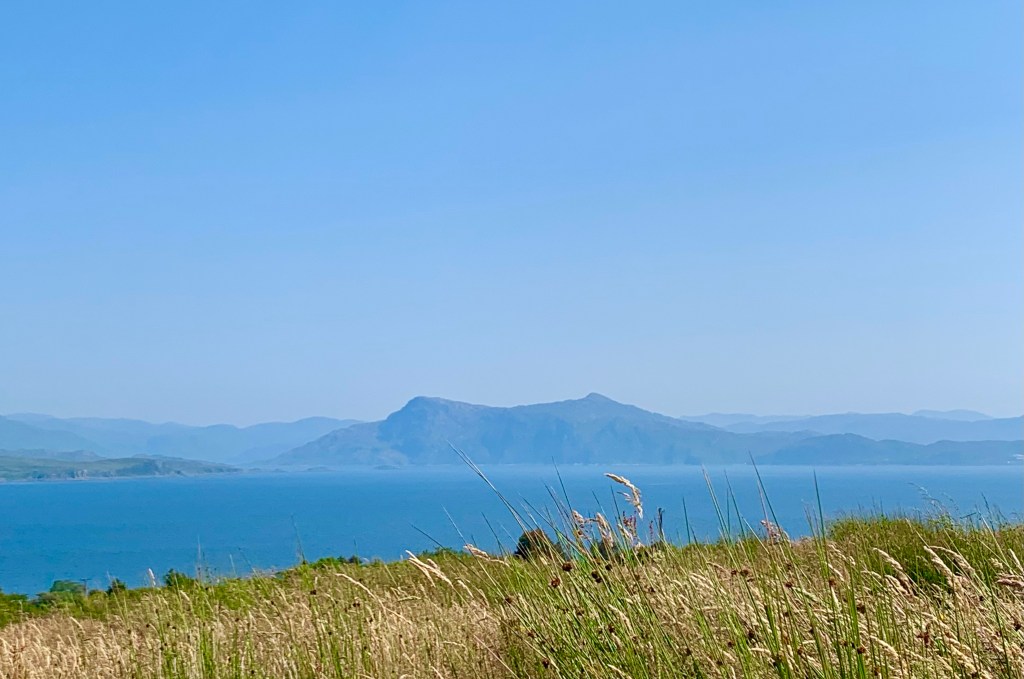
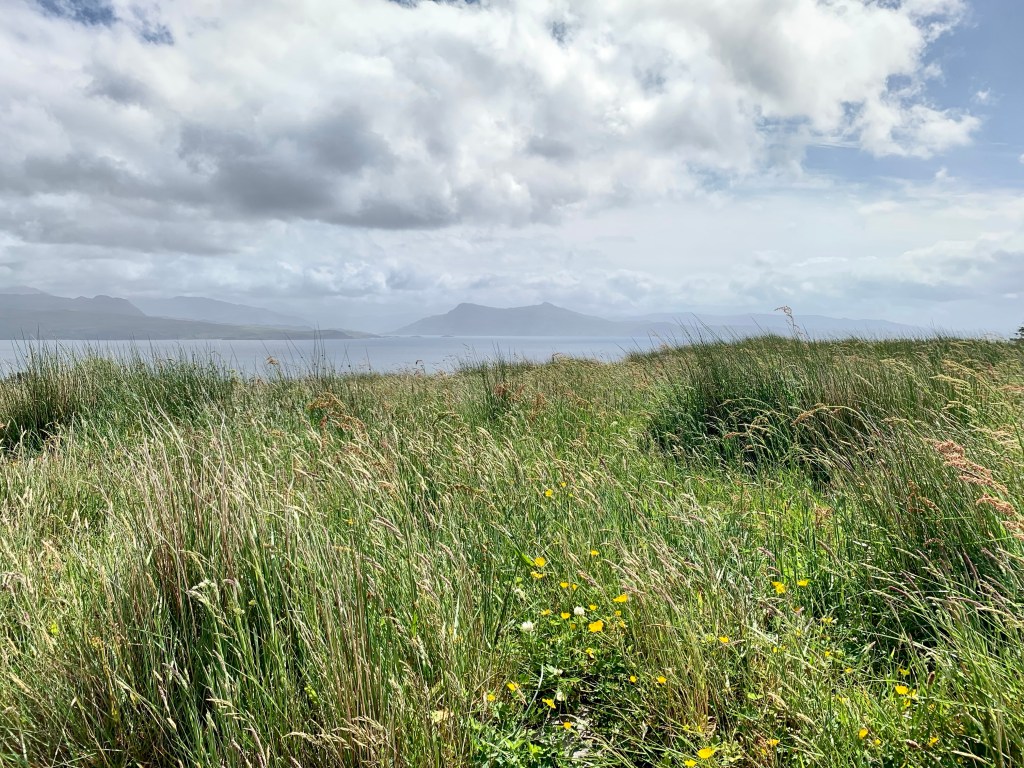
There’s immeasurable comfort in being at home in your own environment when you’re ill. The warmth and familiar feel of your own bed. The support of your loved ones around you. The now familiar views across the croft to the sea and over to the mountains of Knoydart.
The croft
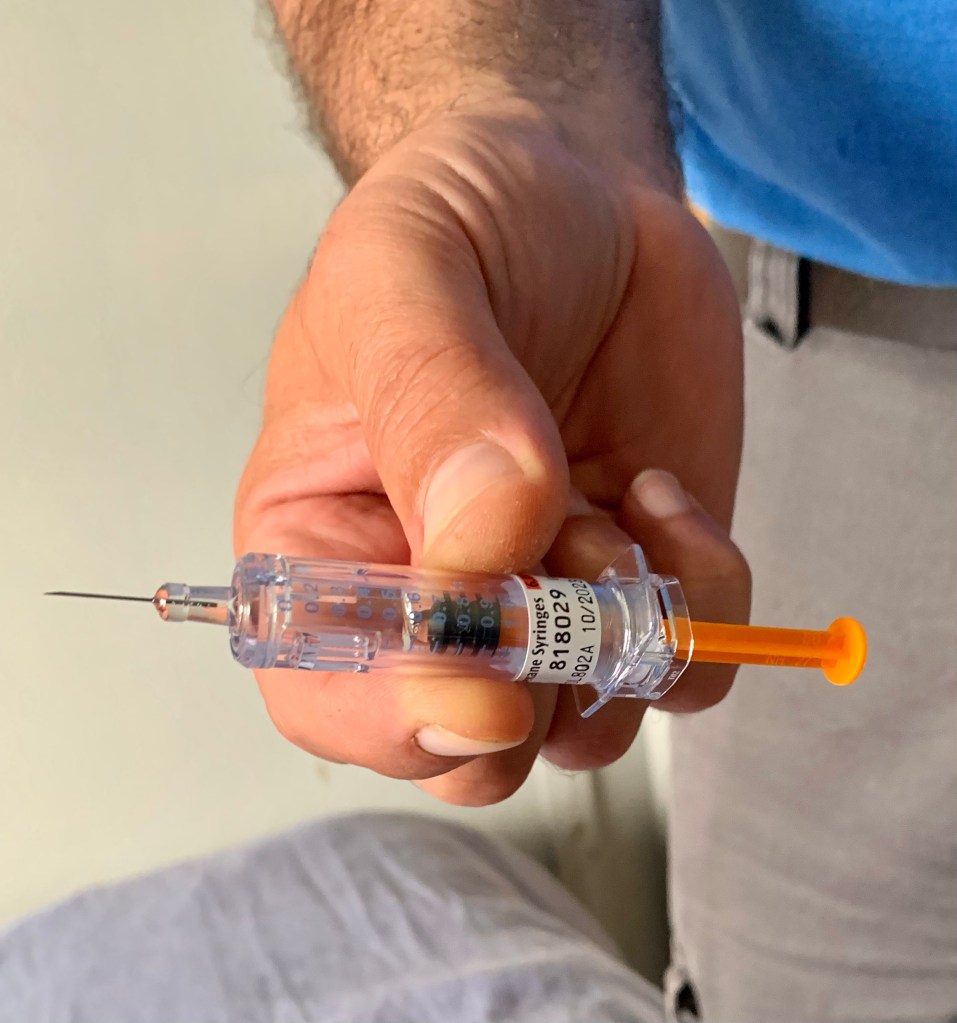
Husband is heroically administering my daily stomach injections. I tried, but simply couldn’t bring myself to self inject – all respect to those that can and have to do this every day. The injections are blood thinners which have to be administered for a week following the operation whilst I’m not as mobile as I would normally be.
Evil injections
I potter about happily as often as I can to keep everything moving between periods of rest, legs up on the bed. I’m not allowed any strenuous activity or lifting whilst my body repairs itself .
I learned the hard way that post operative fatigue is a real thing early on in this process. Stupidly, a few days after getting home I decided that I could sit on a chair and just gently hold a garden hose to water the polycrub plants. It weighed almost nothing, and I wasn’t standing up.
After a few minutes the strain of holding up even something that light started to tell. I rapidly retired back to bed. Since then I’ve been much more sensible and husband takes the strain.
Each day I feel a little more like myself. I’m healing well even though it’s still early days.
Flowers from friends
Friends, family and neighbours have been wonderful, sending messages of comfort and cards, flowers, food and treats. Good friends made dinner for us one evening and drove it over to us. I’m feeling quite overwhelmed at all the kindness.
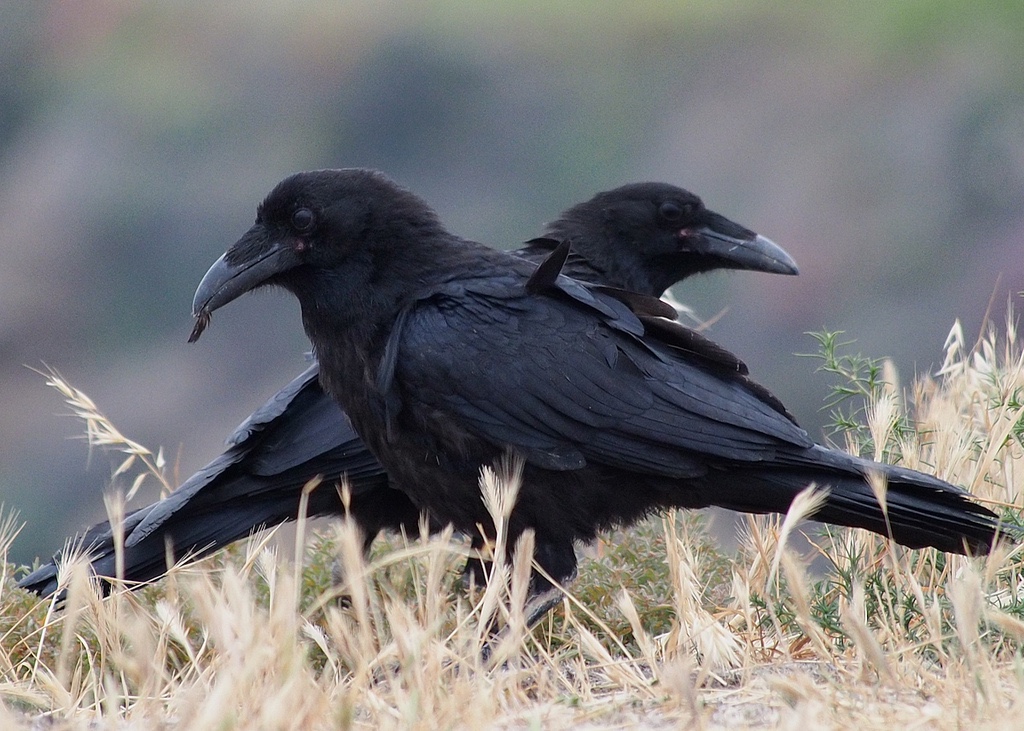
We have a pair of adult ravens living on the croft, Floki and Helga, after whom the house was named.
We hear them mostly in the spring as they call to each other, and occasionally see them wheeling overhead across a windy sky, but they’re generally private birds, watching us curiously from the big Douglas Fir on the western boundary.
They’re no trouble, and fascinating birds to live alongside.
Unlike the Raven juveniles.
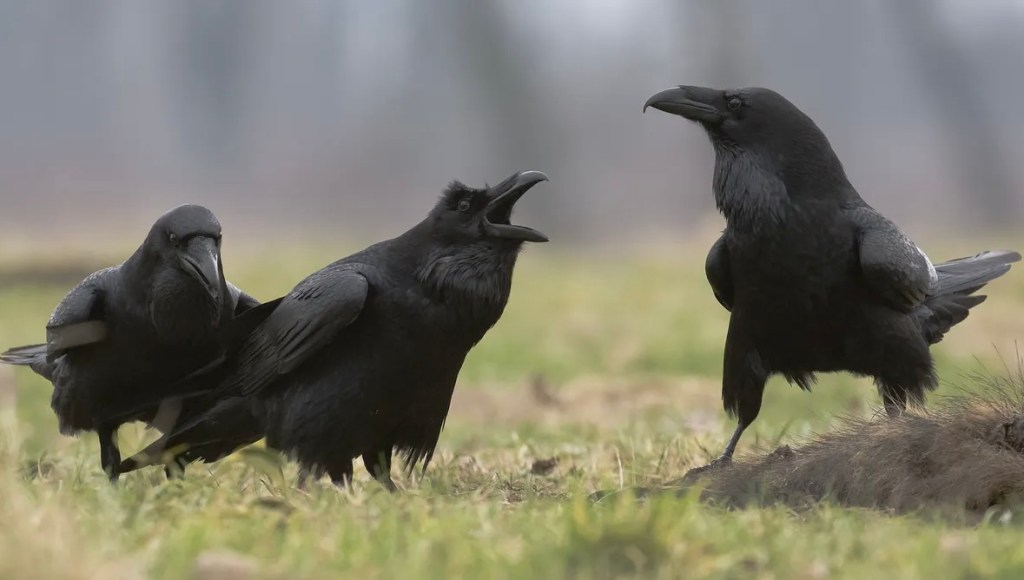
Before we moved here I had no idea that young ravens live together in a huge group before they pair off, mate for life and settle down to adult Raven respectability. The juveniles form what can only be described as a gang of teenagers, noisy, boisterous, and badly behaved. It’s often called a Conspiracy of Ravens.
We have a large Conspiracy that lives locally. Recent exploits have been starting at dawn – which is just after 4am in these parts – with loud squabbling, and shrieking so loud that it’s impossible to sleep through.
They’re very smart.
They’ve been working out how to get to the fat balls that are put out in a wire cage contraption for the smaller birds. Clearly it’s a breakfast treat that can’t be resisted, and an hour or so of noisy plundering takes place with a dozen or more of them fighting each other for the spoils.
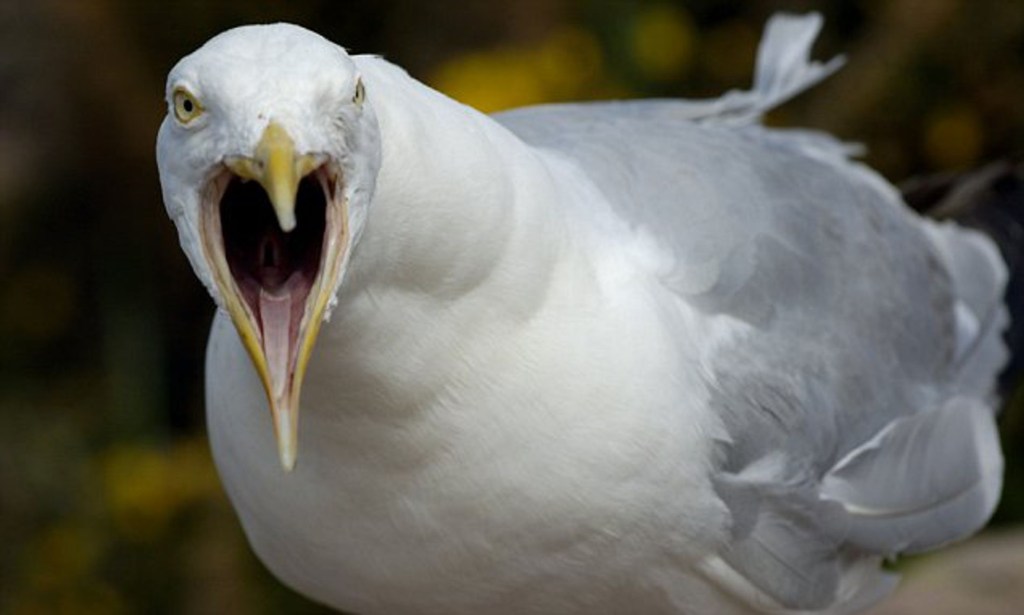
On blustery days at sea we occasionally get seagulls venturing inland across the croft, and on these days we can hear turf wars sparking off between the ravens and the gulls in a cacophony of noise.
The battlefield is usually the caravan roof, where shrieking, scrabbling and cawing take place until supremacy is established.








 Ravencroft Skye