The Weaving

When we started on this journey I wanted to somehow commemorate the move to the island and build of our forever home.

I wanted to find a medium that was unique and significant to us in some way. Both husband and I love art, and I especially love textiles, so we decided to combine these two loves into the idea of a weaving.

Personally, my emotional response to the island has always been to do with its light, colours and textures.

The ever changing skies over the island exhibit colours that range from deep, brooding greys to clear, intense blues.

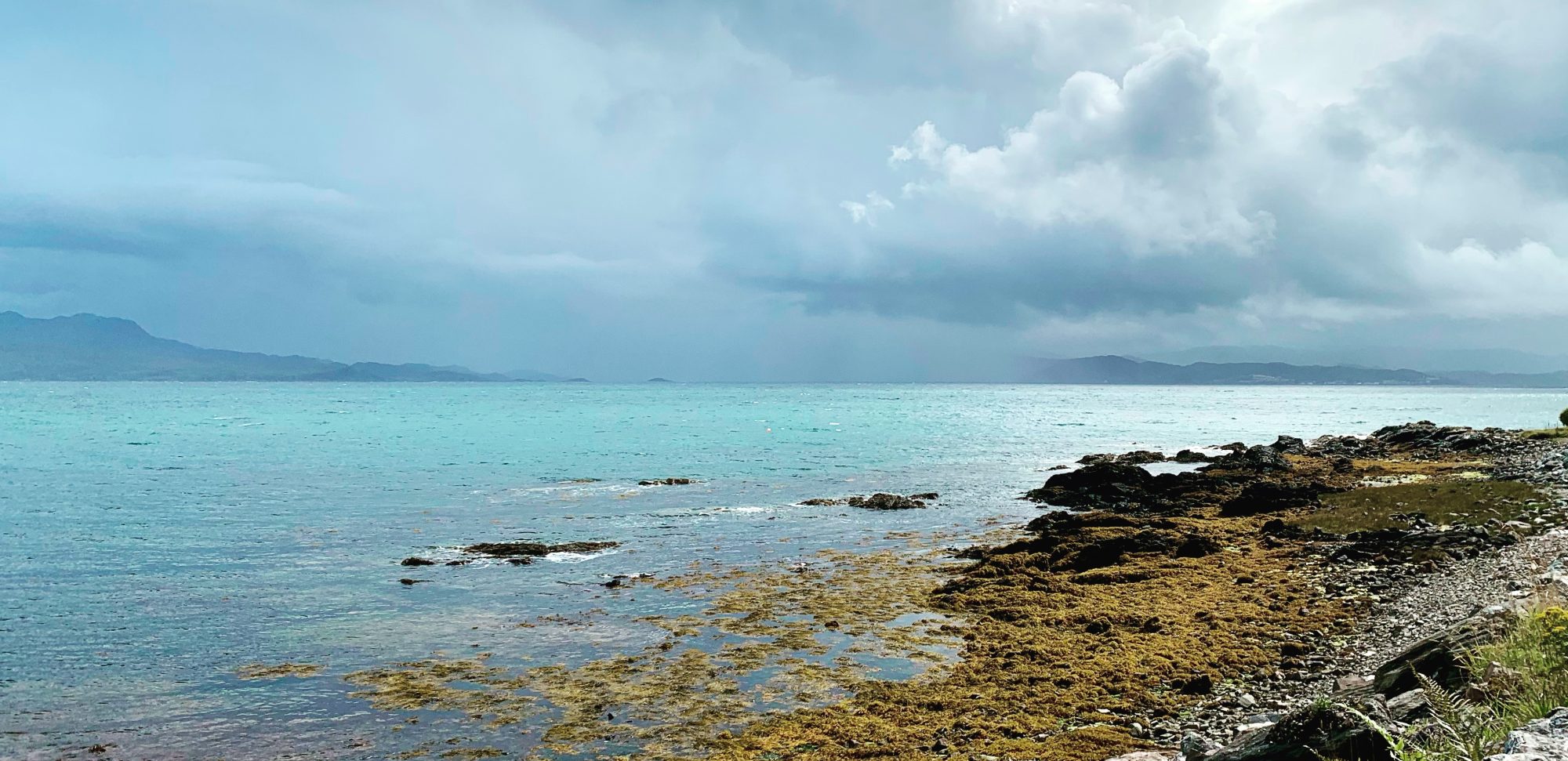
There is the translucent, steel-grey of the sea which changes to patches of iridescent aquamarine in the shallower waters.

And on the land, the textures of sand and pebbles on the local beaches and the ancient, speckled, rain-smoothed granite poking through the reeds on the croft.

I’ll create my own art in response to all of this one day, that’s something I’m quite sure of. I’m just not ready yet.

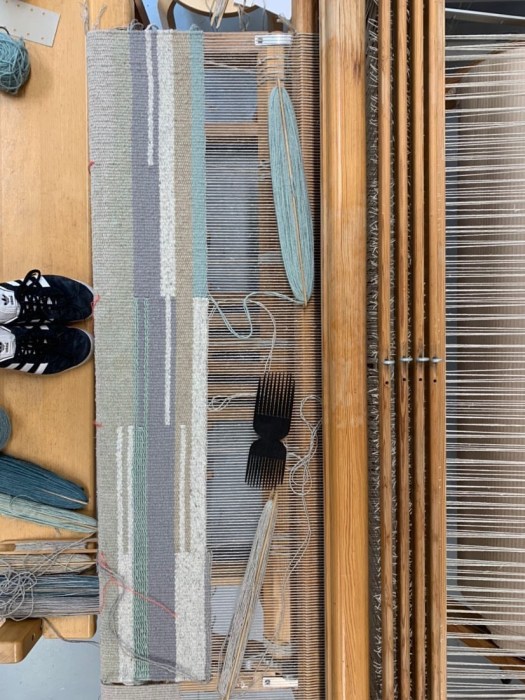
In the meantime, I’ve found a talented young weaver called Christy Balfour and I’ve commissioned her to weave us a piece for our new home.

It’s in a mixture of different weight wools and linens, texturally varied and interesting and in washed-out greys, sables, greens and aquas – sky, croft and sea colours.
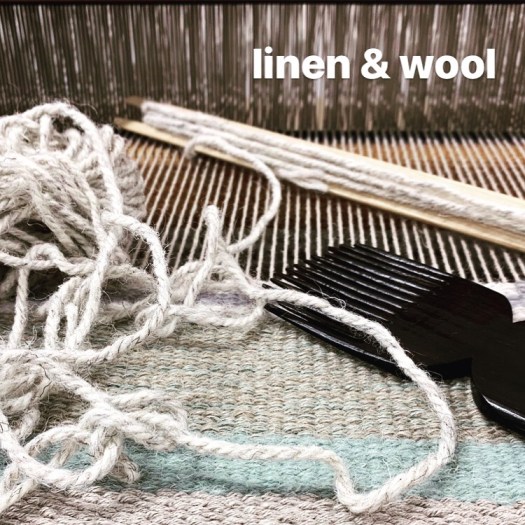
It’s Christy’s own design, and quite abstract. It’s being woven now and should be ready in a few more months.

It will be the first piece of art that we mount on the walls next year, and having seen the plans and the early samples above, I think it’s going to be amazing.

Young artists find it incredibly tough to live on the proceeds of their work so I’m so pleased that we’ve been able to do this, especially during lockdown when things must have been especially challenging for small businesses.

And we will have a piece of work that has been created in direct response to our feelings about the island.
Wild flower meadow

We’ve only been able to visit the croft a couple of times since we bought it, and those visits were usually during autumn or winter.

The main thing that we’d noticed on the land – apart from the absence of trees – was the dominance of reeds. They grew in thick clumps all over the croft. The crofter next door used to graze his sheep on the land, and this kept what grass there was between the reed clumps closely cropped.

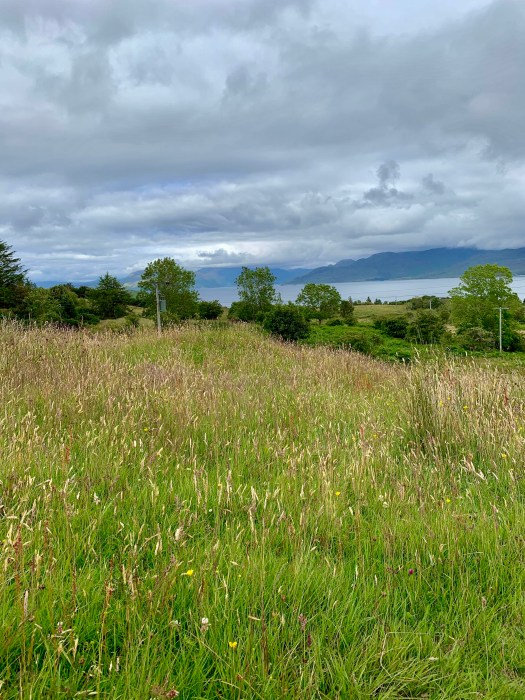
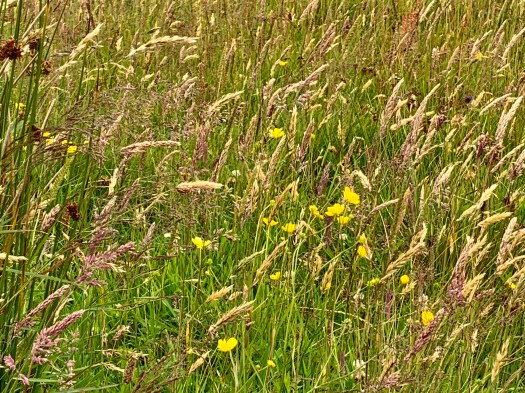
Our neighbours walked up onto the croft this afternoon whilst there were no builders on site, and took these pictures of the meadow below the house lying peacefully in the sunshine.

We were delighted to see that the grasses had regenerated and that there were wild flowers scattered through them. We haven’t seeded or done anything to this area – this is just one seasons regrowth now that the sheep are no longer on the land.

We can’t wait to see what else grows. The land has never been worked except for sheep grazing, and as such it’s completely organic and natural.

We’ll try as hard as possible not to disturb this habitat with our tree planting plans. The habitat that this provides to wildlife is invaluable, and to our eyes it’s beautiful.

Three days in…and we have walls!

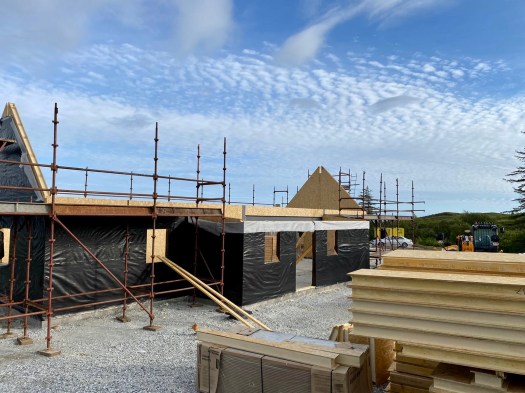
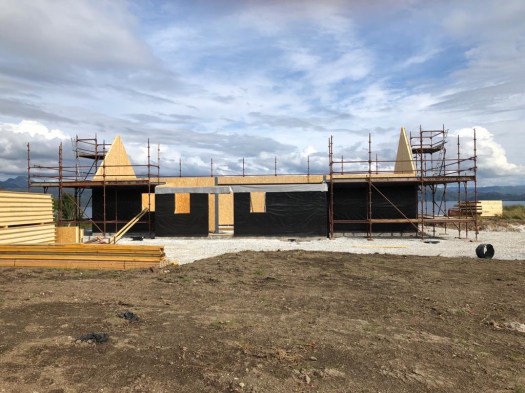
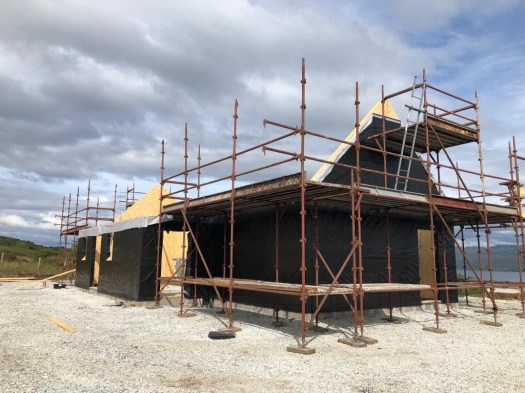
It’s remarkable how quickly the house now starts to take shape. This is progress three days in since the first panel was lifted into place, and although there’s much to do, they’re fairly cracking on with this.

All of the exterior panels are up, the beams are in and a waterproof membrane has been applied to protect the panels from the elements.

New beginnings

It’s lovely to see my two stepsons so excited about the next step in their lives. At 20 and 22 they’re both moving out of home this summer and have decided to take a flat together in Manchester.

They were up early yesterday looking at flats and planning next steps over mugs of tea in the kitchen.

I love that they can share living space and support each other whilst they finish university and find new work.

This has come at a good time for both of us. We’re in the process of downsizing possessions and packing up for the island, and many of the household things that we would have otherwise stored or sold can be passed on to them for their new flat, which will save them money.

It also means that the journey up to the Isle of Skye for visits is about four hours shorter than from London, which is a real bonus.

Whether the attraction of our remote cold, wet island and their wild-haired, welly-clad old folks will be enough to tempt them up to see us after the excitement of city living is entirely another matter! I hope so.

As I hope that the tranquility of our croft and the different pace of life there will provide a welcome haven for them from the madness of modern city dwelling whenever they need it.

New lives and new beginnings for all of us.

This is what life is all about.

❤️

SIP panels going up

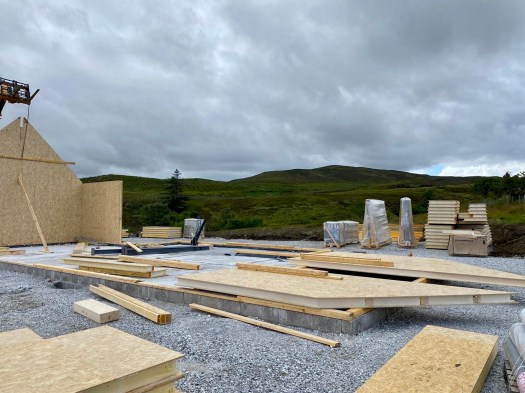
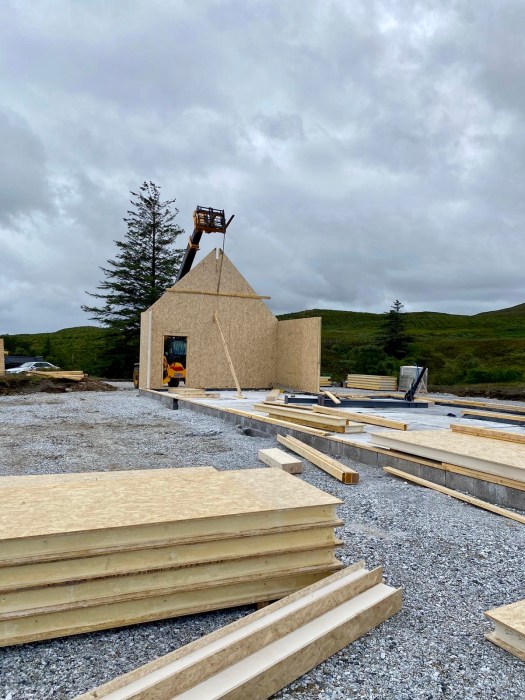
The SIP panels were delivered to site today and are starting to go up…

It looks a bit like a dolls house being built at this stage, although these panels are massively strong and well insulated.

Suddenly the house looks tiny…

When we looked into house build construction methods back at the design stage, we decided on SIP (structured insulated panels) for a number of reasons.

  • Speed of Construction
    Building with SIPs is a fast construction method. It is entirely possible for the SIP house ‘shell’ to be completed within seven days.
    Ours will take 2-3 weeks, we think. Useful on a rainy island.
     
  • Environmental credentials
    SIP-built houses are highly energy efficient, with the result that they are easier to heat. This means less harmful CO
    2 released into the atmosphere. Very little energy is used during the SIP manufacturing process, with SIPs using up to 50% less raw timber compared with conventional timber frame houses. We like that.
     
  • Sound Proofing
    SIP panels have excellent sound absorption properties with the result that the finished buildings are quieter to live in.
    After years of living in flimsy walled modern flats and houses with sound systems, guitar practice and video calls all going at once, this is a definite advantage!
     
  • Structural Strength
    SIP walls can be up to seven times stronger than conventional timber frame.
    The strength of SIP structures allows for thinner walls and no bulky roof trusses.
     
  • Thermal Performance
    Insulation is integral to the SIP system, and therefore doesn’t require installation at a later date. The superior thermal performance of a SIP structure will last the lifespan of the building, thanks to the solid core of insulation throughout the structure. This means that the building is heated evenly, is free from cold spots and benefits from reduced heating costs.


I guess the proof of the pudding, as they say, is in the eating… 😊

Only time will tell, but we have high hopes!

Dribbles from the island

Updates dribble in slowly from the builders like the intermittent drip from a tap.

Not known as the most patient of people, I await them anxiously, counting the days and weeks since the last email. It’s tough being remote from a build project when it’s your very future going up one block at a time.

Updates do come though – not every week, and not always with accompanying photos, but progress is definitely being made.

I believe that the concrete has been poured onto the foundation slab and that the builders are ready to start erecting the SIP panels next week. They’ve advised that the panels normally take about three weeks to complete.

After that the roof slates go on, then the larch cladding for the walls. By the time we visit in September we’ll definitely have the semblance of a house to see, even if it’s just the exterior shell.

It’s going to be an emotional moment.

Taking Shape

It’s taking shape, and the builders have been working hard to move this on whilst the weather holds.

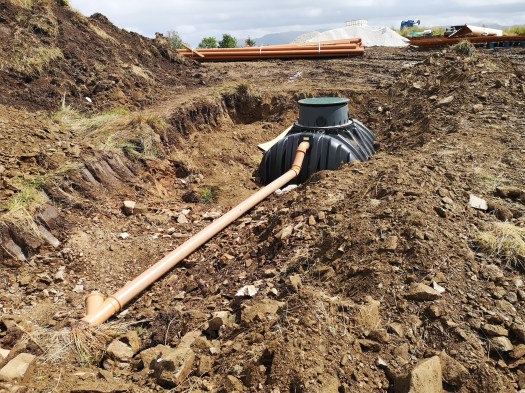
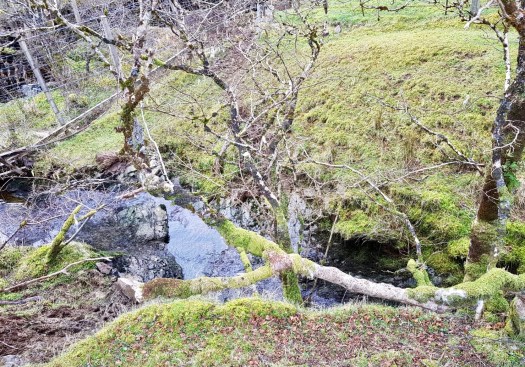
It looks as if the sewerage treatment plant is starting to go in, and the outlet pipe is being connected. This will discharge clean, treated water via an outfall into the burn at the back of the house.

Let’s hope that the water and electricity connections will be confirmed soon, as we won’t be able to progress beyond the summer without them.
It’s so good to see the house starting to emerge from the land. This is the first time that I’ve really been able to visualise it properly in it’s setting, and I think it’s going to sit well….

More progress, and the static

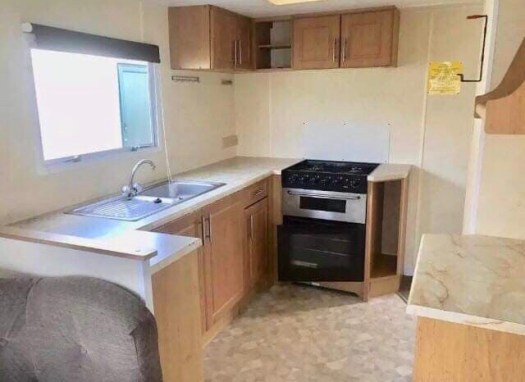
The kindness of strangers never ceases to amaze us. We’ve been offered a free static caravan by locals on the island to live in whilst we complete the build.

It’s old but fully functioning. It will need a lick of paint, a new boiler and replacement carpet in the main living area, but with all of that and transport costs it will still save us many thousands of pounds.

I’d been researching static caravans and not only are they pricey but the haulage costs can be massive. Due to their ten or twelve feet of width they need a police traffic escort, and so even bargains elsewhere in the U.K. would cost many thousands to transport to the island.

(This image was taken before two years of mud from their house build site was trodden in..😊 it looks much worse now…)

The couple that have offered it to us have been living in it themselves until recently as they completed their own self build, and can make it available from September, which is perfect timing for us. We’re so grateful.

We will be siting it close to the house itself so that connection to power and water will be easier.

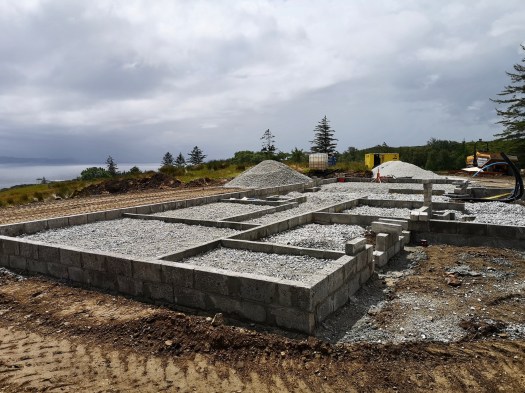
The foundations are progressing at pace now, helped by the recent good weather.

This does mean that it will be perched in a somewhat exposed position on the top of the hill of the croft, and a local friend suggested that tethering the static to concrete footings with lorry straps might be prudent due to the winter gales on Skye. We’ve asked the builders to create tether points for us in the hard standing at the back of the house site so that we can do just that.

We don’t fancy tumbling down the hill like a corrugated tin dustball in a storm…

Foundations

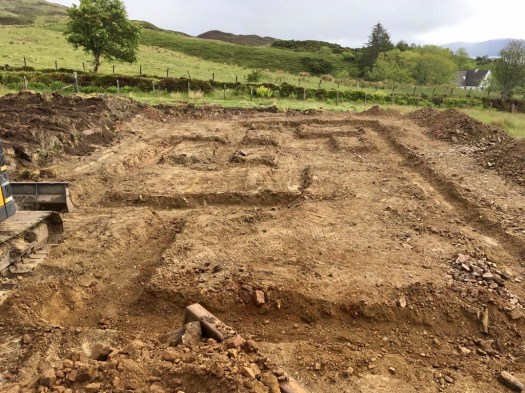
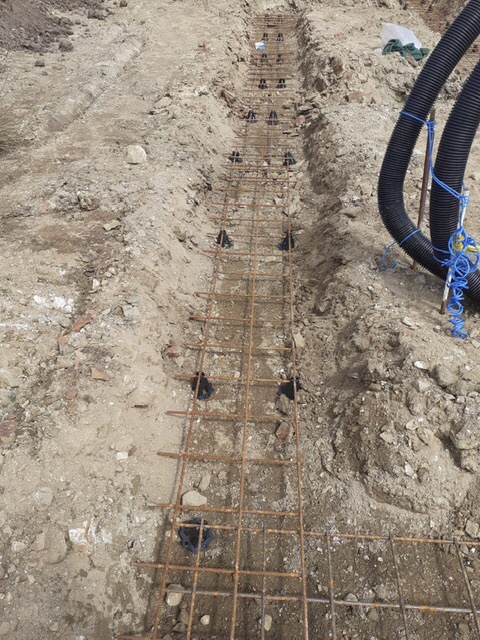
The builders seem to be moving quickly now. The track is in and the preparation for the house foundations has begun.

We’ve been lucky that they haven’t hit hard rock when digging the foundations. Just shale. We know that there’s an outcrop of what we think is Lewissian Gneiss just a few metres away from where the house is being positioned, which would have required blasting at great effort and expense..

The conduits are in for water and electricity, although connection of both services may be quite a slow process as SSE and Scottish Water both have significant backlogs due to Covid-19 and are not prioritising new connections as essential.

Next week the substructure build begins.

House site excavations

The access road has now been excavated, drained, and levelled as far as possible. It’s received it’s base of crushed stone and can support the heavy plant that will be trundling up and down the croft over the coming months.

I still think it looks massive and am hoping that it will weather to a darker colour and blend a bit more into the landscape over time.

At the moment it looks as if aliens visiting Skye could easily sight this from space and use it as a landing strip…and yes, maybe this thought was prompted by the re-runs of the X Files that we’ve been watching in lockdown..😬

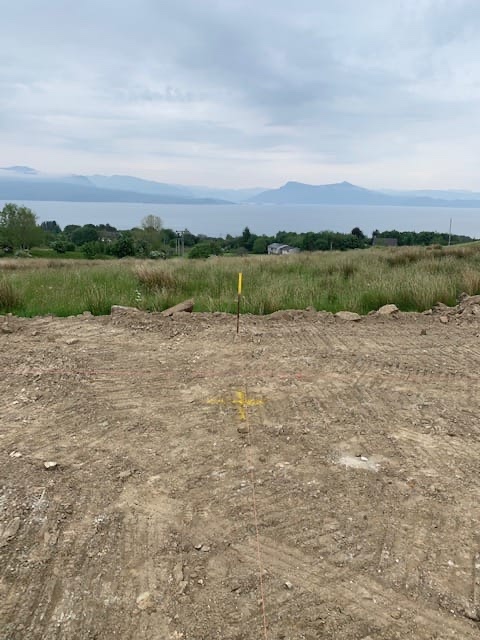
The house site excavation at the top of the croft has also started, with poles being laid out for alignment.

So, it’s moving! There may be some delays sourcing concrete for the foundations, but the local hospital rightly takes precedence for these supplies and we are happy to wait our turn in these difficult times.

We are on our way.