Bumblebee food

We ordered heather plants a few weeks ago from a specialist heather nursery here in Scotland.
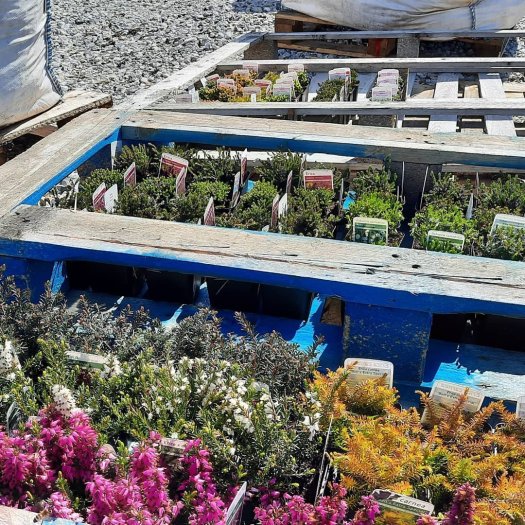
The idea is to plant them on the exposed soil banks on the sides of the access track on the croft to try and reduce the amount of soil erosion. We’d noticed that the winter rain had taken its toll before anything had a chance to establish, and needed to get something in as soon as possible.

Heather is a native plant here, hardy and resilient, and it’s roots help bind the soil well and minimise runoff.

As an extra benefit, the heather selection that we have covers a flowering period for all seasons, so there will always be some in flower at any given point. Great for nectar feeders.
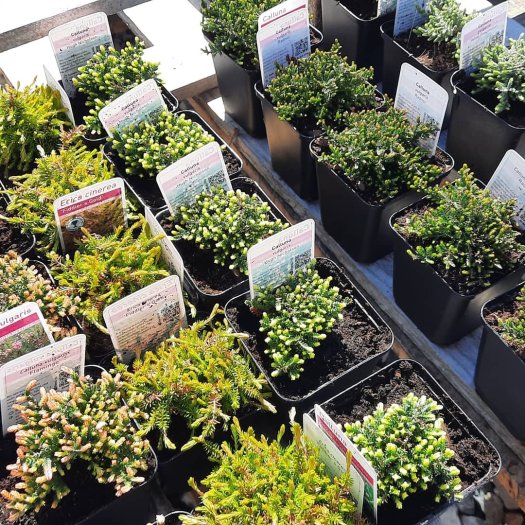
The plants arrived via post in three large boxes, extremely well packed and with the plants still fresh and damp. Each small pot had been hand-wrapped in damp newspaper, separated by cardboard and paper padding.

I unpacked them and let them have some fresh air and a good, long drink after their travels.
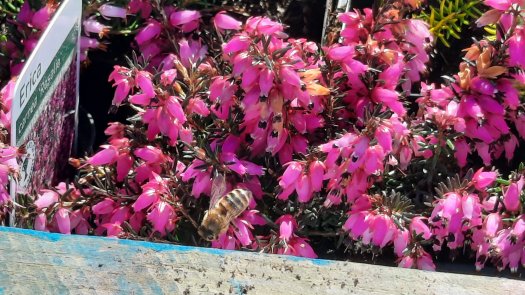
Almost as soon as I’d done so, a few honeybees arrived, rapidly followed by about four white-tailed bumble bees. They all fed hungrily on the early flowering varieties in bloom. These were the first bees that I’d seen on the croft this spring with the really cold weather.

We won’t stop at heather, of course. We have plans for red clover, camomile, sedum, borage, hardy geraniums and others, but it felt good to provide an early meal for the bees.
Easter Bread – Tsoureki

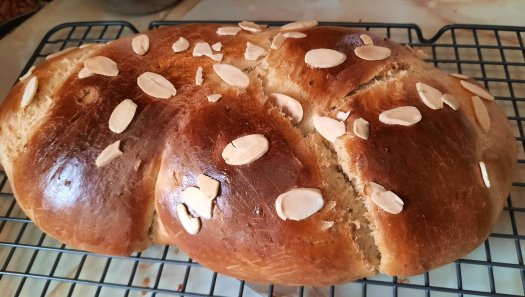
Tsoureki is a sweet, soft, fragrant Greek Easter bread which I first made last year in lockdown, having been unable to get Easter Eggs delivered.

We loved it, and it seems to have stuck as a tradition.

Of course, last year I had a proper kitchen, and a kitchen machine with a dough hook to take the strain. It needs a good fifteen minutes of kneading! This year was rather different.

I think that this was the most challenging thing I’ve tried to make in our tiny caravan kitchen so far, but it worked well, and we feasted on it for breakfast yesterday morning with enough left over for today too.

Rich with eggs, orange zest and mahlep, a spice made from ground cherry stones, it’s sweet, fragrant, soft and delicious. And all the more enjoyable for being a time consuming thing to make, and a once-a-year-treat.

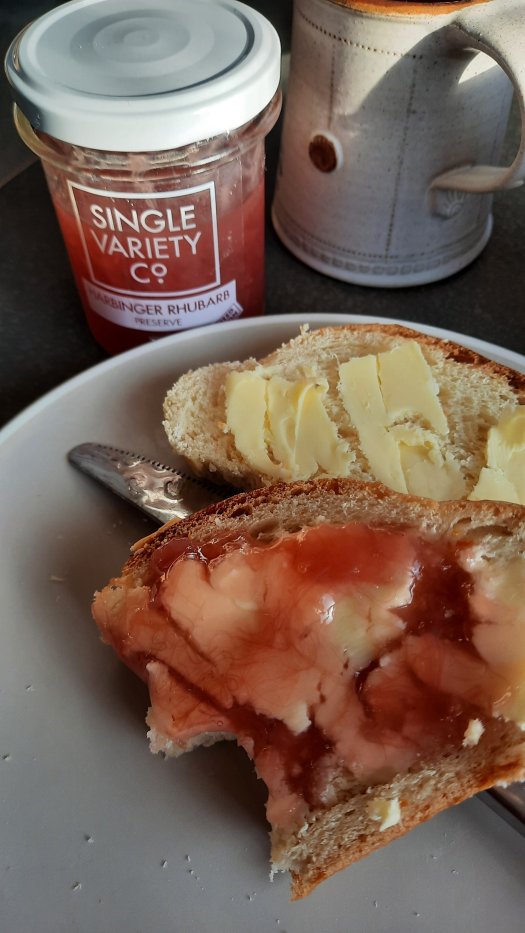
Husband enjoyed his straight with no embellishments, washed down with a cup of coffee. I decided to Northern Up my slice with butter and rhubarb jam, Yorkshire style. Which was unutterably delicious. No judgements, now!

Here’s a link to the recipe I used if anyone wants to try it.
Tsoureki https://www.mygreekdish.com/recipe/tsoureki-recipe-traditional-greek-easter-bread/

Happy Easter to you all!

Flying insulation

A friend commented that there had been precious little recently in the way of house build updates. Which is very true. Progress has been slow, and we are still taping and foiling some months into the process.

A number of things have conspired to make what should have been a relatively quick job a complete marathon.

Husband has had to fill and tape all wall, door and window seams throughout the house BEFORE foiling, as well as taping everything again AFTER foiling.

This has turned into a huge, time-consuming undertaking which he felt was necessary because of gaps left by the builders. Gaps that if left open would have compromised our structural water and air tightness.

His faith in the quality of the work by the builders has been severely dented as these are not cosmetic problems that we felt could be covered over, sure to cause us issues some years down the line.

He has been doing this work alone, and other time-critical work has taken weeks away from this process, such as installing the house guttering and the start of work on the croft as Spring approached.

However, the end is in sight. The floor insulation for the next stage has arrived.

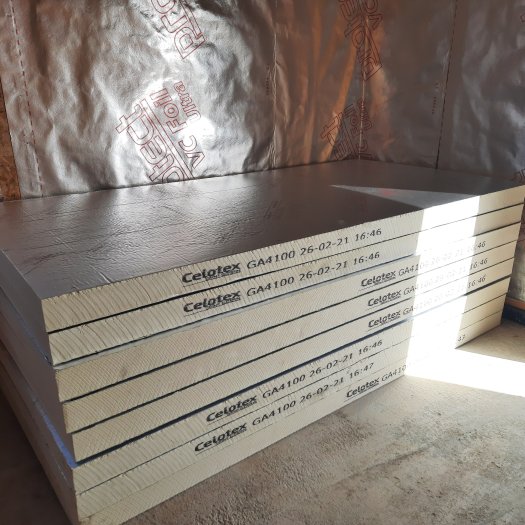
It arrived on a thankfully dry day, but a windy one. About 50 huge sheets of insulation which blocked the drive on arrival and which we had to manually carry between us into the house.

These sheets are big, requiring two of us to manoeuvre, but very light in weight, only 10kg each. They exhibited impressive aerodynamic properties as the wind caught them, acting like a sail, taking both our body weights to counter their desire to take off down the croft.

It took a whole afternoon to get them wrestled safely under cover into the house.

They’ve also provided me at least with a bit of a morale boost. They are a nod to the promise of progressing onto the next stage, which is laying these, then the underoor heating pipes, then screed, and us being a few steps closer to this being a house.

We will get there. Courage, mon brave!

Spring storms & wild garlic

The weather on the island has taken a turn for the worse since the Spring Equinox.

As if to laugh at our feeble attempts to plant, a prolonged few days of stormage has reminded us that Winter hasn’t done with us yet.

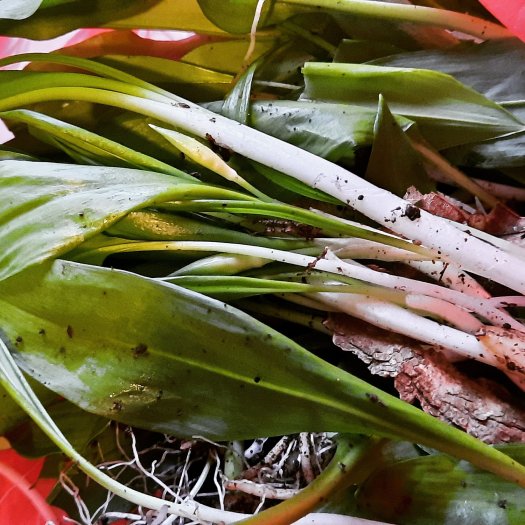
A neighbour brought us a huge bag of wild garlic picked from local woodlands, which was most welcome. I chopped the fragrant leaves through salad and reserved the plants that still had their bulbs and roots attached so that we could plant them on the croft.

Husband dug them into a damp, grassy bank above the stream under dappled shade. Hopefully they’ll take and we’ll have the start of our own wild garlic patch before too long.

Just as he finished the planting, the heavens opened. We’ve now had a solid 48 hours of hail, rain and high winds, and it’s not abating any time soon.

Our tiny burn went from a gentle trickle of water to this rushing torrent within hours…

The Mandrake Babies

There’s something so intriguing and otherworldly about growing beans.

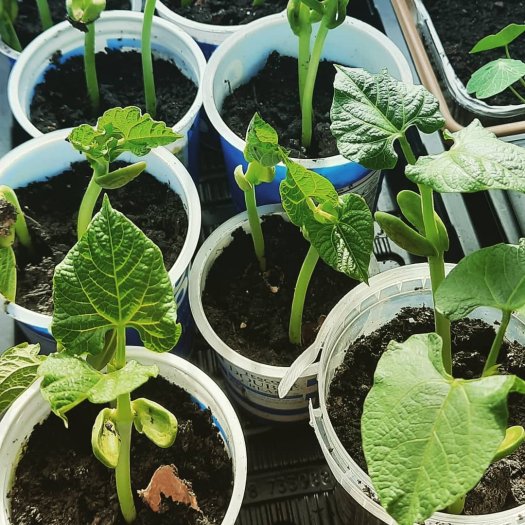
Best friend in France sent me a pack of organic borlotti beans, (not from France, from a UK seed company) and I popped some into seed compost five days ago in the growing room in the caravan, not hoping for much, to be honest.

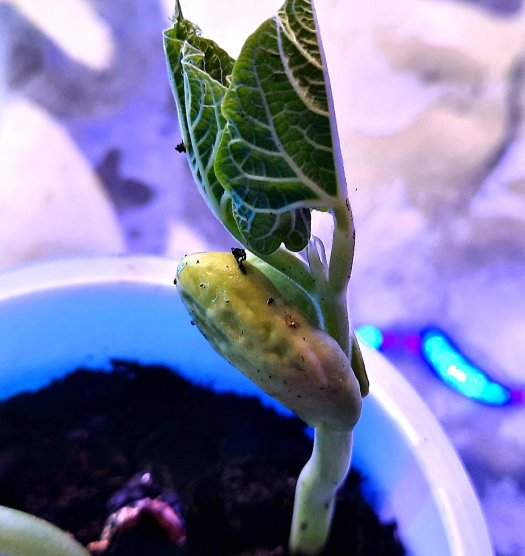
They germinated within two days, splitting the soil and unfurling huge, robust stems. It was seriously like watching a triffid grow. I could almost see them get bigger by the hour.

After four days all of them had leaves. They’re sitting there now, waving their stems about, looking a bit menacing… 😊

I think I’ve hatched mandrake babies by mistake. Someone get me some ear defenders..

Growing beds

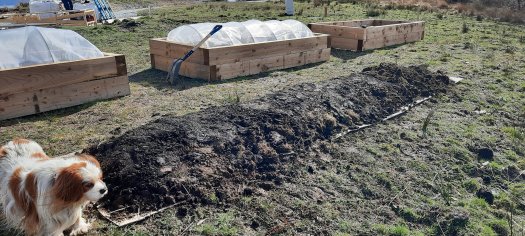
We had a dry, sunny, spring-like day this week and we decided to build a hugelkutur bed alongside the wooden raised beds that we’d built last month.

These are permaculture growing beds built over a core of wood or brash, with turf, soil and compost layers. They allow plants to grow where the soil would otherwise be too shallow.

The theory is that the central core of wood slowly decomposes, releasing nutrients into the bed. We will be adding to it annually with top-dressing to keep its depth consistent. This is a no-dig bed.

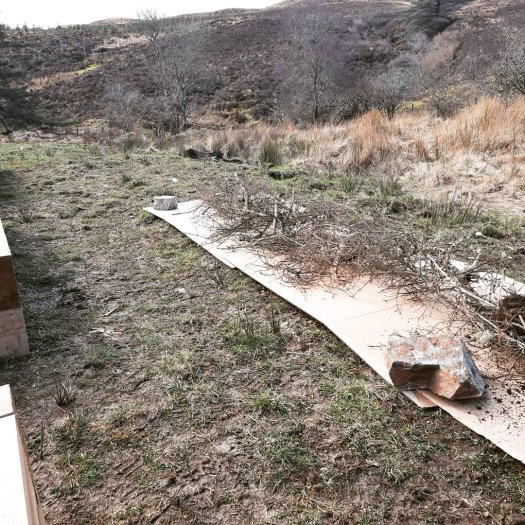
We built a small 4m bed, starting with a cardboard base to try and suppress the rush growth, and dragged up dead branches from the copse at the western edge of the croft to form the core.

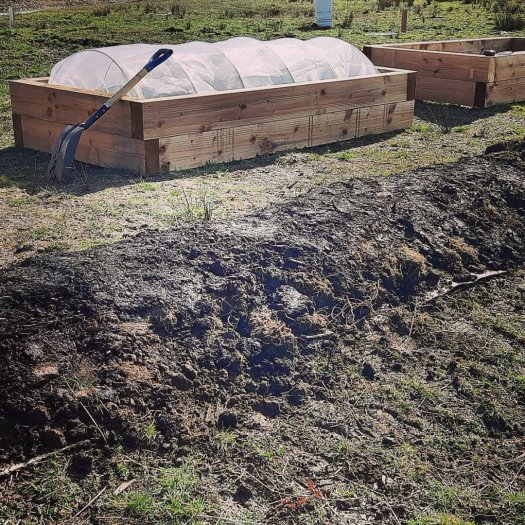
We added layers of soil, compost and bark chip mulch until we had something about 60 cm deep. Some hugelkutur beds are much taller than this, like giant earth Toblerones, but as an experiment we figured that this was big enough.

We’ve planted up the rhubarb crowns in it and I’m eyeing the rest of the bed up for potatoes and perhaps kale over the coming weeks.

We’ll need to lay bark chip paths between the beds as it’s already starting to look like the Somme with all the wheelbarrow and wellie work recently churning up the mud.

If this works I can see more of these being constructed later in the year.

It’s a simple idea and reminds me very much of the lazybeds or runrigs on the hillside above the croft where previous generations of farmers scraped enough soil into mounds to grow food.

These ancient forms of land tenure are said to predate the crofting system, and it appeals to me that this more modern system of permaculture is really the same thing.

Waste not, want not

My mother used to use this phrase a lot. She was born of a generation that valued thriftiness, and it’s a mantra that I wish I’d taken up more seriously years ago.

My generation was, in contrast, one of consumption, and I shudder now as I think back to the waste I created without a second thought over the years.

I’ve always tried not to waste food, but it’s only really been in recent years that I’ve started really repurposing other things rather than just throwing them out.

Many of my seedlings are being grown on in yoghurt pots, old fruit juice cartons and mushroom trays that I would have previously discarded without a second thought.

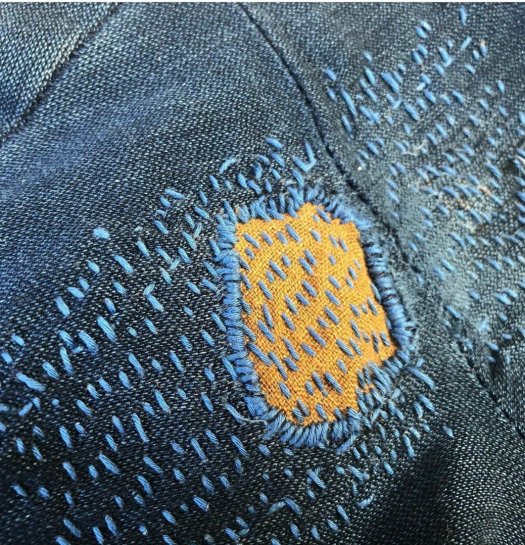
Composting is taking care of most of our vegetable-based kitchen waste, and I’m repairing clothes now that I have time to do so rather than endlessly buying new. I feel better for it, I honestly do.

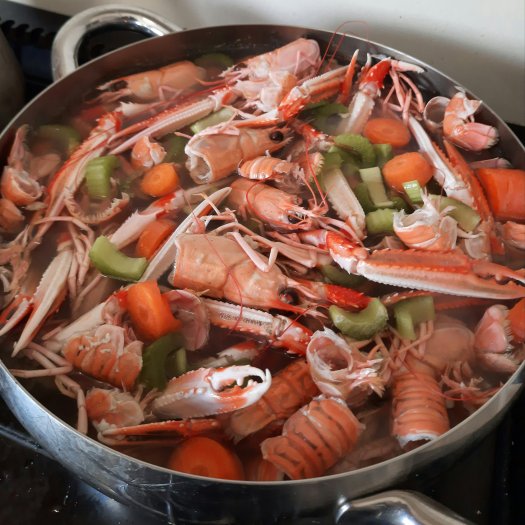
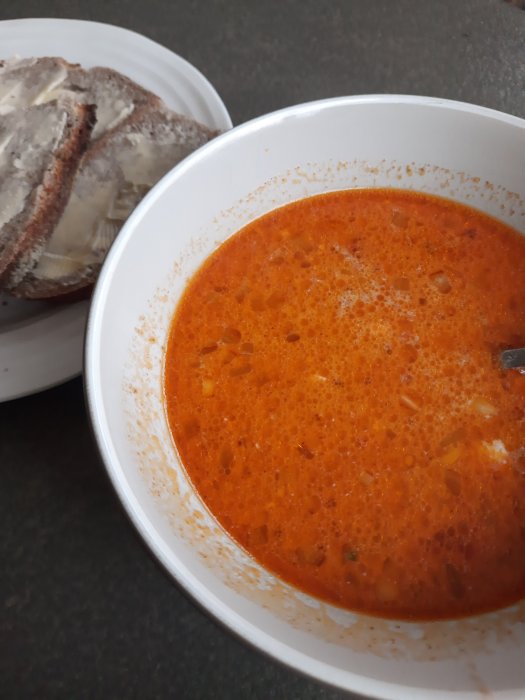
The langoustine feast left us with an enormous pile of empty shells, heads and claws. Janni, our neighbour, passed on a brilliant Icelandic recipe for langoustine bisque which she warned was smelly to cook, but quite delicious.

The stock making process was indeed stinky. I opened all the doors and windows in the caravan but the smell was still strong hours later!

The resulting bisque was gorgeous with a deep, richly intense flavour. There are no artistic Instagram swirls of cream here, I’m afraid, just bowls of soup with crusty homemade spelt sourdough bread given to us by another neighbour.

Janni made wild garlic aioli to go with hers, but I hadn’t been out harvesting yet.

As we sat eating our bisque watching another pink sunset over the mountains, I reflected that dinner tonight was largely made out of leftovers.

My mother would have been proud.

Seafood feast

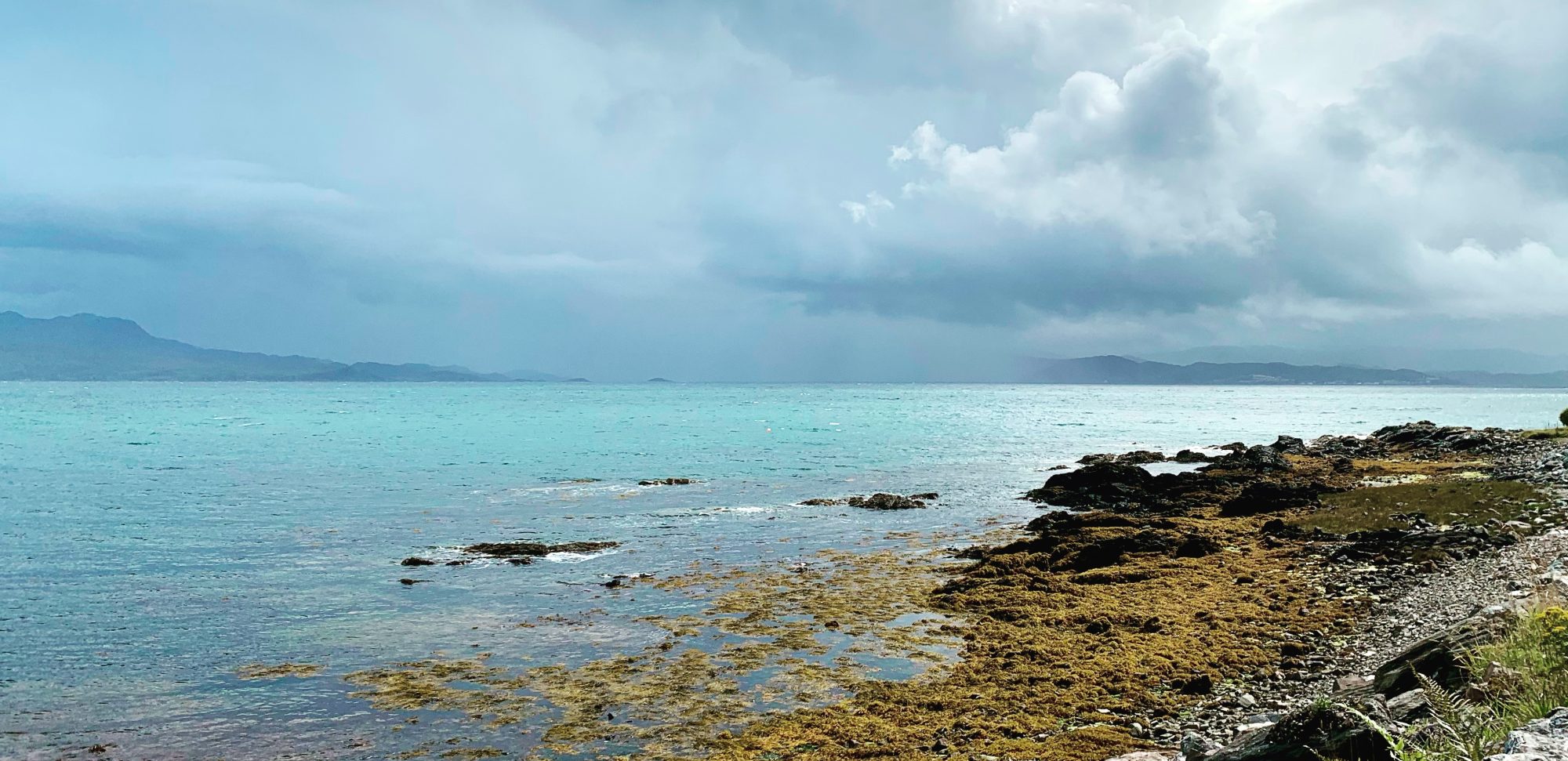
I love living on this island. The waters around it are cold and clean, and the seafood fished in its waters can’t be beaten.

Kind neighbours alerted us to the fact that we could buy rope grown mussels fresh from a small mussel farm a few villages away some weeks back. I’ve always loved shellfish, but these were a revelation. Small and sweet.

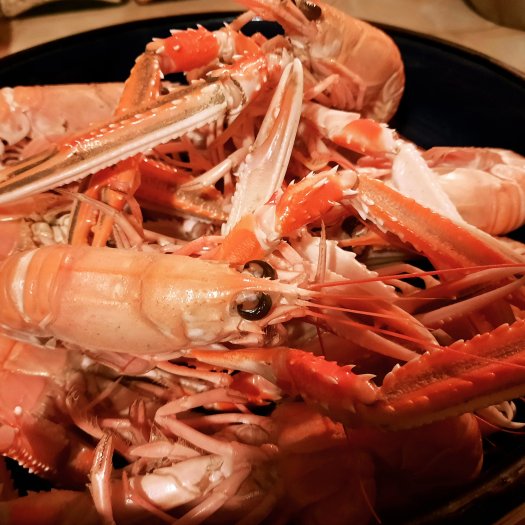
This morning we got a text from them again to say that fresh langoustine would be landed today, and would we like some? Would we ever!

They arrived as the sun was setting, with a carrier bag holding two kilos of live langoustine. For less money than a tiny bowl of these, should you even be able to get them, in London..

When we opened the bag I have to say that my heart quailed a bit. They were very alive…snapping their pincers and looking very angry. Quite rightly so. Thankfully husband is made of sterner stuff and he stepped in and cooked and prepared them for us.

Supper tonight was a feast. Simply cooked and dipped in garlic and coriander butter, they were sweet and succulent. I’ve never had fresher or tasted better.

I suspect most of these make their way abroad usually, but with Covid meaning that hotels and restaurants are closed, the local fishermen are offering them to locals.

Definitely our gain.

Scything for Sassenachs

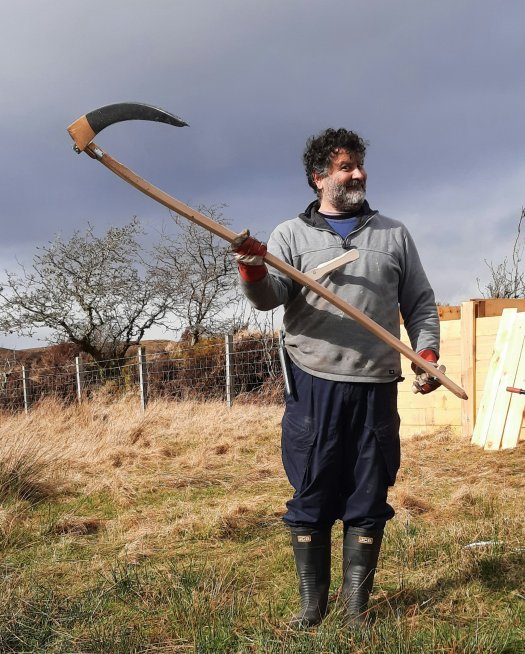
One of my early blog posts from 2019, before we moved onto the croft, was about us wanting to buy an Austrian scythe to work the land.

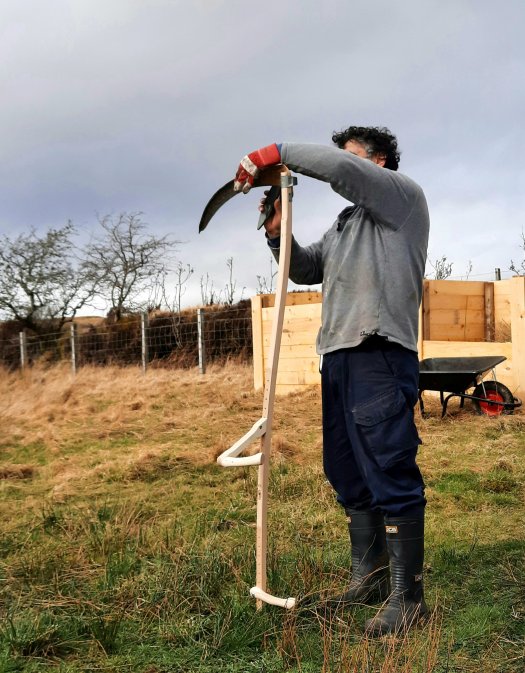
It feels like another milestone achieved in that our first scythe arrived in the post a few days ago.

Of course, once husband had assembled and peened the scythe (oooh, technical scythy term there 😊) it was clearly time to don the silly face and swoop around the croft like DEATH from a Terry Pratchett novel.

It was a mercy for us all that he doesn’t own a hoodie…

(Dog watching in trepidation from the safety of the caravan).

On a more serious note, it was lovely to watch him cutting a swathe through the reed clumps with an increasingly confident, relaxed swing. No petrol fumes, no engine noise, no protective face shield.

Just the sound of the birds, the burble of the burn and the gentle swishing noise of the blade through the weeds.

Every bit as good as we’d imagined.

Blue Growing update

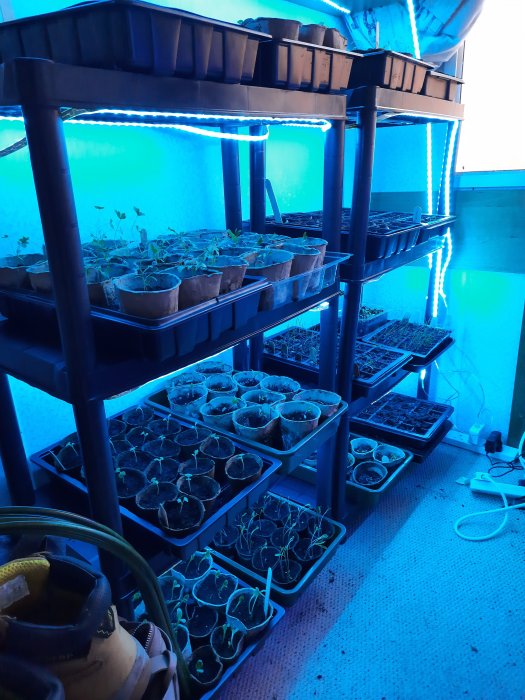
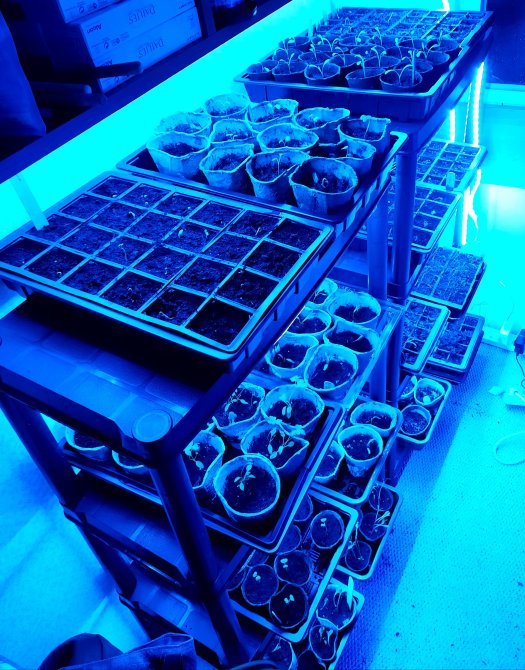
The seed sowing chaos of the caravan spare room has been taken in hand and professionalised!

We now have durable shelving with UVA grow-light strips attached to the underside of each shelf. I’m feeling very happy.

The days of my rickety cardboard box tray balancing act are over. I think that husband realised that he was in danger of having the next seed tray balanced on him if I ran out of space… 😊

We now have pak choi, Sutherland kale, leeks, onions, borage, calendula, rocket, mustard leaves, coriander, parsley, mint, lettuce, salad burnet, nasturtiums, garlic and shallots underway. All glowing eerily blue under their UVA lights.

Today I will be sowing borlotti beans in pots in the probably vain hope that I can get them to maturity on the croft despite the wind. This one is a bit of a stretch, but it’s worth a try..

The directly sown plants, such as carrots, parsnips and yacon roots will all be in May. Same for the potatoes.

The garlic, shallots, babbington leeks and onions have already been planted out into the beds, and we covered them in enviromesh yesterday for a bit of protection.

I can already see that my three initial raised beds won’t be enough, even with separate big pots for the herbs, so we will be building a long no-dig bed directly onto the croft for the rhubarb and berries. We will put in more raised beds next year after we’ve finished the house.

Next up it will be windbreak hedging…

This will be an interesting year – let’s see what grows.