Scything for Sassenachs

One of my early blog posts from 2019, before we moved onto the croft, was about us wanting to buy an Austrian scythe to work the land.

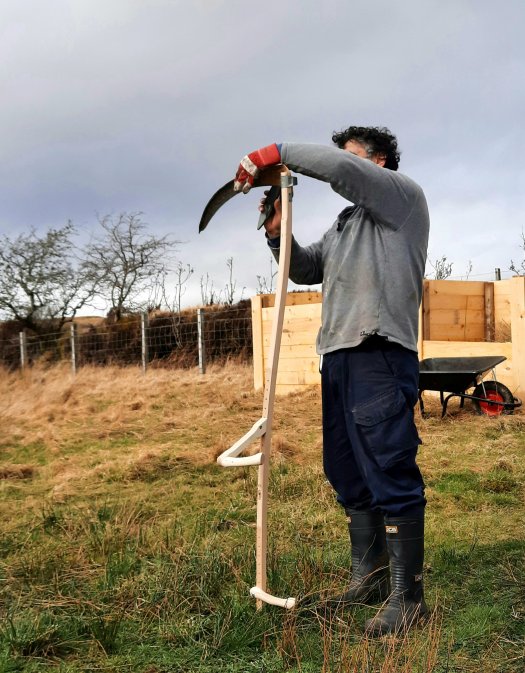
It feels like another milestone achieved in that our first scythe arrived in the post a few days ago.

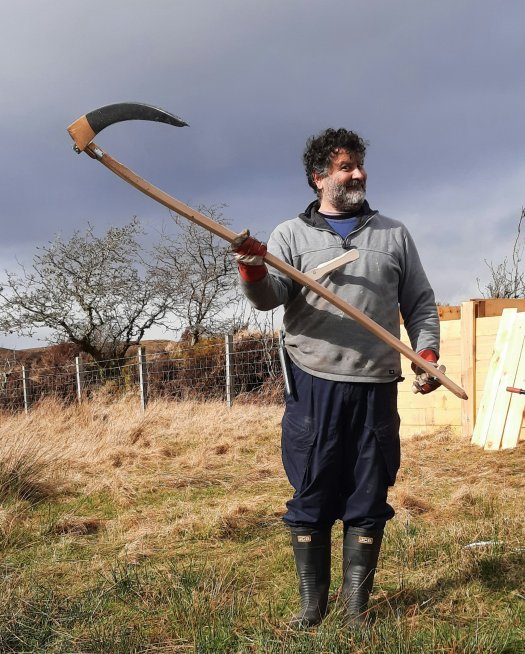
Of course, once husband had assembled and peened the scythe (oooh, technical scythy term there 😊) it was clearly time to don the silly face and swoop around the croft like DEATH from a Terry Pratchett novel.

It was a mercy for us all that he doesn’t own a hoodie…

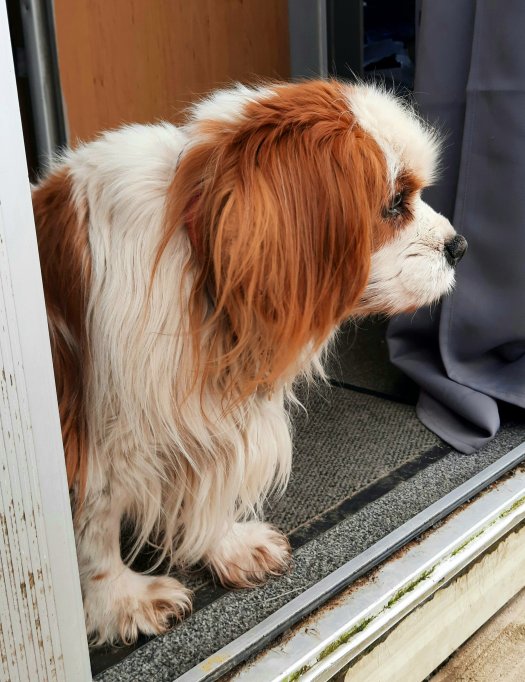
(Dog watching in trepidation from the safety of the caravan).

On a more serious note, it was lovely to watch him cutting a swathe through the reed clumps with an increasingly confident, relaxed swing. No petrol fumes, no engine noise, no protective face shield.

Just the sound of the birds, the burble of the burn and the gentle swishing noise of the blade through the weeds.

Every bit as good as we’d imagined.

Blue Growing update

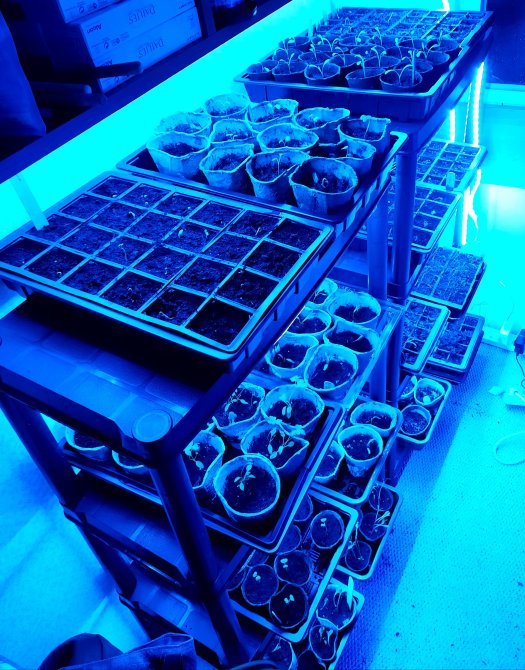
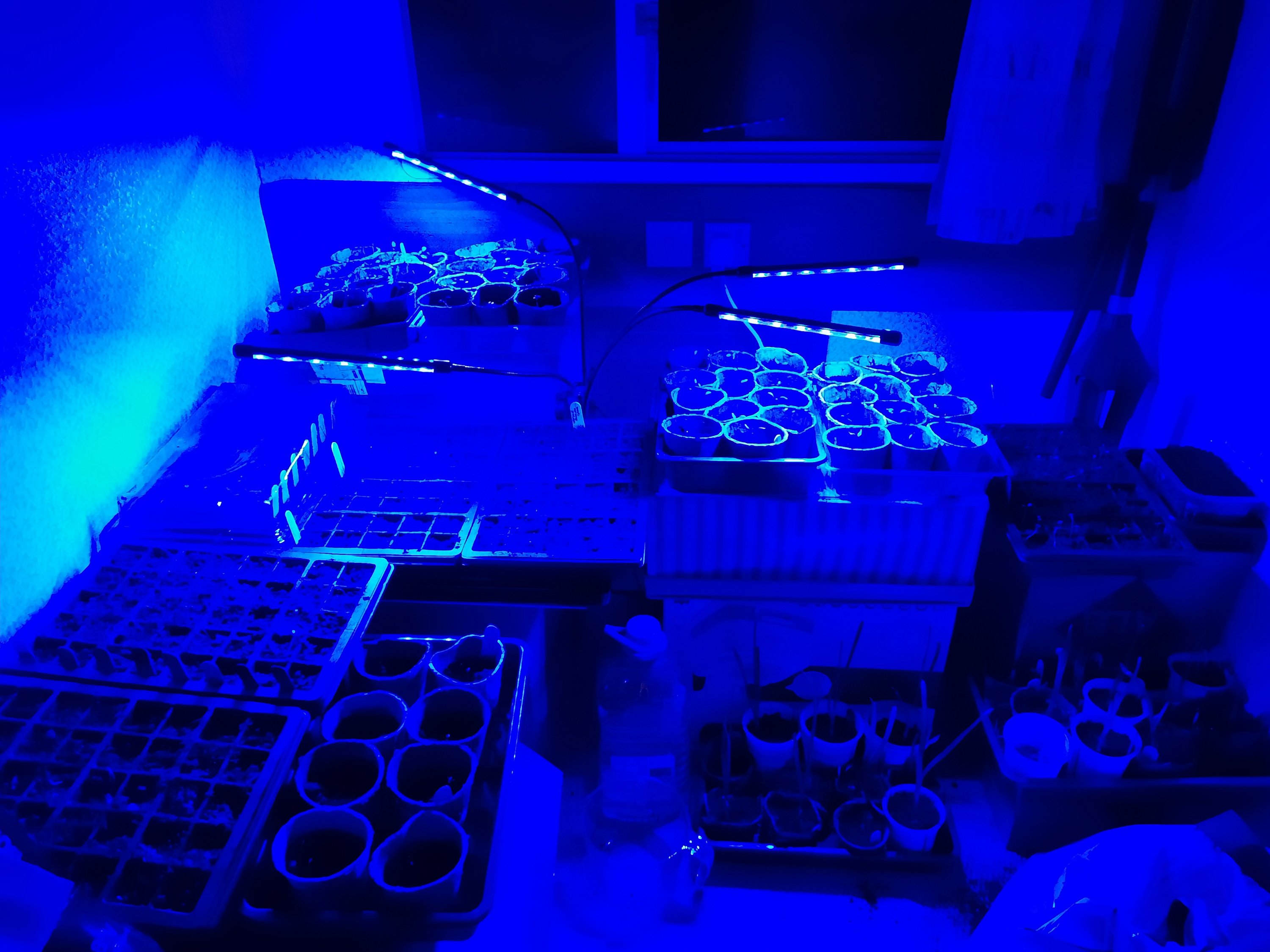
The seed sowing chaos of the caravan spare room has been taken in hand and professionalised!

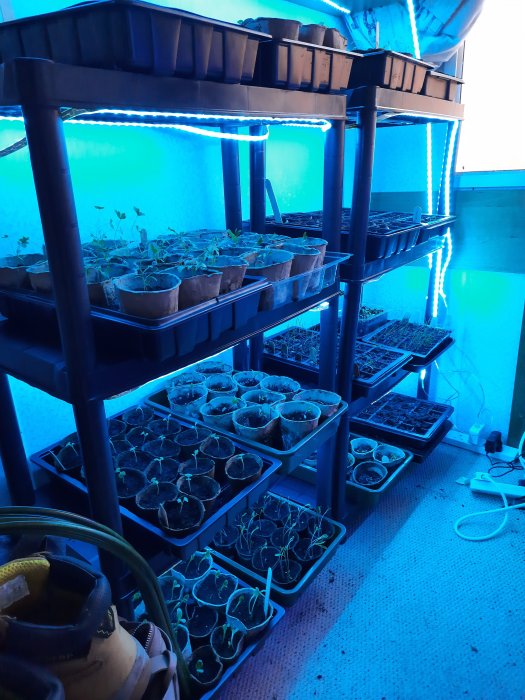
We now have durable shelving with UVA grow-light strips attached to the underside of each shelf. I’m feeling very happy.

The days of my rickety cardboard box tray balancing act are over. I think that husband realised that he was in danger of having the next seed tray balanced on him if I ran out of space… 😊

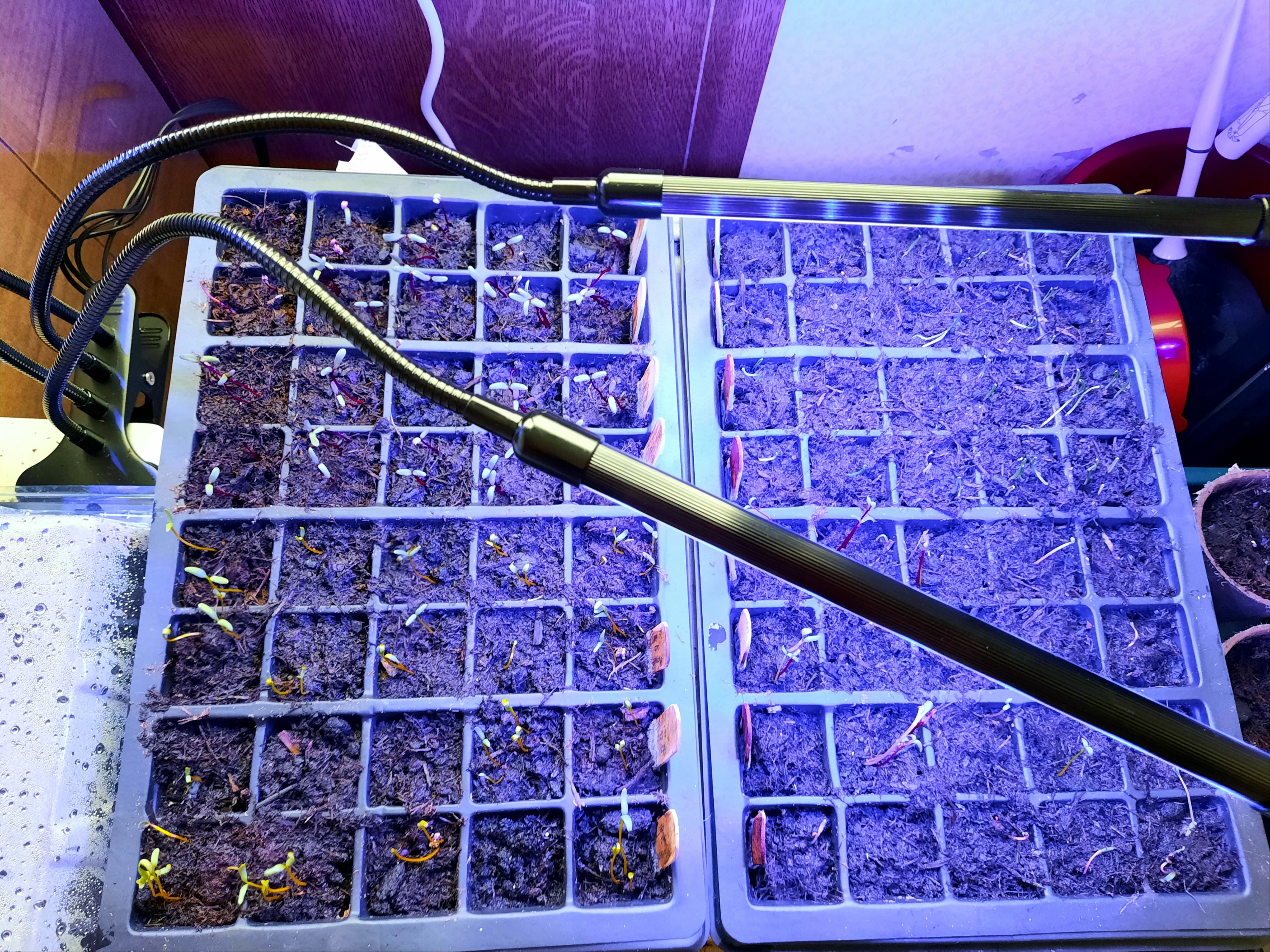
We now have pak choi, Sutherland kale, leeks, onions, borage, calendula, rocket, mustard leaves, coriander, parsley, mint, lettuce, salad burnet, nasturtiums, garlic and shallots underway. All glowing eerily blue under their UVA lights.

Today I will be sowing borlotti beans in pots in the probably vain hope that I can get them to maturity on the croft despite the wind. This one is a bit of a stretch, but it’s worth a try..

The directly sown plants, such as carrots, parsnips and yacon roots will all be in May. Same for the potatoes.

The garlic, shallots, babbington leeks and onions have already been planted out into the beds, and we covered them in enviromesh yesterday for a bit of protection.

I can already see that my three initial raised beds won’t be enough, even with separate big pots for the herbs, so we will be building a long no-dig bed directly onto the croft for the rhubarb and berries. We will put in more raised beds next year after we’ve finished the house.

Next up it will be windbreak hedging…

This will be an interesting year – let’s see what grows.

Perennial Vegetables

I love the idea of vegetables that are sown or planted once and keep growing. For years.

There’s a lot of effort involved in sowing vegetable seed annually, so it makes sense to have perennial vegetables as the backbone of a permaculture garden.

They may not bring instant rewards, but you know what, this croft garden is for the long term and so a few years for these plants to establish before they give back isn’t a great deal to ask.

Perennial vegetables are for the most part ancient heritage varieties. They include such vegetables as asparagus, artichokes, walking onions, leeks, kale and broccoli. Some of these varieties, such as the Sutherland kale that I’m growing from seed, nearly died out and are really quite rare.

I’ve received my very first perennial vegetable in the post from Quercus Edibles, a small grower in Devon. It’s a Babbington Leek. As soon as the hail storms abate, this little clump of hardy loveliness is going into the ground.

The first of what I hope will be many perennial plants on the croft.

The Pair of Ravens

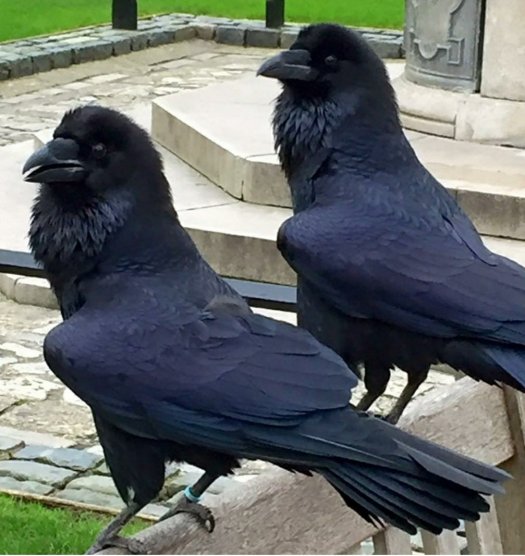
I’ve mentioned before that we have two Ravens on the croft. Ravens are solitary birds, but they are said to pair-bond and mate for life.

*photo credit the Raven Master, Tower of London

As mating season approached this Spring, we noticed the morning calls from the old pine tree start to change.

In addition to the rough croaking song of the male raven each morning, there’s a more softly pitched, warbling call that comes a few seconds afterwards in response from the female. This is repeated many times over the course of the day. We think that they have nested somewhere in the large trees on the western boundary.

We often see the two birds flying over the croft together throughout the day, hovering and wheeling through the skies before disappearing over the hills to the north of us. They are skillful flyers.

I personally think it’s fabulous to have such birds on the croft, but many of the crofter locals think otherwise. I’ve had darkly muttered comments about Ravens taking newborn lambs, and whether or not this is true, or how infrequently it happens, there’s no allowance given for the fact that even Ravens have to eat, and that this is sadly Nature’s way.

I appreciate that there has to be a balance. But to demonise an intelligent bird that is doing no more than trying to survive can’t be the way.

We’ll continue to enjoy our Ravens.

Sunday musings

As I sit here with my feet up in front of the fire and a blanket across my legs, the rain is lashing the sides of the caravan. There is a small, furry dog snoring by my side, I feel content that it’s been a productive week.

The weather broke yesterday from a four day dry spell. It held long enough for us to finish the guttering at the back of the house after a great deal of effort and frozen fingers.

Do not ask me what husband is doing at this point on the flat roof….. I couldn’t resist a quick shot. 😊 (Cyprus Joe, that’s a metaphorical shot before you start with the death of husband jokes.. 😉)

It may have been dry but it was only about three or four degrees centigrade at most, and especially cold whilst up the ladder.

Husband says that he’s developed a death grip from hanging on grimly whilst working at height ..
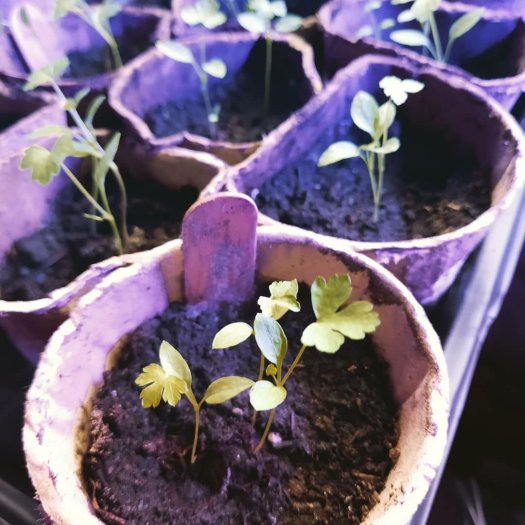
There’s been some progress too on the croft side. The seeds are coming along nicely. The potatoes are chitting. I’ve pricked out lettuce, beetroot and parsley seeds, which seem to be growing well despite the rather makeshift greenhouse arrangements in the caravan.

I’ve also planted out the garlic into the raised beds and have the hoops and enviromesh ready for when anything else goes in. Which the locals advise shouldn’t be until the end of April at the earliest to avoid the threat of frost…
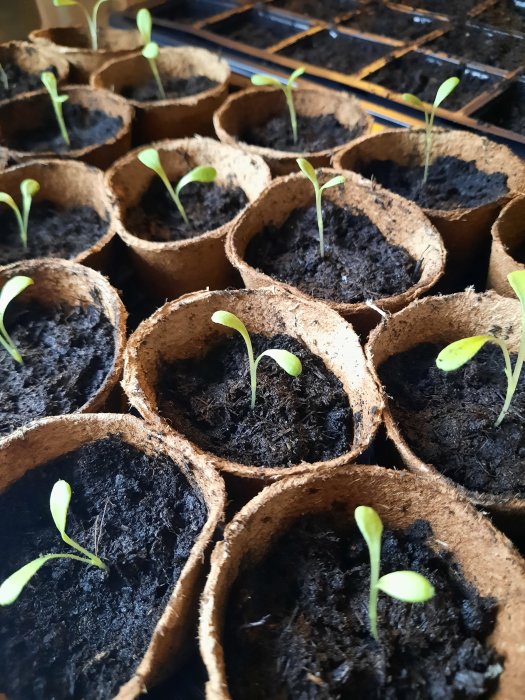
I’ve sowed some borage, calendula and nasturtiums as companion plants: we may as well start to provide food for beneficial insects and bees as quickly as we can. I’ve now run out of room completely for seed trays…this last batch are balanced precariously on the cooker…

On the compost side, husband has ordered the material for the compost bin roof and we’ve started adding our household vegetable waste to the bins.

A neighbour is happy to keep her composting food waste for us too, so this should double the rate of build up. I’ve also sourced donkey, horse and chicken poo locally from crofters and stables, so as soon as we can collect we can add these to the mix.
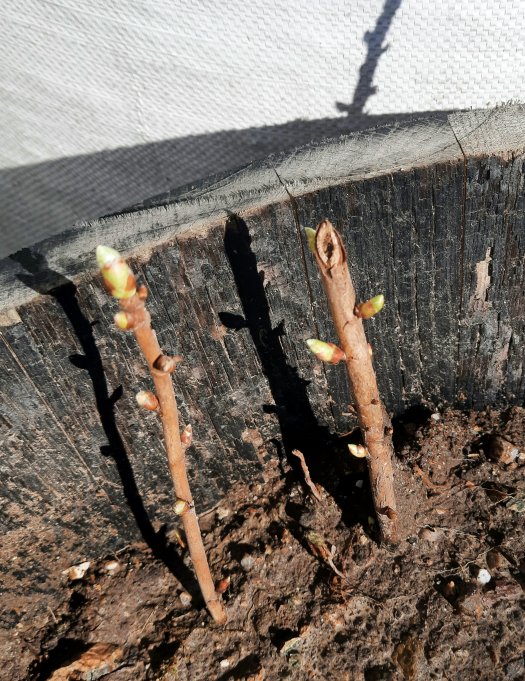
And the berry bed that I have been planning for so long is starting!

I now have honeyberry, tayberry, raspberry and blueberry plants all ready for planting. I also have cuttings of jostaberry, red gooseberry, and blackcurrant which have survived the worst of the winter so far and which have started to bud..

A good week.
The Vault of Black Gold

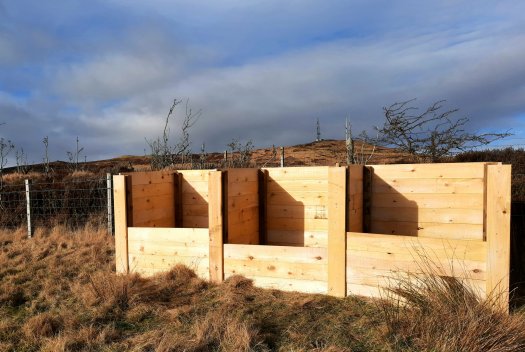
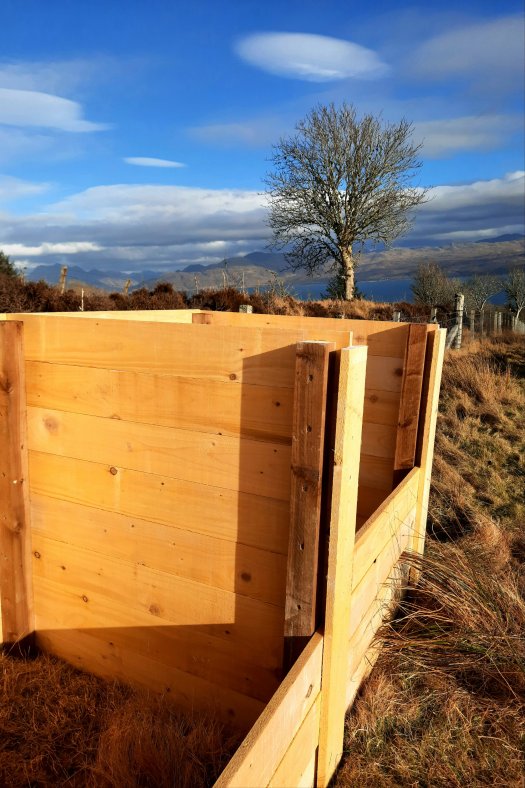
On a couple of dry days this week husband built and put up a compost bin.

I say a compost bin, it’s more a super deluxe compost city. The worms in this complex will be living in ultimate compost style, the Des Res of Decomposition, the Mansion of Manure, the Penthouse of Poo, our very own Vault of Black Gold! 😉

With three bays, removable front slats for easier inspection and turning, and a roof (yet to come) to protect from the worst of the elements, I’m so pleased with how it’s turned out.

We have a tonne of organic, peat free bought compost with which we’ll start the beds off this year, and we’ll layer the homegrown stuff with what’s left of this.

I’ve found a local lady with donkeys on her croft who is happy to give us bags of straw and donkey poo, and Angus, our village crofter keeps cows, so I think maybe a conversation there could be had too.

That and applications of seaweed from the local shoreline as well as vegetable waste and croft scythings and I’m really hopeful that it will be successful.

With a bit of luck from the soil gods this time next year we’ll be digging in our very own black gold.. 😊

Herbage and Seeds

The urge to grow new things is very strong. We have no greenhouse or polytunnel yet, so I’ve set up a small space in one of the rooms in the caravan to start my seeds off. Luckily this room still has the old carpet down so it doesn’t matter if it gets grubby.

Balanced somewhat precariously on old cardboard boxes and a heat mat, and wedged between boxes of spare clothes and the hoover, are my first trays of seedlings. The blue wands of wonder are moved around to those plants that seem to need them most. It’s not exactly a professional set up, but it will do!

I’ve tried to choose plant varieties carefully to ensure that they’re hardy for our exposed site, but this first year is going to be very much an experiment.

I know that I’ve probably started too early for these northern altitudes, but I was itching to start. If they get too leggy I’ll just have to re-sow.

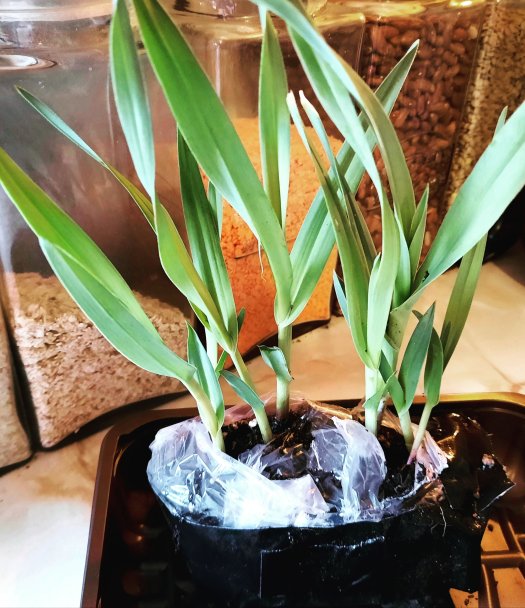
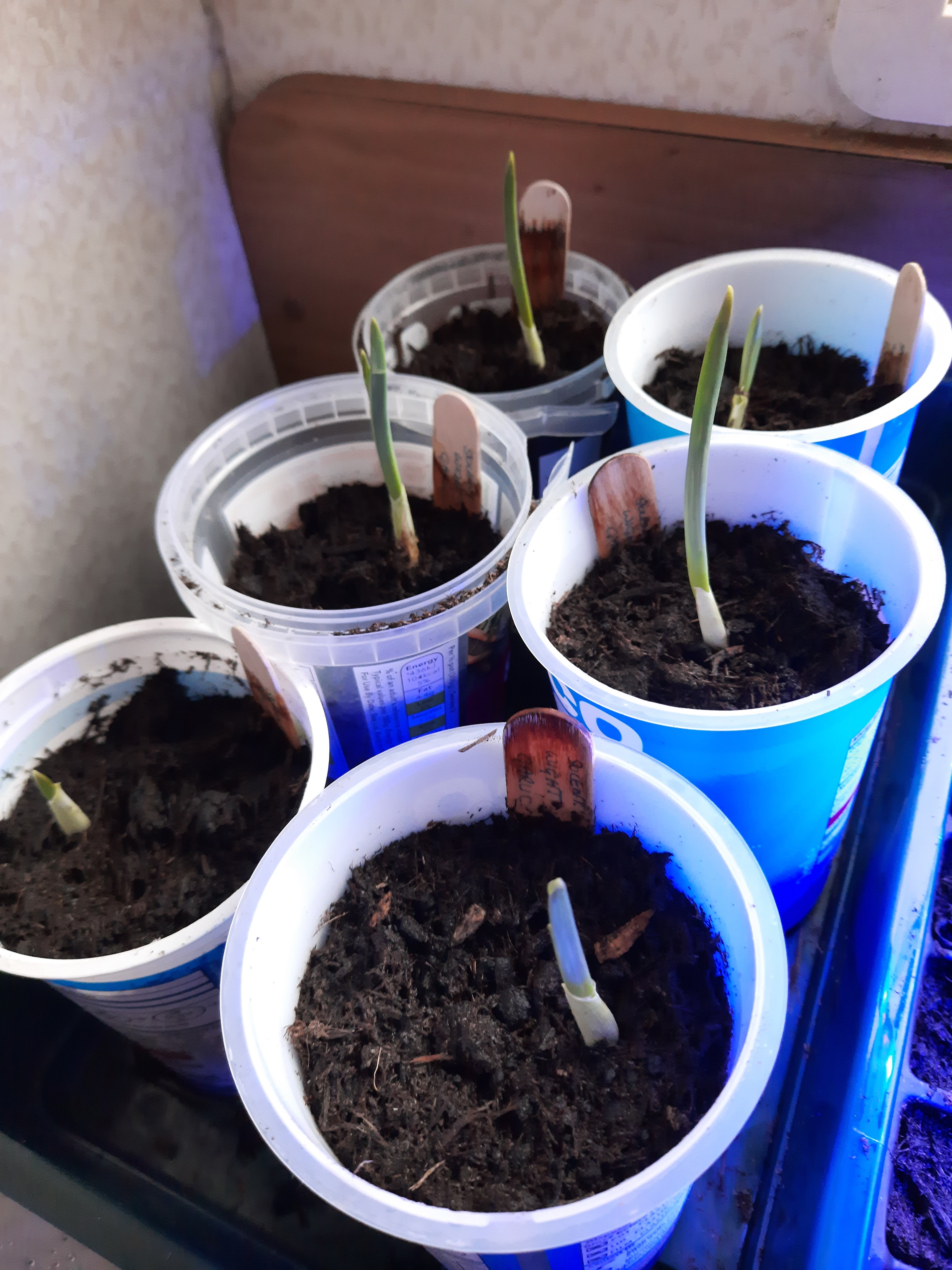
I have garlic ready to plant out. We eat lots of that, and I have more to plant directly into the soil once the beds are ready.

I have seed potatoes chitting ready for planting in the coming weeks. A local crofter recommended two varieties that I’m going to be trying, with good flavour but also good blight resistance.

I also have beetroot, chard, leeks, sorrel, parsley (it germinated! Hallelujah!) and Sutherland kale sown and just starting to grow.

Husband has been working on the construction for our compost bays too, which we need to start as soon as possible. The price of good compost in the quantities we will need is eye-watering, and I’d much rather we made our own.

I’ve also just finished reading this book. A total inspiration, a really interesting story and full of very practical advice about growing abundantly, organically and using no-dig principals. It’s just come out, so do source a copy if you get the chance.

The first raised beds

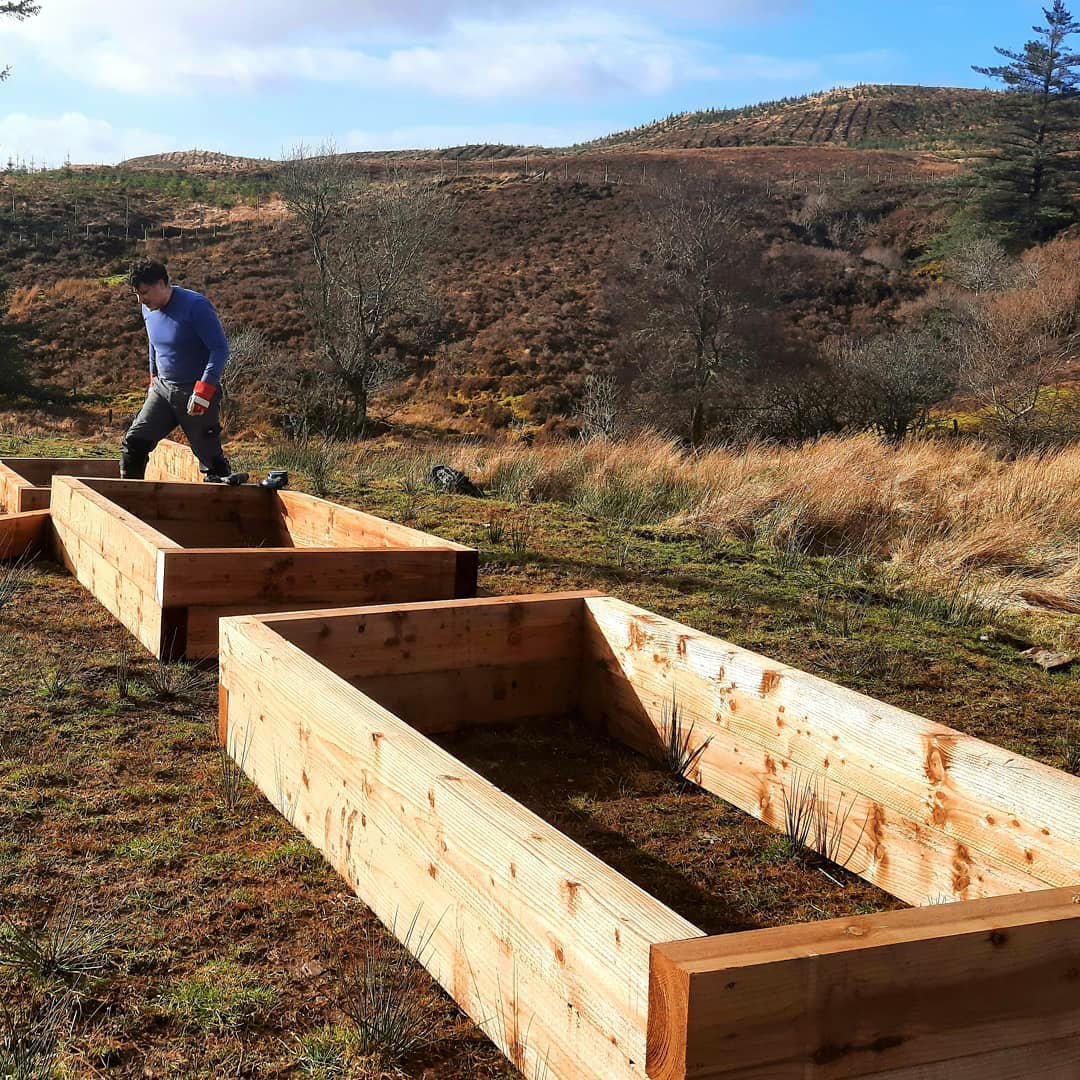
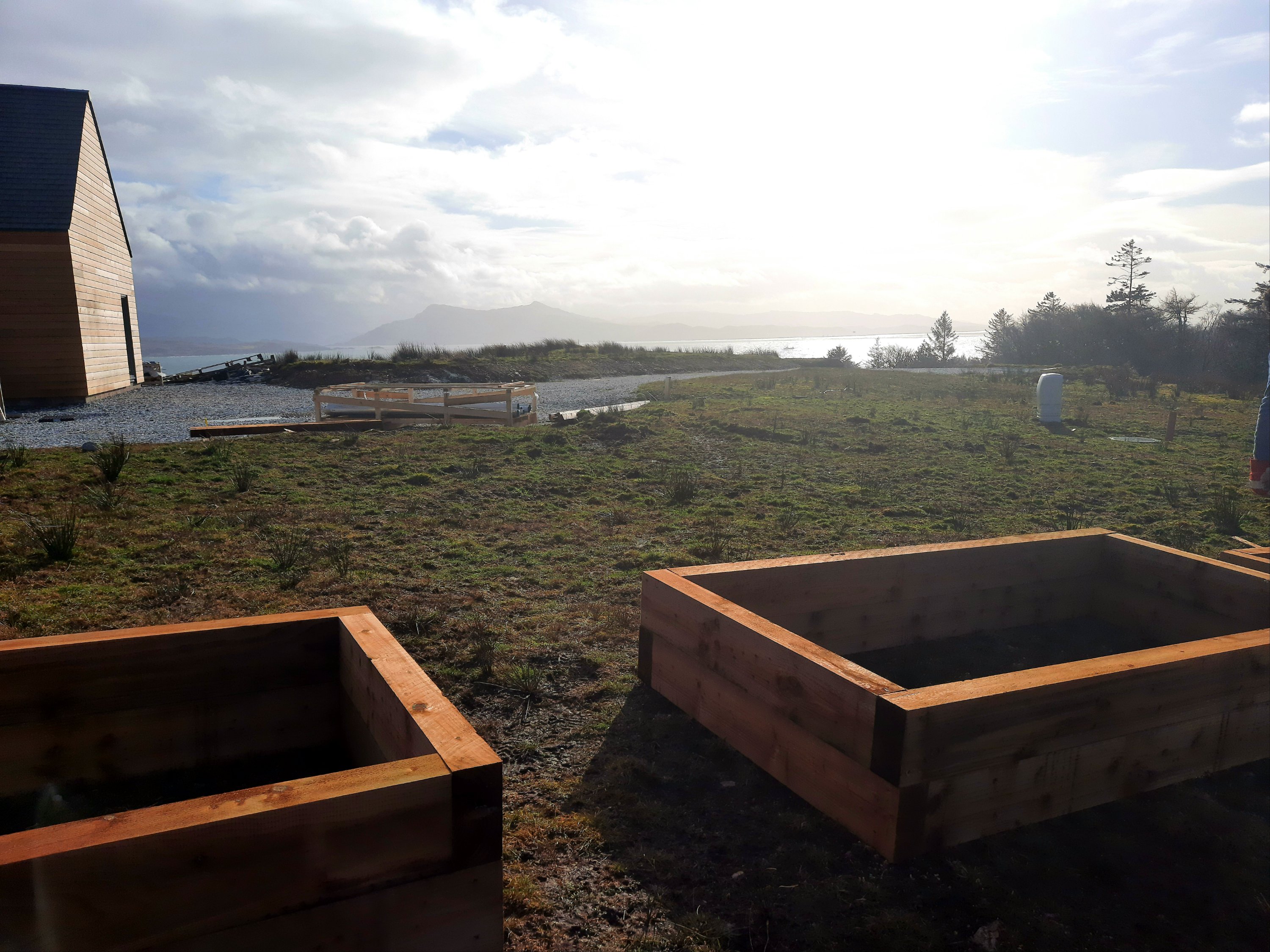
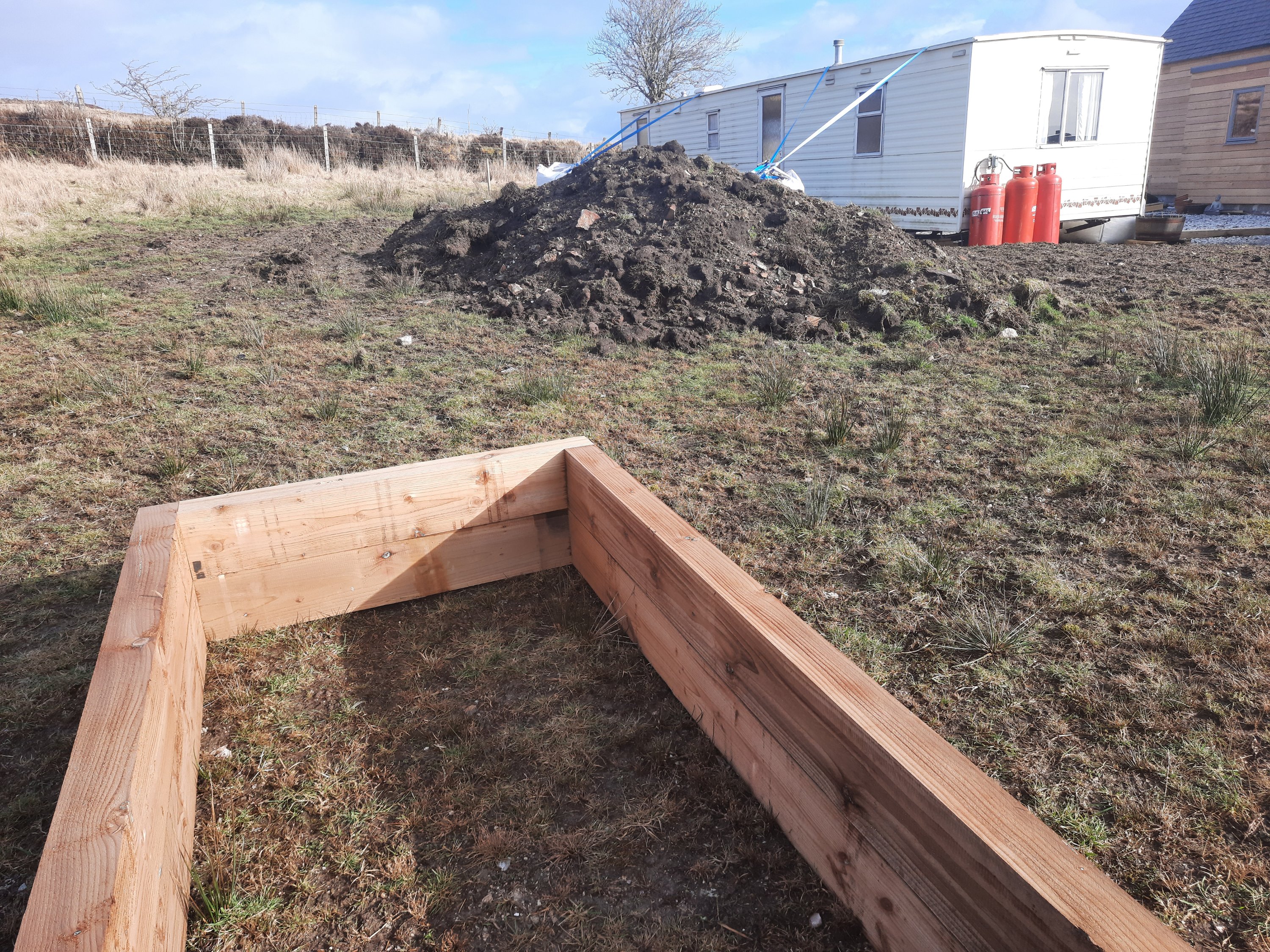
The first three raised beds are built and in place. Hurrah! Another small but significant milestone on our croft journey.

There was a short gap in the weather this morning which husband took advantage of. The timber was cut, positioned and screwed together to create three high sided, solid boxes.

The challenge here is the exposure of the site. We receive the full force of the South Westerlies which whip over the croft, with only limited tree cover to the west. The flat land that is cultivable is close to the house and right at the top of the hill.

In terms of positioning I wanted the beds close to the house for ease of access and proximity to water supply. They also needed ideally to be oriented east-west to maximise exposure to sunlight, and if possible be sited on flat land. The perfect (and only really viable) place here is going to need good wind protection.

We will put up a heavy duty mesh windbreak whilst we plan what type of hedging should be planted here, get the basis of the hedging in, and that will be it for this year. I can start with basic, small scale vegetable production in between house building.

We’re also keen to get compost piles started, so timber to construct a couple of adjacent compost bays is on its way.

Behind this row of beds I’m thinking of trying a hugelkutur bed, which I’ve read great things about. We will have wood debris that can form the core of it from fallen branches from the existing trees, and we should have home grown compost by next year.

First things first though.

Tomorrow I will line these beds with cardboard as a weed suppressant and start moving and de-stoning soil to fill them. This huge soil pile was excavated from the croft when the builders dug the parking area the caravan is sited on, and it will form the bulk of the growing material in the beds, topped off with compost mulch.

It feels good to be preparing for growth.

Eerie Blue Light

The days are getting longer. Although we are still in the clutch of a cold winter here on the croft, with snow still on the hills and an icy wind, my thoughts have increasingly moved to garden planning as our daylight hours have lengthened.

I’ve started some seeds off in the little bedroom in the caravan. We have no greenhouse, cold frames or polytunnel yet, so needs must.

It’s a bit of a make-do affair with a propagator heat pad, some cardboard boxes, seed trays, old yoghurt pots that I’ve been saving since we moved here, and one of those whizzy octopus UV grow lights to help start things off.

Everything is bathed in an eerie blue light from its flexible metal arms. It’s like something from the X Files… I go in a few times each day to check on things and can’t resist adjusting it.

Lord only knows what the neighbours must think when they see the strange, neon blue light glowing through the thin curtains at dusk…

I’m starting small. More will follow in March and April, which is a much more sensible time to start new plants here.

I’ve started garlic, onions (although the recommended local wisdom is to grow from sets rather than seed, which I only discovered after I’d bought them), leeks, parsley, beets and rocket. Seed potatoes are on their way in the next week ready for chitting.

I know it’s early, but it’s such a short season that it makes sense (to me at least) to have plants ready to be planted out in May, and they’ll need a full month of hardening off, I suspect.

The garlic has leaped into action almost immediately. I’m growing a rose and a white skinned garlic, both hardy varieties, and both a bit of an experiment, although local growers report that they generally grow well here.

I’ve been keeping my eyes peeled for old glass windows or sheets of polycarbonate on the local ads to make cold frames, but they’re scarcer than hens teeth at this time of the year, so we may need to buy materials new and create our own.

And so it begins.

The teapot of desire

I love tea.

Husband not so much… We generally stagger into the mornings fortified with coffee, but I could drink tea at any point during the day. When I was working it was only the consumption of several cups of tea between meetings that kept me going.

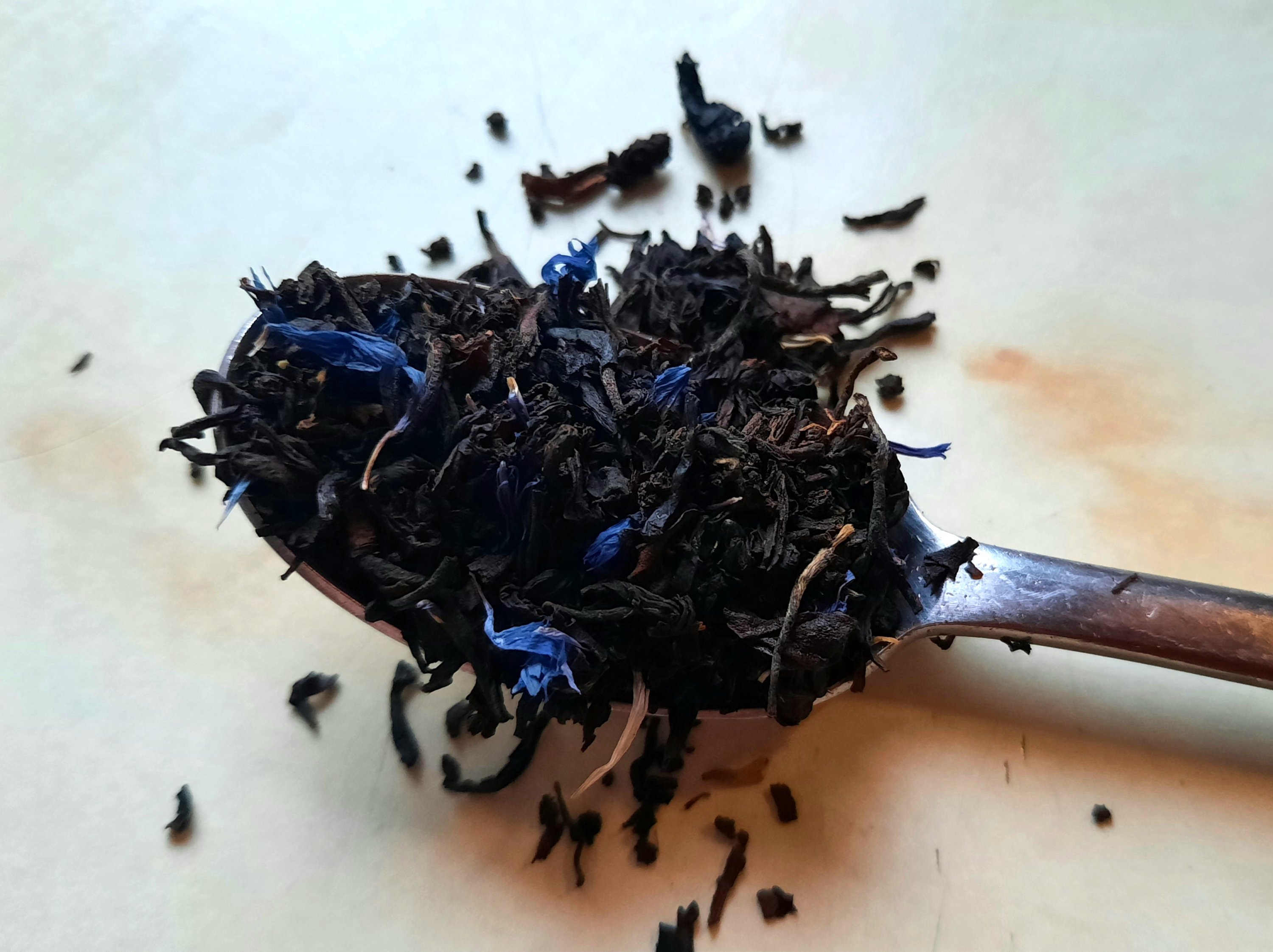
After reading about the amount of microplastics that leach into your cup from most brands of teabag, including Yorkshire Tea – my go-to brew of choice for many years – I decided that enough was enough. I would go back to using proper leaf tea and make a bit of a celebration of it.

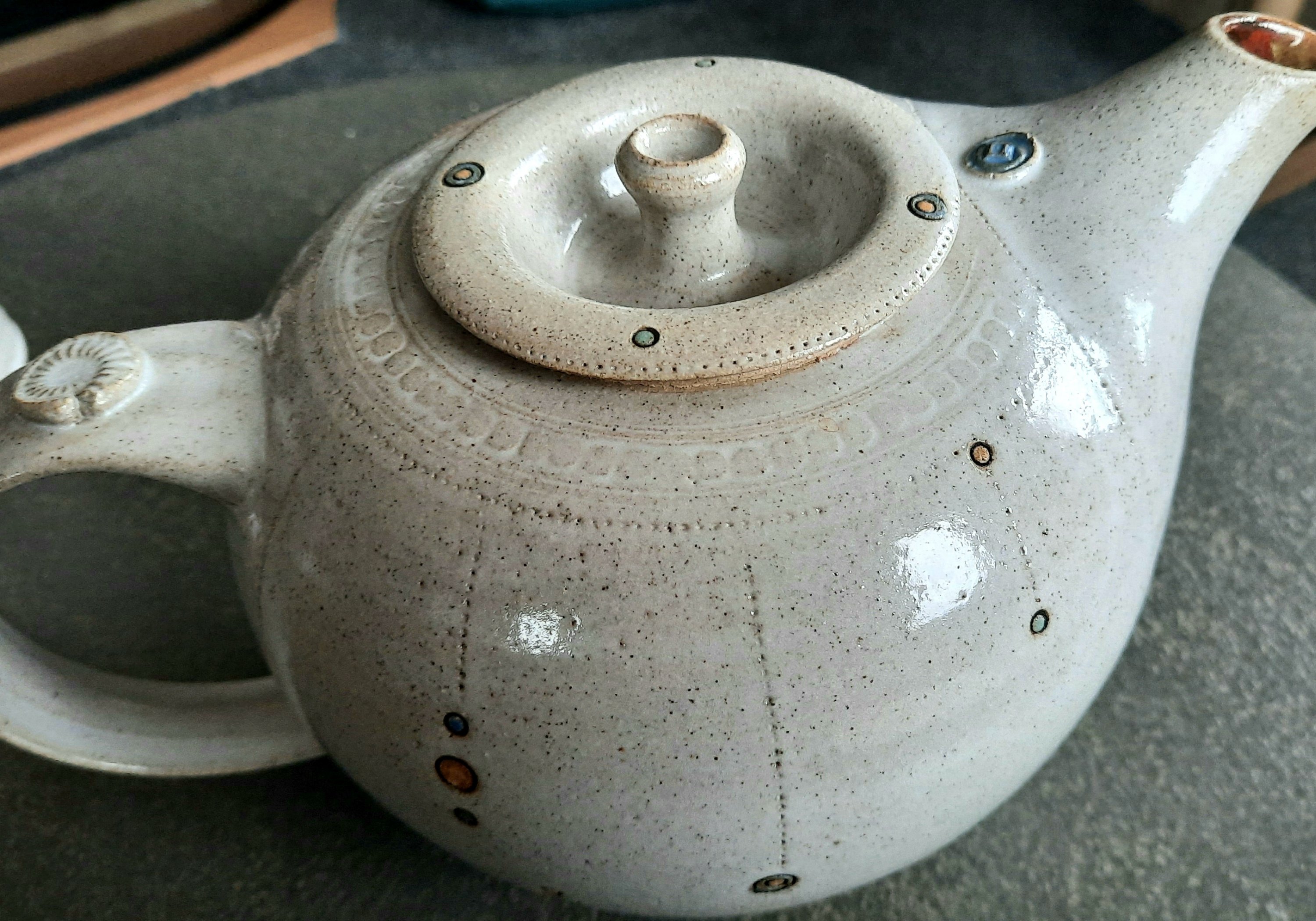
And so, I bought a teapot. Made by a potter from a local village, I loved it as soon as I spotted it.

I loved the shape, and the subtle markings on the clay body. I loved that it holds 1.3 litres of tea! That’s a goodly few mugfuls, with the capacity for seconds if needed.

My afternoon routine now revolves around time for a proper cup of tea in the caravan, as I browse the seed catalogues, look out at the rain/sleet/snow of a Skye winter, and prepare dinner.

I’d quite forgotten how delightful that was.