Spring storms & wild garlic

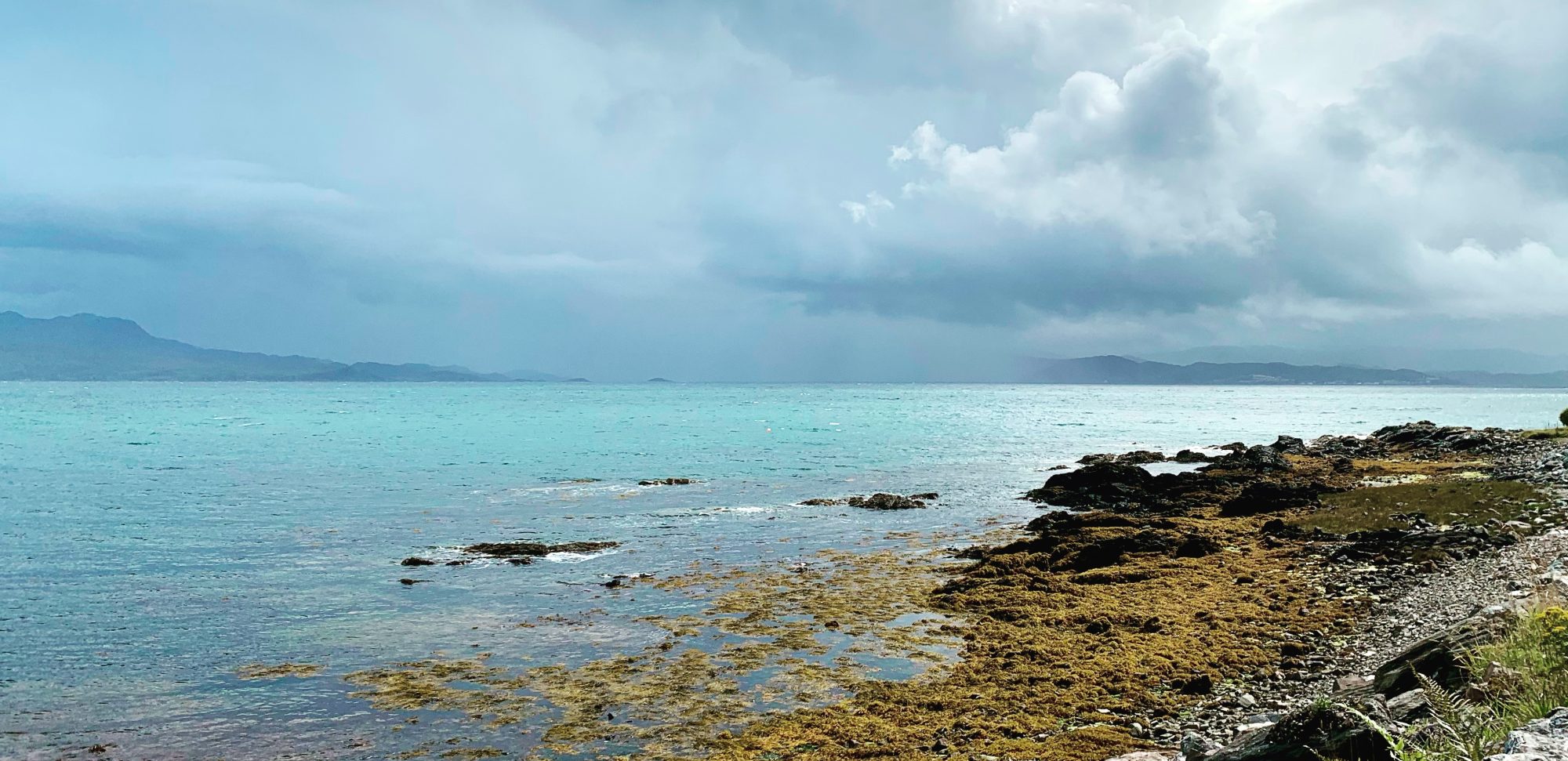
The weather on the island has taken a turn for the worse since the Spring Equinox.

As if to laugh at our feeble attempts to plant, a prolonged few days of stormage has reminded us that Winter hasn’t done with us yet.

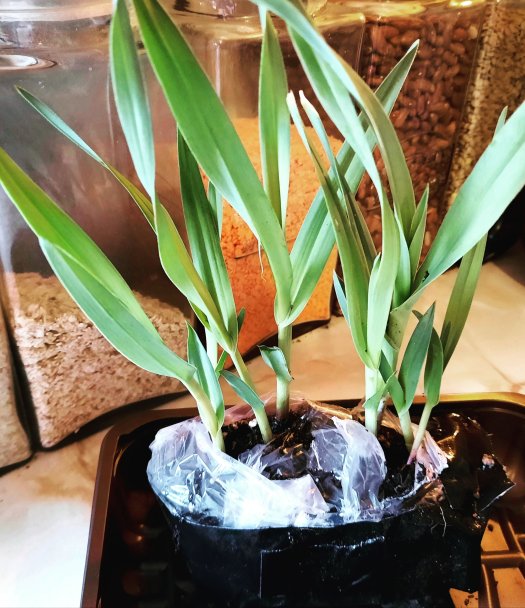
A neighbour brought us a huge bag of wild garlic picked from local woodlands, which was most welcome. I chopped the fragrant leaves through salad and reserved the plants that still had their bulbs and roots attached so that we could plant them on the croft.
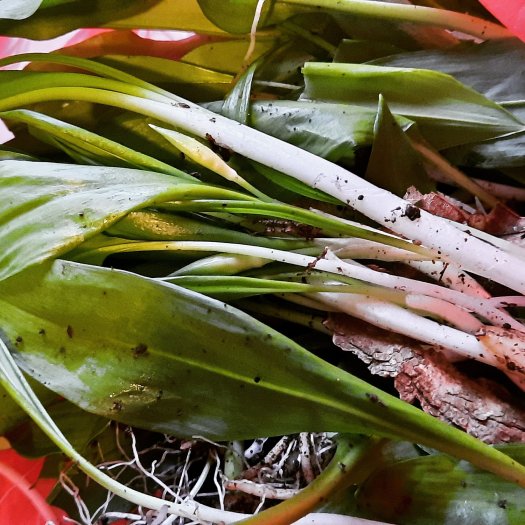
Husband dug them into a damp, grassy bank above the stream under dappled shade. Hopefully they’ll take and we’ll have the start of our own wild garlic patch before too long.

Just as he finished the planting, the heavens opened. We’ve now had a solid 48 hours of hail, rain and high winds, and it’s not abating any time soon.

Our tiny burn went from a gentle trickle of water to this rushing torrent within hours…
Growing beds

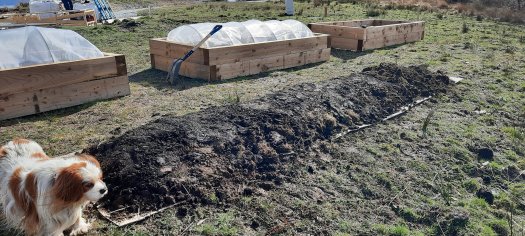
We had a dry, sunny, spring-like day this week and we decided to build a hugelkutur bed alongside the wooden raised beds that we’d built last month.

These are permaculture growing beds built over a core of wood or brash, with turf, soil and compost layers. They allow plants to grow where the soil would otherwise be too shallow.

The theory is that the central core of wood slowly decomposes, releasing nutrients into the bed. We will be adding to it annually with top-dressing to keep its depth consistent. This is a no-dig bed.

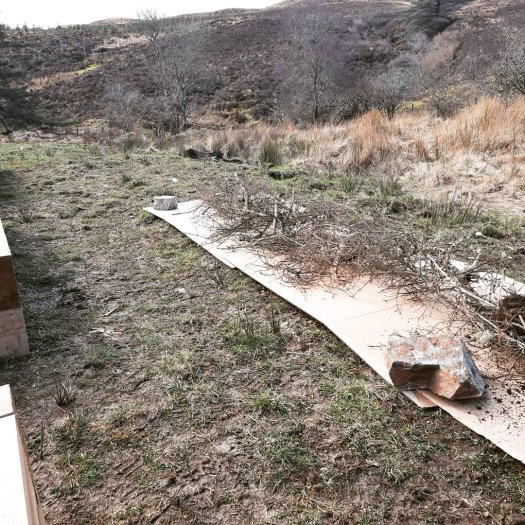
We built a small 4m bed, starting with a cardboard base to try and suppress the rush growth, and dragged up dead branches from the copse at the western edge of the croft to form the core.

We added layers of soil, compost and bark chip mulch until we had something about 60 cm deep. Some hugelkutur beds are much taller than this, like giant earth Toblerones, but as an experiment we figured that this was big enough.

We’ve planted up the rhubarb crowns in it and I’m eyeing the rest of the bed up for potatoes and perhaps kale over the coming weeks.

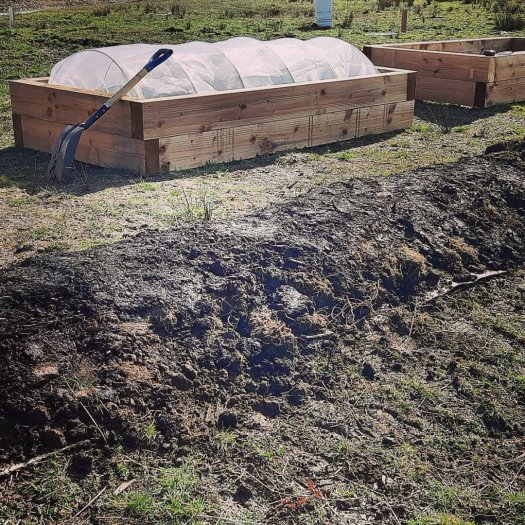
We’ll need to lay bark chip paths between the beds as it’s already starting to look like the Somme with all the wheelbarrow and wellie work recently churning up the mud.

If this works I can see more of these being constructed later in the year.

It’s a simple idea and reminds me very much of the lazybeds or runrigs on the hillside above the croft where previous generations of farmers scraped enough soil into mounds to grow food.

These ancient forms of land tenure are said to predate the crofting system, and it appeals to me that this more modern system of permaculture is really the same thing.

Scything for Sassenachs

One of my early blog posts from 2019, before we moved onto the croft, was about us wanting to buy an Austrian scythe to work the land.

It feels like another milestone achieved in that our first scythe arrived in the post a few days ago.

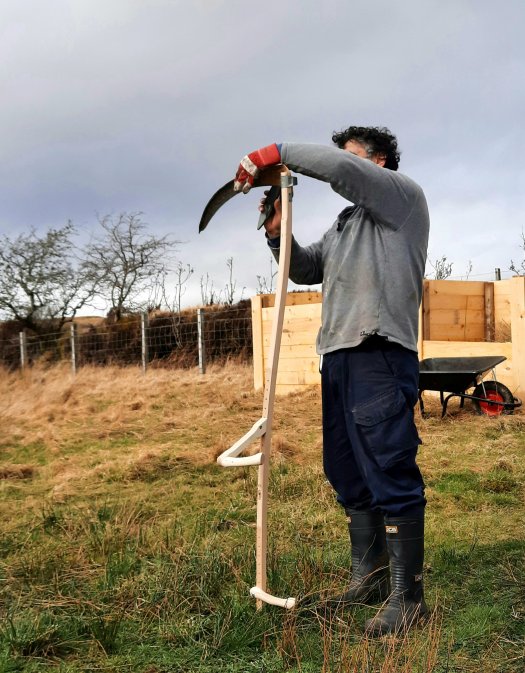
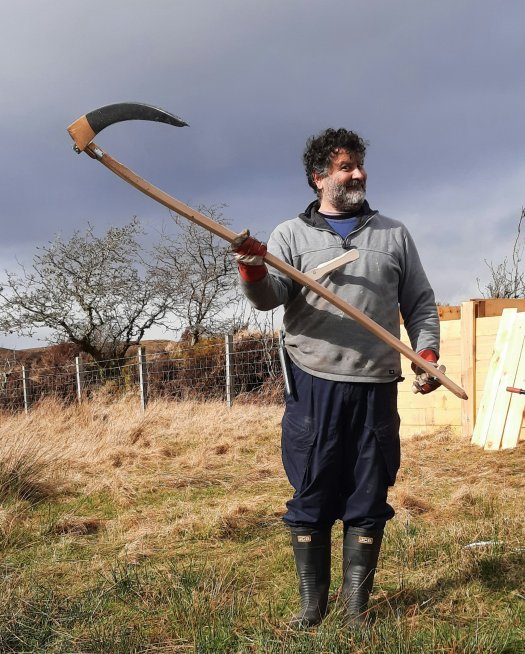
Of course, once husband had assembled and peened the scythe (oooh, technical scythy term there 😊) it was clearly time to don the silly face and swoop around the croft like DEATH from a Terry Pratchett novel.

It was a mercy for us all that he doesn’t own a hoodie…

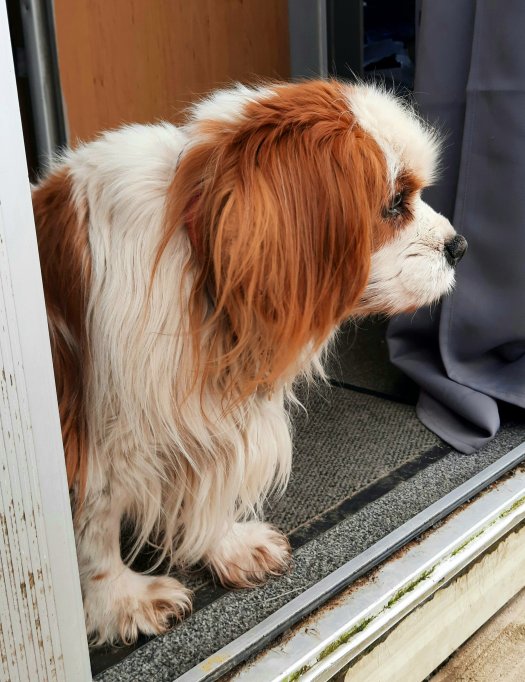
(Dog watching in trepidation from the safety of the caravan).

On a more serious note, it was lovely to watch him cutting a swathe through the reed clumps with an increasingly confident, relaxed swing. No petrol fumes, no engine noise, no protective face shield.

Just the sound of the birds, the burble of the burn and the gentle swishing noise of the blade through the weeds.

Every bit as good as we’d imagined.

Blue Growing update

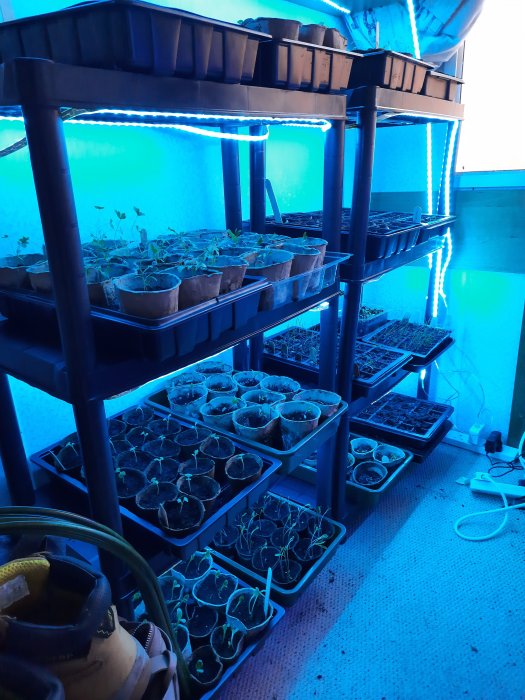
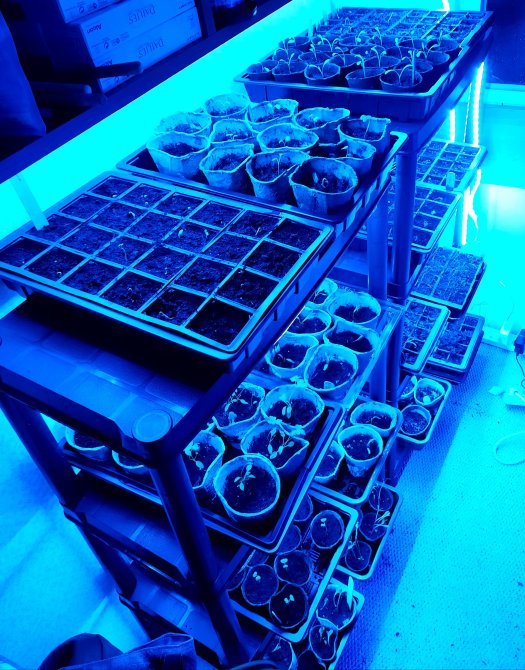
The seed sowing chaos of the caravan spare room has been taken in hand and professionalised!

We now have durable shelving with UVA grow-light strips attached to the underside of each shelf. I’m feeling very happy.

The days of my rickety cardboard box tray balancing act are over. I think that husband realised that he was in danger of having the next seed tray balanced on him if I ran out of space… 😊

We now have pak choi, Sutherland kale, leeks, onions, borage, calendula, rocket, mustard leaves, coriander, parsley, mint, lettuce, salad burnet, nasturtiums, garlic and shallots underway. All glowing eerily blue under their UVA lights.

Today I will be sowing borlotti beans in pots in the probably vain hope that I can get them to maturity on the croft despite the wind. This one is a bit of a stretch, but it’s worth a try..

The directly sown plants, such as carrots, parsnips and yacon roots will all be in May. Same for the potatoes.

The garlic, shallots, babbington leeks and onions have already been planted out into the beds, and we covered them in enviromesh yesterday for a bit of protection.

I can already see that my three initial raised beds won’t be enough, even with separate big pots for the herbs, so we will be building a long no-dig bed directly onto the croft for the rhubarb and berries. We will put in more raised beds next year after we’ve finished the house.

Next up it will be windbreak hedging…

This will be an interesting year – let’s see what grows.

Perennial Vegetables

I love the idea of vegetables that are sown or planted once and keep growing. For years.

There’s a lot of effort involved in sowing vegetable seed annually, so it makes sense to have perennial vegetables as the backbone of a permaculture garden.

They may not bring instant rewards, but you know what, this croft garden is for the long term and so a few years for these plants to establish before they give back isn’t a great deal to ask.

Perennial vegetables are for the most part ancient heritage varieties. They include such vegetables as asparagus, artichokes, walking onions, leeks, kale and broccoli. Some of these varieties, such as the Sutherland kale that I’m growing from seed, nearly died out and are really quite rare.

I’ve received my very first perennial vegetable in the post from Quercus Edibles, a small grower in Devon. It’s a Babbington Leek. As soon as the hail storms abate, this little clump of hardy loveliness is going into the ground.

The first of what I hope will be many perennial plants on the croft.

The Pair of Ravens

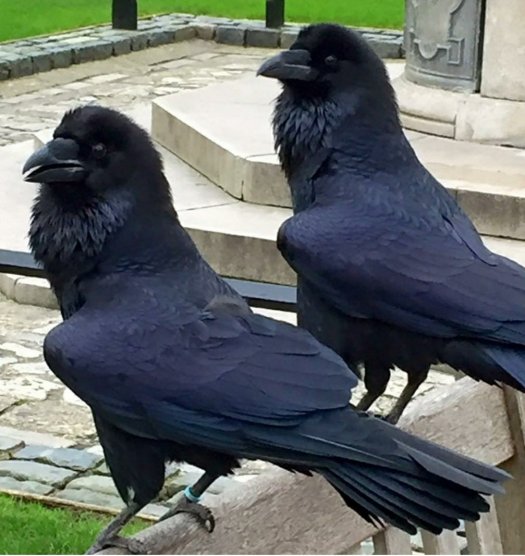
I’ve mentioned before that we have two Ravens on the croft. Ravens are solitary birds, but they are said to pair-bond and mate for life.

*photo credit the Raven Master, Tower of London

As mating season approached this Spring, we noticed the morning calls from the old pine tree start to change.

In addition to the rough croaking song of the male raven each morning, there’s a more softly pitched, warbling call that comes a few seconds afterwards in response from the female. This is repeated many times over the course of the day. We think that they have nested somewhere in the large trees on the western boundary.

We often see the two birds flying over the croft together throughout the day, hovering and wheeling through the skies before disappearing over the hills to the north of us. They are skillful flyers.

I personally think it’s fabulous to have such birds on the croft, but many of the crofter locals think otherwise. I’ve had darkly muttered comments about Ravens taking newborn lambs, and whether or not this is true, or how infrequently it happens, there’s no allowance given for the fact that even Ravens have to eat, and that this is sadly Nature’s way.

I appreciate that there has to be a balance. But to demonise an intelligent bird that is doing no more than trying to survive can’t be the way.

We’ll continue to enjoy our Ravens.

Guttering

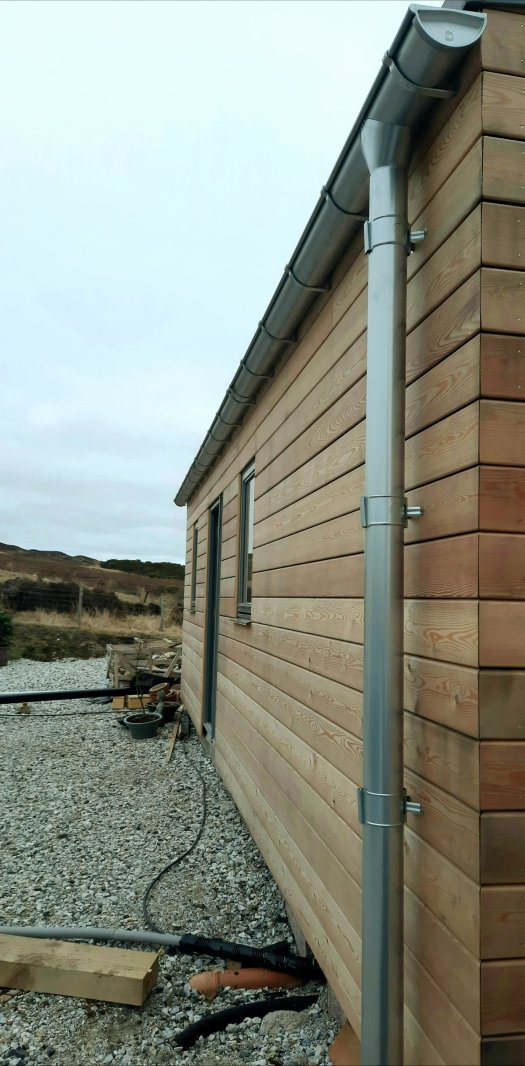
We’ve been waiting for a break in the weather in order to fit the guttering on the house. Standing on a ladder in fifty mile an hour winds is no-one’s idea of a good time!

At last. The weather for the last few days on the island has been dry and clear with light winds, and it looks like it will hold for a good few days more.

My job is holder-of-the-ladder and passer-up-of-tools, brackets and gutter lengths. And maker of tea.

Husband is doing all the technical stuff like measuring, drilling, aligning and connecting.

All the easy stuff 😊…

We’ve gone for Lindab galvanised steel guttering.

It goes well aesthetically with the wood cladding, is solidly well made, can cope with the vast amount of rain we have on the island – as it’s extra wide and deep – and isn’t plastic. Not that there’s anything wrong with plastic, but we preferred not to use it.

We have lots still to fit, and are working our way around the house starting with the back. Let’s hope the weather gods smile upon us.

I was standing holding the ladder today, listening to the silence of the afternoon on this exposed island hillside, the only noise occasional birdsong. And I thought to myself, how life has changed.

How lucky I am.

The Vault of Black Gold

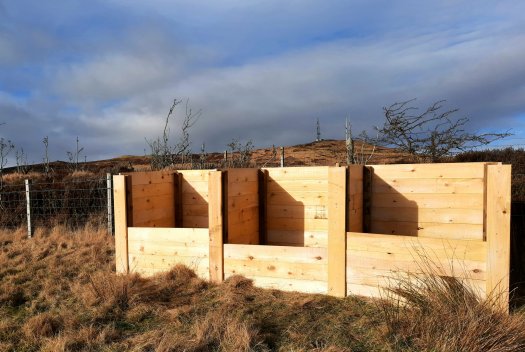
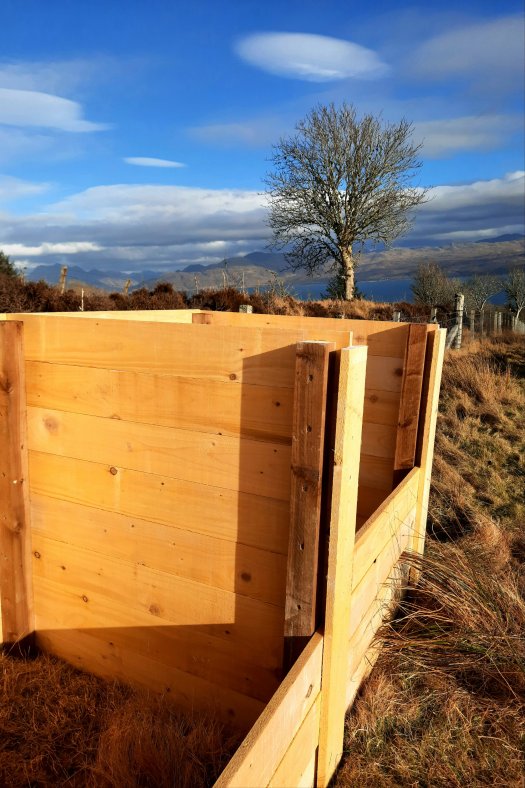
On a couple of dry days this week husband built and put up a compost bin.

I say a compost bin, it’s more a super deluxe compost city. The worms in this complex will be living in ultimate compost style, the Des Res of Decomposition, the Mansion of Manure, the Penthouse of Poo, our very own Vault of Black Gold! 😉

With three bays, removable front slats for easier inspection and turning, and a roof (yet to come) to protect from the worst of the elements, I’m so pleased with how it’s turned out.

We have a tonne of organic, peat free bought compost with which we’ll start the beds off this year, and we’ll layer the homegrown stuff with what’s left of this.

I’ve found a local lady with donkeys on her croft who is happy to give us bags of straw and donkey poo, and Angus, our village crofter keeps cows, so I think maybe a conversation there could be had too.

That and applications of seaweed from the local shoreline as well as vegetable waste and croft scythings and I’m really hopeful that it will be successful.

With a bit of luck from the soil gods this time next year we’ll be digging in our very own black gold.. 😊

The first raised beds

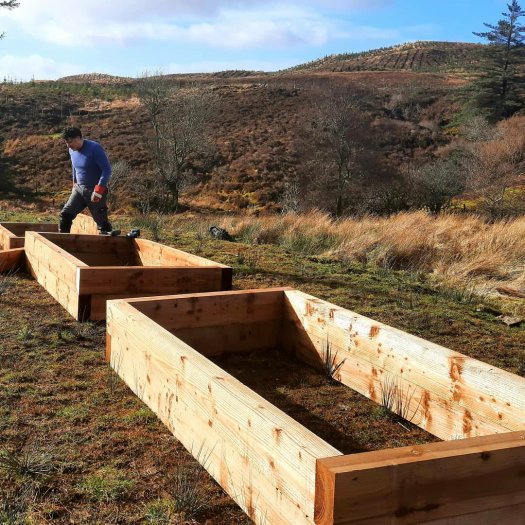
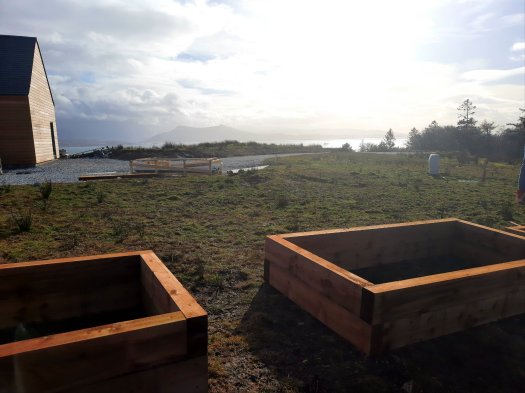
The first three raised beds are built and in place. Hurrah! Another small but significant milestone on our croft journey.

There was a short gap in the weather this morning which husband took advantage of. The timber was cut, positioned and screwed together to create three high sided, solid boxes.

The challenge here is the exposure of the site. We receive the full force of the South Westerlies which whip over the croft, with only limited tree cover to the west. The flat land that is cultivable is close to the house and right at the top of the hill.

In terms of positioning I wanted the beds close to the house for ease of access and proximity to water supply. They also needed ideally to be oriented east-west to maximise exposure to sunlight, and if possible be sited on flat land. The perfect (and only really viable) place here is going to need good wind protection.

We will put up a heavy duty mesh windbreak whilst we plan what type of hedging should be planted here, get the basis of the hedging in, and that will be it for this year. I can start with basic, small scale vegetable production in between house building.

We’re also keen to get compost piles started, so timber to construct a couple of adjacent compost bays is on its way.

Behind this row of beds I’m thinking of trying a hugelkutur bed, which I’ve read great things about. We will have wood debris that can form the core of it from fallen branches from the existing trees, and we should have home grown compost by next year.

First things first though.

Tomorrow I will line these beds with cardboard as a weed suppressant and start moving and de-stoning soil to fill them. This huge soil pile was excavated from the croft when the builders dug the parking area the caravan is sited on, and it will form the bulk of the growing material in the beds, topped off with compost mulch.

It feels good to be preparing for growth.

Slow days

Everything has dipped this week. I’ve noticed both husband and I gradually losing energy and becoming slower and more reluctant to do things.

I don’t know if it’s the short, cold days, the effect of this prolonged lockdown, or a combination of both, but we are drooping a bit.

Problems with the build and trying to find ways to correct the problems (thank you builders), the prospect of further supply delays and scarcity of materials, and costs going up steeply with new import taxes (thank you Brexit) have probably contributed to our general malaise and lack of energy.

We will get through this. It’s just a few slow days.

All I can do is keep morale up as much as I can for both of us.

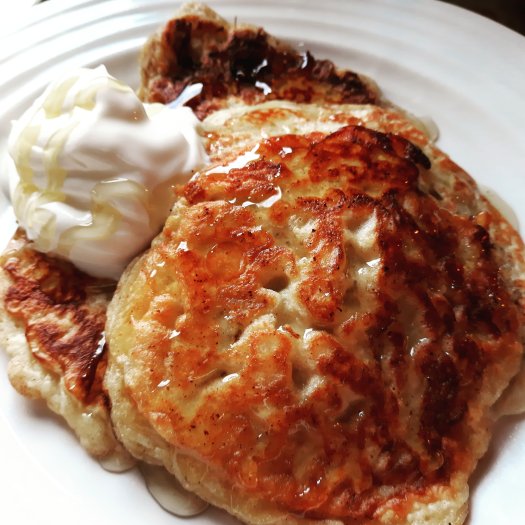
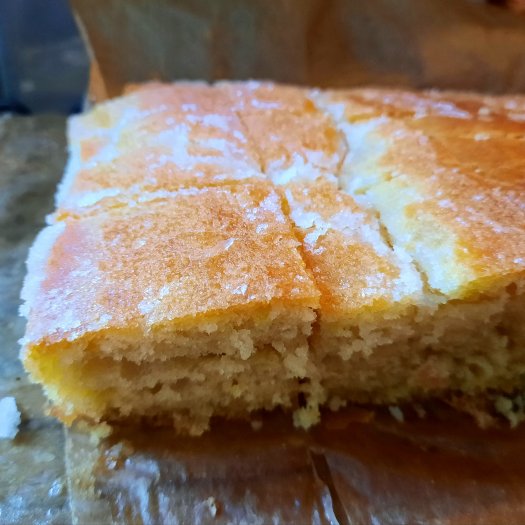
I know that pear pancakes and lemon drizzle cake with tea later in the day won’t solve anything, but they’re sweet and comforting and do make us feel a little better.

So that’s what we’ve been doing this week. In between jobs we wrap up in blankets, drink tea and eat cake.

My way of getting through the dark days.