Storm Arwen swept in over the last few days bringing a significant drop in temperature, and with it, snow.
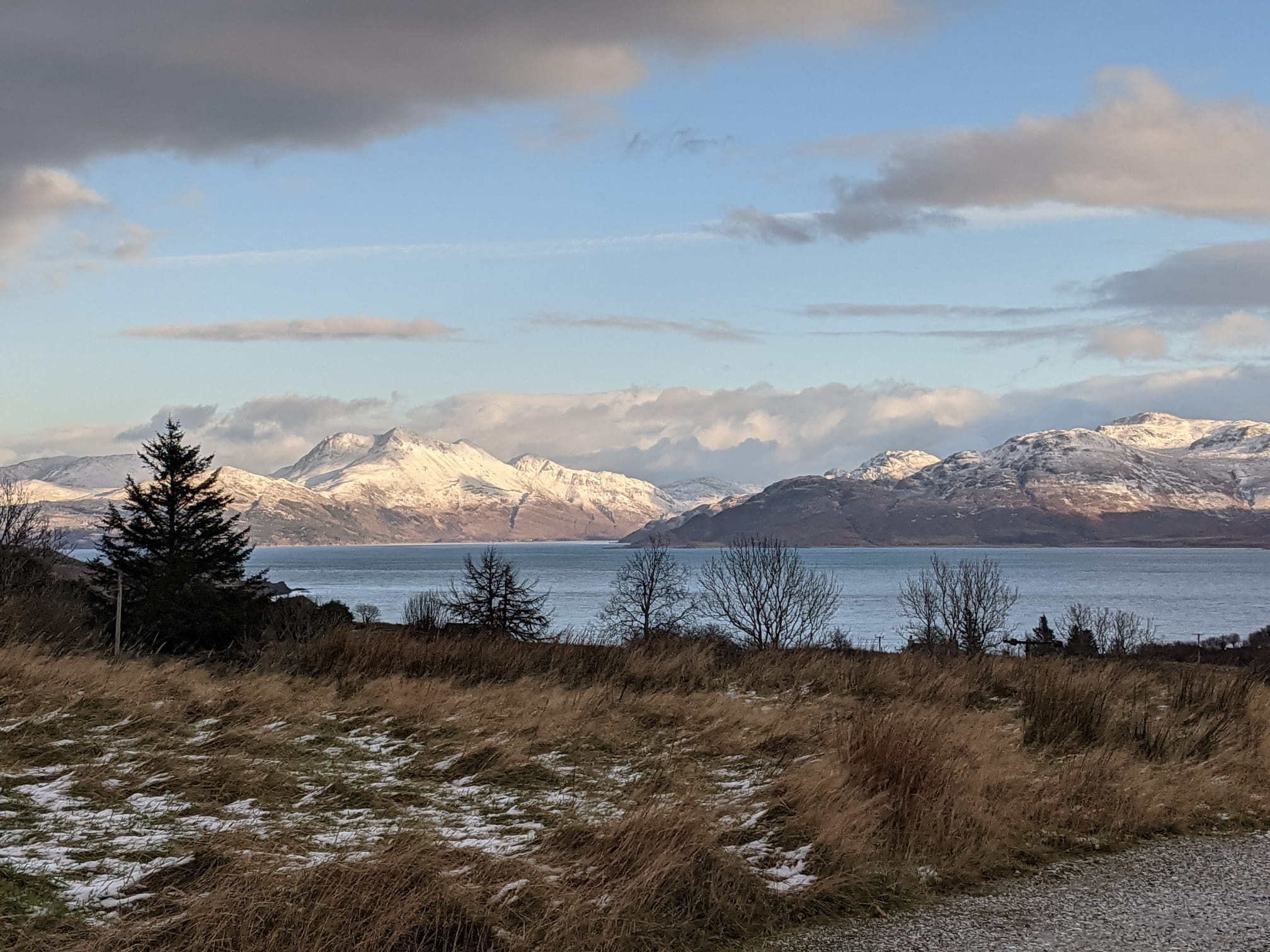
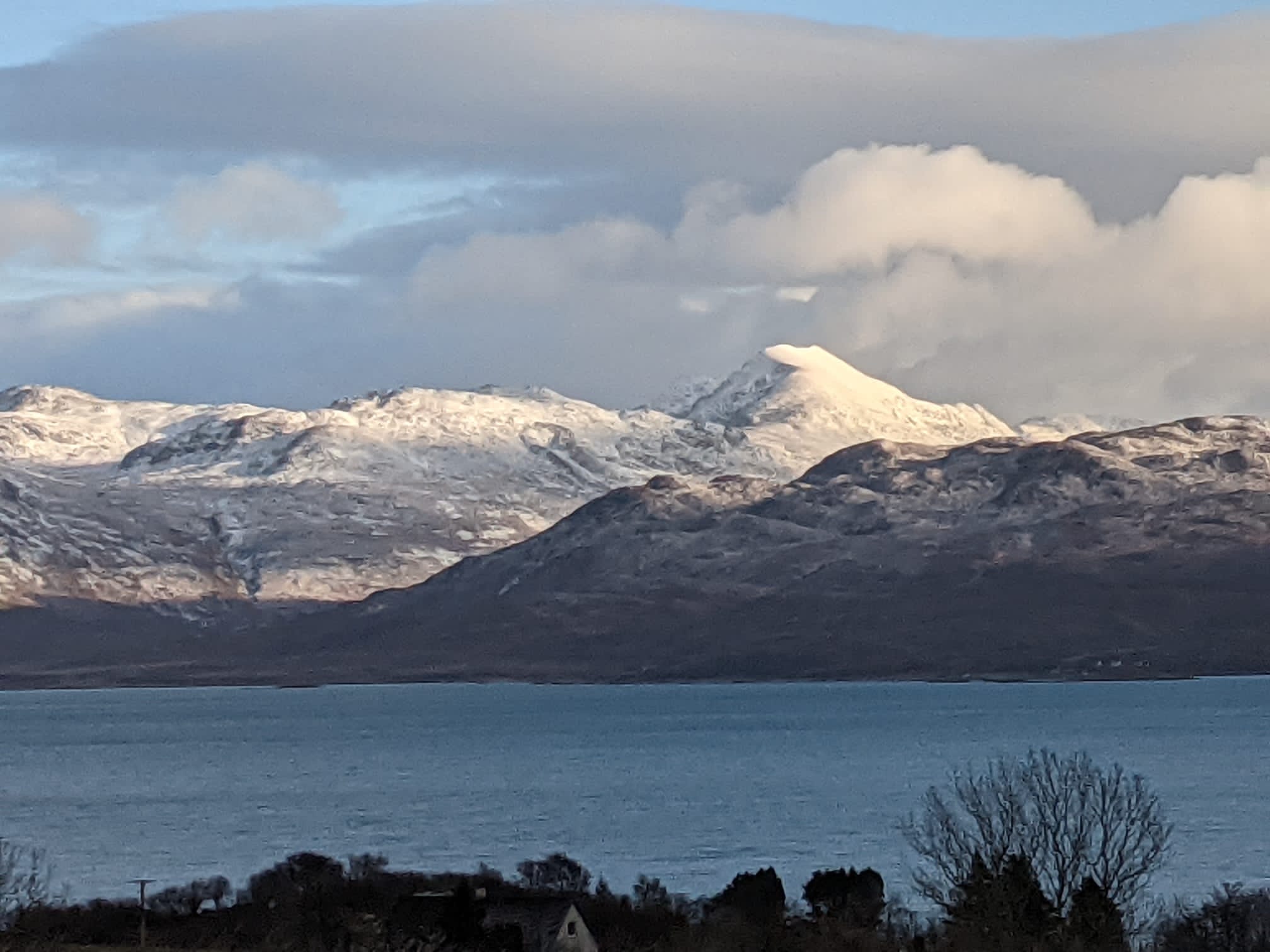
It was difficult to see the mountains of Knoydart in the flurries of snow and sleet sweeping down the sound, but once it had cleared we were treated to a scene of absolute beauty.
The low winter sun lit up the slopes of the mountains and the skies were blue and crisp. Somehow the air always seems cleaner and colours more vibrant after a storm.
We were not as badly affected by the storm as the East coast and other parts of the UK, surprisingly. The caravan rocked alarmingly in the wind and the hail and sleet were relentless for about 24 hours, but we didn’t lose power or water, so we figured we’d got off lightly compared to some.
The morning was so stunning that we decided to get out to enjoy it.
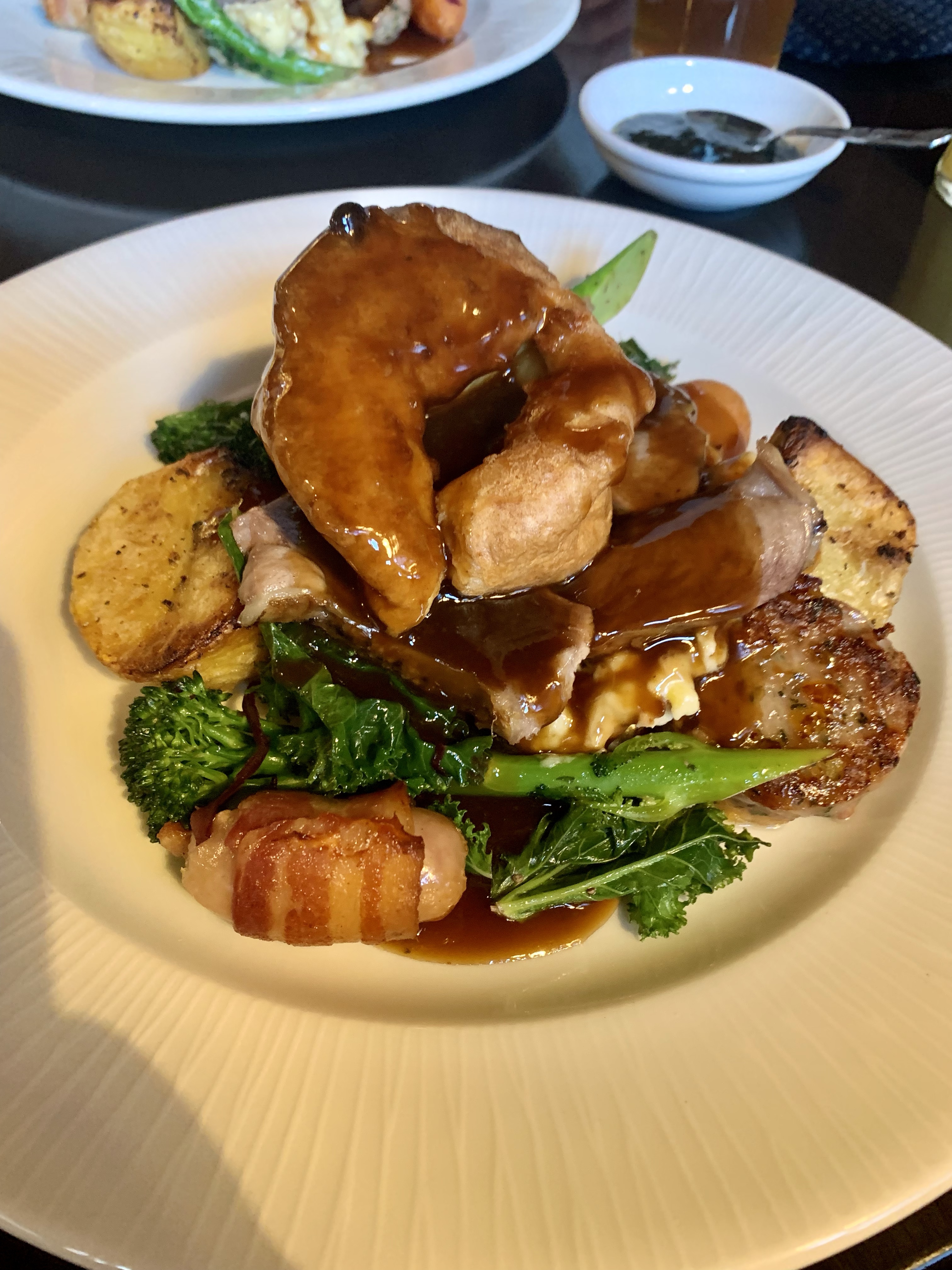
We popped down to our local pub at lunchtime and warmed ourselves by their open wood fire. They had local hogget (lamb) on as a Sunday roast , and one warming plateful later, with a pint of Skye Ale to wash it down, we drove back to the croft replete and content.
Winds on the island can be severe. We arrived here a year ago in the teeth of Storm Aiden, and almost a year later to the day here we are again with the autumn gales upon us.
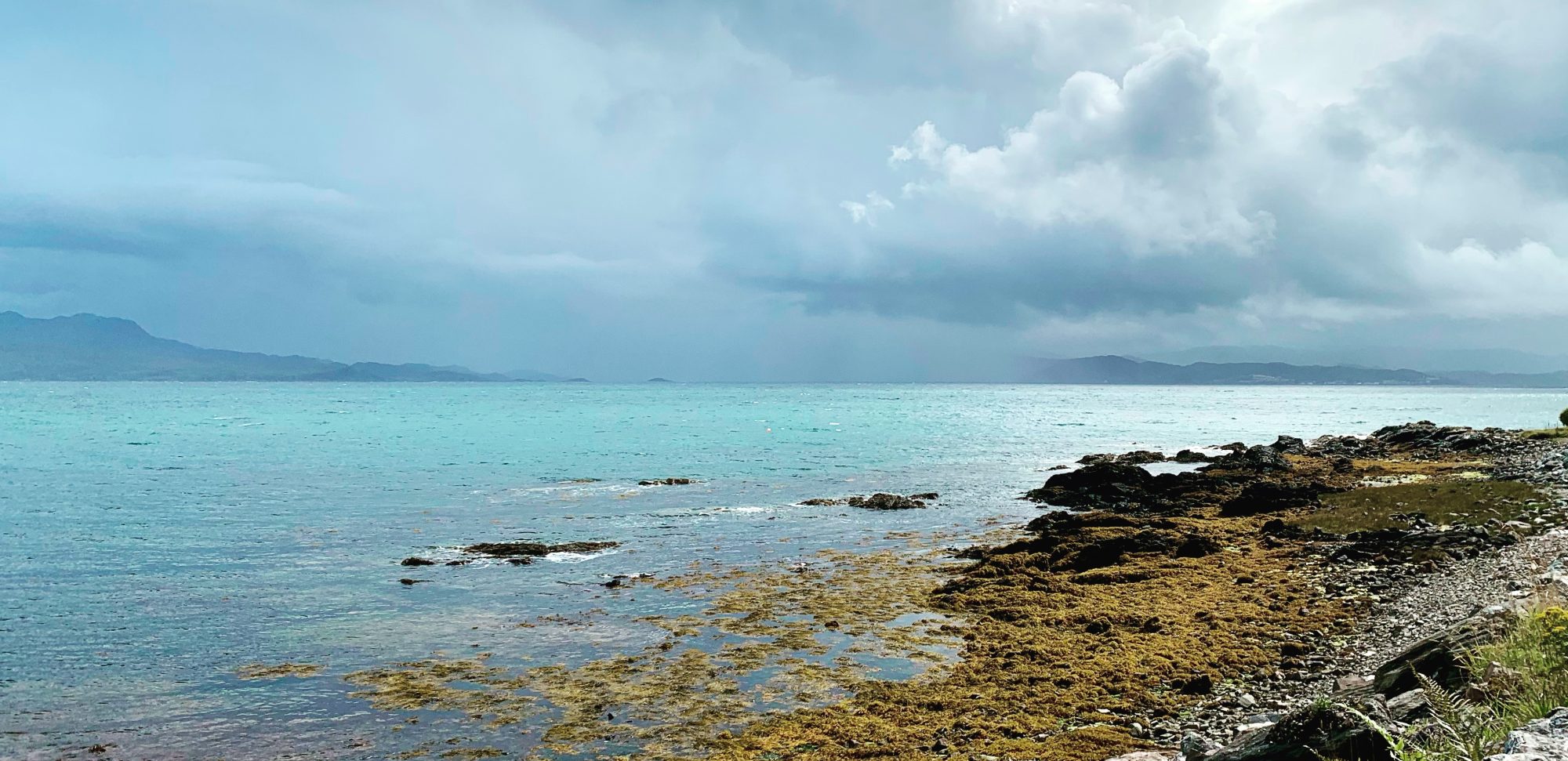
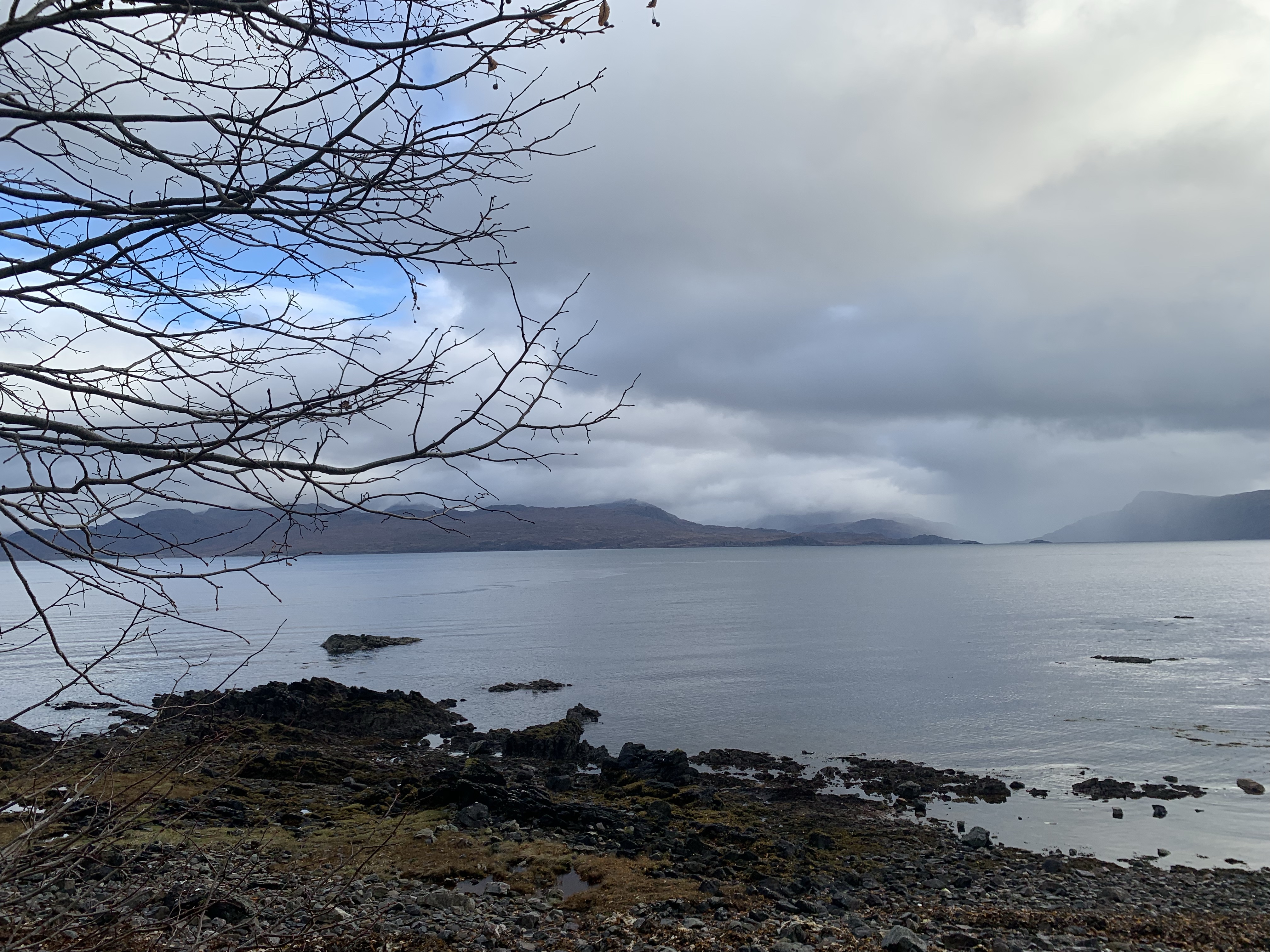
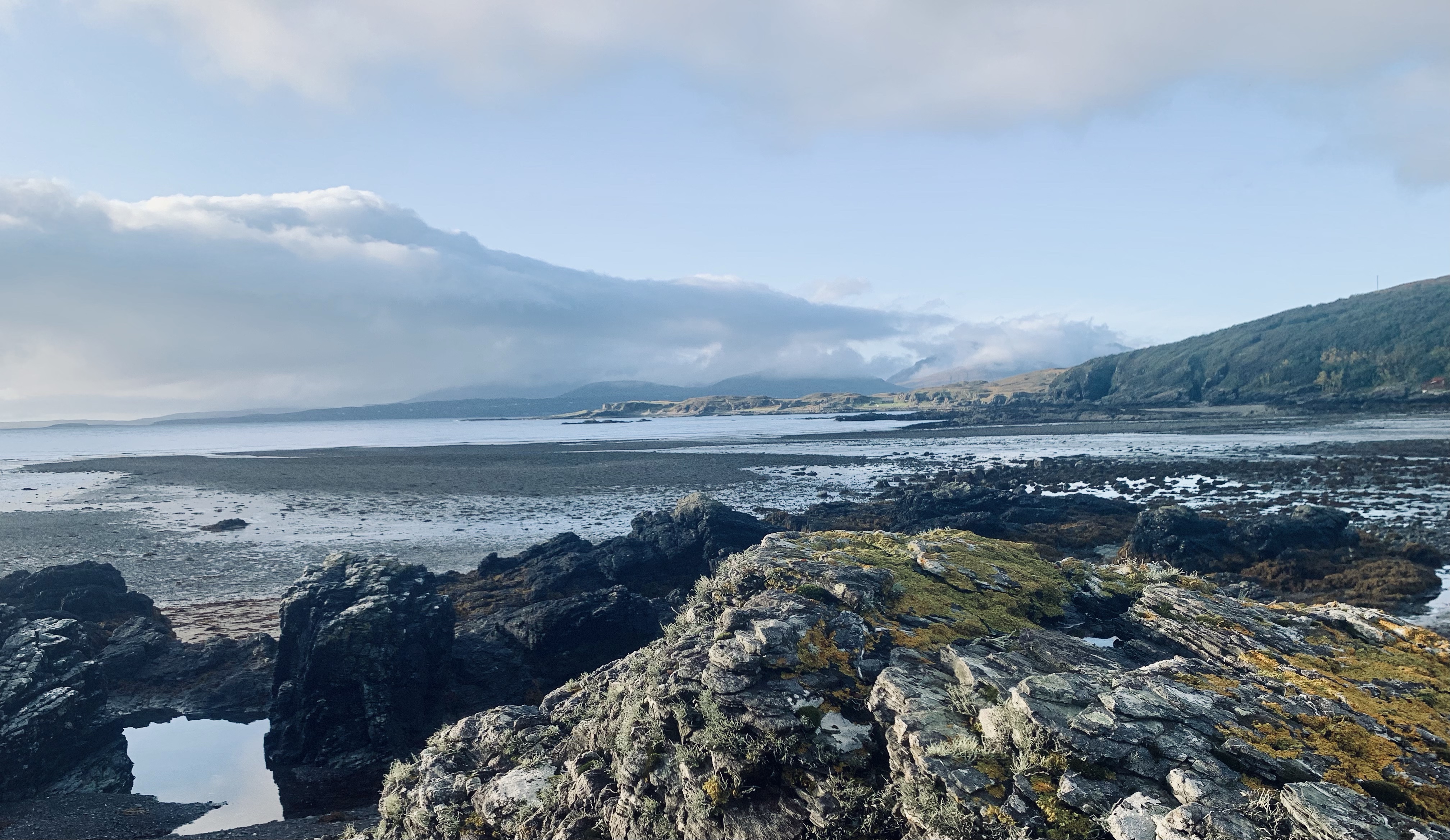
This is not a photo of a stormy shoreline
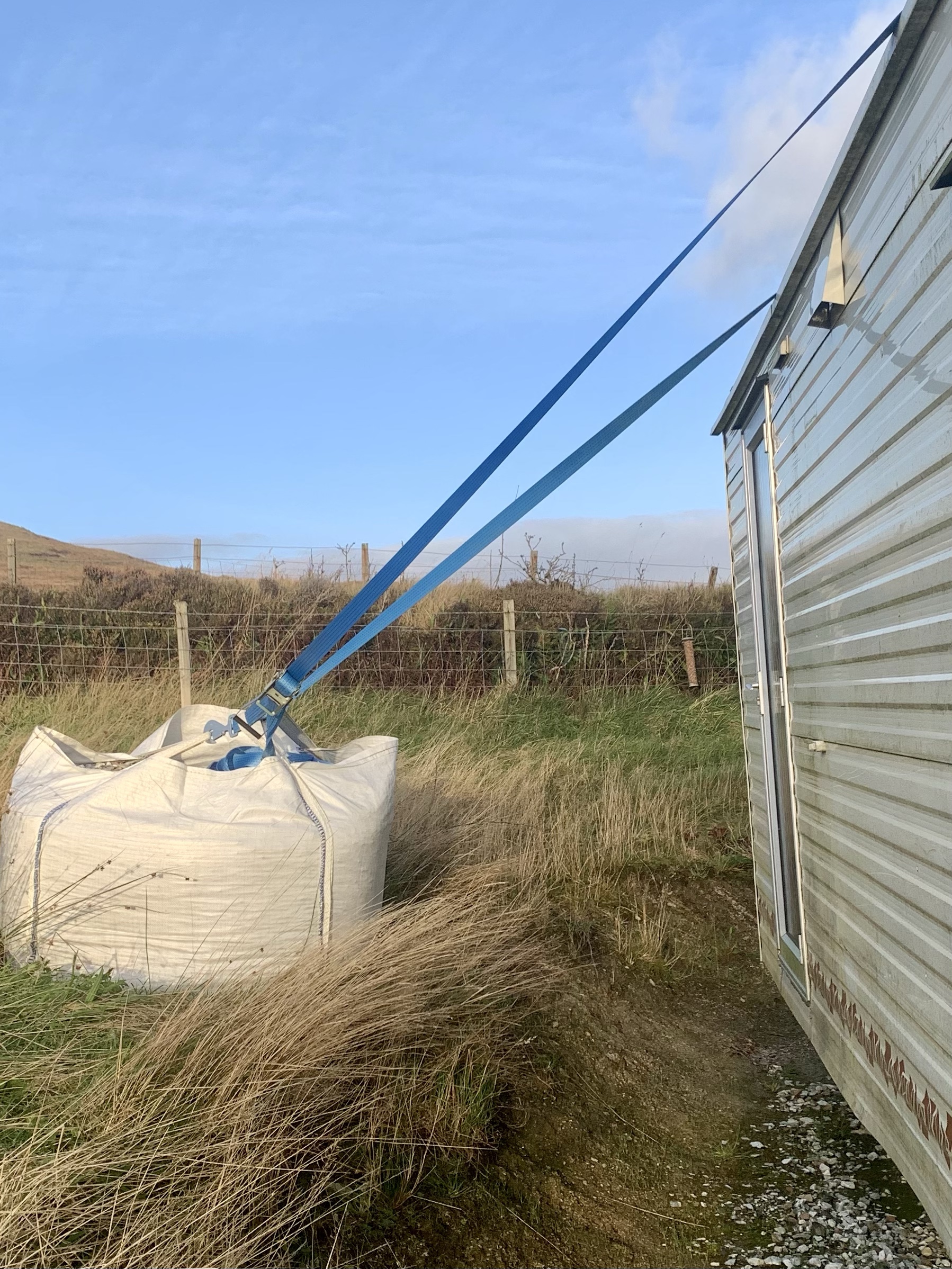
We are a bit more seasoned this time around. I know now that the house is unlikely to blow down, and that the caravan is equally unlikely to sail down the hillside, tethered as it is to four large tonne bags of hardcore.
Hardcore bag tethered to caravan
However, knowledge doesn’t make it any less dramatic. Yesterday evening as we went to bed the noise of the rain and the hail on the metal roof of the caravan was deafening. Once the hail flurry had passed the sound of the wind whistling through the lorry strap tethers took over. The caravan also rocked vigorously as the wind fought to lift it, only to be slapped back down with the counterweight of the hardcore bags.
One on each corner …
All in all, a bit difficult to sleep. It was like being in a washing machine at times. It’s testament to our familiarity with it now that we somehow managed to drift off and got a reasonably good nights sleep.
Winter is almost upon us. Get the hot chocolate in and dig out those big jumpers!
When we moved to our cold, wet island, 57 degrees north of everything, we maybe had a lingering doubt about the things that we’d miss. Lots of positives and upsides, of course, but there would be some things we’d have to compromise on, we knew.
The biggest worry of these was fruit. We love our fruit, and the thought of going without fresh fruit for any period of time was a bit of a concern. Surely living on the chilly, northernmost and westernmost rim of Europe would mean that figs, quince, loquats and ripe peaches would become things of fond memory?
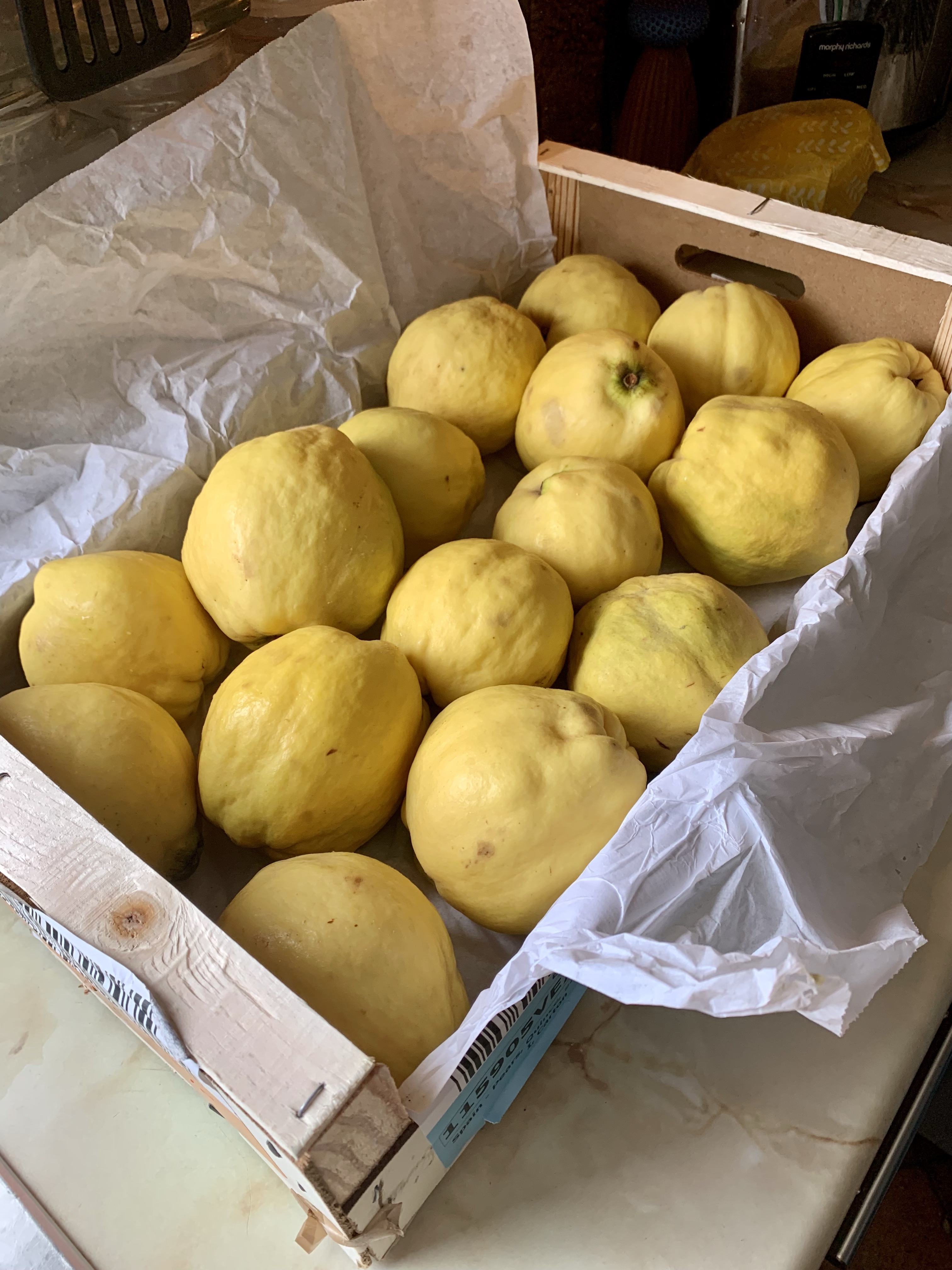
Today I picked up a crate of fragrant Spanish quinces from the local store, who had ordered them in especially for us. From our local community store. How amazing is that.
Fresh quinces
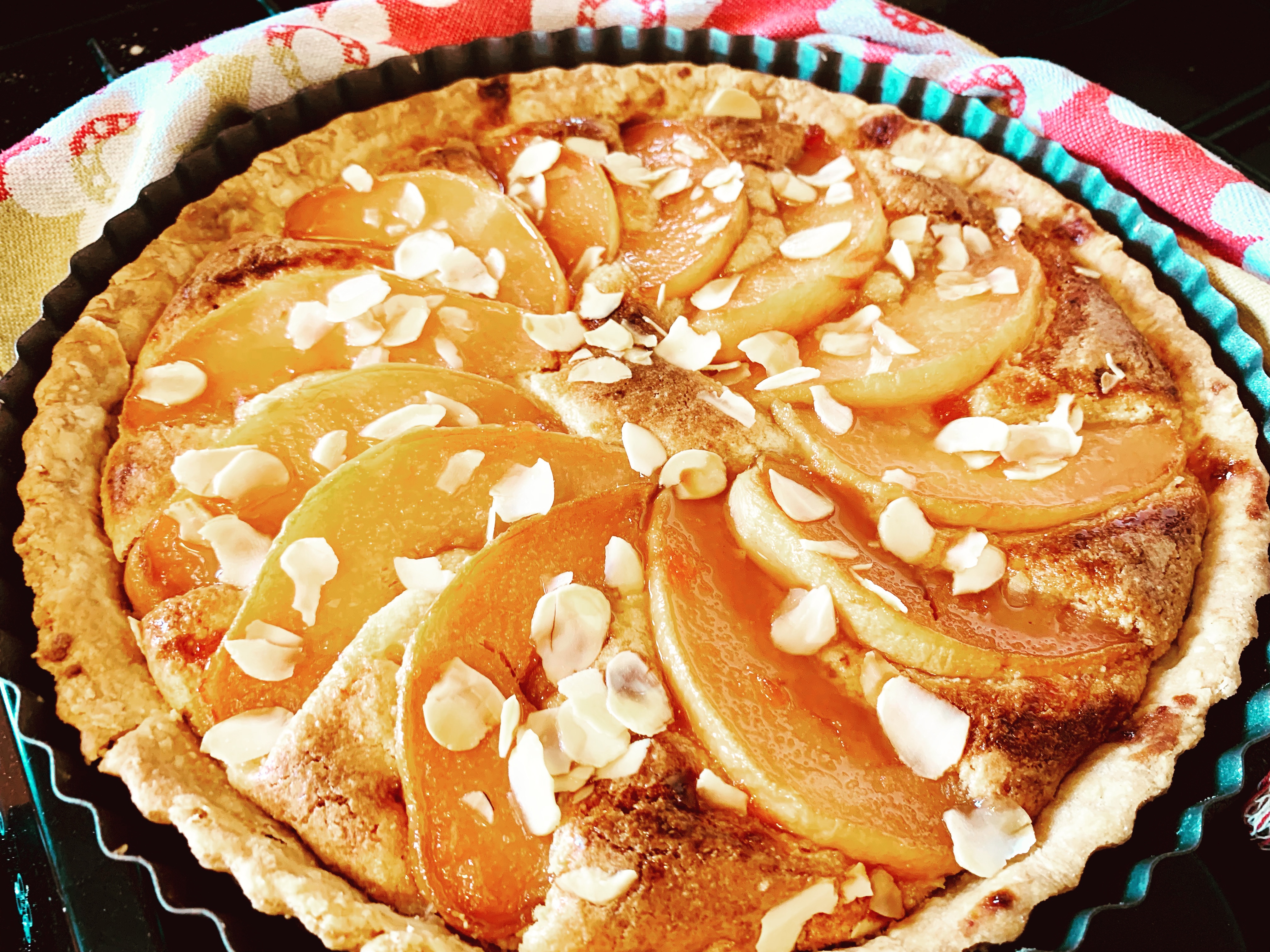
That will sort us from a quince perspective for a while. Husband will eat them, hard and raw (he is bizarre) whereas I will poach them in a sugar syrup with cinnamon sticks and juniper berries, then roast them in frangipane tarts and sweet pastries.
Quince frangipan tart
The rest of the fruit we source from local organic crofts, or the local Co-op supermarket.
We try to keep it local but apart from apples, pears, rhubarb, local quince and berry fruit I haven’t managed to find local croft sources for anything else, and certainly not the exotics as an occasional treat. Supermarket fruit is often under ripe and tasteless, let alone the concerns that I have about the food miles involved, so anything that we can do to reduce our reliance on them as a source of produce is a good thing in our opinion.
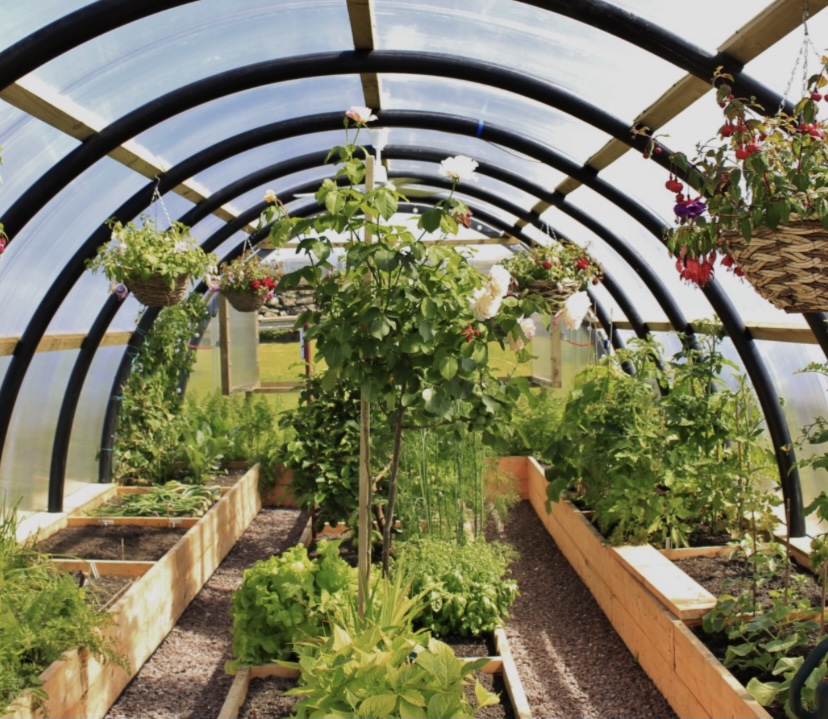
This is where the polytunnel will come in. We plan to grow nectarines, peaches, quinces and maybe loquats in the tunnel. If we can. Unlikely as it seems, the shelter that the tunnel will provide along with the long summer days this far north will be enough, with a bit of skill and patience, to produce these things. We’ve seen peaches grown in polycrubs in Shetland, which is even further north and even more exposed than us, so I have every hope!
These combined with the berry beds as well as the apple and pear orchard that we have planned, and we should be covered for most of our future fruit needs.
Polycrub with space for trees
Bananas sadly remain a step too far for these northern shores.
It’s not all been perfect carrots and potatoes, y’know. Growing organically and without pesticides has been a challenge, and we’ve lost our fair share to the bugs and the deer. Mainly, it has to be said, to the damned deer.
Our hungry neighbours
Deer are not supposed to like garlic, onions, leeks or anything strongly scented. Ha. Ours obviously have exotic tastes. They’ve chomped through the green foliage of all three of these all summer.
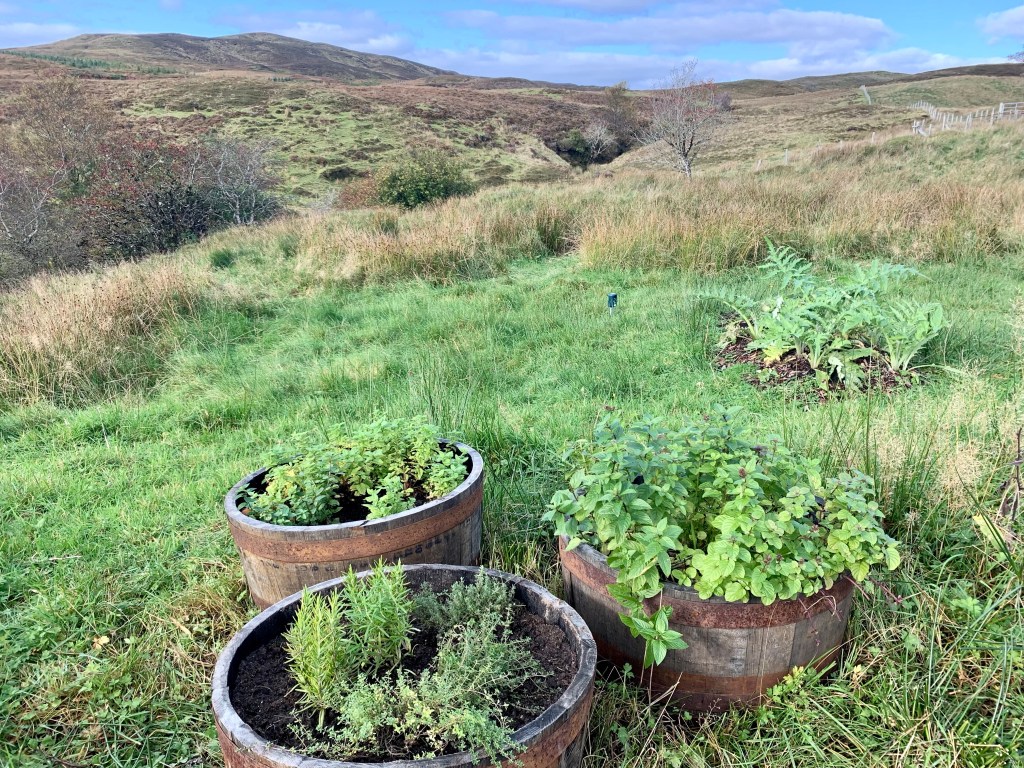
Plant globe artichokes, those in the know said. The leaves are big and bristly and the deer don’t like the texture of anything bristly or prickly. Ha. They’ve been eating the yacon and artichokes too, biting out the lead shoots completely on many of our plants.
It’s also the closest bed to the common grazings on the hill , and as such the most tempting, I suspect. The rest are annoyingly close to the caravan.
The distant remains of the artichokes
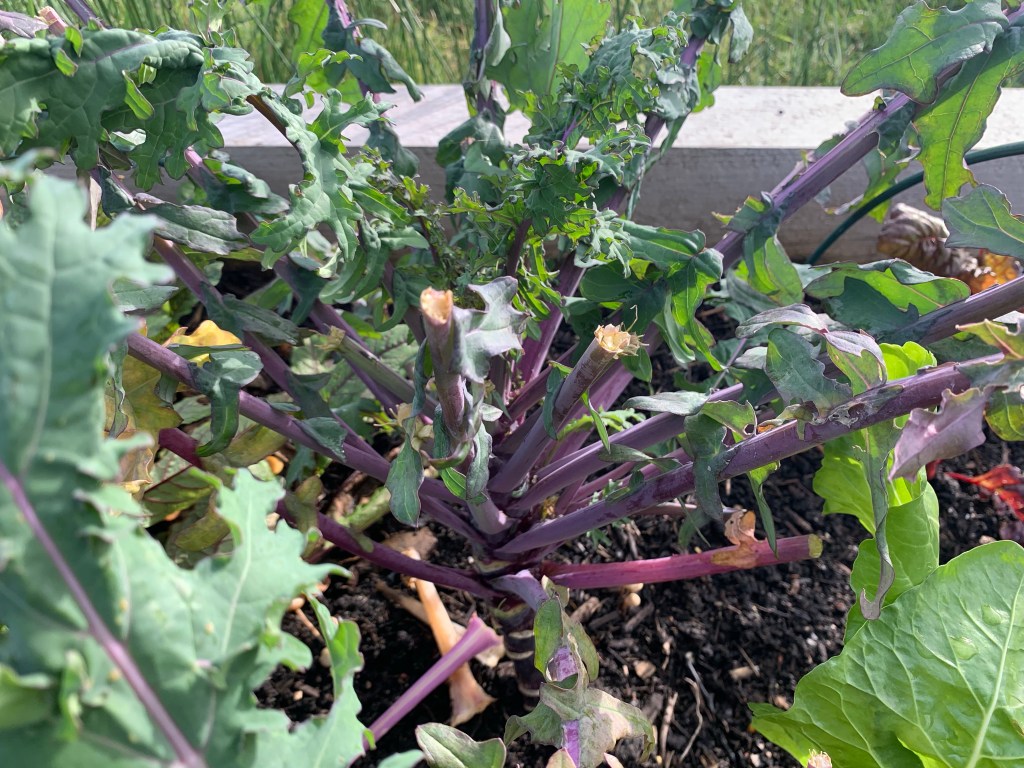
Kale was always going to be a crop that we knew would potentially suffer from their grazing, although they did wait until it was of sufficient size to be worth nibbling. Thoughtful of them. Then they feasted.
Chomped kale
What the deer didn’t eat, the caterpillars and other bugs did.
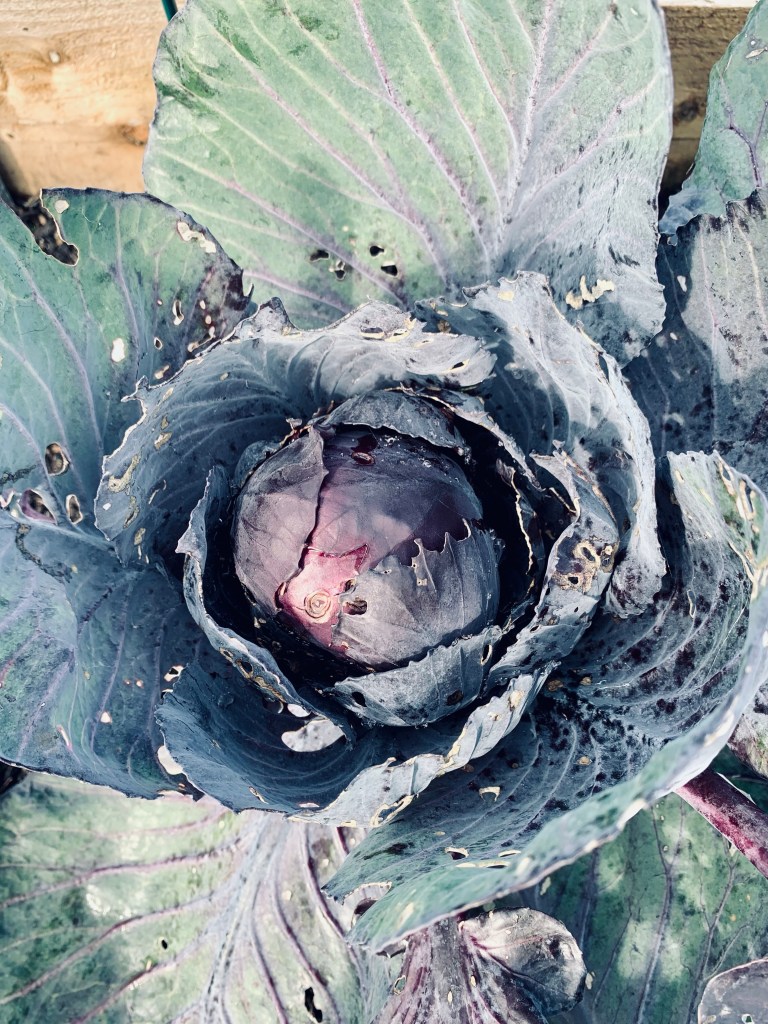
This is a picture of one of my red cabbages from the raised beds. As you can see, the leaves are like lacework, having been nibbled by whatever passing insects or caterpillars we are harbouring. Companion planting helped a bit, but most of the garlic and other strongly scented plants that were supposed to deter passing devourers had been harvested long before these cabbages were, and then the fun started.
Bug salad bar
I am not despondent. I’m happy to lose some to wildlife, but am determined to find ways to minimise the damage and maximise our crops. Our soil is productive and good. I think that netting against insects for longer next year will help, as will deer fencing around the vegetable plots, if not the whole croft.
It’s a journey, and we’re learning.
On the whole this growing thing has been surprisingly successful for us, and next year with the benefit of the knowledge gained from our experimental year, more beds and the polytunnel in place, we’ll be even more productive.
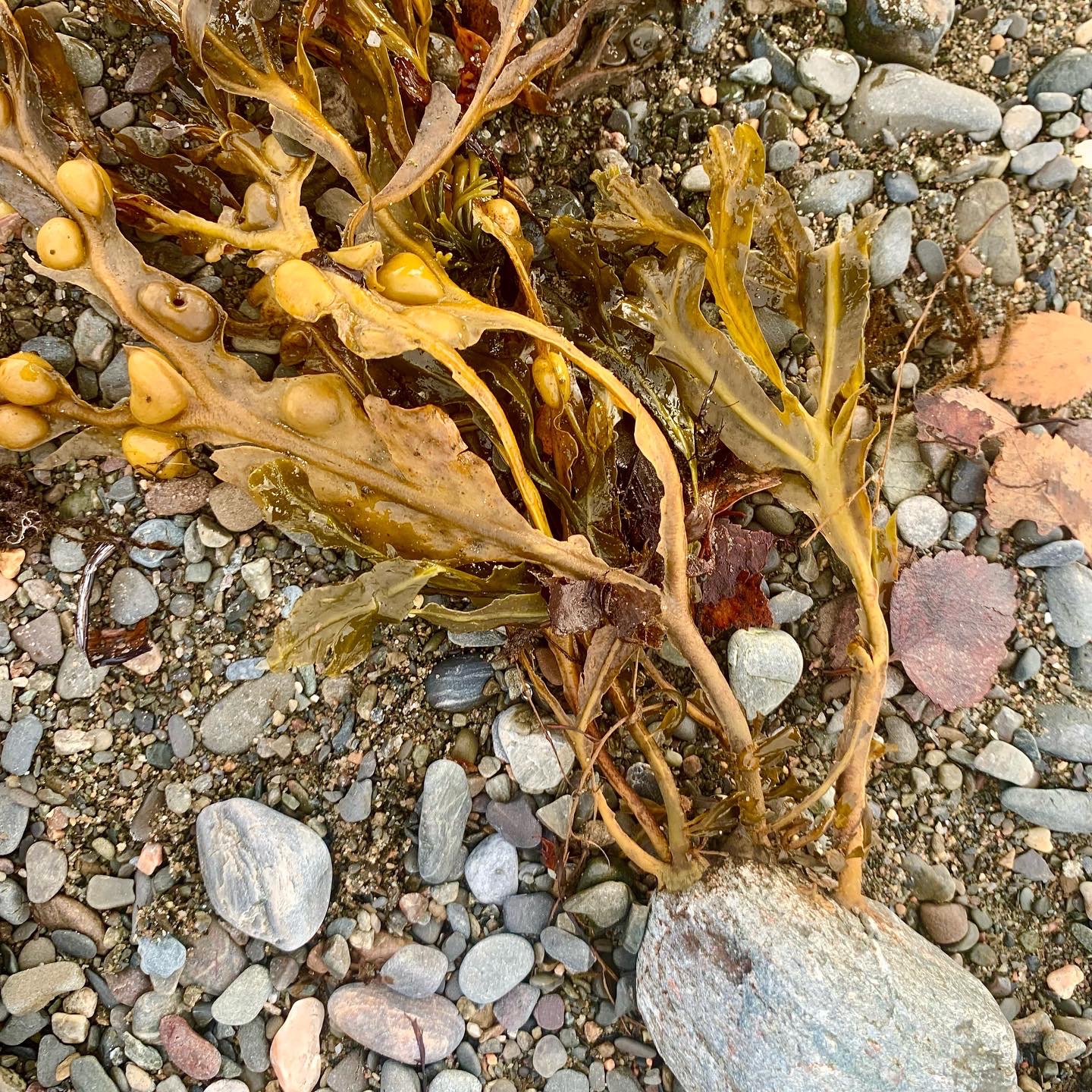
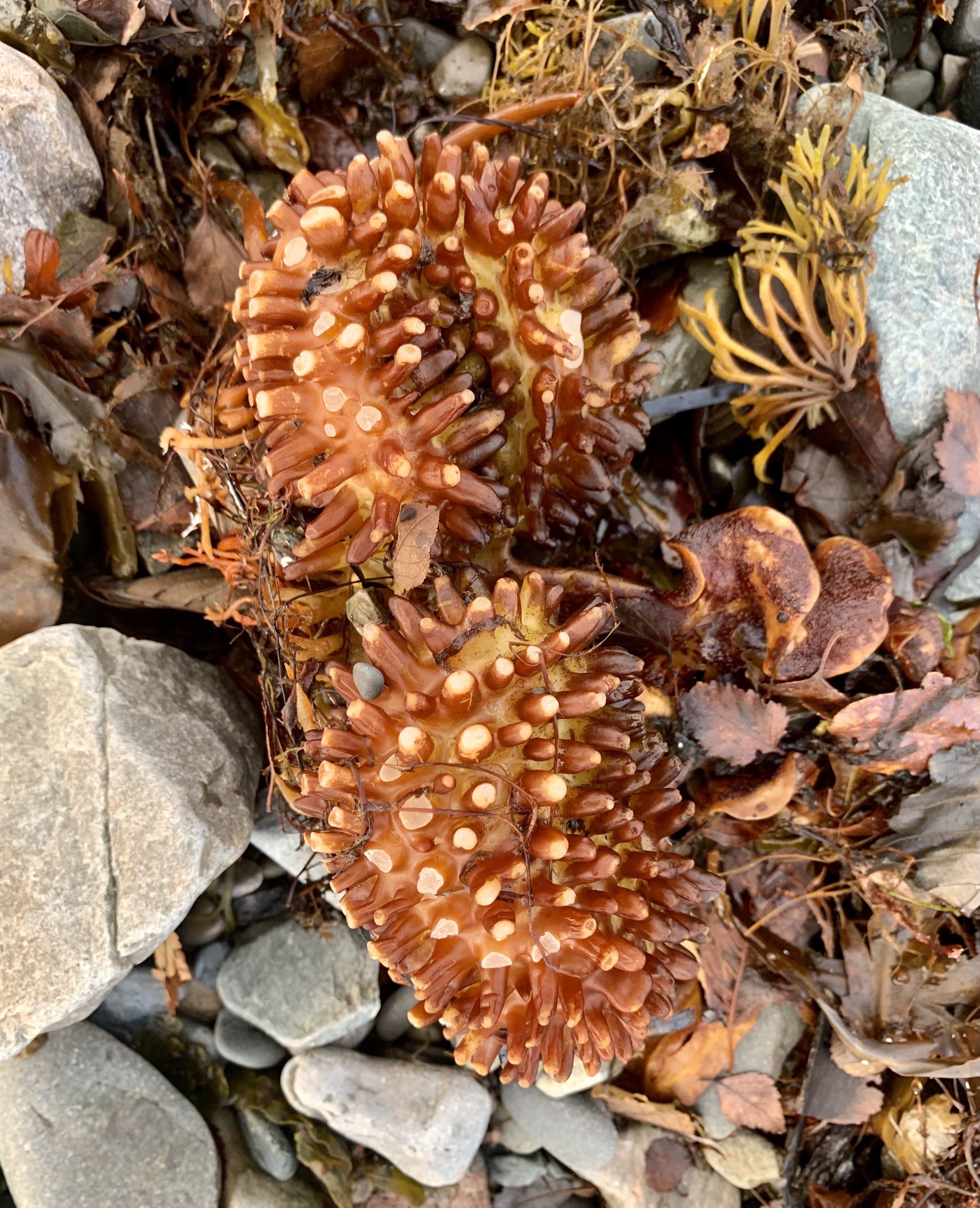
It’s a good source of potassium, nitrogen and magnesium. It also contains trace elements (nutrients that plants require only in small quantities) including iron, manganese, zinc, copper and boron, not always found in other types of fertiliser.
It’s also completely biodegradable and breaks down quickly, perfect for the vegetable beds.
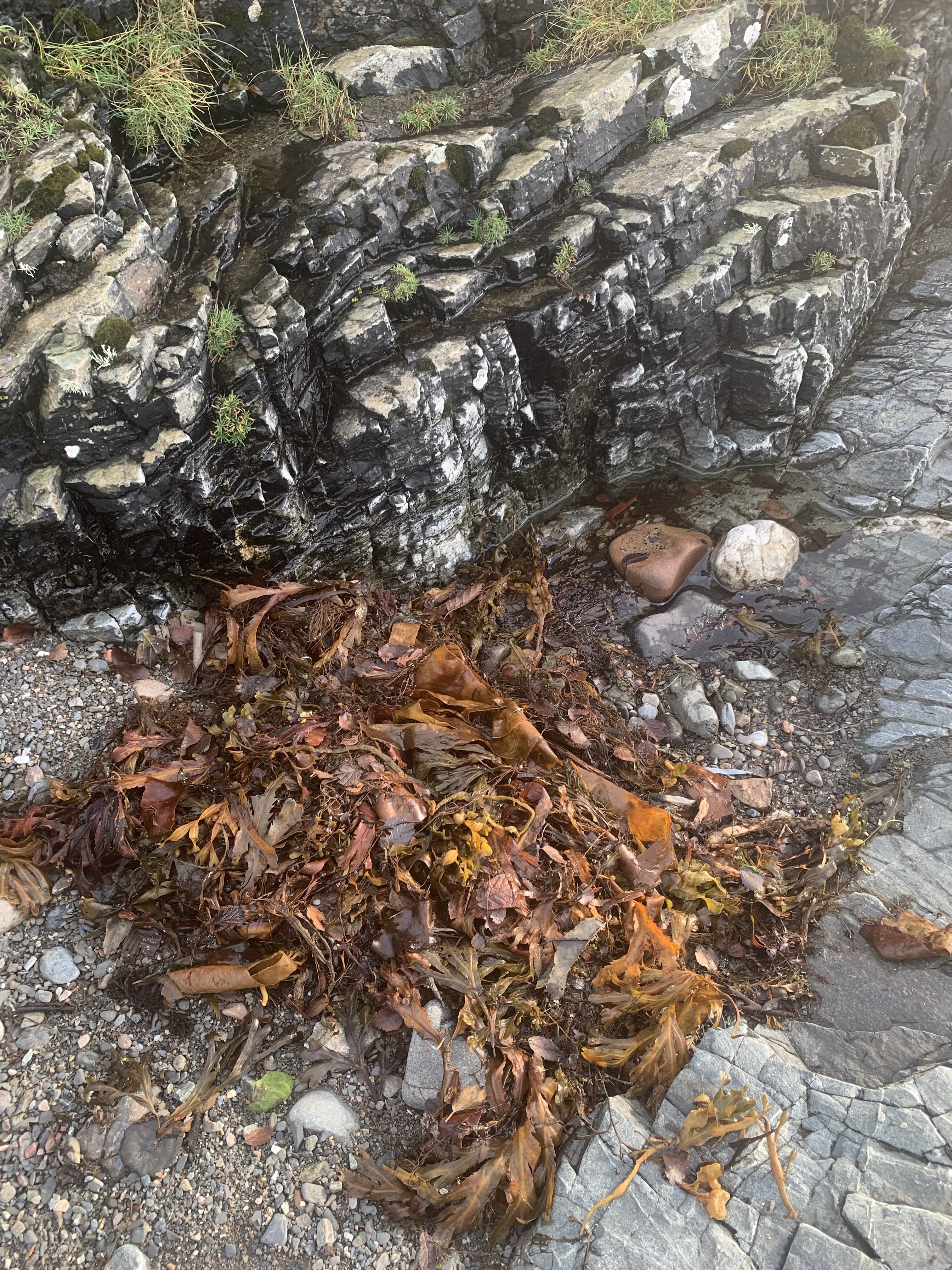
We could see how full of nitrogen the seaweed at the high tide line was – there was a line of nettles growing right out of it!
Seaweed at high tide line, with nettles
We plan to use this precious, free resource in two ways on the croft; as a mulch on our no-dig beds to suppress weeds and fertilise the soil directly, and added to our compost bins to add nutrients to the rotting down mix of green and brown matter.
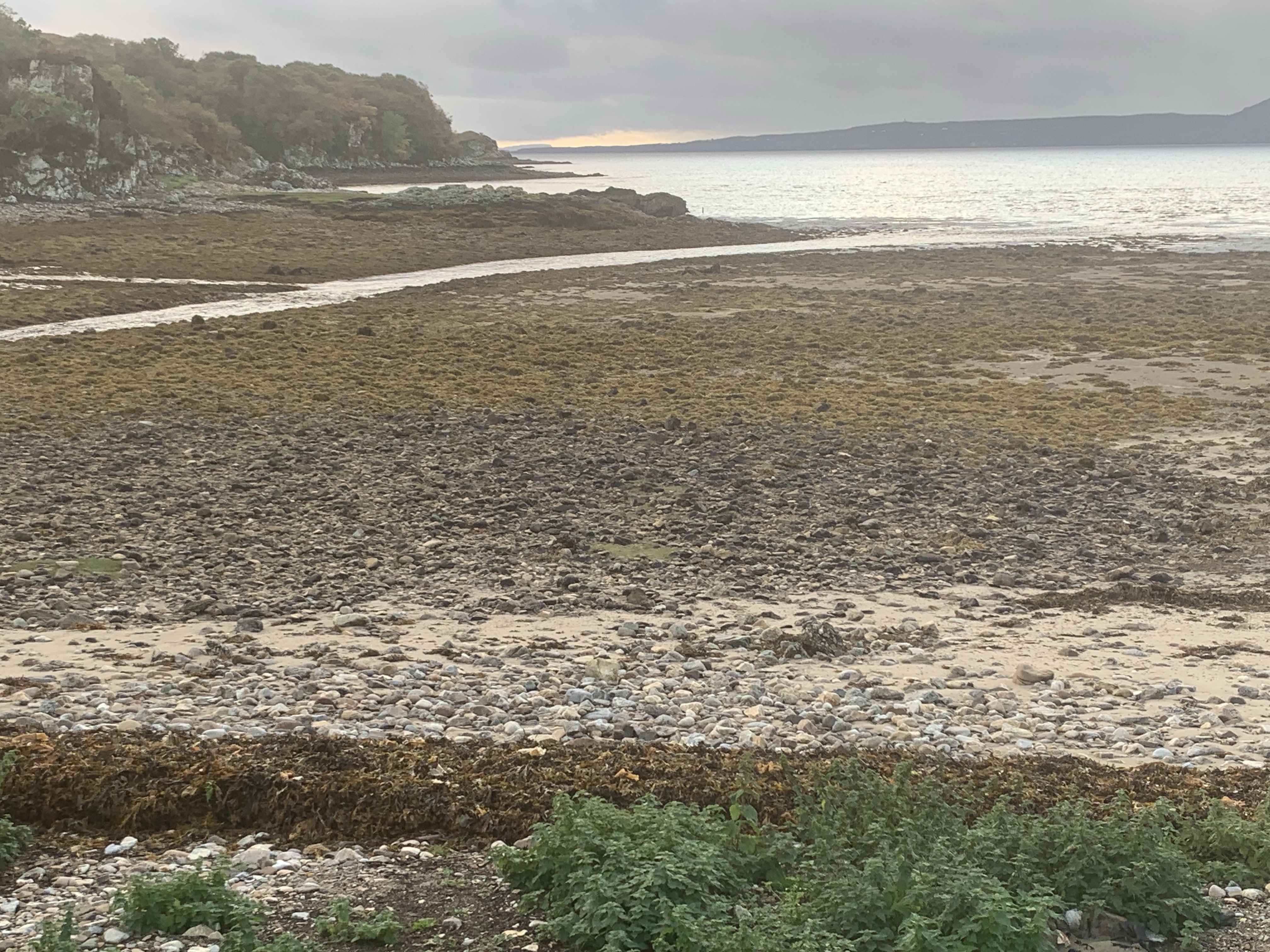
Yesterday we explored the western side of the peninsula looking for beaches where we could collect, wheelbarrow and load a car trailer with ease. We found two great beaches, both full of seaweed, and both highly accessible.
Tarskavaig beach
We won’t take too much, as the wildlife on beaches rely upon it, but there seems to be plenty for all. Next time we have a storm we’ll bag up a few feed sacks of it from each beach and bring it back to the croft.
It all started with a big paper bag of chestnut mushrooms. Perfectly in season, brown, earthy and fresh. Smelling of autumn. That, and a glance out of the caravan window at the rain convinced me that it was definitely soup weather.
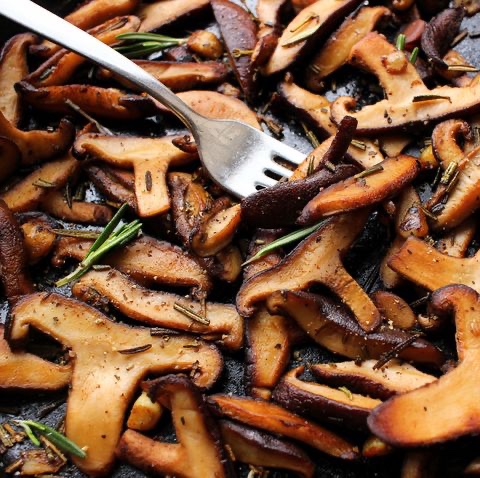
Sautéed mushrooms
Much as I like a bowl of Heinz mushroom soup as a quick, comforting lunch, a homemade soup is really in another league and is well worthwhile the small effort that it takes.
Mushrooms, chopped sweet chestnuts, garlic, fresh parsley and tarragon are the mainstays of this soup. A slosh of cream or creme fraiche finishes it. It’s warming and delicious, and cooks up in less than thirty minutes.
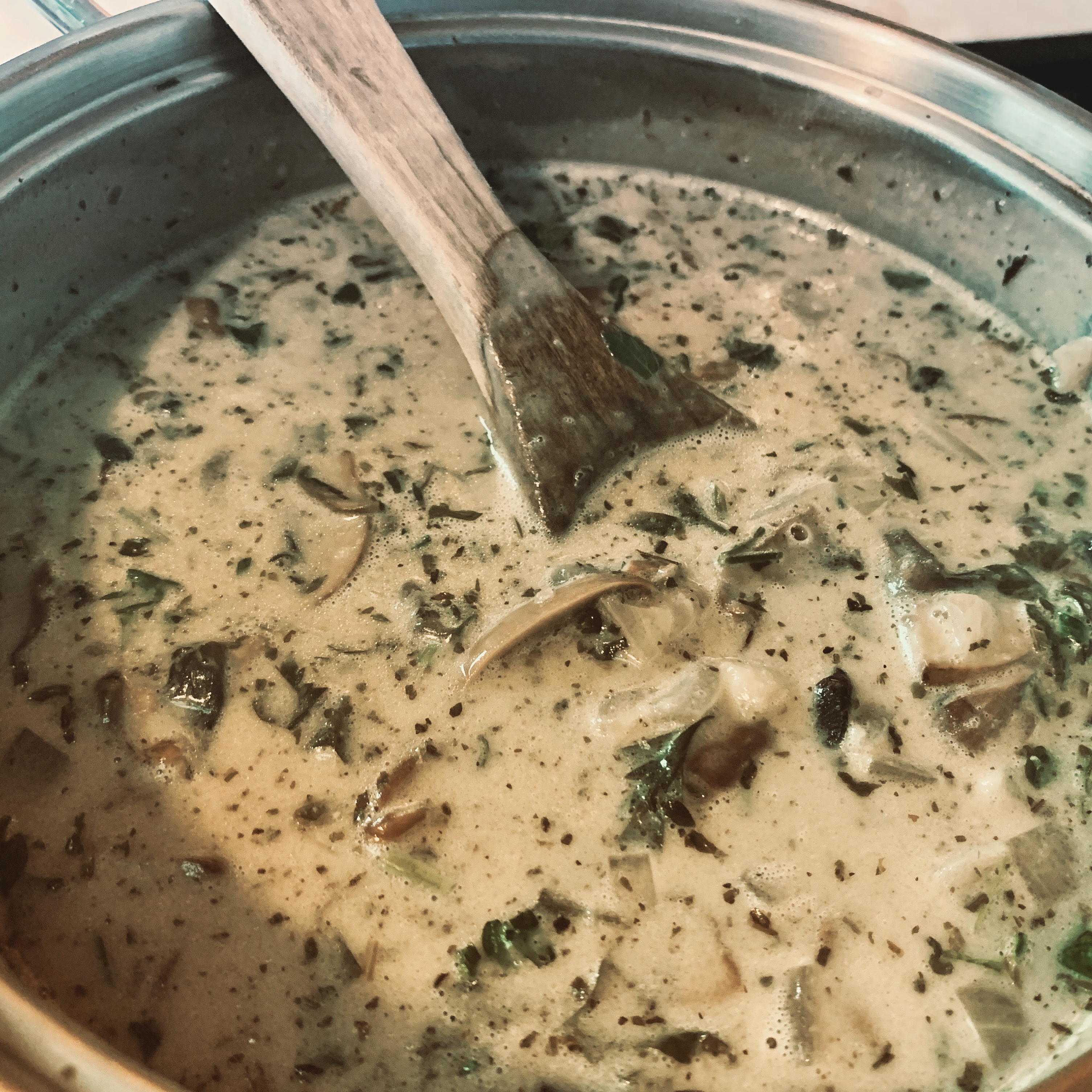
Mushroom & sweet chestnut soup
As winter approaches I make soup much more often. There’s usually a pot of soup simmering on the stove most days in this weather. Soups are so versatile, and can be made cheaply from the simplest of ingredients.
Amongst our personal favourites are mushroom and chestnut, fresh chicken, winter vegetable, butternut and sweet potato, leek and potato, Cullen skink and lentil soups. Not having a blender here in the caravan, all of our soups are left “au-naturel” and somehow feel all the more of a meal for that.
Served up with warm cheese scones, or good crusty sourdough bread, soups are definitely the food of autumn.
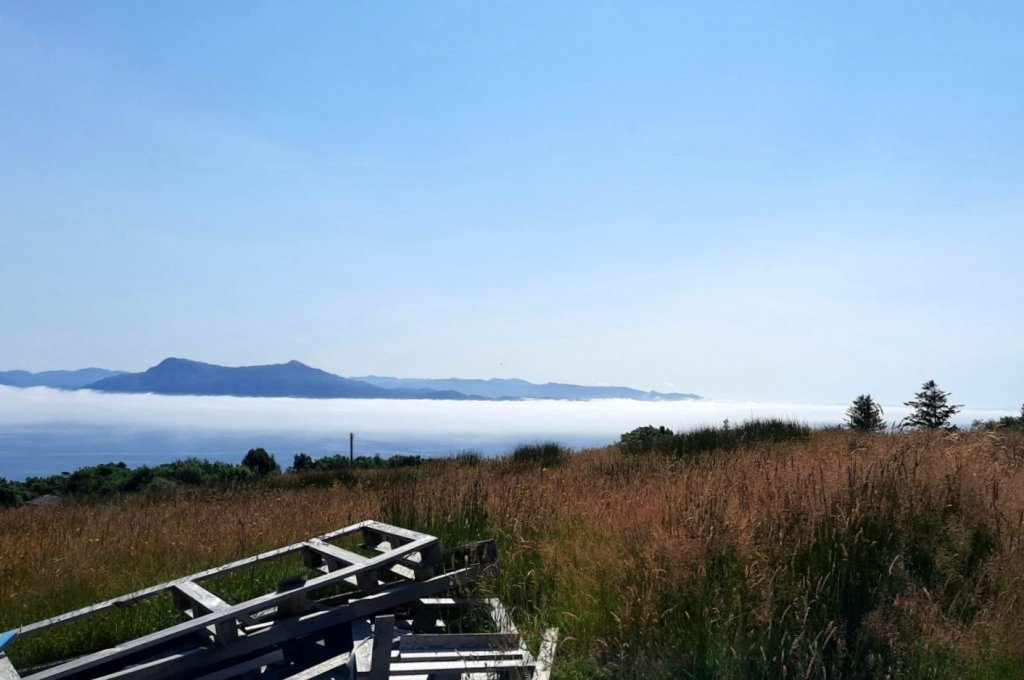
Sea Haar, or ‘sea fret’ as it is also known in the North East of Britain, is used to describe a cold fog that accumulates at sea rather than on land.
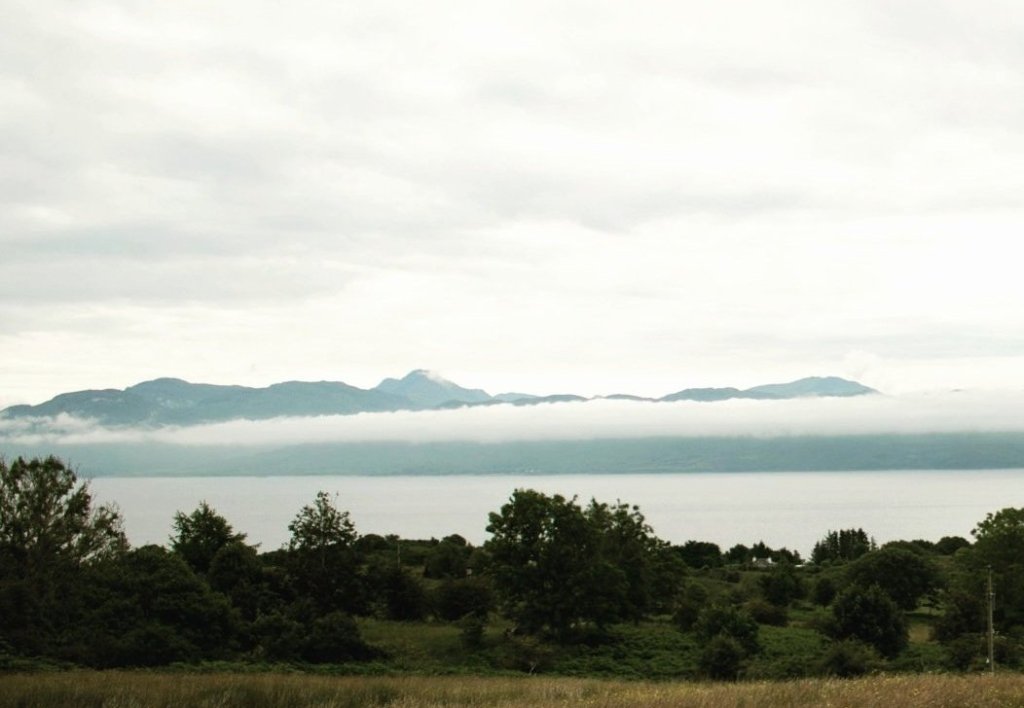
Over the last week we’ve had some spectacular examples over the Sound, with layers of cloud, or fog, lying low over the water like a blanket of snow.
It’s usually burned off with the rising air temperatures by about lunchtime, but it has created some amazing looking scenes that we’ve watched from the house.
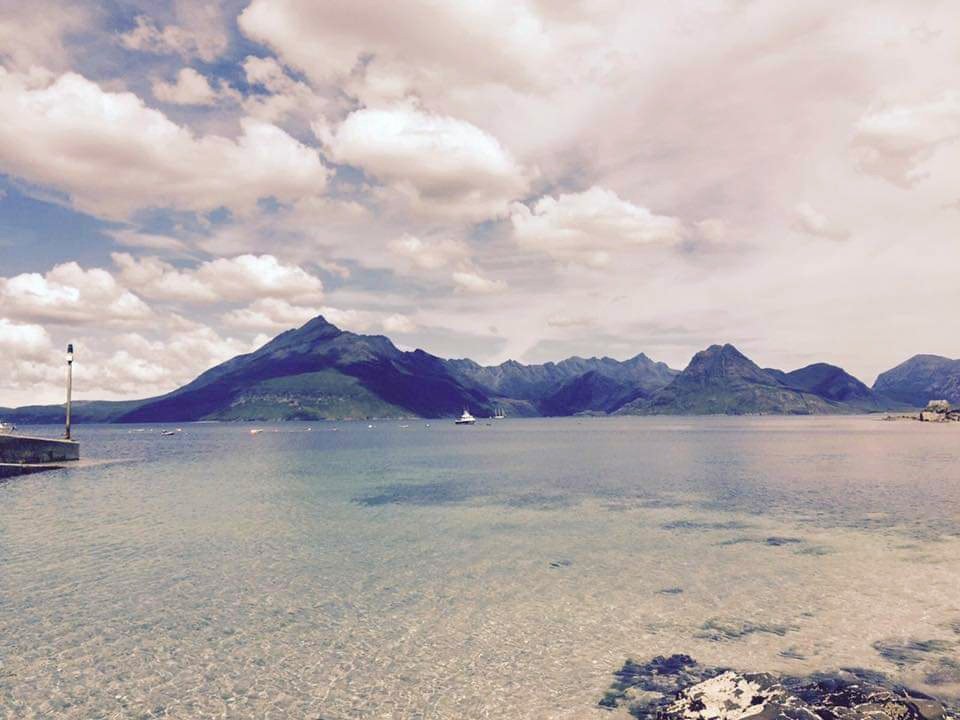
Every month brings different weather conditions and changing vistas. Every day this view looks different.
It’s been nearly a year since we saw family, with the stepsons being based in Manchester for university and work.
At last one of them has been able to make it up here to the island and we’re enjoying sharing this amazing place with them.
I’d forgotten the effect that Skye can have on someone when they visit for the first time.
It’s been over twenty years since I first came here, and although the grandeur and beauty of the landscape doesn’t diminish, its impact becomes less over the years as its mountains and seas become more familiar. You forget that first, overwhelming intake of breath when the magnitude of this landscape hits you for the first time.
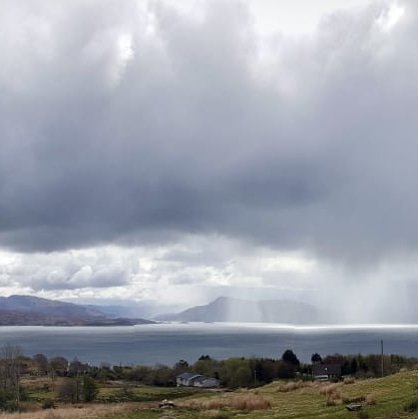
Rainshowers
Much as we do our best to convey the magnificence of place through our posted images, nothing can match the sense of being here physically, the wind in your hair, the rain on your face and the spirit of the island embracing you with its rawness. And there’s been nothing BUT rain over these past few days, sadly.
Amazing skies
It’s been remarkable to watch this sun-loving city dweller suddenly “get” what has made us want to build our lives here in this remote place. I know they both think we’ve gone a bit mad, but as we’ve travelled around over the last few days the sheer draw-dropping beauty of the island (albeit glimpsed through gaps in the rain) has definitely started to take hold.
We continue to have frosty mornings and very cold nights, so it’s not been advisable to put out any tender plants without serious fleecing.
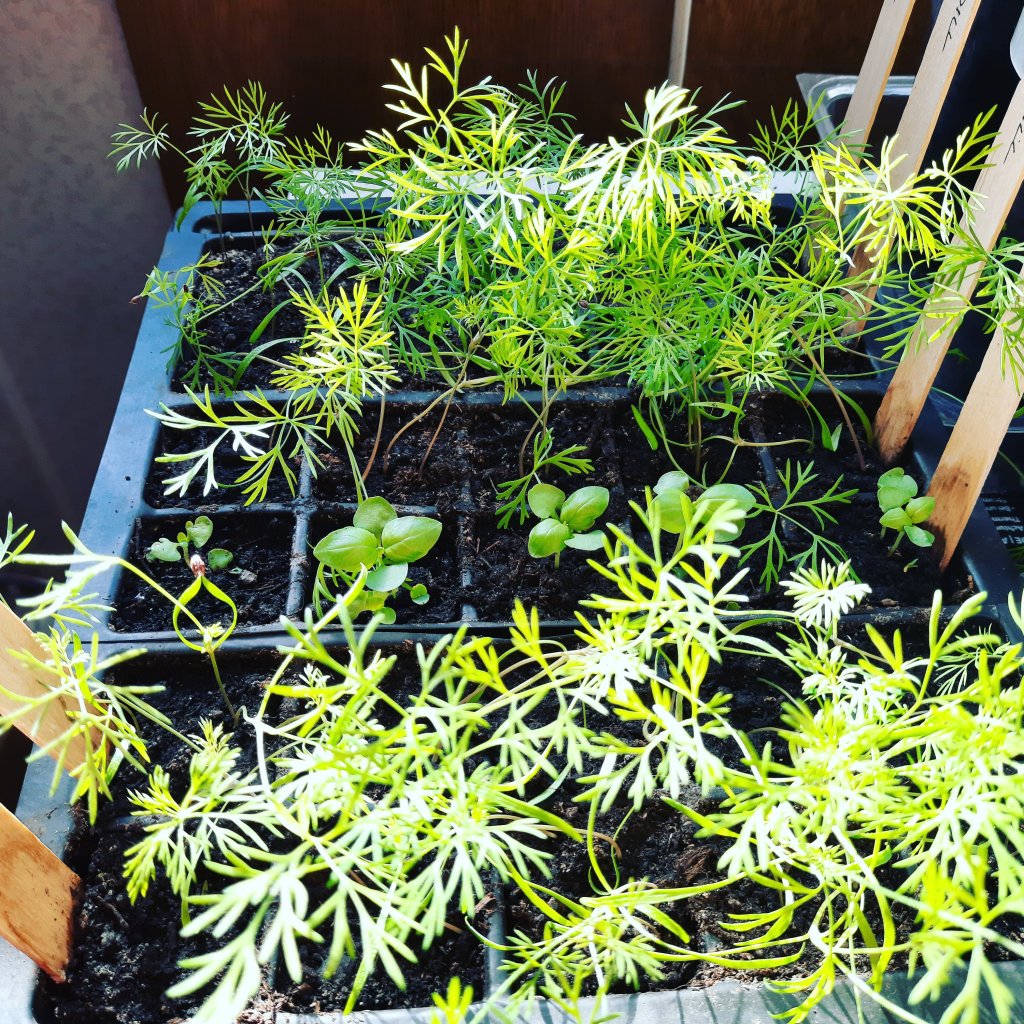
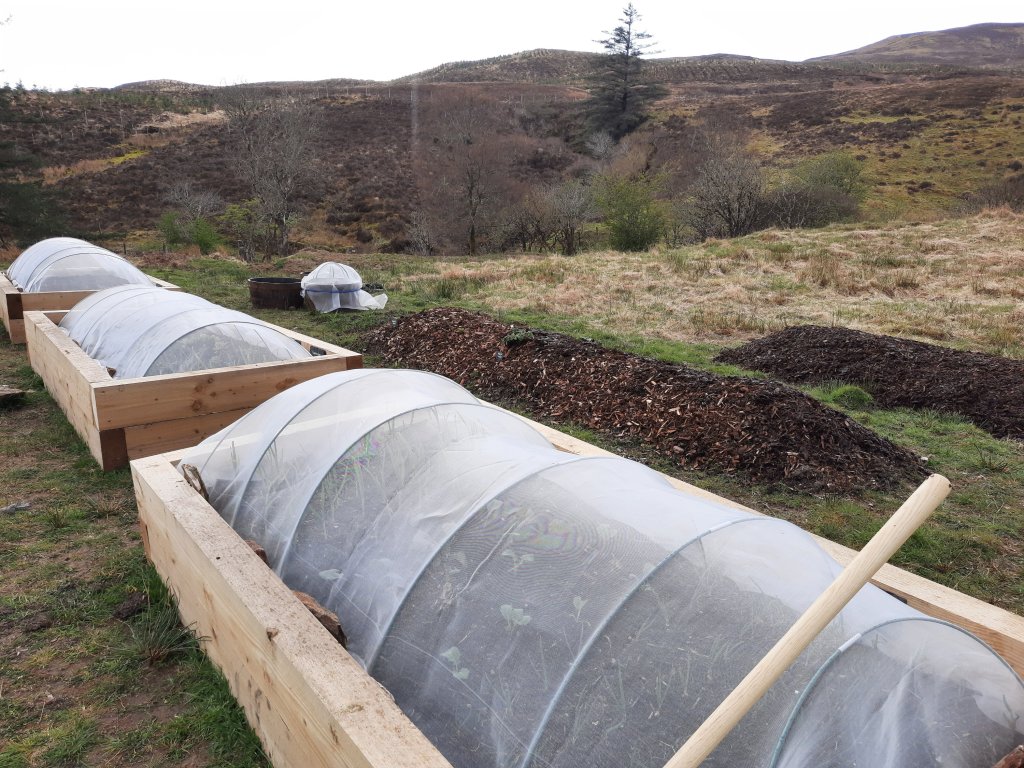
My “plant room” in the caravan is still full, and although I’ve planted out a few purple spouting broccoli and beetroot plants, some cabbage, kale, and some sorrel, everything else is under wraps for a bit longer. I’ve direct sown carrots and parsnips into the beds but nothing has germinated yet…. I don’t blame it.
It did give us the opportunity to make another hugelkutur bed with cut reeds as the base, as I’ve estimated that I’ve still grown too much to fit into our prepared growing space. Always a learning, eh?
Everything is heavily mulched with woodchip to try and minimise soil runoff. We’ve almost gotten through a few tonne bags of that already, and I’ve still got the paths around the beds to lay..
The weather on the island has taken a turn for the worse since the Spring Equinox.
As if to laugh at our feeble attempts to plant, a prolonged few days of stormage has reminded us that Winter hasn’t done with us yet.
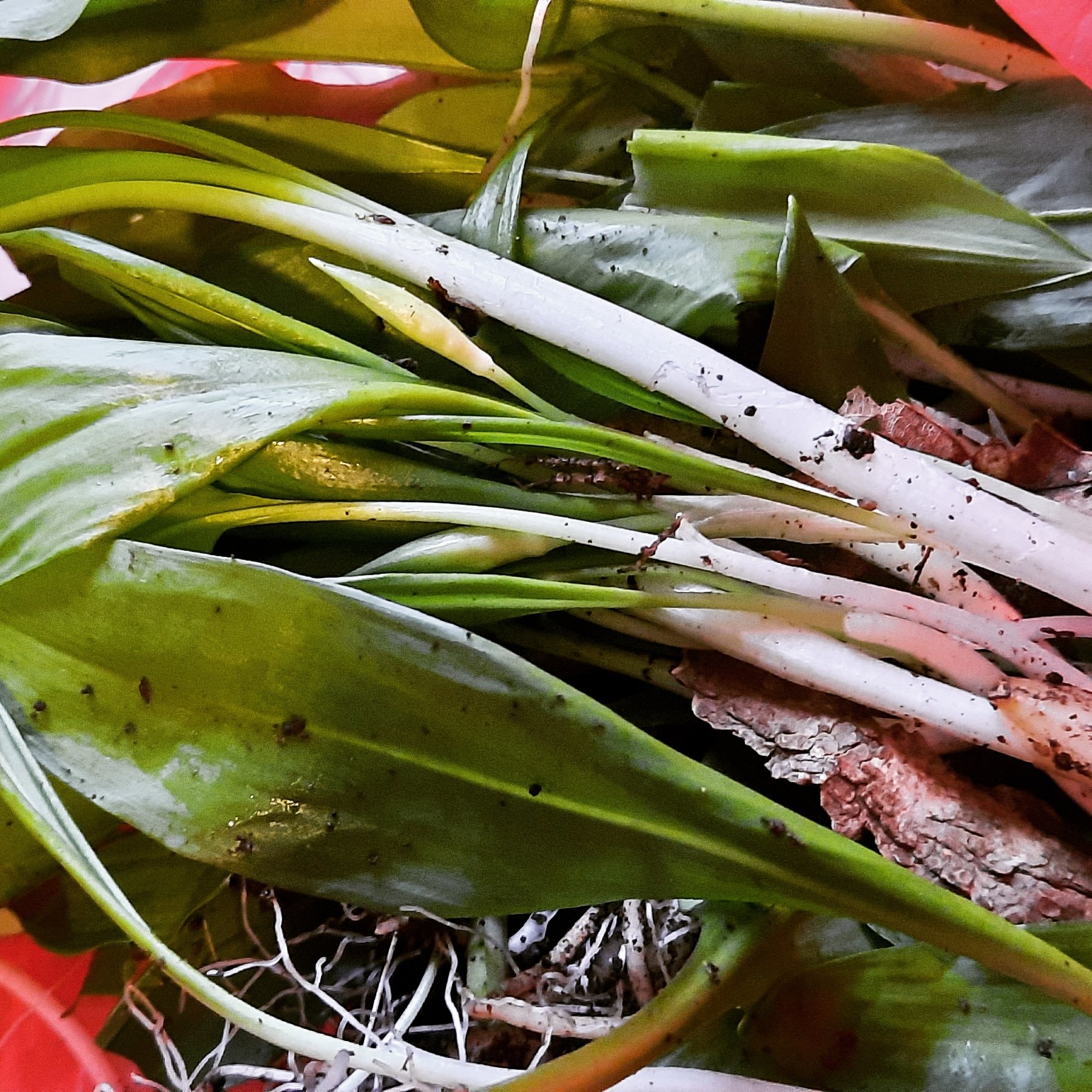
A neighbour brought us a huge bag of wild garlic picked from local woodlands, which was most welcome. I chopped the fragrant leaves through salad and reserved the plants that still had their bulbs and roots attached so that we could plant them on the croft.
Husband dug them into a damp, grassy bank above the stream under dappled shade. Hopefully they’ll take and we’ll have the start of our own wild garlic patch before too long.
Just as he finished the planting, the heavens opened. We’ve now had a solid 48 hours of hail, rain and high winds, and it’s not abating any time soon.
Our tiny burn went from a gentle trickle of water to this rushing torrent within hours…



 Ravencroft Skye