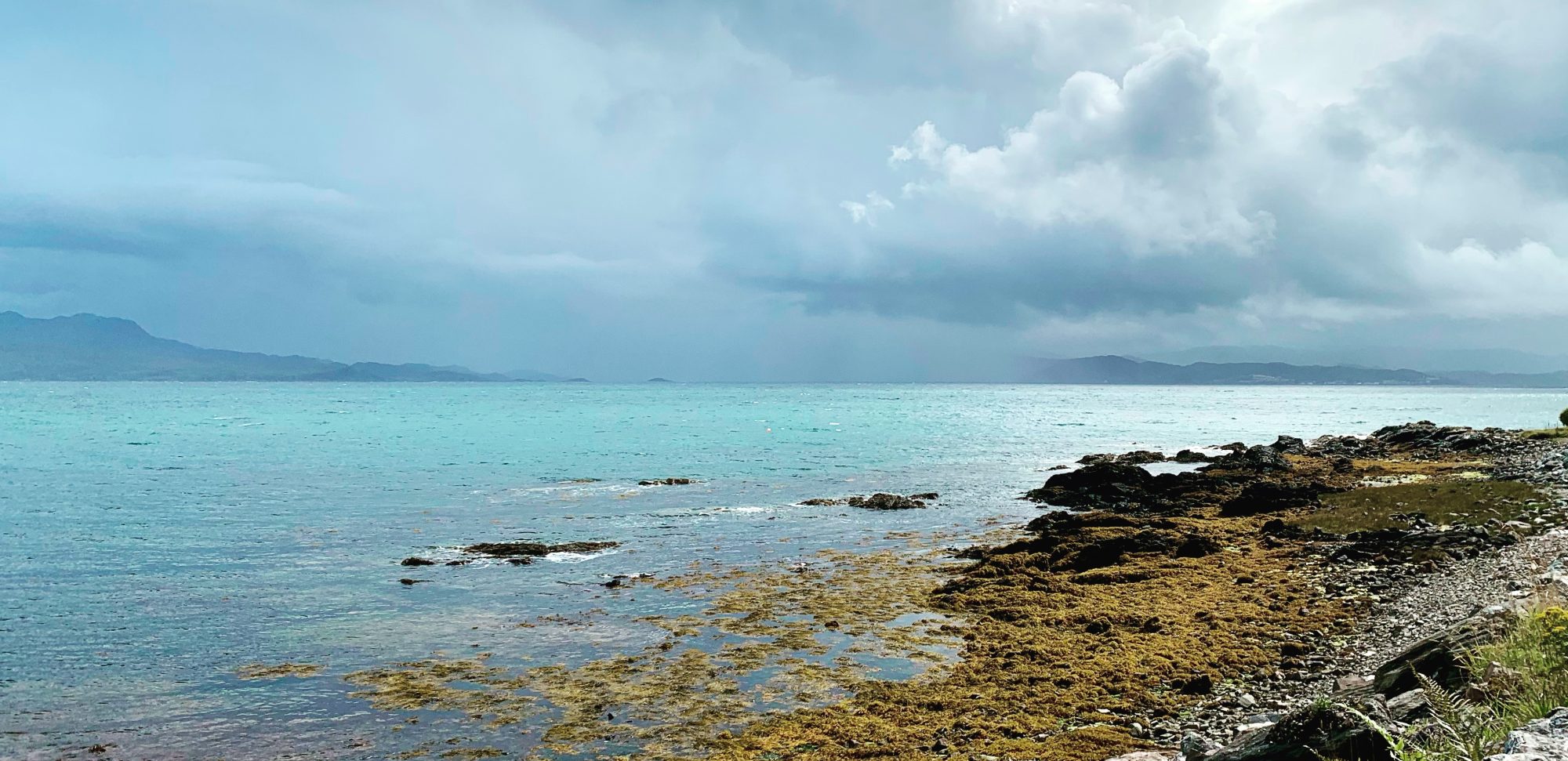
Spring storms & wild garlic

The weather on the island has taken a turn for the worse since the Spring Equinox.

As if to laugh at our feeble attempts to plant, a prolonged few days of stormage has reminded us that Winter hasn’t done with us yet.

A neighbour brought us a huge bag of wild garlic picked from local woodlands, which was most welcome. I chopped the fragrant leaves through salad and reserved the plants that still had their bulbs and roots attached so that we could plant them on the croft.
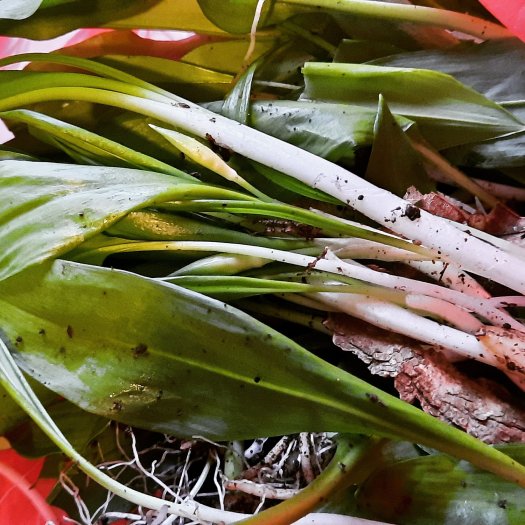
Husband dug them into a damp, grassy bank above the stream under dappled shade. Hopefully they’ll take and we’ll have the start of our own wild garlic patch before too long.

Just as he finished the planting, the heavens opened. We’ve now had a solid 48 hours of hail, rain and high winds, and it’s not abating any time soon.

Our tiny burn went from a gentle trickle of water to this rushing torrent within hours…

When it rains…

When it rains here, it really rains.

The croft feels like a giant sponge, the grass squelchy underfoot as it tries its best to absorb the huge quantity of water being thrown at it from the sky.

Yes, that’s horizontal rain.

When it’s like this, no waterproofs that I’ve ever come across will keep you dry for long. It’s best to retreat indoors for a cup of tea and wait it out.

We have pools of rainwater everywhere. The burn, which normally trickles gently through the hills at the back of the croft, has become a foaming torrent of water tumbling its way to the sea.

This is an older video from September, with the burn in medium flow. Now it’s about twice as full, I just haven’t been brave enough to make my way down there for a more recent picture.

Wish I could send you some, Green Goddess 🌿.

Exploring the croft

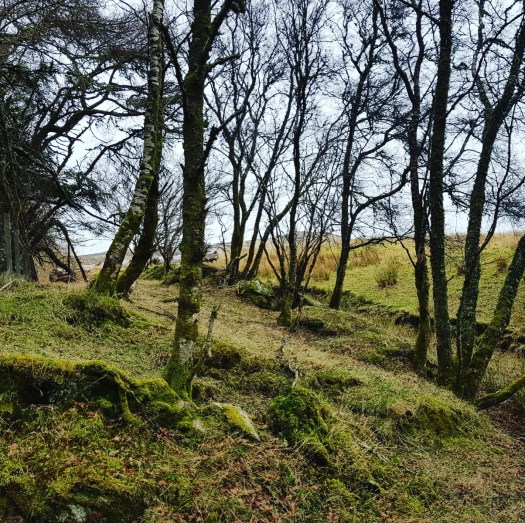
We’ve spent the last few days exploring the land. The croft is situated on a south east facing slope. Because it hasn’t been used for many years apart from occasional grazing, rushes have overtaken much of it, and there is little tree cover with the exception of a few small birch groves acting as a shelter belt to the west of the land.

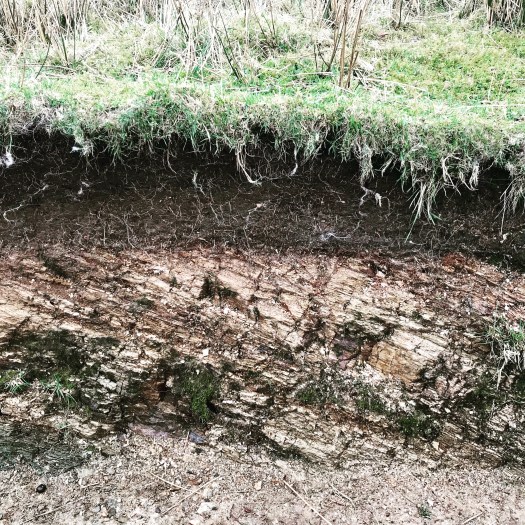
There are exposures of lewissian gneiss in various places, but there also appear to be layers of shale, as shown here in an exposed cut above the stream. You can see the soil layer overlaying the shale. Local spot PH testing shows that the soil over the shale is around 6.5-6.8, so not as acidic as we had feared.

There is also a sheltered valley to the north, where the burn flows. It’s lightly wooded and overgrown, with the stream running through the cut.

It’s much more diverse and untouched in nature than I thought from our first viewing, which is wonderful. We’re already hatching plans for where we could plant a small orchard, and where we could create a pond.

Now to focus on planning permission and building warrants…

Fallen trees and a soggy bottom

It’s been a bizarely warm, cloudy day today on Skye, but we’re here! We spent the afternoon taking soil samples and exploring the croft with planting plans in mind, and it was so mild that we left our waterproofs hanging on a fence. Not at all like February.
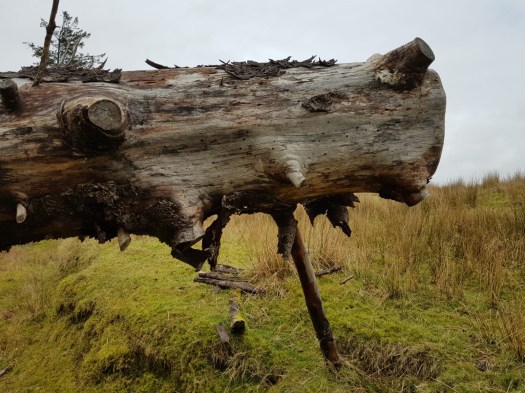
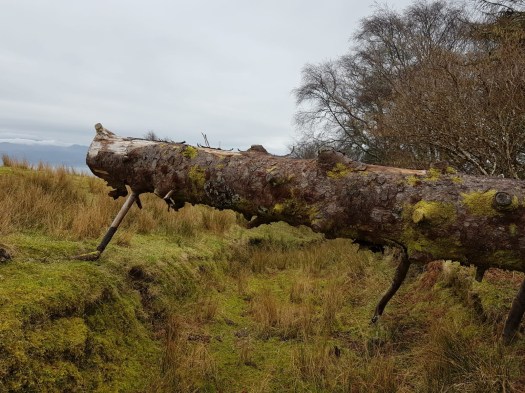
On the western boundary of the croft is a grove of trees, providing a welcome shelter belt. At some point in the past an enormous fir tree was felled, and the trunk, denuded over time of it’s branches, still lies there.

We explored the bottom of the croft more thoroughly, a rough, overgrown area that borders the high moorland and common grazings at the back of where the house will be built.

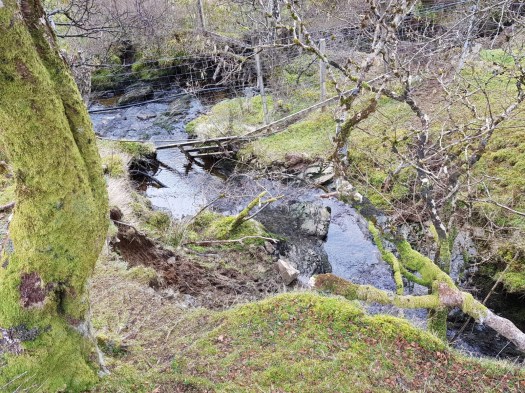
We knew that there was a burn on the western boundary of the croft, running between us and our neighbour, but what we didn’t know was that there was a small tributary stream that runs through our land which joins the main burn, hidden in a low dip to the north.

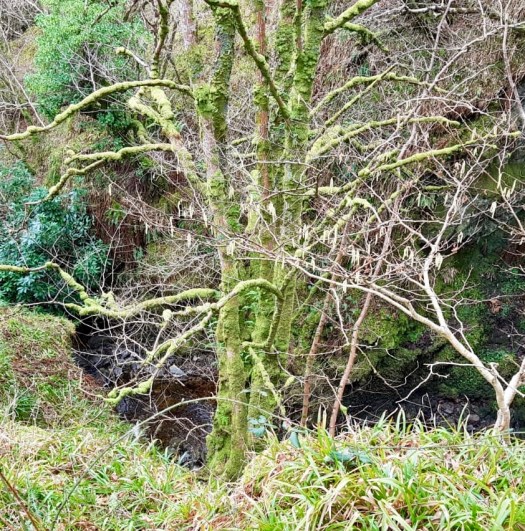
It’s quite magical. The trees overhang the cut that the stream has carved for itself out of the bank. Everything is green, mossy and lichen-covered. Today the only sound was the gurgling of the stream, the occasional bleat of sheep and the song of the birds.

Our very own soggy bottom.