Woodland croft day

There is a croft not far from here on the Sleat peninsula called Wildlife Croft Skye. It’s a beautiful woodland croft nestled into the hillside at Drumfearn, at the head of Loch Eishort.

Its owners, Phil and Laura, ran a croft walk-around event and discussion about sustainable woodland practices yesterday, and we attended.

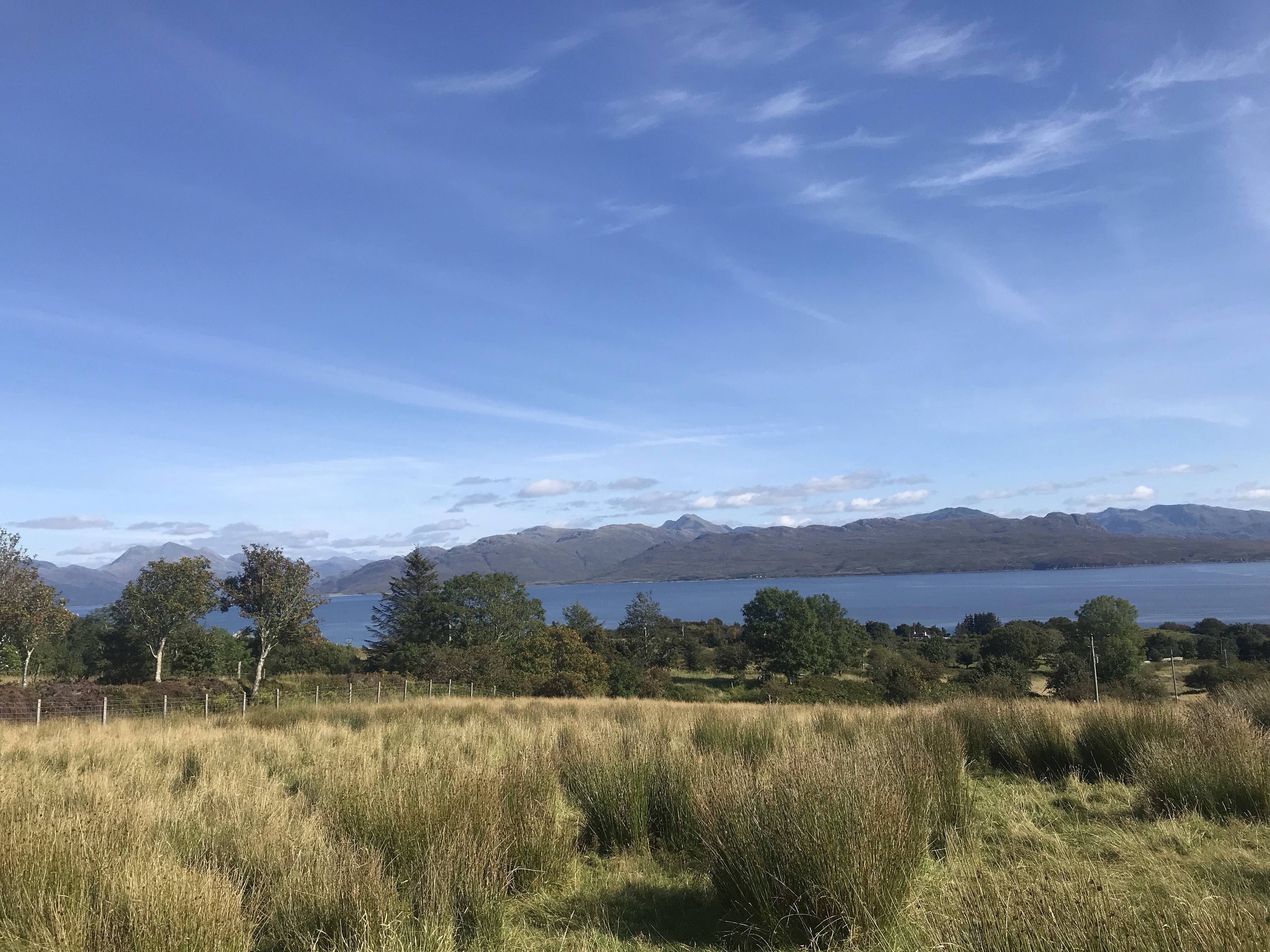
Drumfearn and Loch Eishort

Phil had warned that the terrain was a bit steep and uneven in places, and with the event scheduled to run over four hours I confess to nearly cancelling as I was worried that my knees would give out. But I’ve followed Wildlife Croft for years and really wanted to see the croft and learn about how they managed it, so off we went.
Wildlife Croft Skye

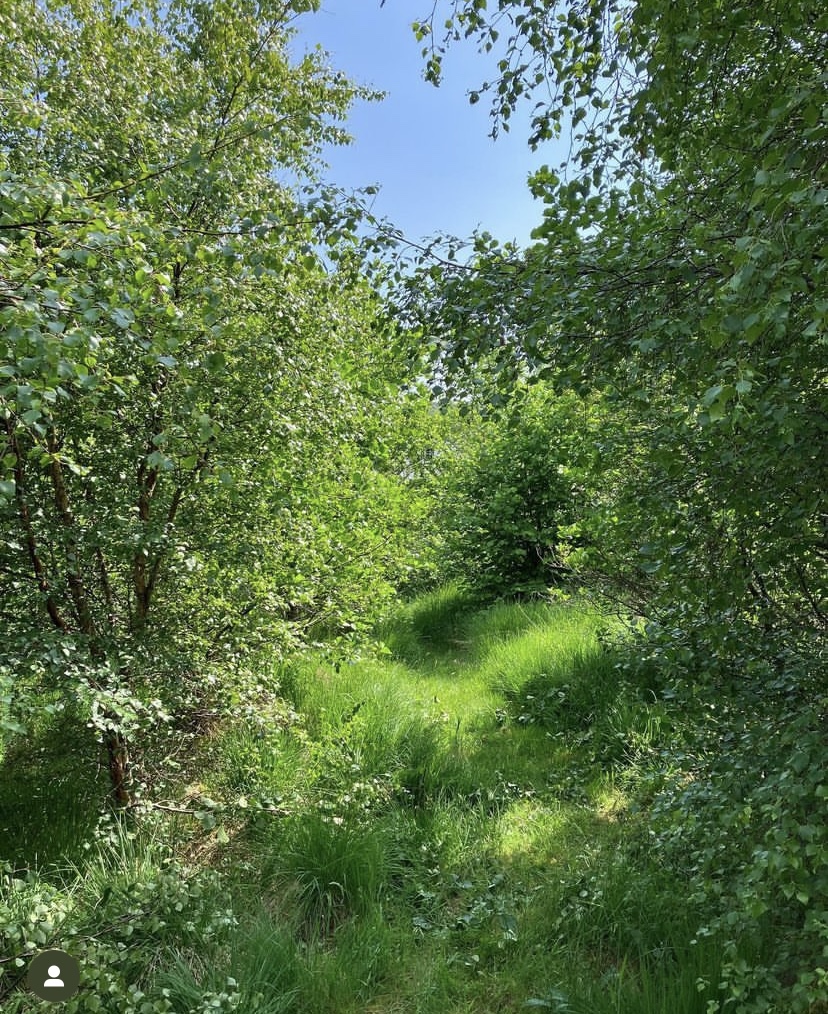
It was an overcast and drizzly day, but that didn’t dampen our enjoyment of it a bit. Phil had cut green swathes through the tall grass and undergrowth to create paths so navigating the three hectare woodland space wasn’t as difficult as I’d feared.

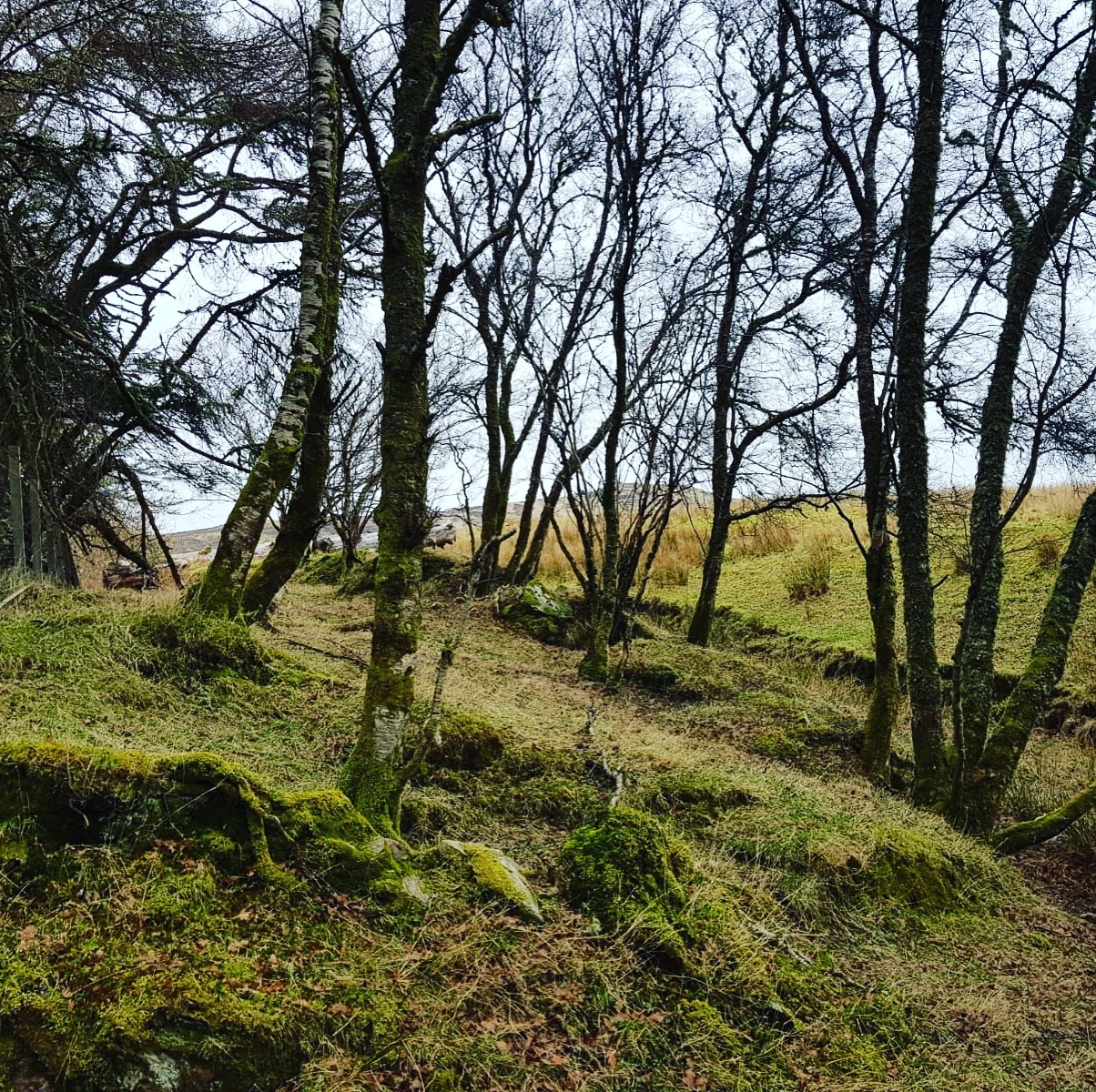
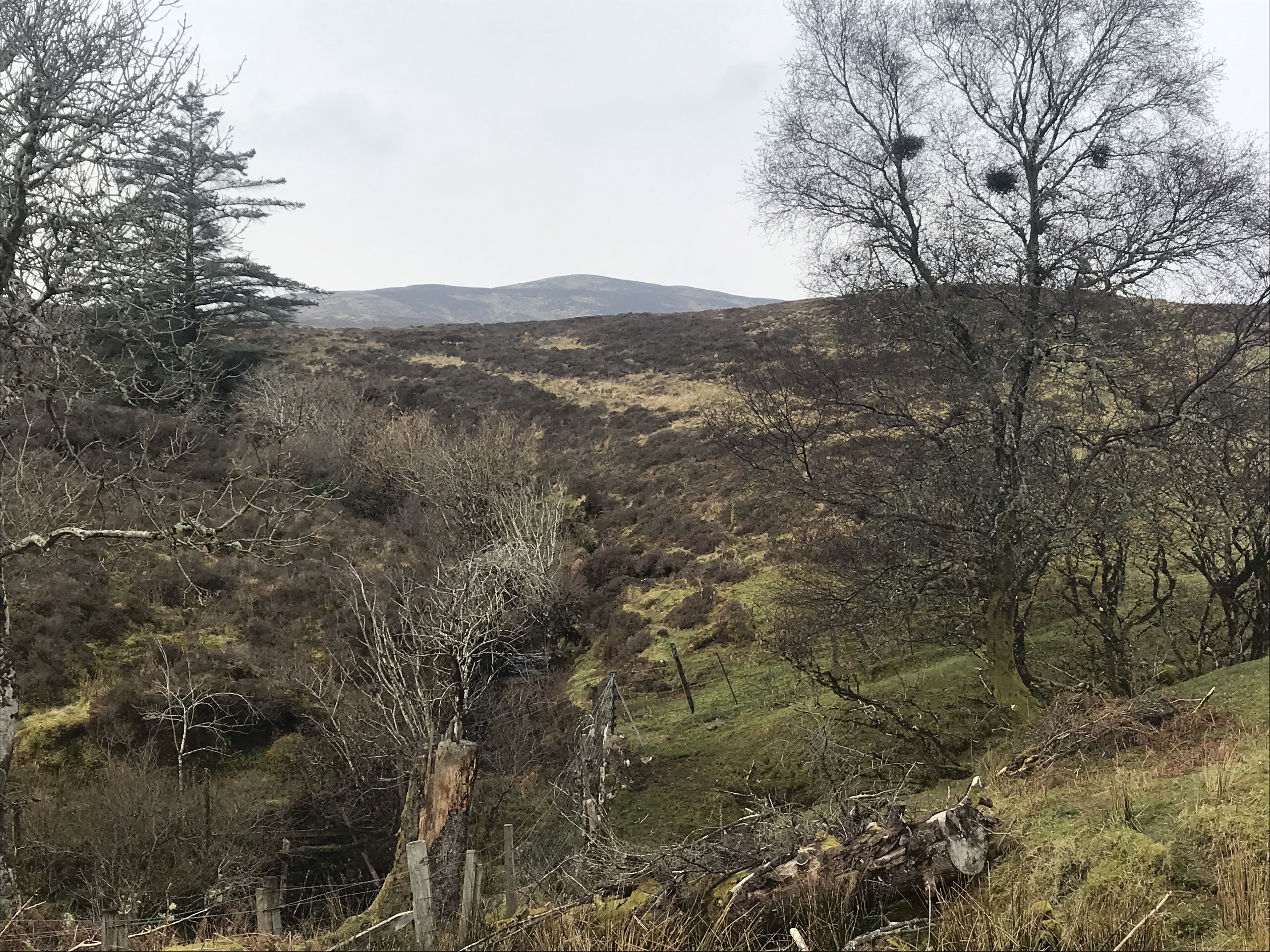
This is a green haven for wildlife on an otherwise quite typically barren hillside of island terrain. Trees cover most of the area, the bird and insect life is incredible and their house, polytunnel and bothy (Stonechat Bothy, which is bookable as a holiday let if anyone is interested in a remarkable place to stay) are nestled into the trees and aren’t at all visible from the single track road that snakes through the tiny township down to the sea loch.
Young oak

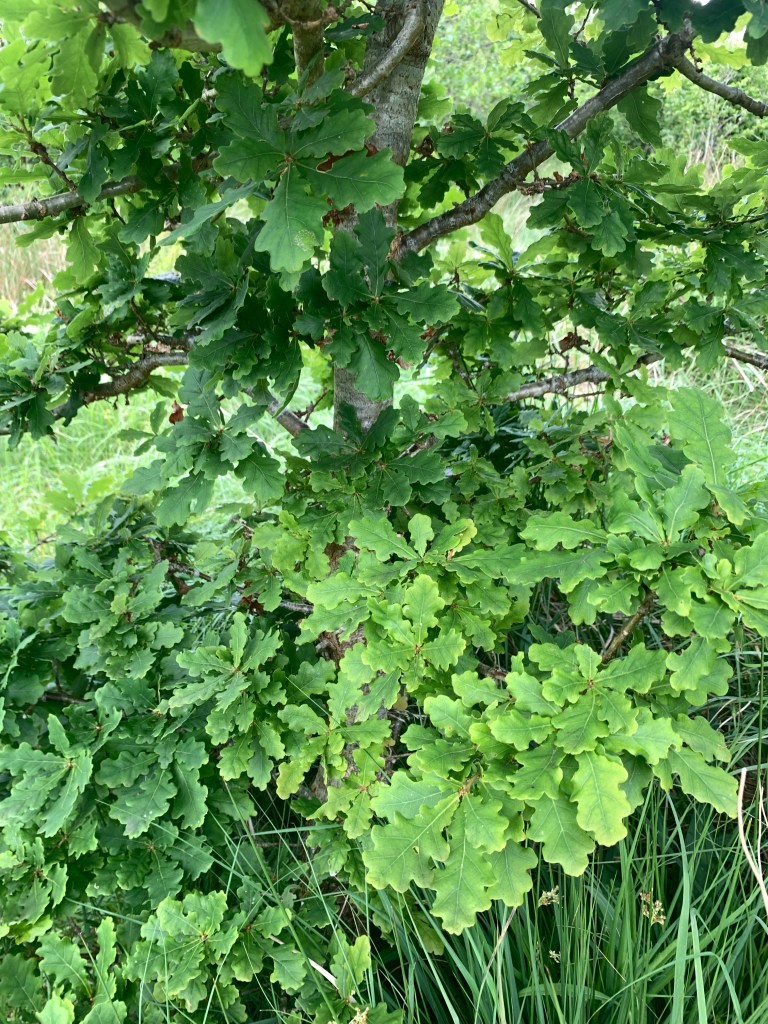
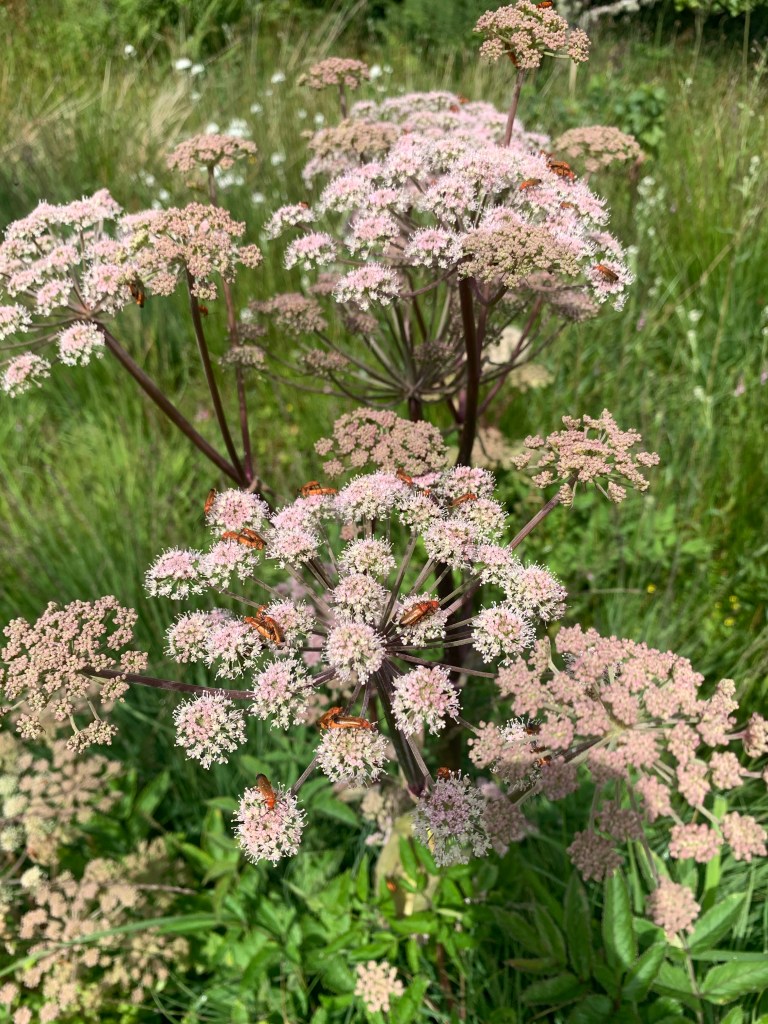
The tree varieties, mostly native species and many that they have grown themselves from seed, are extensive. Alder, elder, aspen, rowan, oak, hawthorn, birch, beech, many species of willow (grown for Laura’s basket making) and so many others. There are clumps of wild raspberries, blackberries, pignuts, wild angelica, carpets of meadowsweet, wild irises, grasses and wild orchids in abundance.
Wild Angelica with red soldier beetles

They have about fifty apple and pear trees, many of them heritage varieties planted over the last eight years, all growing successfully on a sheltered part of the croft, many already laden with young fruit.

Yes, the trees need managing, and no they can’t be just planted and left completely to their own devices, but Phil’s tree management is light touch, largely leaving nature to do its own thing. And everything seems to find a balance nicely.

We came away re-energised and inspired. This place started just like our croft, a hillside of over-grazed grassland on a steep slope, and now it’s a green oasis for wildlife, providing the family with fuel, food and a beautiful place to live in partnership with nature. If we can achieve a fraction of this we’ll be happy.
Repurposing, recycling

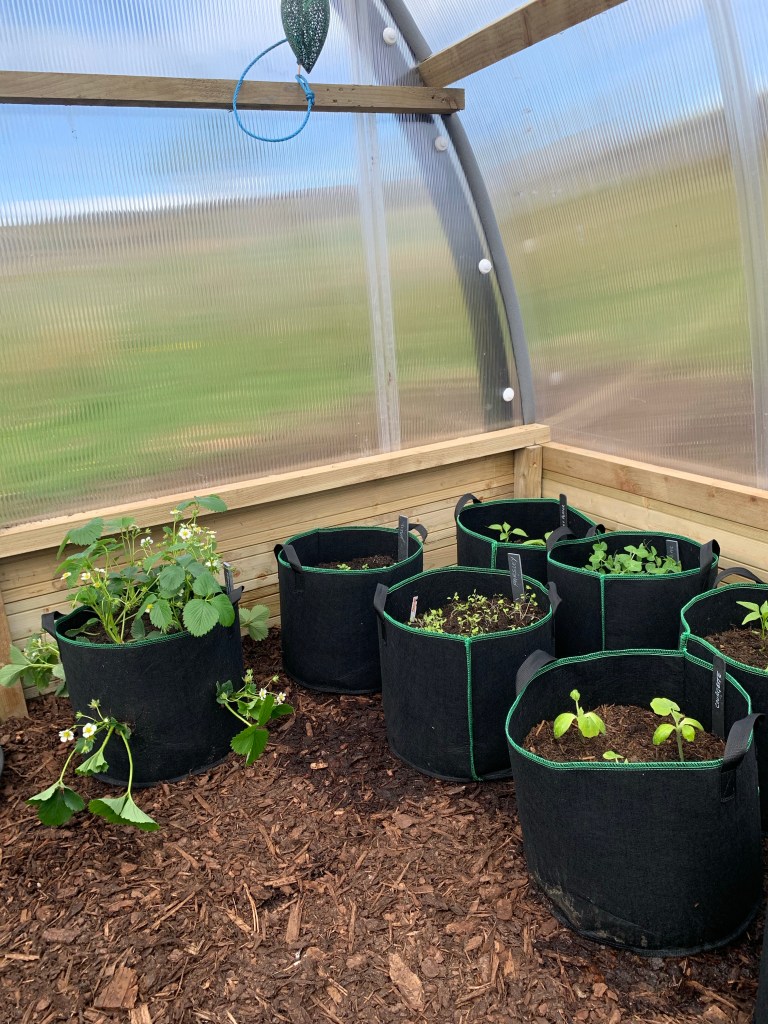
I’ve started the polycrub off with growing in canvas containers. We won’t have time to build and fill beds in there until next spring, and there isn’t much depth of soil beneath it before you hit the impenetrable seam of shale and lewissian gneiss.

I figured it was the best way of getting productive and a harvest this year.

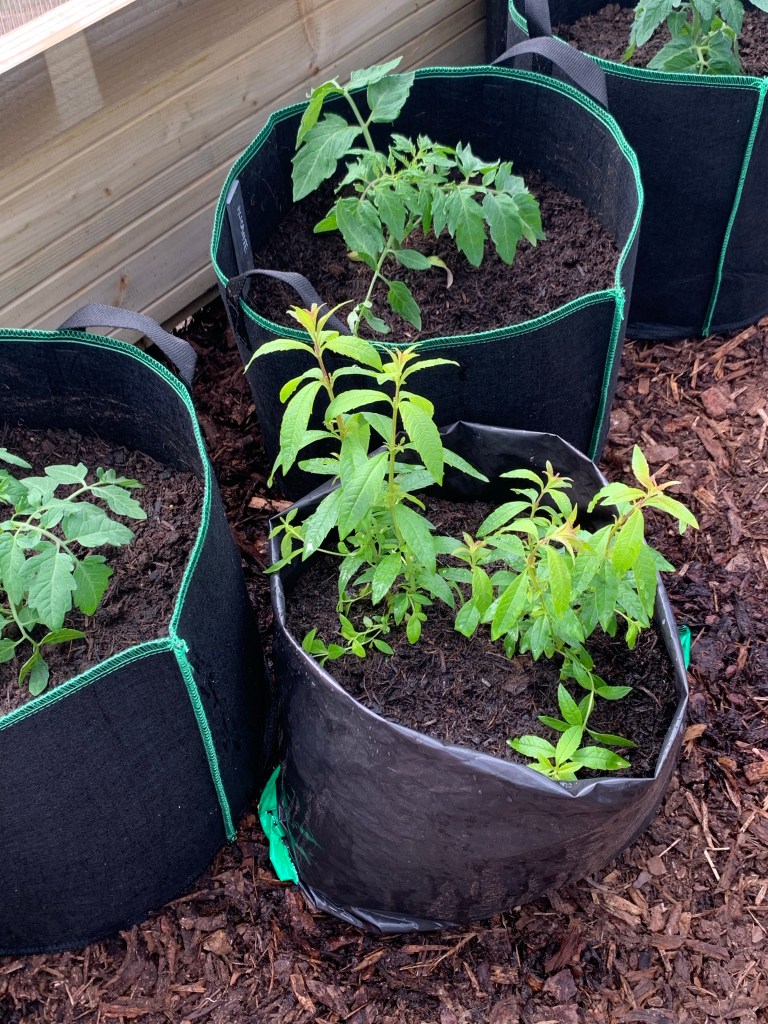
Canvas grow bags and a repurposed compost bag!

They’re not expensive, a few pounds each, but when you’re using as many as I am it soon mounts up. So I put out a call via a couple of local friends for any unwanted large containers.

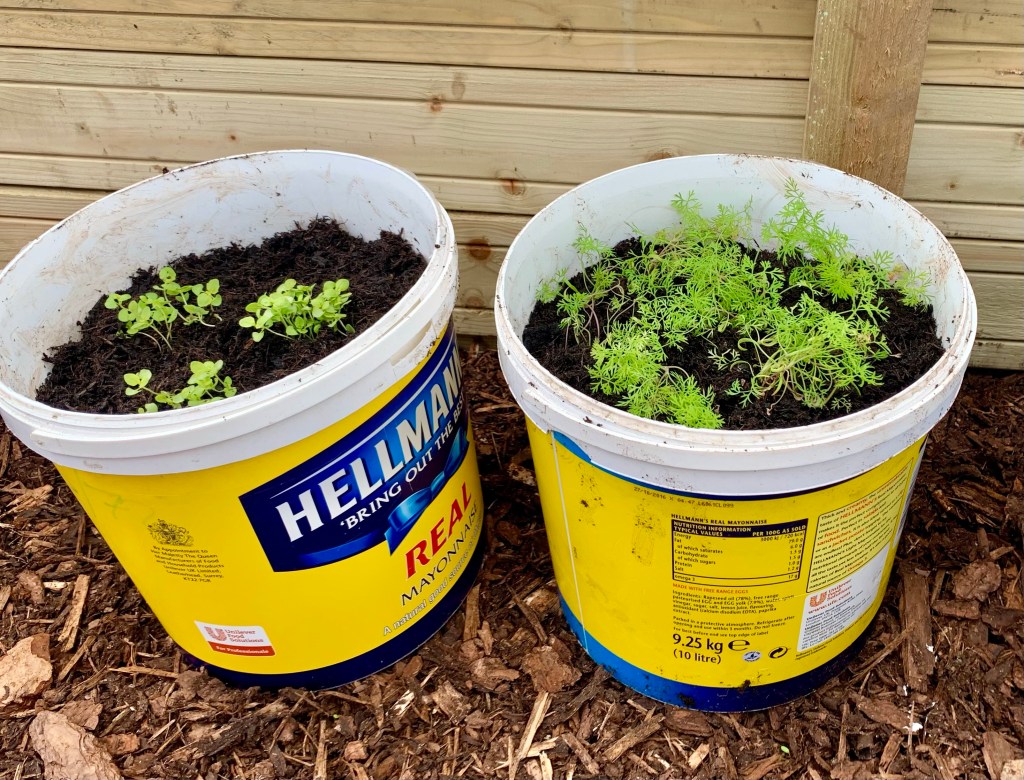
Friends at the newly established Coffee Bothy in Broadford offered up a dozen or more catering mayo tubs. A perfect size for herbs and smaller plants!

Old mayo tubs

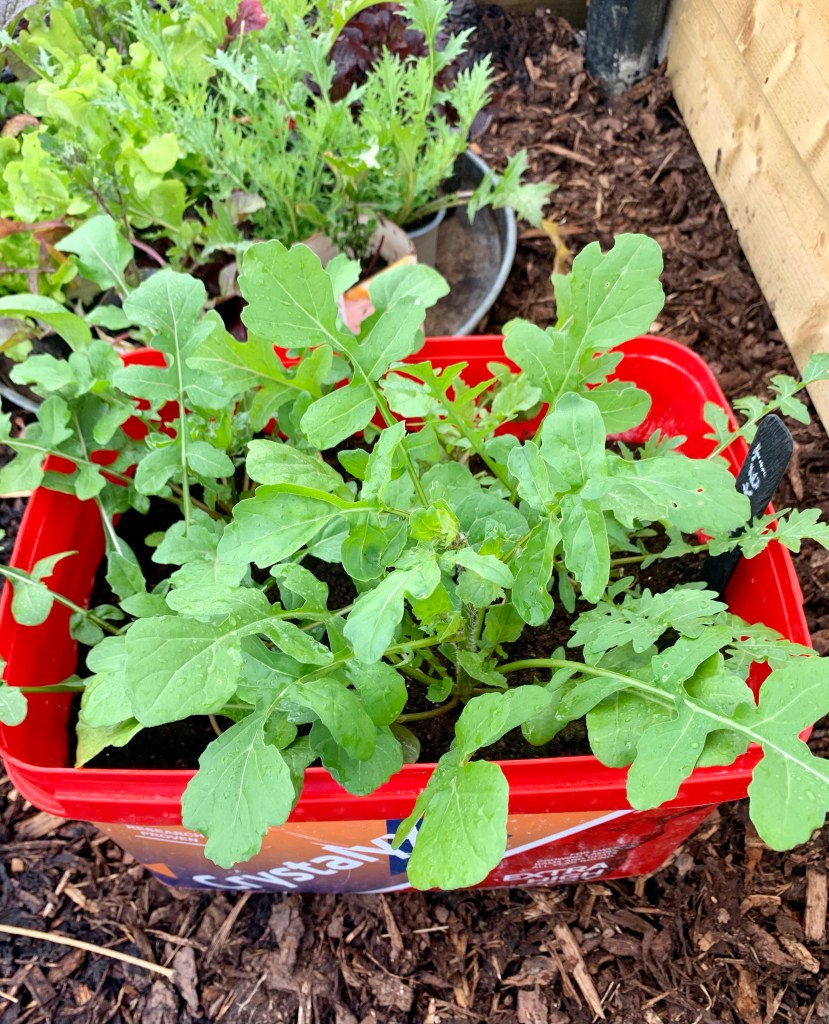
A couple of kind local crofters kept back their sheep lick tubs for me. They hold about 30 litres of soil or compost each so are deep enough for beans, potatoes or cucumbers to grow in.

Sheep lick tubs potted up with rocket

We drilled drainage holes in them and I have been busy planting them up for the last few days. If it holds soil, it gets filled with seedlings! It’s best not to stand too still around here 😊.

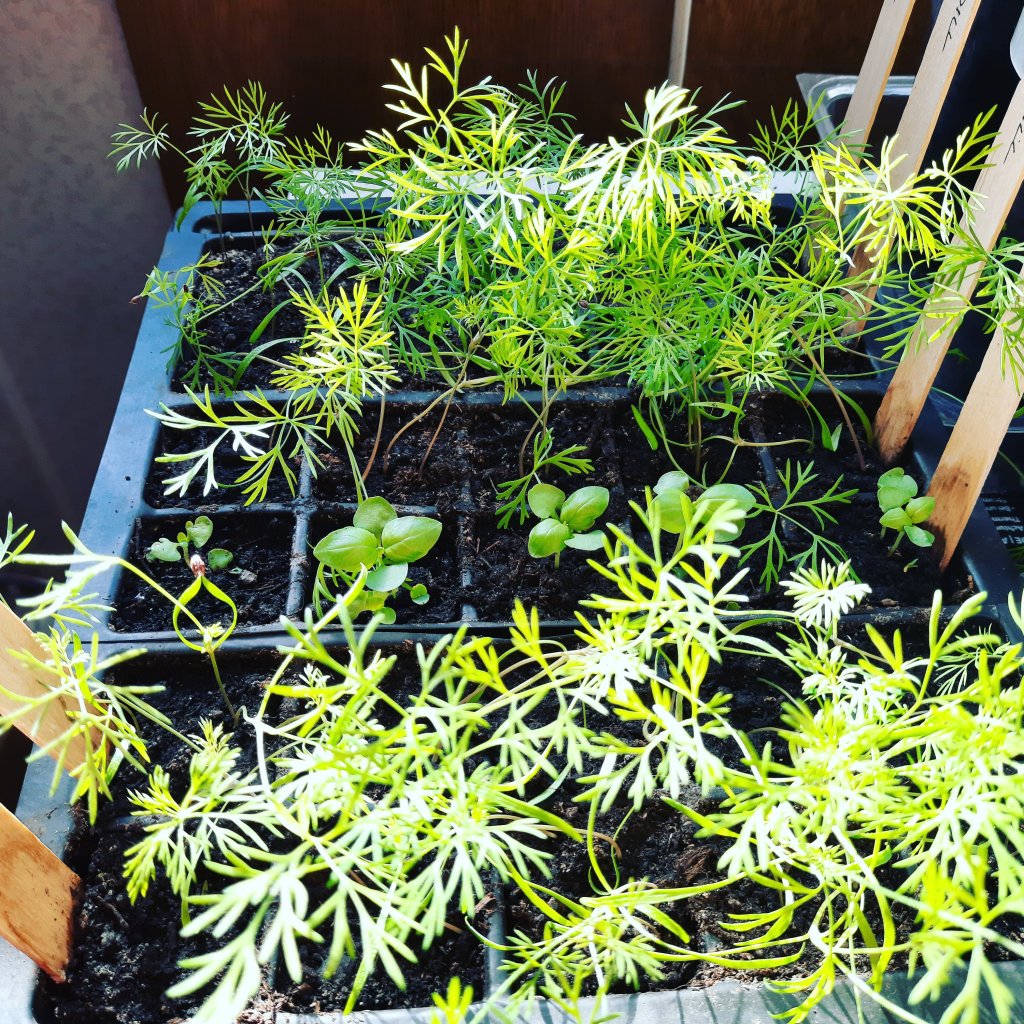
This is such a busy season for planting. I feel that I’m running slightly late with things this year but it’s been so cold that the seedlings that I started early have been very slow to grow.

Polycrub filling up

It’s always a balance here between waiting for the temperature to get warm enough but not leaving it so late that there isn’t enough season left for plants to mature.

The polycrub, seeds and spring

The days are definitely lengthening now , perceptibly so. Spring should be on its way, although no one seems to have told the weather gods that. It’s still hail, snow and gales most days.

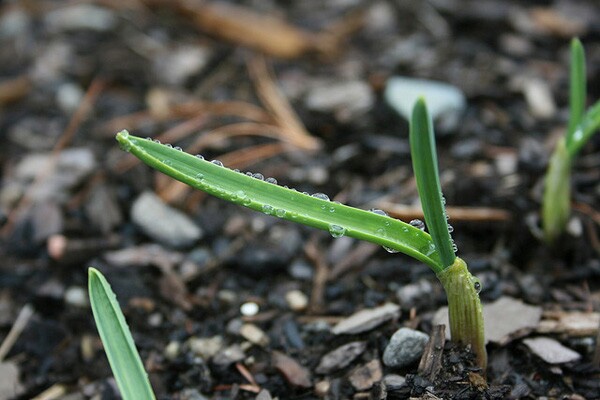
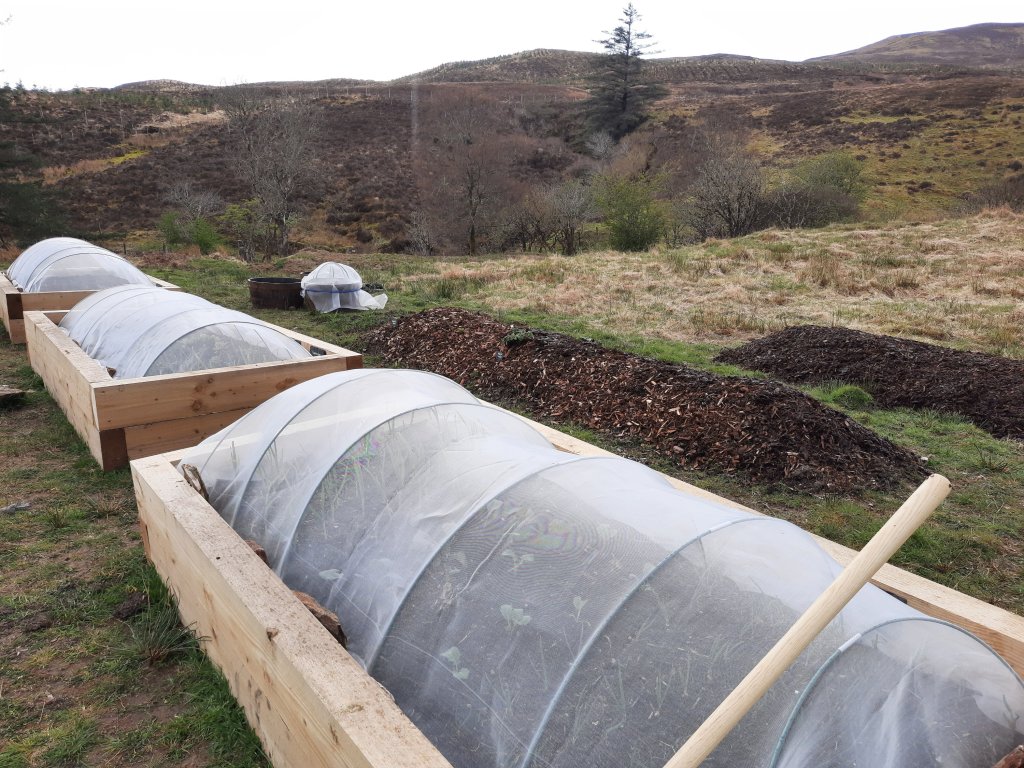
I did a quick rustle about in the raised beds this week and although I should be clearing and planting soon, it’s still far too cold and wet. The garlic has popped it’s head up a little, but that’s it.

I’ve ordered the polycrub. We did apply for a crofters grant to help with the cost, but we were unsuccessful. They wanted a five year business plan showing anticipated horticultural sales and letters of guarantee from local outlets that they would take our produce.

This isn’t the way that we’ve planned to do things. We will sell produce at the croft gate if we have any surplus, but we are mainly growing for ourselves and our neighbours, not as a fully commercial enterprise. As such we don’t qualify. We’re disappointed, of course, but we’ve bitten the bullet and gone ahead with buying the polycrub anyway.

It’s six metres by four of rigid polycarbonate sheeting, fish-farm tube loveliness. After the last few months of storms I’m doubly convinced that this is the only thing that would survive the winds on this exposed hillside.

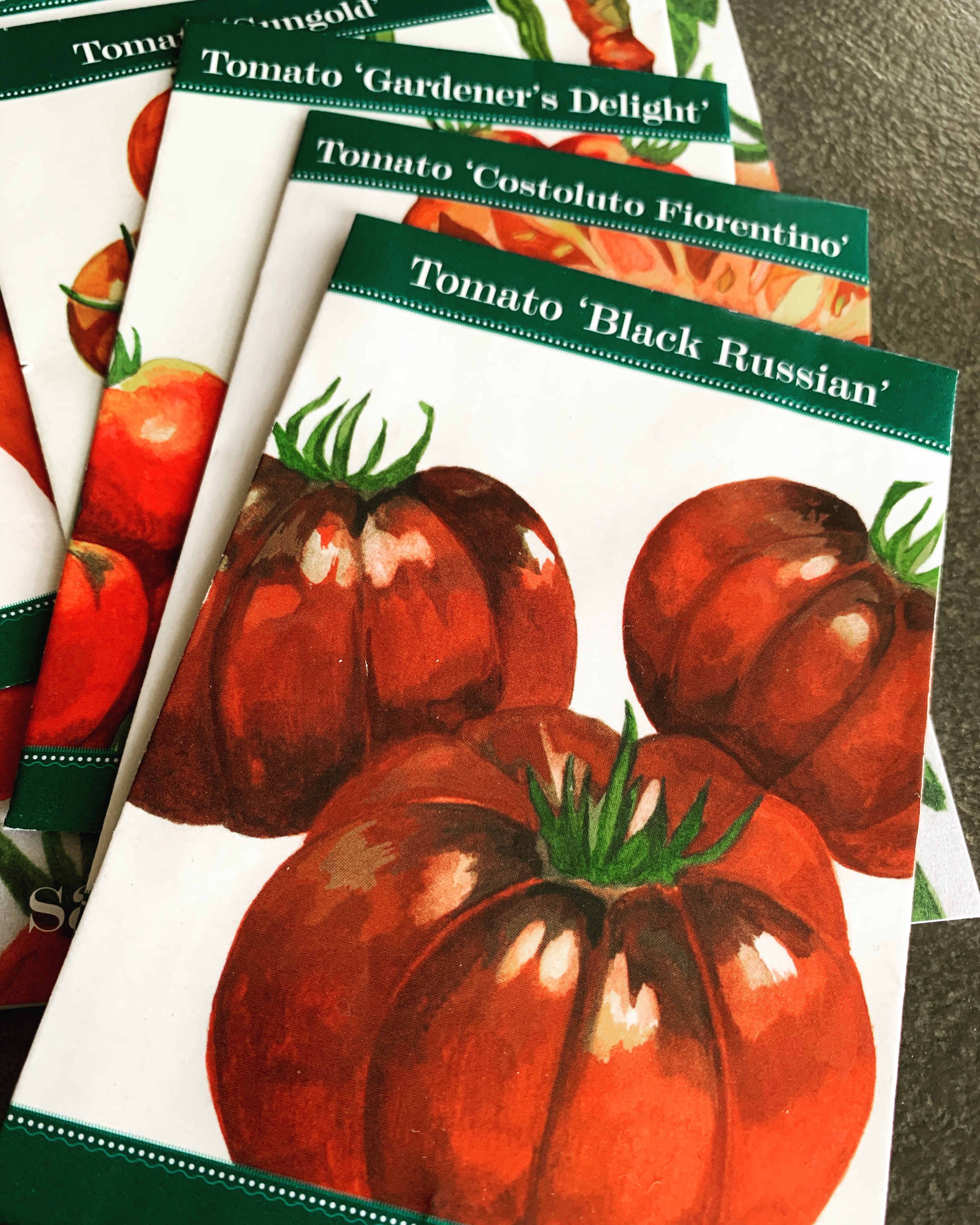
It will revolutionise what we can grow, though. Tomatoes, chillies, squash, cherries, basil… lots of tender plants that wouldn’t thrive in our cold, windswept raised beds. We hope to have it installed in April, just in time to move crops in there for the summer.

Very exciting!

Now to clear out the caravan spare room out from a whole year of being a junk room, and set it back up to start seedling production again. It will be good to see the blue grow lights illuminating the hillside once more.. 😊

Grasses Galore

We’ve had a warm, breezy day on the croft today. Twenty-two degrees and a clear blue sky. It made our outdoor tasks today so much easier with the wind keeping the midges at bay.

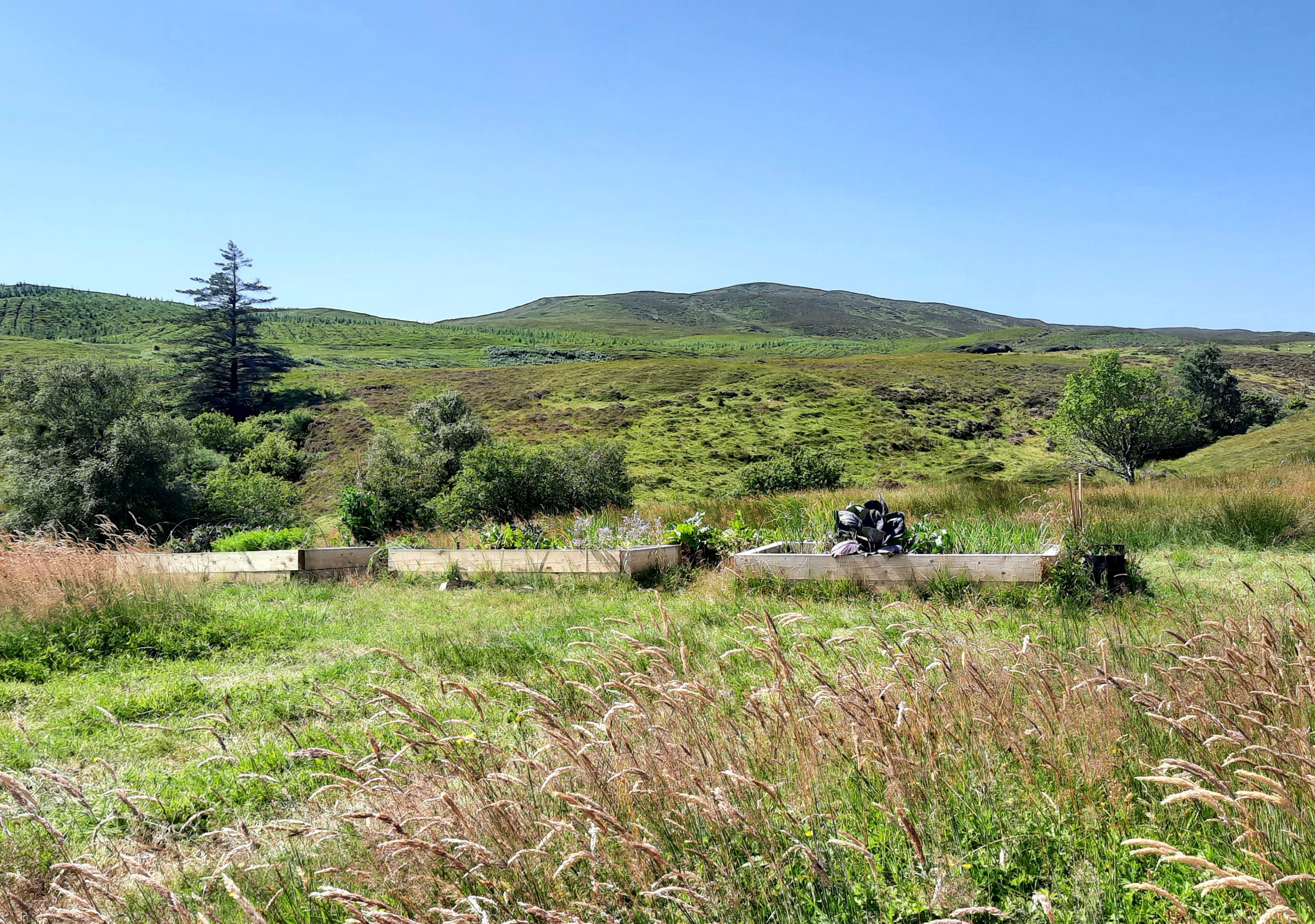
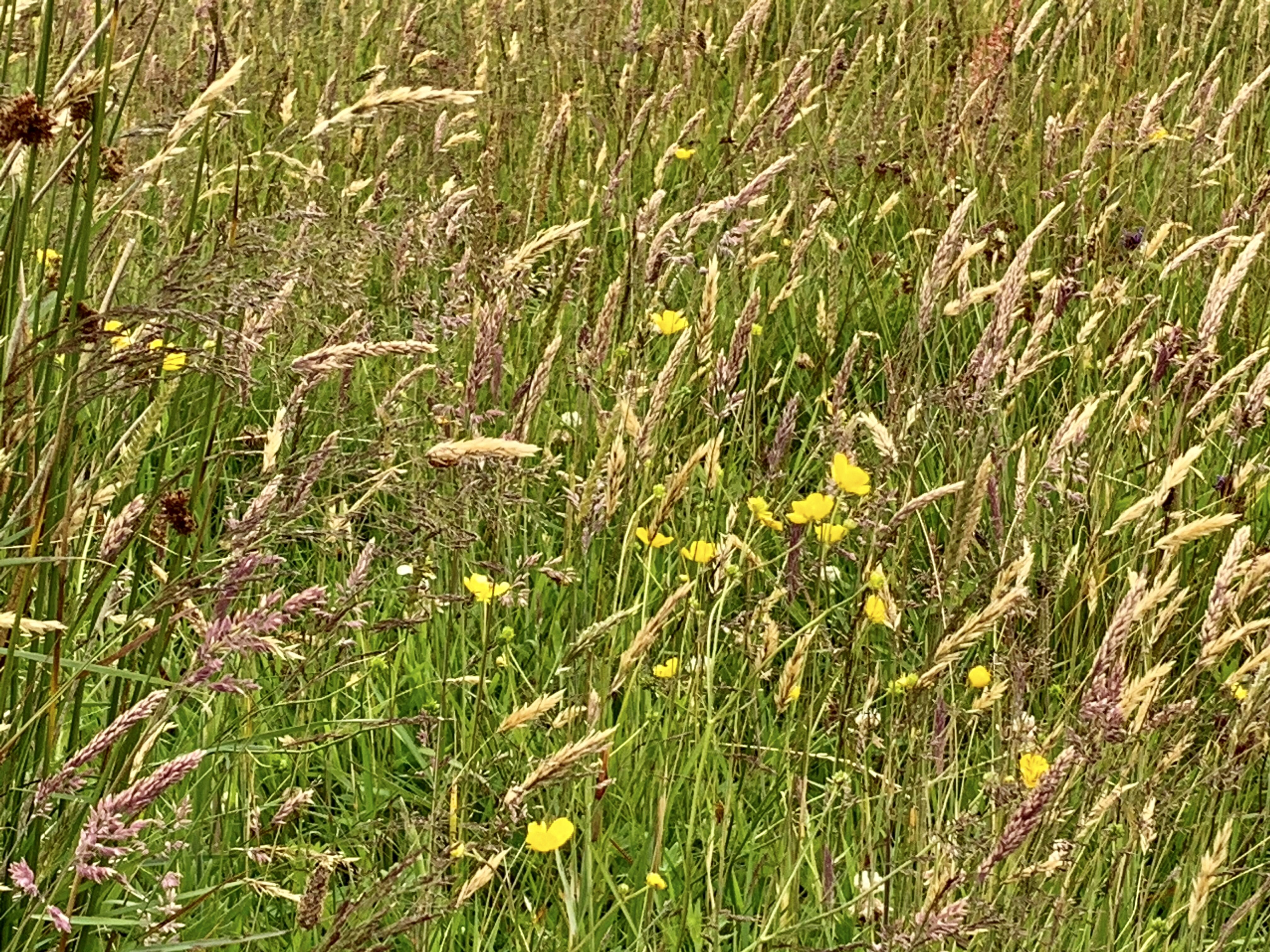
Grass in the breeze

The grass has grown so much over the last few months that the paths that husband had scythed in the spring had nearly disappeared.

This was making trips to the raised beds and the compost heap a daily waist-high challenge.

I wouldn’t normally worry about wading through long grass, but I’m super cautious about picking up ticks and horsefly bites at the moment, and didn’t want to have to start walking about swathed in protective netting like some sort of veiled ninja..

So husband spent a few hours yesterday and today scything swathes through the grass and collecting it up for compost. The breeze helped what was a long, sticky endeavour.

Pathway emerging

Some folk like to cut their grass neatly and very regularly. We have chosen to leave ours wild, and to see what comes up. We prefer it that way, and nature seems to agree.

We’ve found orchids, clover and wild flowers in abundance, and there are certainly plenty of moths, bees, butterflies and insects. Husband has even had to rescue a few small frogs from the path of his scythe…we want to encourage them as much as we can. Natural slug protection!

Once we have an agricultural shed to store equipment in we will need to look at other ways to manage this, though. Even with trees, six acres is too much to manage by hand with a scythe. It’s a fine line between managed meadow and bracken and bramble patches overtaking the land.

We’re thinking at least one annual cut after the summer is over to help seed and keep the rushes down.

For now we’ll enjoy the grasses and the wild flowers from our small, scythed tunnels through the abundance.

Arctic conditions at 57 degrees north

It’s been a very cold spring so far.

We continue to have frosty mornings and very cold nights, so it’s not been advisable to put out any tender plants without serious fleecing.

My “plant room” in the caravan is still full, and although I’ve planted out a few purple spouting broccoli and beetroot plants, some cabbage, kale, and some sorrel, everything else is under wraps for a bit longer. I’ve direct sown carrots and parsnips into the beds but nothing has germinated yet…. I don’t blame it.

It did give us the opportunity to make another hugelkutur bed with cut reeds as the base, as I’ve estimated that I’ve still grown too much to fit into our prepared growing space. Always a learning, eh?

Everything is heavily mulched with woodchip to try and minimise soil runoff. We’ve almost gotten through a few tonne bags of that already, and I’ve still got the paths around the beds to lay..

Small beginnings. And many learnings.

Bumblebee food

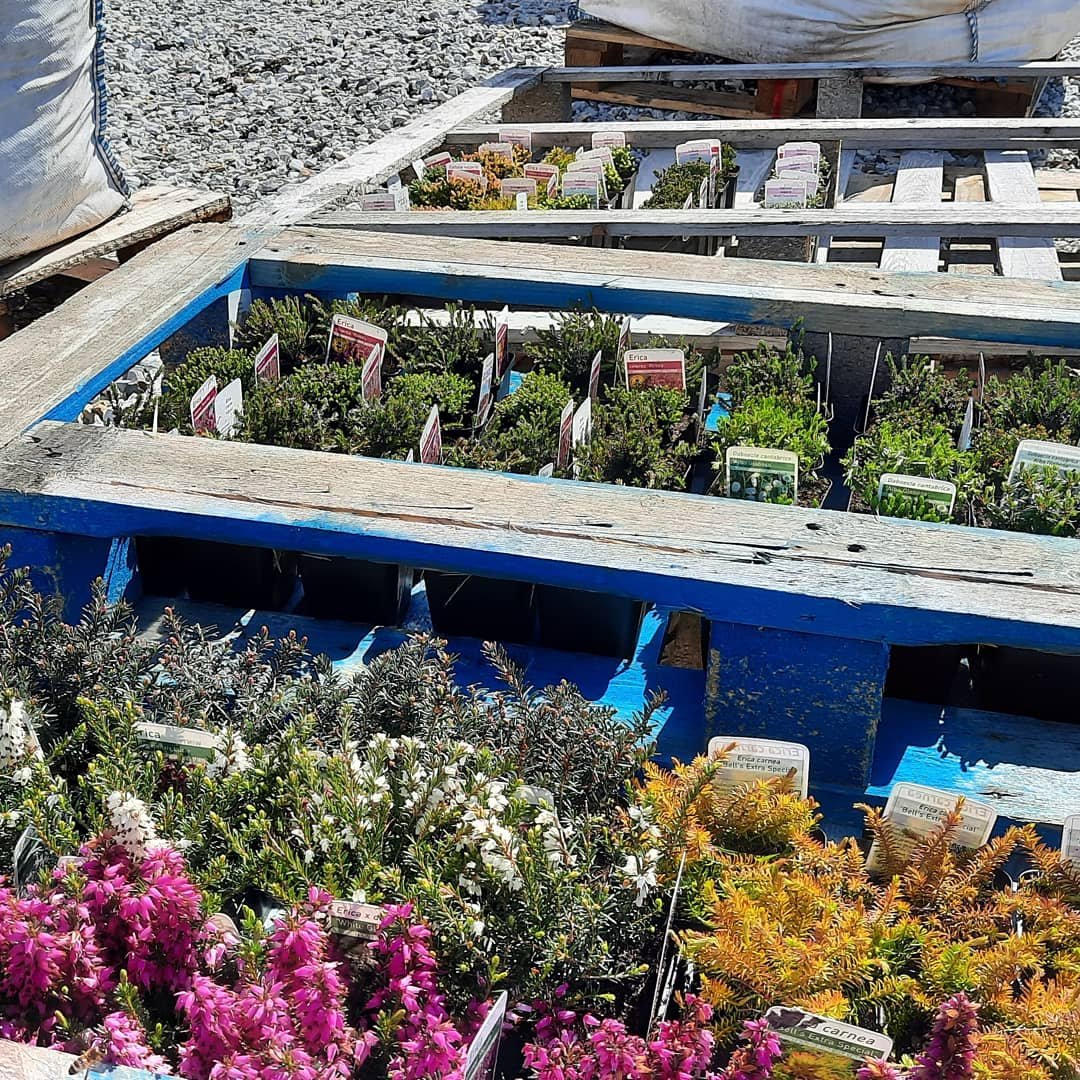
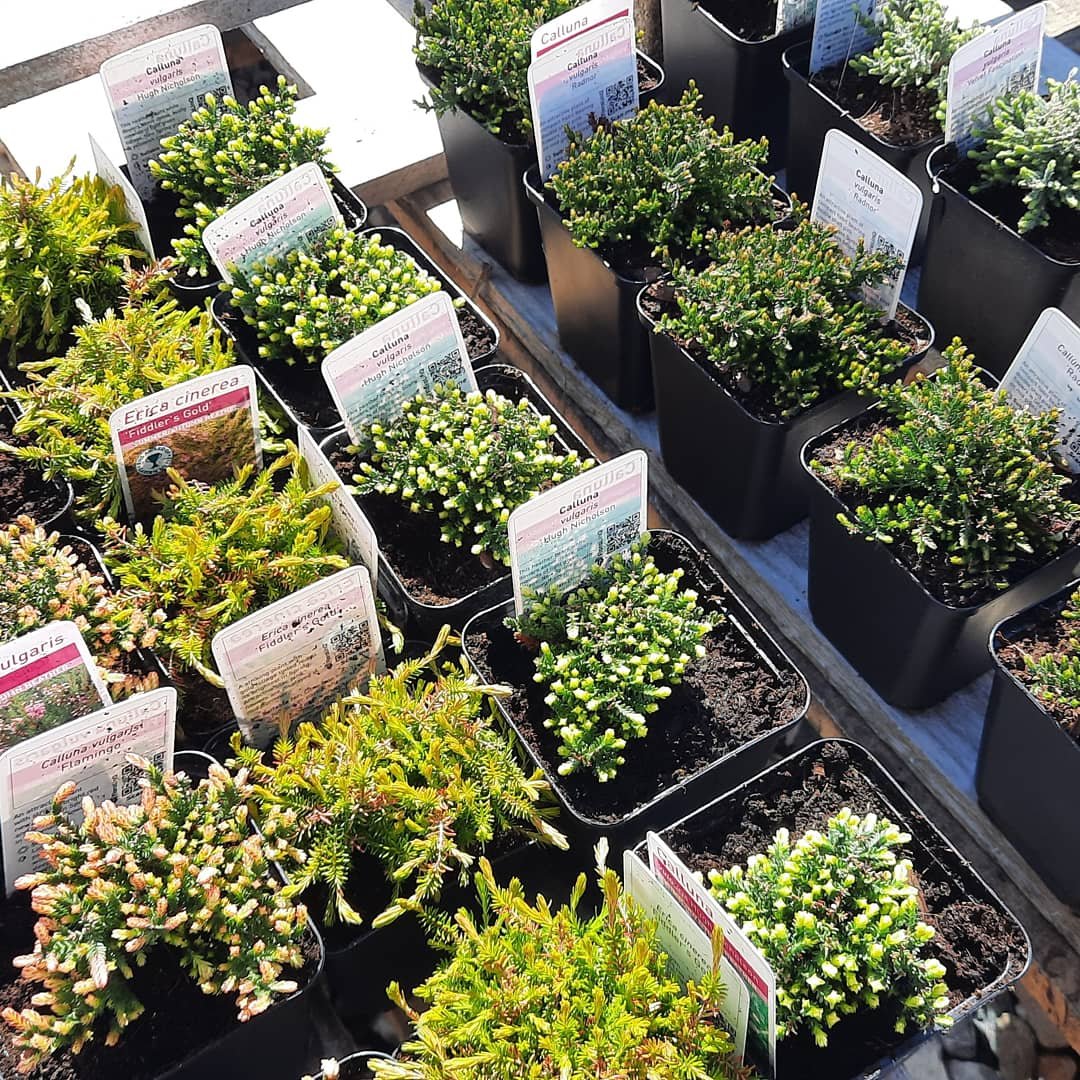
We ordered heather plants a few weeks ago from a specialist heather nursery here in Scotland.

The idea is to plant them on the exposed soil banks on the sides of the access track on the croft to try and reduce the amount of soil erosion. We’d noticed that the winter rain had taken its toll before anything had a chance to establish, and needed to get something in as soon as possible.

Heather is a native plant here, hardy and resilient, and it’s roots help bind the soil well and minimise runoff.

As an extra benefit, the heather selection that we have covers a flowering period for all seasons, so there will always be some in flower at any given point. Great for nectar feeders.

The plants arrived via post in three large boxes, extremely well packed and with the plants still fresh and damp. Each small pot had been hand-wrapped in damp newspaper, separated by cardboard and paper padding.

I unpacked them and let them have some fresh air and a good, long drink after their travels.

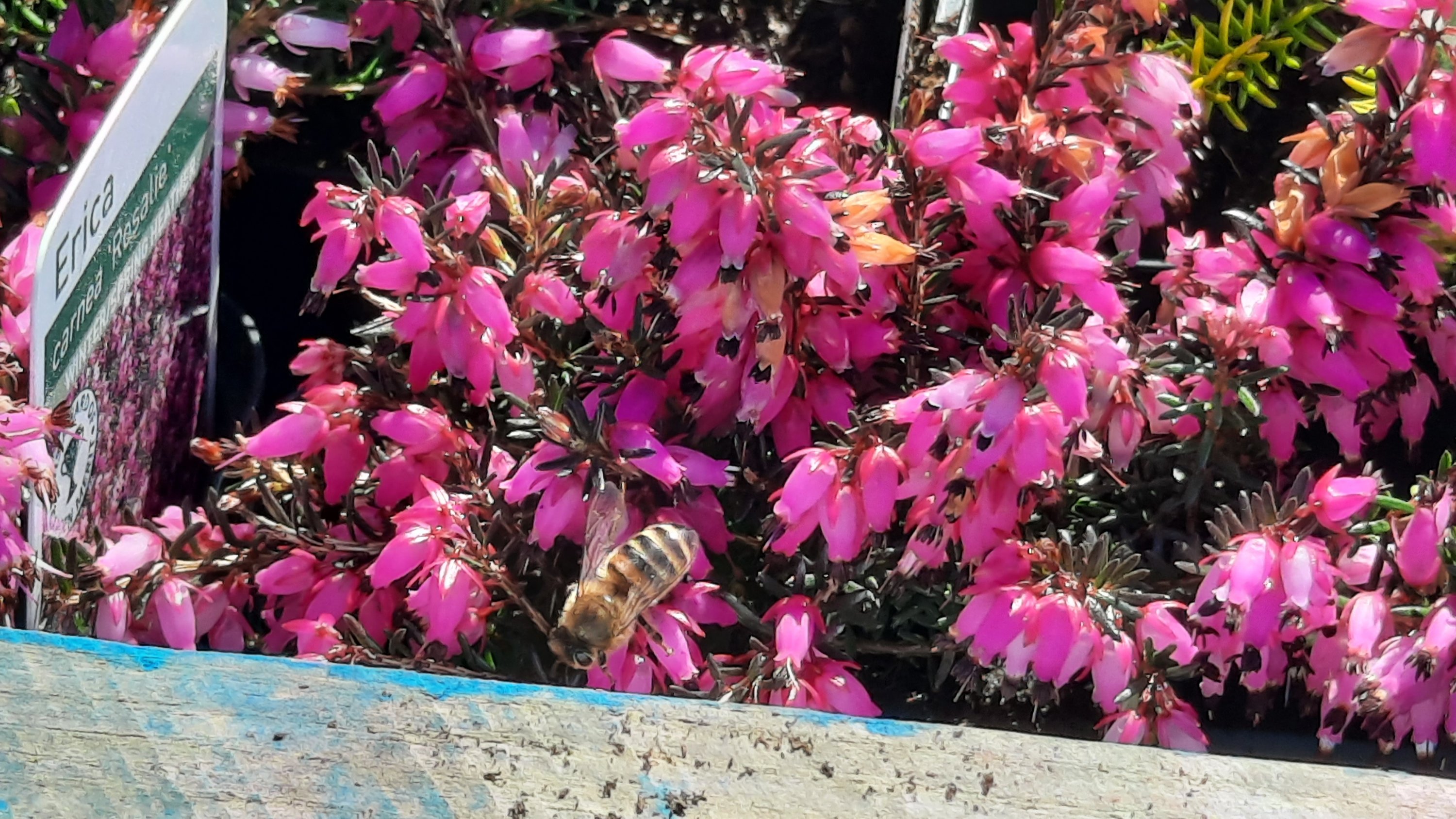
Almost as soon as I’d done so, a few honeybees arrived, rapidly followed by about four white-tailed bumble bees. They all fed hungrily on the early flowering varieties in bloom. These were the first bees that I’d seen on the croft this spring with the really cold weather.

We won’t stop at heather, of course. We have plans for red clover, camomile, sedum, borage, hardy geraniums and others, but it felt good to provide an early meal for the bees.

Perennial Vegetables

I love the idea of vegetables that are sown or planted once and keep growing. For years.

There’s a lot of effort involved in sowing vegetable seed annually, so it makes sense to have perennial vegetables as the backbone of a permaculture garden.

They may not bring instant rewards, but you know what, this croft garden is for the long term and so a few years for these plants to establish before they give back isn’t a great deal to ask.

Perennial vegetables are for the most part ancient heritage varieties. They include such vegetables as asparagus, artichokes, walking onions, leeks, kale and broccoli. Some of these varieties, such as the Sutherland kale that I’m growing from seed, nearly died out and are really quite rare.

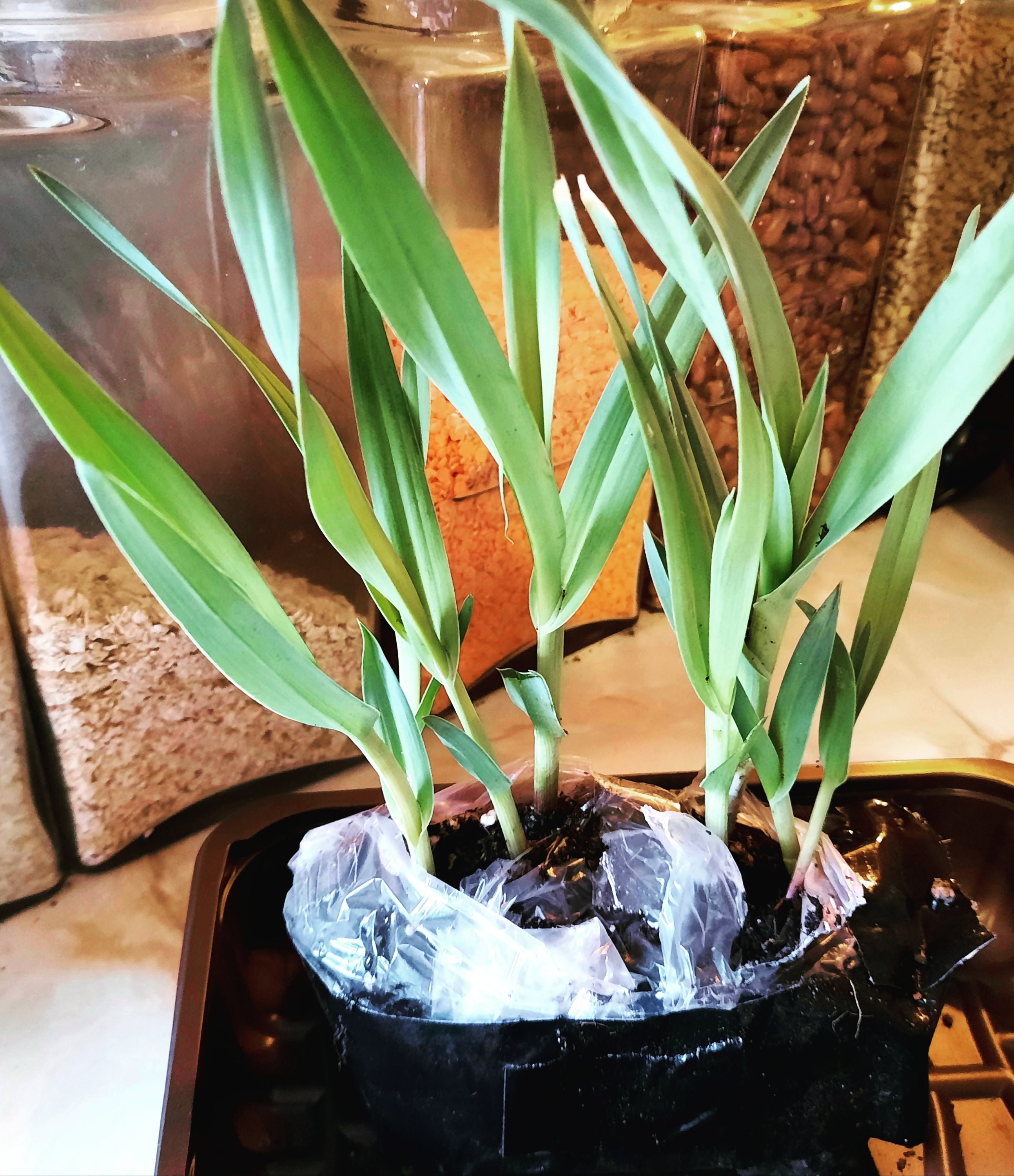
I’ve received my very first perennial vegetable in the post from Quercus Edibles, a small grower in Devon. It’s a Babbington Leek. As soon as the hail storms abate, this little clump of hardy loveliness is going into the ground.

The first of what I hope will be many perennial plants on the croft.

Wild flower meadow

We’ve only been able to visit the croft a couple of times since we bought it, and those visits were usually during autumn or winter.

The main thing that we’d noticed on the land – apart from the absence of trees – was the dominance of reeds. They grew in thick clumps all over the croft. The crofter next door used to graze his sheep on the land, and this kept what grass there was between the reed clumps closely cropped.

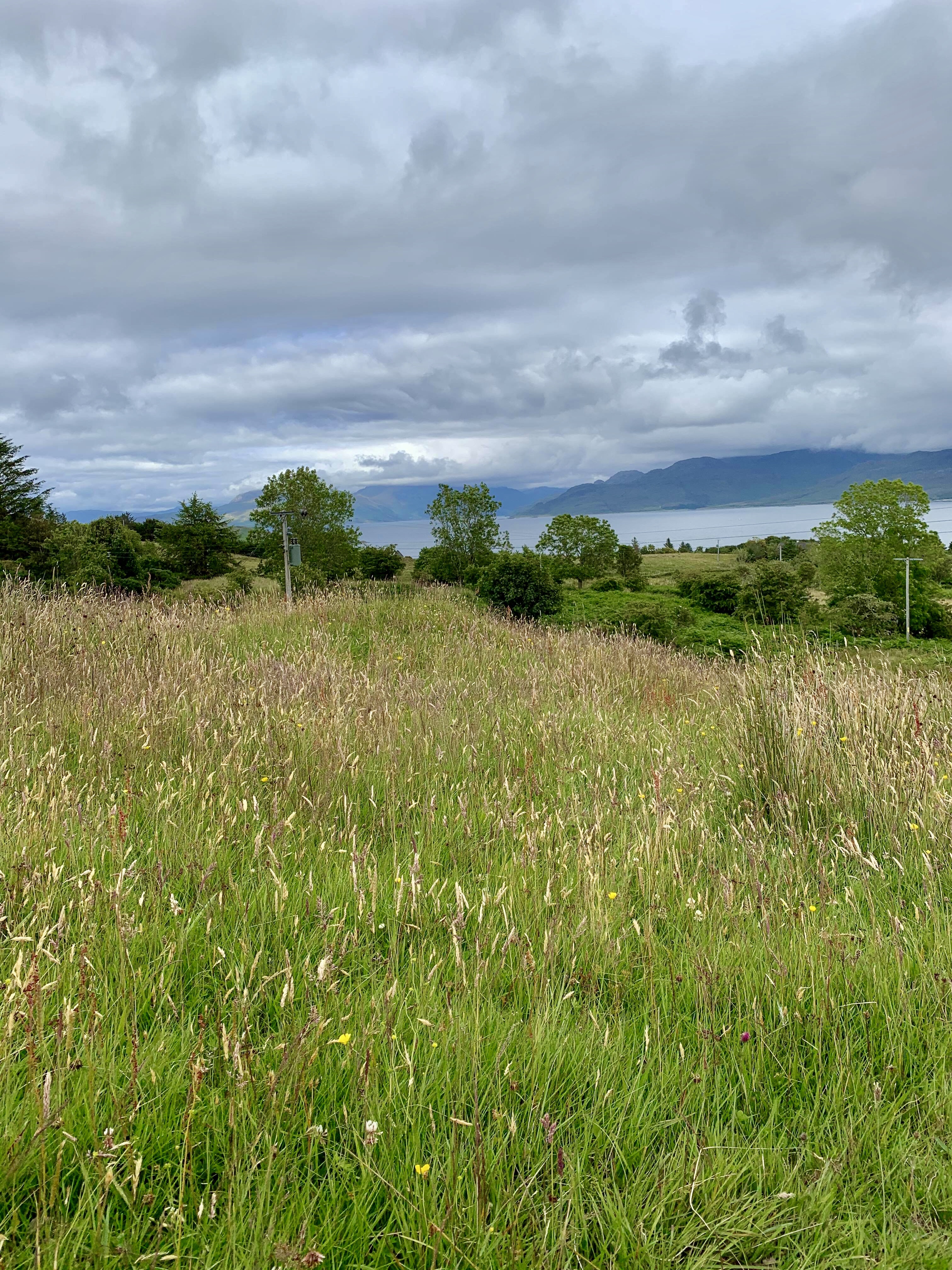
Our neighbours walked up onto the croft this afternoon whilst there were no builders on site, and took these pictures of the meadow below the house lying peacefully in the sunshine.

We were delighted to see that the grasses had regenerated and that there were wild flowers scattered through them. We haven’t seeded or done anything to this area – this is just one seasons regrowth now that the sheep are no longer on the land.

We can’t wait to see what else grows. The land has never been worked except for sheep grazing, and as such it’s completely organic and natural.

We’ll try as hard as possible not to disturb this habitat with our tree planting plans. The habitat that this provides to wildlife is invaluable, and to our eyes it’s beautiful.

Tree Planting Plans

When we first saw the land, a number of pieces of life’s puzzle slipped neatly into place. The croft was steep and unsuitable for agriculture, but it would be perfect for trees.

Hugh and I both love trees and believe that there is a strong need to plant them, both to increase the biodiversity of the land but also to offset the effects of climate change with carbon capture in whatever way that we could.

We started to look into Woodland Croft creation. Despite the northern latitude, strong winds and exposed coastal location, many types of tree are naturalised and grow well on the island.

Sleat is the least exposed part of the island, a peninsula turning its face towards the mainland on the south side of Skye. As such, lying nestled between the Cuillins to the North West and the Knoydart hills to the South East, it’s at least partly sheltered from the full force of the Atlantic.

Although Skye is almost barren of trees, being famous for huge expanses of high moorland and mountain, Sleat has more trees than the rest of the island. We are lucky, and the more we looked into it, the more we felt that a diverse planting would be completely viable.

The Woodland Trust offer advice and help with tree planting, but due to the recent rise in interest in this area, they are completely overloaded. There are long lead times to even get to see them to discuss plans. They’ve handed over some of their work to the Scottish Forestry Commission, who have been in touch at last and who will be assessing the croft land for tree planting viability next week. We can’t wait for the report.

We expect the recommended species to be a mix of trees such as rowan, alder, blackthorn, grey willow, downy and silver birch, sessile oak, scots pine, hazel, wych elm, holly and aspen.

We want to supplement these plantings with wild, edible hedges filled with crab apple, blackberries and hawthorn, and an area of sheltered orchard with hazelnuts, apples, cherries and pears.

As soon as we have the Forestry Commission report we can discuss deer protection and build a planting plan for the land. Even though we know that the first trees probably won’t go in for at least another year, it still feels like a milestone in the journey!

The relative slowness of this process is frustrating, but in a way it’s also contemplative, allowing time for our initial thoughts to be challenged and supplemented with local wisdom. We’re watching other local crofts start this, and learning what works and what doesn’t.

Don’t get me going on the merits of spiral guards, staking, vole protection and windbreaks now…☺️

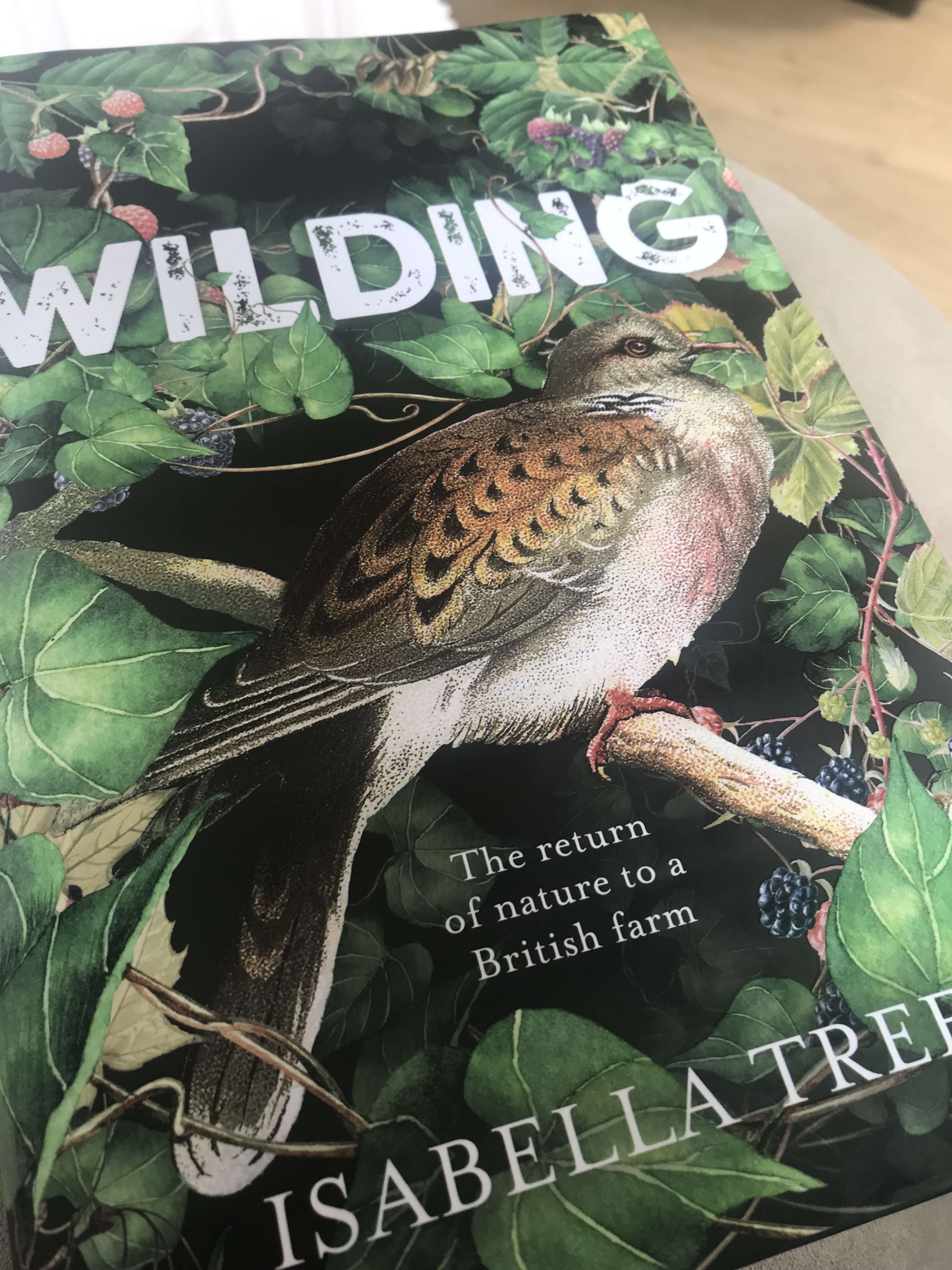
Wilding, the book

Wilding, by Isabella Tree, is a book based on an experimental re-wilding of a 3,500 acre farm in West Sussex.

Forced to accept that the intensive farming of the heavy clay soils of their farm at Knepp was driving it close to bankruptcy, they handed the farm back to nature.

The results in terms of biodiversity, soil fertility and increased wildlife have been nothing short of astonishing.

This is a pioneering book describing a brave and far-reaching experiment. If we can achieve these results on a piece of intensively farmed, chemically fertilised, biologically sterile land situated under the flight path at Gatwick, with time and patience we can achieve them anywhere.

Books like this provide inspiration and reinforcement of the thought that given half a chance, nature will fight back and thrive.

What we do to our little six acre pocket of land on Skye will be much less impactful than the 3,500 acres at Knepp, and the soil, weather and environmental challenges will be very different, but to the local area of Sleat it will be just as important.

So many ideas and plans. We can’t wait to start.