Small steps back to normality

Our lives here on the croft are by nature pretty quiet. We spend our days mostly working on the house build or the land, only going out to do food shopping or to collect building or garden supplies.
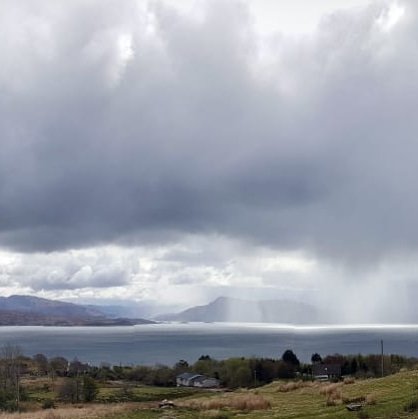
As things start to open up here in Scotland again after a year of lockdown, however, we are seeing a slow return towards normality.

We managed a lovely lunch at a local restaurant with friends last Sunday. Although the venue wasn’t able to serve wine with the meal as we were eating indoors (which regulations don’t permit) it was still lovely to have food cooked for us and to have good company whilst we ate.

This weekend we also attended a market in Armadale Castle’s grounds. The locals were out in force to support it, and it was fun to browse the stalls and to sit down and have a coffee and catchup blether with friends.

We didn’t need, or buy, much. A loaf of artisan corn bread and some delicious pear frangipane tarts from the Isle of Skye Baking Co. and a few chive plants from Hamish’s plant stall, but really it was all about the meeting up with friends and neighbours after months of isolating in our cottages and crofts.
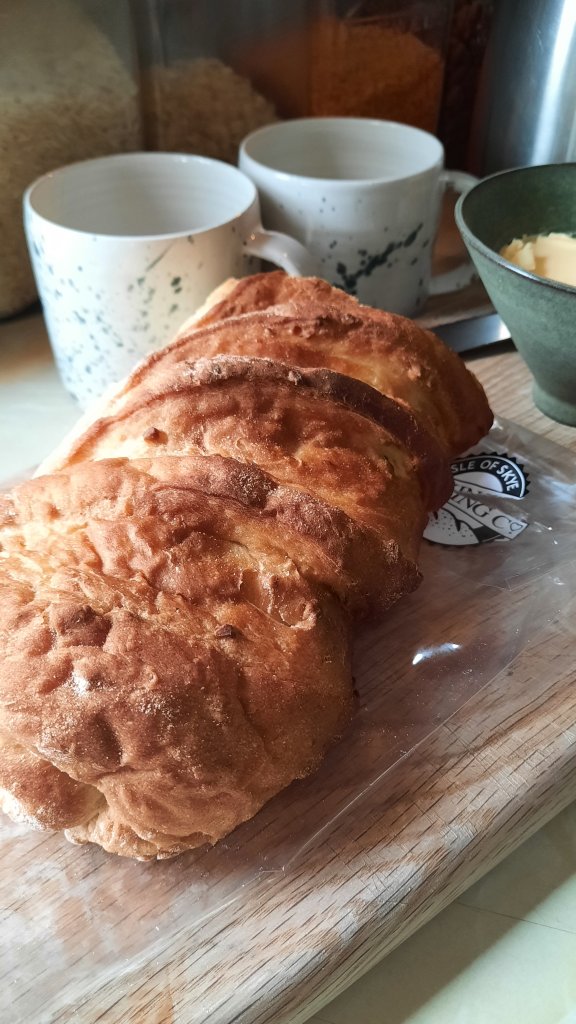
Small steps back to normality. There are further easing of restrictions over the coming month. We’re so looking forward to seeing the kids once we’re able to. They still haven’t seen the croft due to lockdown, and we haven’t been with them since last summer. Soon now.
Arctic conditions at 57 degrees north

It’s been a very cold spring so far.

We continue to have frosty mornings and very cold nights, so it’s not been advisable to put out any tender plants without serious fleecing.

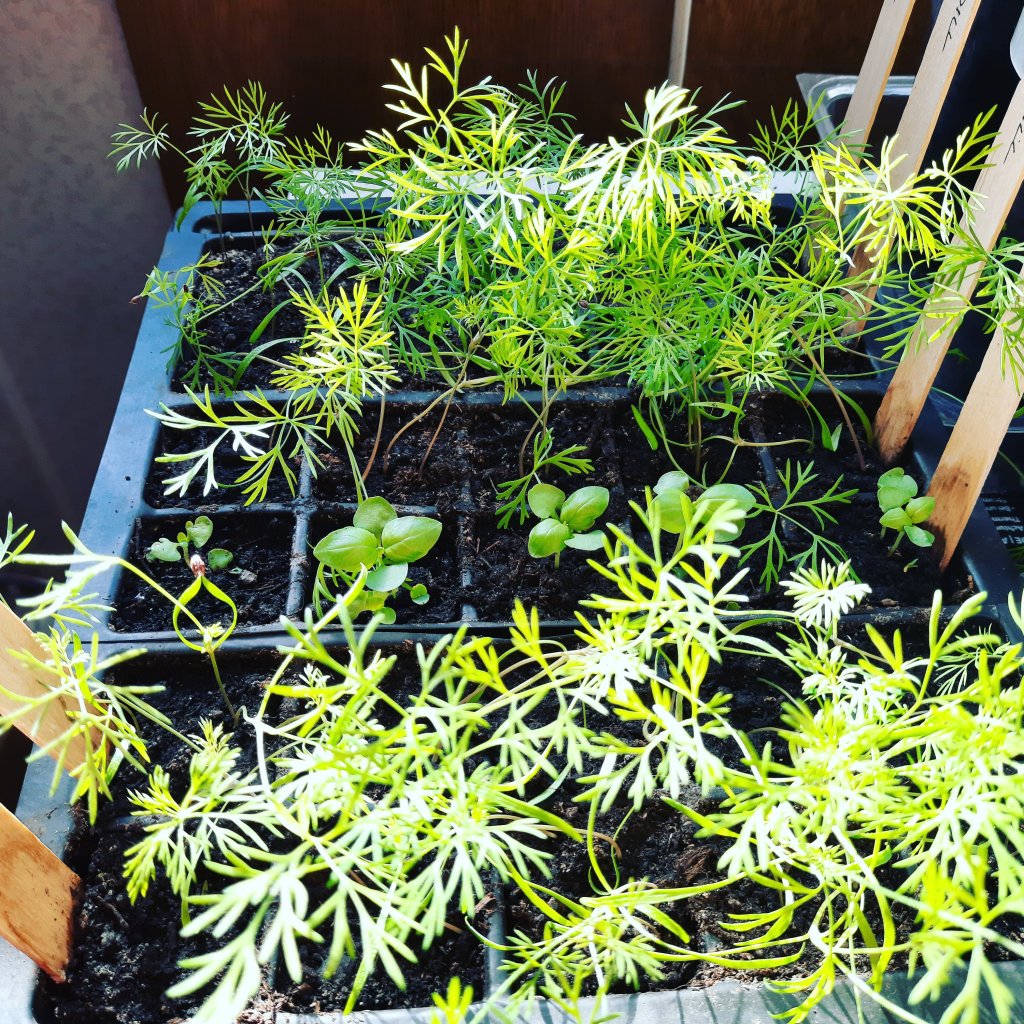
My “plant room” in the caravan is still full, and although I’ve planted out a few purple spouting broccoli and beetroot plants, some cabbage, kale, and some sorrel, everything else is under wraps for a bit longer. I’ve direct sown carrots and parsnips into the beds but nothing has germinated yet…. I don’t blame it.

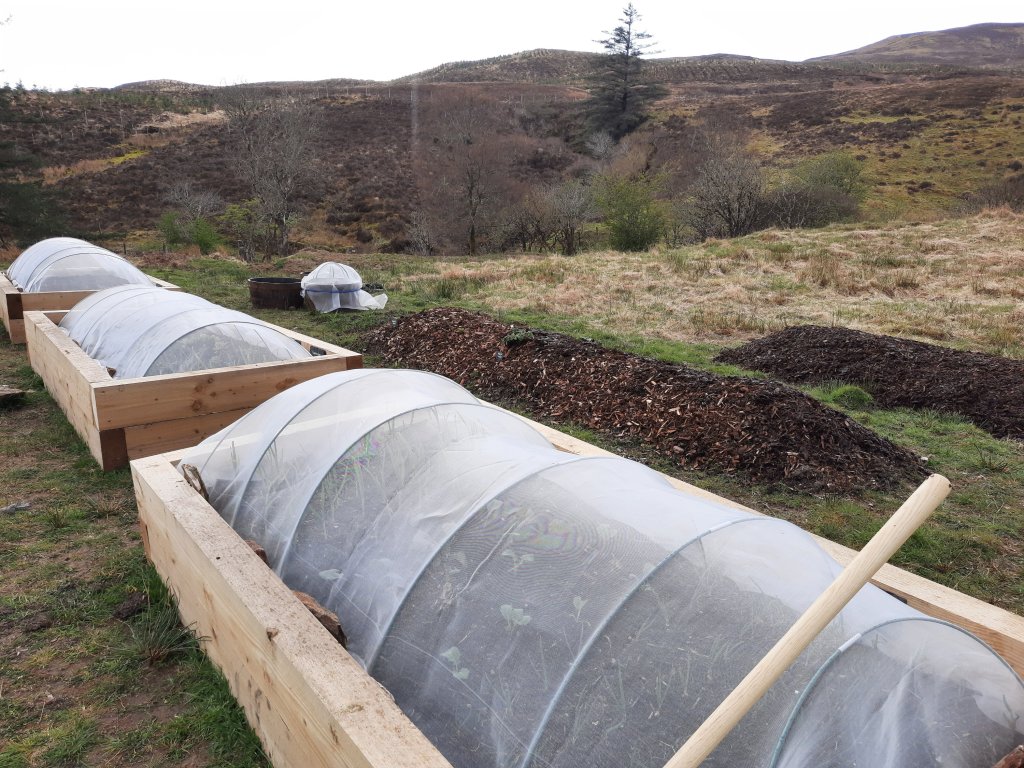
It did give us the opportunity to make another hugelkutur bed with cut reeds as the base, as I’ve estimated that I’ve still grown too much to fit into our prepared growing space. Always a learning, eh?

Everything is heavily mulched with woodchip to try and minimise soil runoff. We’ve almost gotten through a few tonne bags of that already, and I’ve still got the paths around the beds to lay..

Small beginnings. And many learnings.

Lambing snows

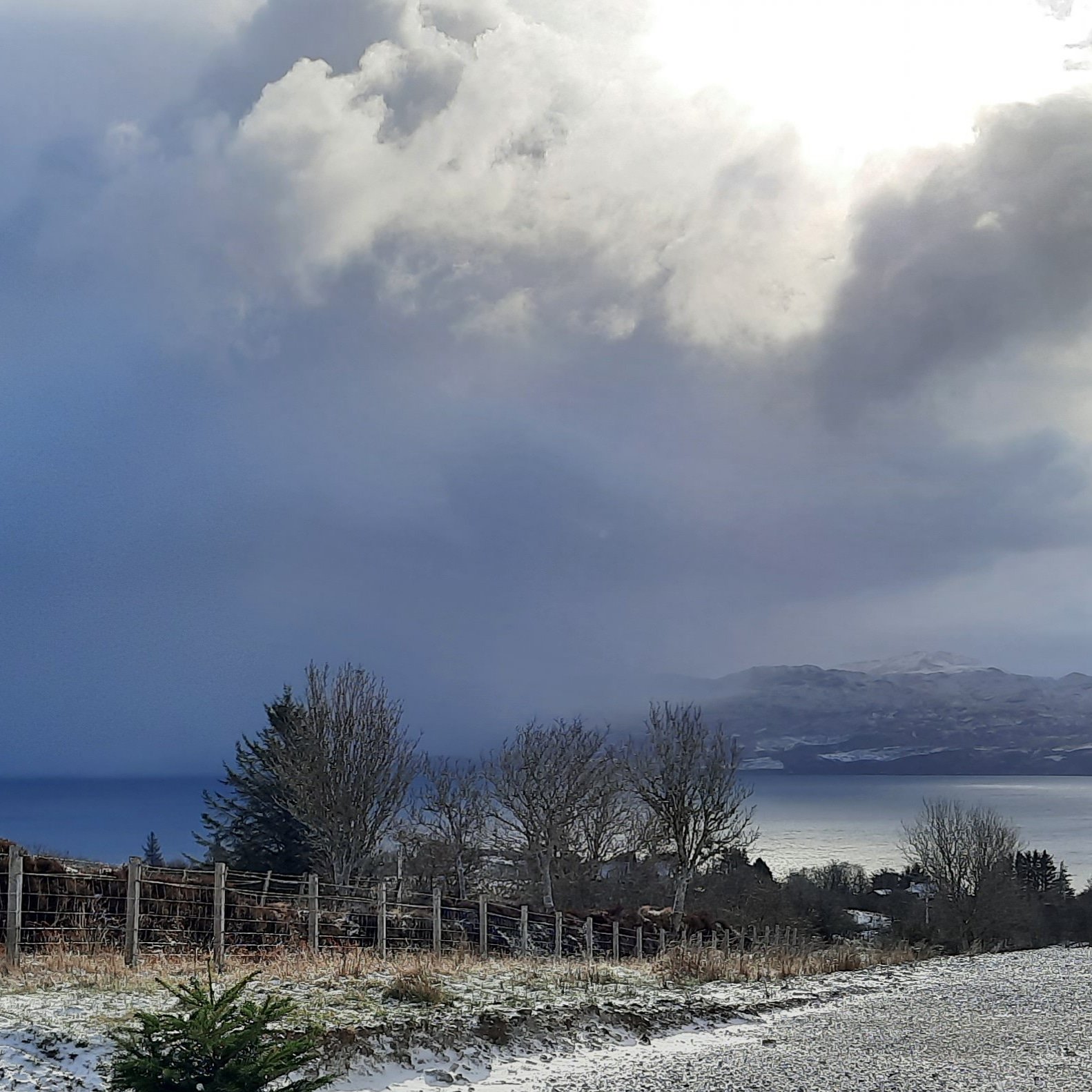
The islanders call late snows in April Lambing Snows. They’re usually the last gasp of winter and come suddenly, just when the lambs are being born in the fields.

We went from bright, warm days to plummeting temperatures within 24 hours. The wind veered suddenly to the North and before we knew it, there were snow blizzards upon us, sweeping rapidly down the Sound in ominous curtains of grey.

Luckily the only thing in the outdoor raised beds were garlic, onions and perpetual leeks. Listening to local advice I’d held off planting out anything tender, and don’t plan to until May. It seems that this advice was very sound!

Temperatures fell to minus 5 degrees centigrade overnight, and barely struggled to hit 2 degrees during the day. The wind was bitingly cold.

Nothing for it but to hunker down indoors..

The Mandrake Babies

There’s something so intriguing and otherworldly about growing beans.

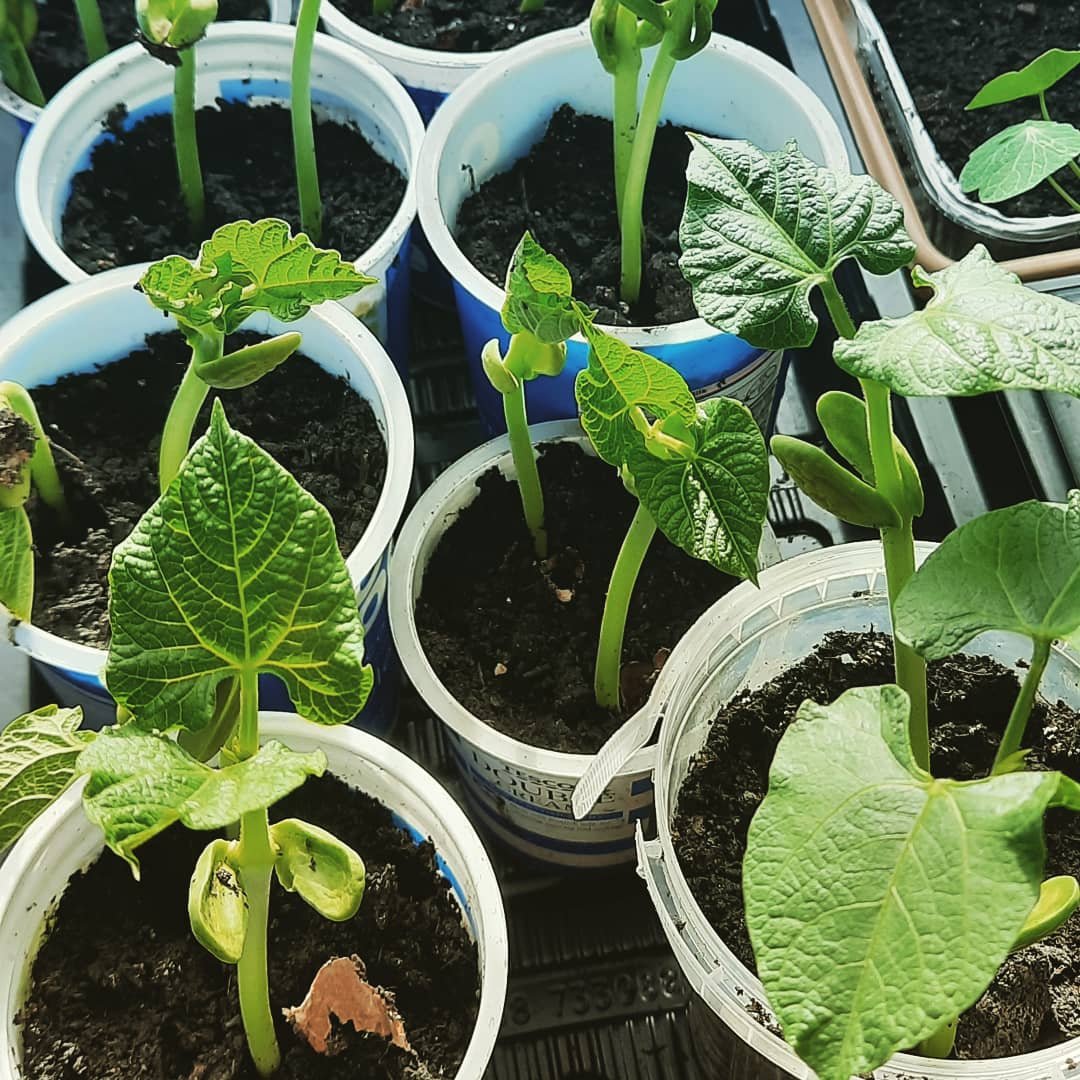
Best friend in France sent me a pack of organic borlotti beans, (not from France, from a UK seed company) and I popped some into seed compost five days ago in the growing room in the caravan, not hoping for much, to be honest.

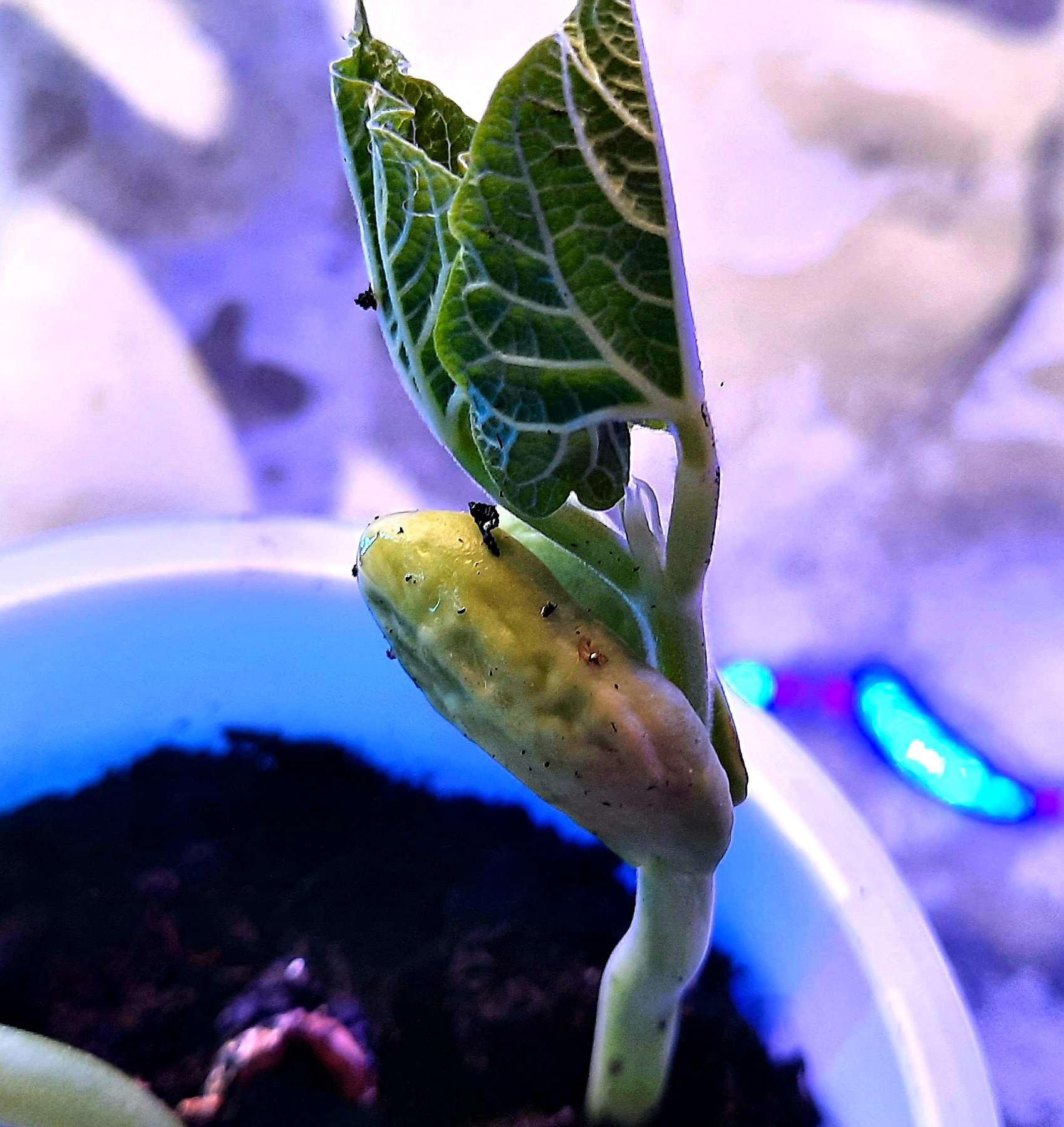
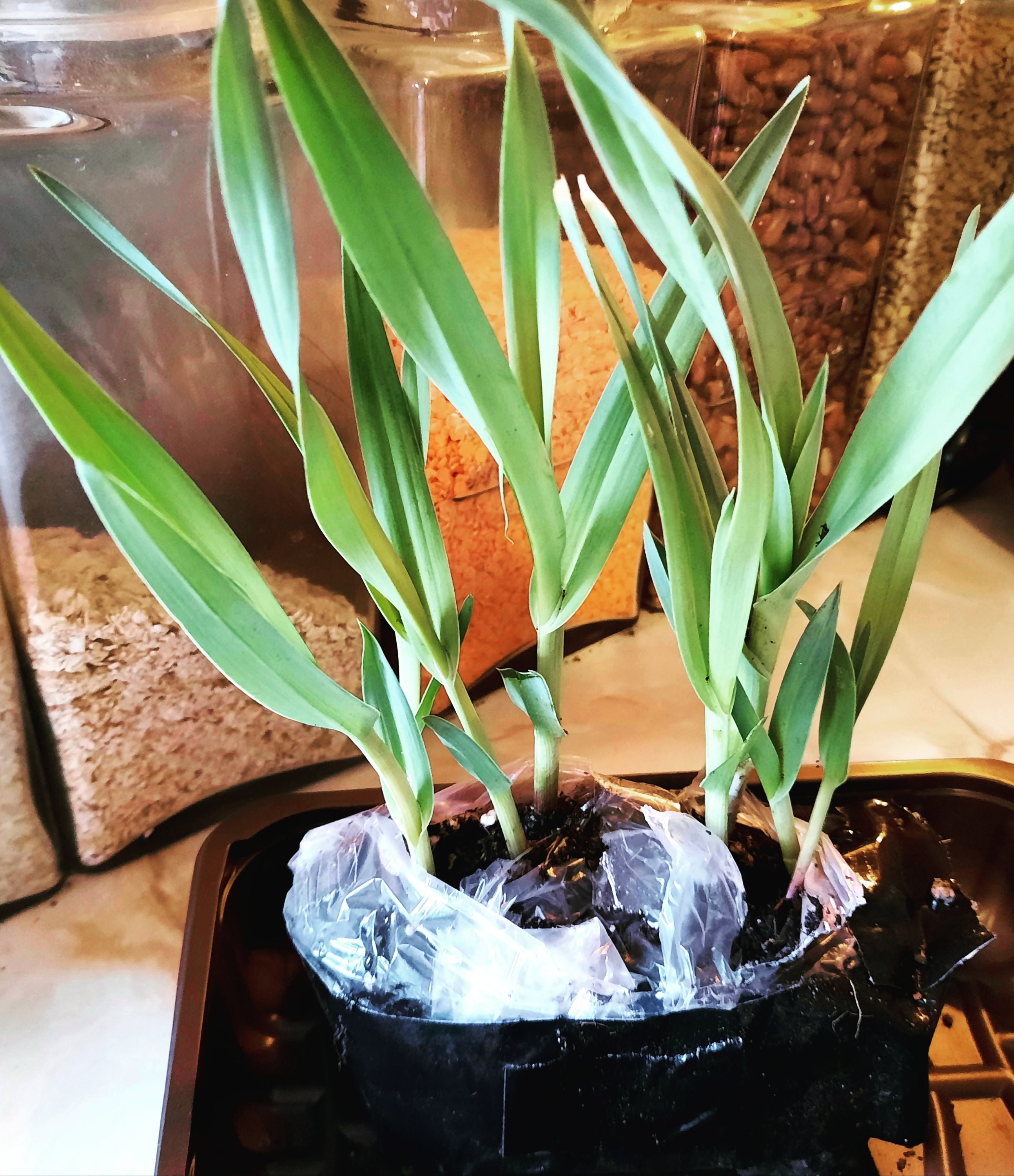
They germinated within two days, splitting the soil and unfurling huge, robust stems. It was seriously like watching a triffid grow. I could almost see them get bigger by the hour.

After four days all of them had leaves. They’re sitting there now, waving their stems about, looking a bit menacing… 😊

I think I’ve hatched mandrake babies by mistake. Someone get me some ear defenders..

Growing beds

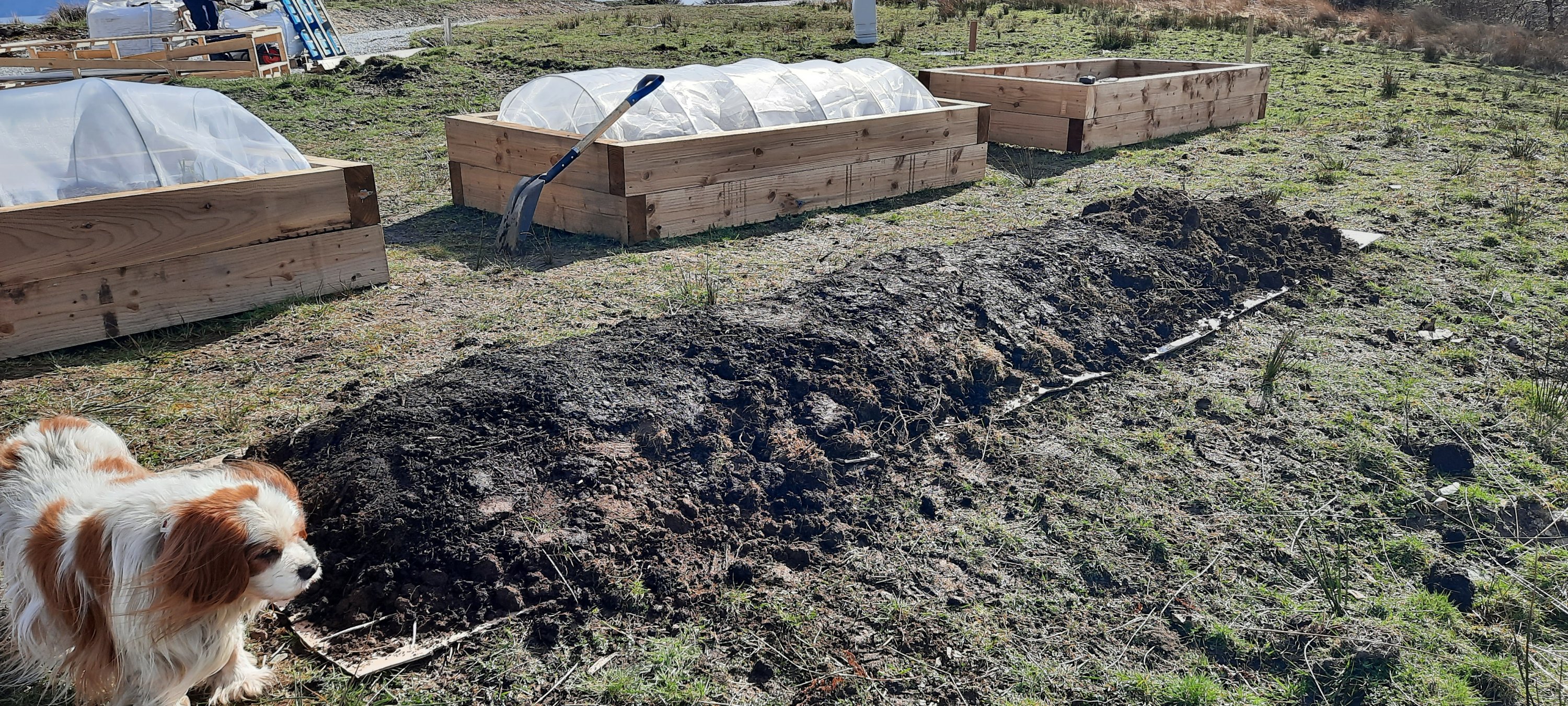
We had a dry, sunny, spring-like day this week and we decided to build a hugelkutur bed alongside the wooden raised beds that we’d built last month.

These are permaculture growing beds built over a core of wood or brash, with turf, soil and compost layers. They allow plants to grow where the soil would otherwise be too shallow.

The theory is that the central core of wood slowly decomposes, releasing nutrients into the bed. We will be adding to it annually with top-dressing to keep its depth consistent. This is a no-dig bed.

We built a small 4m bed, starting with a cardboard base to try and suppress the rush growth, and dragged up dead branches from the copse at the western edge of the croft to form the core.

We added layers of soil, compost and bark chip mulch until we had something about 60 cm deep. Some hugelkutur beds are much taller than this, like giant earth Toblerones, but as an experiment we figured that this was big enough.

We’ve planted up the rhubarb crowns in it and I’m eyeing the rest of the bed up for potatoes and perhaps kale over the coming weeks.

We’ll need to lay bark chip paths between the beds as it’s already starting to look like the Somme with all the wheelbarrow and wellie work recently churning up the mud.

If this works I can see more of these being constructed later in the year.

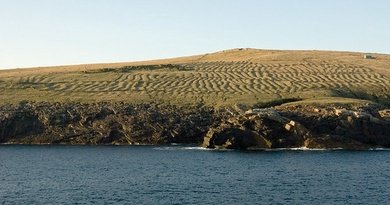
It’s a simple idea and reminds me very much of the lazybeds or runrigs on the hillside above the croft where previous generations of farmers scraped enough soil into mounds to grow food.

These ancient forms of land tenure are said to predate the crofting system, and it appeals to me that this more modern system of permaculture is really the same thing.

Blue Growing update

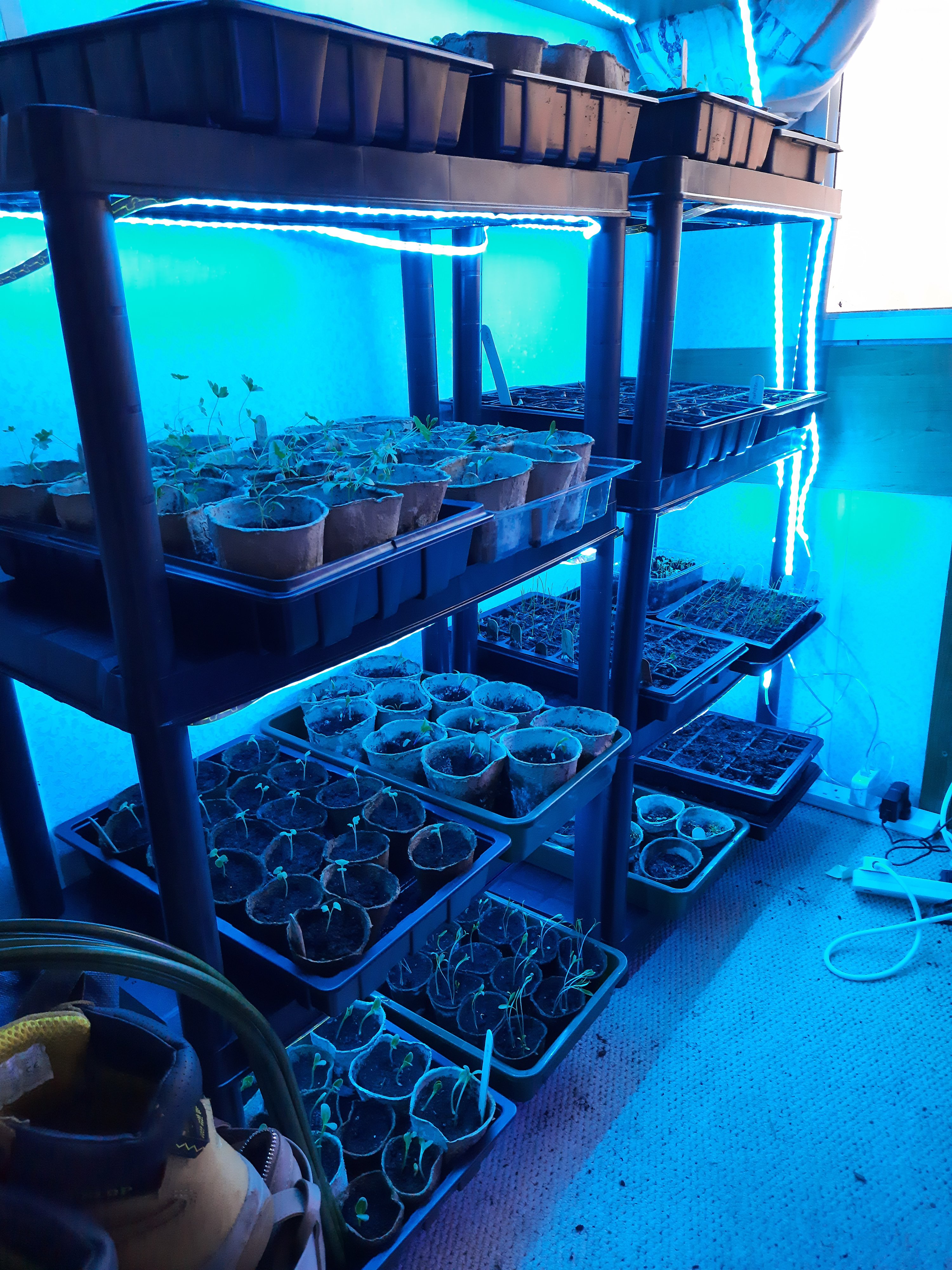
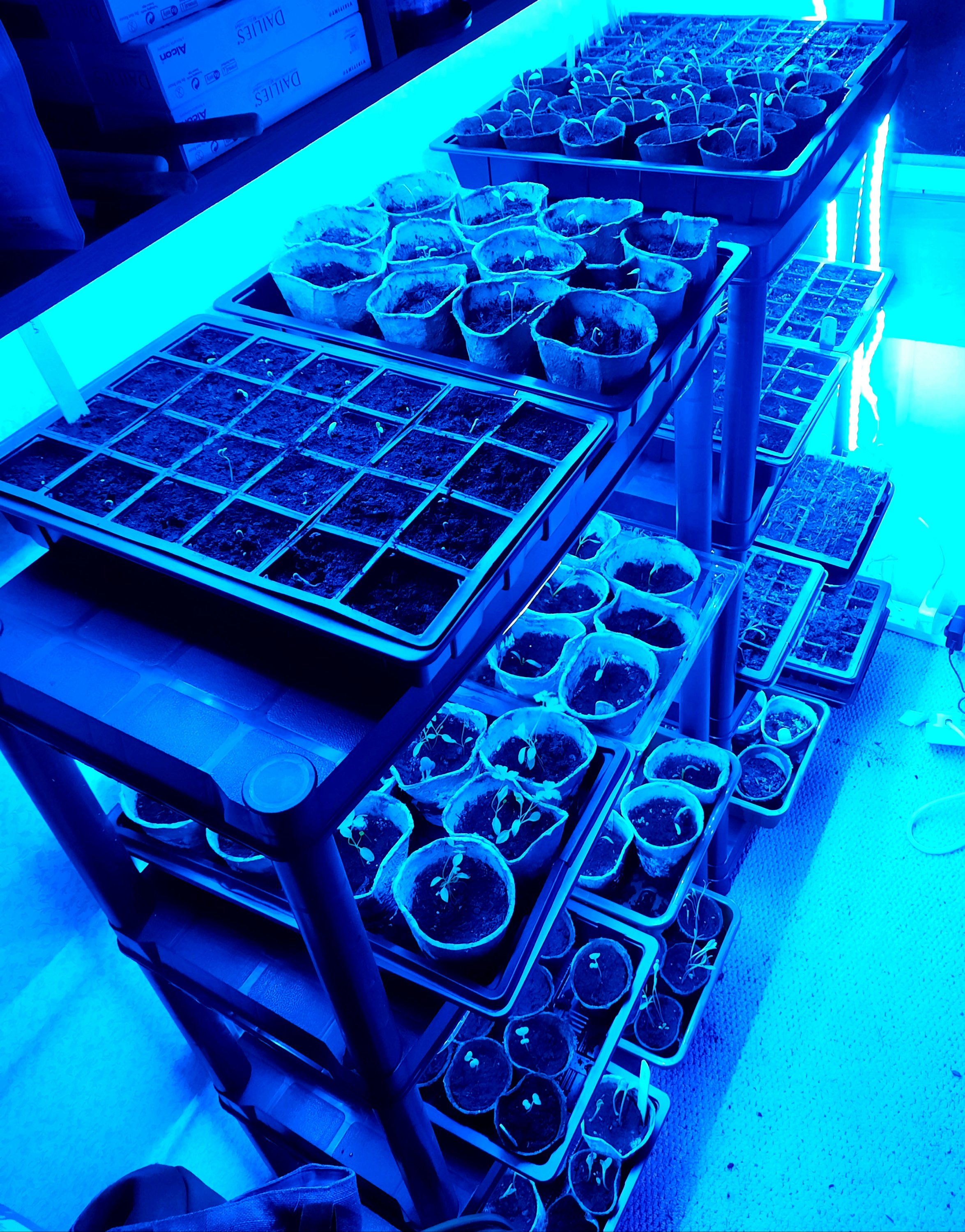
The seed sowing chaos of the caravan spare room has been taken in hand and professionalised!

We now have durable shelving with UVA grow-light strips attached to the underside of each shelf. I’m feeling very happy.

The days of my rickety cardboard box tray balancing act are over. I think that husband realised that he was in danger of having the next seed tray balanced on him if I ran out of space… 😊

We now have pak choi, Sutherland kale, leeks, onions, borage, calendula, rocket, mustard leaves, coriander, parsley, mint, lettuce, salad burnet, nasturtiums, garlic and shallots underway. All glowing eerily blue under their UVA lights.

Today I will be sowing borlotti beans in pots in the probably vain hope that I can get them to maturity on the croft despite the wind. This one is a bit of a stretch, but it’s worth a try..

The directly sown plants, such as carrots, parsnips and yacon roots will all be in May. Same for the potatoes.

The garlic, shallots, babbington leeks and onions have already been planted out into the beds, and we covered them in enviromesh yesterday for a bit of protection.

I can already see that my three initial raised beds won’t be enough, even with separate big pots for the herbs, so we will be building a long no-dig bed directly onto the croft for the rhubarb and berries. We will put in more raised beds next year after we’ve finished the house.

Next up it will be windbreak hedging…

This will be an interesting year – let’s see what grows.

Perennial Vegetables

I love the idea of vegetables that are sown or planted once and keep growing. For years.

There’s a lot of effort involved in sowing vegetable seed annually, so it makes sense to have perennial vegetables as the backbone of a permaculture garden.

They may not bring instant rewards, but you know what, this croft garden is for the long term and so a few years for these plants to establish before they give back isn’t a great deal to ask.

Perennial vegetables are for the most part ancient heritage varieties. They include such vegetables as asparagus, artichokes, walking onions, leeks, kale and broccoli. Some of these varieties, such as the Sutherland kale that I’m growing from seed, nearly died out and are really quite rare.

I’ve received my very first perennial vegetable in the post from Quercus Edibles, a small grower in Devon. It’s a Babbington Leek. As soon as the hail storms abate, this little clump of hardy loveliness is going into the ground.

The first of what I hope will be many perennial plants on the croft.