False spring

We awoke a few days ago to a silent white landscape. Quite magical in its way with the snow blanketing the building rubble in a sanitising coat of white.

White morning

But clearly way too cold to put any tender plants out into the unheated polycrub anytime soon.

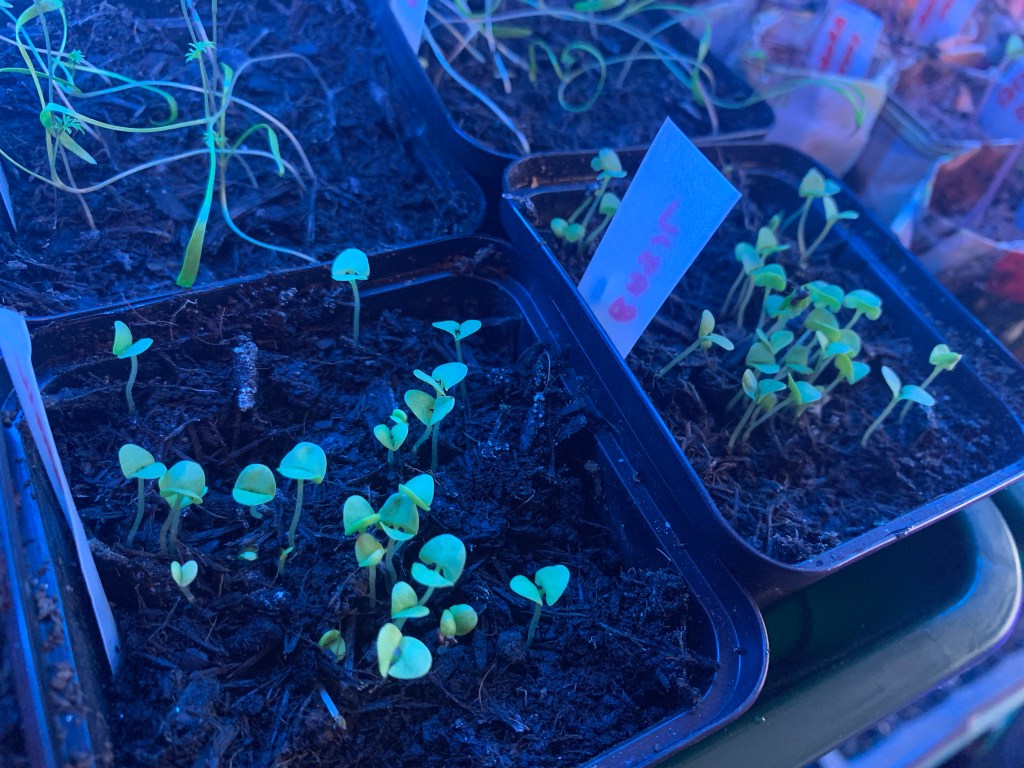
We’ve had a bit of a mixed result with our early seed germination, and a further week of late snow here on the island. I think that some of the seeds took one look at the weather outside and thought, no way..
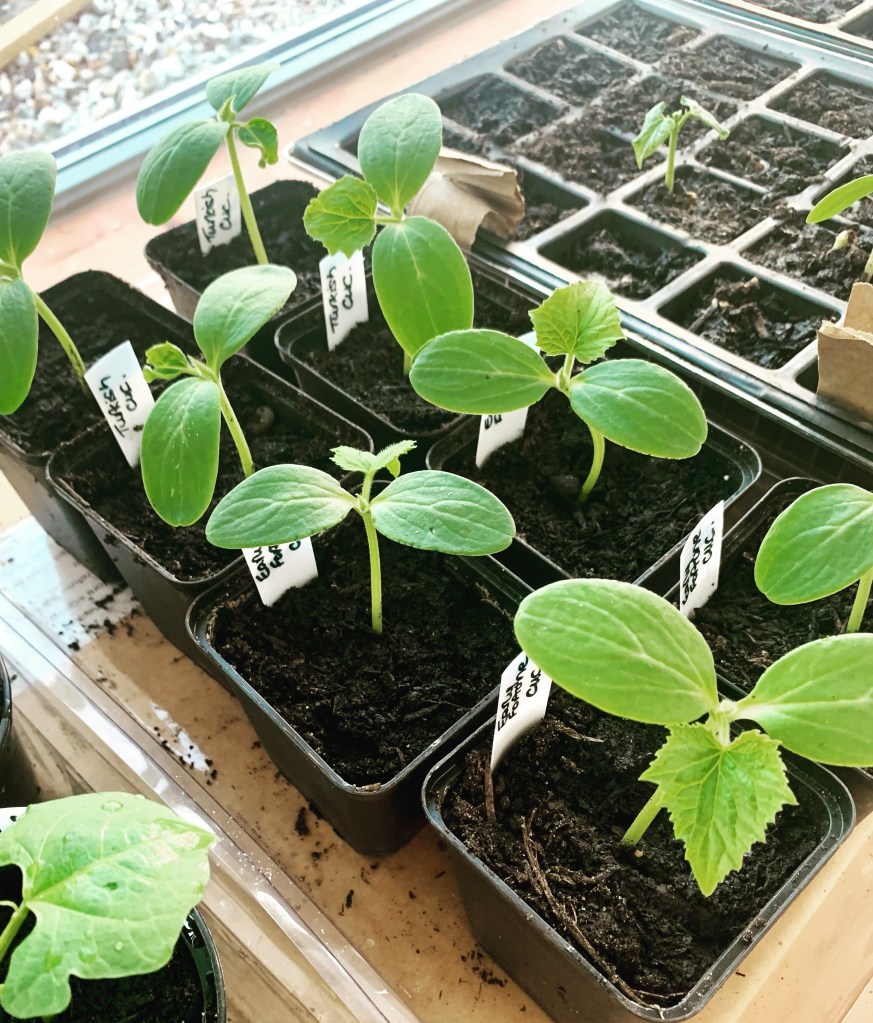
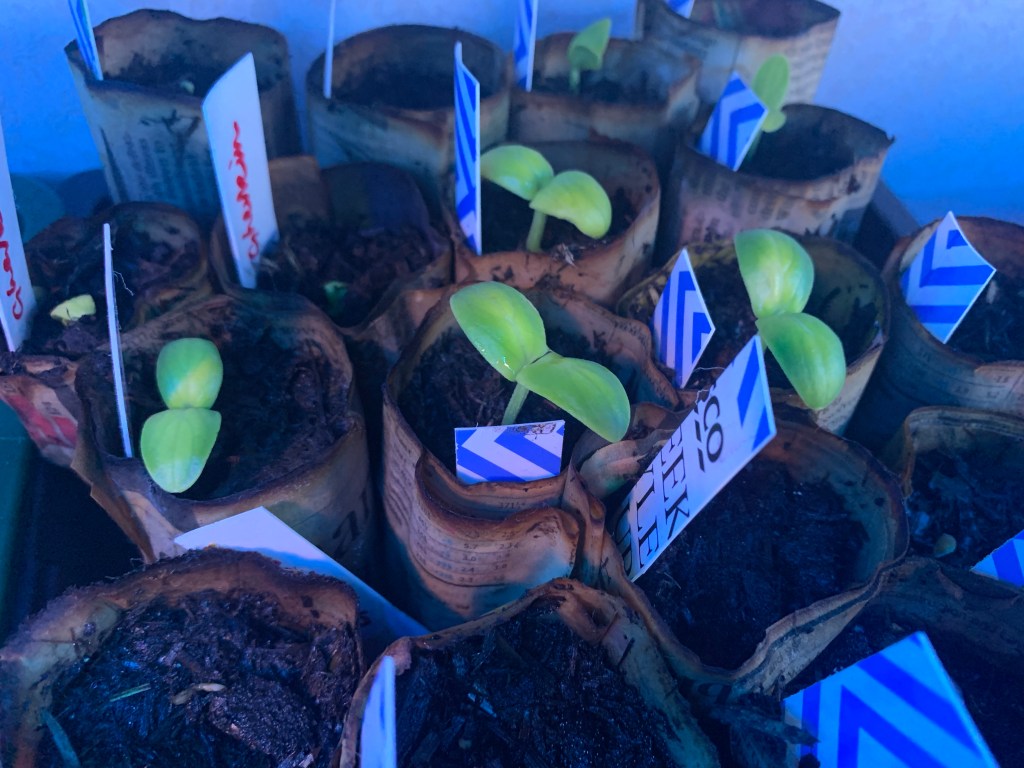
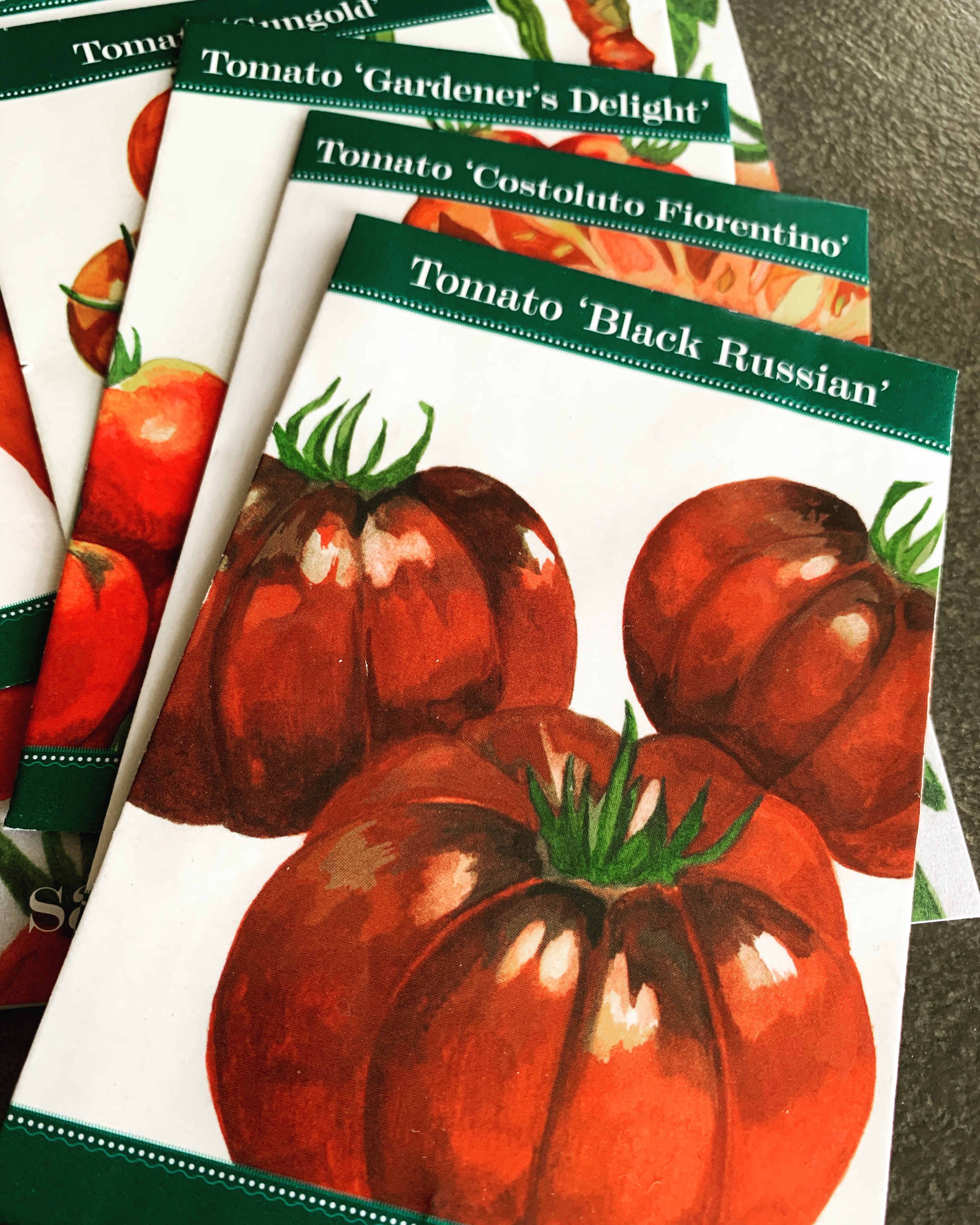
The cucumber and beans raced up to meet the world, but the chillies, kale, tomatoes and lettuce have been more reluctant to emerge into this chilly white landscape. And I can’t blame them.
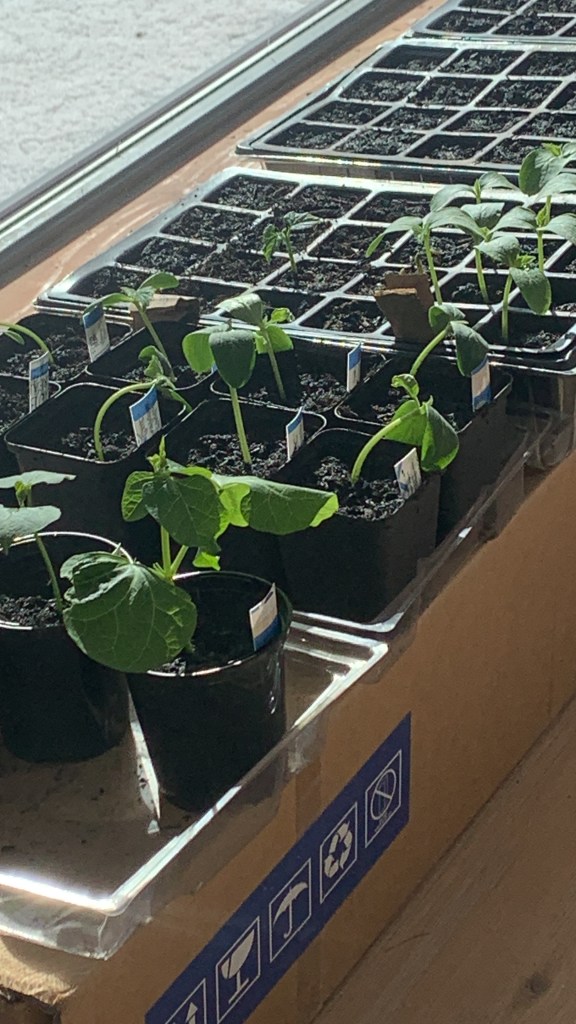
The locals call February “false spring” as we enjoy gloriously bright, sunny days at this time of the year. It’s quite stunning.

But winter still has the land in its icy grasp and snow in March and April often follows. Plant out at your peril. It’s still frozen hard under those beams of trickster sunlight.

These are still days for big, warming breakfasts, pots of tea by the fire and much watching of the weather from the warmth of the sofa.


Çılbır, poached eggs with yoghurt and peppery butter
Shakshuka for breakfast

Polycrub – winter vegetables

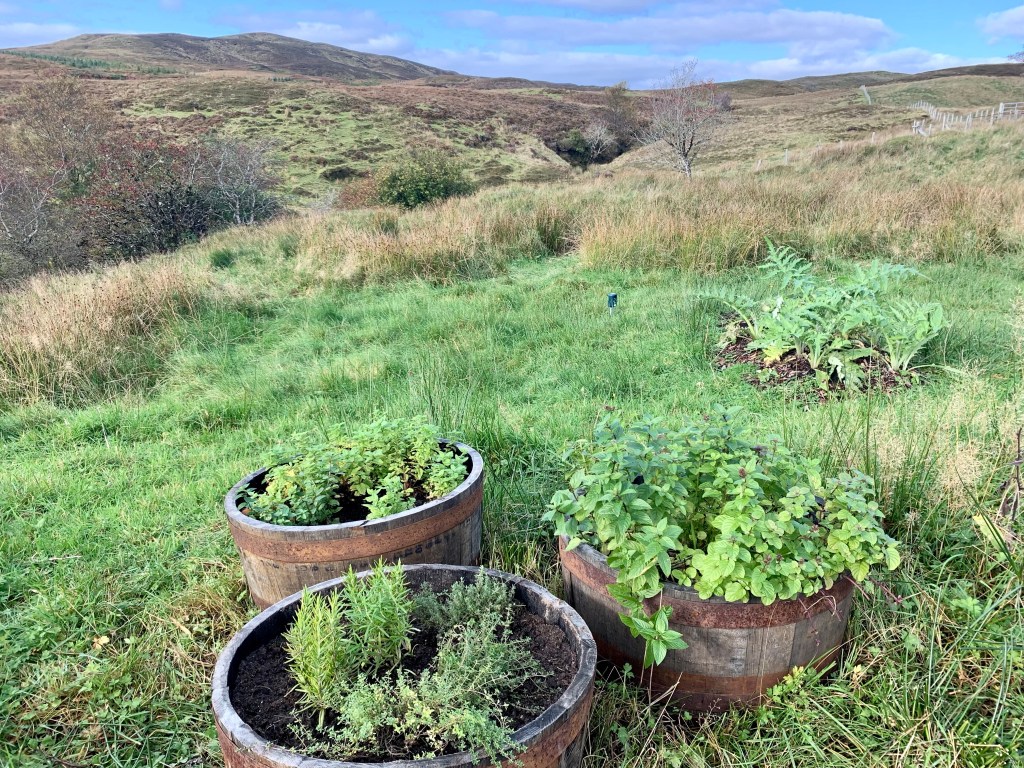
I’ve slowly been clearing the polycrub of pots of spent summer produce, the tomatoes, beans and squash plants all now cropped and done. The remaining green tomatoes are coming indoors to be made into chutney any day soon.

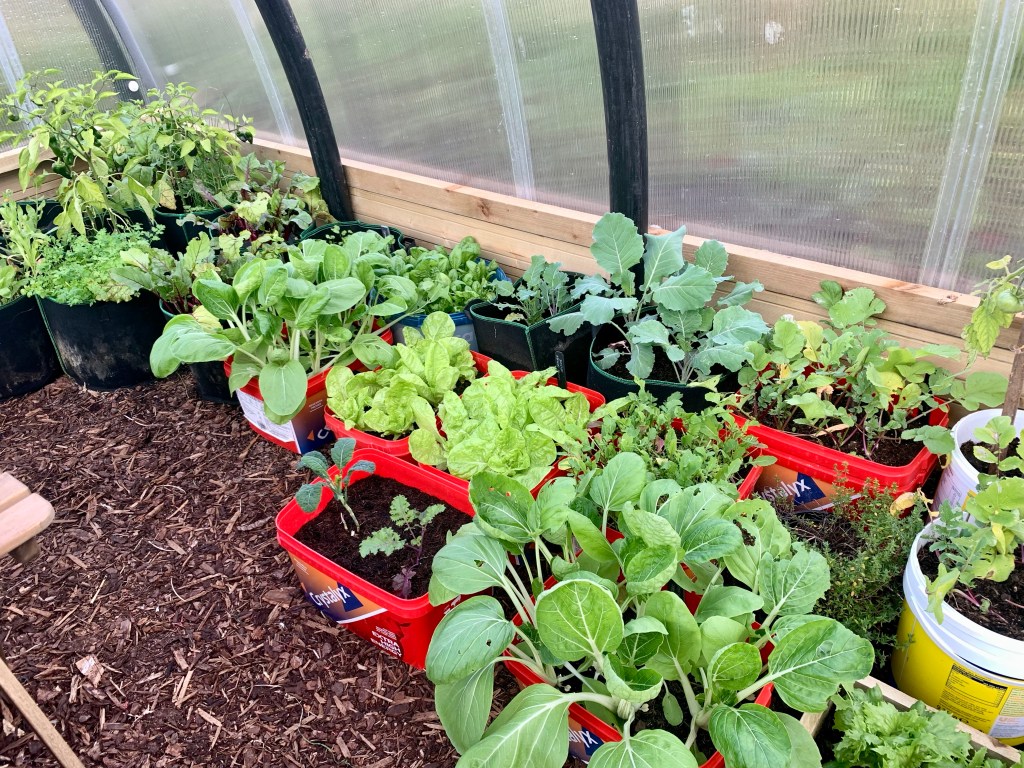
Winter crops in tubs

The winter sowings are largely in and have been growing like weeds. I planted winter lettuce and pak choi – too closely together, it seems, as I was short of tubs – expecting slow growth and plenty of time to pot them on once everything else was cleared.

But their rapid growth has taken me aback and we’ve been cropping lettuce and rocket for weeks now trying to thin it all out. They’re just about under control again.

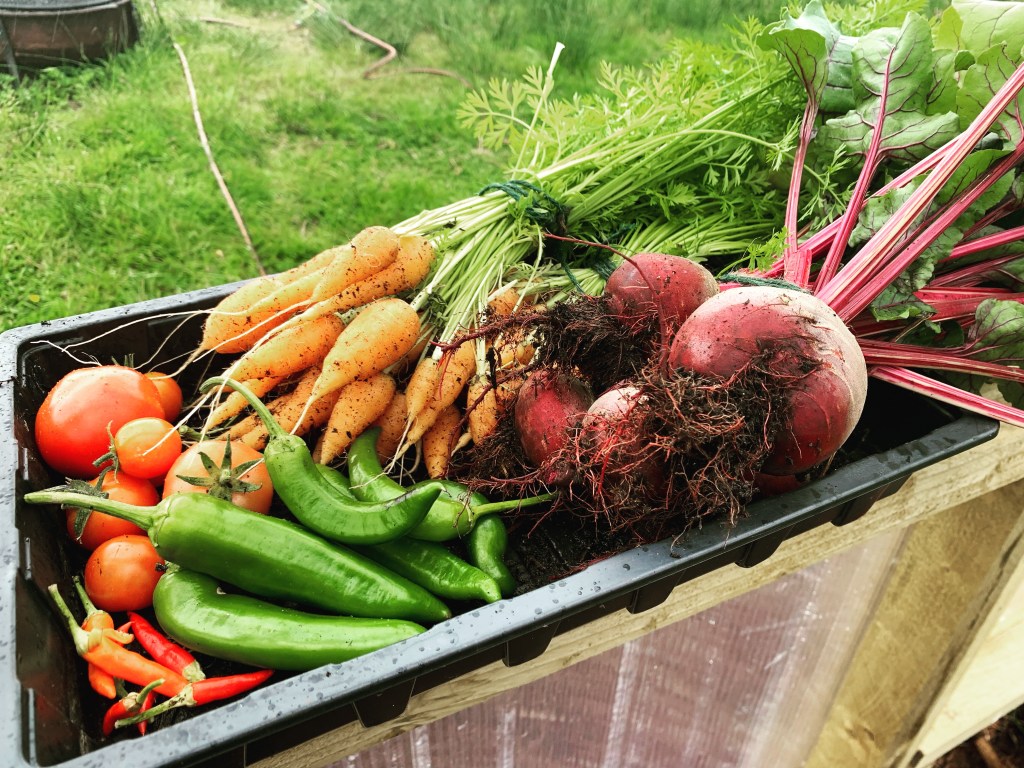
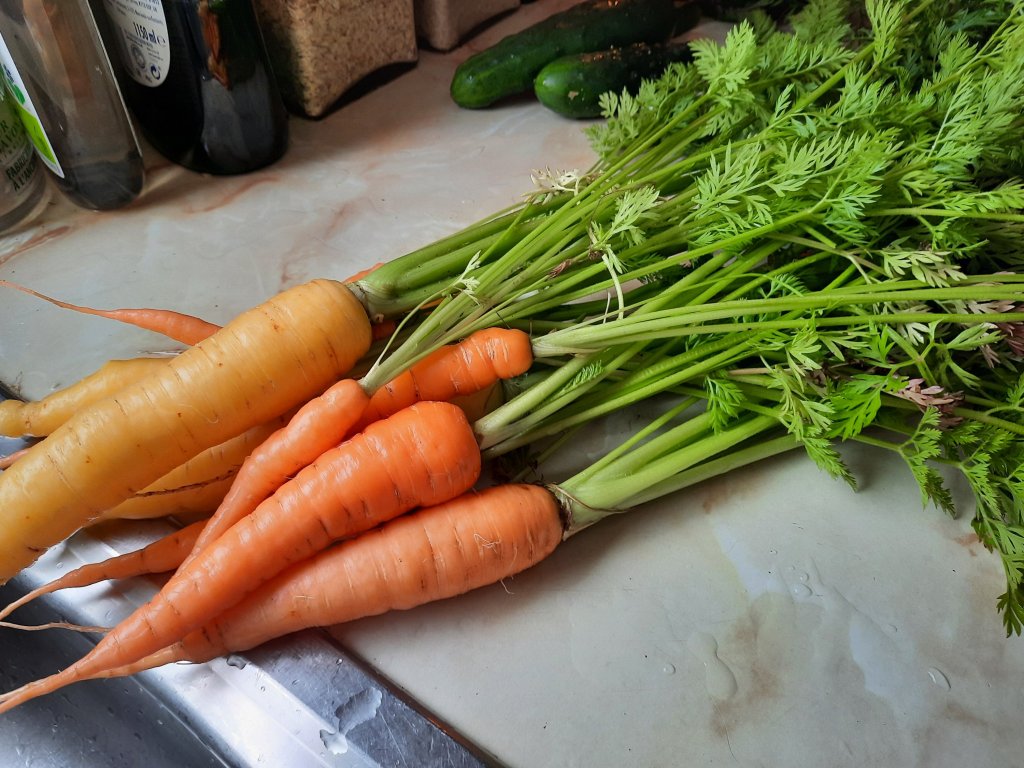
The late August sowings of carrots have done really well. I tried growing a few tubs of Real Seeds French heritage carrots to see what would thrive. They’ve all grown well, but our favourite is a variety called d’Esigny which is a small, blunt tipped carrot with an incredible sweetness of flavour.

Yesterdays harvest with D’Esigny carrots

I shall fill tubs with this variety next year so that we have plenty, and succession-sow so that they ripen every few weeks for staggered consumption. I don’t think they’re a storing carrot, but that’s fine by us as they’re so delicious that they wouldn’t last anyway.

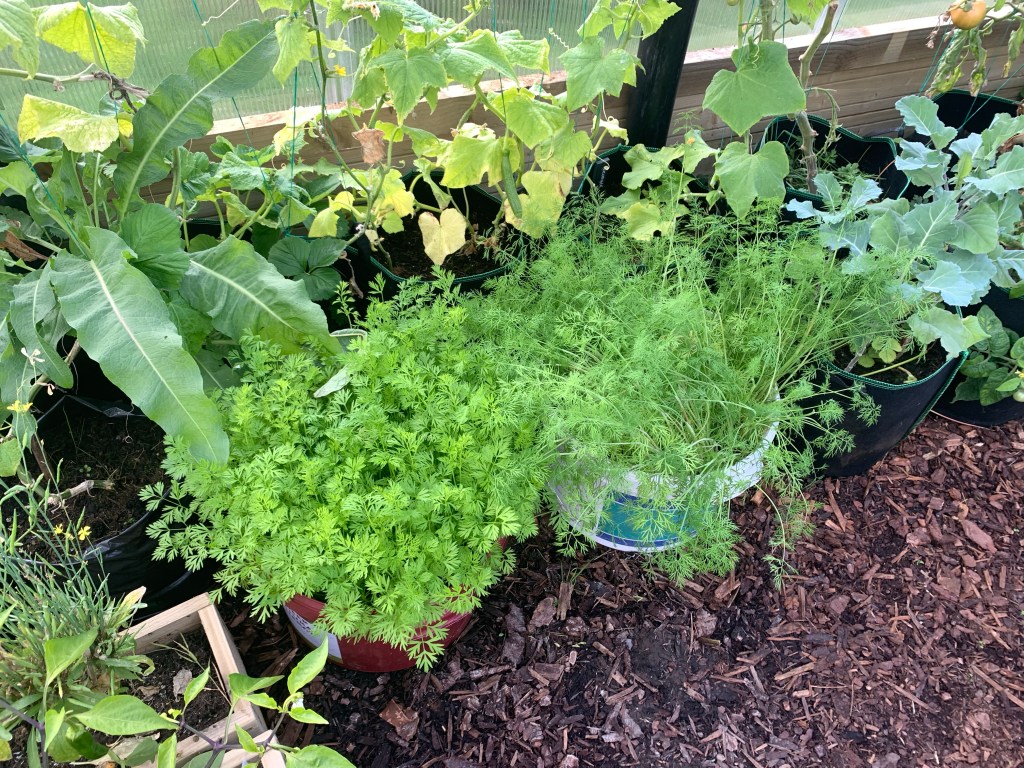
Carrots in tubs, dill, kale

The winter vegetables that have been planted up in the polycrub are purple sprouting broccoli, kale, winter lettuce, pak choi, tatsoi, rocket, carrots, beetroot, parsley, coriander and dill (not sure that dill will make it through winter). Let’s see what survives!

The nights are drawing in now, with a nip in the air and the fire in the caravan going on most evenings to keep the temperature comfortable. I wrap up in a blanket to watch films in the evening as the temperature drops. The electric blanket has gone back onto the bed.

The nights are properly dark again – which seems so strange after a summer of light. It’s awe-inspiring to look up and see the stars once again in clear, inky black skies. The clarity here with no light pollution is remarkable.

Autumn is my favourite season.

Experiments of the vegetable variety

This year has been full of experiments of the vegetable variety.

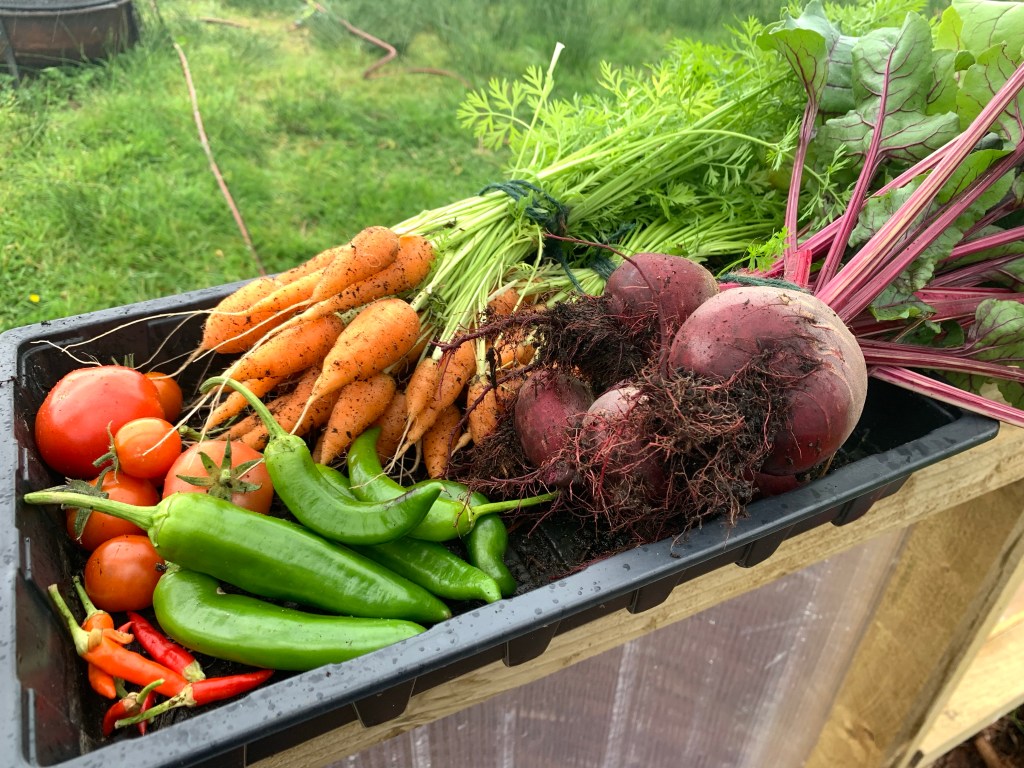
Tomatoes, red hot chillis, mild chillis, carrots, beetroot

It’s been the first year with the polycrub and growing in containers rather than beds. I started rather late in our short season, as the polycrub wasn’t built until the end of April. All of which meant that my expectations were set at a pretty low level for success.

And those expectations have largely been fulfilled ..

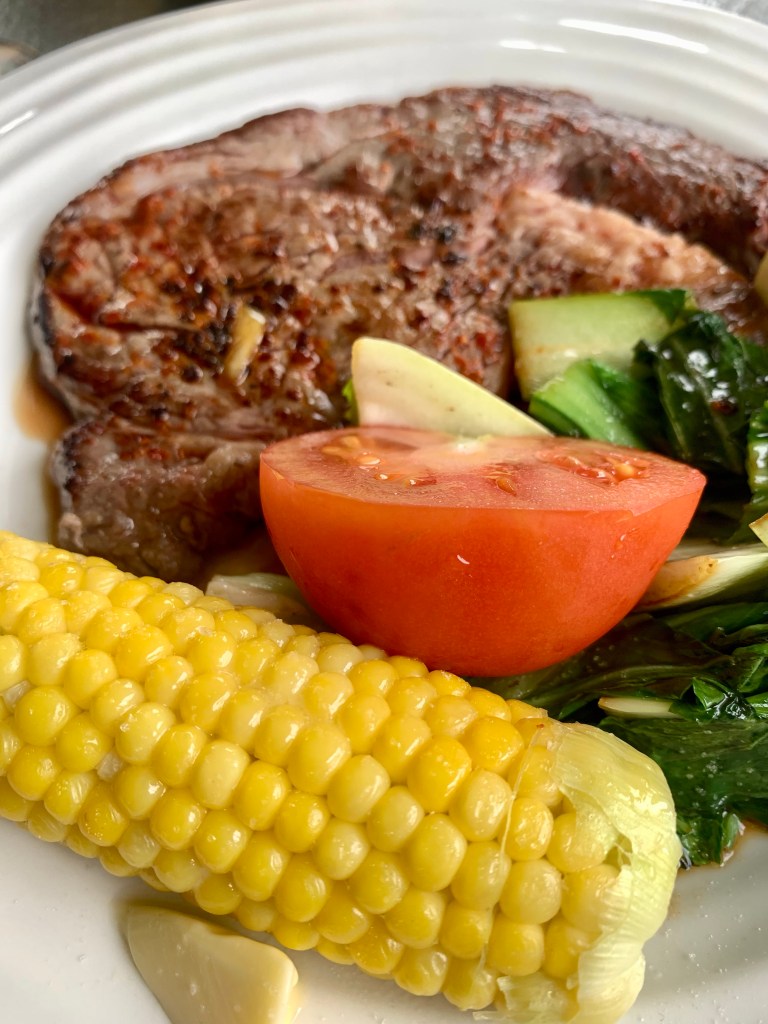
However, there have been a few pleasant surprises. Today I harvested my first cobs of sweetcorn. They’re small, it’s true, and there are only a few of them. But when I planted the corn seeds in May, followed by our largely sunless non-summer I really didn’t think that anything would come of them.

Sweetcorn – yay!

And yet here we are, eating sweetcorn from the croft with our supper. I’m a bit amazed that I’ve managed to produce something so seemingly exotic out of our cold, wet island.

I know that all growers are convinced that their produce is wonderful, but I’m a critical grower, honestly. Our tomatoes have been prolific but disappointing in taste this year and there are some plants, lovingly tended, that have not thrived or produced a harvest worthy of a repeat next year. However, this corn was absolutely delicious, an hour from plant to plate. Sweet and very succulent.

I stand in awe of the tolerance that some plants have for less than ideal environments. It gives me great hope for next years food production which will be in deep beds, fertilised with our own seaweed and croft compost.

A world apart in terms of taste!

Fifty seven degrees north. Who would have guessed!

Grown with care

Duncraig Nursery is one of those wonderful, remote places that are quite magical when you find them.

Nestled in a hidden wooded glen near Plockton, surrounded by an old walled garden from the nearby castle, it’s location is beautiful.

Duncraig castle

From the moment you arrive, car tyres crunching on the stone chipped path, to the initial conversation with the owners who radiate deep plant love and knowledge, you realise that this is a special place.

I went with a friend on an exploratory visit, and we both squeaked with delight as we found more and more of the plants that we were looking for. All good strong varieties, tried and tested to survive in the highlands of Scotland.

All in tip top health, all vibrant and well tended. It was a completely different experience to the rather sad, city garden centre that I’d visited last week in Inverness where the plants were stressed, in need of water and limply unhappy.

Purchases awaiting planting up

I went looking for cucumber seedlings as mine had not germinated for some reason. They were the only big failures in my seed sowing this year. I was worried that sowing again so late in the growing season, already short here this far north in the highlands, would mean that we wouldn’t get a crop at all.

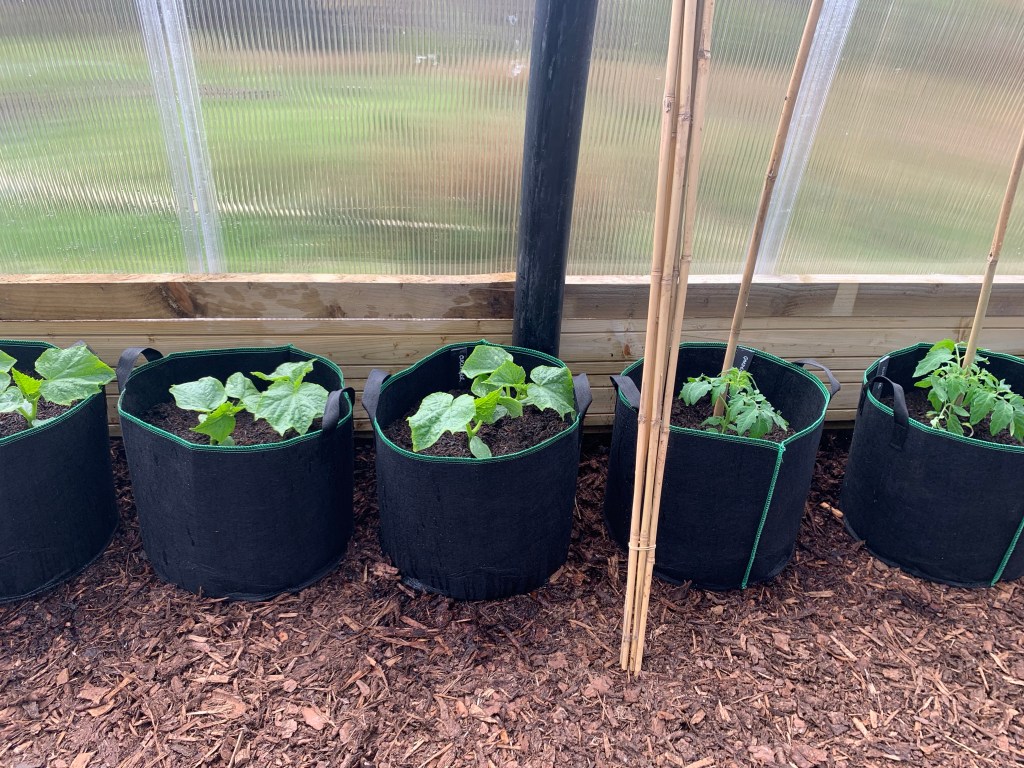
Cucumbers and tomatoes

I found cucumber seedlings. I found strawberry plants full in flower, chilli peppers, sweet red peppers, lettuces and glorious red kale. The soft fruit selection, shrubs, fruit trees and herbs were fabulous. I could have bought the entire place up if I had enough growing room!

We will be back. The danger is now to our bank balance for subsequent visits! Saying that, I’d rather spend my money supporting a local garden business where the owners have a real love for their enterprise than a faceless chain where profit is the main concern.

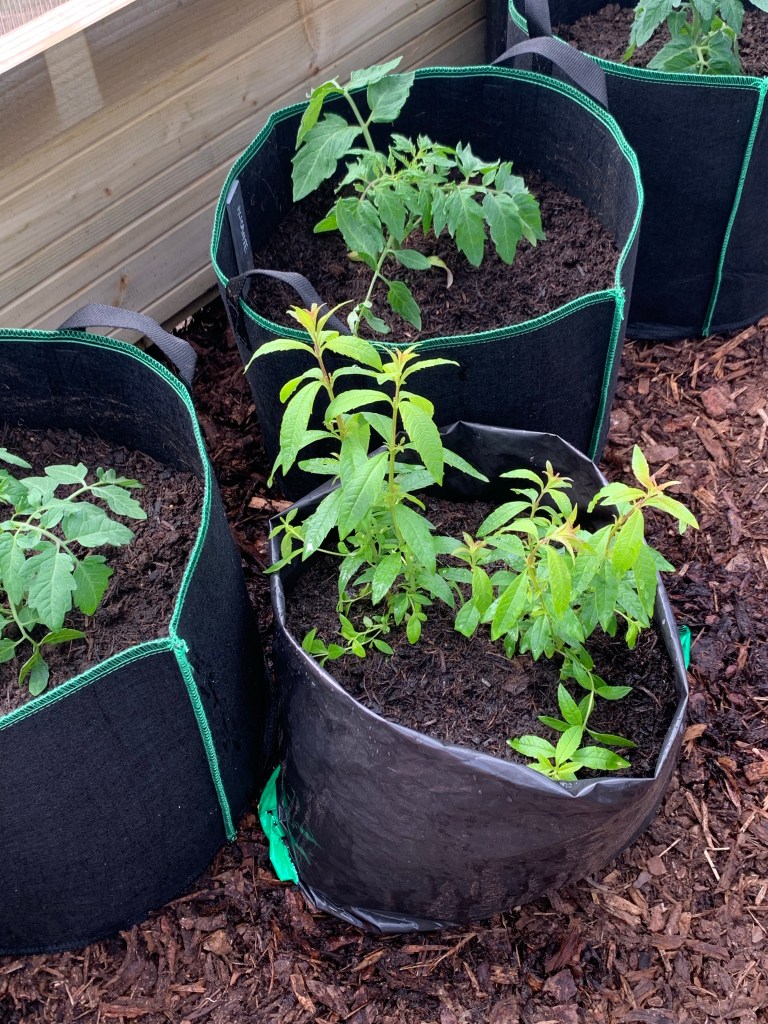
Compost bag with lemon verbena

I’ve roped in husband to help and have now potted up my purchases. We ran out of canvas bags and sheep lick tubs, so are now using empty folded over compost bags as temporary plant containers . Waste not, want not, as my mum used to say.

Mud, snow and seedlings

So, just as I was sowing a few trays of vegetable seeds and contemplating getting my potatoes into the ground, it snowed.

Basil seedlings under the blue UV lights of doom

It’s the lambing snow. Every year in March or April it happens, apparently, just as the lambs are born. Poor things. My seedlings have visibly shrunk back into the soil in horror at the prospect of emerging into such sub zero temperatures.

I feel so cruel tempting them into germination on a heat pad in the caravan only for them to swiftly realise the reality that they’ve been born into..

Gherkinage!

I’m hoping for milder temperatures and a break in the rain and sleet so that I can carry on preparing the raised beds and get a few hardy things out there. It’s bitterly cold out there at the moment.

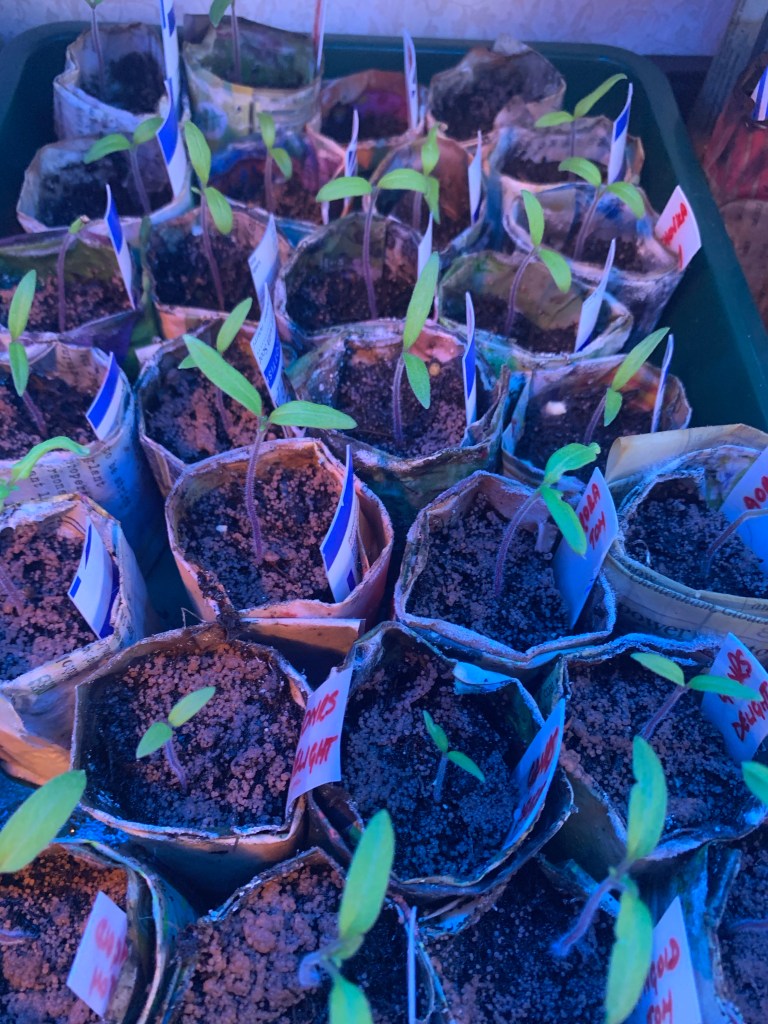
Rather leggy looking tomato seedlings

The polycrub is supposed to be being installed next week, and at the moment the site that it will sit in is a bit of a quagmire.

Mud everywhere.

The divine beast

I’ve always wanted a polycrub. As soon as I set eyes on this windswept, exposed croft I knew that it was our best chance of growing anything.

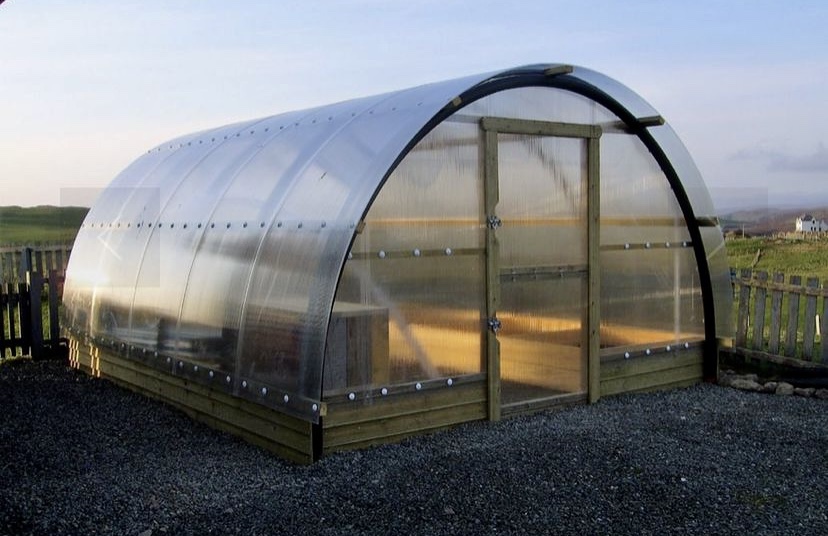
The polycrub

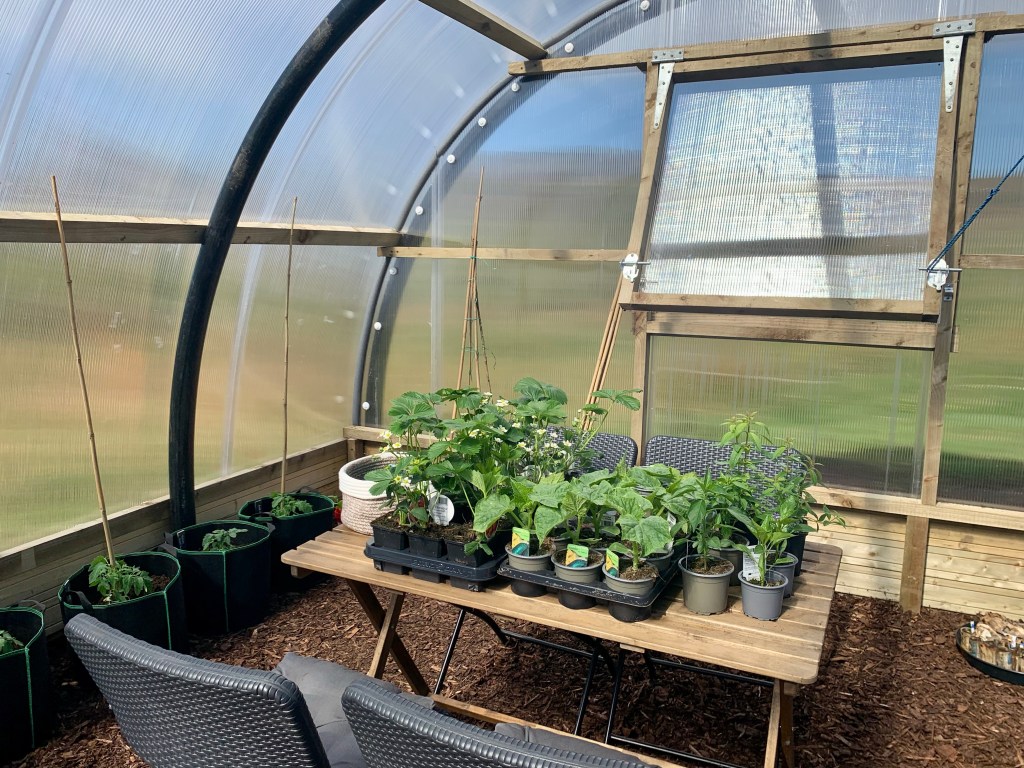
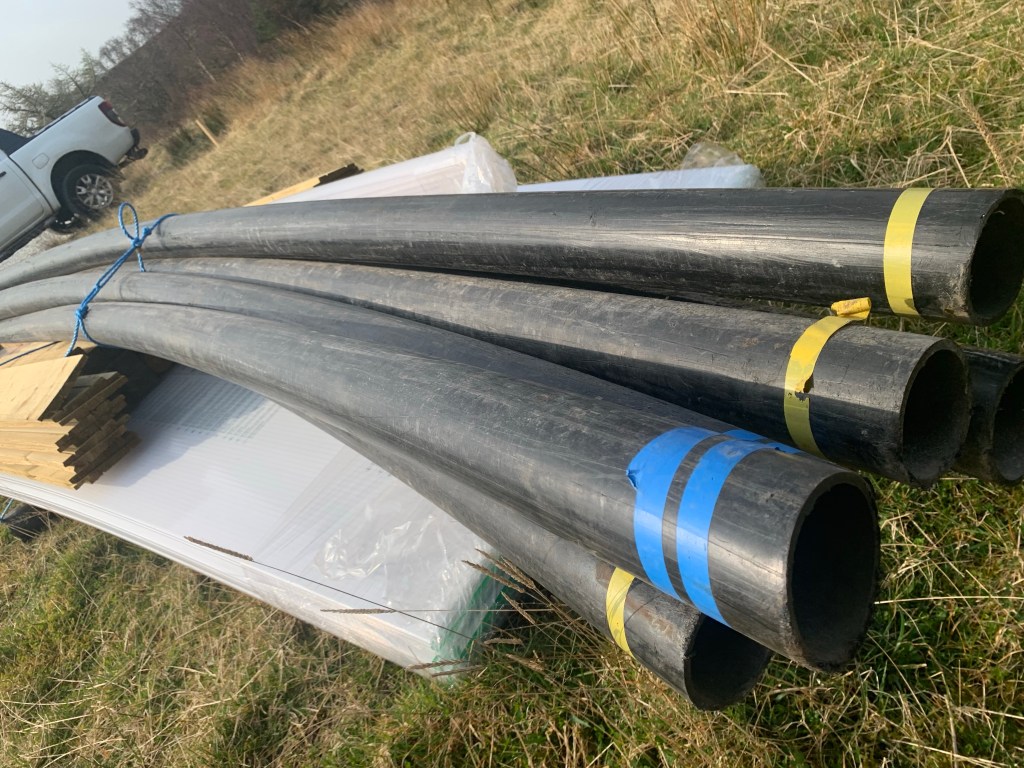
For those of you unfamiliar with this divine beast, a polycrub is a growing tunnel, like a polytunnel. The difference is that it is made from recycled fish farm piping and rigid polycarbonate sheeting, making it very strong.

It is designed and made on the Shetland Isles, where it was developed to cope with the exceptionally strong winds and stormy growing conditions there. It’s guaranteed for up to 120 mph winds, so it can withstand anything that the Isle of Skye climate can throw at it.

Recycled salmon farm piping

I love that it’s made from sustainable and recycled materials, and that it’s so strong. The first year of growing taught me that our biggest challenge on this exposed site was going to be the wind. We will plant shelter belts to help the raised beds, but this will provide much greater protection for a wide variety of crops.

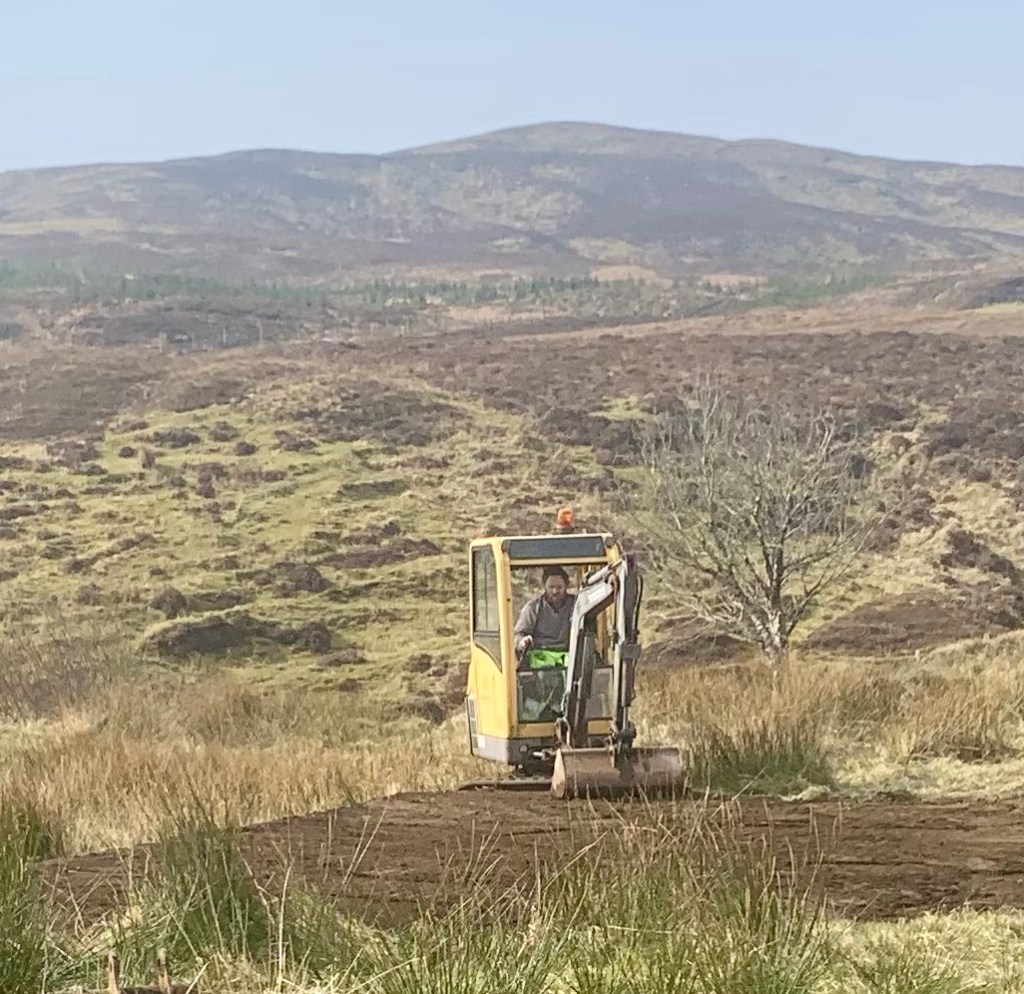
Excitement has peaked this week with the arrival of the man and digger to level the site, and the delivery of the kit itself. The joiner will be here in two weeks time to construct it. We are installing it between the raised beds and the compost bins in the growing area of the croft.

Man & mini digger

As I write, a snow storm has just swept across the sound. It may be the last day of March but the challenging conditions continue, and my seedlings need protection. I can’t wait for the polycrub to be up and running.

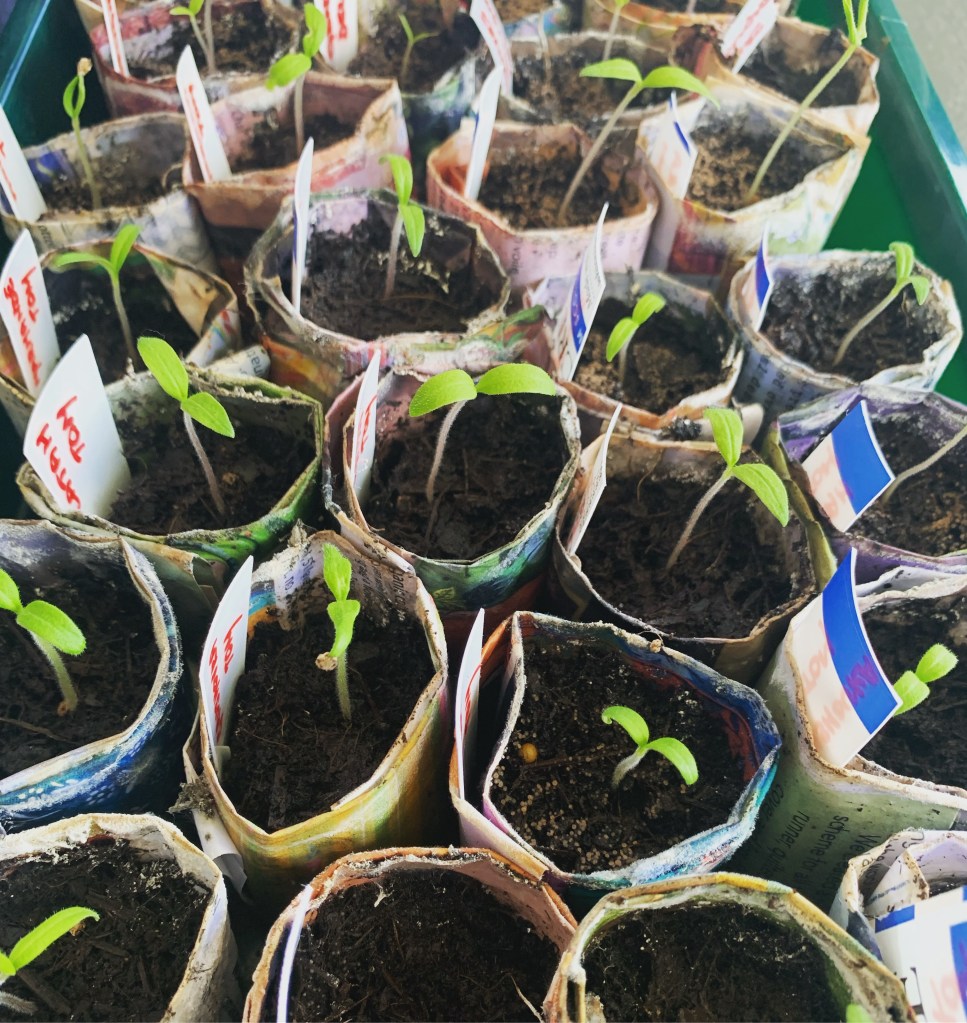
Tomato babies

The polycrub, seeds and spring

The days are definitely lengthening now , perceptibly so. Spring should be on its way, although no one seems to have told the weather gods that. It’s still hail, snow and gales most days.

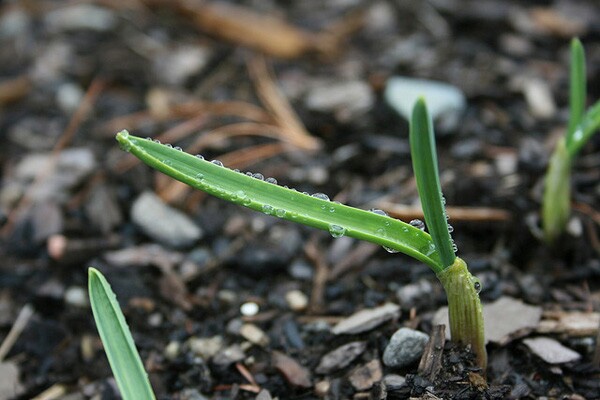
I did a quick rustle about in the raised beds this week and although I should be clearing and planting soon, it’s still far too cold and wet. The garlic has popped it’s head up a little, but that’s it.

I’ve ordered the polycrub. We did apply for a crofters grant to help with the cost, but we were unsuccessful. They wanted a five year business plan showing anticipated horticultural sales and letters of guarantee from local outlets that they would take our produce.

This isn’t the way that we’ve planned to do things. We will sell produce at the croft gate if we have any surplus, but we are mainly growing for ourselves and our neighbours, not as a fully commercial enterprise. As such we don’t qualify. We’re disappointed, of course, but we’ve bitten the bullet and gone ahead with buying the polycrub anyway.

It’s six metres by four of rigid polycarbonate sheeting, fish-farm tube loveliness. After the last few months of storms I’m doubly convinced that this is the only thing that would survive the winds on this exposed hillside.

It will revolutionise what we can grow, though. Tomatoes, chillies, squash, cherries, basil… lots of tender plants that wouldn’t thrive in our cold, windswept raised beds. We hope to have it installed in April, just in time to move crops in there for the summer.

Very exciting!

Now to clear out the caravan spare room out from a whole year of being a junk room, and set it back up to start seedling production again. It will be good to see the blue grow lights illuminating the hillside once more.. 😊

Feeding the local wildlife

It’s not all been perfect carrots and potatoes, y’know. Growing organically and without pesticides has been a challenge, and we’ve lost our fair share to the bugs and the deer. Mainly, it has to be said, to the damned deer.

Our hungry neighbours

Deer are not supposed to like garlic, onions, leeks or anything strongly scented. Ha. Ours obviously have exotic tastes. They’ve chomped through the green foliage of all three of these all summer.

Plant globe artichokes, those in the know said. The leaves are big and bristly and the deer don’t like the texture of anything bristly or prickly. Ha. They’ve been eating the yacon and artichokes too, biting out the lead shoots completely on many of our plants.

It’s also the closest bed to the common grazings on the hill , and as such the most tempting, I suspect. The rest are annoyingly close to the caravan.

The distant remains of the artichokes

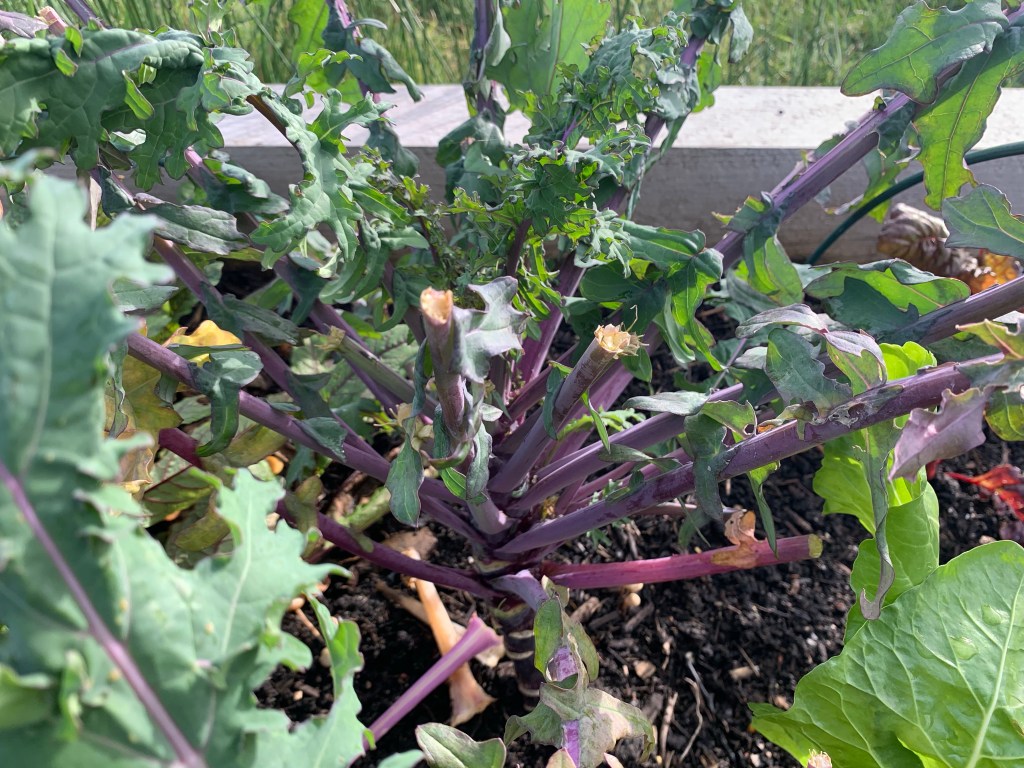
Kale was always going to be a crop that we knew would potentially suffer from their grazing, although they did wait until it was of sufficient size to be worth nibbling. Thoughtful of them. Then they feasted.

Chomped kale

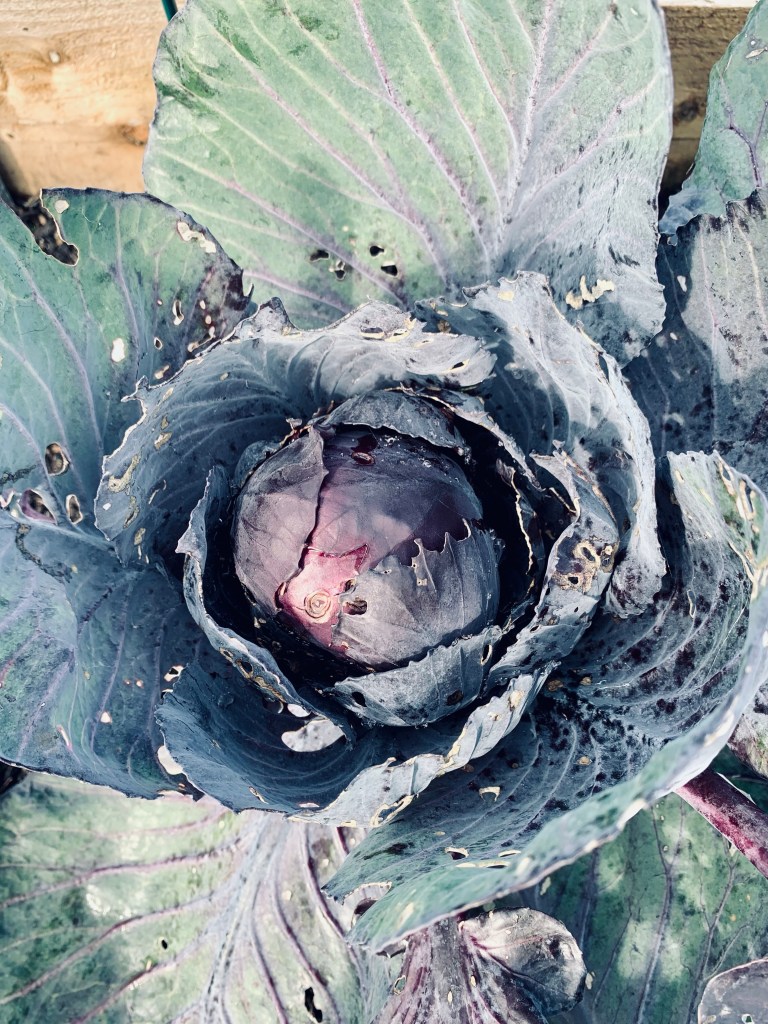
What the deer didn’t eat, the caterpillars and other bugs did.

This is a picture of one of my red cabbages from the raised beds. As you can see, the leaves are like lacework, having been nibbled by whatever passing insects or caterpillars we are harbouring. Companion planting helped a bit, but most of the garlic and other strongly scented plants that were supposed to deter passing devourers had been harvested long before these cabbages were, and then the fun started.

Bug salad bar

I am not despondent. I’m happy to lose some to wildlife, but am determined to find ways to minimise the damage and maximise our crops. Our soil is productive and good. I think that netting against insects for longer next year will help, as will deer fencing around the vegetable plots, if not the whole croft.

It’s a journey, and we’re learning.

On the whole this growing thing has been surprisingly successful for us, and next year with the benefit of the knowledge gained from our experimental year, more beds and the polytunnel in place, we’ll be even more productive.

In praise of seaweed

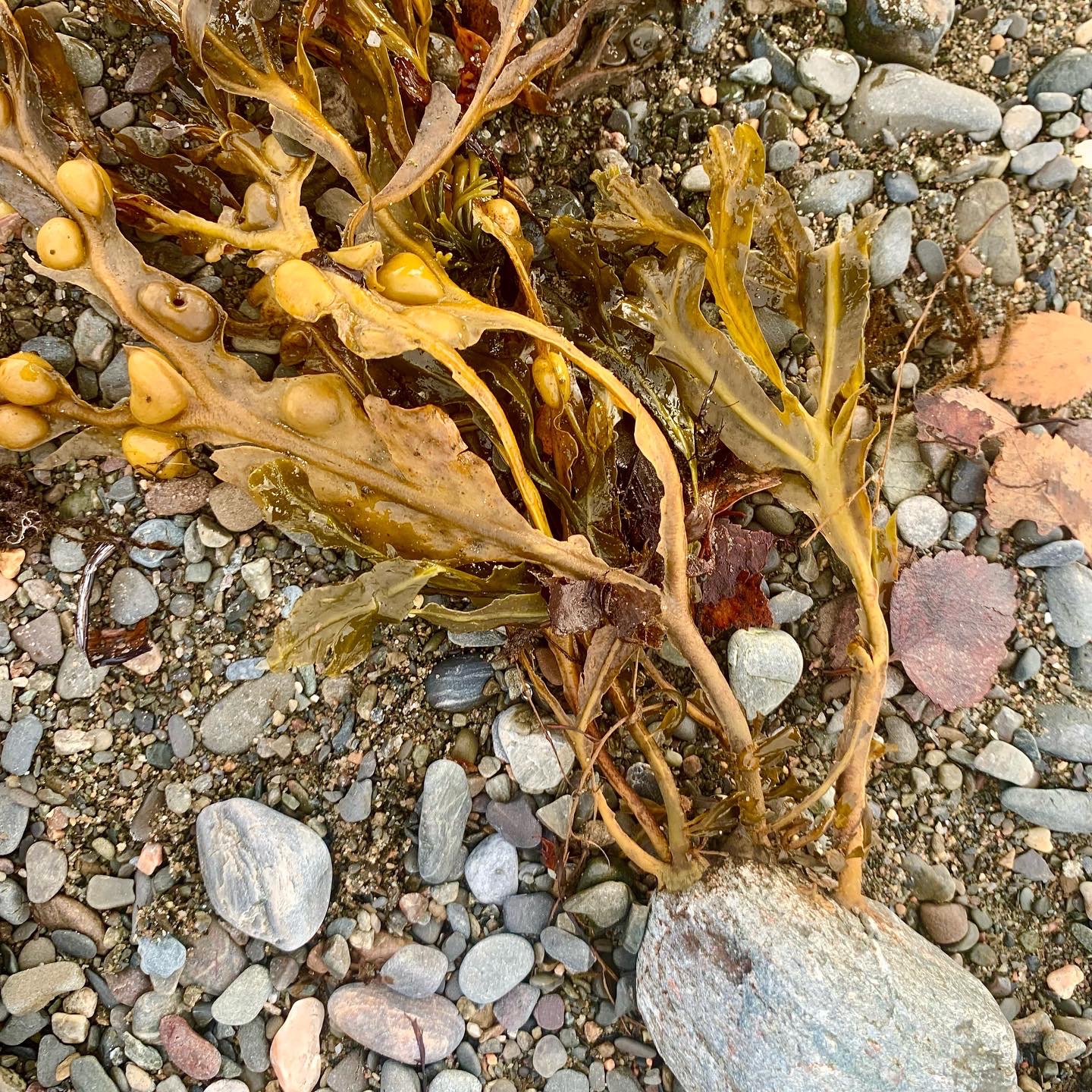
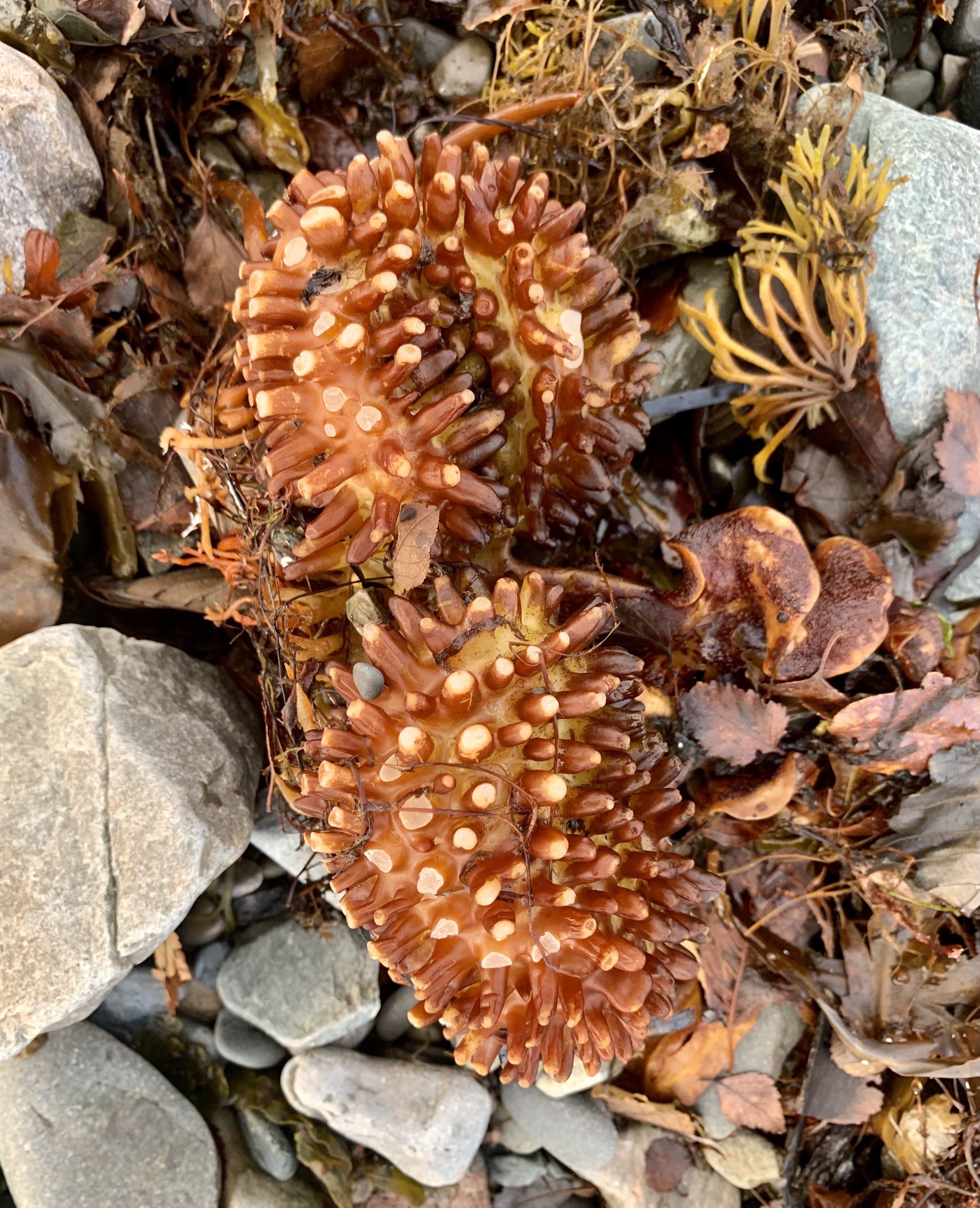
Amazing stuff, seaweed.

It’s a good source of potassium, nitrogen and magnesium. It also contains trace elements (nutrients that plants require only in small quantities) including iron, manganese, zinc, copper and boron, not always found in other types of fertiliser.

It’s also completely biodegradable and breaks down quickly, perfect for the vegetable beds.

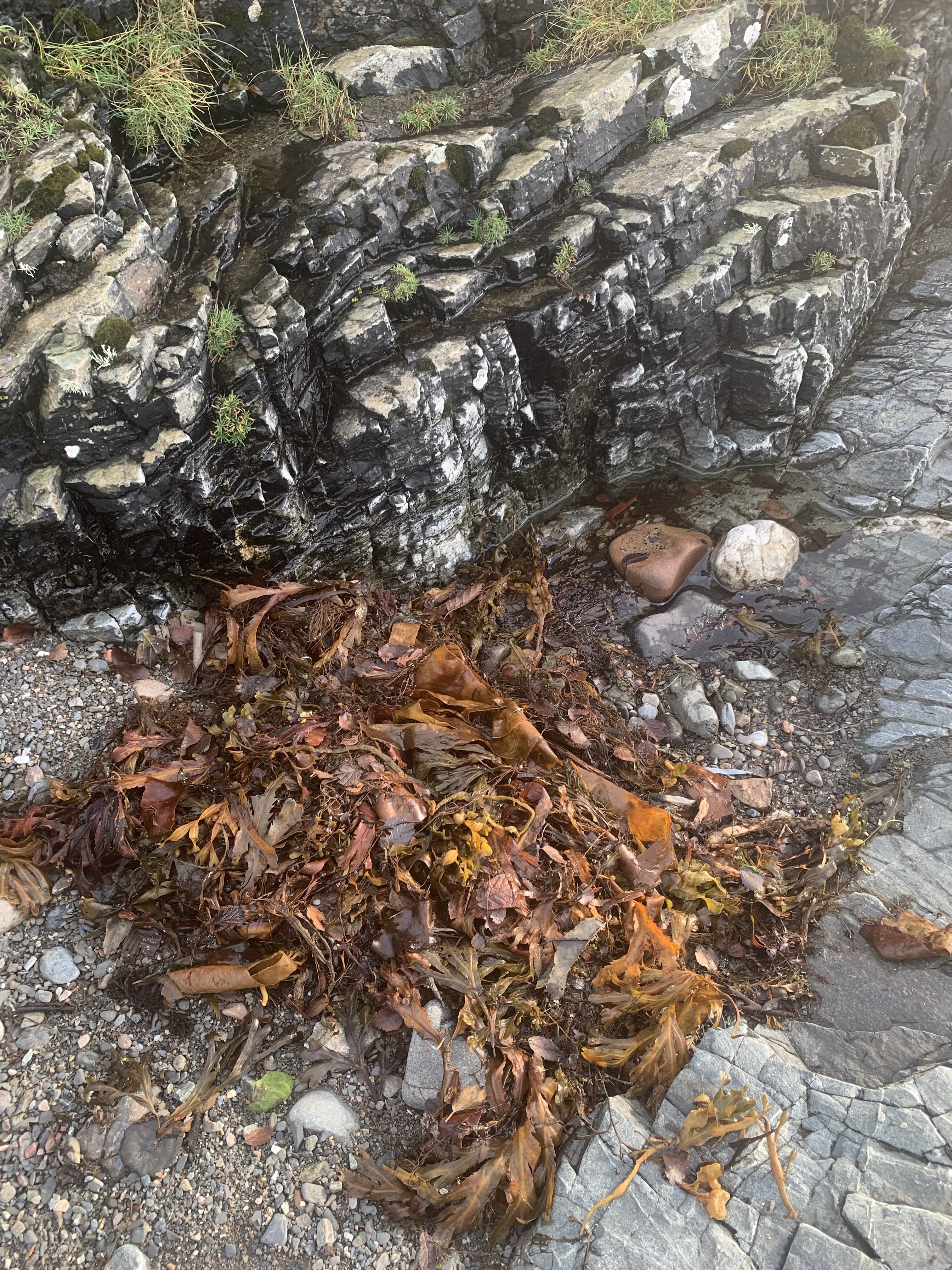
We could see how full of nitrogen the seaweed at the high tide line was – there was a line of nettles growing right out of it!

We plan to use this precious, free resource in two ways on the croft; as a mulch on our no-dig beds to suppress weeds and fertilise the soil directly, and added to our compost bins to add nutrients to the rotting down mix of green and brown matter.

Yesterday we explored the western side of the peninsula looking for beaches where we could collect, wheelbarrow and load a car trailer with ease. We found two great beaches, both full of seaweed, and both highly accessible.

We won’t take too much, as the wildlife on beaches rely upon it, but there seems to be plenty for all. Next time we have a storm we’ll bag up a few feed sacks of it from each beach and bring it back to the croft.

Carrots at last

I’ve been watching the posts of successful gardeners up here with envious eyes as they cropped fistfuls of carrots from their vegetable plots.

Carrots from the croft beds

I have been pulling the odd carrot here and there from my raised bed over the last month to see if there was anything much underneath the profusion of feathery green. I’ve prodded and pulled. To date, all to no avail. Up until this week all I’d found were a few pencil thin offerings.

Checking the beds a few days ago I noticed that some of the carrots were going to seed! Horrors. How could they go to seed on me without delivering as promised?

Armed with my fork I resolved to find edible carrots or else dig them all up and return the space to something more productive.

I’d sown two types from Real Seeds in the spring – the gloriously named Manchester Table carrot and the equally exotic yellow French heritage variety, Jaune D’obtuse. Surely one of them should have produced something by now.

I knew that I hadn’t thinned them very well. When the time came in early summer, something in me just baulked at pulling out young, healthy plants, and much as I understood that it was needed, I also suspected that my half-hearted attempts at thinning hadn’t been nearly rigorous enough. As such I was expecting skinny, weedy specimens at best.

My delight was complete when I delved into the forest of carrot rows and pulled up some good sized carrots.

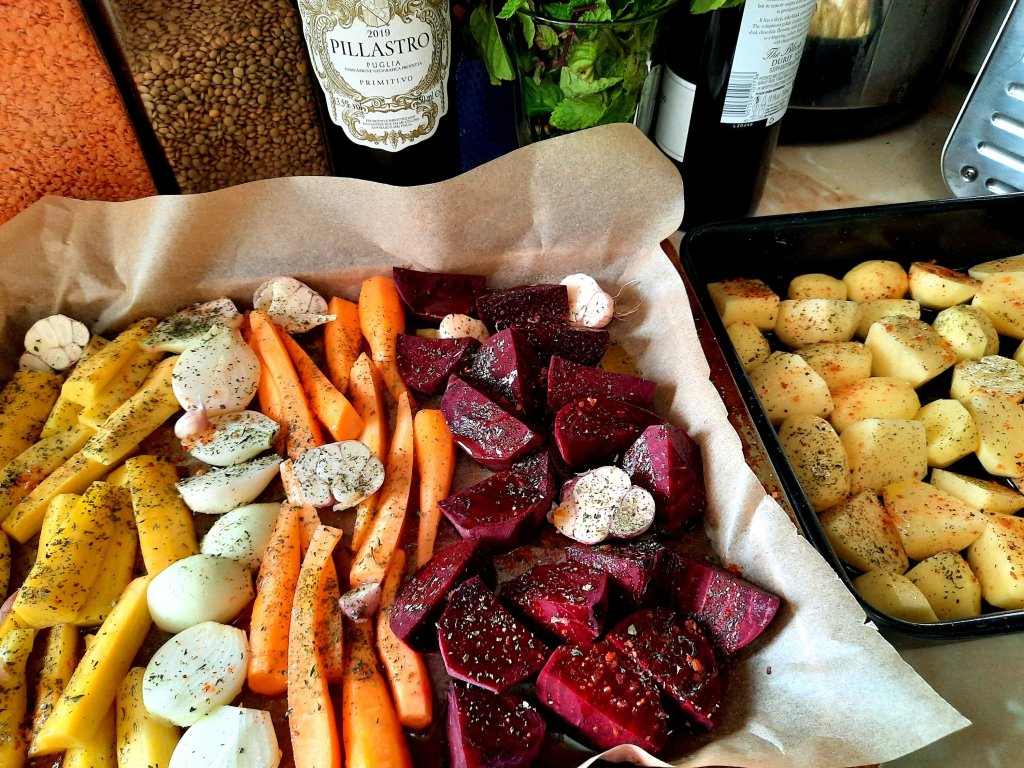
Croft vegetables ready for roasting

We roasted the first of these today with beets, potatoes, onions and garlic, all grown by us. They were delicious.

It’s just a carrot. But it’s my very first homegrown one, and it tasted all the better for that.