Potato Musings

We planted early seed potatoes in March in one of the hugelkultur beds on the croft as part of our “what will grow here” experiment. We’d managed to get the seed potatoes from a fellow crofter, two varieties that he’d recommended called Orla and Nicola, which I promptly mixed up… 🙄
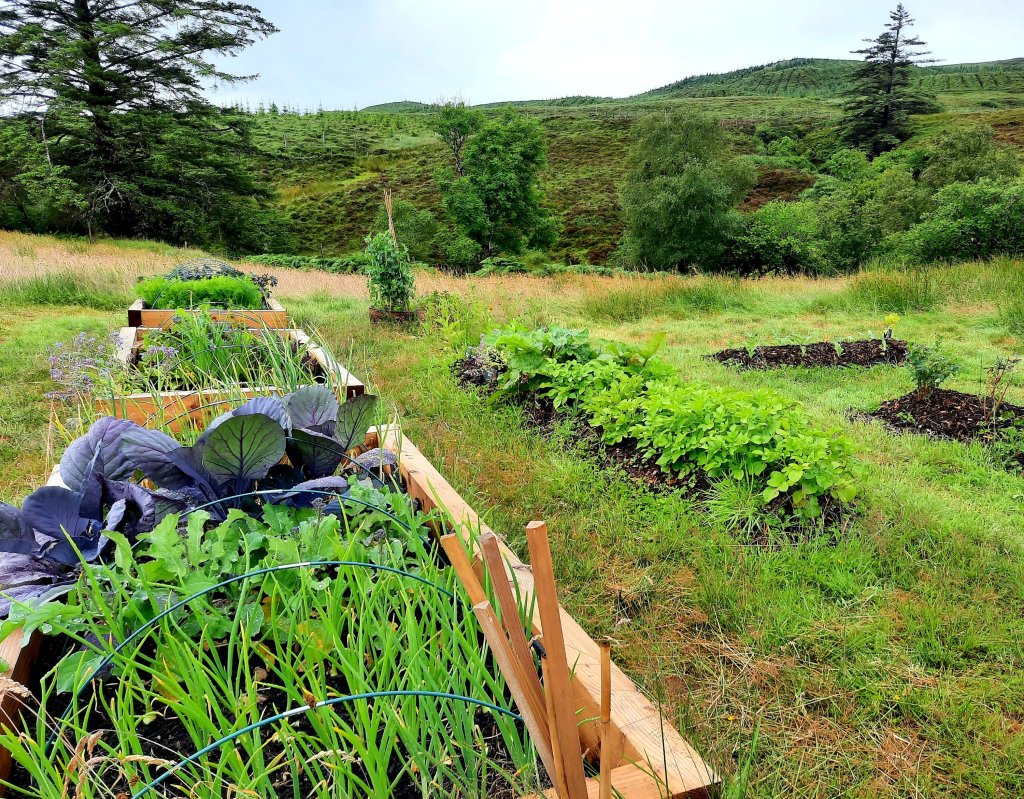
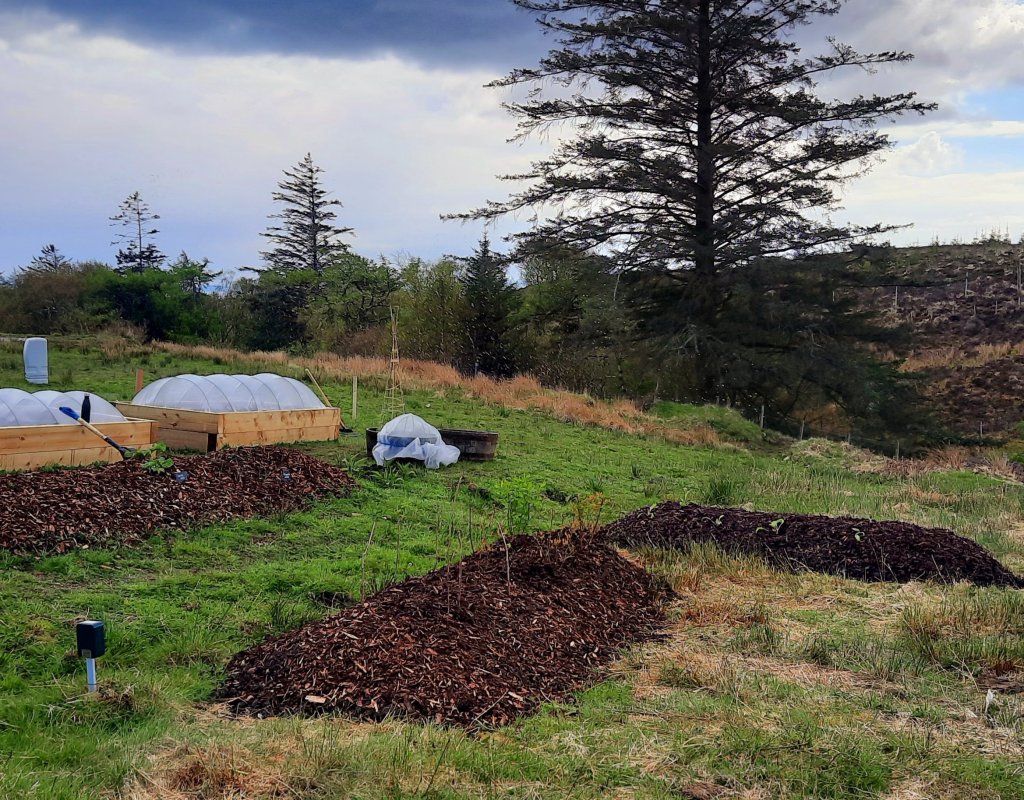
Potatoes in the bed on the right

There were several times that I thought absolutely nothing would come of them.

I watched as the months rolled around and they grew, but very, very slowly. It was a very cold start to the season and I wondered if I’d stunted them completely, never to recover. They didn’t flower, and they didn’t seem to get any bigger.

As we moved into August and we started harvesting lettuces, onions, kale and garlic, the green tops of the potato plants looked no bigger than they had in April, and I started to feel that the experiment had failed.

Husband dug them up on a misty, midgy morning this weekend. I’d decided that we really needed the space for something else to have its chance, and my expectations were low, if zero, to be honest.

When he came in with a couple of bucketfuls of good potatoes I was pleasantly surprised.

It wasn’t a massive haul compared to the harvest that we’d got from the red-skinned potatoes, but it was more than I’d imagined that they’d provide.
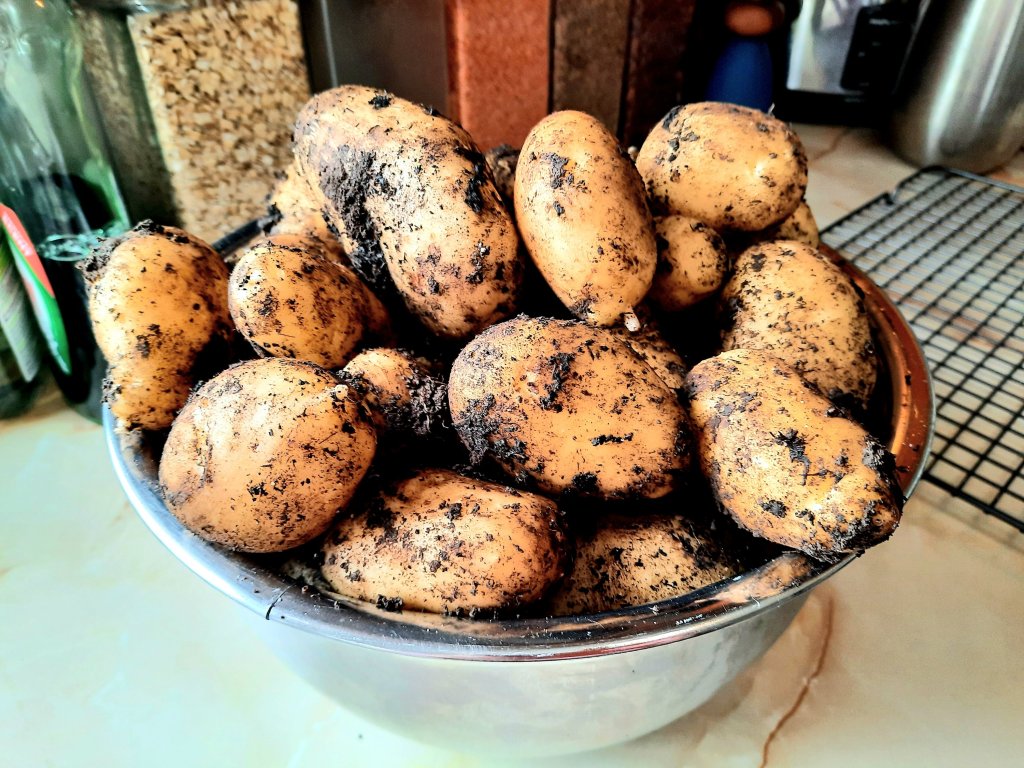
Either Orla or Nicola..

I washed them off and checked them over. Very little slug damage, and only a few green ones, and that because I hadn’t earthed them up. It was a decent crop of good, solid unblemished potatoes.
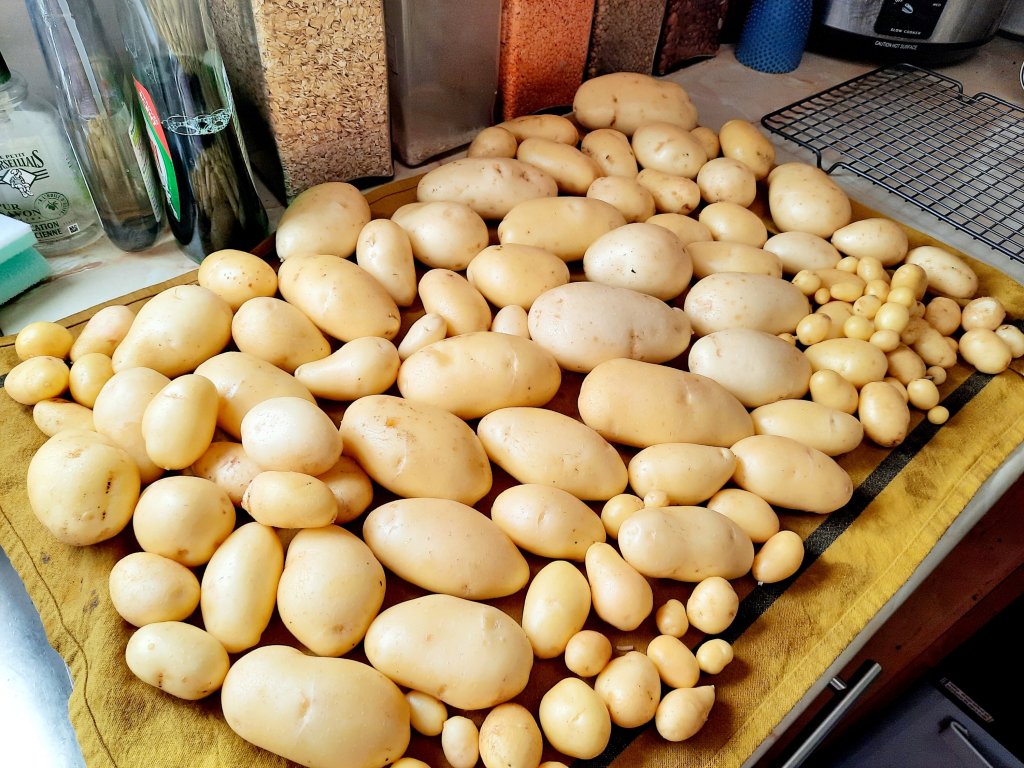
Washed and drying

We will store these in hessian bags in the caravan and eat them over the coming months.

Considering our experience with the reds that we harvested last month and these varieties, I think that potatoes do grow well here, despite the cold springs, so I’m planning to grow a full raised bed of them next year.

They’re such hassle-free plants to grow, and it’s true what they say, that the flavour of home grown potatoes is far superior to shop bought ones.

Lovely little nuggets of potato deliciousness. Nature keeps surprising me.

Sudden Profusion

It’s all growing well in our raised bed experiment. Except the leeks, which are spindly little pencils so far.

I will be patient.

I’m mainly delighted and surprised by the profusion. It seems to have come all of a sudden. We’re cropping lettuces, potatoes, kale, sorrel, purple sprouting brocolli, chives, parsley, dill, mint, and rocket.

The beets, shallots and onions look nearly ready. The garlic is coming along, and the mammoth red cabbage leaves are starting to turn in. The parsnips are growing, as are the carrots.

It’s the rain, long hours of daylight and mild temperatures. Suddenly everything is leaping up as if wanting to make up for the slow, cold start of our late spring.

First crop of potatoes
Kale, beetroots, red-veined sorrel, onions
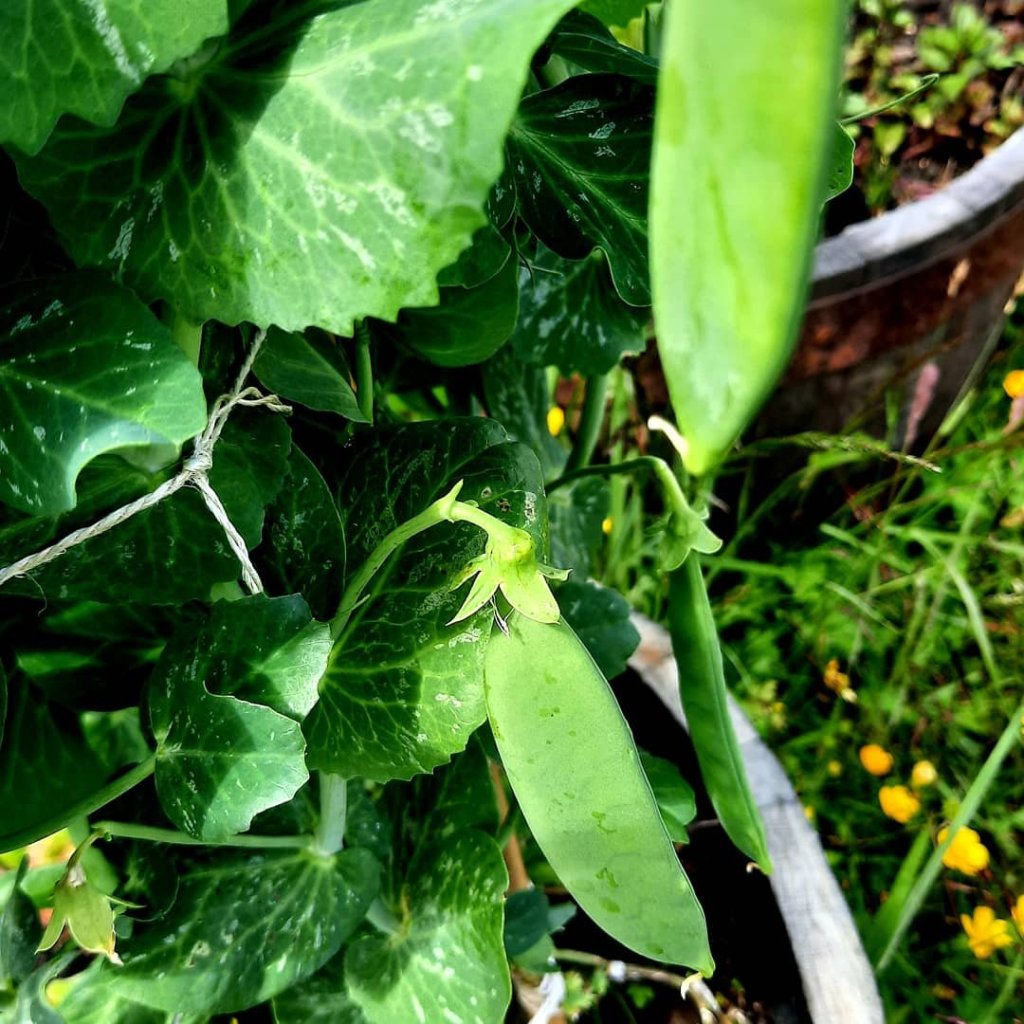
Peas
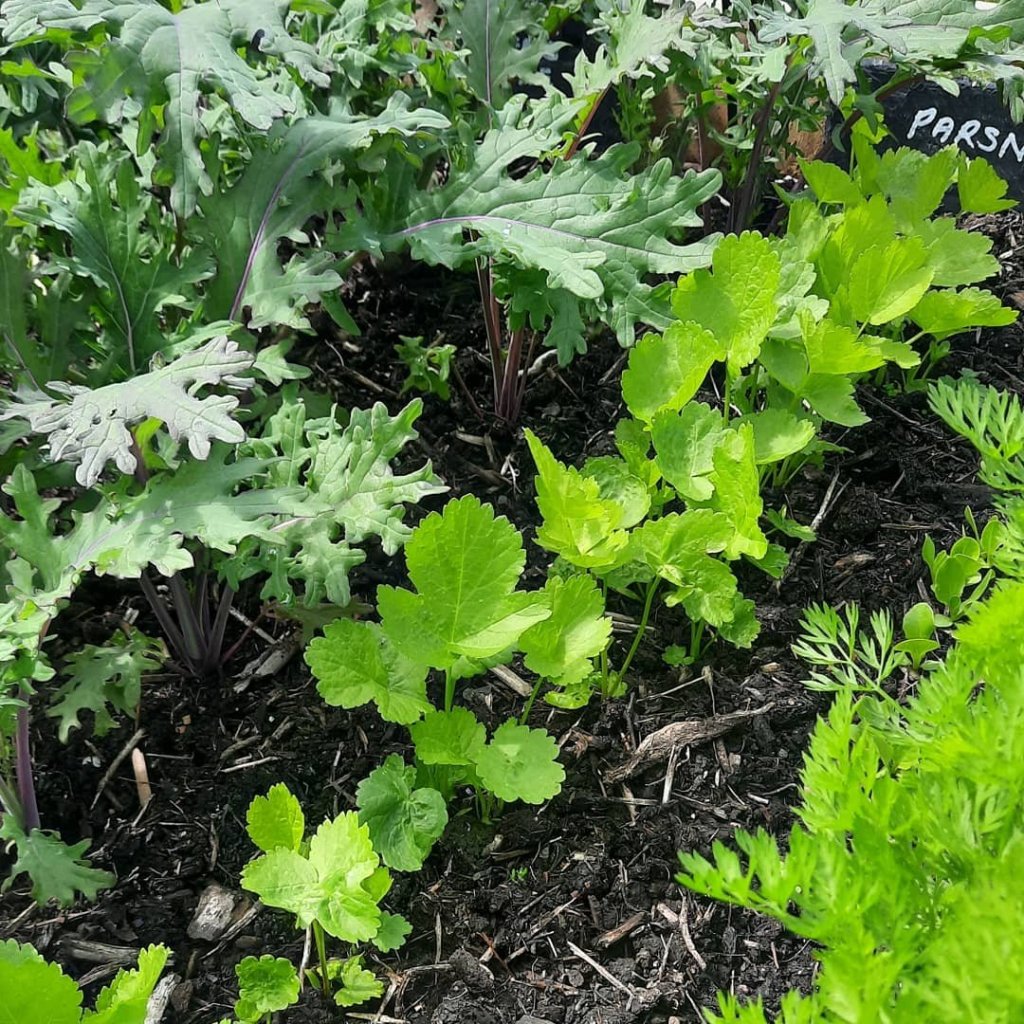
Parsnips
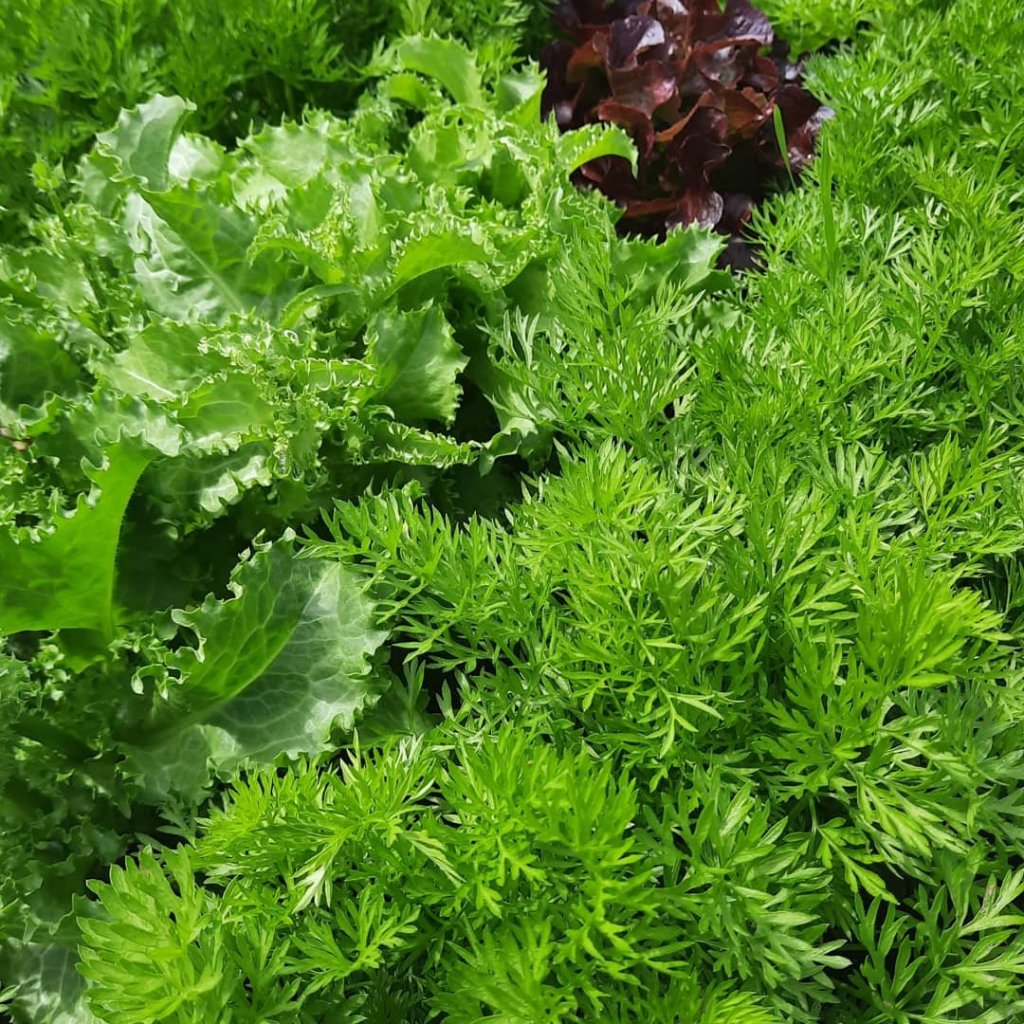
Endive and carrots
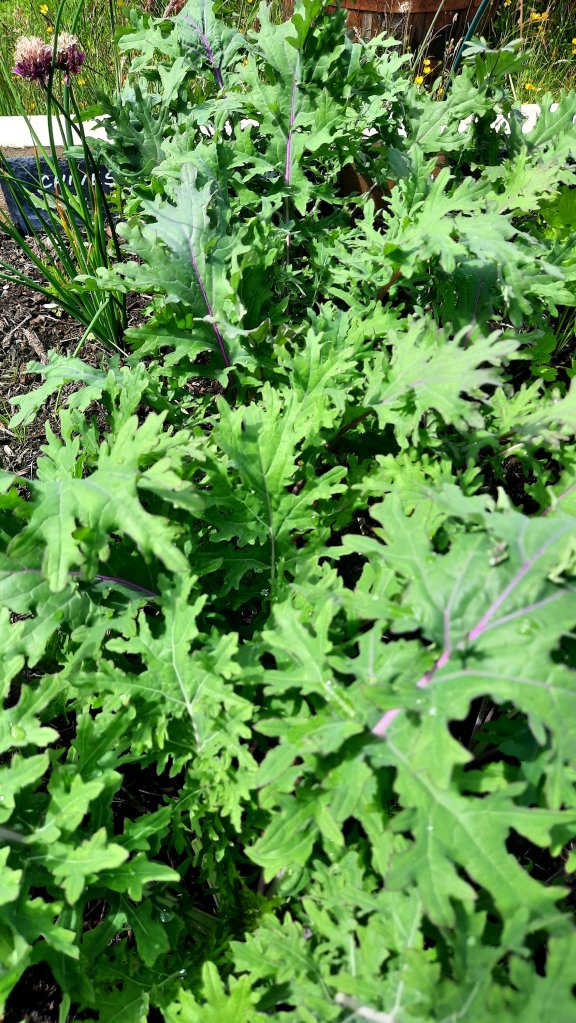
Uncle Bert’s kale
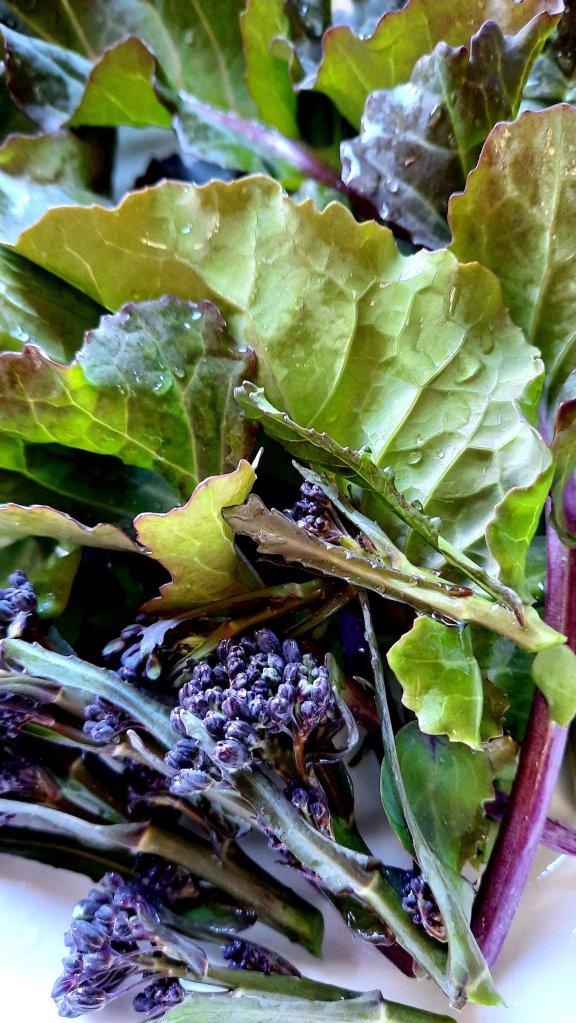
Purple sprouting broccoli

Salad days

Another significant milestone. Our first salad from the croft!

For you rampant food producers out there with your polytunnels, greenhouses and fertile growing beds this is going to seem a bit of a damp squib, but we’ve just cropped our first bowl of salad from the croft and I’m doing my happy dance!

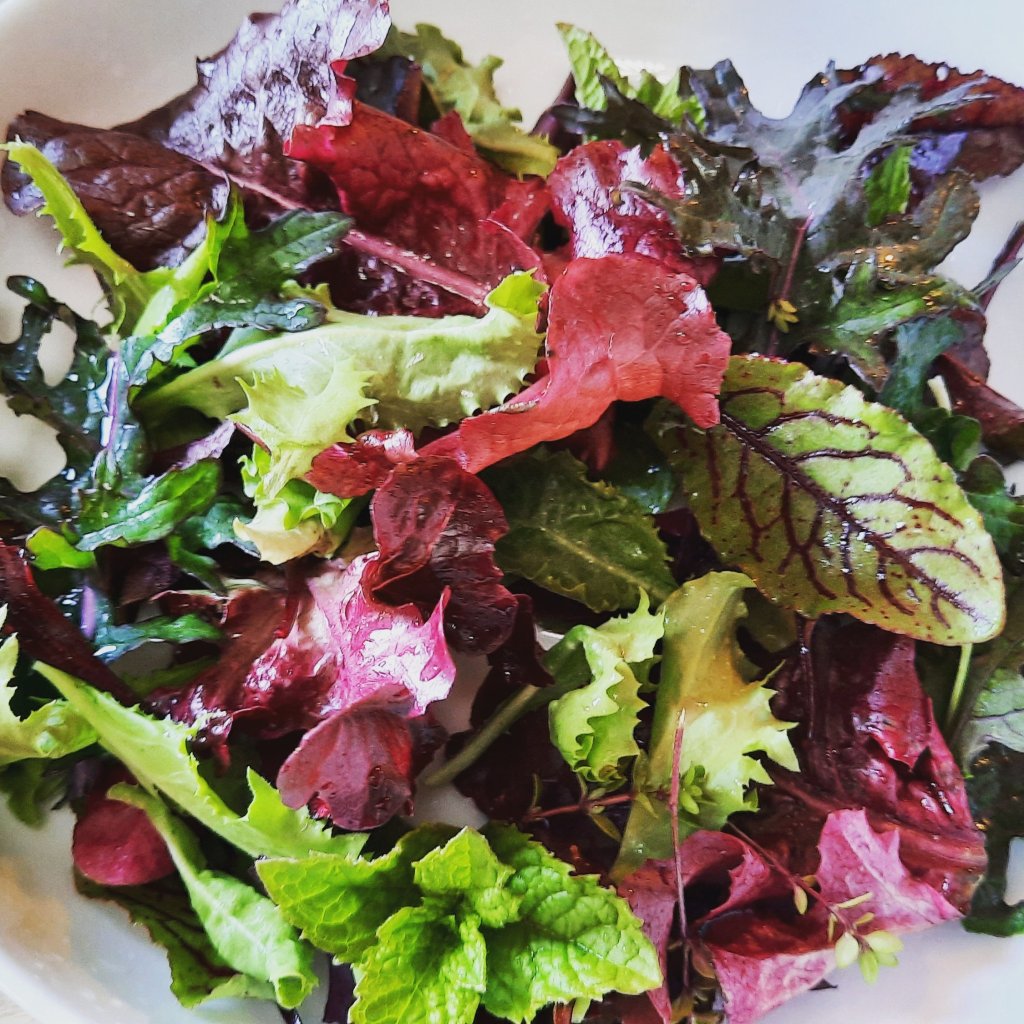
Salad leaves

It’s a mix of endive, red lettuce, red veined sorrel, Uncle Bert’s kale, mint and beetroot leaves. All grown organically outdoors from seed here on the croft.

Other things are growing too in these long, light filled days of summer. I can see a few purple heads of sprouting broccoli emerging, and the potatoes will be ready in the next few weeks.

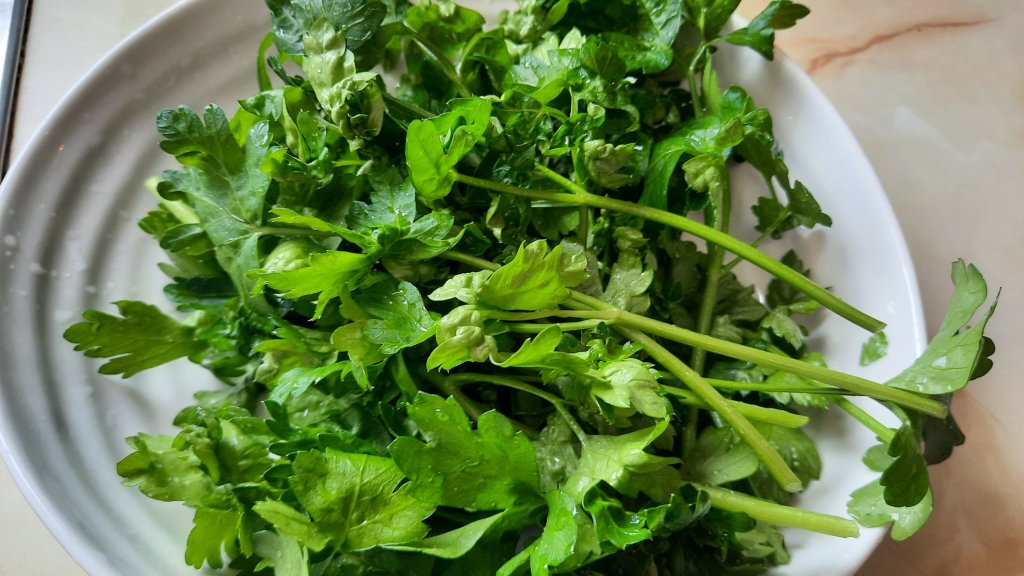
Parsley grown from seed

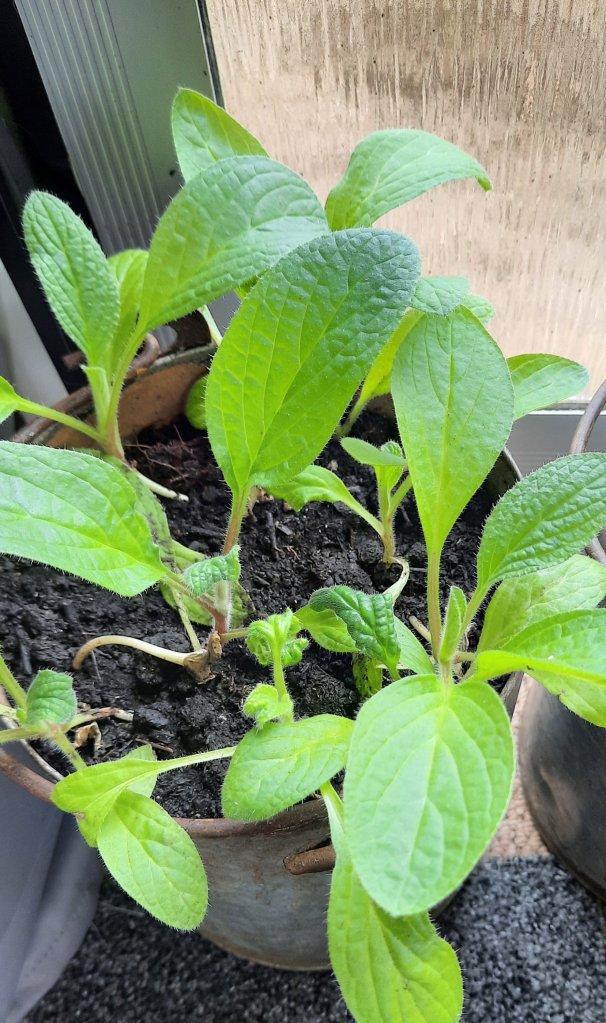
The leeks have been a big fail – they’re still tiny and very slow growing. Kales, cabbage, garlic, beetroot, potatoes, herbs, and salad leaves have all grown well. The carrots and parsnips are small yet but time will tell. The globe artichokes are tiny plants, a few leaves apiece, but they seem to be surviving. I’m hoping that they’ll muscle-up and come into their own next year. The berry bushes are establishing. The borage and comfrey are flowering.

Wonderful comfrey

I’m just relieved that it hasn’t all been some monstrous failure. We’ve had one meal from the croft at least!

The key learning so far is exposure. We knew it, but just didn’t have the time to do it. We need to get windbreaks up and hedging in this autumn before the main growing season next year.

Small milestones on our journey. Forgive a woman’s unseemly crowing.

Sunshine & seedlings

After a very long, cold May we’ve awoken to warmer temperatures and sunshine at last.

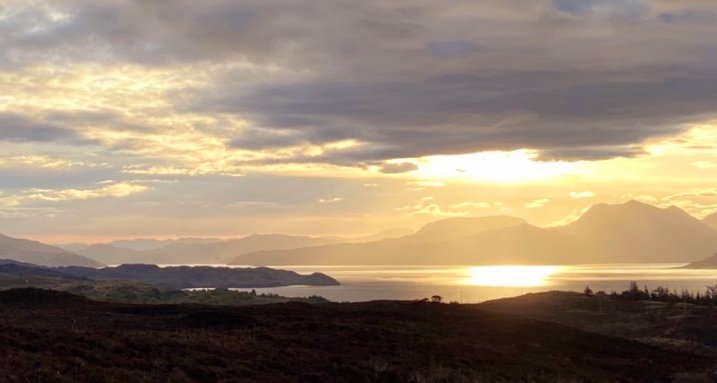
Sunrise over Sleat

This photo was taken by one of our lovely neighbours from the hill above the croft whilst out on a 5am run this week. Not a sight I’d have been awake enough to capture. Thank you, Jonny.

The sun is rising before 5am now and not setting until around 11pm, giving us long, soft, light-filled days. We have another month to go before the summer solstice, so there’s more to come. It’s already not fully dark at nights and the long, light evenings on the croft are magical, if a bit chilly up till now.

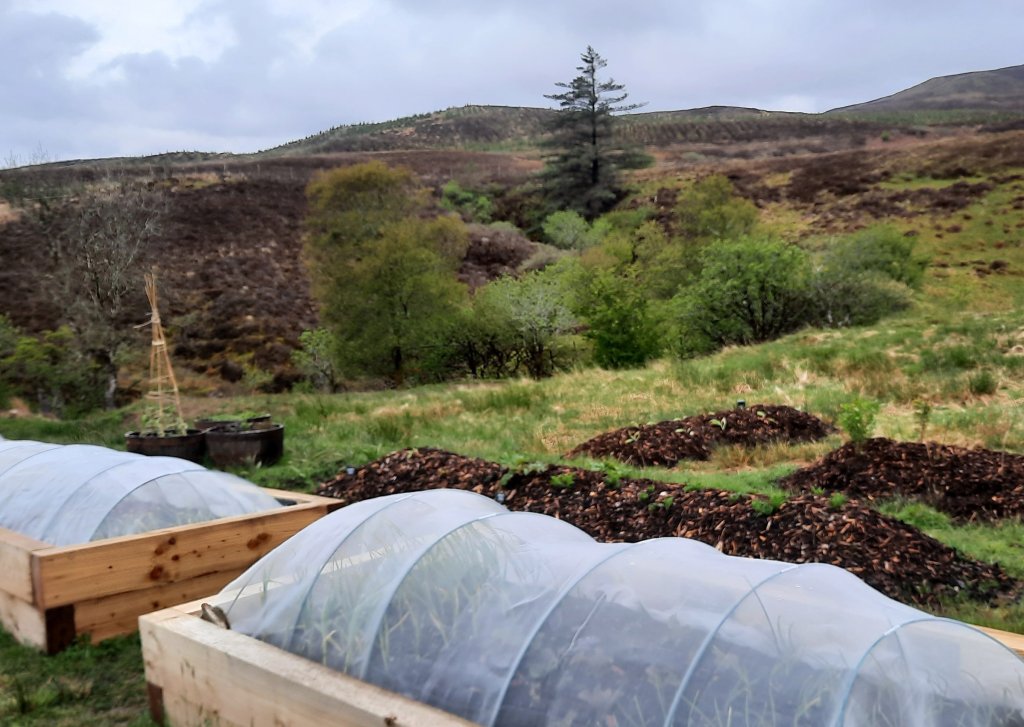
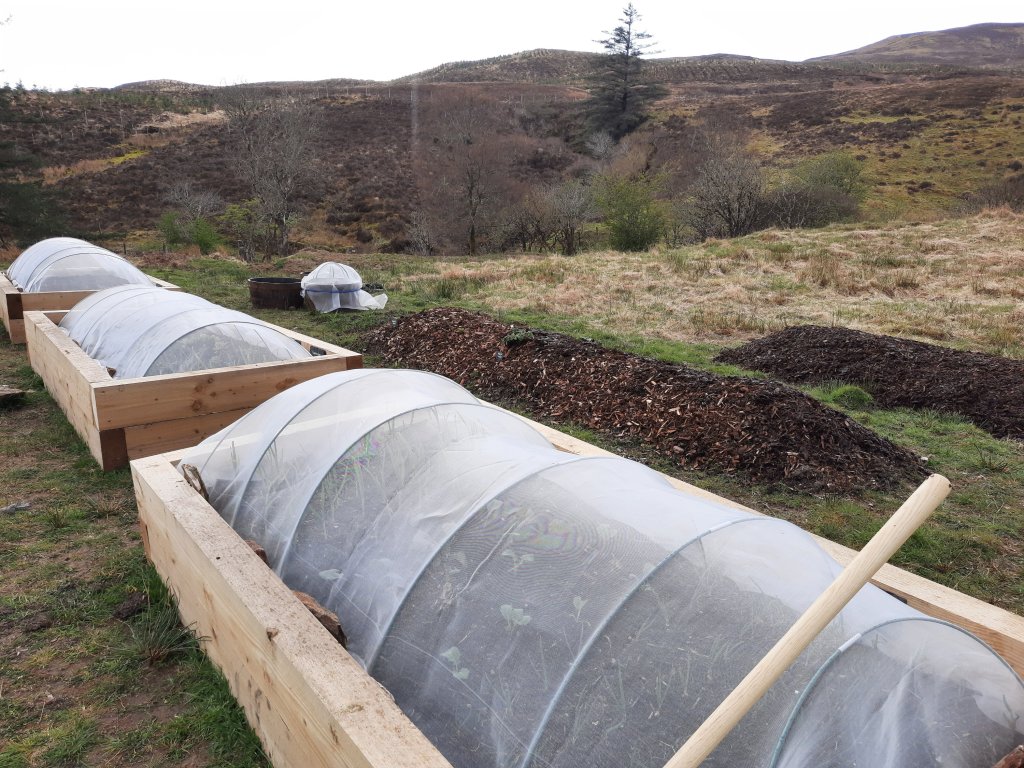
Raised beds on the croft

We have cuckoos and swallows, linnets and skylarks, bluebells and wild garlic in the hedgerows. Suddenly everything is bursting into green leaf, and it’s feeling at last as if we’re on the brink of early summer.

First day of exposure! Shallots, beetroot, red veined sorrel and garlic

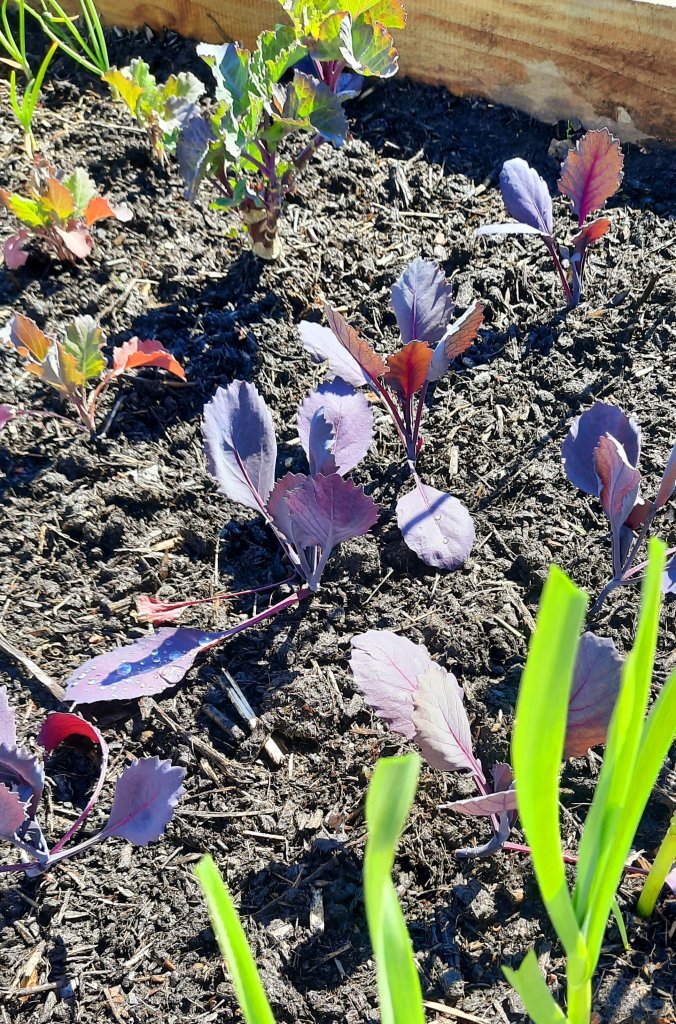
I’ve taken the mesh off the vegetable beds today to get a proper look at what’s survived through this very dry, cold spring. Some things are looking very sad for themselves (leeks, lettuces I’m looking at you) but others seem to have pulled through quite robustly (full marks red cabbage, kale, beetroot, potatoes, purple sprouting broccoli and shallots).

Taunton Deane kale, red cabbage and onions

Let’s hope that summer is on its way at long last!

Herbage

I’ve been keen to grow as many herbs as possible.

We use lots of fresh herbs in our home cooking and they’re relatively expensive to buy from the small supermarket locally here , IF you can get them. Anything beyond parsley, mint and floppy-leaved basil doesn’t seem to make an appearance.

Tashkent mint

We use tons of mint, dill, parsley, chives, thyme, rosemary and coriander, so it makes sense to grow it on the croft if we can.

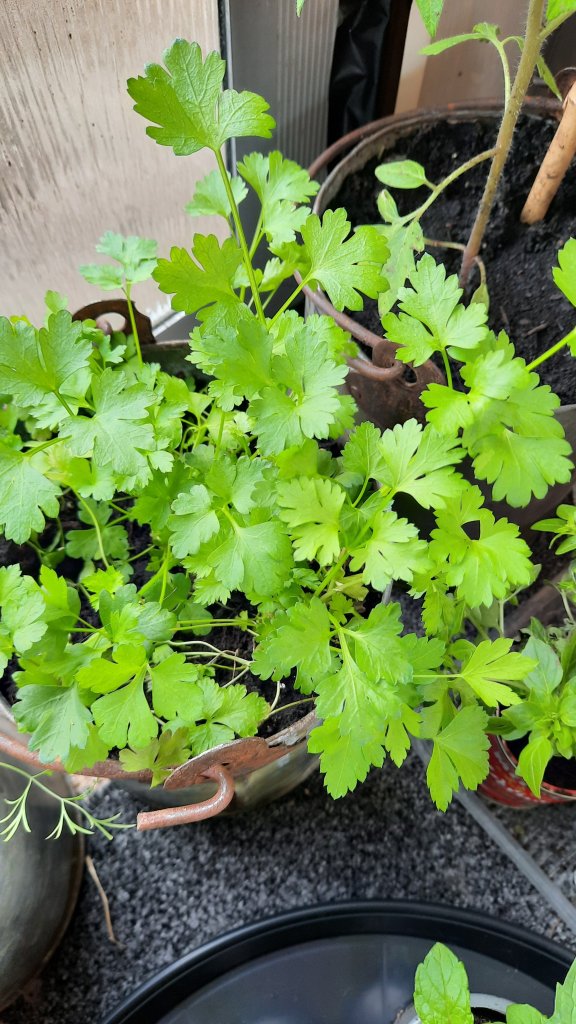
Flat-leaved parsley grown from seed

Mine has definitely been the innocence of the novice. I germinated flat-leaved parsley and mint from seed here in the caravan spare room in March.

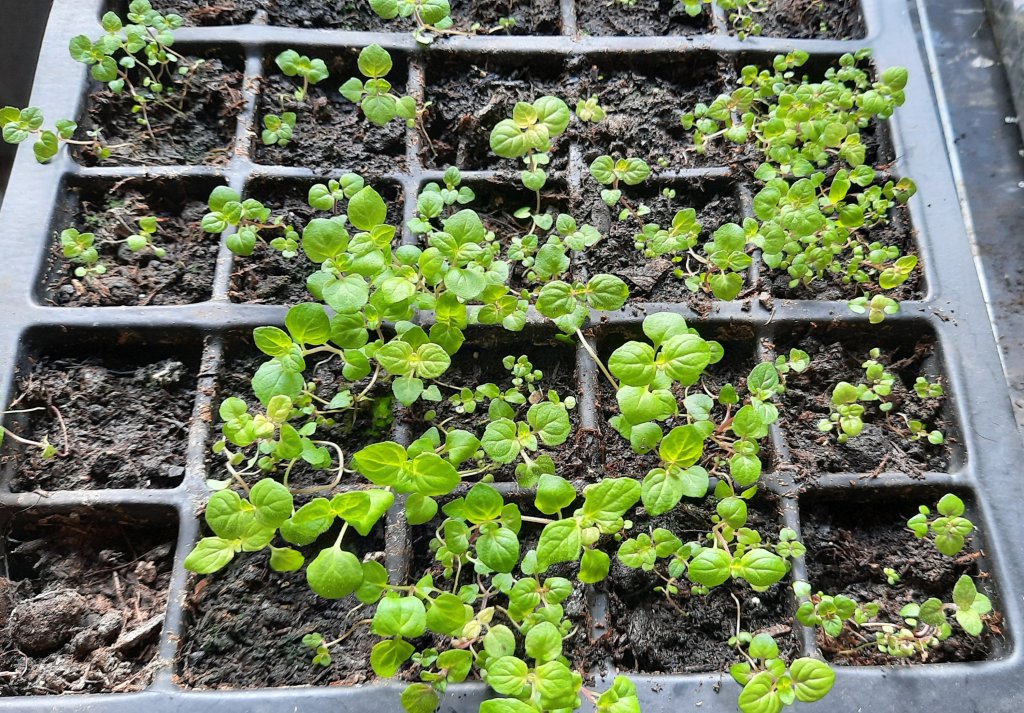
Each is an incredibly slow process at 57 degrees north, and it was only after struggling for months did I read that almost nobody grows mint from seed as it’s so much easier to propogate from cuttings…ah well. We live and learn.

Peppermint seedlings after three months of snails pace growth. The spearmint is even tinier..

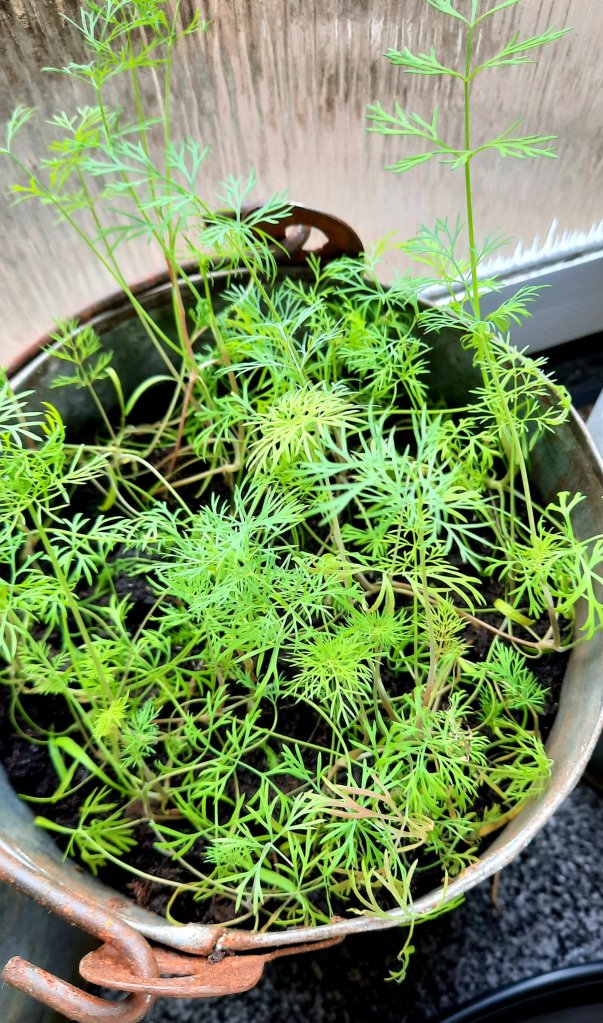
I’m hoping it will all be easier once we have the polycrub in place. Next season. Meanwhile, we’ve had some other successes – the lemon thyme and dill have grown well.

Dill the Dog

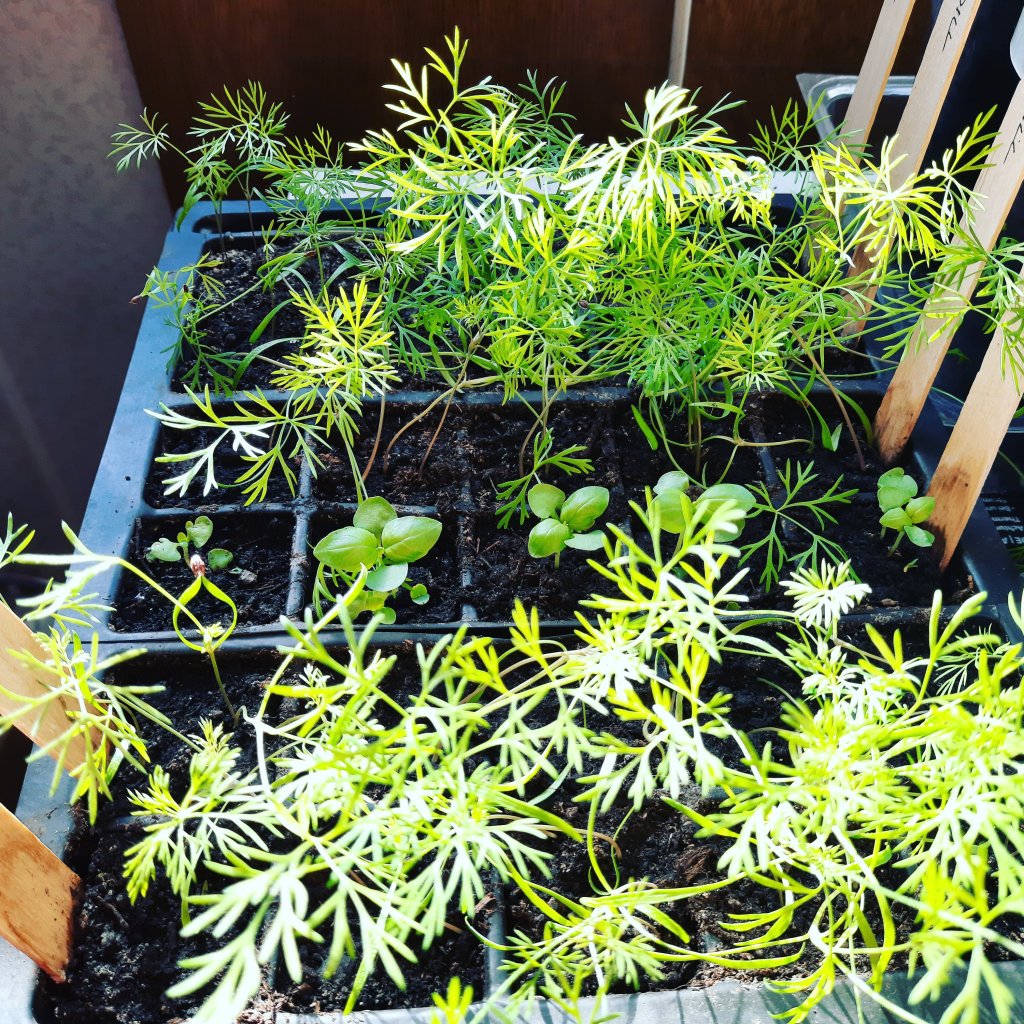
Onwards and upwards! At last I’m going to plant out the mint, borage, rosemary and dill. The last frost date has passed and as soon as the rain stops, they’re going out.

Borage

I’ve been hardening them off, of course. I’m not going to throw them to the wolves like Spartan Mothers leaving their babies on the hillside overnight to see if they can survive on their own. Not quite. But it’s time that they manned up. Or womanned up. Whatever.

They’re going out.

First meal outdoors

It was a long, hard day after a heavy week of work on the build and the croft. We decided to add a fifth vegetable bed to the growing area (remind me I said we’d start small this year? 😳) so that I could plant up my globe artichoke seedlings.

These perennials grow huge, so they ideally needed a bed of their own, which I wanted to site perpendicular to the rest to add a kind of windbreak effect.

New veg bed

For speed, and cost (the price of wood is crazy right now) we decided to use what we had on the croft and make another hugelkutur bed. The existing ones are working well for us, and we still have lots of rushes and soil that we can reuse.

Countless wheelbarrow loads of cardboard, rushes, soil, compost and woodchip later we had another bed ready for planting. It takes us about  four hours to build one of these, and it’s heavy, manual work.

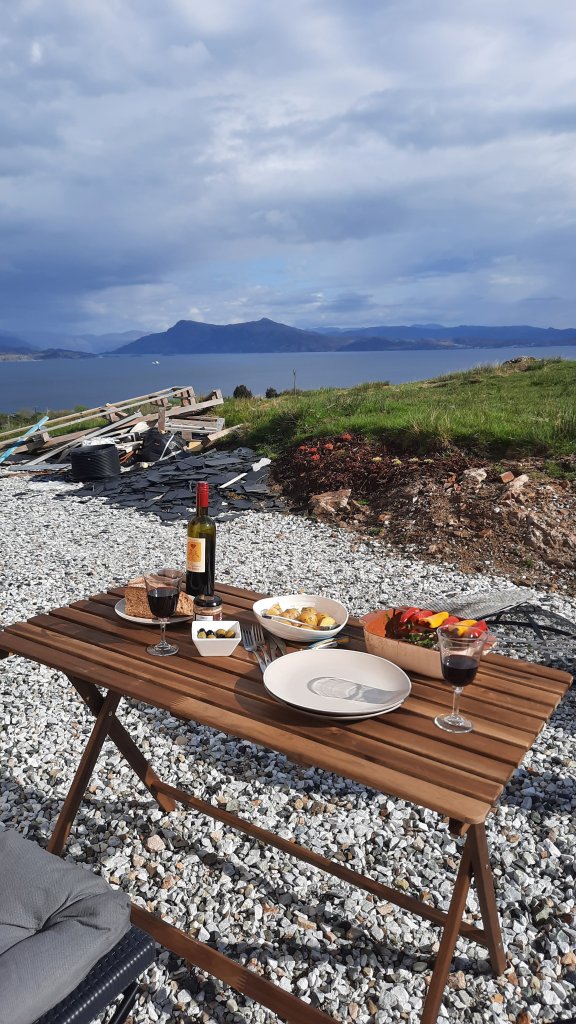
We decided that we deserved a bit of relaxation and supper outside after all that exertion. We carried out some chairs and a fold-up table and positioned them amongst the building rubbish.

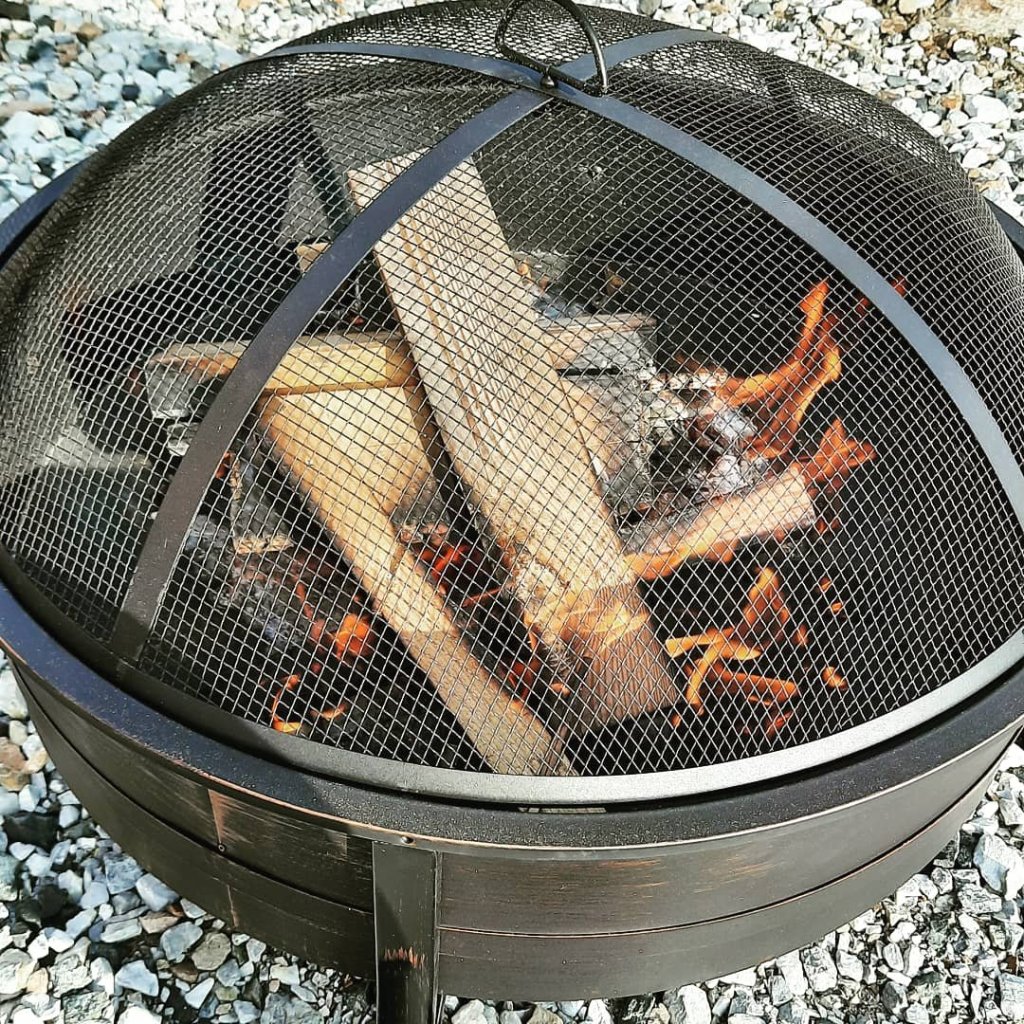
We’d recently bought a firepit BBQ which needed testing, so we fired her up and cooked supper on it. There’s nothing quite like the taste of real charcoal grilled Scottish steaks eaten outdoors… Everything tastes better in the open air, I think.

It was lovely to relax together eating, drinking and watching the incredible vista of sea and sky in front of us.

We added some building wood scraps to the fire to make a bit of a blaze after the charcoal had died down, and sat toasting our toes with a small glass of whisky, watching the rain and rainbows sweep across the Knoydart peninsula.

Such incredible natural beauty. Feeling very lucky to be here.

Arctic conditions at 57 degrees north

It’s been a very cold spring so far.

We continue to have frosty mornings and very cold nights, so it’s not been advisable to put out any tender plants without serious fleecing.

My “plant room” in the caravan is still full, and although I’ve planted out a few purple spouting broccoli and beetroot plants, some cabbage, kale, and some sorrel, everything else is under wraps for a bit longer. I’ve direct sown carrots and parsnips into the beds but nothing has germinated yet…. I don’t blame it.

It did give us the opportunity to make another hugelkutur bed with cut reeds as the base, as I’ve estimated that I’ve still grown too much to fit into our prepared growing space. Always a learning, eh?

Everything is heavily mulched with woodchip to try and minimise soil runoff. We’ve almost gotten through a few tonne bags of that already, and I’ve still got the paths around the beds to lay..

Small beginnings. And many learnings.

Growing beds

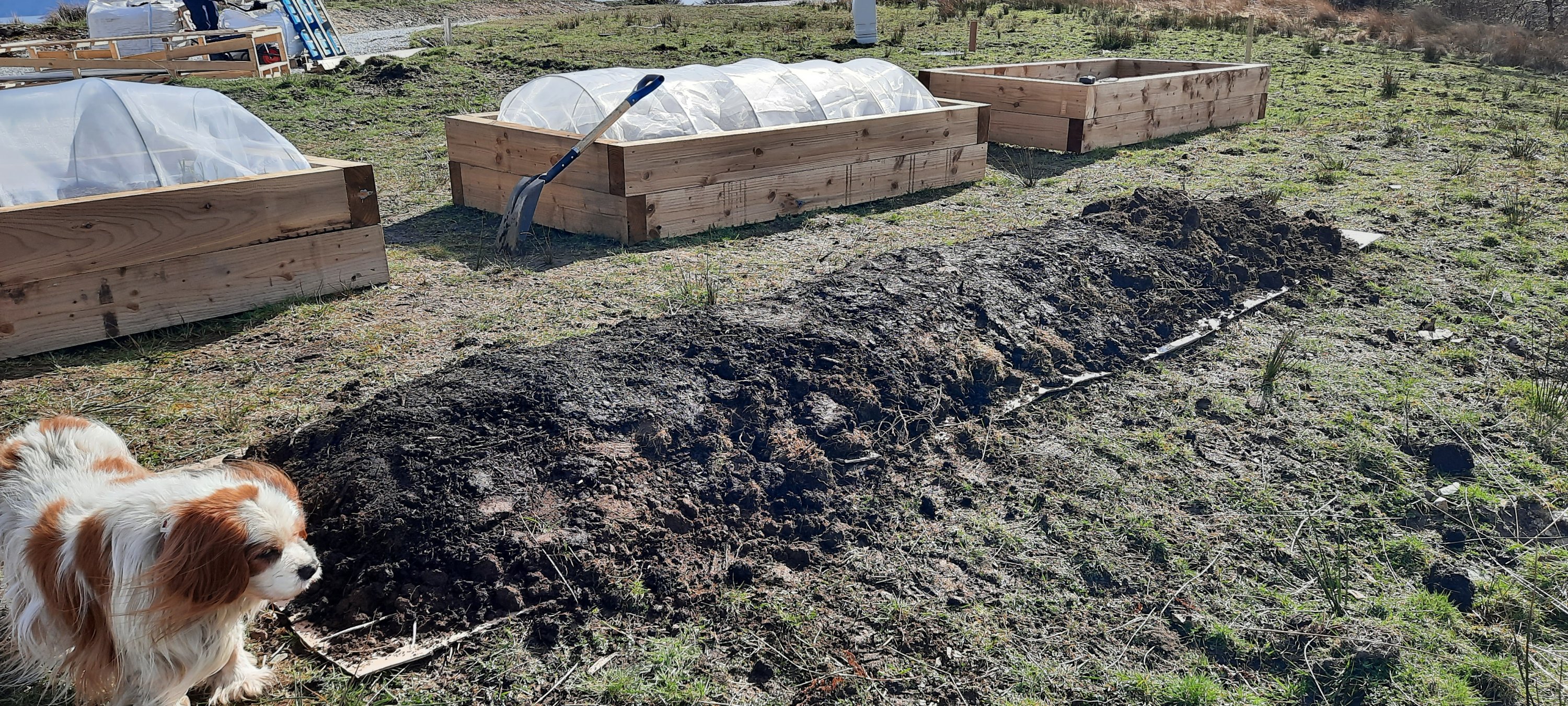
We had a dry, sunny, spring-like day this week and we decided to build a hugelkutur bed alongside the wooden raised beds that we’d built last month.

These are permaculture growing beds built over a core of wood or brash, with turf, soil and compost layers. They allow plants to grow where the soil would otherwise be too shallow.

The theory is that the central core of wood slowly decomposes, releasing nutrients into the bed. We will be adding to it annually with top-dressing to keep its depth consistent. This is a no-dig bed.

We built a small 4m bed, starting with a cardboard base to try and suppress the rush growth, and dragged up dead branches from the copse at the western edge of the croft to form the core.

We added layers of soil, compost and bark chip mulch until we had something about 60 cm deep. Some hugelkutur beds are much taller than this, like giant earth Toblerones, but as an experiment we figured that this was big enough.

We’ve planted up the rhubarb crowns in it and I’m eyeing the rest of the bed up for potatoes and perhaps kale over the coming weeks.

We’ll need to lay bark chip paths between the beds as it’s already starting to look like the Somme with all the wheelbarrow and wellie work recently churning up the mud.

If this works I can see more of these being constructed later in the year.

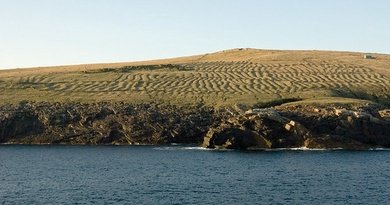
It’s a simple idea and reminds me very much of the lazybeds or runrigs on the hillside above the croft where previous generations of farmers scraped enough soil into mounds to grow food.

These ancient forms of land tenure are said to predate the crofting system, and it appeals to me that this more modern system of permaculture is really the same thing.

The Vault of Black Gold

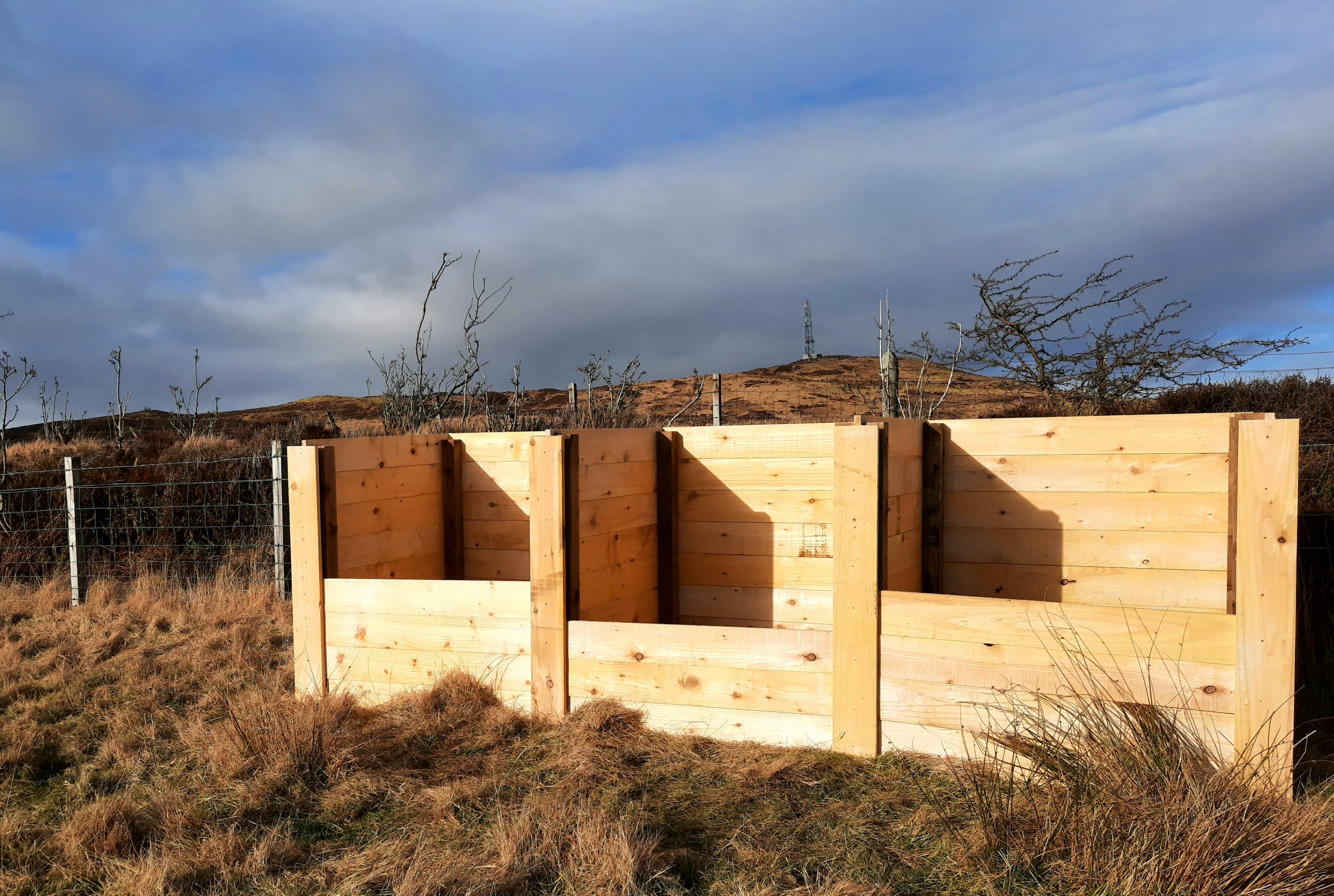
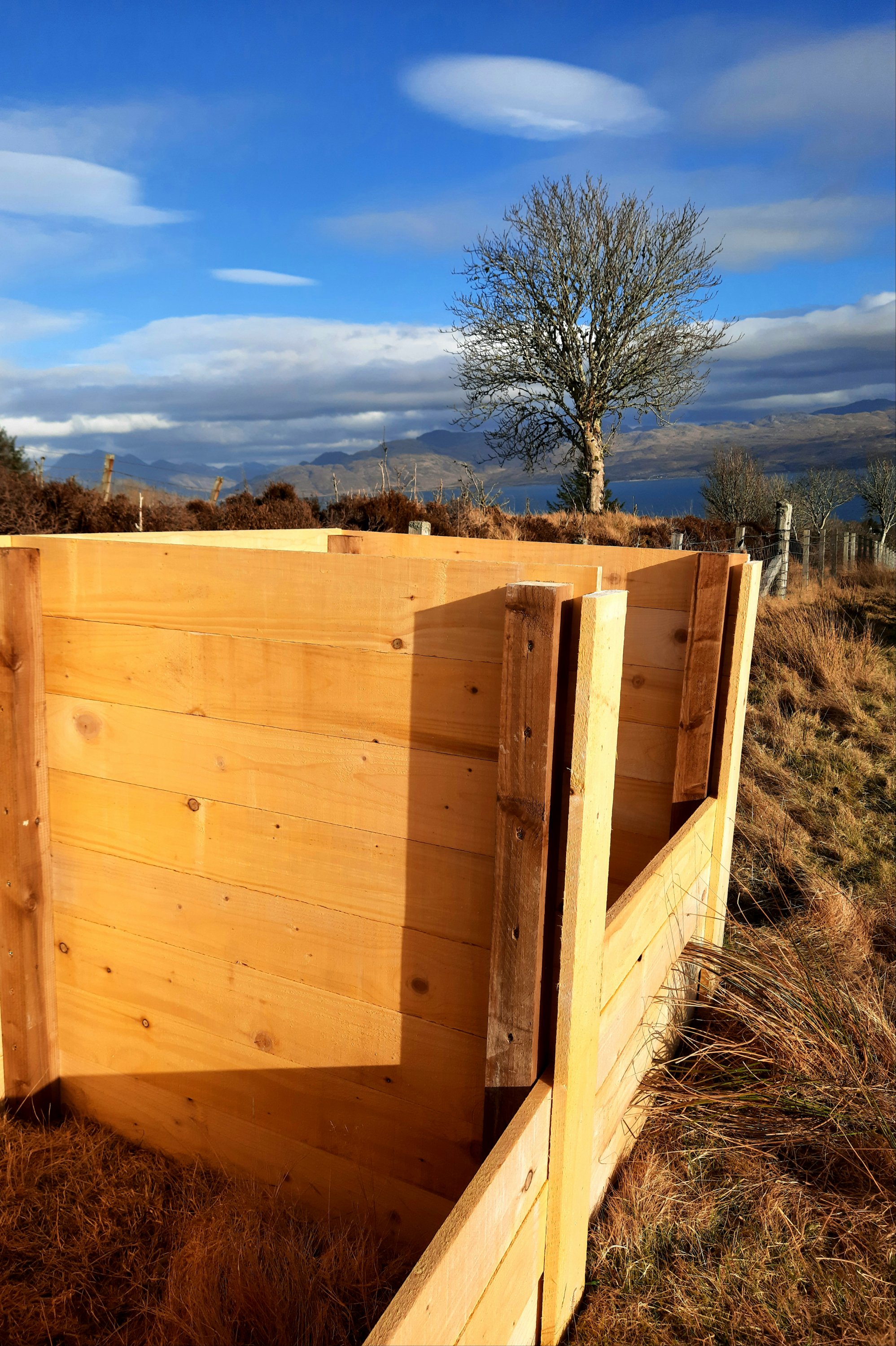
On a couple of dry days this week husband built and put up a compost bin.

I say a compost bin, it’s more a super deluxe compost city. The worms in this complex will be living in ultimate compost style, the Des Res of Decomposition, the Mansion of Manure, the Penthouse of Poo, our very own Vault of Black Gold! 😉

With three bays, removable front slats for easier inspection and turning, and a roof (yet to come) to protect from the worst of the elements, I’m so pleased with how it’s turned out.

We have a tonne of organic, peat free bought compost with which we’ll start the beds off this year, and we’ll layer the homegrown stuff with what’s left of this.

I’ve found a local lady with donkeys on her croft who is happy to give us bags of straw and donkey poo, and Angus, our village crofter keeps cows, so I think maybe a conversation there could be had too.

That and applications of seaweed from the local shoreline as well as vegetable waste and croft scythings and I’m really hopeful that it will be successful.

With a bit of luck from the soil gods this time next year we’ll be digging in our very own black gold.. 😊

Herbage and Seeds

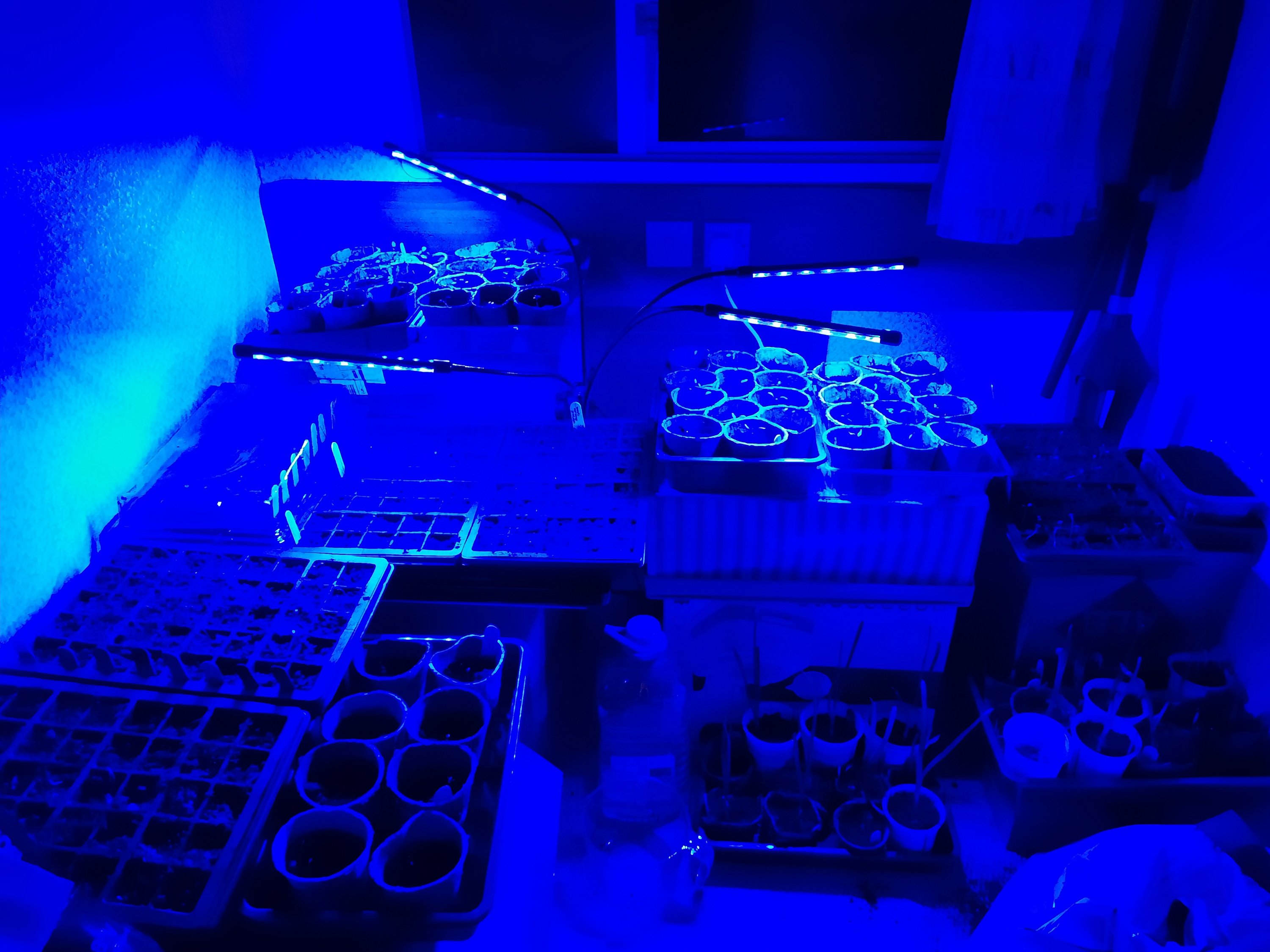
The urge to grow new things is very strong. We have no greenhouse or polytunnel yet, so I’ve set up a small space in one of the rooms in the caravan to start my seeds off. Luckily this room still has the old carpet down so it doesn’t matter if it gets grubby.

Balanced somewhat precariously on old cardboard boxes and a heat mat, and wedged between boxes of spare clothes and the hoover, are my first trays of seedlings. The blue wands of wonder are moved around to those plants that seem to need them most. It’s not exactly a professional set up, but it will do!

I’ve tried to choose plant varieties carefully to ensure that they’re hardy for our exposed site, but this first year is going to be very much an experiment.

I know that I’ve probably started too early for these northern altitudes, but I was itching to start. If they get too leggy I’ll just have to re-sow.

I have garlic ready to plant out. We eat lots of that, and I have more to plant directly into the soil once the beds are ready.

I have seed potatoes chitting ready for planting in the coming weeks. A local crofter recommended two varieties that I’m going to be trying, with good flavour but also good blight resistance.

I also have beetroot, chard, leeks, sorrel, parsley (it germinated! Hallelujah!) and Sutherland kale sown and just starting to grow.

Husband has been working on the construction for our compost bays too, which we need to start as soon as possible. The price of good compost in the quantities we will need is eye-watering, and I’d much rather we made our own.

I’ve also just finished reading this book. A total inspiration, a really interesting story and full of very practical advice about growing abundantly, organically and using no-dig principals. It’s just come out, so do source a copy if you get the chance.