Hedging our bets

One of our neighbours a few miles away is Phil at Wildlife Croft Skye, a woodland croft, and an inspiration of ours.

He and his family have been planting and managing their croft for years now using sustainable regenerative principles and have a wonderful. maturing array of local trees growing on their land. He propagates and grows using locally collected cuttings and seeds.

Recently he advertised that he was offering some of his hedging, shrub and young tree seedlings for sale, and we jumped at the chance to get our hedging started before Spring advanced too far.

Having tree stock generated from locally grown seeds means a good chance that they’ll thrive in our wet and windy conditions, having grown in the same.
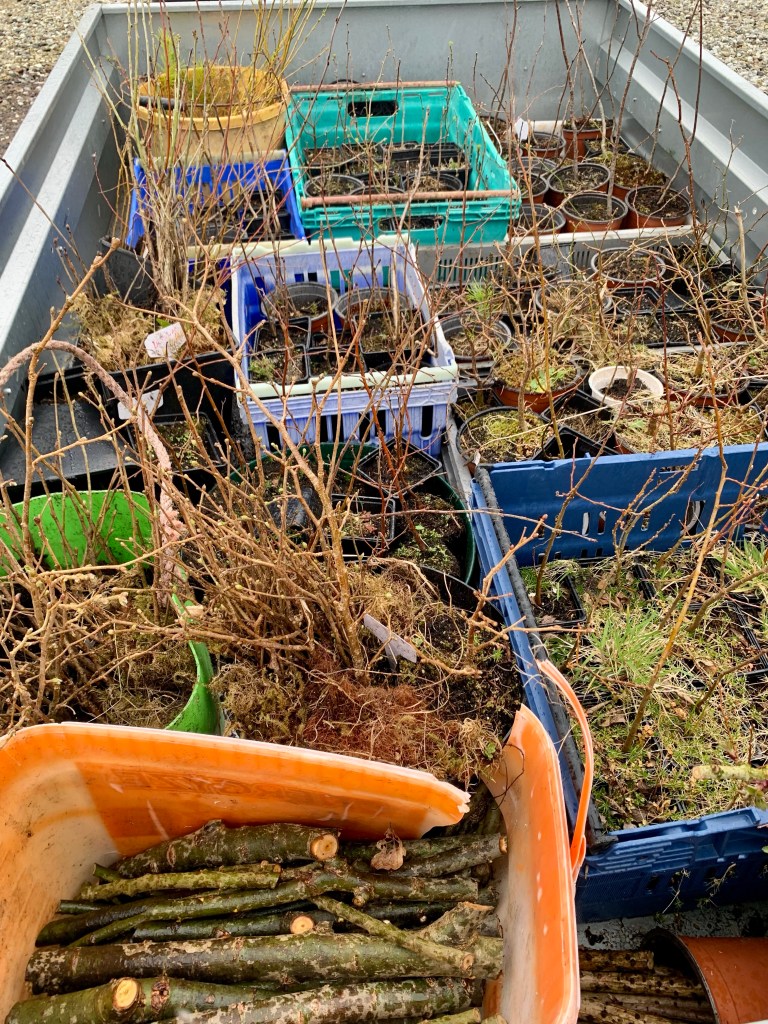
We bought a trailer load of cuttings and seedlings so that we could start hedging inside the newly installed deer-fenced area of the croft. The ground is saturated at the moment now that the snows have cleared, making it a good time to dig these in (and slightly less work, although poor husbands back is disputing that this morning!)

This is a good mix of Rowan, Oak, Scot’s Pine, Hawthorn, Grey Willow, Wych Elm, Hazel,
Purple Willow, Downy Birch, Holly, Goat Willow,
Elder, Honeysuckle and Dog rose.
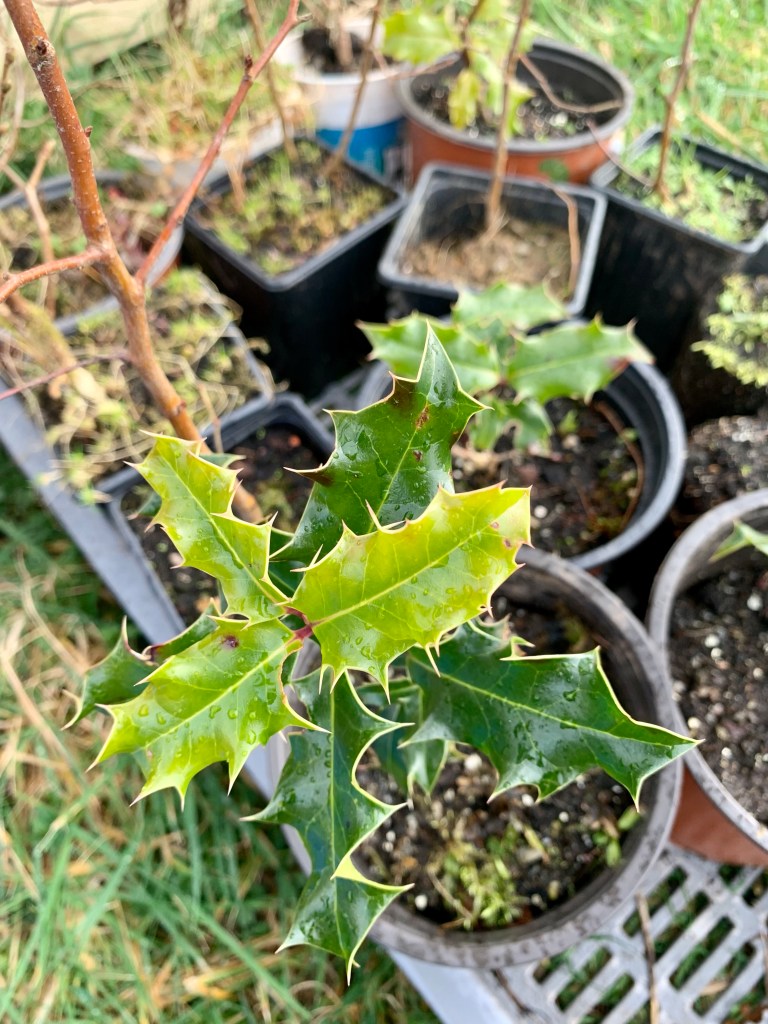
Husband and Phil worked through the rain heroically to clear and plant most of them on the croft yesterday. They’ll eventually provide shelter from the wind for our vegetable beds and the fruit orchard that we plan to plant next spring.

They’ll also most importantly provide a haven for wildlife, insects and birds, and food in the form of holly, elderberries, brambles, rosehips and rowan berries. Bringing this croft back from bare land to a richer, more diverse ecosystem is important to us both, and depends upon this.

It feels good to be taking the first steps towards our ultimate goal of a woodland croft. It’s an enormous task, but we’re determined. Watching David Attenborough on Wild Isles over the last week just reinforces how much we’ve lost already and how important every patch of nature is.
The Walnut Tree

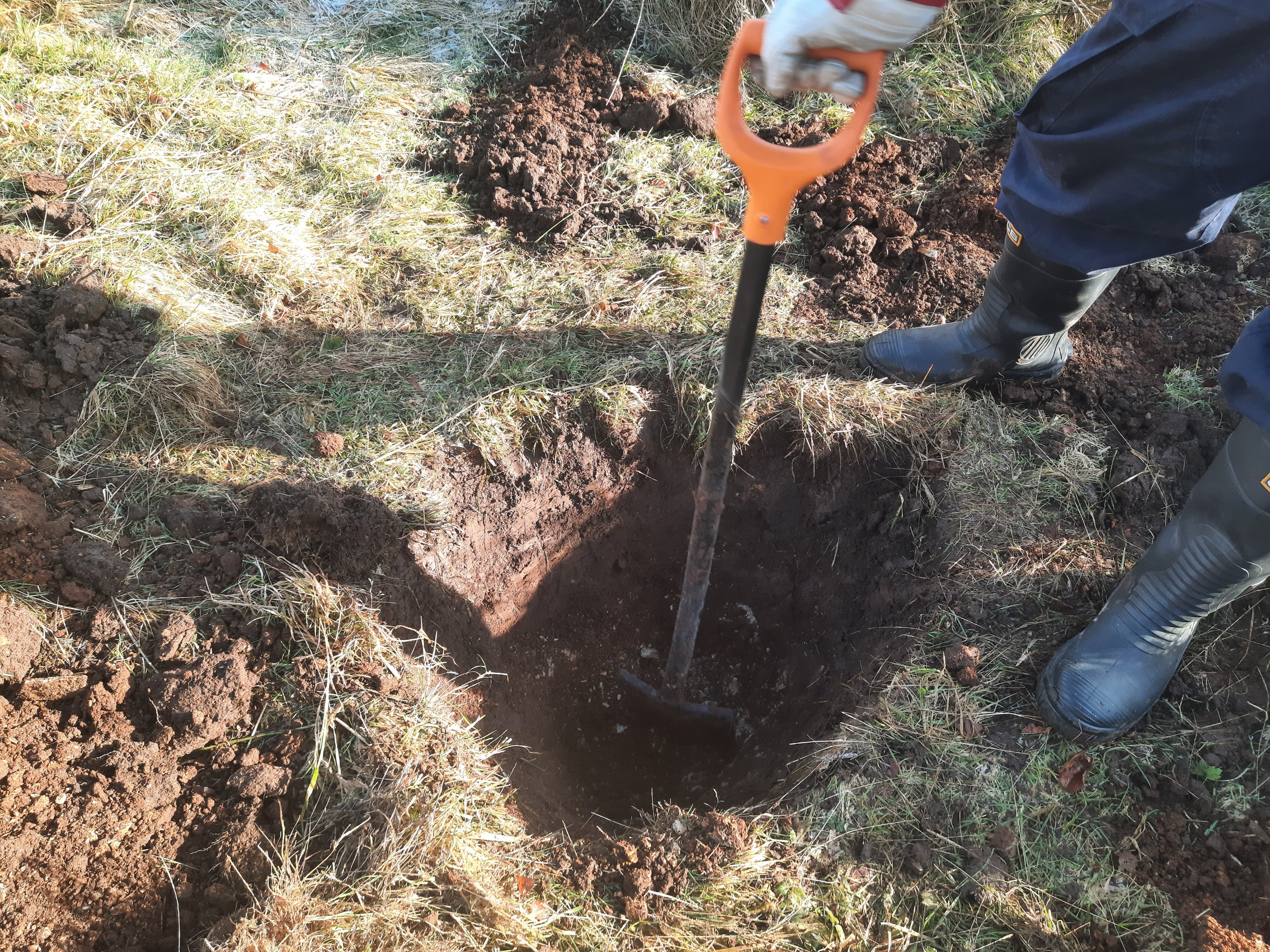
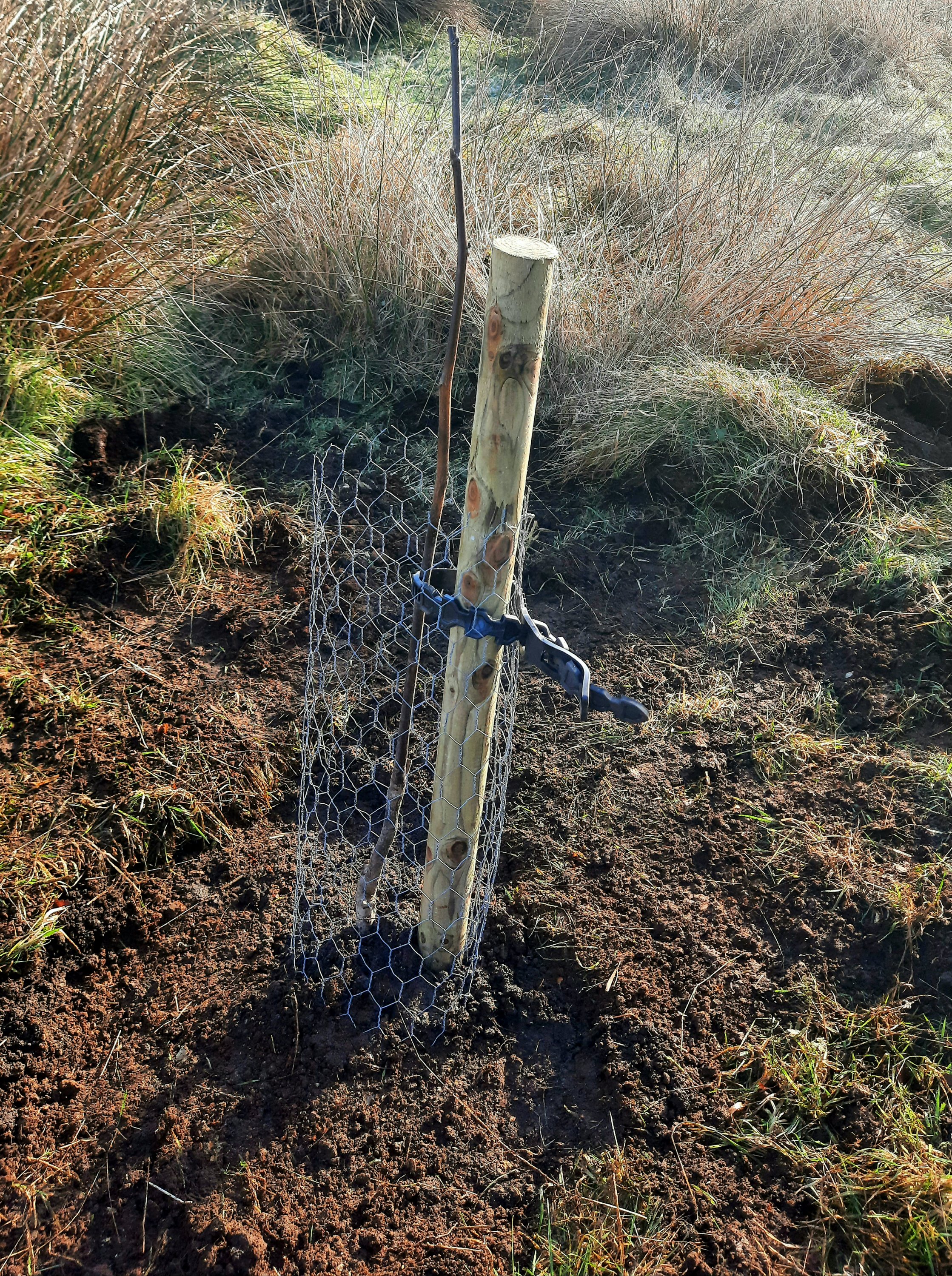
A wonderful parcel arrived in the post yesterday. Carefully wrapped and attached to a wooden stake was a young walnut tree.

This was a gift from a friend as a moving-in present, and had been dispatched from a specialist supplier in England when the planting time was deemed right.

We were a bit concerned that the ground up here would still be frozen, but a few exploratory shovelfuls established that the soil was fine beneath the grass and rush cover.

We chose a spot that was in full sun, relatively flat (as walnuts don’t like steep slopes) and with some shelter from the prevailing south westerlies from the bank of trees nearby on the western boundary of the croft.

Husband dug the hole. The soil is surprisingly fertile and loamy, and we managed to get to 60-80cm before hitting shale. I hope that it will be enough for the little tree.

Our very first tree planting on the croft, and hopefully the first of many.

Thank you so much, Jo x

.

Croft Christmas Tree

It’s a blustery, cold winters day here on the island right now.

Whilst husband is working in the house, preparing the walls for foil, I’m keeping busy in the caravan until I can be helpful, cooking, staying warm by the fire and listening to a Ted Hughes audio book.

We have no room in the caravan for a Christmas tree, but I couldn’t contemplate any kind of Christmas without one.

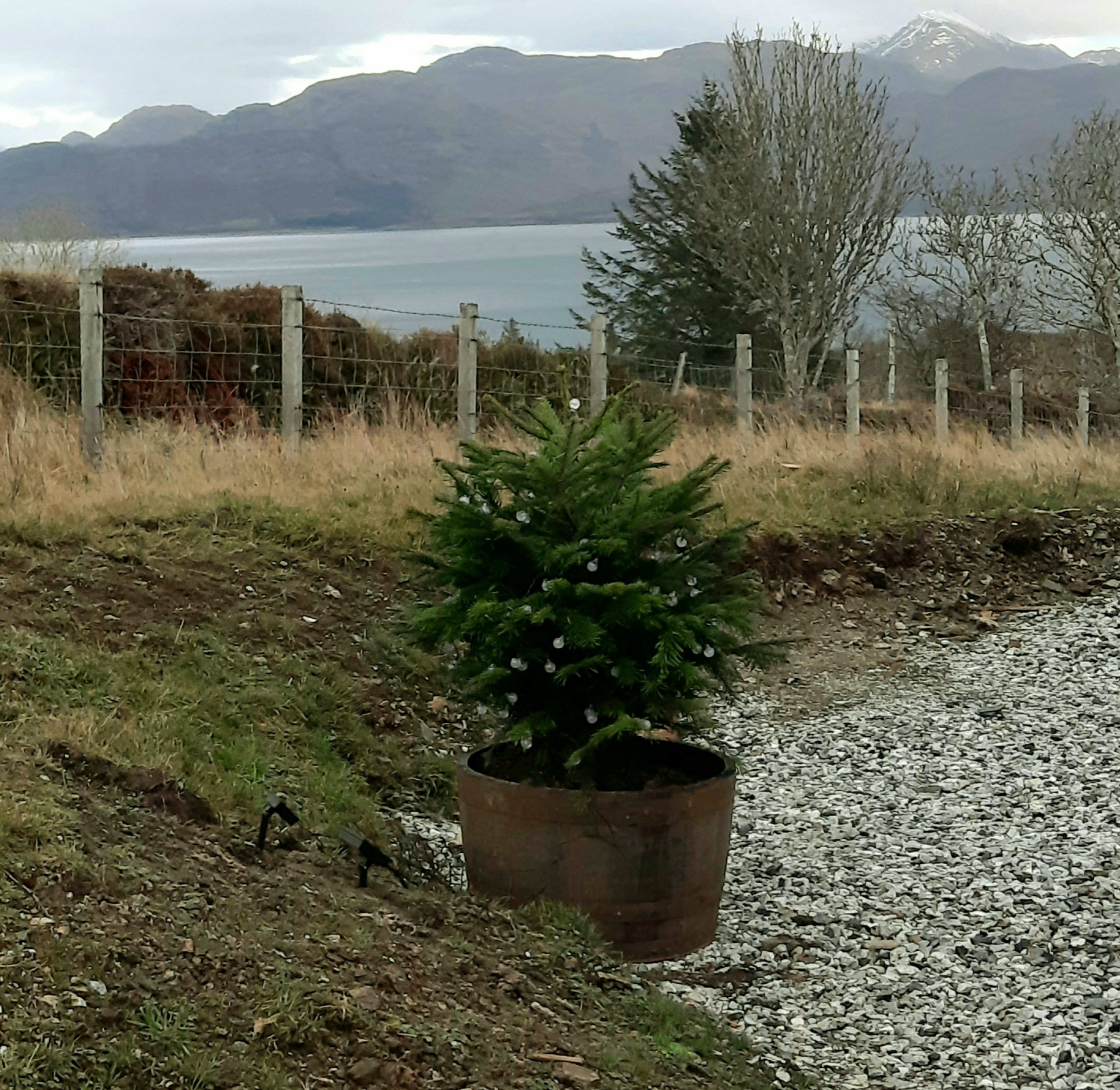
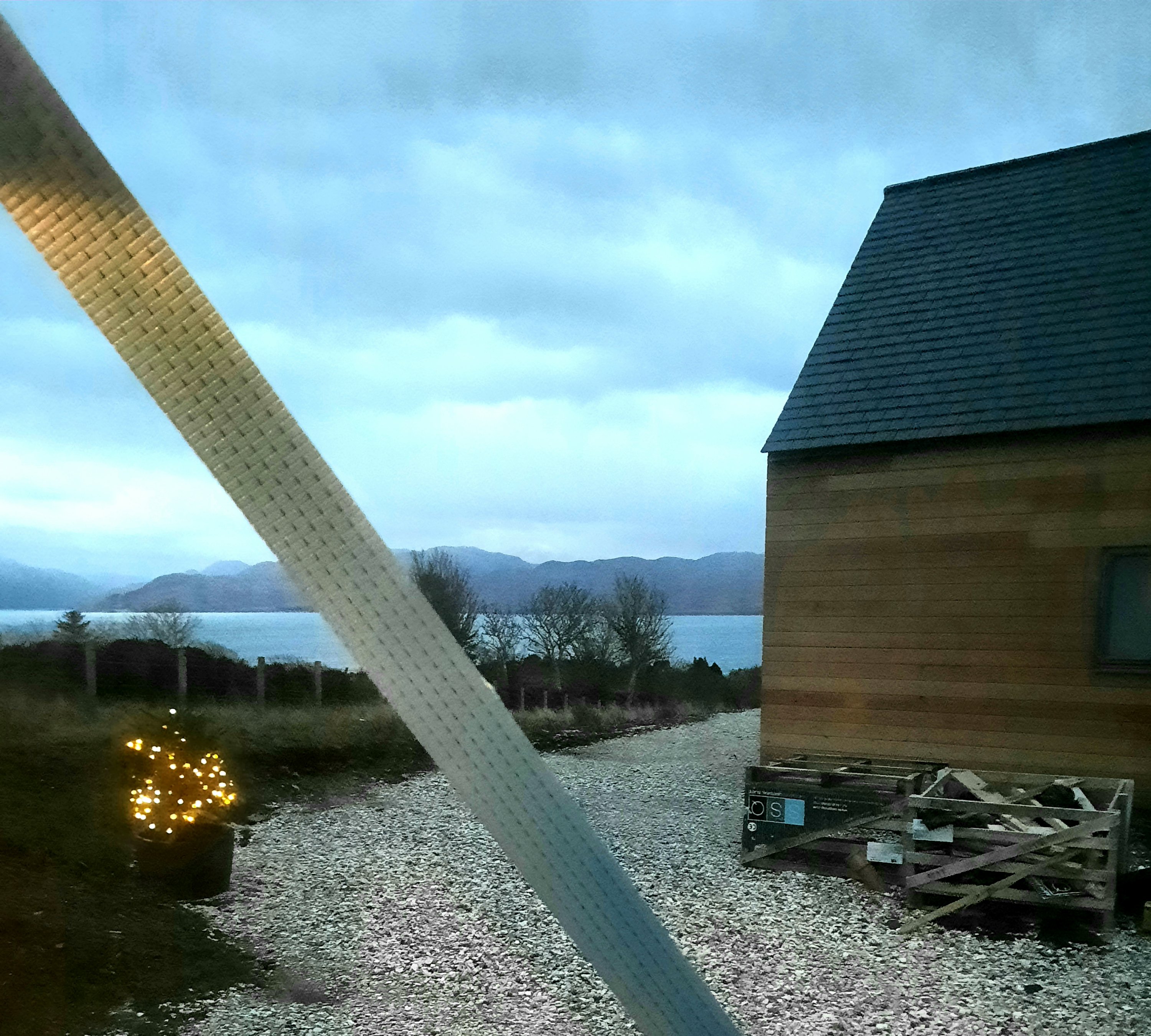
I ordered a very small, rooted tree from a nursery on the island, and it arrived yesterday. It’s now potted up in an old whisky barrel planter just outside the caravan. We can see it from the sitting area window. We can plant it on the croft in the New Year as it’s a native fir.

Conscious that I didn’t want battery lights or to add any more electrical load to the caravan, I’d bought solar tree lights.

This was a bit of a leap of faith, to be honest. We only get approximately six hours daylight at our northern latitude at this, the darkest time of the year. It was always a bit of a lottery as to whether this would be enough to power the tree lights for an evening or whether the whole thing would be a washout.

But it worked. Despite it being a totally grey, overcast day, as soon as the light dimmed at 4pm the solar lights came on. Our wee Croft Christmas tree is twinkling away in the darkness, probably entertaining the deer and definitely adding a bit of festive cheer to the building site.

Tree Planting Plans

When we first saw the land, a number of pieces of life’s puzzle slipped neatly into place. The croft was steep and unsuitable for agriculture, but it would be perfect for trees.

Hugh and I both love trees and believe that there is a strong need to plant them, both to increase the biodiversity of the land but also to offset the effects of climate change with carbon capture in whatever way that we could.

We started to look into Woodland Croft creation. Despite the northern latitude, strong winds and exposed coastal location, many types of tree are naturalised and grow well on the island.

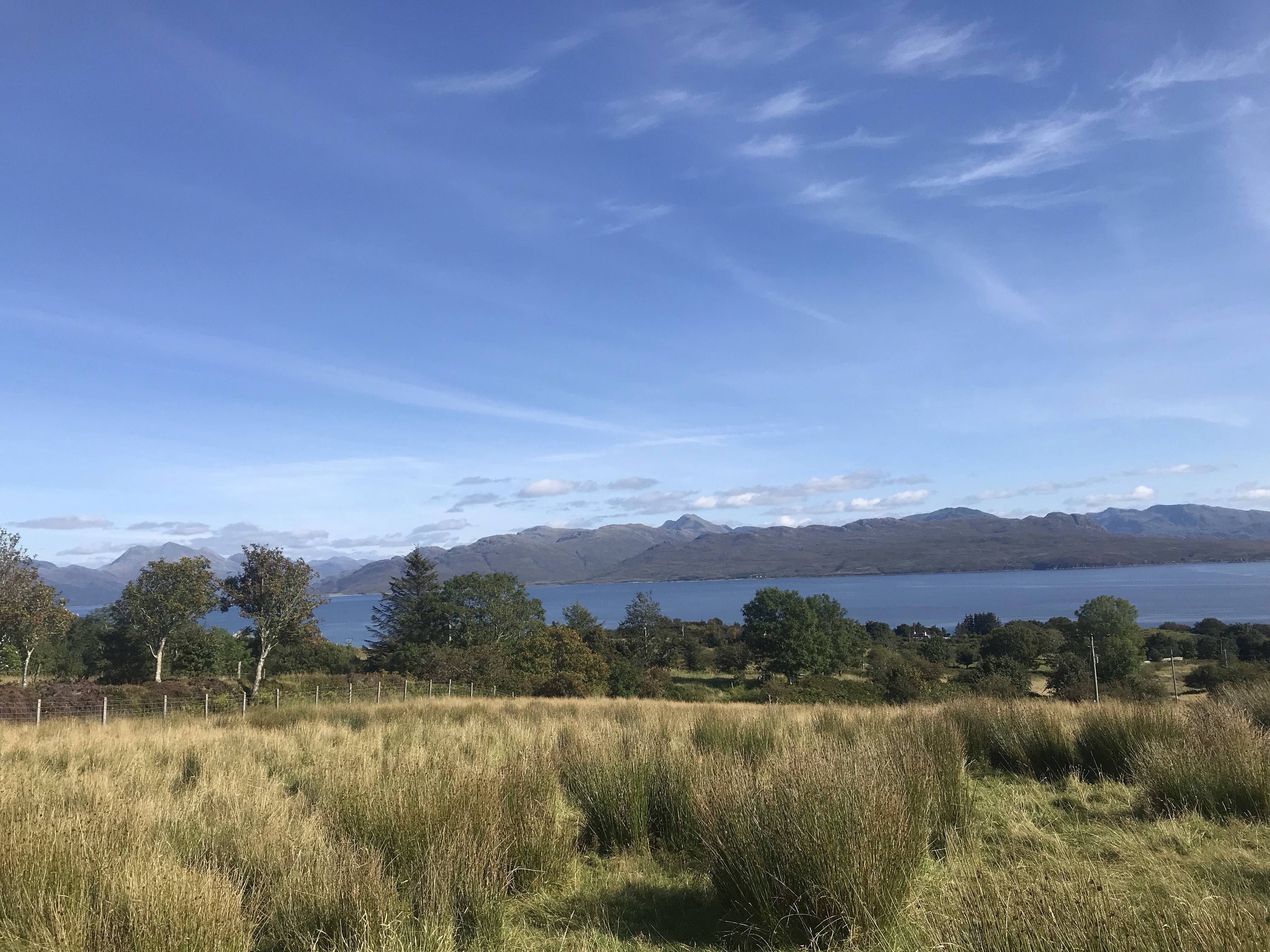
Sleat is the least exposed part of the island, a peninsula turning its face towards the mainland on the south side of Skye. As such, lying nestled between the Cuillins to the North West and the Knoydart hills to the South East, it’s at least partly sheltered from the full force of the Atlantic.

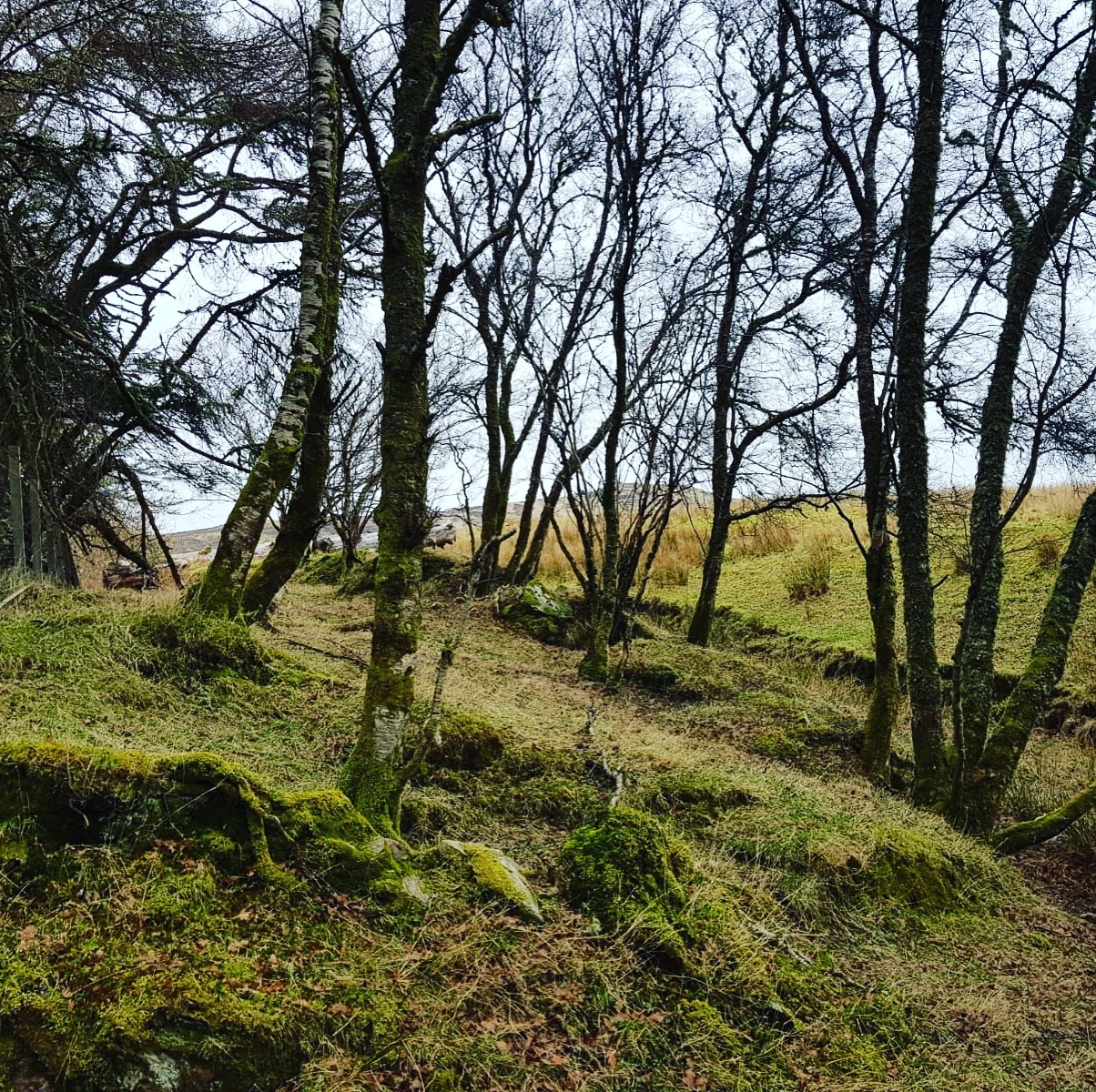
Although Skye is almost barren of trees, being famous for huge expanses of high moorland and mountain, Sleat has more trees than the rest of the island. We are lucky, and the more we looked into it, the more we felt that a diverse planting would be completely viable.

The Woodland Trust offer advice and help with tree planting, but due to the recent rise in interest in this area, they are completely overloaded. There are long lead times to even get to see them to discuss plans. They’ve handed over some of their work to the Scottish Forestry Commission, who have been in touch at last and who will be assessing the croft land for tree planting viability next week. We can’t wait for the report.

We expect the recommended species to be a mix of trees such as rowan, alder, blackthorn, grey willow, downy and silver birch, sessile oak, scots pine, hazel, wych elm, holly and aspen.

We want to supplement these plantings with wild, edible hedges filled with crab apple, blackberries and hawthorn, and an area of sheltered orchard with hazelnuts, apples, cherries and pears.

As soon as we have the Forestry Commission report we can discuss deer protection and build a planting plan for the land. Even though we know that the first trees probably won’t go in for at least another year, it still feels like a milestone in the journey!

The relative slowness of this process is frustrating, but in a way it’s also contemplative, allowing time for our initial thoughts to be challenged and supplemented with local wisdom. We’re watching other local crofts start this, and learning what works and what doesn’t.

Don’t get me going on the merits of spiral guards, staking, vole protection and windbreaks now…☺️