Hedging our bets

One of our neighbours a few miles away is Phil at Wildlife Croft Skye, a woodland croft, and an inspiration of ours.

He and his family have been planting and managing their croft for years now using sustainable regenerative principles and have a wonderful. maturing array of local trees growing on their land. He propagates and grows using locally collected cuttings and seeds.

Recently he advertised that he was offering some of his hedging, shrub and young tree seedlings for sale, and we jumped at the chance to get our hedging started before Spring advanced too far.

Having tree stock generated from locally grown seeds means a good chance that they’ll thrive in our wet and windy conditions, having grown in the same.
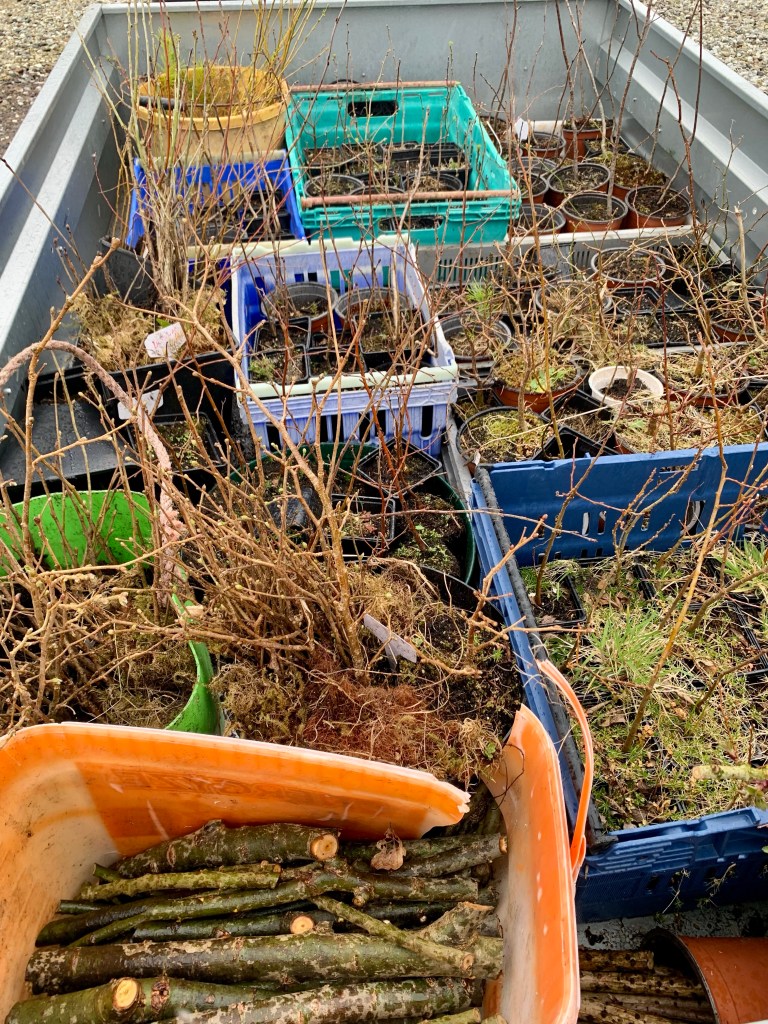
We bought a trailer load of cuttings and seedlings so that we could start hedging inside the newly installed deer-fenced area of the croft. The ground is saturated at the moment now that the snows have cleared, making it a good time to dig these in (and slightly less work, although poor husbands back is disputing that this morning!)

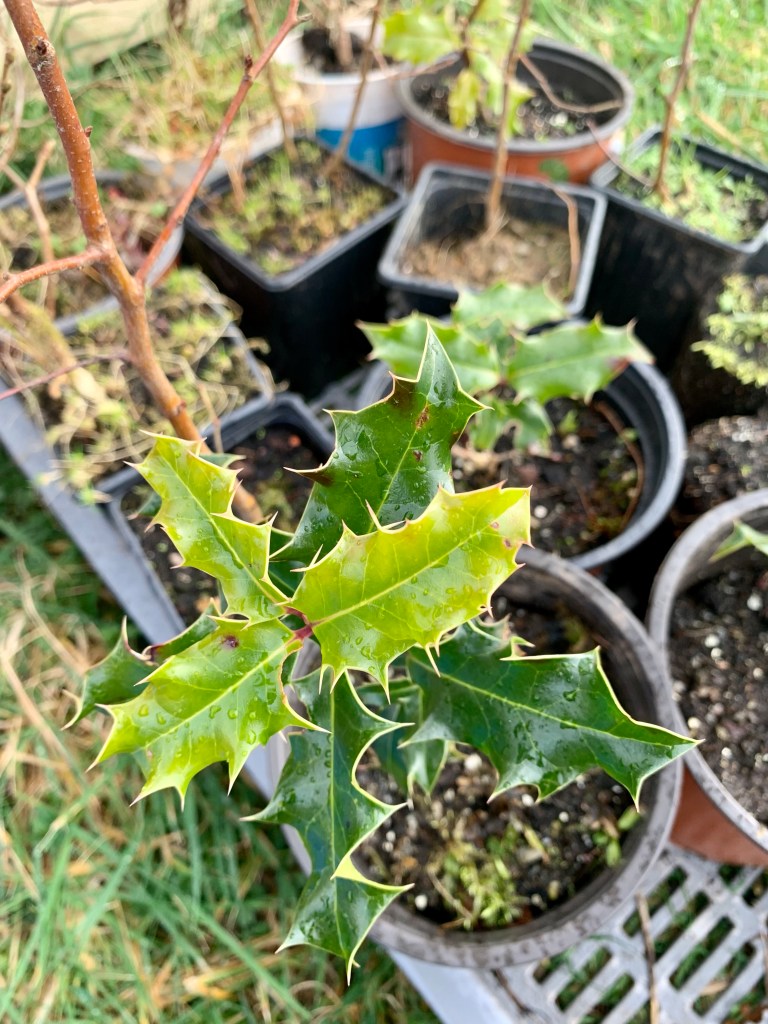
This is a good mix of Rowan, Oak, Scot’s Pine, Hawthorn, Grey Willow, Wych Elm, Hazel,
Purple Willow, Downy Birch, Holly, Goat Willow,
Elder, Honeysuckle and Dog rose.
Husband and Phil worked through the rain heroically to clear and plant most of them on the croft yesterday. They’ll eventually provide shelter from the wind for our vegetable beds and the fruit orchard that we plan to plant next spring.

They’ll also most importantly provide a haven for wildlife, insects and birds, and food in the form of holly, elderberries, brambles, rosehips and rowan berries. Bringing this croft back from bare land to a richer, more diverse ecosystem is important to us both, and depends upon this.

It feels good to be taking the first steps towards our ultimate goal of a woodland croft. It’s an enormous task, but we’re determined. Watching David Attenborough on Wild Isles over the last week just reinforces how much we’ve lost already and how important every patch of nature is.
Mud, snow and seedlings

So, just as I was sowing a few trays of vegetable seeds and contemplating getting my potatoes into the ground, it snowed.

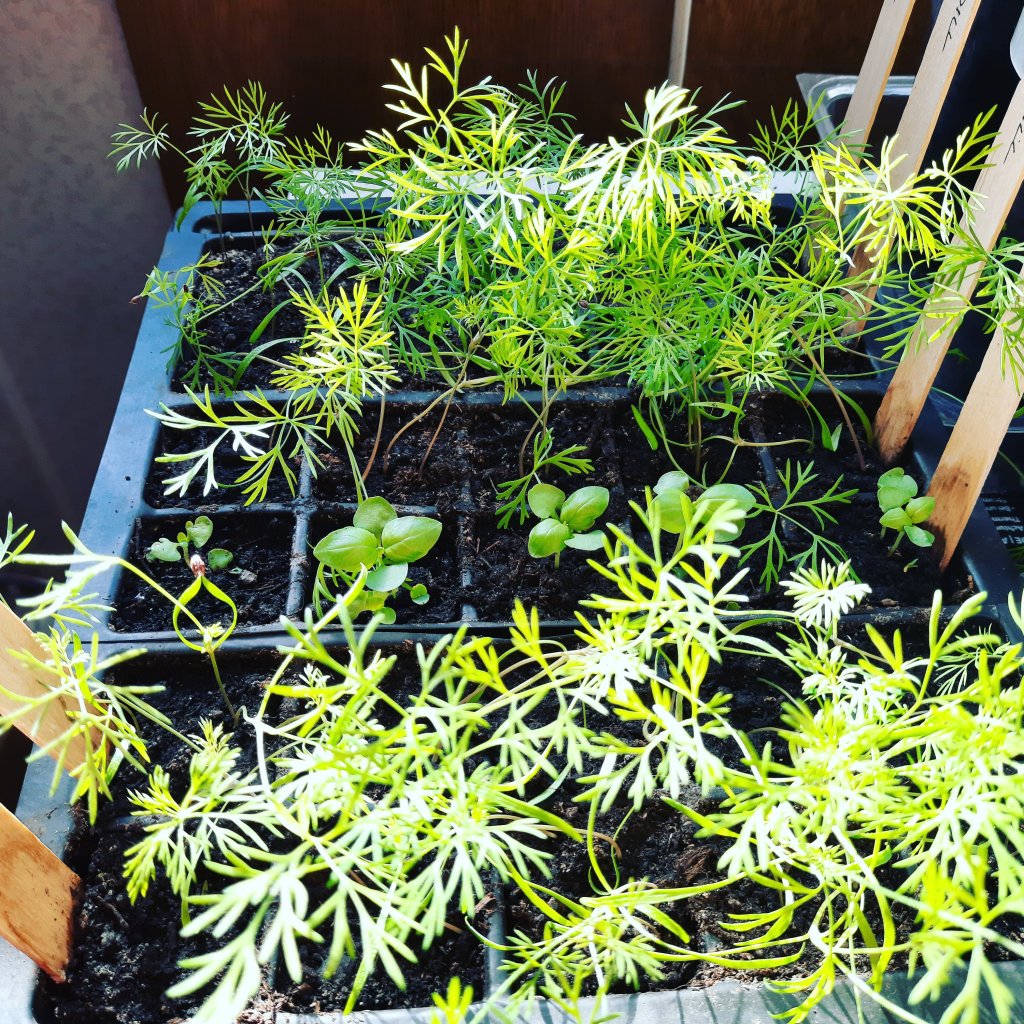
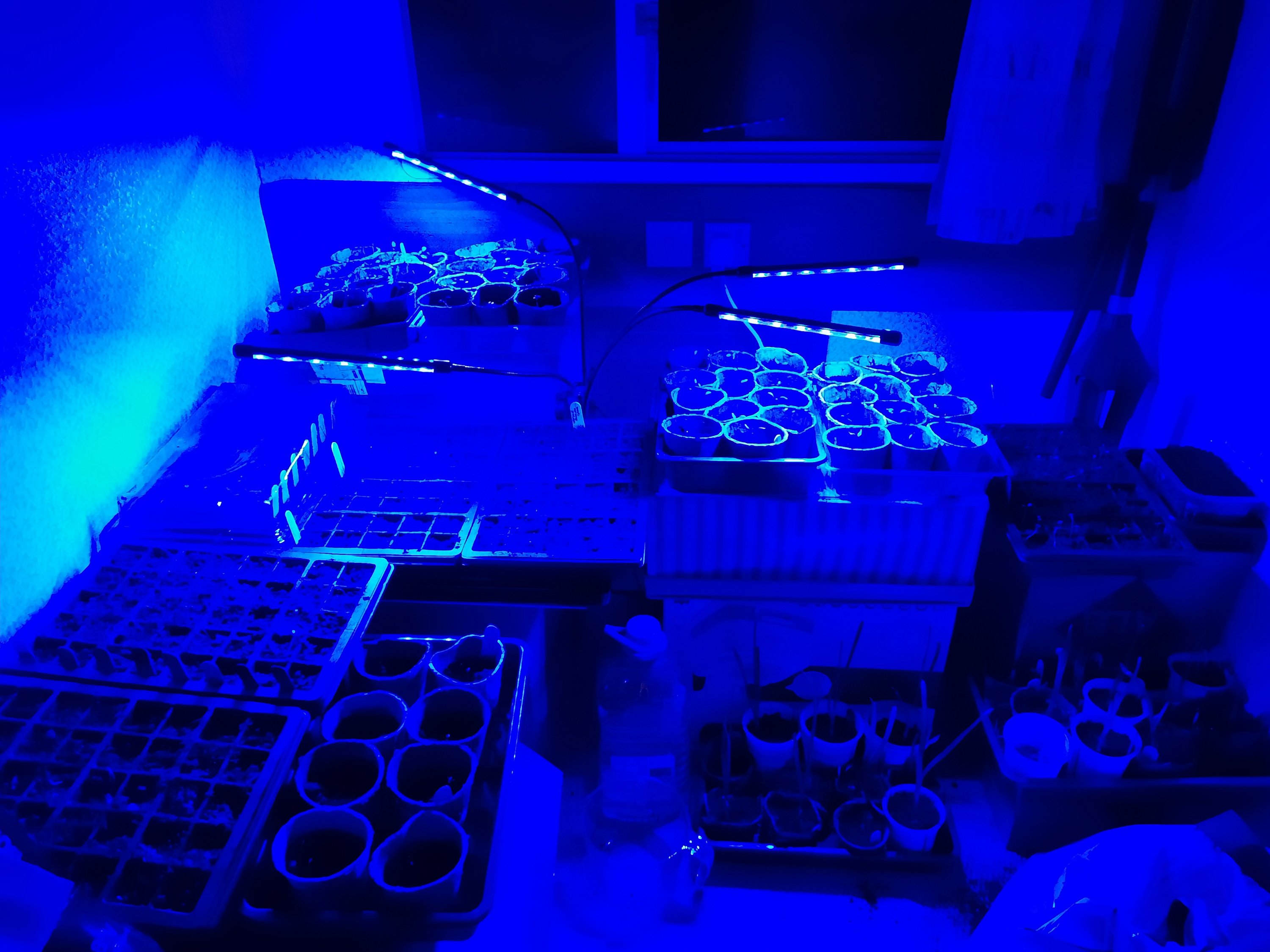
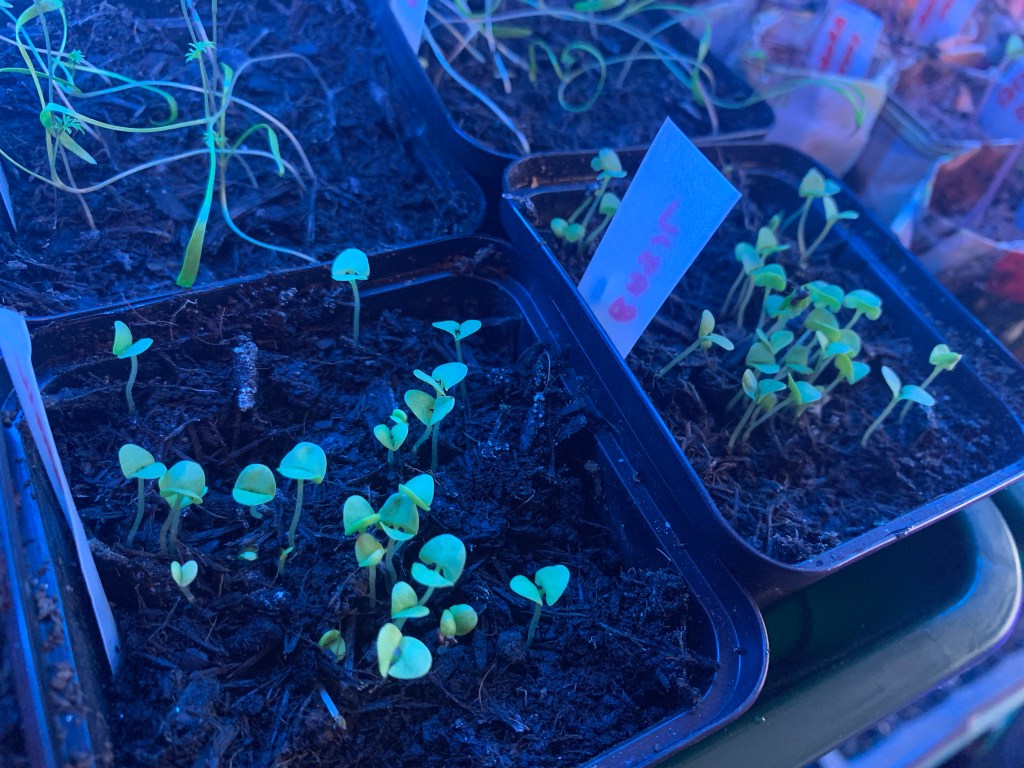
Basil seedlings under the blue UV lights of doom

It’s the lambing snow. Every year in March or April it happens, apparently, just as the lambs are born. Poor things. My seedlings have visibly shrunk back into the soil in horror at the prospect of emerging into such sub zero temperatures.

I feel so cruel tempting them into germination on a heat pad in the caravan only for them to swiftly realise the reality that they’ve been born into..

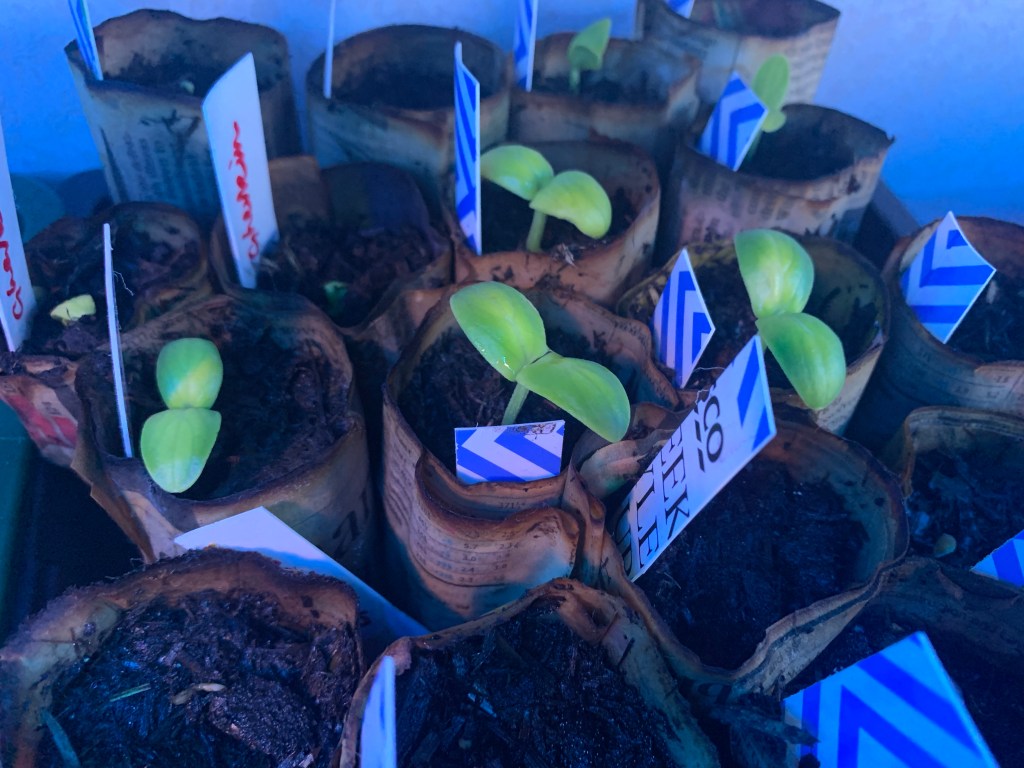
Gherkinage!

I’m hoping for milder temperatures and a break in the rain and sleet so that I can carry on preparing the raised beds and get a few hardy things out there. It’s bitterly cold out there at the moment.

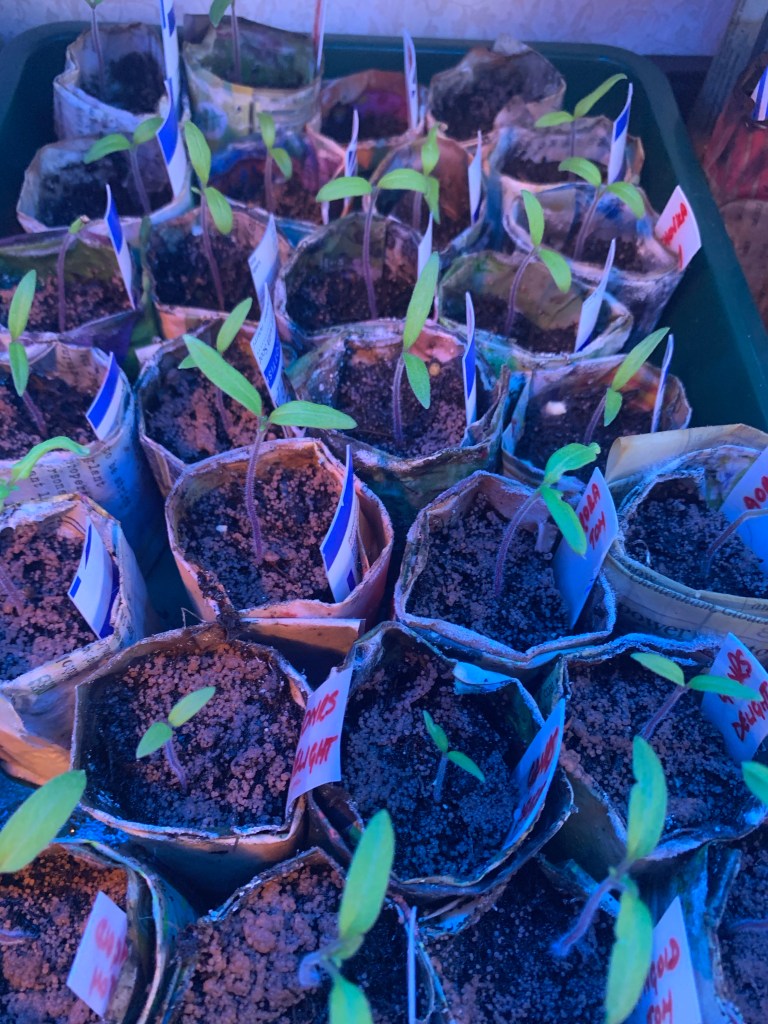
Rather leggy looking tomato seedlings

The polycrub is supposed to be being installed next week, and at the moment the site that it will sit in is a bit of a quagmire.

Mud everywhere.

The polycrub, seeds and spring

The days are definitely lengthening now , perceptibly so. Spring should be on its way, although no one seems to have told the weather gods that. It’s still hail, snow and gales most days.

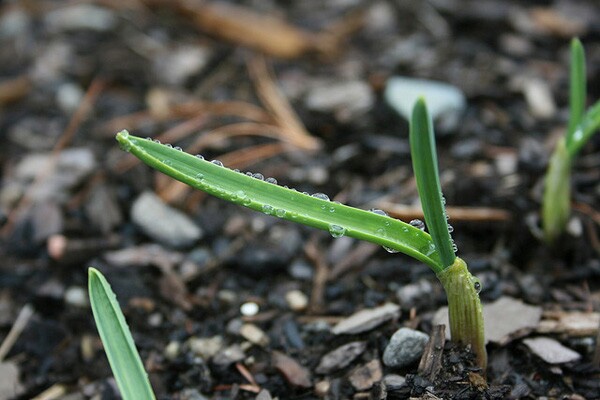
I did a quick rustle about in the raised beds this week and although I should be clearing and planting soon, it’s still far too cold and wet. The garlic has popped it’s head up a little, but that’s it.

I’ve ordered the polycrub. We did apply for a crofters grant to help with the cost, but we were unsuccessful. They wanted a five year business plan showing anticipated horticultural sales and letters of guarantee from local outlets that they would take our produce.

This isn’t the way that we’ve planned to do things. We will sell produce at the croft gate if we have any surplus, but we are mainly growing for ourselves and our neighbours, not as a fully commercial enterprise. As such we don’t qualify. We’re disappointed, of course, but we’ve bitten the bullet and gone ahead with buying the polycrub anyway.

It’s six metres by four of rigid polycarbonate sheeting, fish-farm tube loveliness. After the last few months of storms I’m doubly convinced that this is the only thing that would survive the winds on this exposed hillside.

It will revolutionise what we can grow, though. Tomatoes, chillies, squash, cherries, basil… lots of tender plants that wouldn’t thrive in our cold, windswept raised beds. We hope to have it installed in April, just in time to move crops in there for the summer.

Very exciting!

Now to clear out the caravan spare room out from a whole year of being a junk room, and set it back up to start seedling production again. It will be good to see the blue grow lights illuminating the hillside once more.. 😊

Buttercups and Beetles

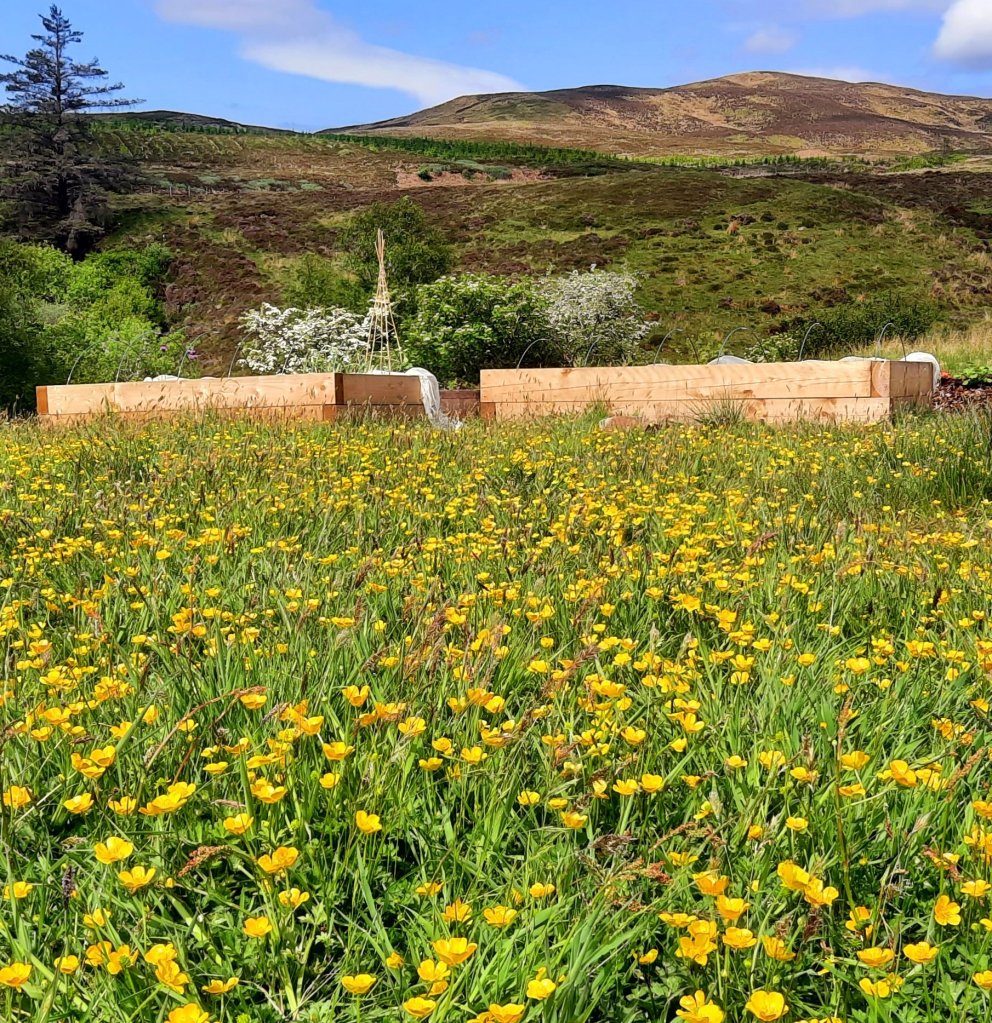
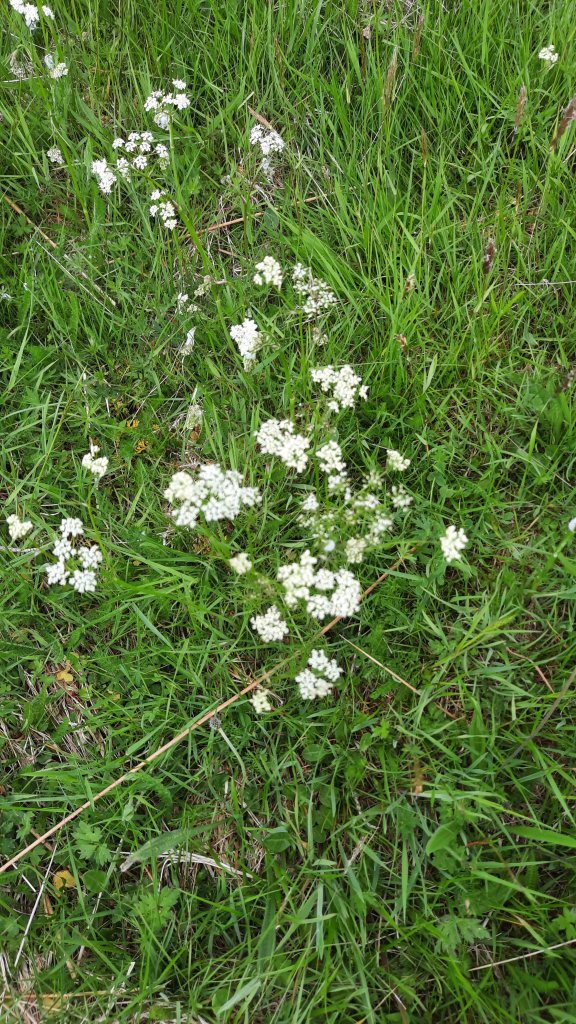
What a glorious day. The croft is bursting with weeds (aka wildflowers) and we love it. We have buttercups growing in thick profusion next to the vegetable area, and it’s just so beautiful.

I couldn’t help have a bit of an ironic chuckle to myself today too. About two years ago we sowed pignut and bluebell seeds in the little copse on the western boundary before we moved onto the croft.

Now that we live here, we can see that we have a profusion of both popping up all over the croft. There was no need to sow them – they’re growing everywhere here naturally. The impatience and innocence of townies. All we had to do was wait and watch…

Pignuts!
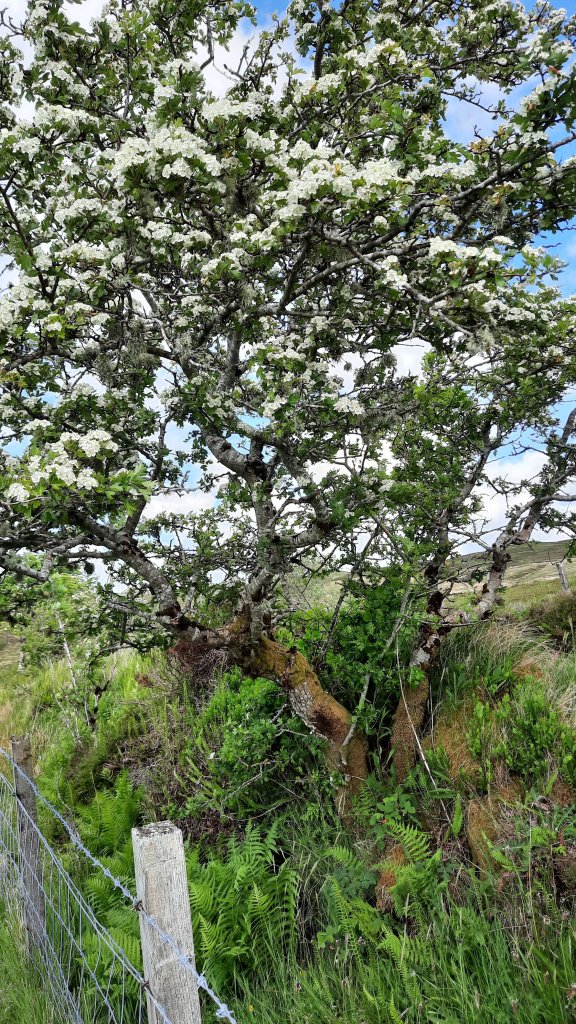
Hawthorn tree in full bloom

This is a beautiful time of the year here on the croft. Everything is in bloom, and the insects (sadly including the midges) are everywhere. It’s a price we’re prepared to pay. Anyway, we’ve got hats and nets…

We wake up each morning to the cuckoo, the skylarks and the swallows wheeling overhead.

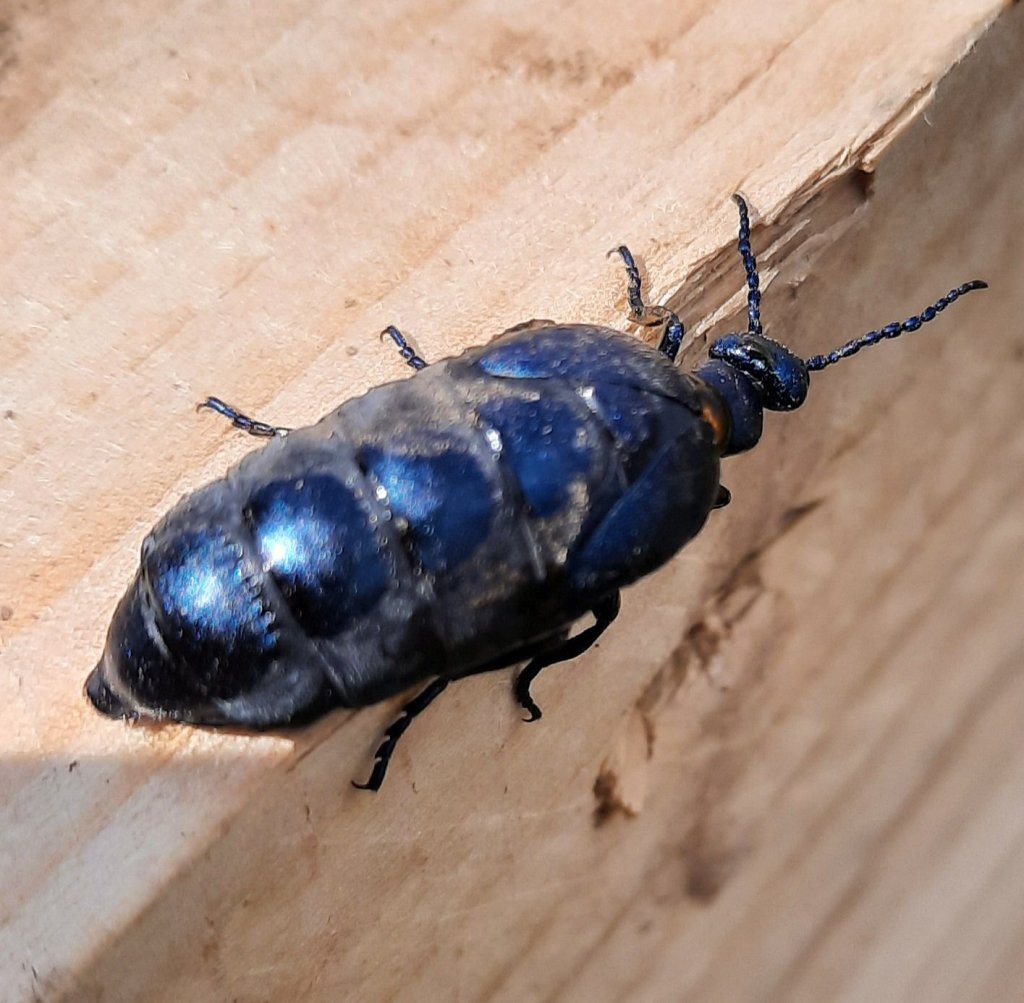
I’d got so used to hardly ever seeing insects in the city that it’s been a bit of a shock to find ourselves cohabiting with so many at such close quarters. Weevils, oil beetles, lacewings, strange, alien looking creatures that we don’t know are friend or foe, but which have at least as much right to be here as us.

Google lens and plant apps are being used daily. This is richly diverse meadow and moorland, and we’re loving learning about it.

Oil beetle

The house build continues apace, with plasters and plumbers being lined up to help over the coming months, but it’s very hard not to get seduced into just being on the croft.

Sunshine & seedlings

After a very long, cold May we’ve awoken to warmer temperatures and sunshine at last.

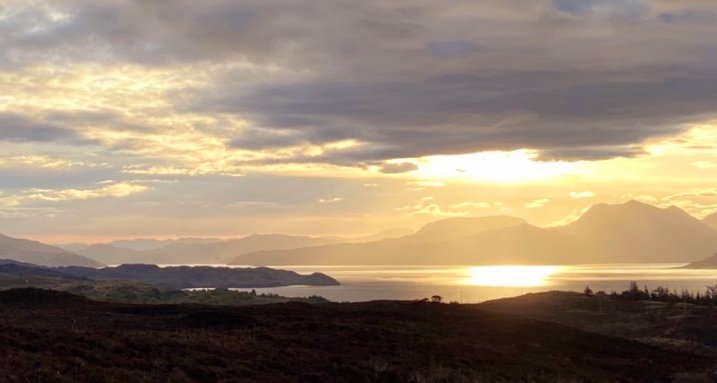
Sunrise over Sleat

This photo was taken by one of our lovely neighbours from the hill above the croft whilst out on a 5am run this week. Not a sight I’d have been awake enough to capture. Thank you, Jonny.

The sun is rising before 5am now and not setting until around 11pm, giving us long, soft, light-filled days. We have another month to go before the summer solstice, so there’s more to come. It’s already not fully dark at nights and the long, light evenings on the croft are magical, if a bit chilly up till now.

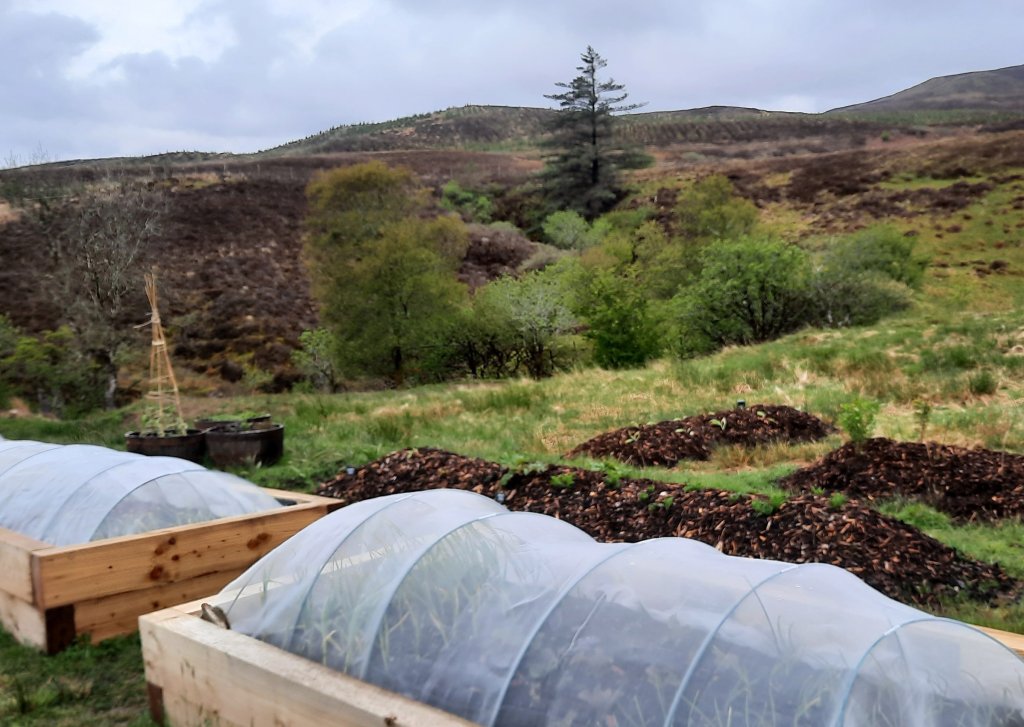
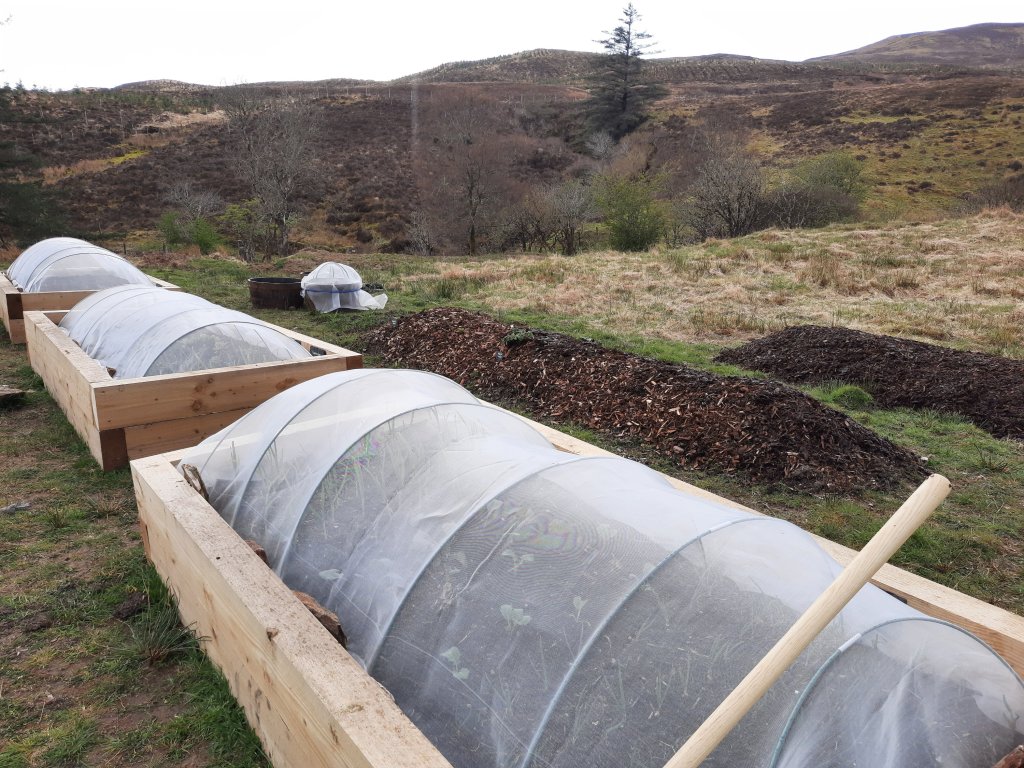
Raised beds on the croft

We have cuckoos and swallows, linnets and skylarks, bluebells and wild garlic in the hedgerows. Suddenly everything is bursting into green leaf, and it’s feeling at last as if we’re on the brink of early summer.

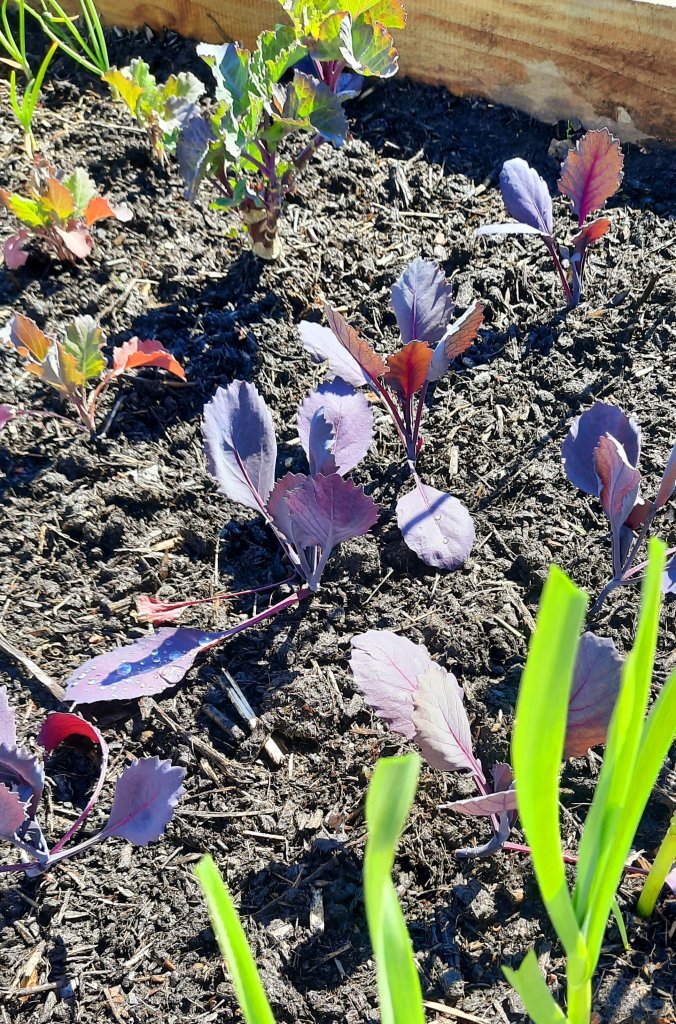
First day of exposure! Shallots, beetroot, red veined sorrel and garlic

I’ve taken the mesh off the vegetable beds today to get a proper look at what’s survived through this very dry, cold spring. Some things are looking very sad for themselves (leeks, lettuces I’m looking at you) but others seem to have pulled through quite robustly (full marks red cabbage, kale, beetroot, potatoes, purple sprouting broccoli and shallots).

Taunton Deane kale, red cabbage and onions

Let’s hope that summer is on its way at long last!

Arctic conditions at 57 degrees north

It’s been a very cold spring so far.

We continue to have frosty mornings and very cold nights, so it’s not been advisable to put out any tender plants without serious fleecing.

My “plant room” in the caravan is still full, and although I’ve planted out a few purple spouting broccoli and beetroot plants, some cabbage, kale, and some sorrel, everything else is under wraps for a bit longer. I’ve direct sown carrots and parsnips into the beds but nothing has germinated yet…. I don’t blame it.

It did give us the opportunity to make another hugelkutur bed with cut reeds as the base, as I’ve estimated that I’ve still grown too much to fit into our prepared growing space. Always a learning, eh?

Everything is heavily mulched with woodchip to try and minimise soil runoff. We’ve almost gotten through a few tonne bags of that already, and I’ve still got the paths around the beds to lay..

Small beginnings. And many learnings.

Snipe in the grass

It was late in the evening and the light was slowly fading from the croft. We were packing up a few things by the house site and were on our way back to the caravan when suddenly an eerie, reverberating noise split the peace of the night.

We couldn’t see what had made the sound, nor could we identify it. It came again. We could still see nothing.

Did we have aliens on the hillside in the grass?

The sound reminded me of the noise made by one of those long, plastic tubes that we whirled around our heads for fun as children in the Seventies. A high pitched, reverberating, whining rattle. Quite bizarre.

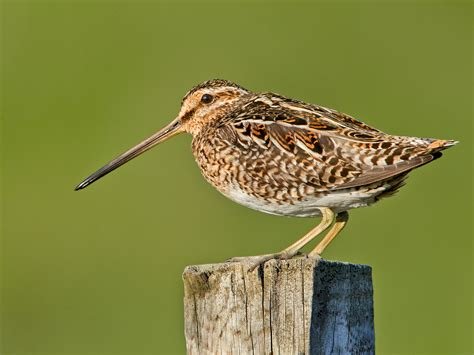
An Internet search soon found the noise. It was the sound of a Snipe. The male of the species apparently reverberates its tail feathers as it performs its courtship ritual in the spring, making this incredible noise.

https://www.xeno-canto.org/595646

We have Snipe! I’m ridiculously excited by the discovery for me of a new bird on the croft. How wonderful.

Lambing snows

The islanders call late snows in April Lambing Snows. They’re usually the last gasp of winter and come suddenly, just when the lambs are being born in the fields.

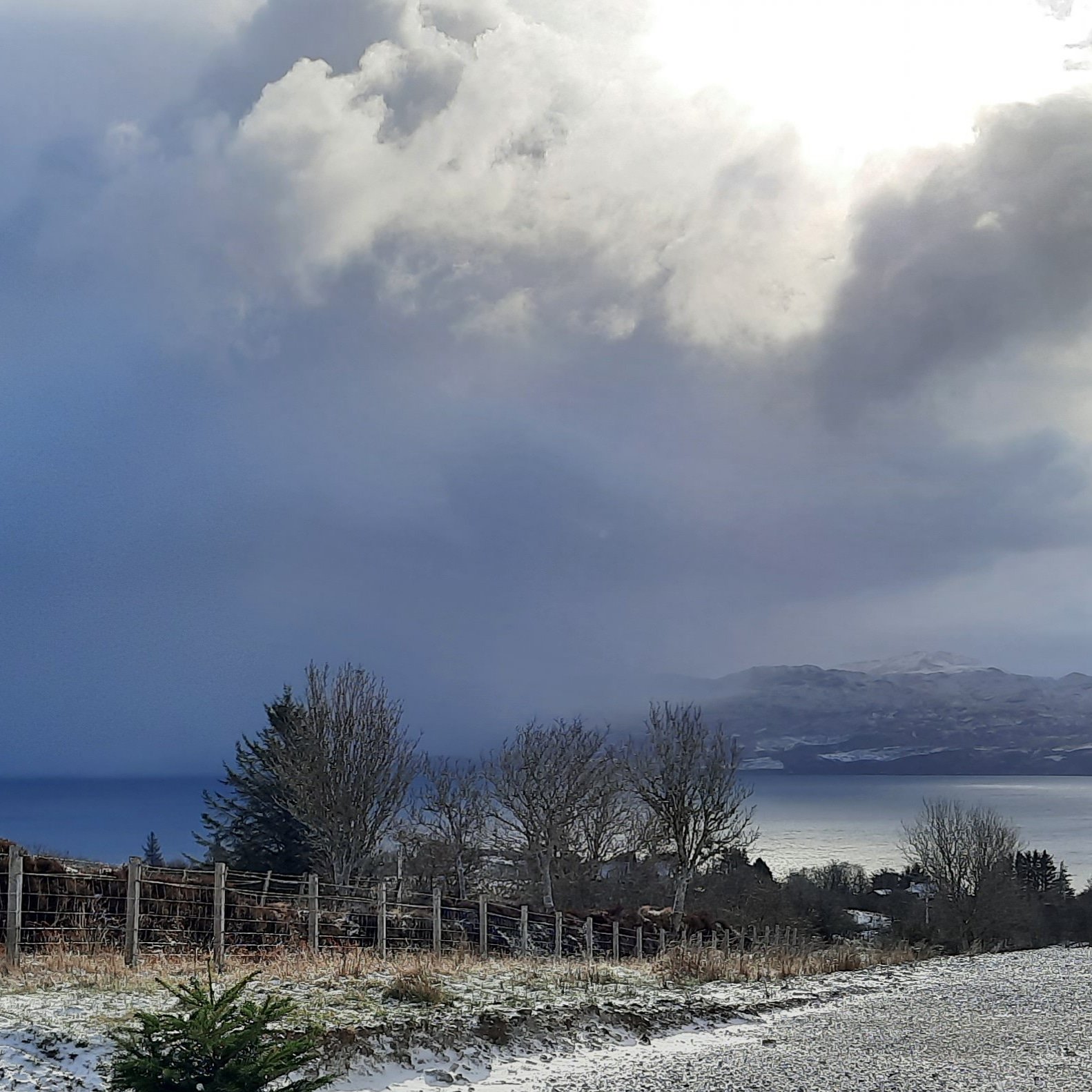
We went from bright, warm days to plummeting temperatures within 24 hours. The wind veered suddenly to the North and before we knew it, there were snow blizzards upon us, sweeping rapidly down the Sound in ominous curtains of grey.

Luckily the only thing in the outdoor raised beds were garlic, onions and perpetual leeks. Listening to local advice I’d held off planting out anything tender, and don’t plan to until May. It seems that this advice was very sound!

Temperatures fell to minus 5 degrees centigrade overnight, and barely struggled to hit 2 degrees during the day. The wind was bitingly cold.

Nothing for it but to hunker down indoors..

Herbage and Seeds

The urge to grow new things is very strong. We have no greenhouse or polytunnel yet, so I’ve set up a small space in one of the rooms in the caravan to start my seeds off. Luckily this room still has the old carpet down so it doesn’t matter if it gets grubby.

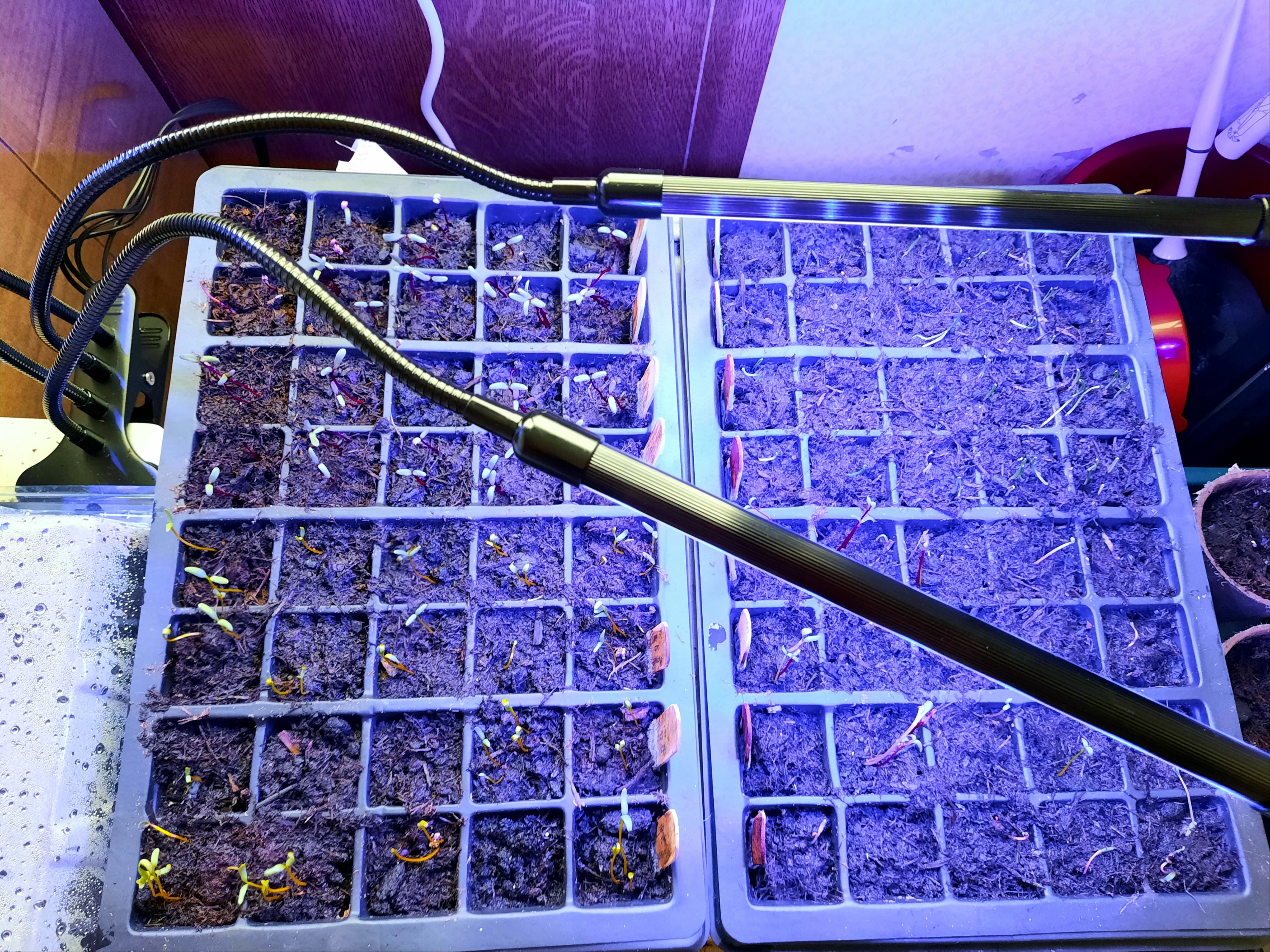
Balanced somewhat precariously on old cardboard boxes and a heat mat, and wedged between boxes of spare clothes and the hoover, are my first trays of seedlings. The blue wands of wonder are moved around to those plants that seem to need them most. It’s not exactly a professional set up, but it will do!

I’ve tried to choose plant varieties carefully to ensure that they’re hardy for our exposed site, but this first year is going to be very much an experiment.

I know that I’ve probably started too early for these northern altitudes, but I was itching to start. If they get too leggy I’ll just have to re-sow.

I have garlic ready to plant out. We eat lots of that, and I have more to plant directly into the soil once the beds are ready.

I have seed potatoes chitting ready for planting in the coming weeks. A local crofter recommended two varieties that I’m going to be trying, with good flavour but also good blight resistance.

I also have beetroot, chard, leeks, sorrel, parsley (it germinated! Hallelujah!) and Sutherland kale sown and just starting to grow.

Husband has been working on the construction for our compost bays too, which we need to start as soon as possible. The price of good compost in the quantities we will need is eye-watering, and I’d much rather we made our own.

I’ve also just finished reading this book. A total inspiration, a really interesting story and full of very practical advice about growing abundantly, organically and using no-dig principals. It’s just come out, so do source a copy if you get the chance.

Eerie Blue Light

The days are getting longer. Although we are still in the clutch of a cold winter here on the croft, with snow still on the hills and an icy wind, my thoughts have increasingly moved to garden planning as our daylight hours have lengthened.

I’ve started some seeds off in the little bedroom in the caravan. We have no greenhouse, cold frames or polytunnel yet, so needs must.

It’s a bit of a make-do affair with a propagator heat pad, some cardboard boxes, seed trays, old yoghurt pots that I’ve been saving since we moved here, and one of those whizzy octopus UV grow lights to help start things off.

Everything is bathed in an eerie blue light from its flexible metal arms. It’s like something from the X Files… I go in a few times each day to check on things and can’t resist adjusting it.

Lord only knows what the neighbours must think when they see the strange, neon blue light glowing through the thin curtains at dusk…

I’m starting small. More will follow in March and April, which is a much more sensible time to start new plants here.

I’ve started garlic, onions (although the recommended local wisdom is to grow from sets rather than seed, which I only discovered after I’d bought them), leeks, parsley, beets and rocket. Seed potatoes are on their way in the next week ready for chitting.

I know it’s early, but it’s such a short season that it makes sense (to me at least) to have plants ready to be planted out in May, and they’ll need a full month of hardening off, I suspect.

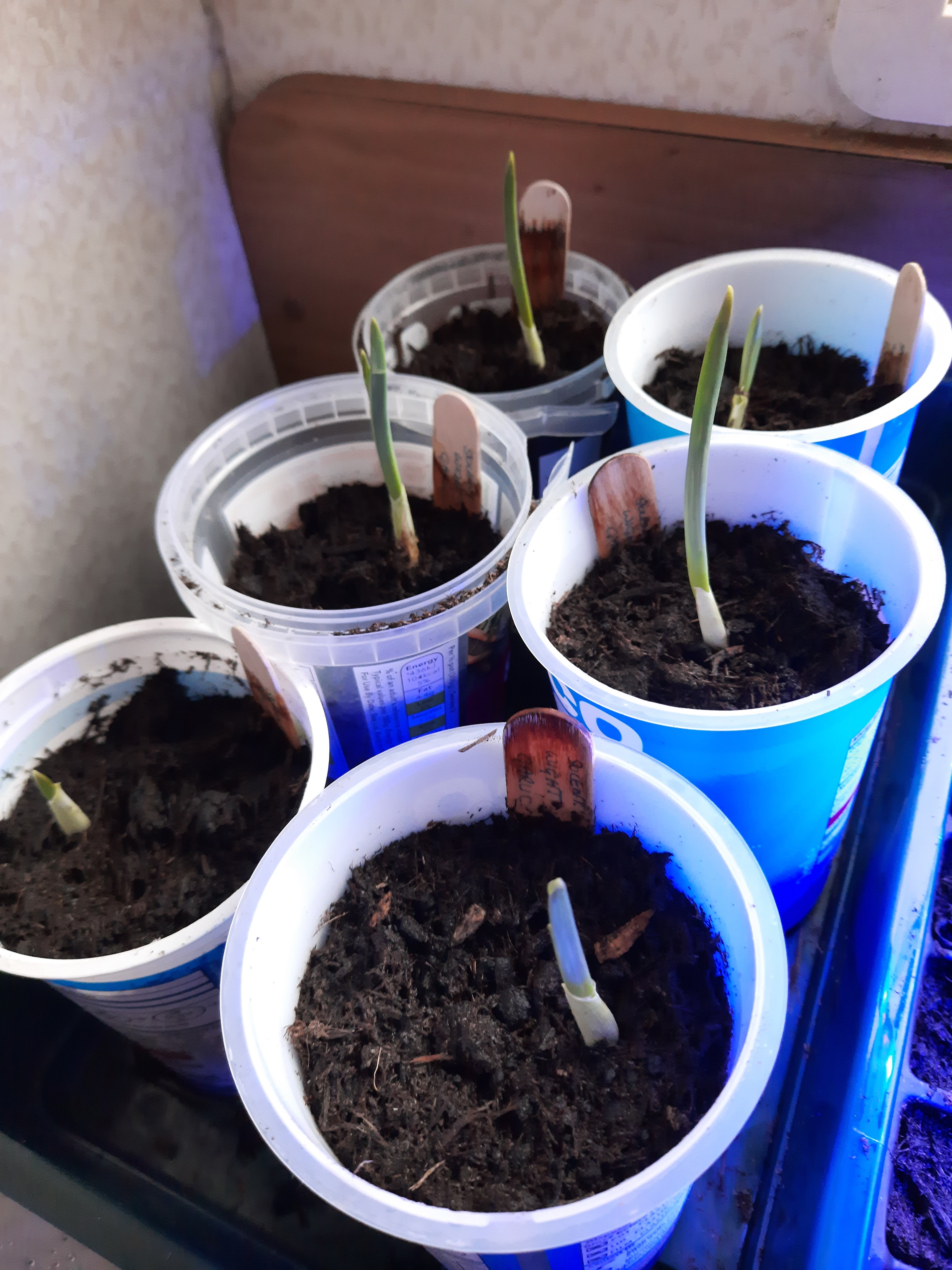
The garlic has leaped into action almost immediately. I’m growing a rose and a white skinned garlic, both hardy varieties, and both a bit of an experiment, although local growers report that they generally grow well here.

I’ve been keeping my eyes peeled for old glass windows or sheets of polycarbonate on the local ads to make cold frames, but they’re scarcer than hens teeth at this time of the year, so we may need to buy materials new and create our own.

And so it begins.