Successes and failures

July is underway and with it comes the first of the proper harvests from the croft.

The polycrub really has been a game changer and we’ve managed to grow cucumbers and lettuce enough for all of our salads and more to spare for neighbours and friends. This in combination with the produce from the raised beds has meant a wide variety of foods can be grown throughout an extended season.
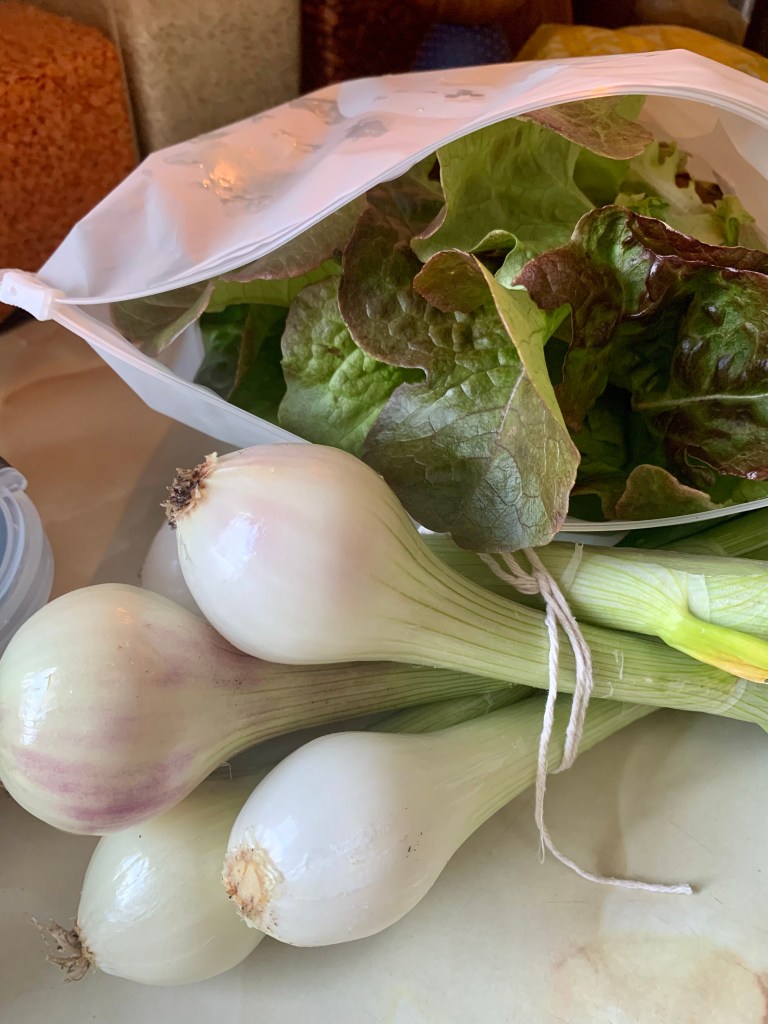
Lettuce and young onions

The most successful lettuce has been a butterhead, which we’ve been cropping as a cut and come again lettuce. We’re also growing romaine. All the mizunas and rocket grew well initially, but then bolted within weeks and became straggly. I don’t like eating the mustards and mizuna because of the spiky texture of their leaves so I won’t bother with these next year, and will just plant more lettuce.
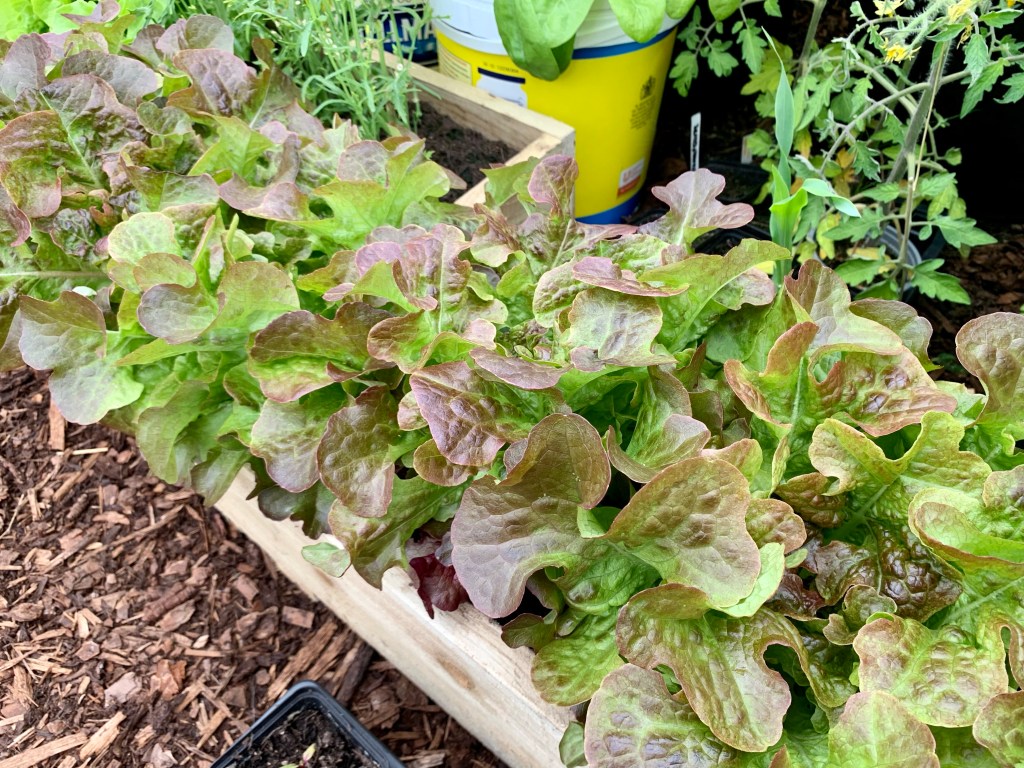
Butterhead lettuce

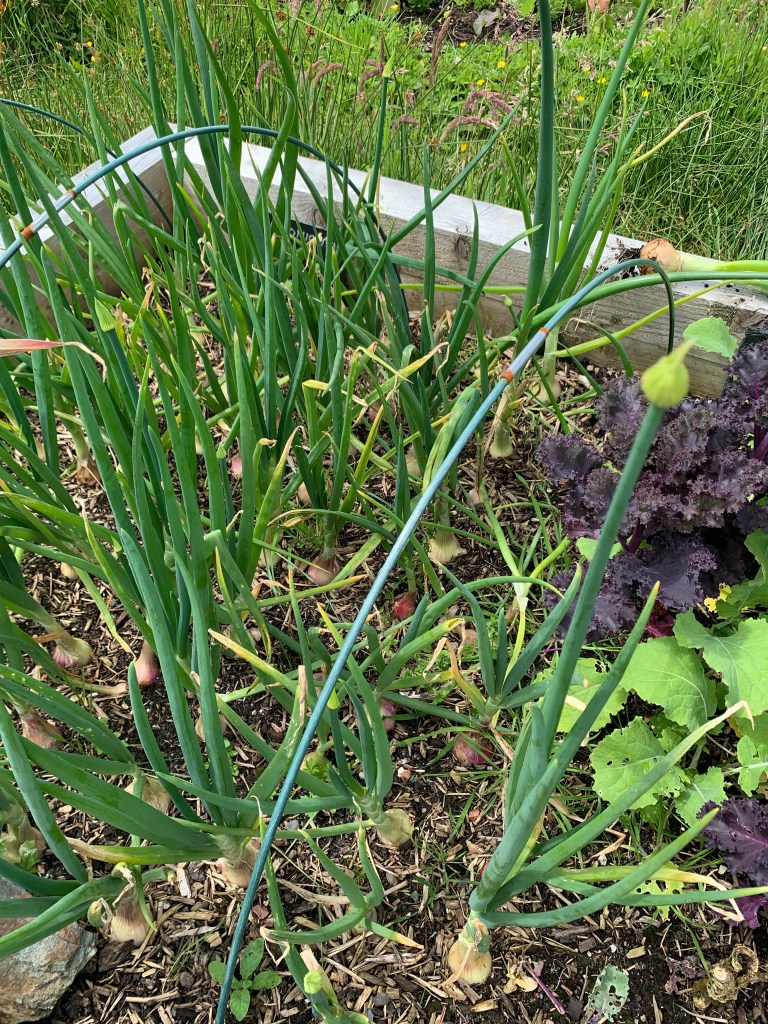
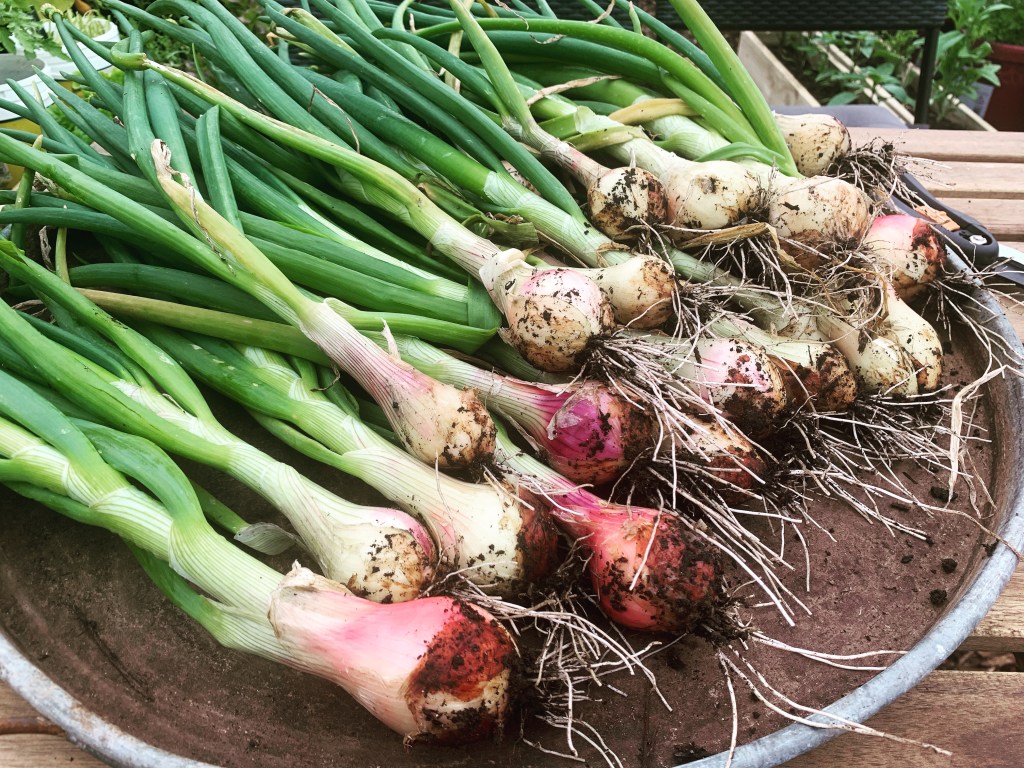
The onions were supposed to be red onion varieties, but aren’t more than vaguely pink. They sent up flower shoots so most of them have been lifted before they soften.
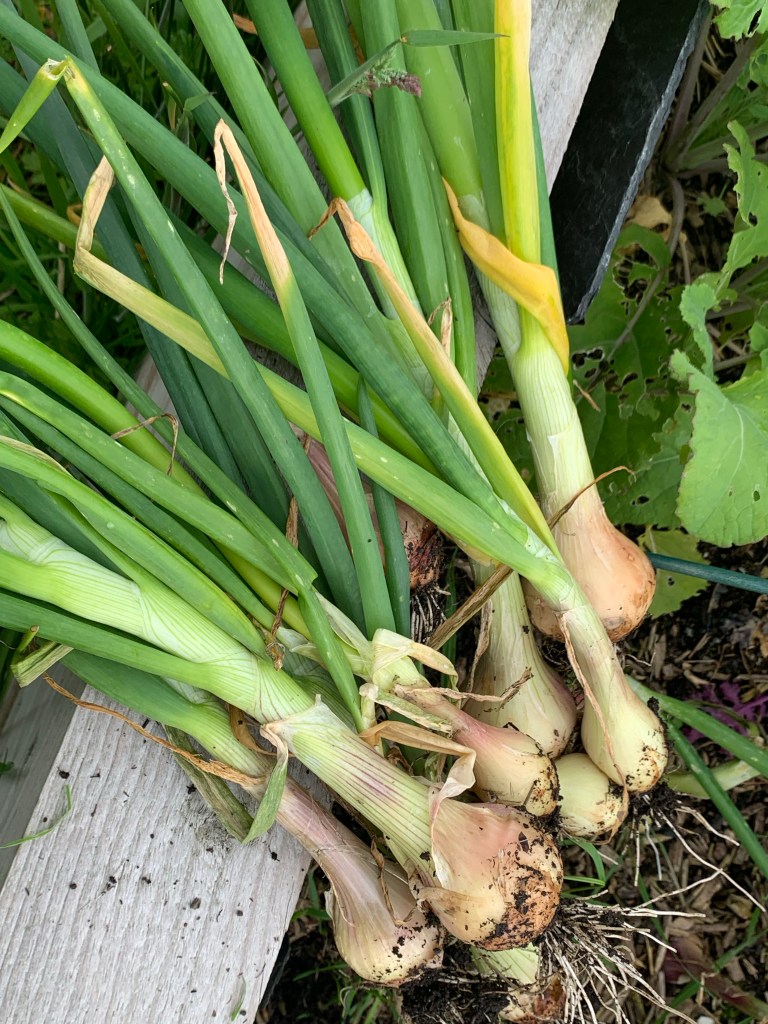
They’re small, but sweet. We’re using them in salads and cooking now and I have them drying in bunches ready for use later in the season.
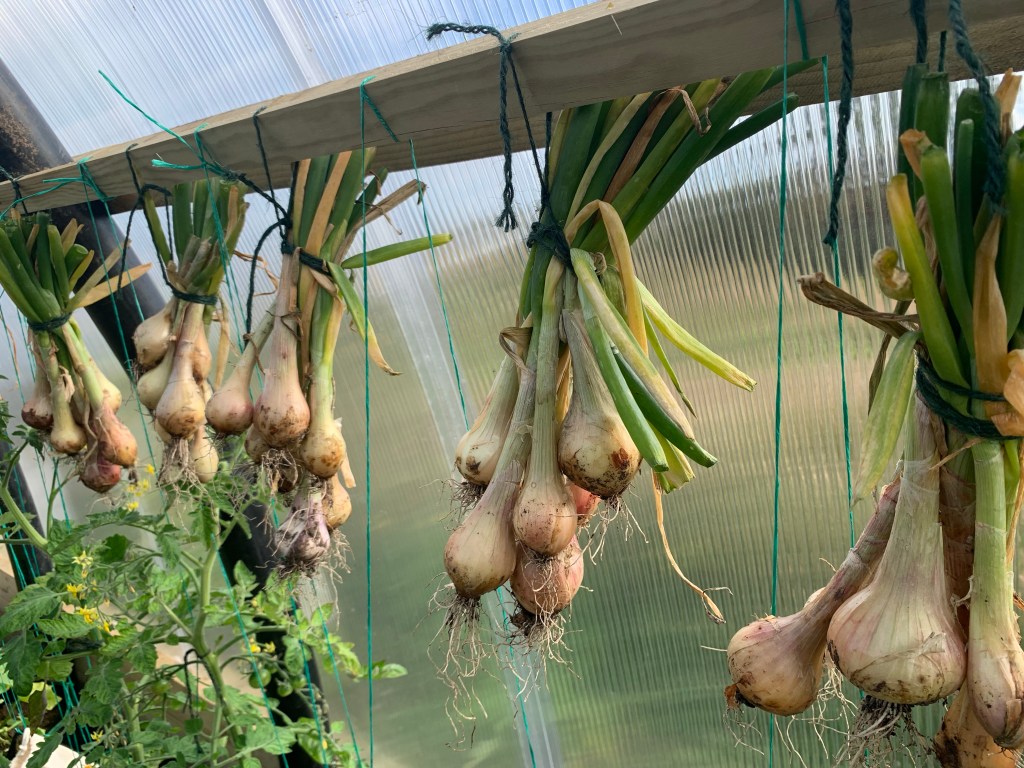
Drying onions

The red kuri squash has a few young fruits on it, which I’m very excited about. Early days, but I’m hopeful that we’ll have a few to harvest in late summer. The French squash hasn’t shown any sign of fruiting yet.
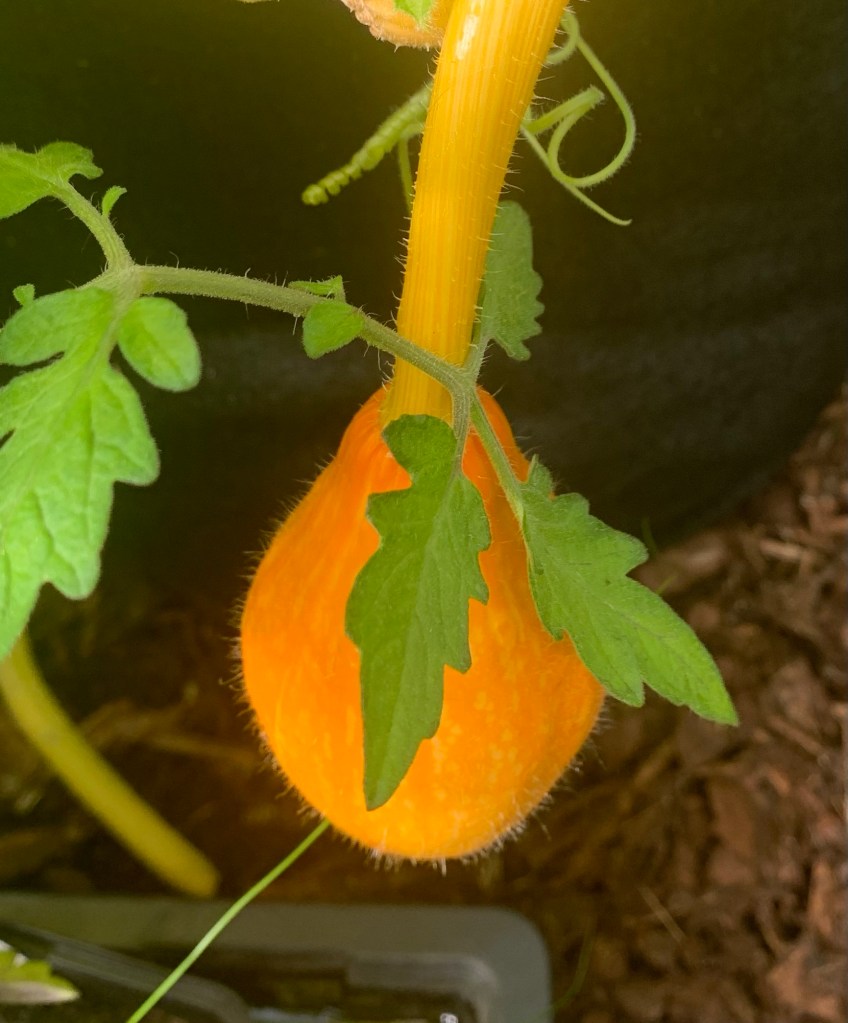
Baby squash hiding behind a tomato leaf

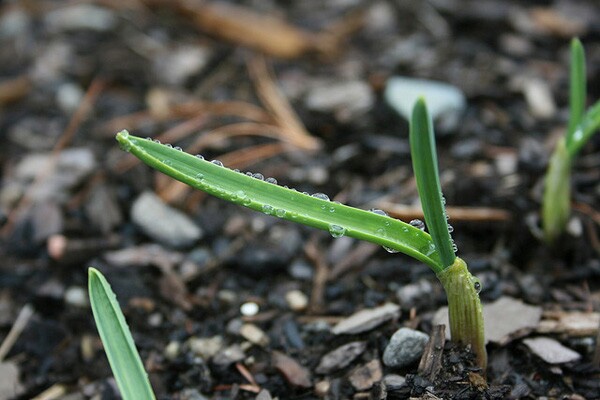
The garlic was a bit of a disappointment. Sown last October I had high hopes for bigger heads this year, but they’re still small. I’ll use them in stews and trays of roasted vegetables, so despite their lack of size they won’t be wasted.
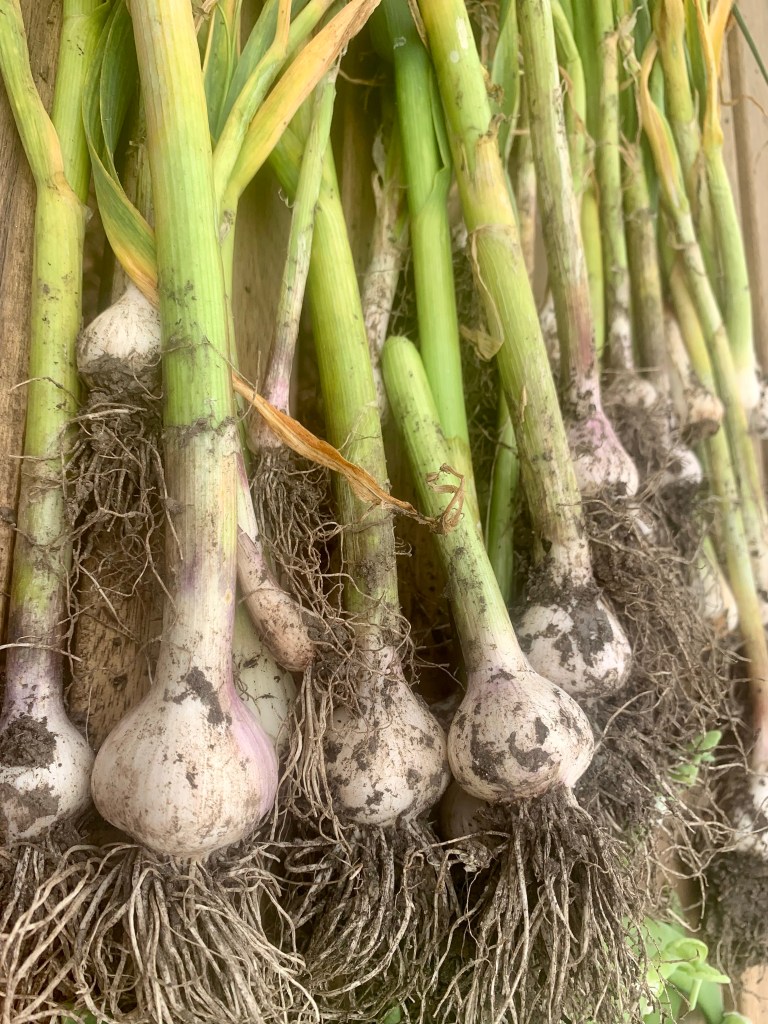
Wimpy garlic

The potatoes are also much slower than last year. We’ve just harvested some Edzell Blue and Casablanca varieties. Great taste, but not hugely prolific. We’ll hold off for a while for the main crop variety.
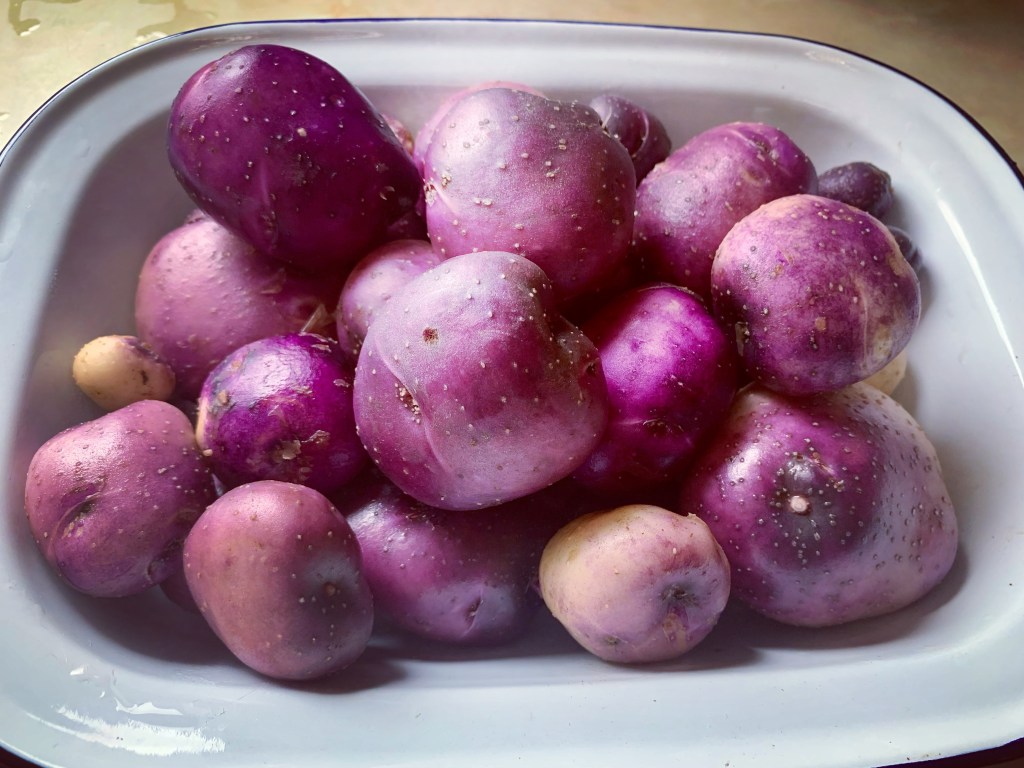
Edzell Blue potatoes

The kale is growing well after the deer ate all of my perennial kales from the beds last winter. I grew more Uncle Bert’s kale and red Russian kale from seed and it’s coming up nicely. I’ve also sown purple sprouting broccoli into the beds recently, so between them that should give us a reasonable winter crop.

The carrots were grown in large seed lick tubs this year as an experiment. Three varieties, all French heritage types, growing well, albeit slowly. The first of these should be ready in a few weeks time.
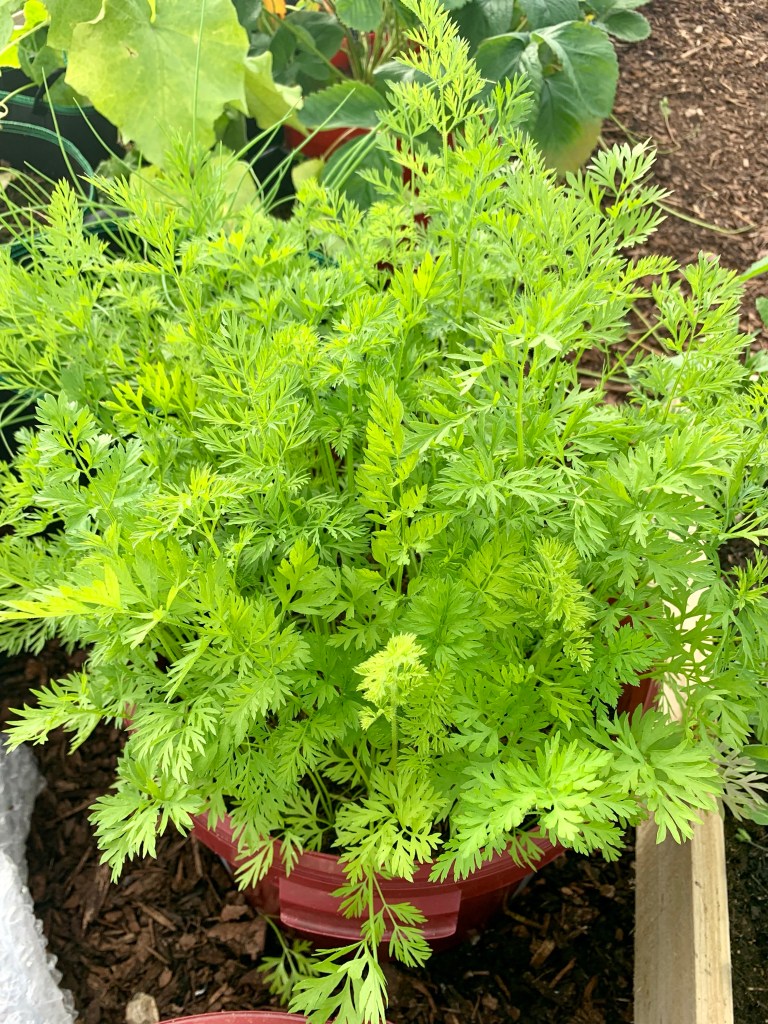
Carrots

The cucumbers had a very faltering start due to the cold temperatures of late spring. A number rotted and wilted beyond salvation, but the three plants that did survive are fruiting well and have produced about six cucumbers ready for eating so far. There’s no trace of bitterness to their taste either, which is great.
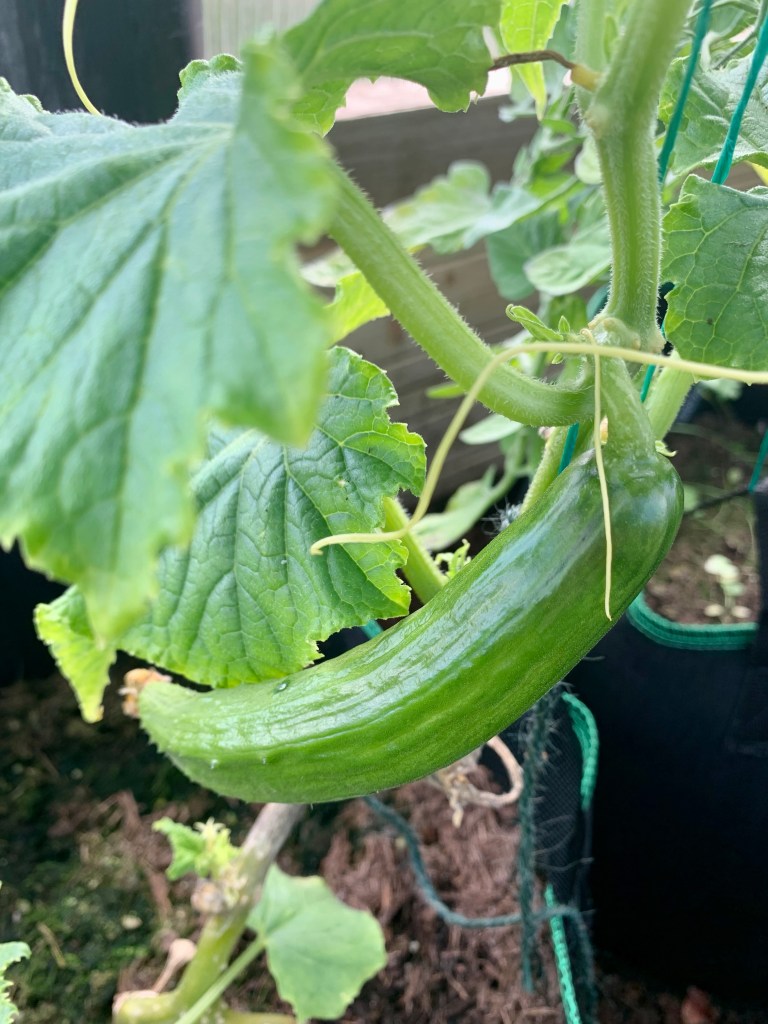
Baby cucumber

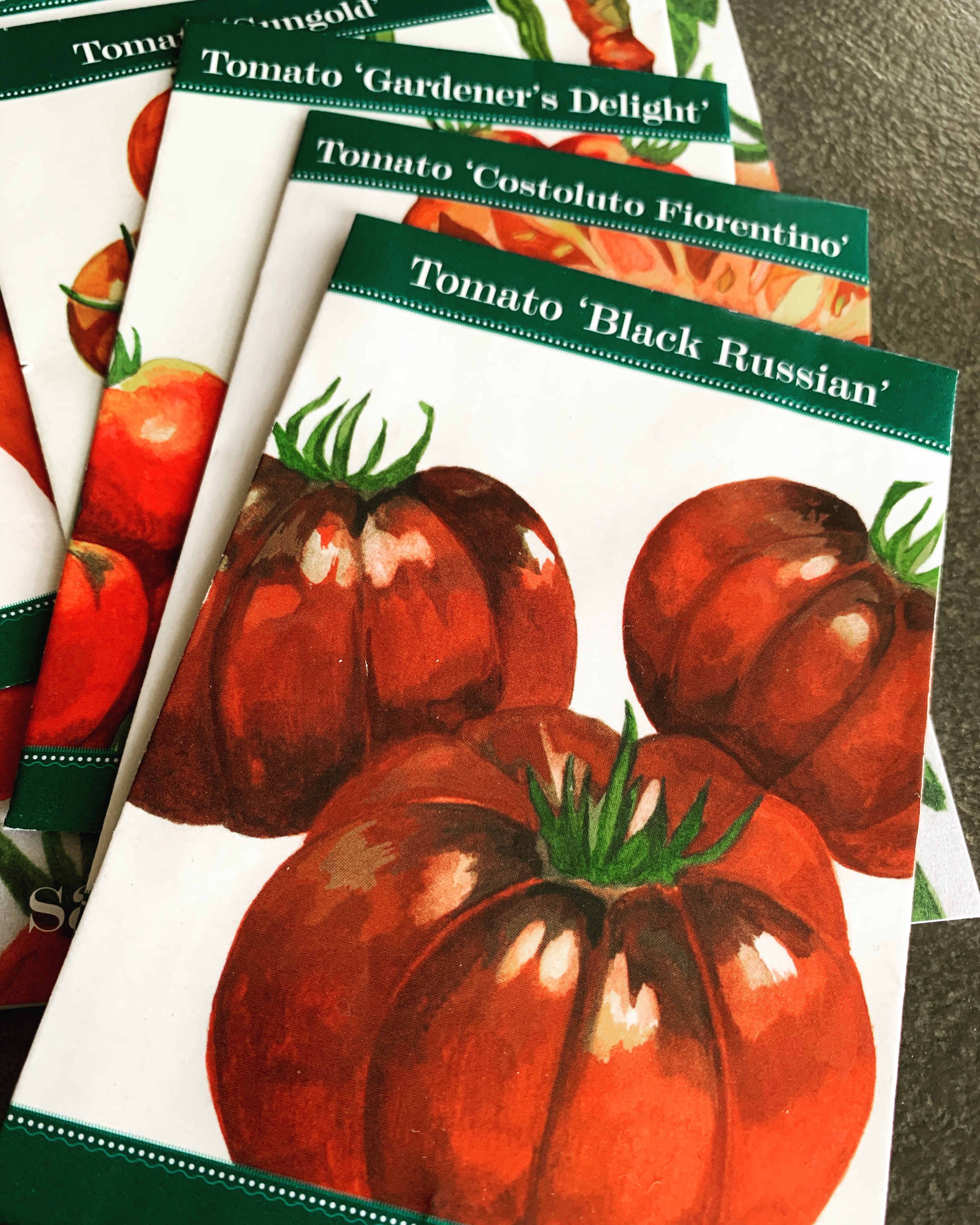
The tomatoes are starting to set fruit, again later than most due to our cold, late start. It will be interesting to see whether we can get them to ripen in time. The big Russian bush varieties are pruned and tall with not much evidence of fruit yet. The dwarf bushy varieties, which don’t get pruned, are happily fruiting away with no fuss.
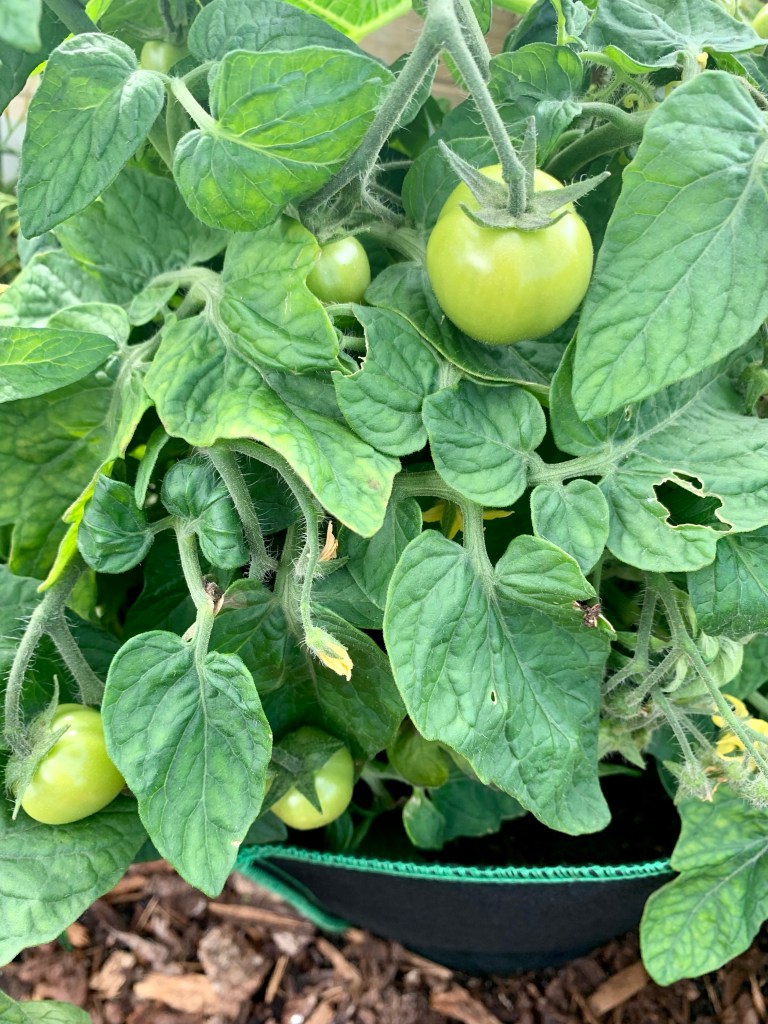
Dwarf tomato plants doing their thing

The courgettes – I only planted two plants so that we weren’t overrun if they grew – have started fruiting, although the fruit is yellow rather than green, which is a total surprise. We’ve already had a handful of courgettes from them, and looking at the flowers there will be many more to come.

The beans have struggled. The borlotti beans are doing the best out of all the varieties and are starting to flower now, so I’m hopeful for a few fresh beans from them.

The corn is about four feet heigh although no sign of flowers or fruits yet.
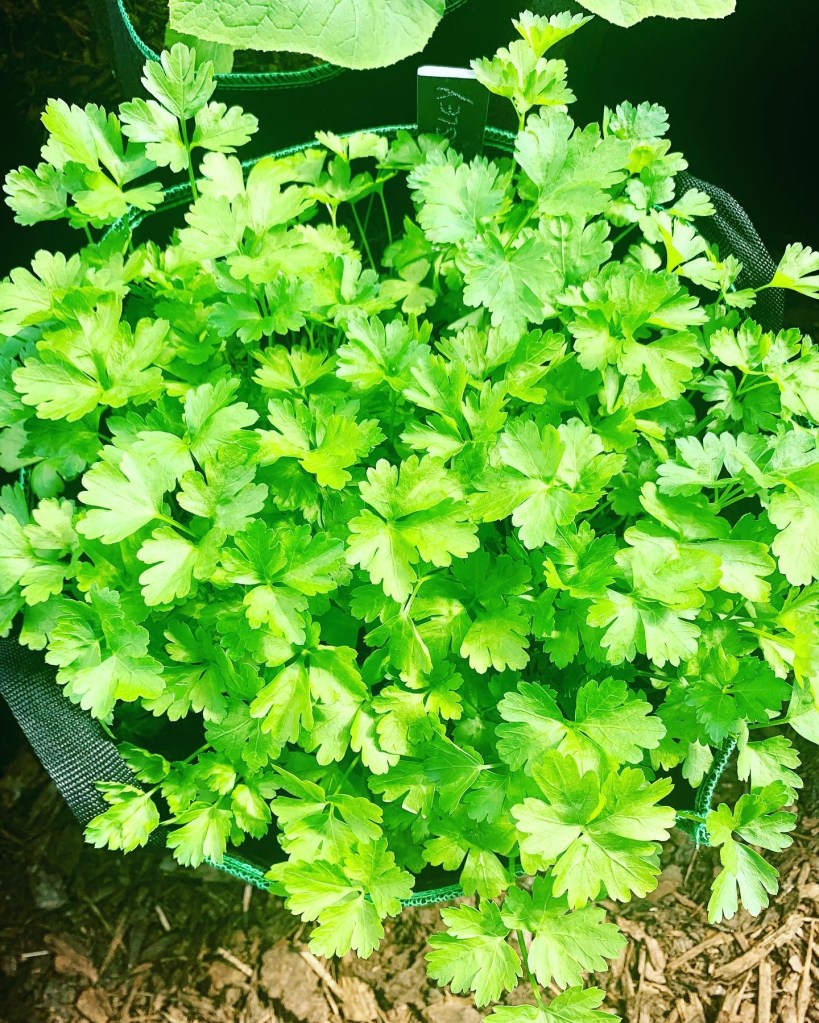
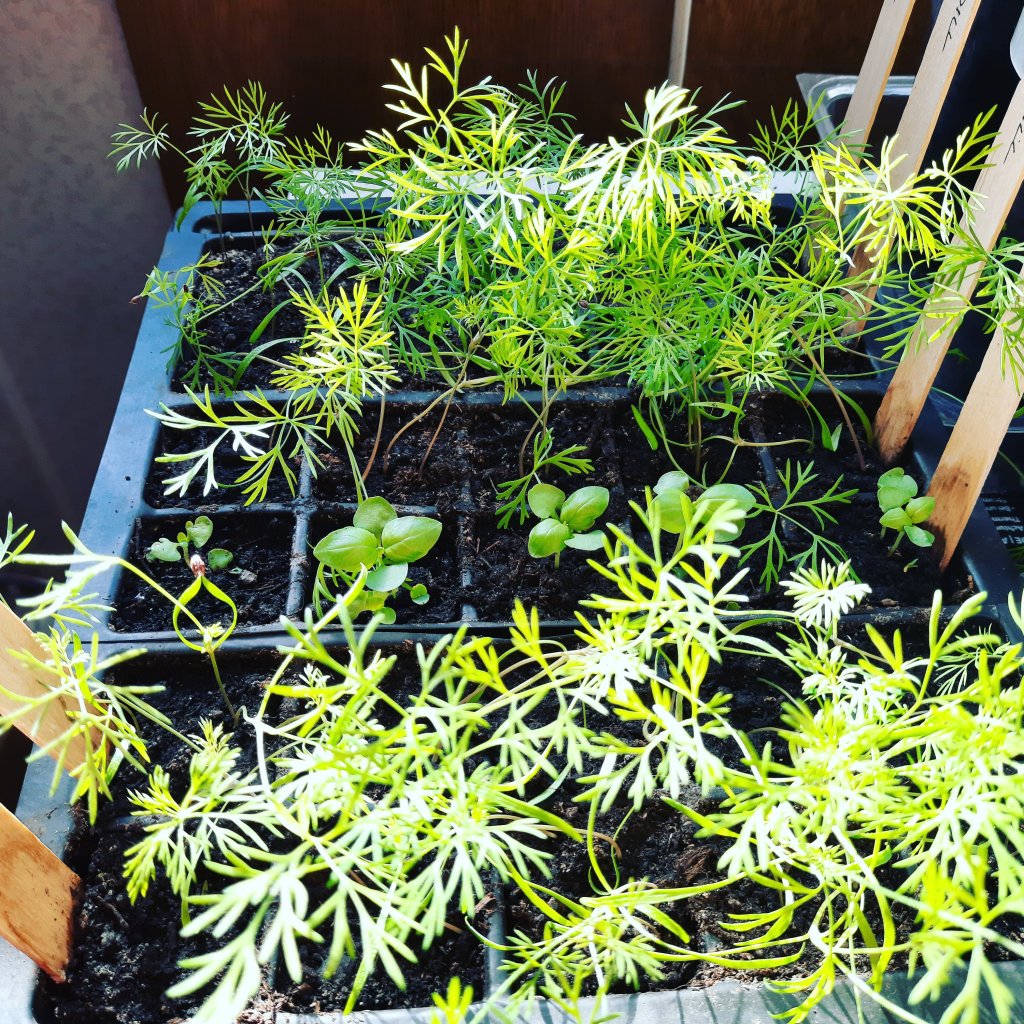
The herbs have gone mad – the tubs of parsley and coriander have gone crazy and we’ve been eating them for months, the dill the same and I’ve left some to go to seed for collection. The chives, lemon balm, rosemary, lemon verbena and mint are all growing well.
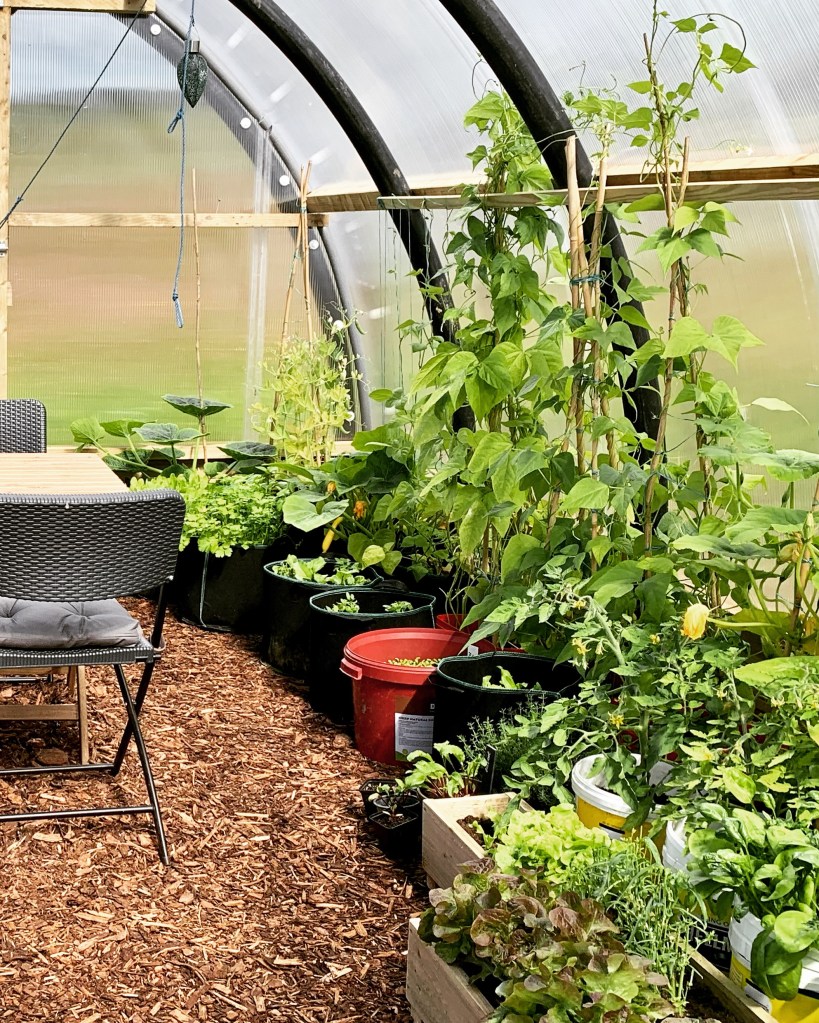
All in all, I’m happy with our first months of growing with the polycrub so far. It’s hard to believe that it’s only been here since mid April. I’ve learned a lot, and when we set up proper grow beds in there next year I’ll feel confident about what to plant out.

Now to start sowing the winter seeds! The year is turning already.
Onions, winter seeds & mackerel pate

As long as I do things slowly with a rest and feet up between each activity, it’s surprising how much I can get through in a day whilst recuperating.

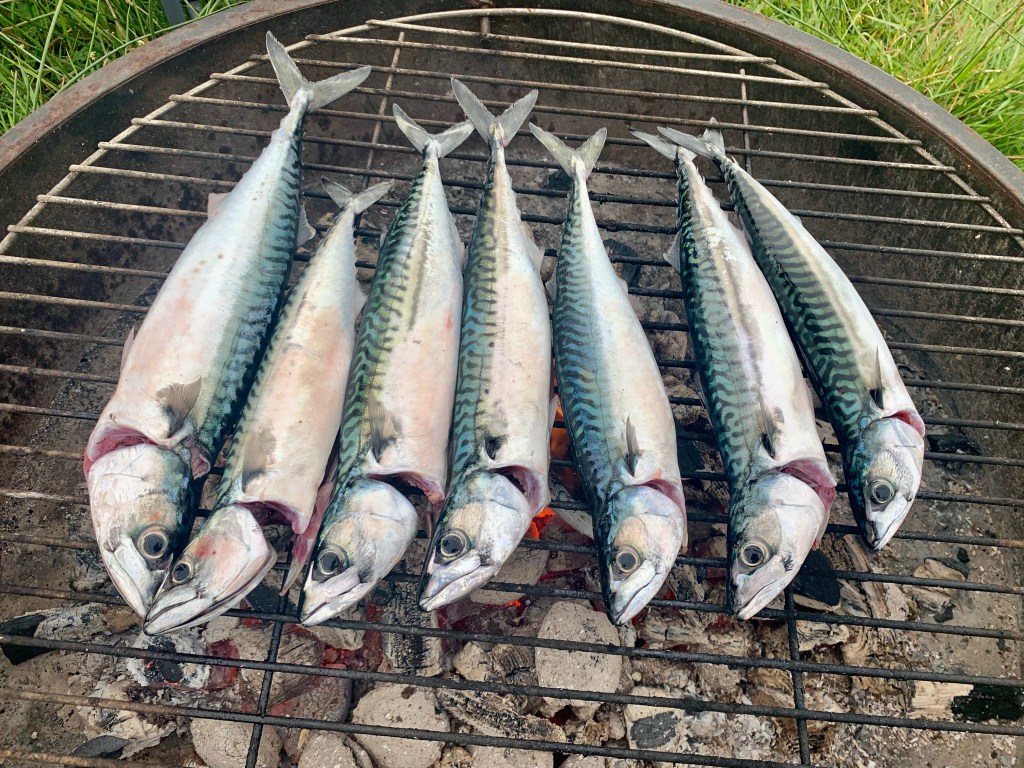
Husband went fishing yesterday afternoon at high tide, and came back with several beautiful fat mackerel.

We grilled them for supper last night on the fire pit. There’s nothing more delicious than fresh mackerel, succulent, crispy and smoky from the coals. It’s so good to feel that this is free bounty from the sea! We ate them with fresh lettuce, cucumbers and potatoes from the polycrub.

We cooked them all whilst spankingly fresh, knowing that there were more than we could eat so that the leftover ones could be turned into mackerel pate this morning. That will be my first job after we’ve cleared away the breakfast things.

Whilst bimbling around in the vegetable patch yesterday, bemoaning the state of the weeds and the rushes – knowing that I mustn’t try and sort it out else my poor, tortured stomach muscles would give up the ghost completely – I noticed that the onions were about ready to harvest, and that some of them were sending up flower shoots.

An onion with a flower shoot

The perceived wisdom from Google is that when onions do this they should be harvested immediately. It also advises that onions that have done this should be used first as they don’t store well.

I think a few minutes of harvesting onions later today is on the cards. They come out of the soil easily being grown so so close to the surface, so it’s really no effort. Honestly.

The final job that I want to achieve this weekend is to sow some winter seeds. Once the onions have been lifted, followed very soon by the potatoes, there will be some raised bed space made free, and I’m keen to keep vegetable production going.

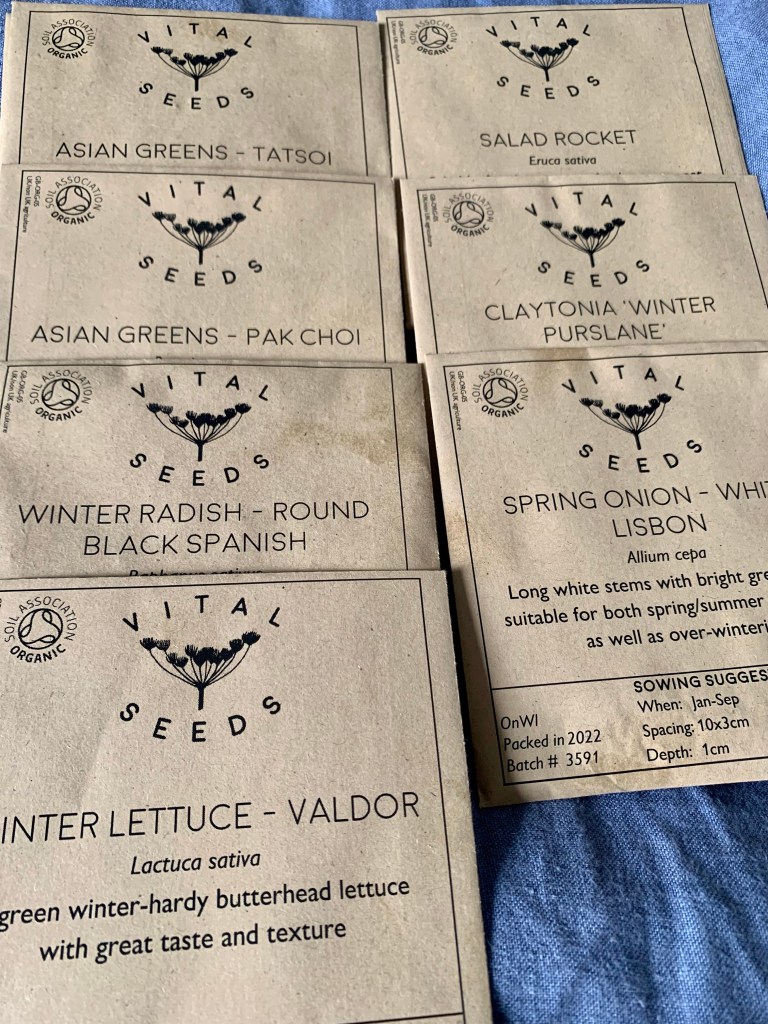
I’m going to try some Asian greens and winter radish alongside the winter lettuce and kale. Let’s see what we can achieve. I love that growing is a constant cycle of experimenting and learning.

Repurposing, recycling

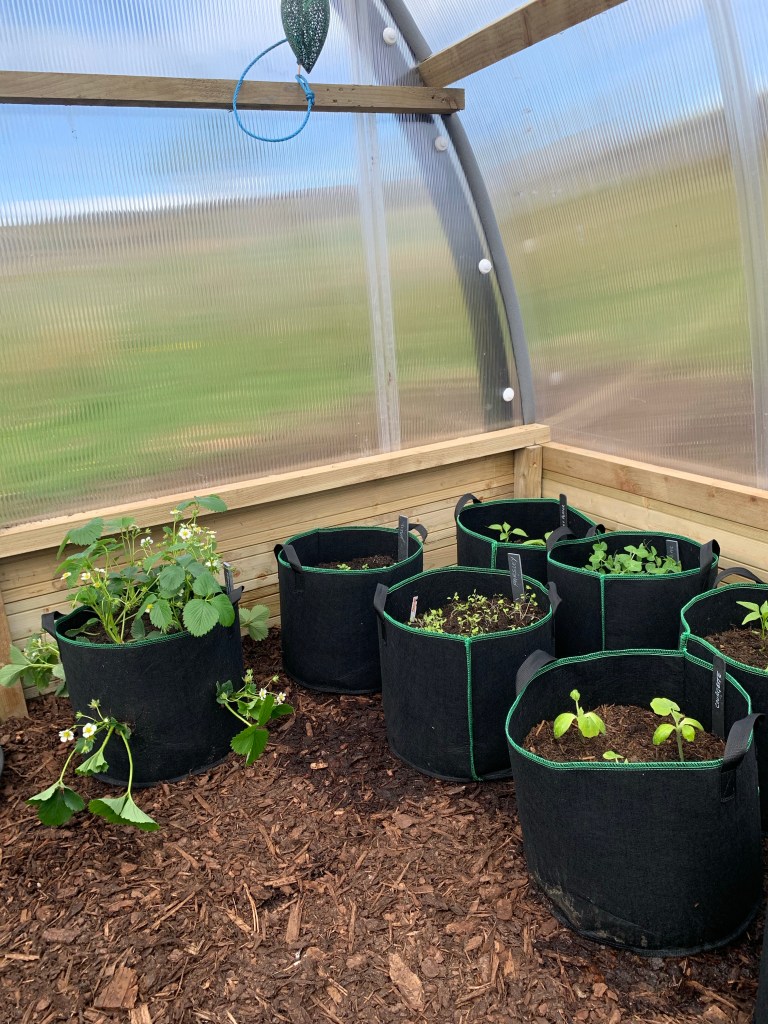
I’ve started the polycrub off with growing in canvas containers. We won’t have time to build and fill beds in there until next spring, and there isn’t much depth of soil beneath it before you hit the impenetrable seam of shale and lewissian gneiss.

I figured it was the best way of getting productive and a harvest this year.

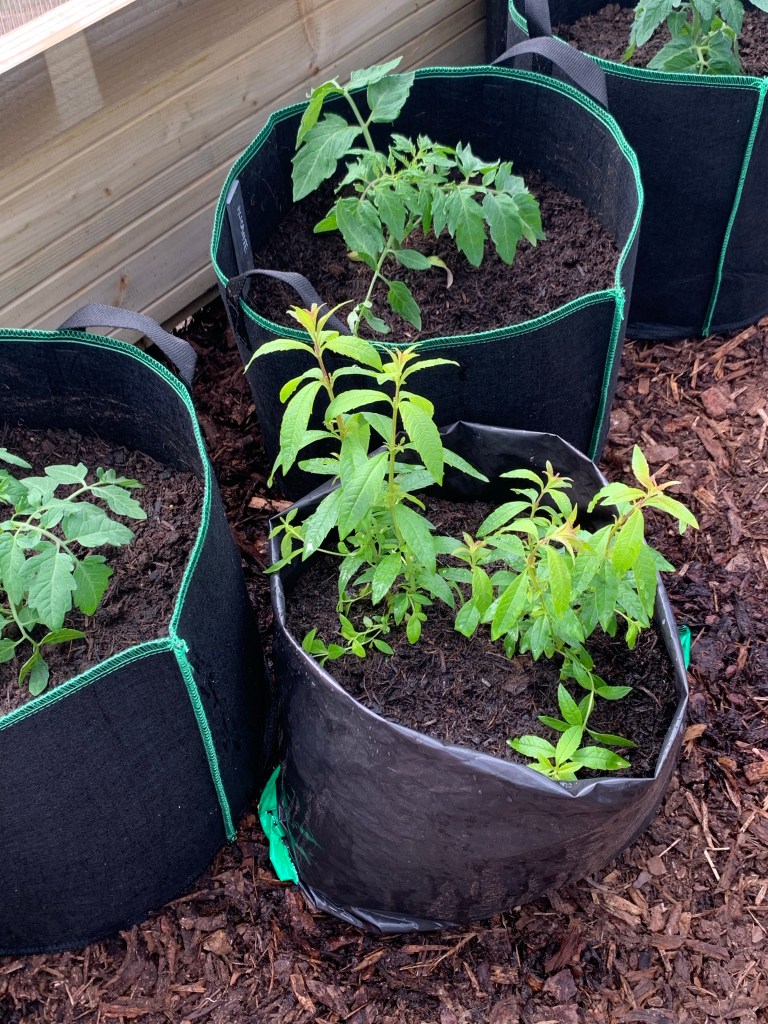
Canvas grow bags and a repurposed compost bag!

They’re not expensive, a few pounds each, but when you’re using as many as I am it soon mounts up. So I put out a call via a couple of local friends for any unwanted large containers.

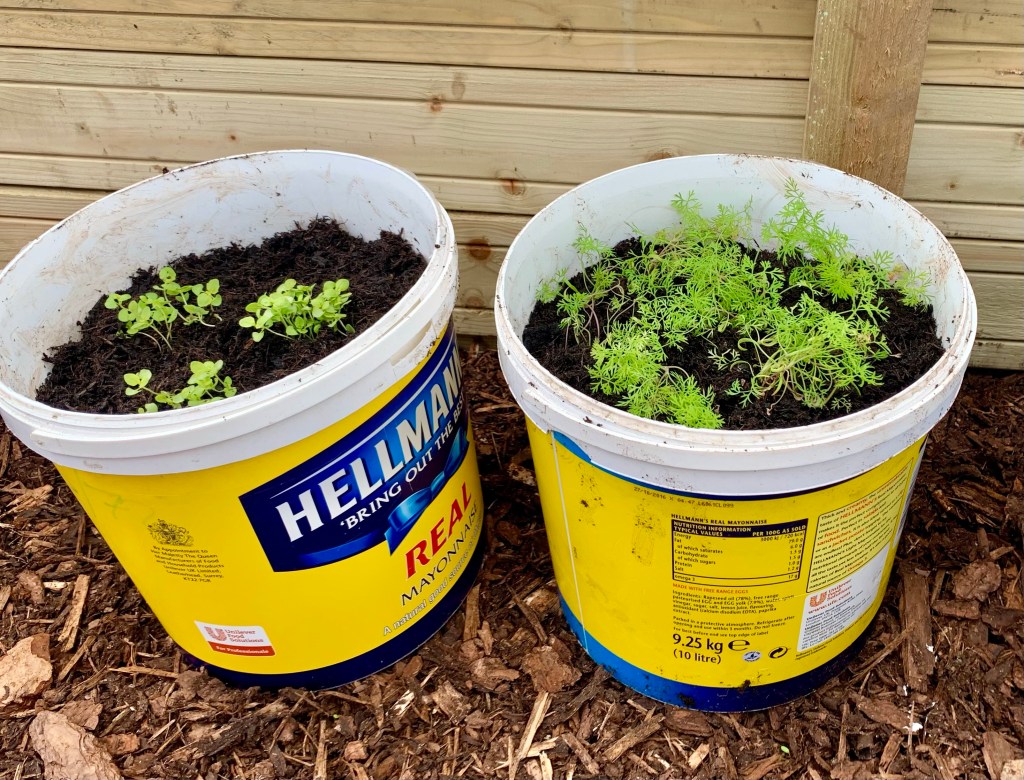
Friends at the newly established Coffee Bothy in Broadford offered up a dozen or more catering mayo tubs. A perfect size for herbs and smaller plants!

Old mayo tubs

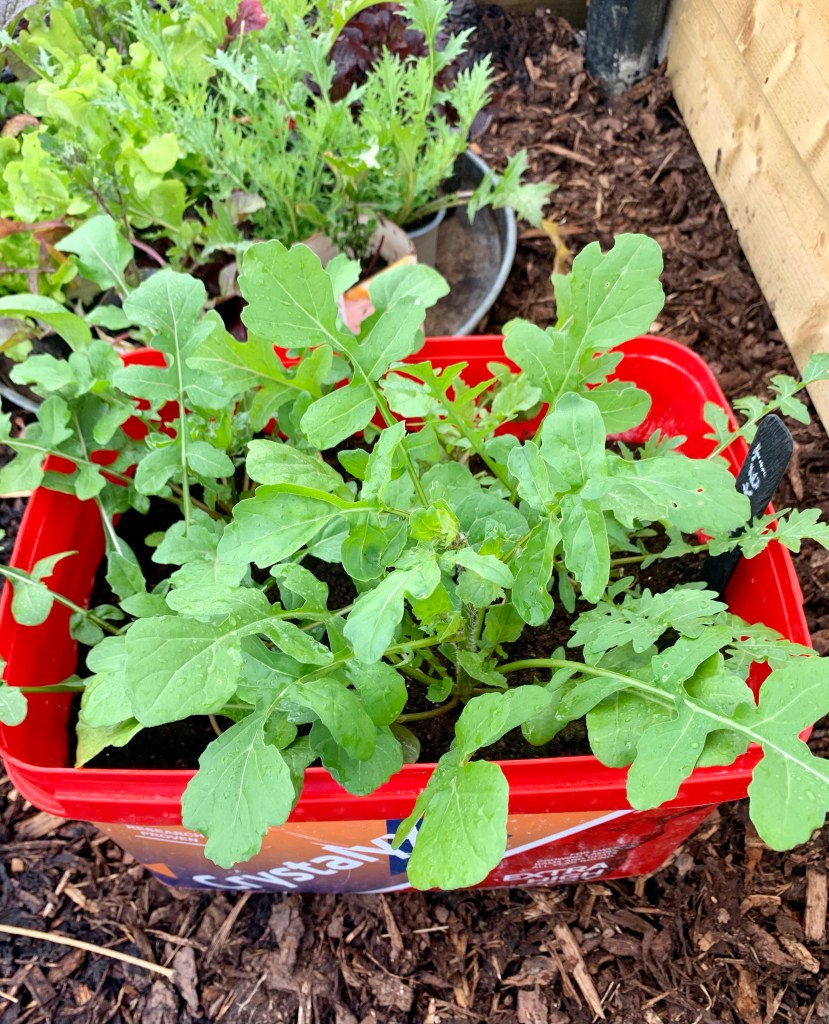
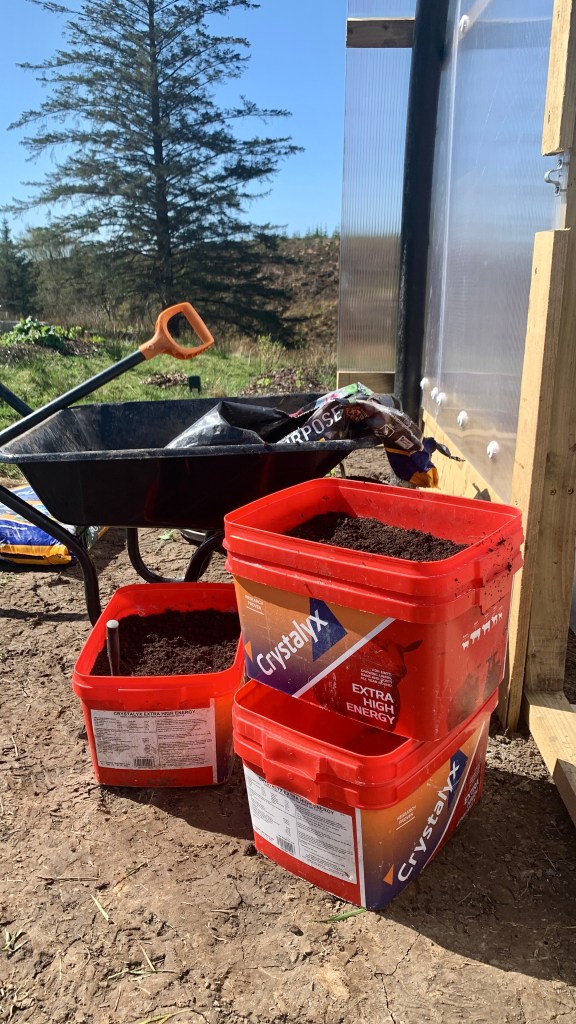
A couple of kind local crofters kept back their sheep lick tubs for me. They hold about 30 litres of soil or compost each so are deep enough for beans, potatoes or cucumbers to grow in.

Sheep lick tubs potted up with rocket

We drilled drainage holes in them and I have been busy planting them up for the last few days. If it holds soil, it gets filled with seedlings! It’s best not to stand too still around here 😊.

This is such a busy season for planting. I feel that I’m running slightly late with things this year but it’s been so cold that the seedlings that I started early have been very slow to grow.

Polycrub filling up

It’s always a balance here between waiting for the temperature to get warm enough but not leaving it so late that there isn’t enough season left for plants to mature.

Vegetable planting

Although it’s been warm during the days of April up here on the island, with temperatures of around 16C, the nights are still pretty cold at about 5C or less. So it’s time to still be cautious about planting anything tender out.

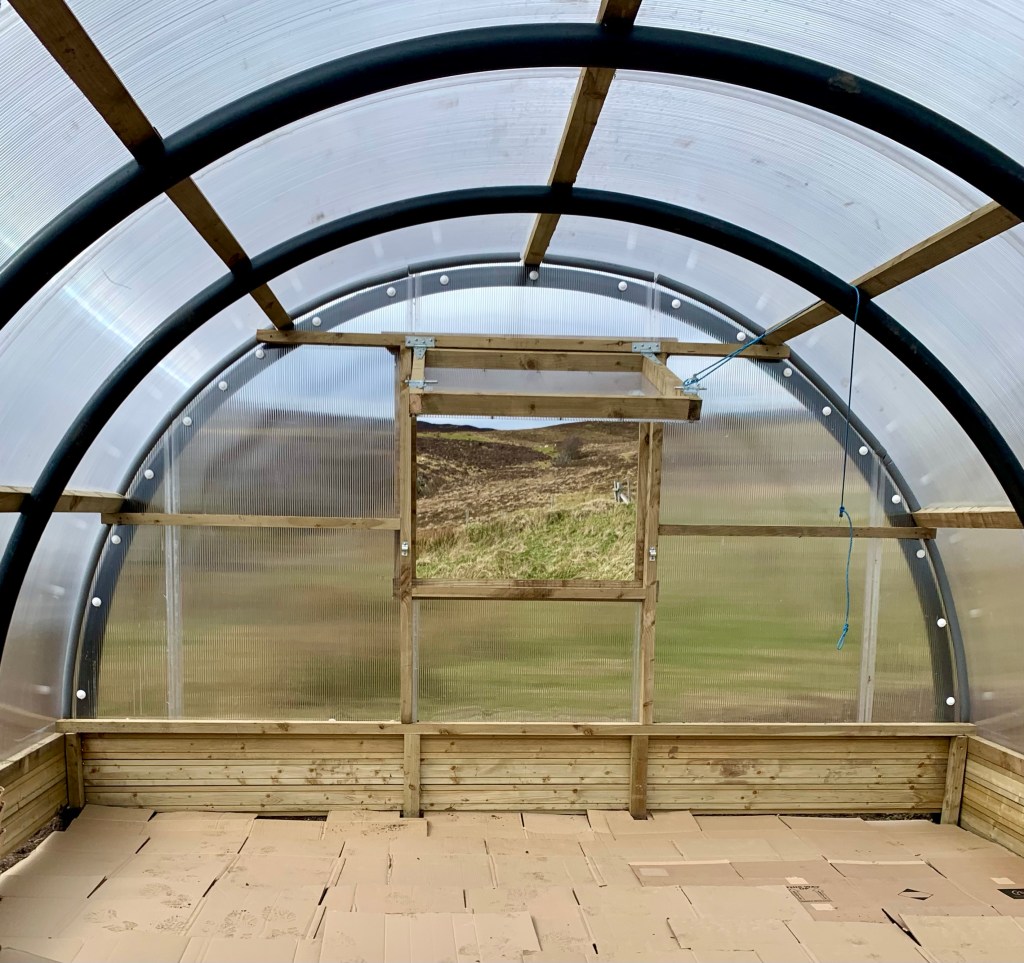
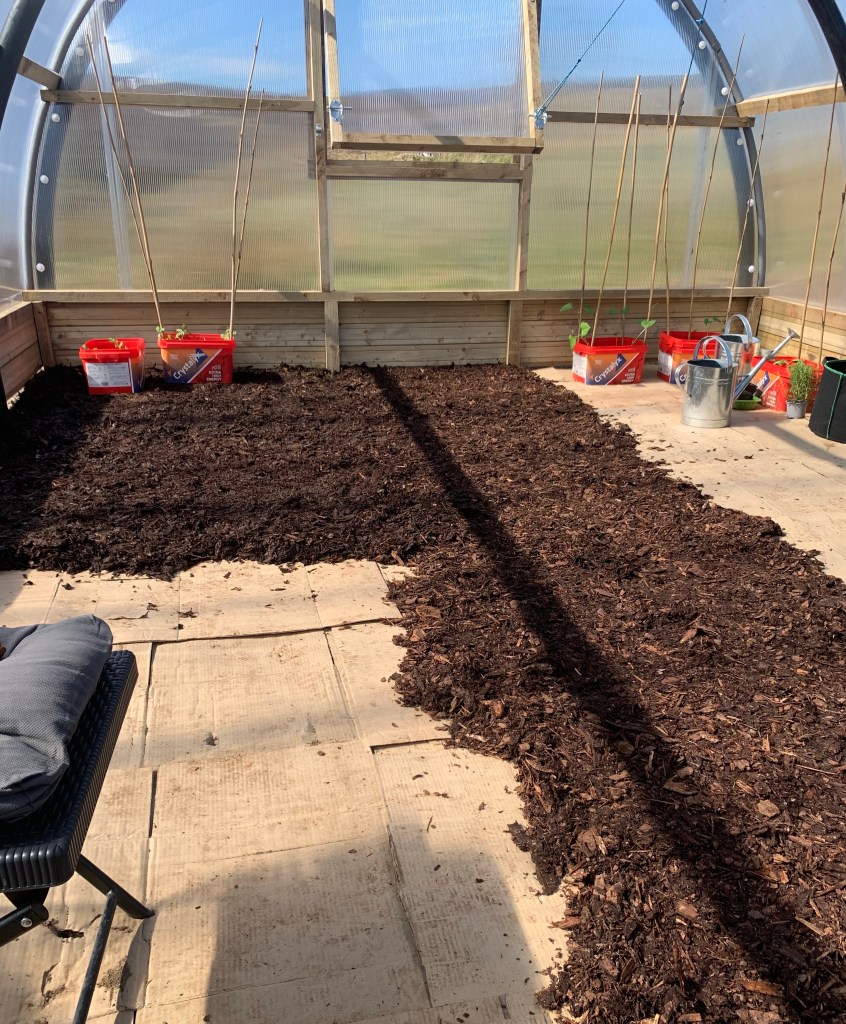
We’ve started prepping the polycrub growing area with a layer of cardboard followed by a layer of wood chippings to act as a weed suppressant.

It’s been heavy work for husband wheelbarrowing load after load of woodchip over the croft to the tunnel so that I could lay and level it. We’re not finished yet.

I’ve also started filling old sheep lick tubs and canvas grow bags with soil and compost so that I can plant out some of my seedlings. The local crofters give them away and they’re great to recycle as planters with a few holes drilled in the base of each for drainage.

So far I’ve got peas, borlotti beans, and a few squash and courgette plants in the tunnel. The salad leaves are in there too waiting to transfer into positions outside. The tomatoes, cucumbers, dill, parsley, basil and chillis are still too small to go out into the tunnel yet so will benefit from a few more weeks of growth.

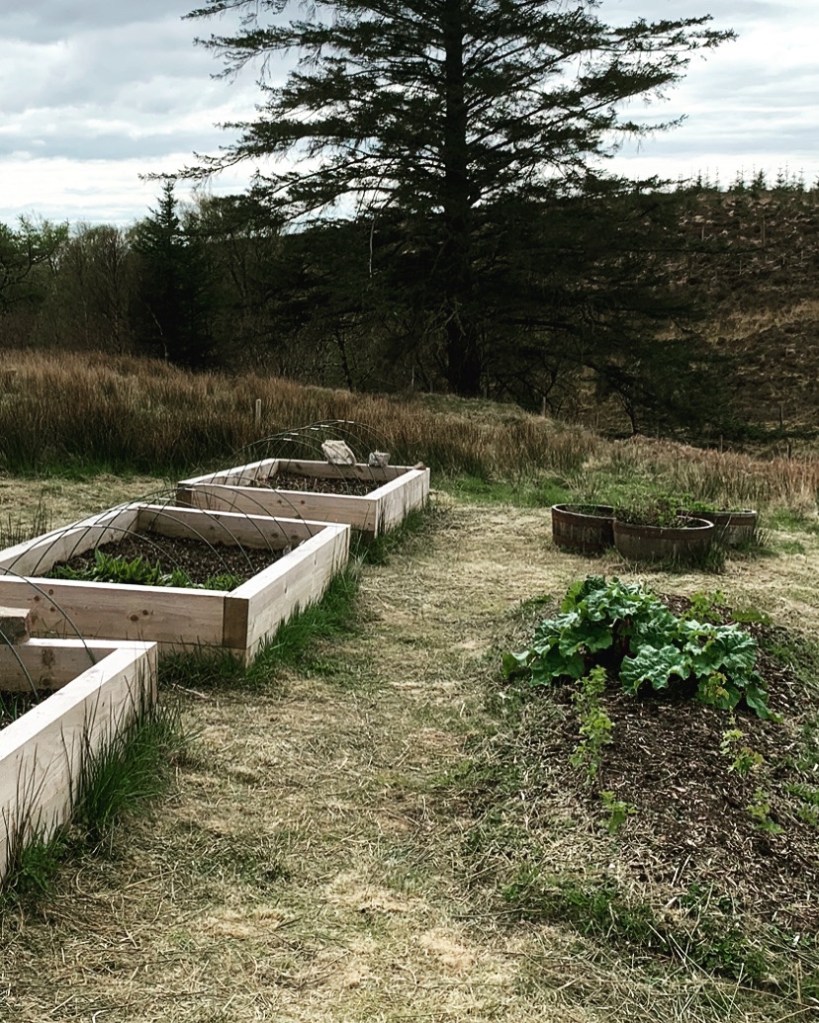
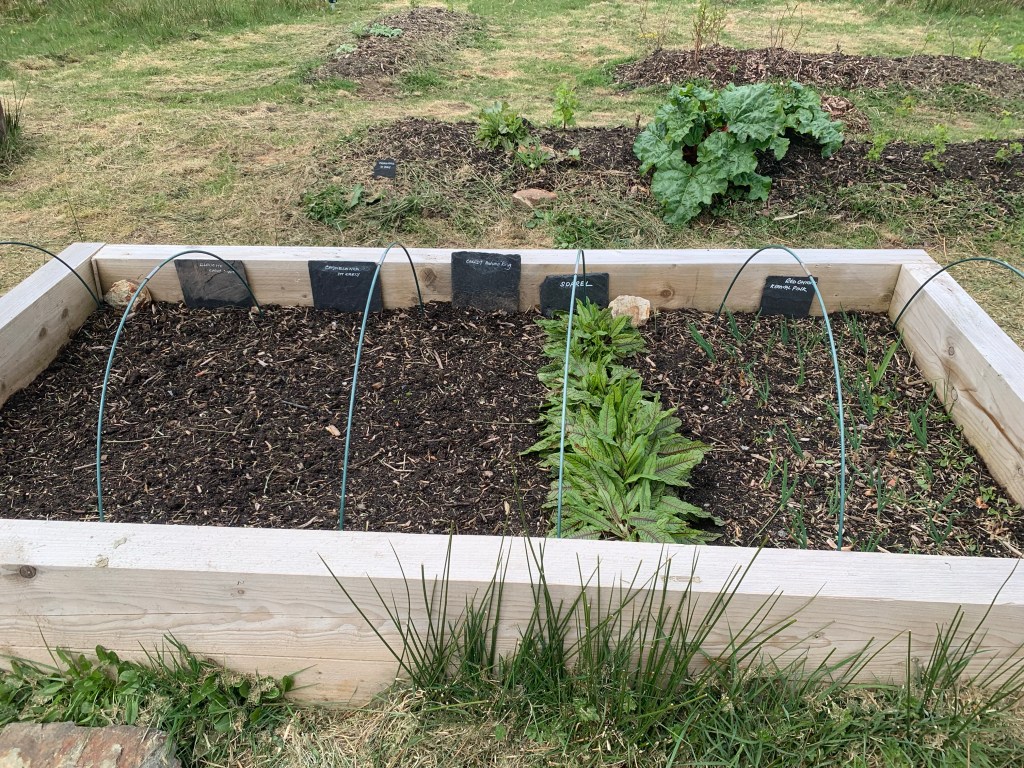
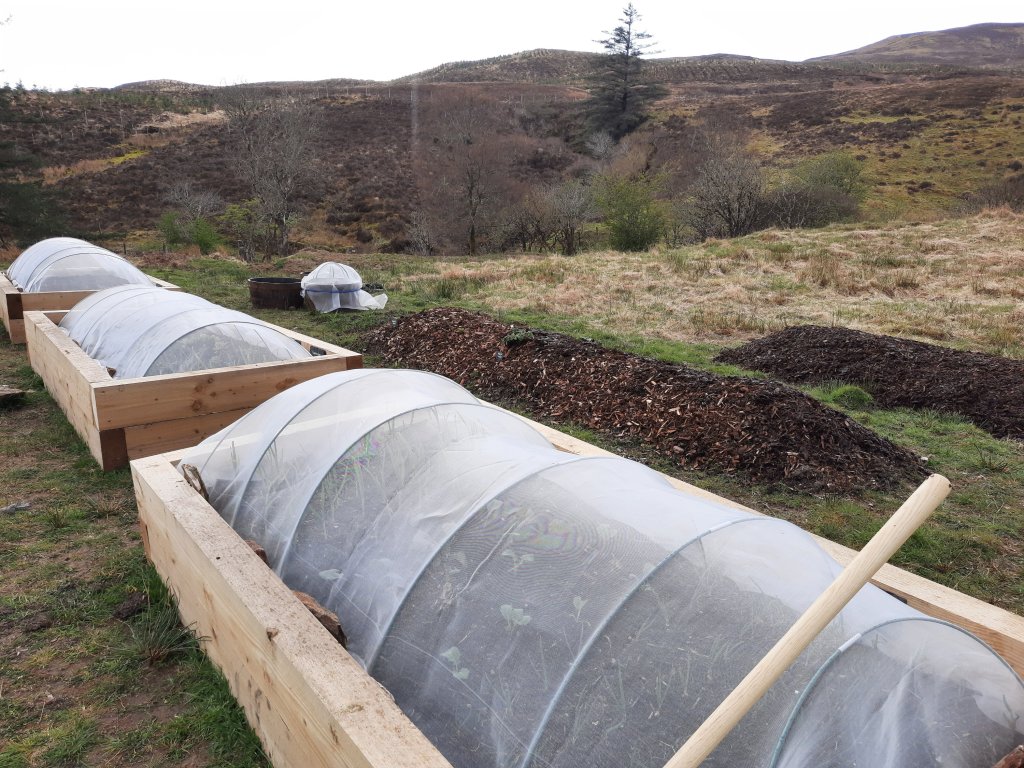
I also managed to get the carrots and kale sown directly into the raised beds. Potatoes, onions and garlic are already in. So although the beds look pretty empty, they’re actually full!

A busy time on the croft. Days of lifting, raking, bending and sowing. I’m certainly sleeping well at night at the moment!

Wishing you all a great growing season with good weather and lots of greens. ❤️

The polycrub, seeds and spring

The days are definitely lengthening now , perceptibly so. Spring should be on its way, although no one seems to have told the weather gods that. It’s still hail, snow and gales most days.

I did a quick rustle about in the raised beds this week and although I should be clearing and planting soon, it’s still far too cold and wet. The garlic has popped it’s head up a little, but that’s it.

I’ve ordered the polycrub. We did apply for a crofters grant to help with the cost, but we were unsuccessful. They wanted a five year business plan showing anticipated horticultural sales and letters of guarantee from local outlets that they would take our produce.

This isn’t the way that we’ve planned to do things. We will sell produce at the croft gate if we have any surplus, but we are mainly growing for ourselves and our neighbours, not as a fully commercial enterprise. As such we don’t qualify. We’re disappointed, of course, but we’ve bitten the bullet and gone ahead with buying the polycrub anyway.

It’s six metres by four of rigid polycarbonate sheeting, fish-farm tube loveliness. After the last few months of storms I’m doubly convinced that this is the only thing that would survive the winds on this exposed hillside.

It will revolutionise what we can grow, though. Tomatoes, chillies, squash, cherries, basil… lots of tender plants that wouldn’t thrive in our cold, windswept raised beds. We hope to have it installed in April, just in time to move crops in there for the summer.

Very exciting!

Now to clear out the caravan spare room out from a whole year of being a junk room, and set it back up to start seedling production again. It will be good to see the blue grow lights illuminating the hillside once more.. 😊

Plastering, wiring, ducting & kebabs

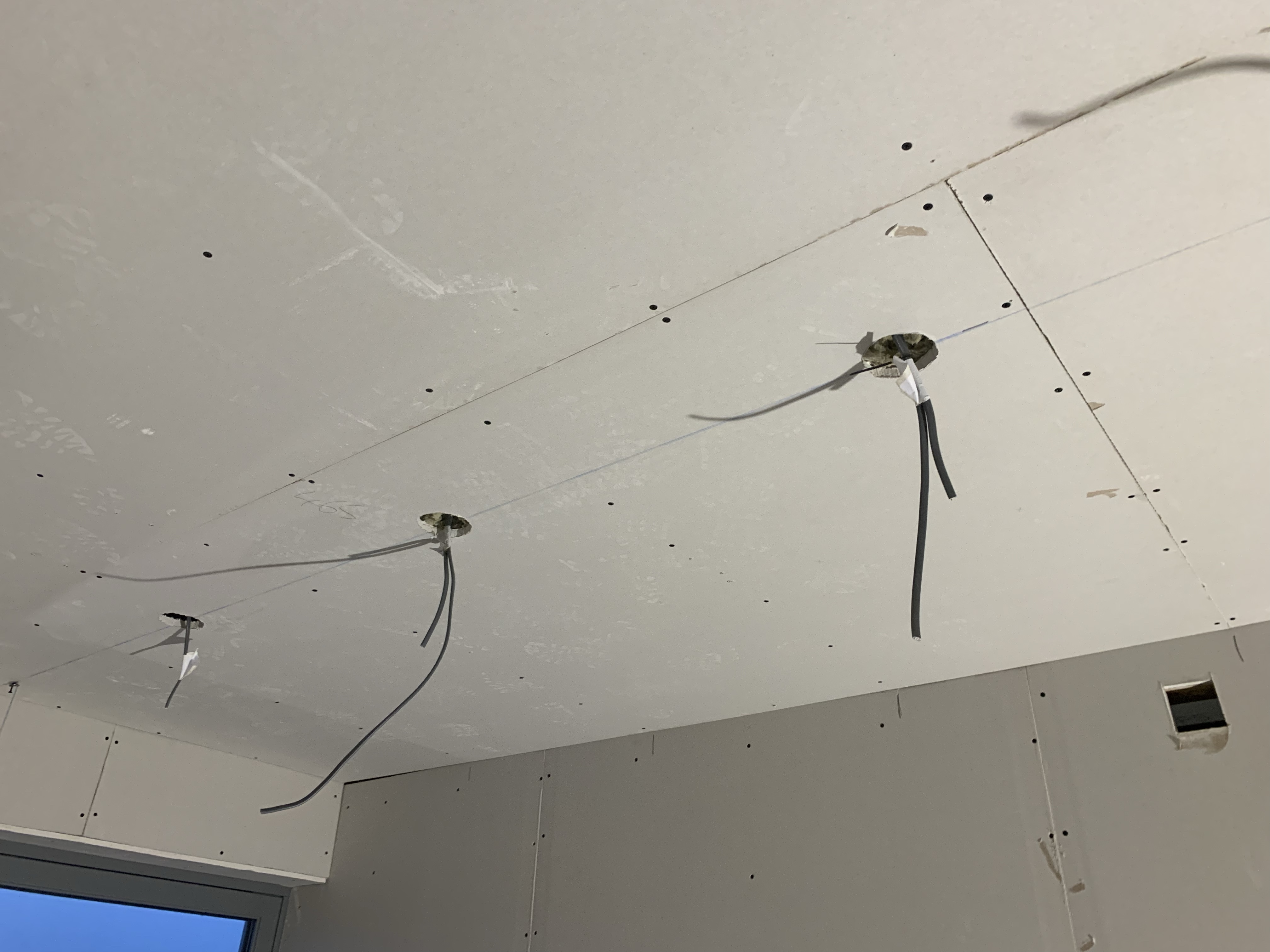
Now is a really busy time for the build. We have two guys (the two Dereks) busily and speedily installing battens and erecting plasterboard panels, with husband wiring and ducting alongside them.

It means long days and not much in the way of breaks. He’s shattered when he collapses in front of the fire each evening. A good tiredness, I think – one born of a long days manual labour and visible progress, but certainly tiredness. We’re neither of us as young as we were!

The best I can do is provide tea and food as it’s needed, and finalise the many remaining decisions on bathroom and kitchen finishes from the caravan.

When I’m not browsing tile sites and bathroom fittings catalogues, or calling Home Energy Scotland for advice, I spend much of each day making flatbreads, cake, quiches, stews and soups.

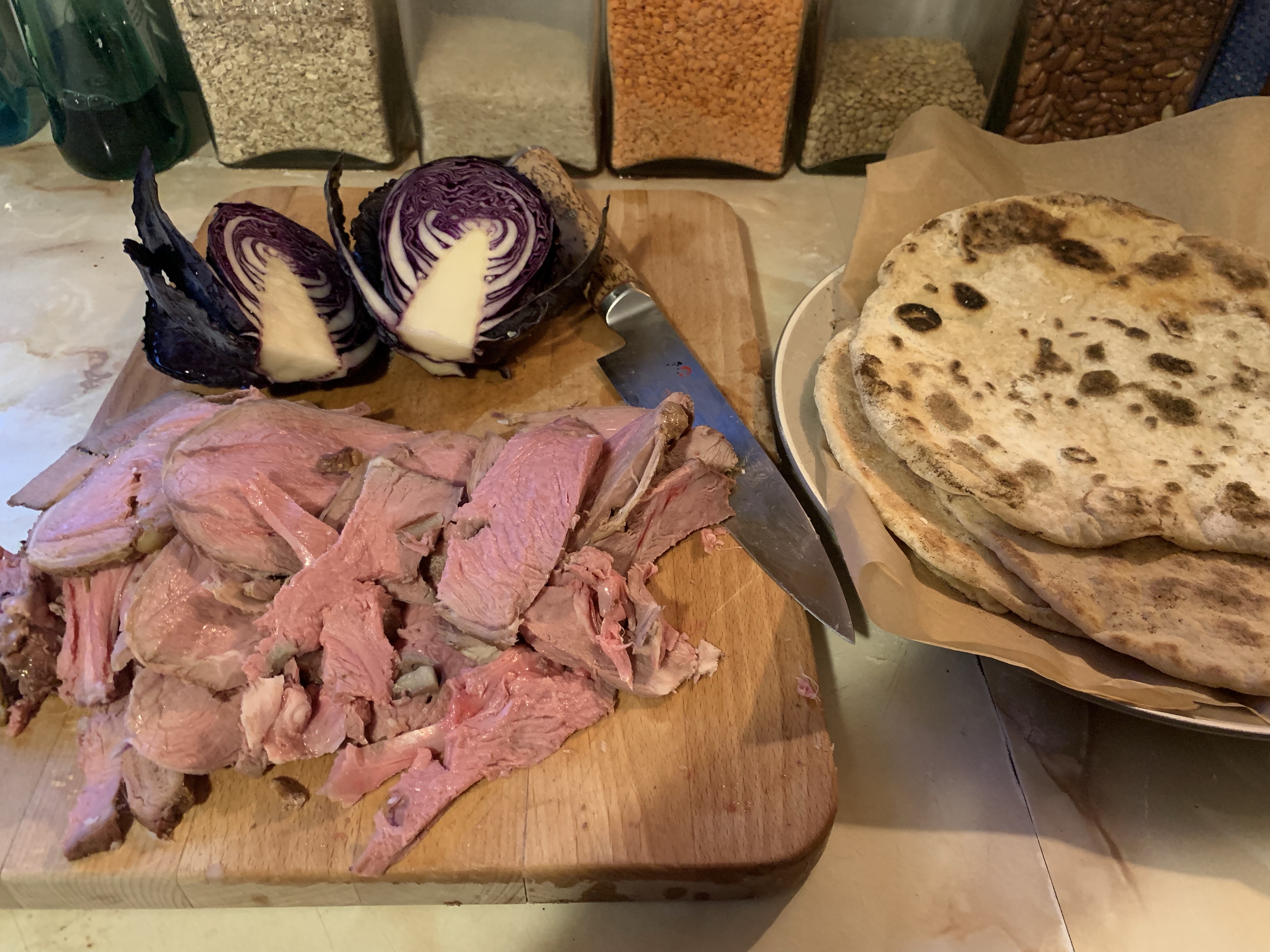
My latest attempt at urban food is kebabs! Sliced leftover roast lamb, shredded red cabbage, garlic and mint yoghurt, harissa paste and baked soft flatbreads. When you don’t have a takeaway on the island, you make them yourself. Probably much healthier too.

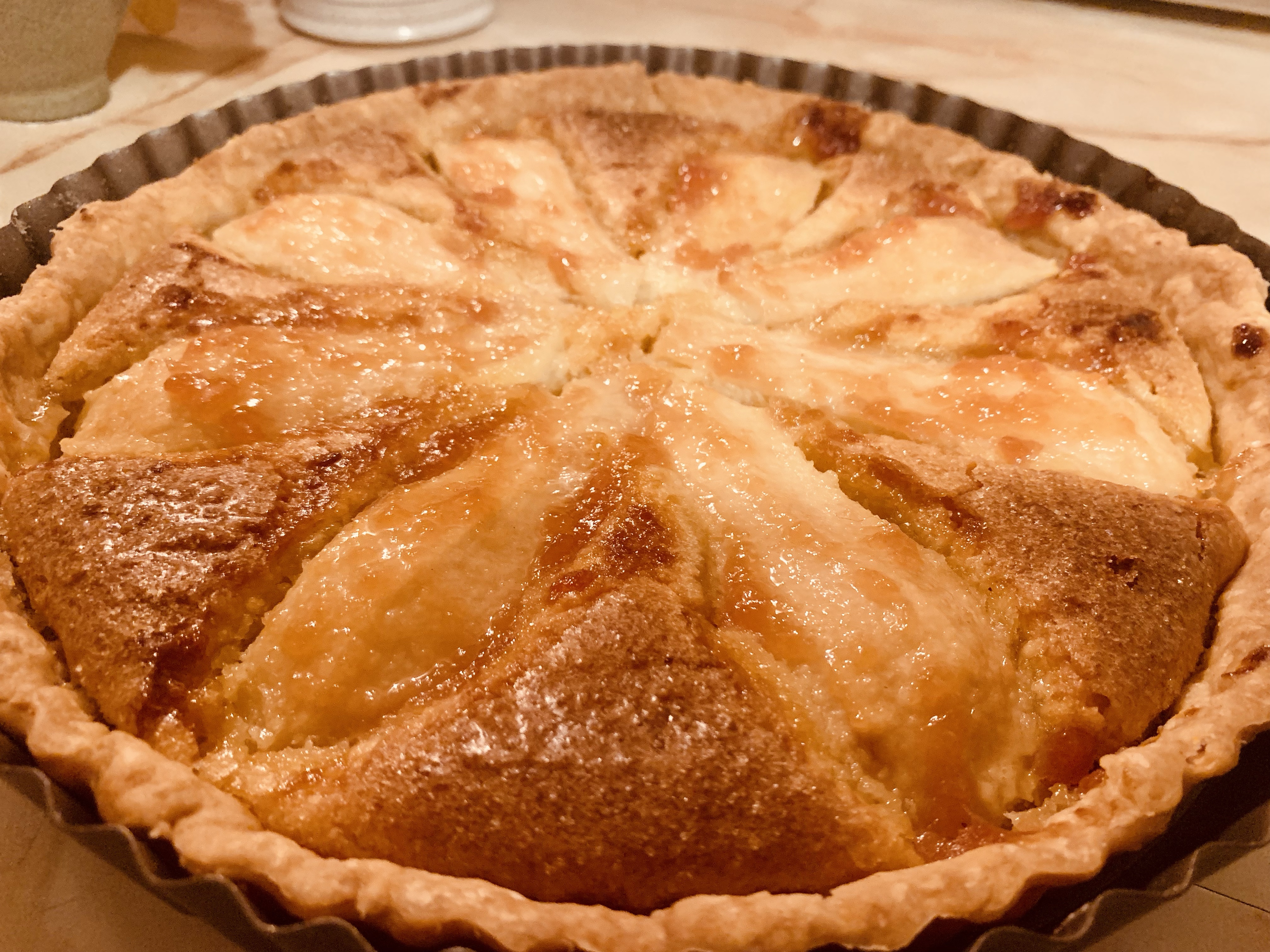
I’m not even pretending that the pear frangipane tart was anything other than an indulgence…we need yummy things right now.

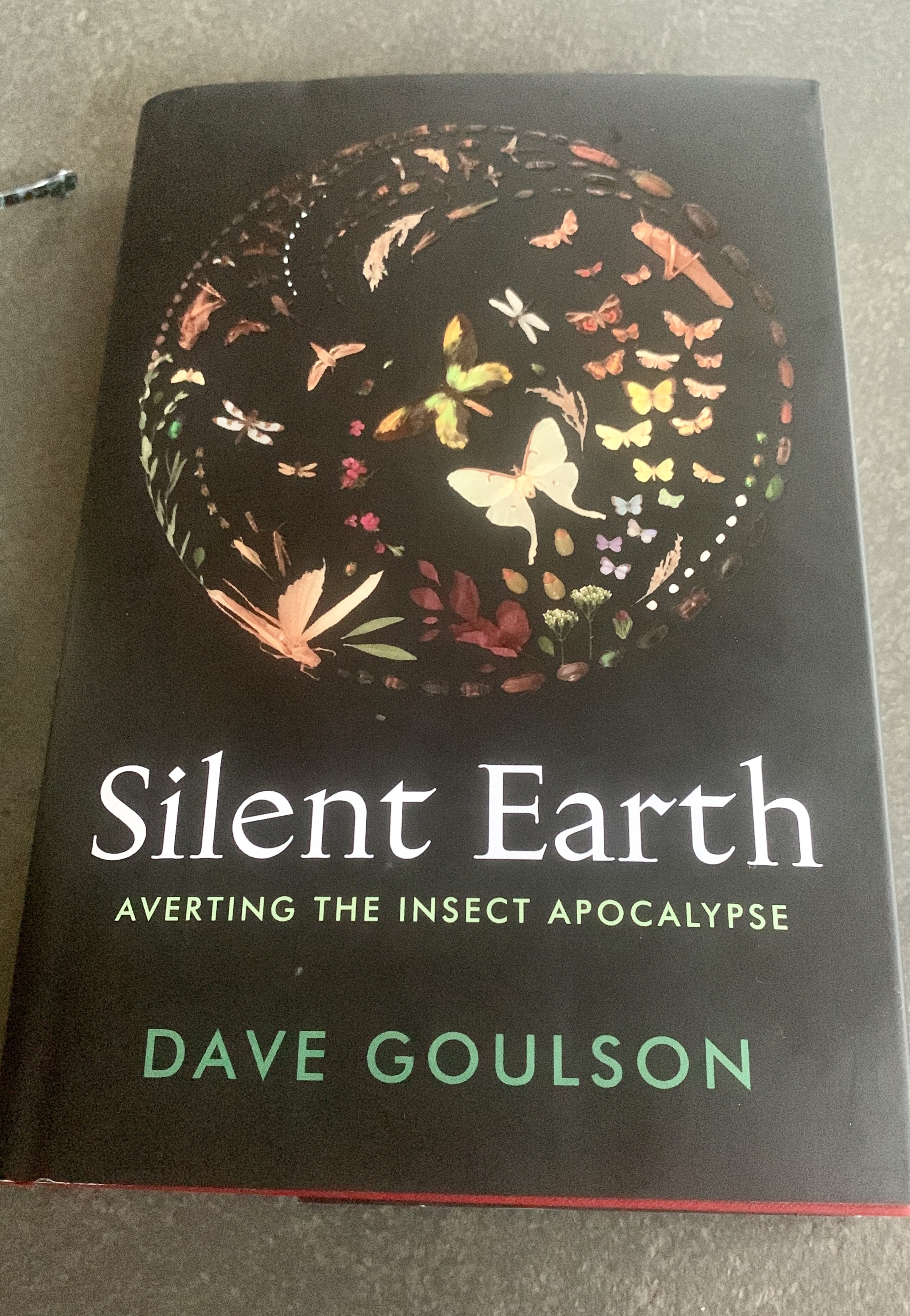
I’m also reading this. An excellent book, if slightly terrifying. It’s about the disappearance of insects due to pollution, pesticides, chemical runoff, changes in farming practices and climate change, and is written very accessibly and compellingly. Dave Goulson is well qualified to write about this, being a Professor of Biology, an expert on insect ecology and an Ambassador for the UKs Wildlife Trusts. Get a copy if you can.

So progress on the build is steady as we move through the highland winter. I’m starting to think about seeds and have ordered seed potatoes, onion sets and garlic. We’re still eating red cabbage and kale from the croft, at least what the deer haven’t eaten.

Soon, now. Spring is coming. Not long now.

The gang

As spring has progressed, the bird life on the croft has become much more visible.

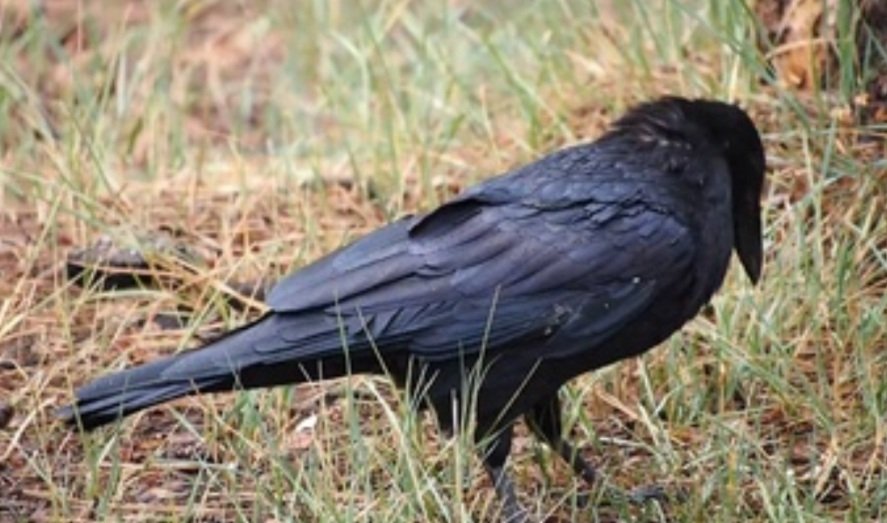
As I write I can hear or see blackbird, robin, linnet, chaffinch, swift, cuckoo, wheatear, sparrow and meadow pipit. And of course our ravens, whom we think have mated. We’ve named them Floki and Helga after two characters in the Vikings series.

Ravens are generally solitary birds, mating for life and hunting and living with their partner.

The juveniles, however, live in gangs until they eventually mate and pair off. And like most teenagers in large groups they’re loud, posturing, awkward, and a bit thuggish…

We have a gang of young ravens that visit the croft daily. They’re not interested in the seed or peanut feeders that we put out for the birds, but they love the fat balls..

The fat balls are in a metal mesh container with a lid on them, hung onto the wire stock fence that surrounds the croft. They’ve learned to peck at them until they break up enough to fall through the mesh, and then they swoop on them and scarf them down as quickly as they can, squabbling over especially tasty morsels.

One particular individual – husband calls him Dare Boy – is always the first to hop up and start the offensive. And once it starts, it’s fast. We’ve gone from five fat balls to zero in a matter of minutes. It’s like watching a gang of starved fifteen year olds with a pizza.

They can’t reach the very lowest fat ball in the container, but that’s no problem. They simply nip through the string that holds the container so that the whole thing lands on the grass and they can eat to their hearts content.

It’s become a daily amusement for us to watch one of them fly over, check out the food situation, return with the gang and casually line up on the croft fence ready for the off.

Who needs a television? 😊

Arctic conditions at 57 degrees north

It’s been a very cold spring so far.

We continue to have frosty mornings and very cold nights, so it’s not been advisable to put out any tender plants without serious fleecing.

My “plant room” in the caravan is still full, and although I’ve planted out a few purple spouting broccoli and beetroot plants, some cabbage, kale, and some sorrel, everything else is under wraps for a bit longer. I’ve direct sown carrots and parsnips into the beds but nothing has germinated yet…. I don’t blame it.

It did give us the opportunity to make another hugelkutur bed with cut reeds as the base, as I’ve estimated that I’ve still grown too much to fit into our prepared growing space. Always a learning, eh?

Everything is heavily mulched with woodchip to try and minimise soil runoff. We’ve almost gotten through a few tonne bags of that already, and I’ve still got the paths around the beds to lay..

Small beginnings. And many learnings.

The Mandrake Babies

There’s something so intriguing and otherworldly about growing beans.

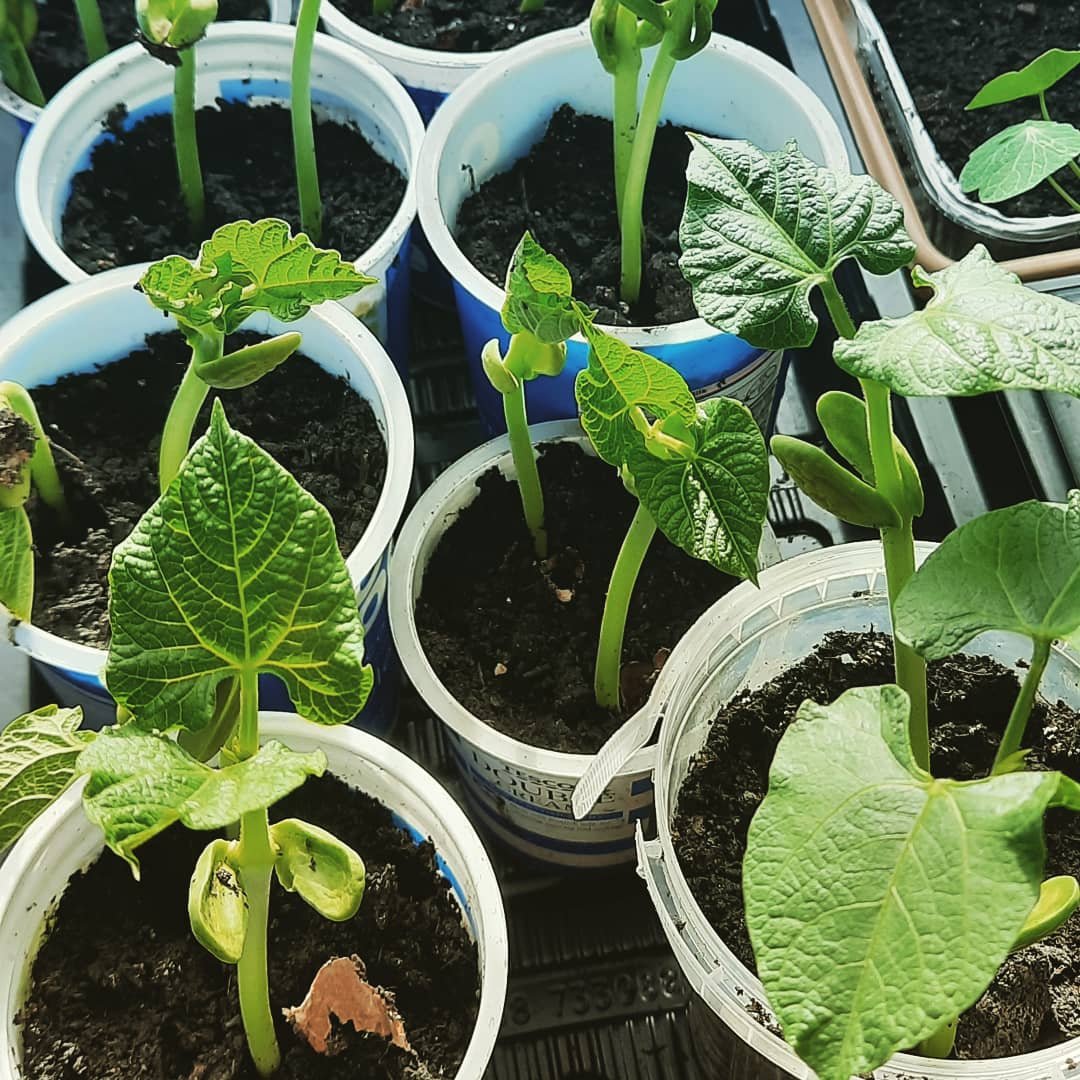
Best friend in France sent me a pack of organic borlotti beans, (not from France, from a UK seed company) and I popped some into seed compost five days ago in the growing room in the caravan, not hoping for much, to be honest.

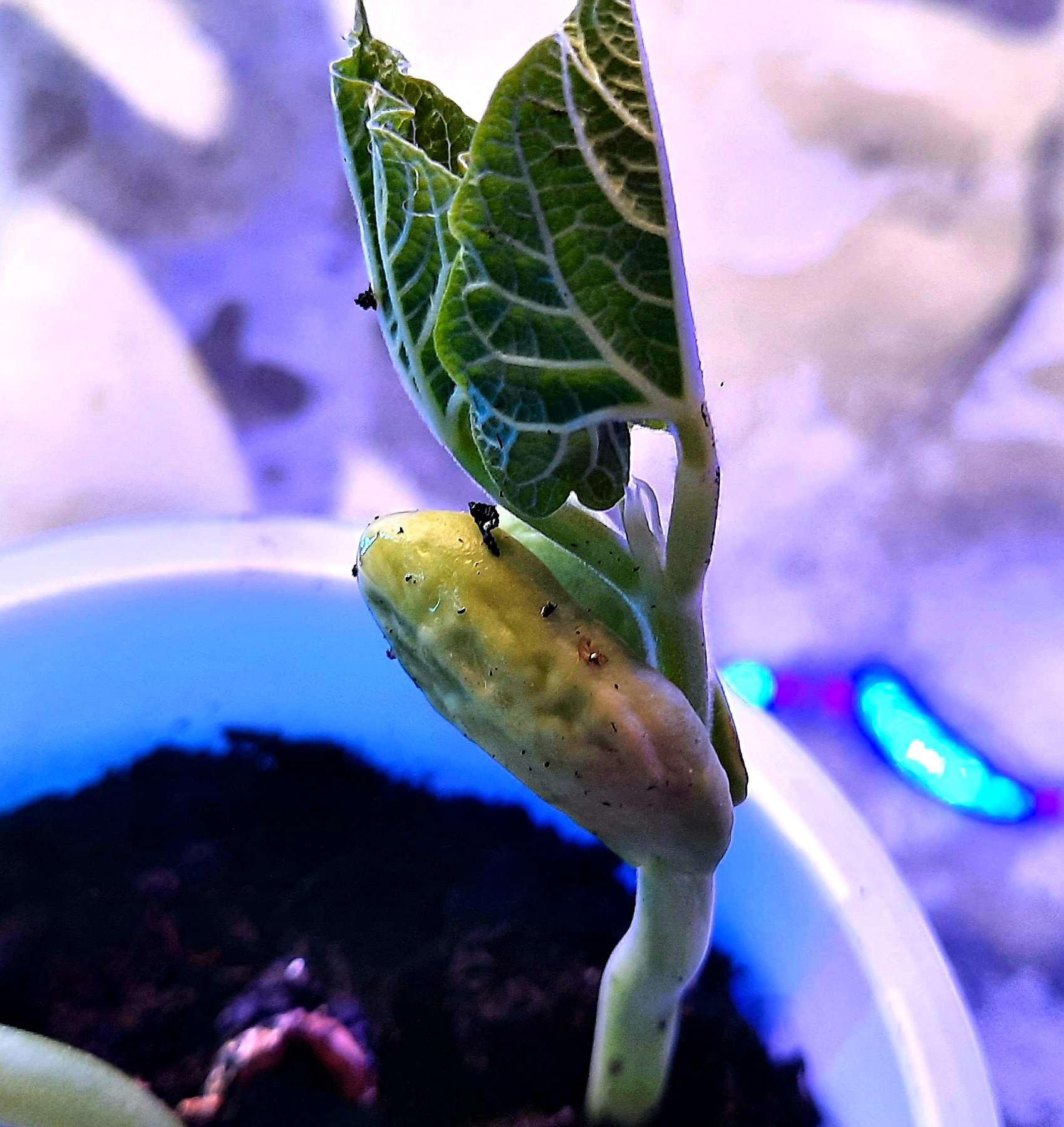
They germinated within two days, splitting the soil and unfurling huge, robust stems. It was seriously like watching a triffid grow. I could almost see them get bigger by the hour.

After four days all of them had leaves. They’re sitting there now, waving their stems about, looking a bit menacing… 😊

I think I’ve hatched mandrake babies by mistake. Someone get me some ear defenders..

Eerie Blue Light

The days are getting longer. Although we are still in the clutch of a cold winter here on the croft, with snow still on the hills and an icy wind, my thoughts have increasingly moved to garden planning as our daylight hours have lengthened.

I’ve started some seeds off in the little bedroom in the caravan. We have no greenhouse, cold frames or polytunnel yet, so needs must.

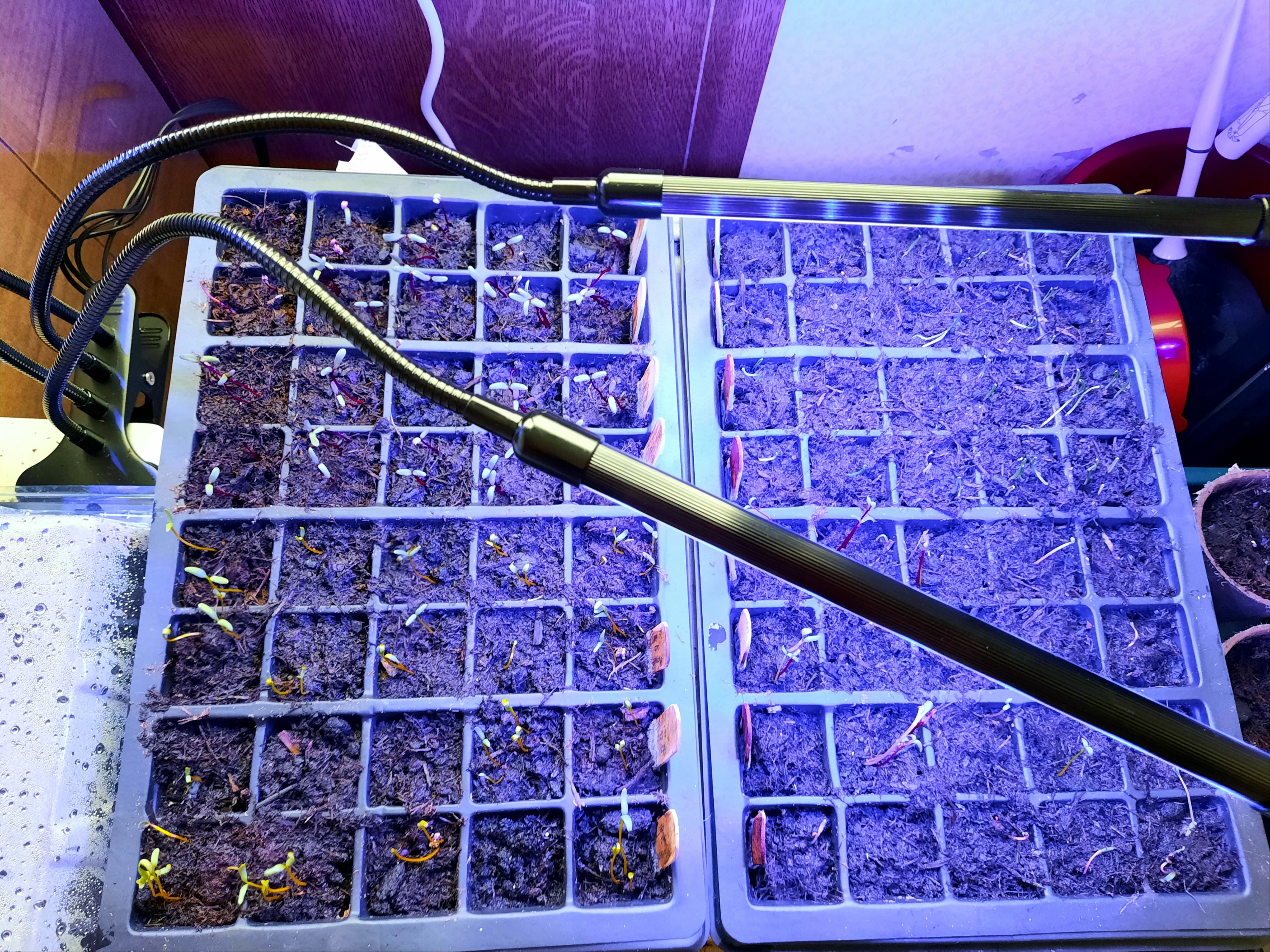
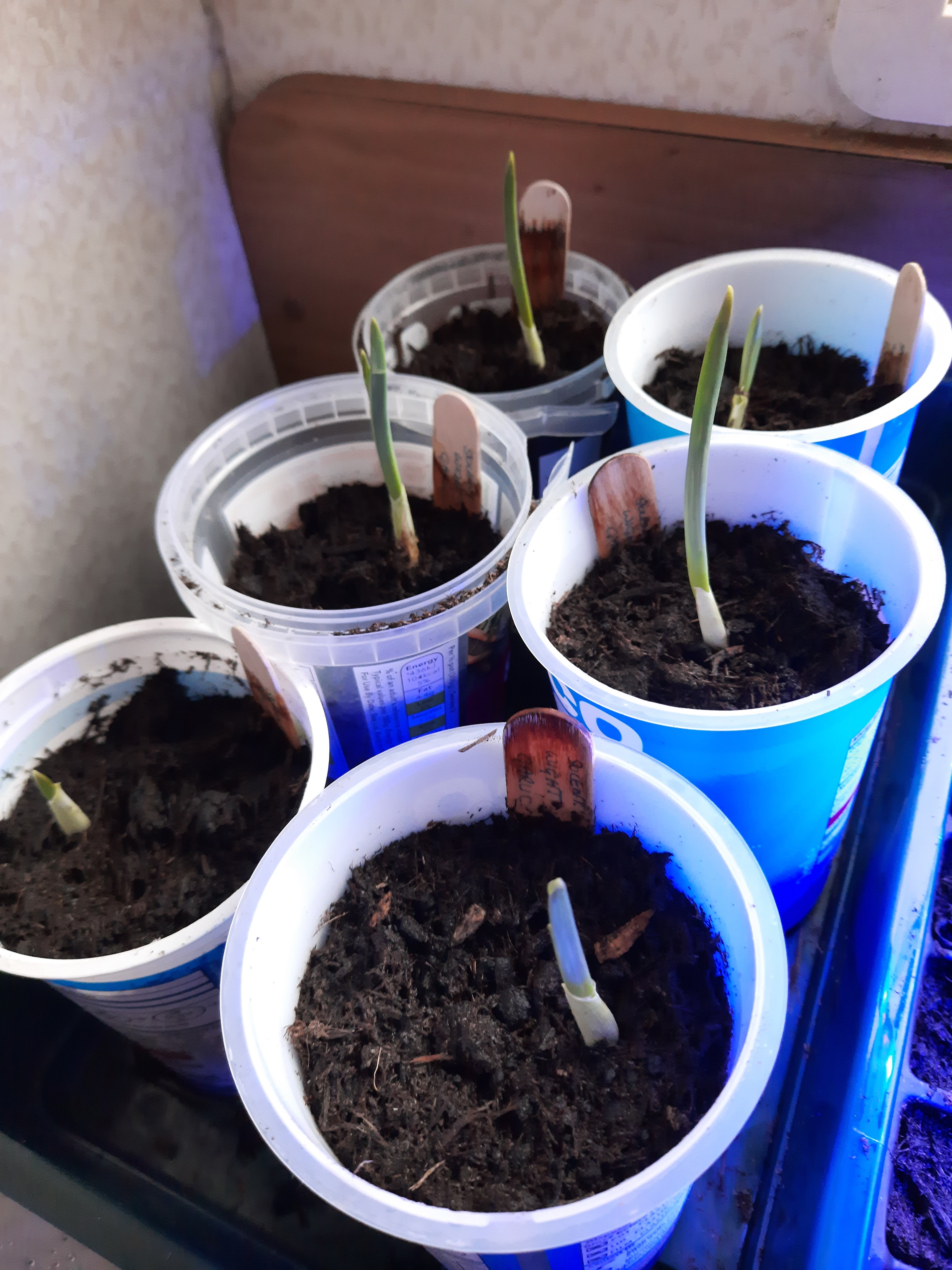
It’s a bit of a make-do affair with a propagator heat pad, some cardboard boxes, seed trays, old yoghurt pots that I’ve been saving since we moved here, and one of those whizzy octopus UV grow lights to help start things off.

Everything is bathed in an eerie blue light from its flexible metal arms. It’s like something from the X Files… I go in a few times each day to check on things and can’t resist adjusting it.

Lord only knows what the neighbours must think when they see the strange, neon blue light glowing through the thin curtains at dusk…

I’m starting small. More will follow in March and April, which is a much more sensible time to start new plants here.

I’ve started garlic, onions (although the recommended local wisdom is to grow from sets rather than seed, which I only discovered after I’d bought them), leeks, parsley, beets and rocket. Seed potatoes are on their way in the next week ready for chitting.

I know it’s early, but it’s such a short season that it makes sense (to me at least) to have plants ready to be planted out in May, and they’ll need a full month of hardening off, I suspect.

The garlic has leaped into action almost immediately. I’m growing a rose and a white skinned garlic, both hardy varieties, and both a bit of an experiment, although local growers report that they generally grow well here.

I’ve been keeping my eyes peeled for old glass windows or sheets of polycarbonate on the local ads to make cold frames, but they’re scarcer than hens teeth at this time of the year, so we may need to buy materials new and create our own.

And so it begins.