Lambing snows

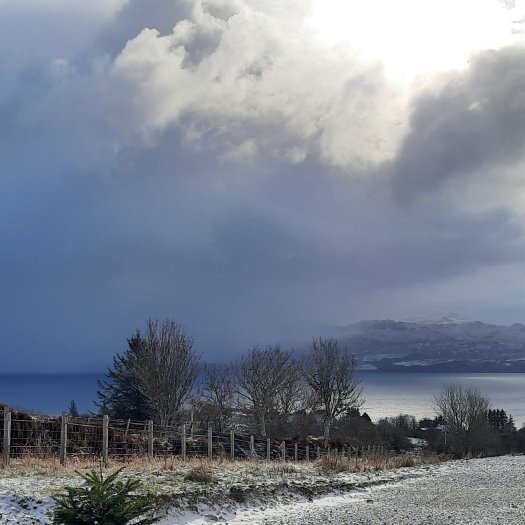
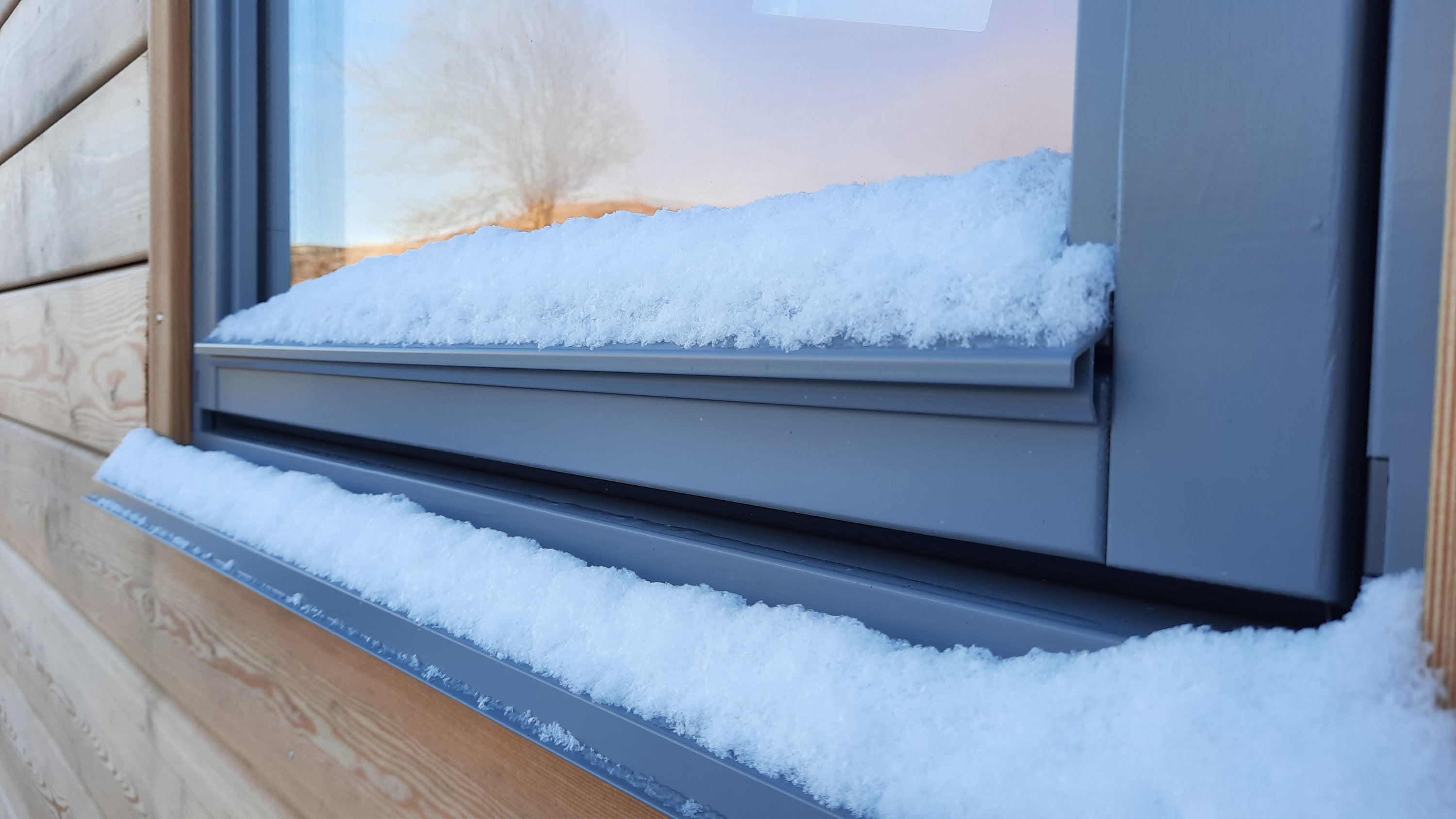
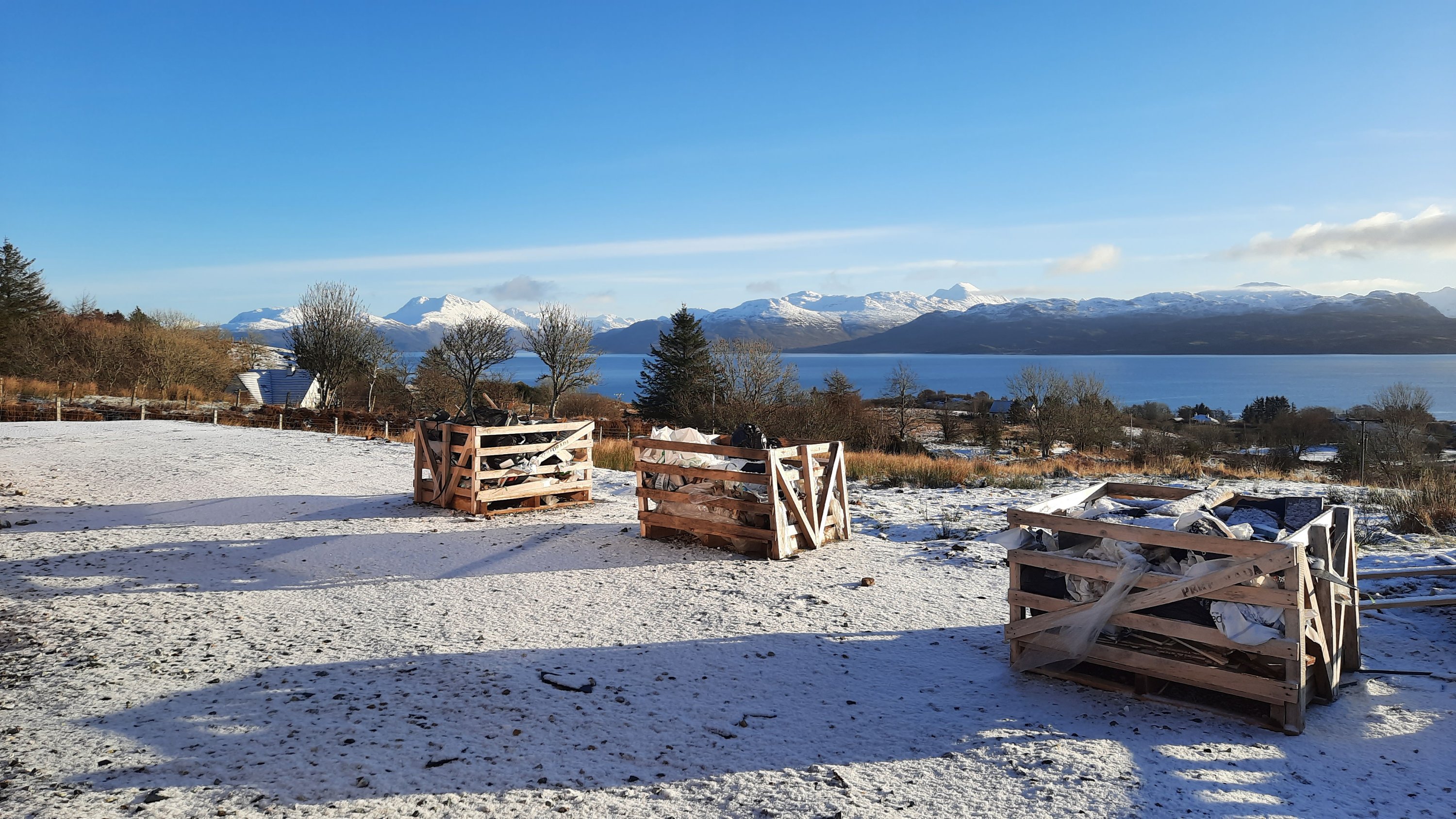
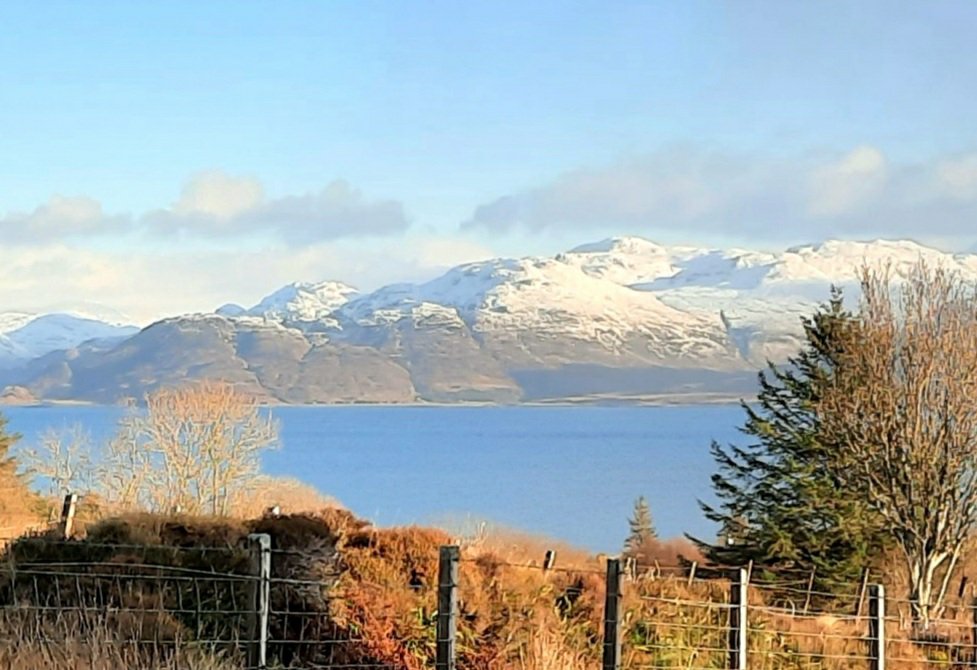
The islanders call late snows in April Lambing Snows. They’re usually the last gasp of winter and come suddenly, just when the lambs are being born in the fields.

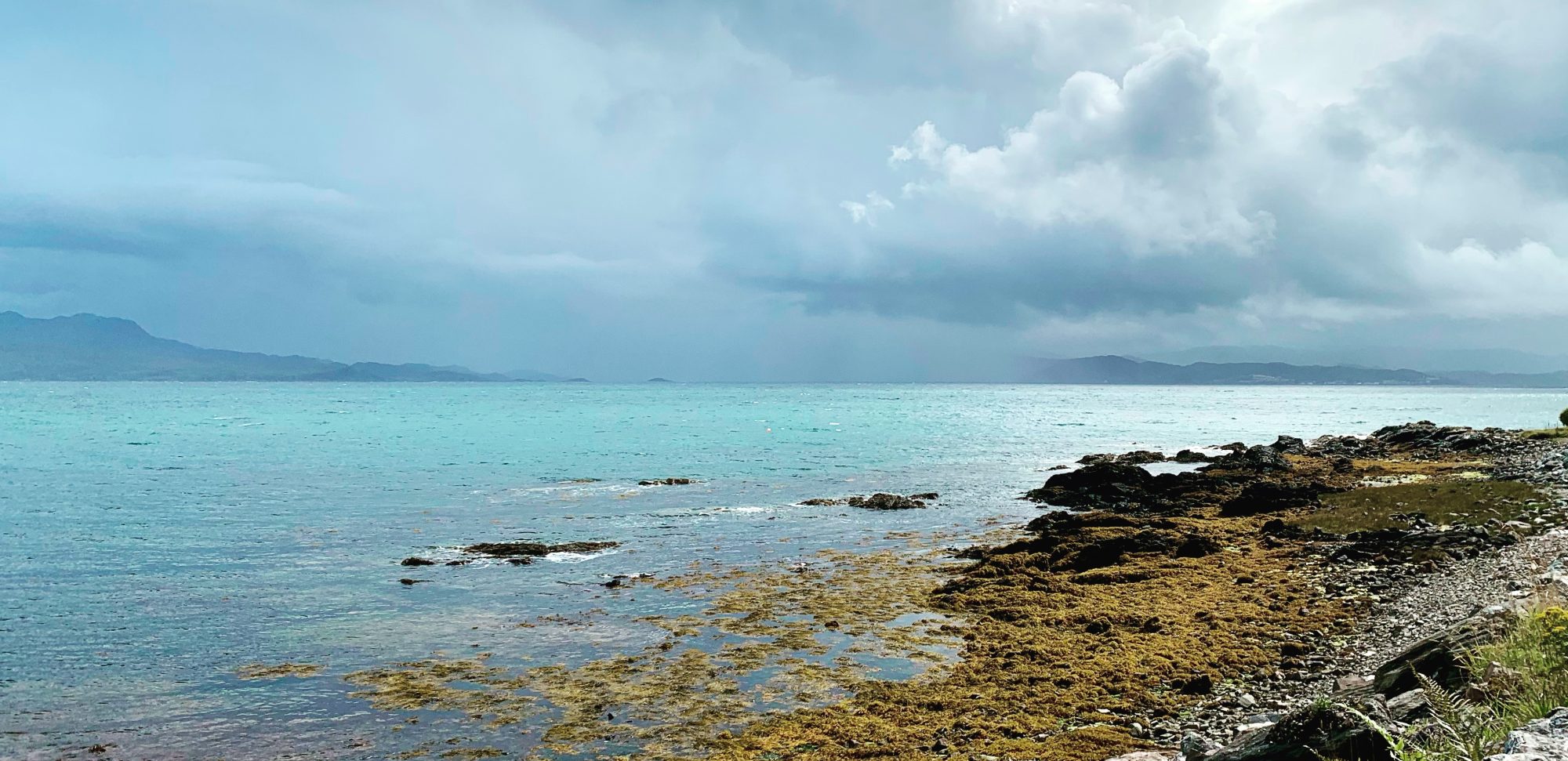
We went from bright, warm days to plummeting temperatures within 24 hours. The wind veered suddenly to the North and before we knew it, there were snow blizzards upon us, sweeping rapidly down the Sound in ominous curtains of grey.

Luckily the only thing in the outdoor raised beds were garlic, onions and perpetual leeks. Listening to local advice I’d held off planting out anything tender, and don’t plan to until May. It seems that this advice was very sound!

Temperatures fell to minus 5 degrees centigrade overnight, and barely struggled to hit 2 degrees during the day. The wind was bitingly cold.

Nothing for it but to hunker down indoors..

Spring storms & wild garlic

The weather on the island has taken a turn for the worse since the Spring Equinox.

As if to laugh at our feeble attempts to plant, a prolonged few days of stormage has reminded us that Winter hasn’t done with us yet.

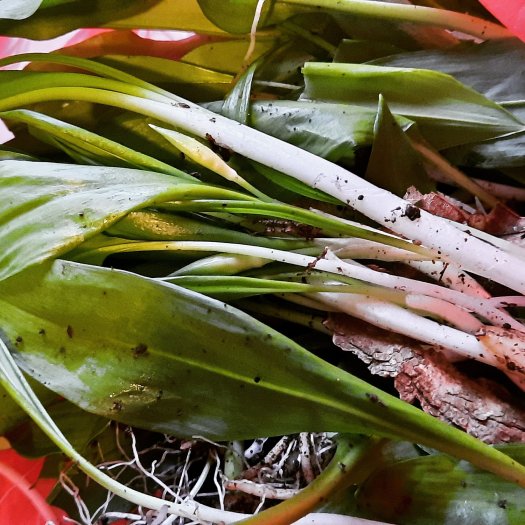
A neighbour brought us a huge bag of wild garlic picked from local woodlands, which was most welcome. I chopped the fragrant leaves through salad and reserved the plants that still had their bulbs and roots attached so that we could plant them on the croft.

Husband dug them into a damp, grassy bank above the stream under dappled shade. Hopefully they’ll take and we’ll have the start of our own wild garlic patch before too long.

Just as he finished the planting, the heavens opened. We’ve now had a solid 48 hours of hail, rain and high winds, and it’s not abating any time soon.

Our tiny burn went from a gentle trickle of water to this rushing torrent within hours…

Blue Growing update

The seed sowing chaos of the caravan spare room has been taken in hand and professionalised!

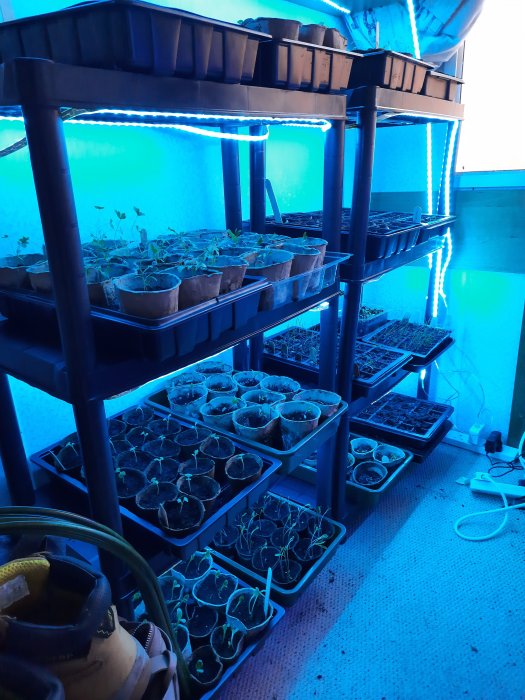
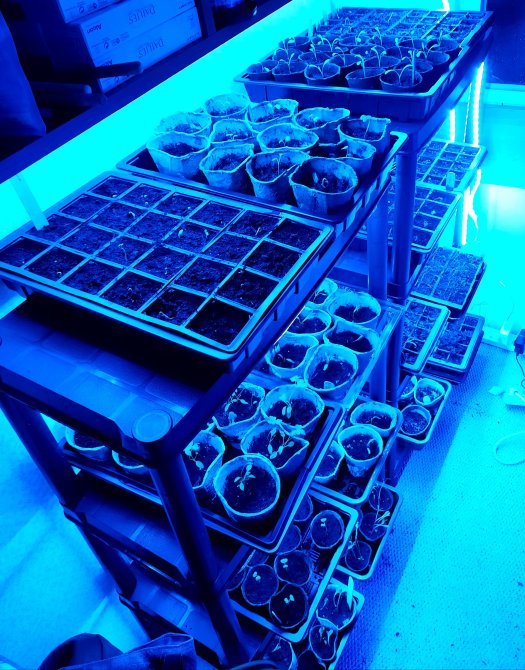
We now have durable shelving with UVA grow-light strips attached to the underside of each shelf. I’m feeling very happy.

The days of my rickety cardboard box tray balancing act are over. I think that husband realised that he was in danger of having the next seed tray balanced on him if I ran out of space… 😊

We now have pak choi, Sutherland kale, leeks, onions, borage, calendula, rocket, mustard leaves, coriander, parsley, mint, lettuce, salad burnet, nasturtiums, garlic and shallots underway. All glowing eerily blue under their UVA lights.

Today I will be sowing borlotti beans in pots in the probably vain hope that I can get them to maturity on the croft despite the wind. This one is a bit of a stretch, but it’s worth a try..

The directly sown plants, such as carrots, parsnips and yacon roots will all be in May. Same for the potatoes.

The garlic, shallots, babbington leeks and onions have already been planted out into the beds, and we covered them in enviromesh yesterday for a bit of protection.

I can already see that my three initial raised beds won’t be enough, even with separate big pots for the herbs, so we will be building a long no-dig bed directly onto the croft for the rhubarb and berries. We will put in more raised beds next year after we’ve finished the house.

Next up it will be windbreak hedging…

This will be an interesting year – let’s see what grows.

The Vault of Black Gold

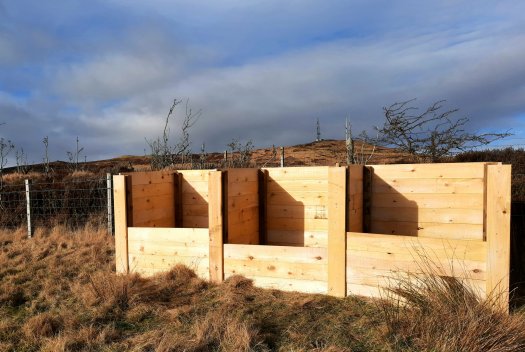
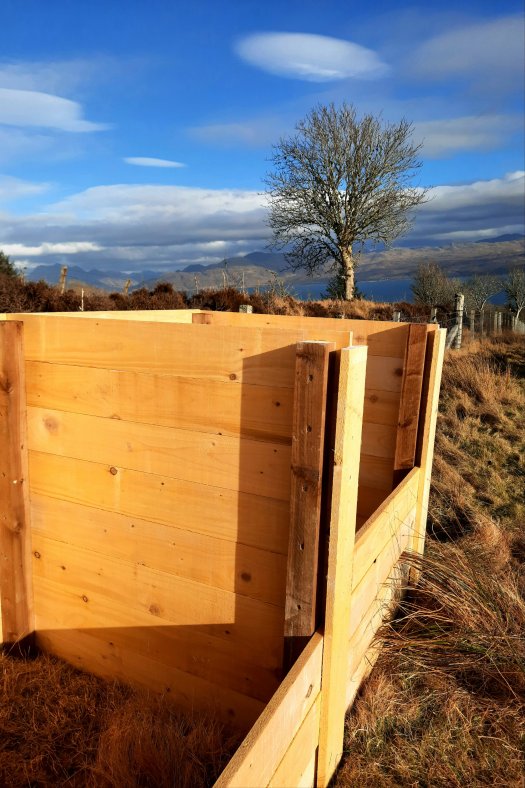
On a couple of dry days this week husband built and put up a compost bin.

I say a compost bin, it’s more a super deluxe compost city. The worms in this complex will be living in ultimate compost style, the Des Res of Decomposition, the Mansion of Manure, the Penthouse of Poo, our very own Vault of Black Gold! 😉

With three bays, removable front slats for easier inspection and turning, and a roof (yet to come) to protect from the worst of the elements, I’m so pleased with how it’s turned out.

We have a tonne of organic, peat free bought compost with which we’ll start the beds off this year, and we’ll layer the homegrown stuff with what’s left of this.

I’ve found a local lady with donkeys on her croft who is happy to give us bags of straw and donkey poo, and Angus, our village crofter keeps cows, so I think maybe a conversation there could be had too.

That and applications of seaweed from the local shoreline as well as vegetable waste and croft scythings and I’m really hopeful that it will be successful.

With a bit of luck from the soil gods this time next year we’ll be digging in our very own black gold.. 😊

Herbage and Seeds

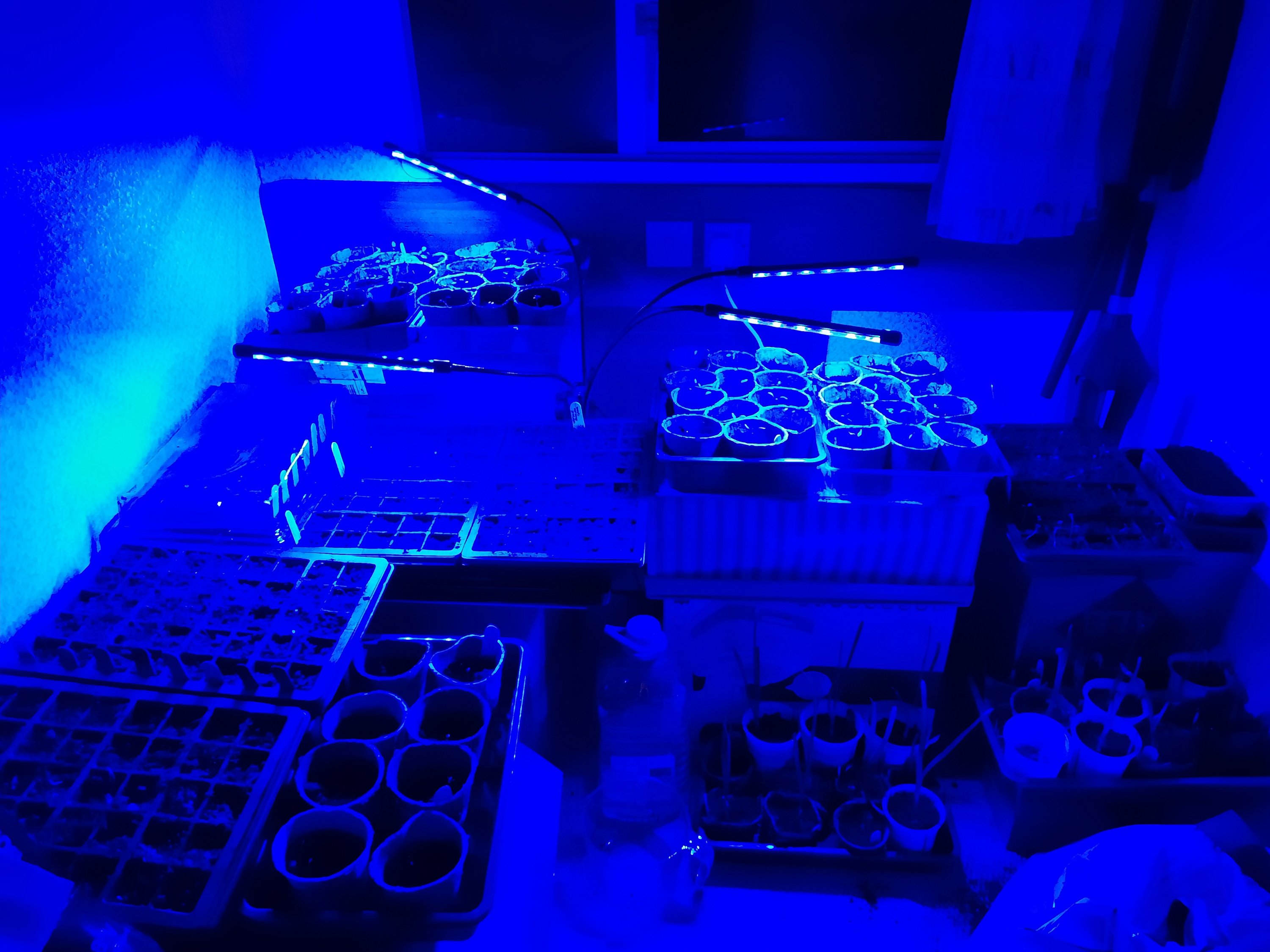
The urge to grow new things is very strong. We have no greenhouse or polytunnel yet, so I’ve set up a small space in one of the rooms in the caravan to start my seeds off. Luckily this room still has the old carpet down so it doesn’t matter if it gets grubby.

Balanced somewhat precariously on old cardboard boxes and a heat mat, and wedged between boxes of spare clothes and the hoover, are my first trays of seedlings. The blue wands of wonder are moved around to those plants that seem to need them most. It’s not exactly a professional set up, but it will do!

I’ve tried to choose plant varieties carefully to ensure that they’re hardy for our exposed site, but this first year is going to be very much an experiment.

I know that I’ve probably started too early for these northern altitudes, but I was itching to start. If they get too leggy I’ll just have to re-sow.

I have garlic ready to plant out. We eat lots of that, and I have more to plant directly into the soil once the beds are ready.

I have seed potatoes chitting ready for planting in the coming weeks. A local crofter recommended two varieties that I’m going to be trying, with good flavour but also good blight resistance.

I also have beetroot, chard, leeks, sorrel, parsley (it germinated! Hallelujah!) and Sutherland kale sown and just starting to grow.

Husband has been working on the construction for our compost bays too, which we need to start as soon as possible. The price of good compost in the quantities we will need is eye-watering, and I’d much rather we made our own.

I’ve also just finished reading this book. A total inspiration, a really interesting story and full of very practical advice about growing abundantly, organically and using no-dig principals. It’s just come out, so do source a copy if you get the chance.

The first raised beds

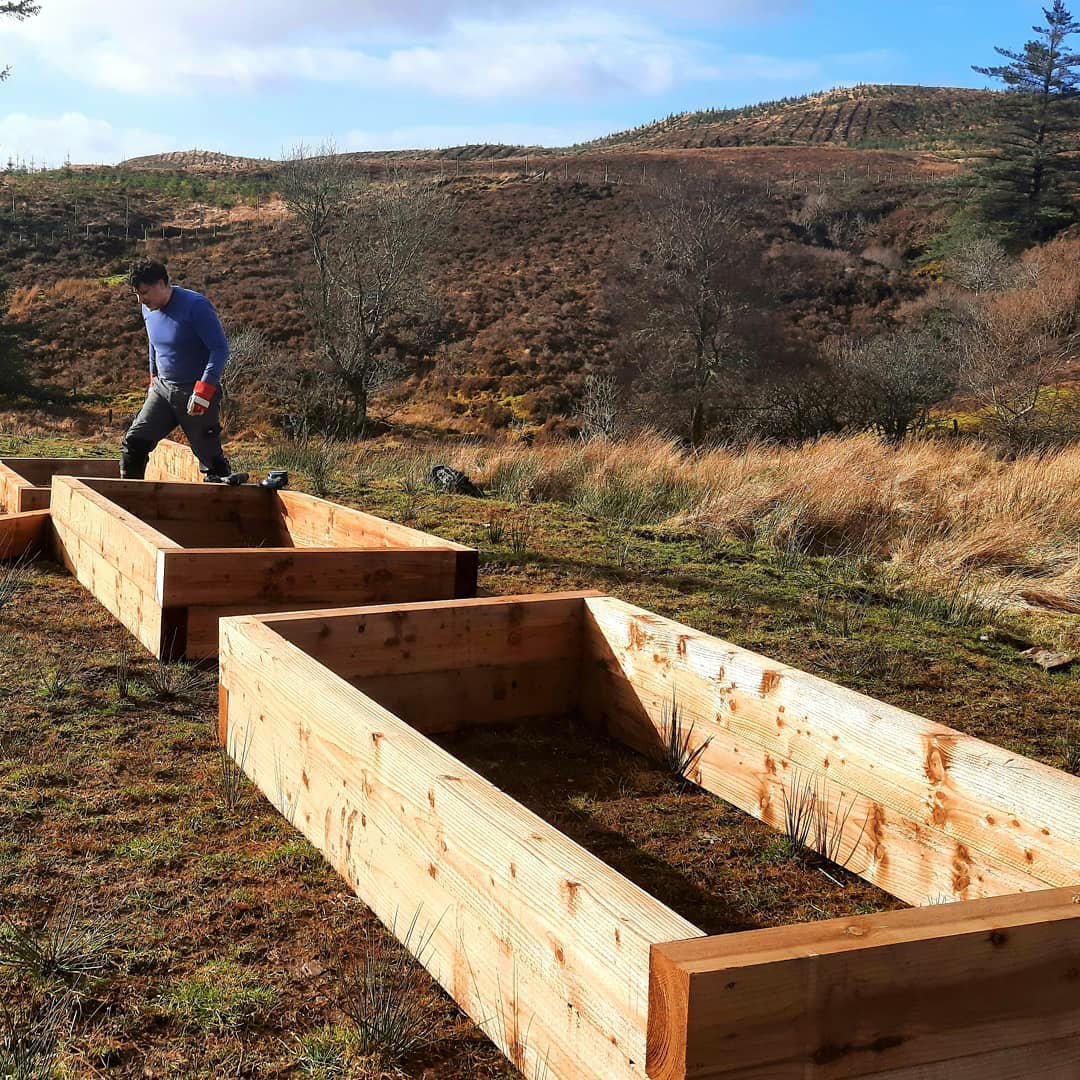
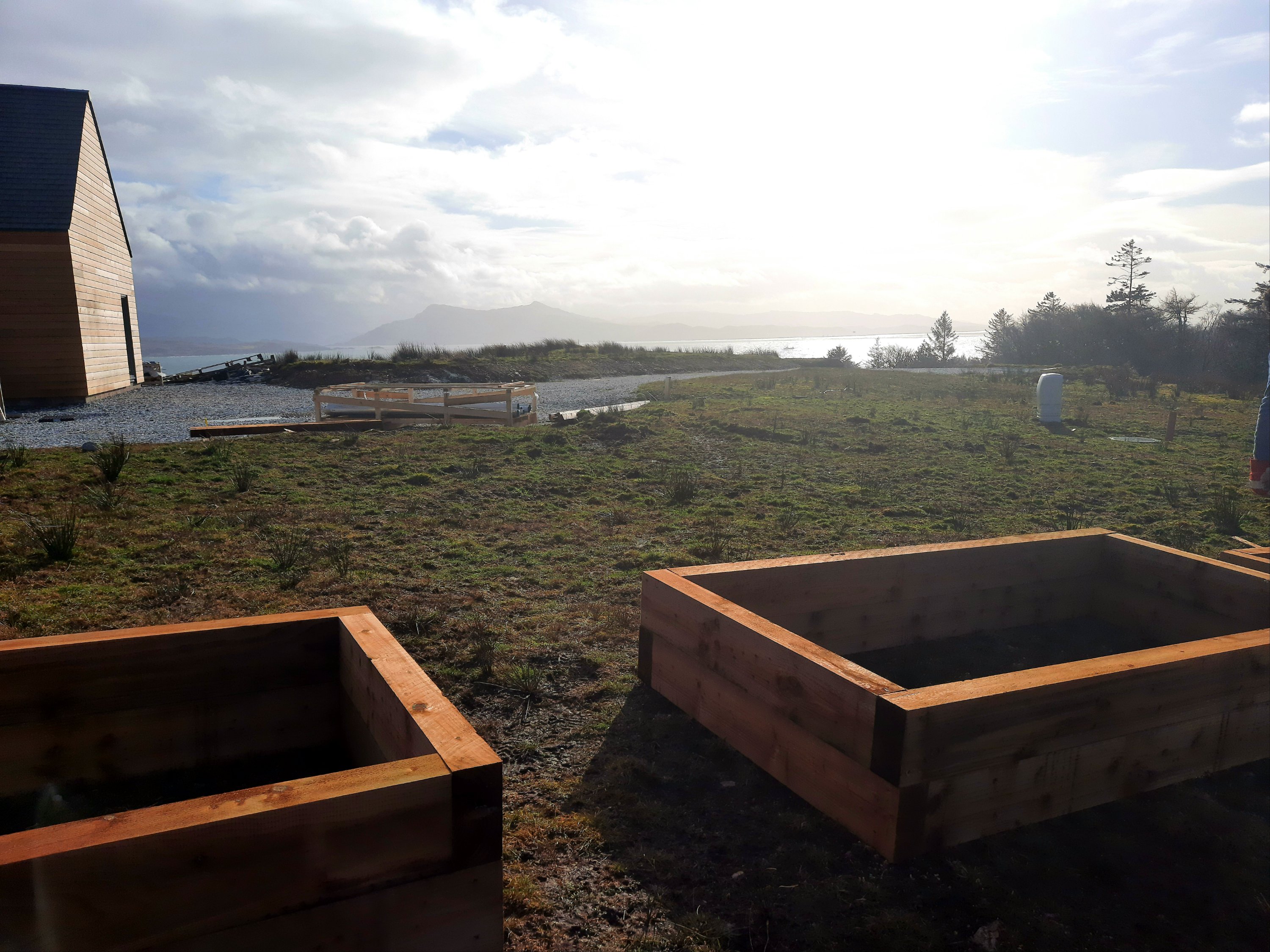
The first three raised beds are built and in place. Hurrah! Another small but significant milestone on our croft journey.

There was a short gap in the weather this morning which husband took advantage of. The timber was cut, positioned and screwed together to create three high sided, solid boxes.

The challenge here is the exposure of the site. We receive the full force of the South Westerlies which whip over the croft, with only limited tree cover to the west. The flat land that is cultivable is close to the house and right at the top of the hill.

In terms of positioning I wanted the beds close to the house for ease of access and proximity to water supply. They also needed ideally to be oriented east-west to maximise exposure to sunlight, and if possible be sited on flat land. The perfect (and only really viable) place here is going to need good wind protection.

We will put up a heavy duty mesh windbreak whilst we plan what type of hedging should be planted here, get the basis of the hedging in, and that will be it for this year. I can start with basic, small scale vegetable production in between house building.

We’re also keen to get compost piles started, so timber to construct a couple of adjacent compost bays is on its way.

Behind this row of beds I’m thinking of trying a hugelkutur bed, which I’ve read great things about. We will have wood debris that can form the core of it from fallen branches from the existing trees, and we should have home grown compost by next year.

First things first though.

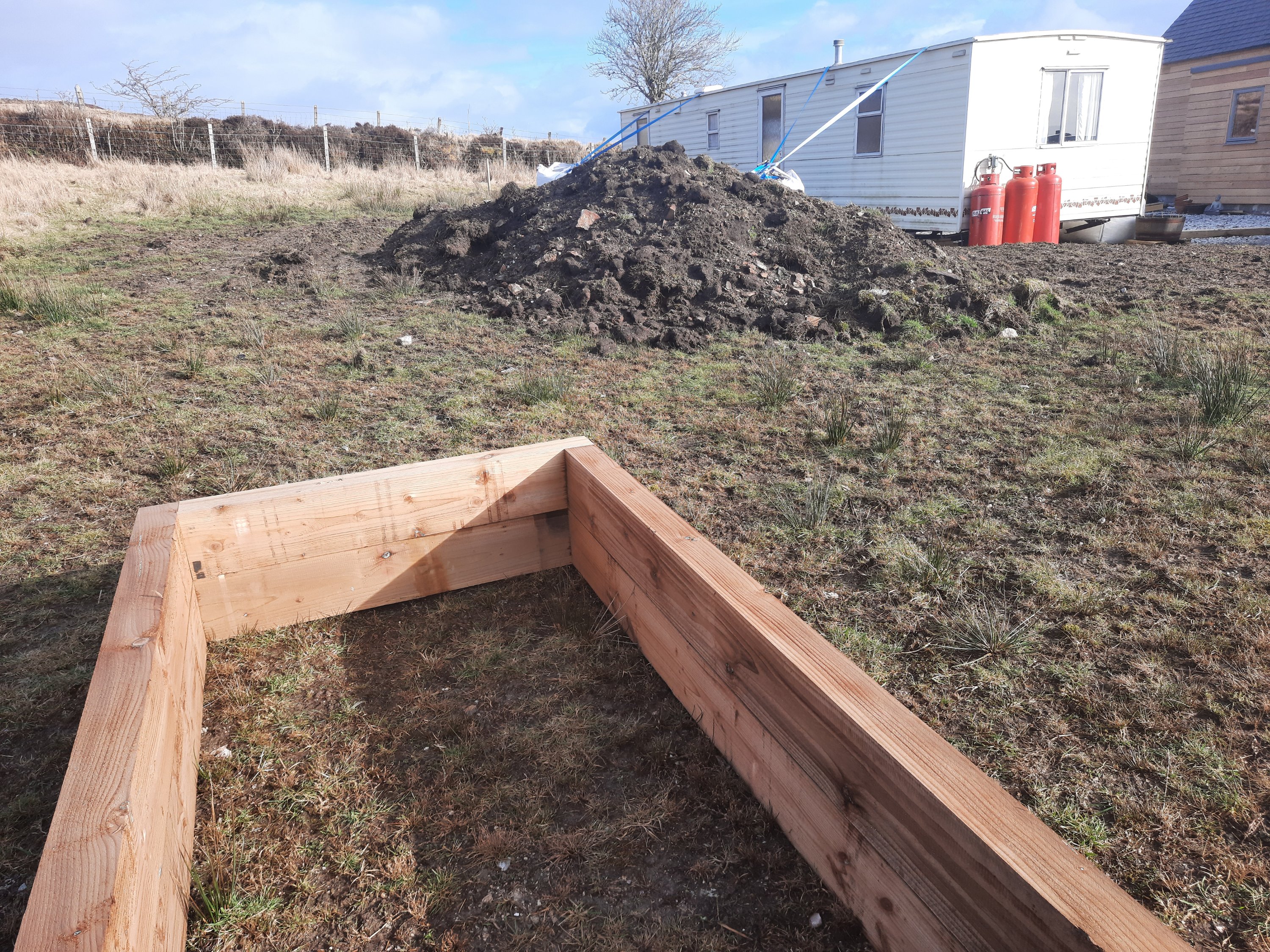
Tomorrow I will line these beds with cardboard as a weed suppressant and start moving and de-stoning soil to fill them. This huge soil pile was excavated from the croft when the builders dug the parking area the caravan is sited on, and it will form the bulk of the growing material in the beds, topped off with compost mulch.

It feels good to be preparing for growth.

Snowy days and wall foil

It snowed again overnight. We awoke to brilliant white, and the strange, blanketing silence that a covering of snow brings to the world.

Silence that is, apart from the raven, who called loudly from the old pine as the sun came up.

Husband managed to get out to insulate the water pipes yesterday, just in the nick of time. We had running water this morning for coffee, despite the overnight temperatures.

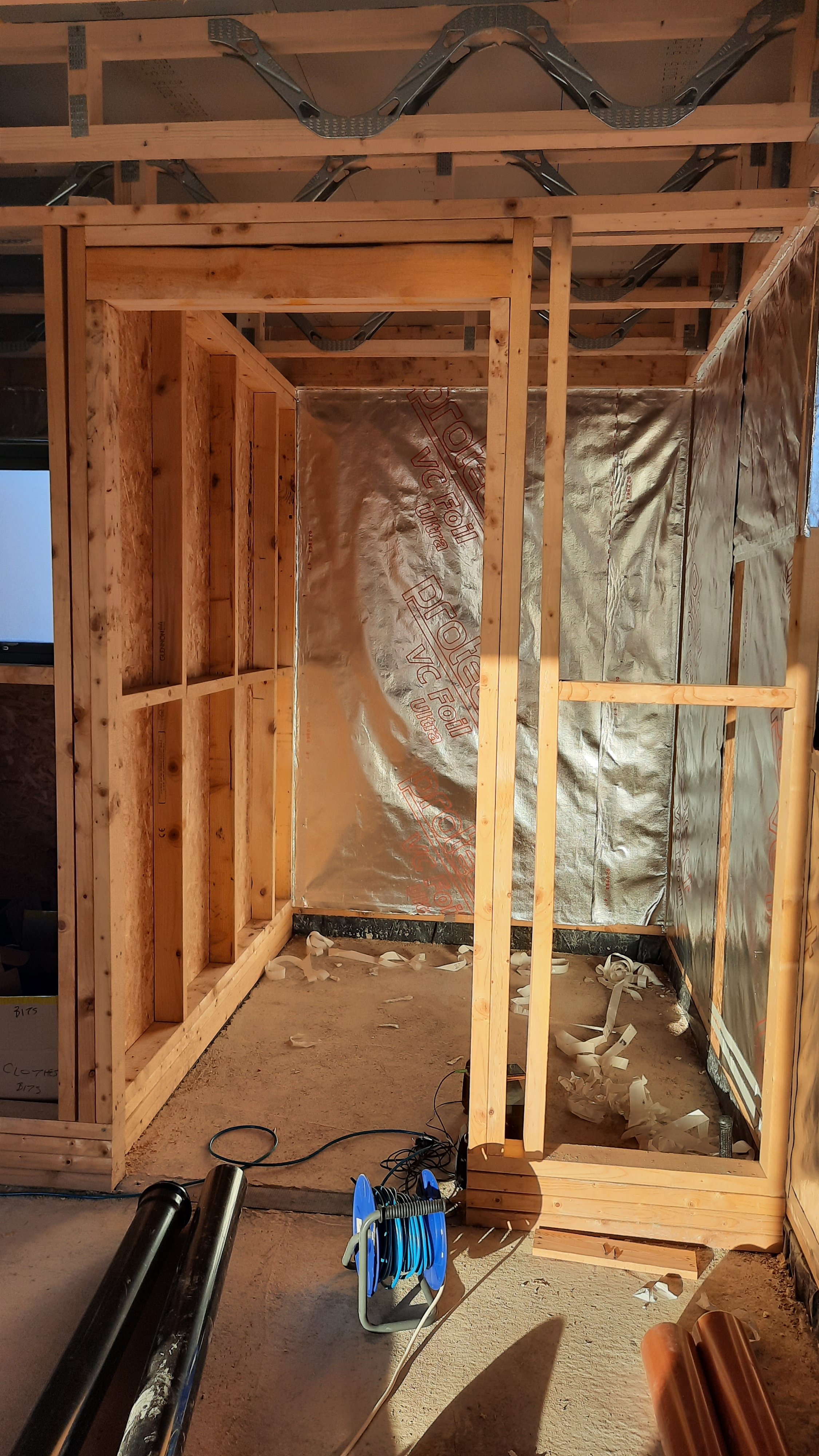
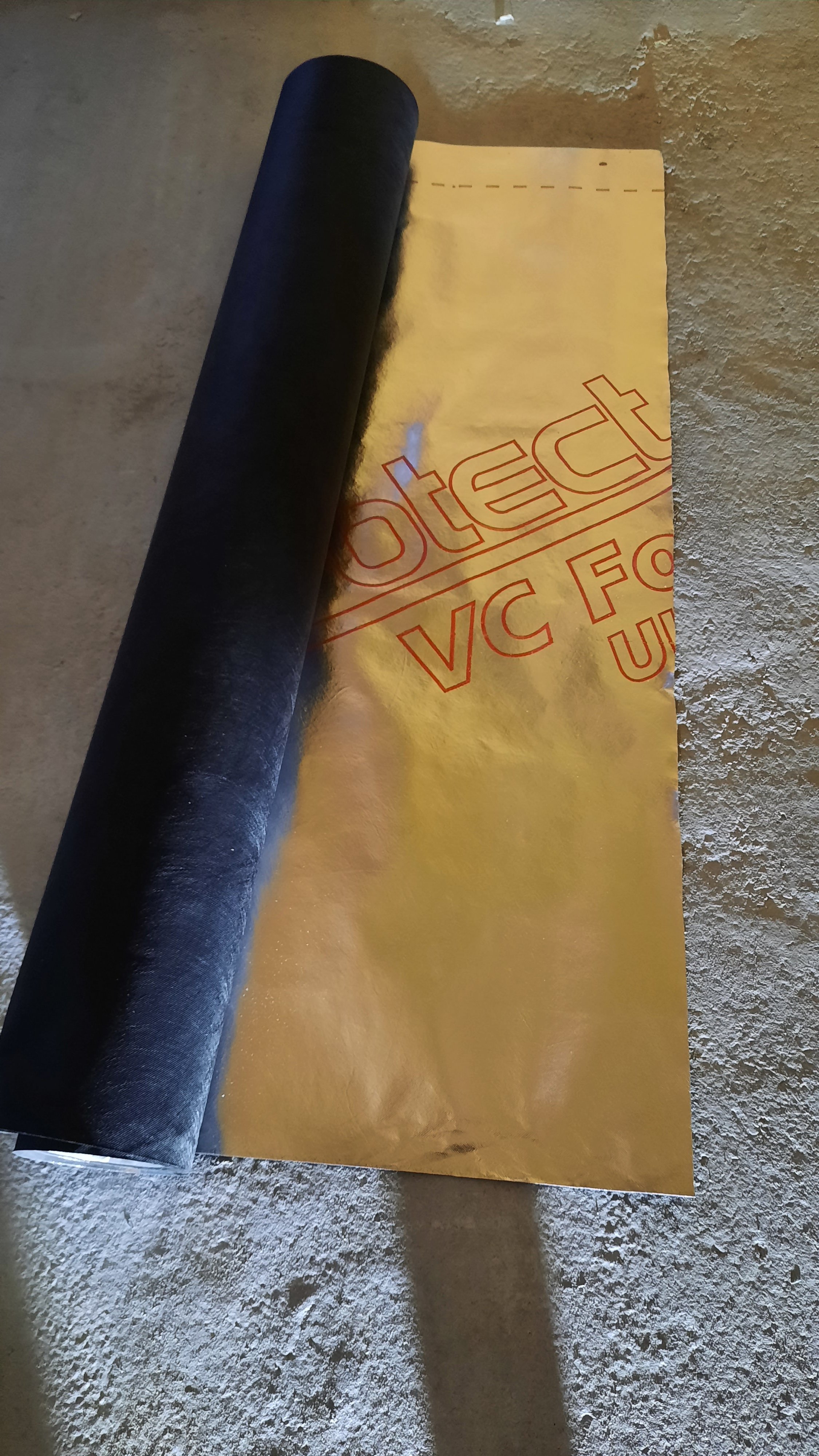
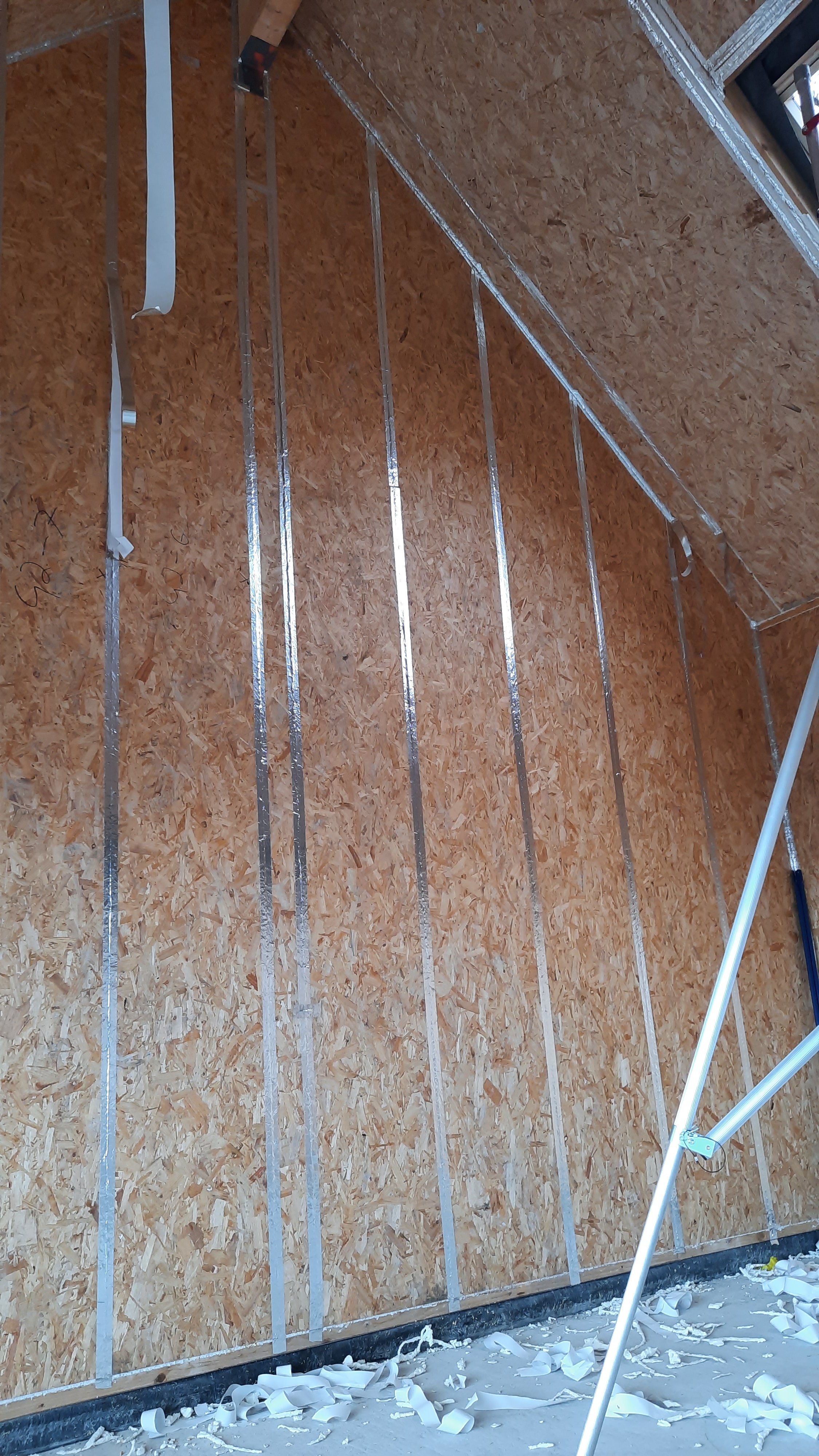
We’re cracking on with the interior wall foiling now, fuelled by hot coffee and egg butties.

Even though the house is a shell without insulated flooring or plasterboard yet, the solar gain from the big, south facing windows, coupled with a small 3kw heater is maintaining a temperature of about 13 degrees centigrade.

Which considering the temperature outside, and the volume of air to heat in this 200m2 space, is pretty good.

We think that this bodes well for when the house is fully insulated and sealed. It should be very energy efficient and cheap to heat.

Just what we need.

Frozen pipes

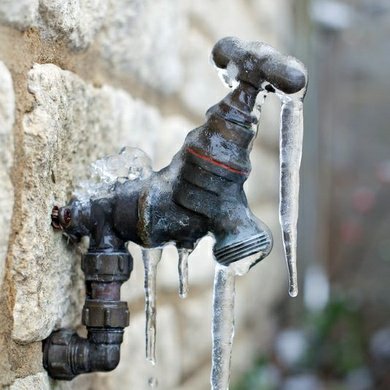
We’ve had several nights of temperatures well below freezing, and although these have brought clear, beautiful winter days, they’ve also brought frozen pipes.

We run the water supply to the caravan overground from the house. It’s a temporary measure – we don’t want to have to dig the pipes in under the drive as the caravan won’t be here once the house build is complete.

However, this leaves them very exposed to the weather.

Waking up to a cold caravan, sometimes with ice on the inside of the windows is one thing, but switching on the tap to fill the kettle for coffee and realising that there is no water coming through is an altogether different level of morning discomfort.

On a couple of occasions in the last few weeks we’ve woken to this and husband has had to head out in jumper, dressing gown and wellies to try and thaw them out.

Insulation for the pipe has now been ordered and will be installed as soon as the weather permits..

In the meatime we now store large canisters of water in the caravan so that when this happens next, as it will with the worst of the winter months still to get through, we can at least have a mug of hot coffee before heading out to attempt the defrosting process..

House build progress

It’s been a while since I shared anything on the housebuild itself, so I thought with the onset of the new year that it was time.

There’s been only slow progress on the house over the last few months, due to a number of factors like the move, setting up the caravan, problems with the caravan, supply delays, and to be honest, things that we have discovered need remedying before we can go further with the build.

Whilst we’re in dialogue with the builders to check a number of things, husband has been able to work on improving the air tightness of the construction by sealing every gap and then foil taping all the wall seams to ensure that we can be as draught-free as possible.

That work is slow and painstaking, especially in the 6m high gable end of the house, necessitating internal scaffolding, and has taken a number of weeks. It’s only now that we’re nearly ready to start applying insulating foil to the walls.

We had originally hoped to be ready for underfloor heating and screed by now, so we’re running about a month behind our original estimates, but to be honest with the new Covid lockdown restrictions and Brexit, I’m just happy to be able to be able to make any progress at all.

I’m sure that there will be many more delays to hit us yet. Never was there such a bad time to work on a house build from a building supplies perspective! 🤔

We’re not despondent, though. It can’t be helped and we will do as much as we can within the constraints that we face.

In the meantime, we continue to be awed by the sheer beauty of the landscape around us, and are serenaded by our raven from the old Scots pine as dawn breaks every morning, complaining that it’s time our sorry asses were out of bed.

It really couldn’t be much better.

Seedily Yours

I may be getting ahead of myself a bit here, as we don’t have any vegetable beds dug yet, but I couldn’t resist buying a few seeds to start things off next spring.

I had to do it. I was starting to get worried about reports that the pandemic was causing seed companies to run out, and that there wouldn’t be any left if I ordered too late. So over a cup of tea and a few rainy afternoons I pulled together a seed order, and they arrived last week.

It’s such a lovely feeling when the post arrives and you open the parcel. The fat little paper seed packets fall out, sparklingly full of promise!

Many of these things need a few years to establish before they can be cropped, so it made sense to start next year even if we are busy with the house build.

I just need to find a few days in the Spring to get my husband to help build windbreaks, plant protective hedging, make a couple of raised beds and get the soil prepared. I’ve worked out the most sheltered spot for the raised beds and a planting plan.

Most of these seeds aren’t sown directly into the soil until April/May or even later, so there is time.

I’m also looking at cold frames for a bit of protection for some of the young plants, although wherever possible I will plant into the beds directly. I don’t have a greenhouse or polytunnel yet and there will be no room in the caravan for lots of trays of seedlings.

I’m going to try to grow beetroot, onions, carrots, kale, salad leaves, cabbage, potatoes, rainbow chard, and winter squash (I know this one might be a challenge, but it’s worth a try). I also want to have a berry bed, and grow rhubarb, so am looking for varieties and crowns that will work well in our extreme climate.

I’m going to start with just a few berry bushes and vegetables and increase the variety next year once the house is finished and we can start to spend more time on the croft itself. It’s going to be a busy year of experimentation, working out what grows well here.

Once we start growing things I think the process of rooting ourselves to this land will finally have begun properly.