Hedging our bets

One of our neighbours a few miles away is Phil at Wildlife Croft Skye, a woodland croft, and an inspiration of ours.

He and his family have been planting and managing their croft for years now using sustainable regenerative principles and have a wonderful. maturing array of local trees growing on their land. He propagates and grows using locally collected cuttings and seeds.

Recently he advertised that he was offering some of his hedging, shrub and young tree seedlings for sale, and we jumped at the chance to get our hedging started before Spring advanced too far.

Having tree stock generated from locally grown seeds means a good chance that they’ll thrive in our wet and windy conditions, having grown in the same.
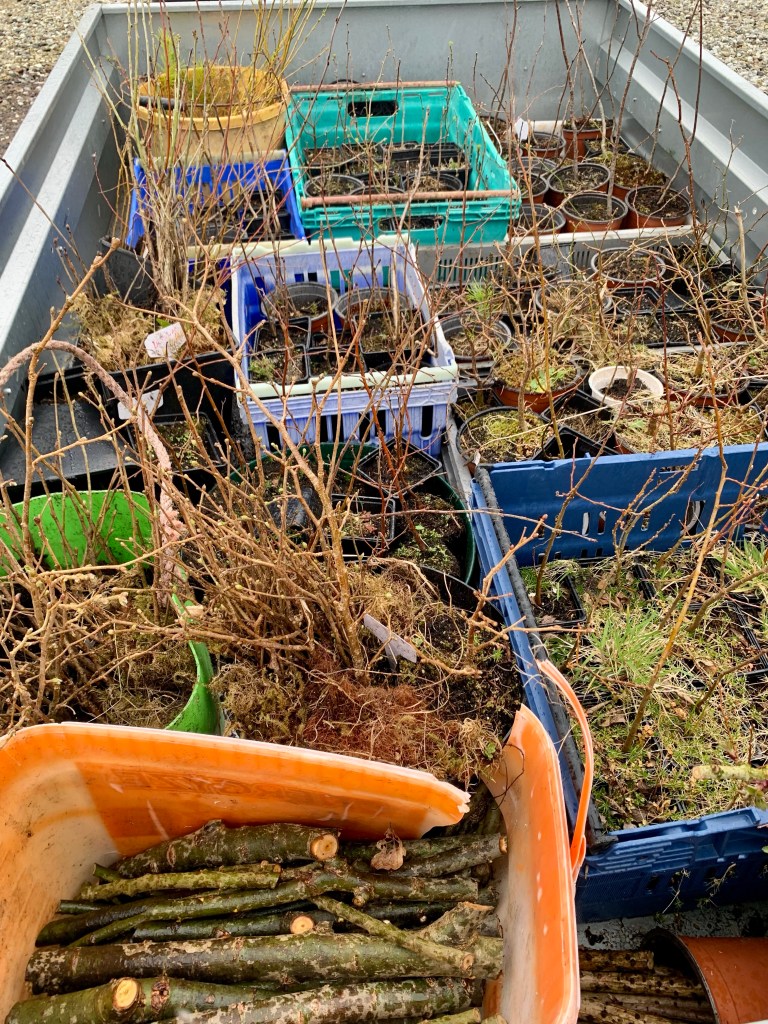
We bought a trailer load of cuttings and seedlings so that we could start hedging inside the newly installed deer-fenced area of the croft. The ground is saturated at the moment now that the snows have cleared, making it a good time to dig these in (and slightly less work, although poor husbands back is disputing that this morning!)

This is a good mix of Rowan, Oak, Scot’s Pine, Hawthorn, Grey Willow, Wych Elm, Hazel,
Purple Willow, Downy Birch, Holly, Goat Willow,
Elder, Honeysuckle and Dog rose.
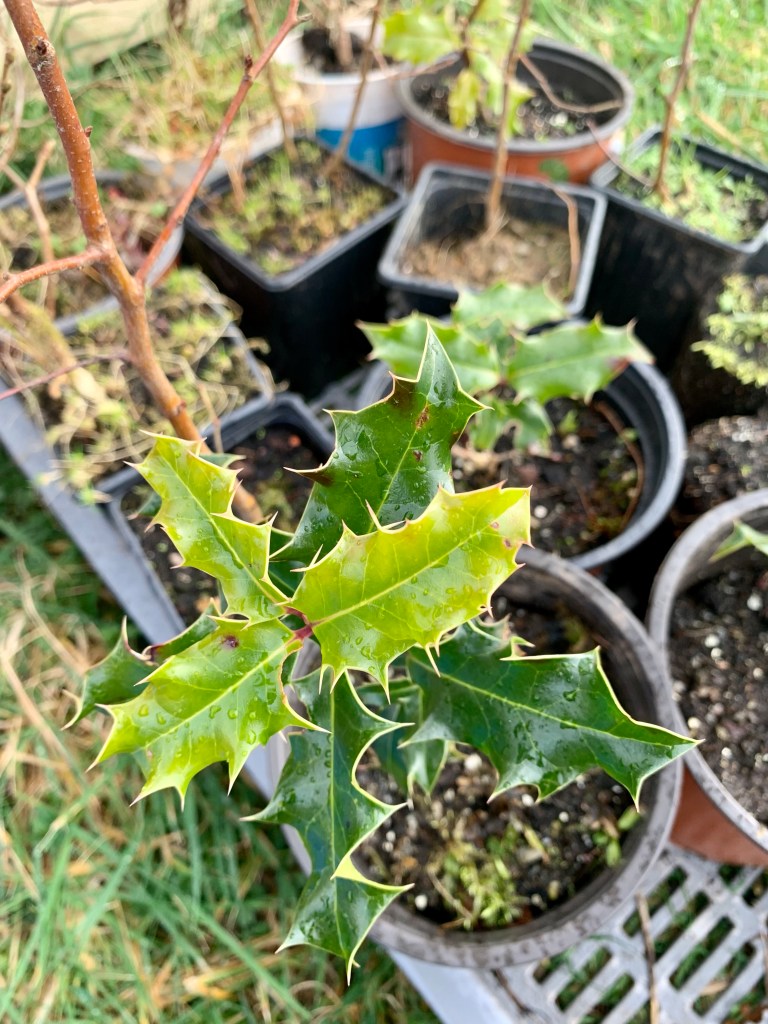
Husband and Phil worked through the rain heroically to clear and plant most of them on the croft yesterday. They’ll eventually provide shelter from the wind for our vegetable beds and the fruit orchard that we plan to plant next spring.

They’ll also most importantly provide a haven for wildlife, insects and birds, and food in the form of holly, elderberries, brambles, rosehips and rowan berries. Bringing this croft back from bare land to a richer, more diverse ecosystem is important to us both, and depends upon this.

It feels good to be taking the first steps towards our ultimate goal of a woodland croft. It’s an enormous task, but we’re determined. Watching David Attenborough on Wild Isles over the last week just reinforces how much we’ve lost already and how important every patch of nature is.
Winter sowings & worm gravy

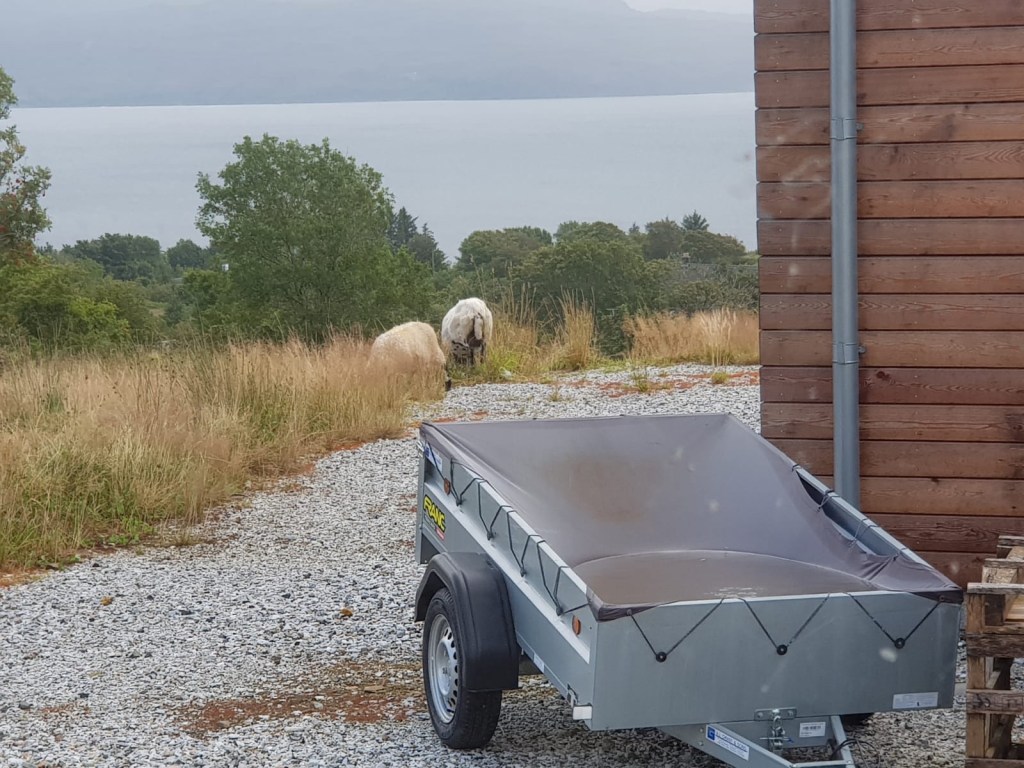
Due to the great sheep invasion I’ve decided that until we can get our croft fences repaired or replaced, any winter vegetable growing will have to just be in the polycrub.

More sheep lurking around the croft

Autumn is definitely in the air, and I’ve been slowly clearing the pots of spent pea tendrils and bean shoots, freeing up space for successional sowings of winter vegetables and herbs.

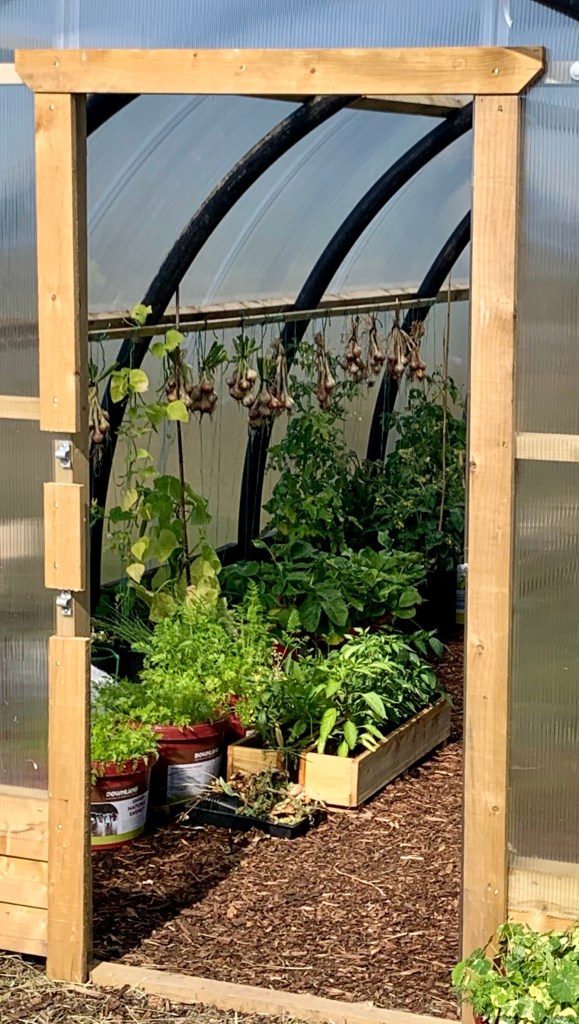
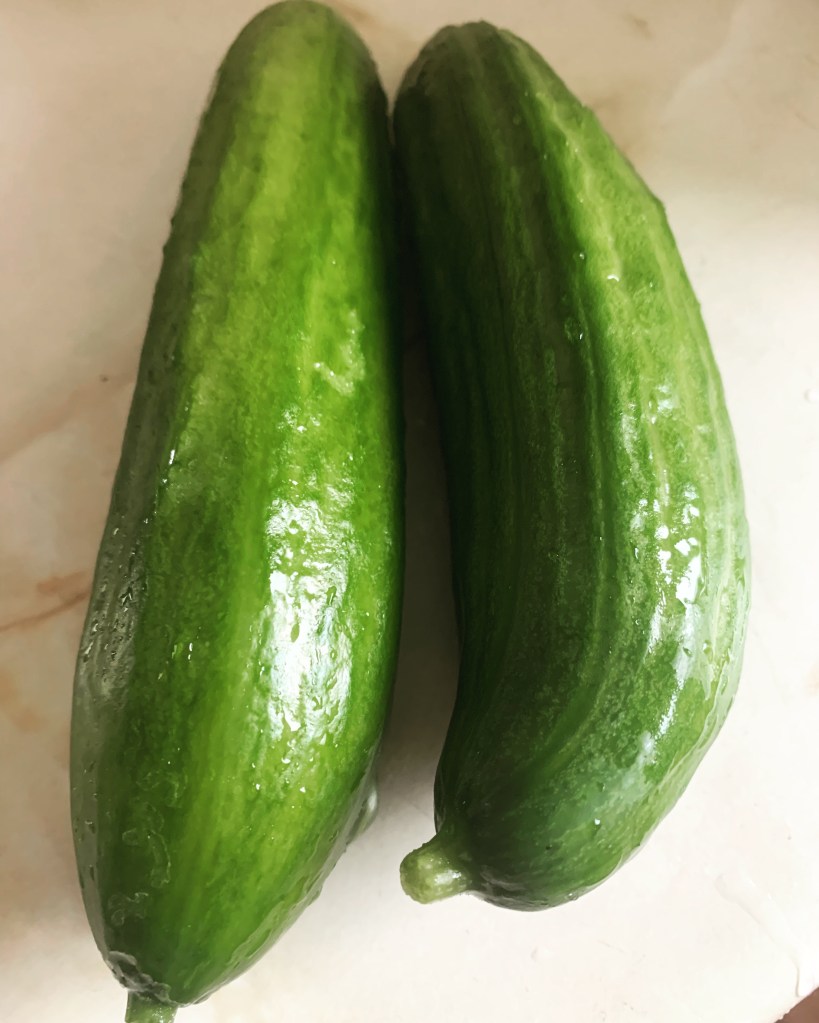
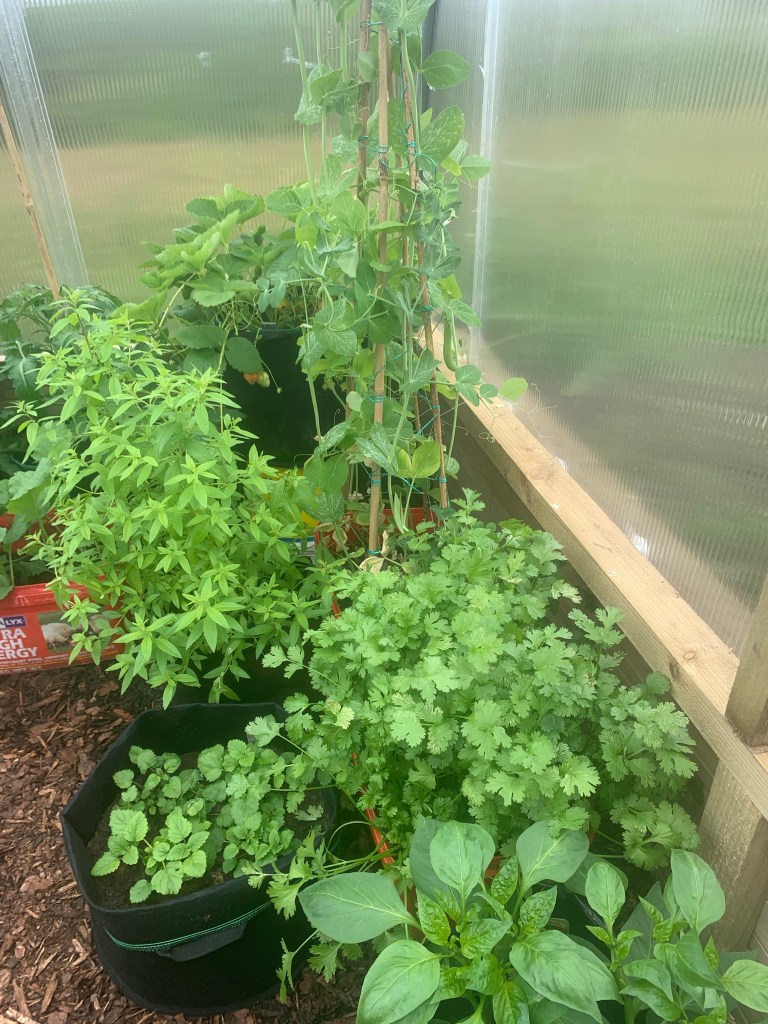
The tunnel is still pretty full of plants:- tomatoes slowly ripening, beetroot, cucumbers, sweetcorn, carrots, herbs and squash, but now is the time to start the next round of crops if we want to continue eating through the colder months.

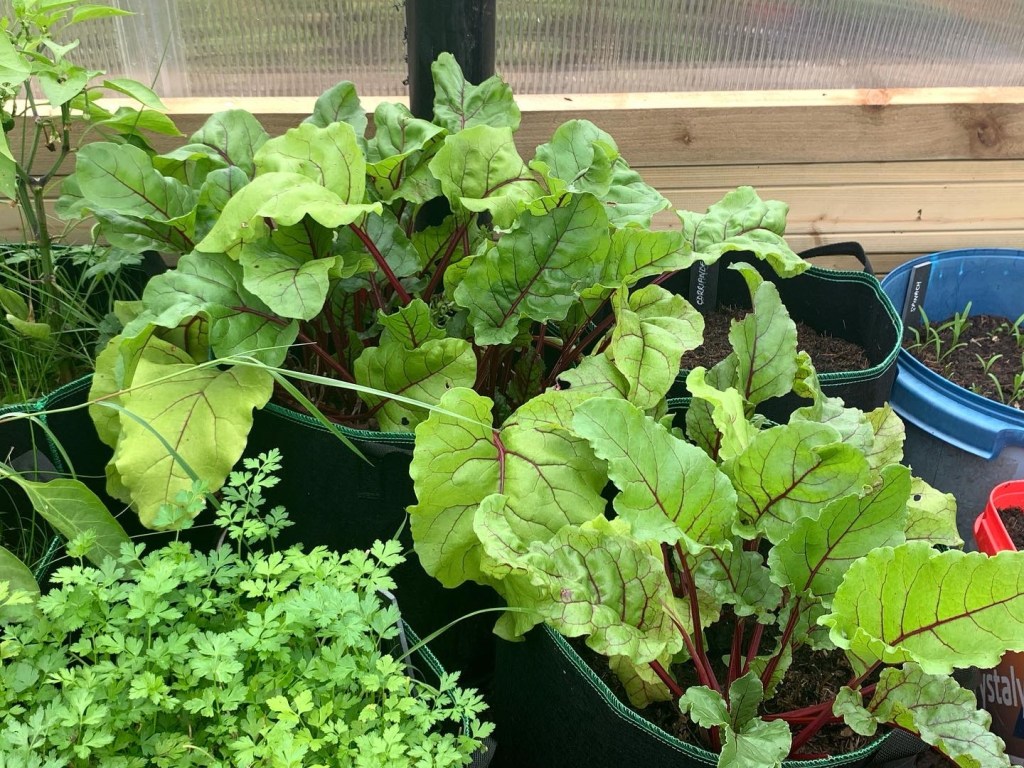
Beetroot

I’ve been in there over the last few weeks sowing seeds. The great thing is that they germinate quickly at this time of the year – which is a good thing, as we need them to get established enough to survive the winter in an unheated grow space. I’m trying my best not to have to subsist on neeps and tatties this year.

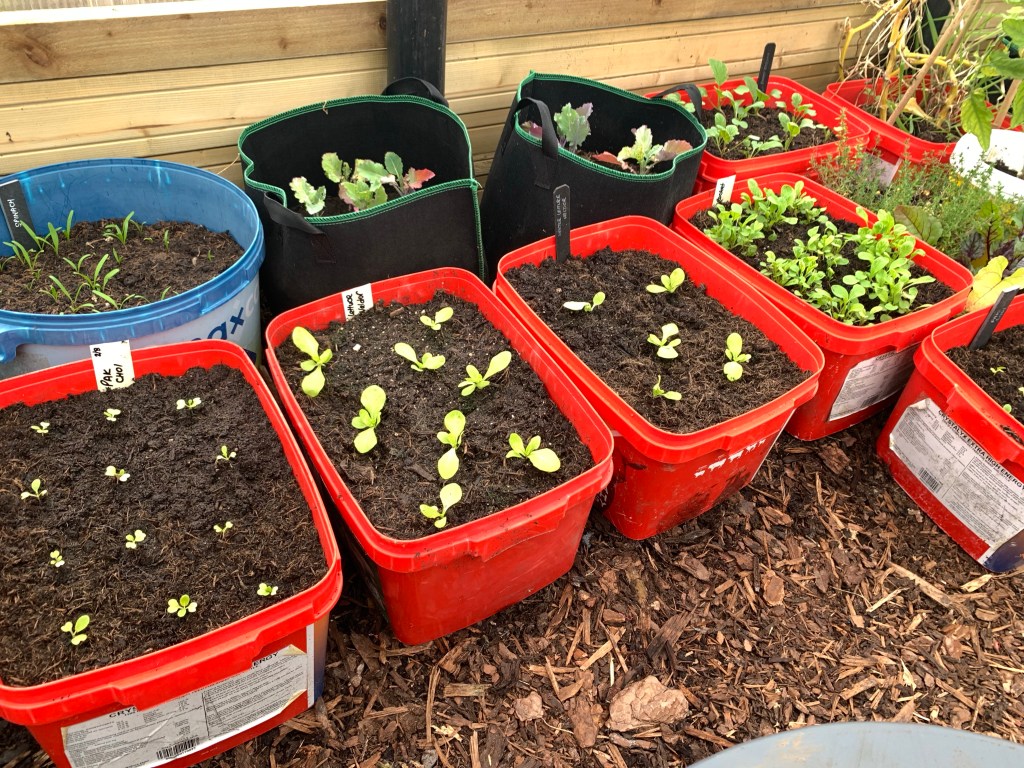
Leetle vegetable seedlings

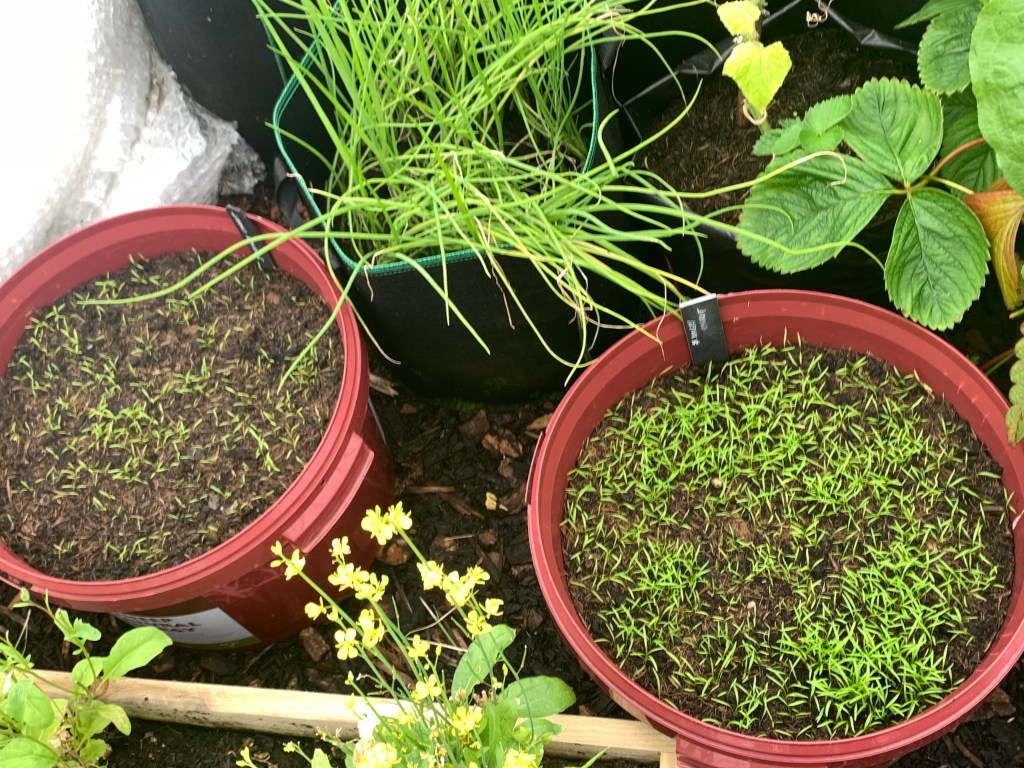
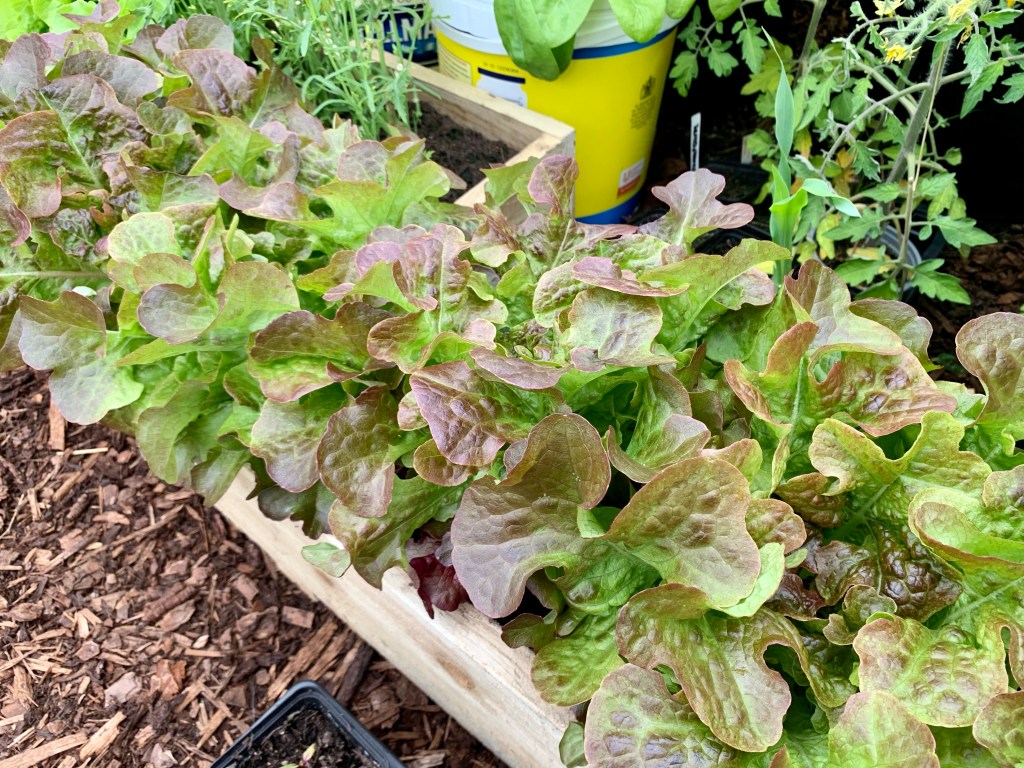
So far I’ve got pak choi, winter lettuce, black spanish radishes (exotic, I know – I don’t know what came over me) purple sprouting broccoli, spinach, rocket, more dill and coriander and a few more tubs of carrots on the go. They’re looking lush with promise at this stage, although I’ve been here before..

Carrot sowings

I’ve still got winter cabbage and kale to sow. We can’t overwinter without salty kale crisps and rumbledethumps (a Scottish dish of mashed potatoes, cabbage, onion and cheese, like colcannon) once the weather turns.

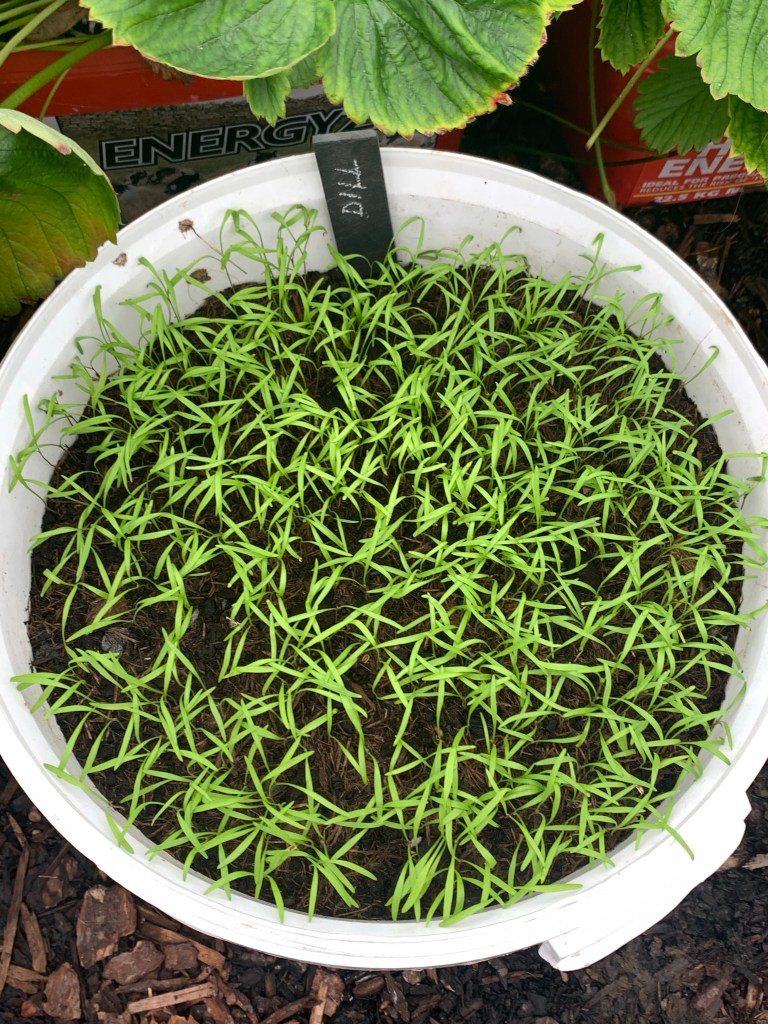
More dill

The wormery that we installed a few months ago is now coming into its own, and we’ve been watering the polycrub pots with worm juice every week. It seems to be doing the plants the world of good.

It looks like gravy, which I guess in a way it is. I try not to feel sorry for the worms that inevitably fall into the collection tray full of liquid and drown. It’s a hard enough life being a worm. Husband has an idea to use insect mesh to save them, which we will certainly try in the interests of worm colony morale.
I love the cyclic nature of growing: garden clippings and waste go into the compost or the worm bins, which get added back to the soil to support the next generation of plant growth.

This continual replenishment of nutrients and micro-organisms is essential in helping to build healthy soil, which is truly the heart of everything. I’ll just have to live happily with the scurrying, burrowing beetle and other insect life that it supports, and which I know is a good thing.

Someone once told me that if nothing was eating your plants, you weren’t part of the eco system. I’m pleased to report that we well and truly are.

Summer harvests and winter preparation

We’ve not had much in the way of a summer yet despite us being at the end of July, but the croft and the polycrub continue to feed us.

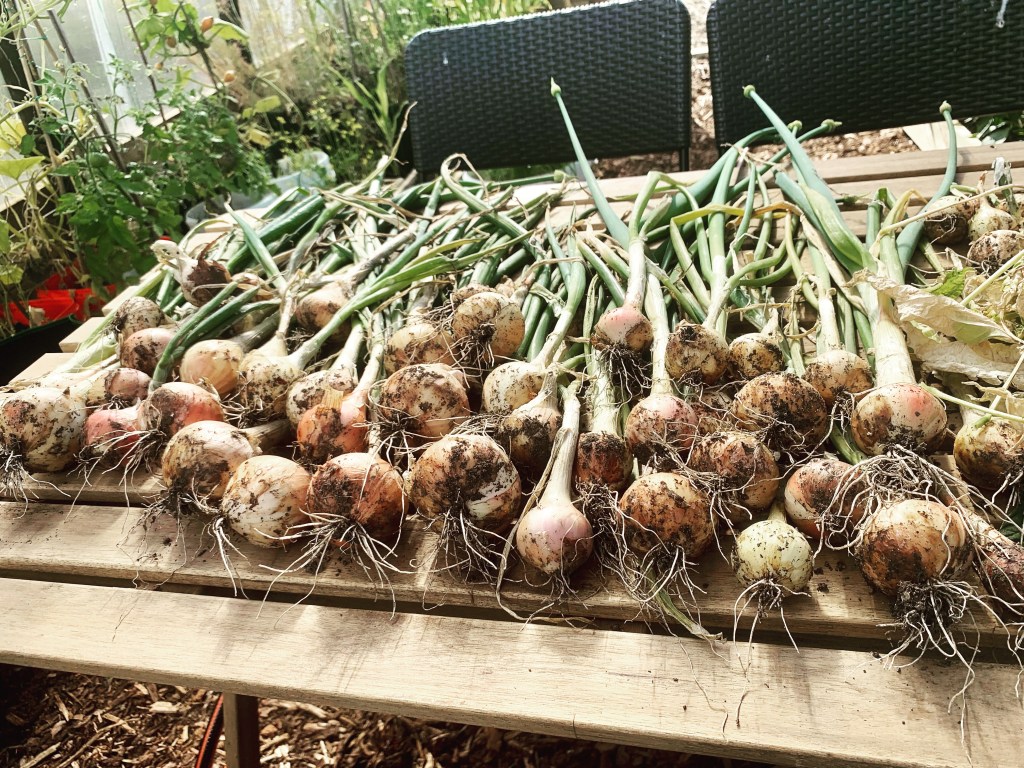
We dug out the rest of the onions yesterday. These are a variety called Keravel Pink, and they’ve produced what I think is quite a respectable harvest.

I chose these as they were the closest I could find to the Roscoff onions that I used to love when I lived in France. They’re an onion with a slightly blush colour, and sweet, firm flesh. They’re now hung up to dry, ready for use.

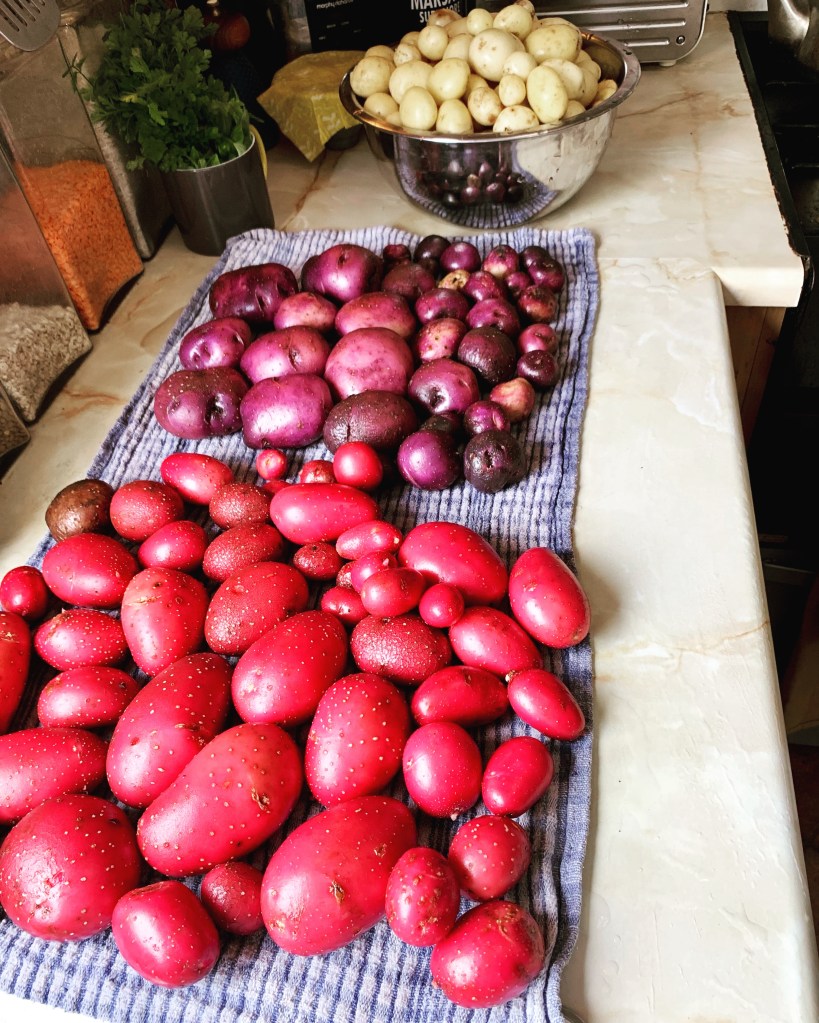
Husband also dug the rest of the potatoes as we were starting to detect slug – and believe it or not, deer damage. We’ve had a few meals already from them. It’s a smaller crop than last year, probably caused by the cold, wet weather and they could have done with a bit longer in the ground, but they’re a reasonable size. To be honest, we like ‘em small and sweet.

I planted Edzell Blue and Casablanca varieties from Scottish seed potatoes and Red Rooster from a bag of sprouted supermarket potatoes. The supermarket ones outperformed the specialist ones by a reasonable margin for a second year!

The first of the carrots are ready now, and I’m going to sow more. They’re sweet and very flavoursome.

The sweetcorn experiment is progressing! We have flowers and silks on a few of the plants, so I’ve been hand pollinating with the hope that we manage to get a few cobs at least.

All in all, not bad for a low-effort croft nurtured using organic principles and no-dig beds, in this weather and whilst not at my best due to illness. No pesticides, no inorganic fertilisers, no chemicals. I love that we can pick produce straight from the plant. The soil is fertile and giving, and we will continue to develop the beds next year with windbreaks and deer protection.

It seems strange but I can already detect the first wisps of autumn drifting in from the edges. The leaves on the ancient horse chestnut at the end of the lane are starting to turn russet. The seed heads on the long croft grasses are ripe and heavy. The season feels about to turn.

Time to start sowing the winter crops.

Rain and Junior Gardeners

We have had an incredibly wet couple of months recently, and as I look ahead at the weather forecast for the next week, I see no respite. It really doesn’t feel like summer.

No sun, just back-to-back clouds and rain for the week to come. I’m clutching my mug of coffee and peering out through the rain-smeared caravan windows as I write.

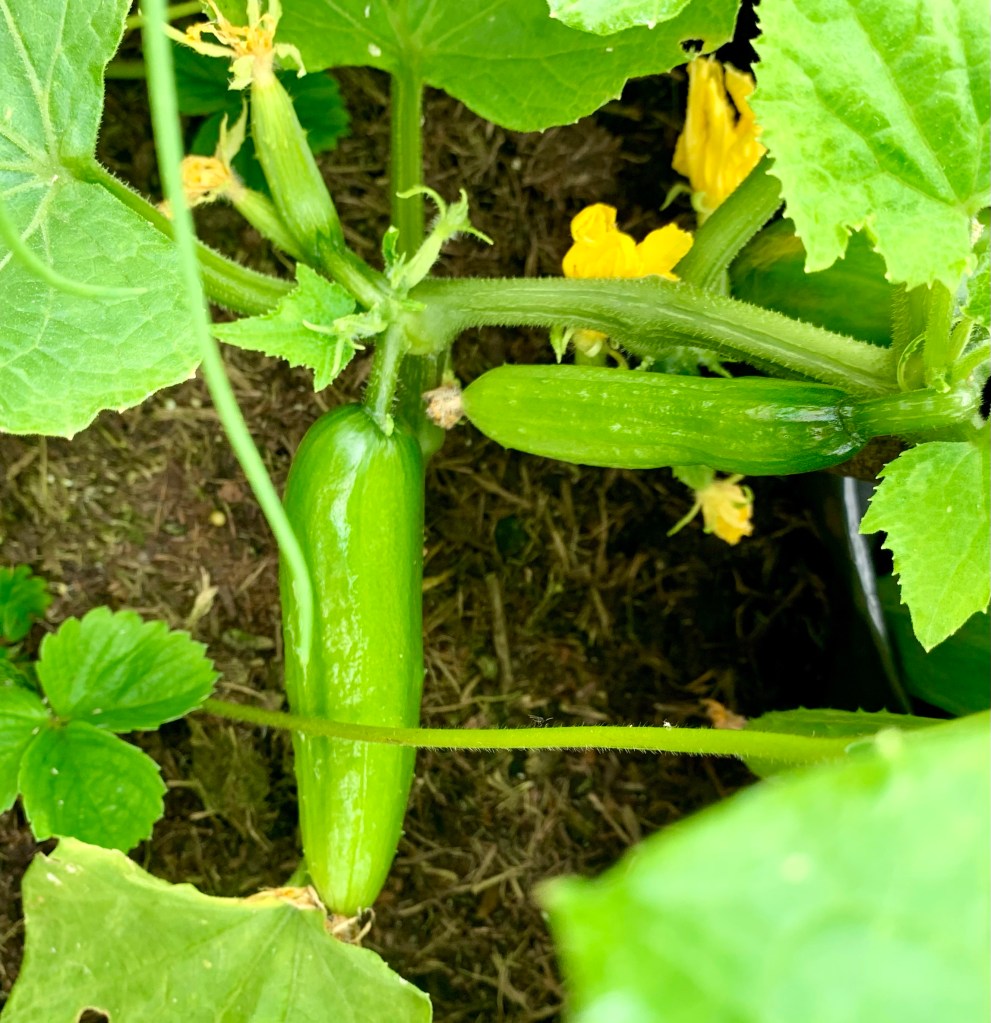
Baby cucumbers at last

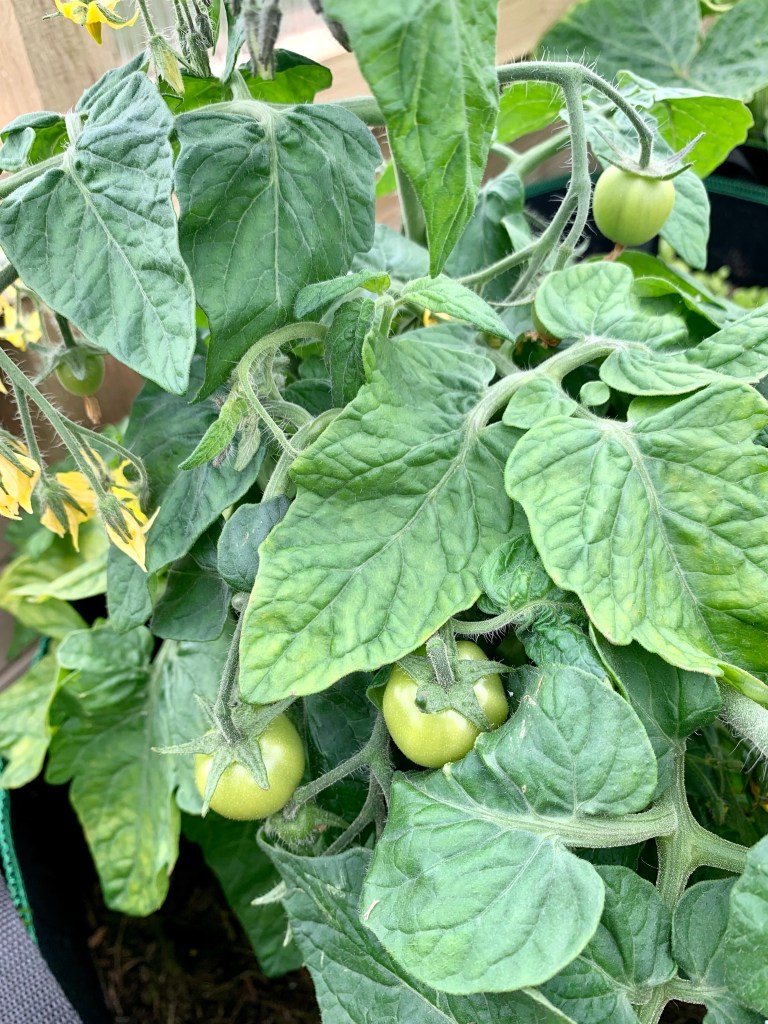
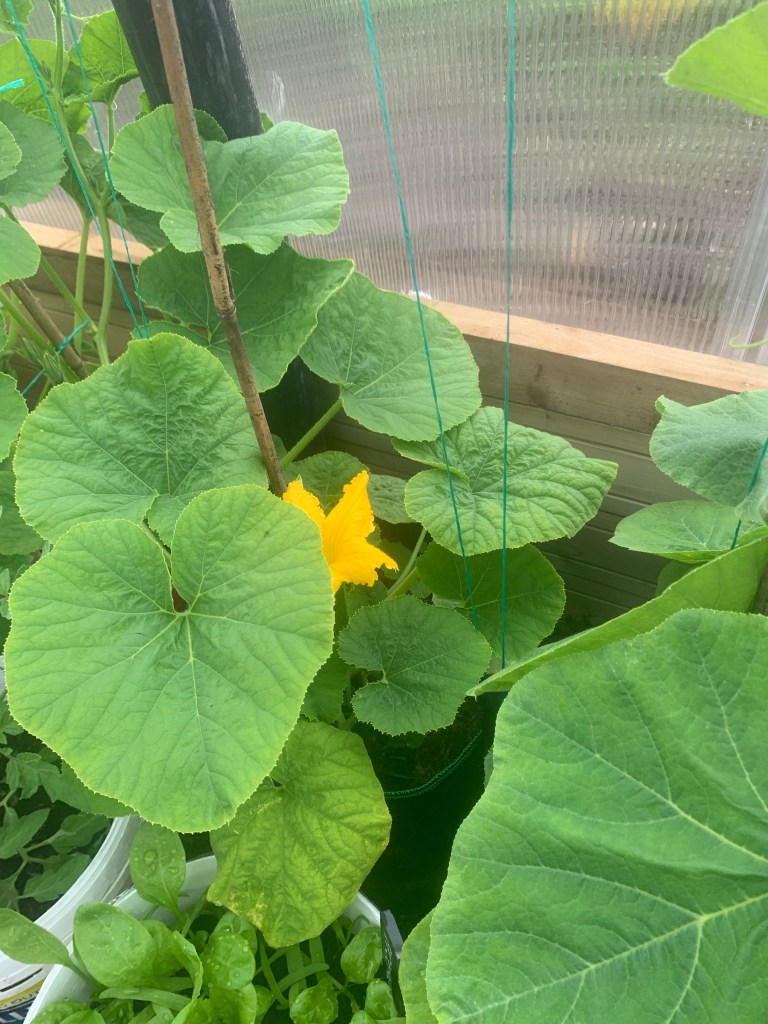
Luckily the polycrub remains largely unaffected by the rain. Everything seems to be growing nicely in there, although the lack of warmth and sunshine means that my tomatoes and courgettes are being very slow to set fruit. There are lots of flowers, but only a few tiny fruits so far, despite feeding and shaking to help pollination. More patience is needed as well as more sunshine!

Baby tomatoes

We have youngest stepson staying with us at the moment. I say youngest, he’s 21 😊. Despite being a child of the city, a very definite metro-being, he’s been quite taken by the rituals of watering, pruning, planting and harvesting in the polycrub and has been helping me with this.
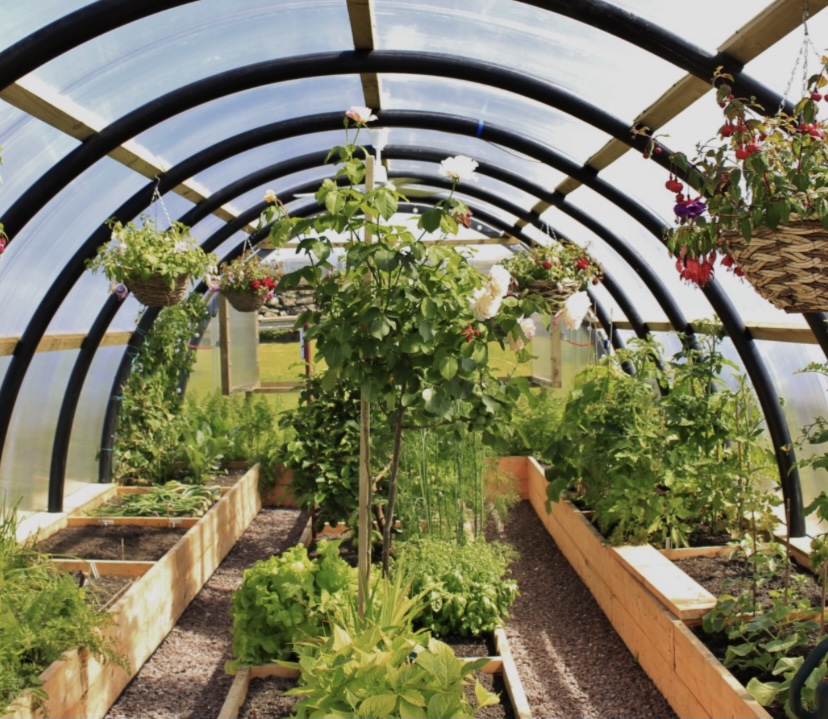
Which is a really good thing as it’s a busy time of the year in there and I’m still pretty limited in what I can do since the operation, with no lifting or standing for too long.

Lettuce

He pricked out baby beetroot into pots yesterday and I showed him how to take excess foliage off the tomato plants to redirect energy into the setting fruits. He’s also been building plant stakes to support the trailing plants.

Sitting in there with his music on enjoying the now rather jungle-like environment of climbing greenery, it’s been nice to see him without his nose in his phone or laptop for a bit enjoying the outdoors. Well indoors really, I guess. A polycrub is a sort of halfway house, isn’t it…😊

Who knows, maybe we have another generation of growers in the making…

ASHP and micro-harvests

When it comes to plumbing, electrics and heating in the home it may all be in Mandarin for the level of understanding I have. Husband makes it sound very logical and simple, and clearly finds it amusing that I either panic or glaze over when he tries to explain how electrical things work.

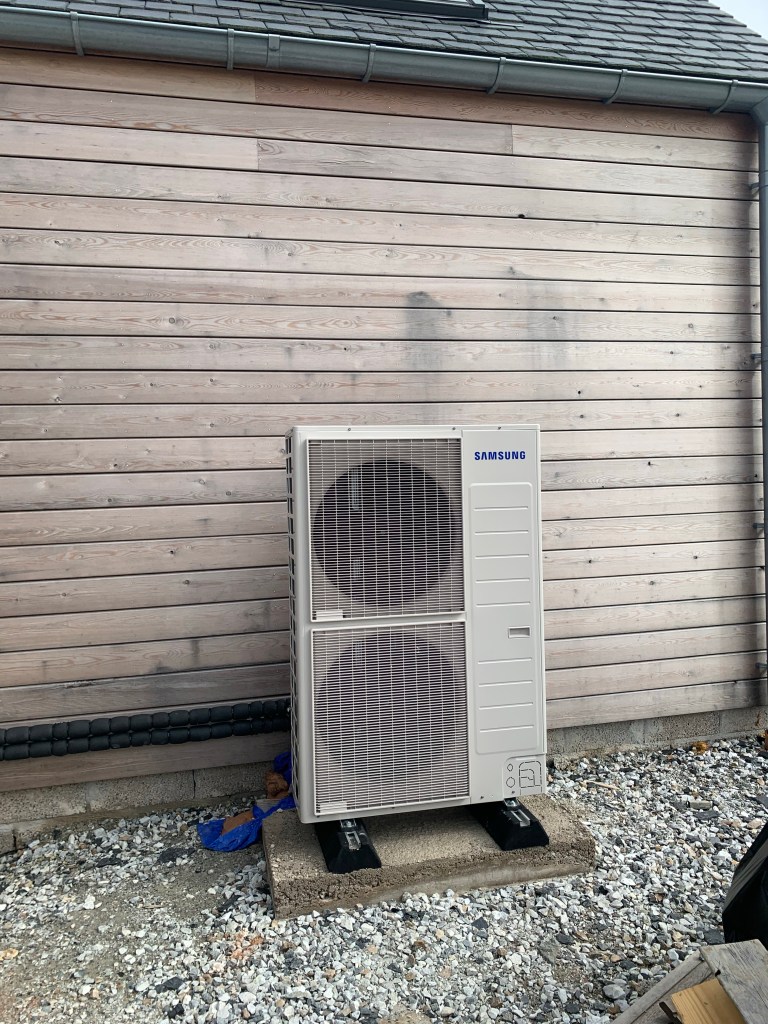
Yesterday we had the plumbers in to install the Air Source Heat Pump system for the house. This is a core element in heating the house as economically as possible, something that is becoming increasingly essential.

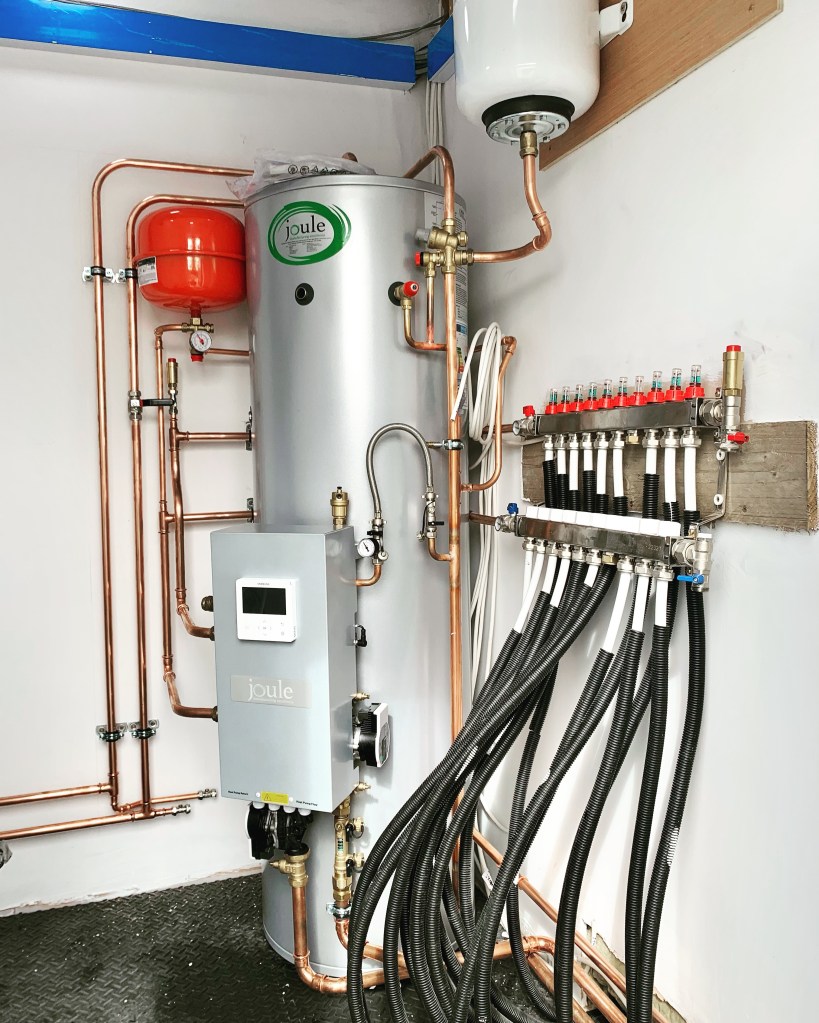
We now have a plant room with hot water tank, expansion vessels, underfloor heating pipes and outside, mounted on a concrete slab, the ASHP unit.

To me the assemblage in the plant room looks like something out of a gothic horror novel, all those pipes and valves and control panels. A local friend described it as looking like “a steam train mated with a brass band” which made me laugh out loud.

The electrician needs to come next week to complete the installation before we can crank it up and start testing it.

But it’s progress! Once it’s in and working we can lay the rest of the flooring, which will be another major milestone.

Whilst the install operation was underway I hid in the Polycrub.

There’s always something happening in there at this point in the growing year and the tomatoes and squash are now so large that I can hide amongst them quite effectively.

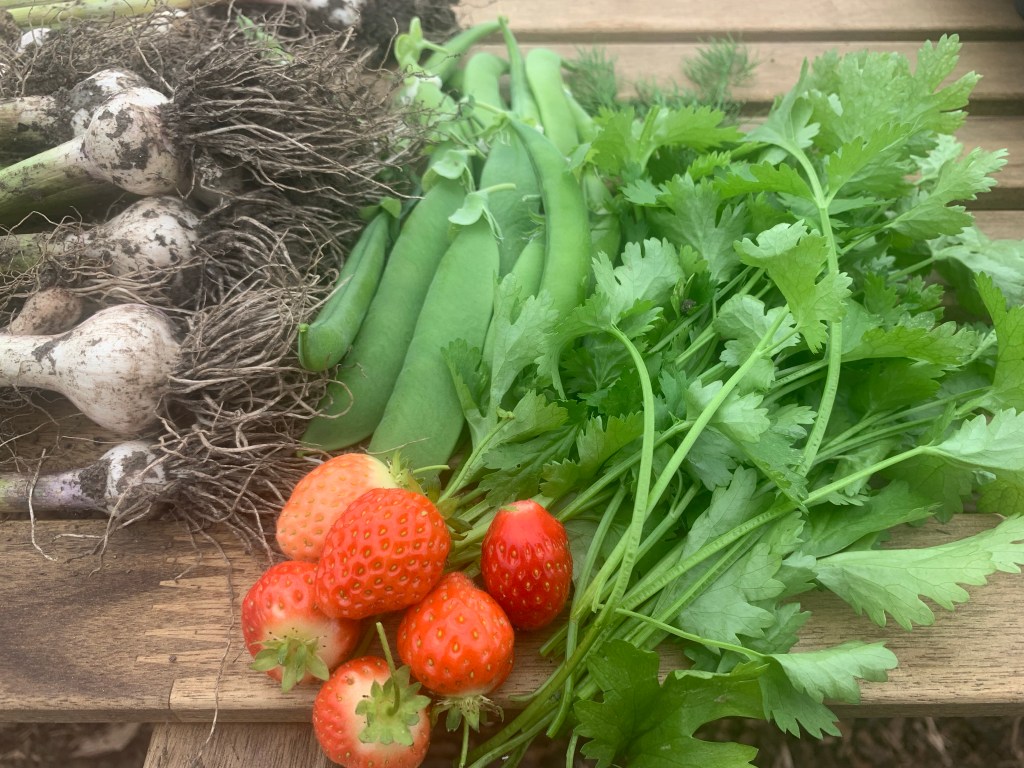
Every morning when I open up the tunnel to water the plants I pick as I go, a sort of micro-harvest. A few ripe strawberries, a handful of peas, a few bunches of coriander, dill , parsley, some lettuce. It doesn’t seem like much, but soon it will mean that we won’t have to buy those things.

Once the freezer and dehydrator are up and running, we’ll be able to store surpluses. At the moment we share any excess with our friends and neighbours.

It’s like receiving a gift every day.

It’s so satisfying to feel that you’ve grown this yourself, and that it will be on the table by supper time. Small steps towards self sufficiency.

Repurposing, recycling

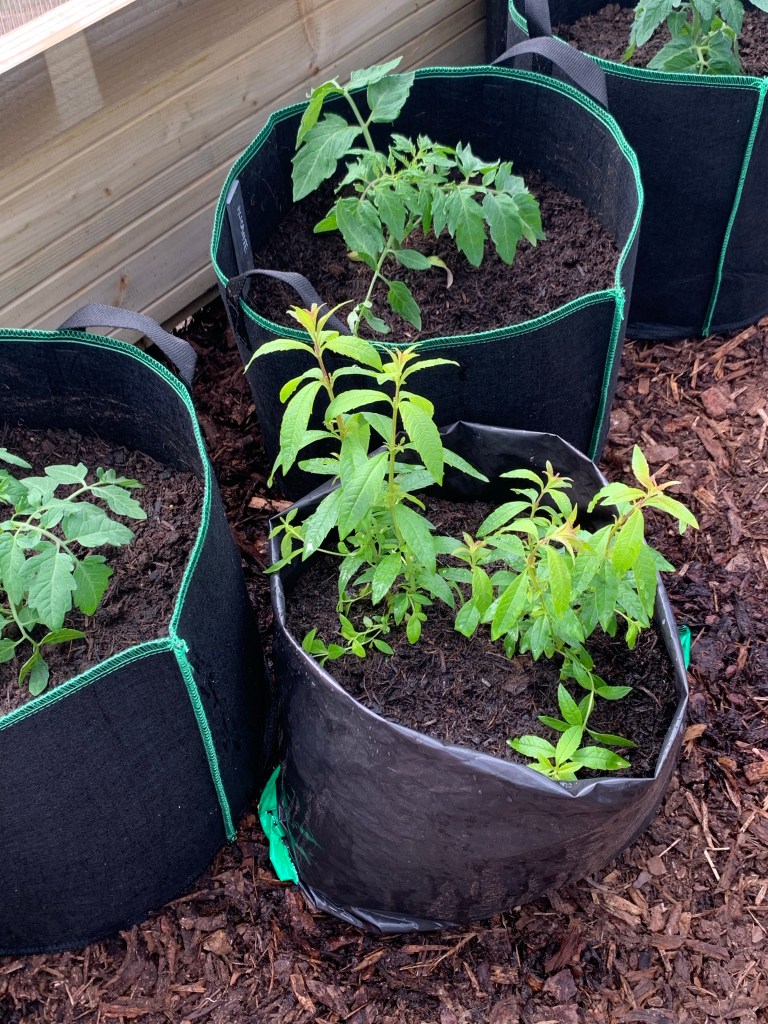
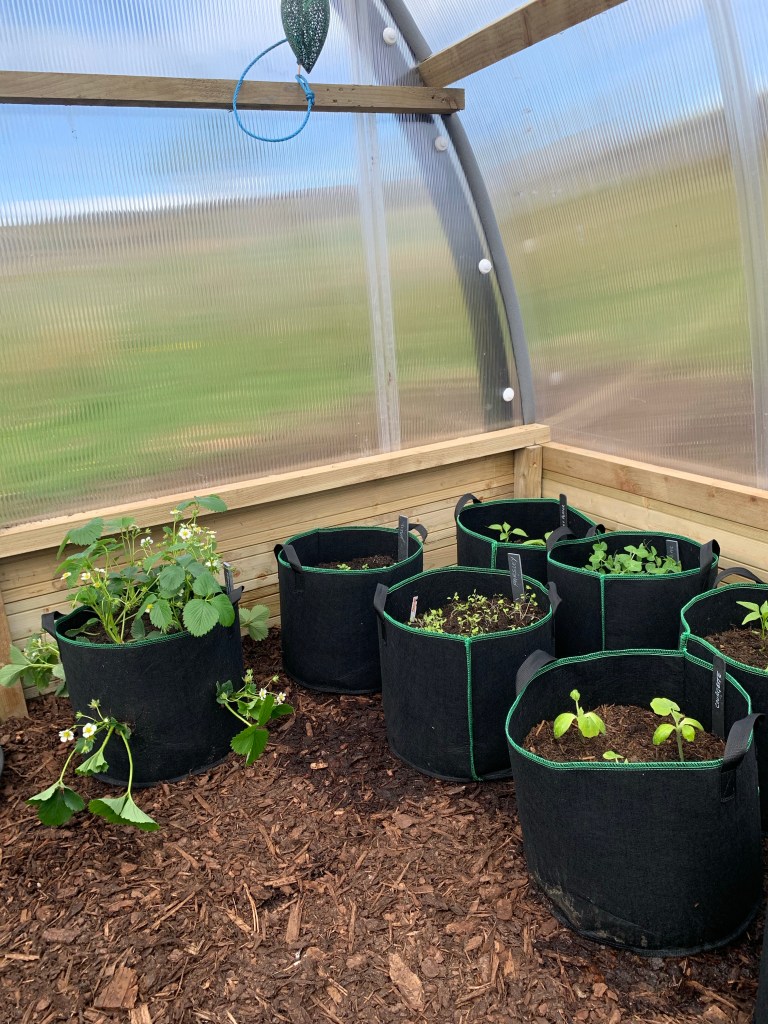
I’ve started the polycrub off with growing in canvas containers. We won’t have time to build and fill beds in there until next spring, and there isn’t much depth of soil beneath it before you hit the impenetrable seam of shale and lewissian gneiss.

I figured it was the best way of getting productive and a harvest this year.

Canvas grow bags and a repurposed compost bag!

They’re not expensive, a few pounds each, but when you’re using as many as I am it soon mounts up. So I put out a call via a couple of local friends for any unwanted large containers.

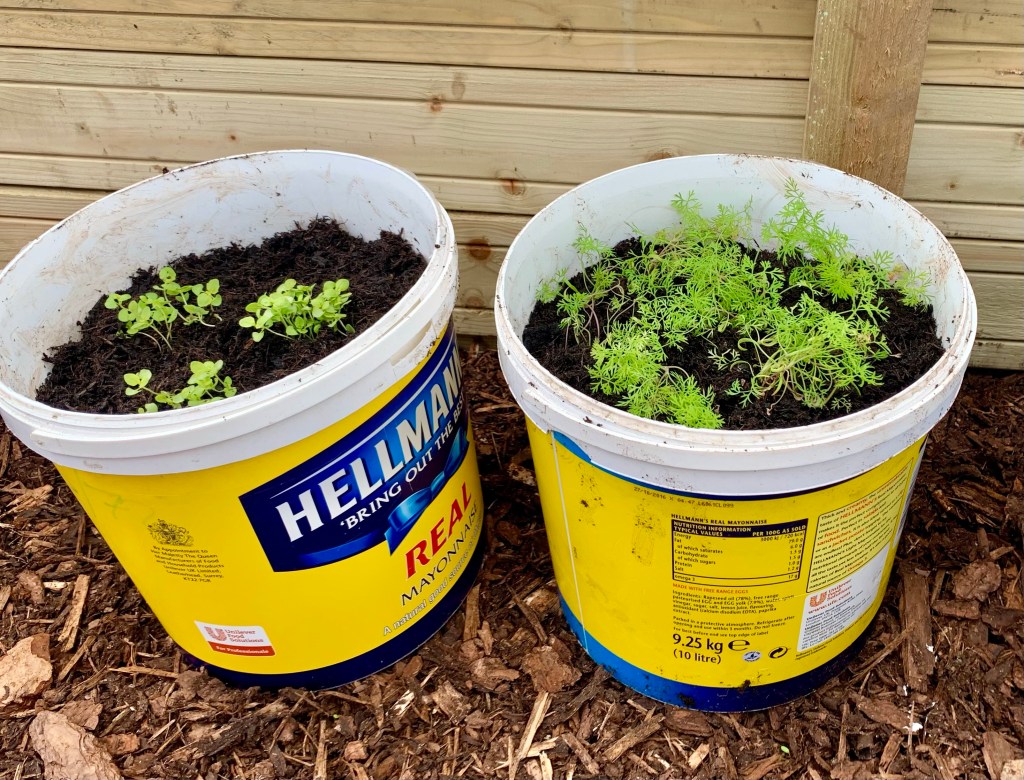
Friends at the newly established Coffee Bothy in Broadford offered up a dozen or more catering mayo tubs. A perfect size for herbs and smaller plants!

Old mayo tubs

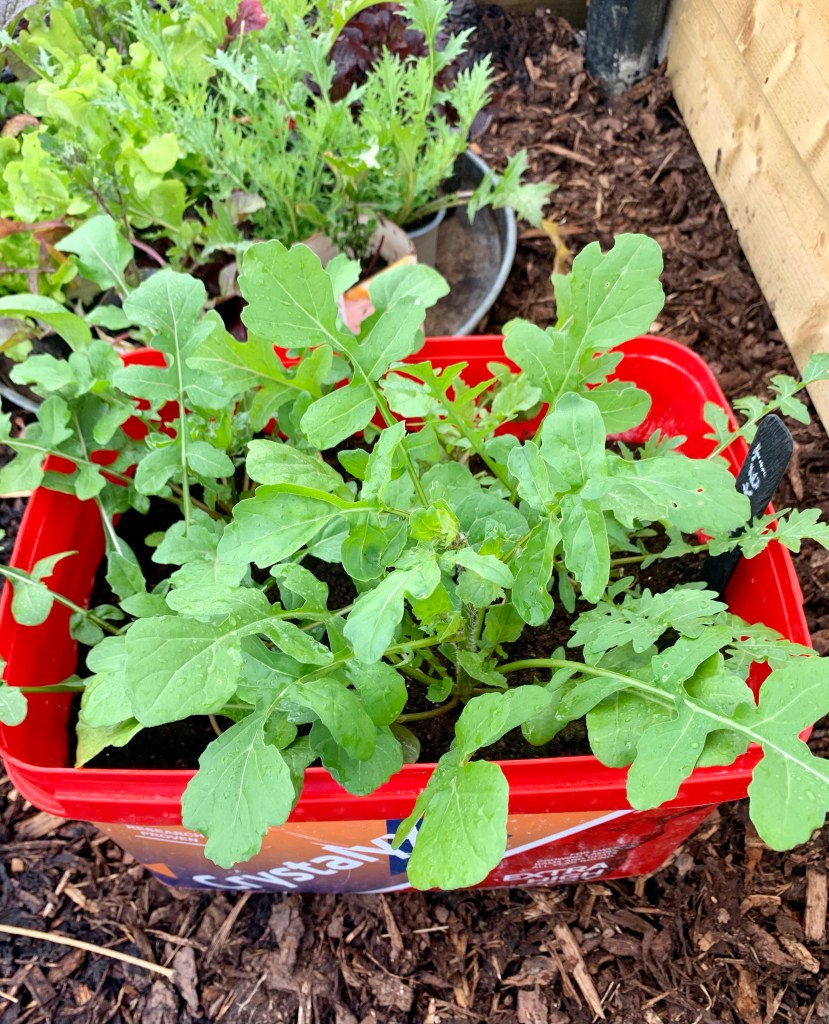
A couple of kind local crofters kept back their sheep lick tubs for me. They hold about 30 litres of soil or compost each so are deep enough for beans, potatoes or cucumbers to grow in.

Sheep lick tubs potted up with rocket

We drilled drainage holes in them and I have been busy planting them up for the last few days. If it holds soil, it gets filled with seedlings! It’s best not to stand too still around here 😊.

This is such a busy season for planting. I feel that I’m running slightly late with things this year but it’s been so cold that the seedlings that I started early have been very slow to grow.

Polycrub filling up

It’s always a balance here between waiting for the temperature to get warm enough but not leaving it so late that there isn’t enough season left for plants to mature.

Vegetable planting

Although it’s been warm during the days of April up here on the island, with temperatures of around 16C, the nights are still pretty cold at about 5C or less. So it’s time to still be cautious about planting anything tender out.

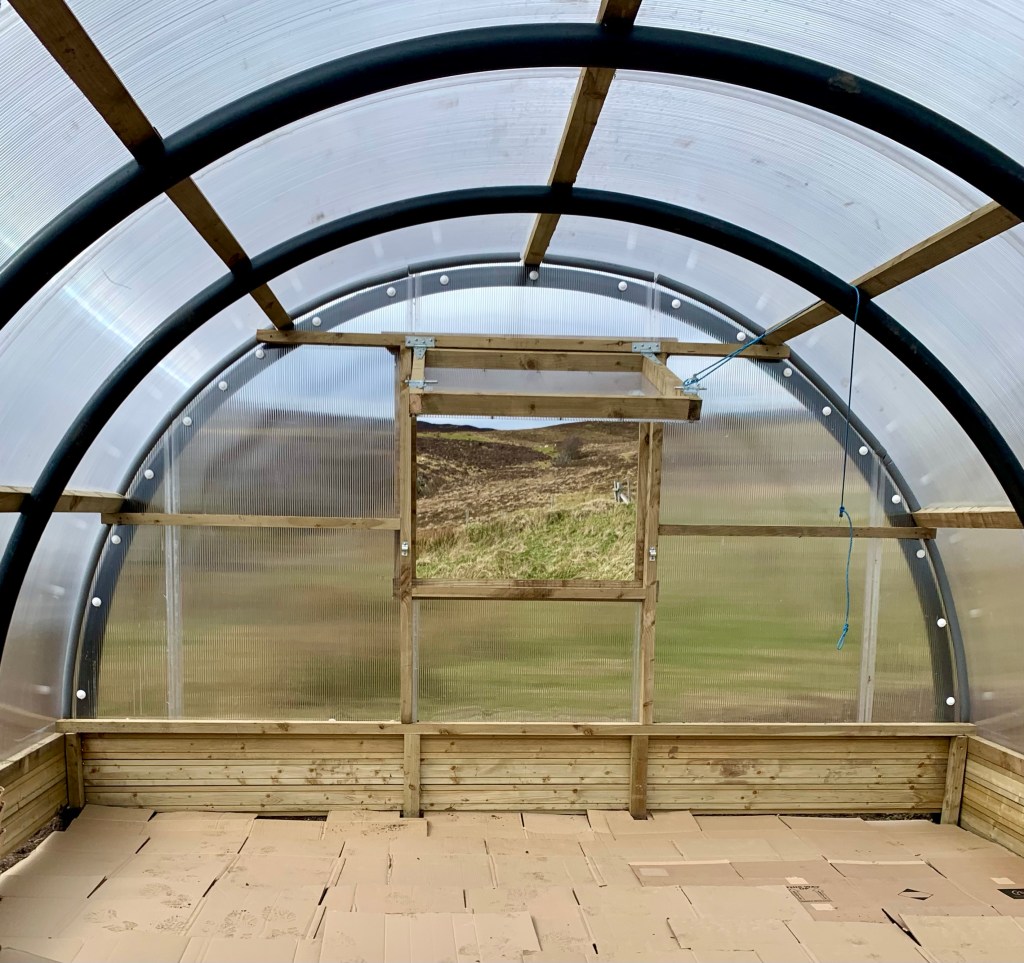
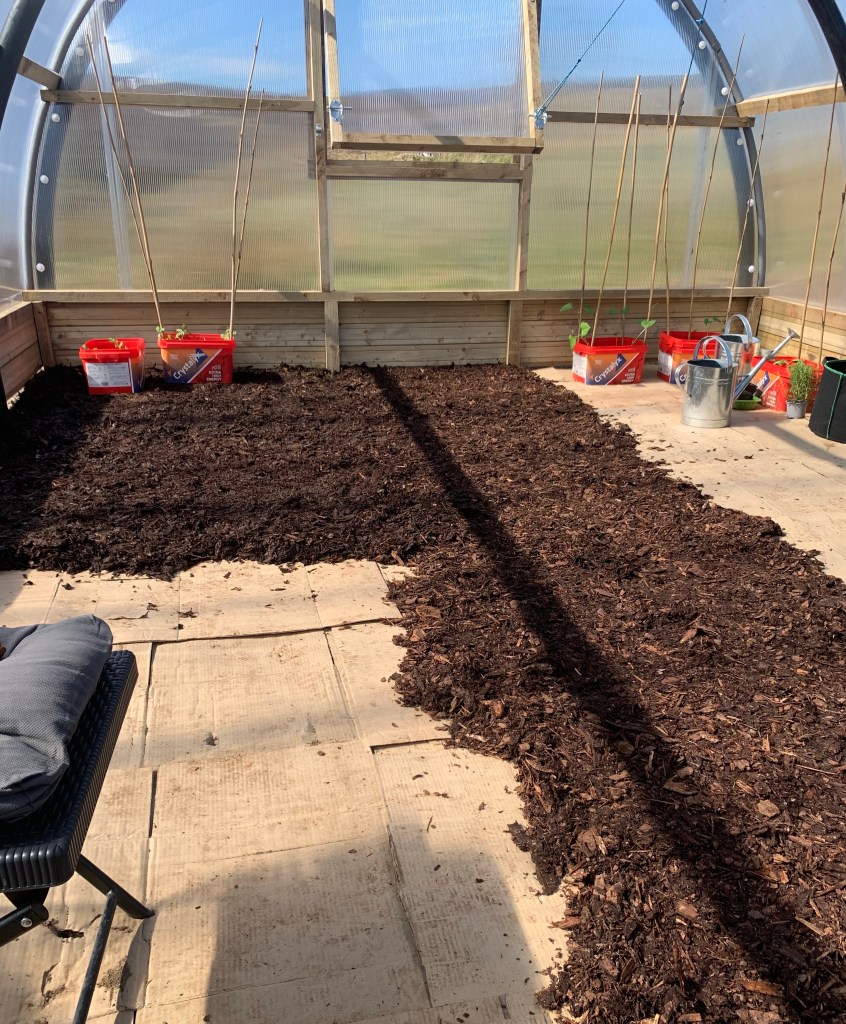
We’ve started prepping the polycrub growing area with a layer of cardboard followed by a layer of wood chippings to act as a weed suppressant.

It’s been heavy work for husband wheelbarrowing load after load of woodchip over the croft to the tunnel so that I could lay and level it. We’re not finished yet.

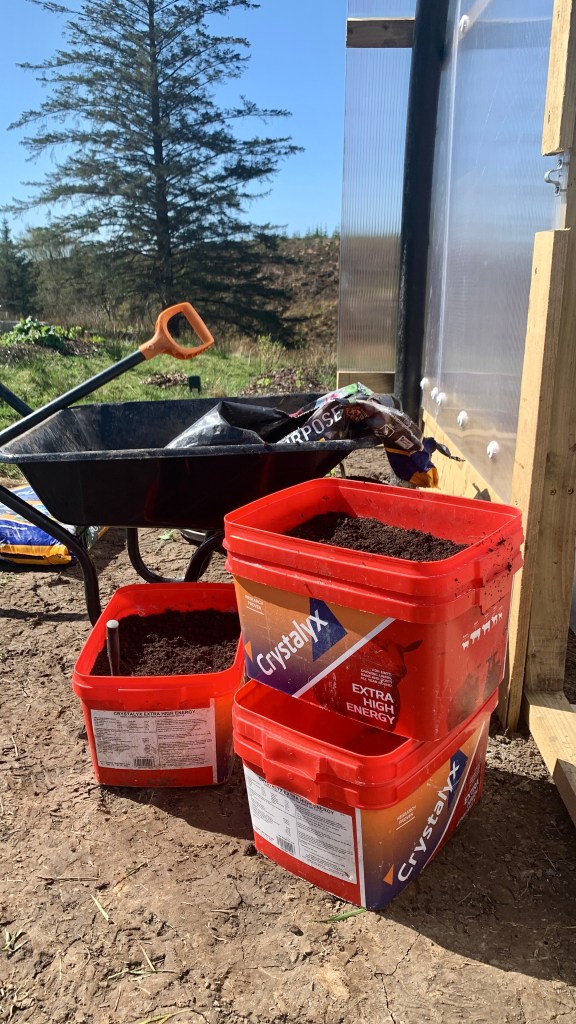
I’ve also started filling old sheep lick tubs and canvas grow bags with soil and compost so that I can plant out some of my seedlings. The local crofters give them away and they’re great to recycle as planters with a few holes drilled in the base of each for drainage.

So far I’ve got peas, borlotti beans, and a few squash and courgette plants in the tunnel. The salad leaves are in there too waiting to transfer into positions outside. The tomatoes, cucumbers, dill, parsley, basil and chillis are still too small to go out into the tunnel yet so will benefit from a few more weeks of growth.

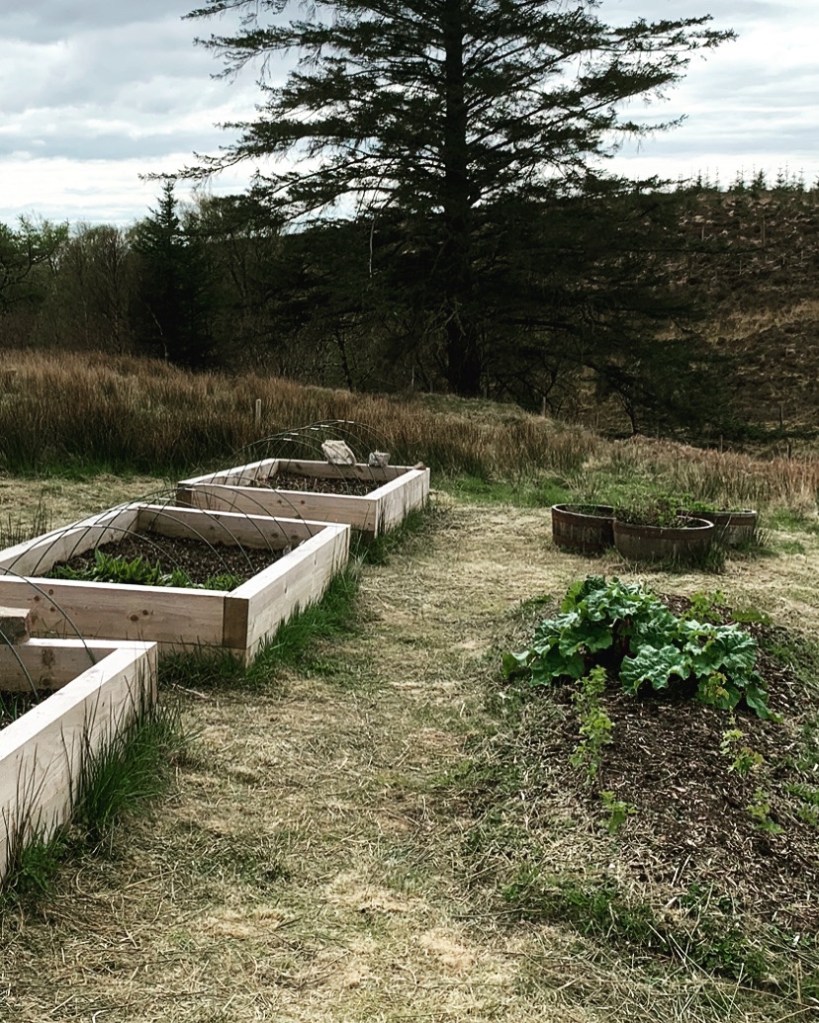
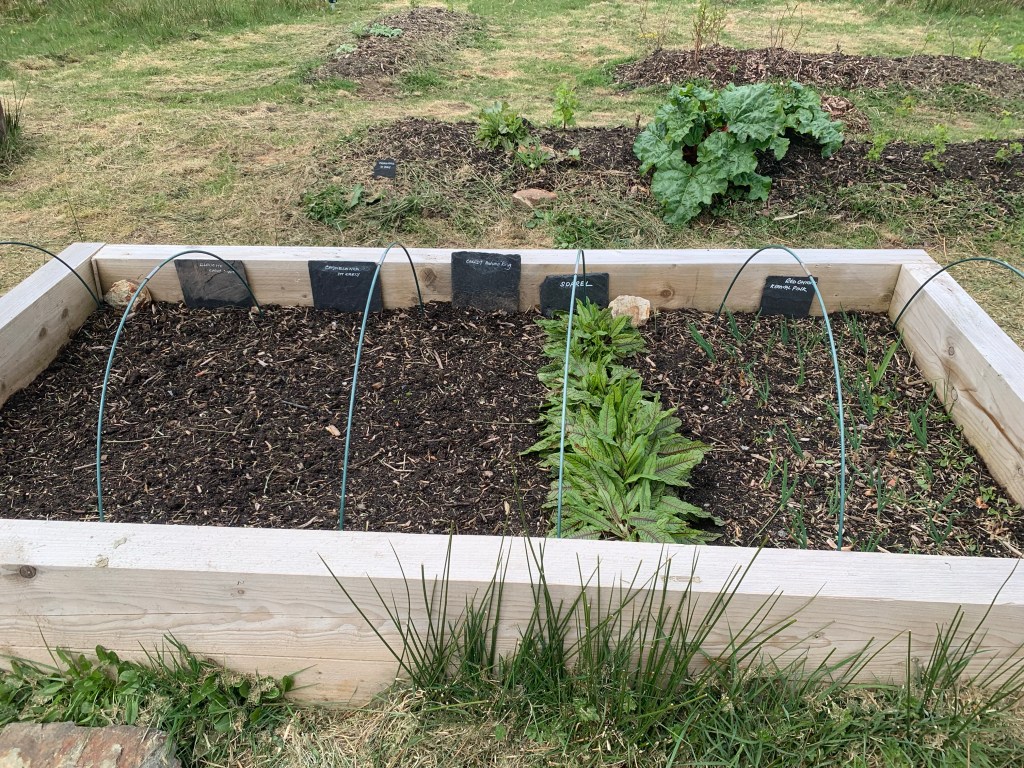
I also managed to get the carrots and kale sown directly into the raised beds. Potatoes, onions and garlic are already in. So although the beds look pretty empty, they’re actually full!

A busy time on the croft. Days of lifting, raking, bending and sowing. I’m certainly sleeping well at night at the moment!

Wishing you all a great growing season with good weather and lots of greens. ❤️

Polycrub on the croft

The day has come. The polycrub is being installed.

With luck, the day dawned clear and dry on the island, with no wind. The joiners arrived first thing and after confirming door and window preferences, immediately set to work.

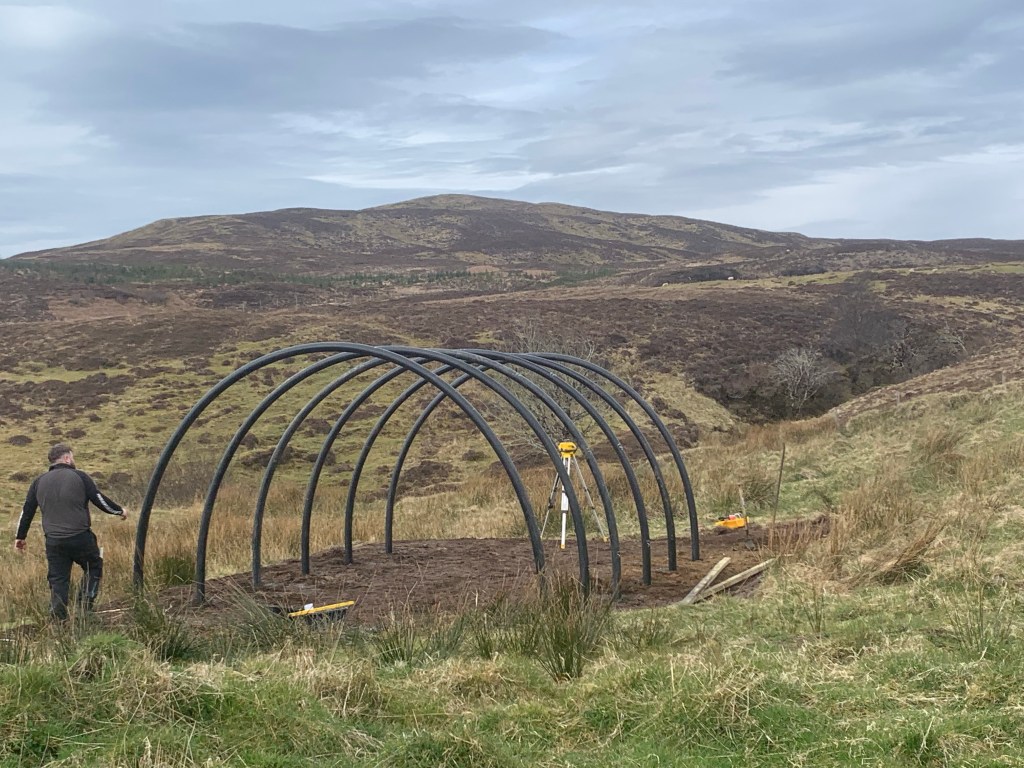
The hoops installed

The ground holes have been drilled, the wooden posts have been concreted in and the plastic pipes have been manoeuvred into place. It looked like the carcass of a whale with the hoops sticking out of the ground like ribs for a while until it was covered with polycarbonate.

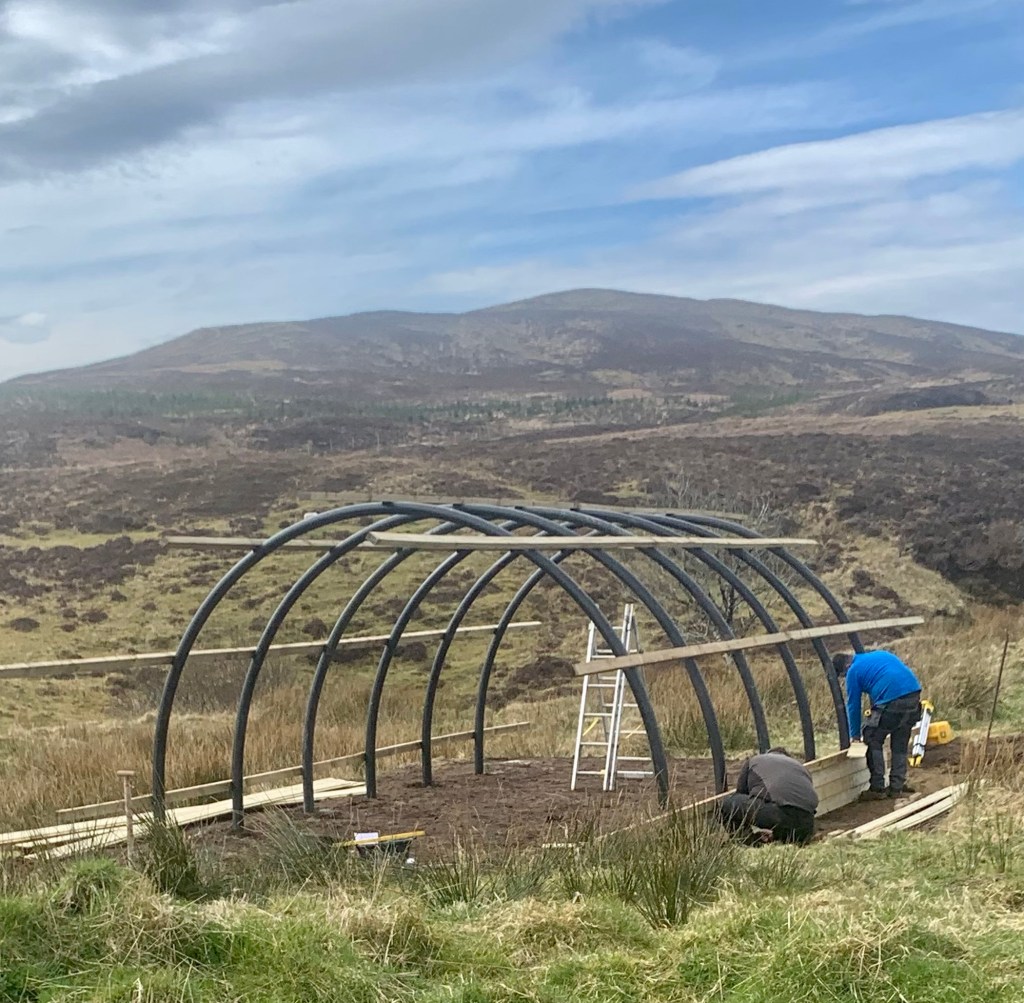
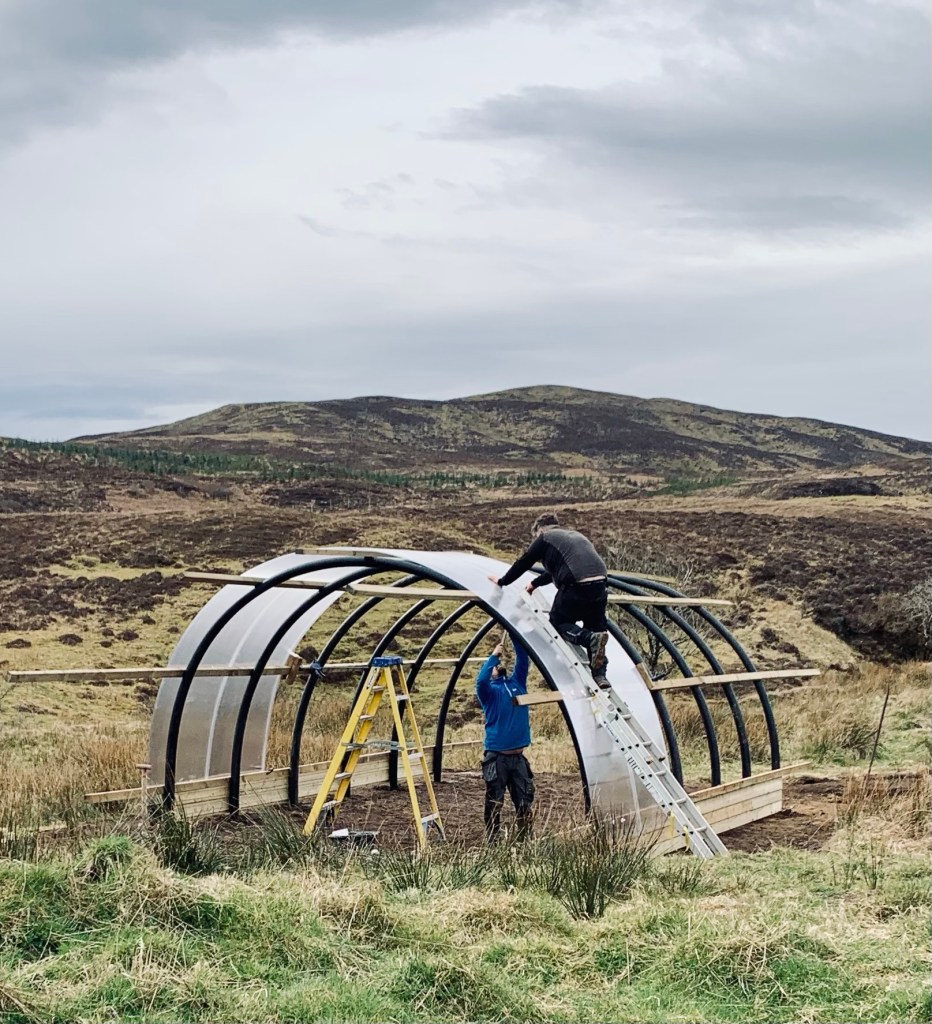
The wooden struts that hold the hoops rigid have been installed, and the wooden skirt has been built. The first three sheets of polycarbonate have been laid onto the hoops and secured.

Wooden struts going on

A good days work.

Polycarbonate sheeting being affixed

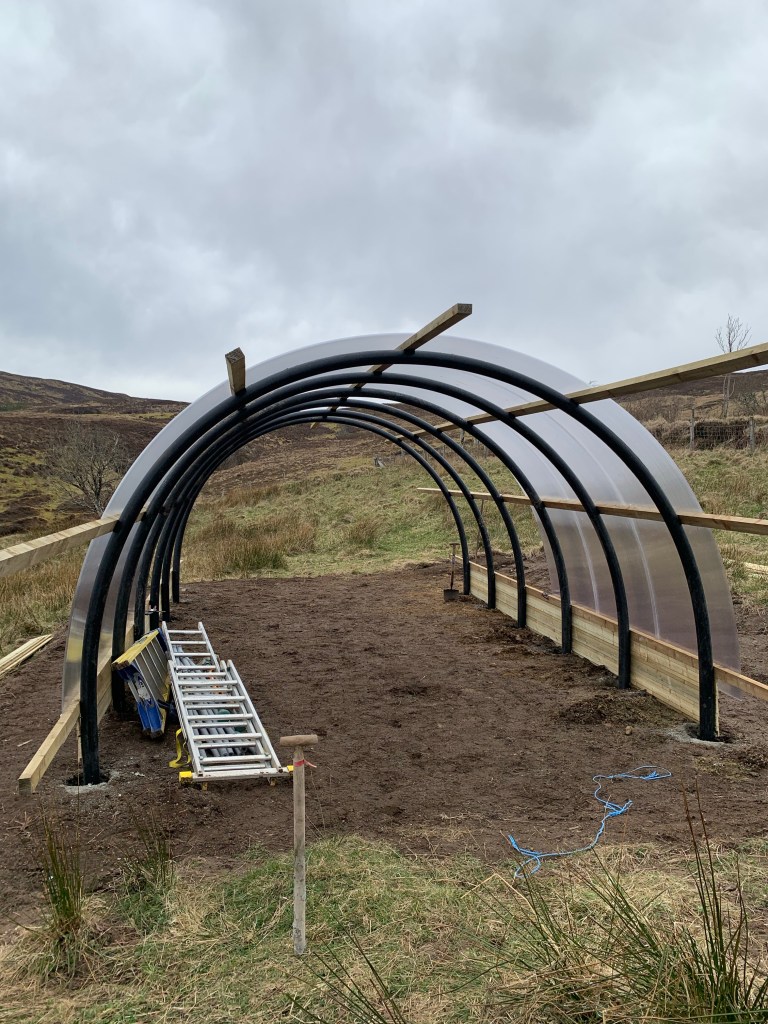
There is still much to be done with the construction of the door and the windows for the gables as well as the rest of the polycarbonate sheeting to be laid. But I can already get a feel for it’s size and robustness.

End of day one

I’m very excited. Tomatoes, chillies, cucumbers, squashes, strawberries and courgettes here we come!

The polycrub, seeds and spring

The days are definitely lengthening now , perceptibly so. Spring should be on its way, although no one seems to have told the weather gods that. It’s still hail, snow and gales most days.

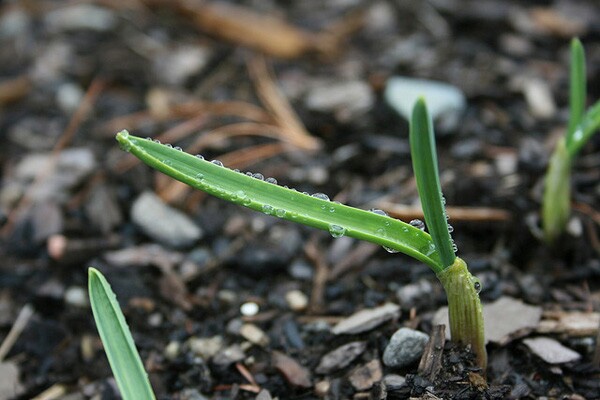
I did a quick rustle about in the raised beds this week and although I should be clearing and planting soon, it’s still far too cold and wet. The garlic has popped it’s head up a little, but that’s it.

I’ve ordered the polycrub. We did apply for a crofters grant to help with the cost, but we were unsuccessful. They wanted a five year business plan showing anticipated horticultural sales and letters of guarantee from local outlets that they would take our produce.

This isn’t the way that we’ve planned to do things. We will sell produce at the croft gate if we have any surplus, but we are mainly growing for ourselves and our neighbours, not as a fully commercial enterprise. As such we don’t qualify. We’re disappointed, of course, but we’ve bitten the bullet and gone ahead with buying the polycrub anyway.

It’s six metres by four of rigid polycarbonate sheeting, fish-farm tube loveliness. After the last few months of storms I’m doubly convinced that this is the only thing that would survive the winds on this exposed hillside.

It will revolutionise what we can grow, though. Tomatoes, chillies, squash, cherries, basil… lots of tender plants that wouldn’t thrive in our cold, windswept raised beds. We hope to have it installed in April, just in time to move crops in there for the summer.

Very exciting!

Now to clear out the caravan spare room out from a whole year of being a junk room, and set it back up to start seedling production again. It will be good to see the blue grow lights illuminating the hillside once more.. 😊

Quince Love

When we moved to our cold, wet island, 57 degrees north of everything, we maybe had a lingering doubt about the things that we’d miss. Lots of positives and upsides, of course, but there would be some things we’d have to compromise on, we knew.

The biggest worry of these was fruit. We love our fruit, and the thought of going without fresh fruit for any period of time was a bit of a concern. Surely living on the chilly, northernmost and westernmost rim of Europe would mean that figs, quince, loquats and ripe peaches would become things of fond memory?

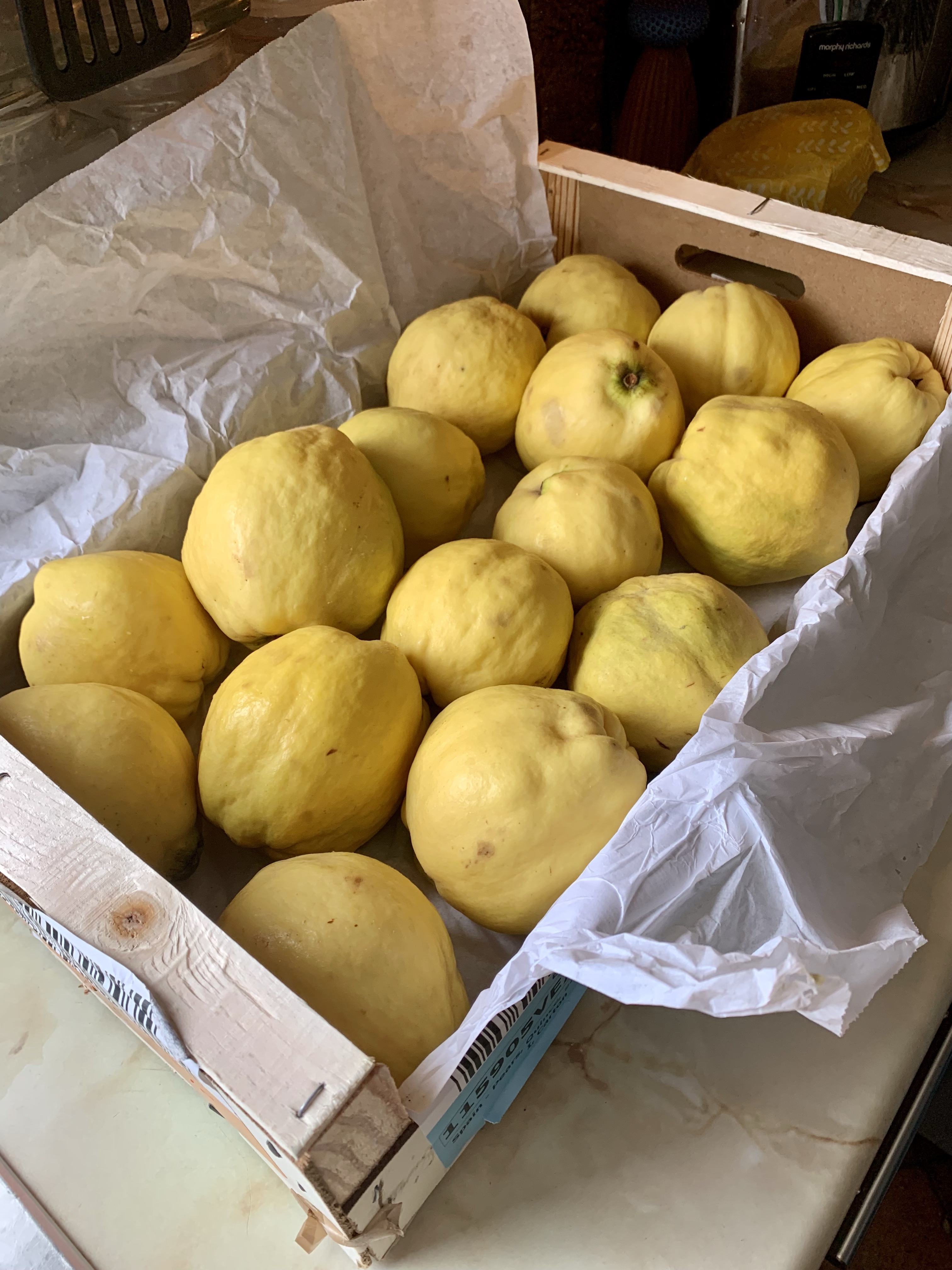
Today I picked up a crate of fragrant Spanish quinces from the local store, who had ordered them in especially for us. From our local community store. How amazing is that.

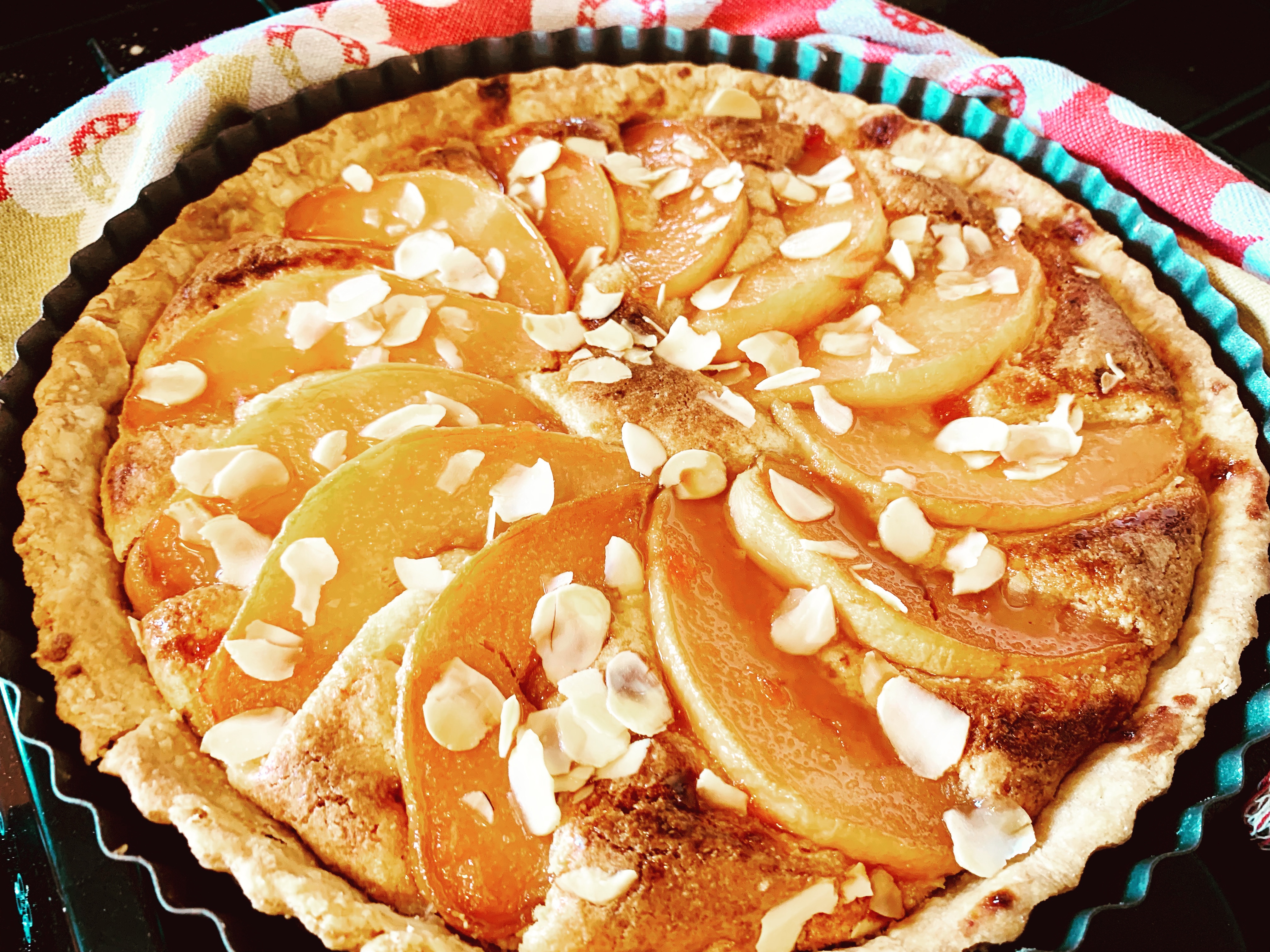
That will sort us from a quince perspective for a while. Husband will eat them, hard and raw (he is bizarre) whereas I will poach them in a sugar syrup with cinnamon sticks and juniper berries, then roast them in frangipane tarts and sweet pastries.

The rest of the fruit we source from local organic crofts, or the local Co-op supermarket.

We try to keep it local but apart from apples, pears, rhubarb, local quince and berry fruit I haven’t managed to find local croft sources for anything else, and certainly not the exotics as an occasional treat. Supermarket fruit is often under ripe and tasteless, let alone the concerns that I have about the food miles involved, so anything that we can do to reduce our reliance on them as a source of produce is a good thing in our opinion.

This is where the polytunnel will come in. We plan to grow nectarines, peaches, quinces and maybe loquats in the tunnel. If we can. Unlikely as it seems, the shelter that the tunnel will provide along with the long summer days this far north will be enough, with a bit of skill and patience, to produce these things. We’ve seen peaches grown in polycrubs in Shetland, which is even further north and even more exposed than us, so I have every hope!

These combined with the berry beds as well as the apple and pear orchard that we have planned, and we should be covered for most of our future fruit needs.

Bananas sadly remain a step too far for these northern shores.