Building rubbish

A building site is not a pretty place.
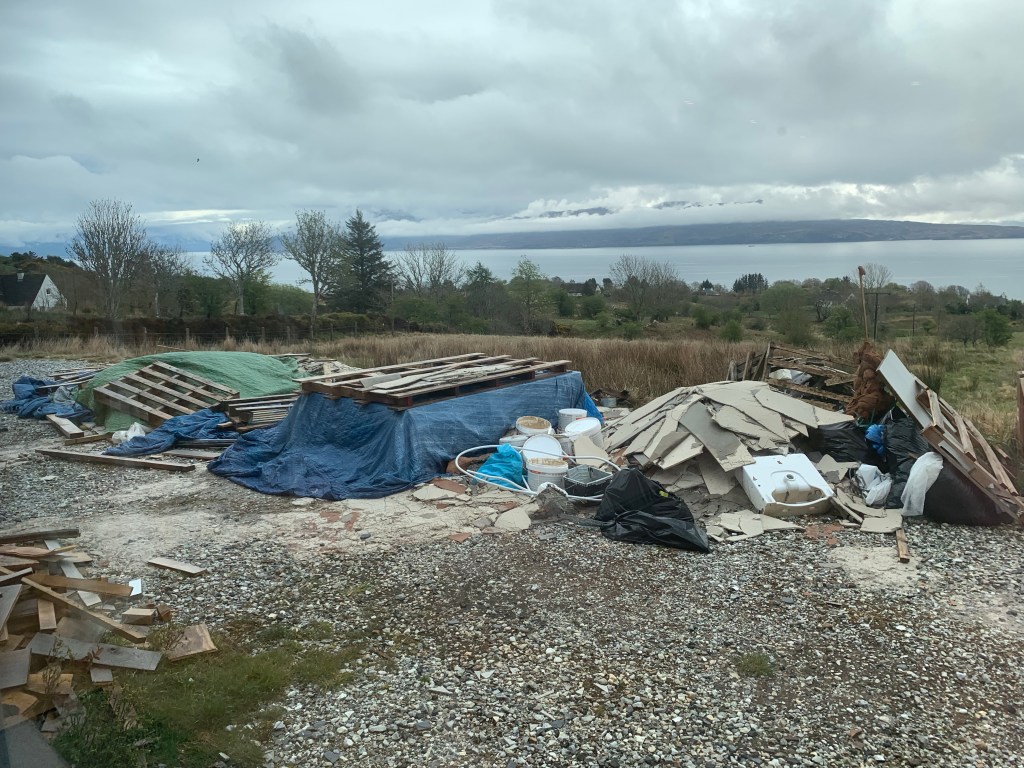
Our builders wanted to bury the rubbish they left, as was normal for them. They usually dig a pit and throw everything in there to clear up.

We couldn’t countenance them digging leftover plaster, plastics, insulation and chemicals into our croft soil so asked them to leave their rubbish for us to dispose of. Can you image the pollution that this would have caused if we’d let them do it? There is no AWAY. Just because it’s covered over by a thin layer of soil doesn’t mean it’s not still leaching toxicity into the ground and harming wildlife.

As such, over the last three years the piles of building rubbish have steadily built up around the house as trades have come and gone. Pallets, broken slates, empty tubs of adhesive, sodden plasterboard, bits of wood, plastic wrapping, tile offcuts.. you name it, we have it.
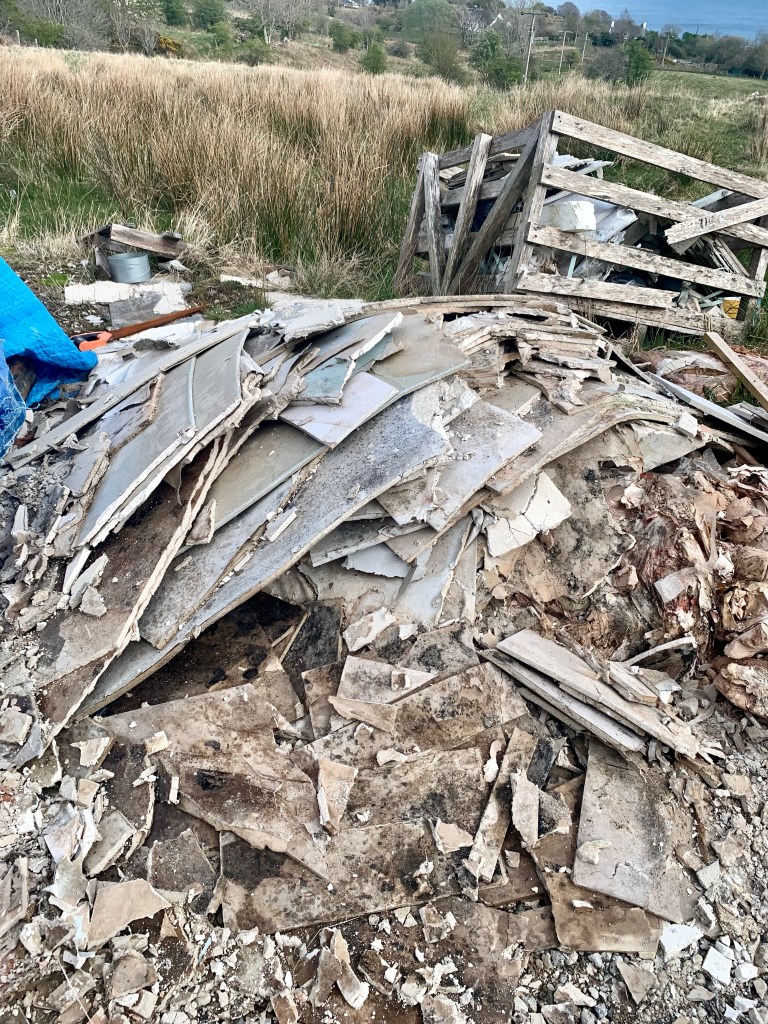
We’ve often been peering at the view through a mountain of building rubbish. Its really caused me anxiety at times but until now there’s been no easy or cost effective way of disposing of it.
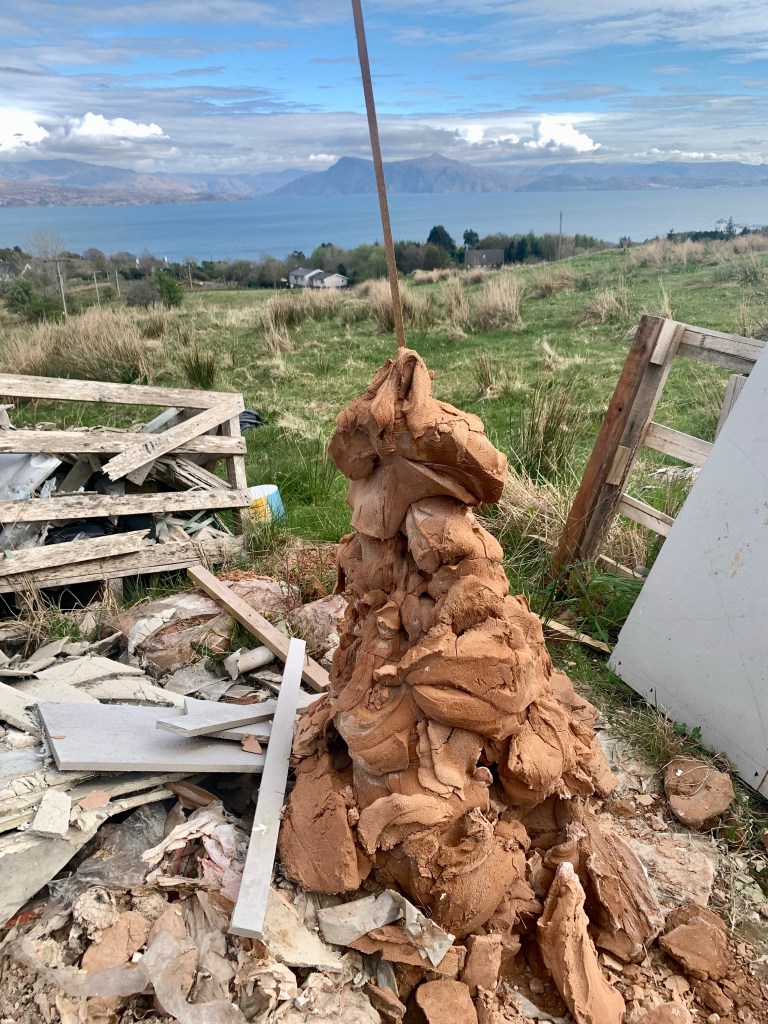
But today the first skip arrived, dragged bumping noisily up our steep croft track, and we started the mammoth job of sorting the building rubble through and clearing up. We are going to need a few skips to complete this job as our efforts this afternoon with only a few hours work have already half filled this first one. And we’re only a small way through .
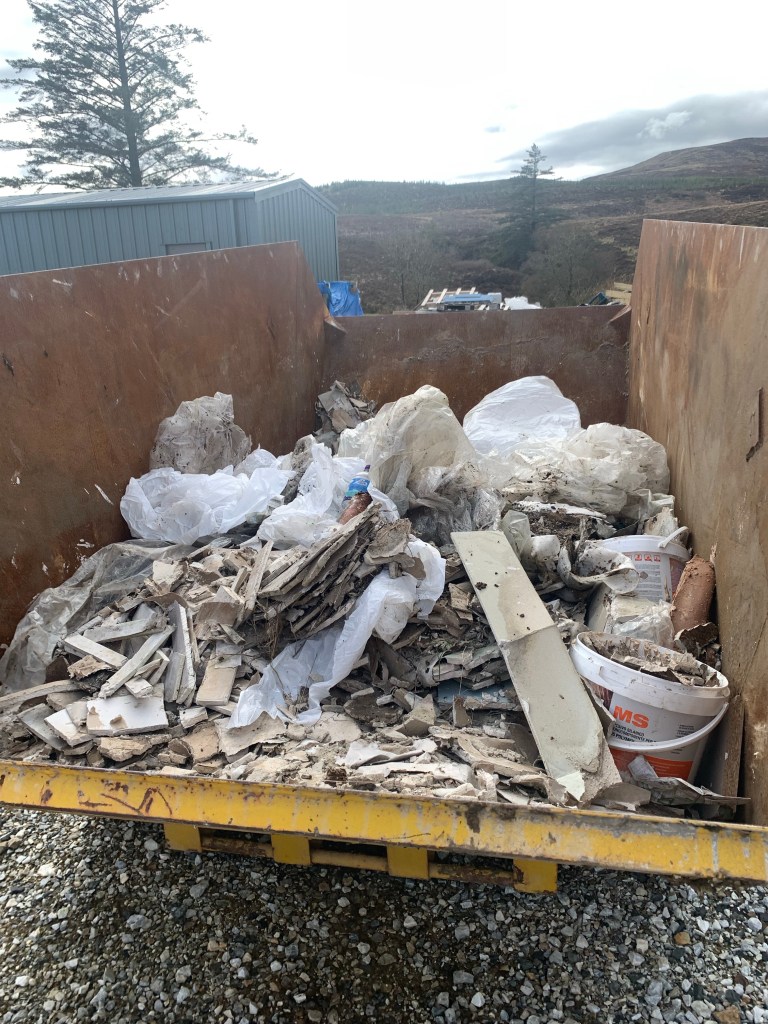
We’re keeping anything that can be sensibly reused. All wood offcuts and old pallets are being segregated for croft repurposing or firewood. Broken slates are kept for plant labels or plant bed or pot drainage. Rotten plasterboard, plastic wrapping, empty adhesive tubs, old irn bru tins and building rubble are being thrown away.

I’m holding fast to that vision of a stone terrace with some comfy outdoor seats on it, heathers and sea buckthorn planting and a clear view to the horizon. But for now, it’s heavy labour, aching backs and rolled-up sleeves.
Greening up

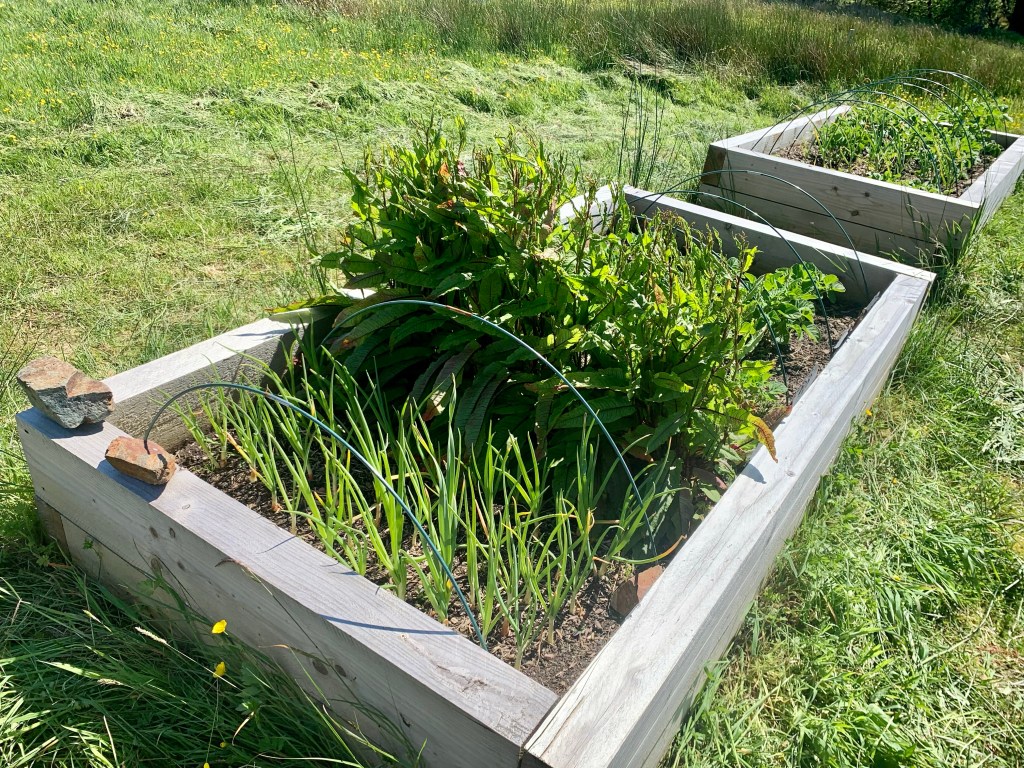
It’s amazing how quickly things grow at this time of the year. In the few weeks since I last posted about plant progress, the croft beds have filled up and are now bursting with foliage from the maturing potatoes, onions, garlic and kale.

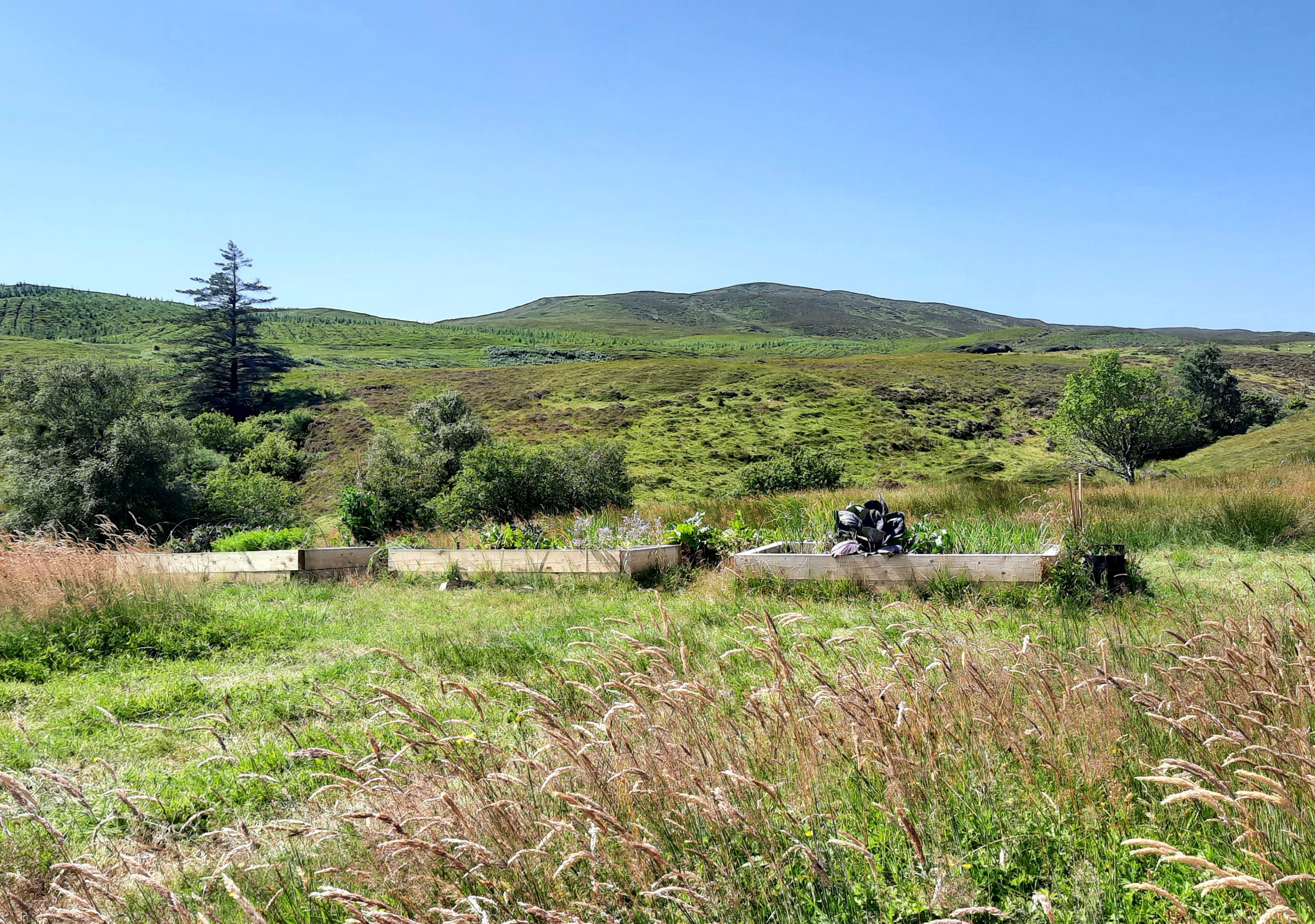
Raised beds with sorrel in centre

The red veined sorrel planted last year was the only thing that the deer didn’t eat over winter, and in the last four weeks it’s shot up and is throwing out flower stems. We’ll keep the seed and cut it right back soon.

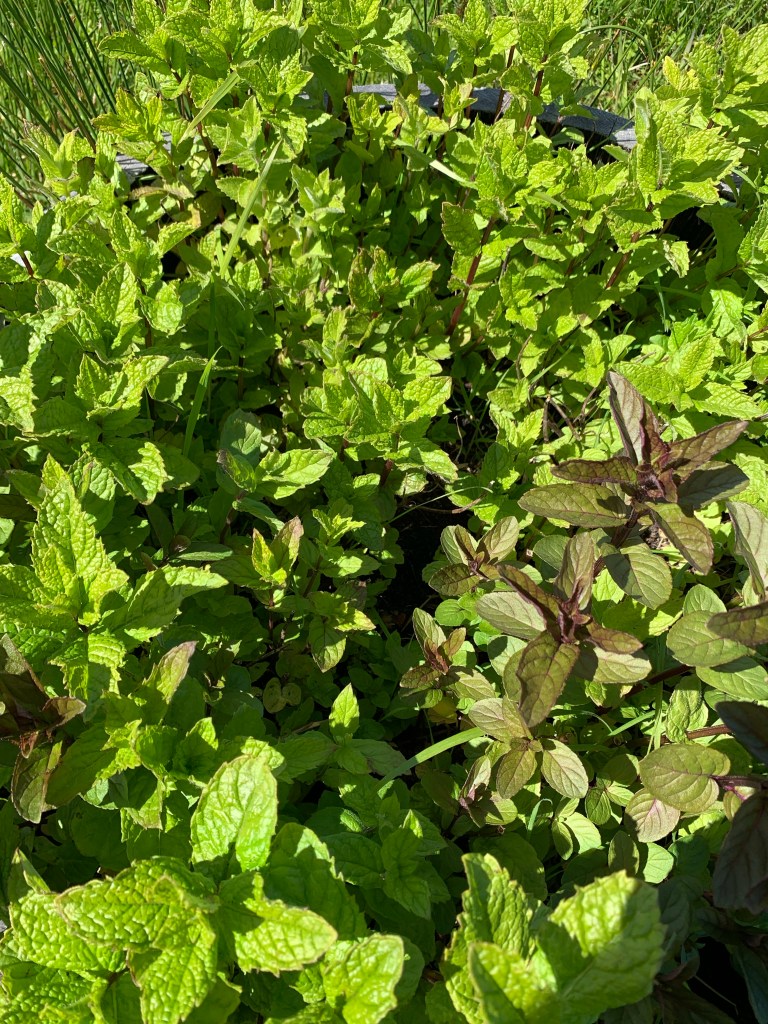
Mint going crazy
Polycrub filling up

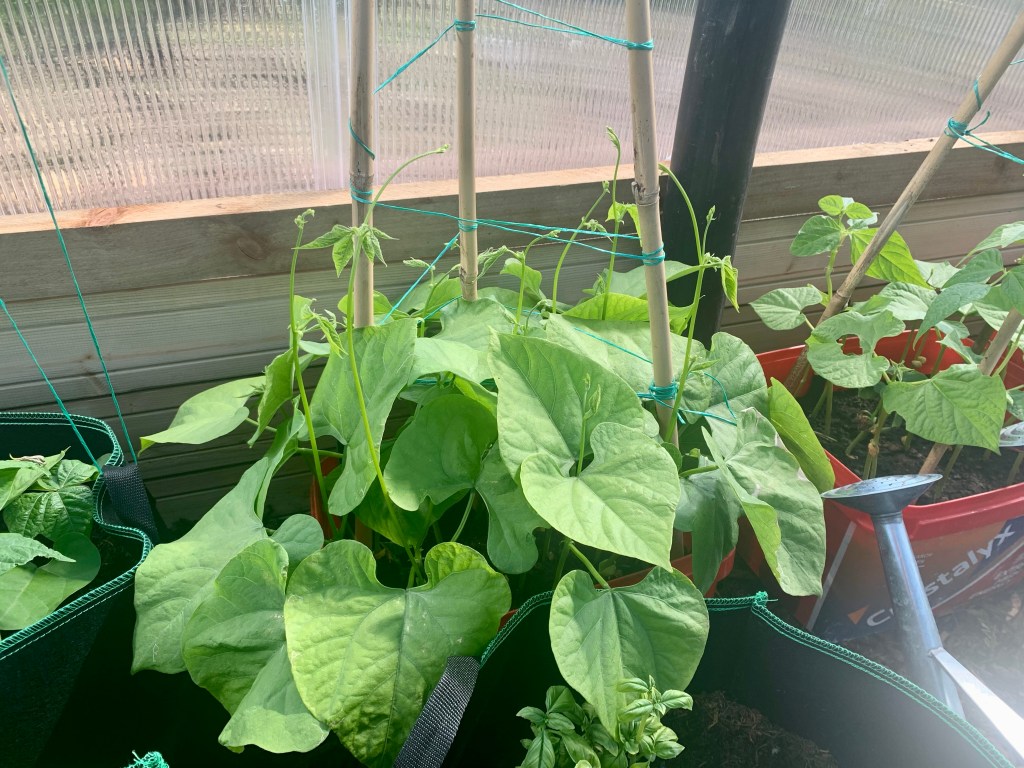
The polycrub plants are growing even faster. The tomatoes have flowers on them and the squashes, courgettes, beans and sweetcorn have all grown hugely.

Borlotti beans

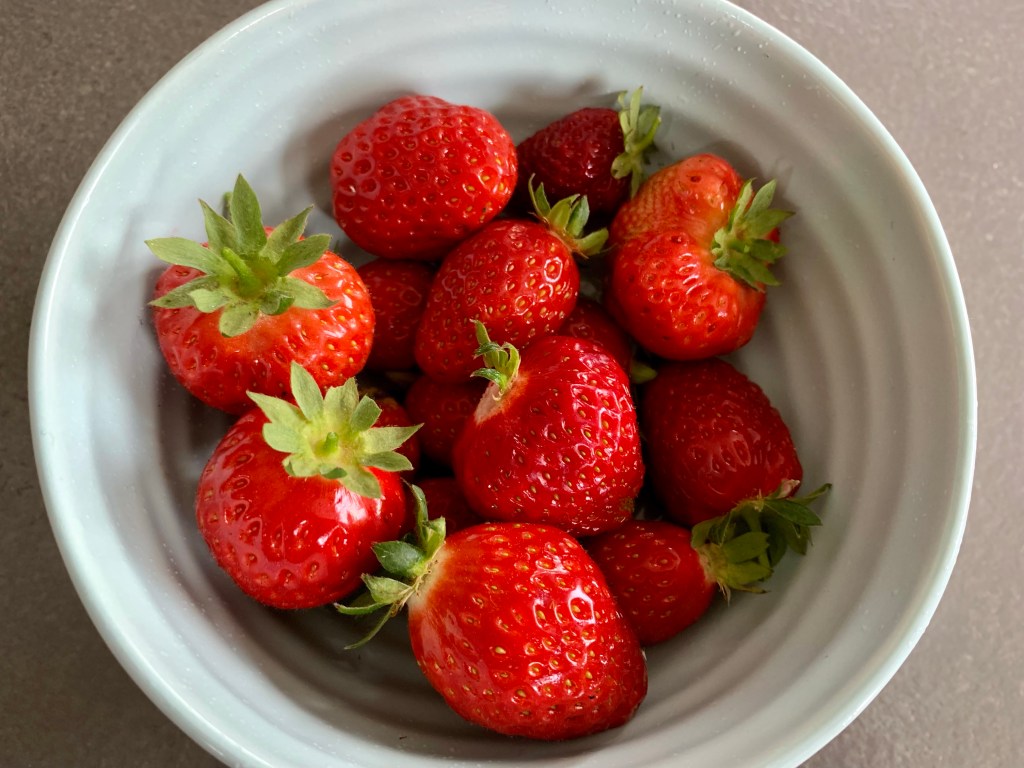
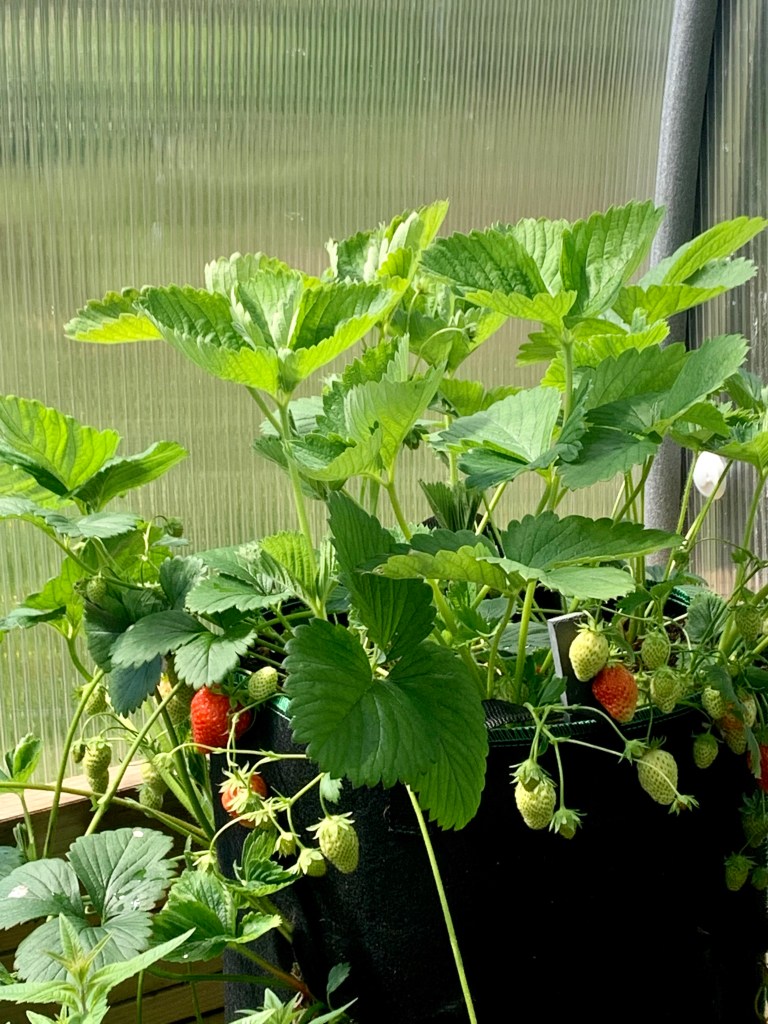
We’re already cropping strawberries from the three tubs of strawberry plants that we have. It’s just a small bowl each day, but they’re sweet and delicious.

Breakfast bowl of strawberry pickings

We have plans next year to increase strawberry production and as the plants are already sending out runners we should be able to propagate many more plants before next spring. We’ll install a couple of runs of drain piping to hold them above the raised beds.

Strawberries
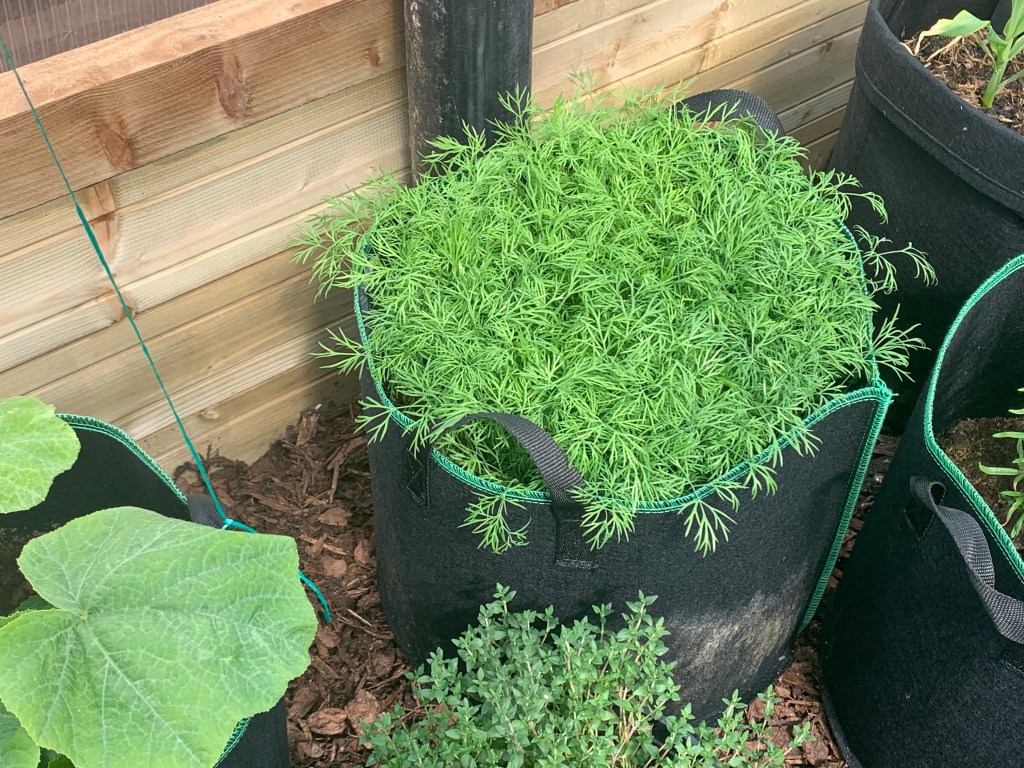
Herbage (mammoth dill)

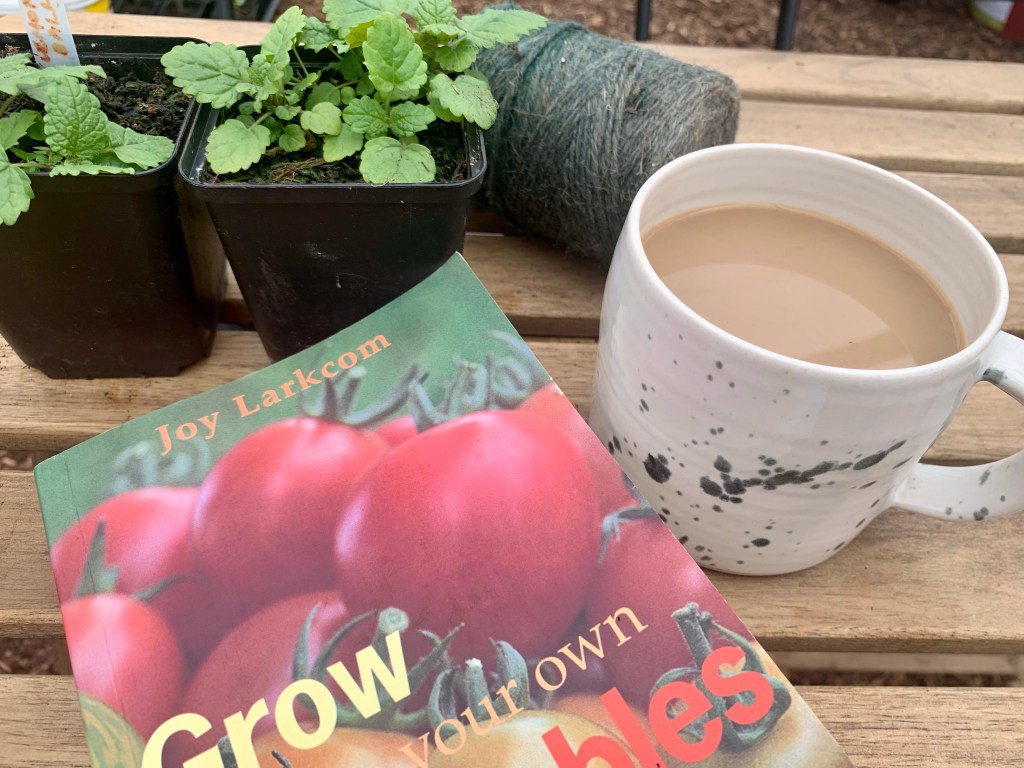
The days are long now. Sunrise is at about 4.30 am and sunset around 10.30pm, with the plants responding to the long days with rapid growth. The ravens set up a cacophony of noise at dawn to herald the start of day (thanks lads) and one of us potters over to open the polycrub some hours later once coffee has kicked in.

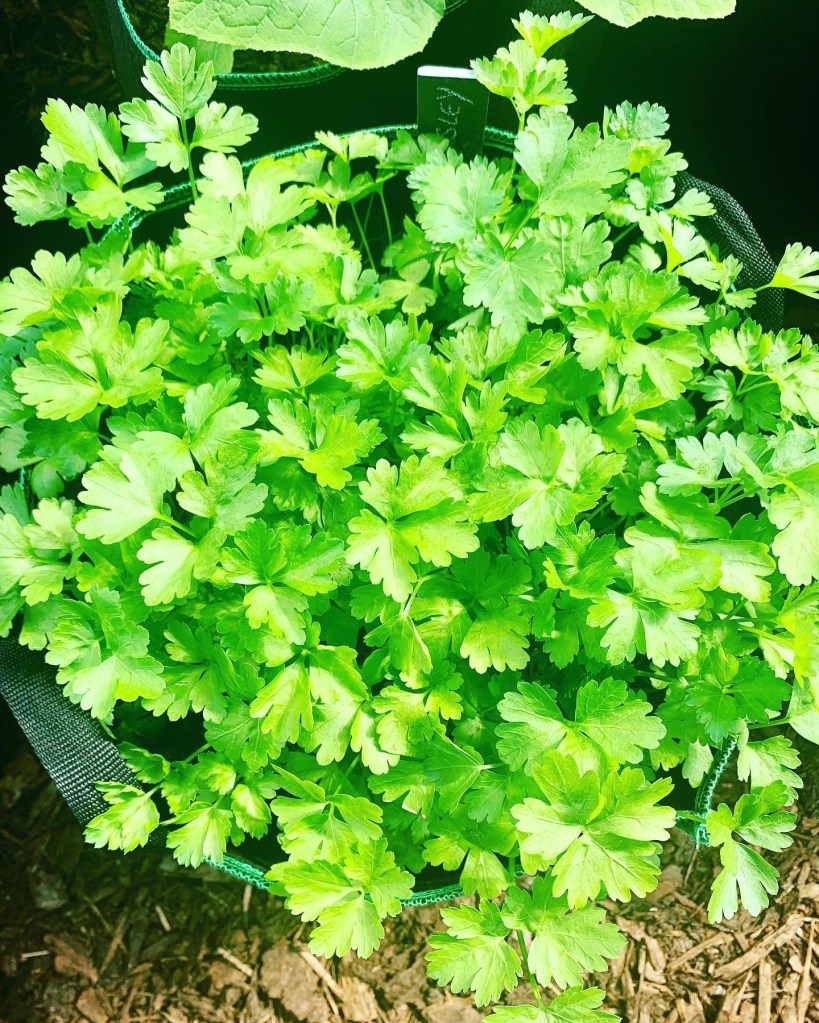
More herbage (parsley)

Soon we will start harvesting. We’re already cropping seed-grown parsley, coriander, basil and dill, as well as lettuce, but the potatoes and garlic won’t be long now. Then courgettes, spring onions, peas and beans. I’m already sowing purple sprouting broccoli, kale and pak choi to succession plant in the spaces that they will leave, and tomatoes, cucumbers, squash and corn won’t be far behind.

The polycrub is my happy place. It’s warm and sheltered and smells faintly of greenage and soil and the spiciness of growing leaves.

I’m loving it.

Summer days and endless light

Sometimes the Scottish Highlands simply take your breath away.

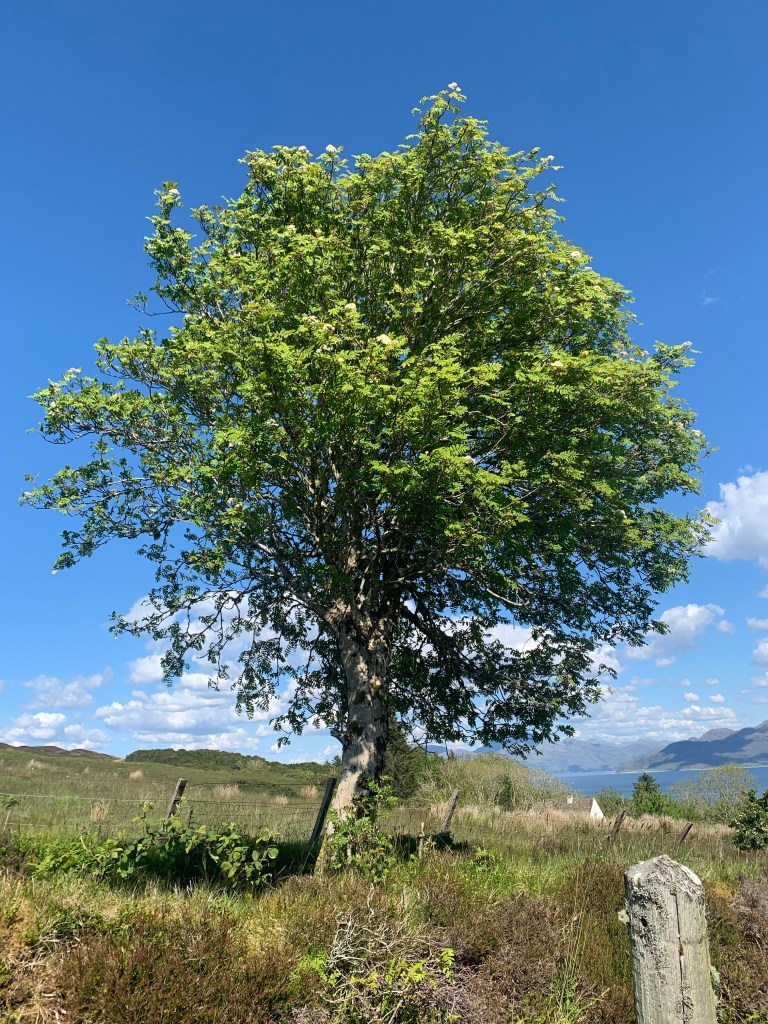
Blue skies and an old hawthorn tree

After months of cold and rain, all of a sudden summer is here. Warm days, blue skies and intense sunsets. Memories of cold, wet winter days dissolve in the brilliant light.

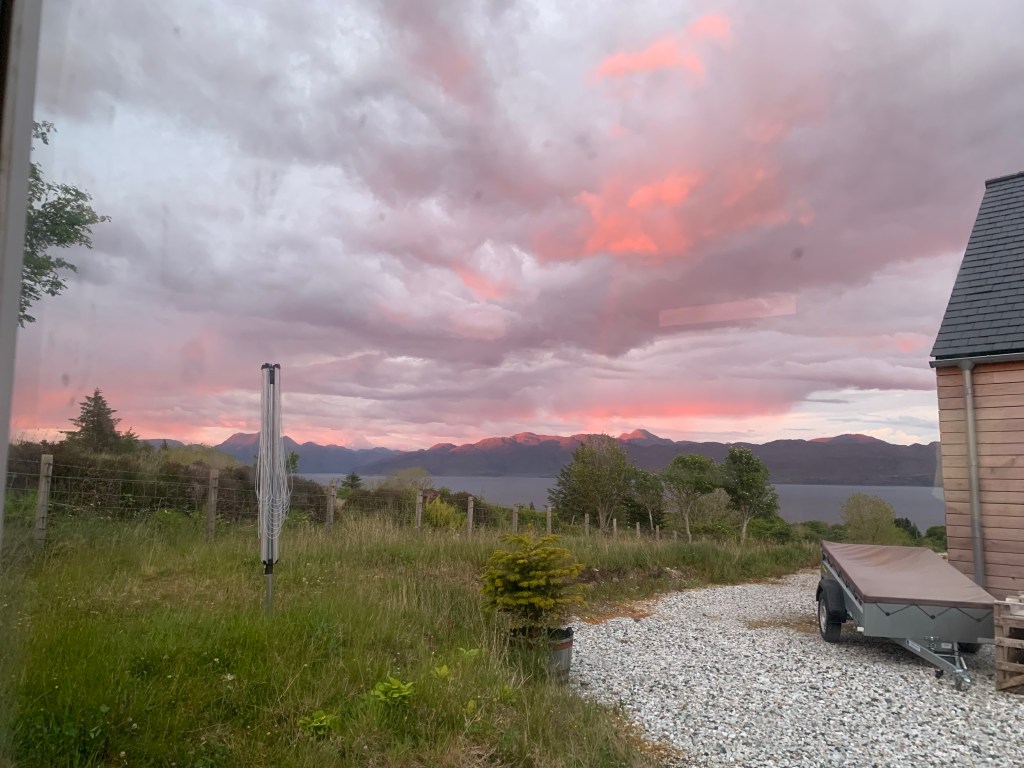
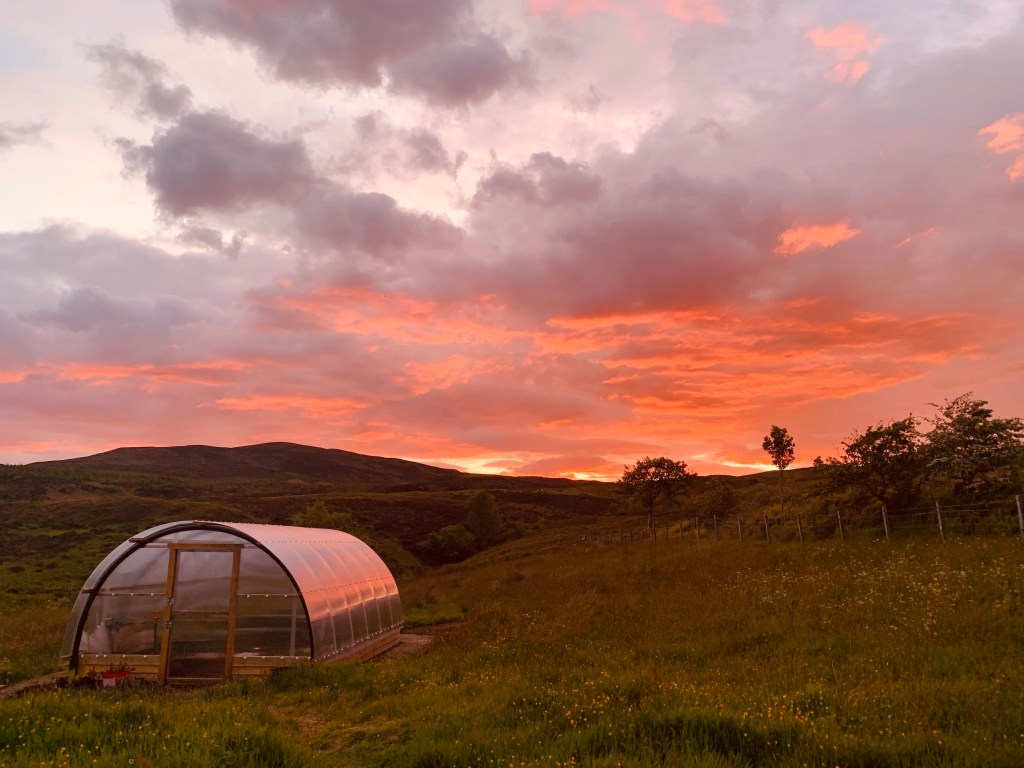
We are only three weeks away from the midsummer solstice, and the light is incredible. It doesn’t really get dark at all. Sunset is around 10.30pm but the skies retain a half light until the dawn breaks again at about 4.30am with the return of pink skies.

The sunset just starting

The sunsets have been spectacular over the last few nights.

Sun dipping behind the back of the croft

These dry days also mean that daily life is easier. Drying clothes on racks in the house is difficult at the moment as there is plaster and building dust everywhere. The caravan often resembles a Chinese laundry.

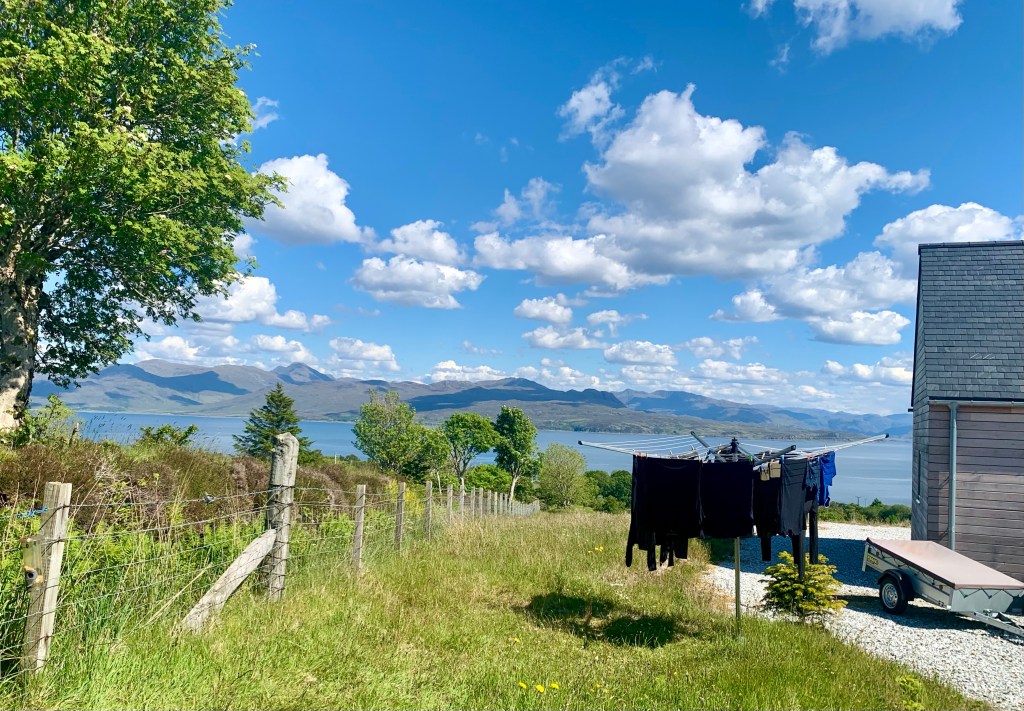
But we’ve been able to line dry our clothes again now that the air temperatures are sitting at a very nice 18-22C. There’s something nostalgic for me about pegging out washing, and the scent of clean, wind-dried clothes is one that takes me right back to my childhood, and is a smell that I love.

Drying washing on the croft

We sat over lunch today out on the croft, listening to the birds squabbling in the hedgerows and watching the swallows swoop over the roof of the house, and laughed with the pleasure of it all.

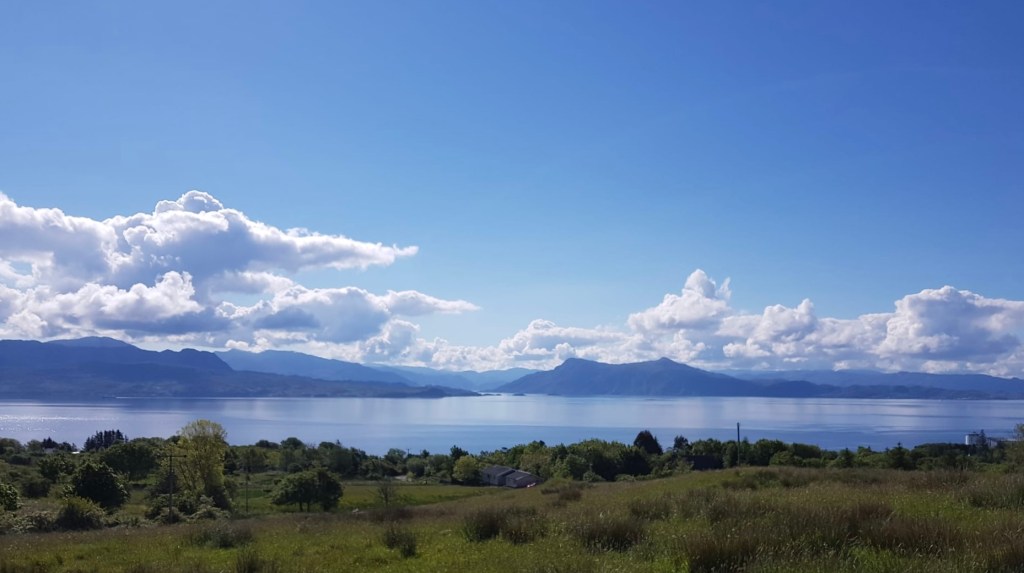
View over Knoydart from the front of the house

We feel very lucky to be here.

Cold, starry nights, and concrete

As we move through November we draw ever closer to the winter solstice and the darkest, longest night of the year. The constellations of Orion and the Plough are clear and bright in the dark night skies, and we start to sense the breath of winter across the croft.

It’s time for warming stews, winter berries, warm spices and the comfort of thick socks and jumpers in the caravan. The fire is on most of the time now.

And time for concrete. After months of let downs, delays, finding new solutions and a new supplier, we at last have a firm date for the arrival of the liquid thermal screed to go over our underfloor heating pipes in the house to make our floor.

It’s coming next week. It’s taken us a whole year to get to this stage and this is a big milestone for us. Once the floor is hard and dry enough to walk on, some weeks down the line, husband will start the MVHR duct installation and electrical wiring in preparation for plasterboard installation early in the new year.

I try not to wish my life away by focussing upon this time next year when we will be dry and cosy in the house. I’m conscious that although it’s what I want, that every day is precious, and that it’s still a long journey to get to that point.

We may be in a cold and drafty caravan which causes a sharp intake of breath before getting dressed in the mornings (with as many layers as we can) or a leap into the shower squeaking at the exposure of skin to cold air before the hot water hits, but this way of life also has its blessings.

We are very aware of, and very close to nature and the elements. The night skies are remarkable at this time of the year. The storms are elemental. This year has been one of reconnection with the land and weather after many years of numbness caused by urban living, and it’s been remarkable.

Opening the caravan door and listening to the rushing of the burn over the croft on a crisp, starry night, perhaps with the occasional hoot of an owl is a wonderful experience. There are no other sounds. The silence is profound.

When the storms hit and we are tucked up under warm quilts or blankets listening to the wind tearing across the croft, or the rain lashing the windows, it does also instill a very real sense of well-being and cosiness. We are grateful that we’re not out there in the teeth of the storm like so many have to be, and very aware of its power.

We count ourselves as very blessed.

Life is good.

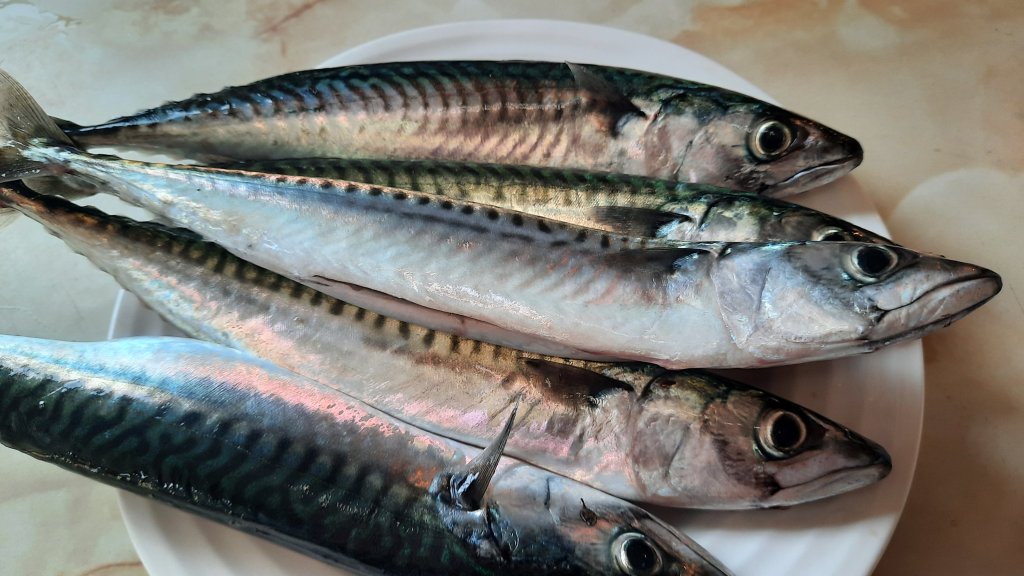
A profusion of mackerel

Friends from the village gave us a bag of freshly caught mackerel from Armadale Bay yesterday.

They arrived, shining, still smelling of the sea. I always think they’re such lovely looking fish.

Husband heroically gutted them all in the tiny caravan kitchen sink and we decided to cook them over the barbecue whilst they were at their best.

Mackerel

There is nothing quite like freshly chargrilled mackerel. They were moist, sweet and slightly smoky from the fire, their skins blackened and crispy. We ate them whilst the sun went down with good bread, dill-pickled cucumber and some fresh salad.

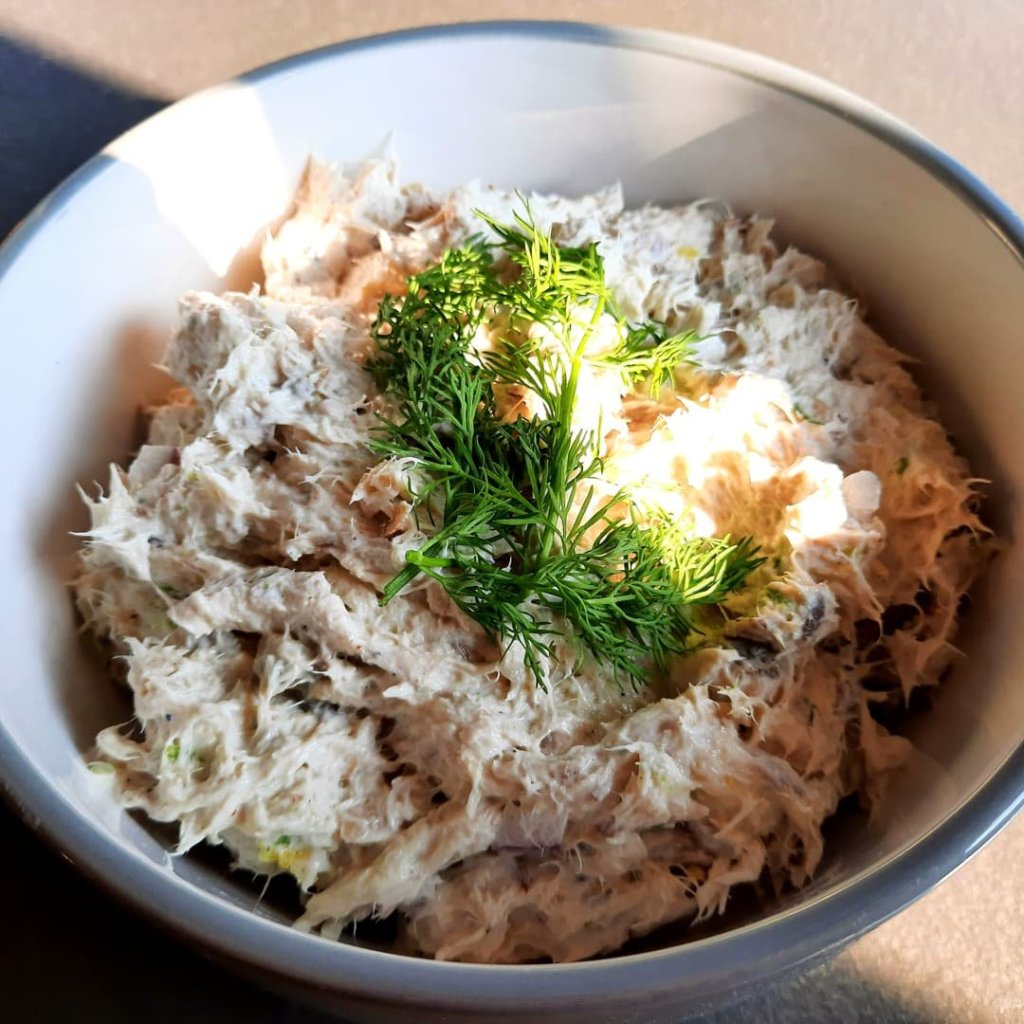
There was enough left over to make mackerel pate this morning. The meat was flaked off into a bowl with cream cheese, lemon juice and zest, a lime, sea salt and cracked black pepper.

Mackerel pate

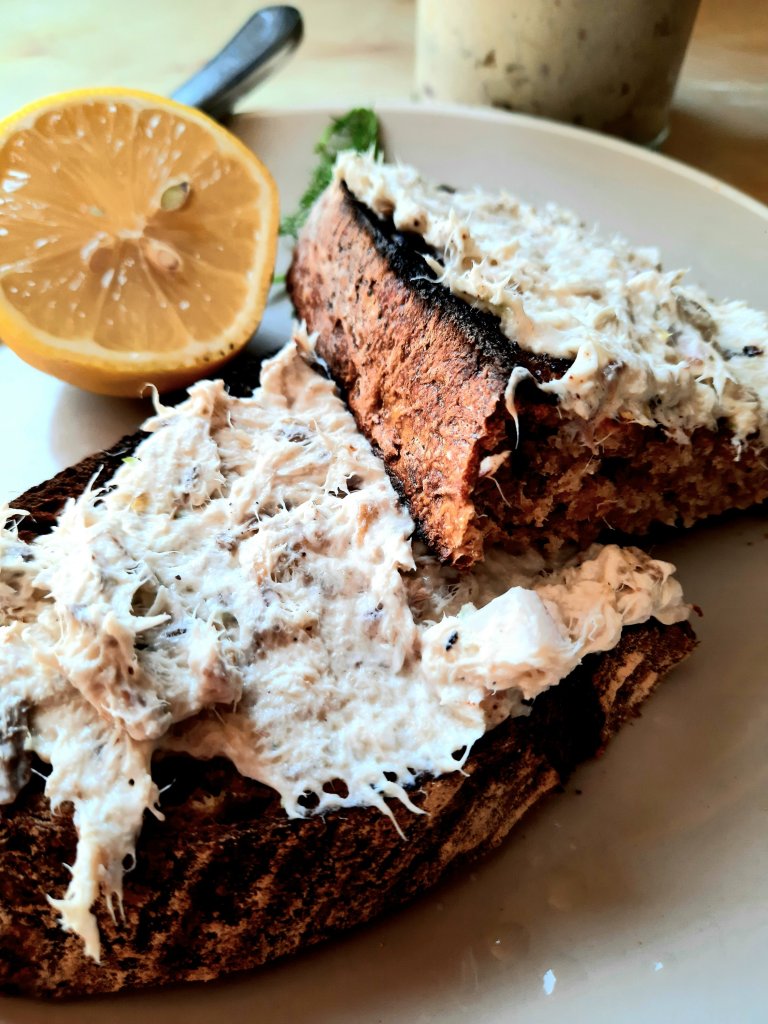
A pot has gone into the fridge to eat later with sourdough toast, and a bowl has been wrapped as a thankyou gift for the neighbours who brought us the fish.

Later on toasted sourdough

I was just musing that the last time we ate mackerel pate was an expensive pot bought from a London deli. And here we are a year on, eating the same, but probably fresher and more flavoursome than anything bought from a shop.

Eaten with thanks as part of our new life here in Scotland.

Grasses Galore

We’ve had a warm, breezy day on the croft today. Twenty-two degrees and a clear blue sky. It made our outdoor tasks today so much easier with the wind keeping the midges at bay.

Grass in the breeze

The grass has grown so much over the last few months that the paths that husband had scythed in the spring had nearly disappeared.

This was making trips to the raised beds and the compost heap a daily waist-high challenge.

I wouldn’t normally worry about wading through long grass, but I’m super cautious about picking up ticks and horsefly bites at the moment, and didn’t want to have to start walking about swathed in protective netting like some sort of veiled ninja..

So husband spent a few hours yesterday and today scything swathes through the grass and collecting it up for compost. The breeze helped what was a long, sticky endeavour.

Pathway emerging

Some folk like to cut their grass neatly and very regularly. We have chosen to leave ours wild, and to see what comes up. We prefer it that way, and nature seems to agree.

We’ve found orchids, clover and wild flowers in abundance, and there are certainly plenty of moths, bees, butterflies and insects. Husband has even had to rescue a few small frogs from the path of his scythe…we want to encourage them as much as we can. Natural slug protection!

Once we have an agricultural shed to store equipment in we will need to look at other ways to manage this, though. Even with trees, six acres is too much to manage by hand with a scythe. It’s a fine line between managed meadow and bracken and bramble patches overtaking the land.

We’re thinking at least one annual cut after the summer is over to help seed and keep the rushes down.

For now we’ll enjoy the grasses and the wild flowers from our small, scythed tunnels through the abundance.

Midgification

One of the main challenges of a highland summer are the midges.

We’re luckier than most being at the top of a windy hill. Midges can’t fly in winds of more than 6mph, apparently, so we pray daily for a good, brisk wind.

Many has been the warm, sunny evening when we would have brought out the firepit and barbecued long into the night if it weren’t for the midges. Once they start flying there’s no escape and no respite. The worst of it is that we want to sleep with the caravan windows thrown open on these warm summer nights, but we can’t without swarms of the little horrors coming in to plague us.

We smother ourselves in Smidge and don our midge net hats to try and avoid the worst of them. I’m counting the months until temperatures dip enough to kill them off. By September, I’m hoping.

The other downside of the croft in the summer with the proximity of neighbouring livestock is horseflies. The locals call these Clegs. I’ve been bitten several times by these horrible things whilst working on the croft, and unlike midge bites, they’re huge and need disinfecting. They land like ninjas, incredibly softly, so that you don’t notice them until they’ve started scissoring away a circle of skin from you.

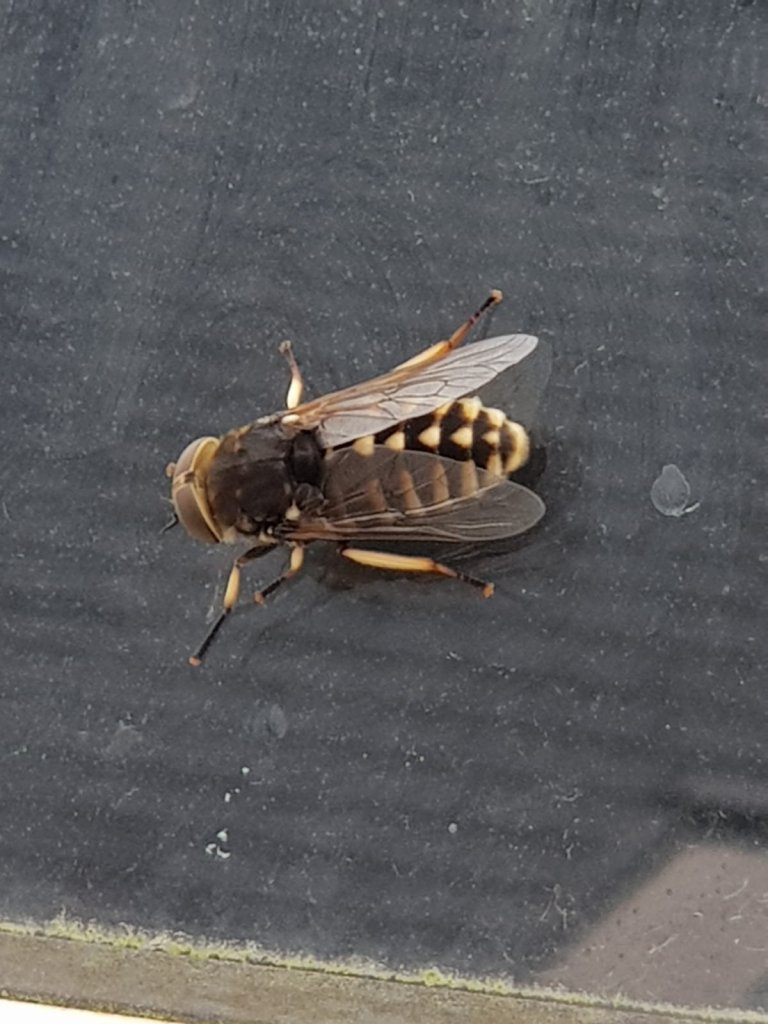
Giant Dark Horsefly

Husband took a picture of this one on the caravan window a few days ago. It was a good inch and a half long, the same size as a hornet. It was probably a Giant Dark Horsefly, and although I don’t think anything this large has landed on me, I shudder to think of this airbus of the fly world anywhere so near to hand..

The People Summer

The days are long and filled with light. It’s also been a week of warm, hazy weather so we’ve been making the most of it with friends whilst it’s here. We’re never more than a few days away from rain here on the island!

A fellow Instagrammer bought a cottage here on the North of the island for renovation at about the same time that we purchased the croft, and he and his family drove down to meet us yesterday to take a look at the house build and what we were doing with the land.

The car scrambled up the drive to the top of the hill, its doors opened, and out burst five gorgeous kids, the parents and two dogs. It was a complete explosion of sound and energy as we rounded up enough tumblers for drinks, answered questions, watered the dogs and showed them around.

For two people normally unused to groups of people and the sound and motion that accompany them, especially after a quiet and pretty isolated last six months, it was quite exhausting, albeit in the nicest of ways! I am in awe of parents who can cope with such levels of energy. We have become unused to people…

We sat in what was left of the sun with a vegan BBQ (simple chickpea patties, vegan sausages, garlic fried potatoes and grilled red peppers) and watched the clouds gather over the mountains of Knoydart.

Sweetness was added with a vegan strawberry trifle made in the biggest salad bowl I could find. Minty, their daughter, made delicious chocolate cupcakes.

A lovely day. The rain did start towards the end of the afternoon and we had to decamp to the house, but it didn’t ruin anything.

As we waved them off we reflected that since living here we’ve spent time with more people in the last six months, despite all Covid restrictions, than we did in the previous five years in London. For two massive intraverts, that’s astonishing. It’s been a summer of people.

Jonathan is a brilliant photographer and he took these iconic pictures whilst here. You can find more of his images on Instagram @skye.cottage.