Grasses Galore

We’ve had a warm, breezy day on the croft today. Twenty-two degrees and a clear blue sky. It made our outdoor tasks today so much easier with the wind keeping the midges at bay.

Grass in the breeze

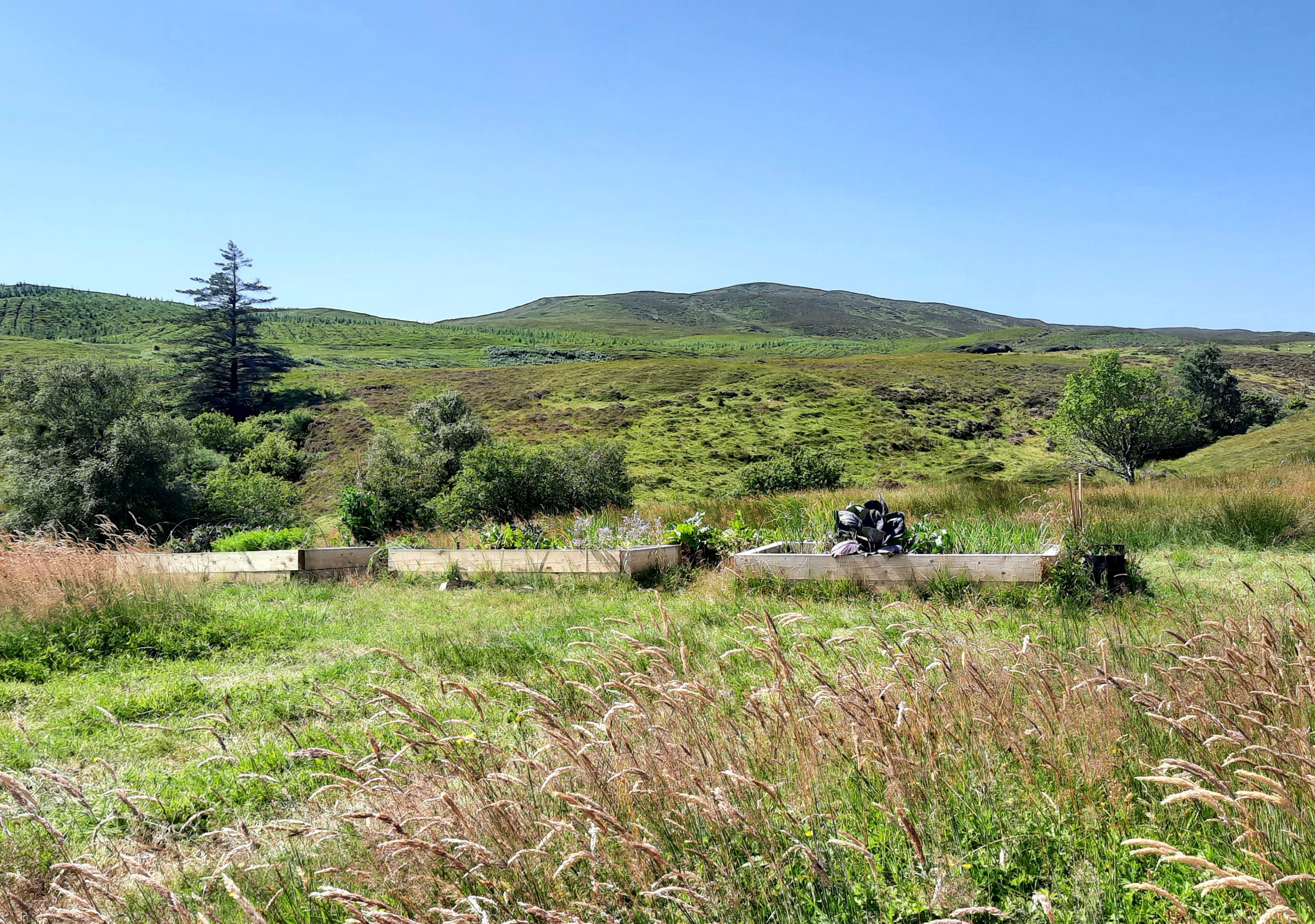
The grass has grown so much over the last few months that the paths that husband had scythed in the spring had nearly disappeared.

This was making trips to the raised beds and the compost heap a daily waist-high challenge.

I wouldn’t normally worry about wading through long grass, but I’m super cautious about picking up ticks and horsefly bites at the moment, and didn’t want to have to start walking about swathed in protective netting like some sort of veiled ninja..

So husband spent a few hours yesterday and today scything swathes through the grass and collecting it up for compost. The breeze helped what was a long, sticky endeavour.
Pathway emerging

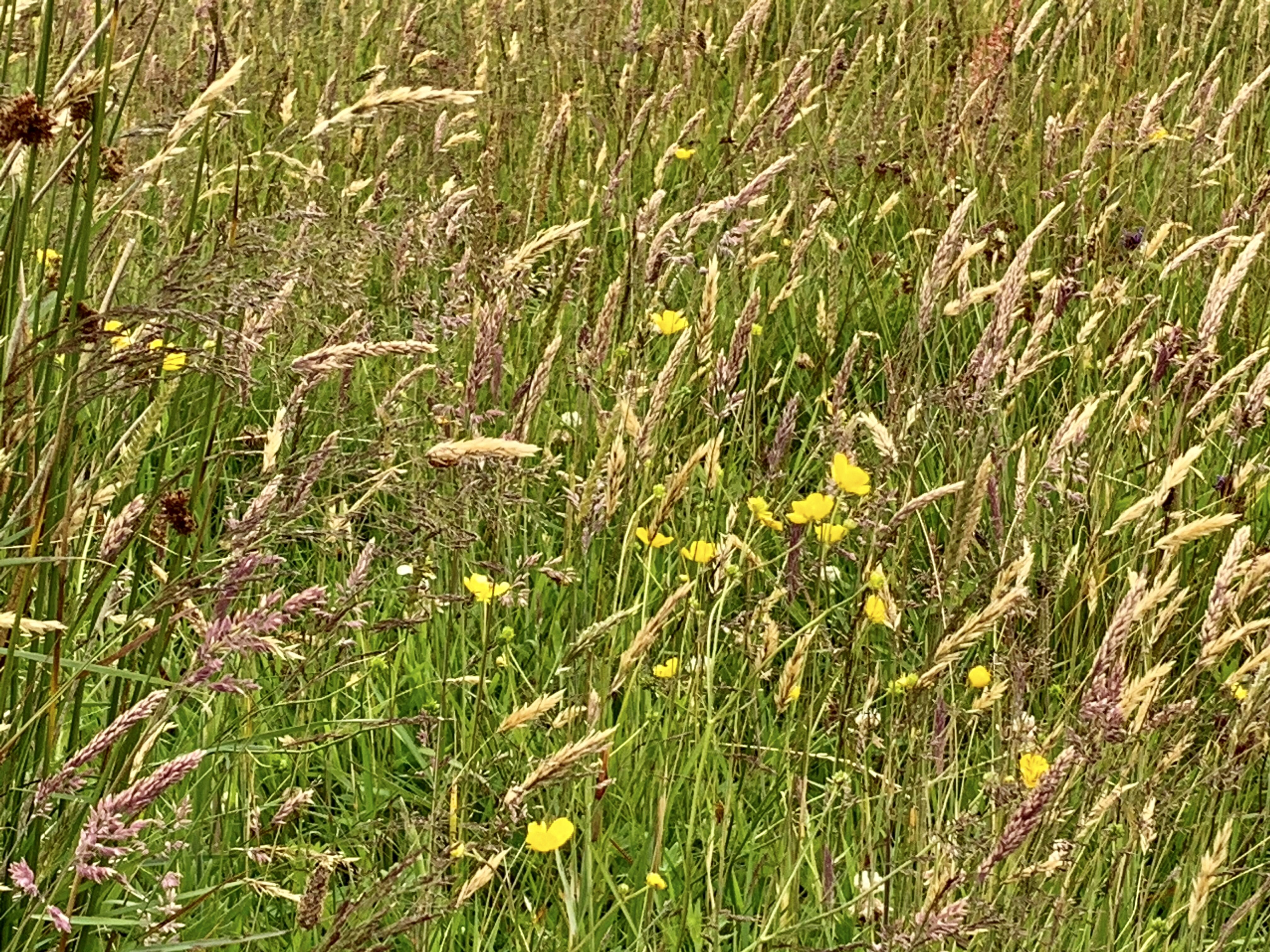
Some folk like to cut their grass neatly and very regularly. We have chosen to leave ours wild, and to see what comes up. We prefer it that way, and nature seems to agree.

We’ve found orchids, clover and wild flowers in abundance, and there are certainly plenty of moths, bees, butterflies and insects. Husband has even had to rescue a few small frogs from the path of his scythe…we want to encourage them as much as we can. Natural slug protection!

Once we have an agricultural shed to store equipment in we will need to look at other ways to manage this, though. Even with trees, six acres is too much to manage by hand with a scythe. It’s a fine line between managed meadow and bracken and bramble patches overtaking the land.

We’re thinking at least one annual cut after the summer is over to help seed and keep the rushes down.

For now we’ll enjoy the grasses and the wild flowers from our small, scythed tunnels through the abundance.
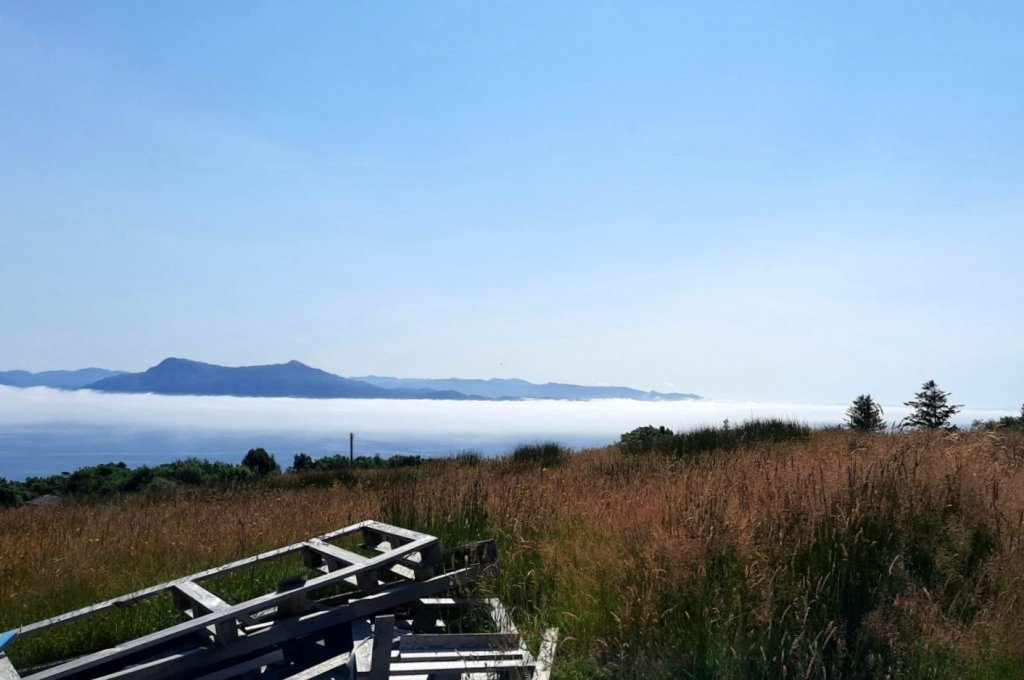
Sea Haar

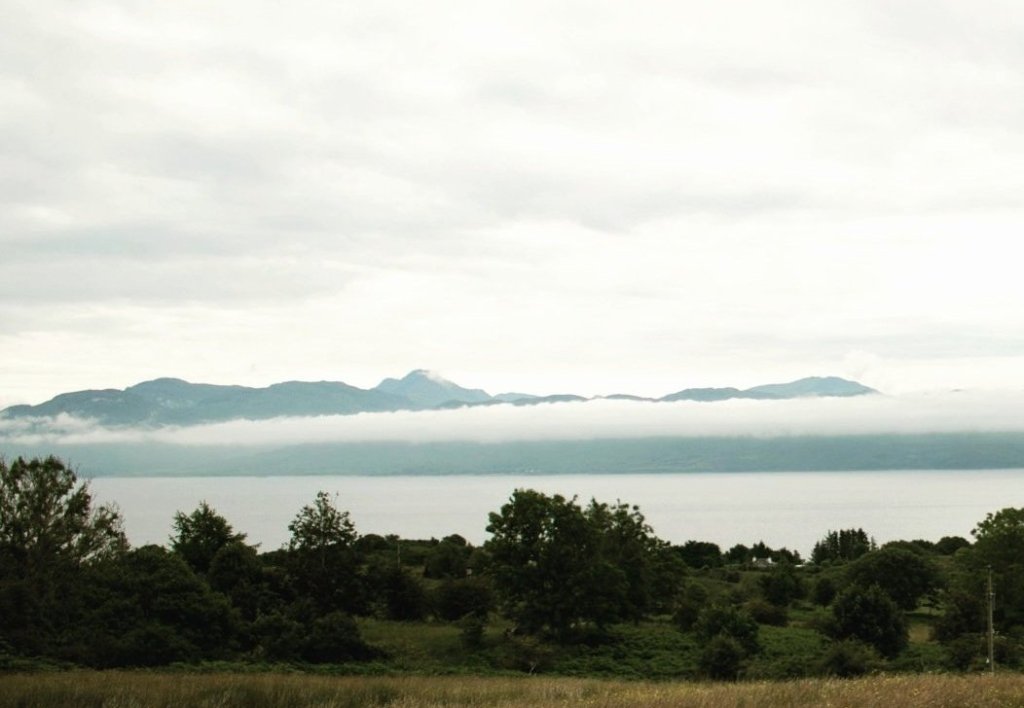
Sea Haar, or ‘sea fret’ as it is also known in the North East of Britain, is used to describe a cold fog that accumulates at sea rather than on land.

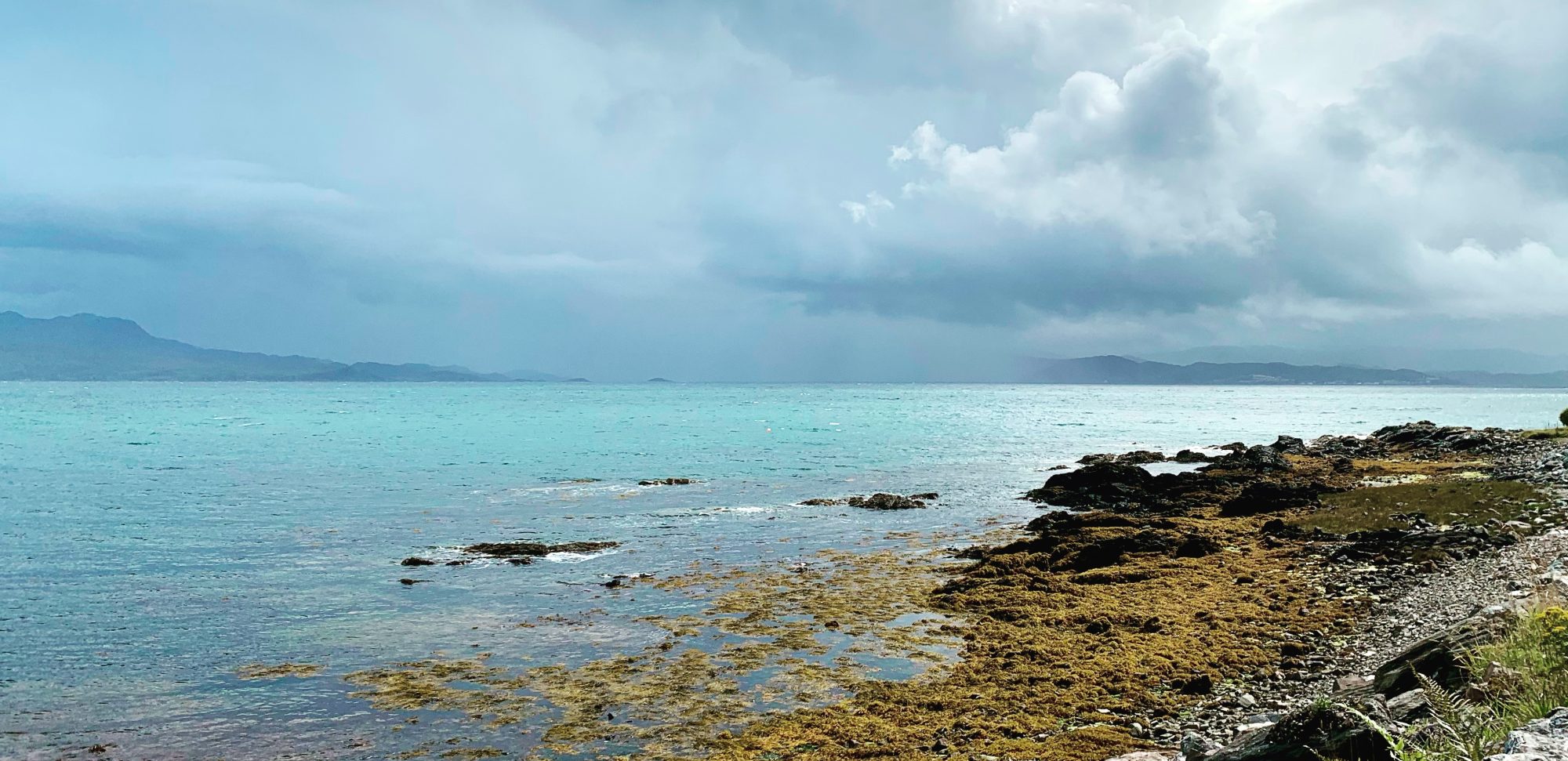
Over the last week we’ve had some spectacular examples over the Sound, with layers of cloud, or fog, lying low over the water like a blanket of snow.

It’s usually burned off with the rising air temperatures by about lunchtime, but it has created some amazing looking scenes that we’ve watched from the house.

Every month brings different weather conditions and changing vistas. Every day this view looks different.

Who needs television?

Midgification

One of the main challenges of a highland summer are the midges.

We’re luckier than most being at the top of a windy hill. Midges can’t fly in winds of more than 6mph, apparently, so we pray daily for a good, brisk wind.

Many has been the warm, sunny evening when we would have brought out the firepit and barbecued long into the night if it weren’t for the midges. Once they start flying there’s no escape and no respite. The worst of it is that we want to sleep with the caravan windows thrown open on these warm summer nights, but we can’t without swarms of the little horrors coming in to plague us.

We smother ourselves in Smidge and don our midge net hats to try and avoid the worst of them. I’m counting the months until temperatures dip enough to kill them off. By September, I’m hoping.

The other downside of the croft in the summer with the proximity of neighbouring livestock is horseflies. The locals call these Clegs. I’ve been bitten several times by these horrible things whilst working on the croft, and unlike midge bites, they’re huge and need disinfecting. They land like ninjas, incredibly softly, so that you don’t notice them until they’ve started scissoring away a circle of skin from you.

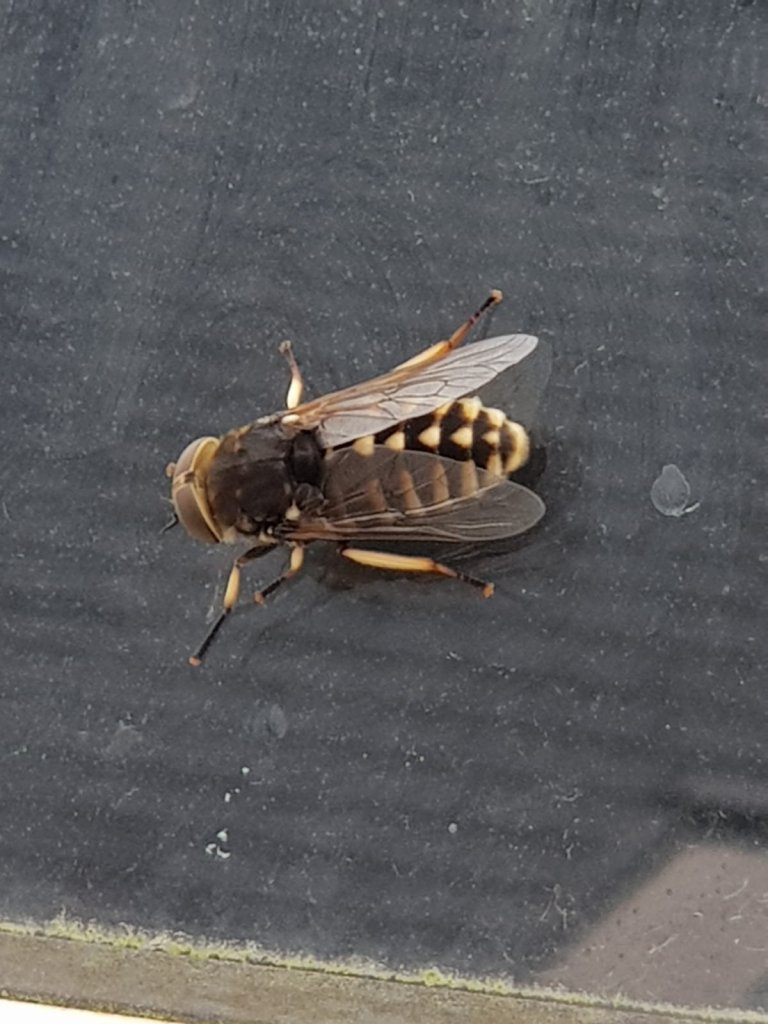
Giant Dark Horsefly

Husband took a picture of this one on the caravan window a few days ago. It was a good inch and a half long, the same size as a hornet. It was probably a Giant Dark Horsefly, and although I don’t think anything this large has landed on me, I shudder to think of this airbus of the fly world anywhere so near to hand..

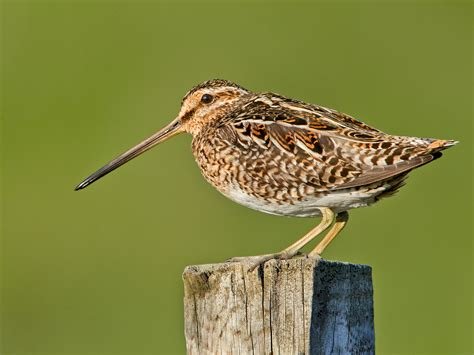
Snipe in the grass

It was late in the evening and the light was slowly fading from the croft. We were packing up a few things by the house site and were on our way back to the caravan when suddenly an eerie, reverberating noise split the peace of the night.

We couldn’t see what had made the sound, nor could we identify it. It came again. We could still see nothing.

Did we have aliens on the hillside in the grass?

The sound reminded me of the noise made by one of those long, plastic tubes that we whirled around our heads for fun as children in the Seventies. A high pitched, reverberating, whining rattle. Quite bizarre.

An Internet search soon found the noise. It was the sound of a Snipe. The male of the species apparently reverberates its tail feathers as it performs its courtship ritual in the spring, making this incredible noise.

https://www.xeno-canto.org/595646

We have Snipe! I’m ridiculously excited by the discovery for me of a new bird on the croft. How wonderful.

Highland Coos next door

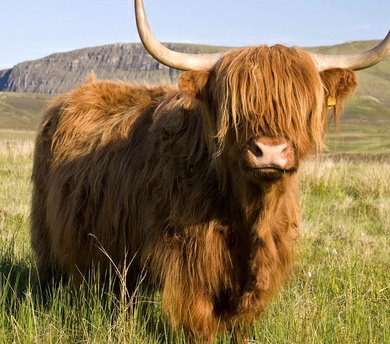
In our village there lives a crofter called Angus who keeps Highland cows. These are small, long-horned, shaggy-coated cows of neolithic origin, the archetypal Scottish cow.

Hardy and good natured, as well as very intelligent, these cows are escape artists. Often the call goes out around the village that there is a cow in the road, and it’s invariably one belonging to Angus.

This week Angus has been grazing them in the top field which is adjacent to our croft. One morning we tugged back the curtains in the static to find three large cows staring back at us from a few metres away on the other side of the hedge.

They are curious beasts. As the day progressed, whenever they spotted us out on the croft they’d migrate towards us, shaggy heads shaking and mooing, in anticipation of a feed, I suspect.

I’m very taken by them. Much more so than with the sheep.

Wild flower meadow

We’ve only been able to visit the croft a couple of times since we bought it, and those visits were usually during autumn or winter.

The main thing that we’d noticed on the land – apart from the absence of trees – was the dominance of reeds. They grew in thick clumps all over the croft. The crofter next door used to graze his sheep on the land, and this kept what grass there was between the reed clumps closely cropped.

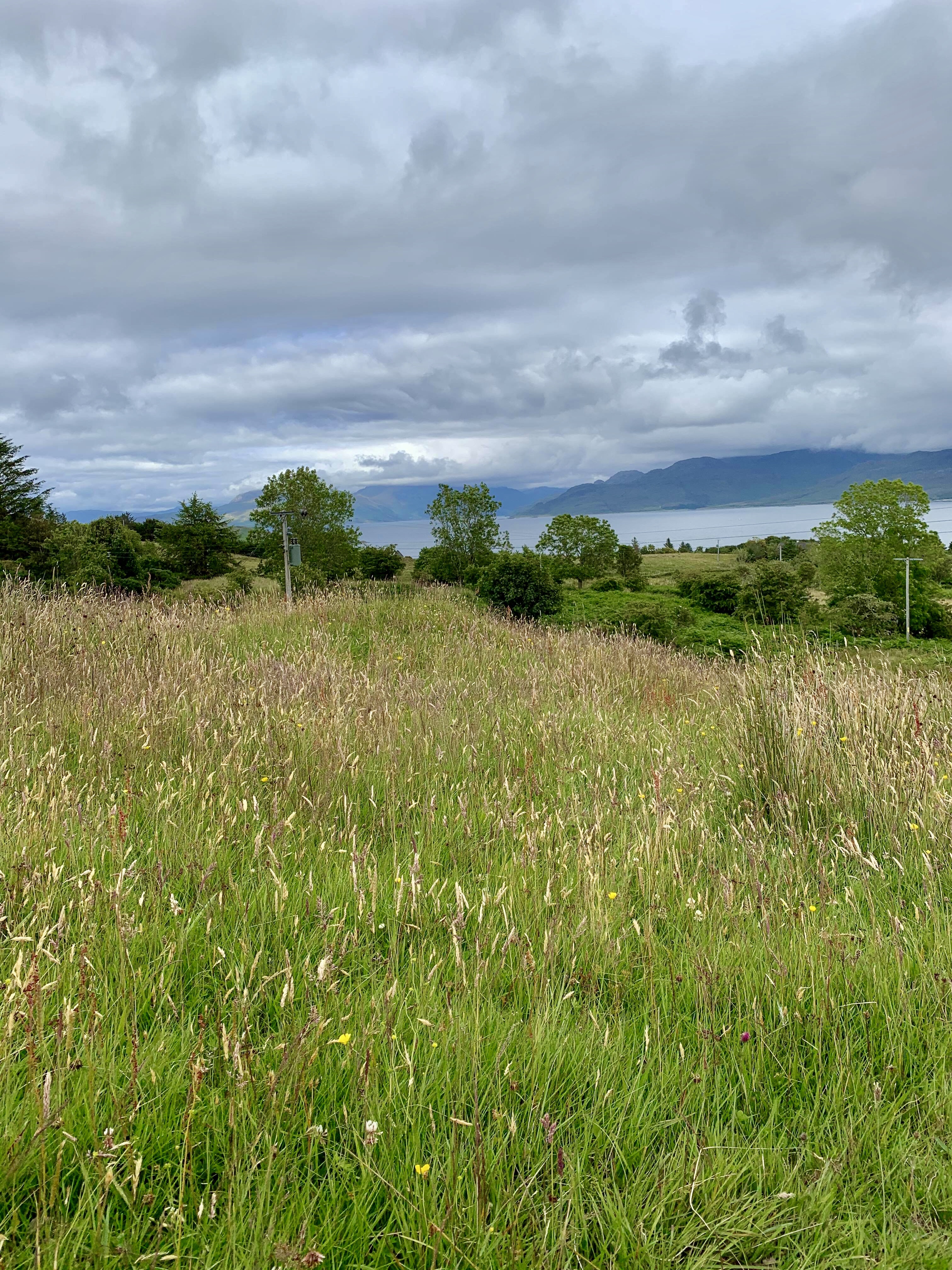
Our neighbours walked up onto the croft this afternoon whilst there were no builders on site, and took these pictures of the meadow below the house lying peacefully in the sunshine.

We were delighted to see that the grasses had regenerated and that there were wild flowers scattered through them. We haven’t seeded or done anything to this area – this is just one seasons regrowth now that the sheep are no longer on the land.

We can’t wait to see what else grows. The land has never been worked except for sheep grazing, and as such it’s completely organic and natural.

We’ll try as hard as possible not to disturb this habitat with our tree planting plans. The habitat that this provides to wildlife is invaluable, and to our eyes it’s beautiful.