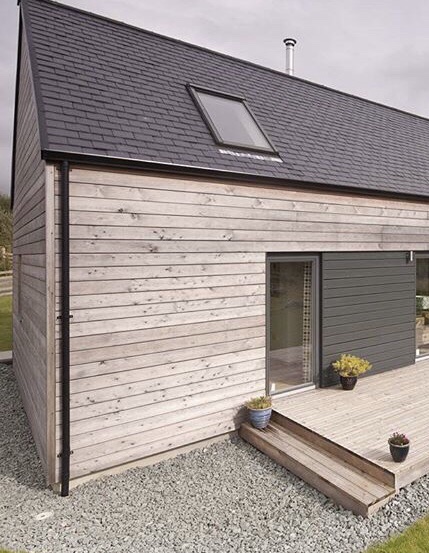
Neo-traditional Scottish longhouse….

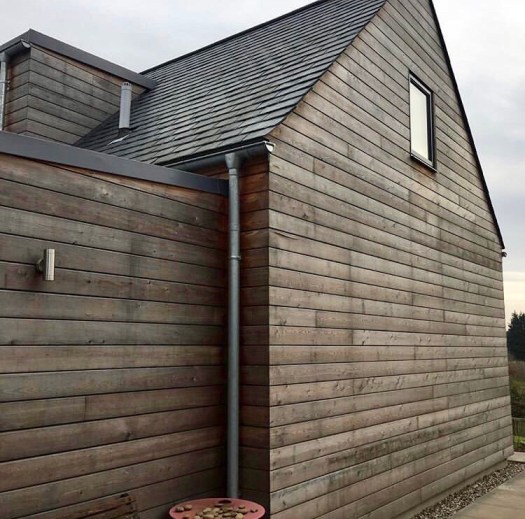
According to the design statement from the architects, we’re building a “subtle neo-traditional Scottish dwelling that alludes strongly to the longhouse design whilst incorporating a modern, energy efficient interior”.

The phrase neo-traditional had us both hooting with laughter. Honestly, the marketing speak that gets rolled out in the interest of persuading planning departments!

It will be a very simple, slate roofed, larch clad house.

It should sit low and silver slowly and quietly into the landscape amongst the trees. It will be well insulated, snug and energy efficient.

We’re running final checks on the planning permission pack this weekend, then off it will go into the laps of the planning department of the Highland Council to seek it’s fortune.

We have everything crossed that it is accepted. Another milestone reached on our journey…

Comments, costings and compromise

We inch forward slowly.

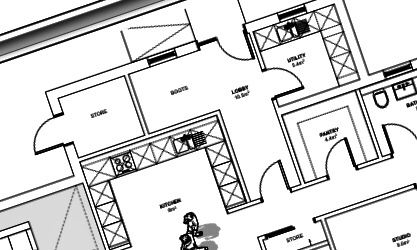
House designs are being drawn up by the architects and are shuttling through the ether between us with comments and costings.

We are in a continual state of debate at this stage around how best to design the space we need, based on our individual lifestyles and our lifetime experience of previous homes. All within the uncomfortably constraining straitjacket of affordability.

It’s exciting and terrifying all at the same time. The architects are concerned with flow, space and light, and we are concerned with mud, storage and costs. It’s all on paper, and so it’s difficult to visualise the space with any degree of accuracy.

We do what we can, pace out room sizes at home and try and imagine our furniture in situ in the new space. I dream of colour schemes, boot rooms and utility rooms at the moment…

Somehow, we promise ourselves, this will all eventually come together in a wonderfully graceful ballet, but we’re still to be convinced of that!

Spring!

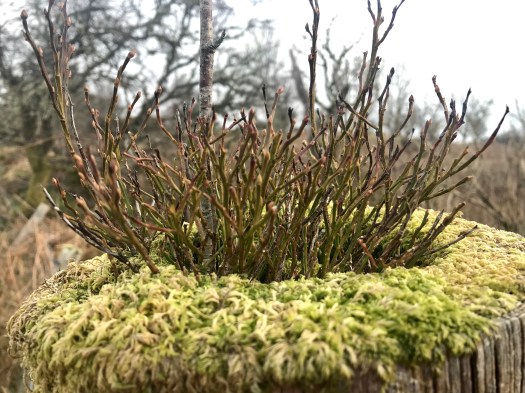
It may be cold and blustery, but Spring is popping up in little pockets.

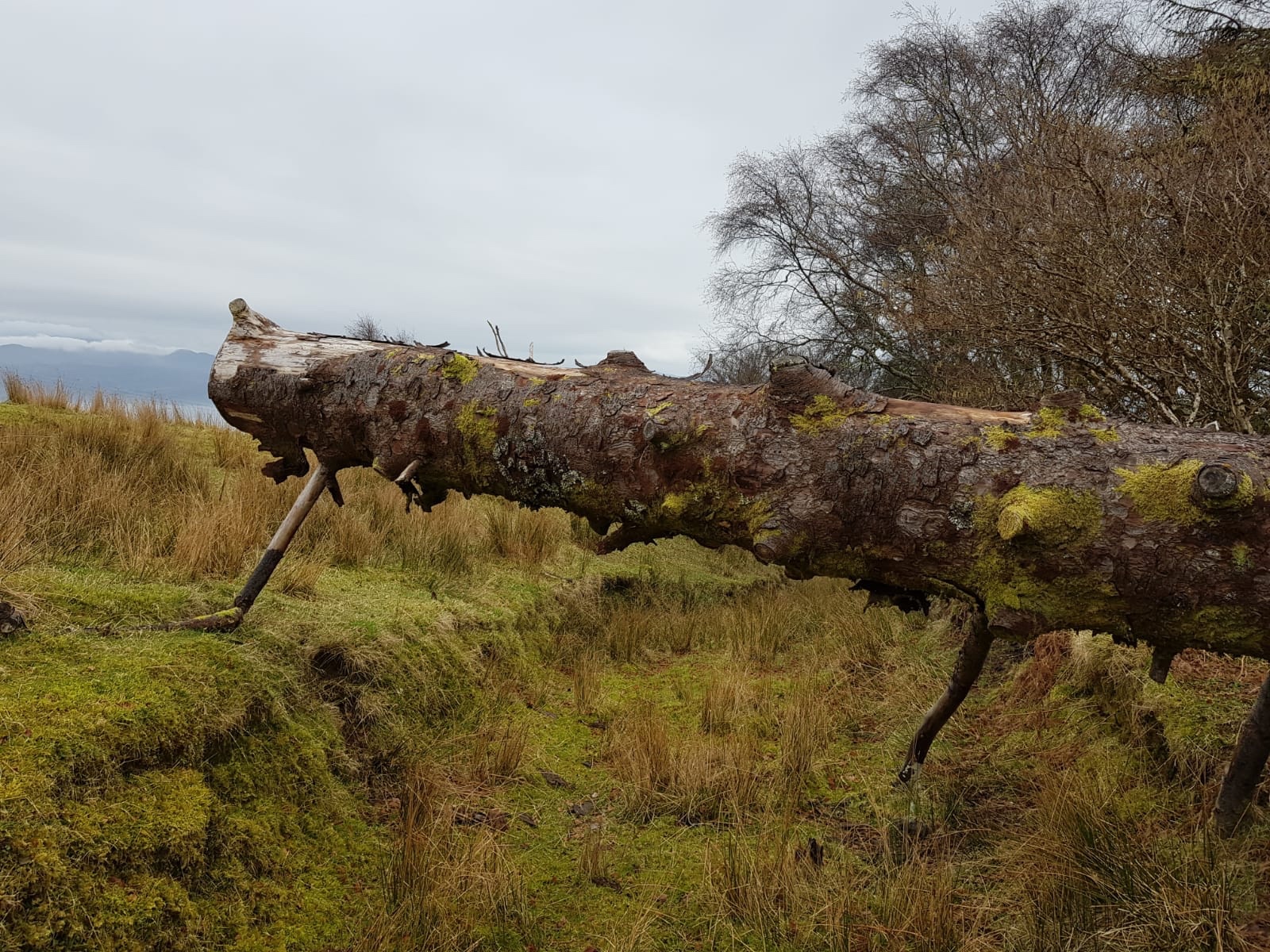
This is an old fence post on the croft that seems to be showing a new lease of life!

Nuts, seeds and malted grains

Whilst we wait for the architects to draw up house plans in readiness for the planning permission application, life goes on.

It’s a blustery, cold March Saturday in London and I am experimenting with my sourdough baking.

I love the crunch of nuts and seeds in my bread, so I’ve added hazelnuts, pumpkin seeds and a few handfuls of malted grains to my dough this morning.

I’m tending towards the “stretch and fold” method of making sourdough rather than regular heavy pummelling of the dough. It seems to trap more air and gives a better crumb texture. I could probably do with the workout, but I’ll sacrifice my fitness for a great loaf…

There’s something very satisfying about a long, slow dough proving. Every time I pass the bowl I can’t help taking a quick peek under the tea towel, and I confess that it’s really gratifying to watch it double in size in a matter of a few hours.

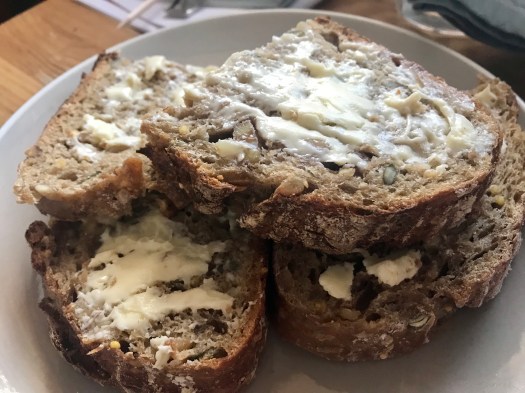
But the real joy is eating big, crusty slabs of warm, freshly baked bread with salted butter, and the satisfaction of knowing that you made this with your own hands. And that you know exactly what has gone into it.

Bread is a very life-affirming thing.

Whilst the gales lash outside..

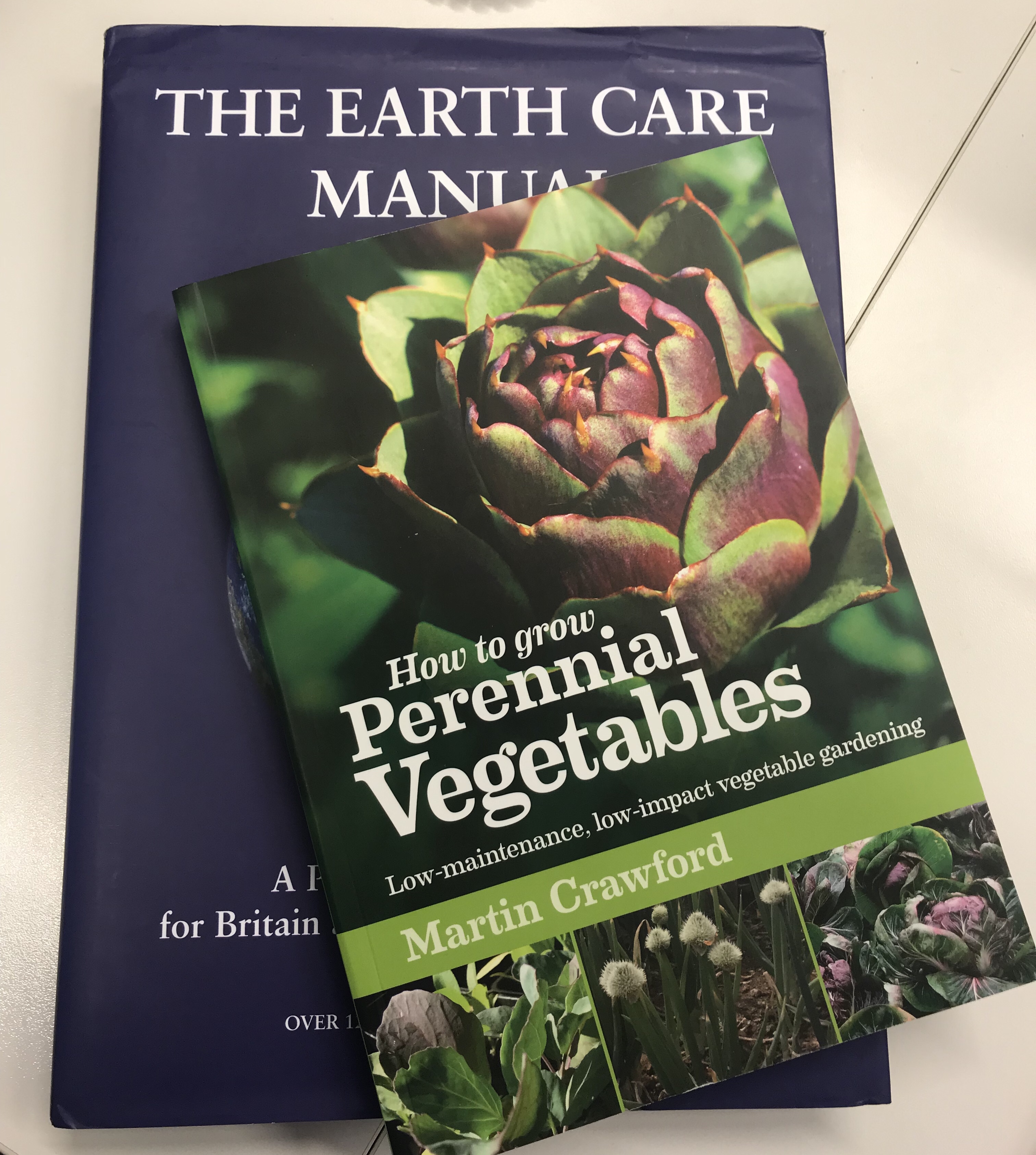
On the reading table for consumption this weekend are two books on permaculture and perennial vegetable growing:-

  • The Earth Care Manual – a permaculture manual for Britain and other temperate climates by Patrick Whitefield
  • How to grow perennial vegetables – low maintenance, low impact vegetable gardening by Martin Crawford

The first is a book on permaculture in Britain and other temperate zones. It’s said to be the definitive manual on the practical application of permaculture principles to our islands, written passionately and compellingly by an author who has been an exponent of the permaculture movement since 1990.

As I am a firm believer in permaculture as a movement, I am very much looking forward to this as a read.

The second was inspired by another blogger who posts on perennial vegetables, which sounded like such a wonderful and practical idea that I just had to know more.

Perennial vegetables are those that don’t need replanting annually, but last at least three years in the soil, and in many cases many years more. It contains over 100 perennial vegetables, from the commonplace to some that I have never heard of, with tips on how to source seeds, how to grow them, and recipes for their use.

It looks fascinating, and a quick browse has shown me how many plants I hadn’t even heard about, let alone realised that they were edible and worthy of cultivation!

Let the gales blow and the rain lash the windows this weekend. I will be tucked up on the sofa with these two lovelies and a mug of tea.

Wild yeast bread

I’ve been baking bread for years but have only recently decided to experiment with sourdough, bread made with wild yeast in the form of a starter, or “mother”.

My “mother” is feisty and active, and I’ve called her Fran after a certain lady I once knew of the same temperament. I started her several weeks ago. She sits in a jar in my fridge gradually maturing and is starting to provide the most wonderful bread.

My hope is that by the time we’re on the island and a fair hop away from the local shops that we won’t have to rely on them for fresh bread, especially if the weather is bad, but that Fran will be turning out a loaf every few days.

Sourdough is an ancient form of bread and is easy to make (starter, flour, salt and water) although there is a bewildering amount of conflicting advice out there on t’interweb.

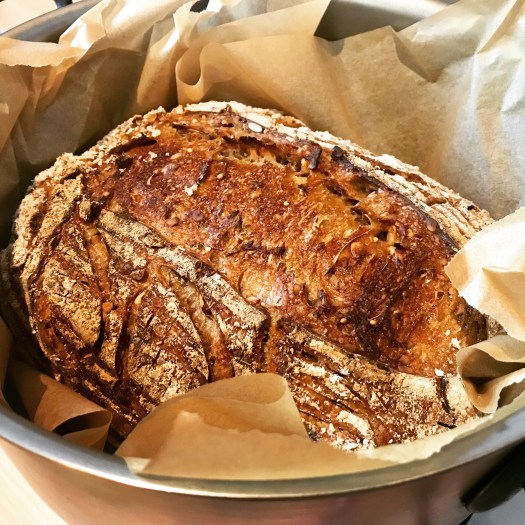
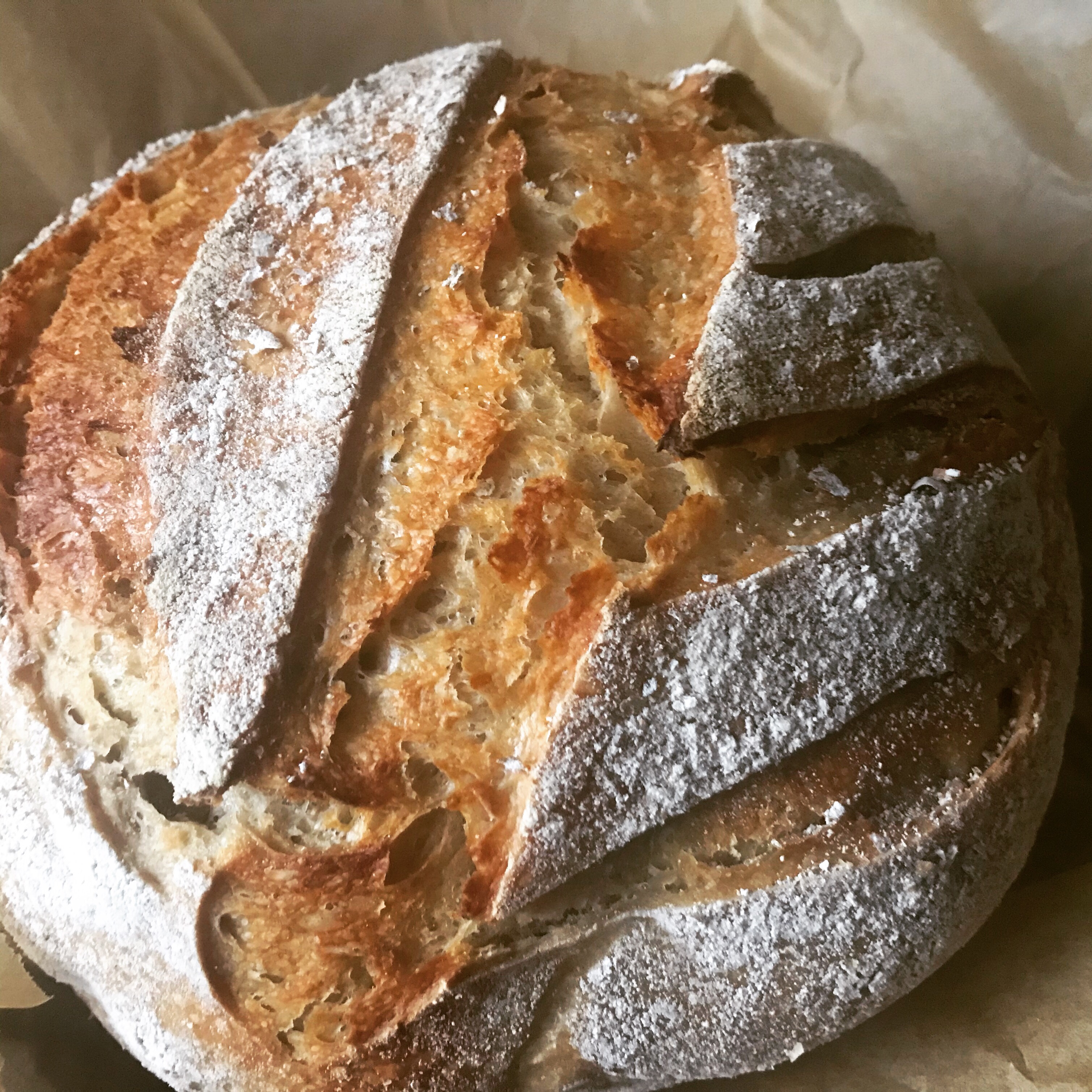
As with all things, this will take patience and a gradual coming into what works for my oven and me over time. I’ve made five sourdough loaves so far, two rye, three with stoneground wheat flour, and I’m still working through the best way to do this. The latest attempt, shown above, was from a baking in a pot in the oven and looks the most successful so far ☺️.

I’m off to slice this for breakfast now. Have a wonderful Sunday!

The Sound of Sleat

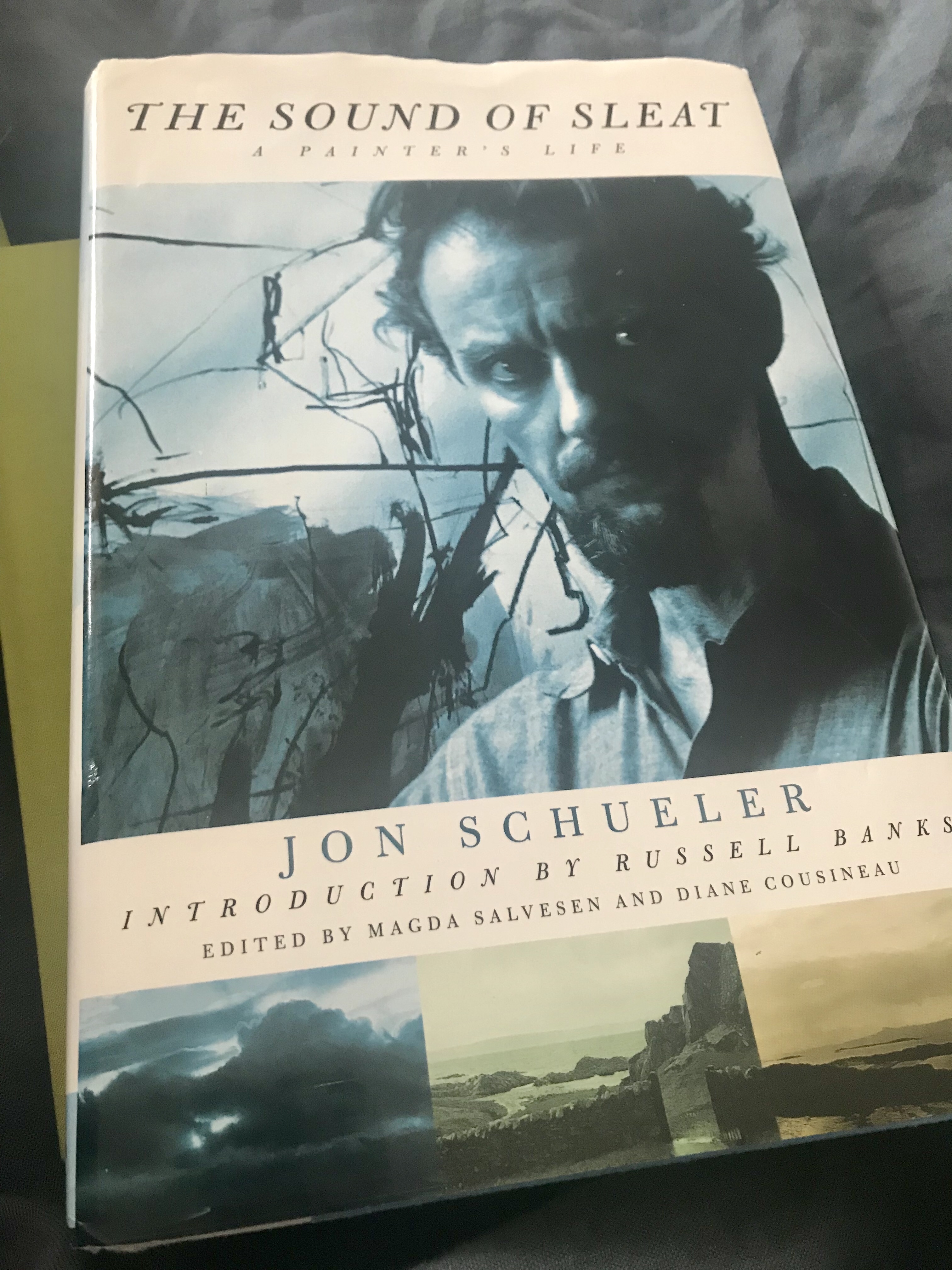
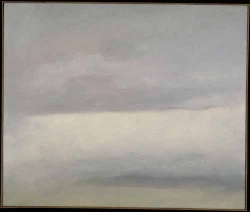
I managed to procure a copy of The Sound of Sleat by Jon Schueler, an American contemporary artist and a man who fell in love with Mallaig and it’s skies.

This was an inspired recommendation from a fellow blogger Linda (thank you Linda http://lindasgoluppi.wordpress.com/) after reading my last book list for the weekend.

The book is sadly no longer in print but I eventually tracked down a copy held by a bookseller from the US, so it took a few weeks to arrive.

It was worth the wait.

It’s a bleak but passionate read of the life of a great painter whose work was inspired by Scotland. Brutally honest, and with a spare beauty in it’s prose, it’s compiled from a series of letters to lovers, wives, agents and artists.

What shines through the pages, and what resonates so strongly with me, is Jon Schueler’s attraction to the ever changing light and mood of the sky in this part of the world.

It’s something that draws me to the island too: the weather, the light and the colours that are constantly changing. Increasingly this inspired Schueler’s work and the colours of his “nature abstracts”. His work is very powerful and his use of colour is wonderfully subtle.

Definitely worth a read if you manage to get your hands on a copy.

The Sound of Sleat, Jon Scheuler, 1975

Longhouse design

The time approaches for us to design our house and apply for planning permission to build on the decrofted part of the land.

There is already outline planning permission granted for a one and a half storey house, but full planning permission and building warrants will be needed next.

We’ve been working with Dualchas, Skye based architects. They design homes based on the original black houses of the Hebrides, houses that are long and low, that tuck into the hillsides, and are built to cope with the high winds and rain.

It became apparent quite quickly that by the time we factored in the groundworks, a long access road, a sewerage plant and everything else, that this was going to be an expensive exercise! A custom designed house with everything that we wanted was starting to look like a stretch too far.

Dualchas also however have a series of SIP (structured insulated panel) kit homes that contain all the best elements of their design – big volumes in the living areas, lots of light, great energy efficiency, remarkable build strength – and which prove marginally less expensive for what we want.

Our wish list:

*For the house to be super efficient in terms of energy consumption and to be cost-effective to run.

*To have big windows on the south side for solar gain and to make the most of the views.

*To sit quietly and naturally in the landscape, respecting the local vernacular.

*To be built of natural materials (slate, wood, stone).

*To have enough space for a utility room, a boot room and a larder for food storage and preparation.

*To have generous living space, with room for our massive book collection.

We have lots of work to do now to try and balance our budget with our desires and find a compromise that works for us and the land.

Let the balancing act begin….☺️
From the shore

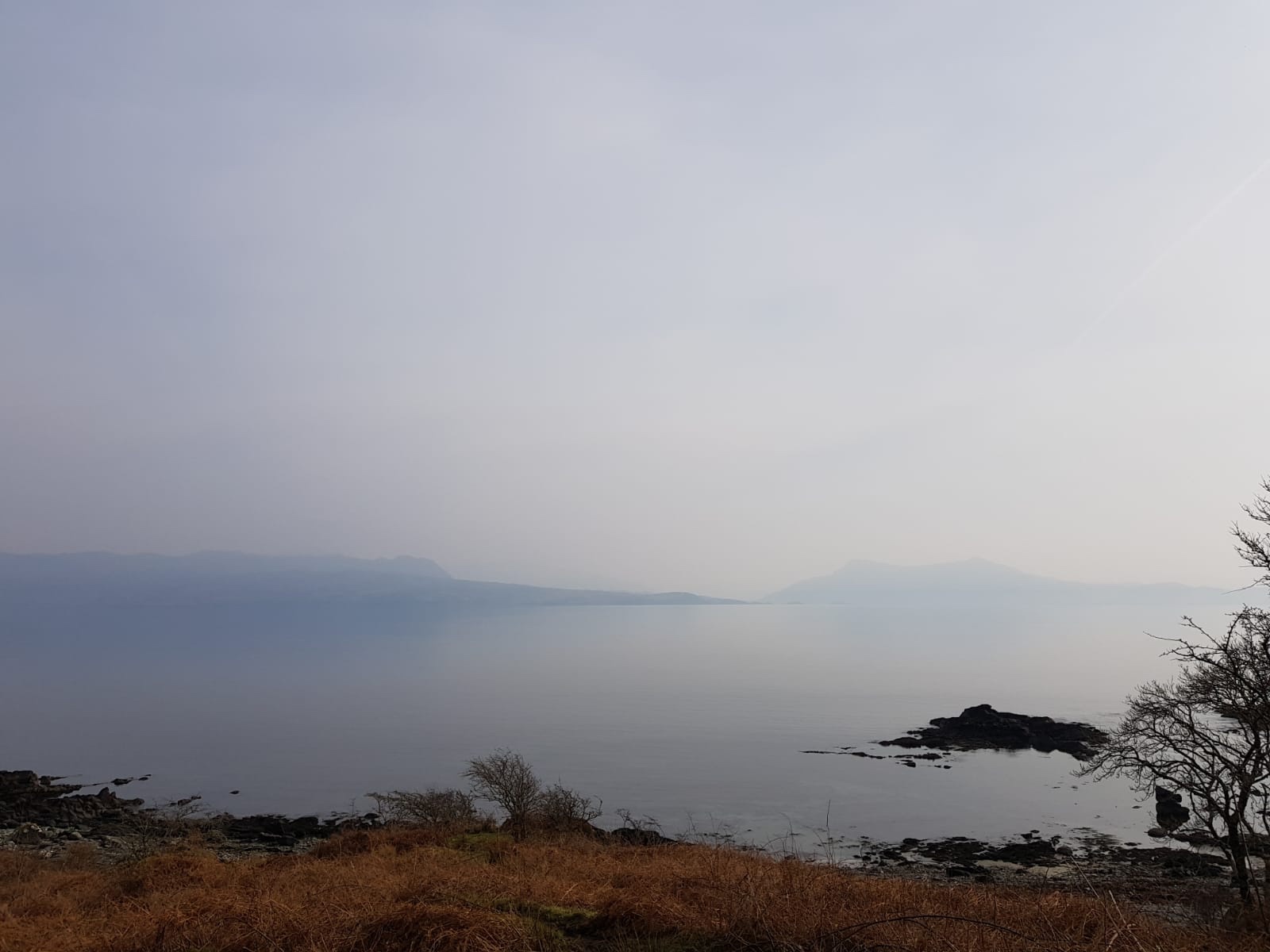
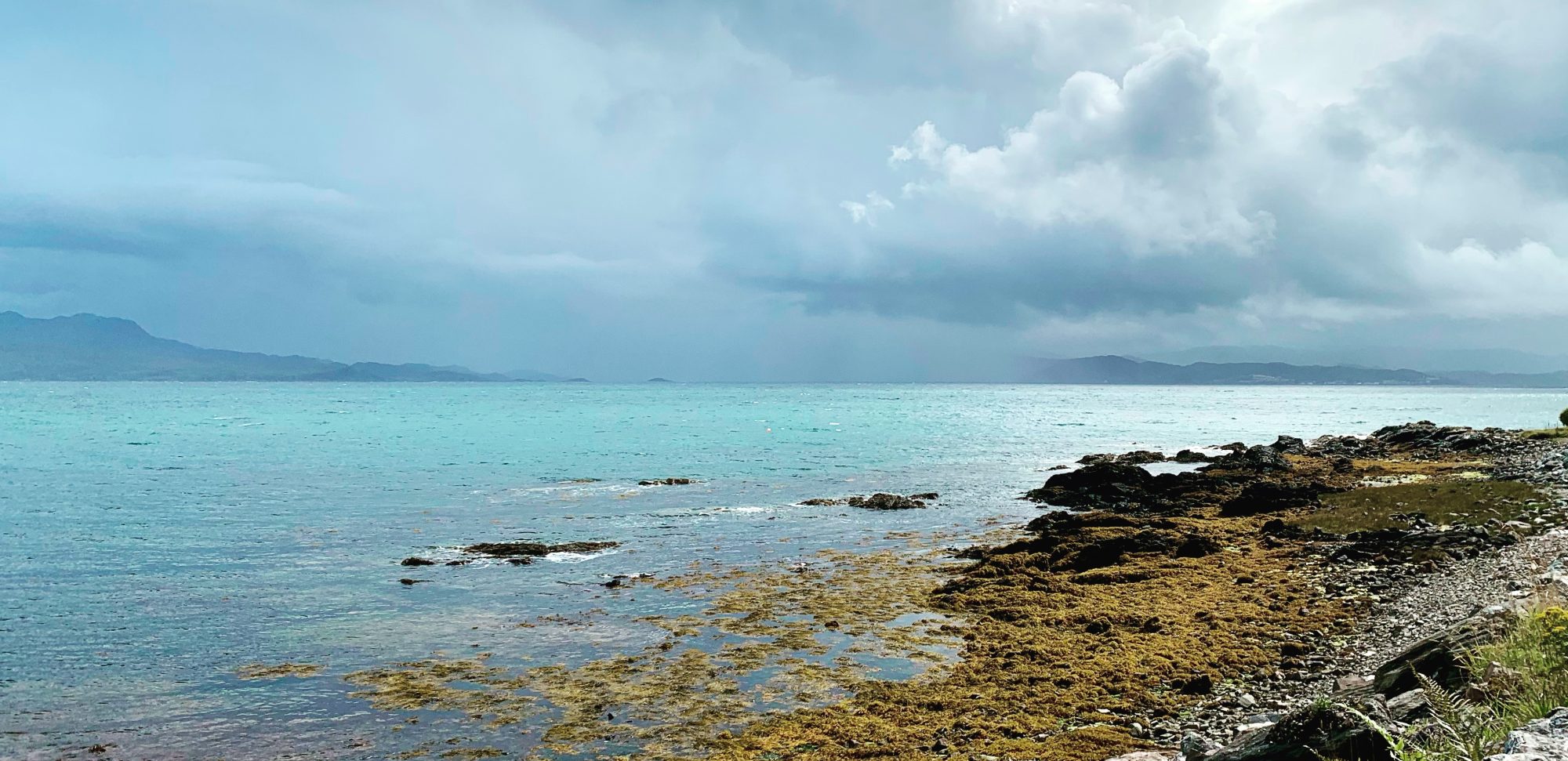
Some days appear magical, and although I know that they may only happen rarely between the many more frequent grey, rainy days, I think it’s important to recognise and celebrate them when they do.

This was taken from the shore on Skye by husband, no filters, no enhancement, just a phone camera.

I think it looks like a Japanese watercolour.

And a capture of a misty moment that we hope to be seeing much more of soon.

Exploring the croft

We’ve spent the last few days exploring the land. The croft is situated on a south east facing slope. Because it hasn’t been used for many years apart from occasional grazing, rushes have overtaken much of it, and there is little tree cover with the exception of a few small birch groves acting as a shelter belt to the west of the land.

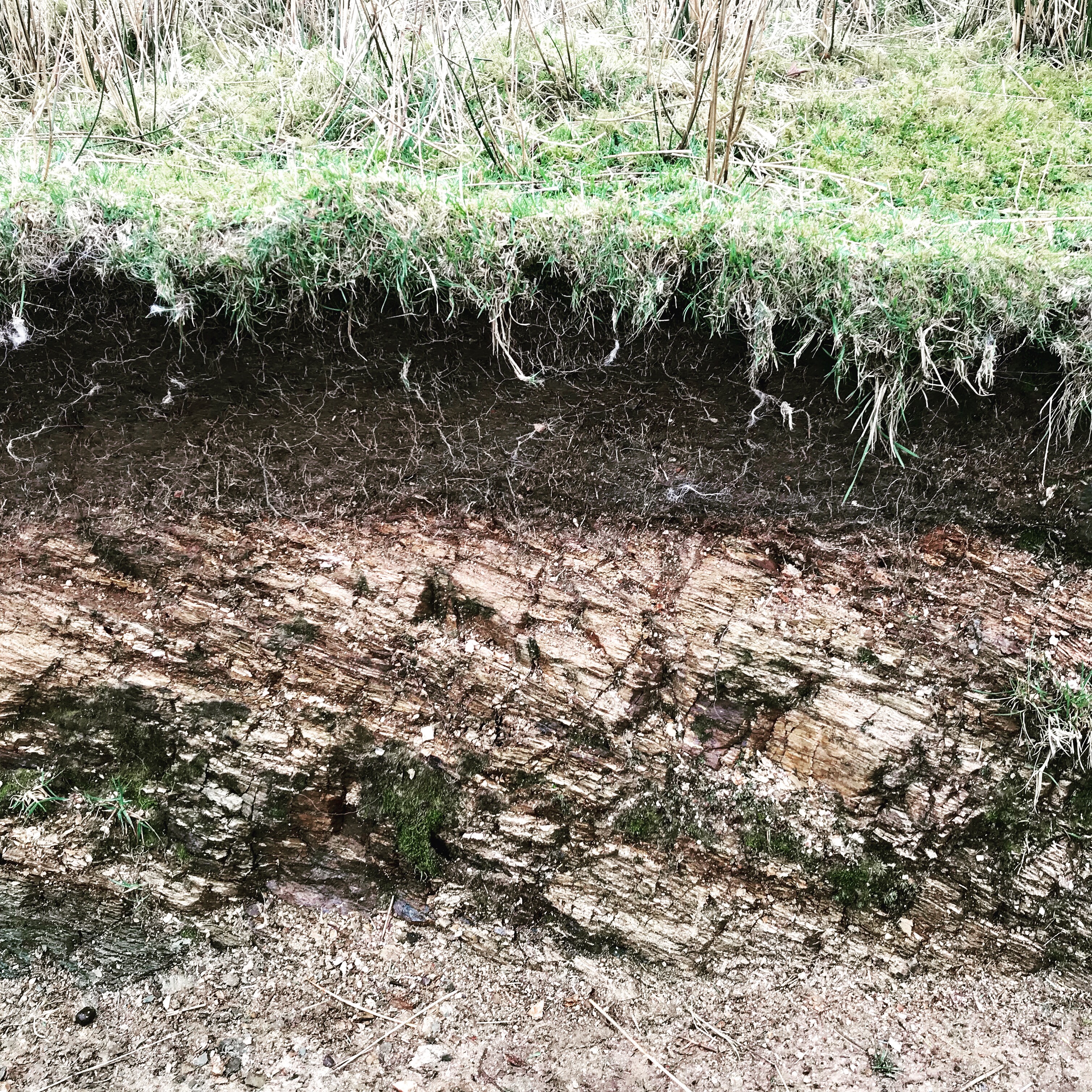
There are exposures of lewissian gneiss in various places, but there also appear to be layers of shale, as shown here in an exposed cut above the stream. You can see the soil layer overlaying the shale. Local spot PH testing shows that the soil over the shale is around 6.5-6.8, so not as acidic as we had feared.

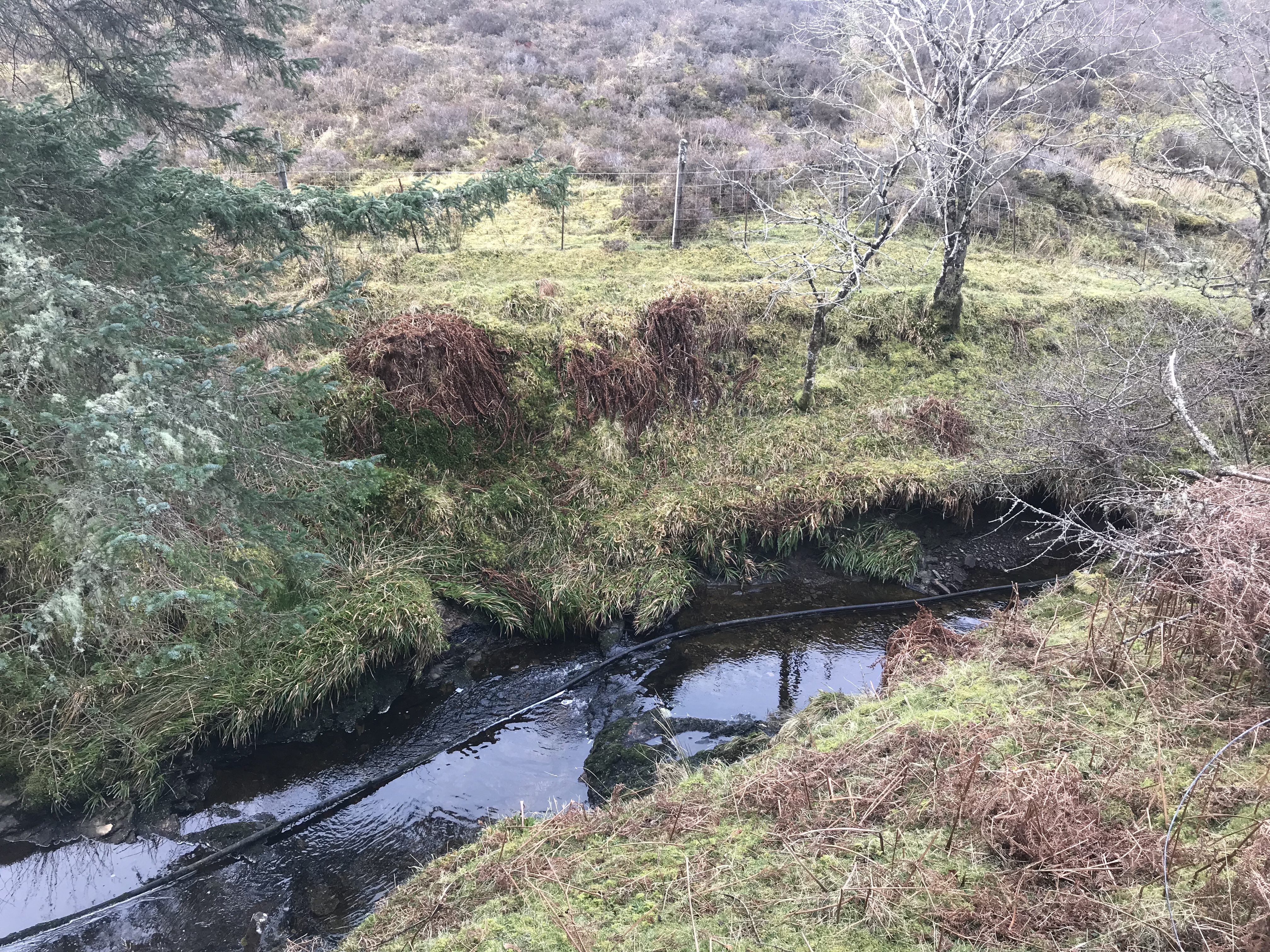
There is also a sheltered valley to the north, where the burn flows. It’s lightly wooded and overgrown, with the stream running through the cut.

It’s much more diverse and untouched in nature than I thought from our first viewing, which is wonderful. We’re already hatching plans for where we could plant a small orchard, and where we could create a pond.

Now to focus on planning permission and building warrants…