Croft Christmas Tree

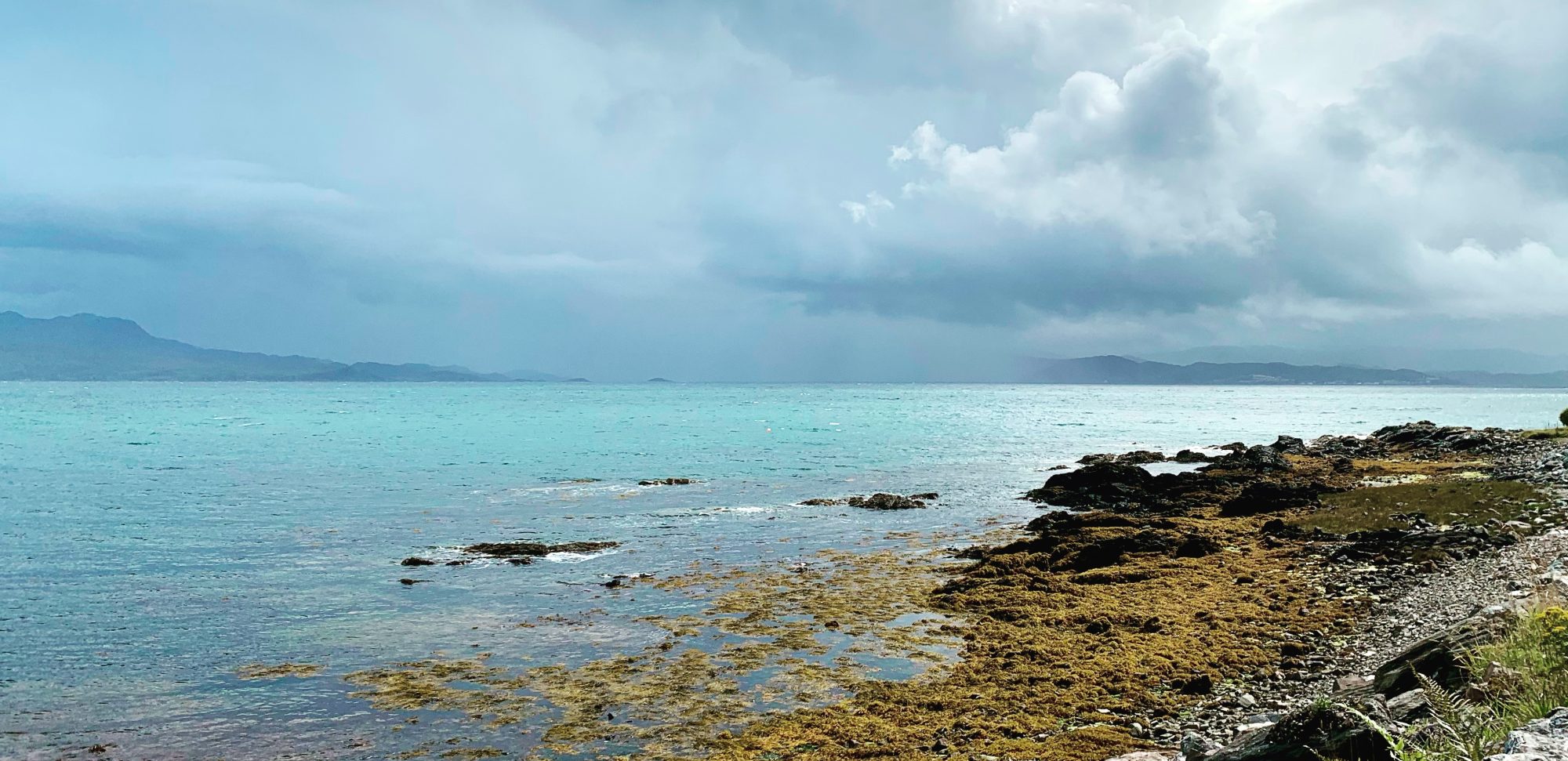
It’s a blustery, cold winters day here on the island right now.

Whilst husband is working in the house, preparing the walls for foil, I’m keeping busy in the caravan until I can be helpful, cooking, staying warm by the fire and listening to a Ted Hughes audio book.
We have no room in the caravan for a Christmas tree, but I couldn’t contemplate any kind of Christmas without one.

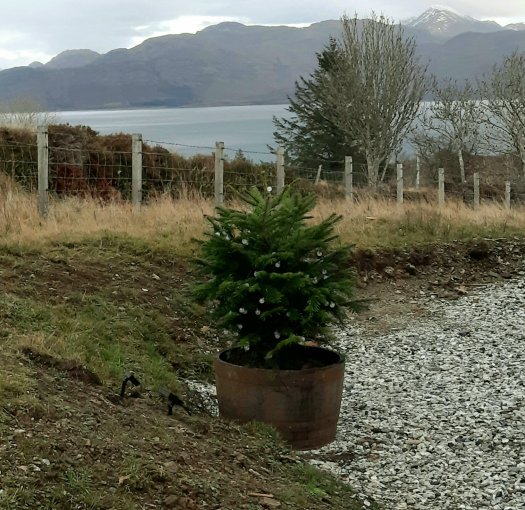
I ordered a very small, rooted tree from a nursery on the island, and it arrived yesterday. It’s now potted up in an old whisky barrel planter just outside the caravan. We can see it from the sitting area window. We can plant it on the croft in the New Year as it’s a native fir.

Conscious that I didn’t want battery lights or to add any more electrical load to the caravan, I’d bought solar tree lights.

This was a bit of a leap of faith, to be honest. We only get approximately six hours daylight at our northern latitude at this, the darkest time of the year. It was always a bit of a lottery as to whether this would be enough to power the tree lights for an evening or whether the whole thing would be a washout.
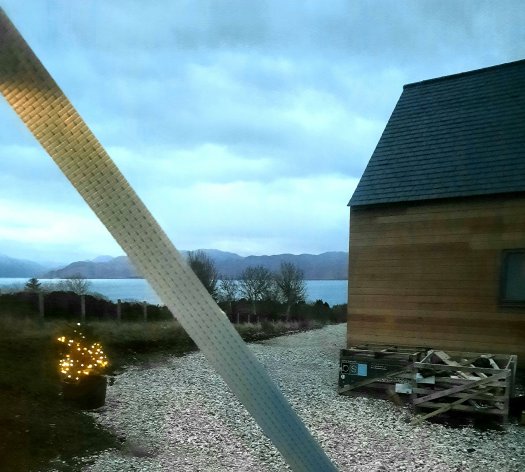
But it worked. Despite it being a totally grey, overcast day, as soon as the light dimmed at 4pm the solar lights came on. Our wee Croft Christmas tree is twinkling away in the darkness, probably entertaining the deer and definitely adding a bit of festive cheer to the building site.
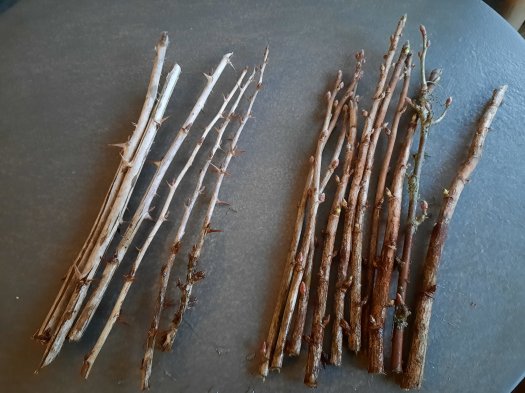
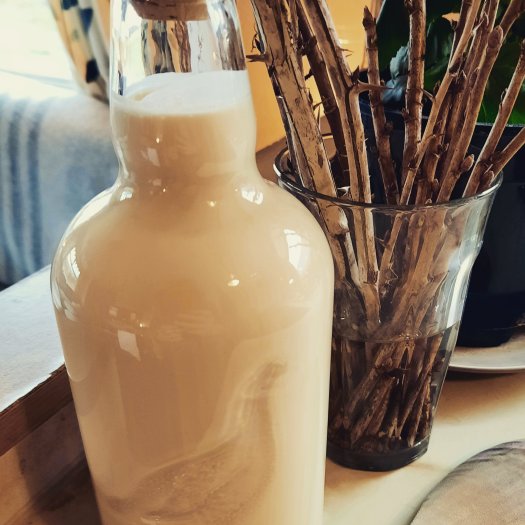
A spiky start

With the house build we’ve had little time for the croft tree plans or vegetable bed preparation beyond the most basic of plans for zoning and starting to think about grant applications for the trees and deer fencing.

Having said all of that, whilst our days are taken up with working in the house I’ve started on the croft in the smallest of ways. It just felt necessary to do something.

We’re planning for a berry bed, and also edible hedges.

To this end I’ve just received the first dozen or so cuttings of japanese red gooseberry, jostaberry and green currants, and have stuck them in a barrel of soil positioned next to the caravan to root up ready to be planted out into beds late next year.

If the deer don’t eat them (and you’d think that the thorns on the gooseberries would be enough of a deterrent, or am I deluding myself?) this should give them a bit of an early start.

These will be followed with raspberry, honeyberry, cloudberry, black currants, blueberry and strawberries early next year. And maybe the start of herb pots in the spring for the herb beds. Once we have some windbreaks in place.

We have also picked up some willow whips from a neighbours’ prunings, and as an experiment we’re going to plant them in the exposed boggy bottom of the croft over the next few days.

We’re treating these as sacrificial trees, as a test. We’ve had conflicting local reports about the need for and the effectiveness of deer fencing. It will be interesting to see whether these young trees get decimated and whether we have to wait for a further year to fully deer fence the croft before we can attempt sensibly to plant any young trees further at all.

A slow and spiky start. But it’s a start.

Atholl Brose

It’s that time of year again. I’ve made homemade Atholl Brose.

A wee glass of this in the evening to warm us up is a necessity, I think.

Whisky, honey, oats and cream. Lasts for a week in the fridge – if you can make it last that long 😊.

Recipe here for anyone that fancies giving it a go. Note I only use a half bottle of whisky, just a blended one too, and it’s delicious.

https://foodanddrink.scotsman.com/drink/how-to-make-your-very-own-atholl-brose/

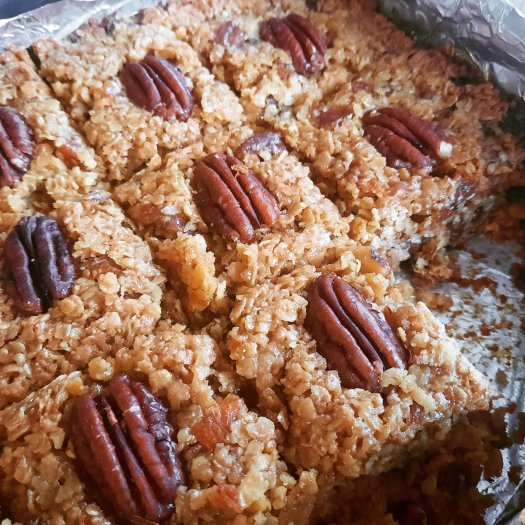
Powered by Flapjacks

I have many half packets of nuts and dried fruits that travelled with us from London, and which I don’t really have space for in this little caravan kitchen.

Oatmeal, dried apricots, pecans.. So I made flapjacks.

I’m not going to pretend that these are healthy with the amount of butter and golden syrup that they contain, which is more than the oatmeal could ever compensate for!

But as a pick-me-up, elevenses, or snack when energy levels are getting a bit low, they hit the spot.

Powered by flapjacks.

Evening light

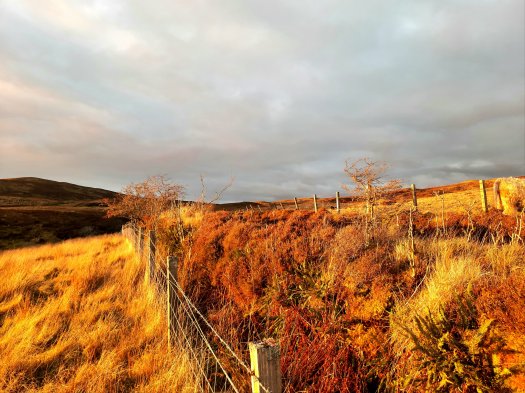
The sun sets early on the croft at this time of the year. 1545 yesterday, to be precise. We’re approaching the winter solstice, the shortest day of the year.

Almost as if to make up for the long hours of darkness that are about to come, nature puts on a dazzling show of light before it dies.

The skies become suffused with a golden light and all the colours of the hedgerow glow with an incredible intensity.

That’s every evening, even on days without a remarkable sunset.

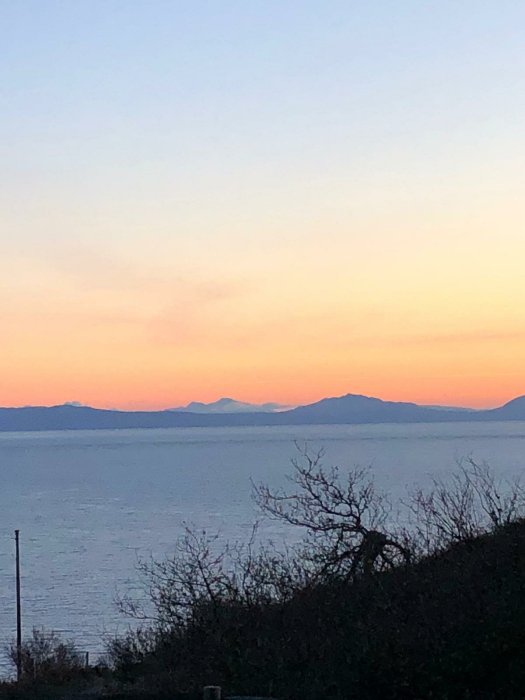
Facing SSE, we get more sunrises than sunsets on this part of the island. The sun dips behind the mountains behind us and we often just see the residual rosy glow in the sky, whereas those on the west coast enjoy its full splendour.

Still, it’s beautiful. A camera never seems to do it justice.

Highland Coos next door

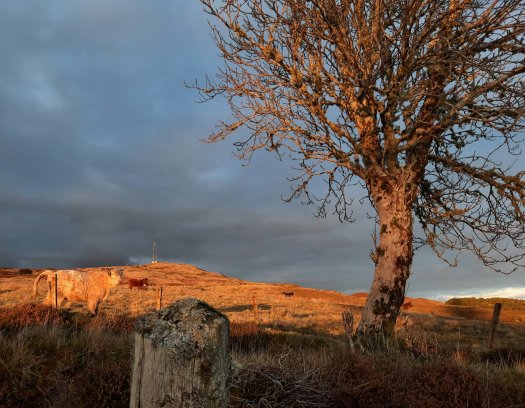
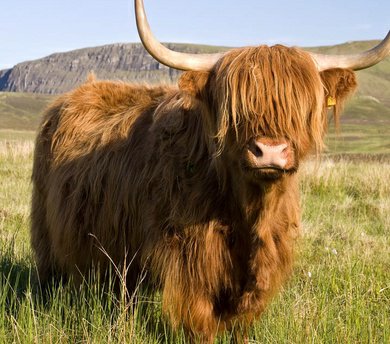
In our village there lives a crofter called Angus who keeps Highland cows. These are small, long-horned, shaggy-coated cows of neolithic origin, the archetypal Scottish cow.

Hardy and good natured, as well as very intelligent, these cows are escape artists. Often the call goes out around the village that there is a cow in the road, and it’s invariably one belonging to Angus.

This week Angus has been grazing them in the top field which is adjacent to our croft. One morning we tugged back the curtains in the static to find three large cows staring back at us from a few metres away on the other side of the hedge.

They are curious beasts. As the day progressed, whenever they spotted us out on the croft they’d migrate towards us, shaggy heads shaking and mooing, in anticipation of a feed, I suspect.

I’m very taken by them. Much more so than with the sheep.

Chilly morning routines

As winter bites, we are settling into a kind of routine for survival in the caravan.

Our lovely but ancient spaniel was very confused and disorientated by the move to the croft. It’s not surprising really, as he was essentially an urban dog.

Here he forgot his house training and when he did go out, he’d stand in the wind and rain, ears streaming out behind him, rooted to the spot, seemingly not knowing where to go or what to do. He’d taken to leaving puddles on the carpet during the night. Not good.

Husband has been getting up in the wee small hours to let him out, which seems to be working. Bertie (!) is settling into new routines gradually and has even been seen bounding around in the horizontal rain as he accepts this new “normal”.

The mornings are the most challenging of times here. The static is cold from several hours overnight with no heating, often only a few degrees centigrade in temperature, and the bed is at its warmest and most comfortable.

When I can avoid it no longer, I get up. I layer up as swiftly as I can and wrestle myself into a warm robe, trying to expose as little skin as possible. Then it’s through to the tiny kitchen to put the kettle on for a pot of hot coffee to nudge us into consciousness.

Breakfast is my domain.

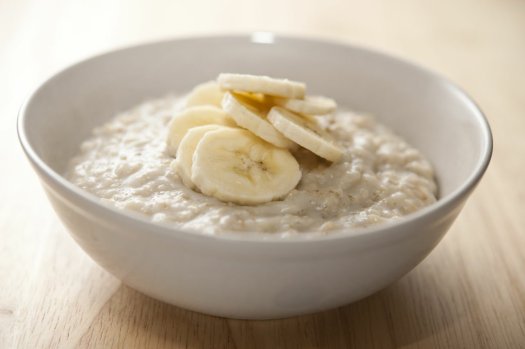
It’s usually a bowl of porridge with banana and maple syrup, or eggs and toast, or if we have good fresh bread, a butty with local cheddar (that’s a sandwich for those readers not from these shores).

It takes us a few mugs of coffee to get going enough to enjoy joined-up words together and be able to plan the day. By now the temperature is usually up to around twelve to sixteen degrees Celsius and it’s feeling less arctic.

We watch the weather and sip our coffee, chatting about build plans or deliveries for the day. We read the news online but at the moment are more absorbed by our own new, little world as we work together to start to establish our place in it.

It may be like living in the cold wash, fast spin cycle of a washing machine at the moment, but with every day it feels a bit more like home.

Snowy hills & soul food

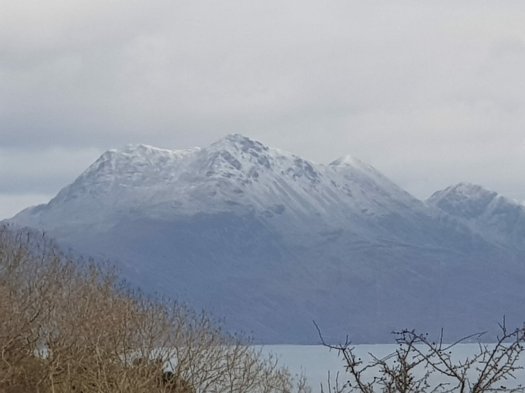
The weather turned very cold last night, down to an overnight temperature of a few degrees. We awoke to snow on the high peaks around us and an internal caravan temperature of four degrees C.

To say that getting out of the warmth of the quilt was a struggle this morning would be an understatement..

Slowly building supplies are arriving for the next stage of the house build.

We need to block gaps and start the insulating foil on the walls before we start the underfloor heating, but we await more foil, staples and other materials. With any luck everything will arrive in the next week and we can get started.

In the meantime, without a working oven, I’m relying on our local stores to bake delicious, savoury, carb-rich loveliness to keep us motivated in the form of bacon and cheese scones.

We need extra energy in this cold to stay warm and working. I don’t feel guilty at all for the large bowl of tomato soup and two of these beauties warmed and spread with butter for supper.

Soul food.

The stone

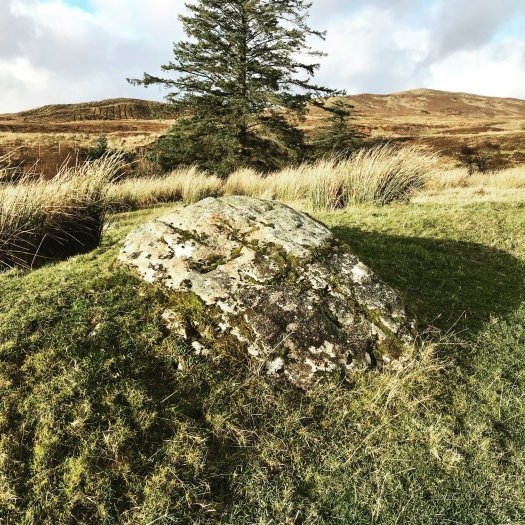
Ever since we first walked the croft two years ago and and fell in love with it, we’ve been intrigued with the small, bare outcrop of stone that we have on the southern slope.

We’ve always wondered what it is. We are built mainly on shale, which appears all over the croft. But this isn’t like shale, which is a layered, crumbly rock.

It’s a very hard, smooth rock and with a slightly crystaline structure.

Local geology maps show that we are sited on an outcrop of Lewissian Gneiss, one of the world’s oldest rocks. But it doesn’t quite look like the stripy gneiss that I’ve seen elsewhere in images.

A helpful islander (thank you Julian!) who is also a geologist offered to come and have a closer look for us when he was in the area and confirm what it was. He explained it could be granite, or gneiss – it was difficult to identify from a picture.

He popped over a few days ago and we had a socially distanced chat. He’s confirmed that it’s definitely gneiss. I would have been happy with any diagnosis, but I really happy that it’s what we thought it was.

There’s something comforting in knowing that your land contains some of the oldest rock in the world.

As old as the beginnings. As old as the legends.

That’s just so cool somehow. 😎

Launderette Tales

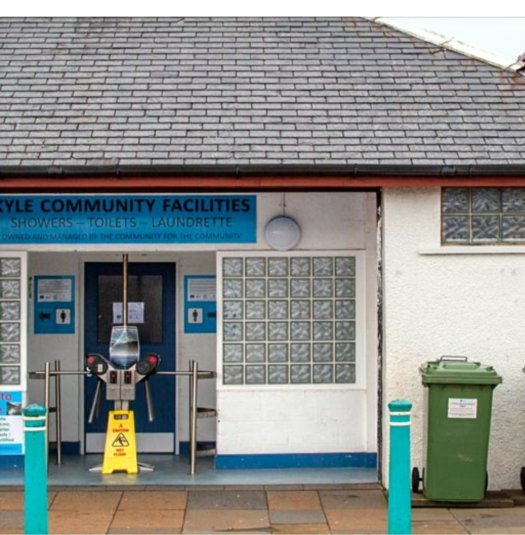
I haven’t used a launderette for decades, so it was with some trepidation and a bag full of coins that we sallied forth to the Community Facilities at Kyle of Lochalsh to do our washing like the ex hippy teenagers that we are.

With no water in the caravan and having been on the road for ten days we’d both completely run out of clean clothes.

I’m amazed we lasted this long, to be honest. We used to do a clothes washing almost every day in London.

But that was in our old life. We’ve learned to embrace the muddier and scruffier side of being now.

The side benefit of this was a trip to the hot showers at the same place, designed for visiting yachtspeople, with plenty of space to hang wet outer clothes whilst getting clean.

And it would have been rude not to make a wee visit across the harbour carpark to Hector’s Bothy for lunch whilst the clothes were tumble drying.

We sat in a booth overlooking the sound, blinking in bright November sunshine and enjoying the sensation of being clean again, and ate our butties.

Today was a good day.