The bone-weariness of 5am

It is 5.02 in the morning and I am writing this from our hotel bedroom. The room is overheated and stuffy and our dog lies curled up and slightly confused on his blanket in the corner of an unfamiliar room. I should be asleep. But infuriatingly I can’t sleep, even though I am weary.

Moving house is exhausting. I have done it so many times that although it’s lent a certain proficiency to the process, it’s increasingly a bone-wearying, energy sapping experience. This time especially so with my recent second knee replacement restricting my ability to do much physical work, meaning leaning on husband more than ever.

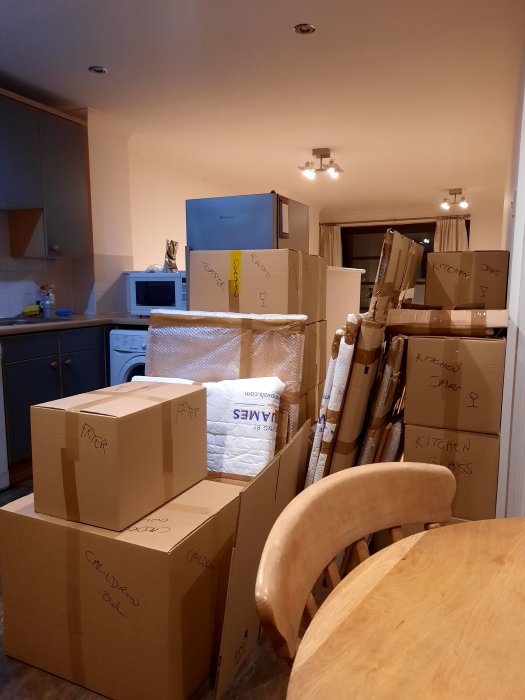
The house empties so slowly, exposing cobwebs, dust and the ghosts of lost slippers behind furniture.
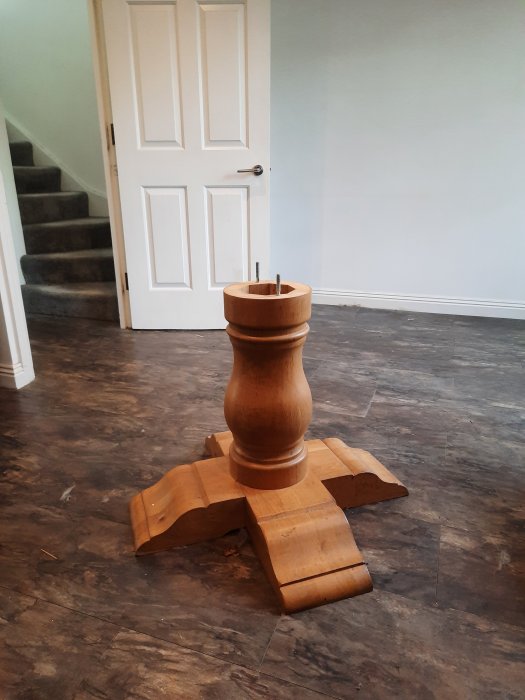
After a day and a half of loading the removals van we hit a wall at around 4pm. We looked at each other as we stood in our empty kitchen and agreed that we had to stop.

The removals guys were still working through the garage (how do they keep going?) but were happy to complete without us and lock up the house so that we could start the long drive northwards. London rush hour was about to start and we were keen to avoid the worst of it.

As it was, we still hit the rush hour traffic, but every mile towards our first nights destination felt good. We tumbled into an empty bar at our scarily Covid-empty hotel and ate a quick supper before bed.

Today is another day. We’re both relieved to have that behind us and to focus on the drive up-country to our new home.

We’re taking each day at a time.
Upcycling

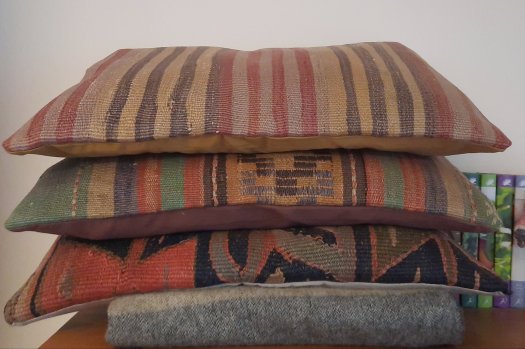
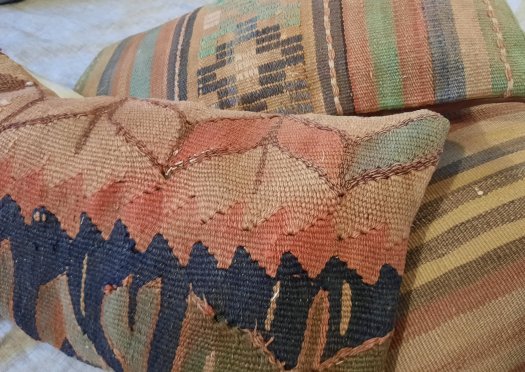
Whilst sorting through the cupboards to pack we came across some Turkish kilim fabric covers that I had bought some time ago for very little money and had stashed away with the linens.

After I’d bought them, I’d discovered that they were all odd sizes, each one cut from an upcycled piece of old kilim. Because I had no cushion pads to fit them I’d clearly put them away to sort another day. But looking at them again today I thought they’d do very well for the static.

A number of them showed signs of mending, and all of them were old, vegetable dyed weavings. I’m very drawn to textiles, and especially to those with some age and history to them.

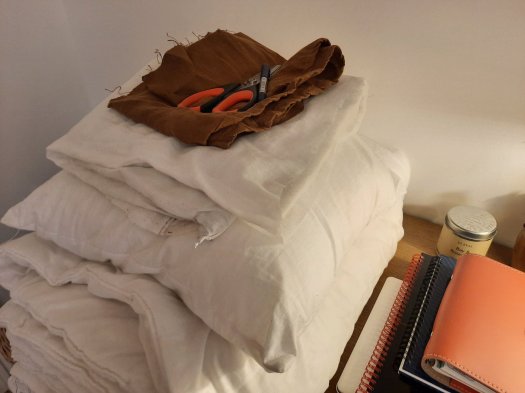
I didn’t want to buy more cushion pads. So I repurposed an old, single duvet that we were about to ditch and made three cushion pads from it to fit the covers.

I love their slightly faded, soft colours, imperfect patterns and visible mendings. You can feel the hands of the past on them and I can’t help wondering about their journey and who has repaired them in previous generations. It feels good to give both them and the old quilt a second life.

The rest of the linen cupboard has also been sorted and the old sheets and pillowcases that are way past their best will be used as decorating sheets or cut up as cleaning cloths and dusters this weekend, ready to be pressed into service in cleaning and painting the static in a few weeks time.

When did we give up repairing linens and buying new whenever we felt like it?

Work boots and packing boxes

We ran out of bread yesterday afternoon, so husband offered to pop into the local Tescos to pick some up.

The last thing I was expecting was for him to come back with a bargain pair of steel-toe capped work boots for me.

He returned and presented me with them with a flourish worthy of a man clutching a large bunch of red roses. Who says romance is dead!

I guess this means that I am going to have to pull my weight on the build, then… 🤔

I secretly love them. I may never take them off.

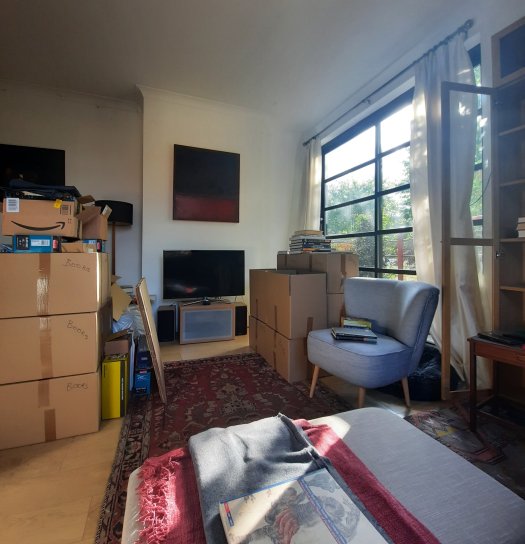
These have been added to the rapidly growing pile of knee pads, work trousers and power tools that are filling every free space in the house at the moment. This is the reality of a household getting ready to move in just a few weeks time.

Bertie, our ancient but lovely spaniel, has been reduced to sleeping in odd corners wedged between the boxes wherever he can.

I can see that he is perplexed by the erosion of his space, with boxes forming cardboard labyrinths around the house.

Poor dog. At his age he deserves peace and quiet, and a degree of constancy, and all we give him is change..

Everything oatmeal

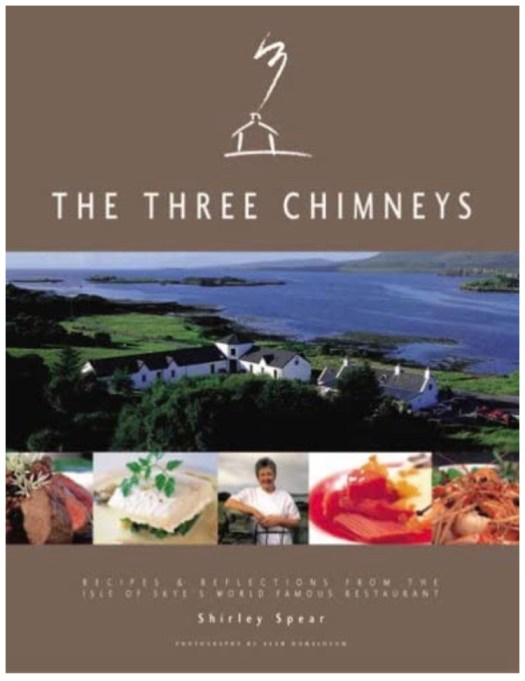
Many years ago, after my first trip to the now famous Three Chimneys Restaurant on Skye, which was run in those days by Shirley Spear, I bought the cookbook of the same name.

It was a beautiful thing. Full of generous recipes from the restaurant and home, scattered with anecdotes of local life on the island. It’s now sadly out of print, although I still have a treasured copy in my boxes ready to be resurrected once I have my cookbook shelves up and running in the new house.

Many of the recipes have become firm favourites when I can get the ingredients, such as Bracadale crab tart and Shirley’s legendary marmalade sponge pudding.

The one that is the simplest of them all, and in many ways the most satisfying, is Skirlie.

There are many derivations of Skirlie in Scotland as it’s an old, traditional food. Shirleys version is simply oatmeal fried with finely chopped onions, butter, seasoning and parsley or chopped chives. In this version it’s shaped into balls and roasted around a chicken like stuffing to add a savoury, crunchy, filling addition to your roast meat.

The first time I ate it I loved it. It was a revelation in its simplicity and its nutty, savoury taste.

I’ve also discovered an interesting blog site called Cailleachs Herbarium which gives the recipe for a fermented oatmeal called Sowans.

This is another ancient recipe, I suspect not produced or eaten very much these days.

With today’s interest in probiotic foods I’m surprised that this homegrown, traditional Scottish version hasn’t become more known. Sowans is similar in its use of live cultures to the yoghurt probiotic drinks that we buy that cost a small fortune.

Maybe with the popularity of oat milk and the known health benefits of probiotic, fermented foods this will come back into fashion?

With husband a lover of ayran, I’m definitely going to give this a try.

New beginnings

It’s lovely to see my two stepsons so excited about the next step in their lives. At 20 and 22 they’re both moving out of home this summer and have decided to take a flat together in Manchester.

They were up early yesterday looking at flats and planning next steps over mugs of tea in the kitchen.

I love that they can share living space and support each other whilst they finish university and find new work.

This has come at a good time for both of us. We’re in the process of downsizing possessions and packing up for the island, and many of the household things that we would have otherwise stored or sold can be passed on to them for their new flat, which will save them money.

It also means that the journey up to the Isle of Skye for visits is about four hours shorter than from London, which is a real bonus.

Whether the attraction of our remote cold, wet island and their wild-haired, welly-clad old folks will be enough to tempt them up to see us after the excitement of city living is entirely another matter! I hope so.

As I hope that the tranquility of our croft and the different pace of life there will provide a welcome haven for them from the madness of modern city dwelling whenever they need it.

New lives and new beginnings for all of us.

This is what life is all about.

❤️

SIP panels going up

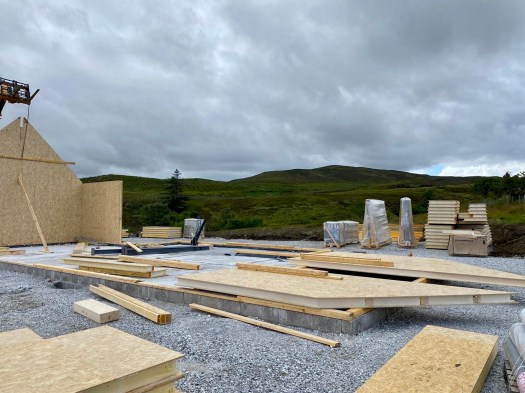
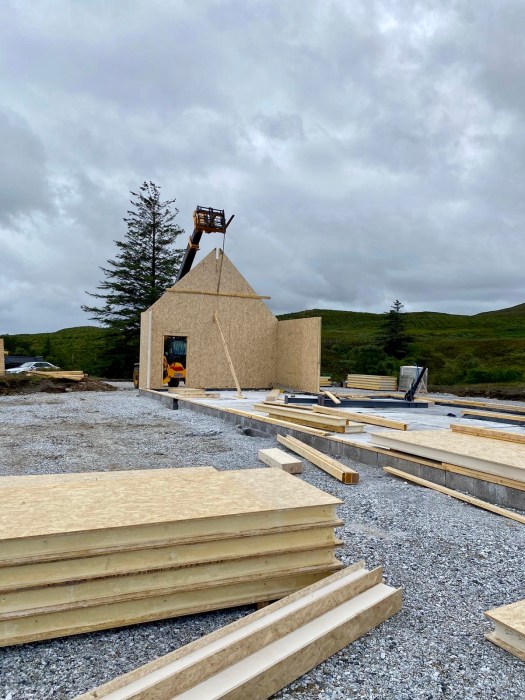
The SIP panels were delivered to site today and are starting to go up…

It looks a bit like a dolls house being built at this stage, although these panels are massively strong and well insulated.

Suddenly the house looks tiny…

When we looked into house build construction methods back at the design stage, we decided on SIP (structured insulated panels) for a number of reasons.

  • Speed of Construction
    Building with SIPs is a fast construction method. It is entirely possible for the SIP house ‘shell’ to be completed within seven days.
    Ours will take 2-3 weeks, we think. Useful on a rainy island.
     
  • Environmental credentials
    SIP-built houses are highly energy efficient, with the result that they are easier to heat. This means less harmful CO
    2 released into the atmosphere. Very little energy is used during the SIP manufacturing process, with SIPs using up to 50% less raw timber compared with conventional timber frame houses. We like that.
     
  • Sound Proofing
    SIP panels have excellent sound absorption properties with the result that the finished buildings are quieter to live in.
    After years of living in flimsy walled modern flats and houses with sound systems, guitar practice and video calls all going at once, this is a definite advantage!
     
  • Structural Strength
    SIP walls can be up to seven times stronger than conventional timber frame.
    The strength of SIP structures allows for thinner walls and no bulky roof trusses.
     
  • Thermal Performance
    Insulation is integral to the SIP system, and therefore doesn’t require installation at a later date. The superior thermal performance of a SIP structure will last the lifespan of the building, thanks to the solid core of insulation throughout the structure. This means that the building is heated evenly, is free from cold spots and benefits from reduced heating costs.


I guess the proof of the pudding, as they say, is in the eating… 😊

Only time will tell, but we have high hopes!

Week four of lockdown

We are just going into week four of lockdown. We are all well, for which I remain eternally thankful.
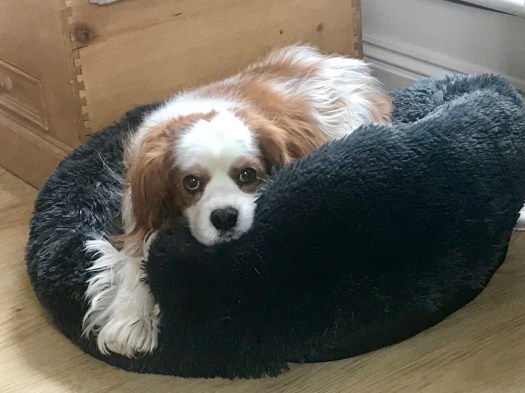
Our small London townhouse houses us all plus Bertie the ancient spaniel, who seems perpetually confused by the presence of his tribe around him.

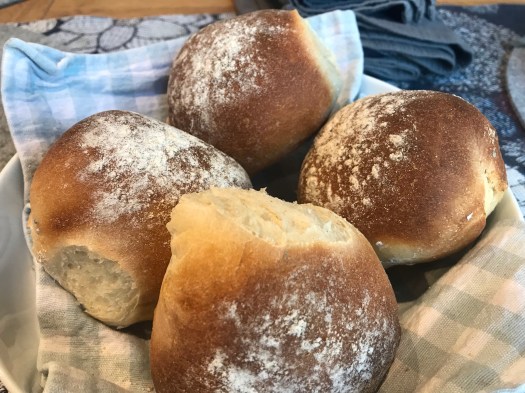
We are managing, despite the absence of outdoor space which is the biggest hardship. Evenings are Cards for Humanity games doing our absolute best to gross each other out. I bake bread when we run out. The kids are starting to go stir-crazy. There’s only so much Xbox a body can play.

Sleep patterns are totally screwed and new routines need to be forged before peace can return. All are trying their best, but grumpiness and flare-ups are happening, which is normal, I guess. The Easter eggs that I ordered didn’t make it in time.

I learned to make Waterford Blaa rolls, which seemed to go down well. I’ll be making another batch of these today as they’re relatively quick and easy to turn out.

The blossom is out. We have sunshine during our days and we are all well. In these times of extremity, there are a lot of people doing a lot worse. We have food. We have each other. I am grateful.

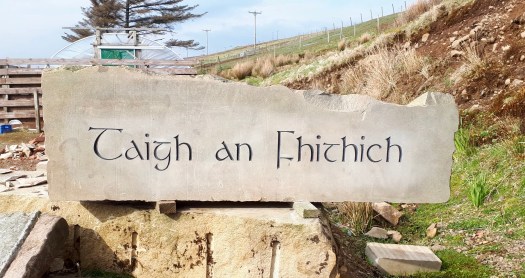
Once lockdown is over, our Skye life beckons, and seems tangibly close. Despite the news that no work could start and is delayed until people can move freely again, Francis emailed a photo of the house sign that he’s been able to carve whilst the island is in lockdown. It was a wonderful and unexpected boost to our spirits.

We will get through this.

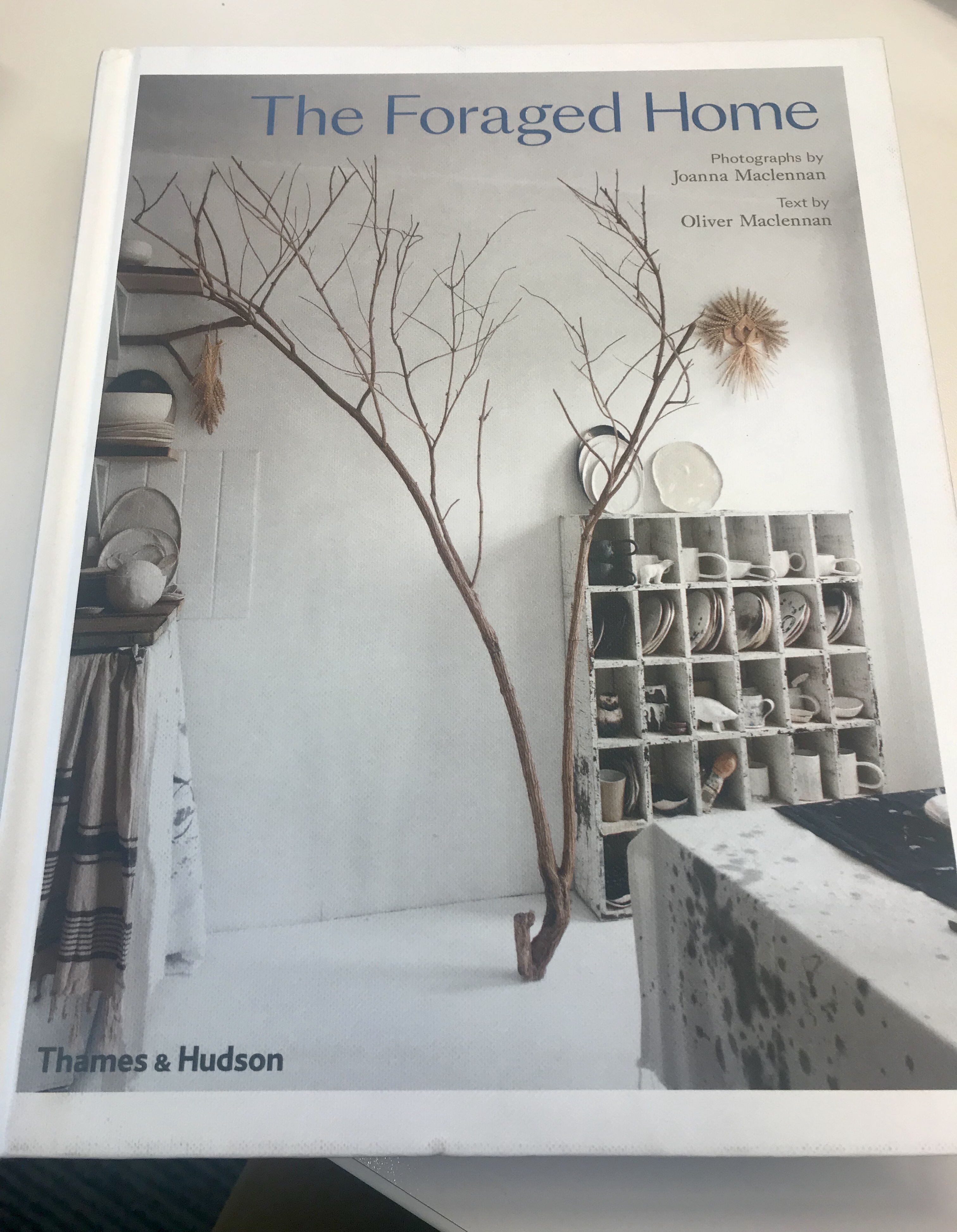
The Foraged Home

I truly work with the most wonderful people.

Jo read my last blog on insidious consumerism and responded with this brilliant book as inspiration to strengthen my resolve to reuse, recycle and renovate rather than buying new.

A beautiful, stylish, inspirational book. That’s my reading for the next few nights sorted out.

Thank you Jo 🙏

The insidious pull of consumerism

The weeks are flying by.

Gorgeous but expensive floorboards ….

Progress is at last happening with the building warrant submission, and we’ve been busy with power points, drainage, guttering, flooring and window specifications. We are almost there, and with a following wind and a call with the energy consultant we should hopefully be able to submit final warrant drawings in the next week.

I think that the hardest thing about this time is stopping myself going crazy trying to make this home perfect. It doesn’t need to be perfect.

It’s our home.

I need a serious dose of pragmatism and a bit of a reality check at times. This is difficult whilst being constantly bombarded with images of stylish, deceptively simple design, which is usually fiendishly expensive.

Actually, my husband doesn’t suffer with this – it’s just me. I want to reuse, simplify and recycle, but I’m often conflicted because I buy into the aesthetic. I want our environment to be restful, and natural, and beautiful…

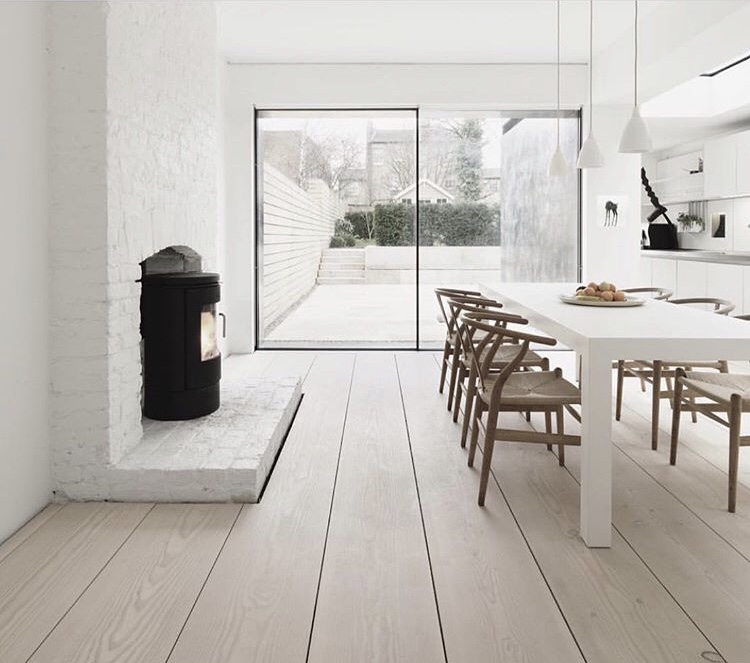
Every time I see a gorgeous wood floor (the latest one was wide-board limed Douglas Fir) .. it’s way over budget. I need to keep telling myself that there’s no need to spend that kind of money. What we think is reasonably priced is perfectly fine. It really is.

It’s even worse when it comes to furnishings. For the most part, the furniture that we have is perfectly usable. However, it’s a bit of a mash-up of styles from many previous homes, and the temptation to sell it all and start again with a clean, new, streamlined home is very strong.

This is both unnecessary and potentially financially ruinous, so we’ve been looking at a few key things that we may need to change (sofas, rugs) and are working out how we shed the rest via eBay or charity shops. We can always recycle some of the other things like side tables with a lick of paint. Repeat after me, you do not need that designer birch strip side table. You really don’t …

I don’t want to be part of the consumer bubble replacing perfectly good things for the sake of it. We already have too much stuff.. and it’s key that we resist the constant and insidious pull of commercial consumption.

Longhouse design

The time approaches for us to design our house and apply for planning permission to build on the decrofted part of the land.

There is already outline planning permission granted for a one and a half storey house, but full planning permission and building warrants will be needed next.

We’ve been working with Dualchas, Skye based architects. They design homes based on the original black houses of the Hebrides, houses that are long and low, that tuck into the hillsides, and are built to cope with the high winds and rain.

It became apparent quite quickly that by the time we factored in the groundworks, a long access road, a sewerage plant and everything else, that this was going to be an expensive exercise! A custom designed house with everything that we wanted was starting to look like a stretch too far.

Dualchas also however have a series of SIP (structured insulated panel) kit homes that contain all the best elements of their design – big volumes in the living areas, lots of light, great energy efficiency, remarkable build strength – and which prove marginally less expensive for what we want.

Our wish list:

*For the house to be super efficient in terms of energy consumption and to be cost-effective to run.

*To have big windows on the south side for solar gain and to make the most of the views.

*To sit quietly and naturally in the landscape, respecting the local vernacular.

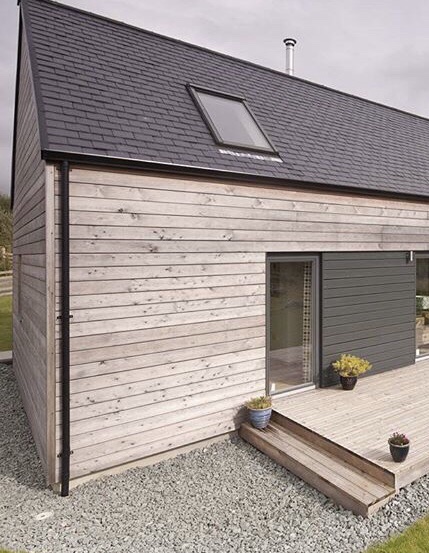
*To be built of natural materials (slate, wood, stone).

*To have enough space for a utility room, a boot room and a larder for food storage and preparation.

*To have generous living space, with room for our massive book collection.

We have lots of work to do now to try and balance our budget with our desires and find a compromise that works for us and the land.

Let the balancing act begin….☺️