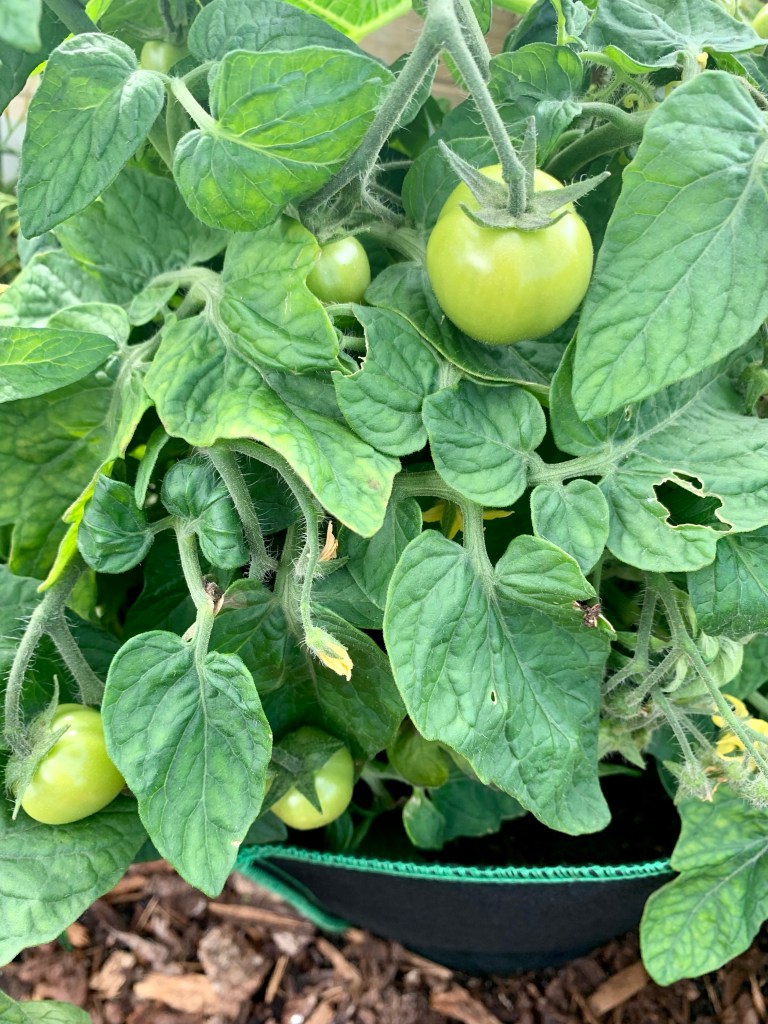
I’ve slowly been clearing the polycrub of pots of spent summer produce, the tomatoes, beans and squash plants all now cropped and done. The remaining green tomatoes are coming indoors to be made into chutney any day soon.
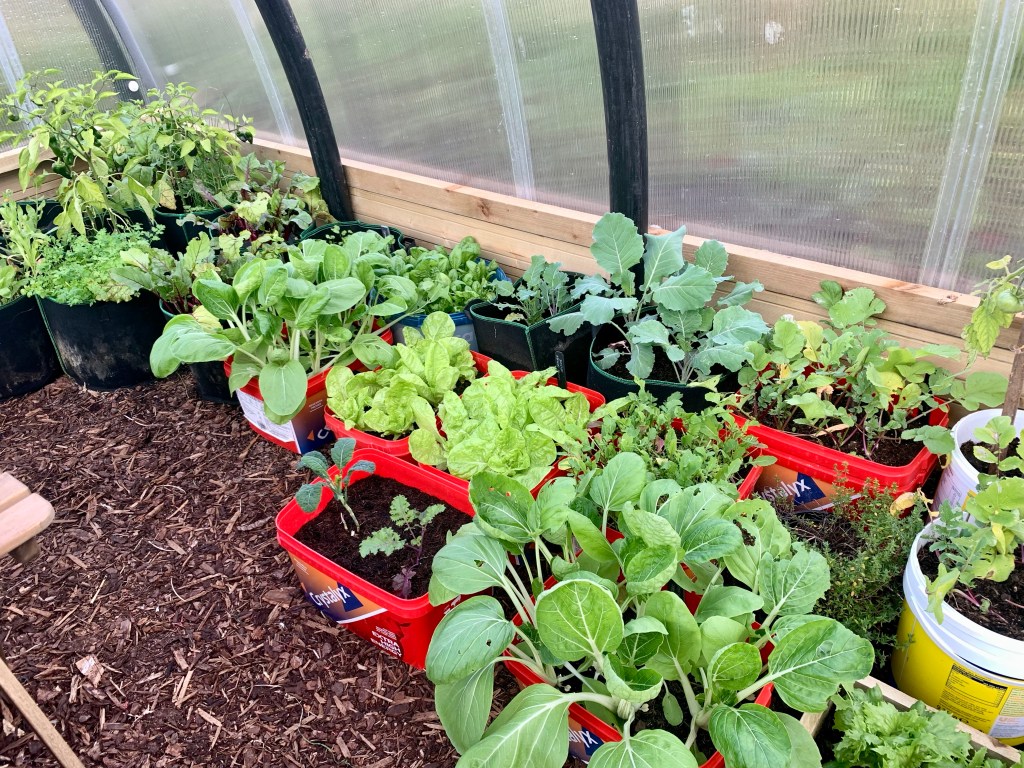
Winter crops in tubs
The winter sowings are largely in and have been growing like weeds. I planted winter lettuce and pak choi – too closely together, it seems, as I was short of tubs – expecting slow growth and plenty of time to pot them on once everything else was cleared.
But their rapid growth has taken me aback and we’ve been cropping lettuce and rocket for weeks now trying to thin it all out. They’re just about under control again.
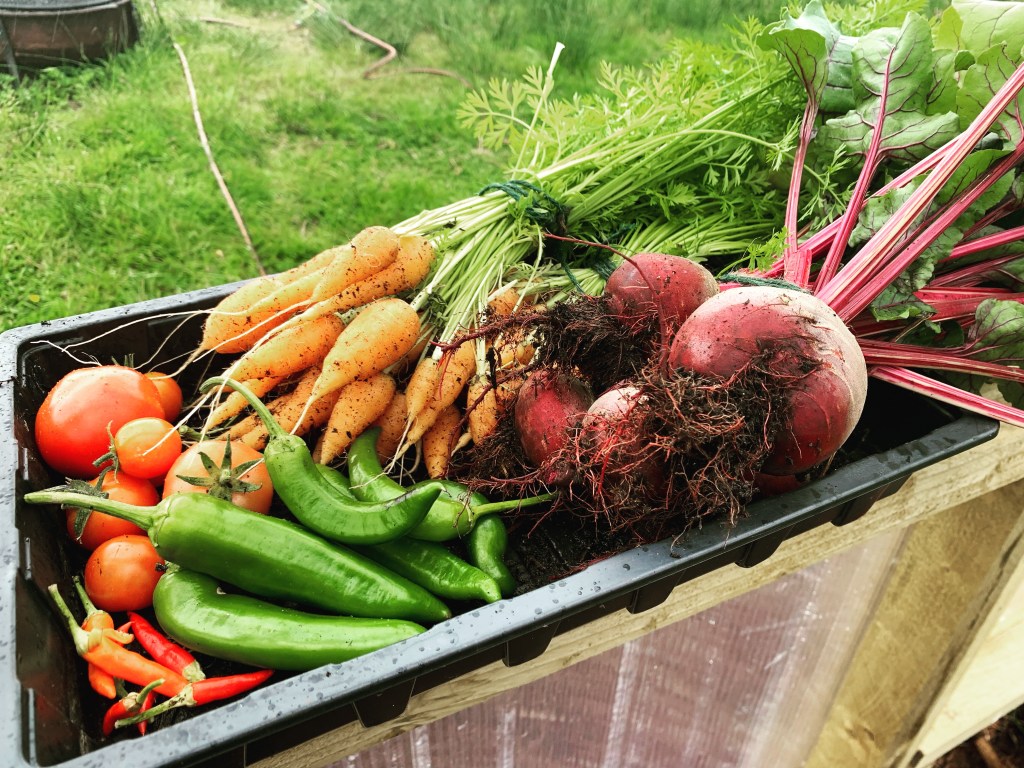
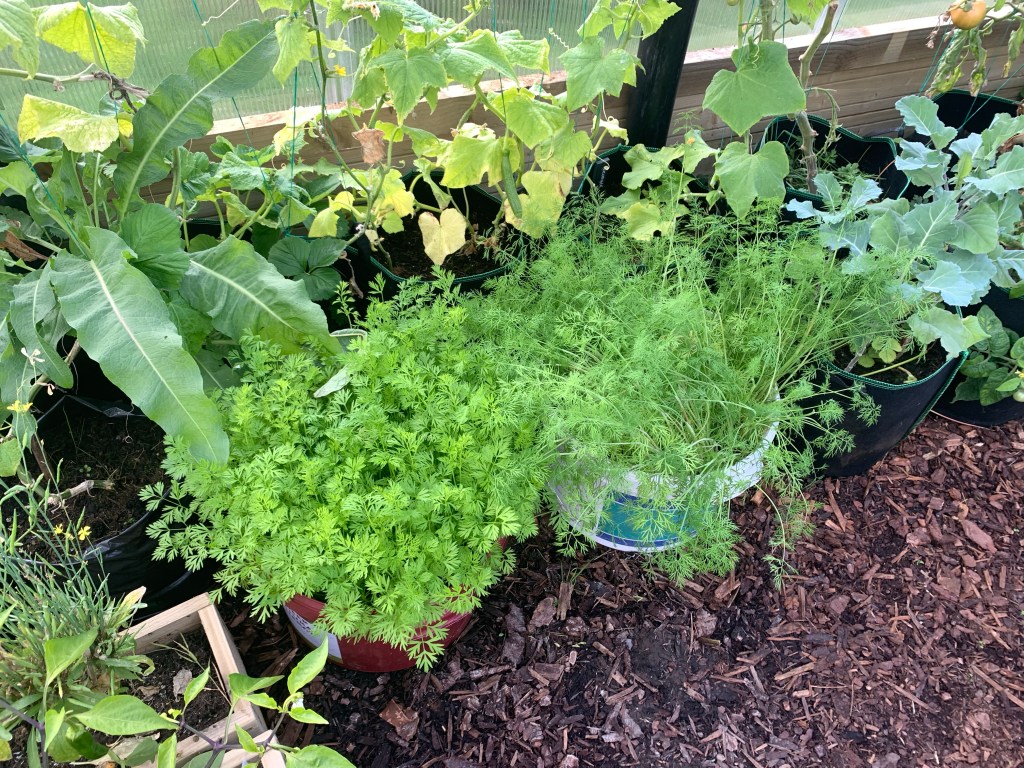
The late August sowings of carrots have done really well. I tried growing a few tubs of Real Seeds French heritage carrots to see what would thrive. They’ve all grown well, but our favourite is a variety called d’Esigny which is a small, blunt tipped carrot with an incredible sweetness of flavour.
Yesterdays harvest with D’Esigny carrots
I shall fill tubs with this variety next year so that we have plenty, and succession-sow so that they ripen every few weeks for staggered consumption. I don’t think they’re a storing carrot, but that’s fine by us as they’re so delicious that they wouldn’t last anyway.
Carrots in tubs, dill, kale
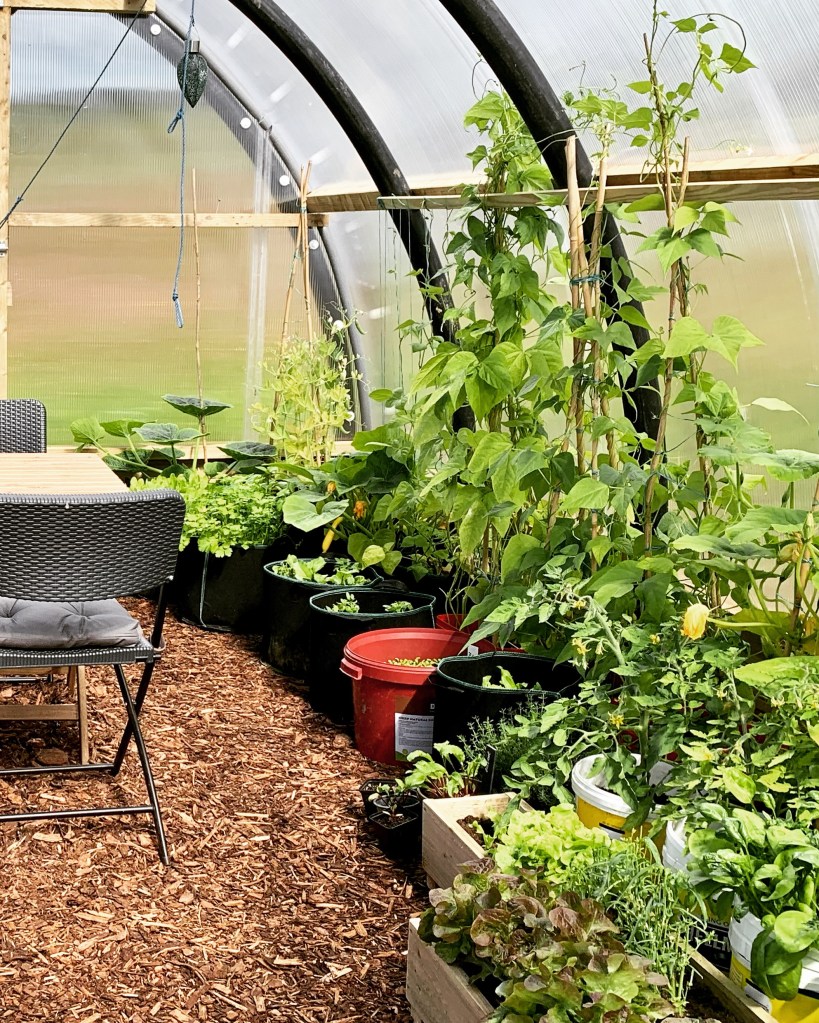
The winter vegetables that have been planted up in the polycrub are purple sprouting broccoli, kale, winter lettuce, pak choi, tatsoi, rocket, carrots, beetroot, parsley, coriander and dill (not sure that dill will make it through winter). Let’s see what survives!
The nights are drawing in now, with a nip in the air and the fire in the caravan going on most evenings to keep the temperature comfortable. I wrap up in a blanket to watch films in the evening as the temperature drops. The electric blanket has gone back onto the bed.
The nights are properly dark again – which seems so strange after a summer of light. It’s awe-inspiring to look up and see the stars once again in clear, inky black skies. The clarity here with no light pollution is remarkable.
July is underway and with it comes the first of the proper harvests from the croft.
The polycrub really has been a game changer and we’ve managed to grow cucumbers and lettuce enough for all of our salads and more to spare for neighbours and friends. This in combination with the produce from the raised beds has meant a wide variety of foods can be grown throughout an extended season.
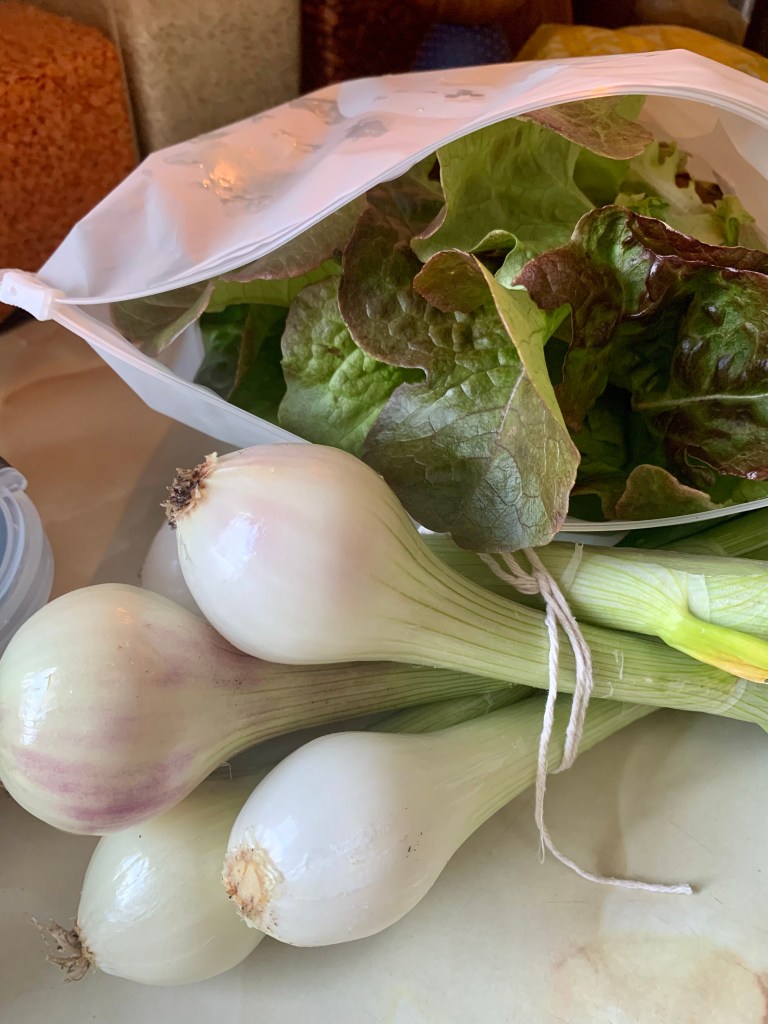
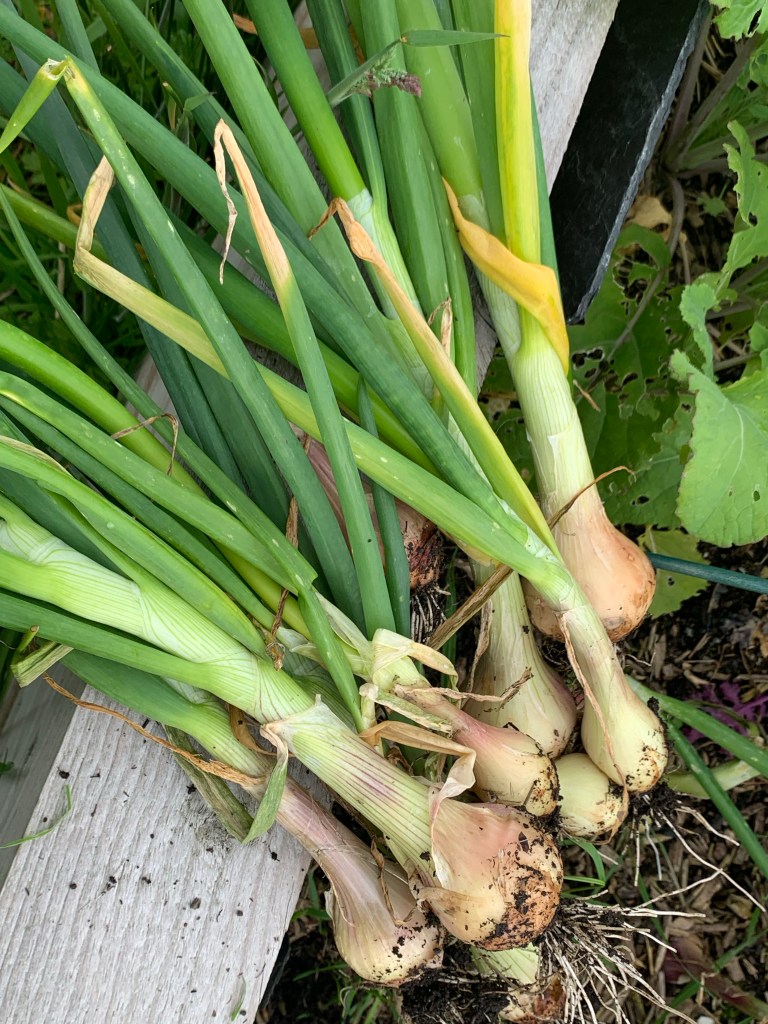
Lettuce and young onions
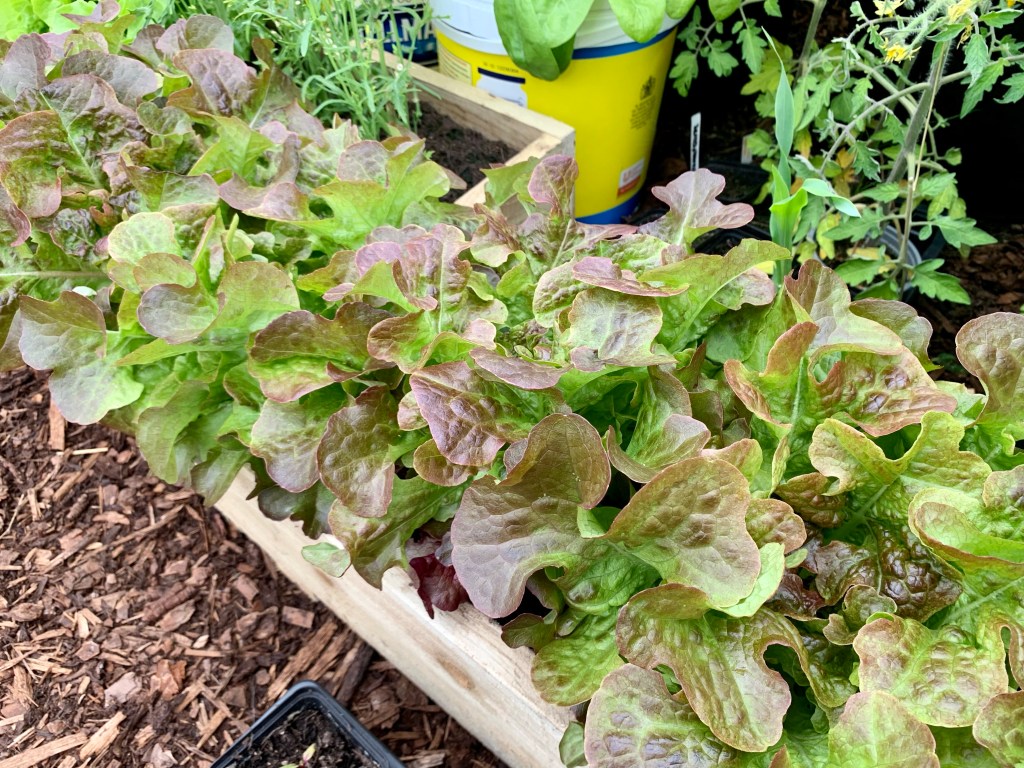
The most successful lettuce has been a butterhead, which we’ve been cropping as a cut and come again lettuce. We’re also growing romaine. All the mizunas and rocket grew well initially, but then bolted within weeks and became straggly. I don’t like eating the mustards and mizuna because of the spiky texture of their leaves so I won’t bother with these next year, and will just plant more lettuce.
Butterhead lettuce
The onions were supposed to be red onion varieties, but aren’t more than vaguely pink. They sent up flower shoots so most of them have been lifted before they soften.
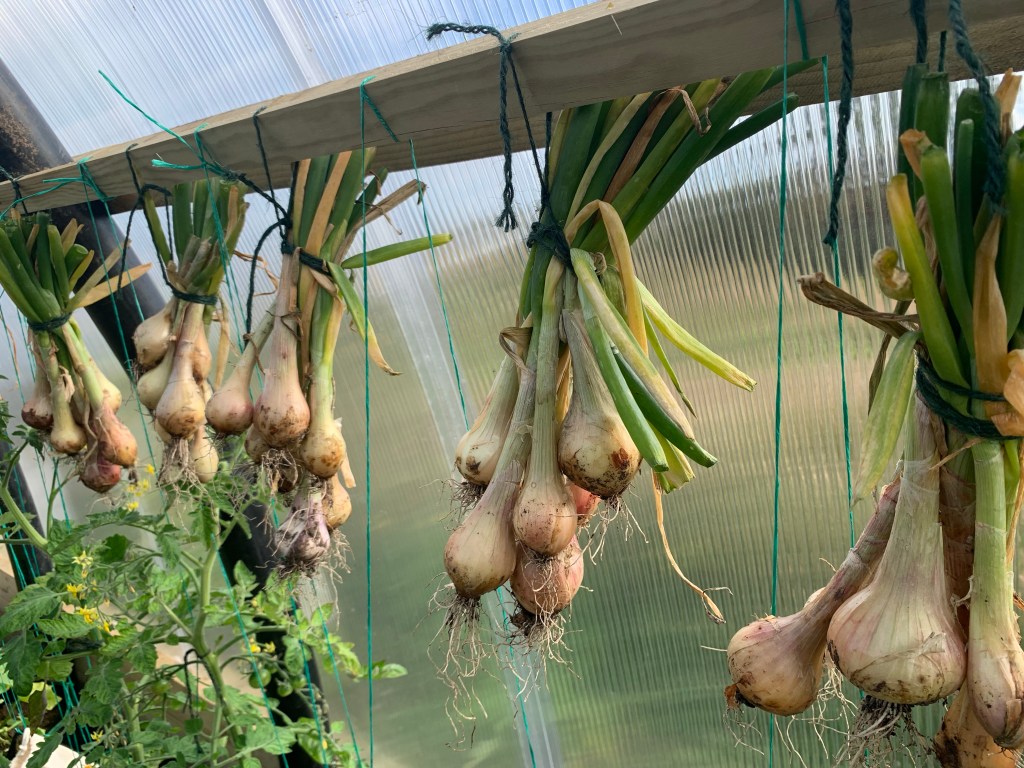
They’re small, but sweet. We’re using them in salads and cooking now and I have them drying in bunches ready for use later in the season.
Drying onions
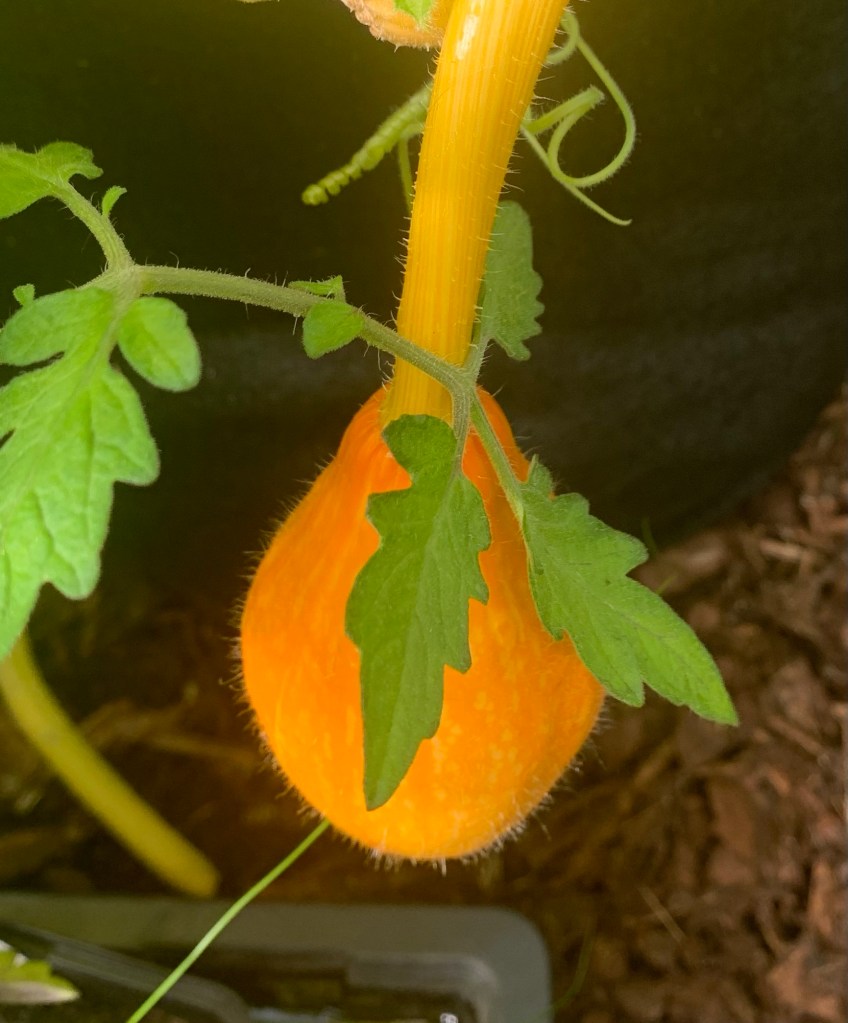
The red kuri squash has a few young fruits on it, which I’m very excited about. Early days, but I’m hopeful that we’ll have a few to harvest in late summer. The French squash hasn’t shown any sign of fruiting yet.
Baby squash hiding behind a tomato leaf
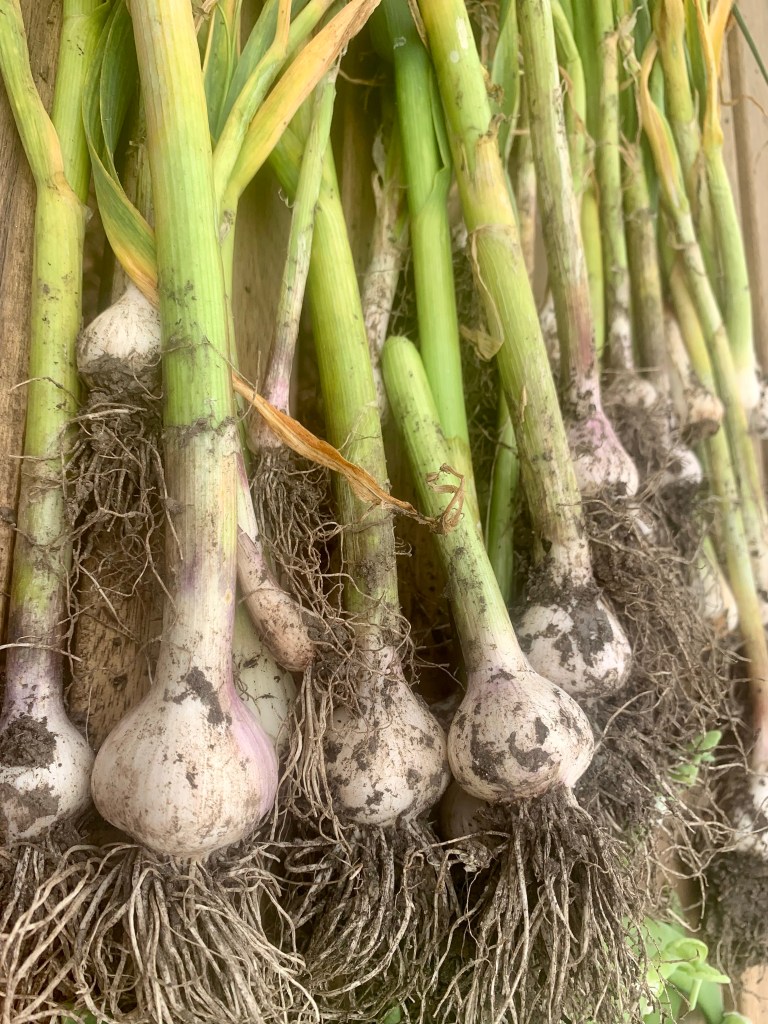
The garlic was a bit of a disappointment. Sown last October I had high hopes for bigger heads this year, but they’re still small. I’ll use them in stews and trays of roasted vegetables, so despite their lack of size they won’t be wasted.
Wimpy garlic
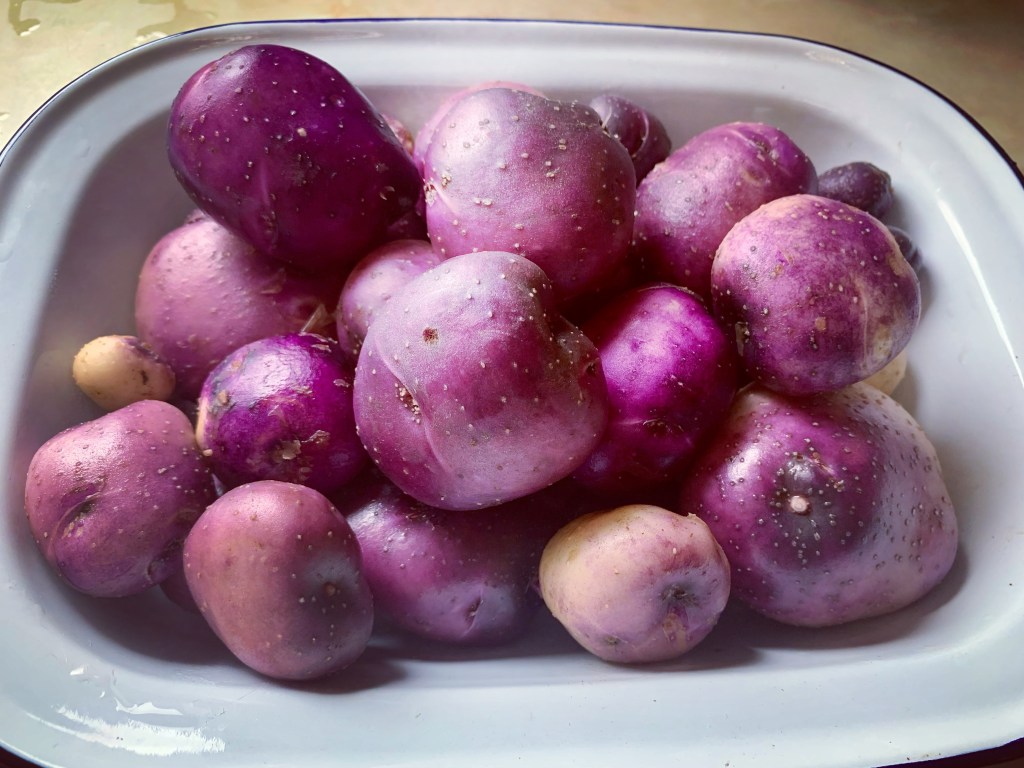
The potatoes are also much slower than last year. We’ve just harvested some Edzell Blue and Casablanca varieties. Great taste, but not hugely prolific. We’ll hold off for a while for the main crop variety.
Edzell Blue potatoes
The kale is growing well after the deer ate all of my perennial kales from the beds last winter. I grew more Uncle Bert’s kale and red Russian kale from seed and it’s coming up nicely. I’ve also sown purple sprouting broccoli into the beds recently, so between them that should give us a reasonable winter crop.
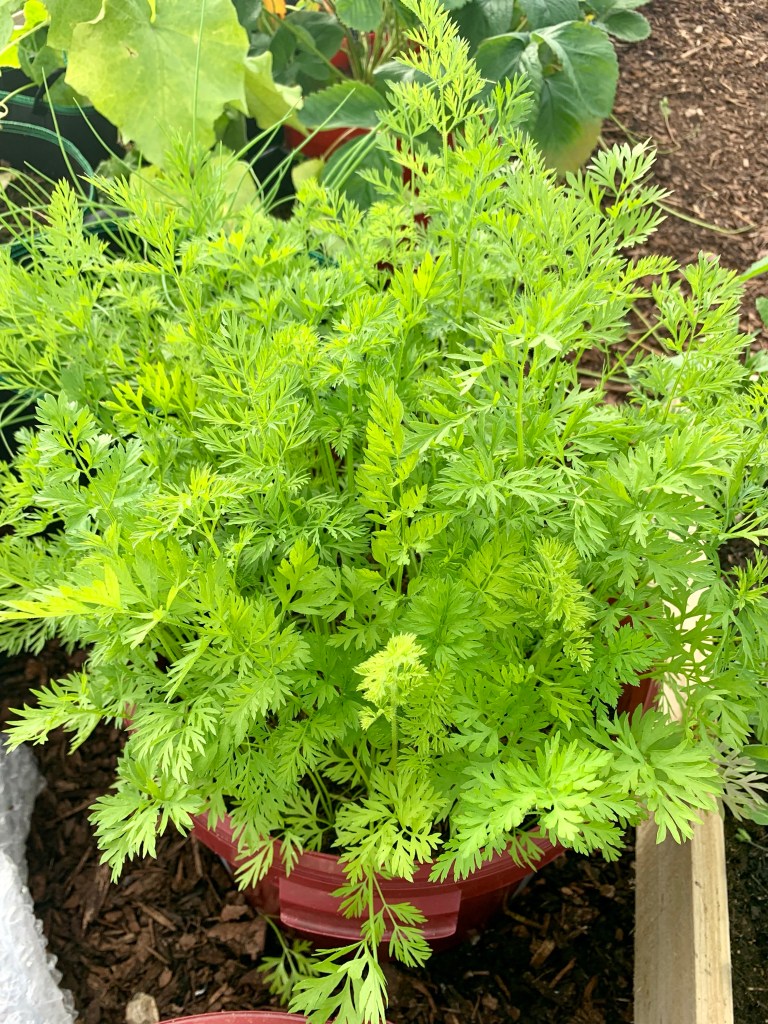
The carrots were grown in large seed lick tubs this year as an experiment. Three varieties, all French heritage types, growing well, albeit slowly. The first of these should be ready in a few weeks time.
Carrots
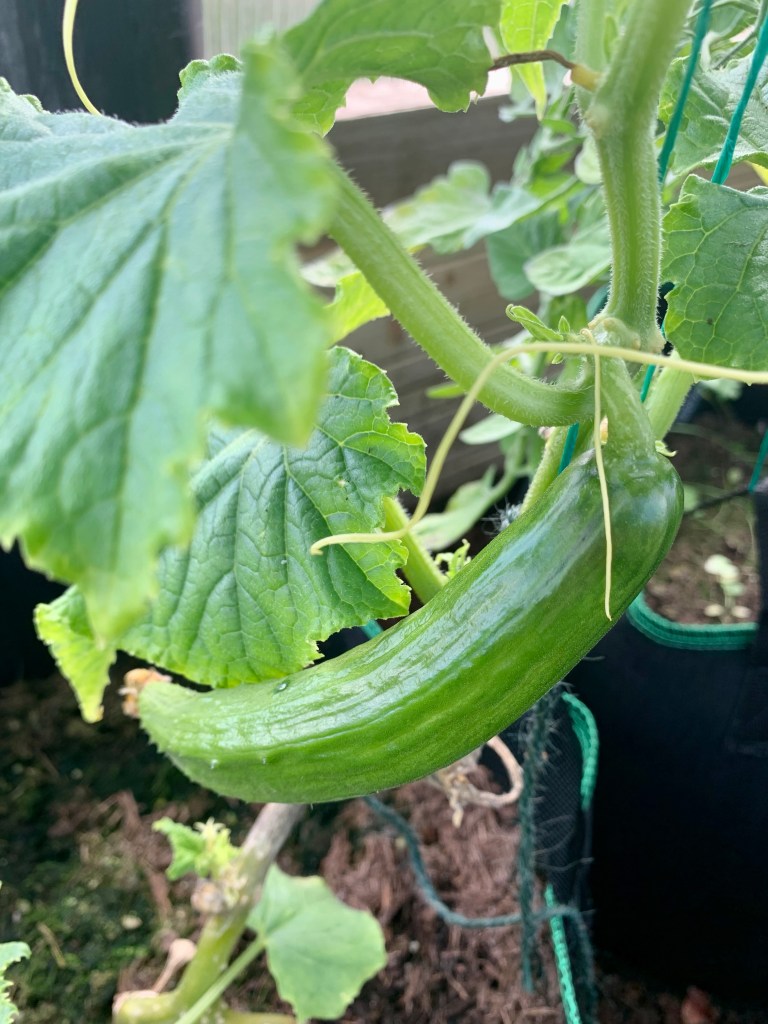
The cucumbers had a very faltering start due to the cold temperatures of late spring. A number rotted and wilted beyond salvation, but the three plants that did survive are fruiting well and have produced about six cucumbers ready for eating so far. There’s no trace of bitterness to their taste either, which is great.
Baby cucumber
The tomatoes are starting to set fruit, again later than most due to our cold, late start. It will be interesting to see whether we can get them to ripen in time. The big Russian bush varieties are pruned and tall with not much evidence of fruit yet. The dwarf bushy varieties, which don’t get pruned, are happily fruiting away with no fuss.
Dwarf tomato plants doing their thing
The courgettes – I only planted two plants so that we weren’t overrun if they grew – have started fruiting, although the fruit is yellow rather than green, which is a total surprise. We’ve already had a handful of courgettes from them, and looking at the flowers there will be many more to come.
The beans have struggled. The borlotti beans are doing the best out of all the varieties and are starting to flower now, so I’m hopeful for a few fresh beans from them.
The corn is about four feet heigh although no sign of flowers or fruits yet.
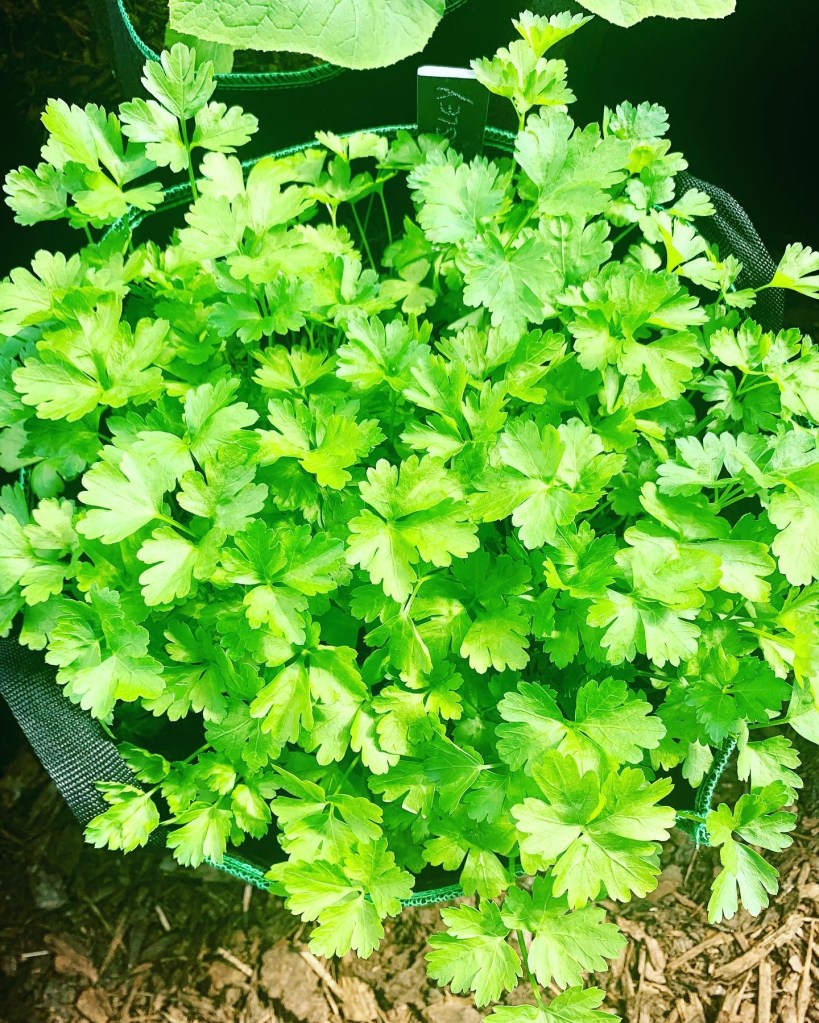
The herbs have gone mad – the tubs of parsley and coriander have gone crazy and we’ve been eating them for months, the dill the same and I’ve left some to go to seed for collection. The chives, lemon balm, rosemary, lemon verbena and mint are all growing well.
All in all, I’m happy with our first months of growing with the polycrub so far. It’s hard to believe that it’s only been here since mid April. I’ve learned a lot, and when we set up proper grow beds in there next year I’ll feel confident about what to plant out.
Now to start sowing the winter seeds! The year is turning already.
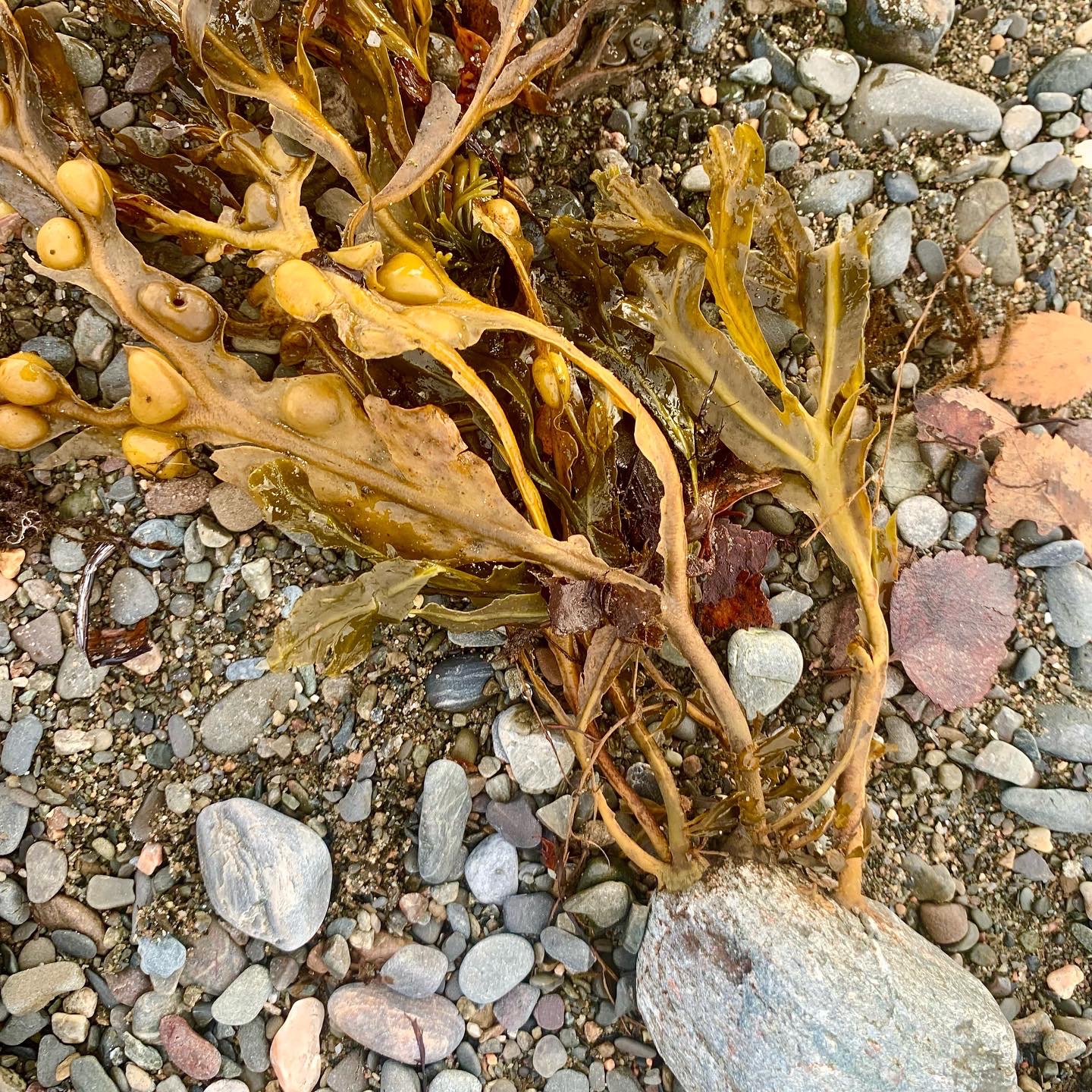
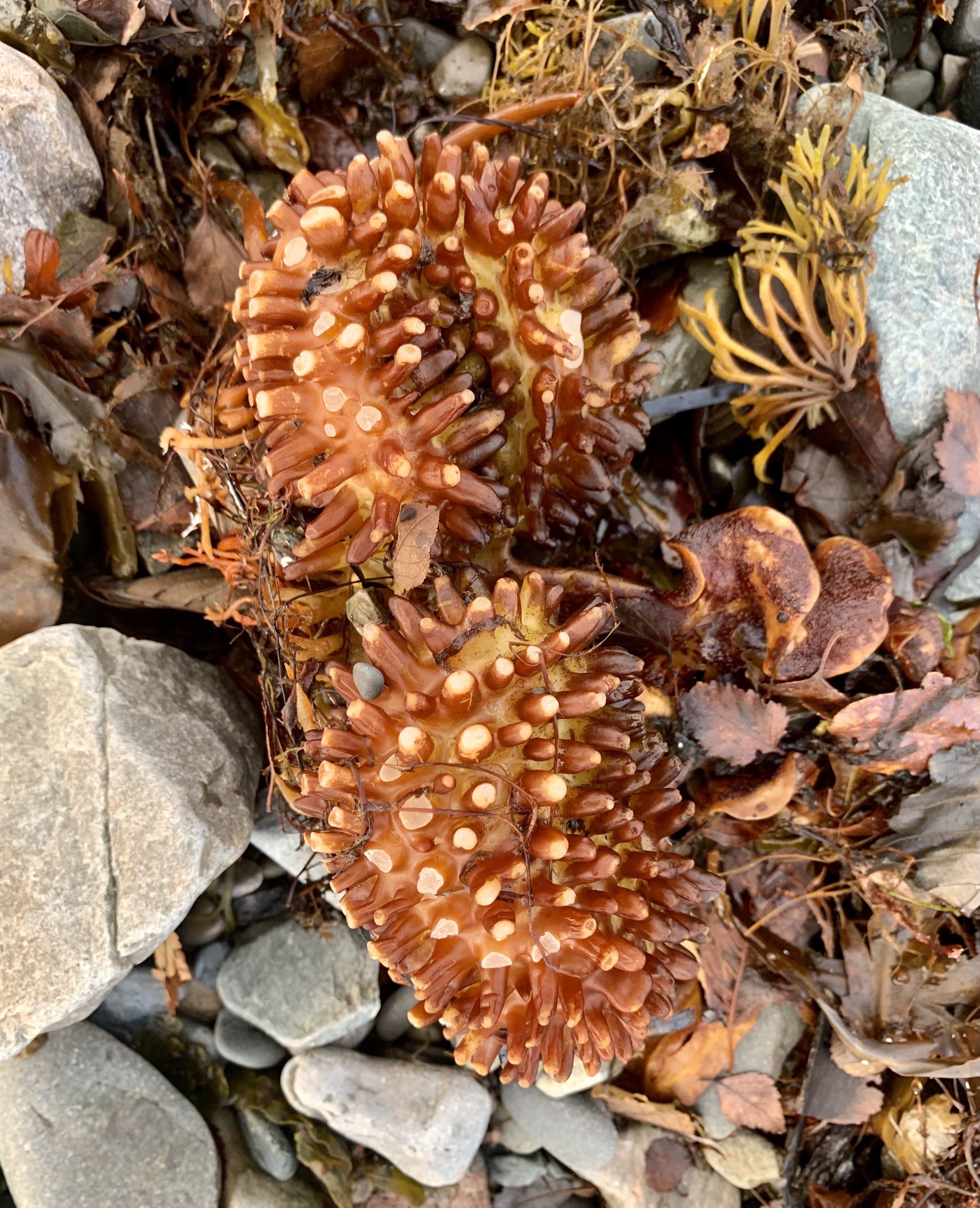
It’s a good source of potassium, nitrogen and magnesium. It also contains trace elements (nutrients that plants require only in small quantities) including iron, manganese, zinc, copper and boron, not always found in other types of fertiliser.
It’s also completely biodegradable and breaks down quickly, perfect for the vegetable beds.
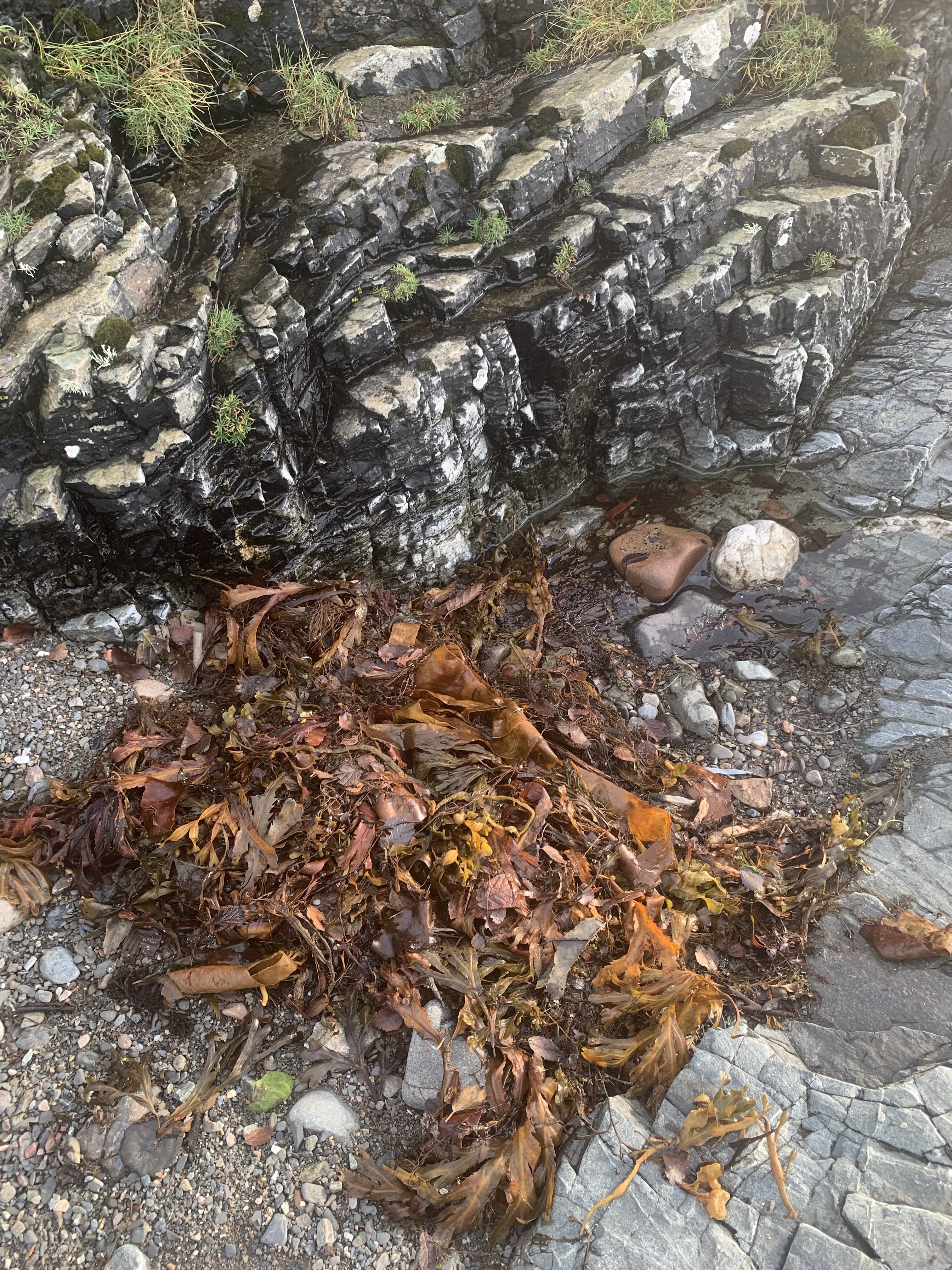
We could see how full of nitrogen the seaweed at the high tide line was – there was a line of nettles growing right out of it!
Seaweed at high tide line, with nettles
We plan to use this precious, free resource in two ways on the croft; as a mulch on our no-dig beds to suppress weeds and fertilise the soil directly, and added to our compost bins to add nutrients to the rotting down mix of green and brown matter.
Yesterday we explored the western side of the peninsula looking for beaches where we could collect, wheelbarrow and load a car trailer with ease. We found two great beaches, both full of seaweed, and both highly accessible.
Tarskavaig beach
We won’t take too much, as the wildlife on beaches rely upon it, but there seems to be plenty for all. Next time we have a storm we’ll bag up a few feed sacks of it from each beach and bring it back to the croft.
There’s something very primal and satisfying about preserving food that you’ve grown yourself. Crazily so. It must be somewhere buried deep in RNA, and it seems to be triggered by the first wisps of autumn or the smell of woodsmoke.
The sweet days of summer are still with us but I can already sense the onset of autumn with my harvests.
Even though there were just a few handfuls of shallots and onions from the croft that could be used it somehow felt important to mark this, our first ever crop, by preserving them.
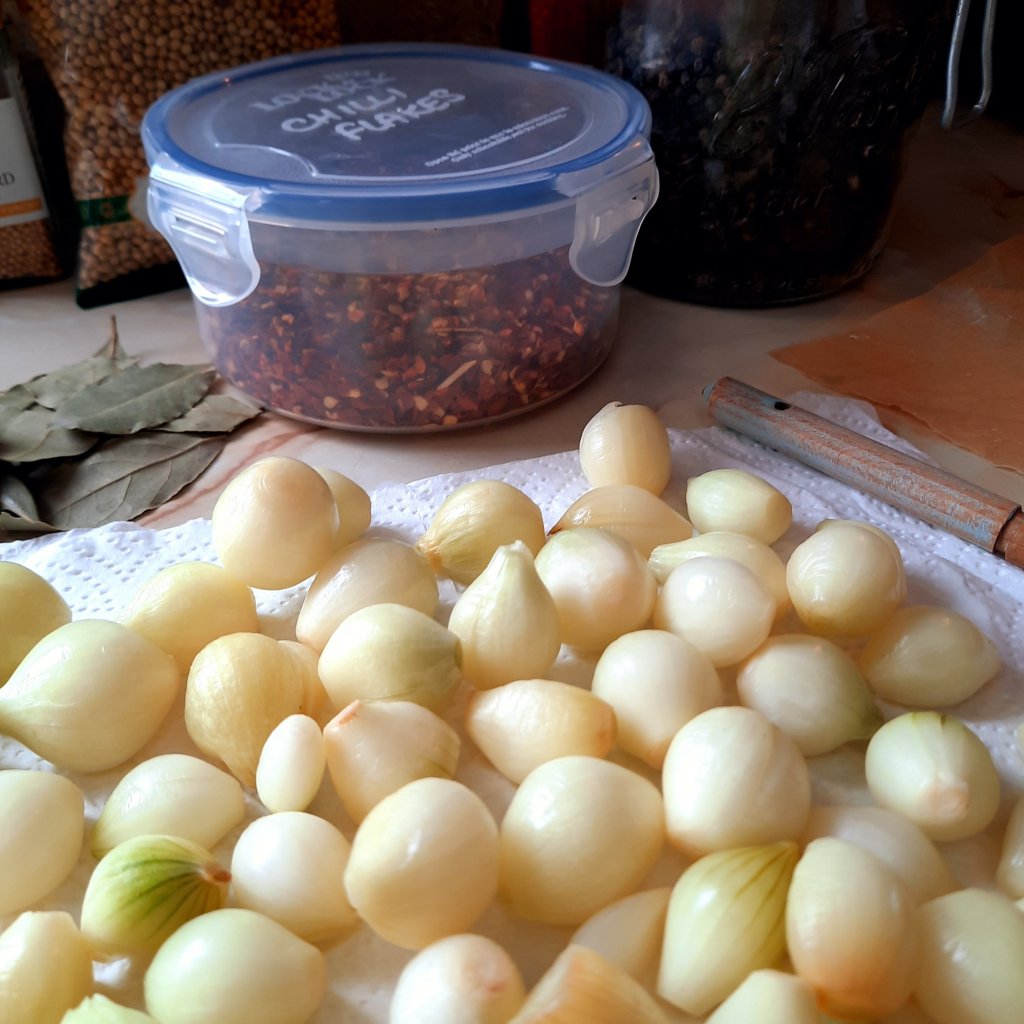
Small Shallots being prepared
I’ve been pickling onions for years, but have never really settled on a recipe that I love. This year, watching the storm roll in across the mountains of the mainland from the comfort of the caravan, I browsed through the few preserving books that I have here and created a blend of spices that I think may work well for us.
Pickling is a bit of a time consuming exercise at times. The onions have to be harvested, dried off, then peeled and trimmed.
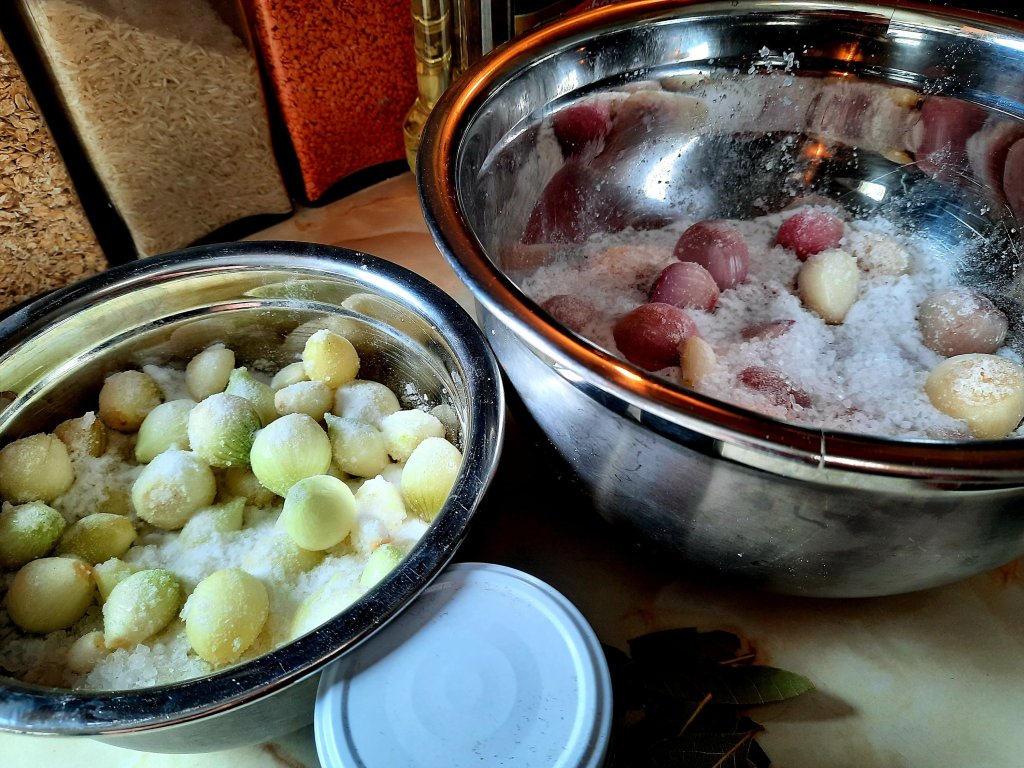
Onions in sea salt overnight
Salting them is supposed to keep them crisp once preserved, so into a bowl with lots of coarse sea salt overnight they went. Nobody wants soggy pickles .
This morning they were rinsed and dried ready for next stage.
Spiced vinegar being prepared
The vinegar that I’ve used is white wine vinegar rather than the usual malt vinegar that seems to be traditional in UK kitchens. It has a 6% acidity count, slightly higher than malt or distilled vinegar. It’s been sweetened with sugar and spiced with black peppercorns, coriander seeds, mustard seeds, chilli flakes and bay leaves.
All my kilner and preserving jars are still in storage so I’ve had to make do with sterilised, recycled jars. They seem to have worked well.
Recycled jars
A kind neighbour has offered me ridge cucumbers to pickle and I’m scheduled to pick them up next week. I’ve kept some dill and dill flowers back ready for this moment…
May you savour the remaining sweet days of summer, and sweet picklin’ to you all.





 Ravencroft Skye