Storms and silence

It’s been a while since my last blog post.

The weeks have rustled into full blown autumn here on the island. The hedgerows are full of berries, the heather is fading, and as I often do at the turn of the season, I’m filled with silence and a degree of sadness.

I don’t know why I feel often feel low as autumn approaches. I’m really not mourning summer, but maybe the combination of house build delays, the prospect of another winter in the caravan -which we hadn’t expected- and being a menopausal woman have all conspired to bring my mood down more than normal at this change of the season.

The storms have started, with two weeks of solid rain and wind lashing the croft. I’ve not wanted to leave the caravan. I’ve cooked, baked, read books and cleaned, but apart from that I’ve really not had the energy to do much and haven’t wanted to see people.

I’m looking forward to the screed arriving at some point over the next few weeks for the floor now that we have completed the underfloor heating pipe installation, connection and testing. We are getting there, just very slowly. Our hopes to be in the house by the end of the year are no longer viable and it’s now looking more like summer next year before it will be ready for us to move in. We will survive.
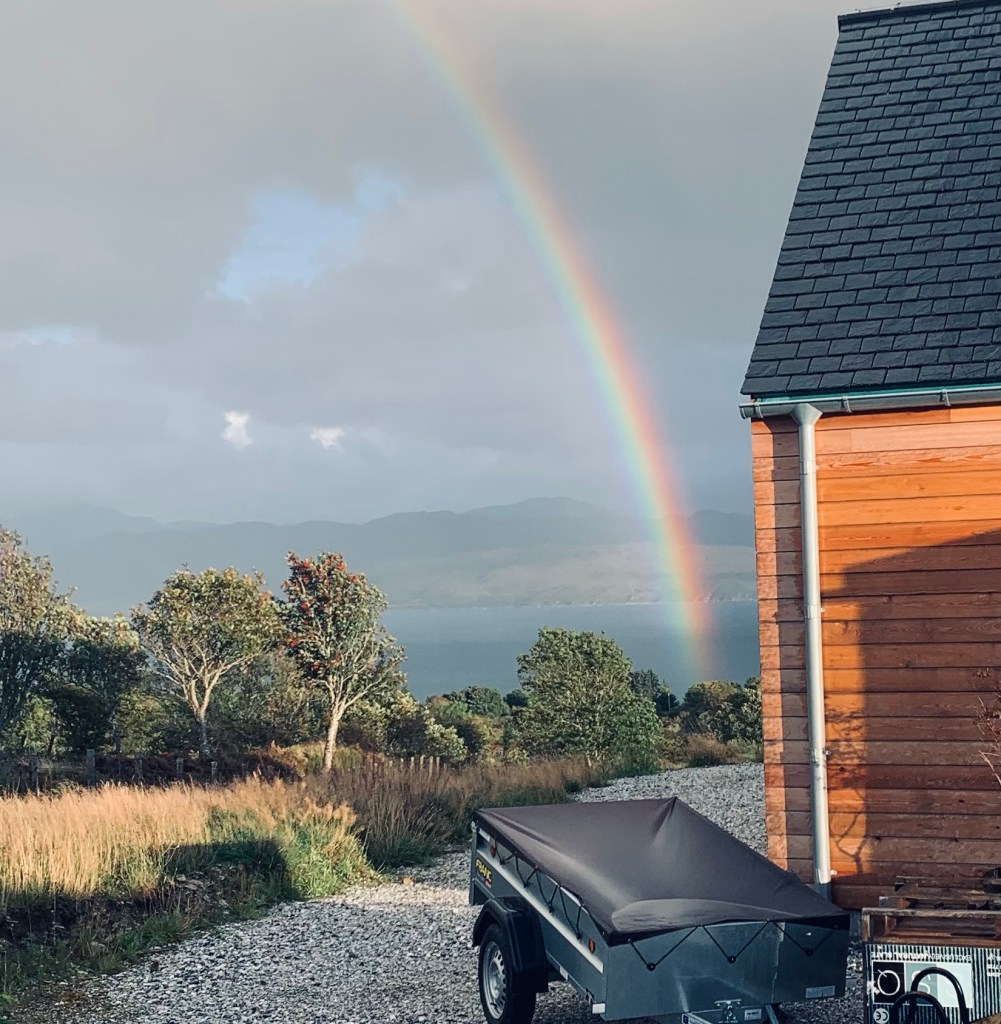
Rainbow over the sound

As with all things, there is often a silver lining. Storms here mean rainbows. Several each day. Small bursts of colour in the washed windows in the grey to remind us that nature and the seasons are full of wonder and magic.

I will try and get out more. Walking is said to be better than Prozac, best friend in France tells me. She has also recommended taking vitamin D and Magnesium.

And there are always pies, which magically lift a mood. Bake more of them.
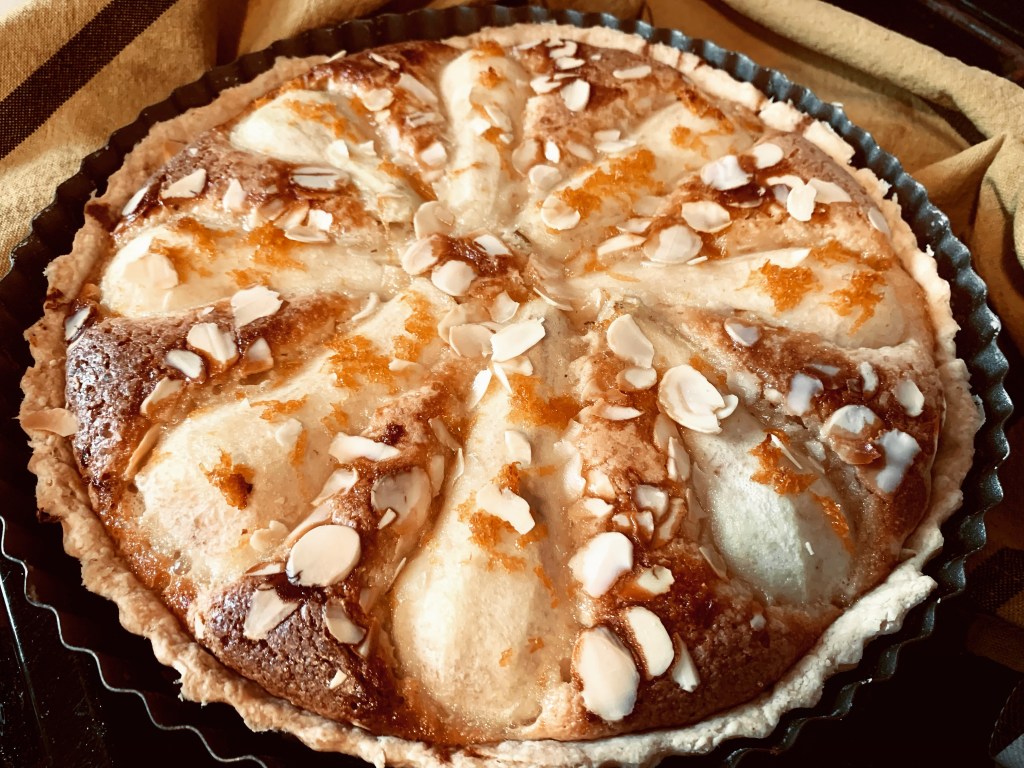
Pear tart with frangipan

Coos on the Croft

It was always going to happen, I guess.

The stock fences surrounding the croft are ancient and rickety at best. They’re on the list for replacement, but we haven’t got around to them yet.

I was making the bed one morning this week in the caravan when I looked up and saw one of Angus’s cows looking back at me from a few metres away. Chewing away contentedly. From by the vegetable beds. On the croft. Not on the hill where they should have been.

It suddenly computed.

The cows were on the croft. They’d gotten in somehow. There were several highland cows and their calves contentedly munching away on the long grass around the caravan.

Images from Hectorshighlandcoos

I struggled on with my wellies and ran outside. They were grazing happily, obviously enjoying the lush pasture of the long grass after the rather more thin pickings of the common grazings on the hill, where the grass is well cropped by sheep and interspersed with clumps of heather.

Husband was working on the house but came quickly, equally surprised. Luckily he spotted Angus and his son on the hillside, and between them they managed to herd the cows towards the gate at the top of the croft and eventually back onto the common grazings.

Highland cows are lovely, shaggy, gentle beasts, despite the horns. Bizarrely, they didn’t touch the vegetables at all, happy with eating the grass.

If we had better fences I’d be happy to have them on the croft occasionally to crop the grass down, but at the moment they’d likely escape onto the road and cause chaos. Angus’s cows are experienced escape artists and well known for bringing the local traffic to a standstill.

First job this week – find some help to repair the fence…

A profusion of mackerel

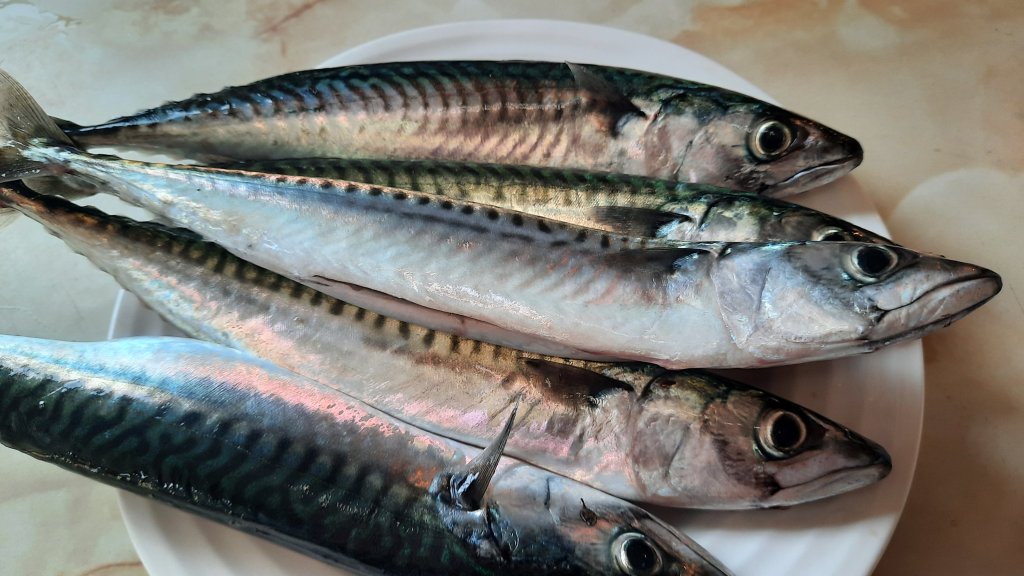
Friends from the village gave us a bag of freshly caught mackerel from Armadale Bay yesterday.

They arrived, shining, still smelling of the sea. I always think they’re such lovely looking fish.

Husband heroically gutted them all in the tiny caravan kitchen sink and we decided to cook them over the barbecue whilst they were at their best.

Mackerel

There is nothing quite like freshly chargrilled mackerel. They were moist, sweet and slightly smoky from the fire, their skins blackened and crispy. We ate them whilst the sun went down with good bread, dill-pickled cucumber and some fresh salad.

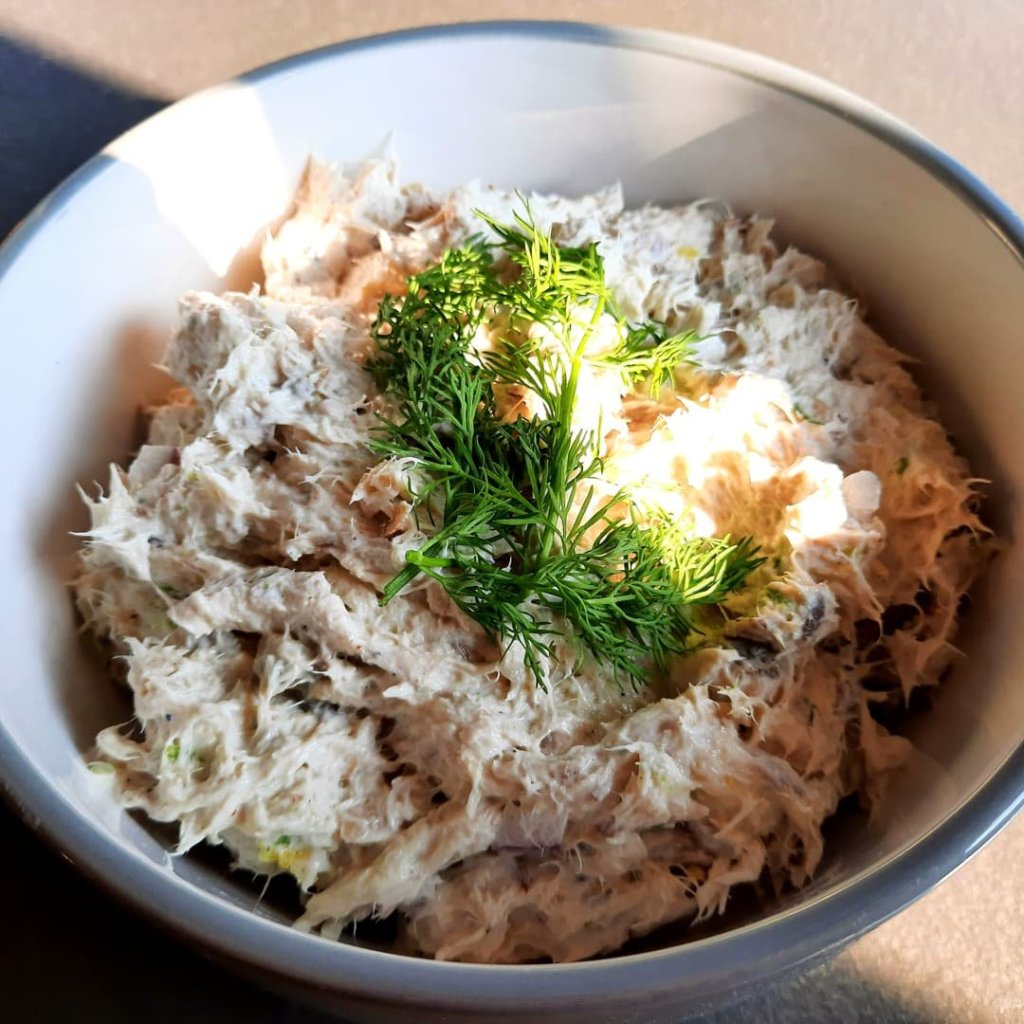
There was enough left over to make mackerel pate this morning. The meat was flaked off into a bowl with cream cheese, lemon juice and zest, a lime, sea salt and cracked black pepper.

Mackerel pate

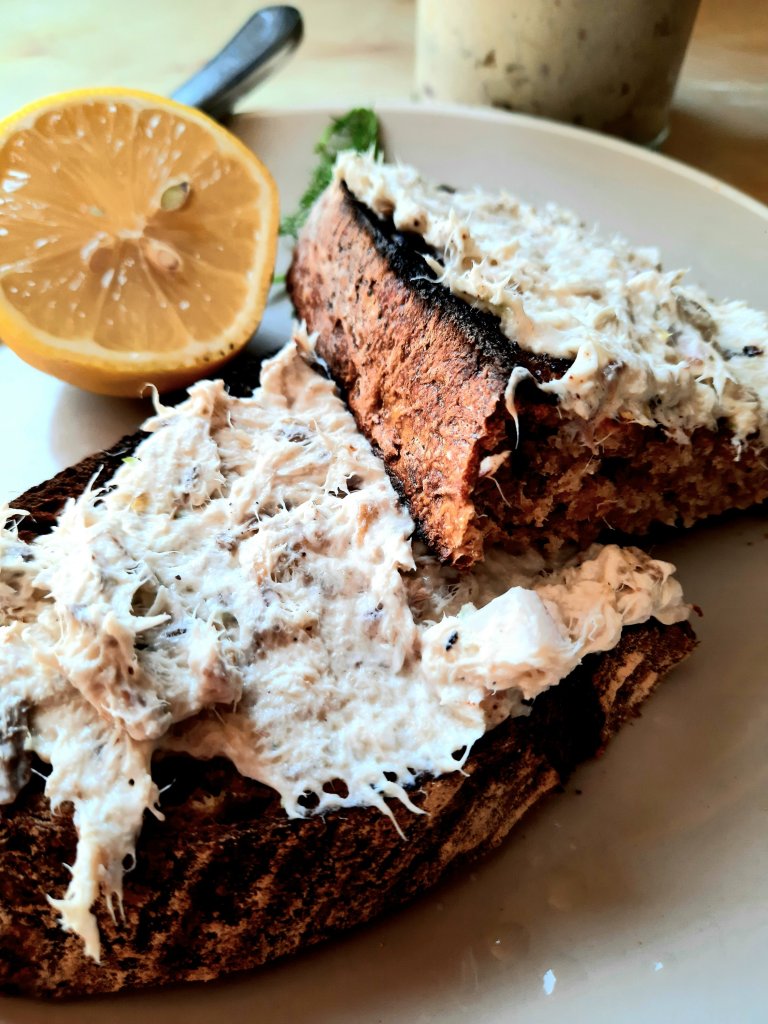
A pot has gone into the fridge to eat later with sourdough toast, and a bowl has been wrapped as a thankyou gift for the neighbours who brought us the fish.

Later on toasted sourdough

I was just musing that the last time we ate mackerel pate was an expensive pot bought from a London deli. And here we are a year on, eating the same, but probably fresher and more flavoursome than anything bought from a shop.

Eaten with thanks as part of our new life here in Scotland.

Carrots at last

I’ve been watching the posts of successful gardeners up here with envious eyes as they cropped fistfuls of carrots from their vegetable plots.

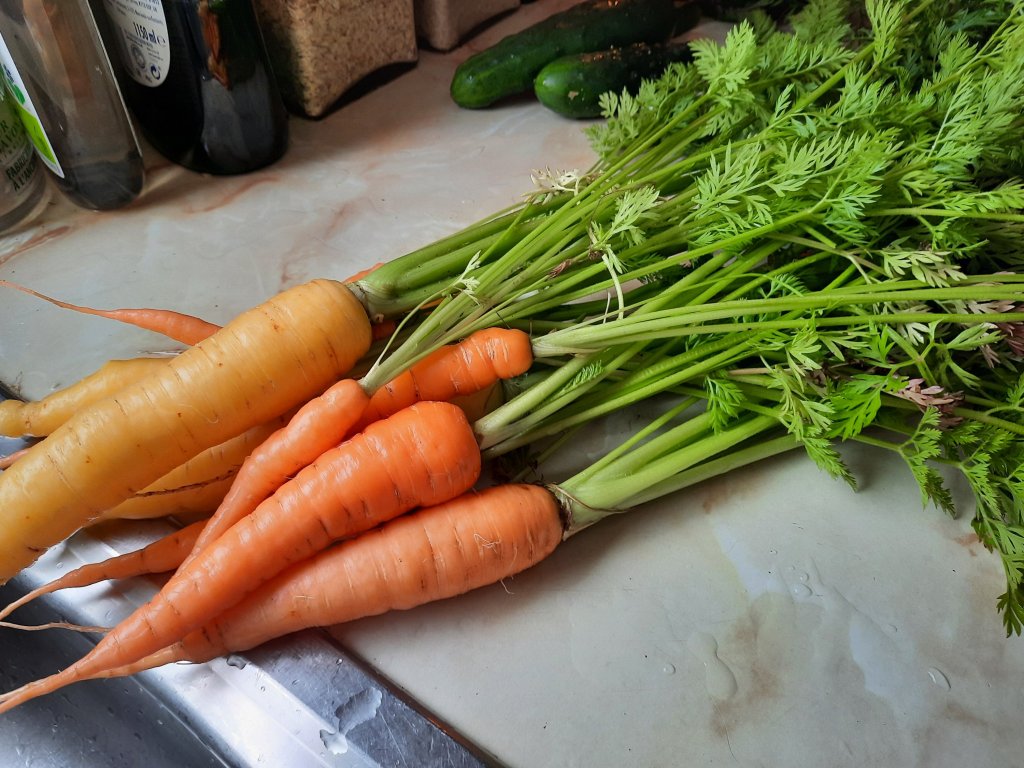
Carrots from the croft beds

I have been pulling the odd carrot here and there from my raised bed over the last month to see if there was anything much underneath the profusion of feathery green. I’ve prodded and pulled. To date, all to no avail. Up until this week all I’d found were a few pencil thin offerings.

Checking the beds a few days ago I noticed that some of the carrots were going to seed! Horrors. How could they go to seed on me without delivering as promised?

Armed with my fork I resolved to find edible carrots or else dig them all up and return the space to something more productive.

I’d sown two types from Real Seeds in the spring – the gloriously named Manchester Table carrot and the equally exotic yellow French heritage variety, Jaune D’obtuse. Surely one of them should have produced something by now.

I knew that I hadn’t thinned them very well. When the time came in early summer, something in me just baulked at pulling out young, healthy plants, and much as I understood that it was needed, I also suspected that my half-hearted attempts at thinning hadn’t been nearly rigorous enough. As such I was expecting skinny, weedy specimens at best.

My delight was complete when I delved into the forest of carrot rows and pulled up some good sized carrots.

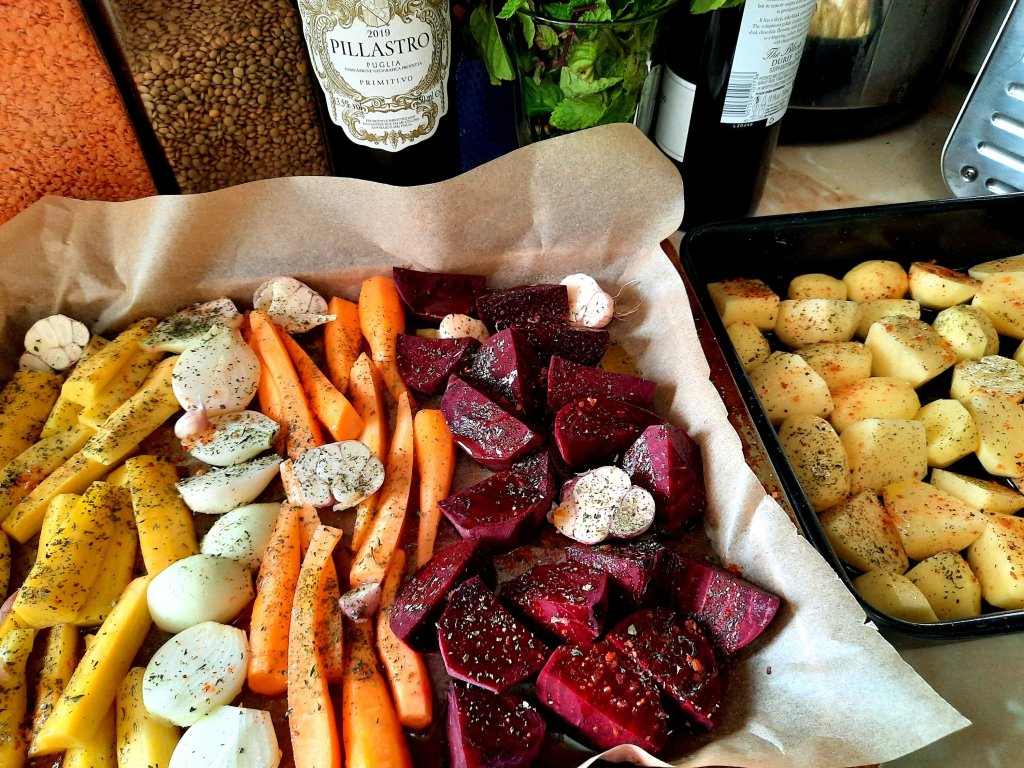
Croft vegetables ready for roasting

We roasted the first of these today with beets, potatoes, onions and garlic, all grown by us. They were delicious.

It’s just a carrot. But it’s my very first homegrown one, and it tasted all the better for that.

Potato Musings

We planted early seed potatoes in March in one of the hugelkultur beds on the croft as part of our “what will grow here” experiment. We’d managed to get the seed potatoes from a fellow crofter, two varieties that he’d recommended called Orla and Nicola, which I promptly mixed up… 🙄

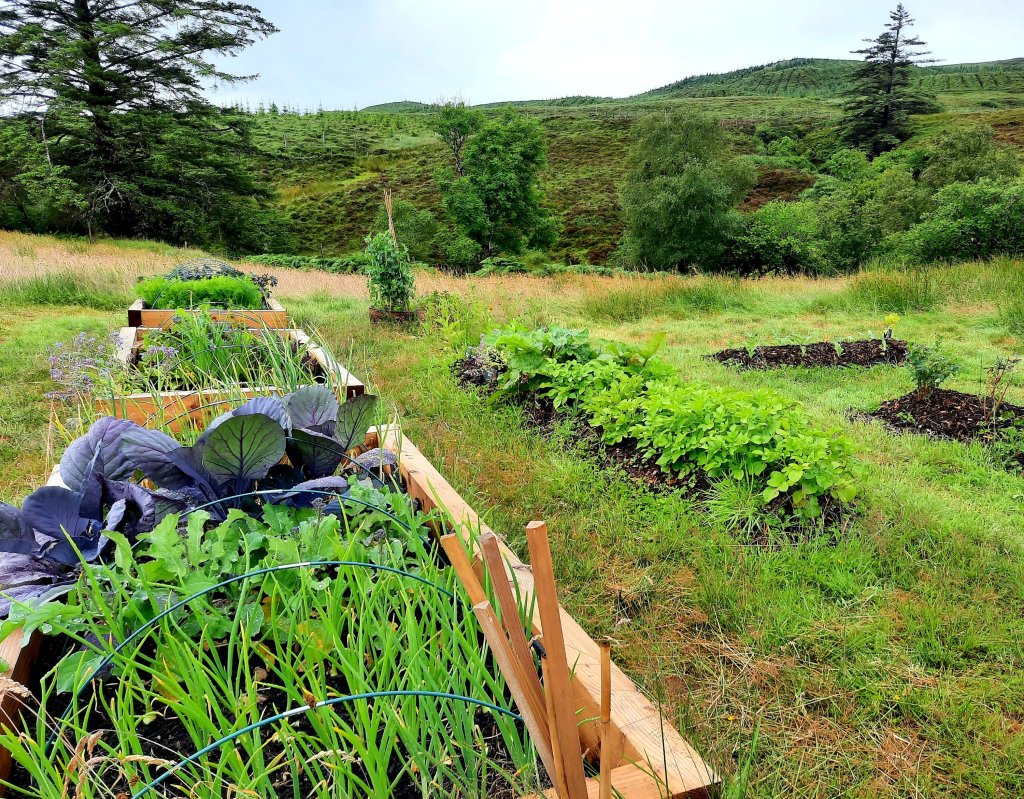
Potatoes in the bed on the right

There were several times that I thought absolutely nothing would come of them.

I watched as the months rolled around and they grew, but very, very slowly. It was a very cold start to the season and I wondered if I’d stunted them completely, never to recover. They didn’t flower, and they didn’t seem to get any bigger.

As we moved into August and we started harvesting lettuces, onions, kale and garlic, the green tops of the potato plants looked no bigger than they had in April, and I started to feel that the experiment had failed.

Husband dug them up on a misty, midgy morning this weekend. I’d decided that we really needed the space for something else to have its chance, and my expectations were low, if zero, to be honest.

When he came in with a couple of bucketfuls of good potatoes I was pleasantly surprised.

It wasn’t a massive haul compared to the harvest that we’d got from the red-skinned potatoes, but it was more than I’d imagined that they’d provide.

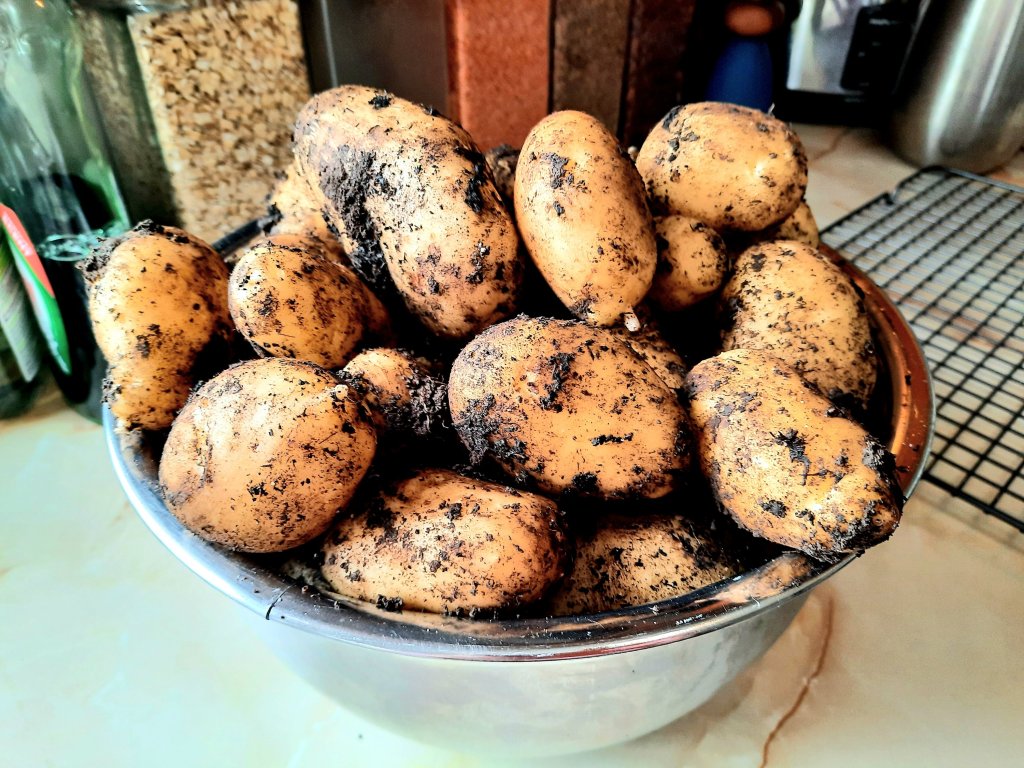
Either Orla or Nicola..

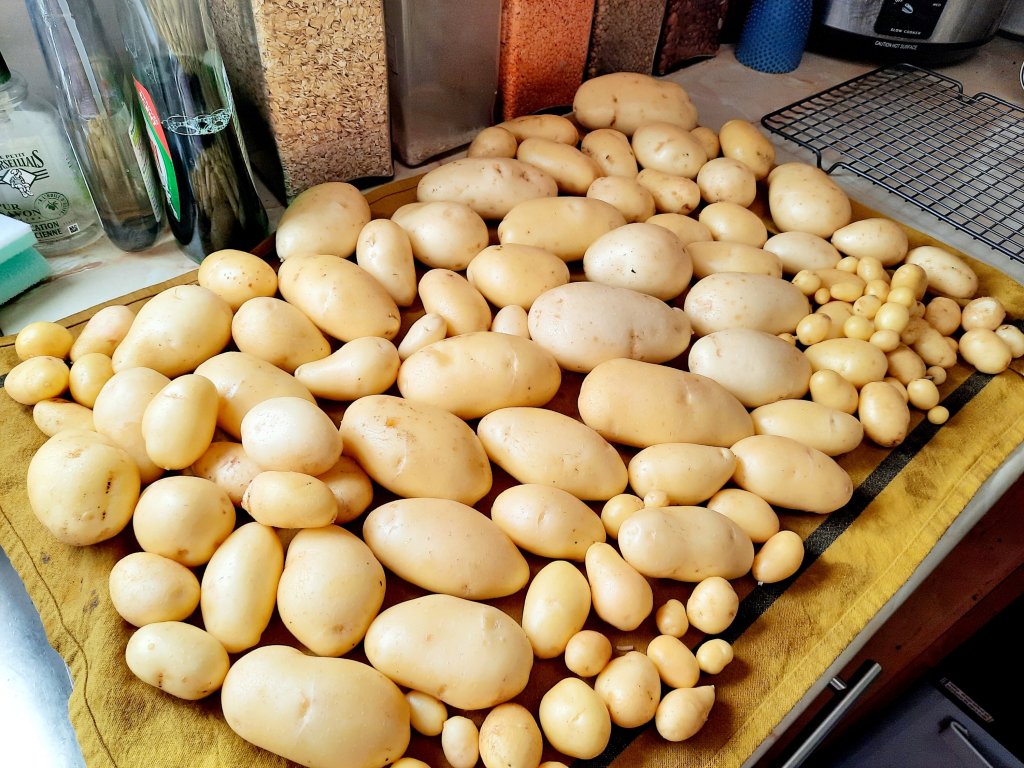
I washed them off and checked them over. Very little slug damage, and only a few green ones, and that because I hadn’t earthed them up. It was a decent crop of good, solid unblemished potatoes.

Washed and drying

We will store these in hessian bags in the caravan and eat them over the coming months.

Considering our experience with the reds that we harvested last month and these varieties, I think that potatoes do grow well here, despite the cold springs, so I’m planning to grow a full raised bed of them next year.

They’re such hassle-free plants to grow, and it’s true what they say, that the flavour of home grown potatoes is far superior to shop bought ones.

Lovely little nuggets of potato deliciousness. Nature keeps surprising me.

Picklification Complete

A fellow island crofter generously responded to my plea for small cucumbers to pickle and donated a bag of them.

Salting peacefully awaiting their vinegar bath

Freshly picked from their polytunnel, small and crunchy, there was a definite frisson of excitement as I clutched the bag with barely concealed anticipation and drove home to check the vinegar situation.

There’s something addictive about pickling. Gherkins, or dill pickles, are my very favourite pickle of all time, and something I find hard to buy in the shops locally. This timely donation was therefore all the more meaningful and I was determined to do them justice.

Over the last few days I’ve tenderly washed and patted dry, salted, rinsed and patted dry again these little nuggets of joy. A newborn could not have been more cosseted.

Oh yes

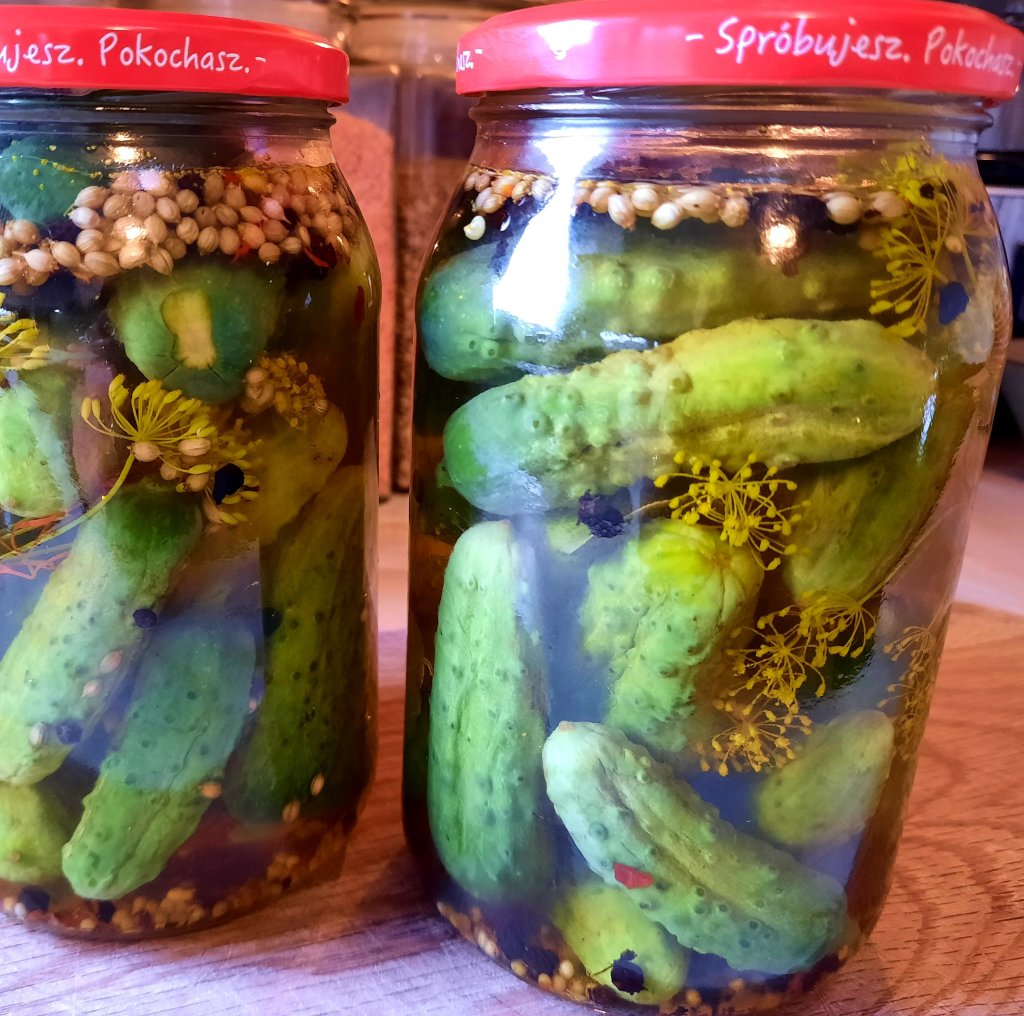
I’ve sterilised jars, prepared my vinegar and crooned over the additions like an alchemist. Enough peppercorns? Too much mustard seed? A few more chilli flakes perhaps? I even picked the last of my dill flowers especially a few days ago, before the rain flattened everything, to add to the jars.

And so they are done. Behold the magnificence of these island grown pickles.

Picklification is now complete.

Sweet picklin’

There’s something very primal and satisfying about preserving food that you’ve grown yourself. Crazily so. It must be somewhere buried deep in RNA, and it seems to be triggered by the first wisps of autumn or the smell of woodsmoke.

The sweet days of summer are still with us but I can already sense the onset of autumn with my harvests.

Even though there were just a few handfuls of shallots and onions from the croft that could be used it somehow felt important to mark this, our first ever crop, by preserving them.

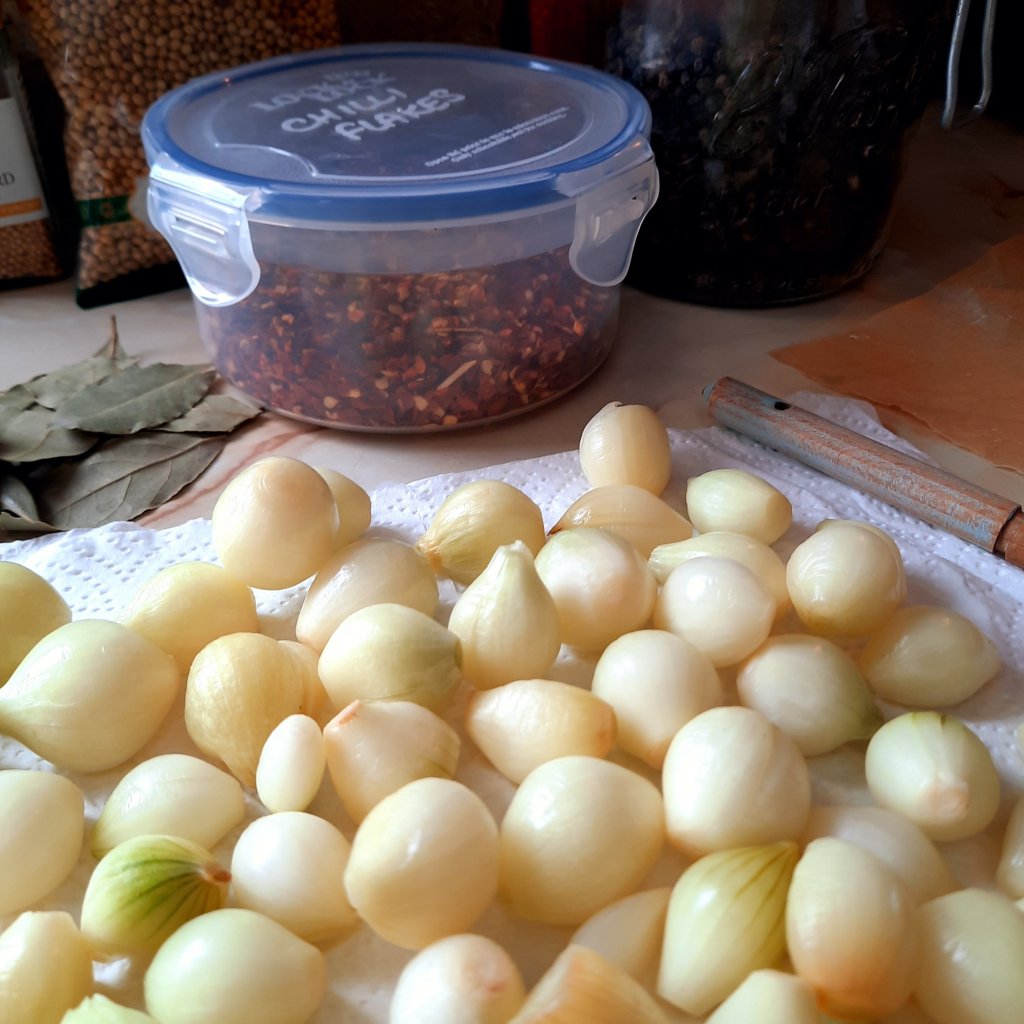
Small Shallots being prepared

I’ve been pickling onions for years, but have never really settled on a recipe that I love. This year, watching the storm roll in across the mountains of the mainland from the comfort of the caravan, I browsed through the few preserving books that I have here and created a blend of spices that I think may work well for us.

Pickling is a bit of a time consuming exercise at times. The onions have to be harvested, dried off, then peeled and trimmed.

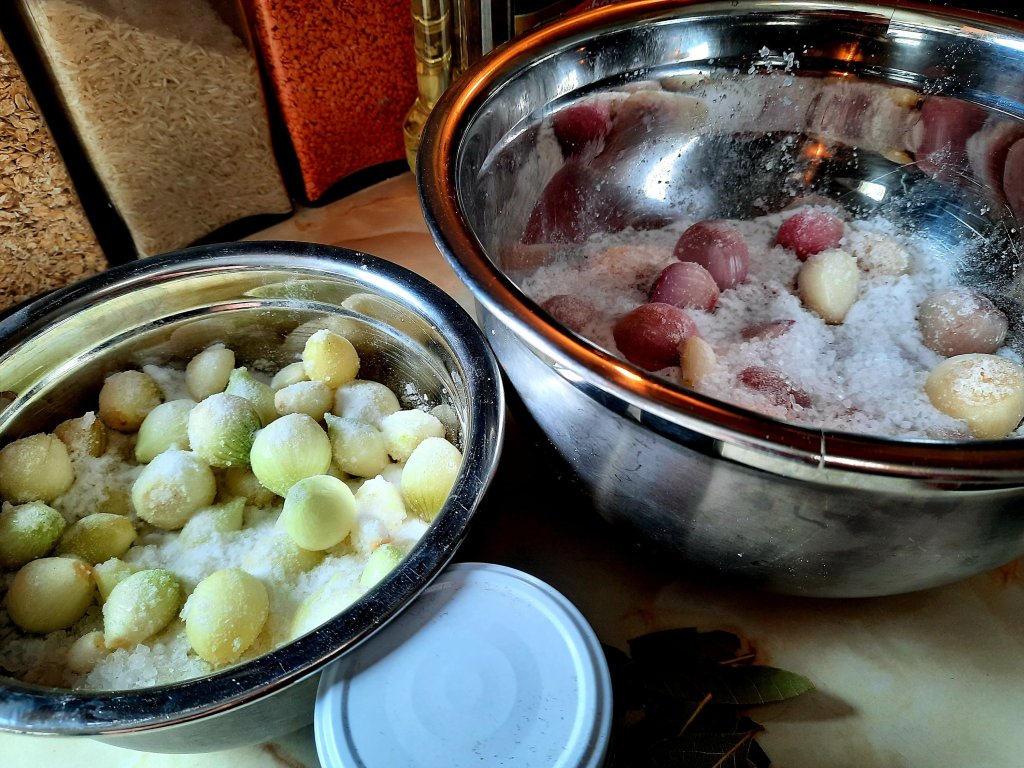
Onions in sea salt overnight

Salting them is supposed to keep them crisp once preserved, so into a bowl with lots of coarse sea salt overnight they went. Nobody wants soggy pickles .

This morning they were rinsed and dried ready for next stage.

Spiced vinegar being prepared

The vinegar that I’ve used is white wine vinegar rather than the usual malt vinegar that seems to be traditional in UK kitchens. It has a 6% acidity count, slightly higher than malt or distilled vinegar. It’s been sweetened with sugar and spiced with black peppercorns, coriander seeds, mustard seeds, chilli flakes and bay leaves.

All my kilner and preserving jars are still in storage so I’ve had to make do with sterilised, recycled jars. They seem to have worked well.

Recycled jars

A kind neighbour has offered me ridge cucumbers to pickle and I’m scheduled to pick them up next week. I’ve kept some dill and dill flowers back ready for this moment…

May you savour the remaining sweet days of summer, and sweet picklin’ to you all.

Blackcurrants and Beetroot

The food preserving gene is kicking in strongly now that August has rolled around and the croft produce is starting to come in.

I neither have freezer nor room to store jars of produce yet, but the inner ancestor is urging me to start putting up food for winter.

I am trying my best to resist. Even though there is little more satisfying on a cool, cloudy summers day than preserving jars of loveliness to enjoy over the winter.

This week with my veg bag I scored a punnet of local blackcurrants. I am growing these in the fruit bed on the croft, but the bushes are still only inches tall and too young to produce anything yet.

Blackcurrant coulis

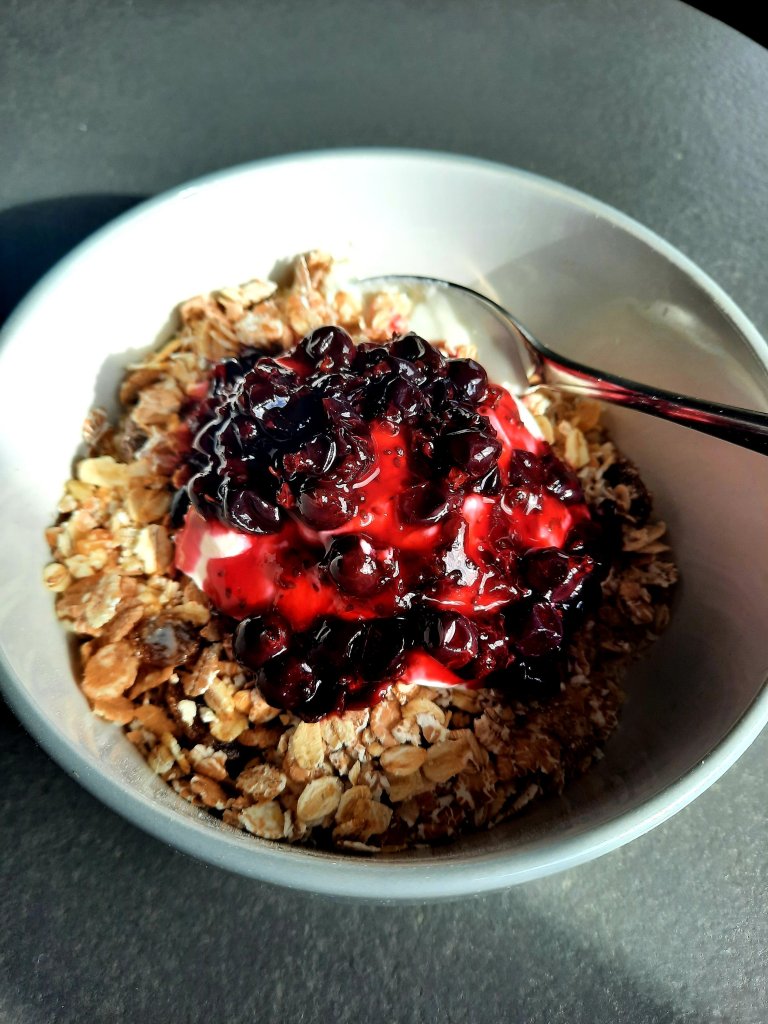
As they’re as tart as they come without the addition of something sweet they’re best cooked. So I weakened, and made a simple blackcurrant coulis, filling a couple of small jars with it. I reassure myself that surely we have room for these…

Drizzled onto breakfast muesli

These will live in the fridge and be used drizzled on pancakes, porridge, meringues or venison over the coming month or so. They won’t last as long as a jam, but that’s OK because we will use them more widely and often than we would a jam anyway.

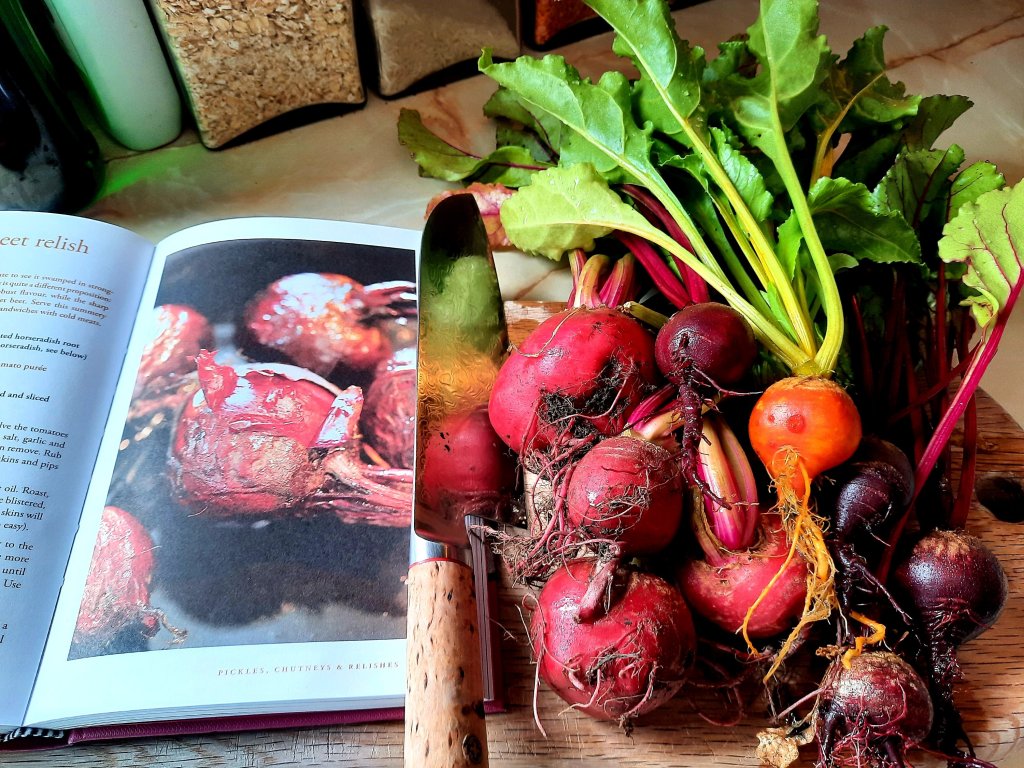
Beets ready for pickling

I also grew a few rows of beetroot which are starting to reach maturity. A mixture of Touchstone Gold and Pablo. I picked a few earlier this week to make into a jar of pickled beetroot, or maybe a roast beetroot relish.

Note to self: must grow more beetroot next year.

I love the process of making something delicious from things you started from seed some months ago. So satisfying. Growing is wonderful..

Peachy galette

I’m not the most organised of cooks. I often get a sweet craving come over me and I’ll be tempted to make a dessert, but will have to improvise with what I have in the cupboard or fridge.

Our restricted storage capacity in the caravan fridge is probably what’s keeping me alive and avoiding a massively early death through my over-consumption of sweet things.

Because if I had all possible ingredients to hand I’d probably make a dessert every evening. Which is not good. Note to self: the pantry you’re building may not be such a good idea for the remains of your waistline… Fill it with beans and pickles, woman, if you value your life…

As the clock ticked around to about 4pm today I started thinking about supper, and I really fancied something sweet.

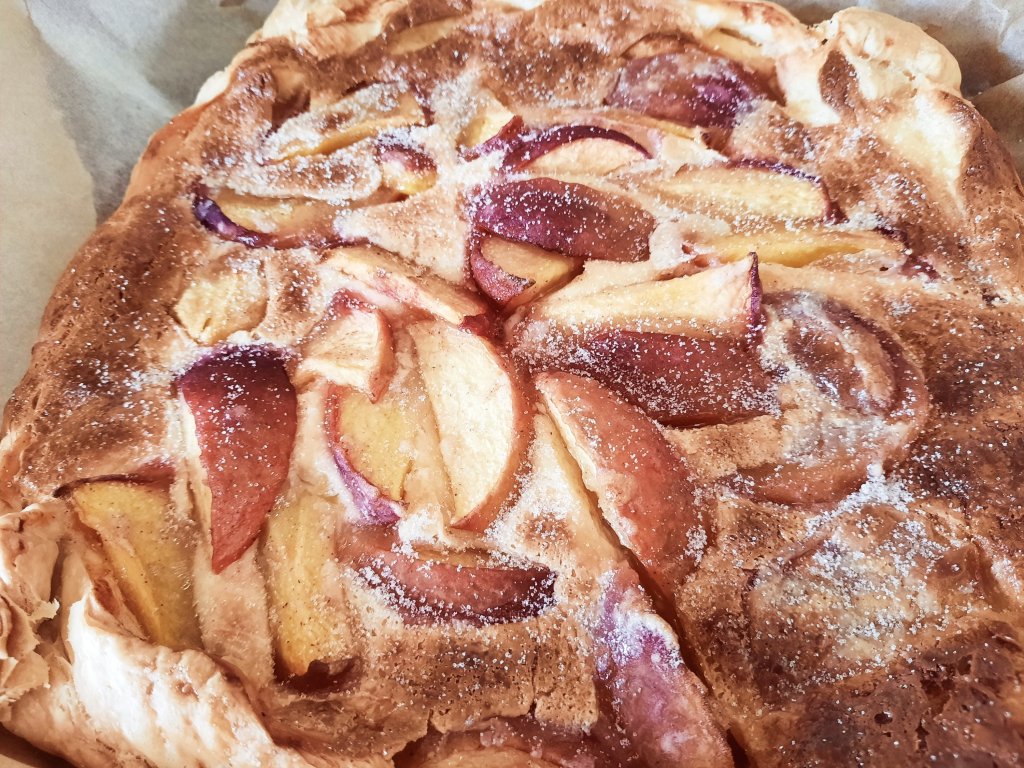
I found a punnet of rather hard peaches and a roll of ready made puff pastry lurking in a dark recess of the fridge. They were behind the bags of kale and chard, which glowed with health and reproachment. I also just happened to have a tub of mascarpone left over from some previous excess. I could make a peach galette!

Peach galette. No judging please..

In the UK, and especially here in Scotland, we don’t have the tradition of peach pies that I often see in the United States. Peaches are a rather exotic, imported fruit here (which I am determined to grow in my polytunnel one day. We must be independent in good fruit. But I digress).

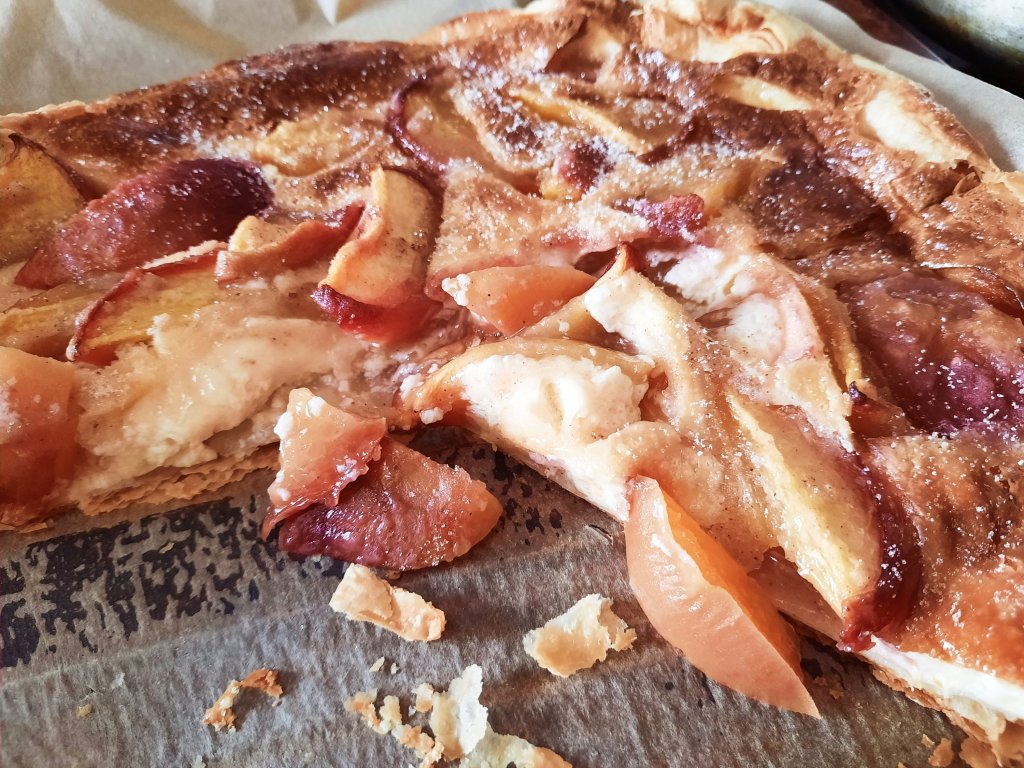
A galette is a rather pretentious name for a slab of pastry, crimped up around the edges of creamy mascarpone egg custard and a pile of sugared, sliced peaches. It sounds so much more exotic than it actually is. It’s raggedy and rustic and delicious.

I couldn’t be bothered with forming a proper pie today anyway. Rough edges and random piles of fruit seemed like a perfect idea. I can do piling and sugaring, I thought.

Nay problem.

The remains..

And so I did. And so we followed a healthy stir fry with a crusty, cinnamon scented, custardy, sweet peach galette.

It gladdened the heart. Which compensates for the expansion of the waistline, I’m almost sure…

Grasses Galore

We’ve had a warm, breezy day on the croft today. Twenty-two degrees and a clear blue sky. It made our outdoor tasks today so much easier with the wind keeping the midges at bay.

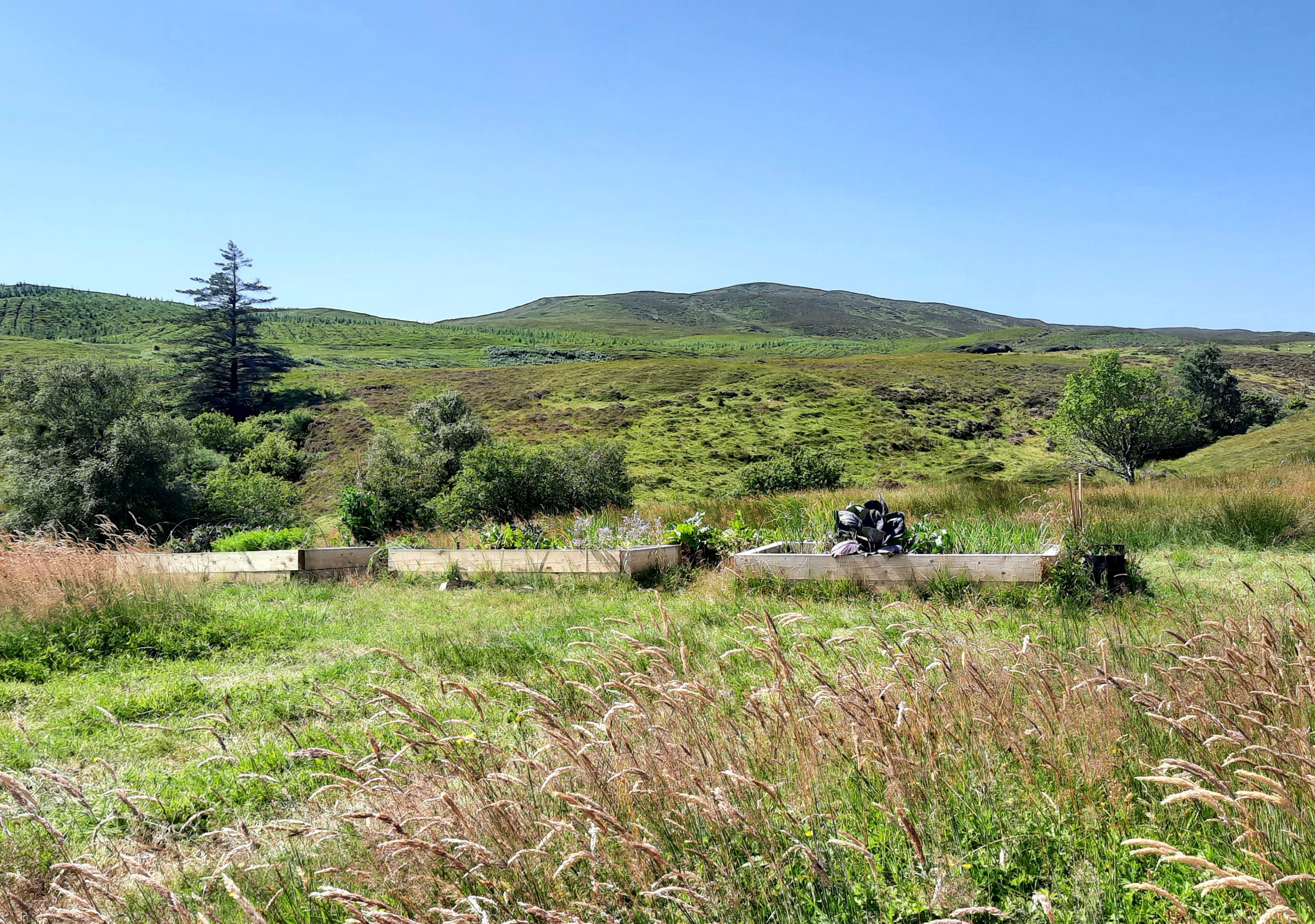
Grass in the breeze

The grass has grown so much over the last few months that the paths that husband had scythed in the spring had nearly disappeared.

This was making trips to the raised beds and the compost heap a daily waist-high challenge.

I wouldn’t normally worry about wading through long grass, but I’m super cautious about picking up ticks and horsefly bites at the moment, and didn’t want to have to start walking about swathed in protective netting like some sort of veiled ninja..

So husband spent a few hours yesterday and today scything swathes through the grass and collecting it up for compost. The breeze helped what was a long, sticky endeavour.

Pathway emerging

Some folk like to cut their grass neatly and very regularly. We have chosen to leave ours wild, and to see what comes up. We prefer it that way, and nature seems to agree.

We’ve found orchids, clover and wild flowers in abundance, and there are certainly plenty of moths, bees, butterflies and insects. Husband has even had to rescue a few small frogs from the path of his scythe…we want to encourage them as much as we can. Natural slug protection!

Once we have an agricultural shed to store equipment in we will need to look at other ways to manage this, though. Even with trees, six acres is too much to manage by hand with a scythe. It’s a fine line between managed meadow and bracken and bramble patches overtaking the land.

We’re thinking at least one annual cut after the summer is over to help seed and keep the rushes down.

For now we’ll enjoy the grasses and the wild flowers from our small, scythed tunnels through the abundance.