Christmas thoughts

It’s beginning to look as if we have another uncertain Christmas on our hands with the latest Covid variant running amok globally. I was hoping that this year would be different, but I guess we need to realise that this may be the new normal. Husband and I have our booster shots booked in for next week, and it feels like it’s not a moment too soon.

We may have one of the stepsons with us for Christmas, we may not. His travel plans are a bit up in the air just like everything else in the world at the moment. I’ve ordered supplies as if we have him here, happily eating us out of house and home. Well, caravan and home really.
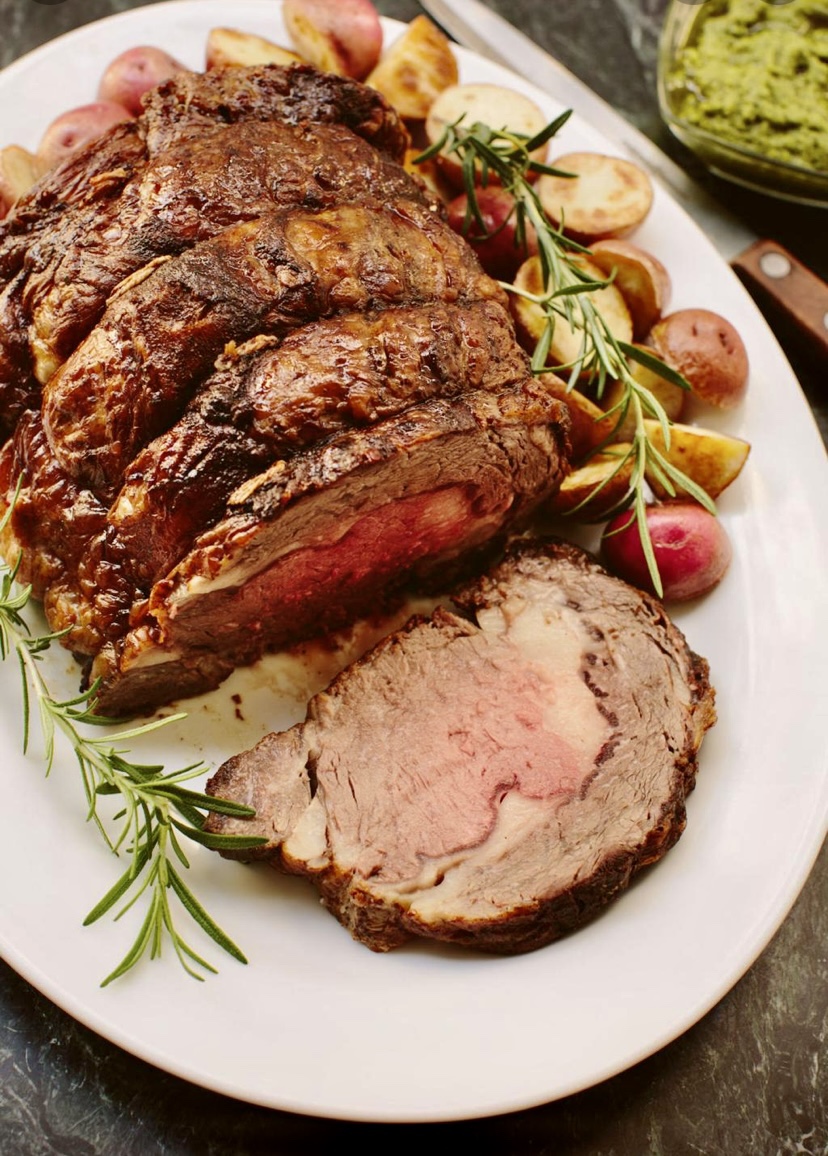
Last year we cooked a piece of venison in the slow cooker for Christmas lunch. This year we have a piece of local highland beef, and with a year of kitchen juggling experience under my belt, moving things in and out of my tiny caravan oven, I’m hopeful that there will be roast potatoes too.
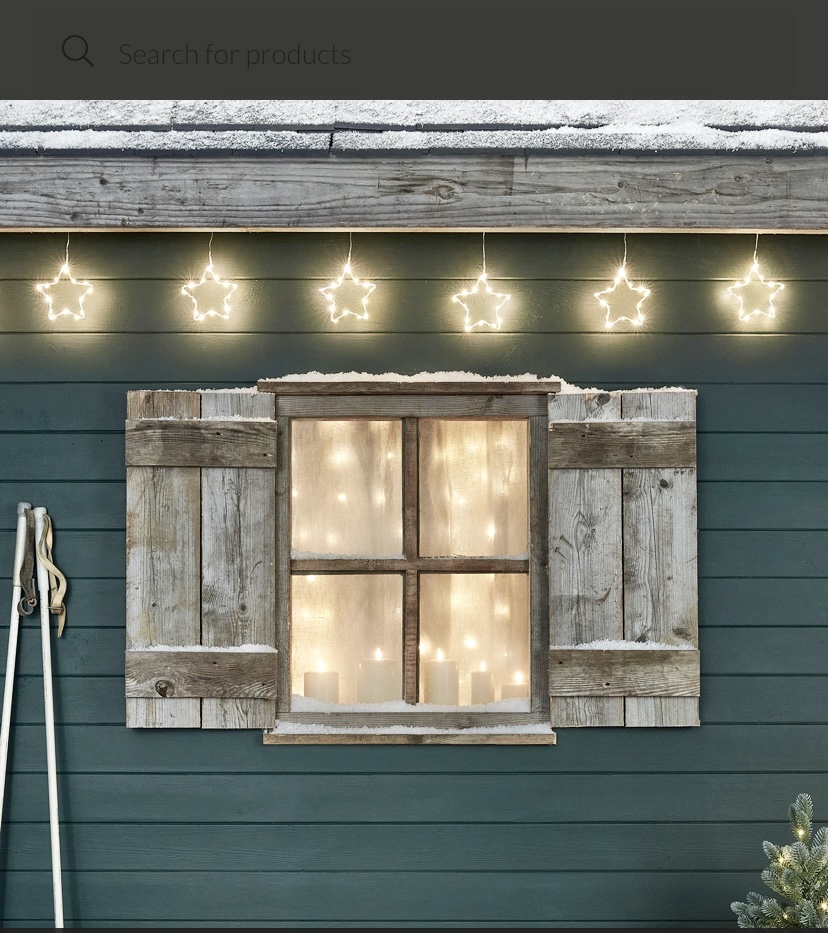
I only really start to feel as if Christmas is a reality when I see the lights start to go up in the village cottages and I’ve written and posted my Christmas cards. Christmas has always been such a big thing in my life. I’m getting used to a second year of no table, no big gathering, and life in a wee space where the normal arrangements can’t be made. We will definitely be in the house for next Christmas.

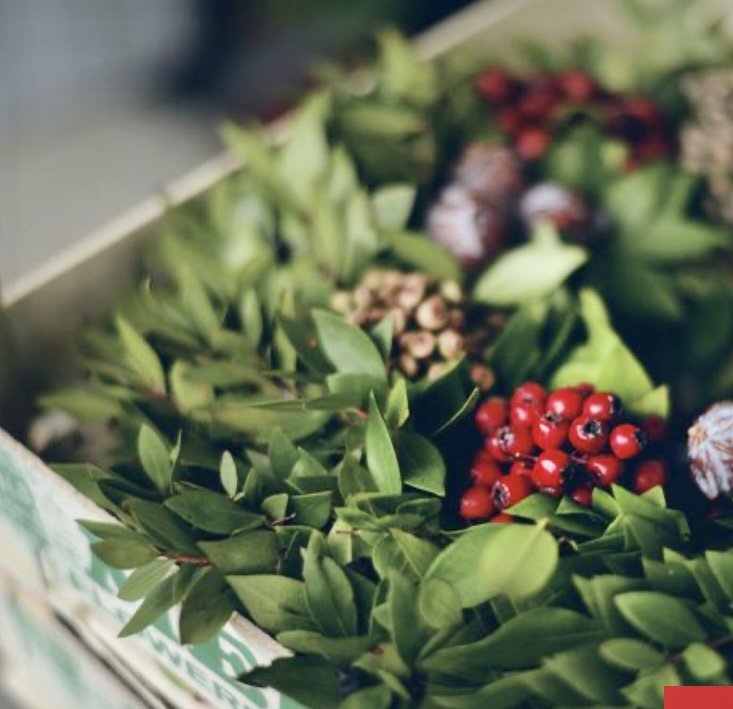
However different and sparse Christmas arrangements might be this year, I am grateful above all that we are all well. Health and happiness are so much more important than any of the other trappings that we associate with this time of the year. I will gather berries and foliage to decorate the caravan, put up some fairy lights, plan trifles and mince pies to take to friends, but mostly just savour the time that we have together.
Wishing you all a stress-free and happy run-up to the holiday period. Remember, it’s about the people that you love, not whether you’ve managed to bag the last turkey in the shop.
Snowy days and roast hogget

Storm Arwen swept in over the last few days bringing a significant drop in temperature, and with it, snow.

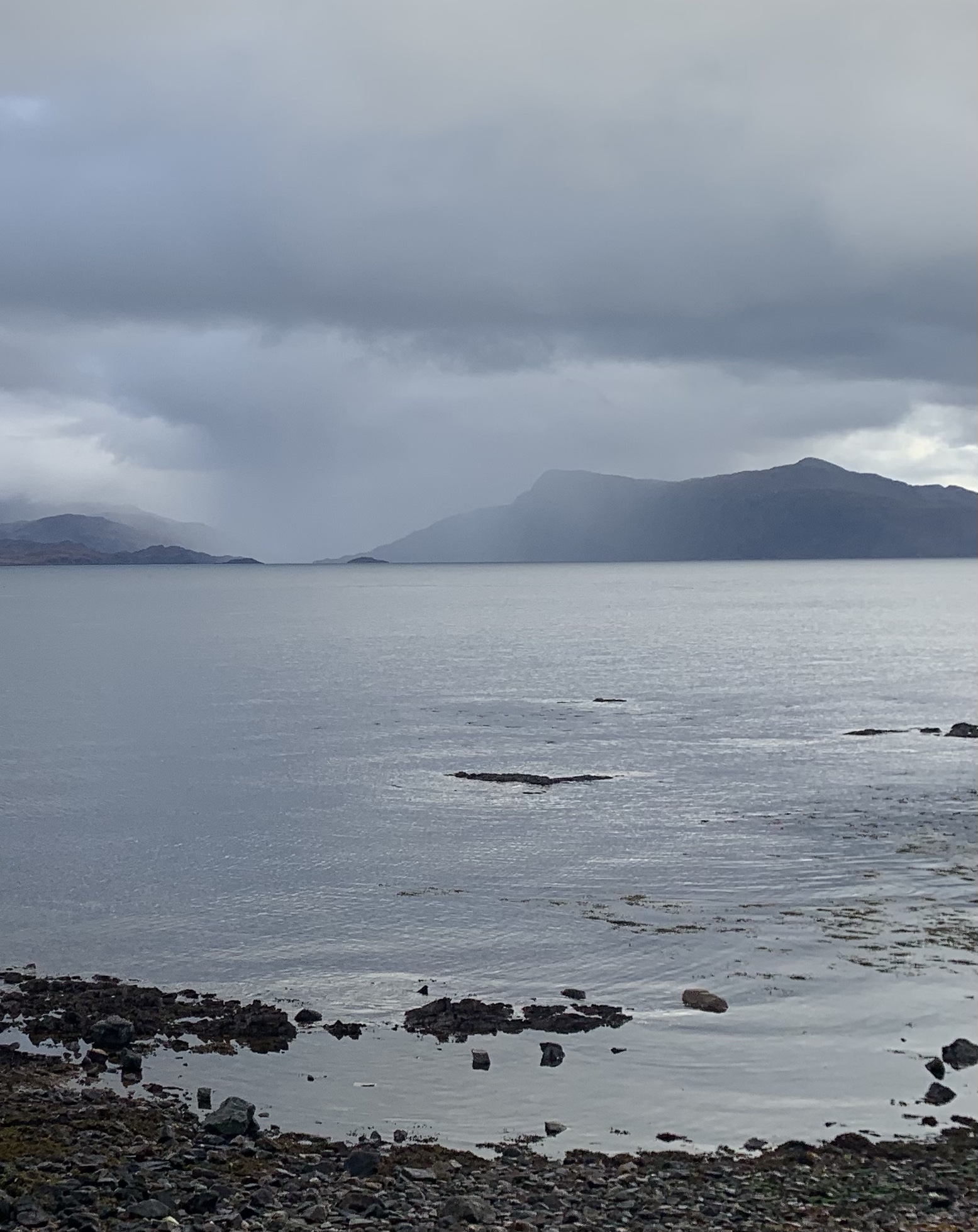
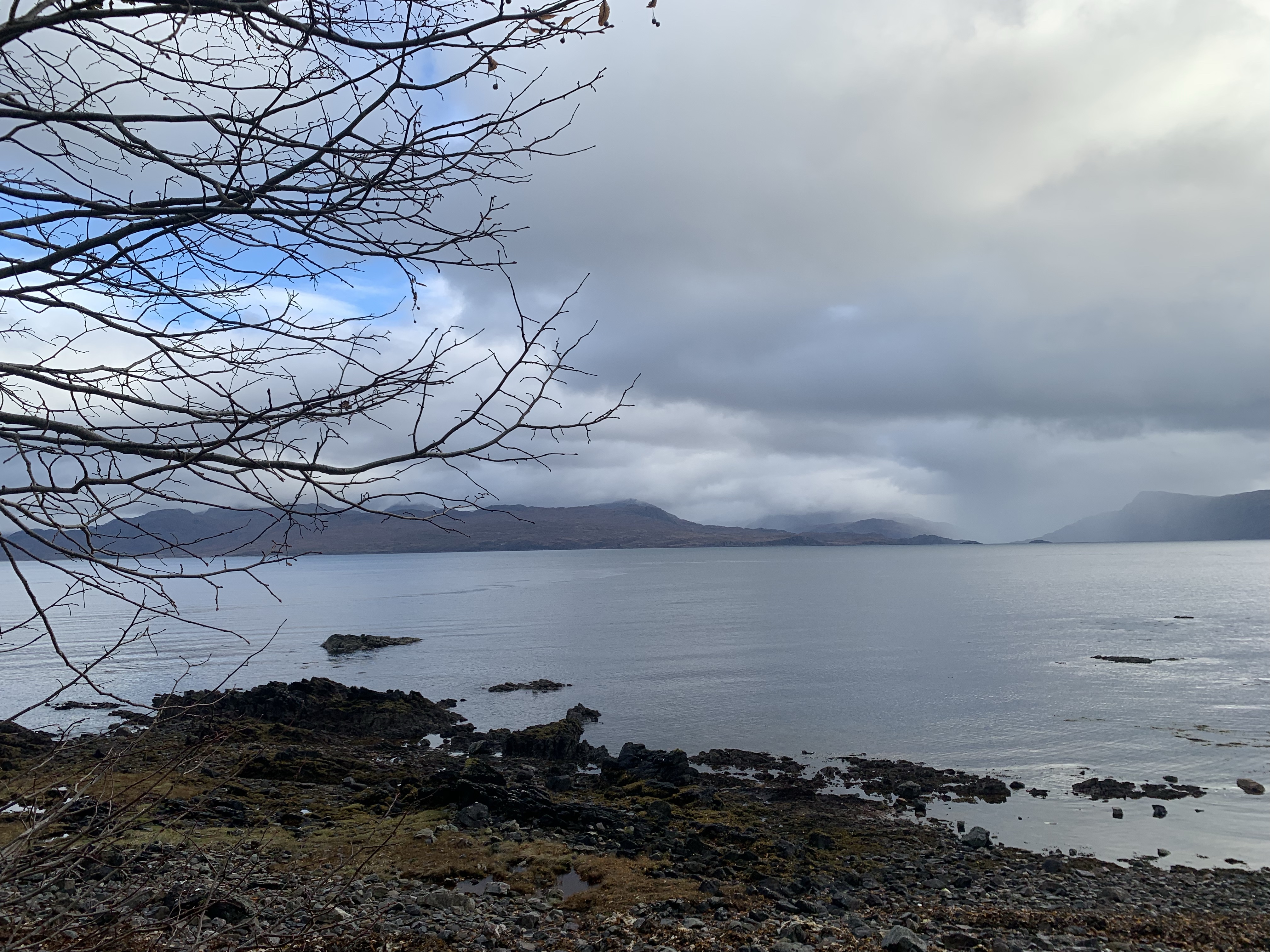
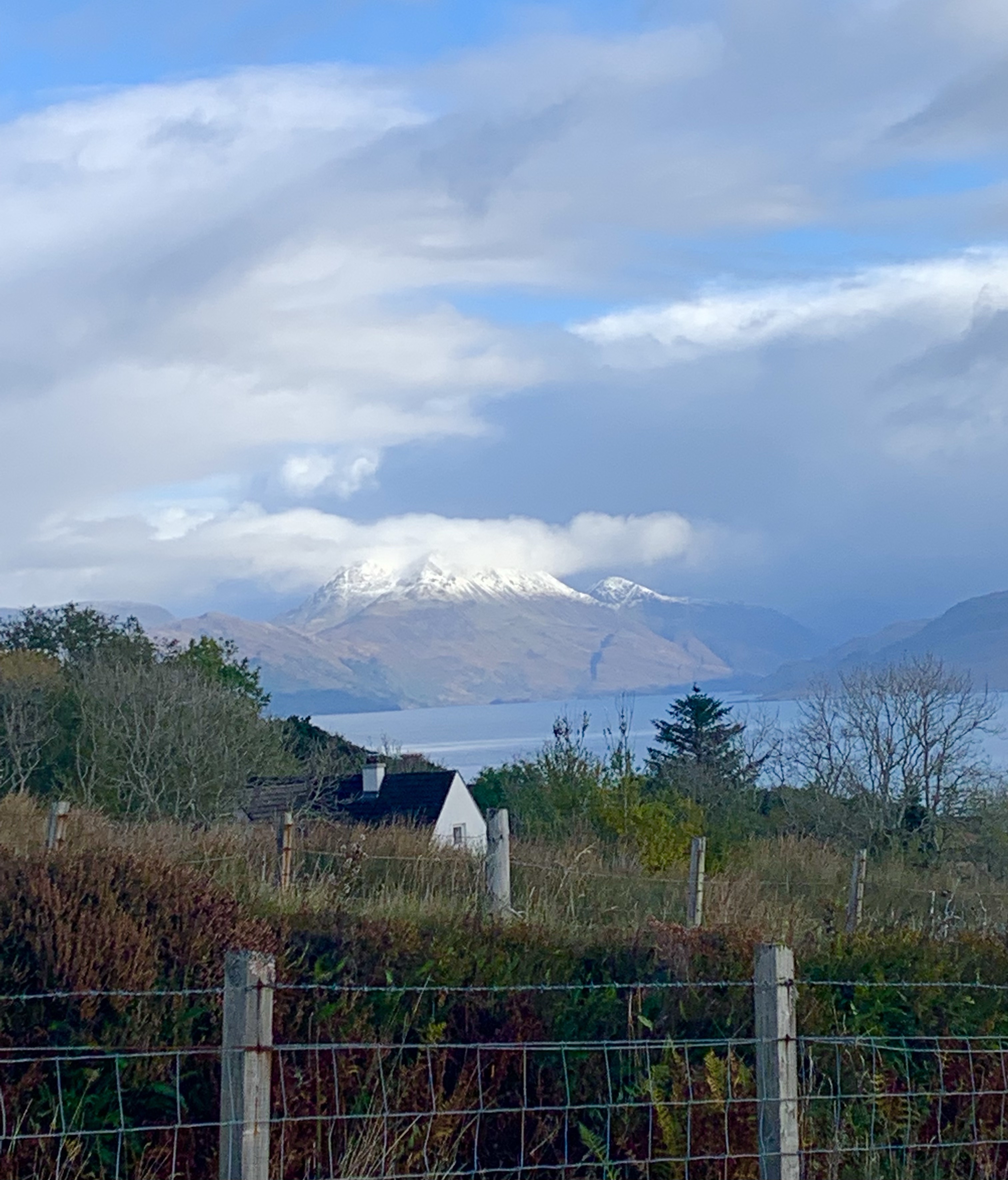
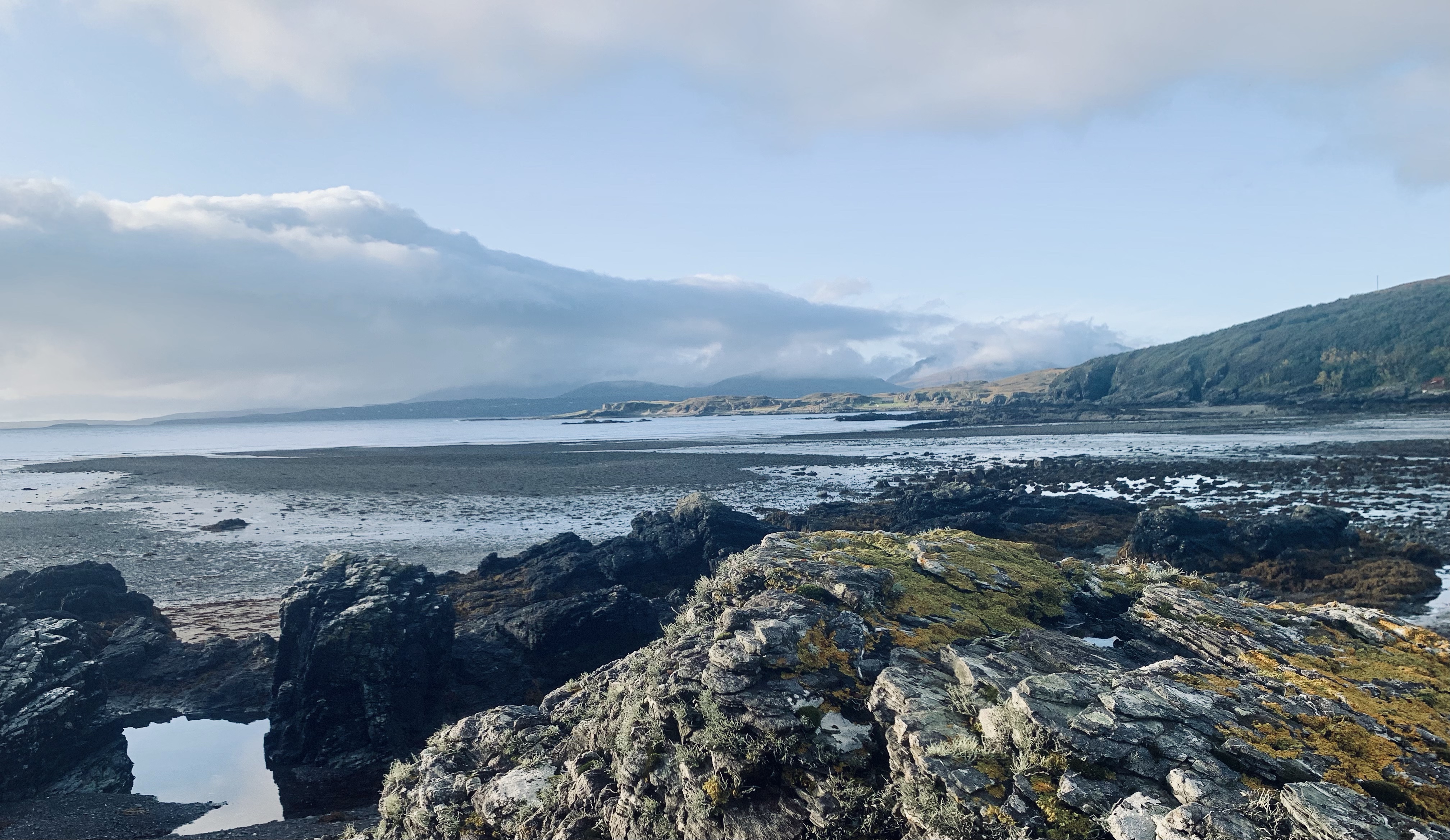
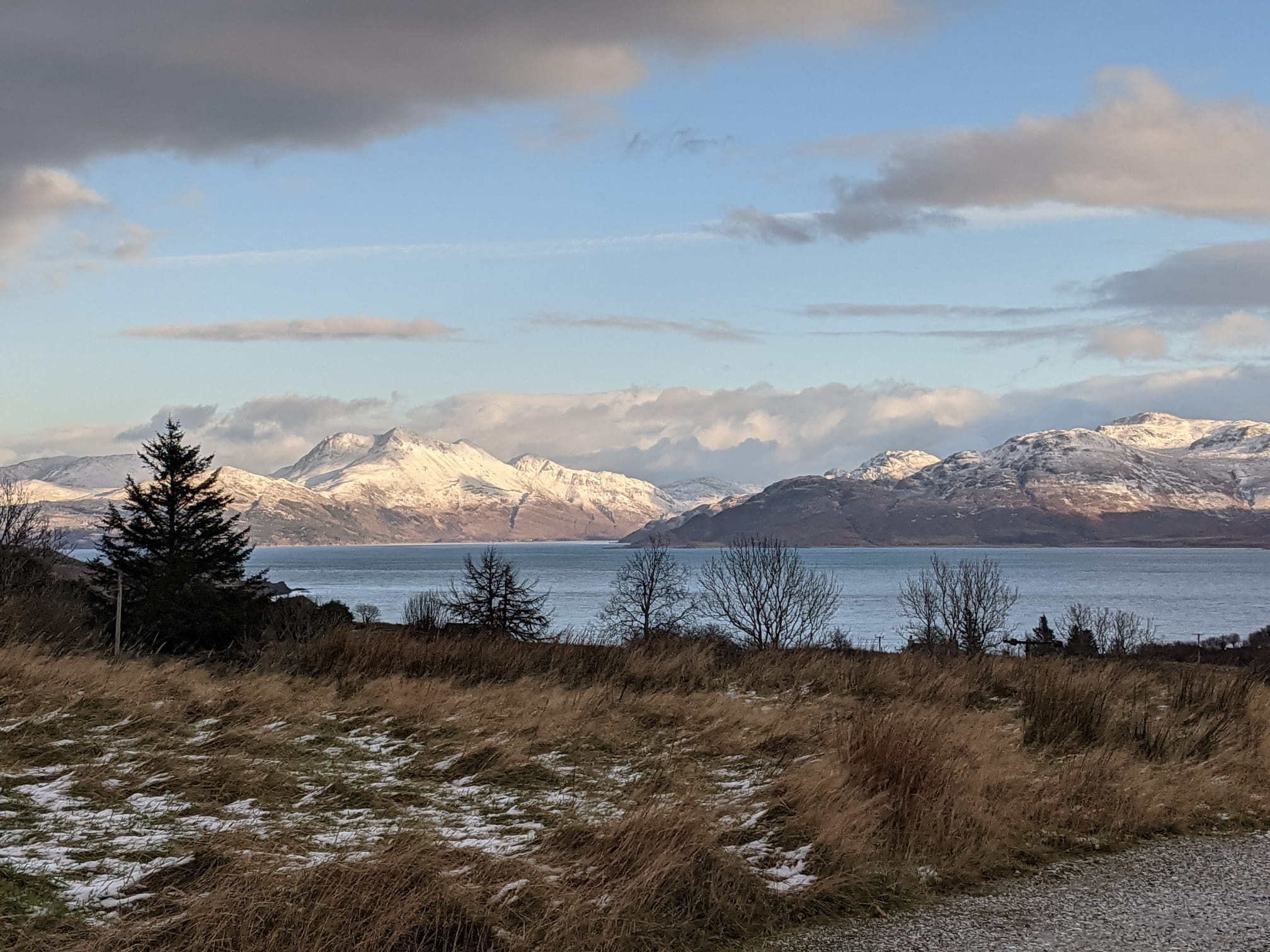
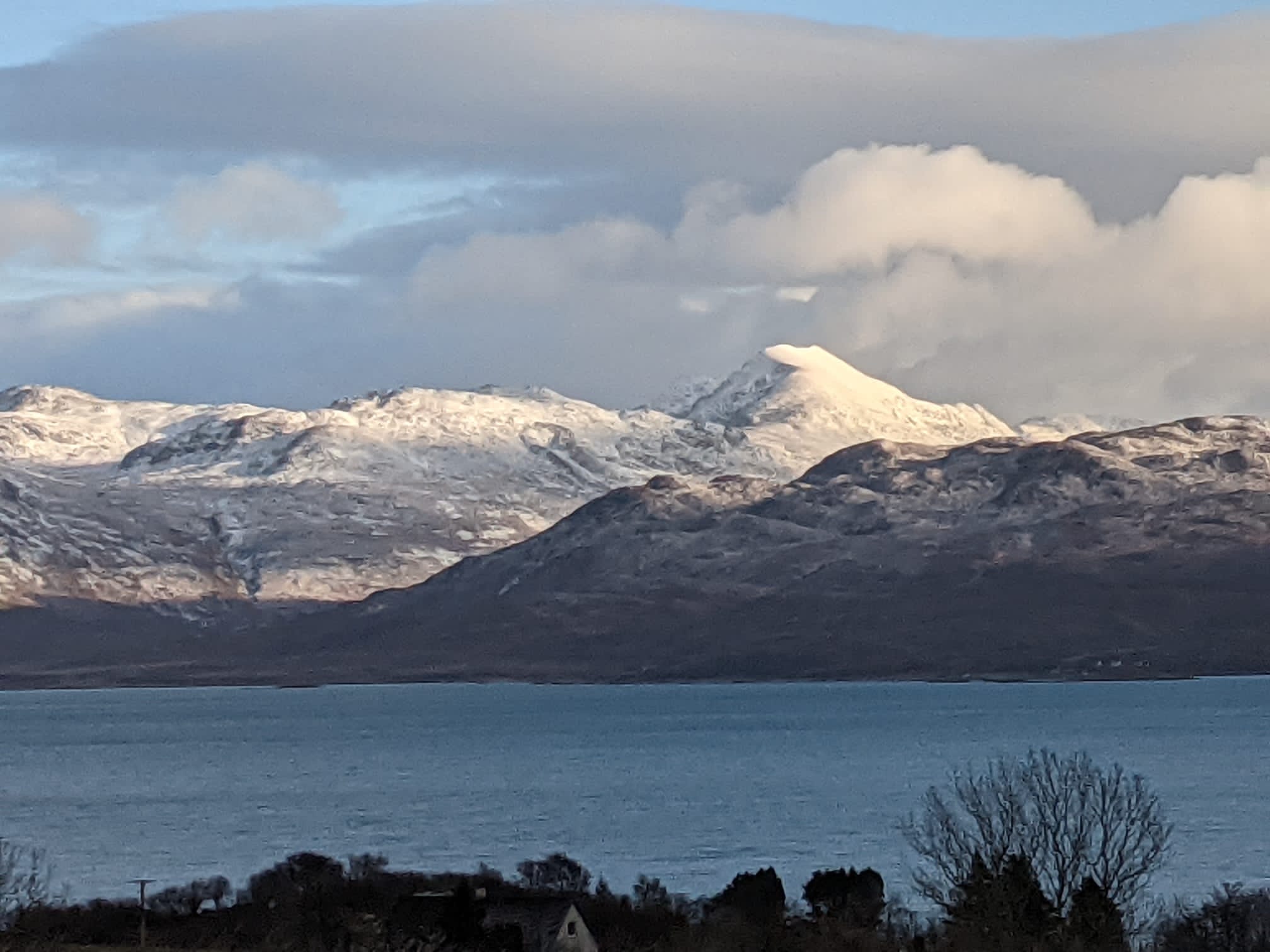
It was difficult to see the mountains of Knoydart in the flurries of snow and sleet sweeping down the sound, but once it had cleared we were treated to a scene of absolute beauty.

The low winter sun lit up the slopes of the mountains and the skies were blue and crisp. Somehow the air always seems cleaner and colours more vibrant after a storm.

We were not as badly affected by the storm as the East coast and other parts of the UK, surprisingly. The caravan rocked alarmingly in the wind and the hail and sleet were relentless for about 24 hours, but we didn’t lose power or water, so we figured we’d got off lightly compared to some.

The morning was so stunning that we decided to get out to enjoy it.

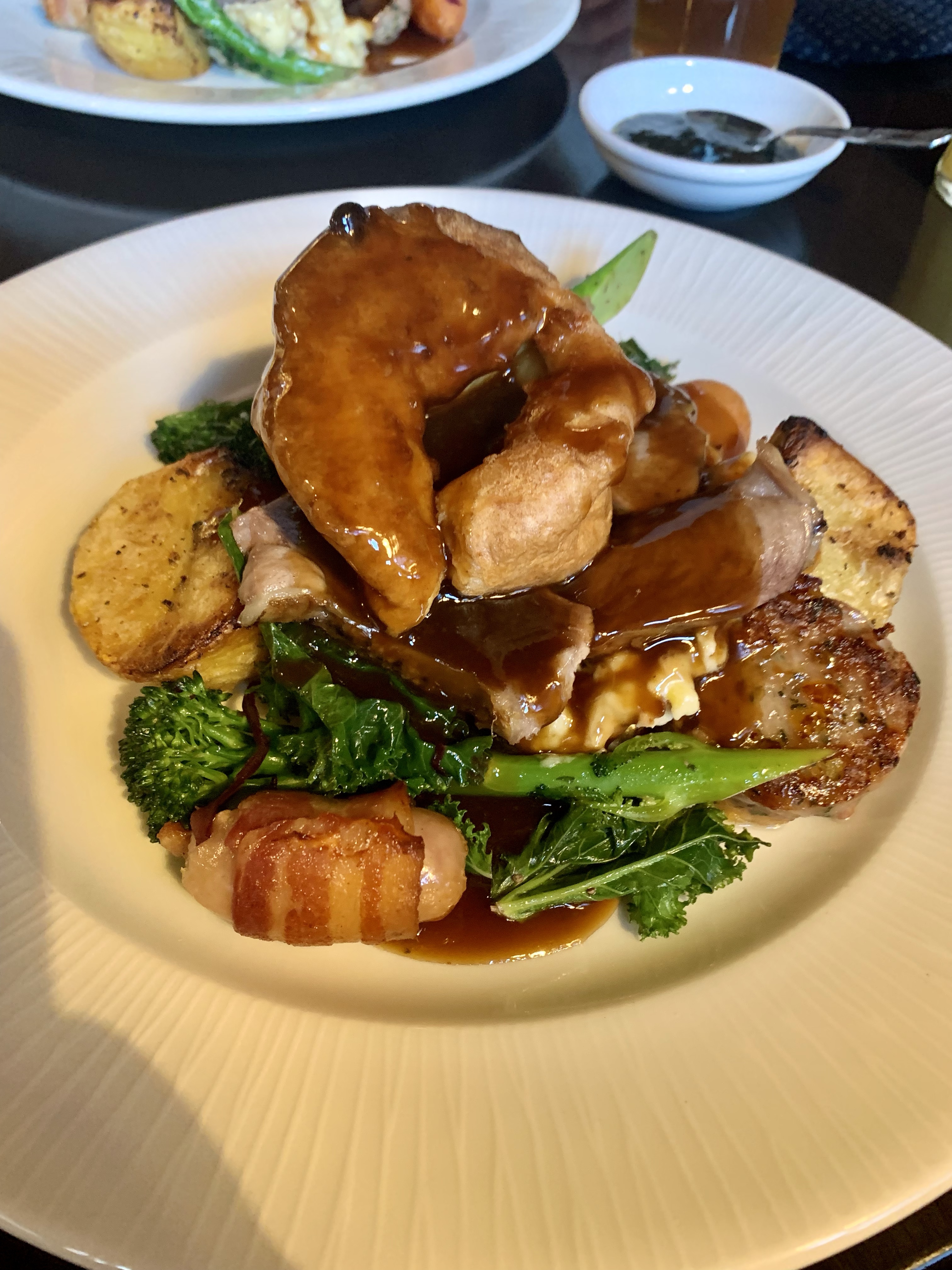
We popped down to our local pub at lunchtime and warmed ourselves by their open wood fire. They had local hogget (lamb) on as a Sunday roast , and one warming plateful later, with a pint of Skye Ale to wash it down, we drove back to the croft replete and content.

There is always blue sky after a storm.

Cold, starry nights, and concrete

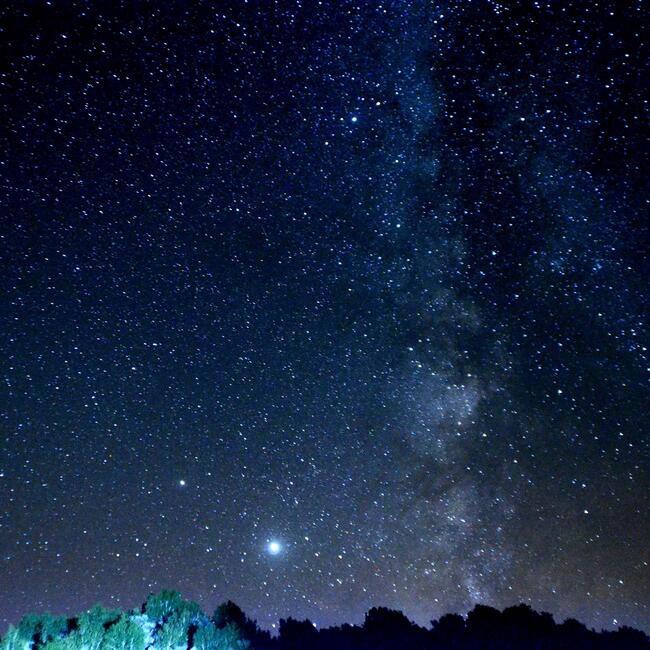
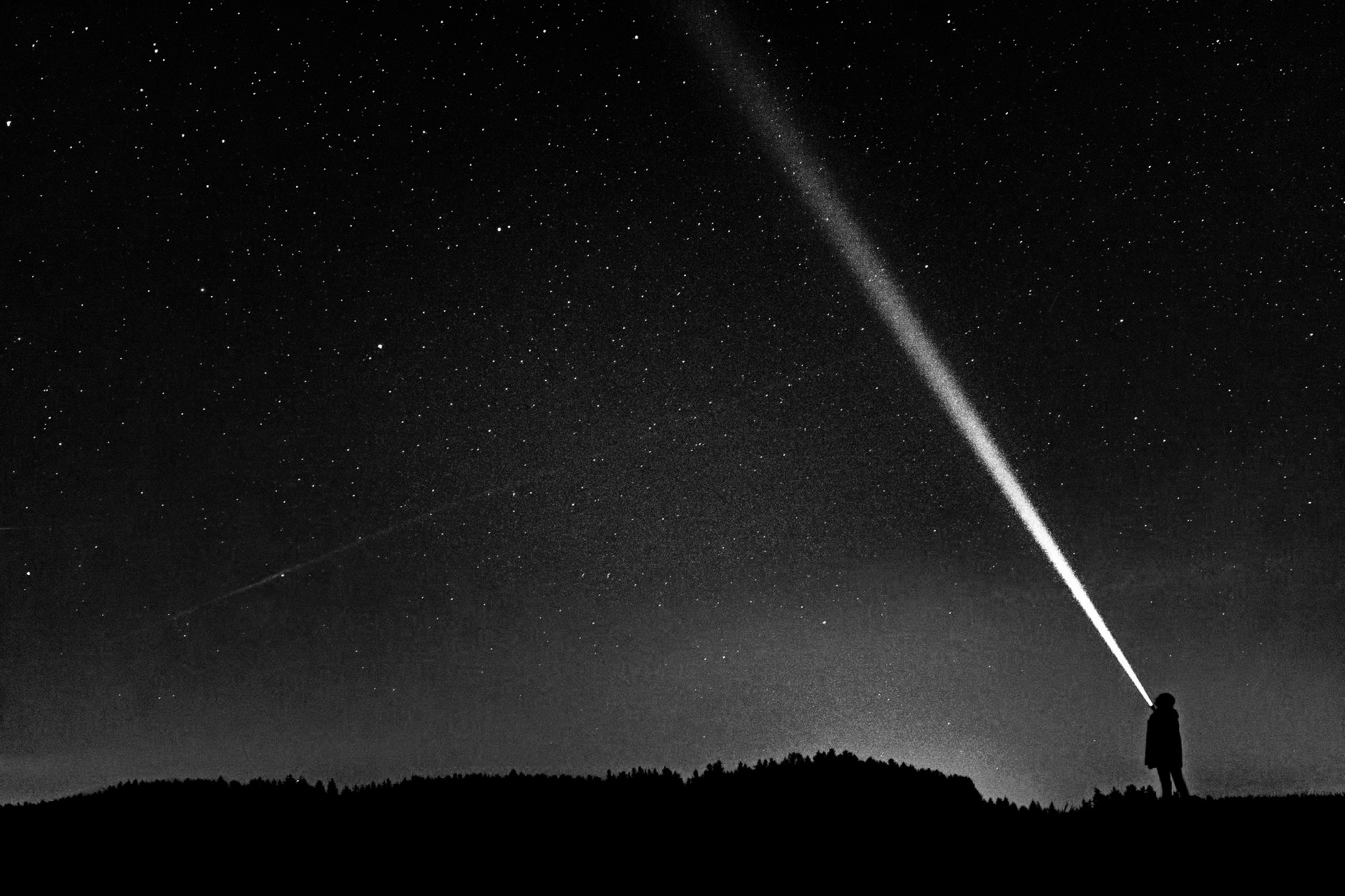
As we move through November we draw ever closer to the winter solstice and the darkest, longest night of the year. The constellations of Orion and the Plough are clear and bright in the dark night skies, and we start to sense the breath of winter across the croft.

It’s time for warming stews, winter berries, warm spices and the comfort of thick socks and jumpers in the caravan. The fire is on most of the time now.

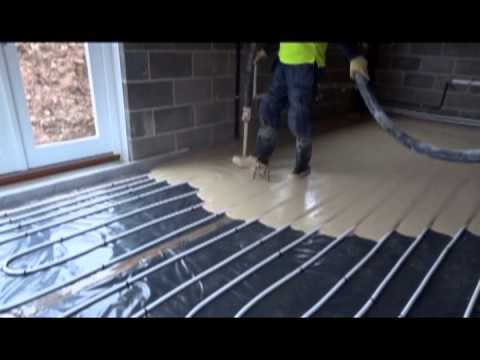
And time for concrete. After months of let downs, delays, finding new solutions and a new supplier, we at last have a firm date for the arrival of the liquid thermal screed to go over our underfloor heating pipes in the house to make our floor.

It’s coming next week. It’s taken us a whole year to get to this stage and this is a big milestone for us. Once the floor is hard and dry enough to walk on, some weeks down the line, husband will start the MVHR duct installation and electrical wiring in preparation for plasterboard installation early in the new year.

I try not to wish my life away by focussing upon this time next year when we will be dry and cosy in the house. I’m conscious that although it’s what I want, that every day is precious, and that it’s still a long journey to get to that point.

We may be in a cold and drafty caravan which causes a sharp intake of breath before getting dressed in the mornings (with as many layers as we can) or a leap into the shower squeaking at the exposure of skin to cold air before the hot water hits, but this way of life also has its blessings.

We are very aware of, and very close to nature and the elements. The night skies are remarkable at this time of the year. The storms are elemental. This year has been one of reconnection with the land and weather after many years of numbness caused by urban living, and it’s been remarkable.

Opening the caravan door and listening to the rushing of the burn over the croft on a crisp, starry night, perhaps with the occasional hoot of an owl is a wonderful experience. There are no other sounds. The silence is profound.

When the storms hit and we are tucked up under warm quilts or blankets listening to the wind tearing across the croft, or the rain lashing the windows, it does also instill a very real sense of well-being and cosiness. We are grateful that we’re not out there in the teeth of the storm like so many have to be, and very aware of its power.

We count ourselves as very blessed.

Life is good.

Autumn gales

Winds on the island can be severe. We arrived here a year ago in the teeth of Storm Aiden, and almost a year later to the day here we are again with the autumn gales upon us.

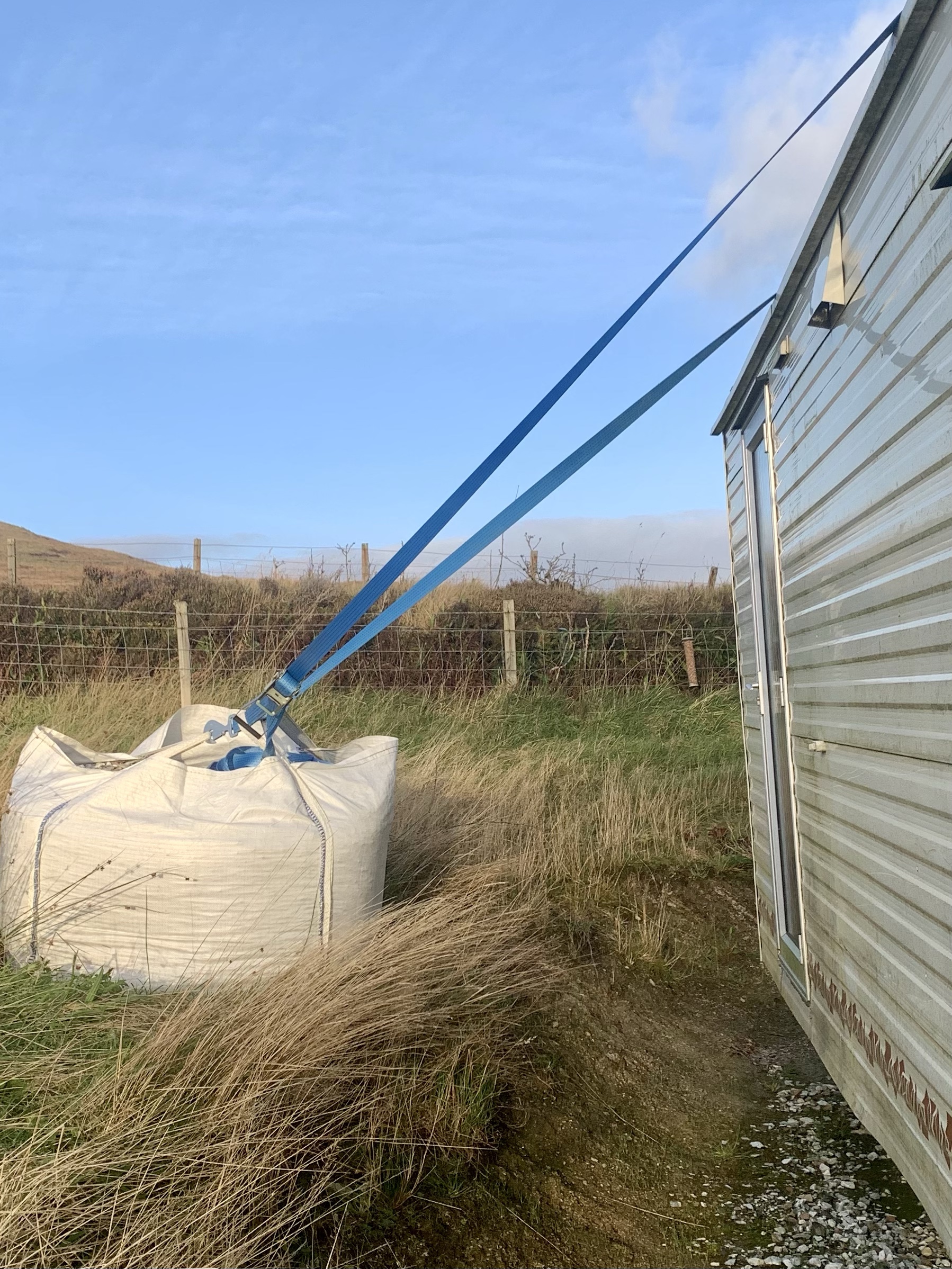
We are a bit more seasoned this time around. I know now that the house is unlikely to blow down, and that the caravan is equally unlikely to sail down the hillside, tethered as it is to four large tonne bags of hardcore.

However, knowledge doesn’t make it any less dramatic. Yesterday evening as we went to bed the noise of the rain and the hail on the metal roof of the caravan was deafening. Once the hail flurry had passed the sound of the wind whistling through the lorry strap tethers took over. The caravan also rocked vigorously as the wind fought to lift it, only to be slapped back down with the counterweight of the hardcore bags.

All in all, a bit difficult to sleep. It was like being in a washing machine at times. It’s testament to our familiarity with it now that we somehow managed to drift off and got a reasonably good nights sleep.

Winter is almost upon us. Get the hot chocolate in and dig out those big jumpers!

Quince Love

When we moved to our cold, wet island, 57 degrees north of everything, we maybe had a lingering doubt about the things that we’d miss. Lots of positives and upsides, of course, but there would be some things we’d have to compromise on, we knew.

The biggest worry of these was fruit. We love our fruit, and the thought of going without fresh fruit for any period of time was a bit of a concern. Surely living on the chilly, northernmost and westernmost rim of Europe would mean that figs, quince, loquats and ripe peaches would become things of fond memory?

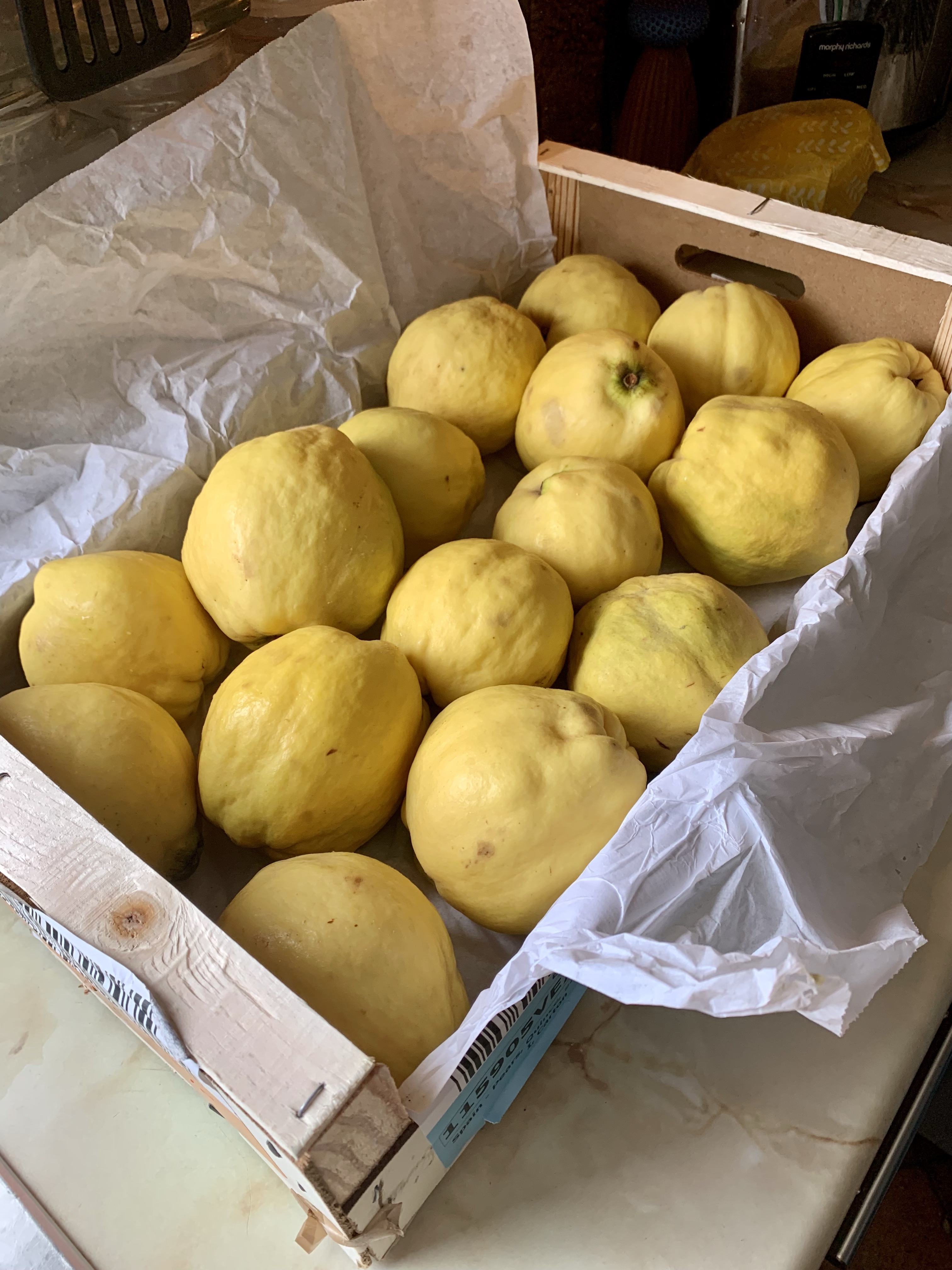
Today I picked up a crate of fragrant Spanish quinces from the local store, who had ordered them in especially for us. From our local community store. How amazing is that.

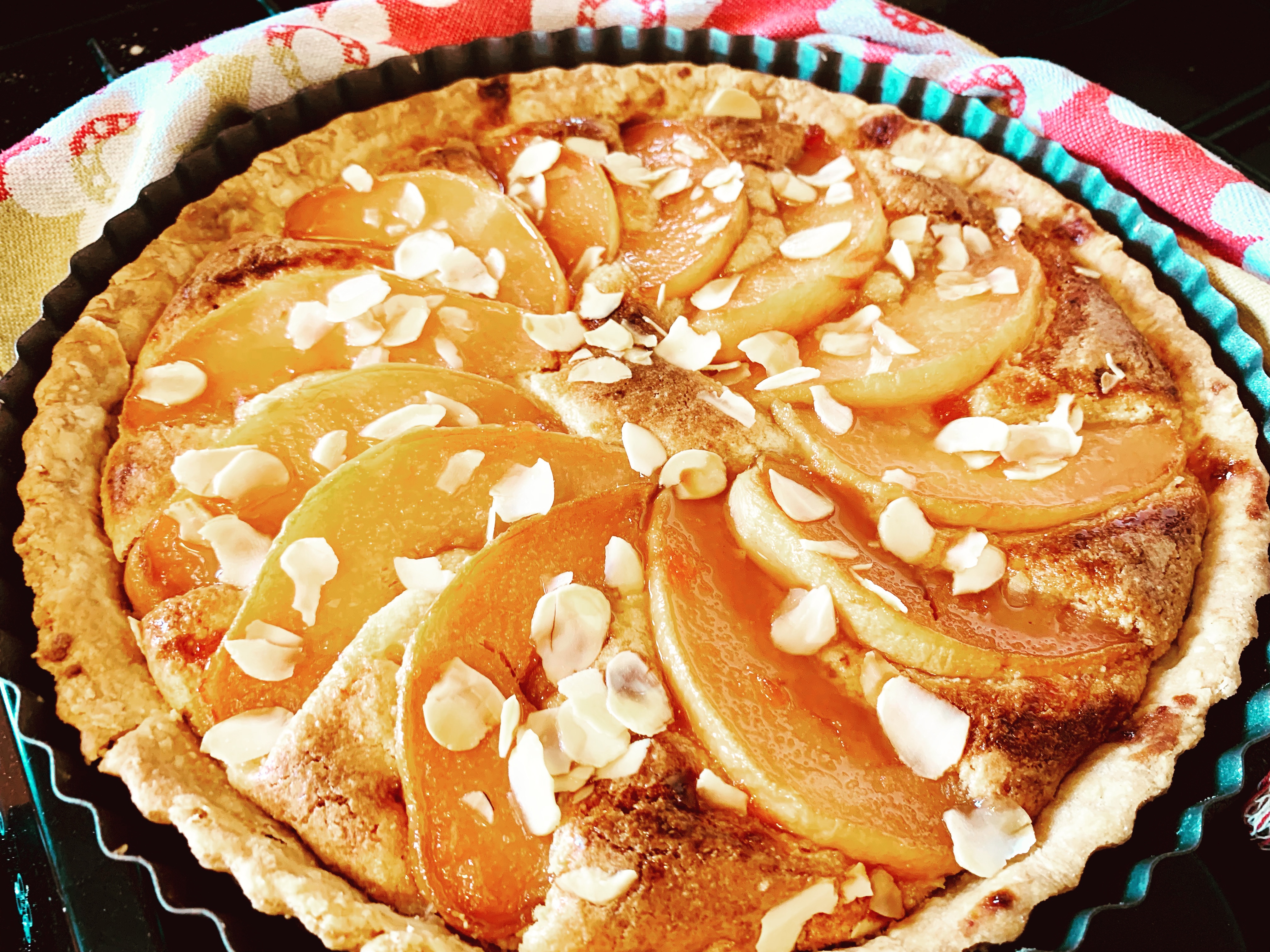
That will sort us from a quince perspective for a while. Husband will eat them, hard and raw (he is bizarre) whereas I will poach them in a sugar syrup with cinnamon sticks and juniper berries, then roast them in frangipane tarts and sweet pastries.

The rest of the fruit we source from local organic crofts, or the local Co-op supermarket.

We try to keep it local but apart from apples, pears, rhubarb, local quince and berry fruit I haven’t managed to find local croft sources for anything else, and certainly not the exotics as an occasional treat. Supermarket fruit is often under ripe and tasteless, let alone the concerns that I have about the food miles involved, so anything that we can do to reduce our reliance on them as a source of produce is a good thing in our opinion.

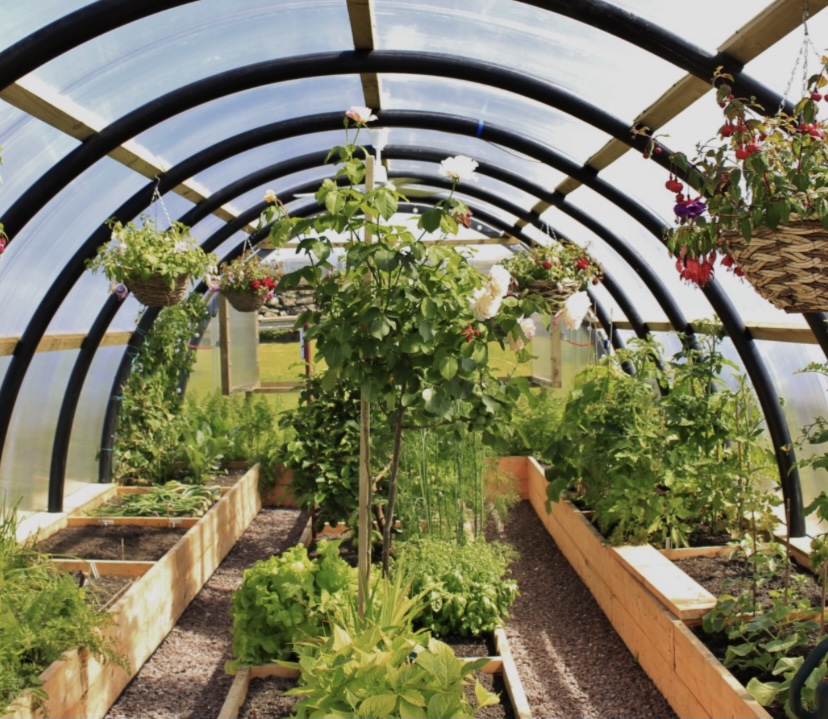
This is where the polytunnel will come in. We plan to grow nectarines, peaches, quinces and maybe loquats in the tunnel. If we can. Unlikely as it seems, the shelter that the tunnel will provide along with the long summer days this far north will be enough, with a bit of skill and patience, to produce these things. We’ve seen peaches grown in polycrubs in Shetland, which is even further north and even more exposed than us, so I have every hope!

These combined with the berry beds as well as the apple and pear orchard that we have planned, and we should be covered for most of our future fruit needs.

Bananas sadly remain a step too far for these northern shores.

Good neighbours, first snow and wild skies

I am sitting here in the caravan with my tea watching the rain come down in sheets over the Sound. I love the rain. Seriously.

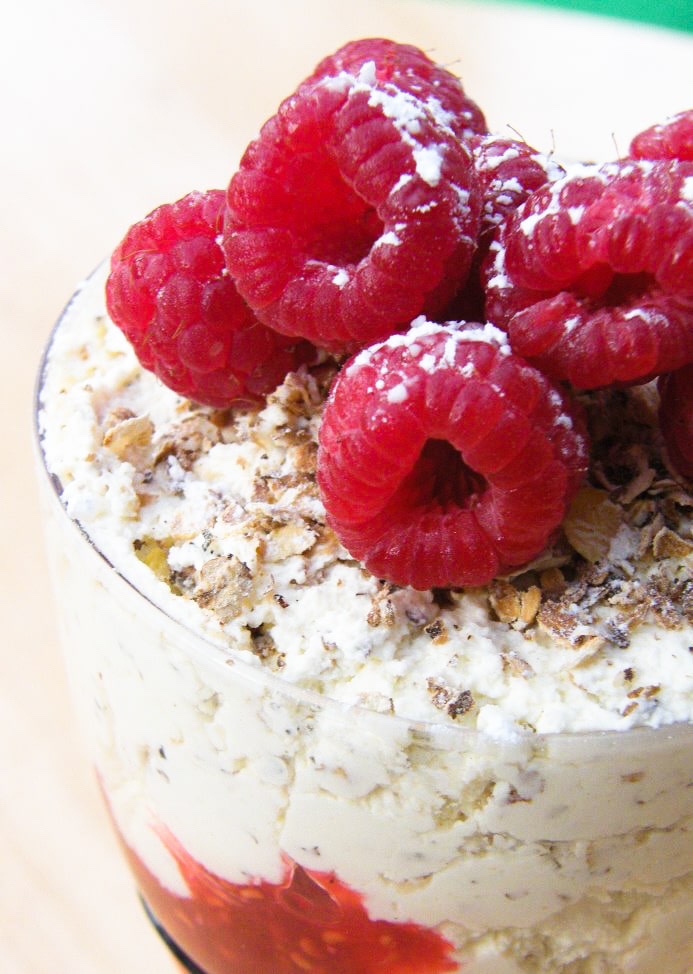
We have been invited for drinks and supper to a neighbours house. We are taking Cranachan as our contribution, a deceptively innocent sounding blend of raspberries, toasted oatmeal, honey, whisky and cream.

It’s one of my favourite Scottish desserts and should just about make it intact in a wrapped bowl as we totter down the long and winding track off the croft and over to their cottage, wrapped up against the squalls and rain.

We are so lucky with our neighbours. We seem to have found a warm and friendly community here. They pop in with gifts of quinces, strawberry plants or spare fleeces for our vegetable beds. I mean, could you ask for more?

The weather has been wild for the past week. Torrential rain and high winds, gusting to around 50 miles per hour. The caravan rocks and sings as the wind vibrates through the webbing straps holding us down.

We had our first snow on the tops last night. Early, but not unexpected. It’s been very cold.

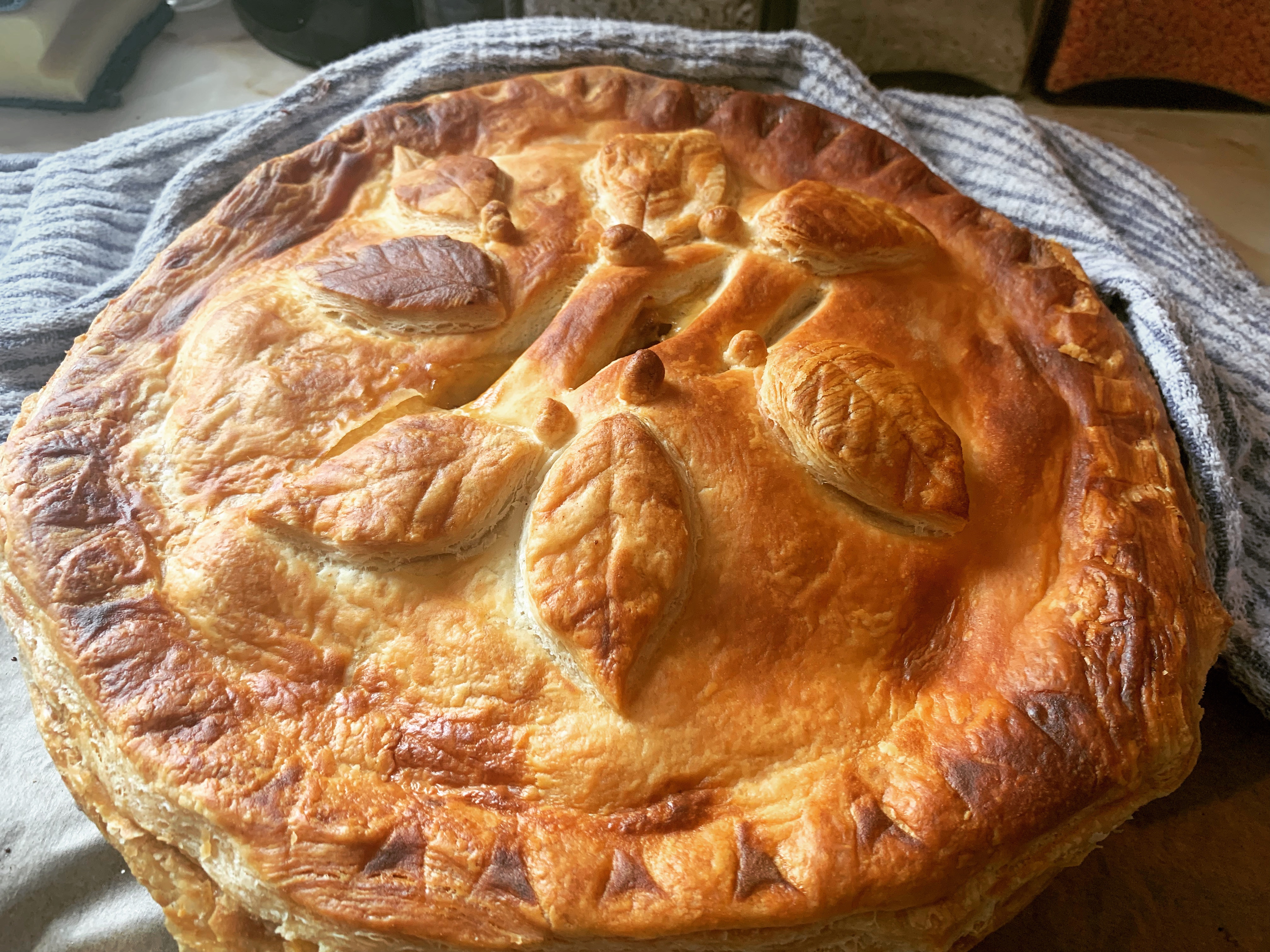
Time to coorie in with pies, hearty soups, stews and big jumpers.

Feeding the local wildlife

It’s not all been perfect carrots and potatoes, y’know. Growing organically and without pesticides has been a challenge, and we’ve lost our fair share to the bugs and the deer. Mainly, it has to be said, to the damned deer.

Our hungry neighbours

Deer are not supposed to like garlic, onions, leeks or anything strongly scented. Ha. Ours obviously have exotic tastes. They’ve chomped through the green foliage of all three of these all summer.

Plant globe artichokes, those in the know said. The leaves are big and bristly and the deer don’t like the texture of anything bristly or prickly. Ha. They’ve been eating the yacon and artichokes too, biting out the lead shoots completely on many of our plants.

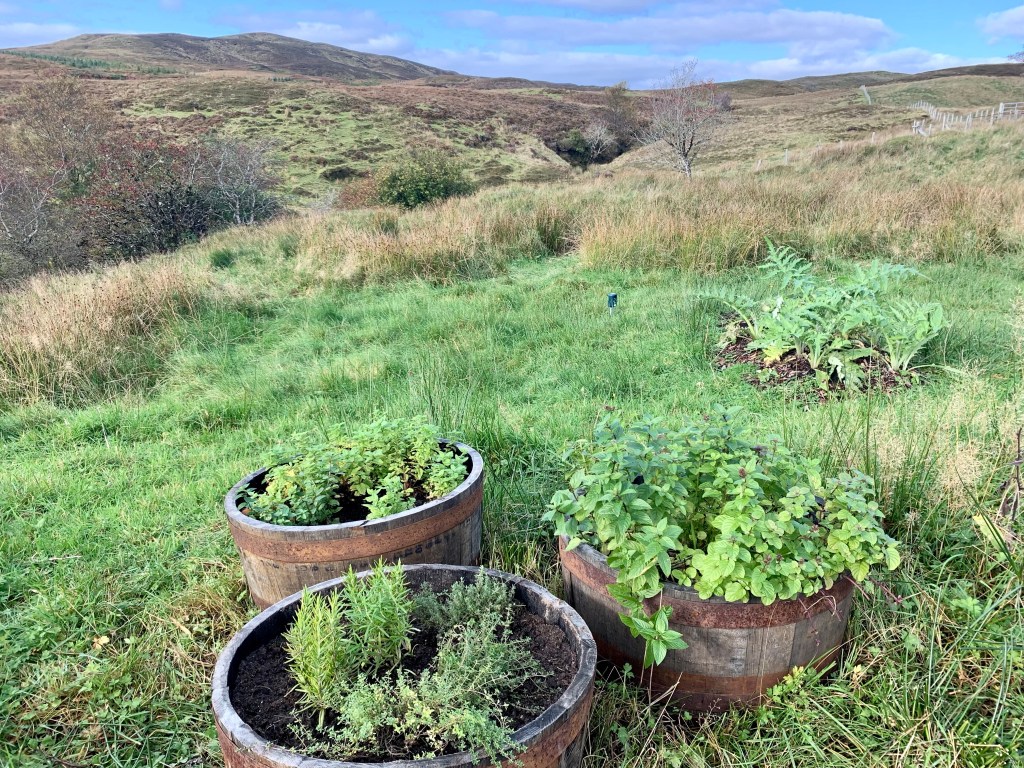
It’s also the closest bed to the common grazings on the hill , and as such the most tempting, I suspect. The rest are annoyingly close to the caravan.

The distant remains of the artichokes

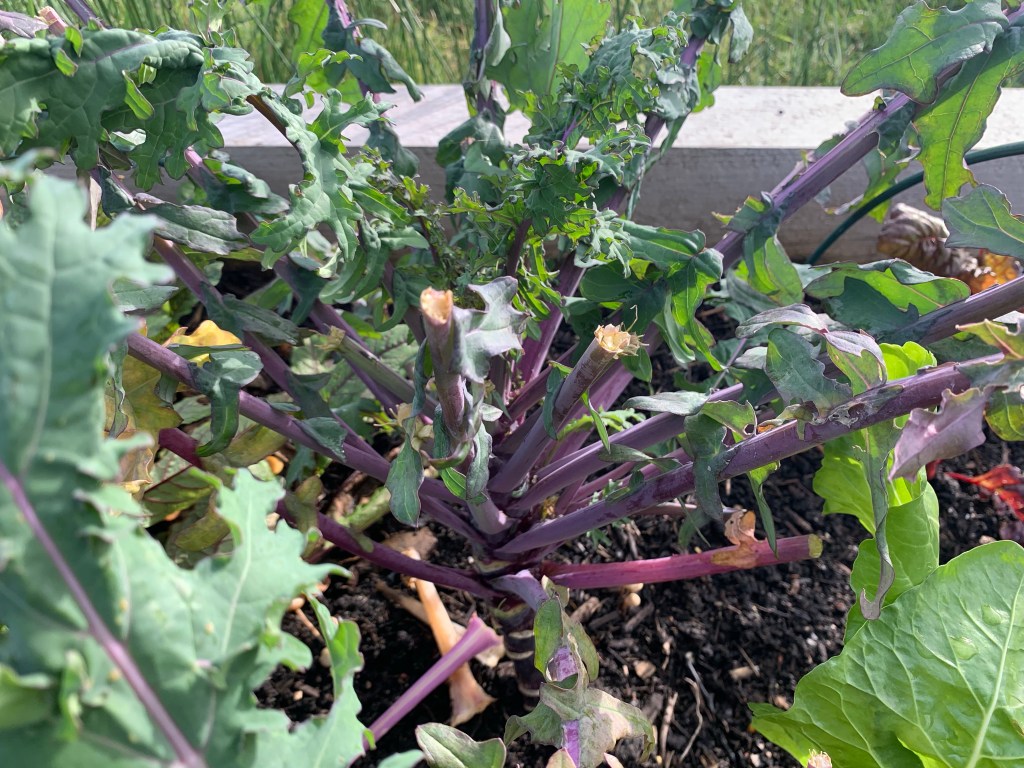
Kale was always going to be a crop that we knew would potentially suffer from their grazing, although they did wait until it was of sufficient size to be worth nibbling. Thoughtful of them. Then they feasted.

Chomped kale

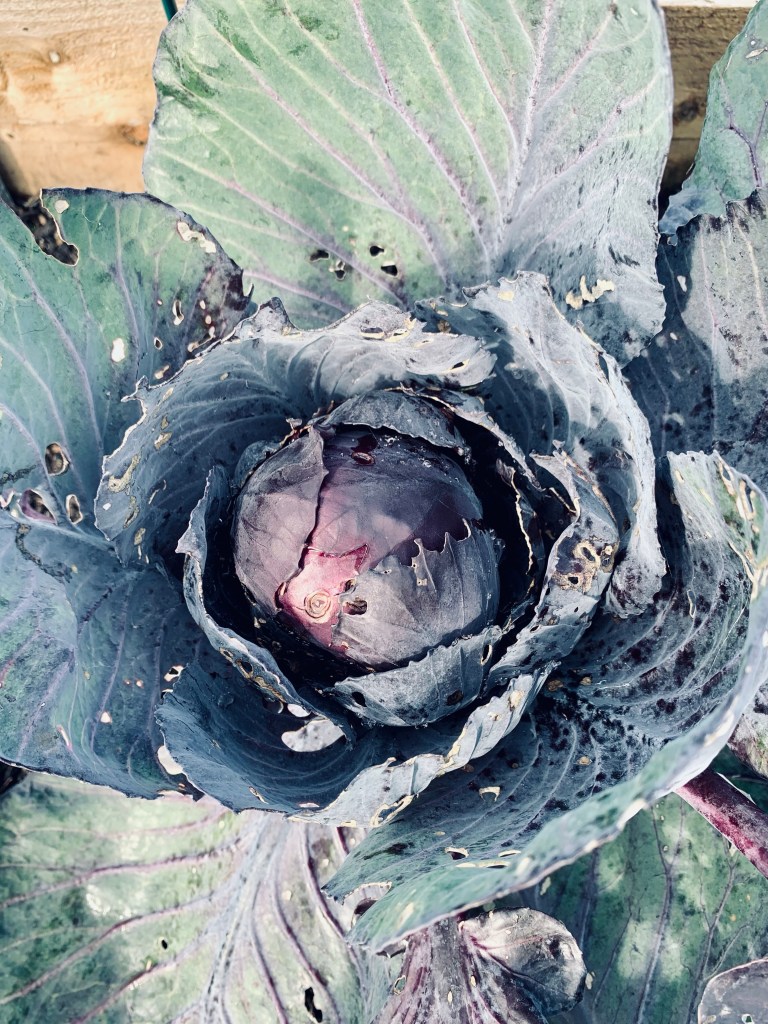
What the deer didn’t eat, the caterpillars and other bugs did.

This is a picture of one of my red cabbages from the raised beds. As you can see, the leaves are like lacework, having been nibbled by whatever passing insects or caterpillars we are harbouring. Companion planting helped a bit, but most of the garlic and other strongly scented plants that were supposed to deter passing devourers had been harvested long before these cabbages were, and then the fun started.

Bug salad bar

I am not despondent. I’m happy to lose some to wildlife, but am determined to find ways to minimise the damage and maximise our crops. Our soil is productive and good. I think that netting against insects for longer next year will help, as will deer fencing around the vegetable plots, if not the whole croft.

It’s a journey, and we’re learning.

On the whole this growing thing has been surprisingly successful for us, and next year with the benefit of the knowledge gained from our experimental year, more beds and the polytunnel in place, we’ll be even more productive.

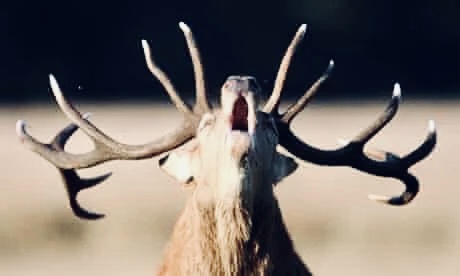
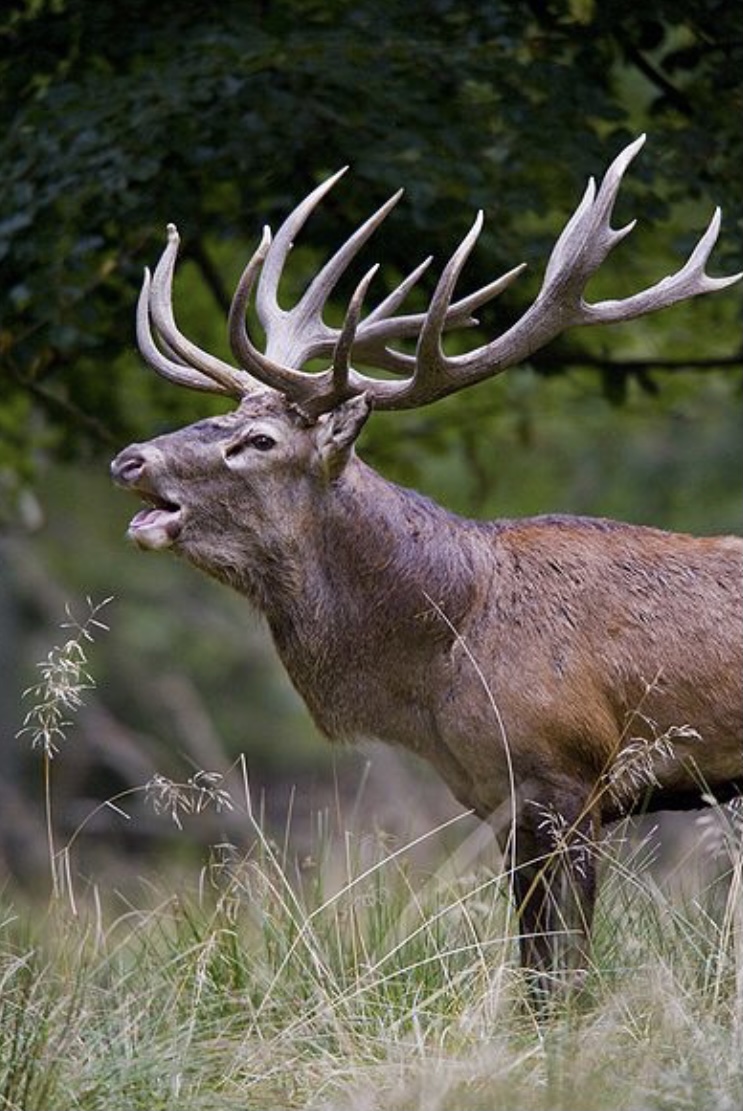
Roaring stags

It’s an unholy noise when it comes in the wee, small hours of a dark and windy night.

For the past few weeks we’ve had little sleep because of the stags rutting in the hills surrounding the croft, and at times clearly on the croft itself.

One night we were tucked up in bed when it started. The deep roars were very loud, and the stag was clearly incredibly close by. Within metres of the caravan, we thought. Sadly the weak beam of the tiny torch that we had in the bedroom wasn’t powerful enough to illuminate much.

It went on for some hours. That night we didn’t get much sleep at all.

The next day we bought a much more powerful torch and set up the wildlife camera in a new position to try and capture some interesting footage.

True to form, since doing so they’ve kept their distance, and although we can still hear them bellowing at night, it’s usually from the surrounding hillsides.

All we’ve captured on the wildlife camera is rain..

In praise of seaweed

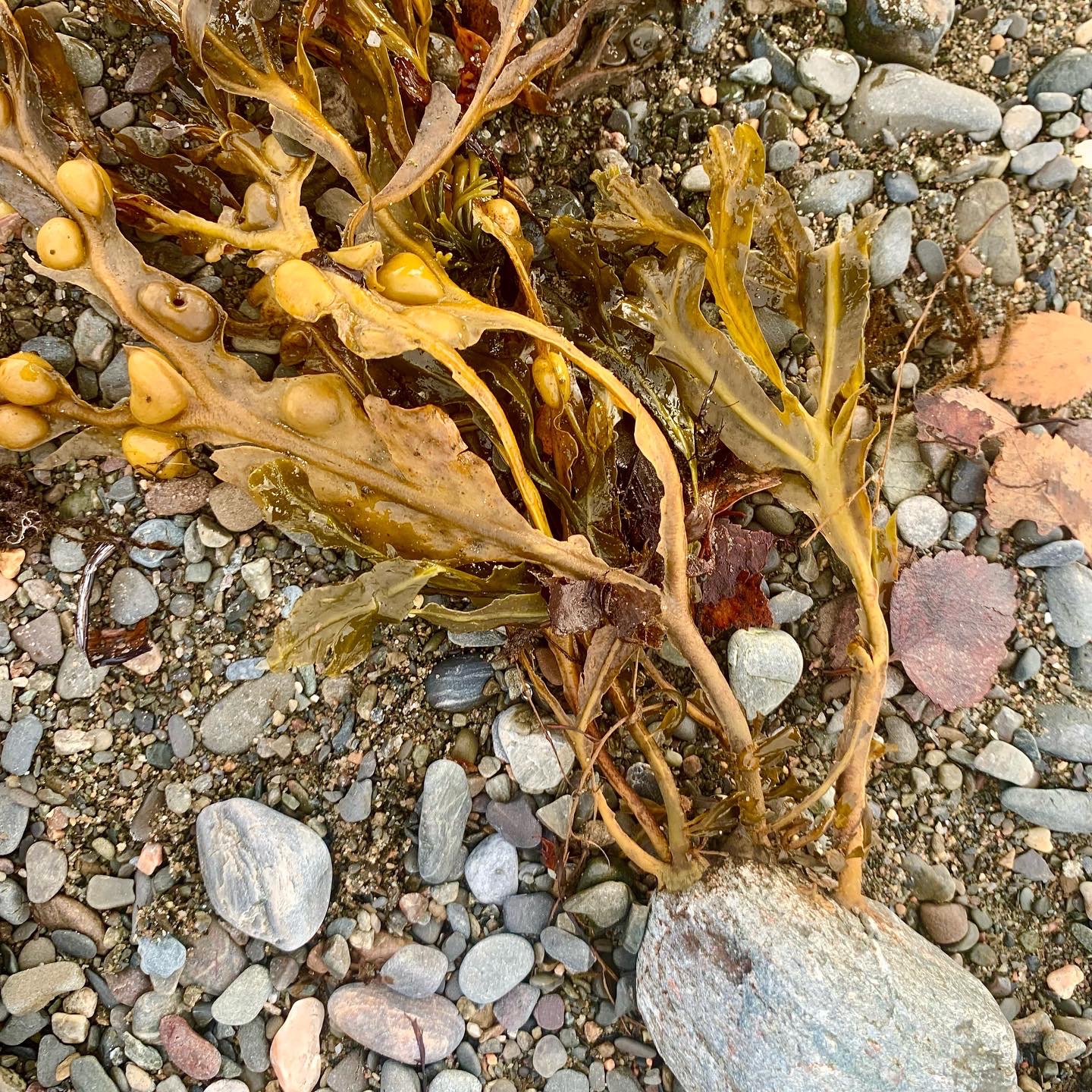
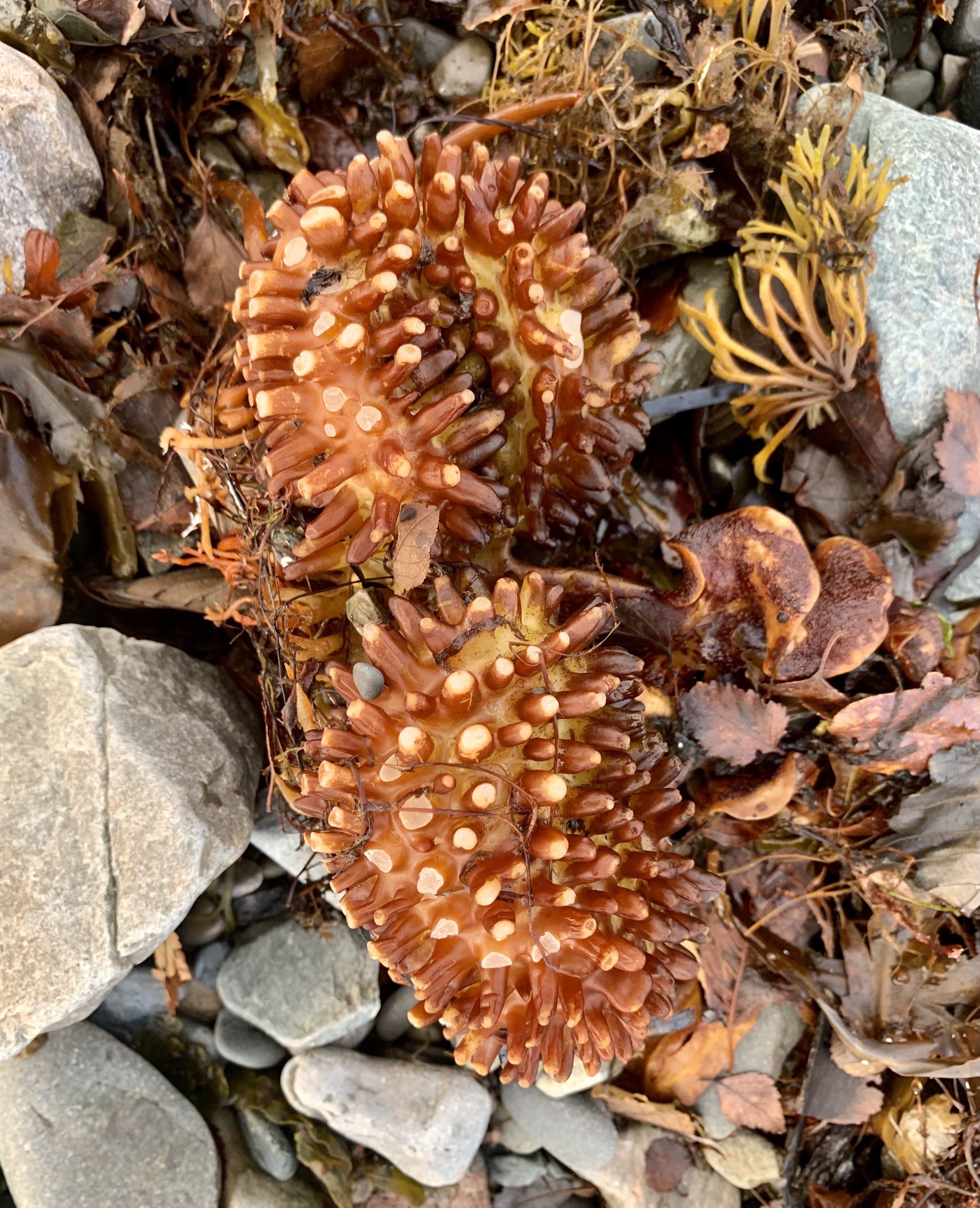
Amazing stuff, seaweed.

It’s a good source of potassium, nitrogen and magnesium. It also contains trace elements (nutrients that plants require only in small quantities) including iron, manganese, zinc, copper and boron, not always found in other types of fertiliser.

It’s also completely biodegradable and breaks down quickly, perfect for the vegetable beds.

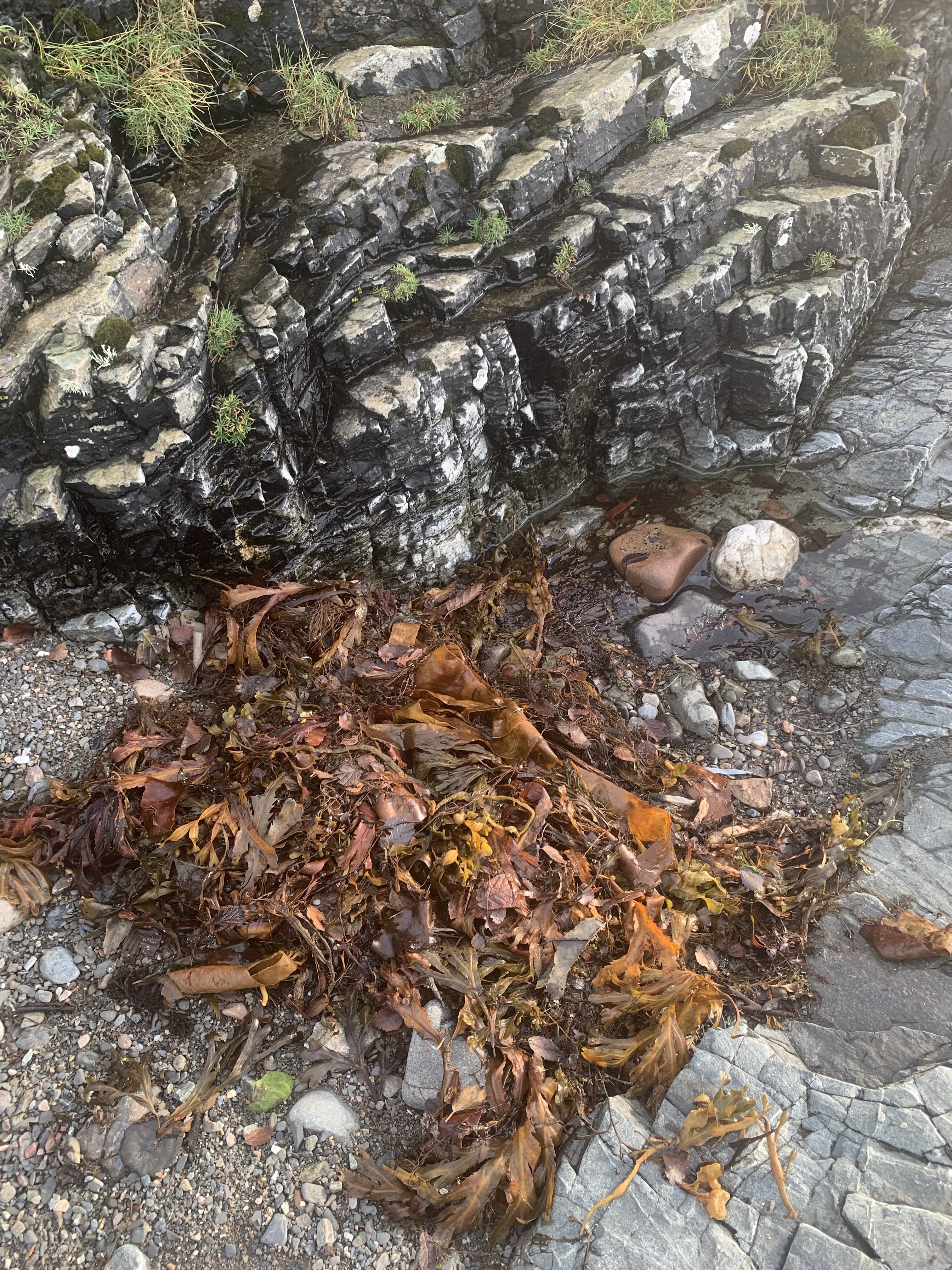
We could see how full of nitrogen the seaweed at the high tide line was – there was a line of nettles growing right out of it!

We plan to use this precious, free resource in two ways on the croft; as a mulch on our no-dig beds to suppress weeds and fertilise the soil directly, and added to our compost bins to add nutrients to the rotting down mix of green and brown matter.

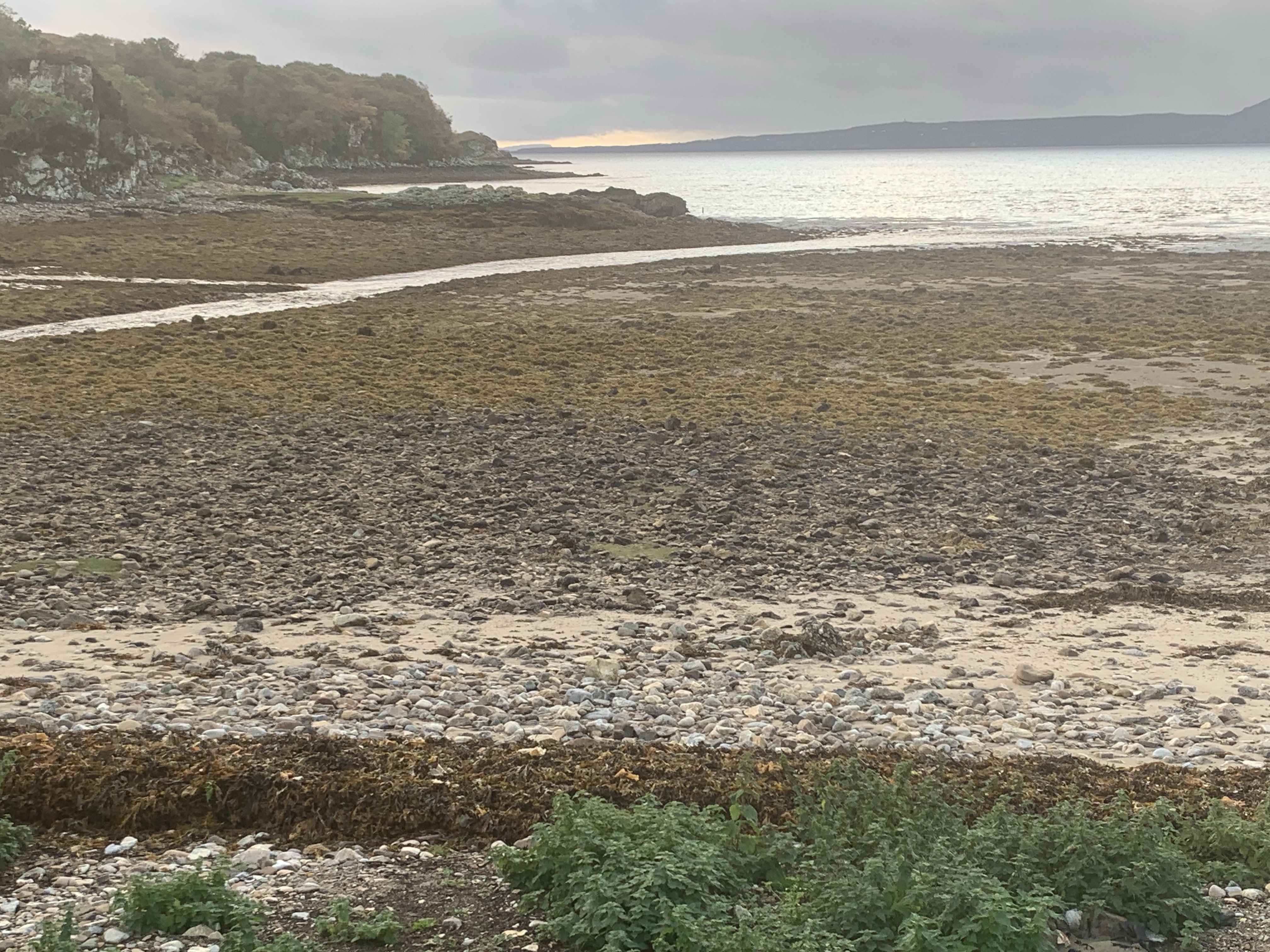
Yesterday we explored the western side of the peninsula looking for beaches where we could collect, wheelbarrow and load a car trailer with ease. We found two great beaches, both full of seaweed, and both highly accessible.

We won’t take too much, as the wildlife on beaches rely upon it, but there seems to be plenty for all. Next time we have a storm we’ll bag up a few feed sacks of it from each beach and bring it back to the croft.

Wintering

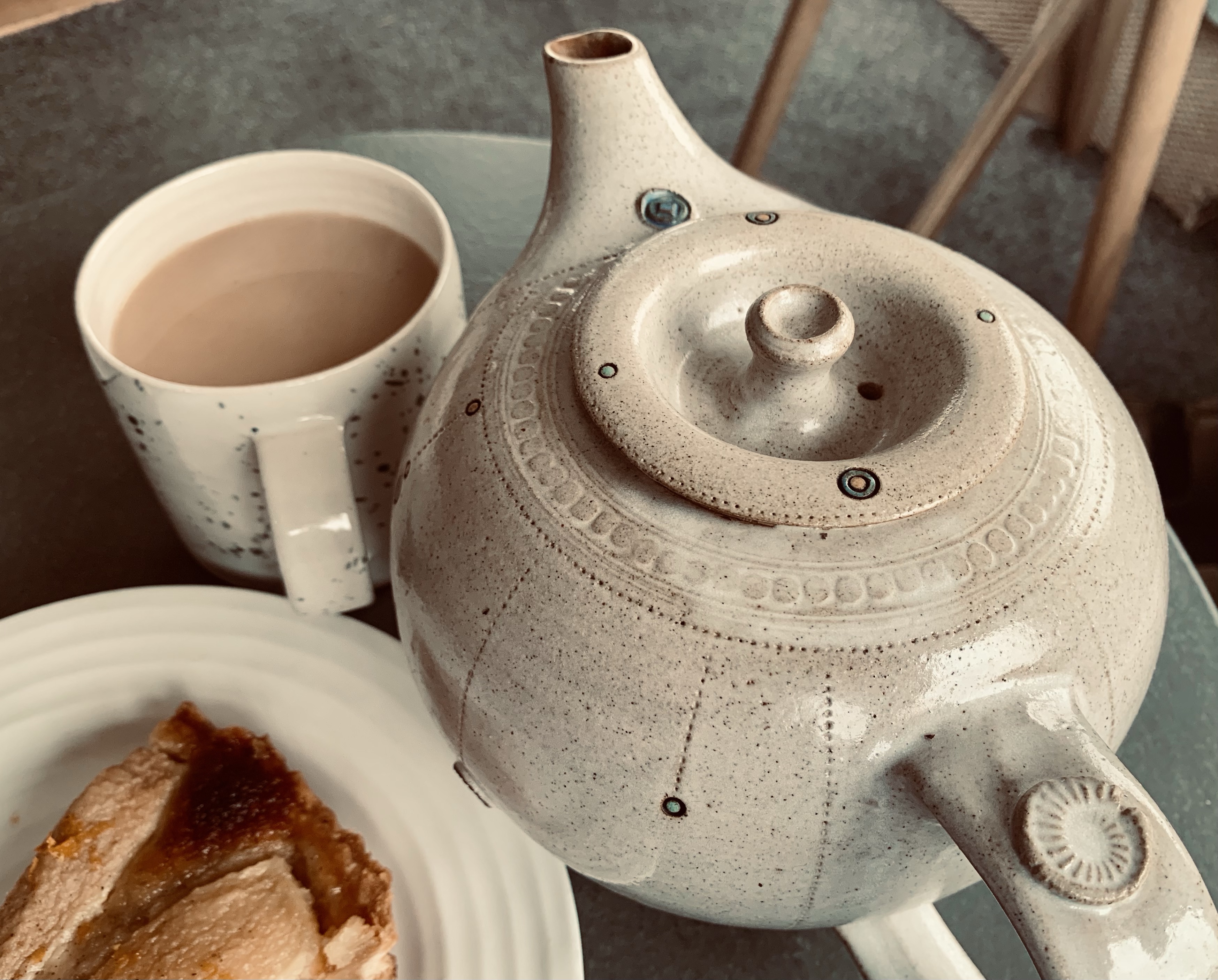
I’m sitting in the caravan on the croft sipping a cup of tea and watching the rain pelt the windows. The sea and the mountains have all disappeared and we are completely enveloped in dense, grey cloud.

We’ve had three weeks of very heavy rain and high winds to welcome the change of season and remind us that winter is but a blink away.

I honestly don’t mind the rain, and after surviving one highland winter in the high winds I’m much less nervous about the gales. I’ve learned to trust the bags of hardcore and lorry strapping that are holding the caravan down. We may rock a bit in the weather but we haven’t taken off yet..perhaps I shouldn’t speak too soon 😊.

As winter approaches though, the croft is saturated. I dashed out yesterday between rain flurries in my wellies to look at the raised beds, aware that I desperately need to weed and get the autumn garlic into the soil soon.

But it will all have to wait a little longer. It’s like a quagmire out there. There’s no fighting this weather; we just have to sit it out and grab the moments of respite when we can to start preparing for winter. At least husband can work in the relative shelter of the house on the plumbing, and is warm and dry as he solders pipes.

The composting situation is well sorted though. We visited a neighbouring croft yesterday after a social media appeal to reduce her horse dung mountain. We filled eight big feed bags with well rotted horse poo and trailered them back to shovel into our compost bins. Amazing stuff.

More trips are likely to be needed – we’ve hardly dented the dung mountain at all.. we’re so lucky to have this source of organic manure nearby. It will do wonders for our soil.

As soon as the rain slackens we’ll dress the beds and mulch the soil ready for overwintering. I’m probably going to put the environmesh back on too so that the kale, beets, parsnips, onions and garlic that will remain in the beds over winter can enjoy a bit of protection from the wind. It makes a big difference to the battering that they take.

The stags have been roaring on the hillsides for a few nights now. They do that in October as they compete for dominance and gather their hinds for the winter. It’s quite an uncanny, primal noise, and they’re clearly pretty close by. Next year, deer fencing is a must, before the trees go in.

For now, I’m embracing autumn and the imminence of winter. Tea, books by the fire, clear starry skies and warming drams of homemade atholl brose in the evenings to keep the weather at bay. Yep , the oats and whisky for our first bottle of the season are steeping as we speak…