Woodland croft day

There is a croft not far from here on the Sleat peninsula called Wildlife Croft Skye. It’s a beautiful woodland croft nestled into the hillside at Drumfearn, at the head of Loch Eishort.

Its owners, Phil and Laura, ran a croft walk-around event and discussion about sustainable woodland practices yesterday, and we attended.

Drumfearn and Loch Eishort

Phil had warned that the terrain was a bit steep and uneven in places, and with the event scheduled to run over four hours I confess to nearly cancelling as I was worried that my knees would give out. But I’ve followed Wildlife Croft for years and really wanted to see the croft and learn about how they managed it, so off we went.
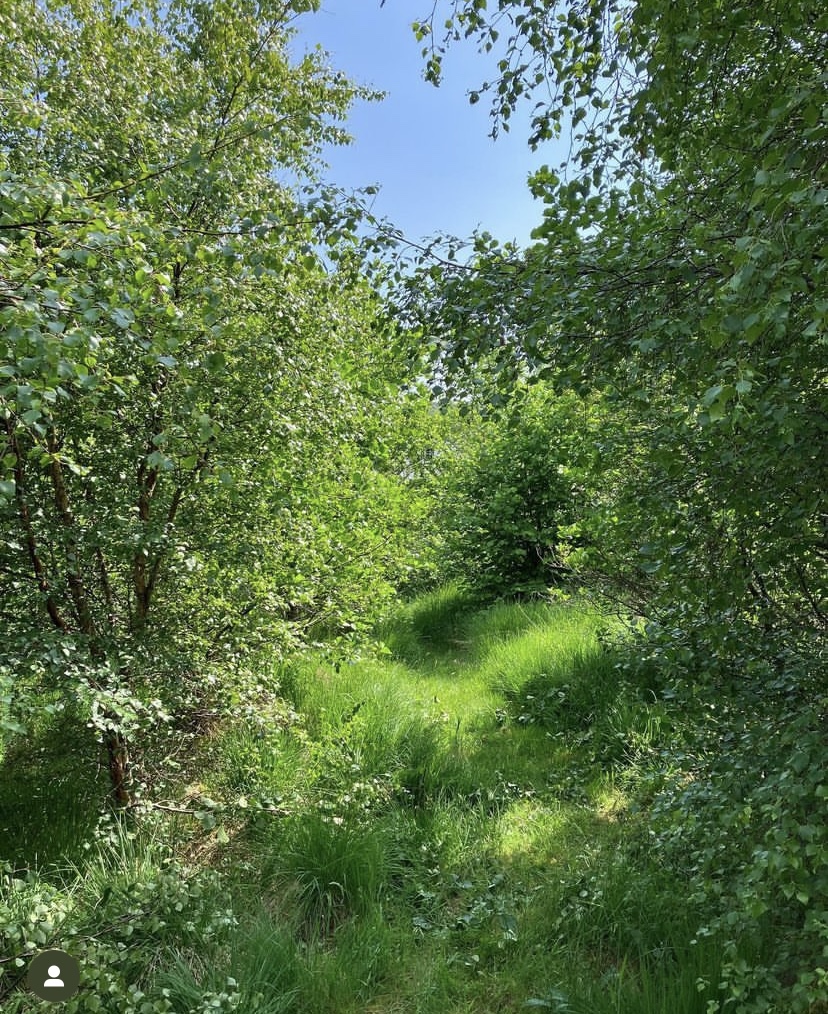
Wildlife Croft Skye

It was an overcast and drizzly day, but that didn’t dampen our enjoyment of it a bit. Phil had cut green swathes through the tall grass and undergrowth to create paths so navigating the three hectare woodland space wasn’t as difficult as I’d feared.

This is a green haven for wildlife on an otherwise quite typically barren hillside of island terrain. Trees cover most of the area, the bird and insect life is incredible and their house, polytunnel and bothy (Stonechat Bothy, which is bookable as a holiday let if anyone is interested in a remarkable place to stay) are nestled into the trees and aren’t at all visible from the single track road that snakes through the tiny township down to the sea loch.
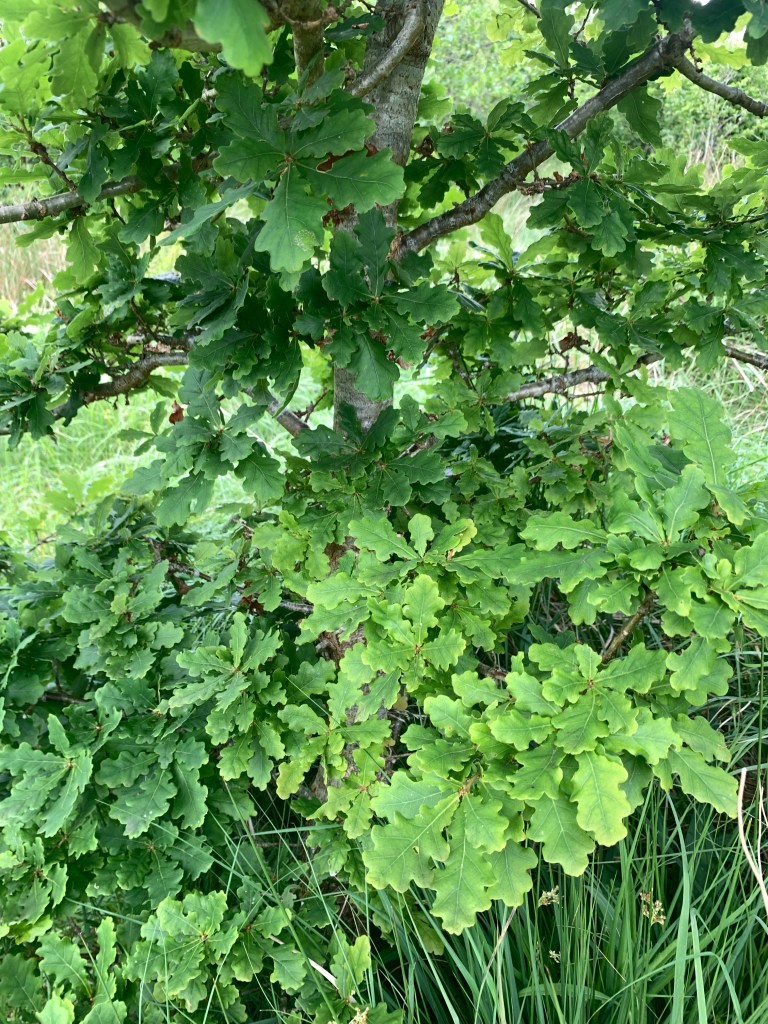
Young oak

The tree varieties, mostly native species and many that they have grown themselves from seed, are extensive. Alder, elder, aspen, rowan, oak, hawthorn, birch, beech, many species of willow (grown for Laura’s basket making) and so many others. There are clumps of wild raspberries, blackberries, pignuts, wild angelica, carpets of meadowsweet, wild irises, grasses and wild orchids in abundance.
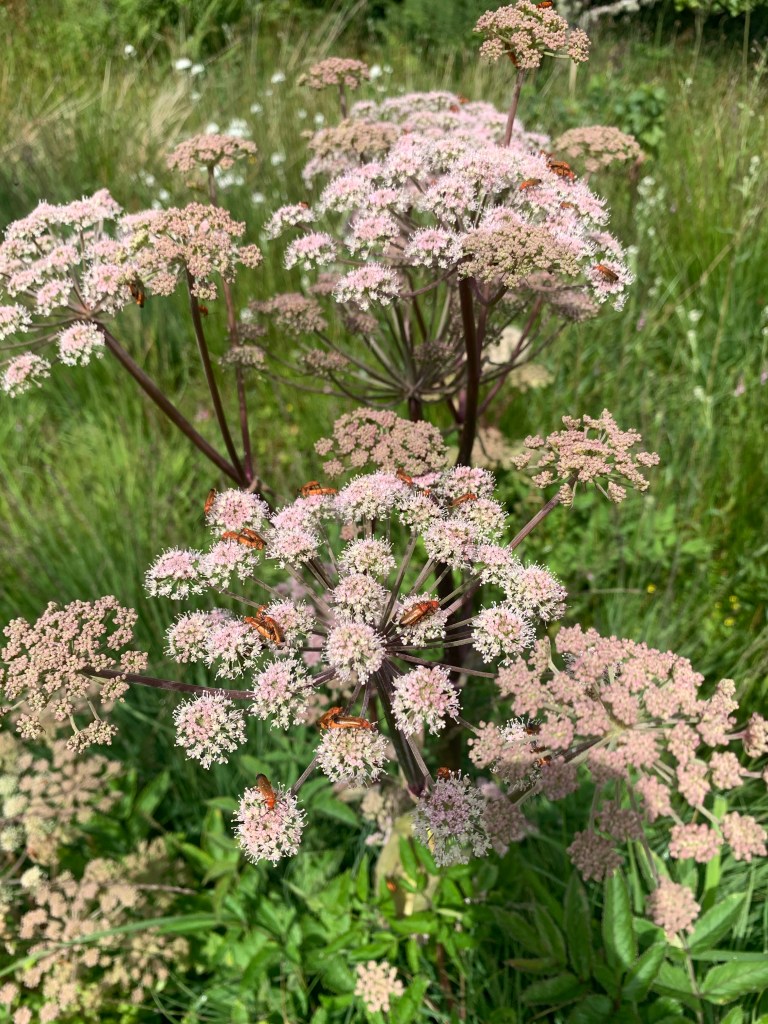
Wild Angelica with red soldier beetles

They have about fifty apple and pear trees, many of them heritage varieties planted over the last eight years, all growing successfully on a sheltered part of the croft, many already laden with young fruit.

Yes, the trees need managing, and no they can’t be just planted and left completely to their own devices, but Phil’s tree management is light touch, largely leaving nature to do its own thing. And everything seems to find a balance nicely.

We came away re-energised and inspired. This place started just like our croft, a hillside of over-grazed grassland on a steep slope, and now it’s a green oasis for wildlife, providing the family with fuel, food and a beautiful place to live in partnership with nature. If we can achieve a fraction of this we’ll be happy.
Hedging our bets

One of our neighbours a few miles away is Phil at Wildlife Croft Skye, a woodland croft, and an inspiration of ours.

He and his family have been planting and managing their croft for years now using sustainable regenerative principles and have a wonderful. maturing array of local trees growing on their land. He propagates and grows using locally collected cuttings and seeds.

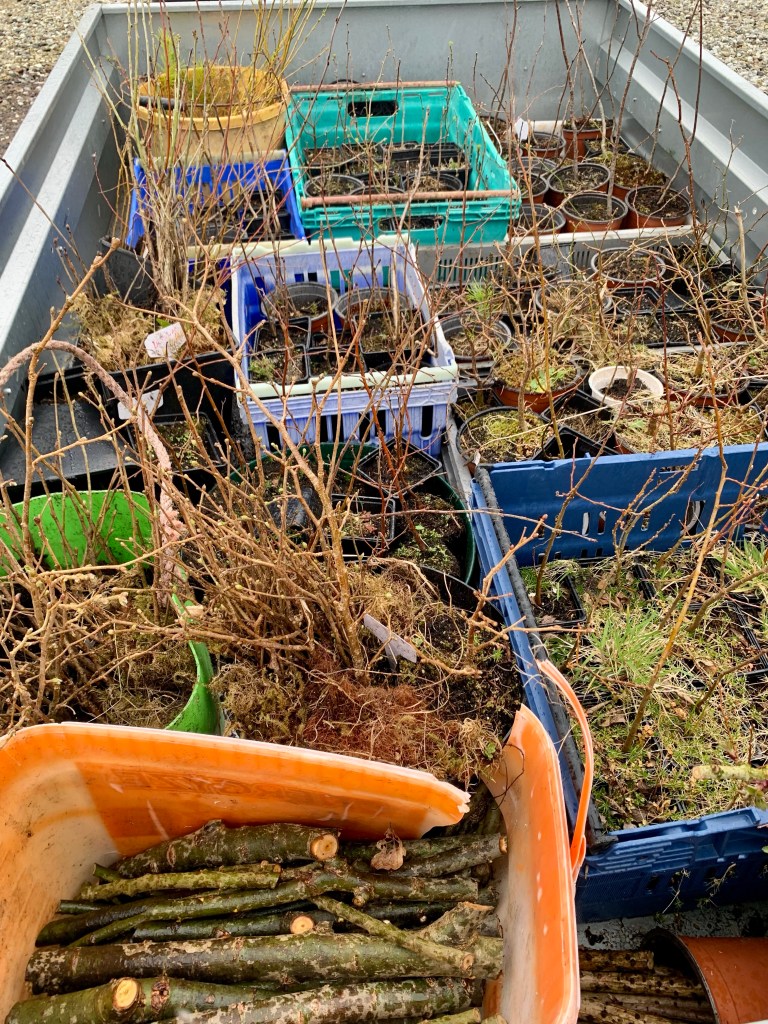
Recently he advertised that he was offering some of his hedging, shrub and young tree seedlings for sale, and we jumped at the chance to get our hedging started before Spring advanced too far.

Having tree stock generated from locally grown seeds means a good chance that they’ll thrive in our wet and windy conditions, having grown in the same.

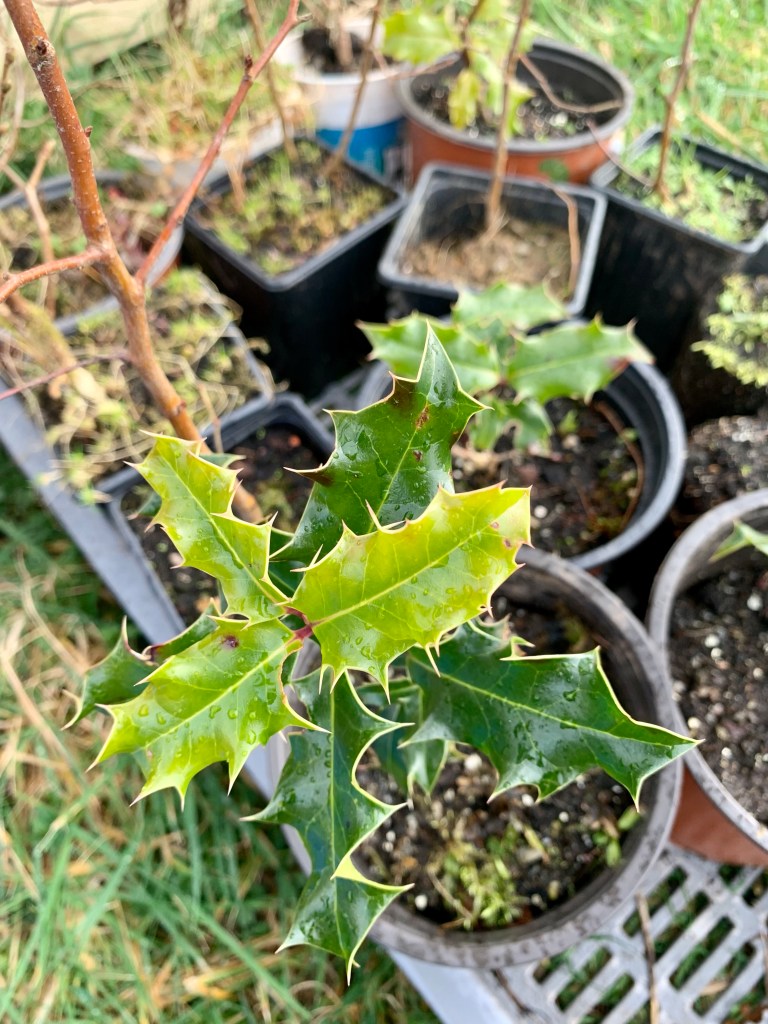
We bought a trailer load of cuttings and seedlings so that we could start hedging inside the newly installed deer-fenced area of the croft. The ground is saturated at the moment now that the snows have cleared, making it a good time to dig these in (and slightly less work, although poor husbands back is disputing that this morning!)

This is a good mix of Rowan, Oak, Scot’s Pine, Hawthorn, Grey Willow, Wych Elm, Hazel,
Purple Willow, Downy Birch, Holly, Goat Willow,
Elder, Honeysuckle and Dog rose.

Husband and Phil worked through the rain heroically to clear and plant most of them on the croft yesterday. They’ll eventually provide shelter from the wind for our vegetable beds and the fruit orchard that we plan to plant next spring.

They’ll also most importantly provide a haven for wildlife, insects and birds, and food in the form of holly, elderberries, brambles, rosehips and rowan berries. Bringing this croft back from bare land to a richer, more diverse ecosystem is important to us both, and depends upon this.

It feels good to be taking the first steps towards our ultimate goal of a woodland croft. It’s an enormous task, but we’re determined. Watching David Attenborough on Wild Isles over the last week just reinforces how much we’ve lost already and how important every patch of nature is.

False spring

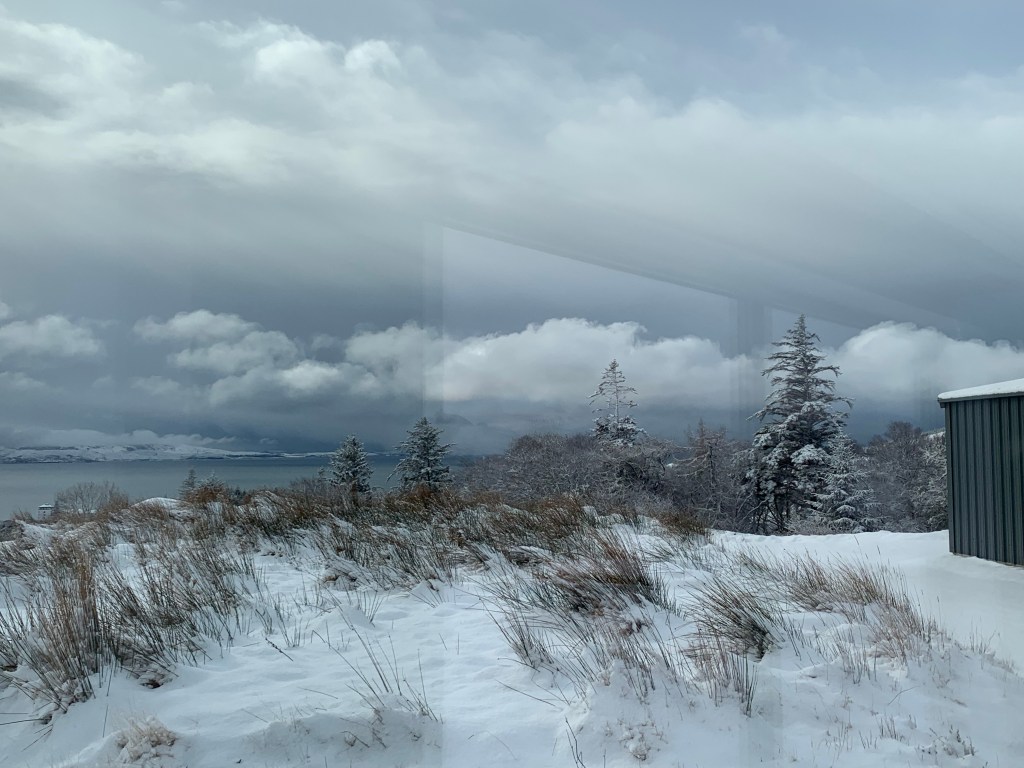
We awoke a few days ago to a silent white landscape. Quite magical in its way with the snow blanketing the building rubble in a sanitising coat of white.

White morning

But clearly way too cold to put any tender plants out into the unheated polycrub anytime soon.

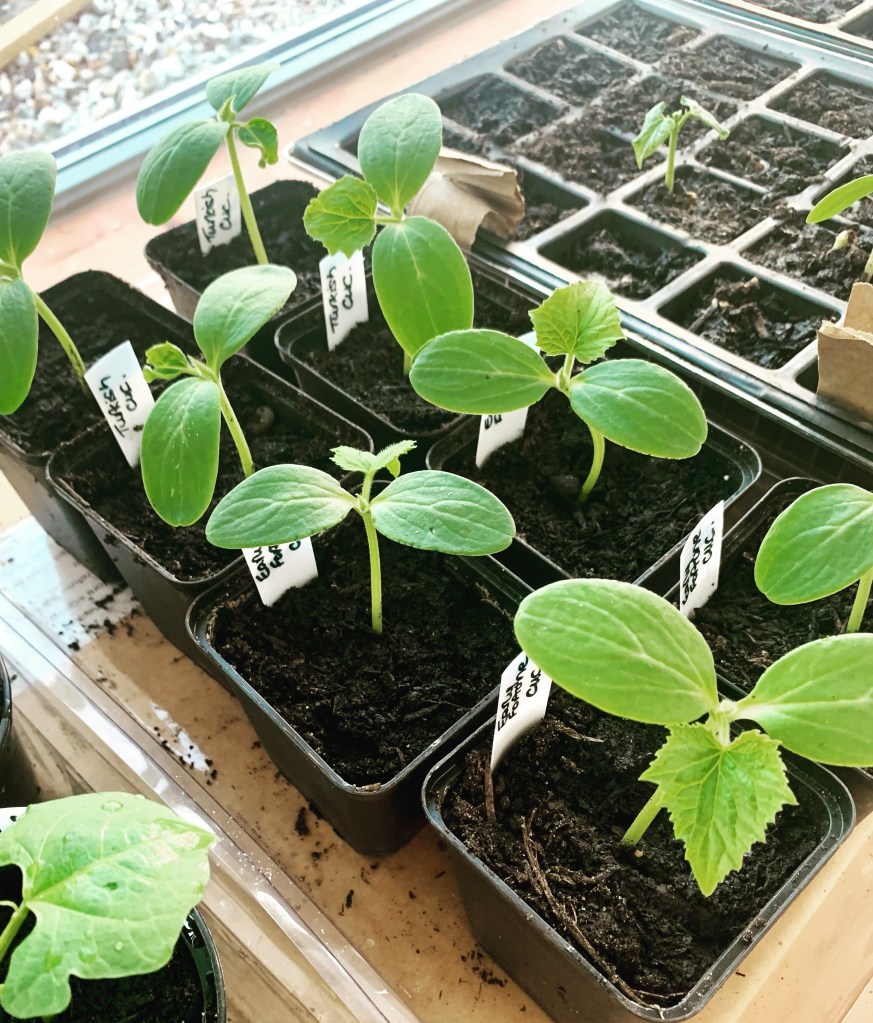
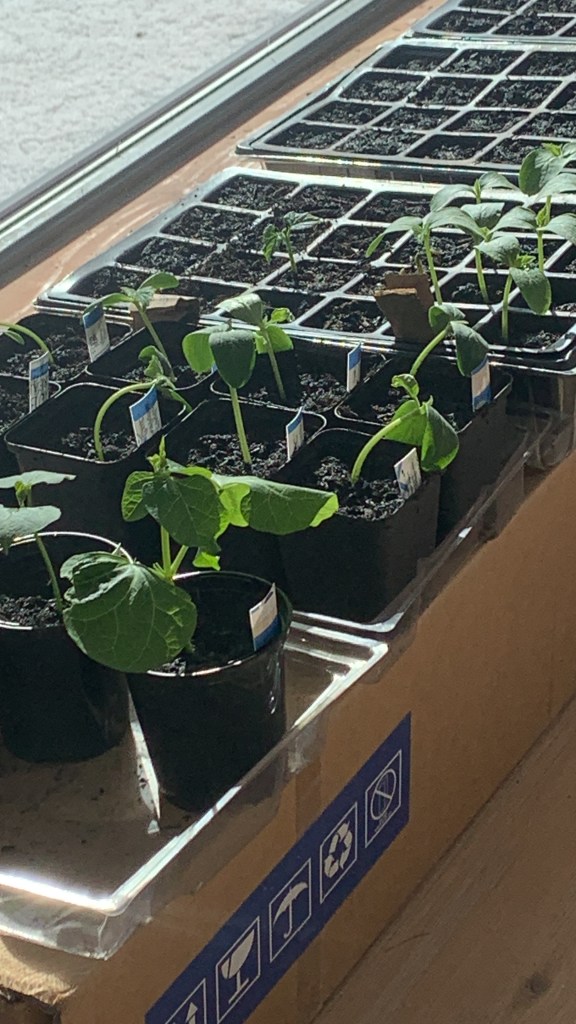
We’ve had a bit of a mixed result with our early seed germination, and a further week of late snow here on the island. I think that some of the seeds took one look at the weather outside and thought, no way..

The cucumber and beans raced up to meet the world, but the chillies, kale, tomatoes and lettuce have been more reluctant to emerge into this chilly white landscape. And I can’t blame them.

The locals call February “false spring” as we enjoy gloriously bright, sunny days at this time of the year. It’s quite stunning.

But winter still has the land in its icy grasp and snow in March and April often follows. Plant out at your peril. It’s still frozen hard under those beams of trickster sunlight.

These are still days for big, warming breakfasts, pots of tea by the fire and much watching of the weather from the warmth of the sofa.

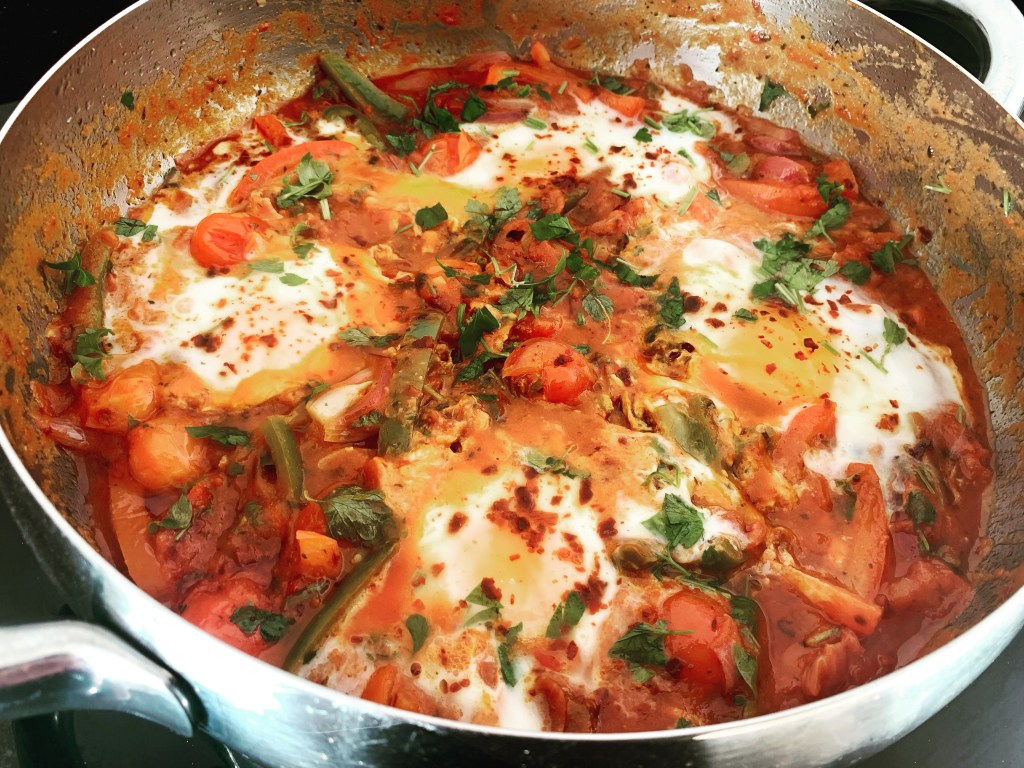
Çılbır, poached eggs with yoghurt and peppery butter
Shakshuka for breakfast

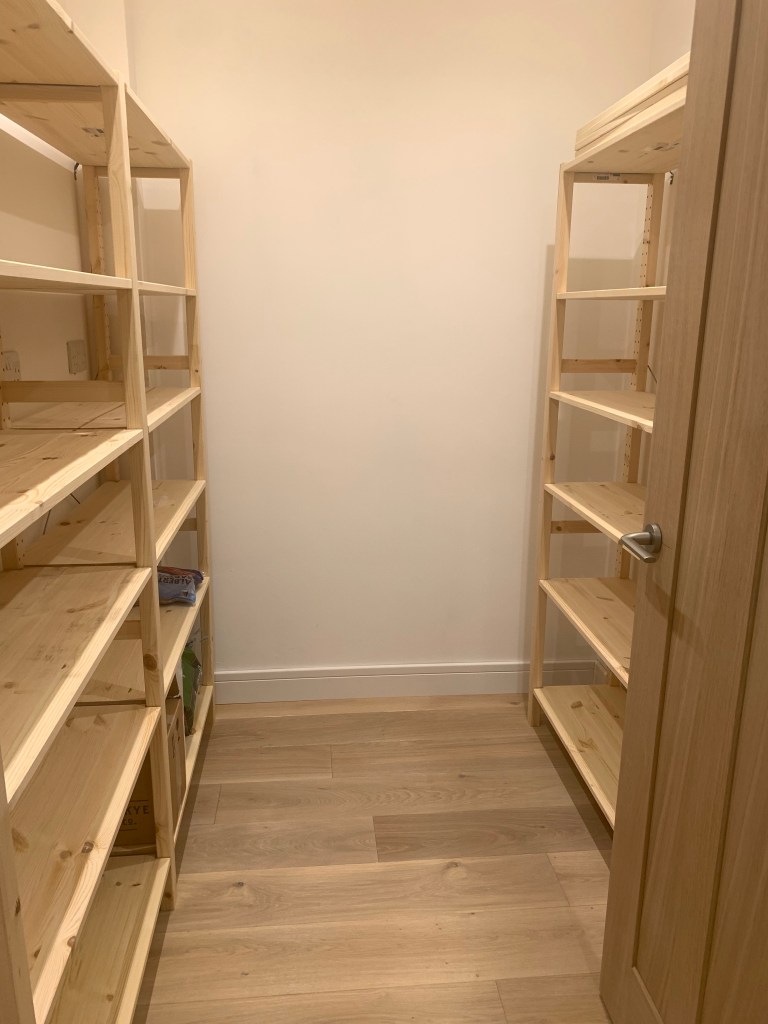
The pantry is Go!

I remember writing about my desire for a pantry three years ago when we were designing the house. Ive always yearned for somewhere dedicated to store food.

When we identified a small area in the house plans that had no natural light and could be used as a pantry, I was there. Who needs another metre or so on their bathroom? This was far more important!

It’s always seemed sensible to me, and even more so since living through a highland winter or two, to have longer term stocks of dried or canned supplies in case of emergency or not being able to get to the shops because of the weather.

Besides, buying in bulk is nearly always more cost effective than in small quantities.

I’ve always been this way. Squirrelling away lentils, flour and dried beans in any spare corner of the kitchen that I could find. Any shelves in proximity to the kitchen not taken up by books have been filled with jars, cans and packets.

This desire has been heightened even further since growing our own vegetables on the croft. It’s true that there’s nothing as satisfying as eating your own organic produce. For the last two years I’ve held back the quantities that we’ve grown because we’ve had no way of storing any surplus.

I’ve been interested to learn about methods of food preservation and follow a number of self sufficiency bloggers in envy as they fill row after row of shelves in their cellars with their own canned produce.

Today was the day. I felt like cutting a red ribbon to launch her! The shelves went in and with lights and power the room is fully functional at last. The pantry is operational!

No small room with bare shelves has ever created so much excitement in a house as this one. I can’t wait to start organising and filling it.

Snow, sills and orange cake

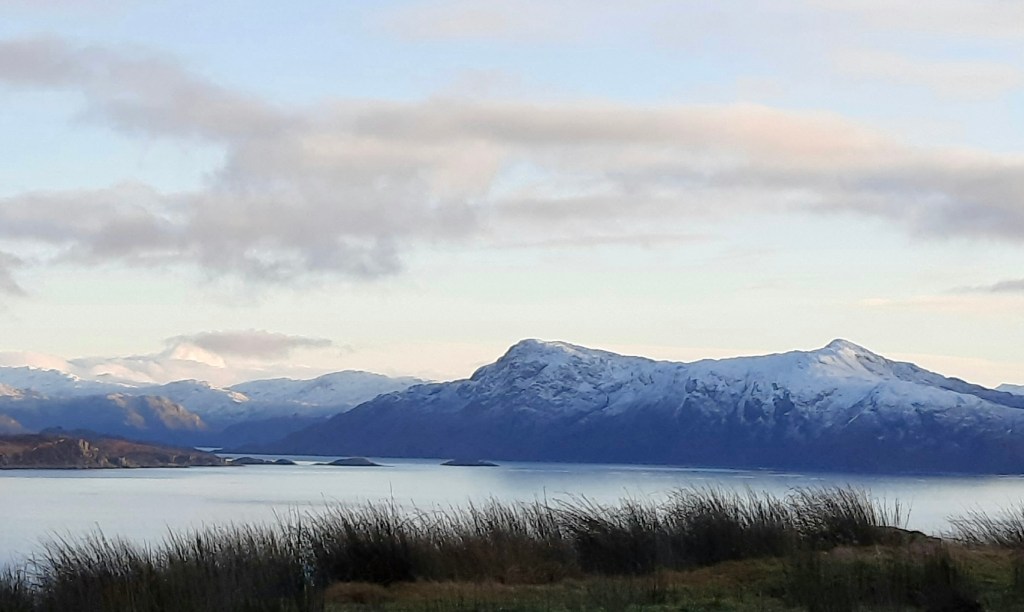
We have snow on the tops at last. I always compare the weather at this time of the year with when we arrived on the island two years ago in the teeth of a storm, and both subsequent years have been warmer. I was beginning to wonder if we’d see any snow at all, but temperatures plummeted a few days ago and we now have a glorious white dusting on the high peaks.

Dusting of snow on the hills

The MVHR and the heating are operating well in the house. It’s already significantly warmer and more stable in temperature than the caravan.

As we shiver and dress in the damp cold of 5°C mornings I hold onto the fact that we’ll be in the house in a few weeks time. No more icy mornings playing the duvet game trying to dress without exposing any bare flesh to the elements.

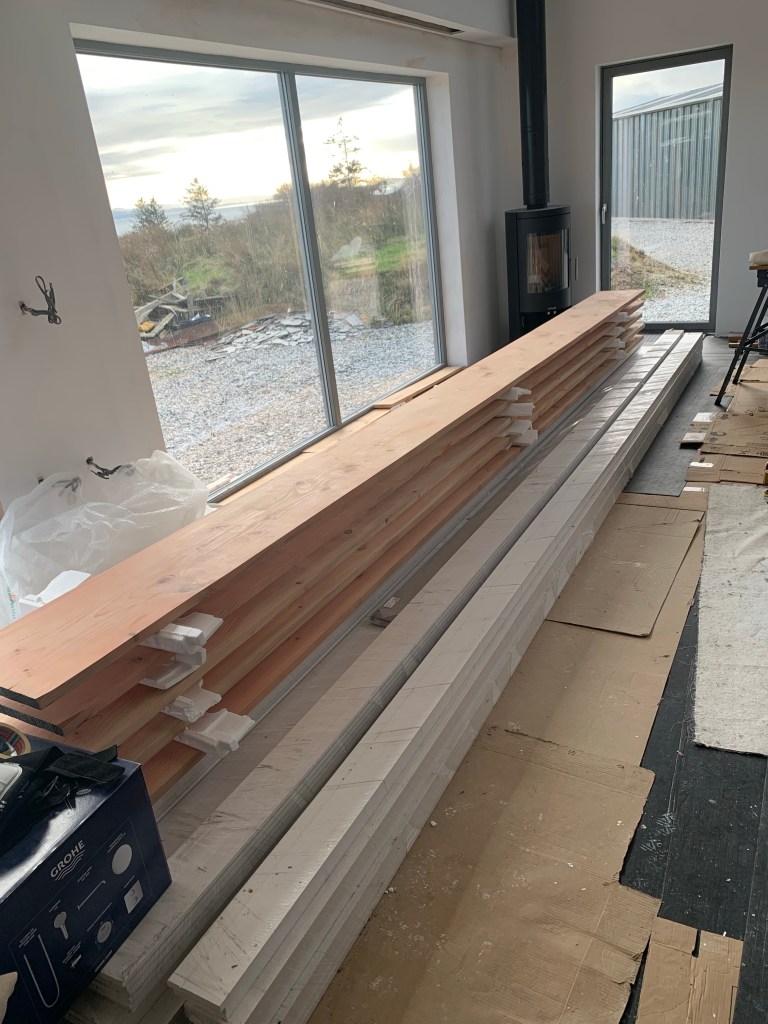
After a wait of several weeks the wood for the sills arrived this afternoon, cheerfully delivered by our local sawmill guy. In the end he decided that the pews would be rather wasted if we were to refinish them for sills, and that he would prefer to preserve the original patina, so declined to sell them to us and found us suitable 4m lengths of local Douglas fir instead.

4m Douglas fir planks

I can’t say that I blame him, although I was quite taken by the idea of old wood having a second life in our new home. But at least that patina, burnished by the bottoms of the righteous as it was, will be protected.

Husband has been fitting sockets, switches and lights like a demon and will move onto one of the bathrooms next week. Once we are electrickified and have a working toilet and shower, we’re in!

The fact that the house is still stuffed to the rafters with building materials, tools, equipment, wood and boxes of everything that you can think of is another hurdle to get over. Once everything is connected up…

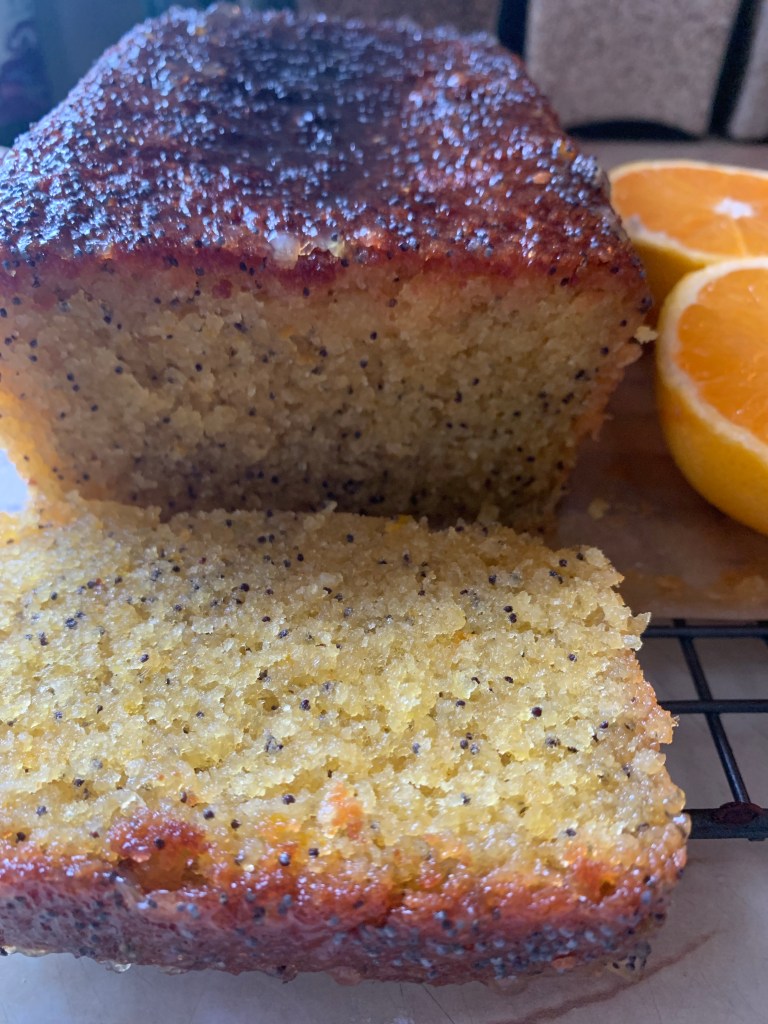
In the meantime I have tried a new recipe in my sloping caravan mini oven. This may be one of the very last cakes I bake in here, isn’t that such a strange thought. My new ovens await, sitting there, smugly level, shiny and pristine.

This is Nigel Slaters orange and poppy seed cake, sticky with a fresh orange and marmalade glaze which I hope won’t taste any less good for it’s signature 45° slope.

Grey, but beautiful

We’ve been struggling with very wet days for the last month. The croft is saturated and the burn is constantly in full spate.

It’s also bizarrely mild for this time of the year. Two years ago when we moved in around now there was snow on the hills and it was about 8°C colder. This week the day temperature has been hovering around 16°C , like a Highland summer, and my plants are all very confused.

Everything still growing

I still pop into the polycrub a few days each week to weed, water and harvest what’s ready even though this is supposed to be the down season.

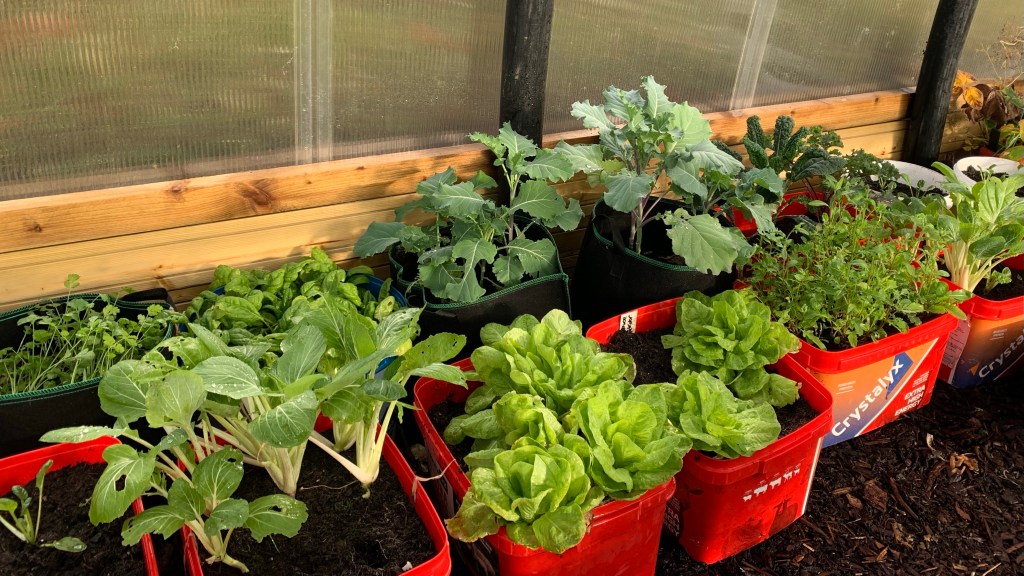
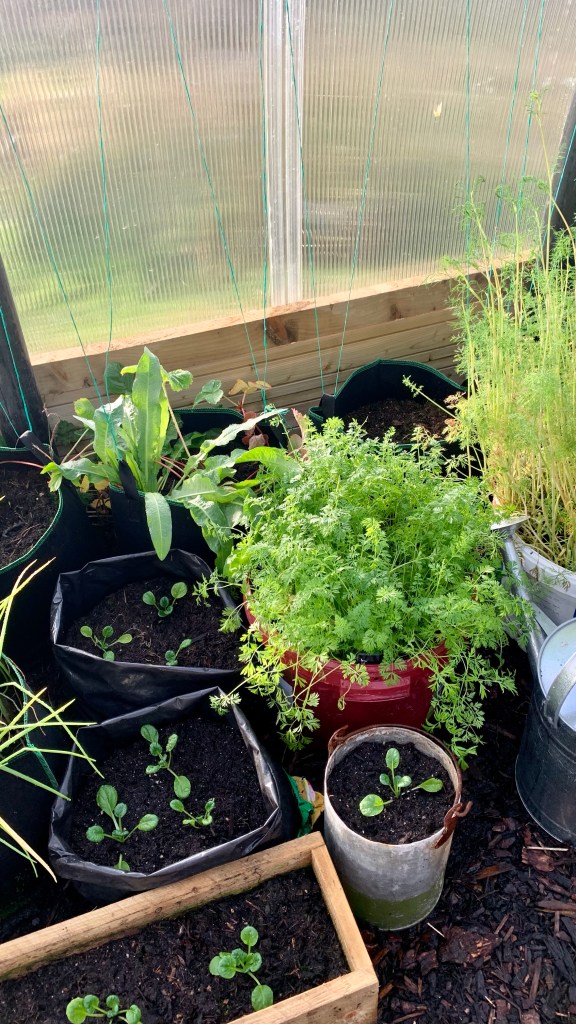
This week I transplanted thirty tatsoi seedlings (Asian winter greens) into larger pots and although I’m horribly late with them it will be an interesting experiment to see if they still grow. The pak choi has done well and it’ll be good to try fresh new green things over winter.

Tatsoi seedlings everywhere

Even when it’s grey, it’s still beautiful. This is a snap I took of the cloud inversions sweeping across the Knoydart mountains this morning from the croft. I don’t think I’ll ever get blasé about this view.

The deer are here in such numbers now that it’s almost impossible to grow anything unprotected in our outdoor croft raised beds. We’ve been left with no choice but to fence off an area if we want to get any harvests next year. A job for next spring, I think.

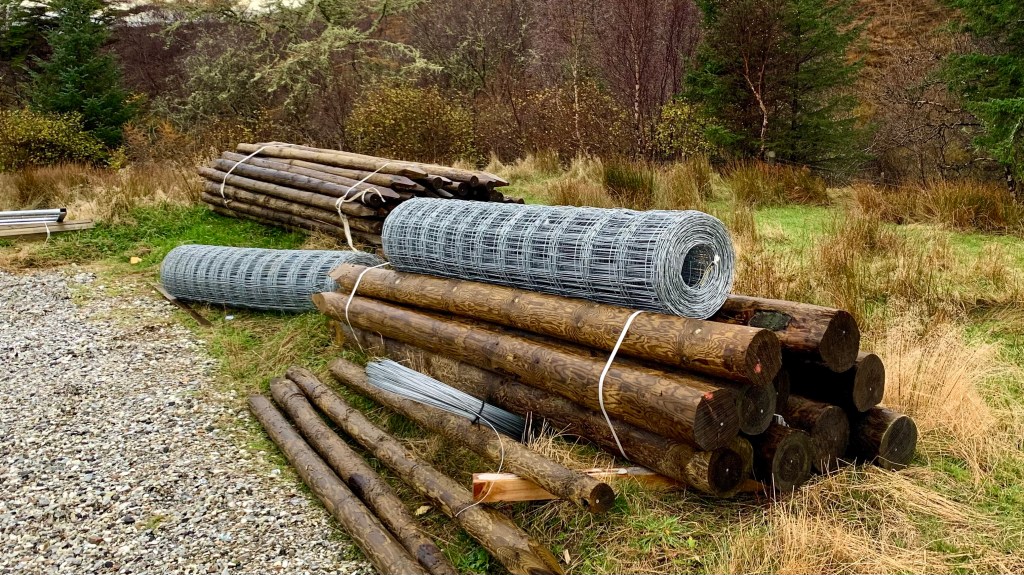
The posts and wire have arrived already. When it’s built, the fence will be eight feet tall, which is far from great to look at, but is sadly necessary.

I can’t wait to curl up by the Woodburner in the house this winter and plan out the protected growing area. The orchard will have several varieties of heritage apple, pears, damsons and maybe we’ll try cherries too.

The last few weeks

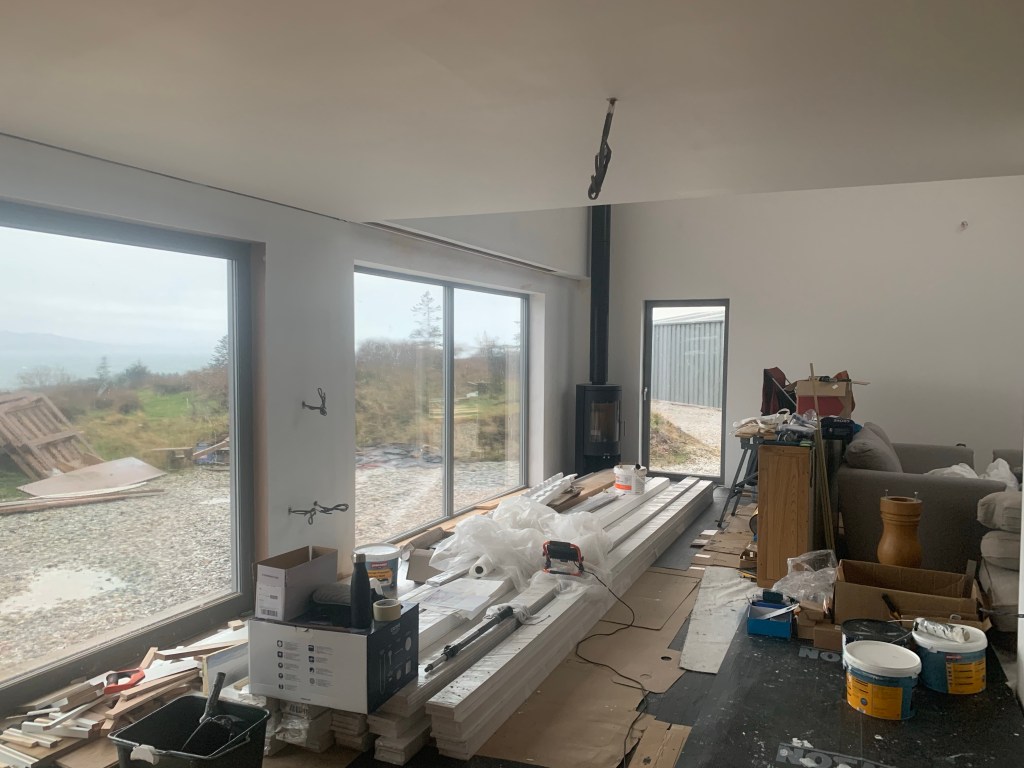
Despite not having a joiner to finish the skirting boards, which are unceremoniously piled up in the living room, or the door linings and architraves, or a plasterer to finish the stairwell, we’re still making progress.

Chaos, building supplies, painted walls!

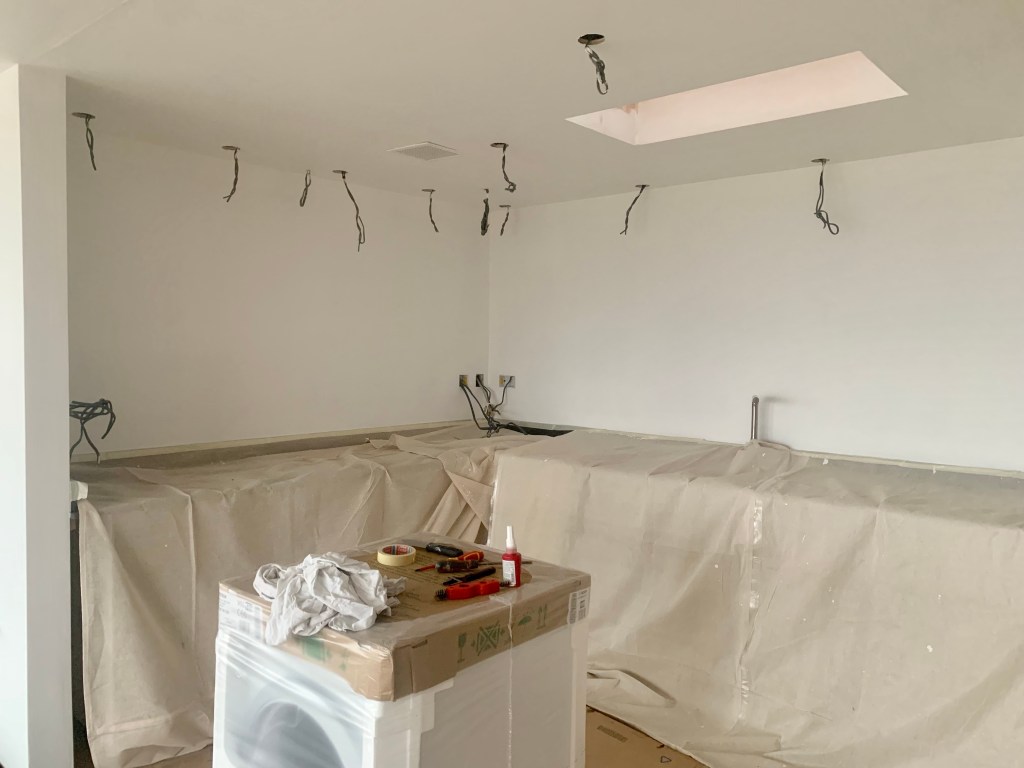
Good friends have helped with coats of paint in the bedroom, the upstairs bathroom, landing, dining room and kitchen. Andy is so much better at painting than I am, and so much more efficient, that a weeks work has resulted in a huge difference. It’s all starting to look dangerously white..

I’m hoping against hope that there will be enough rooms ready for us to move in over the next month. We’ve had surprisingly mild weather for the time of year, but it can’t last. We had snow on the hills at this point two years ago when we first moved here, so it may be delayed, but it’s surely coming.

Kitchen being painted

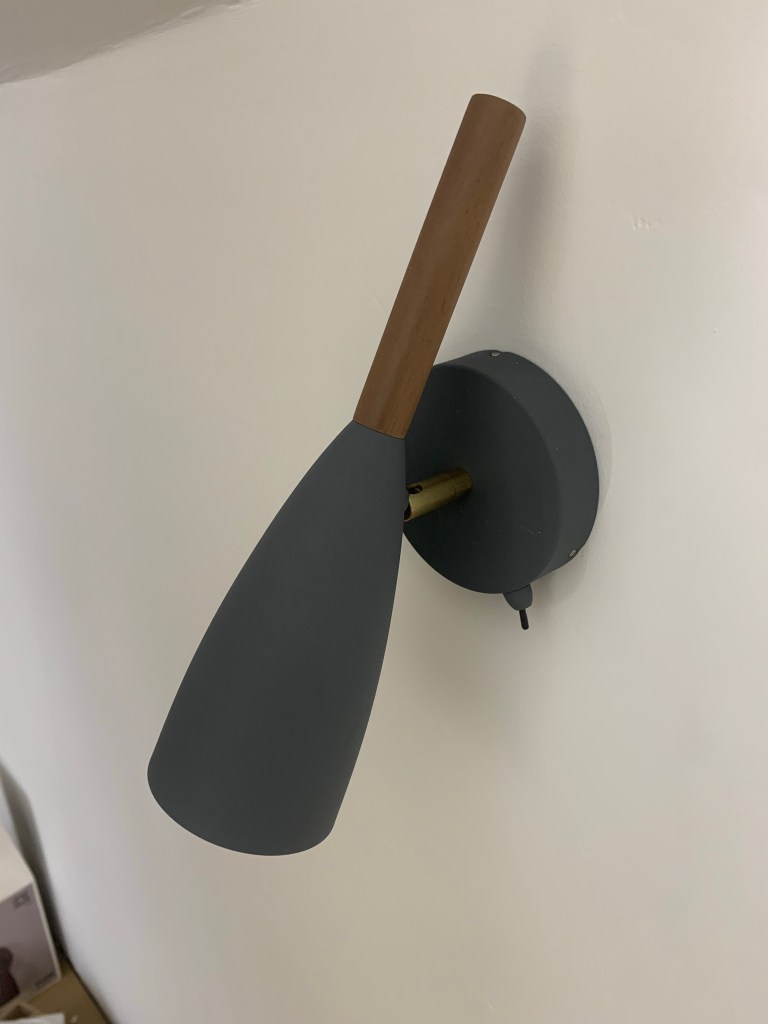
Husband has been fitting lights and sockets in the house and will move onto the bathrooms next. If we can get basic facilities up and running we can move in and enjoy the warmth. It’s already a comfortable and constant temperature compared to the caravan.

First wall light in

As we continue the build and start making plans for our first family Christmas for the last few years, I’m aware of how much we still have to do to finish it, but moving in feels very close now.

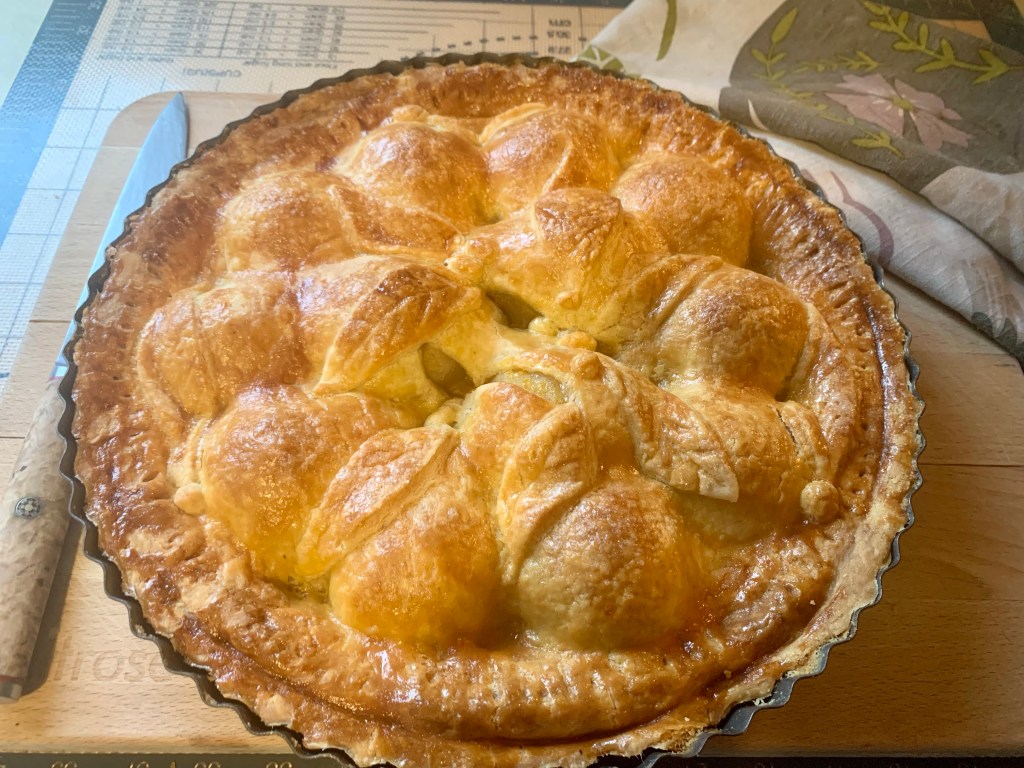
Whilst all this happens, life also goes on. The deer fencing for the vegetable and orchard area of the croft has arrived. I’m not quite sure when it will get installed, but it will at some point. We have a friends birthday coming up and I’ve baked her a pear, brandy and orange pie.

Because why not.

Pear pie

Heritage tomatoes

My first tomatoes grew prolifically this year in the polycrub, but almost without fail the several varieties that I grew had very little flavour.

I don’t know whether it was lack of sun, as we had a pretty awful summer, or some other factor. But that acid-sweet bite that I’d been looking for that’s so lacking in supermarket tomatoes just didn’t develop.

This was true for both the small cherry tomatoes that I grew as well as the larger tomatoes, vine and bush types. Lots of fruit, but slow to ripen and not that sweet.

Except one variety that had some hope.

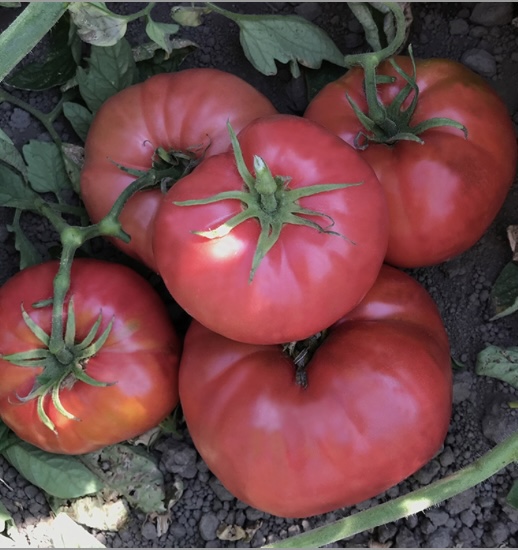
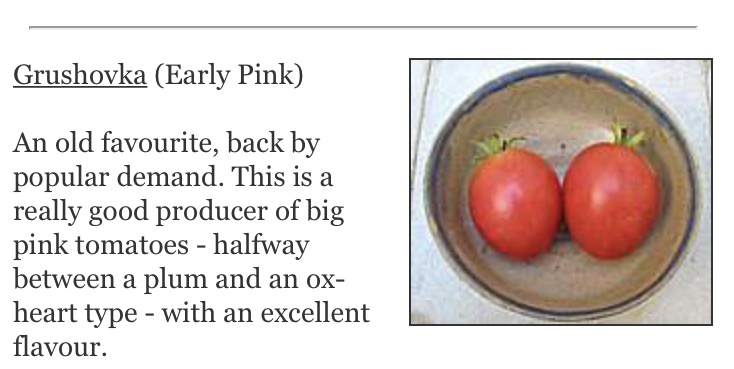
Every now and then in a handful of harvested fruit I’d get that hint of acid-sweet, intense flavour, and rummaging in the grow tub to find the plant label I eventually found it. They’d all got a bit tangled up together. A heritage Russian variety called Grushovka. One of several Russian bush varieties that I tried this year.

It’s one that I bought from Real Seeds with medium sized heart-shaped fruits that are more pink than brick red. It had good flavour, although the tomatoes were slow to ripen, despite advertising that they were earlies.

I’ve decided to try and save some of the seeds. Not only will this save a bit of money (a pack of ten tomato seeds from Real Seeds is about £3 plus postage, and I grew dozens of plants this year so it mounts up) but hopefully it will mean more success with plants that cope well in our conditions next year.

I’m discovering that our short seasons really restrict the success of ripening up here.

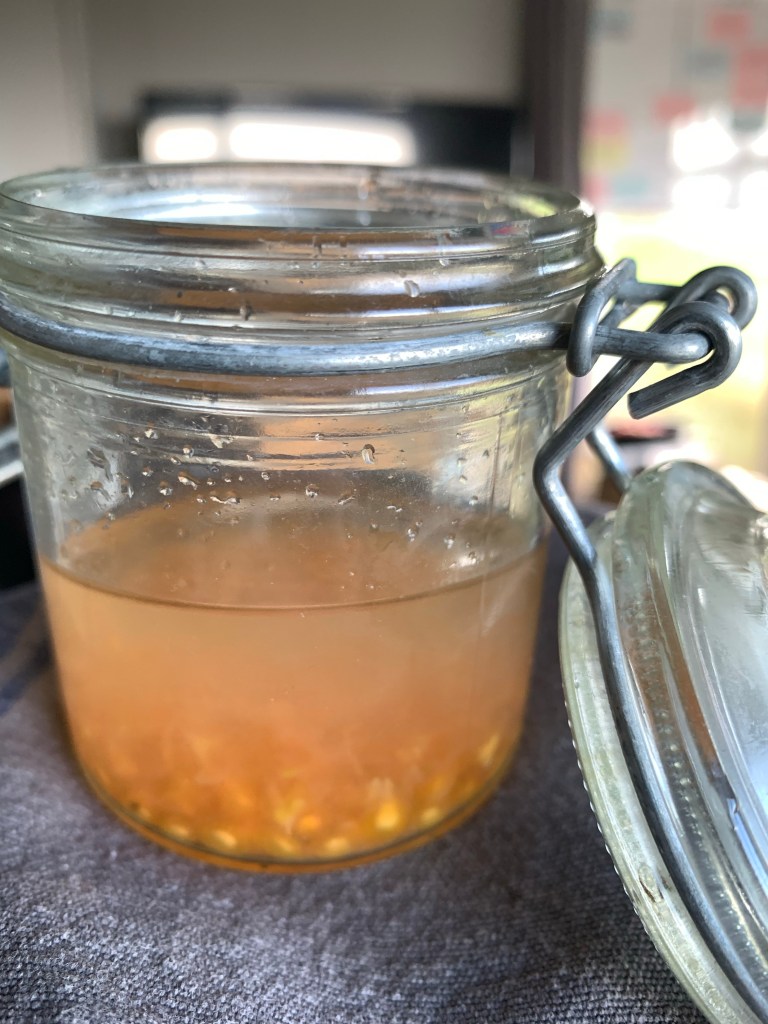
Fermenting tomato seeds

I’m fermenting the seeds from a couple of these tomatoes now for a few days. Then it’s rinsing, drying thoroughly and storing in paper bags until use next spring.

It may take me years but I’m determined to crop excellent, super-tasty tomatoes here. I know it can be done.

Experiments of the vegetable variety

This year has been full of experiments of the vegetable variety.

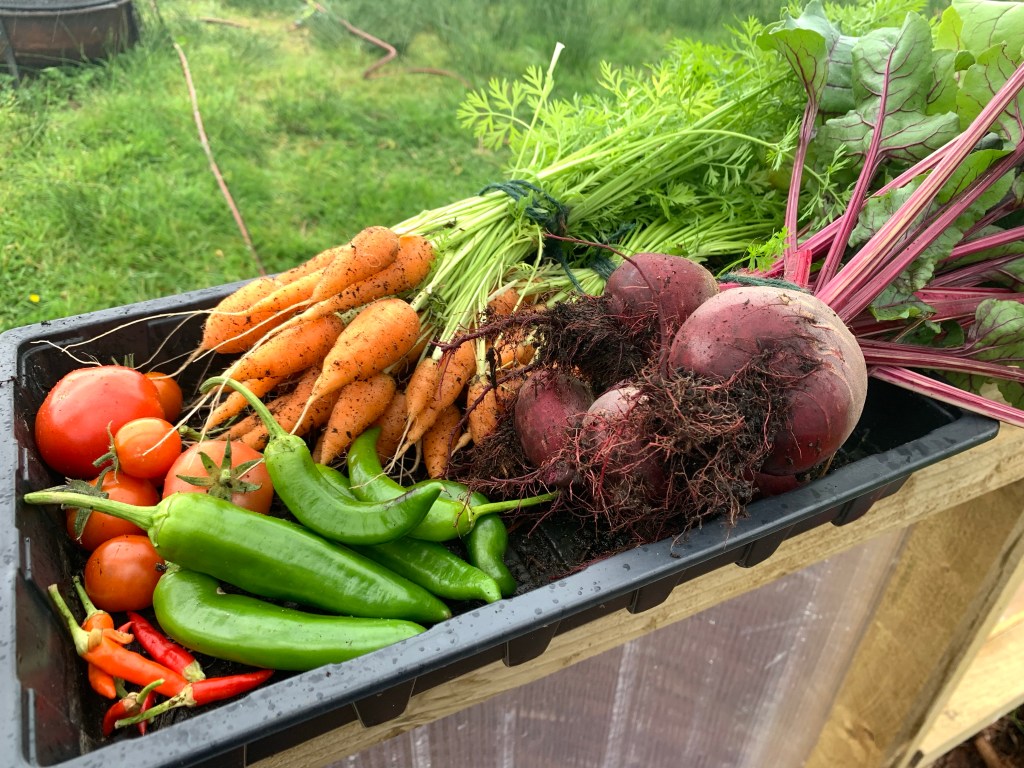
Tomatoes, red hot chillis, mild chillis, carrots, beetroot

It’s been the first year with the polycrub and growing in containers rather than beds. I started rather late in our short season, as the polycrub wasn’t built until the end of April. All of which meant that my expectations were set at a pretty low level for success.

And those expectations have largely been fulfilled ..

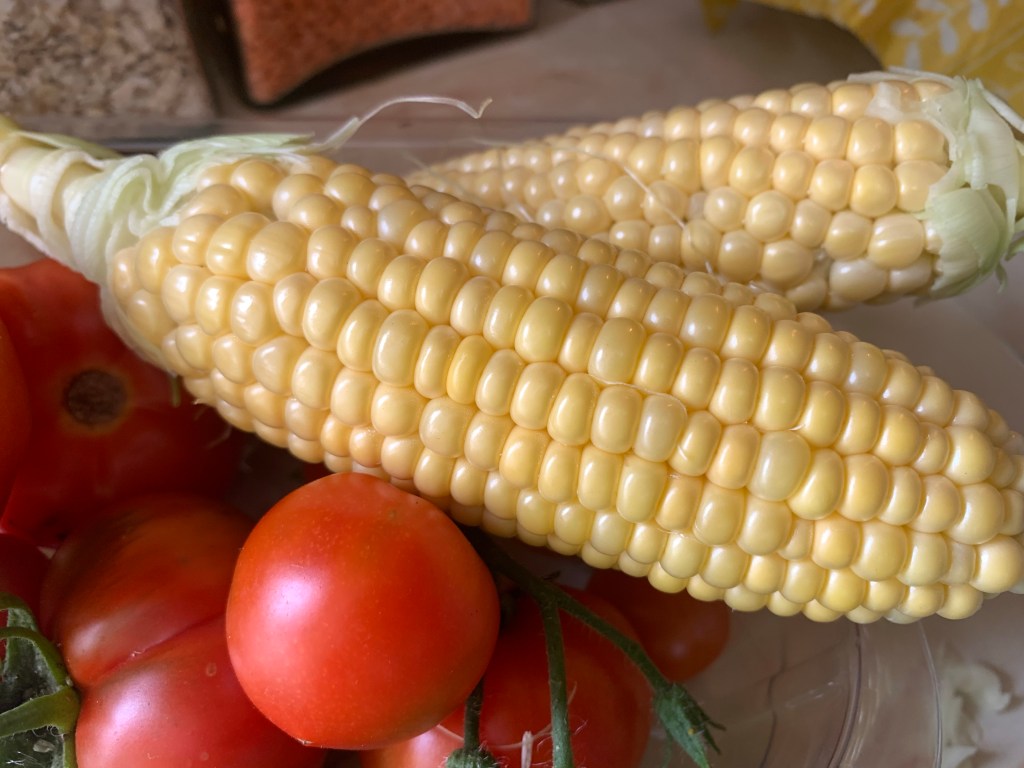
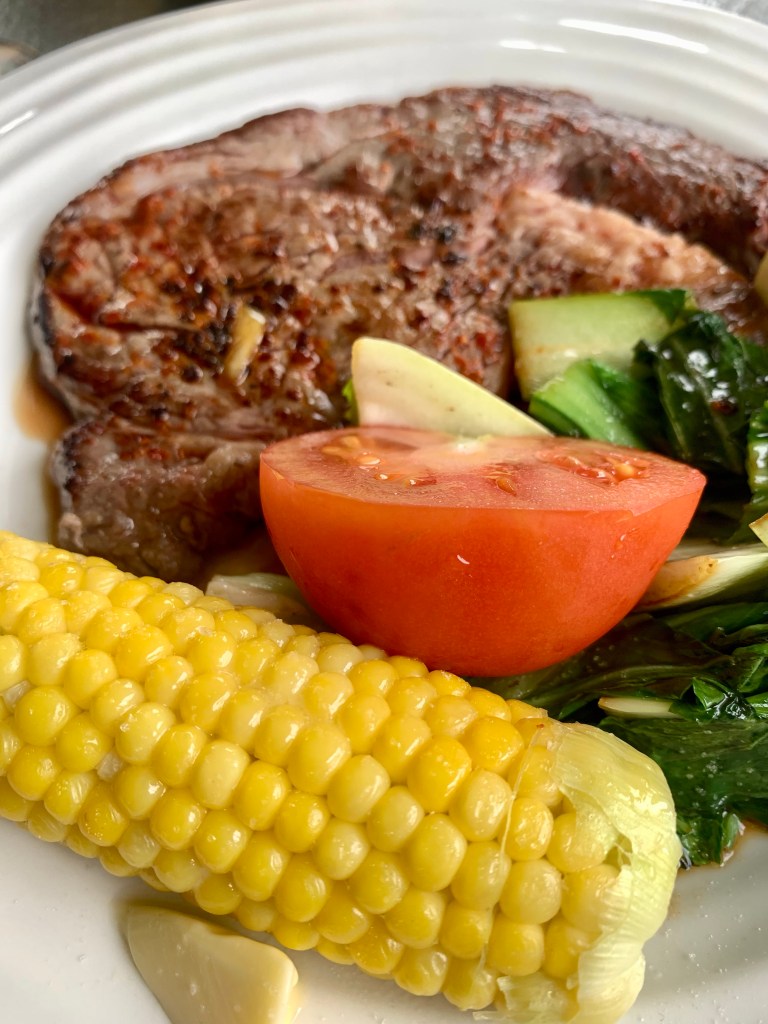
However, there have been a few pleasant surprises. Today I harvested my first cobs of sweetcorn. They’re small, it’s true, and there are only a few of them. But when I planted the corn seeds in May, followed by our largely sunless non-summer I really didn’t think that anything would come of them.

Sweetcorn – yay!

And yet here we are, eating sweetcorn from the croft with our supper. I’m a bit amazed that I’ve managed to produce something so seemingly exotic out of our cold, wet island.

I know that all growers are convinced that their produce is wonderful, but I’m a critical grower, honestly. Our tomatoes have been prolific but disappointing in taste this year and there are some plants, lovingly tended, that have not thrived or produced a harvest worthy of a repeat next year. However, this corn was absolutely delicious, an hour from plant to plate. Sweet and very succulent.

I stand in awe of the tolerance that some plants have for less than ideal environments. It gives me great hope for next years food production which will be in deep beds, fertilised with our own seaweed and croft compost.

A world apart in terms of taste!

Fifty seven degrees north. Who would have guessed!

Winter sowings & worm gravy

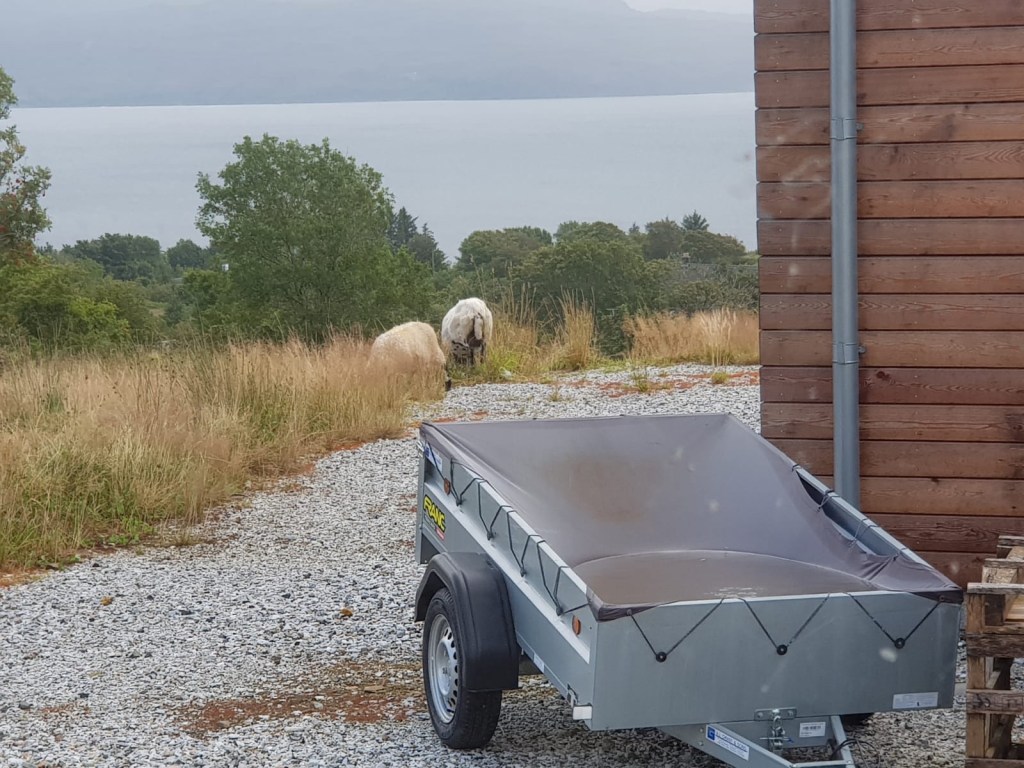
Due to the great sheep invasion I’ve decided that until we can get our croft fences repaired or replaced, any winter vegetable growing will have to just be in the polycrub.

More sheep lurking around the croft

Autumn is definitely in the air, and I’ve been slowly clearing the pots of spent pea tendrils and bean shoots, freeing up space for successional sowings of winter vegetables and herbs.

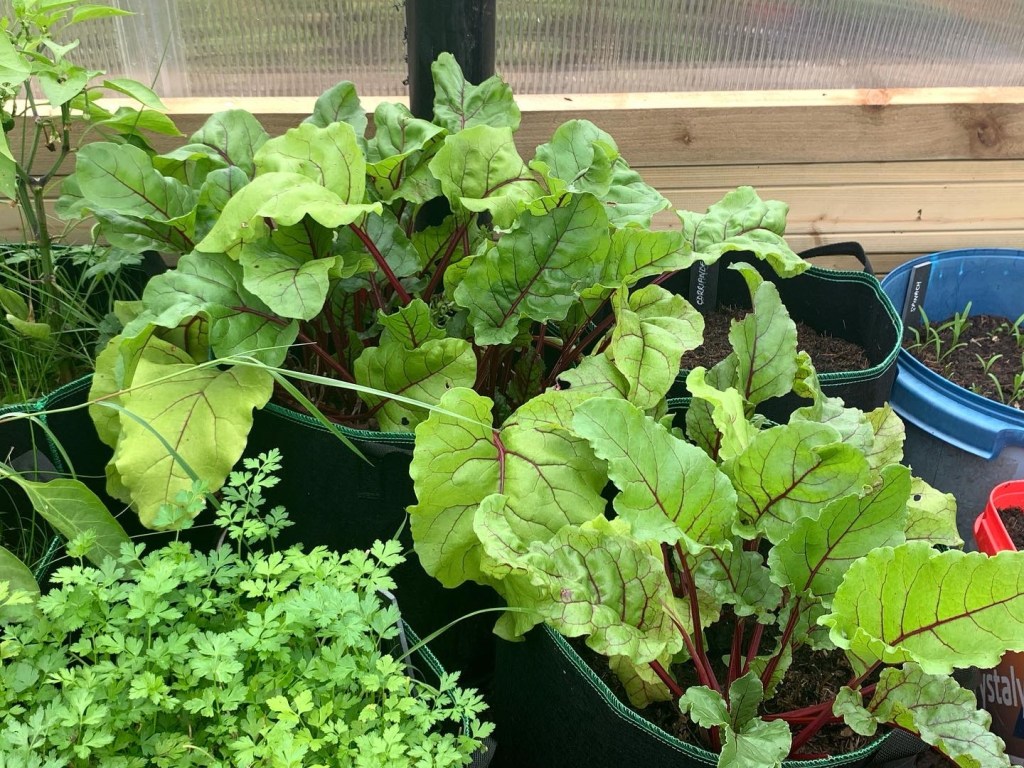
The tunnel is still pretty full of plants:- tomatoes slowly ripening, beetroot, cucumbers, sweetcorn, carrots, herbs and squash, but now is the time to start the next round of crops if we want to continue eating through the colder months.

Beetroot

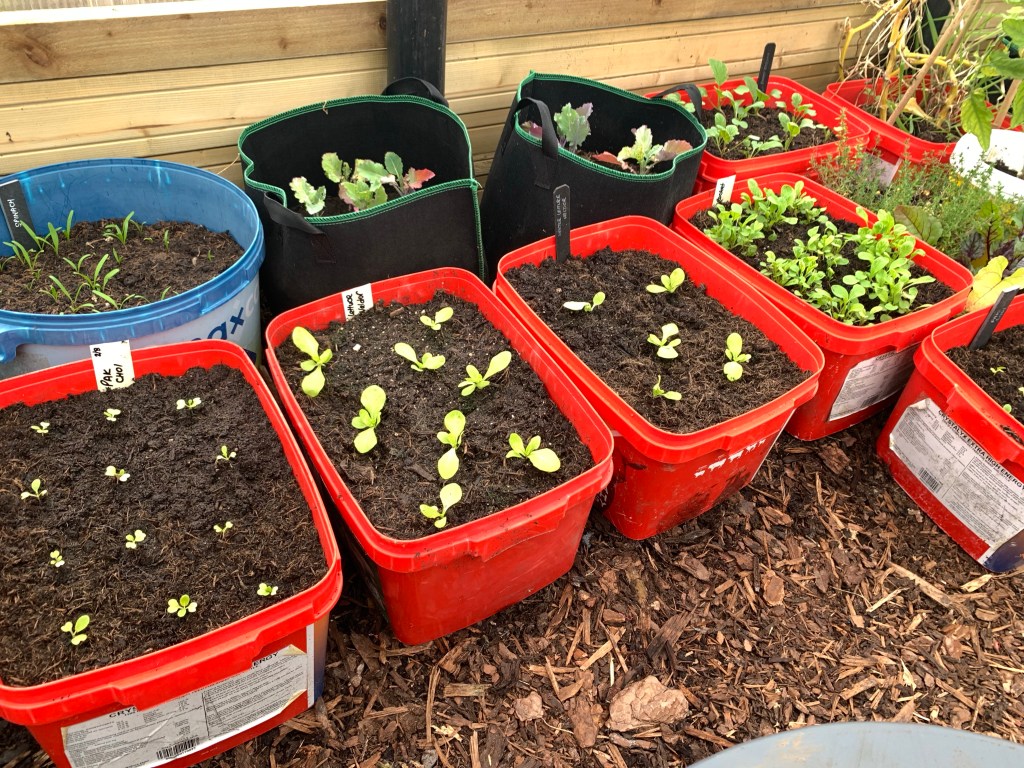
I’ve been in there over the last few weeks sowing seeds. The great thing is that they germinate quickly at this time of the year – which is a good thing, as we need them to get established enough to survive the winter in an unheated grow space. I’m trying my best not to have to subsist on neeps and tatties this year.

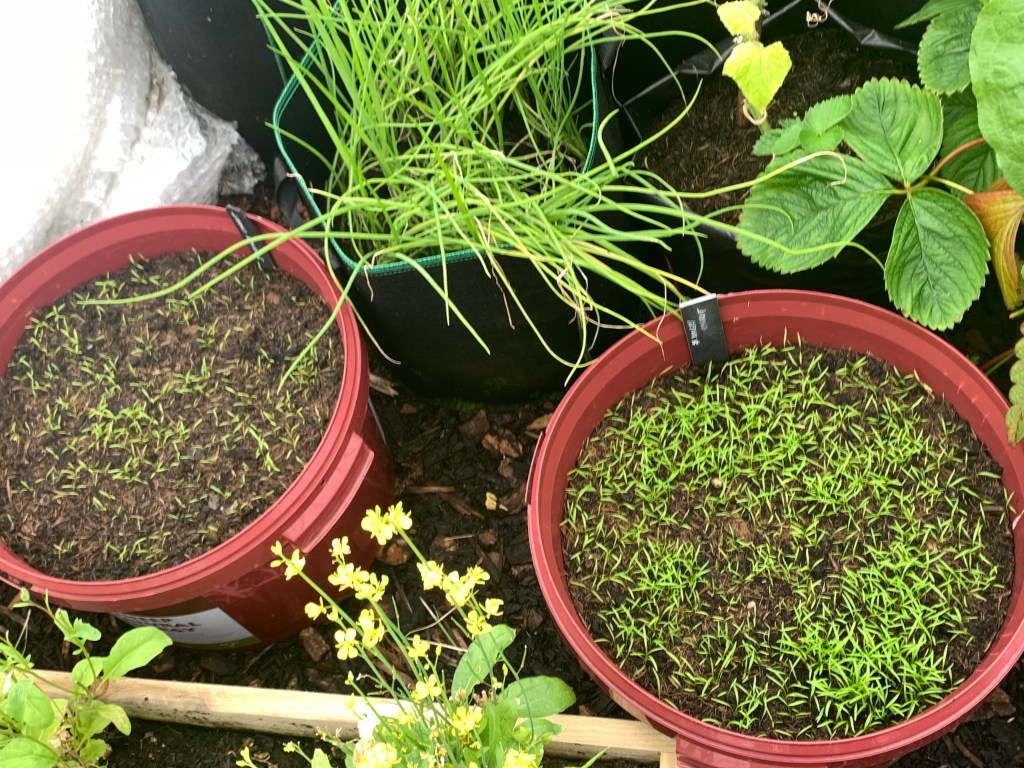
Leetle vegetable seedlings

So far I’ve got pak choi, winter lettuce, black spanish radishes (exotic, I know – I don’t know what came over me) purple sprouting broccoli, spinach, rocket, more dill and coriander and a few more tubs of carrots on the go. They’re looking lush with promise at this stage, although I’ve been here before..

Carrot sowings

I’ve still got winter cabbage and kale to sow. We can’t overwinter without salty kale crisps and rumbledethumps (a Scottish dish of mashed potatoes, cabbage, onion and cheese, like colcannon) once the weather turns.

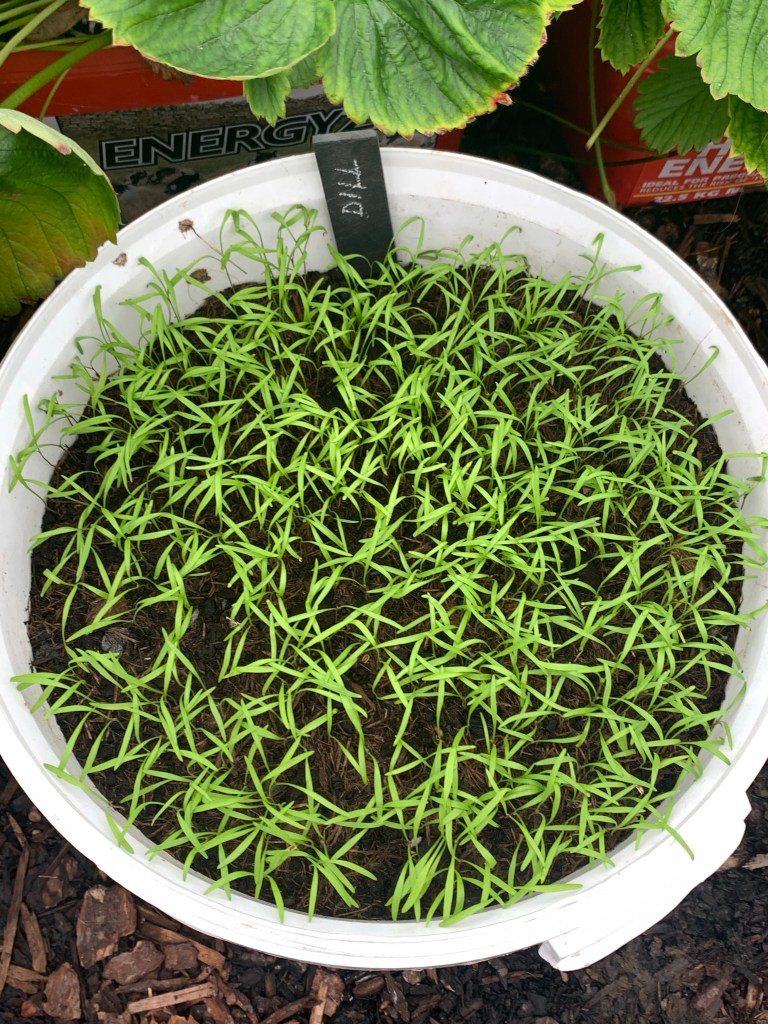
More dill

The wormery that we installed a few months ago is now coming into its own, and we’ve been watering the polycrub pots with worm juice every week. It seems to be doing the plants the world of good.

It looks like gravy, which I guess in a way it is. I try not to feel sorry for the worms that inevitably fall into the collection tray full of liquid and drown. It’s a hard enough life being a worm. Husband has an idea to use insect mesh to save them, which we will certainly try in the interests of worm colony morale.

I love the cyclic nature of growing: garden clippings and waste go into the compost or the worm bins, which get added back to the soil to support the next generation of plant growth.

This continual replenishment of nutrients and micro-organisms is essential in helping to build healthy soil, which is truly the heart of everything. I’ll just have to live happily with the scurrying, burrowing beetle and other insect life that it supports, and which I know is a good thing.

Someone once told me that if nothing was eating your plants, you weren’t part of the eco system. I’m pleased to report that we well and truly are.