Woodland croft day

There is a croft not far from here on the Sleat peninsula called Wildlife Croft Skye. It’s a beautiful woodland croft nestled into the hillside at Drumfearn, at the head of Loch Eishort.

Its owners, Phil and Laura, ran a croft walk-around event and discussion about sustainable woodland practices yesterday, and we attended.

Drumfearn and Loch Eishort

Phil had warned that the terrain was a bit steep and uneven in places, and with the event scheduled to run over four hours I confess to nearly cancelling as I was worried that my knees would give out. But I’ve followed Wildlife Croft for years and really wanted to see the croft and learn about how they managed it, so off we went.
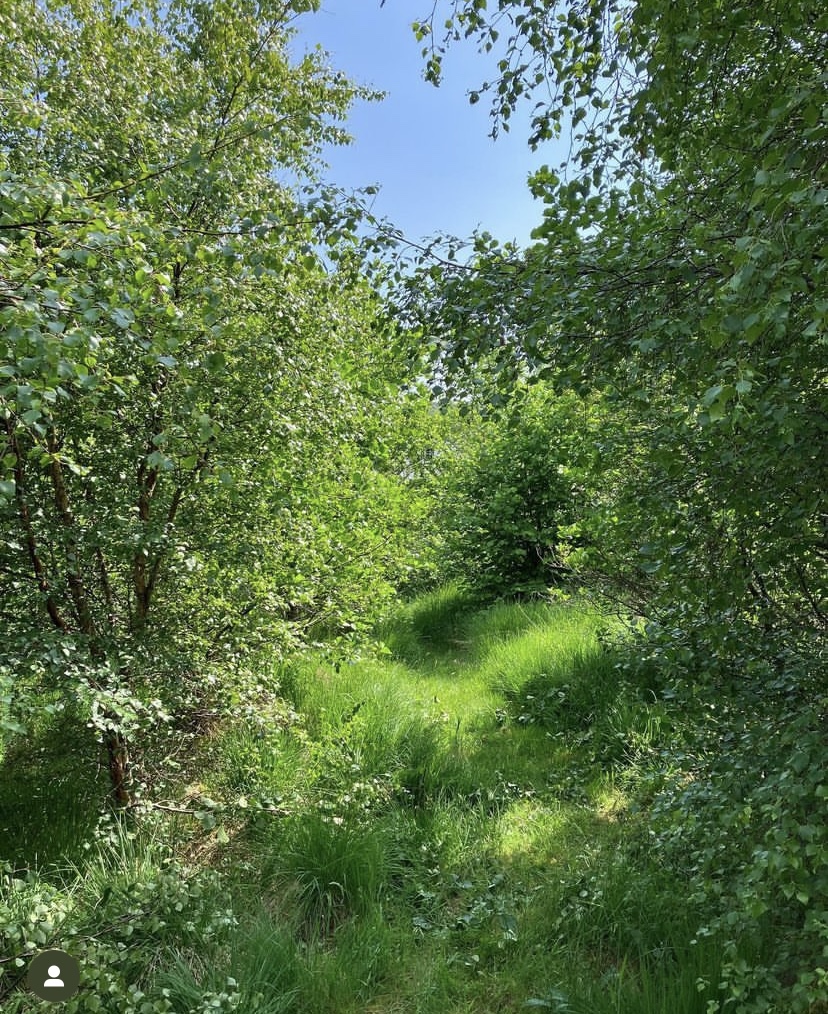
Wildlife Croft Skye

It was an overcast and drizzly day, but that didn’t dampen our enjoyment of it a bit. Phil had cut green swathes through the tall grass and undergrowth to create paths so navigating the three hectare woodland space wasn’t as difficult as I’d feared.

This is a green haven for wildlife on an otherwise quite typically barren hillside of island terrain. Trees cover most of the area, the bird and insect life is incredible and their house, polytunnel and bothy (Stonechat Bothy, which is bookable as a holiday let if anyone is interested in a remarkable place to stay) are nestled into the trees and aren’t at all visible from the single track road that snakes through the tiny township down to the sea loch.
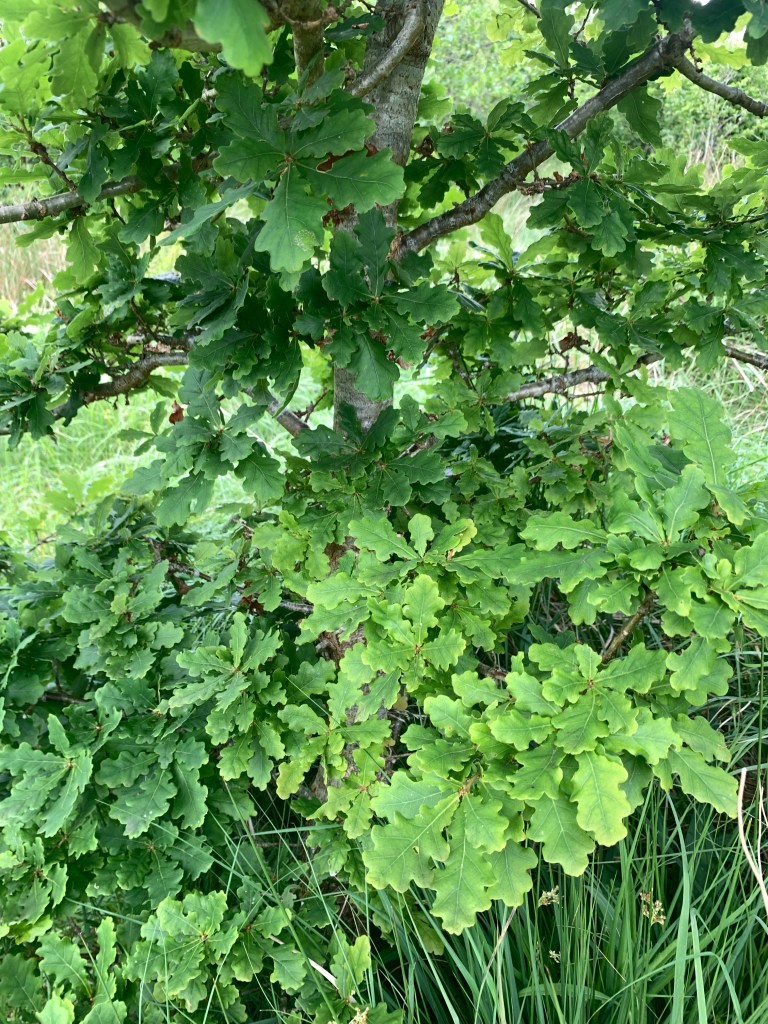
Young oak

The tree varieties, mostly native species and many that they have grown themselves from seed, are extensive. Alder, elder, aspen, rowan, oak, hawthorn, birch, beech, many species of willow (grown for Laura’s basket making) and so many others. There are clumps of wild raspberries, blackberries, pignuts, wild angelica, carpets of meadowsweet, wild irises, grasses and wild orchids in abundance.
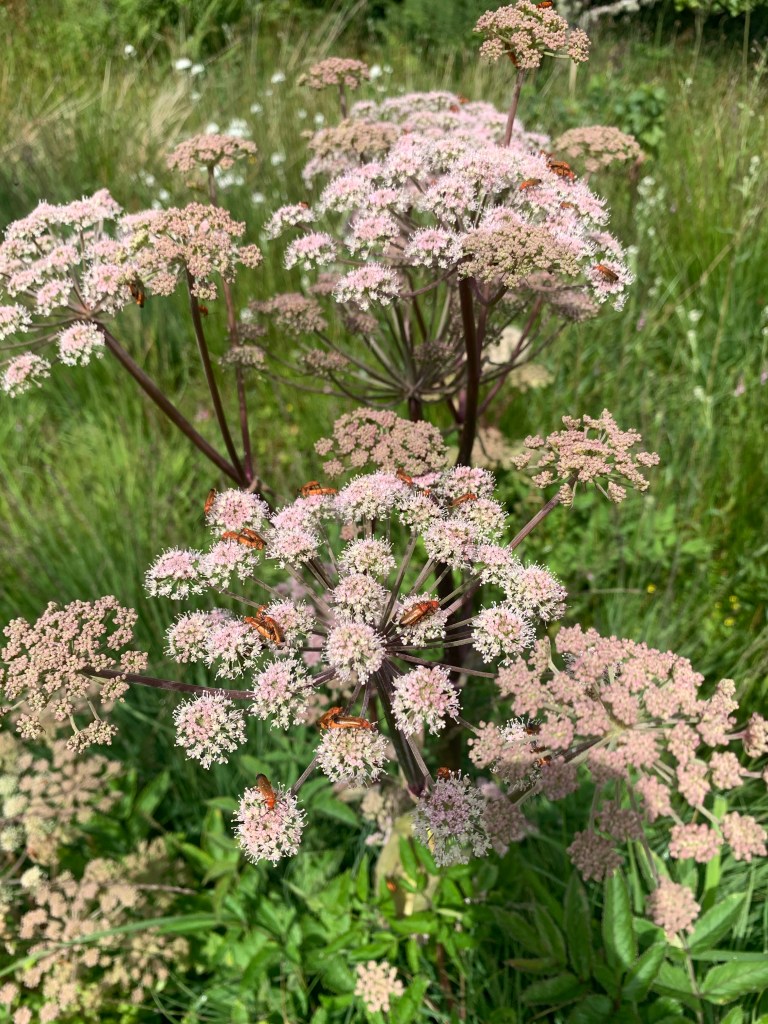
Wild Angelica with red soldier beetles

They have about fifty apple and pear trees, many of them heritage varieties planted over the last eight years, all growing successfully on a sheltered part of the croft, many already laden with young fruit.

Yes, the trees need managing, and no they can’t be just planted and left completely to their own devices, but Phil’s tree management is light touch, largely leaving nature to do its own thing. And everything seems to find a balance nicely.

We came away re-energised and inspired. This place started just like our croft, a hillside of over-grazed grassland on a steep slope, and now it’s a green oasis for wildlife, providing the family with fuel, food and a beautiful place to live in partnership with nature. If we can achieve a fraction of this we’ll be happy.
Winter sowings & worm gravy

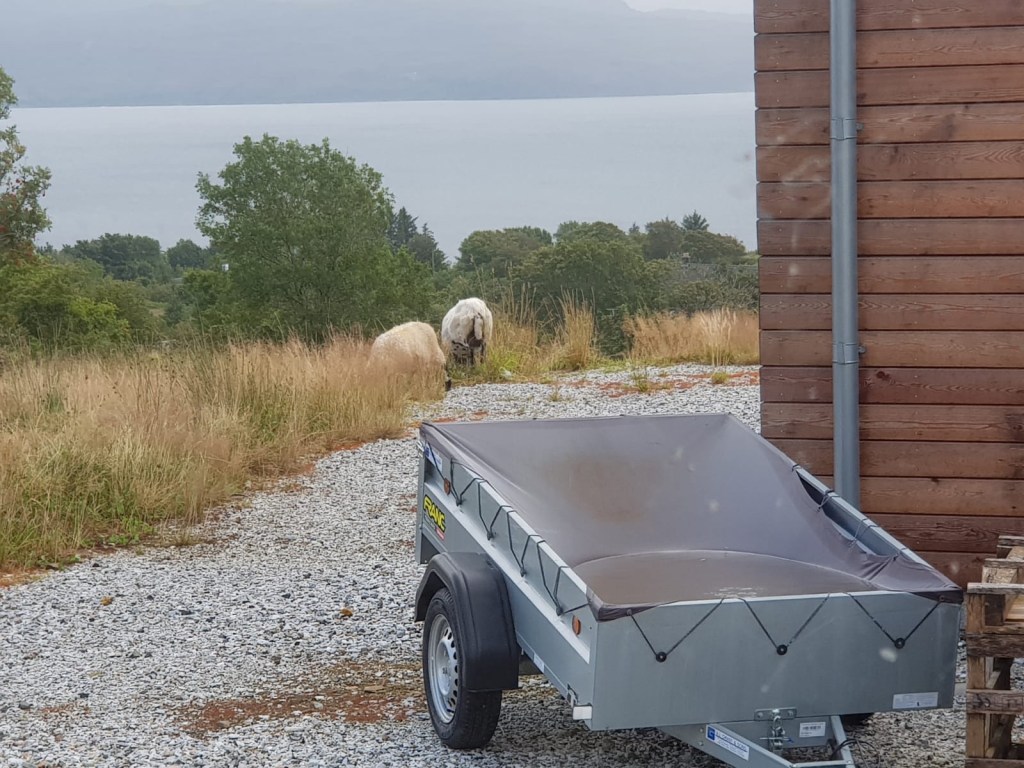
Due to the great sheep invasion I’ve decided that until we can get our croft fences repaired or replaced, any winter vegetable growing will have to just be in the polycrub.

More sheep lurking around the croft

Autumn is definitely in the air, and I’ve been slowly clearing the pots of spent pea tendrils and bean shoots, freeing up space for successional sowings of winter vegetables and herbs.

The tunnel is still pretty full of plants:- tomatoes slowly ripening, beetroot, cucumbers, sweetcorn, carrots, herbs and squash, but now is the time to start the next round of crops if we want to continue eating through the colder months.

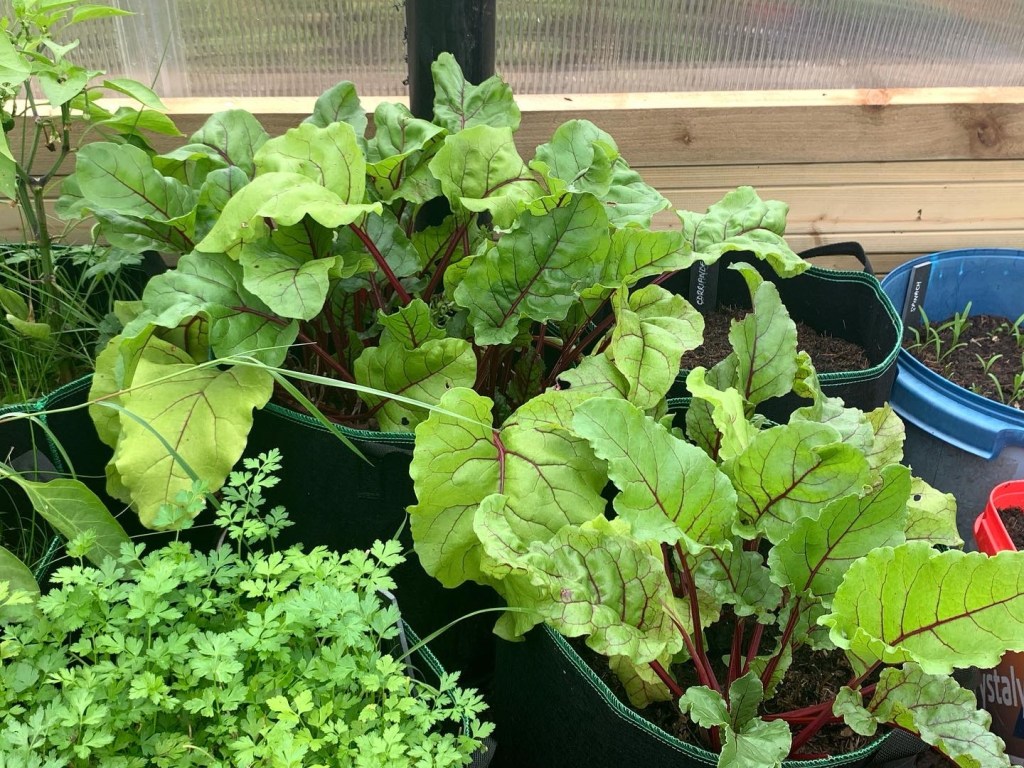
Beetroot

I’ve been in there over the last few weeks sowing seeds. The great thing is that they germinate quickly at this time of the year – which is a good thing, as we need them to get established enough to survive the winter in an unheated grow space. I’m trying my best not to have to subsist on neeps and tatties this year.

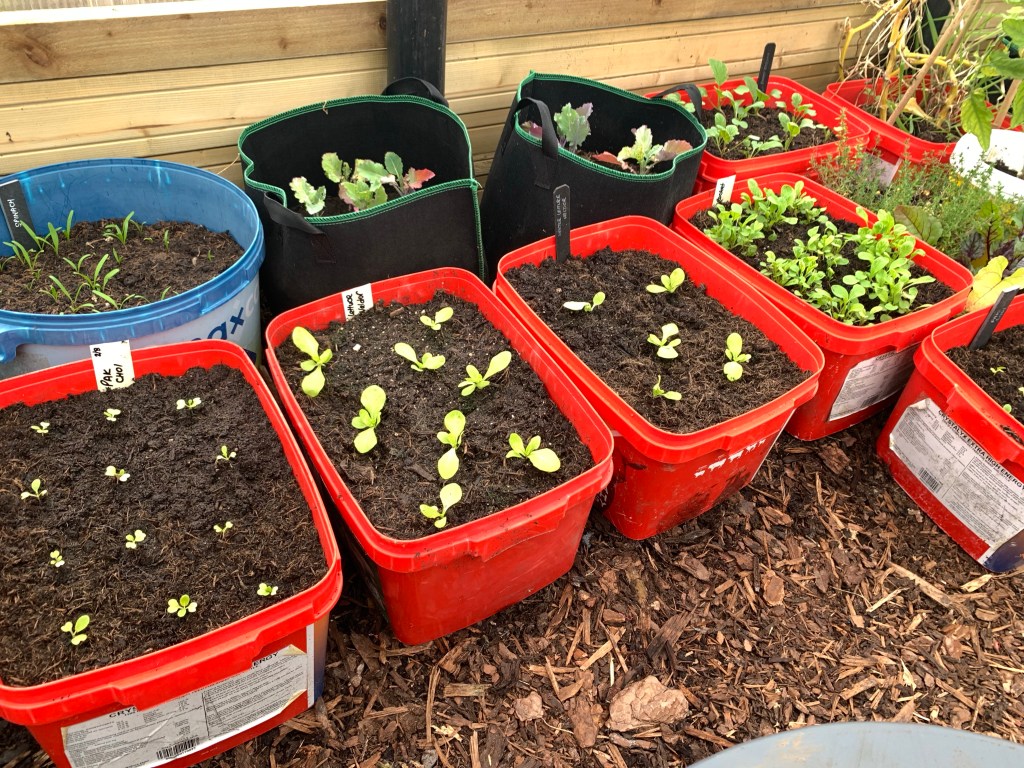
Leetle vegetable seedlings

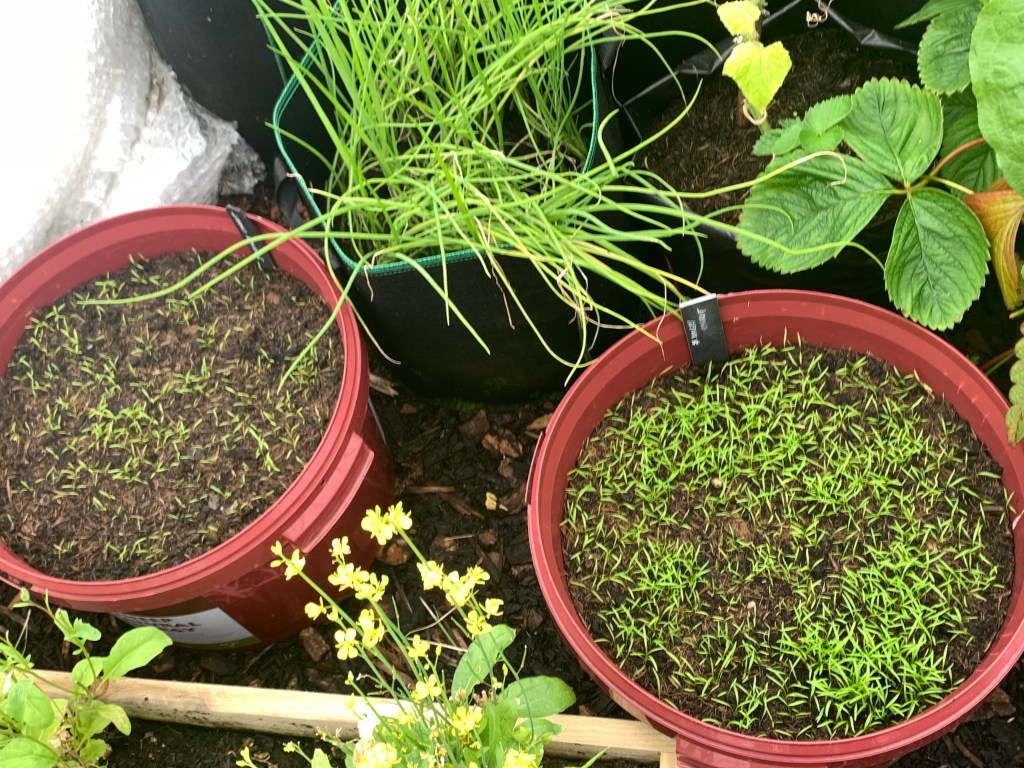
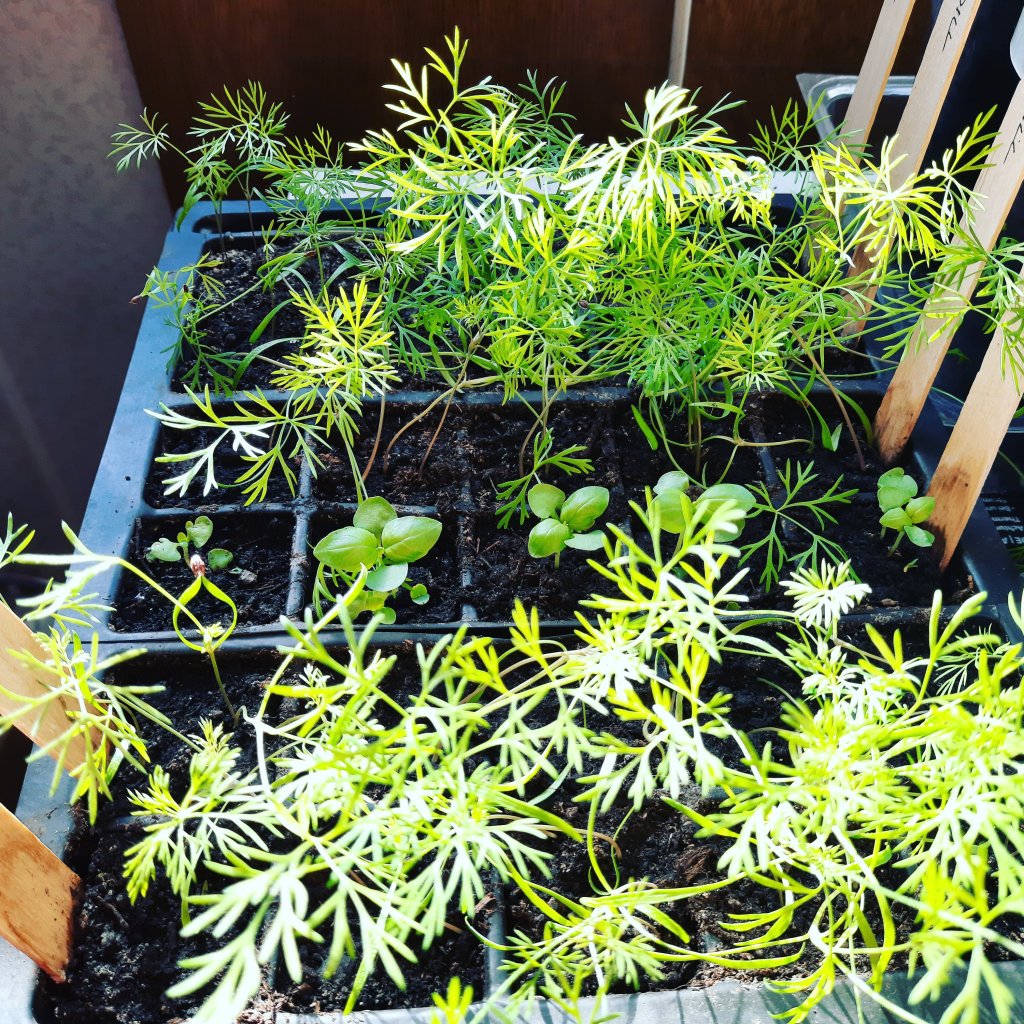
So far I’ve got pak choi, winter lettuce, black spanish radishes (exotic, I know – I don’t know what came over me) purple sprouting broccoli, spinach, rocket, more dill and coriander and a few more tubs of carrots on the go. They’re looking lush with promise at this stage, although I’ve been here before..

Carrot sowings

I’ve still got winter cabbage and kale to sow. We can’t overwinter without salty kale crisps and rumbledethumps (a Scottish dish of mashed potatoes, cabbage, onion and cheese, like colcannon) once the weather turns.

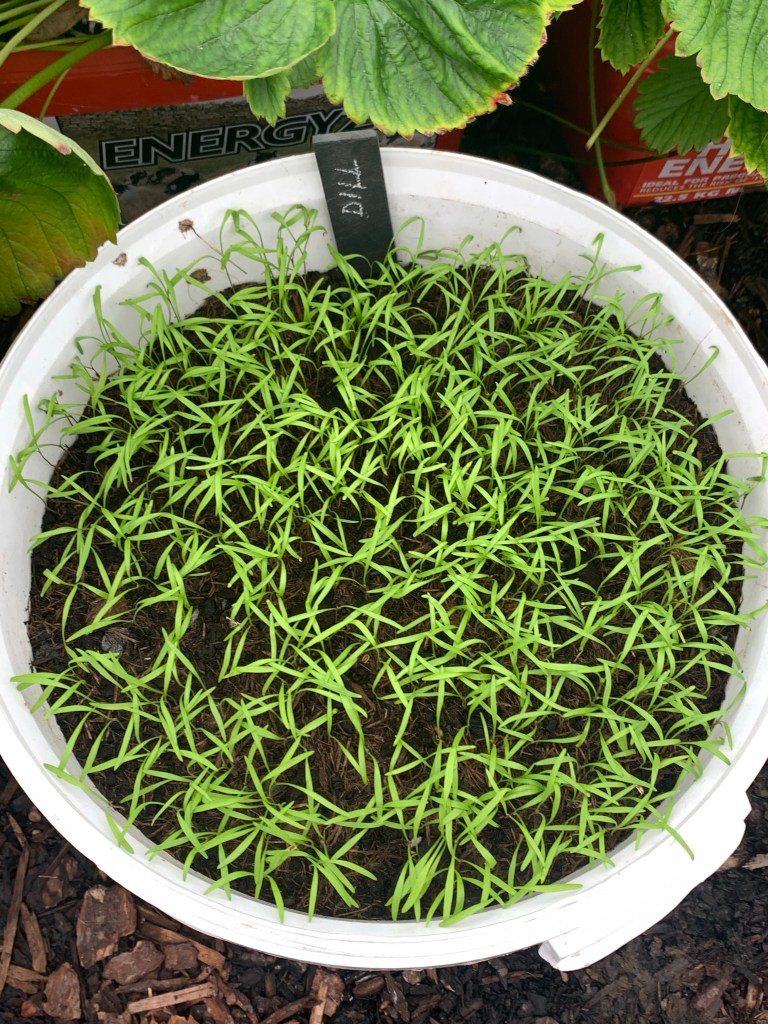
More dill

The wormery that we installed a few months ago is now coming into its own, and we’ve been watering the polycrub pots with worm juice every week. It seems to be doing the plants the world of good.

It looks like gravy, which I guess in a way it is. I try not to feel sorry for the worms that inevitably fall into the collection tray full of liquid and drown. It’s a hard enough life being a worm. Husband has an idea to use insect mesh to save them, which we will certainly try in the interests of worm colony morale.

I love the cyclic nature of growing: garden clippings and waste go into the compost or the worm bins, which get added back to the soil to support the next generation of plant growth.

This continual replenishment of nutrients and micro-organisms is essential in helping to build healthy soil, which is truly the heart of everything. I’ll just have to live happily with the scurrying, burrowing beetle and other insect life that it supports, and which I know is a good thing.

Someone once told me that if nothing was eating your plants, you weren’t part of the eco system. I’m pleased to report that we well and truly are.

Repurposing, recycling

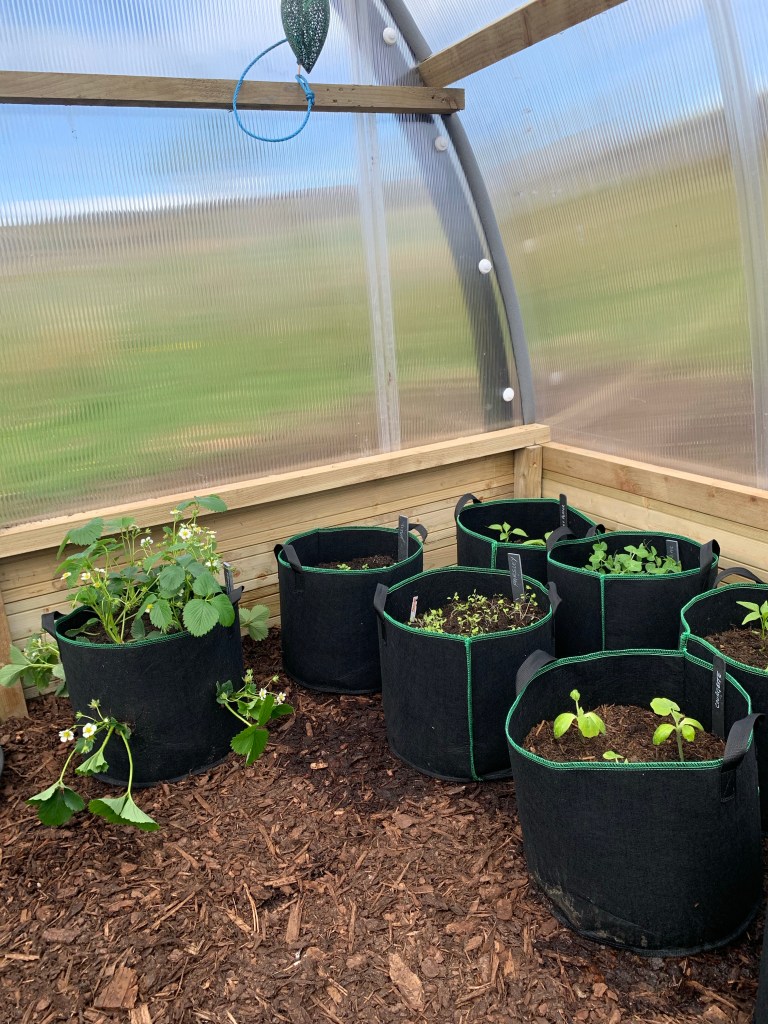
I’ve started the polycrub off with growing in canvas containers. We won’t have time to build and fill beds in there until next spring, and there isn’t much depth of soil beneath it before you hit the impenetrable seam of shale and lewissian gneiss.

I figured it was the best way of getting productive and a harvest this year.

Canvas grow bags and a repurposed compost bag!

They’re not expensive, a few pounds each, but when you’re using as many as I am it soon mounts up. So I put out a call via a couple of local friends for any unwanted large containers.

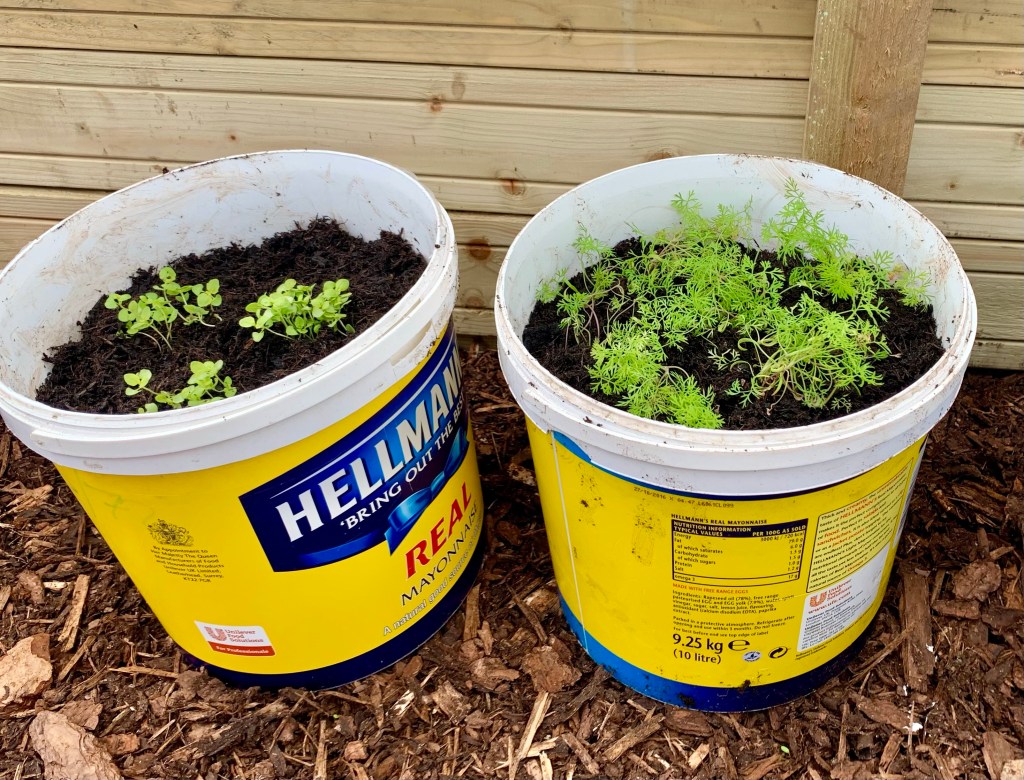
Friends at the newly established Coffee Bothy in Broadford offered up a dozen or more catering mayo tubs. A perfect size for herbs and smaller plants!

Old mayo tubs

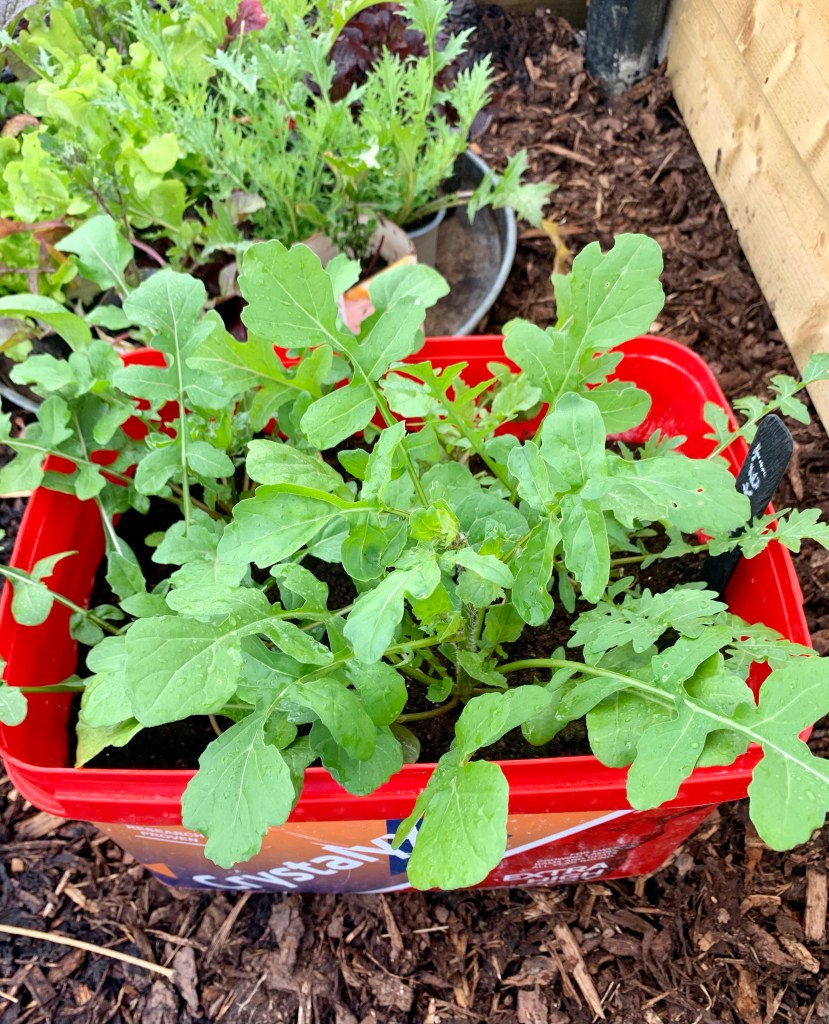
A couple of kind local crofters kept back their sheep lick tubs for me. They hold about 30 litres of soil or compost each so are deep enough for beans, potatoes or cucumbers to grow in.

Sheep lick tubs potted up with rocket

We drilled drainage holes in them and I have been busy planting them up for the last few days. If it holds soil, it gets filled with seedlings! It’s best not to stand too still around here 😊.

This is such a busy season for planting. I feel that I’m running slightly late with things this year but it’s been so cold that the seedlings that I started early have been very slow to grow.

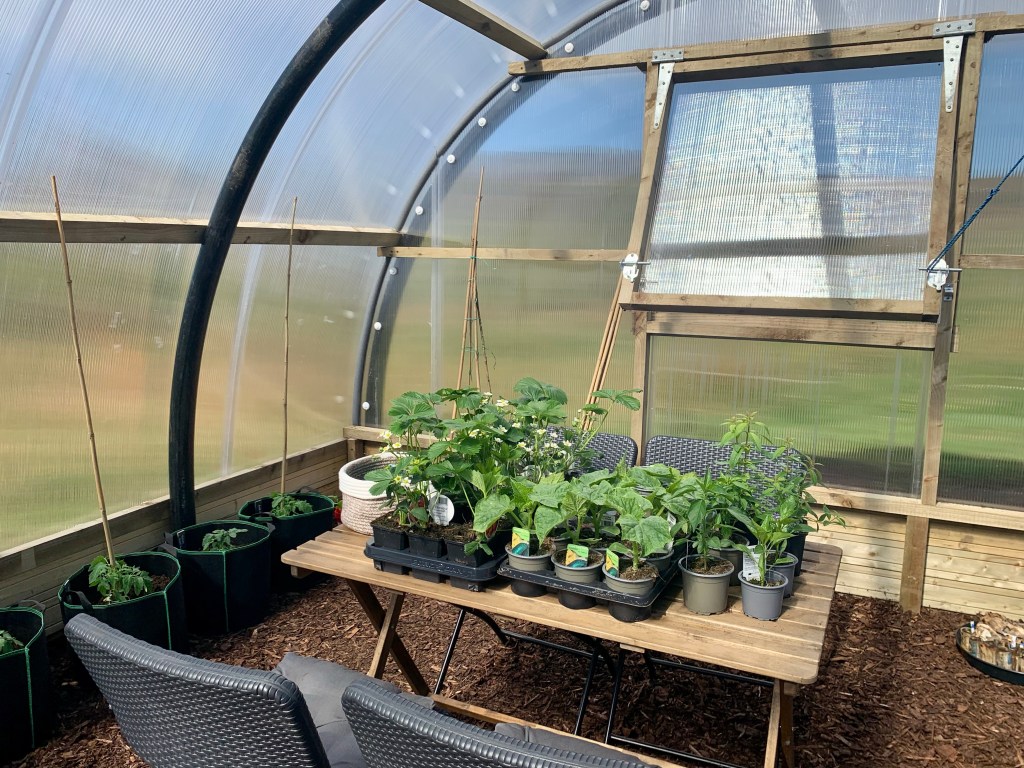
Polycrub filling up

It’s always a balance here between waiting for the temperature to get warm enough but not leaving it so late that there isn’t enough season left for plants to mature.

Grown with care

Duncraig Nursery is one of those wonderful, remote places that are quite magical when you find them.

Nestled in a hidden wooded glen near Plockton, surrounded by an old walled garden from the nearby castle, it’s location is beautiful.

Duncraig castle

From the moment you arrive, car tyres crunching on the stone chipped path, to the initial conversation with the owners who radiate deep plant love and knowledge, you realise that this is a special place.

I went with a friend on an exploratory visit, and we both squeaked with delight as we found more and more of the plants that we were looking for. All good strong varieties, tried and tested to survive in the highlands of Scotland.

All in tip top health, all vibrant and well tended. It was a completely different experience to the rather sad, city garden centre that I’d visited last week in Inverness where the plants were stressed, in need of water and limply unhappy.
Purchases awaiting planting up

I went looking for cucumber seedlings as mine had not germinated for some reason. They were the only big failures in my seed sowing this year. I was worried that sowing again so late in the growing season, already short here this far north in the highlands, would mean that we wouldn’t get a crop at all.

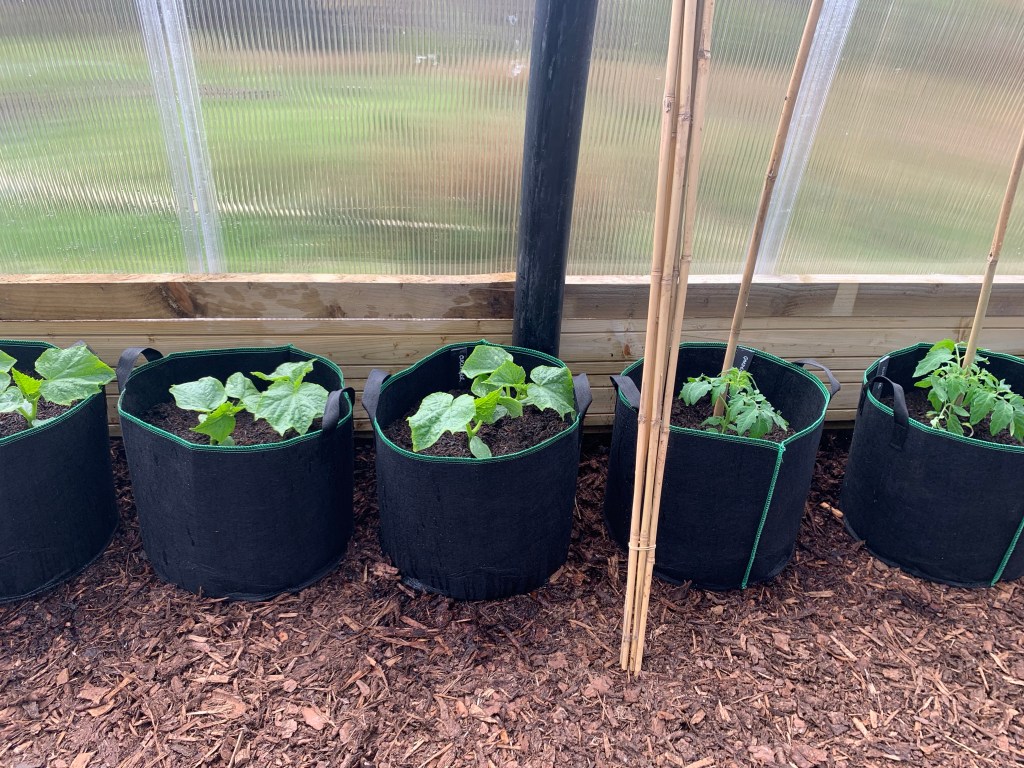
Cucumbers and tomatoes

I found cucumber seedlings. I found strawberry plants full in flower, chilli peppers, sweet red peppers, lettuces and glorious red kale. The soft fruit selection, shrubs, fruit trees and herbs were fabulous. I could have bought the entire place up if I had enough growing room!

We will be back. The danger is now to our bank balance for subsequent visits! Saying that, I’d rather spend my money supporting a local garden business where the owners have a real love for their enterprise than a faceless chain where profit is the main concern.

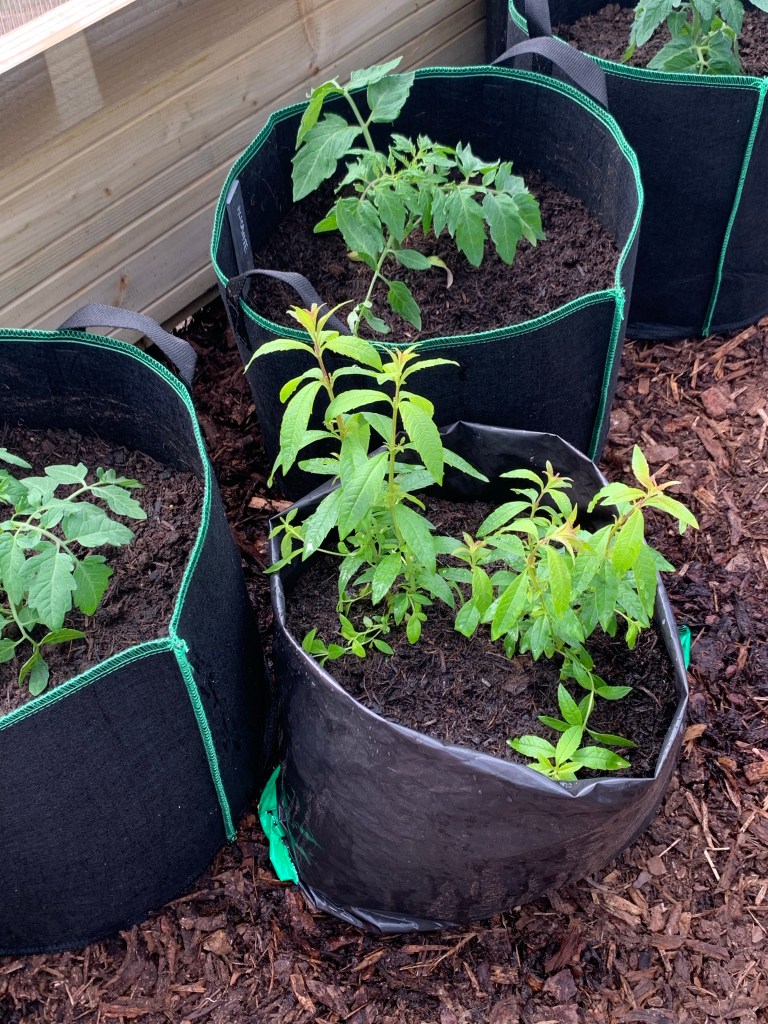
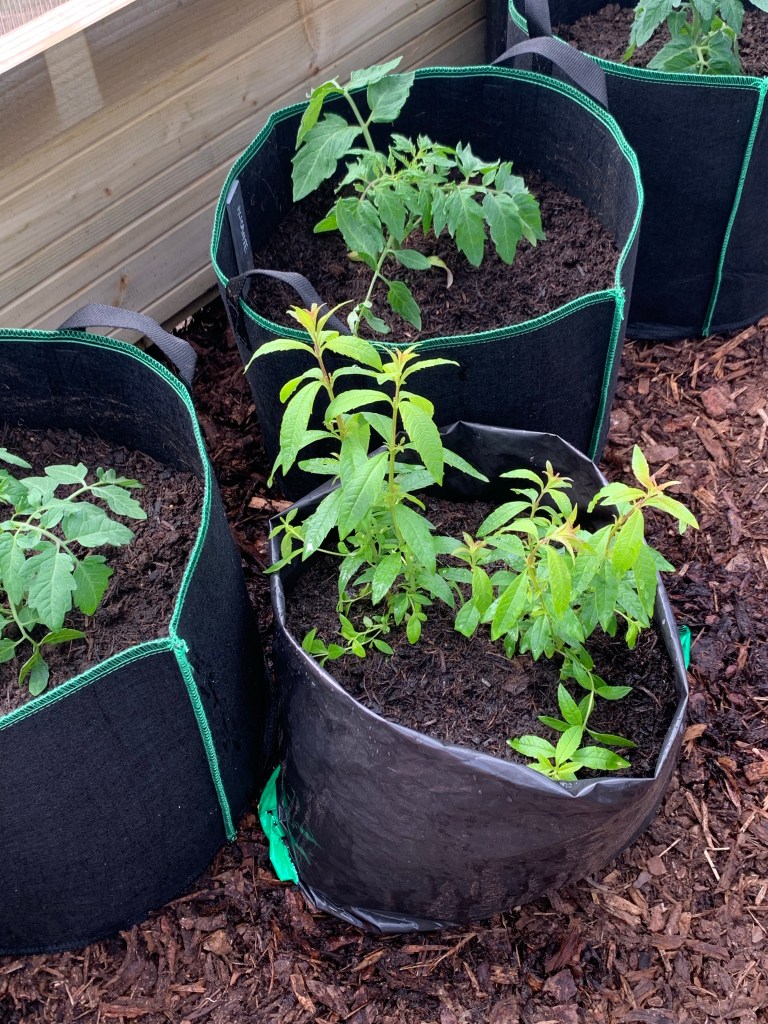
Compost bag with lemon verbena

I’ve roped in husband to help and have now potted up my purchases. We ran out of canvas bags and sheep lick tubs, so are now using empty folded over compost bags as temporary plant containers . Waste not, want not, as my mum used to say.

Vegetable planting

Although it’s been warm during the days of April up here on the island, with temperatures of around 16C, the nights are still pretty cold at about 5C or less. So it’s time to still be cautious about planting anything tender out.

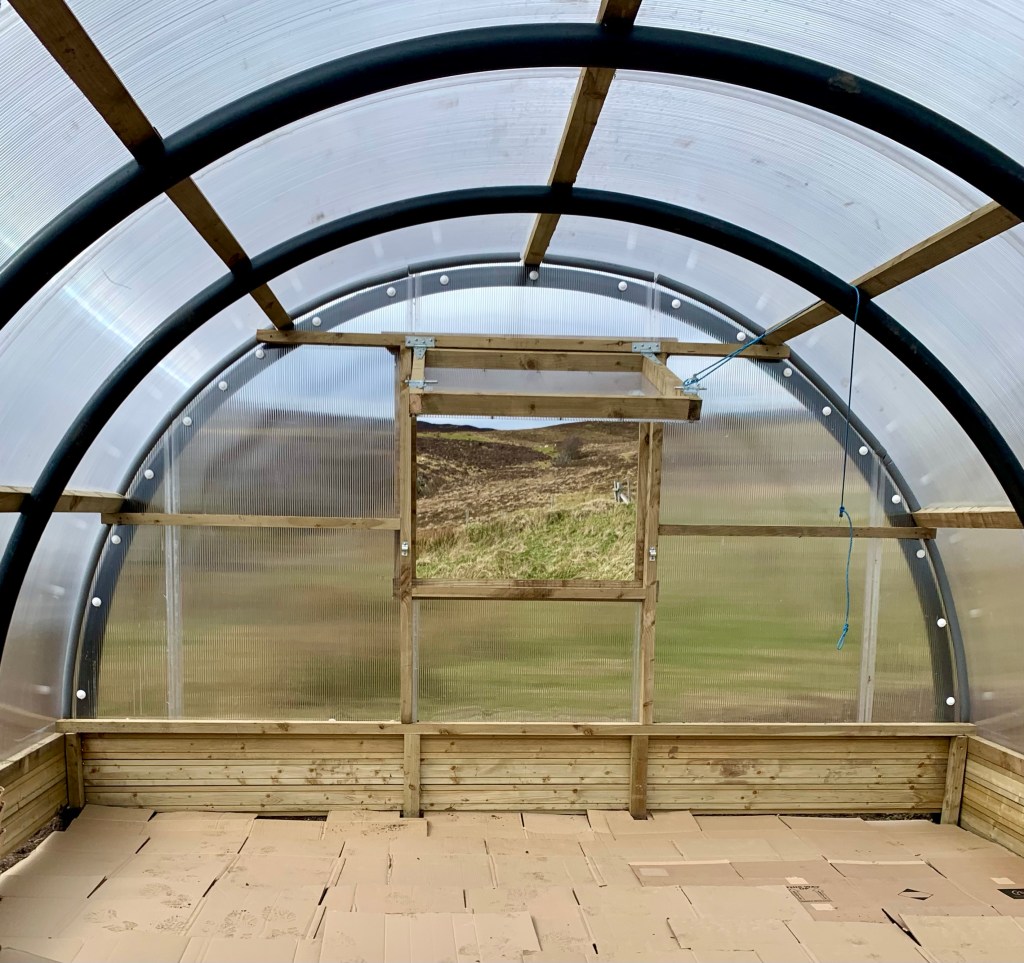
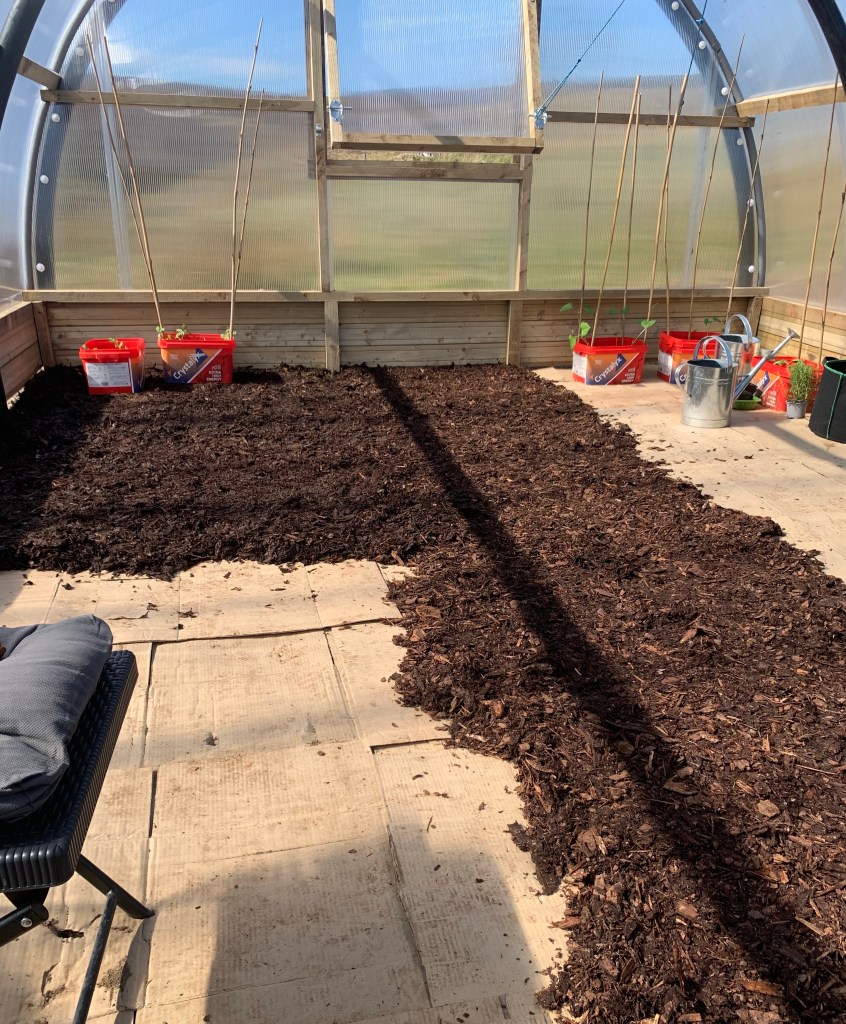
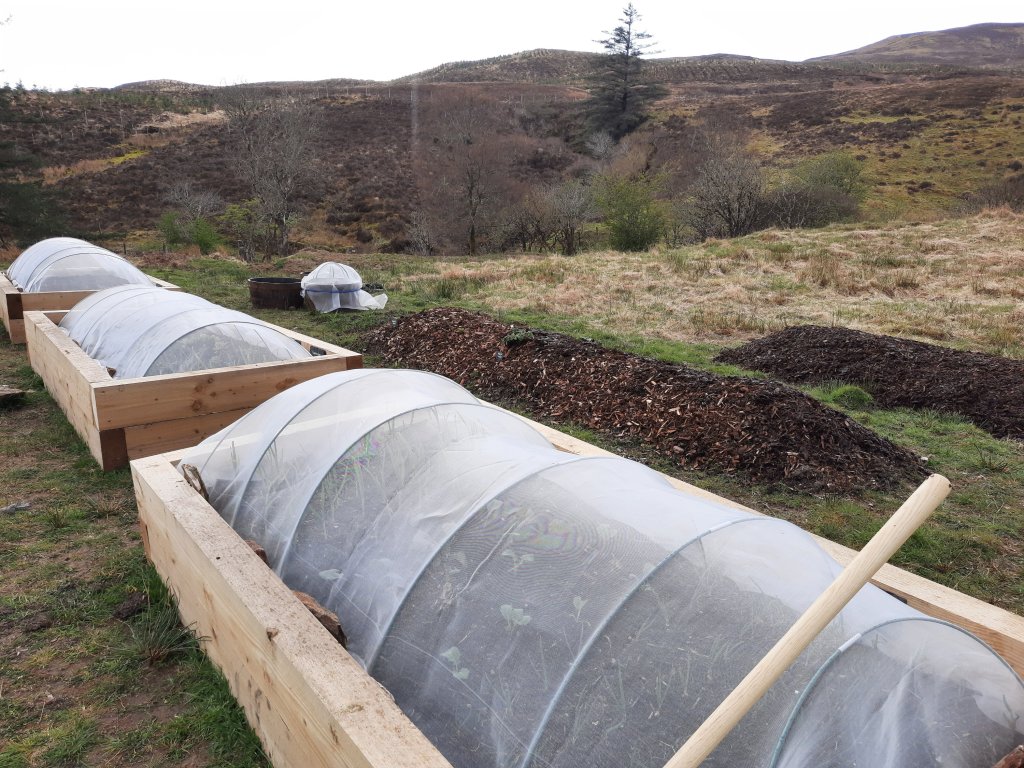
We’ve started prepping the polycrub growing area with a layer of cardboard followed by a layer of wood chippings to act as a weed suppressant.

It’s been heavy work for husband wheelbarrowing load after load of woodchip over the croft to the tunnel so that I could lay and level it. We’re not finished yet.

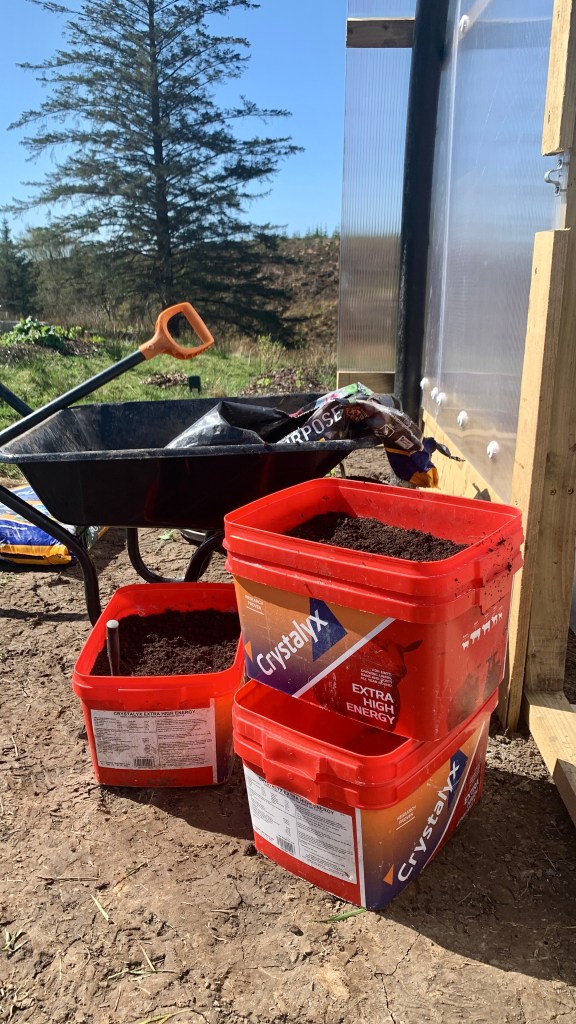
I’ve also started filling old sheep lick tubs and canvas grow bags with soil and compost so that I can plant out some of my seedlings. The local crofters give them away and they’re great to recycle as planters with a few holes drilled in the base of each for drainage.

So far I’ve got peas, borlotti beans, and a few squash and courgette plants in the tunnel. The salad leaves are in there too waiting to transfer into positions outside. The tomatoes, cucumbers, dill, parsley, basil and chillis are still too small to go out into the tunnel yet so will benefit from a few more weeks of growth.

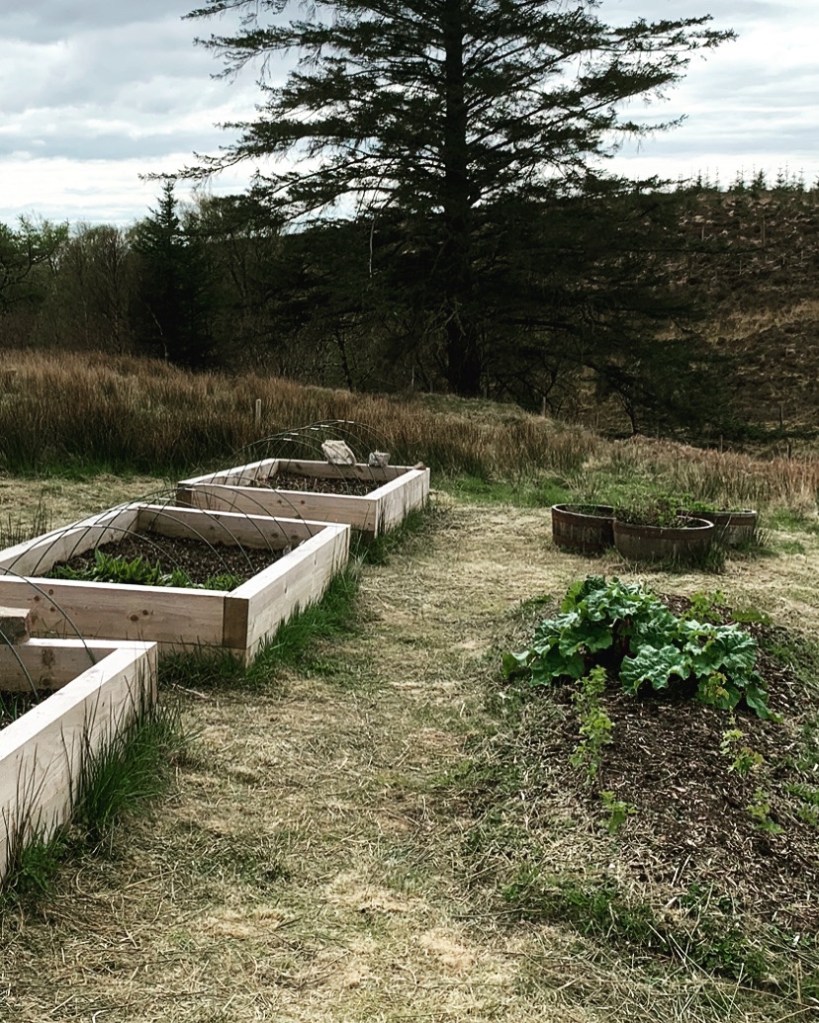
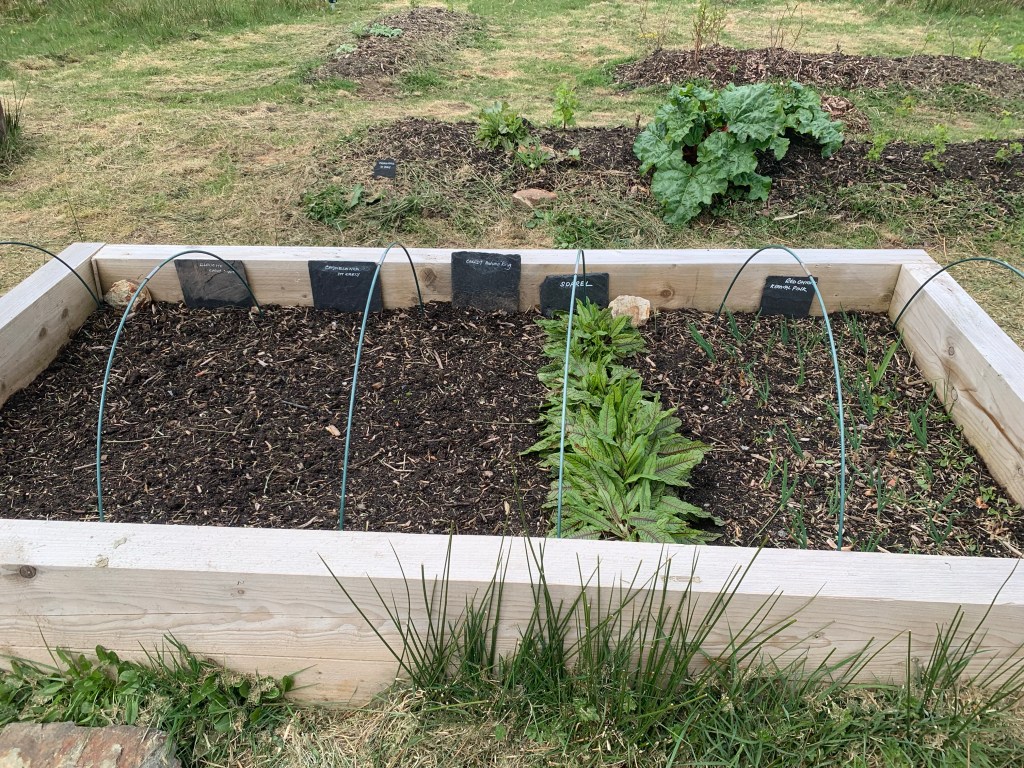
I also managed to get the carrots and kale sown directly into the raised beds. Potatoes, onions and garlic are already in. So although the beds look pretty empty, they’re actually full!

A busy time on the croft. Days of lifting, raking, bending and sowing. I’m certainly sleeping well at night at the moment!

Wishing you all a great growing season with good weather and lots of greens. ❤️

Deer damage and alien life

In a short burst of mild, sunny weather this morning I rammed on my wellies and headed out on to the croft. It’s well overdue time to prepare the raised beds for the seasons growing, and I’ve been waiting for a break in the storms for weeks.

The deer have been terrible this winter. They’ve eaten everything that was left in the beds, which I stupidly didn’t net for protection. Actually, the nets wouldn’t have survived the storms anyway.

Roll on next year when we will have time to deer fence the croft. I think it’s the only way.

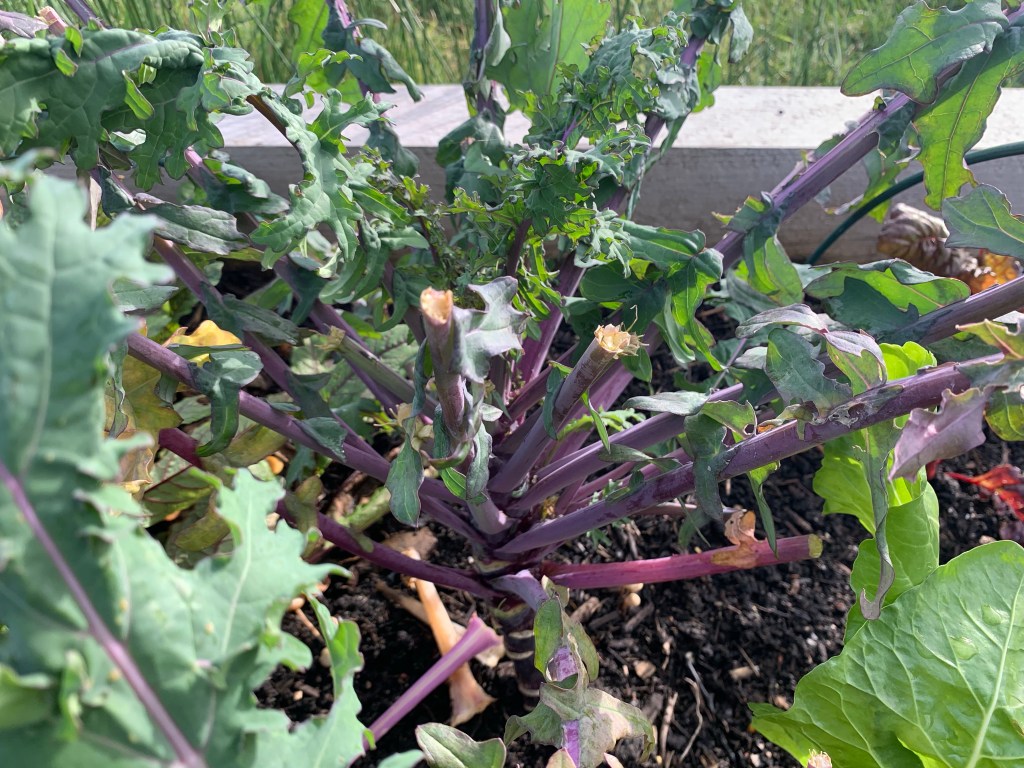
These are the remains of a couple of my perennial Taunton Deane kale plants. There’s basically nothing left of them, and I think that the damage is so severe that they won’t re-grow. The deer have even eaten rhubarb, spiky artichoke leaves and garlic, all things that they’re not supposed to like! It’s soul destroying after such a productive year of cropping from them.

However, despite the deer damage there are tentative, wonderful signs of spring.

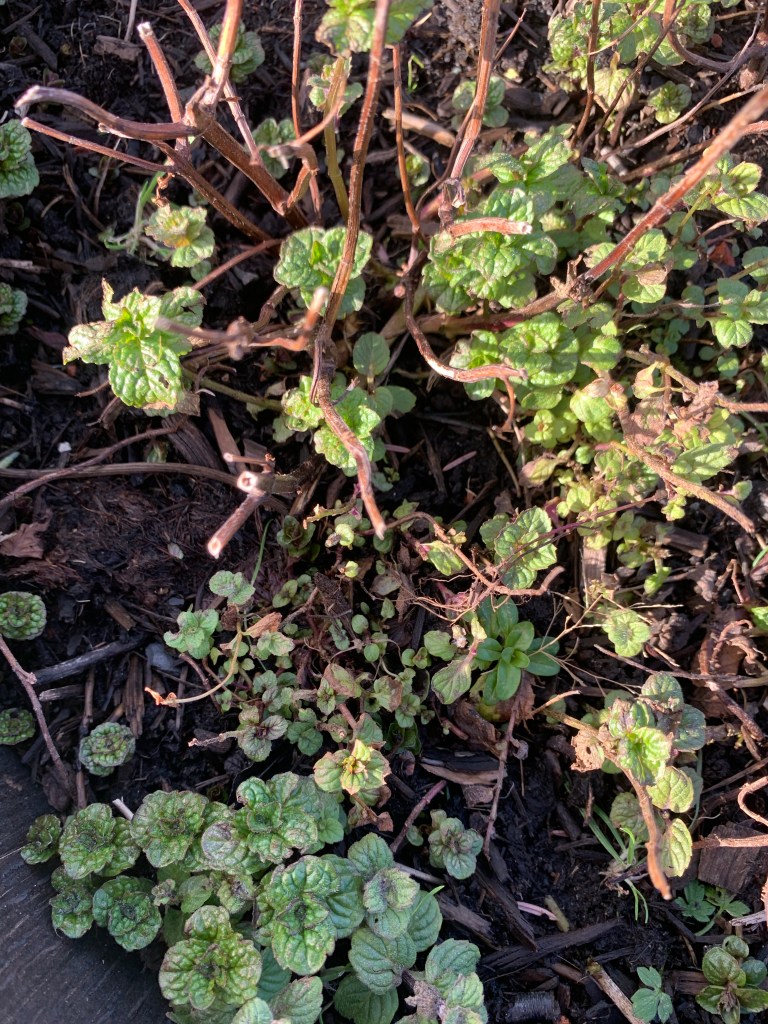
The mint has started to re-grow.

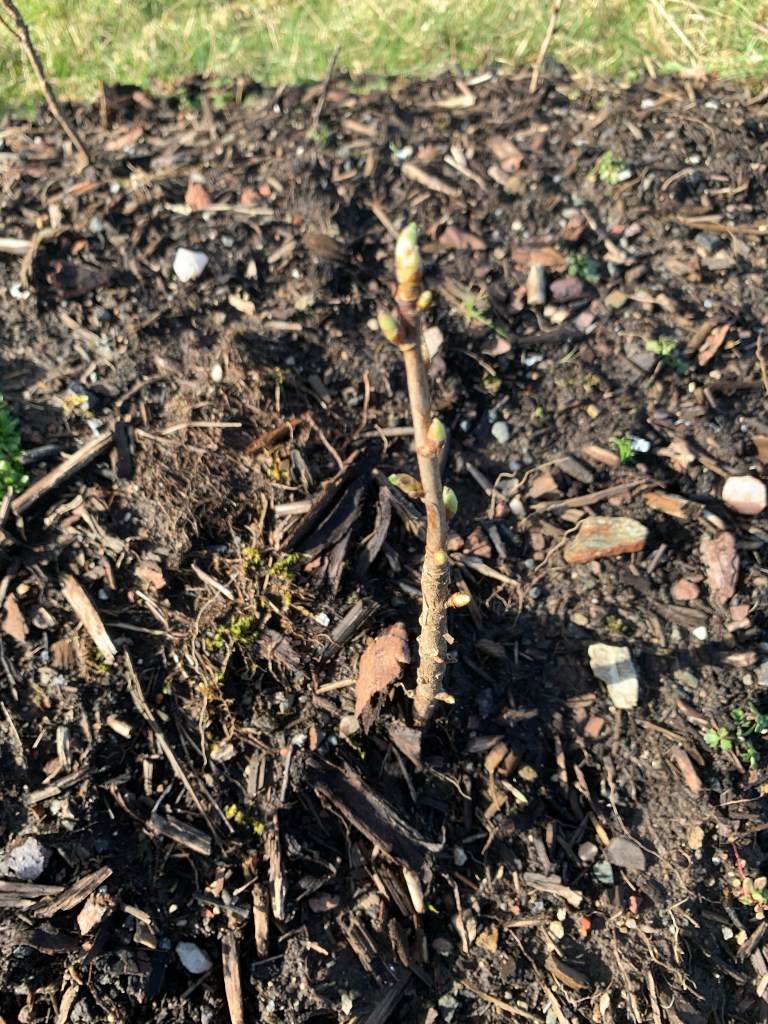
The berry cuttings are starting to break into bud.

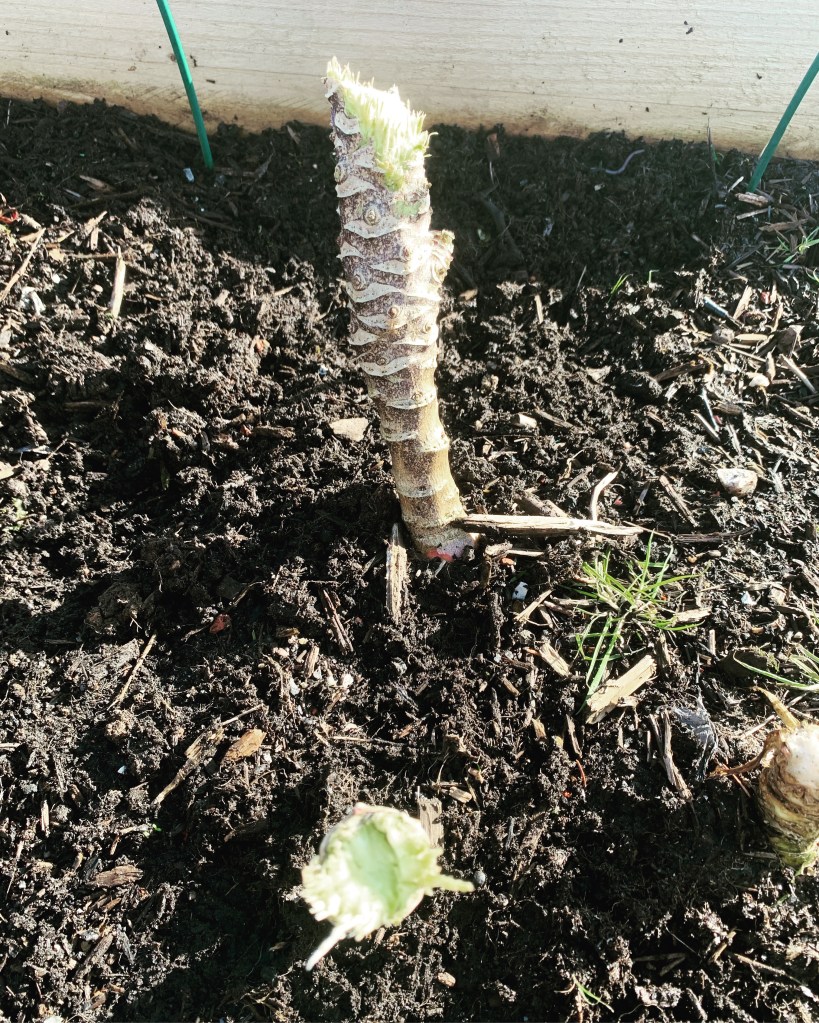
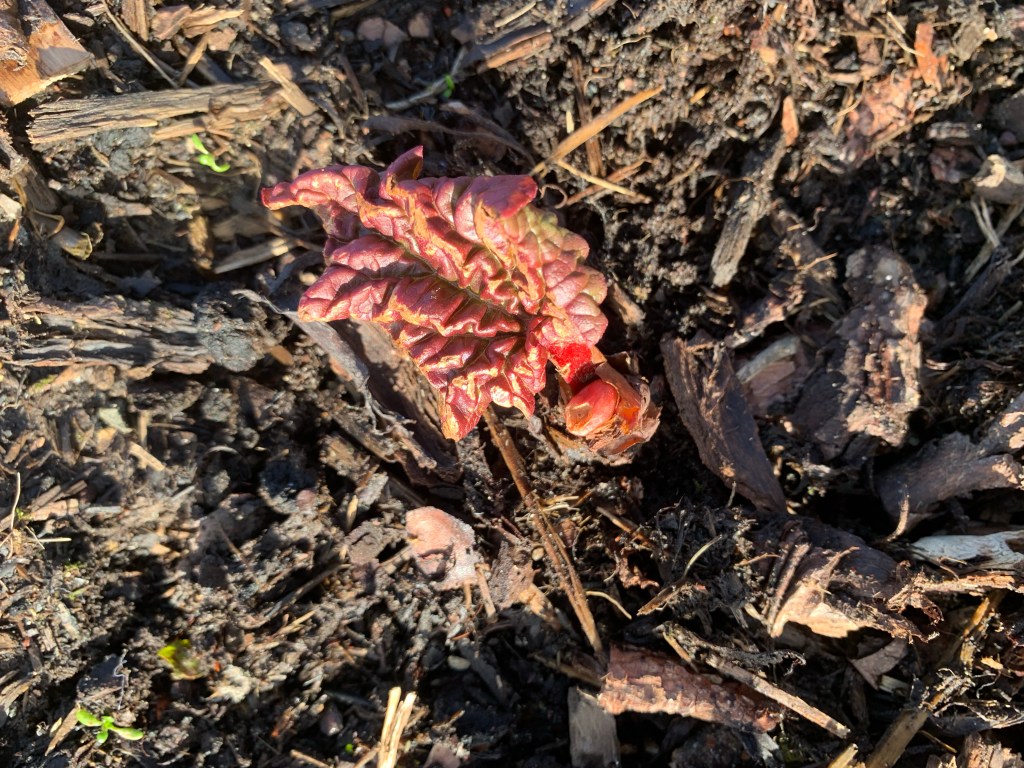
We have the first signs of rhubarb leaves pushing up through the soil like wrinkled red aliens.

I managed to weed a couple of the raised beds and get some red onion sets in before my back started to complain and I decided to beat a tactical retreat. I must remember to take it slowly at the beginning of the season, otherwise I’ll seize up after a whole winter of inactivity. And cake.

Gardening is a marathon, not a sprint. but it felt so good to be out there again.

The polycrub, seeds and spring

The days are definitely lengthening now , perceptibly so. Spring should be on its way, although no one seems to have told the weather gods that. It’s still hail, snow and gales most days.

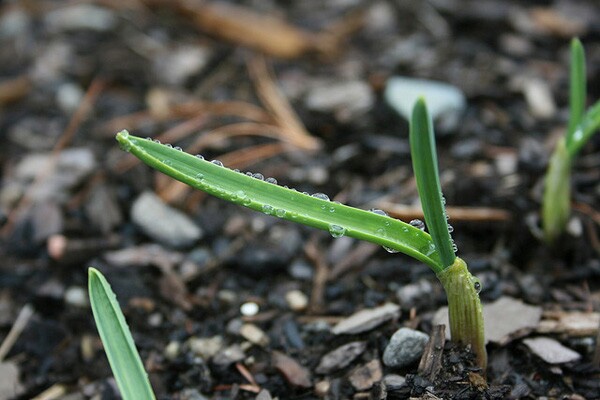
I did a quick rustle about in the raised beds this week and although I should be clearing and planting soon, it’s still far too cold and wet. The garlic has popped it’s head up a little, but that’s it.

I’ve ordered the polycrub. We did apply for a crofters grant to help with the cost, but we were unsuccessful. They wanted a five year business plan showing anticipated horticultural sales and letters of guarantee from local outlets that they would take our produce.

This isn’t the way that we’ve planned to do things. We will sell produce at the croft gate if we have any surplus, but we are mainly growing for ourselves and our neighbours, not as a fully commercial enterprise. As such we don’t qualify. We’re disappointed, of course, but we’ve bitten the bullet and gone ahead with buying the polycrub anyway.

It’s six metres by four of rigid polycarbonate sheeting, fish-farm tube loveliness. After the last few months of storms I’m doubly convinced that this is the only thing that would survive the winds on this exposed hillside.

It will revolutionise what we can grow, though. Tomatoes, chillies, squash, cherries, basil… lots of tender plants that wouldn’t thrive in our cold, windswept raised beds. We hope to have it installed in April, just in time to move crops in there for the summer.

Very exciting!

Now to clear out the caravan spare room out from a whole year of being a junk room, and set it back up to start seedling production again. It will be good to see the blue grow lights illuminating the hillside once more.. 😊

Feeding the local wildlife

It’s not all been perfect carrots and potatoes, y’know. Growing organically and without pesticides has been a challenge, and we’ve lost our fair share to the bugs and the deer. Mainly, it has to be said, to the damned deer.

Our hungry neighbours

Deer are not supposed to like garlic, onions, leeks or anything strongly scented. Ha. Ours obviously have exotic tastes. They’ve chomped through the green foliage of all three of these all summer.

Plant globe artichokes, those in the know said. The leaves are big and bristly and the deer don’t like the texture of anything bristly or prickly. Ha. They’ve been eating the yacon and artichokes too, biting out the lead shoots completely on many of our plants.

It’s also the closest bed to the common grazings on the hill , and as such the most tempting, I suspect. The rest are annoyingly close to the caravan.

The distant remains of the artichokes

Kale was always going to be a crop that we knew would potentially suffer from their grazing, although they did wait until it was of sufficient size to be worth nibbling. Thoughtful of them. Then they feasted.

Chomped kale

What the deer didn’t eat, the caterpillars and other bugs did.

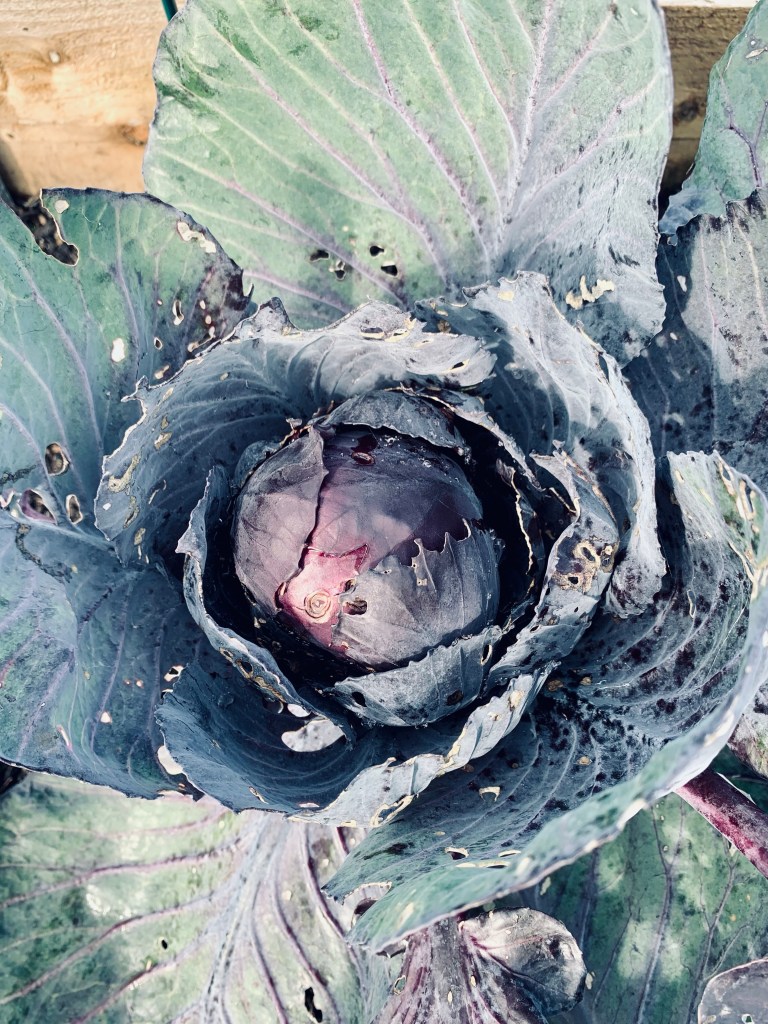
This is a picture of one of my red cabbages from the raised beds. As you can see, the leaves are like lacework, having been nibbled by whatever passing insects or caterpillars we are harbouring. Companion planting helped a bit, but most of the garlic and other strongly scented plants that were supposed to deter passing devourers had been harvested long before these cabbages were, and then the fun started.

Bug salad bar

I am not despondent. I’m happy to lose some to wildlife, but am determined to find ways to minimise the damage and maximise our crops. Our soil is productive and good. I think that netting against insects for longer next year will help, as will deer fencing around the vegetable plots, if not the whole croft.

It’s a journey, and we’re learning.

On the whole this growing thing has been surprisingly successful for us, and next year with the benefit of the knowledge gained from our experimental year, more beds and the polytunnel in place, we’ll be even more productive.

Arctic conditions at 57 degrees north

It’s been a very cold spring so far.

We continue to have frosty mornings and very cold nights, so it’s not been advisable to put out any tender plants without serious fleecing.

My “plant room” in the caravan is still full, and although I’ve planted out a few purple spouting broccoli and beetroot plants, some cabbage, kale, and some sorrel, everything else is under wraps for a bit longer. I’ve direct sown carrots and parsnips into the beds but nothing has germinated yet…. I don’t blame it.

It did give us the opportunity to make another hugelkutur bed with cut reeds as the base, as I’ve estimated that I’ve still grown too much to fit into our prepared growing space. Always a learning, eh?

Everything is heavily mulched with woodchip to try and minimise soil runoff. We’ve almost gotten through a few tonne bags of that already, and I’ve still got the paths around the beds to lay..

Small beginnings. And many learnings.

Bumblebee food

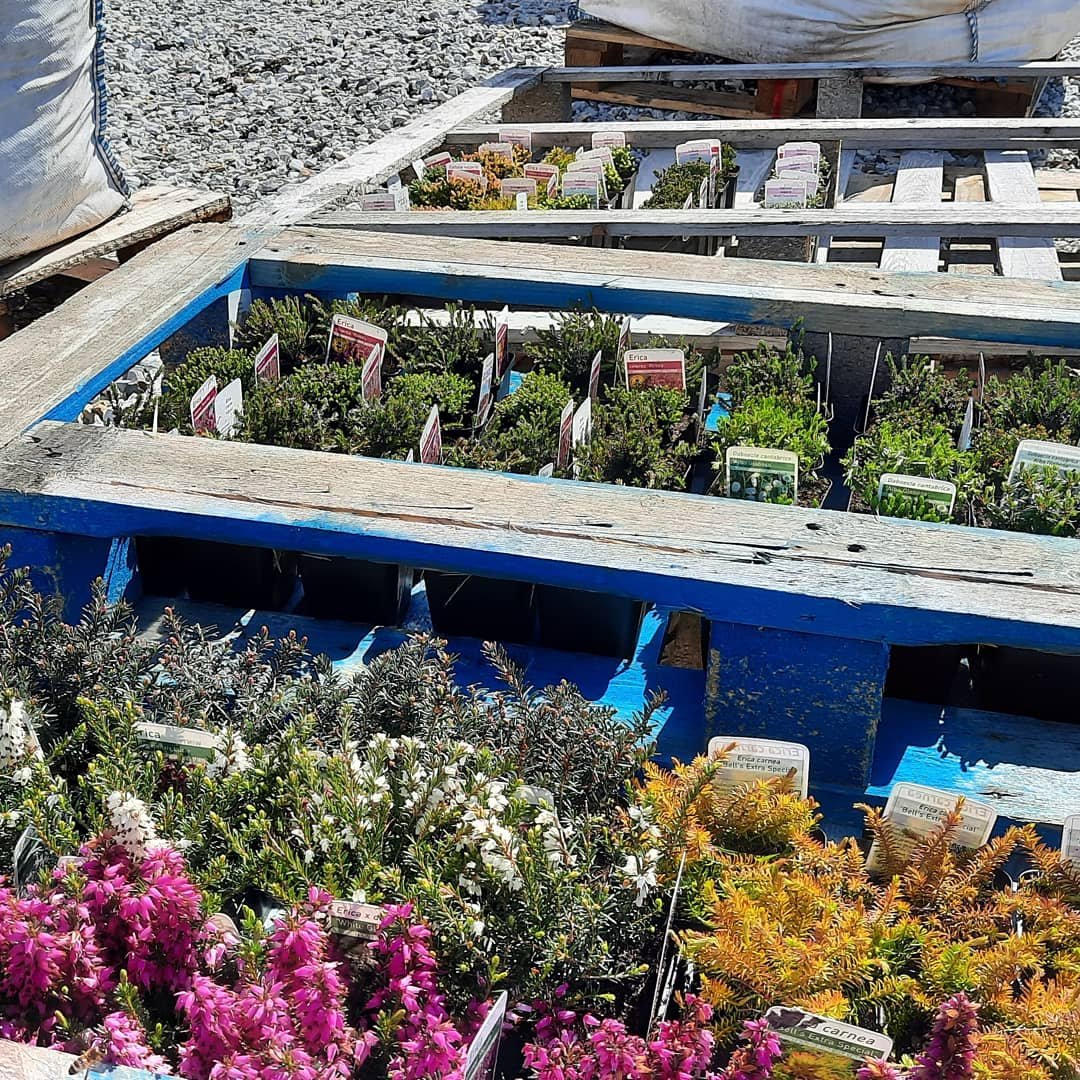
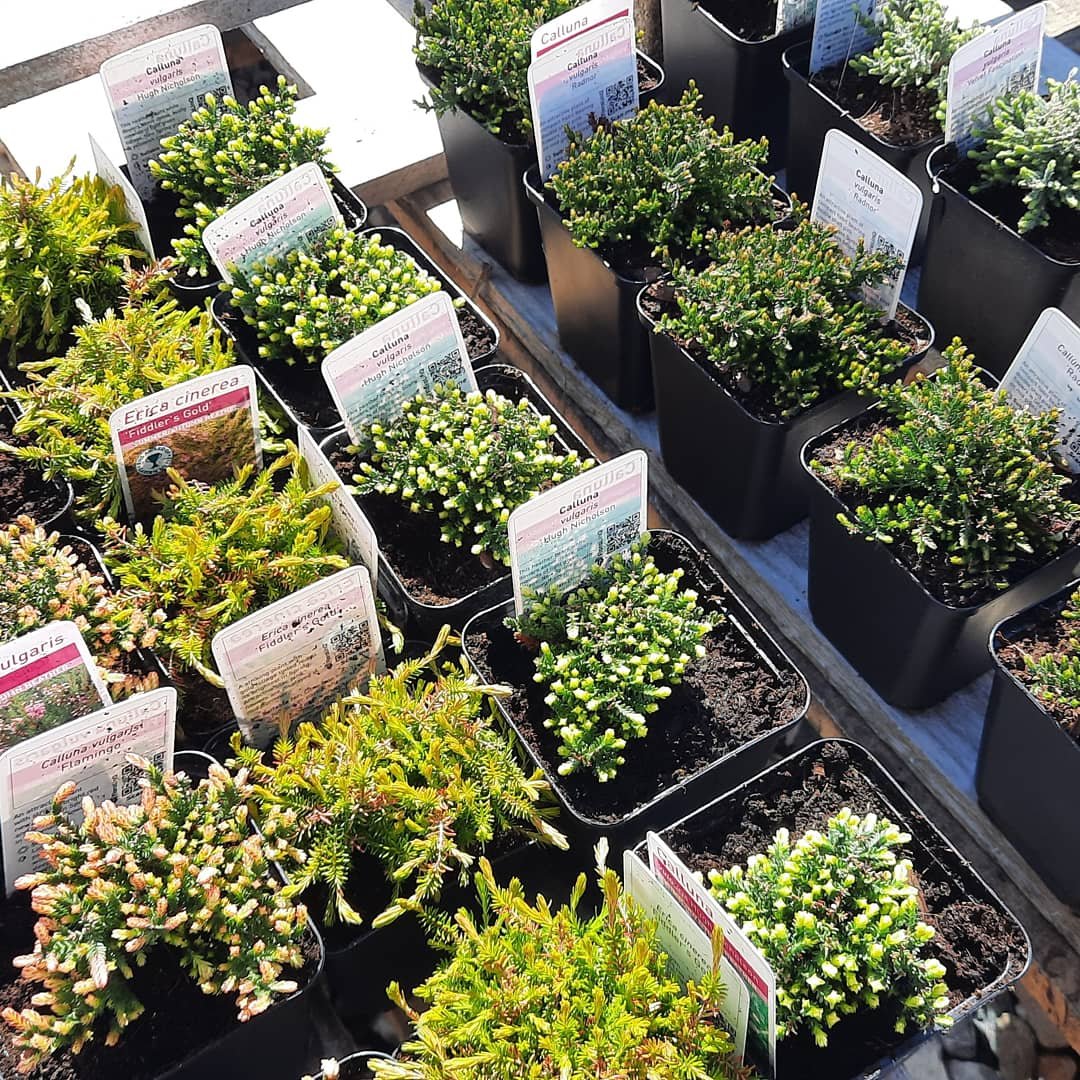
We ordered heather plants a few weeks ago from a specialist heather nursery here in Scotland.

The idea is to plant them on the exposed soil banks on the sides of the access track on the croft to try and reduce the amount of soil erosion. We’d noticed that the winter rain had taken its toll before anything had a chance to establish, and needed to get something in as soon as possible.

Heather is a native plant here, hardy and resilient, and it’s roots help bind the soil well and minimise runoff.

As an extra benefit, the heather selection that we have covers a flowering period for all seasons, so there will always be some in flower at any given point. Great for nectar feeders.

The plants arrived via post in three large boxes, extremely well packed and with the plants still fresh and damp. Each small pot had been hand-wrapped in damp newspaper, separated by cardboard and paper padding.

I unpacked them and let them have some fresh air and a good, long drink after their travels.

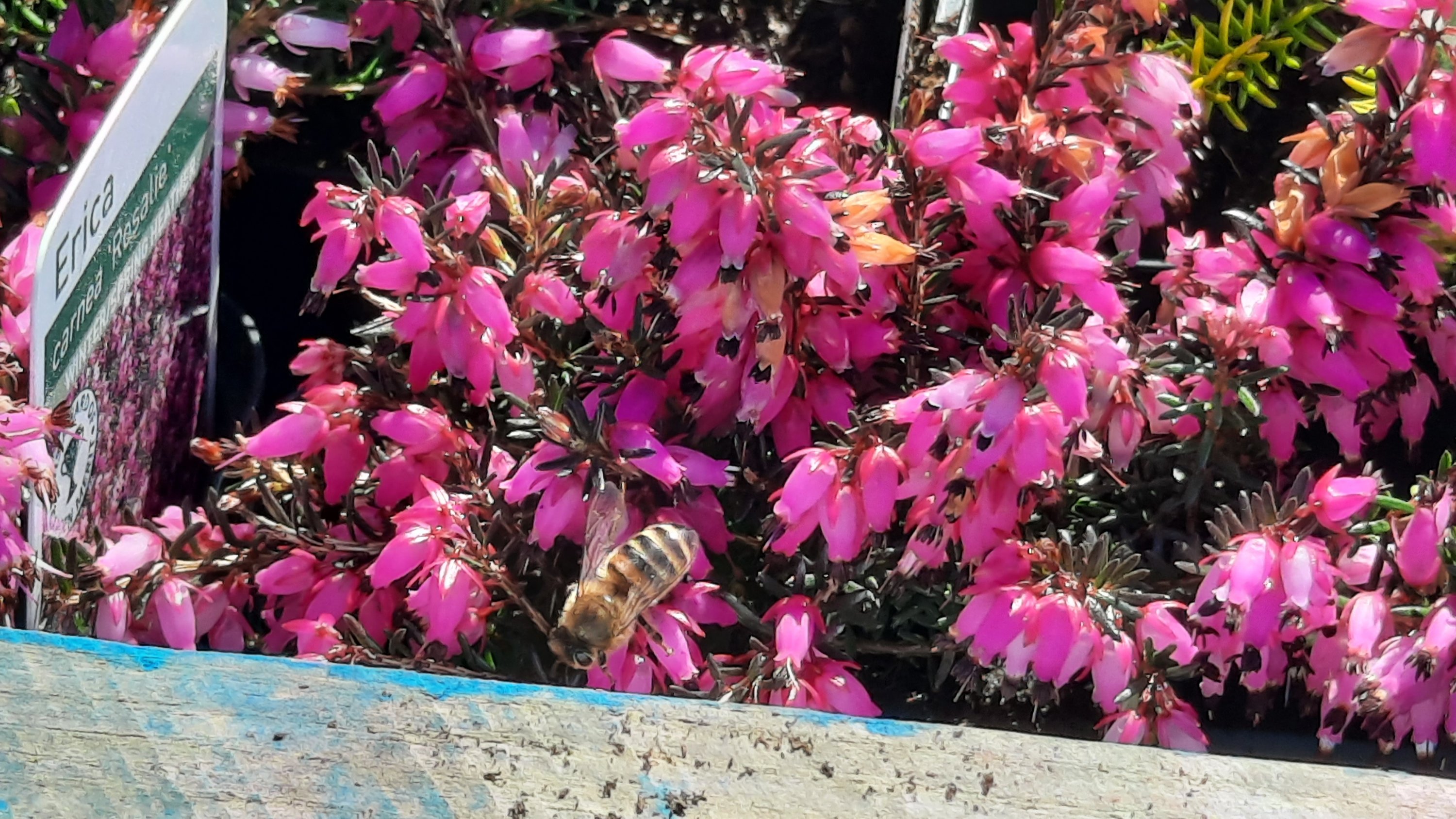
Almost as soon as I’d done so, a few honeybees arrived, rapidly followed by about four white-tailed bumble bees. They all fed hungrily on the early flowering varieties in bloom. These were the first bees that I’d seen on the croft this spring with the really cold weather.

We won’t stop at heather, of course. We have plans for red clover, camomile, sedum, borage, hardy geraniums and others, but it felt good to provide an early meal for the bees.