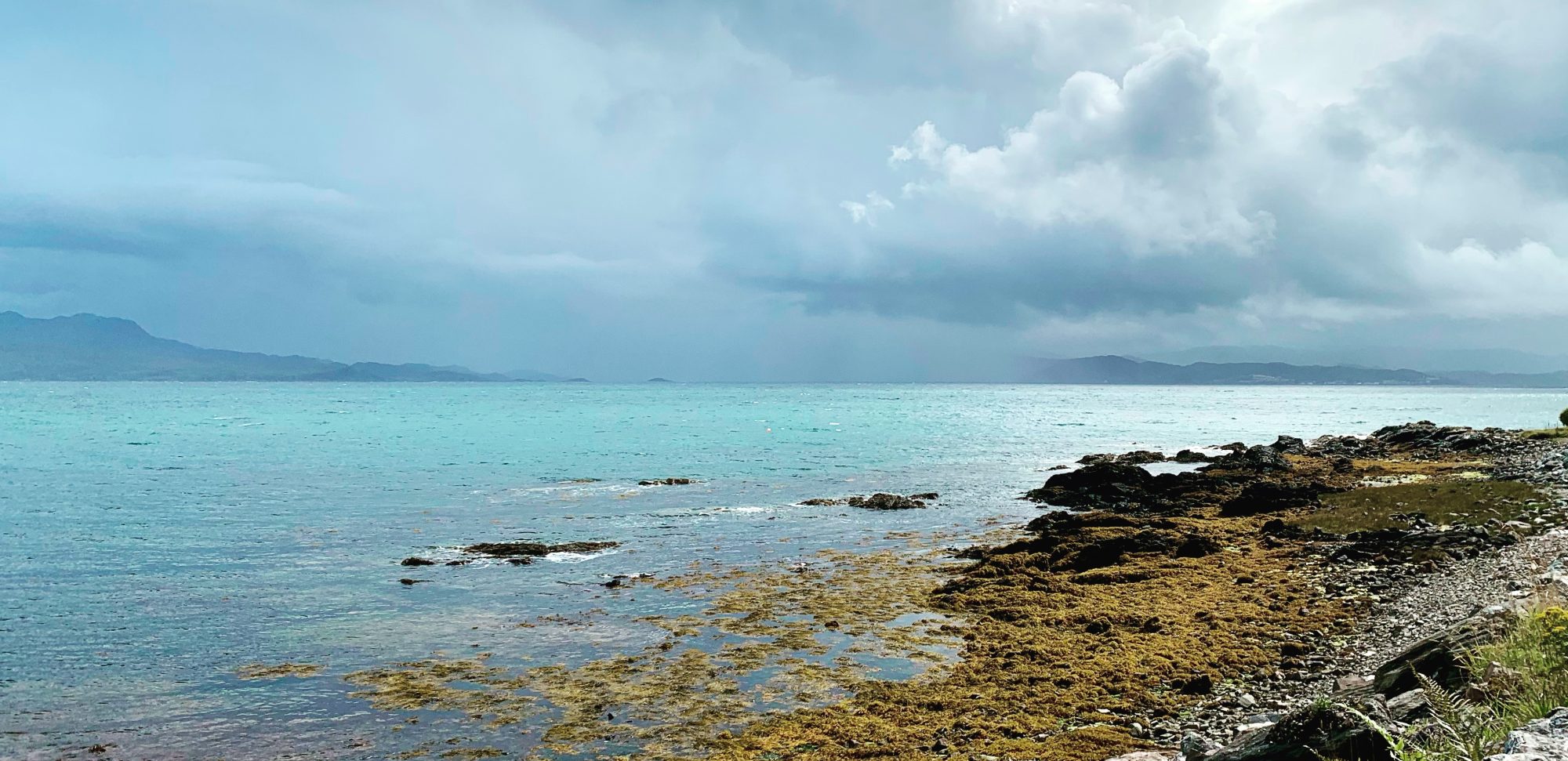
Deer damage and alien life

In a short burst of mild, sunny weather this morning I rammed on my wellies and headed out on to the croft. It’s well overdue time to prepare the raised beds for the seasons growing, and I’ve been waiting for a break in the storms for weeks.

The deer have been terrible this winter. They’ve eaten everything that was left in the beds, which I stupidly didn’t net for protection. Actually, the nets wouldn’t have survived the storms anyway.

Roll on next year when we will have time to deer fence the croft. I think it’s the only way.
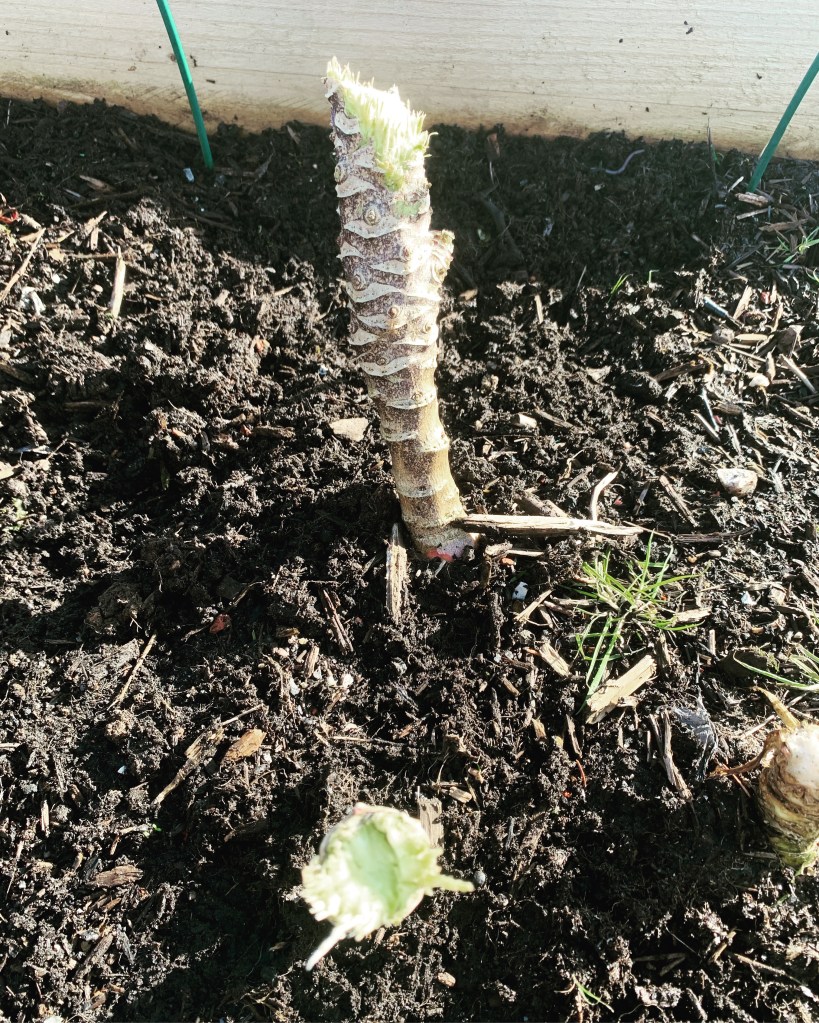
These are the remains of a couple of my perennial Taunton Deane kale plants. There’s basically nothing left of them, and I think that the damage is so severe that they won’t re-grow. The deer have even eaten rhubarb, spiky artichoke leaves and garlic, all things that they’re not supposed to like! It’s soul destroying after such a productive year of cropping from them.

However, despite the deer damage there are tentative, wonderful signs of spring.
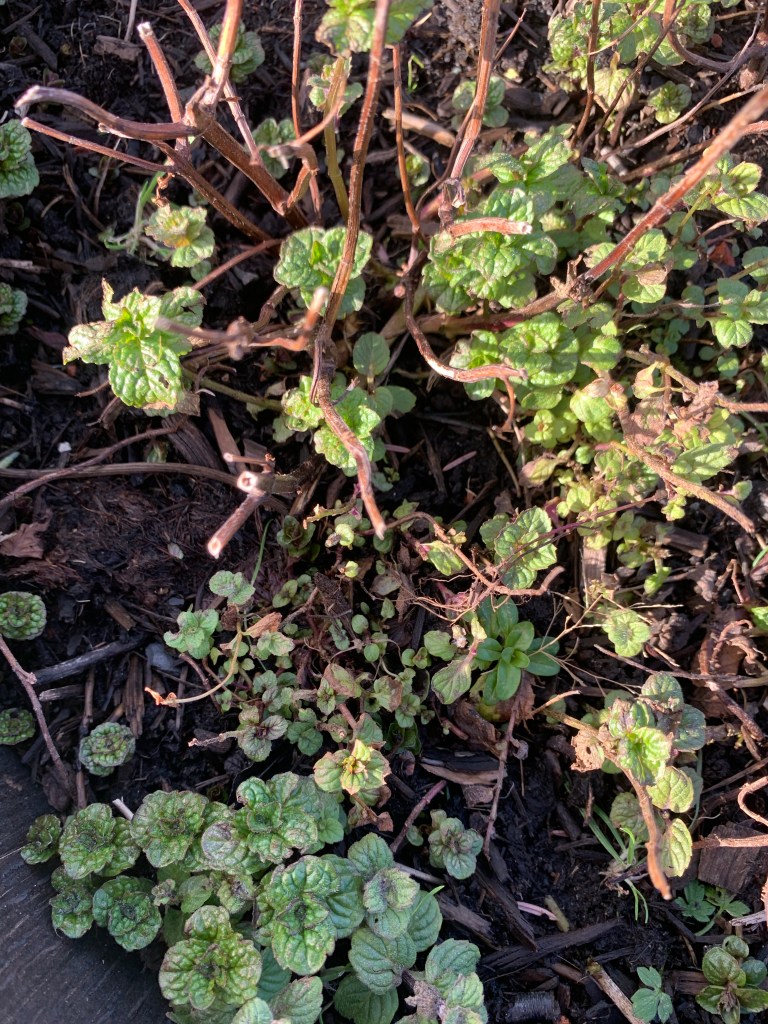
The mint has started to re-grow.
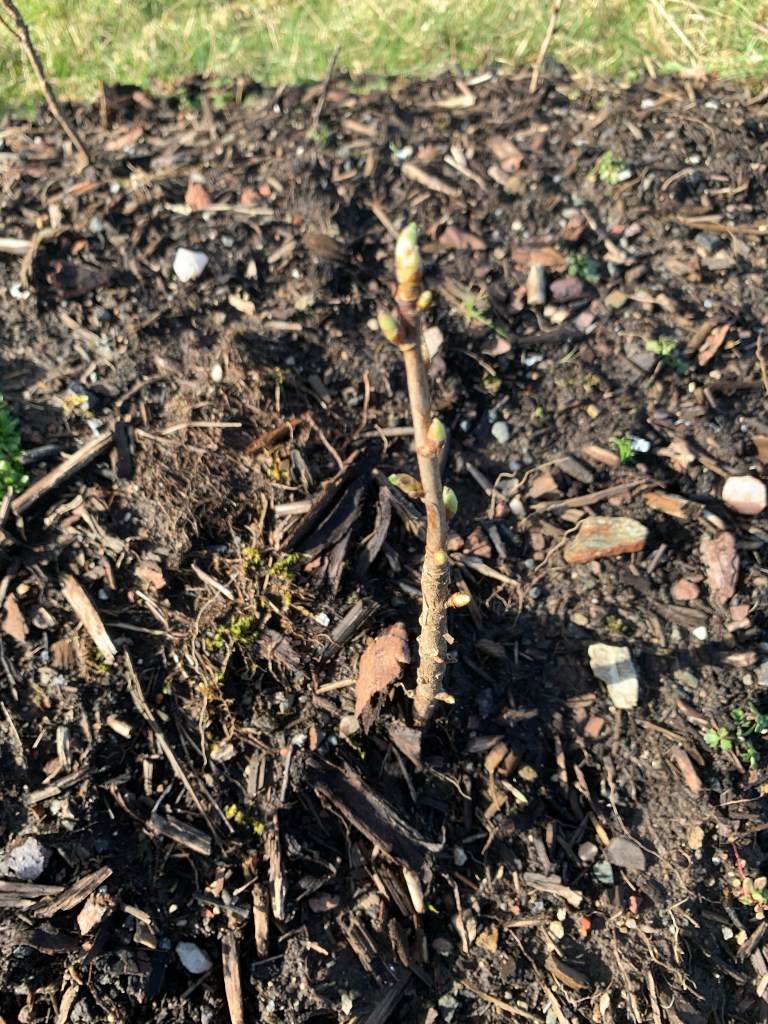
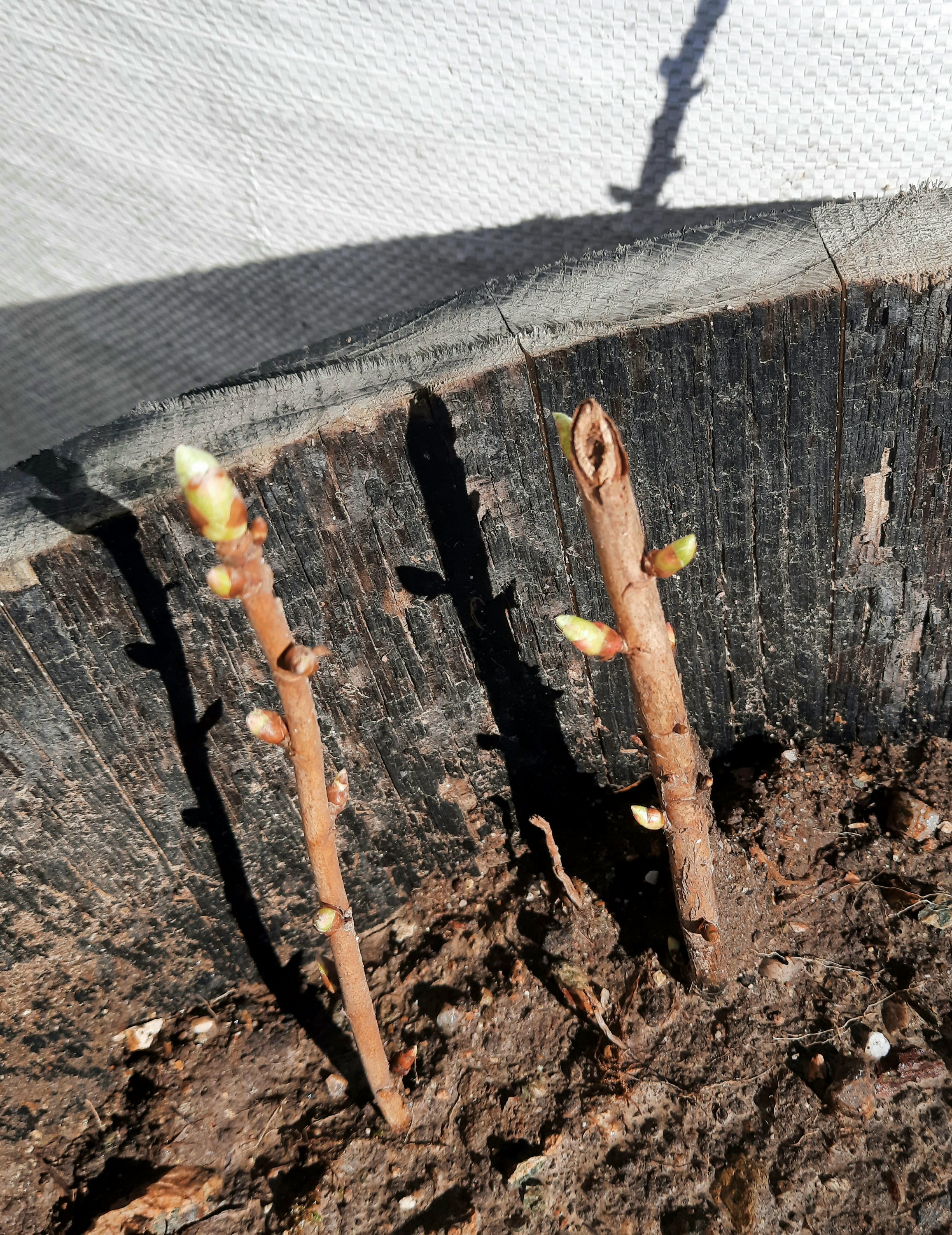
The berry cuttings are starting to break into bud.
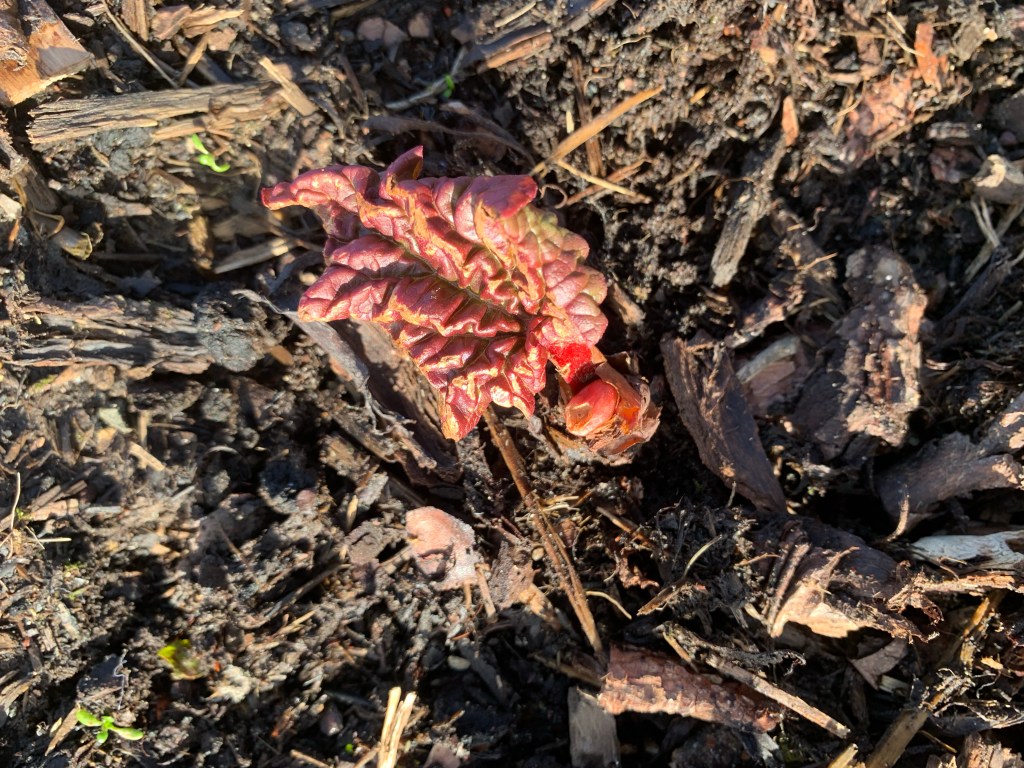
We have the first signs of rhubarb leaves pushing up through the soil like wrinkled red aliens.

I managed to weed a couple of the raised beds and get some red onion sets in before my back started to complain and I decided to beat a tactical retreat. I must remember to take it slowly at the beginning of the season, otherwise I’ll seize up after a whole winter of inactivity. And cake.

Gardening is a marathon, not a sprint. but it felt so good to be out there again.
Quince Love

When we moved to our cold, wet island, 57 degrees north of everything, we maybe had a lingering doubt about the things that we’d miss. Lots of positives and upsides, of course, but there would be some things we’d have to compromise on, we knew.

The biggest worry of these was fruit. We love our fruit, and the thought of going without fresh fruit for any period of time was a bit of a concern. Surely living on the chilly, northernmost and westernmost rim of Europe would mean that figs, quince, loquats and ripe peaches would become things of fond memory?

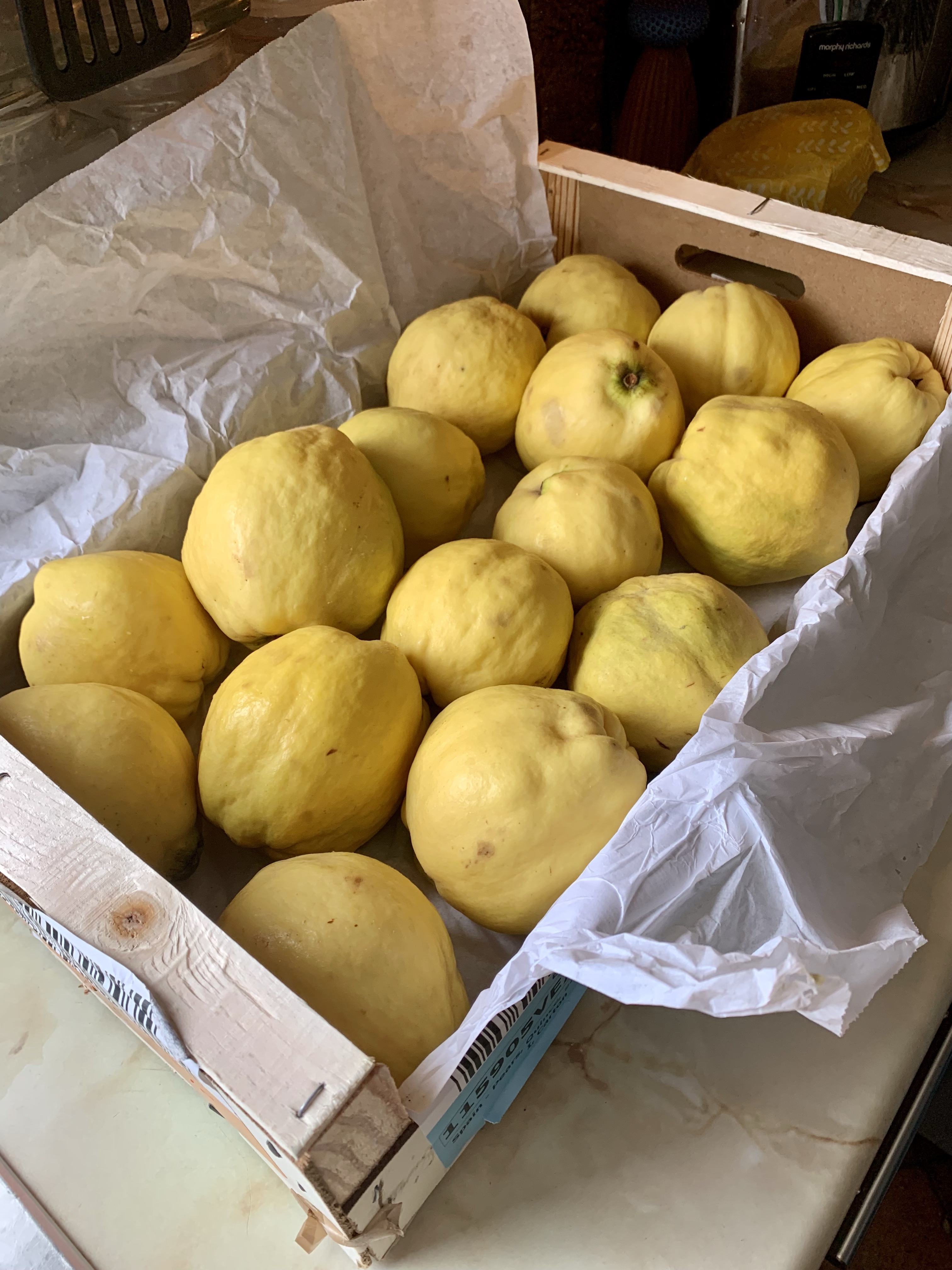
Today I picked up a crate of fragrant Spanish quinces from the local store, who had ordered them in especially for us. From our local community store. How amazing is that.

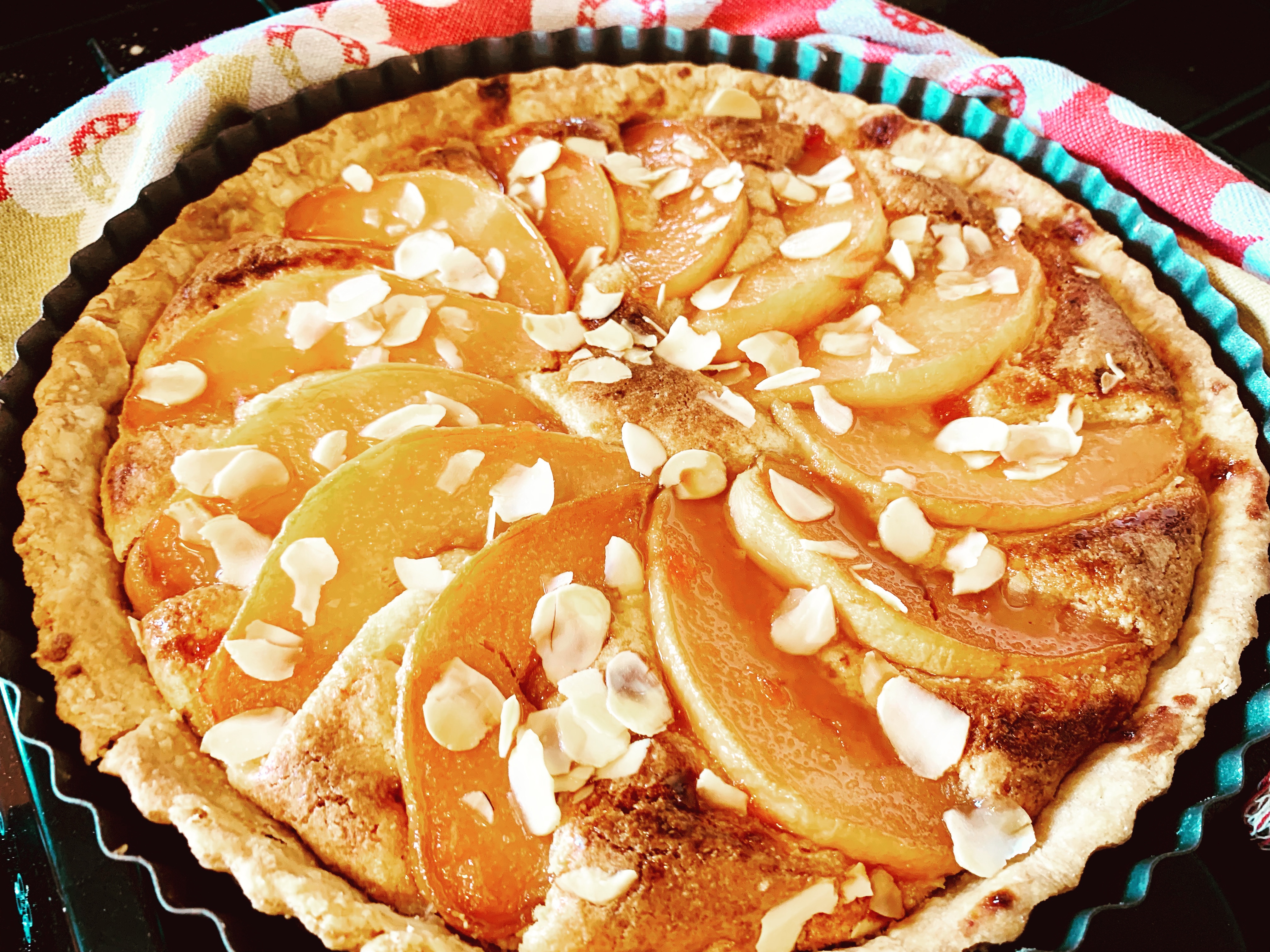
That will sort us from a quince perspective for a while. Husband will eat them, hard and raw (he is bizarre) whereas I will poach them in a sugar syrup with cinnamon sticks and juniper berries, then roast them in frangipane tarts and sweet pastries.

The rest of the fruit we source from local organic crofts, or the local Co-op supermarket.

We try to keep it local but apart from apples, pears, rhubarb, local quince and berry fruit I haven’t managed to find local croft sources for anything else, and certainly not the exotics as an occasional treat. Supermarket fruit is often under ripe and tasteless, let alone the concerns that I have about the food miles involved, so anything that we can do to reduce our reliance on them as a source of produce is a good thing in our opinion.

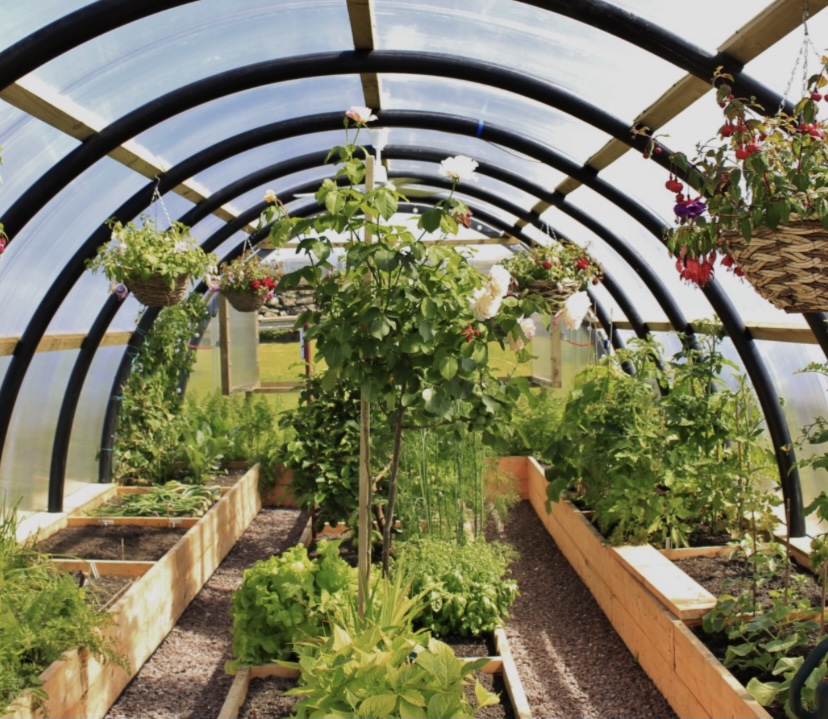
This is where the polytunnel will come in. We plan to grow nectarines, peaches, quinces and maybe loquats in the tunnel. If we can. Unlikely as it seems, the shelter that the tunnel will provide along with the long summer days this far north will be enough, with a bit of skill and patience, to produce these things. We’ve seen peaches grown in polycrubs in Shetland, which is even further north and even more exposed than us, so I have every hope!

These combined with the berry beds as well as the apple and pear orchard that we have planned, and we should be covered for most of our future fruit needs.

Bananas sadly remain a step too far for these northern shores.

Blue Growing update

The seed sowing chaos of the caravan spare room has been taken in hand and professionalised!

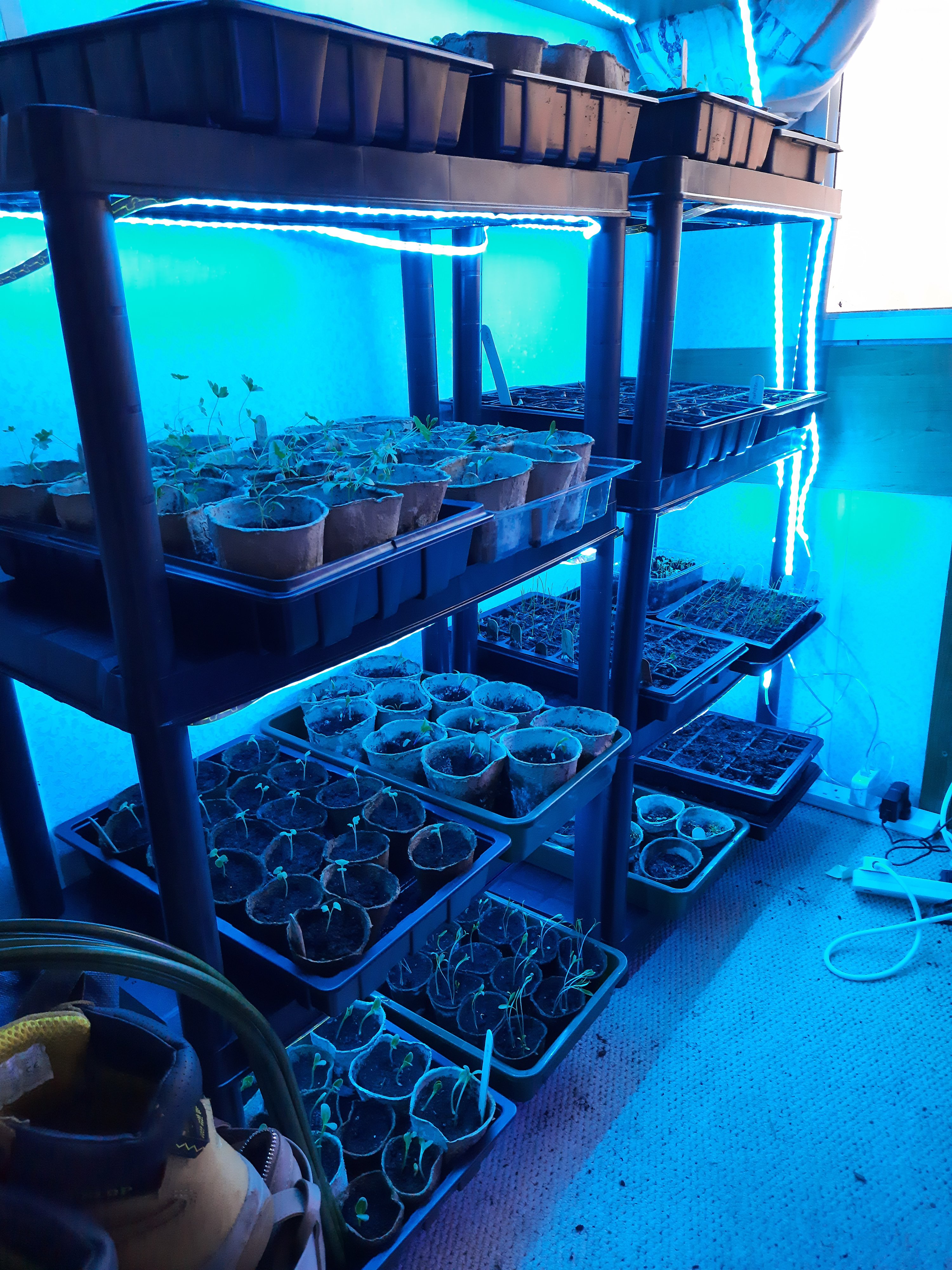
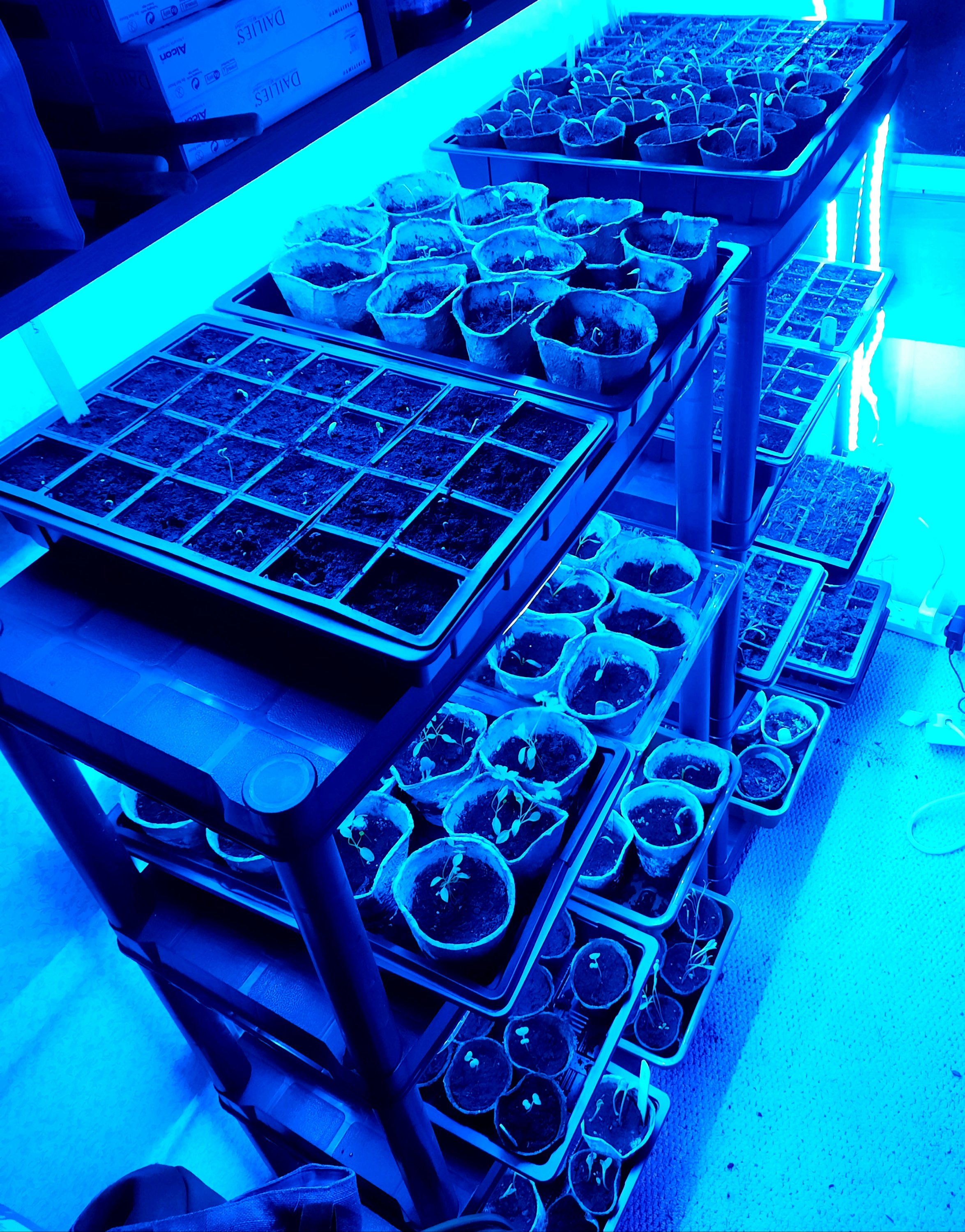
We now have durable shelving with UVA grow-light strips attached to the underside of each shelf. I’m feeling very happy.

The days of my rickety cardboard box tray balancing act are over. I think that husband realised that he was in danger of having the next seed tray balanced on him if I ran out of space… 😊

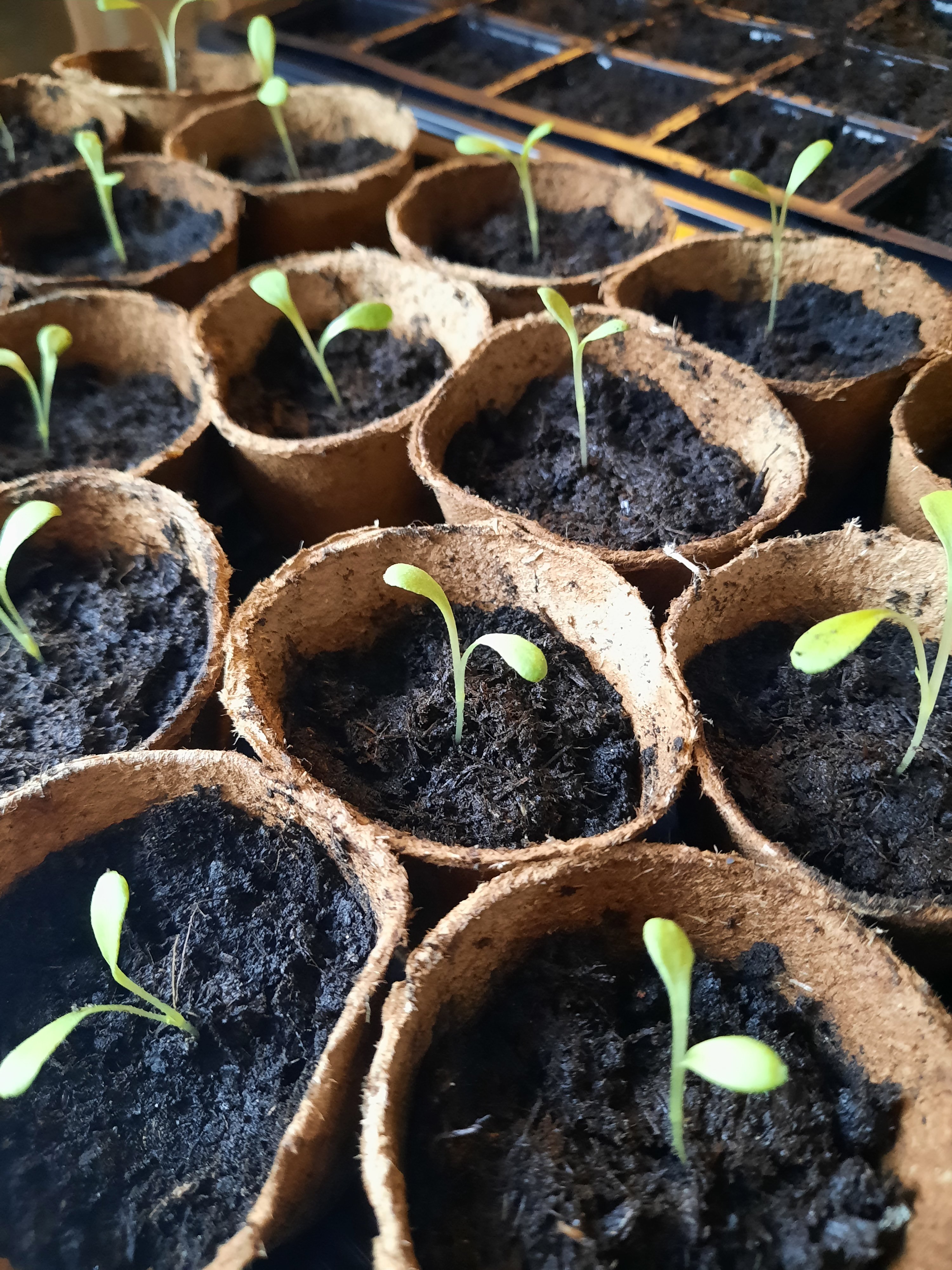
We now have pak choi, Sutherland kale, leeks, onions, borage, calendula, rocket, mustard leaves, coriander, parsley, mint, lettuce, salad burnet, nasturtiums, garlic and shallots underway. All glowing eerily blue under their UVA lights.

Today I will be sowing borlotti beans in pots in the probably vain hope that I can get them to maturity on the croft despite the wind. This one is a bit of a stretch, but it’s worth a try..

The directly sown plants, such as carrots, parsnips and yacon roots will all be in May. Same for the potatoes.

The garlic, shallots, babbington leeks and onions have already been planted out into the beds, and we covered them in enviromesh yesterday for a bit of protection.

I can already see that my three initial raised beds won’t be enough, even with separate big pots for the herbs, so we will be building a long no-dig bed directly onto the croft for the rhubarb and berries. We will put in more raised beds next year after we’ve finished the house.

Next up it will be windbreak hedging…

This will be an interesting year – let’s see what grows.

Sunday musings

As I sit here with my feet up in front of the fire and a blanket across my legs, the rain is lashing the sides of the caravan. There is a small, furry dog snoring by my side, I feel content that it’s been a productive week.

The weather broke yesterday from a four day dry spell. It held long enough for us to finish the guttering at the back of the house after a great deal of effort and frozen fingers.

Do not ask me what husband is doing at this point on the flat roof….. I couldn’t resist a quick shot. 😊 (Cyprus Joe, that’s a metaphorical shot before you start with the death of husband jokes.. 😉)

It may have been dry but it was only about three or four degrees centigrade at most, and especially cold whilst up the ladder.

Husband says that he’s developed a death grip from hanging on grimly whilst working at height ..

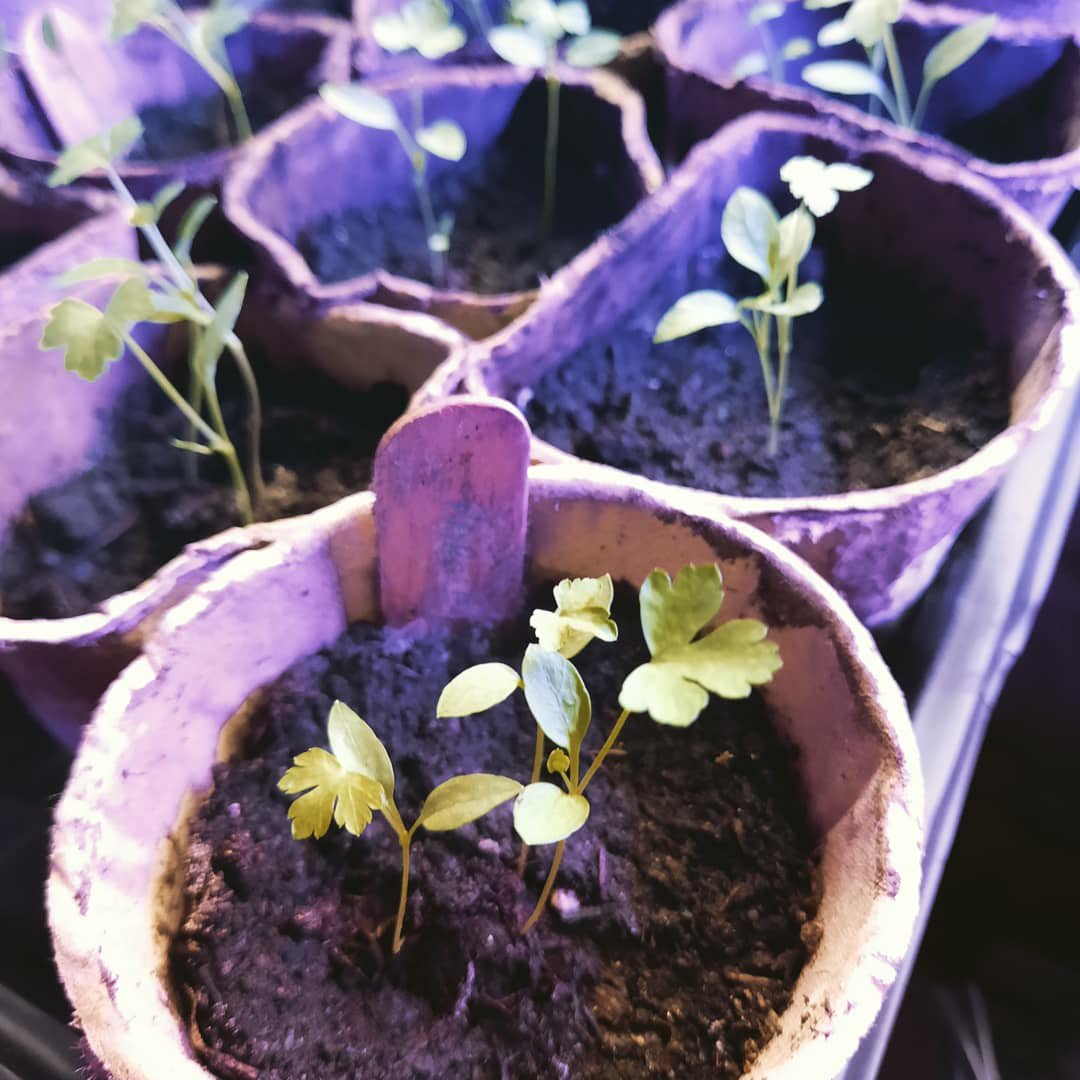
There’s been some progress too on the croft side. The seeds are coming along nicely. The potatoes are chitting. I’ve pricked out lettuce, beetroot and parsley seeds, which seem to be growing well despite the rather makeshift greenhouse arrangements in the caravan.

I’ve also planted out the garlic into the raised beds and have the hoops and enviromesh ready for when anything else goes in. Which the locals advise shouldn’t be until the end of April at the earliest to avoid the threat of frost…

I’ve sowed some borage, calendula and nasturtiums as companion plants: we may as well start to provide food for beneficial insects and bees as quickly as we can. I’ve now run out of room completely for seed trays…this last batch are balanced precariously on the cooker…

On the compost side, husband has ordered the material for the compost bin roof and we’ve started adding our household vegetable waste to the bins.

A neighbour is happy to keep her composting food waste for us too, so this should double the rate of build up. I’ve also sourced donkey, horse and chicken poo locally from crofters and stables, so as soon as we can collect we can add these to the mix.

And the berry bed that I have been planning for so long is starting!

I now have honeyberry, tayberry, raspberry and blueberry plants all ready for planting. I also have cuttings of jostaberry, red gooseberry, and blackcurrant which have survived the worst of the winter so far and which have started to bud..

A good week.

A spiky start

With the house build we’ve had little time for the croft tree plans or vegetable bed preparation beyond the most basic of plans for zoning and starting to think about grant applications for the trees and deer fencing.

Having said all of that, whilst our days are taken up with working in the house I’ve started on the croft in the smallest of ways. It just felt necessary to do something.

We’re planning for a berry bed, and also edible hedges.

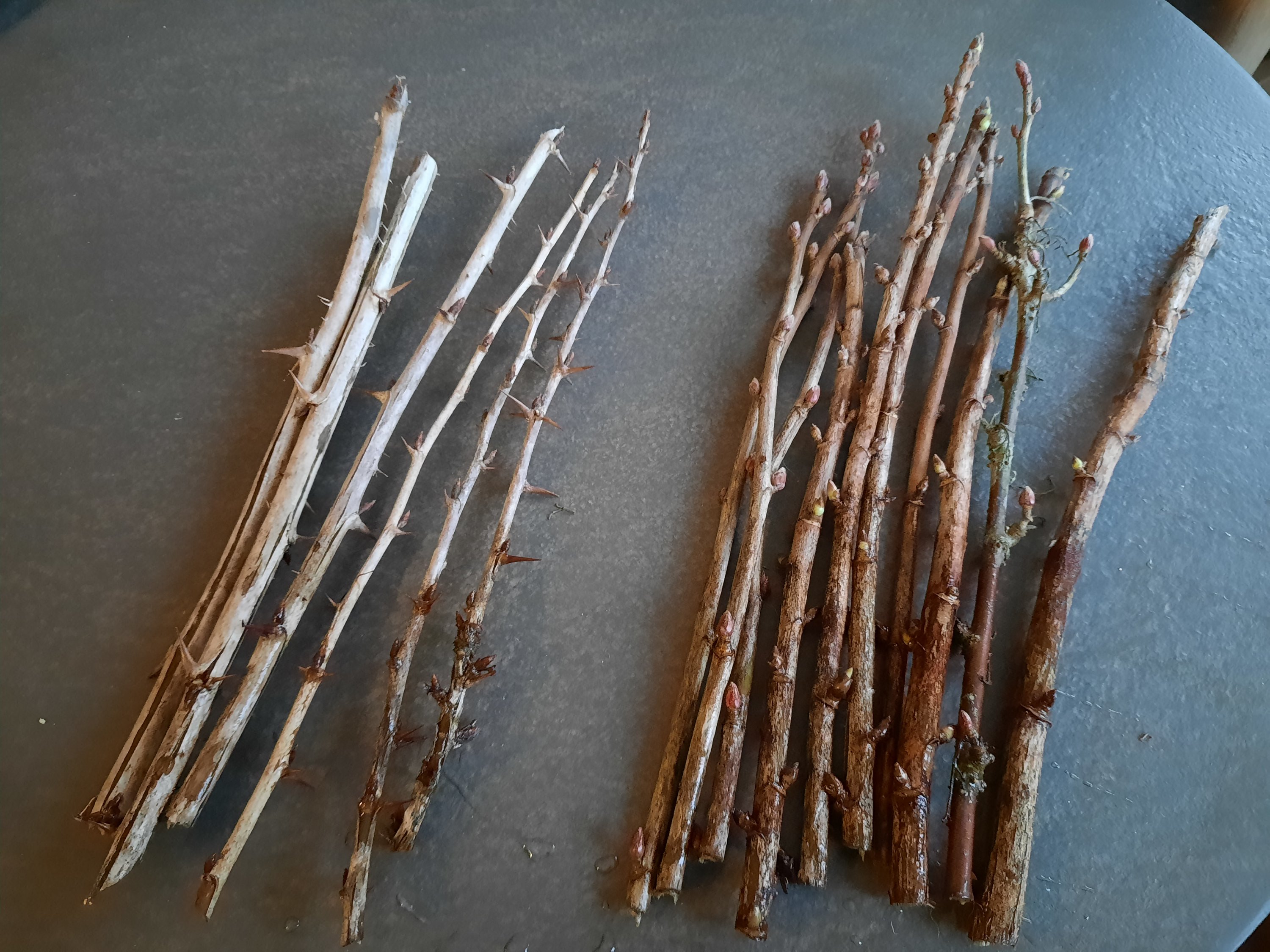
To this end I’ve just received the first dozen or so cuttings of japanese red gooseberry, jostaberry and green currants, and have stuck them in a barrel of soil positioned next to the caravan to root up ready to be planted out into beds late next year.

If the deer don’t eat them (and you’d think that the thorns on the gooseberries would be enough of a deterrent, or am I deluding myself?) this should give them a bit of an early start.

These will be followed with raspberry, honeyberry, cloudberry, black currants, blueberry and strawberries early next year. And maybe the start of herb pots in the spring for the herb beds. Once we have some windbreaks in place.

We have also picked up some willow whips from a neighbours’ prunings, and as an experiment we’re going to plant them in the exposed boggy bottom of the croft over the next few days.

We’re treating these as sacrificial trees, as a test. We’ve had conflicting local reports about the need for and the effectiveness of deer fencing. It will be interesting to see whether these young trees get decimated and whether we have to wait for a further year to fully deer fence the croft before we can attempt sensibly to plant any young trees further at all.

A slow and spiky start. But it’s a start.