
We’ve known that we’ve had a vole in the polycrub for some weeks now, but it’s been an elusive wee thing. All we’ve had is glimpses as it scurried between the plants under leaf cover or heard the occasional outraged, high-pitched squeak.
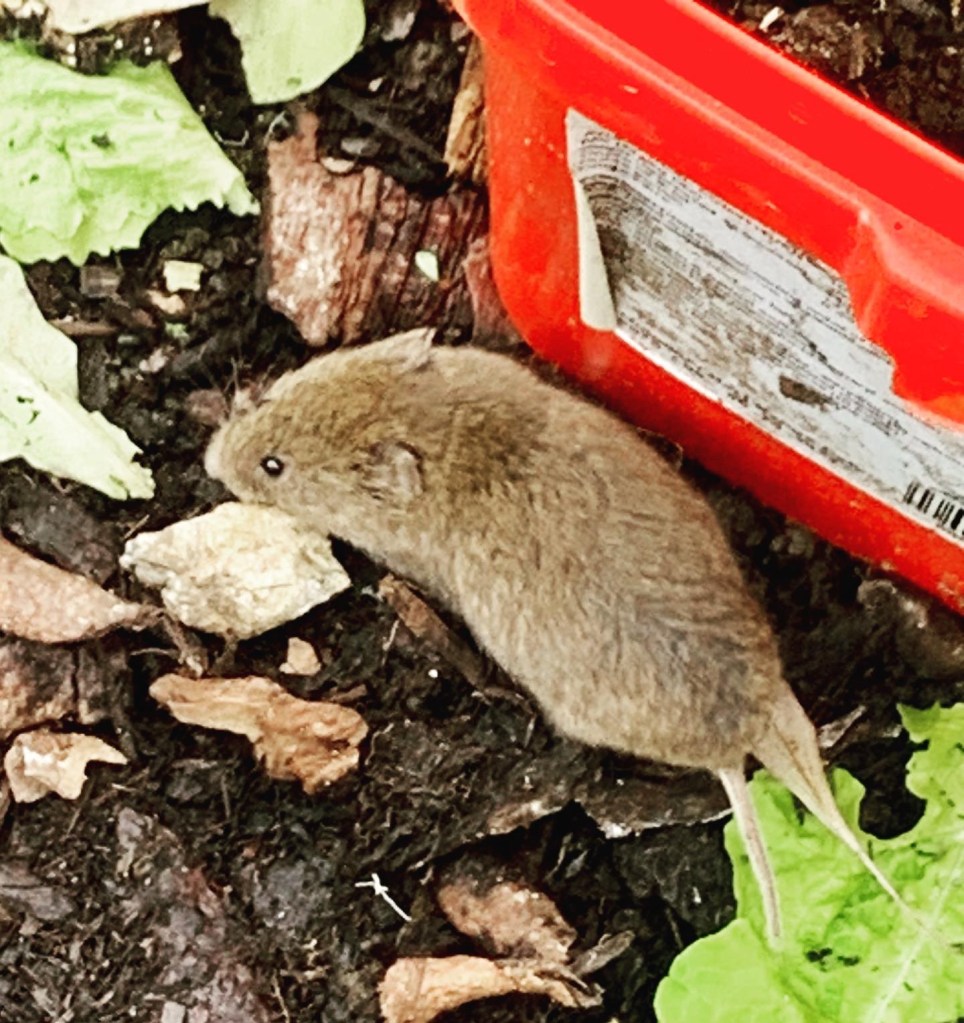
Over the last few weeks it’s unfortunately taken to chewing through the stems of my vegetable seedlings, which is hugely annoying. It’s destroyed several aubergine and courgette plants, and some young kale.
This morning as I opened up the polycrub door the first thing I saw was that it had eaten it’s way through an entire line of lettuces. Shredded all the way down to the base. That was the final straw.
We suspected that it might have a nest somewhere, as it’s that time of the year. And the polycrub is after all a highly desirable piece of real estate if you’re a vole.
Warm, sheltered, protected from predators like hawks and stoats, and with a lush self-service salad bar on tap – what’s not to love?
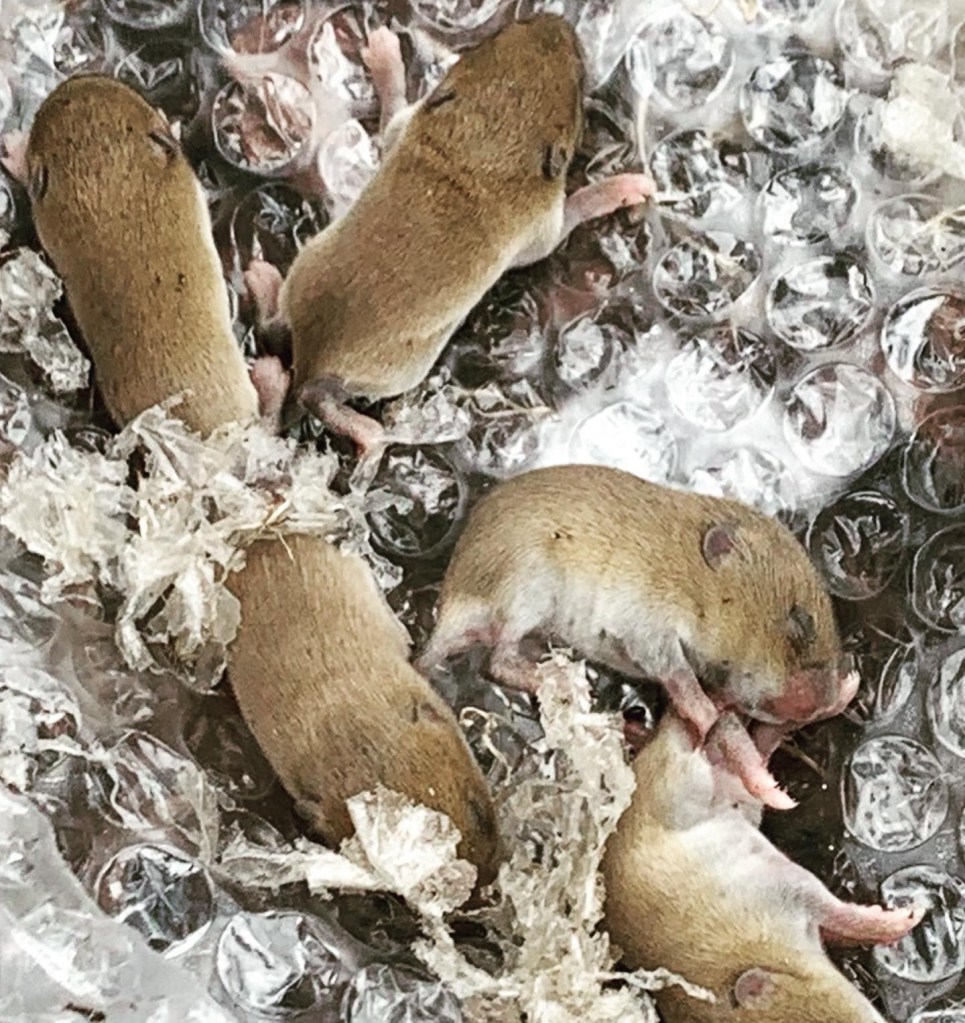
We started the search amongst the grow tubs. Husband moved a pile of bubble wrap and vegetable fleece that had been piled up in the corner of the polycrub from the colder spring days, and there it was. Five baby field voles in a nest of chewed up bubble wrap.
They had to go.
The kittens can’t get here soon enough. Let’s hope that we haven’t acquired cats that prefer the good life! Cats are apex predators for field voles, so are our best chance of keeping the population under control.
 Ravencroft Skye
I hope the cats know heir job!
LikeLiked by 1 person
They will be shown!!
LikeLiked by 1 person
Aww! But they are so cute… My three cats would eat voles all day long, so good luck!
LikeLiked by 1 person
They are cute.. but when I discovered that a female can have four to five litters a year of four or five babies.. and on it goes, it had to be them or the vegetables!
LikeLiked by 1 person
LOL! I completely understand. In 1990 we had a glut of voles after a warm summer and our cats could barely catch up with vole hunting.
LikeLiked by 1 person