
We’ve had a warm, breezy day on the croft today. Twenty-two degrees and a clear blue sky. It made our outdoor tasks today so much easier with the wind keeping the midges at bay.

The grass has grown so much over the last few months that the paths that husband had scythed in the spring had nearly disappeared.
This was making trips to the raised beds and the compost heap a daily waist-high challenge.
I wouldn’t normally worry about wading through long grass, but I’m super cautious about picking up ticks and horsefly bites at the moment, and didn’t want to have to start walking about swathed in protective netting like some sort of veiled ninja..
So husband spent a few hours yesterday and today scything swathes through the grass and collecting it up for compost. The breeze helped what was a long, sticky endeavour.
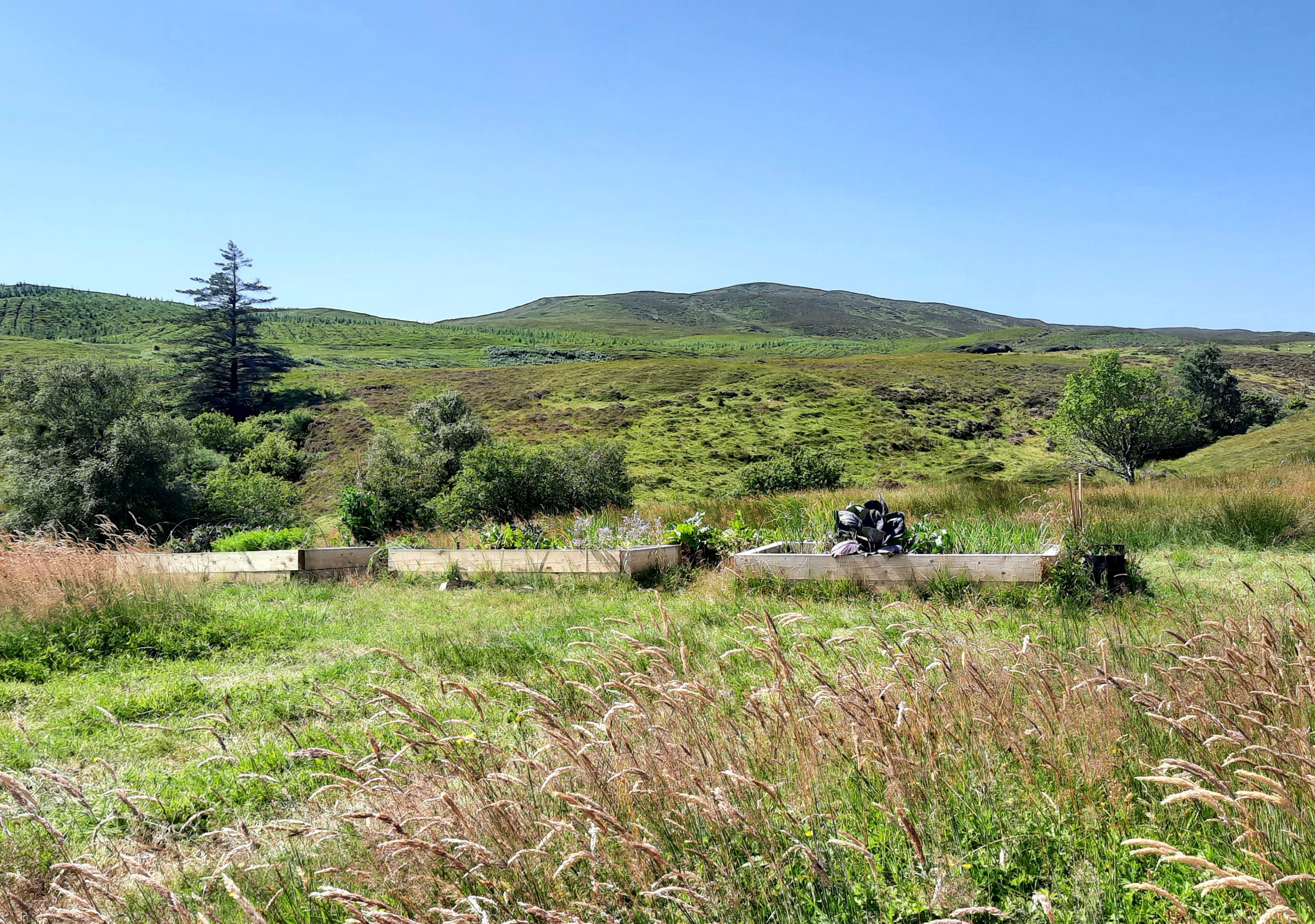
Some folk like to cut their grass neatly and very regularly. We have chosen to leave ours wild, and to see what comes up. We prefer it that way, and nature seems to agree.
We’ve found orchids, clover and wild flowers in abundance, and there are certainly plenty of moths, bees, butterflies and insects. Husband has even had to rescue a few small frogs from the path of his scythe…we want to encourage them as much as we can. Natural slug protection!
Once we have an agricultural shed to store equipment in we will need to look at other ways to manage this, though. Even with trees, six acres is too much to manage by hand with a scythe. It’s a fine line between managed meadow and bracken and bramble patches overtaking the land.
We’re thinking at least one annual cut after the summer is over to help seed and keep the rushes down.
For now we’ll enjoy the grasses and the wild flowers from our small, scythed tunnels through the abundance.
 Ravencroft Skye
Leaving grass to grow long saves work and gives good compost material! I was delighted to hear that you use a scythe. I have 2 (different blades for different jobs) and at Dyfed Permaculture Farm Trust where I volunteer the resident couple are scythe experts, making all the hay by hand and teaching scything as well as having a business supplying them. I do, however, understand that 6 acres is a lot to keep by hand and you may need to use some machinery.
LikeLiked by 2 people