
We ordered heather plants a few weeks ago from a specialist heather nursery here in Scotland.
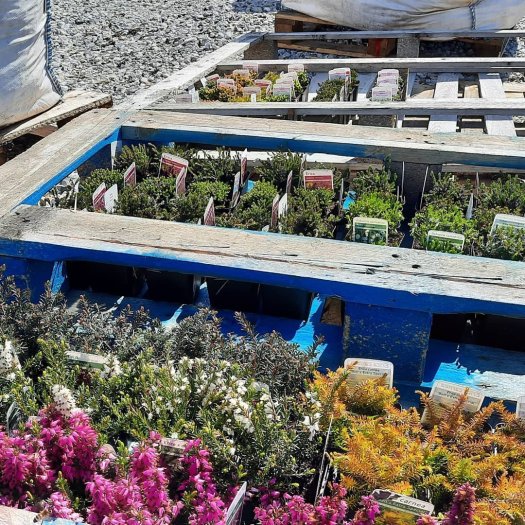
The idea is to plant them on the exposed soil banks on the sides of the access track on the croft to try and reduce the amount of soil erosion. We’d noticed that the winter rain had taken its toll before anything had a chance to establish, and needed to get something in as soon as possible.
Heather is a native plant here, hardy and resilient, and it’s roots help bind the soil well and minimise runoff.
As an extra benefit, the heather selection that we have covers a flowering period for all seasons, so there will always be some in flower at any given point. Great for nectar feeders.
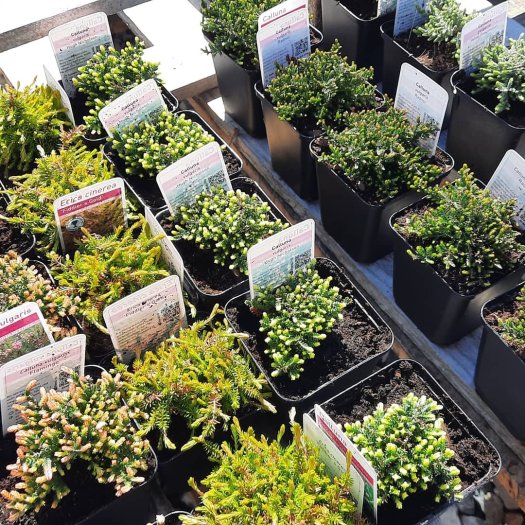
The plants arrived via post in three large boxes, extremely well packed and with the plants still fresh and damp. Each small pot had been hand-wrapped in damp newspaper, separated by cardboard and paper padding.
I unpacked them and let them have some fresh air and a good, long drink after their travels.
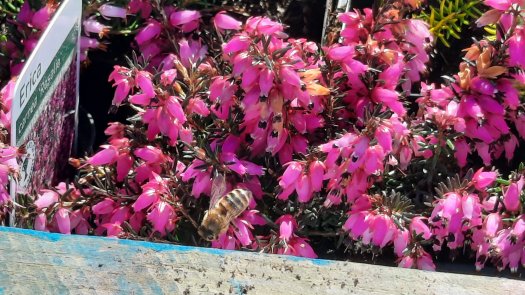
Almost as soon as I’d done so, a few honeybees arrived, rapidly followed by about four white-tailed bumble bees. They all fed hungrily on the early flowering varieties in bloom. These were the first bees that I’d seen on the croft this spring with the really cold weather.
We won’t stop at heather, of course. We have plans for red clover, camomile, sedum, borage, hardy geraniums and others, but it felt good to provide an early meal for the bees.
 Ravencroft Skye
Three cheers for bumble bees
LikeLiked by 1 person
Amazing things, aren’t they 😊
LikeLike
They certainly are👍
LikeLike
Yay for the bees!
LikeLiked by 1 person
Yay indeed!
LikeLiked by 1 person
It is amazing to see bumblebees in their natural habitat; here in Australia they are a feral species that is crowding out some of our native solitary bee species.
LikeLiked by 1 person
You mentioned this before. I had no idea. Here they are much less numerous than honeybees, with many species rare and protected. Here in the Hebrides we are especially lucky in that as there is no intensive agriculture we still home many species not present elsewhere in the British Isles. 😊 ❤️
LikeLike
Are bumblebees a solitary species? (Just had an arguament with myself over whether the plural of bumblebee is bumblebees or bumblebee).
LikeLiked by 1 person
No, they mainly live in small hives of around 1-200 bees. There are solitary bee species too though.
LikeLike