
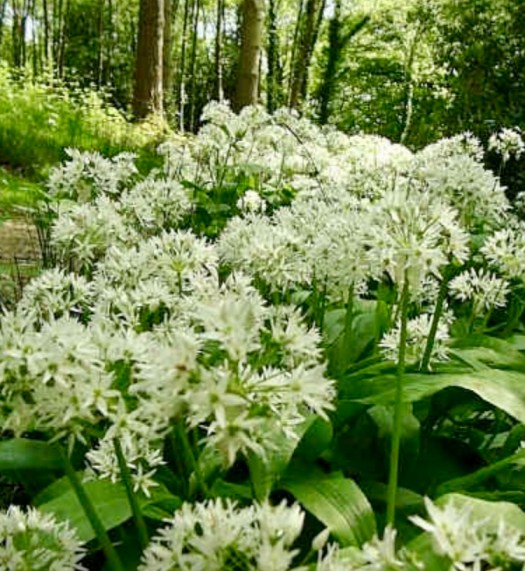
Wild garlic (or ransoms as they’re sometimes known) grow in dappled shade in woodland, on the banks of streams and in hedgerows.
Brushing through undergrowth or overgrown hedgerows as you walk will often release their pungent scent and alert you to their presence underfoot.
For me, they’re reminiscent of old woodland and drowsy, warm days in summer.
They’re also handily tolerant of thin, acidic, damp soils – perfect for the croft.
I can’t wait to get them started – and to be able to harvest enough for wild garlic butter, or to add trimmings to salads or pasta. I’ve even seen a recipe for homemade wild garlic pesto that I’d love to try.
As such I have a bag of seed to take with us on our trip to the croft in a few weeks time, and will try scattering them on the banks of the little stream to the north of the croft as well as in the copse of trees on the western boundary.
That and the bluebells and pignuts will be our first seed sewing on the croft.
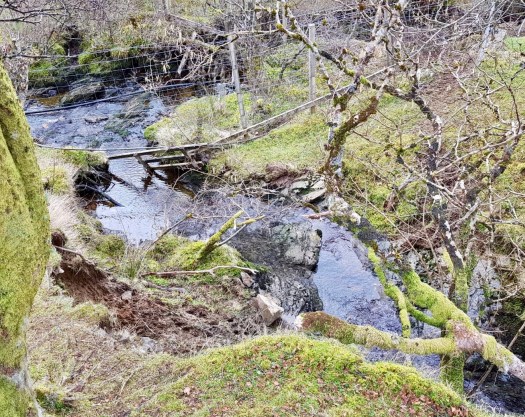
It may take some years for them to establish, but the sooner we start…
 Ravencroft Skye
J & D > “It may take some years for them to establish, but the sooner we start… ” That’s the spirit! But it’s in stark contrast to what has, for far too long, been the historically prevalent attitude : “Most of what we plant will die, and the few that don’t will take years and years to achieve anything, most likely we’ll be dead before they do, so it’s just a waste of time and money.”
LikeLiked by 1 person
Sad but true. We’ve got to change that. I believe that it can be done. We’re planting for the next generation, not for ourselves
LikeLiked by 1 person
I think that the ‘scatter and hope’ method is the best way of reforesting or rewilding an area; what is meant to be there will grow and what is not needed will not grow. Have you seen the seed ball concept? Seed balls are great for tree sprouting in wild places.
LikeLiked by 1 person
I have! It’s a great idea 👍
LikeLike